The Book of Signs: Chapter 4
Apostles Anglican Church
Fr. John A. Roop
The Gospel of John, Chapter 4: The Samaritan Woman and the Official’s Son
The Lord be with you.
And with your spirit.
Let us pray.
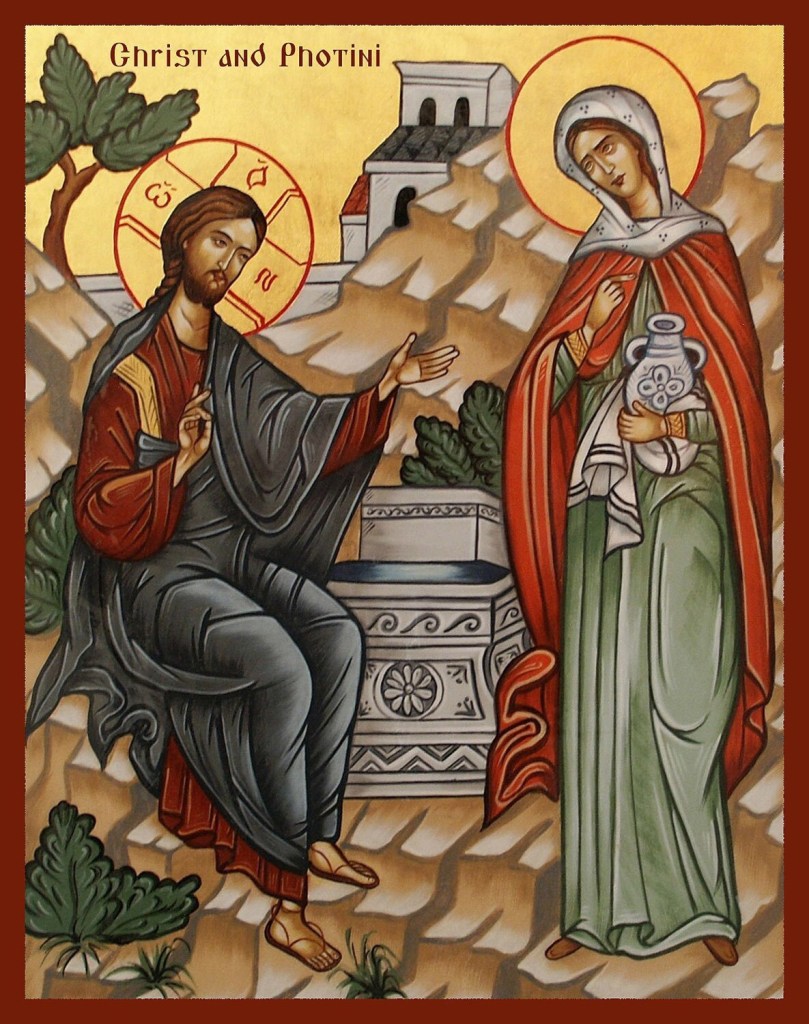
KONTAKION OF ST. PHOTINI (Adapted)
Almighty Savior who poured forth water for the Hebrews from a solid rock: You came to the land of Samaria and addressed a women whom you attracted to faith in you, and she has now attained life in the heavens everlastingly. Grant that, with her, your Spirit may be unto us living water that wells up to eternal life. Amen.
Foreword
The book of signs, John 2-12, contains more than just the seven works of Jesus that uniquely fulfill the purpose of John’s gospel:
30 Now Jesus did many other signs in the presence of the disciples, which are not written in this book; 31 but these are written so that you may believe that Jesus is the Christ, the Son of God, and that by believing you may have life in his name (John 20:30-31).
As Fr. Jack mentioned last week there is often a literary pattern in St. John’s narrative:
Jesus Event: An action or sign
Symbol: A central image associated with the sign that encodes its meaning
Teaching: An explanation of the sign and symbol
So, in addition to the signs that are central to John’s purpose, we have discourses, extended sections of teaching and explanation. And there are discussions, dialogues between Jesus and hosts of different people. All three of these — signs, discourses, dialogues — work together to generate belief. Jesus does something, then he explains it either by teaching or by conversation. Or, perhaps the conversation comes first followed by a sign that challenges people to respond in a certain way. The order is variable.
In the text today, we encounter both an extended dialogue — with the Samaritan woman — and a sign, the healing of an official’s son.
Background
You can’t fully understand the racial dynamics and tensions in our nation or the mutual suspicions and even antipathy between the northern states and the southern states without some knowledge of history: the institution of slavery, the Civil War and the Emancipation Proclamation, Reconstruction, Jim Crow and the KKK, Martin Luther King and the Civil Rights Movement, Affirmative Action and DEI and the recent pushback against those programs. Likewise, we won’t fully understand the dynamics of John 4, Jesus’ encounter with the Samaritan woman, without some knowledge of the history of Israel and Judah around the time of their exiles, and, in Judah’s case, its repatriation.
2 Kings 17 describes the fall of the northern kingdom of Israel, which is identified with its capital Samaria. The last king of Israel, Hoshea, acted treacherously against Shalmaneser king of Assyria; he refused to pay the required tribute and he attempted to make a political and military alliance with Egypt to escape Assyria’s demands. As a result:
5 Then the king of Assyria invaded all the land and came to Samaria, and for three years he besieged it.
6 In the ninth year of Hoshea, the king of Assyria captured Samaria, and he carried the Israelites away to Assyria and placed them in Halah, and on the Habor, the river of Gozan, and in the cities of the Medes (2 Ki 17:5-6).
This left the land of Samaria largely empty and non-productive for Assyria; probably only the elderly and infirm Israelites were left behind. So, the king of Assyria populated Samaria with other captured peoples from other lands to work this land and to pay tribute: people from Babylon, Cuthah, Avva, Hamath, and Sepharvaim. These people brought their customs and their foreign gods with them into the land of Israel. Here is how the situation is described in 2 Kings 17.
25 And at the beginning of their dwelling there, they did not fear the Lord. Therefore the Lord sent lions among them, which killed some of them. 26 So the king of Assyria was told, “The nations that you have carried away and placed in the cities of Samaria do not know the law of the god of the land. Therefore he has sent lions among them, and behold, they are killing them, because they do not know the law of the god of the land.” 27 Then the king of Assyria commanded, “Send there one of the priests whom you carried away from there, and let him go and dwell there and teach them the law of the god of the land.” 28 So one of the priests whom they had carried away from Samaria came and lived in Bethel and taught them how they should fear the Lord.
29 But every nation still made gods of its own and put them in the shrines of the high places that the Samaritans had made, every nation in the cities in which they lived. 30 The men of Babylon made Succoth-benoth, the men of Cuth made Nergal, the men of Hamath made Ashima, 31 and the Avvites made Nibhaz and Tartak; and the Sepharvites burned their children in the fire to Adrammelech and Anammelech, the gods of Sepharvaim. 32 They also feared the Lord and appointed from among themselves all sorts of people as priests of the high places, who sacrificed for them in the shrines of the high places. 33 So they feared the Lord but also served their own gods, after the manner of the nations from among whom they had been carried away.
34 To this day they do according to the former manner. They do not fear the Lord, and they do not follow the statutes or the rules or the law or the commandment that the Lord commanded the children of Jacob, whom he named Israel (2 Ki 17:25-34).
This is the origin story of the Samaritans: pagans who feared the Lord, but who did not worship him exclusively or purely, people in the land but not of the land. That’s one strike against them.
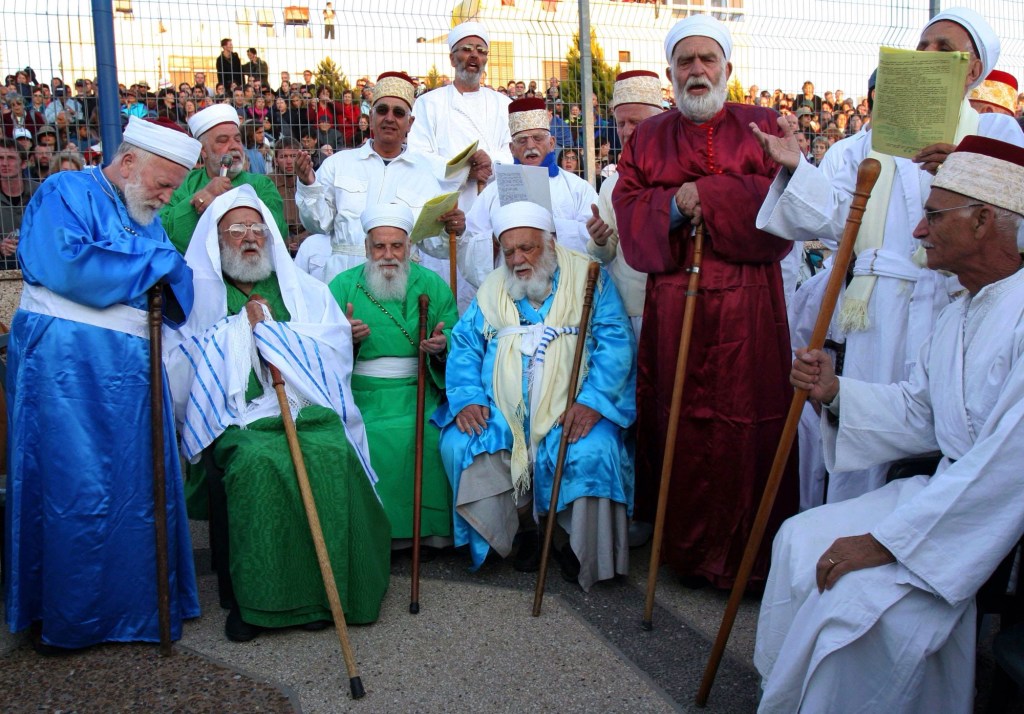
Nearly two centuries later, when the Judeans, the remnant of the southern kingdom, were allowed to return to rebuild Jerusalem following their Babylonian captivity, the Samaritans offered to assist in rebuilding the temple. This is how Ezra records it:
4 Now when the adversaries of Judah and Benjamin heard that the returned exiles were building a temple to the Lord, the God of Israel, 2 they approached Zerubbabel and the heads of fathers’ houses and said to them, “Let us build with you, for we worship your God as you do, and we have been sacrificing to him ever since the days of Esarhaddon king of Assyria who brought us here.” 3 But Zerubbabel, Jeshua, and the rest of the heads of fathers’ houses in Israel said to them, “You have nothing to do with us in building a house to our God; but we alone will build to the Lord, the God of Israel, as King Cyrus the king of Persia has commanded us.”
4 Then the people of the land discouraged the people of Judah and made them afraid to build 5 and bribed counselors against them to frustrate their purpose, all the days of Cyrus king of Persia, even until the reign of Darius king of Persia (Ezra 4:1-5).
Through intermarriage and adoption of some Israelite customs, the Samaritans considered themselves as children of Abraham, as worshippers of the one true God. The Judeans thought of them as gentile pagans. The rejection of the Samaritans’ offer of assistance became a point of conflict; Jewish scorn produced Samaritan opposition. This opposition to the Judeans was the second strike against the Samaritans. Memory is long in the Middle East. So, grudges were held five centuries later, in the time of Jesus. There was ongoing tension between the Judeans — the Jews — and the Samaritans. That doesn’t mean that there was no interaction between the two groups; there was, in fact. Geographically, Samaria lay between Galilee in the north and Jerusalem in the South so that Jews going from one region to another needed to pass through Samaria and probably overnight there or else add days to their journey using a longer, alternate route that bypassed Samaria. The Pharisees did not consider Samaria or its people inherently unclean. They could eat Samaritan food, for example, but they had to use their own vessels — plates, cups — to do so. It’s fair to say that the Jews and Samaritans eyed one another with a certain disdain and suspicion, if not hostility. But, they made do with one another as necessary.
Jesus was a Jew and, humanly speaking, he was formed by his culture. I don’t believe he was limited by cultural prejudice, but he knew of it. Certainly his disciples were products of that culture and they did exhibit its values for good and ill. That emerges in the well known text today, Jesus’ encounter with the Samaritan woman.
Jesus and the Woman of Samaria (John 4:1-45)
While ministering in Judea, Jesus begins attracting some unwanted attention from the Pharisees, and he decides to return to Galilee for awhile. He and his disciples take the short route through Samaria. They reach the town of Sychar around noon where Jesus stops at the town well — Jacob’s Well — while the disciples go off to buy food.
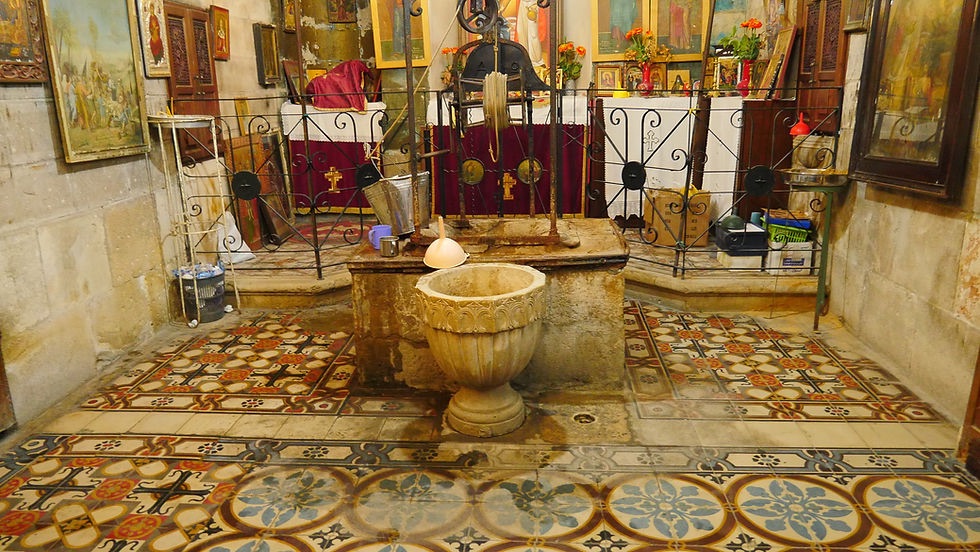
Jesus is weary from the journey, an interesting details in the text that emphasizes the true humanity of Jesus — not God in disguise as a man, but God truly incarnate. While he is resting beside the well, a woman of Samaria arrives to draw water. It is not the usual time of day to do that, so she appears to be alone as is Jesus. That already builds a bit of tension into the story. Jewish men were not to be alone with women other than their wives nor speak to them, and here we have a Jewish man and a Samaritan woman alone together. There are all kinds of social taboos at work here, and all of them broken when Jesus asks her for a drink.
7 A woman from Samaria came to draw water. Jesus said to her, “Give me a drink.” 8 (For his disciples had gone away into the city to buy food.) 9 The Samaritan woman said to him, “How is it that you, a Jew, ask for a drink from me, a woman of Samaria?” (For Jews have no dealings with Samaritans.) 10 Jesus answered her, “If you knew the gift of God, and who it is that is saying to you, ‘Give me a drink,’ you would have asked him, and he would have given you living water.” 11 The woman said to him, “Sir, you have nothing to draw water with, and the well is deep. Where do you get that living water? 12 Are you greater than our father Jacob? He gave us the well and drank from it himself, as did his sons and his livestock.” 13 Jesus said to her, “Everyone who drinks of this water will be thirsty again, 14 but whoever drinks of the water that I will give him will never be thirsty again. The water that I will give him will become in him a spring of water welling up to eternal life.” 15 The woman said to him, “Sir, give me this water, so that I will not be thirsty or have to come here to draw water” (John 4:7-15).
To say the least, the woman is surprised by Jesus’ request: he shouldn’t be talking to her in the first place, and, by tradition, he couldn’t accept a drink from her — using her vessels — even if she offered him one. The discussion that follows resembles Jesus’ earlier discussion with Nicodemus. It takes place on two different levels with the Samaritan woman speaking of physical matters while Jesus is getting at things of the Spirit. It’s as if she is playing checkers while he’s responding with chess moves.
You should be asking me for water — living water, Jesus says. She replies with the obvious: You have nothing to draw water with, and there is no living water — running water from a spring — around here anyway — just this well.

I don’t know the proper tone of voice to use when reading the rest of the conversation. Was Jesus being playful? Was the woman serious or perhaps a bit sarcastic?
So, you think you’re greater than Jacob and your water better than his? she asks.
Well, if you get water from Jacobs’s well, you’re going to have to come back here tomorrow and do it again. I can quench your thirst forever. The living water that I can give will become a perpetual spring of living water in you.
I read a book in 2006 about a group of free church evangelicals who converted to Orthodoxy. I think about that book, and particularly its title, whenever I read this conversation: Thirsting for God in a Land of Shallow Wells. That describes very well what is going on here. This woman, though she doesn’t seem to know it, is thirsting for God and not just for water. And while Jacob’s well is sufficient to quench her bodily thirst, it is far too shallow — her entire life is too shallow — to satisfy her spiritually. That requires the living water — the Holy Spirit — that only Jesus can provide.
So, she asks for this living water:
15 The woman said to him, “Sir, give me this water, so that I will not be thirsty or have to come here to draw water” (John 4:15).
Again, I have trouble reading the proper tone of voice here. The following dialogue makes two things clear: this is an intelligent woman — so it seems unlikely that she thinks Jesus is really talking about well water or spring water — and this is a woman who has reasons to be suspicious of men — five husbands and a current illicit relationship. So, what in the world is this Jew babbling about and why should she trust him anyway? So, I can just about hear some sarcasm in her voice: Yeah, right, then give me this water so I can stop trudging to this well every day. But, perhaps there is some hope there, too: I don’t really know exactly what you’re talking about, but I am deeply thirsty, so give me whatever it is you are offering.
Now, Jesus seems to change the topic abruptly: “Go, call your husband, and come here.” Why might Jesus do that?
He is moving the conversation into deeply personal territory. He’s gone from preaching to meddling. Five husbands, and now a sixth man who is not husband. I know your life. I know the brokenness of it, the emptiness of it. I know the depth of your real thirst. That is what I am offering to quench.
This is too close to home for the woman, too raw, and she changes the subject to theology.
19 The woman said to him, “Sir, I perceive that you are a prophet. 20 Our fathers worshiped on this mountain, but you say that in Jerusalem is the place where people ought to worship.” 21 Jesus said to her, “Woman, believe me, the hour is coming when neither on this mountain nor in Jerusalem will you worship the Father. 22 You worship what you do not know; we worship what we know, for salvation is from the Jews. 23 But the hour is coming, and is now here, when the true worshipers will worship the Father in spirit and truth, for the Father is seeking such people to worship him. 24 God is spirit, and those who worship him must worship in spirit and truth.” 25 The woman said to him, “I know that Messiah is coming (he who is called Christ). When he comes, he will tell us all things.” 26 Jesus said to her, “I who speak to you am he” (John 4:19-26).
So, let’s talk theology, the woman says. We Samaritans worship on Mt. Gerazim but you Jews worship on Mt. Zion. What do you say about that?
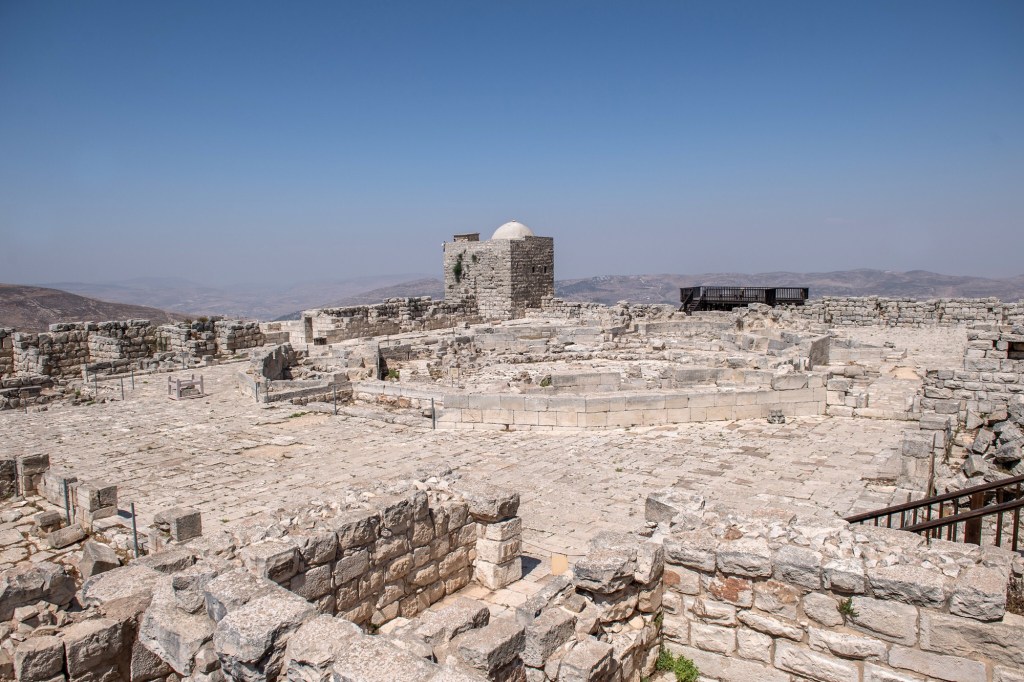
Well, salvation is from the Jews and not from the Samaritans, but in forty years location is not going to matter anyway. The Romans will destroy the Temple in Jerusalem. What is important is not so much where we worship but how we worship, not geography, but Spirit and truth. And that — Spirit and not well water — is what Jesus is offering her.
She seems to dismiss Jesus’ response, to wave it off. Well, we’ll never sort this out between us, but, when Messiah comes, he will make it all clear.
There is scholarly debate about what Jesus claimed for himself in the Gospels, about his self-identification. But this much is clear: in response to this woman, Jesus claims unambiguously that he is the Messiah, the one through whom God will fulfill all the covenant promises to renew Israel and to bless all the world through Israel. He is the one in whom all God’s promises are answered yes. This is enough for the woman. She leaves her water jar and heads into town as an evangelist: “Come, see a man who told me all that I ever did. Can this be the Christ?” And the whole town came, and many believed that Jesus was the Savior of the world. He stayed with them for two more days before resuming his journey to Jerusalem.
So far, the disciples have been largely absent from the story. Now, they return from buying food just in time to catch the end of the conversation between Jesus and the woman. They are surprised by it, but they don’t bring it up. Instead, they turn to mundane matters: Here, Jesus, eat some lunch. His initial response — I have food that you do not know about — is confusing to them, so he explains after a fashion.
34 Jesus said to them, “My food is to do the will of him who sent me and to accomplish his work. 35 Do you not say, ‘There are yet four months, then comes the harvest’? Look, I tell you, lift up your eyes, and see that the fields are white for harvest. 36 Already the one who reaps is receiving wages and gathering fruit for eternal life, so that sower and reaper may rejoice together. 37 For here the saying holds true, ‘One sows and another reaps.’ 38 I sent you to reap that for which you did not labor. Others have labored, and you have entered into their labor” (John 4:34-38).

John is a subtle writer. While the synoptic evangelists — Matthew, Mark, and Luke — approach things head on, John comes at the same matters at an angle. For example, John does not include the institution of the Lord’s Supper directly as the synoptic writers do; instead, he has the great Bread of Life discourse in John 6: Unless you eat my flesh and drink my blood you have no life in you. That is the way John approaches the Eucharist. And, John does not include the Parable of the Sower as the others do. But notice how the same ideas emerge here. Look around here in Samaria. A sower has sown good seed and it has landed on good ground and borne fruit — thirty, sixty, a hundred fold. And it is now ready for harvest. That will be your job. Who would have thought the good ground would be in Samaria? Certainly not the disciples. But those reading John’s gospel careful shouldn’t be surprised; there were hints from the beginning, from the Prologue:
9 The true light, which gives light to everyone, was coming into the world. 10 He was in the world, and the world was made through him, yet the world did not know him. 11 He came to his own, and his own people did not receive him. 12 But to all who did receive him, who believed in his name, he gave the right to become children of God, 13 who were born, not of blood nor of the will of the flesh nor of the will of man, but of God (John 1:9-13).
That’s the account of the Samaritan woman. Now, just a few observations.
First, we are only in chapter four of the Gospel, and already water has figured as a major symbol of Jesus’ ministry four times, once in each chapter: the water of John’s baptism, which sets the tone for everything else; the water turned to wine at Cana; the water and Spirit of new birth that Jesus announces to Nicodemus; and the well water and living water in the conversation with the Samaritan woman. Baptism is the through-line of the symbol: baptism and the indwelling of the Holy Spirit.
Second this: there are at least three times in his gospel when John presents women as evangelists. The first is Mary at the wedding in Cana; she gives a great evangelistic message to the servants: Do whatever he tells you. The last is Mary Magdalene when Jesus sends her to tell the brothers (the Apostles) the news of the resurrection and of his coming ascension. The middle account is here, when the Samaritan woman tells the entire town of Sychar what she has seen and heard from Jesus. She sows the word among her people and a great harvest ensues.
Third: the Holy Spirit is always at work sowing the seed of the Gospel, sometimes in places that are quite surprising to us. Our task is to look out over the fields to see which ones are ready for harvest and then to get busy reaping what has grown there.
Fourth: no one is excluded from the Gospel — not a woman with a disturbing past and questionable sexual morals, not a people that we might deem as somehow unworthy of the Gospel or of our acceptance.
Now, we turn to the sign in this chapter, the second of those recorded by John, the healing of the official’s son.
Jesus Heals an Official’s Son
The account is short enough that we can read it.
46 So he came again to Cana in Galilee, where he had made the water wine. And at Capernaum there was an official whose son was ill. 47 When this man heard that Jesus had come from Judea to Galilee, he went to him and asked him to come down and heal his son, for he was at the point of death. 48 So Jesus said to him, “Unless you see signs and wonders you will not believe.” 49 The official said to him, “Sir, come down before my child dies.” 50 Jesus said to him, “Go; your son will live.” The man believed the word that Jesus spoke to him and went on his way. 51 As he was going down, his servants met him and told him that his son was recovering. 52 So he asked them the hour when he began to get better, and they said to him, “Yesterday at the seventh hour the fever left him.” 53 The father knew that was the hour when Jesus had said to him, “Your son will live.” And he himself believed, and all his household. 54 This was now the second sign that Jesus did when he had come from Judea to Galilee (John 4:46-54).
We noted earlier how John often has his own take on events recorded by the synoptic Gospels. This account may well be John’s telling of the healing of the Centurion’s servant (see Matt 8:5-13).
This is a story of life and death: the child is ill and at the point of death. Unless Jesus intervenes, the child will die. The official has heard of Jesus as a healer and learns that he is near. It isn’t likely that the official is interested in theology at all. Whether Jesus is the Messiah — and whether the official even knew what a messiah was — probably didn’t enter into the picture at all. The official is desperate and has nothing to lose — except pride, perhaps — asking Jesus for help.
In what follows, I am grateful to Lesslie Newbigin for these insights from his commentary on John, The Light Has Come. After the official’s first appeal Jesus seems dismissive. The text is interesting here. Jesus speaks to the official, but he speaks in the plural; so, Jesus is really speaking to all the people through his response to the official.
48 So Jesus said to him, “Unless you (plural) see signs and wonders you will not believe” (John 4:48).
This implies that their belief is conditional; it is on their own terms. Do us some signs, then we might believe. Notice how St. John turns this around to make an essential point for his own readers.
49 The official said to him, “Sir, come down before my child dies.” 50 Jesus said to him, “Go; your son will live.” The man believed the word that Jesus spoke to him and went on his way (John 4:49-50).
Here is the key: the official believed — and acted on — the word that Jesus spoke to him without having yet seen any sign. Later, when he learned that the child was healed in the same hour that Jesus pronounced the word, the official’s own belief was deepened and his household came to believe. But, it all started with the official believing Jesus’ word: with hearing, not with seeing.
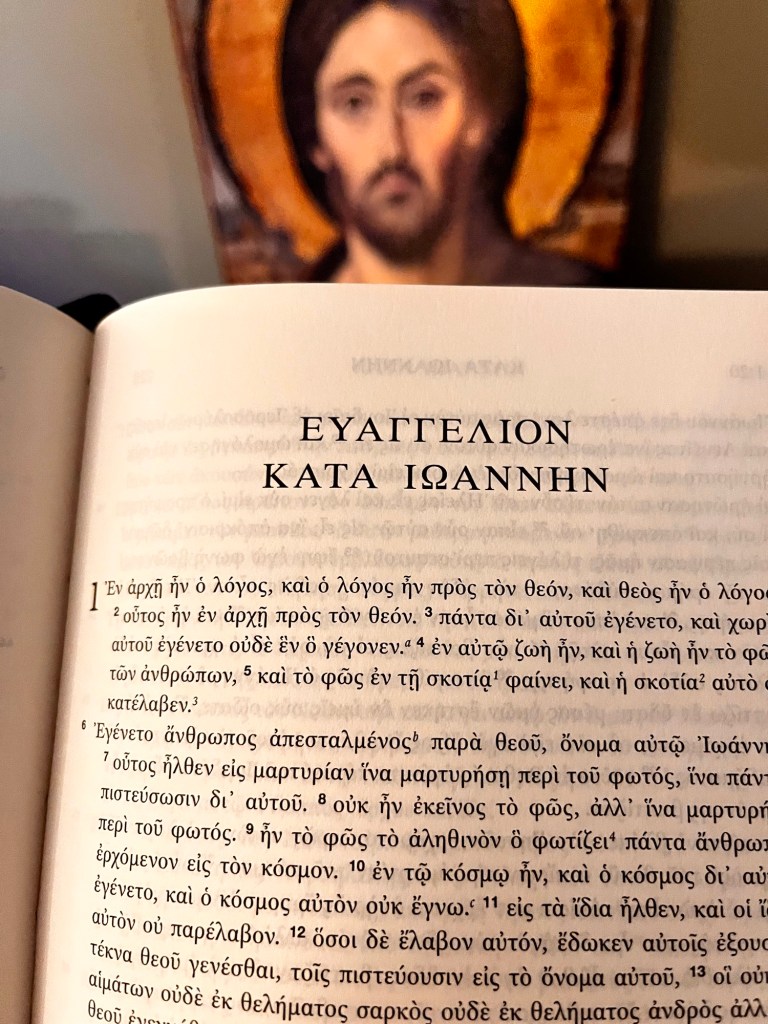
Why is this important? John tells us near the conclusion of his Gospel.
24 Now Thomas, one of the twelve, called the Twin, was not with them when Jesus came. 25 So the other disciples told him, “We have seen the Lord.” But he said to them, “Unless I see in his hands the mark of the nails, and place my finger into the mark of the nails, and place my hand into his side, I will never believe.”
26 Eight days later, his disciples were inside again, and Thomas was with them. Although the doors were locked, Jesus came and stood among them and said, “Peace be with you.” 27 Then he said to Thomas, “Put your finger here, and see my hands; and put out your hand, and place it in my side. Do not disbelieve, but believe.” 28 Thomas answered him, “My Lord and my God!” 29 Jesus said to him, “Have you believed because you have seen me? Blessed are those who have not seen and yet have believed.”
30 Now Jesus did many other signs in the presence of the disciples, which are not written in this book; 31 but these are written so that you may believe that Jesus is the Christ, the Son of God, and that by believing you may have life in his name (John 20:24-31).
Blessed are those who have not seen and yet have believed. John is writing to people — and we are amongst them — who have not and will not see the signs that Jesus worked. What we have is the word: the words spoken by Jesus and about Jesus, and the words written by John. Just as the word was sufficient to engender faith in the official it can be and must be sufficient for us. The word has its own authority and its own power independent of signs and wonders. This story of the official’s son is a resurrection story of sorts, a story of life from death. It is, in the true sense of the word, a sign pointing toward resurrection. It is a sign that links word and life. And that brings us right back again to John’s Prologue: Jesus the Word of God, became flesh and dwelt among us that we might have life. Jesus not only speaks but is the life-giving word. That is the nature of this second sign: the sufficiency of the word to engender faith. But these [words] are written so that you may believe that Jesus is the Christ, the Son of God, and that by believing you may have life in his name (see John 20:31).


