Eat My Flesh, Drink My Blood
Apostles Anglican Church
Fr. John A. Roop
The Gospel According to St. John: Chapter 6, Part 2 (John 6:41-71)
Eat My Flesh, Drink My Blood
The Lord be with you.
And with your spirit.
Let us pray.
O God, you make us glad with the weekly remembrance of the glorious resurrection of your Son our Lord: Give us this day such blessing through our worship of you, that the week to come may be spent in your favor; through Jesus Christ our Lord. Amen (BCP 2019, p. 676).
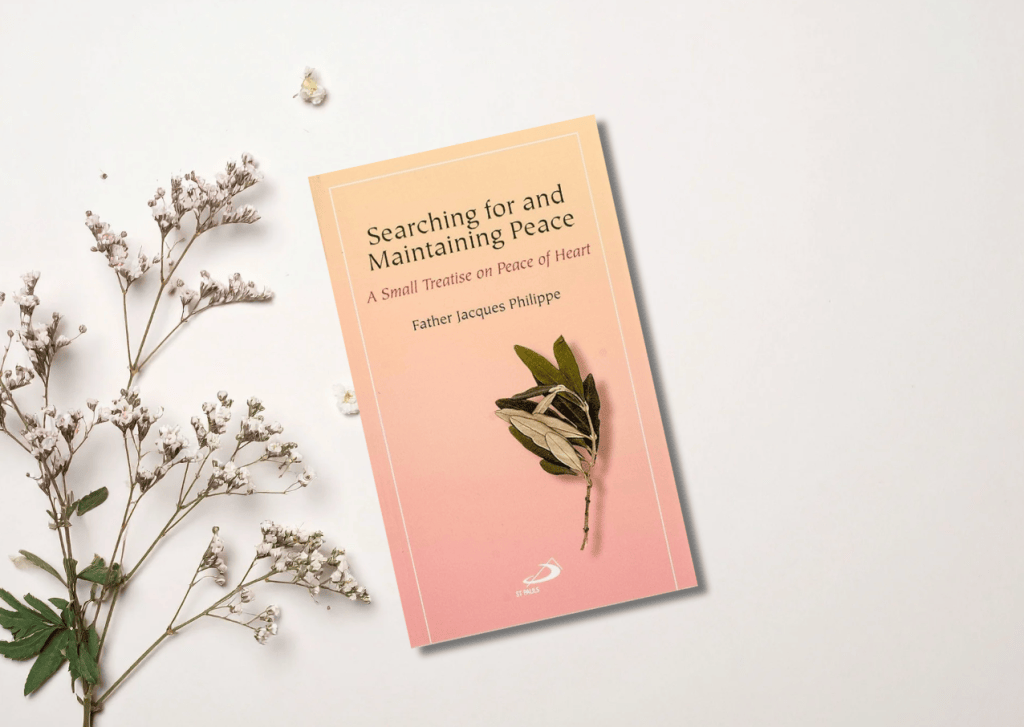
The book caught my eye on my recent visit to the Monastery of the Holy Spirit in Conyers, Georgia: Searching for and Maintaining Peace — A Small Treatise on Peace of Heart. Its author Fr. Jacques Philippe is a Roman Catholic Priest, spiritual director, and retreat director, and the author of several other books, one of which we have recommended and used here at Apostles, Interior Freedom.
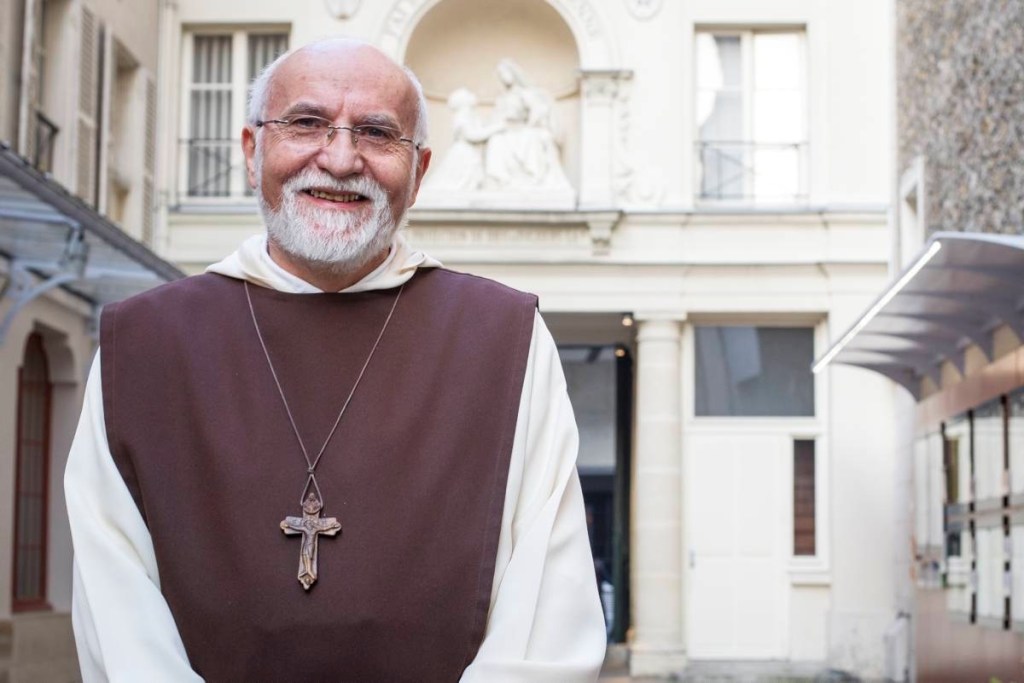
In considering the reasons we most often lose our peace of heart Fr. Philippe writes:
The most common reason for which we could lose our sense of peace is a fear caused by certain situations which touch us personally and in which we feel threatened, apprehensions in the face of present or future difficulties, fear of lacking something important, of not succeeding in such and such a project, and so forth. The examples are infinite and touch all sectors of our lives: health, family and professional life, moral life and the spiritual life itself (Fr. Jacques Philippe, Searching for and Maintaining Peace, St Pauls (2002), p. 23).
He continues to say that what is needed to maintain peace — at least in part — is a firm conviction in and experience of the providence of God: that God is good, that he cares for us, that he is wisely and rightly ordering all things so that we will lack nothing that we truly need to know him, to love him, and to serve him in this life and the life to come — in other words, that God is the Heavenly Father that Jesus describes in the Sermon on the Mount.
But there are obstacles to maintaining that conviction. Again, Fr. Philippe writes:
The first obstacle is that, as long as we have not experienced concretely the fidelity of Divine Providence to provide for our essential needs, we have difficulty believing in it and we abandon it. We have hard heads, the words of Jesus do not suffice for us, we want to see at least a little in order to believe! Well, we do not see it operating around us in a clear manner. How, then, are we to experience it (ibid, p. 28)?
In other words, it is difficult to maintain the theological conviction of divine providence necessary for peace of heart if we have not concretely experienced divine providence sustaining us. Words and theory simply won’t do. Then, Fr. Philippe gets down to the brass tacks:
This is where the problem lies. Many do not believe in Providence because they’ve never experienced it, but they’ve never experienced it because they’ve never jumped into the void and taken a leap of faith. They never give it the possibility to intervene. They calculate everything, anticipate everything, they seek to resolve everything by counting on themselves, instead of counting on God (ibid, pp. 28-28).
Let’s reformulate that statement as a question: Have you ever done something so audacious, so daring, so beyond your own means and capability — in the name of God — that unless God is in it and shows up you will fail spectacularly? Those are the moments in which divine providence can be experienced most concretely.
The Old Testament is replete with examples of people doing that: people stepping so far beyond themselves — because God called them, drew them — that there was no reasonable human hope for success. Divine providence had to make the way.
There is Abram. Leave your home and go where I will lead you. I will give you a good land and fill it with a vast multitude of your offspring. Abram knows, and we know, that none of that will happen by Abram’s power; unless God does it, this covenant will fail utterly.
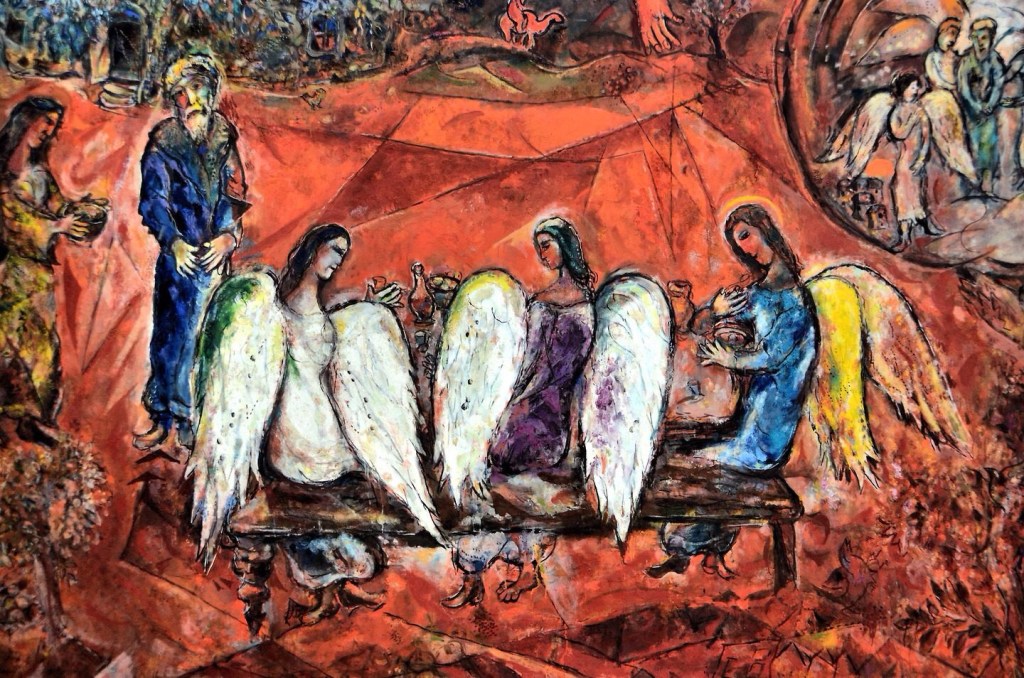
There is Moses. Go tell Pharaoh to let my people go worship me, and I will deliver them from their slavery with a mighty hand and an outstretched arm. Well, none of that will happen if Moses is left to his own devices, not even with Aaron’s and Miriam’s help. Divine providence has to make the way.
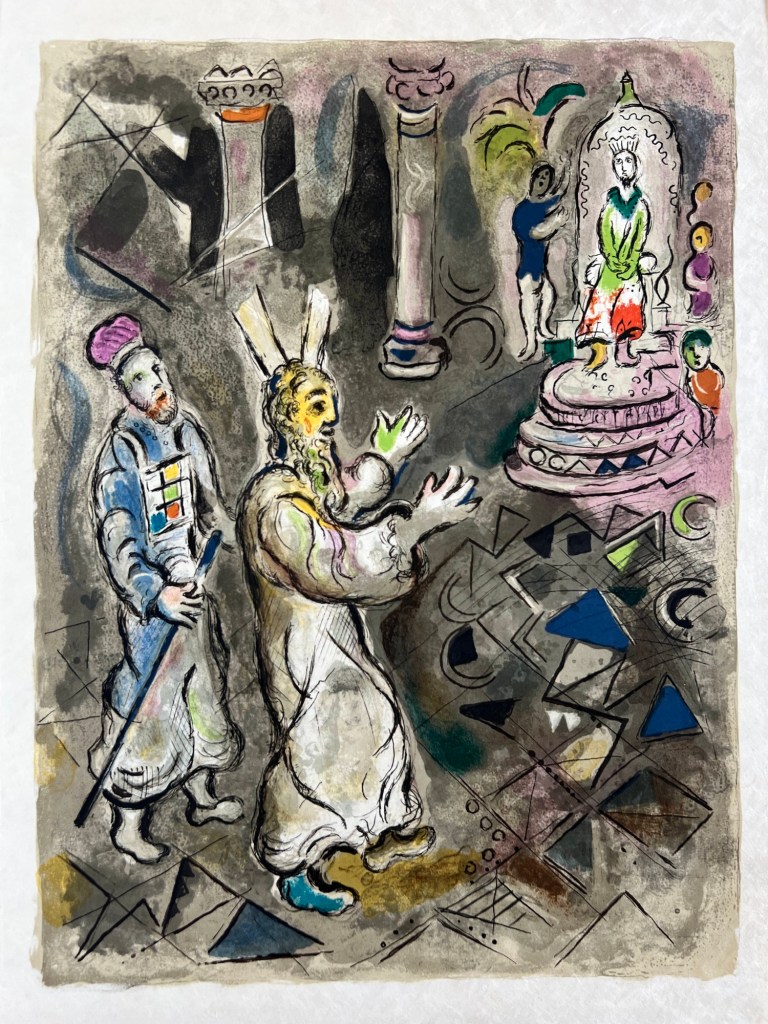
One of the greatest examples of divine providence in the story of Israel — and the one that is most germane to our text today — is God’s care for the people through the forty years in the wilderness. We see this from the moment the Hebrews leave Egypt until they cross the Jordan into the promised land some four decades later.
This event happened even before the Hebrews first reached Sinai on their way out of Egypt:
1 They set out from Elim, and all the congregation of the people of Israel came to the wilderness of Sin, which is between Elim and Sinai, on the fifteenth day of the second month after they had departed from the land of Egypt. 2 And the whole congregation of the people of Israel grumbled against Moses and Aaron in the wilderness, 3 and the people of Israel said to them, “Would that we had died by the hand of the Lord in the land of Egypt, when we sat by the meat pots and ate bread to the full, for you have brought us out into this wilderness to kill this whole assembly with hunger” (Exodus 16:1-3).
Notice that despite everything God had already done for them, the people’s response was to grumble. In spite of that, the provision of manna starts here. Then, just a bit later:
1 All the congregation of the people of Israel moved on from the wilderness of Sin by stages, according to the commandment of the Lord, and camped at Rephidim, but there was no water for the people to drink. 2 Therefore the people quarreled with Moses and said, “Give us water to drink.” And Moses said to them, “Why do you quarrel with me? Why do you test the Lord?” 3 But the people thirsted there for water, and the people grumbled against Moses and said, “Why did you bring us up out of Egypt, to kill us and our children and our livestock with thirst” (Exod 17:1-3)?
Even with all they have seen, empty bellies and parched lips make it hard to trust in divine providence. They lose their peace of heart. They grumble. They quarrel.
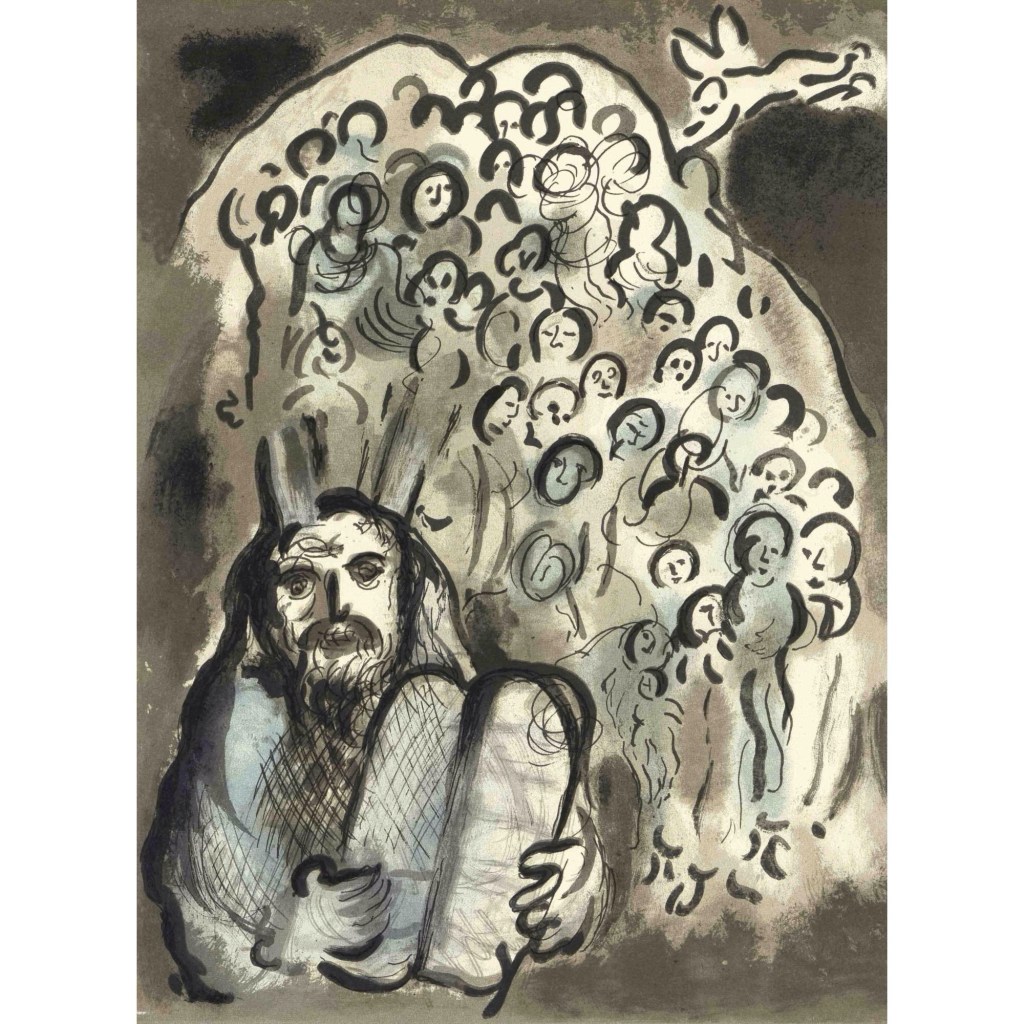
John 6:41-51 The End of Exile and the Bread of Life
This is the backdrop for Jesus’ feeding of the five thousand and the conversations and discourse that follow in John 6. Let’s read the first portion of the text, John 6:41-51.
41 So the Jews grumbled about him, because he said, “I am the bread that came down from heaven.” 42 They said, “Is not this Jesus, the son of Joseph, whose father and mother we know? How does he now say, ‘I have come down from heaven’?” 43 Jesus answered them, “Do not grumble among yourselves. 44 No one can come to me unless the Father who sent me draws him. And I will raise him up on the last day. 45 It is written in the Prophets, ‘And they will all be taught by God.’ Everyone who has heard and learned from the Father comes to me— 46 not that anyone has seen the Father except he who is from God; he has seen the Father. 47 Truly, truly, I say to you, whoever believes has eternal life. 48 I am the bread of life. 49 Your fathers ate the manna in the wilderness, and they died. 50 This is the bread that comes down from heaven, so that one may eat of it and not die. 51 I am the living bread that came down from heaven. If anyone eats of this bread, he will live forever. And the bread that I will give for the life of the world is my flesh.”
Notice how our text for the day begins.
41 So the Jews grumbled about him, because he said, “I am the bread that came down from heaven.” 42 They said, “Is not this Jesus, the son of Joseph, whose father and mother we know? How does he now say, ‘I have come down from heaven’” (John 6:41-42).
The Jews grumbled. This brings us right back to the Hebrews in the wilderness grumbling against Moses over lack of bread when, ironically, Jesus has just fed over five thousand people with bread and fish. The problem is not with the food itself, but with Jesus’ insistence that he is the true bread that came down from heaven. “We know his people, his mom and dad,” the Jews say. “How can he say he came down from heaven?” They grumble at Jesus over bread.
When the Gospel writers say the Jews did this or the Jews did that, they are often speaking not of the general populace, but rather of the leaders of the people: sometimes the Scribes and Pharisees, sometimes the Sadducees, sometimes the priests. I suspect that is the case here because of what Jesus says next.
43 Jesus answered them, “Do not grumble among yourselves. 44 No one can come to me unless the Father who sent me draws him. And I will raise him up on the last day. 45 It is written in the Prophets, ‘And they will all be taught by God.’ Everyone who has heard and learned from the Father comes to me— (John 6:43-45).
The crowds have flocked to Jesus: for healing, for teaching, now for food and perhaps because of what they misconstrue as possible kingly aspirations. That, I suspect, is the basis of the Jewish leaders’ complaint and grumbling. This new rabbi is garnering attention, gathering a following, and making startling claims about himself. In the best case scenario, the Jewish leaders are concerned that Jesus is leading the people astray. In the worst case scenario, they are just jealous of his popularity. Either way, they grumble against God incarnate as the Hebrews in the wilderness had grumbled against the God of the Exodus.
Jesus’ response is interesting. The people come because the Father has drawn them, and that is in accordance with the prophets. The text that Jesus quotes, “And they will all be taught by God,” is from Isaiah 54. Significantly, the whole of that chapter is about the end of exile, how God will one day gather all people to himself — he will be their husband — and will bless and teach them and establish them in righteousness. This is what Jesus says is happening in their presence, in his person. God is calling his people home from exile; those who hear God are coming to Jesus and those who don’t are not. But, to those who come, Jesus offers eternal life. He offers living bread, toward which the manna pointed, that one may eat of it and not die. That is controversial enough, but then Jesus takes a step that is just too far for many, even for devoted disciples. He says, “And the bread that I will give for the life of the world is my flesh” (John 6:51).
John 6:52-59 Unless You Eat My Flesh and Drink My Blood
Let’s read John 6:52-59, a very challenging text.
52 The Jews then disputed among themselves, saying, “How can this man give us his flesh to eat?” 53 So Jesus said to them, “Truly, truly, I say to you, unless you eat the flesh of the Son of Man and drink his blood, you have no life in you. 54 Whoever feeds on my flesh and drinks my blood has eternal life, and I will raise him up on the last day. 55 For my flesh is true food, and my blood is true drink. 56 Whoever feeds on my flesh and drinks my blood abides in me, and I in him. 57 As the living Father sent me, and I live because of the Father, so whoever feeds on me, he also will live because of me. 58 This is the bread that came down from heaven, not like the bread the fathers ate, and died. Whoever feeds on this bread will live forever.” 59 Jesus said these things in the synagogue, as he taught at Capernaum.
These words of Jesus have divided people from the moment they were first uttered, and they divide people still: Protestant from Protestant, Protestant from Roman Catholic, Roman Catholic from Orthodox. Even Jesus’ disciples said, “This is a hard saying; who can listen to it” (John 6:60). And they were divided over it. We’ll have more to say about that response later.
We — the Church —understand this saying of Jesus eucharistically, and that is almost certainly how St. John intended it. By the time he wrote his Gospel, the Church had been meeting together on the Lord’s Day for fifty to sixty years precisely, in part, for the breaking of the bread, for the Eucharist which is a partaking in the Body and Blood of Christ. This is what St. Paul taught us:
23 For I received from the Lord what I also delivered to you, that the Lord Jesus on the night when he was betrayed took bread, 24 and when he had given thanks, he broke it, and said, “This is my body, which is for you. Do this in remembrance of me.” 25 In the same way also he took the cup, after supper, saying, “This cup is the new covenant in my blood. Do this, as often as you drink it, in remembrance of me.” 26 For as often as you eat this bread and drink the cup, you proclaim the Lord’s death until he comes (1 Cor 11:23-26).
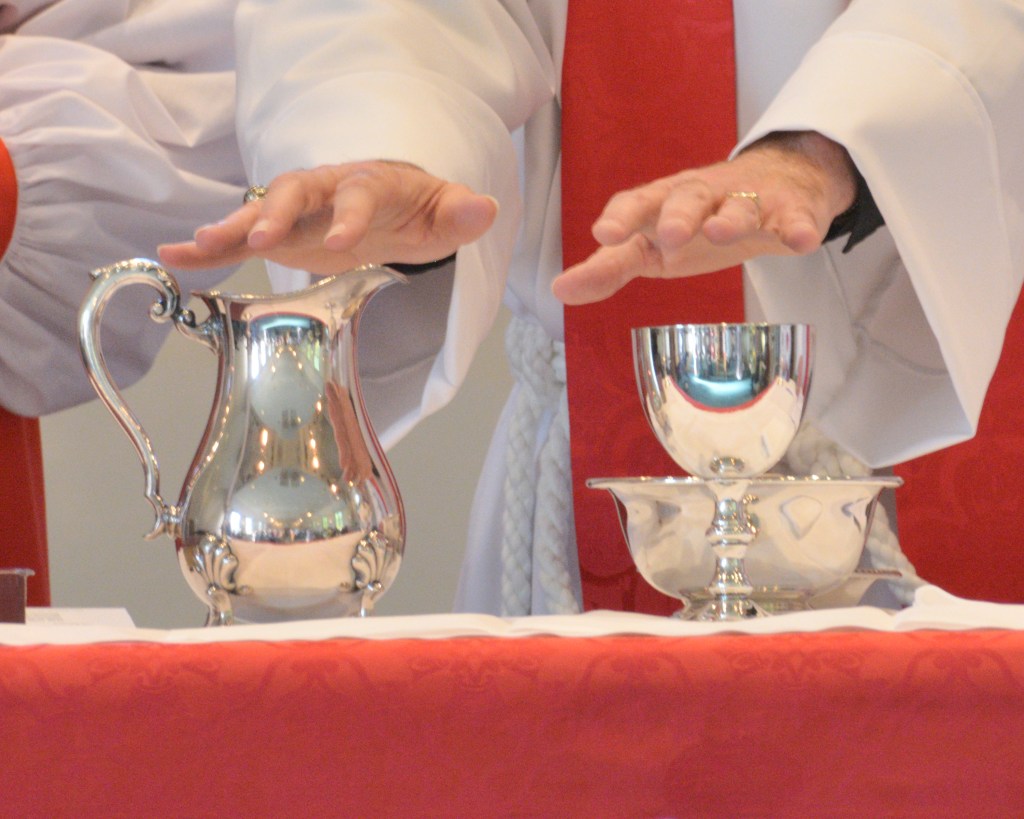
Until the Reformation, the Church never shied away from Jesus’ words, never allegorized them or made metaphor of them: This bread is my body; this wine is my blood. The Church always believed that. We Anglicans still do and we speak of the Real Presence of Christ in the Sacrament. In our best moments we do not argue over precisely how Jesus is present in the elements, how the bread is his body and the wine is his blood. We accept it as true because Jesus said it and because we have received that faith from the Church.
The question that I’d like to think about with you this morning is why that matters. Why is it important that the bread is not just bread but the Body of Christ, and the wine not just wine but the Blood of Christ? And, that brings us to another question that divides the Church today: what do we have in our chancel — an altar or a table? Most Protestants, I suspect, will answer a table. Roman Catholics and Orthodox will answer an altar. Anglicans will just argue about it. I will tip my hand up front and say that the question presents a false dichotomy, that the real answer is simply “Yes.” I want to explain that in a way that those who first heard Jesus talk about eating his flesh and drinking his blood could have — and perhaps should have — understood his meaning.
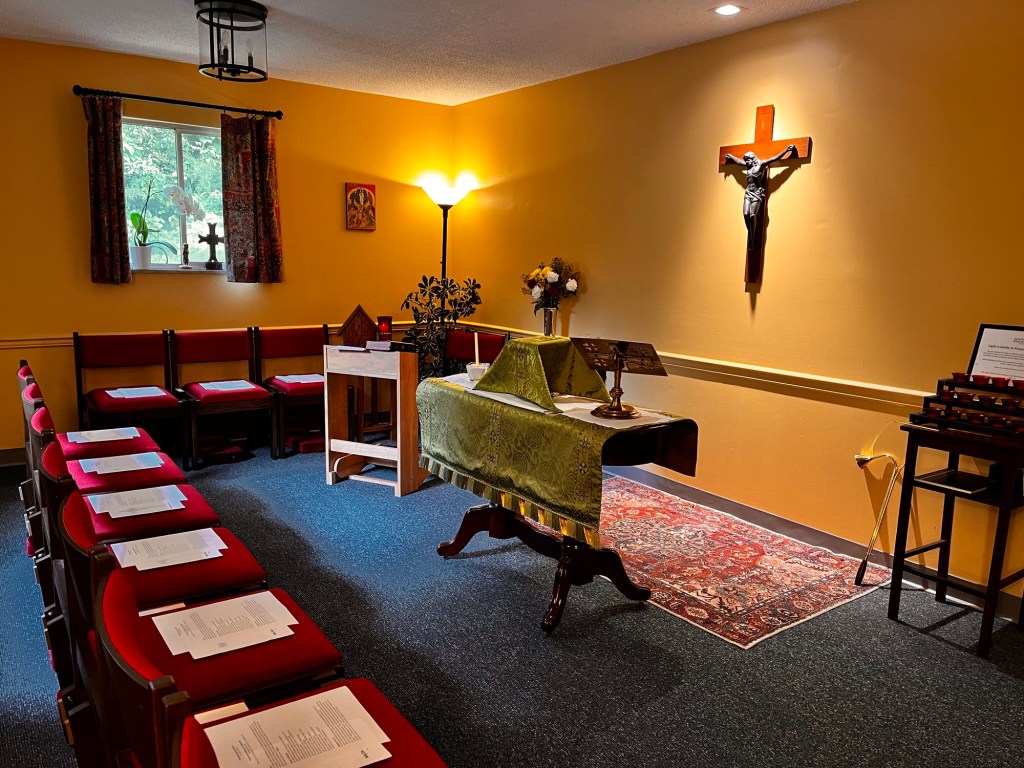
Let’s think about sacrifices under the Old Covenant. What was the purpose — or what were the purposes — of the sacrifices? Of course, we have to speak generally since where several types of sacrifices.
There was a two-fold purpose to the sacrifices: (1) to purify a sinful people so that the holy God might dwell among them without destroying them and (2) to bring man and God into right relationship to one another, a relationship typified by fellowship with one another.
So, the purpose of a sin offering, for example, was purification for the tabernacle and for the people. Spiritually speaking, sin left a residue, a taint, that had to be cleansed if God were to dwell among his people. And, what was the cleansing agent? Blood. With this, the author or Hebrews agrees:
18 Therefore not even the first covenant was inaugurated without blood. 19 For when every commandment of the law had been declared by Moses to all the people, he took the blood of calves and goats, with water and scarlet wool and hyssop, and sprinkled both the book itself and all the people, 20 saying, “This is the blood of the covenant that God commanded for you.” 21 And in the same way he sprinkled with the blood both the tent and all the vessels used in worship. 22 Indeed, under the law almost everything is purified with blood, and without the shedding of blood there is no forgiveness of sins (Heb 9:18-22).
So, the blood purifies people — and things — from sin. The purpose of this is ultimately to obtain peace between God and man. And, here, the peace offering becomes significant. In that offering, part of the sacrificial animal was burned in a offering to God, part was given to the priests for their food, and part was returned to the offerer to be used in a communal meal with family. The flesh was to be eaten in a great act of fellowship that joined into one great community God, the priests, and the people.
Again, generally speaking, the main purposes of the sacrificial system was purification of sinful man — through the blood of the sacrifice — and fellowship (union) between God and purified man through the flesh of the sacrifice. Eat the flesh, sprinkle — or apply — the blood. And that, I suggest, is one way in which Jesus’ words about eating his flesh and drinking his blood must be understood. Because he is the Lamb of God who takes away the sin of the world, his blood purifies all things, as St. John says in his first epistle:
1 My little children, I am writing these things to you so that you may not sin. But if anyone does sin, we have an advocate with the Father, Jesus Christ the righteous. 2 He is the propitiation for our sins, and not for ours only but also for the sins of the whole world (1 John 2:1).
Now, there is a subtlety here, that we need to explore for a bit. For Jews, the idea of blood sprinkled or applied was perfectly acceptable, but not blood consumed. That was forbidden by God. So, Jesus’ words that they, and we, must drink his blood were scandalous. With that in mind, listen to the writer of Hebrews:
11 But when Christ appeared as a high priest of the good things that have come, then through the greater and more perfect tent (not made with hands, that is, not of this creation) 12 he entered once for all into the holy places, not by means of the blood of goats and calves but by means of his own blood, thus securing an eternal redemption. 13 For if the blood of goats and bulls, and the sprinkling of defiled persons with the ashes of a heifer, sanctify for the purification of the flesh, 14 how much more will the blood of Christ, who through the eternal Spirit offered himself without blemish to God, purify our conscience from dead works to serve the living God (Heb 9:11-14).
Notice the distinction the author makes. The blood of bulls and goats was for the purification of the flesh, an exterior matter. But, the blood of Christ is for the purification of the conscience — or we might say the purification of the heart. And that is an interior matter. If we intend to purify the exterior, sprinkling will do. But, if we want to purify the heart, we must take the blood inside us by drinking it.
So, do we have an altar or a table? Yes. In our churches we have an altar where Christ’s blood purifies us: not that we sacrifice Christ again on that altar — his sacrifice was offered once for all (see Heb 10) — but rather that we participate in the one, finished sacrifice of Christ with each Eucharist.
Then, having been purified by his blood, we can have fellowship with God and with one another, just as in the peace offering; for Christ himself is our peace (see Eph 2). We share the fellowship meal of his body just as Israel shared the fellowship meal of the peace offering: God and man eating together, men who were once alienated from one another eating together. The altar has become a table.
Since purification and fellowship are prerequisites for life, for the abundant life that Christ offers us, we now understand what he means when he says,
53 “Truly, truly, I say to you, unless you eat the flesh of the Son of Man and drink his blood, you have no life in you. 54 Whoever feeds on my flesh and drinks my blood has eternal life, and I will raise him up on the last day” (John 6:53-54).
Just as St. John’s readers would have understood Jesus’ discourse with Nicodemus in John 3 as pertaining to baptism, his readers would understand Jesus’ words here as pertaining to the Eucharist. The Church from the beginning to the Reformation, maintained that both baptism and the Eucharist are generally necessary for salvation: one gives new life and one sustains and nurtures that new life. That is still the doctrine of the Anglican Church.
John 6:60-71 Grumbling and Peace of Heart
How did the people respond to Jesus’ words? Let’s read John 6:60-65 to see.
60 When many of his disciples heard it, they said, “This is a hard saying; who can listen to it?” 61 But Jesus, knowing in himself that his disciples were grumbling about this, said to them, “Do you take offense at this? 62 Then what if you were to see the Son of Man ascending to where he was before? 63 It is the Spirit who gives life; the flesh is no help at all. The words that I have spoken to you are spirit and life. 64 But there are some of you who do not believe.” (For Jesus knew from the beginning who those were who did not believe, and who it was who would betray him.) 65 And he said, “This is why I told you that no one can come to me unless it is granted him by the Father.”
66 After this many of his disciples turned back and no longer walked with him (John 6:60-66).
There is that word again, the one we started with today: his disciples were grumbling. They have become the Hebrews in the wilderness. And just like those grumblers in the wilderness would have left Moses and returned to Egypt and slavery had it been possible, so these disciples of Jesus turned back into slavery. There is an implicit warning here for us about the dangers of unbelief, hardness of heart, and grumbling. The warning is made explicit in Hebrews.
7 Therefore, as the Holy Spirit says,
“Today, if you hear his voice,
8 do not harden your hearts as in the rebellion,
on the day of testing in the wilderness,
9 where your fathers put me to the test
and saw my works for forty years.
10 Therefore I was provoked with that generation,
and said, ‘They always go astray in their heart;
they have not known my ways.’
11 As I swore in my wrath,
‘They shall not enter my rest.’ ”
12 Take care, brothers, lest there be in any of you an evil, unbelieving heart, leading you to fall away from the living God. 13 But exhort one another every day, as long as it is called “today,” that none of you may be hardened by the deceitfulness of sin. 14 For we have come to share in Christ, if indeed we hold our original confidence firm to the end. 15 As it is said,
“Today, if you hear his voice,
do not harden your hearts as in the rebellion” (Heb 3:7-15).
Now, we will end where we started: with the notion of peace of heart and how having peace of heart depends on the experience of casting yourself into the void trusting solely in the providence of God.
As many of his disciples are abandoning him because of this difficult Eucharistic teaching, Jesus turns to the Twelve and very poignantly asks what they plan to do.
67 So Jesus said to the twelve, “Do you want to go away as well?” 68 Simon Peter answered him, “Lord, to whom shall we go? You have the words of eternal life, 69 and we have believed, and have come to know, that you are the Holy One of God.” 70 Jesus answered them, “Did I not choose you, the twelve? And yet one of you is a devil.” 71 He spoke of Judas the son of Simon Iscariot, for he, one of the twelve, was going to betray him (John 6:67-71).
How might we paraphrase Peter’s answer? Lord, we have cast our lot with you; we have left everything to follow you. There’s no going back for us. And, we’ve seen too much, we’ve come to know too much, we’ve come to trust you too much to back out now.
This is exactly what Fr. Jacques Philippe was writing about. These men — eleven of them, at least — have cast out into the void with Jesus and they have found him worthy of their trust. Listen to Fr. Jacques’ words again:
This is where the problem lies. Many do not believe in Providence because they’ve never experienced it, but they’ve never experienced it because they’ve never jumped into the void and taken a leap of faith. They never give it the possibility to intervene. They calculate everything, anticipate everything, they seek to resolve everything by counting on themselves, instead of counting on God (ibid, pp. 28-28).
Do the Apostles understand Jesus’ difficult words any better than the masses who are turning away? Probably not. But, they don’t need to: they no longer need to calculate everything, anticipate everything, seek to resolve everything by counting on themselves. They have learned to count on Jesus, and they have learned that by experience.
QUESTIONS FOR DISCUSSION
1. What words of Jesus do you find particularly confusing and disturbing? What keeps you holding fast to Jesus even in the face of these difficult words? How might you learn to trust them?
2. Can you think of a time when you stepped out into the void to follow Jesus? What happened? What did you learn?
3. What effect, if any, does what you’ve heard in this lesson have on your view of the Eucharist?
4. How do our Anglican Eucharistic liturgies reflect Jesus’ teaching in John 6?


