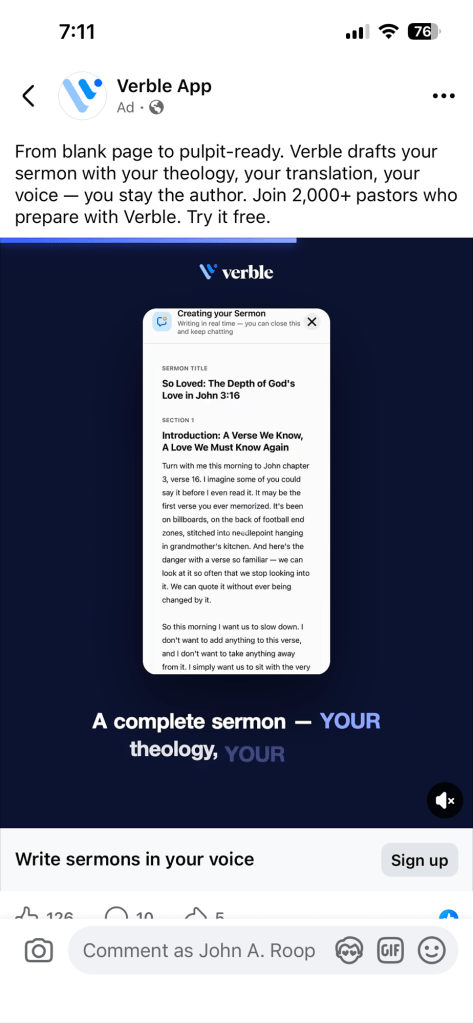
The Verble app offered to write my sermon — with my theology, my translation, my voice — and to prepare slides. I simply had to answer a few prompt questions and the homiletical AI assistant could complete all this between verses one and two of the sequence hymn. Until that offer, I had never intentionally interacted with AI. I have no idea how to query ChatGPT or Grok or any other AI assistant. But that very day I had just finished work on my own sermon — a difficult piece of work — and I suppose I was both tired and curious. So, I answered Verble’s prompts about a desired sermon: Philippians 1, ESV, 20-30 minutes, challenging, theme idea/verse, and a few other bits of information. I pressed the button. Verble generated a sermon in seconds. Was it good? It wasn’t bad; I’ve read worse. Some might argue that I’ve written worse.
Now, understand, I did this as a test only with no intent to use or even to draw from the AI sermon. What I have written, I have written. Our bishop has, very wisely in my assessment, forbidden use of AI for writing sermons. Even so I felt a bit sullied, like I needed to take a bath or go to confession.
That was Friday, I think, and I have been pondering the matter since. Writing this post is part of that pondering, a thinking “out loud” on digital paper. Much is demanded of a priest; this is not a complaint, just a reality. In any given week a priest might offer pastoral care or spiritual direction to several parishioners, make hospital visits to others, prepare lessons, meet with staff or budget committee or vestry, deal with building maintenance issues, perform house blessings, offer last rites, and tend to countless other important matters. In the midst of that, he finds time for prayer and study and lectio. “Finds time” is wrong but sometimes true. If a priest — or anyone else — does not make these disciplines primary and set aside sacrosanct time for them, they will inevitably be crowded out by things that are less important but more urgent. Oh, yes, I had almost forgotten. Most priests have families — Anglican priests, that is — that they must, and long to, spend time with. And then, relentlessly, there is the sermon. Imagine a week where many of these legitimate needs collide. Imagine it is Friday night when the priest realizes he has not seriously begun work on his sermon. What would be wrong, in such an extreme situation, with using AI to (at least / at most) draft a sermon? Much, I think, in every way.
Though many protestants tremble at the T-word — Tradition — ours is inescapably a traditioned faith. What we have received from others, we make our own, and we pass on to others. We have that from St. Paul:
1 Now I would remind you, brothers, of the gospel I preached to you, which you received, in which you stand, 2 and by which you are being saved, if you hold fast to the word I preached to you — unless you believed in vain.
3 For I delivered to you as of first importance what I also received: that Christ died for our sins in accordance with the Scriptures, 4 that he was buried, that he was raised on the third day in accordance with the Scriptures, 5 and that he appeared to Cephas, then to the twelve (1 Cor 15:1-3).
Delivered, received, preached: that is the traditioning of our faith. It is this process of traditioning that renders AI incompatible with preaching or catechesis or pastoral care or — Lord, have mercy — prayer and confession. What is delivered, received, and passed on is not mere information. The traditioning of faith that made me a priest and consecrated me to preach included study — much study, yes — and careful examination, but also the laying on of hands by a successor of the Apostles, his prayer of blessing and consecration, anointing with oil, epiclesis and the outpouring of the Holy Spirit for the office and work of a Priest. Here is the very prayer that was offered:
Receive the Holy Spirit for the office and work of a Priest in the Church of God, now committed to you by the imposition of our hands. If you forgive the sins of anyone, they are forgiven. If you withhold forgiveness from anyone, it is withheld. Be a faithful minister of God’s holy Word and Sacraments; in the Name of the Father, and of the Son, and of the Holy Spirit (Book of Common Prayer 2019, p. 493).
This is the way faith is delivered, received, and, yes, preached. Verble cannot tradition the faith in this way. What bishop imposed hands on it? Is that even possible? When was it anointed? Is it filled with the Holy Spirit for any office or work? Even to think this way is to commit a category mistake.
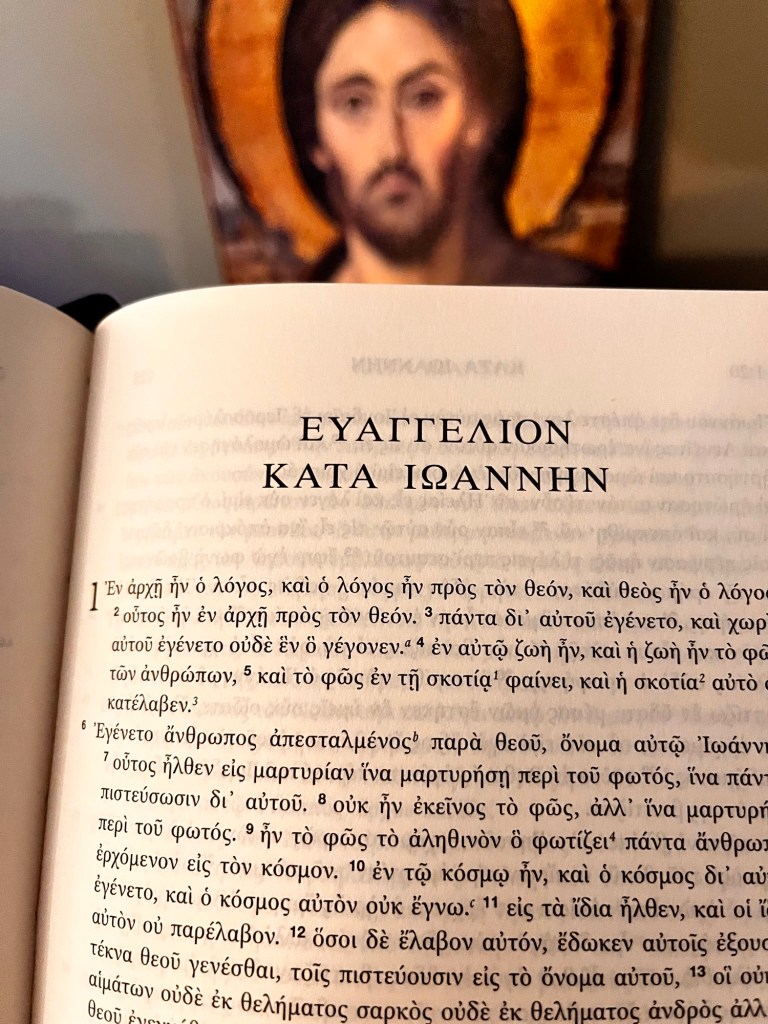
There is something iconic in this traditioning. An icon does not primarily seek to convey information about its subject. The icon draws one into the tradition by ushering one into the presence of Christ as revealed in the life of its subject. It can do so, in part, because it was written in keeping with the tradition, by one who was immersed in repentance, in prayer, in fasting, in submission to the great tradition. It is Spirit and truth that the icon manifests. And that is precisely what AI cannot do. It is Spirit and truth that a sermon must manifest. AI cannot pass on what it has not received.


