
Apostles Anglican Church
Fr. John A. Roop
Introduction To The Apocrypha: Judith
The Lord be with you.
And with your spirit.
Let us pray.
76. FOR GUIDANCE
Go before us, O Lord, in all our doings with your most gracious favor, and further us with your continual help; that in all our works begun, continued, and ended in you, we may glorify your holy Name, and finally, through your mercy, obtain everlasting life; through Jesus Christ our Lord. Amen (BCP 201, p. 669).
INTRODUCTION
Today we continue our survey of the Apocrypha with the book of Judith. Last week we noted that of the fourteen apocryphal books that Anglicans read “for example of life and instruction of manners” (Article VI, BCP 2019, p. 774) only six are included in our lectionaries for public reading in the Church either during the Eucharist or the Daily Office. These six fall into three categories or literary genres:
History: 1, 2 Maccabees
Wisdom: Wisdom of Solomon, Wisdom of Sirach (Ecclesiasticus)
Narrative: Susannah, Judith
At first glance, we might be tempted to consider Judith as historical. The book presents itself as history, with dates and places and names. It starts like this:
1 It was the twelfth year of the reign of Nebuchadnezzar, who ruled over the Assyrians in the great city of Nineveh. In those days Arphaxad ruled over the Medes in Ecbatana (Jdt 1:1).
It would seem that the author of Judith is establishing a historical context, but there is a problem. It is subtle, but some of you might notice it in this phrase: “Nebuchadnezzar, who ruled over the Assyrians in the great city of Nineveh.” Nebuchadnezzar was Babylonian, not Assyrian; he ruled in the great city of Babylon, not in Nineveh. This is an ahistorical blending of two different cultures and two different historical periods. Further, there is no historical record of Arphaxad ruling over the Medes in Ecbatana. And there are more historical anomalies.
Jerusalem and Solomon’s temple were destroyed by Nebuchadnezzar in 587 or 586 B.C. He died twenty-five years later. After another forty-five years or so, Cyrus the Persian, who had “inherited” the exiled Jews from Babylon, allowed them to repatriate and rebuild the Temple. These well established dates present further historical problems for the book of Judith. In Judith 5, a man named Achior recounts Israel’s history to Nebuchadnezzar’s general Holofernes saying:
17 “As long as they did not sin against their God they prospered, for the God who hates iniquity is with them. 18 But, when they departed from the way he had prescribed for them, they were utterly defeated in many battles and were led away captive to a foreign land. The temple of their God was razed to the ground, and their towns were occupied by enemies. 19 But now they have returned to their God, and have come back from the places where they were scattered, and have occupied Jerusalem where their sanctuary is, and have settled in the hill county, because it was uninhabited” (Jdt 5:17-19).
Achior is giving this history lesson to Nebuchadnezzar’s general Holofernes though the historical events he lists in this passage will not happen for decades after Holofernes and Nebuchadnezzar’s death decades in the future. There is a blending of past and future in Judith that shows the book is not historical. So, what are we to make of this?
Judith is likely a fictional short story that uses a historical figure — Nebuchadnezzar — to set up the tension in the story in a non-historical way. It’s a way of saying, “Remember how bad it was, how desperate our state was, in the days of Nebuchadnezzar? It’s just like that in the days of this story of Judith.” Nebuchadnezzar makes a good villain even though he is long dead.
So, Judith is most likely a clever bit of fiction with possibly a small core of historicity. But, if it is fiction, it is not written merely for entertainment. Judith is “religious fiction” in that God is the providential agent in the story working through Judith’s wisdom and courage. This is a story of exhortation, a story to stir up the people to faith and faithfulness and courage in difficult times. Judith was likely written during the second century B.C., a turbulent and dangerous time for the Judeans who were political pawns of the Greeks and the Syrians. It was one of the Syrian rulers, Antiochus Epiphanes IV (reign 175-164), who waged a war of genocide against the Judeans, who sought to eliminate their faith and practice entirely. His brutality sparked the Maccabean revolt — more about that later — and led to the establishment of the Hasmonean dynasty during which the Judeans exercised national autonomy for a brief time until Rome exerted its power in the region. So, likely in this period of threat and resistance comes the short story Judith with its encouraging message of an unlikely hero facing overwhelming odds and coming out victorious through faith, wisdom, and courage because God was behind the scenes working through her. That is the main theme. And, it’s a rousing, good story, just as it was intended to be.
CHAPTER 1: The War, the Summons, and the Vow
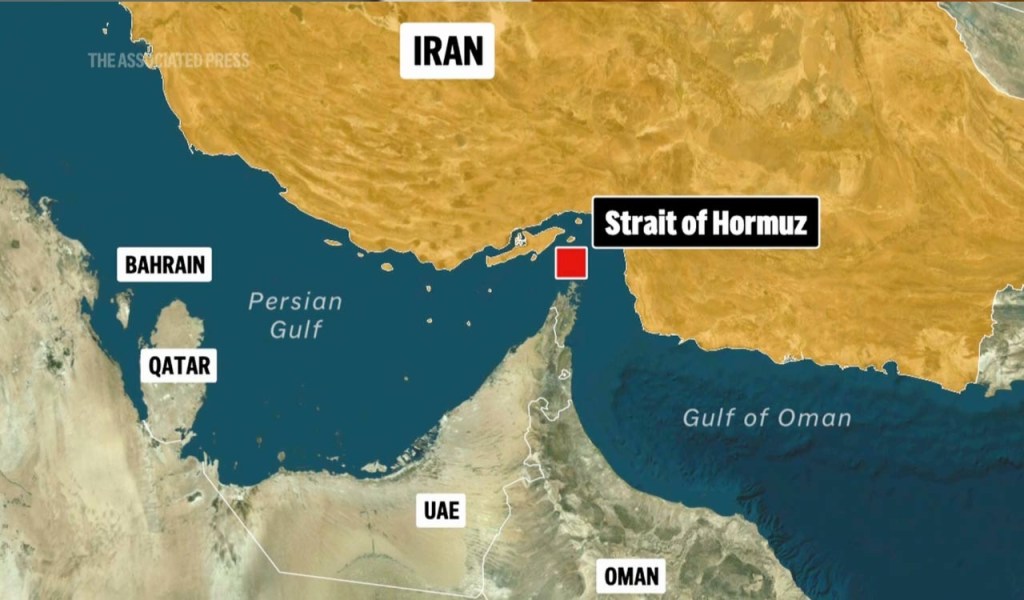
Let’s move now to current events. Recently, President Trump grew concerned that Iran was producing and amassing quantities of enriched uranium sufficient for the construction of nuclear bombs. Such weapons would be a threat to Israel — our ally in the region — and to global finance and security. So, the President staged a preemptive strike against Iran. In retaliation, Iran closed the Strait of Hormuz and disrupted global oil supplies. At this point, the President sought military assistance from our NATO allies. Without exception, they rebuffed his summons, leaving the U.S. to handle the situation on its own. These are just the facts as we know them. I’m making no critical judgment here about what has happened. I assume that one day this will all be sorted and that oil and commerce will flow again through the Strait. Suppose the U.S. gains control of the Strait. Based on past behavior, what might we expect President Trump to do? I would expect him to exact a certain “revenge” on those NATO allies who failed to come to his aid. Perhaps he will charge a fee to allow their oil tankers to traverse the Strait. Perceived “disloyalty” is something President Trump does not forgive or forget; it is something he punishes. Again, that is not judgment; that is just his past pattern. This is same type of tension that drives the narrative of Judith. It is established in Chapter 1.
1 It was the twelfth year of the reign of Nebuchadnezzar, who ruled over the Assyrians in the great city of Nineveh. In those days Arphaxad ruled over the Medes in Ecbatana. 2 He built walls around Ecbatana with hewn stones three cubits thick and six cubits long; he made the walls seventy cubits high and fifty cubits wide. 3 At its gates he raised towers one hundred cubits high and sixty cubits wide at the foundations. 4 He made its gates seventy cubits high and forty cubits wide to allow his armies to march out in force and his infantry to form their ranks. 5 Then King Nebuchadnezzar made war against King Arphaxad in the great plain that is on the borders of Ragau. 6 There rallied to him all the people of the hill country and all those who lived along the Euphrates, the Tigris, and the Hydaspes, and, on the plain, Arioch, king of the Elymeans. Thus, many nations joined the forces of the Chaldeans.
7 Then Nebuchadnezzar, king of the Assyrians, sent messengers to all who lived in Persia and to all who lived in the west, those who lived in Cilicia and Damascus, Lebanon and Antilebanon, and all who lived along the seacoast, 8 and those among the nations of Carmel and Gilead, and Upper Galilee and the great plain of Esdraelon, 9 and all who were in Samaria and its towns, and beyond the Jordan as far as Jerusalem and Bethany and Chelous and Kadesh and the river of Egypt, and Tahpanhes and Raamses and the whole land of Goshen, 10 even beyond Tanis and Memphis, and all who lived in Egypt as far as the borders of Ethiopia. 11 But all who lived in the whole region disregarded the summons of Nebuchadnezzar, king of the Assyrians, and refused to join him in the war; for they were not afraid of him, but regarded him as only one man. So they sent back his messengers empty-handed and in disgrace.
12 Then Nebuchadnezzar became very angry with this whole region, and swore by his throne and kingdom that he would take revenge on the whole territory of Cilicia and Damascus and Syria, that he would kill with his sword also all the inhabitants of the land of Moab, and the people of Ammon, and all Judea, and every one in Egypt, as far as the coasts of the two seas.
13 In the seventeenth year he led his forces against King Arphaxad and defeated him in battle, overthrowing the whole army of Arphaxad and all his cavalry and all his chariots. 14 Thus he took possession of his towns and came to Ecbatana, captured its towers, plundered its markets, and turned its glory into disgrace. 15 He captured Arphaxad in the mountains of Ragau and struck him down with his spears, thus destroying him once and for all. 16 Then he returned to Nineveh, he and all his combined forces, a vast body of troops; and there he and his forces rested and feasted for one hundred twenty days (Jdt 1).
There is the tension: Nebuchadnezzar is dead set on revenge against the smaller nations, tribes, and regions who refused his summons, some of whose names are familiar to us: Carmel, Gilead, Upper Galilee, the plains of Esdraelon, Samaria, Jerusalem, and Bethany. Among others, the Judeans — Jerusalem and the rebuilt temple — are in the crosshairs.
CHAPTER 2: Holofernes and the Vengeance of Nebuchadnezzar
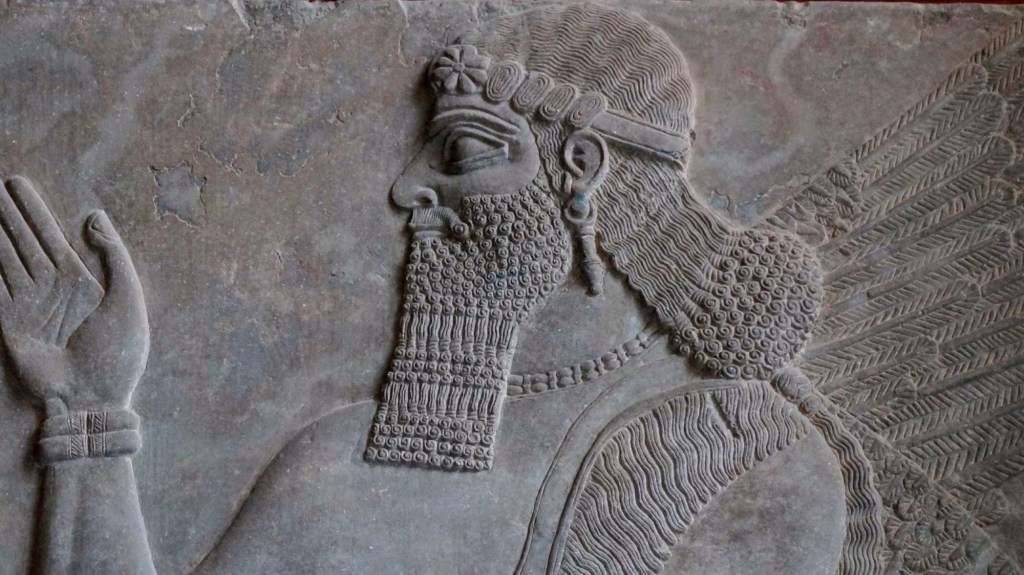
In the year following his victory, Nebuchadnezzar starts to exact his revenge. His instrument of vengeance is his general Holofernes. Does Nebuchadnezzar mean business? You be the judge.
2 In the eighteenth year, on the twenty-second day of the first month, there was talk in the palace of Nebuchadnezzar, king of the Assyrians, about carrying out his revenge on the whole region, just as he had said. 2 He summoned all his ministers and all his nobles and set before them his secret plan and recounted fully, with his own lips, all the wickedness of the region. 3 They decided that every one who had not obeyed his command should be destroyed.
4 When he had completed his plan, Nebuchadnezzar, king of the Assyrians, called Holofernes, the chief general of his army, second only to himself, and said to him, 5 “Thus says the Great King, the lord of the whole earth: Leave my presence and take with you men confident in their strength, one hundred twenty thousand foot soldiers and twelve thousand cavalry. 6 March out against all the land to the west, because they disobeyed my orders. 7 Tell them to prepare earth and water, for I am coming against them in my anger, and will cover the whole face of the earth with the feet of my troops, to whom I will hand them over to be plundered. 8 Their wounded shall fill their ravines and gullies, and the swelling river shall be filled with their dead. 9 I will lead them away captive to the ends of the whole earth. 10 You shall go and seize all their territory for me in advance. They must yield themselves to you, and you shall hold them for me until the day of their punishment. 11 But to those who resist show no mercy, but hand them over to slaughter and plunder throughout your whole region. 12 For as I live, and by the power of my kingdom, what I have spoken I will accomplish by my own hand. 13 And you—take care not to transgress any of your lord’s commands, but carry them out exactly as I have ordered you; do it without delay” (Jdt 2:1-13).
CHAPTER 3: Holofernes on the March
In chapter 3, we see Holofernes fulfilling this mandate of destruction region by region as he works his way westward. Word traveled quickly to those next in line for vengeance until finally Judea’s time was up.
CHAPTER 4: Preparing for War
When Joakim, the high priest in Jerusalem, realizes that Judea is next, he sends word to the Jews in the hill country of Samaria to seize the hilltops, to fortify their cities as best they can, and to stockpile food in preparation for war. He is particularly insistent that the people of the city of Bethulia seize the mountain passes near them because they are the gateway through which Holofernes and his troops must pass to reach Judea. If they can stop Holofernes there, then all Judea is safe.
So, with prayer and fasting and much calling on God, the people of Bethulia did exactly as Joakim had said and prepared themselves to defend the mountain passes.
CHAPTERS 5 – 7: Achior’s Warning, Holofernes’ Response and Battle Strategy
When Holofernes learns about Israel’s preparation for war, he seeks more information about them from his advisors. One of them, Achior, the leader of a mercenary army from Ammon, recounts a brief history of Israel and of God’s dealing with them. As to how Holofernes should proceed against them, Achior has this to say:
20 “So now, my master and lord, if there is any oversight in this people and they sin against their God and we find out their offense, then we can go up and defeat them. 21 But if they are not a guilty nation, then let my lord pass them by; for their Lord and God will defend them, and we shall become the laughingstock of the whole world” (Jdt 5:20-21).
Achior’s counsel is good and even prophetic, but Holofernes chooses to ignore it and to proceed against Bethulia. To punish Achior for questioning his ability to defeat Bethulia, Holofernes has Achior seized and delivered to Bethulia. Holofernes promises to kill Achior when he takes the city.
So, how best to deal with Bethulia? Some of Holofernes’ advisors — chieftains of the Edomites and Moabites — counsel him to avoid battle altogether. There is no need to attack. Bethulia is in the mountains, but the town’s water supplies, the springs and wells, are in the valley below. Seize the water, and the town will ultimately have to surrender or die. And so, Holofernes does just that.

After thirty-four days, “all the water containers of every inhabitant of Bethulia were empty; their cisterns were going dry, and on no day did they have enough water to drink” (Jdt 7:21). The situation was dire and the people began to challenge the judgment of their magistrates Uzziah, Micah, and Chabris: better to surrender to Holofernes and live as slaves than to die of thirst. So, the leaders make a last plea to the people and offer a compromise between faithfulness and practicality:
30 But Uzziah said to them, “Courage, my brothers and sisters! Let us hold out for five days more; by that time the Lord our God will turn his mercy to us again, for he will not forsake us utterly. 31 But if these days pass by, and no help comes for us, I will do as you say” (Jdt 7:30-31).
CHAPTER 8 – 10: Enter Judith
Now, nearly halfway into the book, Judith enters the story. We learn that she was a beautiful, wise, wealthy, and righteous widow who “feared God with great devotion” (Jdt 8:8). She was highly respected among the people of Bethulia.

9 When Judith heard the harsh words spoken by the people against the ruler, because they were faint for lack of water, and when she heard all that Uzziah said to them, and how he promised them under oath to surrender the town to the Assyrians after five days, 10 she sent her maid, who was in charge of all she possessed, to summon Uzziah and Chabris and Charmis, the elders of her town. 11 They came to her, and she said to them:
“Listen to me, rulers of the people of Bethulia! What you have said to the people today is not right; you have even sworn and pronounced this oath between God and you, promising to surrender the town to our enemies unless the Lord turns and helps us within so many days. 12 Who are you to put God to the test today, and to set yourselves up in the place of God in human affairs? 13 You are putting the Lord Almighty to the test, but you will never learn anything! 14 You cannot plumb the depths of the human heart or understand the workings of the human mind; how do you expect to search out God, who made all these things, and find out his mind or comprehend his thought? No, my brothers, do not anger the Lord our God. 15 For if he does not choose to help us within these five days, he has power to protect us within any time he pleases, or even to destroy us in the presence of our enemies. 16 Do not try to bind the purposes of the Lord our God; for God is not like a human being, to be threatened, or like a mere mortal, to be won over by pleading. 17 Therefore, while we wait for his deliverance, let us call upon him to help us, and he will hear our voice, if it pleases him (Jdt 8:9-17).
This is the faith and wisdom that has been lacking in the story up until now. But Judith goes further; she unites her faith with works. She offers herself to God as his agent of deliverance. She devises a plan — at great risk to herself — to destroy the general Holofernes and to deliver her people. After much prayer (see Jdt 9) she sets about to enact it.
CHAPTERS 11-13: Judith’s Plan
Judith and her servant leave Bethulia and surrender themselves to Holofernes’ troops. Judith offers them a strategy by which they can capture Bethulia and all the hill country without losing a single man among them. Beguiled by her beauty and intrigued by the offer she has made, they take her to Holofernes, where, again because of her beauty, she finds favor in his sight. She unveils the strategy to the general — a strategy that sounds much like Achior’s earlier counsel that Holofernes had rejected. Here it is, in summary.
Achior was right, that the Judeans cannot be defeated unless they first sin against God. But, that is the very thing they are about to do. Because their food and water supplies are exhausted, the people in both Jerusalem and Bethulia are about to eat food that is forbidden, including the first fruit offerings of grain and the tithes of wine and oil which had been consecrated to God. When they sin in this way, God will hand them over to Holofernes for destruction. And Judith says:
16 “So when I, your slave, learned all this, I fled from them. God has sent me to accomplish with you things that will astonish the whole world wherever people shall hear about them. 17 Your servant is indeed God-fearing and serves the God of heaven night and day. So, my lord, I will remain with you; but every night your servant will go out into the valley and pray to God. He will tell me when they have committed their sins. 18 Then I will come and tell you, so that you may go out with your whole army, and not one of them will be able to withstand you” (Jdt 11:16-18).
Holofernes accepted Judith’s strategy because of her beauty and wisdom. For three days, Judith remained in the camp. Each day at midnight she went out into the valley to pray and then returned to her tent.
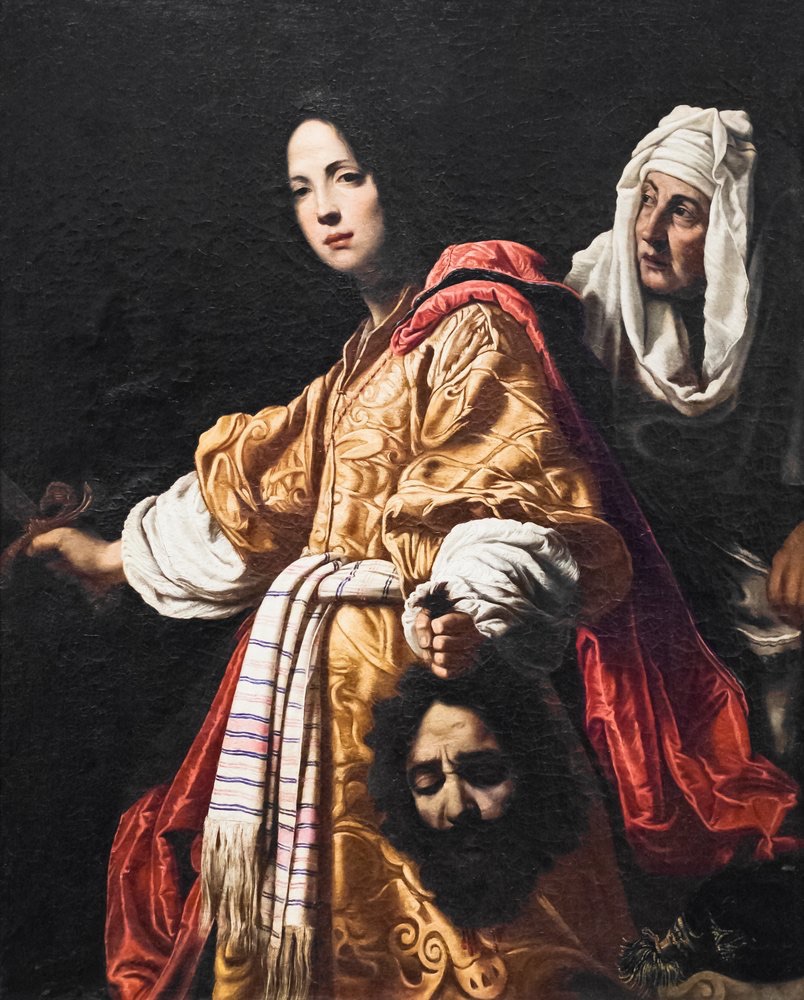
But, on the fourth day, Holofernes invited Judith to a private banquet in his tent where he planned either to seduce her or force himself on her. Of course, this, too, was part of her real plan. Pretending to be greatly honored, she attended the banquet and encouraged Holofernes to drink a great abundance of wine — so much wine that he passed out “dead drunk” on his bed. You probably see where this is going now. Very conveniently, Holofernes’ sword is hanging on the bed post. With a prayer for strength and with two hacks of his neck, Judith decapitates Holofernes, places his head in her food bag, and escapes with her servant back to Bethulia. Remember that the leaders there had given God five days to act. God has done so, through Judith, in only four.
CHAPTERS 14-15: Victory
Of course, there is still an army gathered against Bethulia. But, no matter. Judith addresses the leaders of the town:
“Listen to me, my friends. Take this head and hang it upon the parapet of your wall. 2 As soon as day breaks and the sun rises on the earth, each of you take up your weapons, and let every able-bodied man go out of the town; set a captain over them, as if you were going down to the plain against the Assyrian outpost; only do not go down. 3 Then they will seize their arms and go into the camp and rouse the officers of the Assyrian army. They will rush into the tent of Holofernes and will not find him. Then panic will come over them, and they will flee before you. 4 Then you and all who live within the borders of Israel will pursue them and cut them down in their tracks” (Jdt 14:1-4).
And that is precisely what happened.
CHAPTER 16: The Song of Judith
The final chapter is comprised mostly of Judith’s song of praise and victory. Here is an excerpt that gives a sense of the whole, and that summarizes the theme of the book.
13 I will sing to my God a new song:
O Lord, you are great and glorious,
wonderful in strength, invincible.
14 Let all your creatures serve you,
for you spoke, and they were made.
You sent forth your spirit, and it formed them;
there is none that can resist your voice.
15 For the mountains shall be shaken to their foundations with the waters;
before your glance the rocks shall melt like wax.
But to those who fear you
you show mercy.
16 For every sacrifice as a fragrant offering is a small thing,
and the fat of all whole burnt offerings to you is a very little thing;
but whoever fears the Lord is great forever (Jdt 16:13-16).
History? No. Religious fiction? Most probably, with elements of wisdom literature and exhortation mixed in. A good read? Absolutely.


