Apostles Anglican Church
Fr. John A. Roop
The Underlying Condition: The Law, Sin, and the Yoke of Christ
(Zech 9:9-12, Psalm 145:1-13, Rom 7:21-8:6, Matt 11:25-30)
In the Name of the Father, and of the Son, and of the Holy Spirit. Amen.
A sermon like this is something of a fool’s errand; that needs to be said and understood up front if for no other reason than to lower your expectations. Let me explain the difficulty by analogy. Imagine an extremely complex computer program running to a hundred thousand lines of code. Out of that, someone selects a small subroutine of some hundred lines, hands it to the programmer, and asks her to explain it. Well, the subroutine performs a certain function that, in theory, can be described straightforwardly. But, it does what it does and means what it means only in terms of the whole program. To really understand the part, you need the programmer to walk you step by step through all the hundred thousand lines of code so you see the subroutine in the proper context of the whole program. To focus only on the subroutine is probably to misunderstand both the part and the whole.
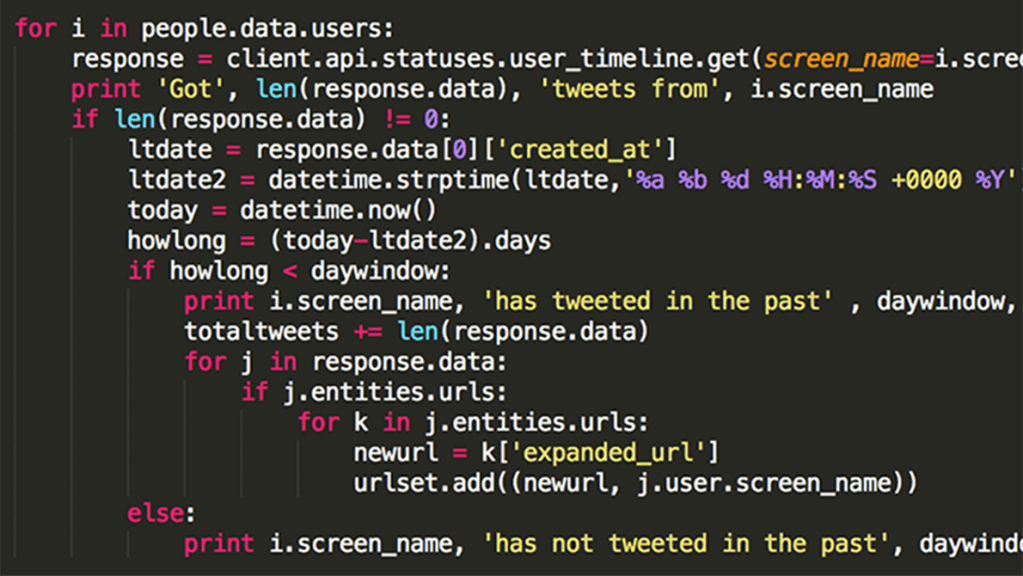
It is like that with St. Paul’s Epistle to the Romans. Paul is mounting a very dense and complex argument from start to finish. Each section of the text functions as a subroutine in the whole tightly nested theological “program.” Each part means what it means only in terms of the whole. To select a few verses, like our lectionary does today, to present them to a poor, hapless preacher, to expect him to make perfect sense of them in twenty minutes is, well, it is a fool’s errand. I’ll do my best, but don’t get your hopes up. As Lewis Grizzard titled one of his books, “Shoot low boys, they’re riding shetland ponies.”

There is a common plot line in television medical dramas from Dr. Kildare to Marcus Welby, M.D., passing through ER and House, showing up in Gray’s Anatomy and Brilliant Minds and The Pitt. There are as many variations on it as there are programs, but the basic theme is simple. A patient presents with a life threatening illness, one with strange and complex symptoms that make the diagnostic work particularly challenging. The patient continues to decline — death seems imminent — until the midpoint of the episode when the doctor or plucky intern finally discovers the obscure malady and administers the life-saving medication. Little does the doctor know what we know: the show is only half over; it is too early for the patient to recover. Oh, no: the patient crashes and starts lurching down the tunnel toward the bright light at its end right at the mid-episode commercial.
What’s wrong? Was the diagnosis in error? No, the clinical results are clear and compelling; there is no question about the diagnosis. Was the wrong medication given? No, there was no mixup at the pharmacy; the medication and the dosage were both correct. Could the medicine itself be contaminated with something? No, the manufacturer has an excellent quality control process. We viewers check the clock. We are forty-five minutes into the show now; they have to come up with something soon unless this is a two-part episode.
Just when all seems lost, one of the doctors asks, “What if there is some underlying condition — totally unrelated to the disease we are treating — that makes the medication ineffective or even toxic?” And, that’s the answer; that’s always the answer. As soon as the doctors discover and treat that underlying condition, the patient makes a miraculous recovery and all is well until next week. Cue the closing credits.

Now, to St. Paul and his epistle to the Romans. St. Paul lived at the intersection of two worlds: Jewish and Gentile. He insisted, in keeping with the vocation he had been given, that these two worlds belonged together in the Church — Jews as Jews and Gentiles as Gentiles and both groups together as one body in Christ — that to separate them was to pull the Church out of shape and ultimately to deform and even to deny the Gospel. If the Gospel were not powerful enough to reconcile the ancient enmity of Jews and Gentiles, how could it possibly be powerful enough to reconcile all men, indeed all creation, to God? This issue — the role of the Jews in the redemption of the world and the full inclusion of the Gentiles in that redemption — was never far from Paul’s mind, nor absent from his letters. We too often try to read Paul in terms of Reformation questions, in terms of our personal salvation. And while that is not wrong, it is secondary and too small; it is a subroutine of a much larger, more complex, far grander program — God redeeming, renewing, and reconciling all creation to himself through his faithfulness to the covenant he had made with Abram and his descendants. We are saved by God, in and through Christ, only because Christ is the fulfillment of that covenant.
God made the covenant first with Abram, and then renewed it through successive generations: with Abraham’s son Isaac and with Isaac’s son Jacob, whose name God changed to Israel. But, the most dramatic ratification of the covenant came some four hundred thirty years after it was first established, came when a not yet but soon to be nation of recently freed slaves gathered for the first time at Mount Sinai to appear before their God. It was there that God gave the Law to Israel as the nation’s covenant charter, not to supplant the covenant, but to embody it in faithfulness, obedience, and righteousness. The Law was given to a vast family who knew nothing but slavery, who had come of age in a land of foreign gods and foreign customs, who knew more of death than of life. They were sick — terminally ill — in ways beyond their understanding. Torah — the Law — was their medicine. Through it they would learn what it meant to be the people of God: to love God with all their heart, soul, mind, and strength and to love their neighbors — particularly the widow and orphan and stranger — as themselves. And in that, they would find life. In that, they would become God’s holy people — a kingdom of priests — and God would become their God.
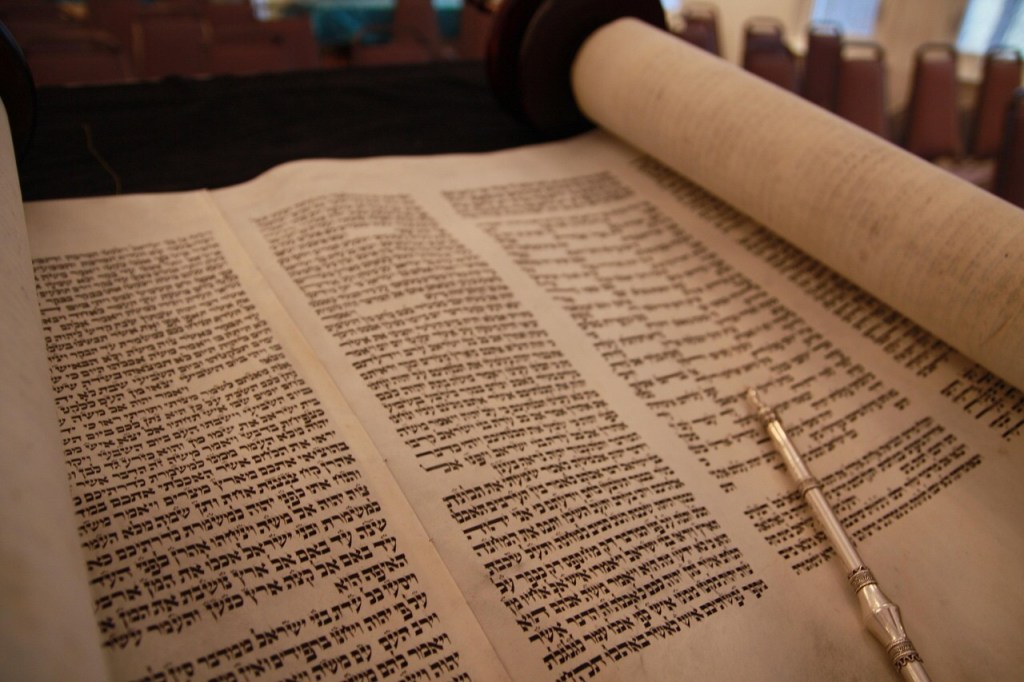
But, when this medicine of the Law was administered, the people got worse, not better. Over generations, Israel turned from their God toward the idols of the nations around them. Over generations, Israel ignored the social imperatives of the Law to free slaves, to restore land to its ancestral owners, to care for the poor, to show mercy to widows and orphans and strangers. Over generations, Israel put their faith in faithless kings and in military and political alliances with the foreign powers that be — even Egypt — instead of in the God who had delivered them from slavery, given them their land, and promised to be with them forever. And there was turmoil inside their borders and threats outside their borders. The kingdom divided. The ten northern tribes were conquered, exiled, and lost. The two southern tribes held out a bit longer but were themselves conquered and exiled. They returned to the land later, in much diminished form, where their continued existence was always tenuous. The patient took the medicine of the Law and got sicker until the patient was near death.
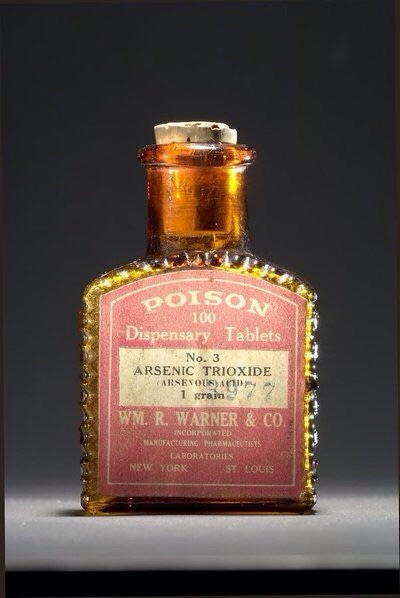
Why? This is a historical and a theological conundrum that St. Paul grapples with in Romans. Was there something wrong with the Law? Did God make a mistake in prescribing it? Was it too much or too little, too strong or too weak? Did that which was intended to bring life actually bring death?
No, nothing is wrong with the Law: no mistake in prescribing it, no mistake in its administration and dosage. Then, just as in our medical dramas, the problem must be an underlying condition that is stirred up, worsened, and revealed by the Law — something that must be dealt with first before the Law can bring life. And there is. For Israel, the underlying condition is sin: sin that dwells in flesh and bone, in heart and mind, in thought and emotion; sin that stirs up passions that captivate and compel those under the Law to disobey the Law; sin that makes the medicine of the Law toxic to those who receive it.
This is what St. Paul says, writing in the first person — “I” — as the personified representative of Israel under the Law:
13 Did that which is good, then, bring death to me? By no means! It was sin, producing death in me through what is good, in order that sin might be shown to be sin, and through the commandment might become sinful beyond measure. 14 For we know that the law is spiritual, but I am of the flesh, sold under sin. 15 For I do not understand my own actions. For I do not do what I want, but I do the very thing I hate. 16 Now if I do what I do not want, I agree with the law, that it is good. 17 So now it is no longer I who do it, but sin that dwells within me. 18 For I know that nothing good dwells in me, that is, in my flesh. For I have the desire to do what is right, but not the ability to carry it out. 19 For I do not do the good I want, but the evil I do not want is what I keep on doing. 20 Now if I do what I do not want, it is no longer I who do it, but sin that dwells within me (Rom 7:13-20).
The Law is rendered powerless to make Israel righteous, not because the Law is bad, not because Israel thinks the Law is bad, not even because Israel does not want to follow the Law, but because Israel is united with Adam in the effects, power, and slavery of sin. Sin dwells in the very flesh and bone of Israel and renders the people incapable of obeying the Law. In fact, the Law stirs up sin so that it might become sinful beyond measure. What Israel wants to do, it cannot do. The medicine of life is bringing death. Sin is something akin to an autoimmune disease in which the body turns on itself, destroying itself from within. So, Paul cries out in the voice of Israel:
21 So I find it to be a law that when I want to do right, evil lies close at hand. 22 For I delight in the law of God, in my inner being, 23 but I see in my members another law waging war against the law of my mind and making me captive to the law of sin that dwells in my members. 24 Wretched man that I am! Who will deliver me from this body of death (Rom 7:21-24)?
Unless sin is dealt with — unless the power, the toxicity of sin is destroyed — the prognosis will be death and the patient will surely die.

So, where have we gotten so far? Israel, whom God has chosen to be his holy people, the people through whom he will redeem the world, Israel is infected with the consequences of Adam’s disobedience and is subject to sin and death. The Law, which is good and life-giving, only stirs up those passions through Israel’s captivity to sin; Israel is powerless to resist. The Law, which is good, is bringing death because of sin. Sin must be dealt with and the Law cannot empower Israel to deal with it.
The medical metaphor has been useful to get us here, but to continue it would strain it beyond its capacity. With gratitude, we leave it behind now to speak more directly. Sin has to be dealt with. The Law cannot do it. So God himself intervenes to destroy the power of sin, to free Israel and to empower Israel for righteousness. God himself intervenes to deliver Israel from its body of death. God himself intervenes in the person of Jesus Christ our Lord. Thanks be to God!
To the Jews who were condemned to death by sin acting through the Law, St. Paul now proclaims:
1 There is therefore now no condemnation for those who are in Christ Jesus. 2 For the law of the Spirit of life has set you free in Christ Jesus from the law of sin and death. 3 For God has done what the law, weakened by the flesh, could not do. By sending his own Son in the likeness of sinful flesh and for sin, he condemned sin in the flesh, 4 in order that the righteous requirement of the law might be fulfilled in us, who walk not according to the flesh but according to the Spirit (Rom 8:1-4).
This is the Gospel, that God has acted in Christ to set free those enslaved by sin and death to live not according to the law of sin and death but according to the law of the Spirit of life. God has done what the law could not do; God has done what nothing else and no one else could do. The only sinless son of Adam, the only perfectly righteous son of Abraham, the only-begotten Son of God drew unto himself in his very flesh all the sin of the world and there, in the flesh of his Son, God condemned sin, God broke its deadly power through the death of his Son. God condemned sin in the flesh of Jesus. God did not condemn Jesus, the archetype of all men, but rather sin in Jesus, so that all men might be free.
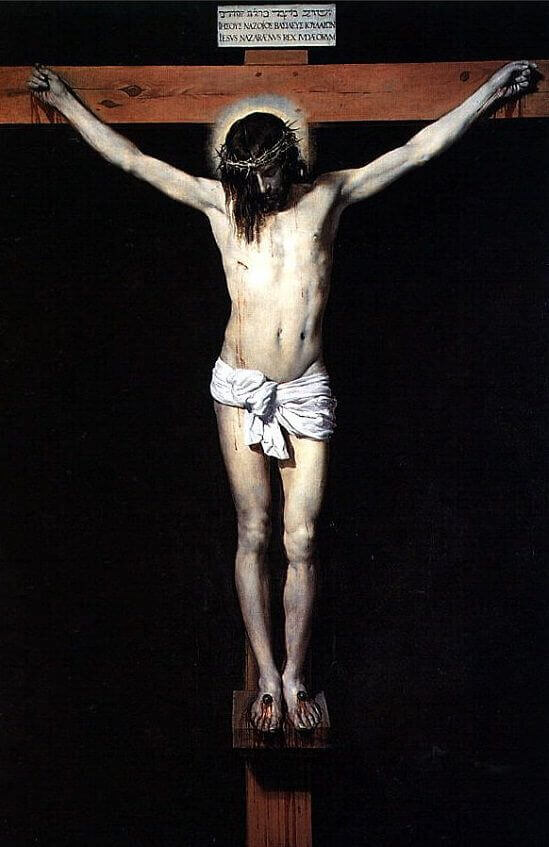
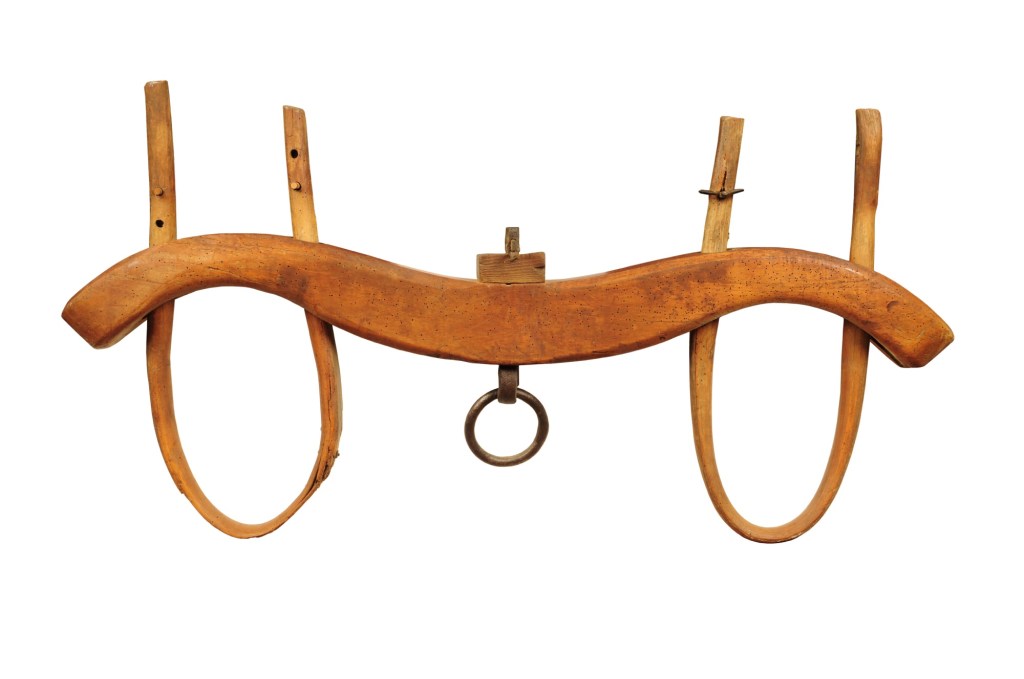
The toxic power of sin has been broken. Those enslaved to the passions have been emancipted. The Spirit of life and righteousness has been poured out. Those who set their minds on the Spirit — as it is now possible to do! — will know life and peace. This is the Gospel that Paul offered to the Jews and not to the Jews only, but also to the Greeks; for God is not the God of the Jews only, but also of the Greeks (cf Roman 3:39). This is not just the Jewish story, though it was first theirs. This is the human story. Though the Gentiles were never under the Law, they were — we were — bound under sin and subject to death. Though we knew God we did not honor him as God or give thanks to him. Instead, and therefore, we became futile in our thinking and our hearts were darkened and hardened. We spiraled downward into idolatry and perversity, we exchanged that which is natural for that which is unnatural, we embraced our passions and gave our approval to others who did likewise. We deserved to die and we made a covenant with death: all of us, every one of us, Jews and Gentiles alike. We labored like the dumb ox under the yoke of slavery to sin and death, a yoke on the neck that neither our fathers nor we have been able to bear (cf Acts 15:10). We labored under that yoke until there came the great good news of the Gospel, first to the Jew and also to the Greek:
1 For freedom Christ has set us free; stand firm therefore, and do not submit again to a yoke of slavery (Gal 5:1).

Though General John Stark meant something different when he penned the state motto of New Hampshire — Live Free or Die — the words ring true here. Christ has set us free from the yoke of the law and sin. We will either live in that freedom or else return to bondage under sin’s yoke and die. We will either live in that freedom or else be crushed under the load of sin’s yoke and die. As the general Confession at the Eucharist in our historic Prayer Book (1662) has us say:
We do earnestly repent, And are heartily sorry for these our misdoings; The remembrance of them is grievous unto us; The burden of them is intolerable.
The yoke of sin is grievous and intolerable. It will wear us out and then crush us if we continue to carry it or abandon our freedom and return to it. And so, our Lord Jesus, the one who bore the yoke for all creation and was indeed crushed under it, the one who fell under the weight of the cross, the one who rose again victorious invites us:
28 Come to me, all who labor and are heavy laden, and I will give you rest. 29 Take my yoke upon you, and learn from me, for I am gentle and lowly in heart, and you will find rest for your souls. 30 For my yoke is easy, and my burden is light” (Matt 11:28-30).
There is great paradox in this invitation. The yoke that Jesus bids us take up — the one he assures us is easy and light — is none other than the cross.
24 Then Jesus told his disciples, “If anyone would come after me, let him deny himself and take up his cross and follow me. 25 For whoever would save his life will lose it, but whoever loses his life for my sake will find it. 26 For what will it profit a man if he gains the whole world and forfeits his soul? Or what shall a man give in return for his soul” (Matt 16:24-26)?
We have the choice between two yokes, and we must bear one or the other: the yoke of sin and death in the Law or the yoke of freedom and life in Christ. No matter which we choose, we die. But the difference between the two is great. Only in the yoke of the cross do we die in Christ. Only in the yoke of the cross do we rise again to new life in Christ. And in that assurance we find rest for our souls, the certainty that the law of the Spirit of life has set us free in Jesus Christ from the law of sin and death.
Thanks be to God through Jesus Christ our Lord! Amen.


