
Apostles Anglican Church
Fr. John A. Roop
Reading the General Epistles: An Overview of 2 Peter
The Lord be with you.
And with your spirit.
Let us pray.
115. FOR THE COMING OF GOD’S KINGDOM
Hasten, O Father, the coming of your kingdom; and grant that we your servants, who now live by faith, may with joy behold your Son at his coming in glorious majesty; even Jesus Christ, our only Mediator and Advocate. Amen.
Introduction
Do you remember the advertisements for Sea Monkeys in the back pages of comic books, and decoder rings and x-ray specs and a bunch of other fascinating junk designed to stir up covetousness in the hearts of otherwise innocent children? I remember ordering something, and I remember that it took for-ever to arrive; 6 to 8 weeks was standard in the wayback days. And, it was always a disappointment when it got here anyway. Still, we kids hoped.

And, back then people wrote letters by hand. That took awhile. It might be a couple of weeks from the time you first wrote until the time you received your response. Vacationers often returned home before their friends received their postcards from the beach.

Somewhere along the way, life got faster: not better, just faster. “Snail mail” gave way to computers with email, to telephones with text, to Zoom calls: instantaneous communication. And post cards? No. Facebook, Instagram, X: vacation photos (curated and edited) for your friends and the world to see nearly in real time. Percolated or boiled coffee? Not anymore. Teaspoons of Sanka first, then pods of Keurig. Instant oatmeal or grits for breakfast, a Lunchable at noon, a TV dinner or, now, Door Dash for supper. And 6 to 8 weeks for packages? Why? when you can have an Amazon Prime account and get 2-day delivery “free” and sometimes next day — even same day.
This new pace may be the devil’s doing. I am suspicious of that because this pace is a direct attack on one of the greatest Christian virtues: patience. Timing is of the Lord, and he doesn’t seem to be in a hurry; nor does he seem to want us to be either.
17 O wait for the LORD; be strong, and he shall comfort your heart,
O put your trust in the LORD (Ps 27:17, BCP 2019, p. 300).
7 Be patient, therefore, brothers, until the coming of the Lord. See how the farmer waits for the precious fruit of the earth, being patient about it, until it receives the early and the late rains. 8 You also be patient (James 5:7-8a).
This virtue of patience grounds 2 Peter. Patience is not only a virtue, but a necessity for Christian exiles for whom waiting is long and often hard. So, Peter tells us how to wait — with patience and discipline and watchfulness — and what we are waiting for — the day of the Lord.
2 Peter 1:1-15 Calling and Salvation: Becoming Partakers of the Divine Nature
Let’s enter the text with a question — not rhetorical, but one for discussion: What do we really need in order to lead a godly life? We need to be freed from death, sin, and the dominion of the fallen powers — born again. We need to be filled with the Holy Spirit. We need to be incorporated into the Church, the body of Christ, and to be nourished by Word and Sacraments. We need catechesis (teaching) and askesis (disciplined training). There may be other necessities for godly living, but these will do for now. Now a followup question: Which of these have we not already been given? Which do we lack? That is Peter’s starting point: We lack nothing. God has given us everything we need to flourish in godliness.
3 His divine power has granted to us all things that pertain to life and godliness, through the knowledge of him who called us to his own glory and excellence, 4 by which he has granted to us his precious and very great promises, so that through them you may become partakers of the divine nature, having escaped from the corruption that is in the world because of sinful desire (2 Peter 1:3-4).
God has given us everything we need for a life of godliness, through the knowledge of Christ. And all we have been given is directed toward something God has promised us, something precious and very great: that we may become partakers of the divine nature. This is the proper end or goal of mankind — the telos if you want to use a fancy theological word: to participate in the divine nature, to be drawn up into and to be filled with the very life of God. If you were to ask me what salvation is, that is what I would say: to become a partaker of the divine nature. That’s the end God has in mind for us.
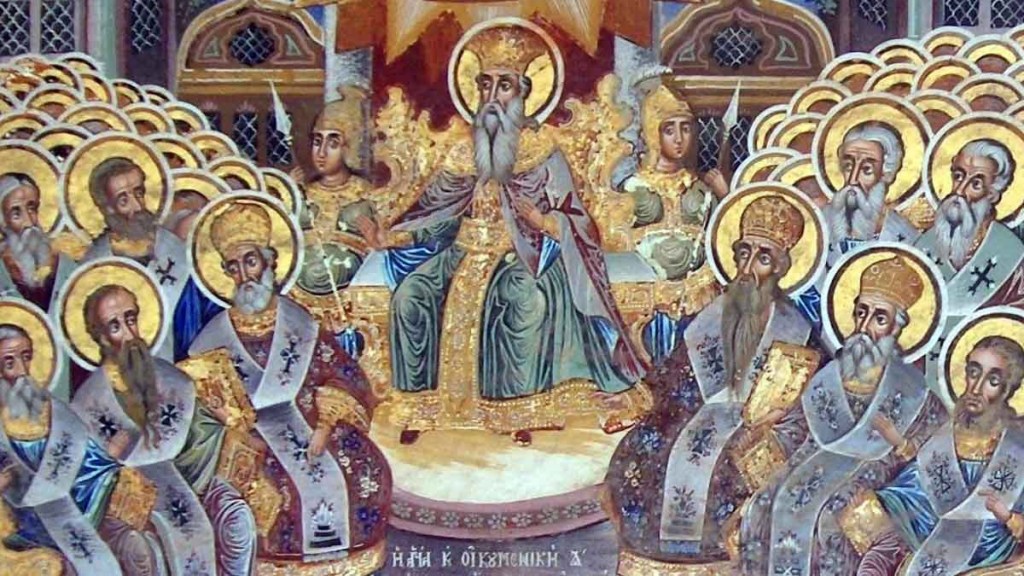
The model for this is Jesus in whom the divine and human natures subsist in one person (Council of Chalcedon, 451 A.D.).
So, to be a partaker of the divine nature is to be Christified, to become Christlike. St. John says precisely this in his first epistle:
1 See what kind of love the Father has given to us, that we should be called children of God; and so we are. The reason why the world does not know us is that it did not know him. 2 Beloved, we are God’s children now, and what we will be has not yet appeared; but we know that when he appears we shall be like him, because we shall see him as he is (1 John 3:1-2).
This doesn’t mean that we cease being human and become God, but instead that we become perfectly human by becoming fully the image bearers of God that we were created to be. That starts with our baptism when we receive the gift of the Holy Spirit to indwell us; we become partakers of the divine nature right there. Then comes the long, disciplined process of being made Christlike. St. Peter writes this:
5 For this very reason, make every effort to supplement your faith with virtue, and virtue with knowledge, 6 and knowledge with self-control, and self-control with steadfastness, and steadfastness with godliness, 7 and godliness with brotherly affection, and brotherly affection with love. 8 For if these qualities are yours and are increasing, they keep you from being ineffective or unfruitful in the knowledge of our Lord Jesus Christ. 9 For whoever lacks these qualities is so nearsighted that he is blind, having forgotten that he was cleansed from his former sins. 10 Therefore, brothers, be all the more diligent to confirm your calling and election, for if you practice these qualities you will never fall. 11 For in this way there will be richly provided for you an entrance into the eternal kingdom of our Lord and Savior Jesus Christ (2 Peter 1:5-11).
Right here Peter shows how the faith vs. works debate of the Reformers was largely an exercise in missing the point. If salvation is becoming fully human by growing in Christlikeness, then that process requires our effort. Peter says, “Make every effort to supplement your faith.” Faith must be supplemented; it is not faith alone but faith supplemented with the virtues of Christlikeness: knowledge, self-control, steadfastness, godliness, brotherly affection, love. And there is not some low bar minimum standard of Christlikeness that is acceptable; these characteristics must be continually increasing. You cannot stand still in holiness; you are either growing or declining. And you cannot rest on your “calling and election,” but must be all the more diligent to make them certain by practicing the qualities of Christlikeness. About our salvation, Canon Theologian Stephen Gautier says, “God does everything. We must do something.” That agrees perfectly with what St. Peter writes here. God has granted us all things that pertain to life and godliness. Now get busy — in a disciplined way — working toward Christlikeness, which is, after all, what salvation is all about.
2 Peter 1:16-21 Eyewitness of the Word and the Nature of Prophecy
The word “myth” can be used in both a formal/technical sense and in an informal/popular sense. In the technical sense, a myth is the formative and controlling narrative of a people, the story that incorporates the ethos, goals, principles, and identity of the people. It is the story that draws people into the culture and makes them part of it. American history books are myths in that sense, as is a Fourth of July celebration. They proclaim in speech and symbol that we are the people who fought the tyranny of monarchy for the freedom of a democratic republic, that you can’t tread on us, and that we uniquely represent the light of freedom amidst the darkness of oppression.

A myth doesn’t need to be objectively true to do its work. It just needs to be a story that conveys identity, encourages unity, and holds a people together. In this sense — hear me clearly — in this sense, the whole of Scripture, including the Gospel — is a myth. It is the formative and controlling story of a people, of two peoples: Israel and Jesus followers.
In the informal sense, “myth” connotes a story that has no factual content or perhaps a minimal core of “fact” surrounded by layers of fictional embellishments. Think of ancient creation myths or classical Greek and Roman myths. These are fanciful stories used to explain some aspects of the world generally in terms of supernatural beings. Now that we know better — we are Enlightened, after all — we consider these stories to be primitive and we put no stock in them. Many modernists and post-modernists put Scripture in this category of myth: fanciful tales from our species’ childhood that have long since served their purpose and have become obsolete now that we have science.
What does St. Peter have to say about Scripture — particularly the Gospel — and myth?
16 For we did not follow cleverly devised myths when we made known to you the power and coming of our Lord Jesus Christ, but we were eyewitnesses of his majesty. 17 For when he received honor and glory from God the Father, and the voice was borne to him by the Majestic Glory, “This is my beloved Son, with whom I am well pleased,” 18 we ourselves heard this very voice borne from heaven, for we were with him on the holy mountain. 19 And we have the prophetic word more fully confirmed, to which you will do well to pay attention as to a lamp shining in a dark place, until the day dawns and the morning star rises in your hearts, 20 knowing this first of all, that no prophecy of Scripture comes from someone’s own interpretation. 21 For no prophecy was ever produced by the will of man, but men spoke from God as they were carried along by the Holy Spirit (2 Peter 1:16-21).
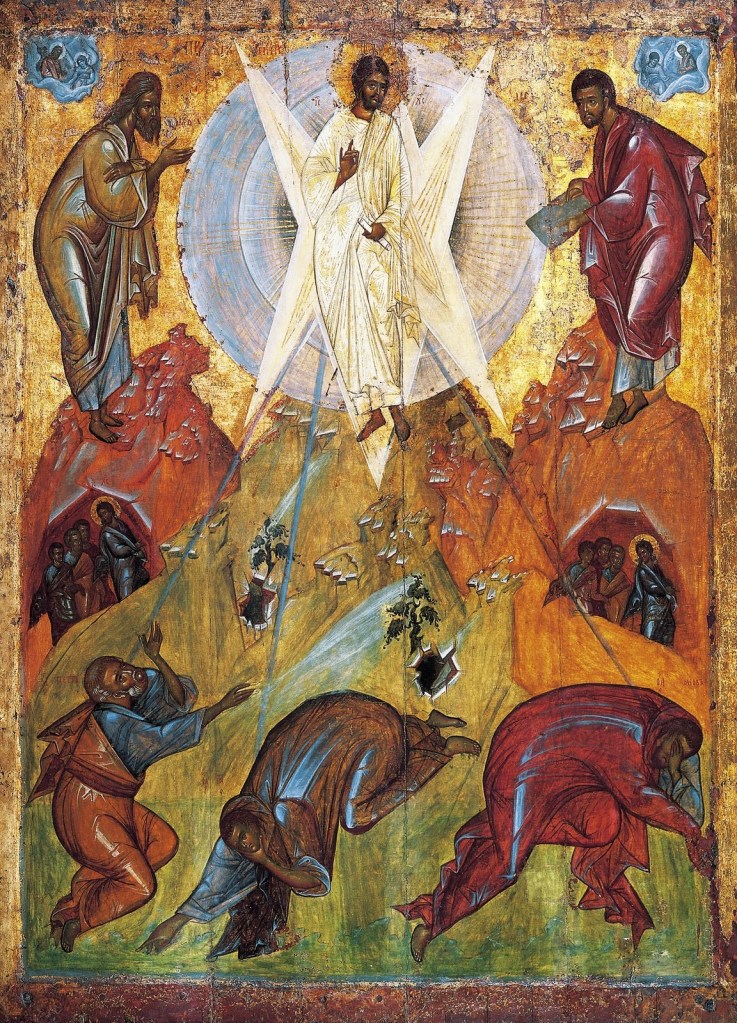
Peter refutes the notion that the Gospel is a myth in the informal sense, that it is some fanciful story devoid of fact. He insists, instead, that it is factual, that it is based on eyewitness testimony with himself as one of the witnesses. He points specifically to the Transfiguration of Jesus, to what he saw and heard on the mountain.
And he takes this a giant step further. Because all Scripture points to Jesus, the truth about Jesus “works backward” to confirm all Scripture as true. What Peter — and others — witnessed of Jesus, fully confirmed the prophetic word of all Scripture. These stories were not dreamt up by men, but were inspired by the Holy Spirit. The prophets who spoke in Scripture spoke the truth. Why this is so important for Peter is seen in the next chapter.
2 Peter 2 False Prophets and Teachers
One of the banes of the Church, from the earliest days until now, is the presence of false teachers and prophets and their heresies. We can only recognize them if we have a touchstone of truth. For us, that is the Scripture, the teaching of the Apostles, the unbroken tradition of the Church, and the ongoing presence of the Holy Spirit in the Church.
Now, the rest of this chapter is a real polemic against false teachers. Before we go on, I want to be clear about something. To be wrong about some point of doctrine is simply to be wrong and in need of correction. We all find ourselves in that situation from time to time. But, to be wrong and to refuse correction, to say “I know what the Church has always said, but I think…” is to be a heretic. To then presume to teach your error is to be a false teacher/prophet. It is about these that Peter writes with no apparent compassion at all. His isn’t a “bless their hearts” attitude but a “hell is waiting” condemnation. We’ll do a quick survey of what he says about these false teachers and prophets.
They are bringing destruction upon themselves (2 Pet 2:1).
They are motivated by sensuality (false teaching and sexual immorality often appear together; see 2:9-10) and greed (2:3, 15).
They are subject to the same judgment as the fallen angels, the fallen world in the time of Noah, and the evil cities of Sodom and Gomorrah (2:4-10).
They are arrogant, irrational, ignorant, insatiable sinners (2:10-16).
They are slaves of corruption (2:19) reserved for the gloom of outer darkness (2:17).
They are worse off than if they had never known the truth of Jesus at all (2:20-22).
This is a very hopeless picture that Peter paints. The way to avoid falling into this danger is simple: Stay with Scripture. Stay with the Church. Stay with that which has been believed always, everywhere, and by all.
The threats to the Church were not and are not limited to false teachers. There are also the scoffers. Peter turns to them in chapter 3.
2 Peter 3 The Day of the Lord Will Come
At the first “Reason Rally” held in Washington, D.C. on 24 March 2012, one of the foremost representatives of the New Atheists, Richard Dawkins, advocated this approach to Christians — and the gathered crowd cheered:
“Mock them. Ridicule them. In public. Don’t fall for the convention that we’re all too polite to talk about religion. Religion is not off the table. And it is not off limits. Religion makes specific claims about the universe which need to be substantiated, to be challenged, and if necessary need to be ridiculed with contempt.”
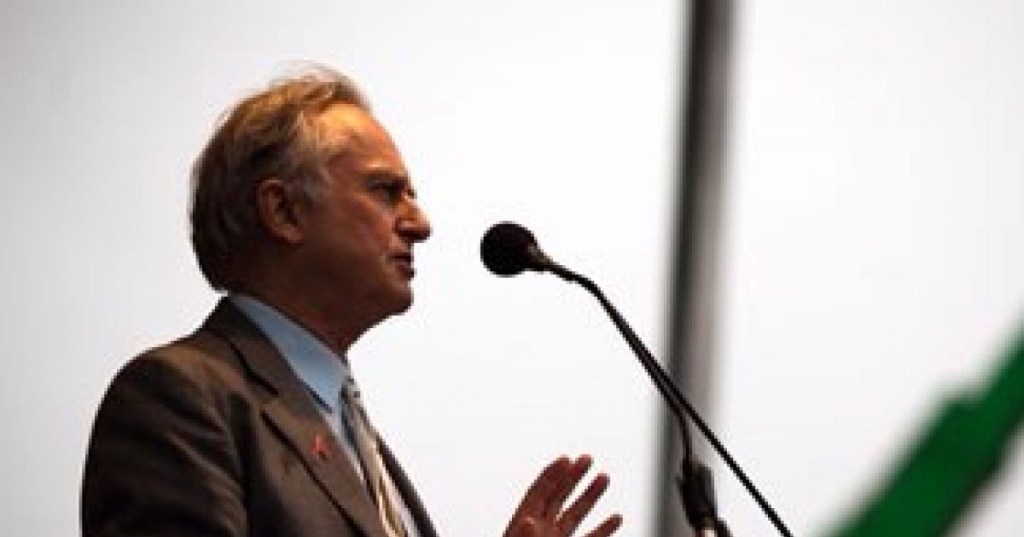
There was nothing new about the New Atheism. It was just old atheism repackaged with a sharp edge, with a nasty spirit of mocking, ridicule, and scoffing. They called it a “Reason Rally” but, as Dawkins’ own words showed, it was anything but reasonable. It was public contempt.
The New Atheists scoffed at Christianity as fairy tales, as being out of step with science and reason. The scoffers in Peter’s day took a different tack. It went like this:
You’ve been saying that Jesus promised to come back. It has been 30 years now. Where is he?
Scoffers still attack Christianity using the same argument, except now, it has been 2000 years, not just 30. And, they mount a similar argument against Scripture by saying, since Peter and Paul expected the return of Jesus during their lifetimes and it didn’t happen, how can we trust anything they said or wrote?
Let’s listen to St. Peter describe the situation in his day.
1 This is now the second letter that I am writing to you, beloved. In both of them I am stirring up your sincere mind by way of reminder, 2 that you should remember the predictions of the holy prophets and the commandment of the Lord and Savior through your apostles, 3 knowing this first of all, that scoffers will come in the last days with scoffing, following their own sinful desires. 4 They will say, “Where is the promise of his coming? For ever since the fathers fell asleep, all things are continuing as they were from the beginning of creation” (2 Pet 3:1-4).
First, St. Peter positions his readers in time: we are in the last days. What does that phrase, the last days, connote? Not that the return of Jesus is imminent, not that it will occur in Peter’s lifetime or even in ours. If we consider the redemption story as a play in five acts — I. Creation, II. Fall, III. Israel, IV. Jesus, V. Church — then the last days simply means we are in the final act of the play before the return of Jesus. That act has lasted for 2000 years. It may last 2000 more or end tomorrow. Either way, it is the last act, the final days.
Second, St. Peter says that scoffers were bound to come. He doesn’t attribute their scoffing to intellectual honesty or personal integrity, as Dawkins and the other champions of the New Atheism would have us believe. Peter says the scoffers are “following their own sinful desires.” I don’t think that is true for all those who deny the truth of the Gospel, but it is true for many, and particularly for those who ridicule and mock and scoff. There is a dark spirit born of sin, or else a dark spirit produces the sin of scoffing.
Peter’s third and fourth points have to do with the content of the scoffing.
Third: You said Jesus would come back and he hasn’t. Where is he?
Fourth: The Gospel hasn’t changed anything. The world is going on just as it did before Jesus. It is as if Jesus had never existed.
Let’s tackle the issue of the delay in Jesus’s return. Once on retreat I stumbled across the book Beginning To Pray by Orthodox Metropolitan Anthony Bloom.
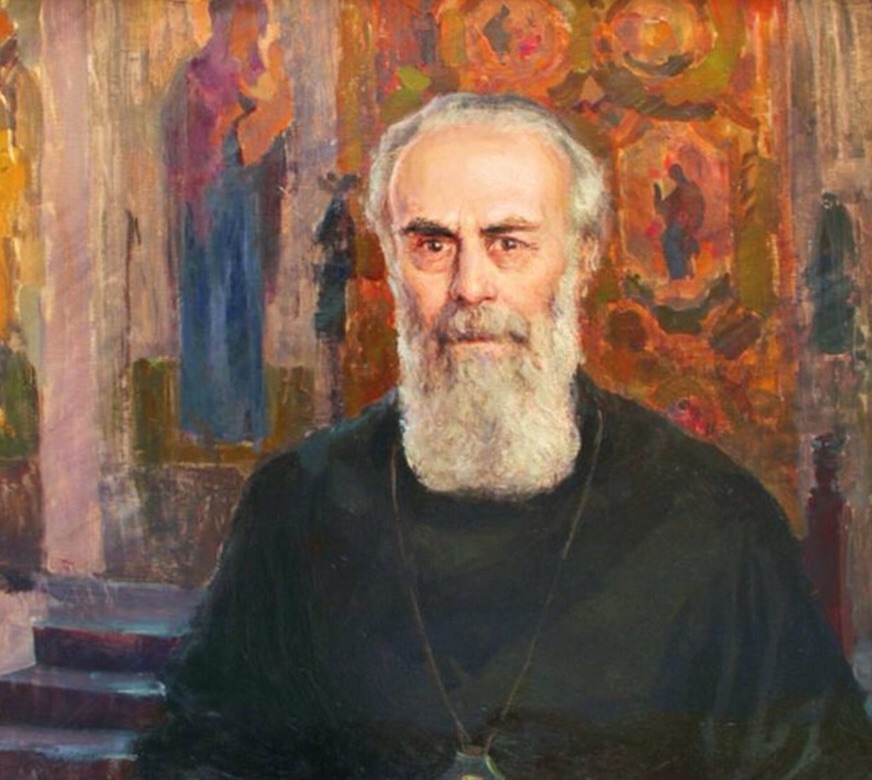
Early on he tackled a familiar problem with prayer, the lack of a sense of God’s presence: “I’m here praying God, why aren’t you showing up?” Sound familiar? His approach to that question was unexpected. He asked: Are you sure you want God to show up? Are you ready to come into the presence of the holy God before whom angels bow in worship? These are good questions, similar to how the prophet Malachi responded to those who were anxious for the day of the Lord:
1 “Behold, I send my messenger, and he will prepare the way before me. And the Lord whom you seek will suddenly come to his temple; and the messenger of the covenant in whom you delight, behold, he is coming, says the Lord of hosts. 2 But who can endure the day of his coming, and who can stand when he appears? For he is like a refiner’s fire and like fullers’ soap (Mal 3:1-2).
Perhaps it is a great mercy of God that he doesn’t show up now because you could not abide his presence. Perhaps God’s delay is an act of patient mercy, giving you the time to repent. Now, listen to St. Peter meet his scoffers’ challenge in a similar way:
8 But do not overlook this one fact, beloved, that with the Lord one day is as a thousand years, and a thousand years as one day. 9 The Lord is not slow to fulfill his promise as some count slowness, but is patient toward you, not wishing that any should perish, but that all should reach repentance. 10 But the day of the Lord will come like a thief, and then the heavens will pass away with a roar, and the heavenly bodies will be burned up and dissolved, and the earth and the works that are done on it will be exposed 2 Pet 3:8-10).
This word isn’t just for the scoffers, but also for us as the people of God. If the Lord has not come this day, if has has given you an extra day of life, it is for the sake of your own repentance and your prayers for repentance of those who do not yet know the Lord, some of whom may be your own friends and family. This emphasis on repentance figures in St. Paul’s epistles as well, something that Peter alludes to in a bit. Here is St. Paul in Romans.
1 Therefore you have no excuse, O man, every one of you who judges. For in passing judgment on another you condemn yourself, because you, the judge, practice the very same things. 2 We know that the judgment of God rightly falls on those who practice such things. 3 Do you suppose, O man—you who judge those who practice such things and yet do them yourself—that you will escape the judgment of God? 4 Or do you presume on the riches of his kindness and forbearance and patience, not knowing that God’s kindness is meant to lead you to repentance? 5 But because of your hard and impenitent heart you are storing up wrath for yourself on the day of wrath when God’s righteous judgment will be revealed.
6 He will render to each one according to his works: 7 to those who by patience in well-doing seek for glory and honor and immortality, he will give eternal life; 8 but for those who are self-seeking and do not obey the truth, but obey unrighteousness, there will be wrath and fury (Rom 2:1-8).
Any delay in judgment is an act of God’s patience and kindness meant to lead you to repentance.
We dare not squander such a moment of grace or despise the Lord’s patience. Psalm 95, a staple of Morning Prayer, ends with these words:
8 Today, if you will hear his voice, harden not your hearts *
as in the provocation, and as in the day of temptation in the wilderness,
9 When your fathers tested me, *
and put me to the proof, though they had seen my works.
10 Forty years long was I grieved with this generation and said, *
“It is a people that err in their hearts, for they have not known my ways,”
11 Of whom I swore in my wrath *
that they should not enter into my rest (Ps 95:8-11, BCP 2019).
That gets it: today, harden not your hearts. Today, repent. Squander the moment of repentance and wrath comes. No rest for the wicked, for those who refused to repent.
Now, Peter turns to astrophysics. Astronomers and physicists have long pondered whether our universe will end with a bang or a whimper. You probably know that the universe is expanding, propelled outward from the original singularity by the big bang. I said that like I understand it. I don’t, really, and I’m not certain the astronomers do either. But, they tell us that if there is sufficient matter in the universe the expansion will slow, stop, reverse and the universe will come crashing together into another singularity, followed by another big bang, another universe, another expansion and so on through eternal cycles. The universe ends with a bang, and then begins again with a bang. But, it there is insufficient matter to slow the expansion, the universe will expand forever until all matter and energy are equally distributed and no further potential for anything exists. The universe ends in a tired, sad, whimper.

How does it end? Peter knew nothing about astrophysics as we define it, but he knew about the end.
8 But do not overlook this one fact, beloved, that with the Lord one day is as a thousand years, and a thousand years as one day. 9 The Lord is not slow to fulfill his promise as some count slowness, but is patient toward you, not wishing that any should perish, but that all should reach repentance. 10 But the day of the Lord will come like a thief, and then the heavens will pass away with a roar, and the heavenly bodies will be burned up and dissolved, and the earth and the works that are done on it will be exposed.
11 Since all these things are thus to be dissolved, what sort of people ought you to be in lives of holiness and godliness, 12 waiting for and hastening the coming of the day of God, because of which the heavens will be set on fire and dissolved, and the heavenly bodies will melt as they burn! 13 But according to his promise we are waiting for new heavens and a new earth in which righteousness dwells (2 Peter 3:8-13).
Bang or whimper? Well, neither exactly. Peter uses the image of fire, and he seems to speak of destruction: set on fire, burned up, dissolved. These translations probably miss the point. The imagery is more like that of purification by fire: all the dross burned away and all that is precious purified. That notion emerges at the end of verse 10 — and the earth and the works that are done on it will be exposed — and at the end of verse 13 — we are waiting for new heavens and a new earth in which righteousness dwells. Newness is purification. So, I would say the universe ends in neither a bang nor a whimper, but in a sigh of relief and a shout of praise.
What are we to do in the meantime? We are to purify our own lives so that they will survive the purifying fire.
14 Therefore, beloved, since you are waiting for these, be diligent to be found by him without spot or blemish, and at peace. 15 And count the patience of our Lord as salvation, just as our beloved brother Paul also wrote to you according to the wisdom given him (2 Pet 3:14).
And this brings us back to the beginning. This is what Christian exiles do: live with patience, cultivate holiness, pursue peace.
We end with St. Peter’s own closing which summarizes this well.
18 … grow in the grace and knowledge of our Lord and Savior Jesus Christ. To him be the glory both now and to the day of eternity. Amen (2 Pet 3:18).
Amen.


“This new pace may be the devil’s doing.”
“When the velocity of progress increases beyond a certain point, it becomes indistinguishable from crisis.” – Owen Barfield