Apostles Anglican Church
Fr. John A. Roop
The Feast of Pentecost: God With Us and God In Us
(Gen 11:1-9, Ps 104:24-35V, Acts 2:1-21, John 14:8-17)
Come, Holy Spirit, fill the hearts of the faithful and kindle in them the fire of your love. Amen.
18 Now the birth of Jesus Christ took place in this way. When his mother Mary had been betrothed to Joseph, before they came together she was found to be with child from the Holy Spirit. 19 And her husband Joseph, being a just man and unwilling to put her to shame, resolved to divorce her quietly. 20 But as he considered these things, behold, an angel of the Lord appeared to him in a dream, saying, “Joseph, son of David, do not fear to take Mary as your wife, for that which is conceived in her is from the Holy Spirit. 21 She will bear a son, and you shall call his name Jesus, for he will save his people from their sins.” 22 All this took place to fulfill what the Lord had spoken by the prophet:
23 “Behold, the virgin shall conceive and bear a son,
and they shall call his name Immanuel”
(which means, God with us) (Matt 1:18-23).
No, I don’t have the liturgical seasons confused; and yes, I know that this is Pentecost and not Christmas. So, why do I start here with a nativity text in the Gospel according to St. Matthew? First, I think this Gospel scene is one of the most significant passages in the whole of Scripture, a climactic moment in the story of God and his people. Second, I think that there is a through-line from this moment to the day of Pentecost, or more truly that there is a through-line from the creation account in Genesis 1, 2 through the whole of Scripture, passing through this Gospel passage, through St. Luke’s account of Pentecost in Acts, through the “end” of the story in Revelation 21, 22 and beyond it into whatever lies ahead in the age to come. It goes like this.
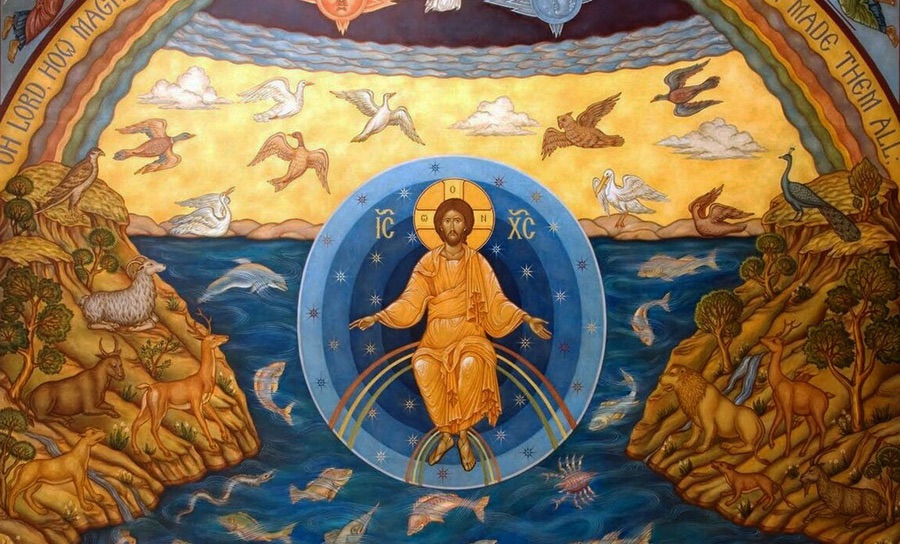
In Genesis 1, 2 God creates a cosmos, everything that is that is not God. In the vastness of that cosmos God creates a world which he adorns with sky and seas and dry land, which he covers with plants and trees, which he populates with swimming things and flying things and creeping things and walking things. And it is all good, especially these walking things which are very good because God made them to bear his own image, to be uniquely his representatives to the rest of creation. And he gave these walking things a place, a garden in which to dwell and from which to go forward into the world to be fruitful and multiply, to bring order, to gather up the praises of creation and present them to the Creator. Then, having done all this, God rested, that is, God took up his residence in this garden, at the intersection of heaven — God’s realm — and earth — the realm of these walking things. And that gives us a glimpse into God’s purpose, into God’s very heart. God loves these walking things and he wants to live with them so that he might be their God and they might be his people. God’s purpose, from before creation but expressed in creation, is to dwell with his image bearing people.
Soon these walking things have names: Adam, to emphasize to the man his prototypical headship of all humanity, and Eve, to remind the woman of her motherhood of all future image bearers of God. But, paradise — Eden — is short lived. A deceiver comes and seduces Eve’s heart away from God. Adam follows her down that treacherous path, and before day ends they find themselves naked and ashamed and hiding from God. They find themselves subject to death that causes sin and to sin that causes death. They find themselves outside the garden, in a world subject to futility. They find themselves exiled away from home and away from God. The intersection of heaven and earth, the place where God dwells with man, is now empty. The two realms are disjoint. The consequences of that separation are dire: murder (fratricide), the transgression of boundaries between humans and angels, the downward spiral into violence and all manner of evil until God regrets having made the walking things at all, the cleansing of the world by water, and the starting over with Noah, his wife, his three sons and their wives. Perhaps God can join heaven and earth once again. Perhaps he can dwell with Noah and his family?
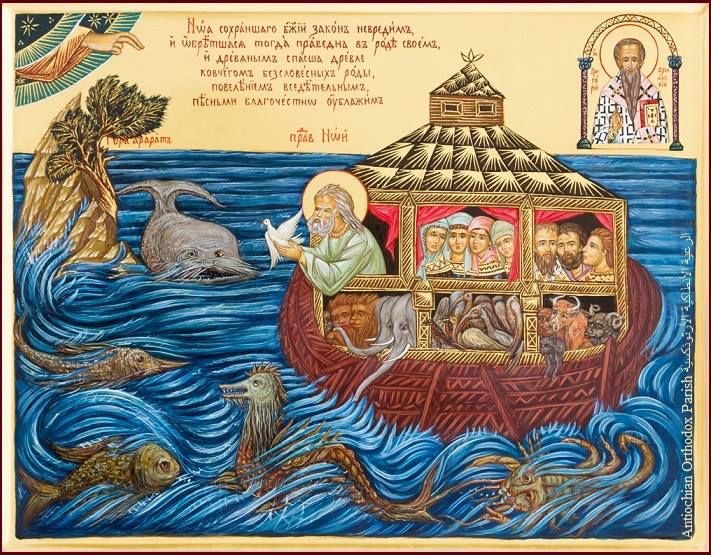
No. Noah is not the solution to this problem of exile, after all, but a carrier of the problem, and it spreads throughout his offspring for generations, coming to a head on a plain in the land of Shinar. Come, let us build a city with a tower that rises to heaven, a place in which to dwell, a place by which we will make a name for ourselves. God is nowhere in this plan, and he is having none of it. So, God confuses their common language by giving them many different tongues, a babble of languages — the languages of Babel — and he disperses them over all the earth.
Yet, God’s purpose remains: to have a people among whom he can dwell. So, God begins to create and form just such a people, beginning with an old man, Abram, and his old wife, Sarai. God doesn’t quite live with them, but he does visit from time to time and he does make a covenant with Abram:
1 Now the Lord said to Abram, “Go from your country and your kindred and your father’s house to the land that I will show you. 2 And I will make of you a great nation, and I will bless you and make your name great, so that you will be a blessing. 3 I will bless those who bless you, and him who dishonors you I will curse, and in you all the families of the earth shall be blessed” (Gen 12:1-3).
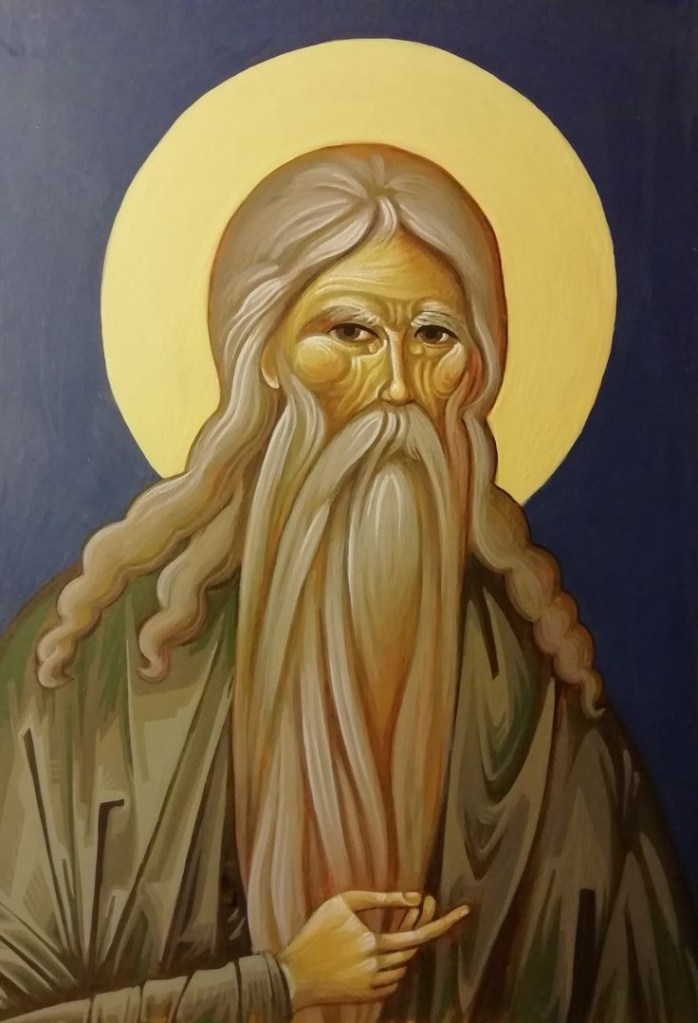
God clarifies this covenant later; he will give Abram a land and a people, and he will be that people’s God. Put all that together — a land, a people, and a promise to be their God — and what do you have? You have the intersection of heaven and earth once again: God dwelling with man — not with all men, not all at once, but first with the children of Abraham and then one day through them with all the peoples of the earth.
It took generations to get even part of the way there. It is a long convoluted tale; I said there was a through-line to the story, but I never promised it would be a straight line. I can’t tell the whole story here, but we have a book that does, and a corporate memory that does, and you are part of a people who does: day by day, week by week, year by year, generation by generation we tell the whole story. But there are a few moments that stand out in the story, for good or ill, that I should mention on the way to Pentecost. These moments come with powerful visual images.
We jump ahead some five or six generations from Abraham to see his people — God’s people — march out of slavery in Egypt headed toward the land God had promised Abraham. They are led by Moses, and Moses is led by God in a pillar of cloud by day and fire by night. If not exactly dwelling among his people, God is at least visible to them, hidden almost sacramentally under the accidents — under the appearances — of cloud and fire. When, some fifty days after the great exodus — a first pentecost — the people encounter God at Sinai, God gives Moses not only the Law, but also a set of blueprints for the building of a tabernacle — an elaborate tent — in which God will dwell among his people. If you build it according to the pattern, God will come. If you keep the Law according to the tablets, God will stay. The tabernacle is in the midst of the people with the tribes camped about it. The Holy of Holies is in the midst of the tabernacle with the glory of God dwelling between the cherubim over the ark of the covenant. Once again, in this strange place, heaven and earth intersect and God dwells with his people.
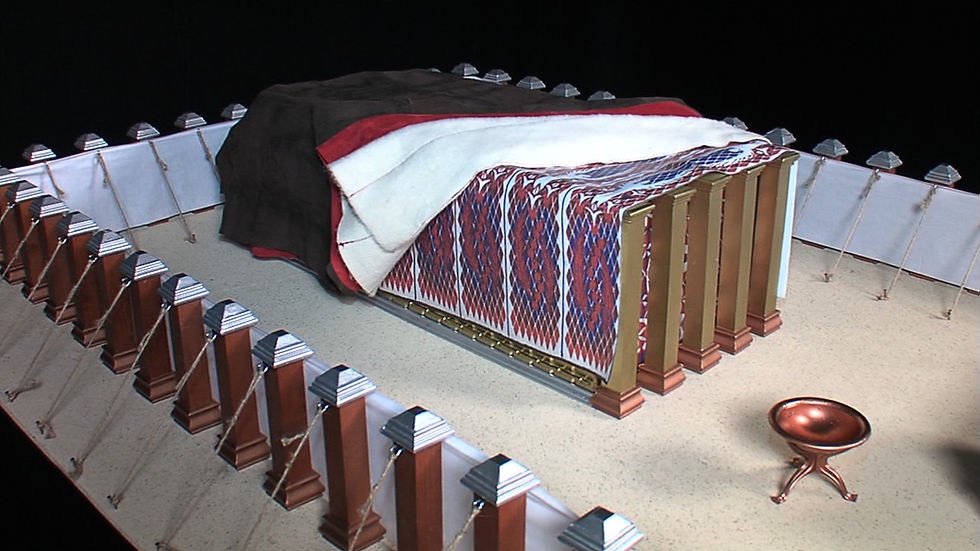
It is a tenuous relationship though because these people are as prone to sin as were their forebears all the way back to those first walking things Adam and Eve. And, as with the first humans, exile looms large as a possibility for these recently emancipated sons and daughters of Abraham. But the Law makes provision for this in the daily and yearly round of sacrifices. The sacrifices keep the people repenting, keep them coming back to the tabernacle and the presence of God to have the blood of bulls and goats poured over their sins — sprinkled on them — to cover and to cleanse the people, the camp, the tabernacle and the ark itself. It is a workable, temporary fix — spiritual WD 40 or duct tape — but not a permanent cure because death remains and the sin that causes it.
Four or five centuries later and the descendants of Abraham have become a kingdom dwelling more or less securely in the land God promised to Abraham. Israel’s third king Solomon has replaced the “humble” tent in which God had dwelt among his people all those years with a grand temple: stone and cedar and gold. But the same ark of the covenant is still there in the new Holy of Holies, and God is still there The temple is now the intersection of heaven and earth where God still dwells among his people, people who still offer the daily and yearly round of sacrifices to ensure that the holy God can dwell among a sinful people without destroying them.
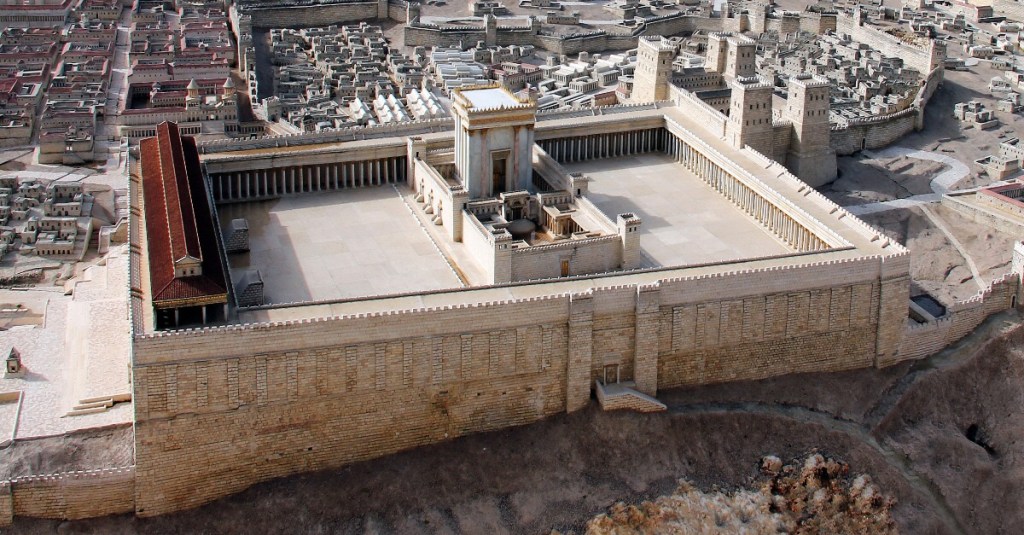
But the kingdom didn’t last long, nor the temple. Kings are foolish and arrogant and idolatrous, and they lead people and nations astray. Despite the calls of the prophets to repent, to return to the Lord, kings and people went after false gods, looked to political alliances and not the Lord for security, put their trust in the temple but not in the God who dwelt in it until finally God just up and left the temple, the people, the land. All of it came crashing down around them when Jerusalem and the temple were razed and the people were taken into exile where they found they couldn’t even bear to sing God’s song in a foreign land.
A generation or two later, some of the exiles were allowed by their overlords to repatriate, to rebuild the city and its walls and its temple. While the people returned, God did not. The temple — the intersection of heaven and earth where God once dwelt among his people — this second temple remained empty. As tragic as that seemed and perhaps seems, it was also inevitable. The stone and cedar and gold temple was always a temporary “fix,” a signpost pointing to something better. No box, not even the ark of the covenant, can hold God. No building, not even the temple, can house the Creator of heaven and earth.
18 Now the birth of Jesus Christ took place in this way. When his mother Mary had been betrothed to Joseph, before they came together she was found to be with child from the Holy Spirit. 19 And her husband Joseph, being a just man and unwilling to put her to shame, resolved to divorce her quietly. 20 But as he considered these things, behold, an angel of the Lord appeared to him in a dream, saying, “Joseph, son of David, do not fear to take Mary as your wife, for that which is conceived in her is from the Holy Spirit. 21 She will bear a son, and you shall call his name Jesus, for he will save his people from their sins.” 22 All this took place to fulfill what the Lord had spoken by the prophet:
23 “Behold, the virgin shall conceive and bear a son,
and they shall call his name Immanuel”
(which means, God with us) (Matt 1:18-23).
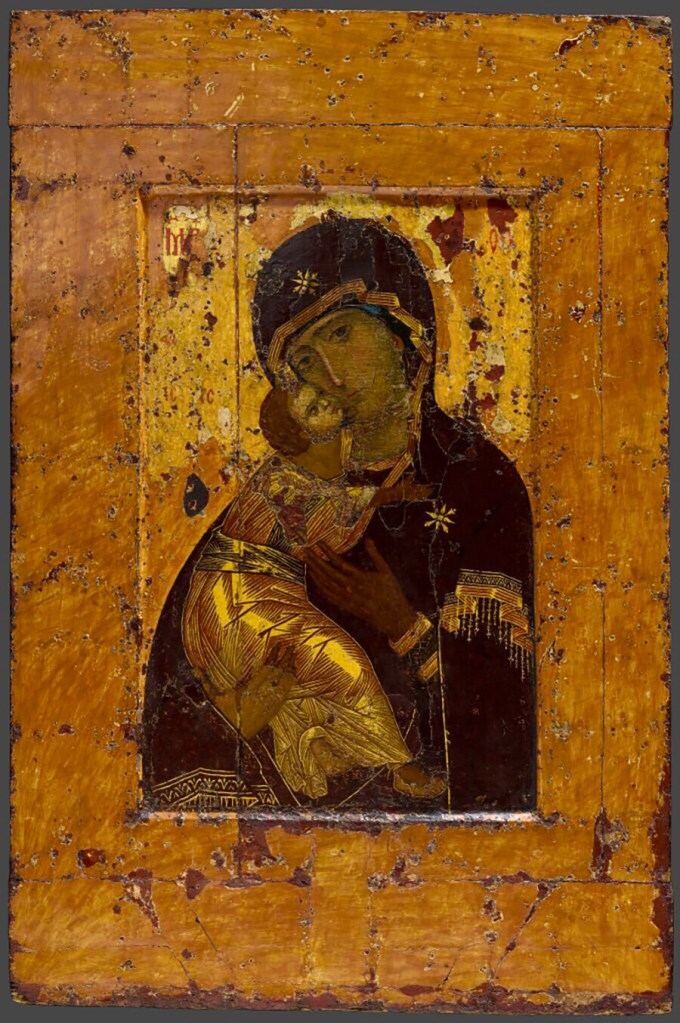
In the incarnation God returns to dwell among his people, not in a tent, not in a temple of stone and cedar and gold but in a temple of flesh and blood: Immanuel, God with us. It is Jesus who is the perfect intersection of heaven and earth where God and man dwell perfectly together — this Jesus who is himself fully God and fully man. He comes to save his people from their sins through the pouring out and sprinkling of his own blood — not a temporary covering of the sins of a few but a full, perfect, and sufficient sacrifice, offering, and satisfaction, for the sins of the whole world (BCP 2019, p. 116). By his resurrection he broke the bonds of death, trampling Hell and Satan under his feet. And then, as our great high priest, he ascended to God’s right hand in glory (ibid, p. 133), a movement in the story we celebrated but ten days ago.
But, what does the Ascension — the leaving — make of God’s purpose to dwell with us, with his people? Jesus, Immanuel, is with God, yes, but the promise was that God would dwell with us. Even Jesus himself had promised that to his disciples on the night he was betrayed:
7 Nevertheless, I tell you the truth: it is to your advantage that I go away, for if I do not go away, the Helper will not come to you. But if I go, I will send him to you (John 16:7).
15 If you love me, you will keep my commandments. 16 And I will ask the Father, and he will give you another Helper, to be with you forever, 17 even the Spirit of truth, whom the world cannot receive, because it neither sees him nor knows him. You know him, for he dwells with and will be in you (John 14:15-17).
And, of course, the disciples were confused until the day of Pentecost when the wind blew and the fire fell from heaven and the Holy Spirit descended upon them and filled them, until Peter at last knew that the last days had come, the days in which, as God had declared, he would pour out his Spirit on all flesh so that sons and daughters would prophesy, young men would see visions, old men would dream, and even servants would prophesy, and all who would call upon the name of the Lord would be saved. This is where the through-line of the story has been headed all along: not God in a garden, not God in a pillar of cloud and fire, not God in a tent or temple, not God among one people only in one land only, and not even just God with us, but God, in the person of the Holy Spirit, in us so that we are partakers of the divine nature (see 2 Pet 1:3-4). Where does God dwell on earth now? Where does heaven and earth intersect now? In these walking things made in the image of God, fallen yet redeemed by the blood of Immanuel, filled with the divine presence of the Holy Spirit. If you are in Christ, if, as Peter said on that great Pentecost day, you have called upon the name of the Lord, if are living a life of repentance, and if you have been baptized then you have received the gift of the Holy Spirit (see Acts 2:38). God tabernacles in you. You are the temple in which the living God dwells. You are a person in whom heaven and earth intersect. And if this is not yet you, it can be, beginning this very day.
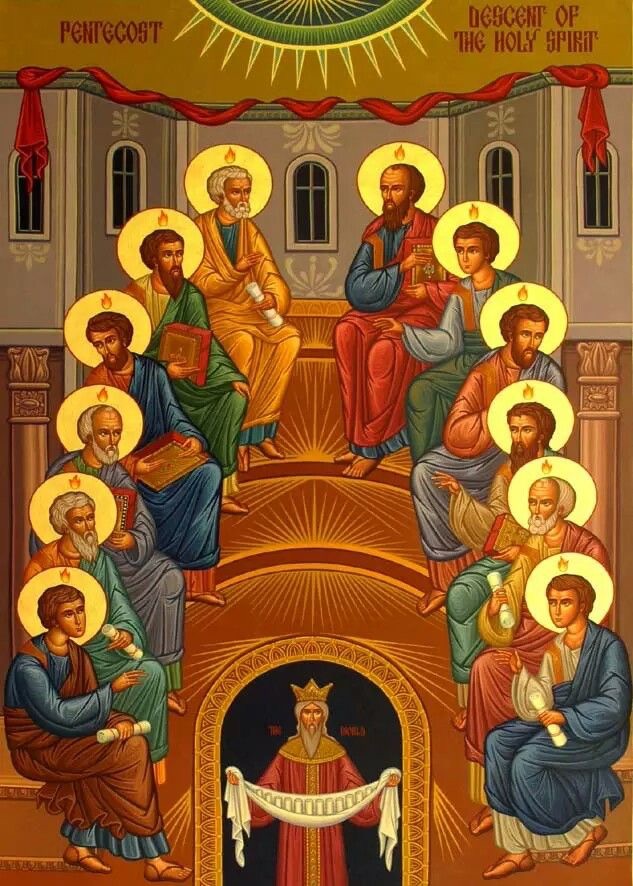
Pentecost was a harvest festival when the first fruits of the wheat fields were gathered in and offered to God, one of three annual feasts with mandatory appearance at the temple. And so Jews came from all around: Parthians and Medes and Elamites and residents of Mesopotamia, Judea and Cappadocia, Pontus and Asia, Phrygia and Pamphylia, Egypt and the parts of Libya belonging to Cyrene, and visitors from Rome, because God wants Babel undone, because God wants to end the exile, because God wants the whole earth to be filled with the glory of his presence as the waters cover the sea, because God wants to dwell in his image bearing humans, to unite them to himself through the Holy Spirit. These Jews who gathered in Jerusalem on the day of Pentecost, who gathered from every nation under heaven, were the first fruits of the Gospel: the first fruits of a harvest that continues until this day. The word still goes forth making this the day of salvation:
38 …“Repent and be baptized every one of you in the name of Jesus Christ for the forgiveness of sins, and you will receive the gift of the Holy Spirit. 39 For the promise is for you and for your children and for all who are far off, everyone whom the Lord our God calls to himself (Acts 2:38-39).
All of those who are in-gathered in this great harvest comprise one body in whom the Spirit dwells. Yes, the Spirit dwells in you and in me and in all those in Christ Jesus, but the Holy Spirit also dwells in us together to make us one in Christ and one with each other. St. Paul speaks of us as individual members but also as a body:
12 For just as the body is one and has many members, and all the members of the body, though many, are one body, so it is with Christ. 13 For in one Spirit we were all baptized into one body — Jews or Greeks, slaves or fee — and all were made to drink of one Spirit (1 Cor 12:12-13).
So, where does God dwell on earth today? In you, in me, most fully in us — the church. We need each other and the world desperately needs us all, all of us together united in heart and mind and purpose. In and through the Holy Spirit, we are, each of us and all of us together, the temple of the living God to whom be glory from generation to generation in the Church, and in Christ Jesus for ever and ever. Amen.


