
Formed Conference 2026
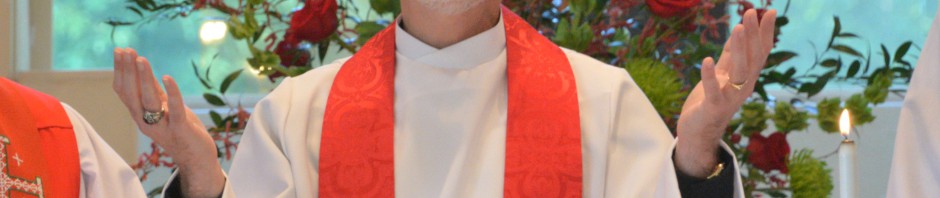
Fr. John A. Roop
On Hearing Confession: A Workshop For Priests
The Lord be with you.
And with your spirit.
Let us pray.
Grant us, O Lord, the wisdom that sits at your right hand, that we may judge your people according to the right, and the poor with equity. Grant that we may so wield the keys of the Kingdom of Heaven, that we may open it to none to whom it should be shut, nor shut it to any to whom it should be opened. Give purity to our intention, sincerity to our zeal, patience to our charity, and fruit to our labors. Grant that we may be mild, yet not remiss, stern, yet not cruel. Let us neither despise the poor nor flatter the rich. Give us gentleness to draw sinners unto you, prudence in examination, wisdom in instruction. Grant us, we pray, skill to turn men aside from evil, perseverance to confirm them in good, zeal to persuade them to better things: give wisdom to our answers, rightness to our counsels: give us light in darkness, a good understanding in confusion, victory in difficulties. Let no vain conversations entangle us, nor evil defile us: let us save others and not ourselves be cast away. Amen.
Foreword
I am here today speaking as one priest to other priests, not as an expert — and not with any particular authority — but merely as a fellow “practitioner” sharing ideas with colleagues and brothers. You will agree with some of what I say and disagree with other things. How could it be otherwise? We are Anglicans, after all, and that is our nature. You may well have some much better insights and practices than I have, and I hope you will share them with us. Hopefully, we can have some respectful and productive discussions.
Introduction
There are elders, spiritual fathers, in the Orthodox tradition — often in monasteries and certainly on Mount Athos, the Holy Mountain — who spend hours each week and sometimes hours each day hearing the confessions of their spiritual children and of visiting pilgrims. It is said that many of these elders have the gift of reading hearts, of knowing the temptations, sins, and burdens of their spiritual children before even a word is spoken. The Curé d’Ars, St. Jean Vianney (1786-1859), a Roman Catholic priest in the town of Ars, spent upwards of twelve hours a day in the confessional, often as many as eighteen hours. He, too, reportedly had a great gift of spiritual insight that enabled him to speak directly and authoritatively into the lives of the penitents who came to him.
I don’t know if there are or have been such spiritual fathers and saints in the Anglican tradition, those with spiritual insight and intense devotion to the Sacrament of Reconciliation. If I knew of one — living or dead — I would probably make a pilgrimage. I do know for certain that I have no such gifts. I likely hear fewer confessions in a year than St. Jean Vianney did in a typical day. And yet, Archbishop Foley Beach laid hands on me and offered this prayer for me, as a successor of the apostles did for each of you:
Receive the Holy Spirit for the office and work of a Priest in the Church of God, now committed to you by the imposition of our hands. If you forgive the sins of anyone, they are forgiven. If you withhold forgiveness from anyone, it is withheld. Be a faithful minister of God’s holy Word and Sacraments; in the Name of the Father, and of the Son, and of the Holy Spirit (BCP 2019, The Form And Manner Of Ordaining A Priest, p. 493).
So, while I am no St. Paisios the Athonite or St. Jean Vianney, I — and you — no less than those two saintly father confessors, have the sacramental vocation of absolution, the authority — through the Holy Spirit and the imposition of episcopal hands — to forgive sins or to withhold forgiveness. Even though we Anglicans will parse the meaning of that language and that act of forgiveness differently — we are, after all, Anglicans — for reasons beyond my knowing, God has chosen to work through sinful and fallible men ordained to the Sacred Order of Priests to minister the grace of forgiveness. So, in The Reconciliation of Penitents we rightly declare:
Our Lord Jesus Christ, who has given power to his Church to absolve all sinners who truly repent and believe in him, of his great mercy forgive you all your offenses; and by his authority committed to me, I absolve you from all your sins: In the Name of the Father, and of the Son, and of the Holy Spirit (BCP 2019, The Reconciliation of Penitents, p. 224).
That authority is a great grace, and it can be a great burden. We want to exercise this authority rightly according to the faith and discipline of the Church as we have received them, not least in accordance with the Book of Common Prayer and the further clarification and guidance of our bishops. We also want to learn from one another how to do this well. So, we have this forum today: On Hearing Confession.
If You Offer It, They Will Come
Let’s start with the obvious: we can’t hear confessions that aren’t made. I don’t know about you and your parishes, but my parishioners aren’t beating down my door to make confession. It is fair to say that we have a “holy trickle,” a few who make confession regularly several times each year and more who are occasional penitents, that is, those whose confessions are occasioned by particular sin or struggle, really those who are envision by The Exhortation. I’m certain we also have some who are new to Anglicanism and simply want to experience the breadth and depth of all that Anglicanism has to offer; they are curious. People come — those who do come — for a host of reasons. My assumption, my belief, is that the Holy Spirit is always at work when someone is prompted to make confession no matter why they think they are coming.
Assuming that my parish isn’t atypical in having a relatively small percentage of parishioners who make regular use of confession two questions arise: (1) Do we want more people to utilize confession, that is, do we think it would be beneficial for them to do so? and (2) How do we get them to come?
As priests, we surely differ on the importance we place on confession, even on whether it should be a normative or normal practice for all Anglicans. You know the classical Anglican position on the matter: All may, some should, none must. That is certainly the conviction expressed in the BCP 1549, and who am I to disagree. And yet I do disagree. My conviction is more along these lines: All may, most should, none must. I am an unabashed advocate and apologist for confession not least because I believe in the three-fold way of spiritual development derived from Pseudo-Dionysius the Areopagite (5th-6th centuries): purification, illumination, union.
Purification — the cleansing of the heart, the battle against vice and the cultivation of virtue — was blessed by Jesus for all who would follow him: Blessed are the pure in heart, for they shall see God (Matt 5:8). Striving for our own purity, encouraging and equipping our parishioners to do likewise, seems to me a gospel mandate. I find confession — my own and my parishioners’ — to be a powerful agent of purification. Temptation and sin build and gain strength in silence and secrecy, but lose much of their power when revealed, when spoken aloud, and certainly when godly counsel and absolution are offered. And, I don’t know any of my parishioner who would not be helped along the way of purification by such counsel and absolution.
Now, I’ve made a subtle shift here — an important addition — that you probably noticed. I think it is still in keeping with a broad reading of The Exhortation. I know it is useful and transformative. It is simply this: in addition to confession of specific sins, disclosure of thoughts — of temptations to sin before they become sins — has a place in confession. That is my conviction. There is a fine line between the two — between temptation and sin — as Jesus made clear in his teaching on sins of the heart (Matt 5:21 ff). But, there is a line. We are all assaulted by logismoi (λογισμοι), tempting thoughts — sometimes persistent thoughts — that trouble us, thoughts we do not wish to entertain and certainly do not want to act on. Evagrius Ponticus (c. 346-399) categorized them in an eightfold scheme: gluttony, lust, avarice, dejection, anger, despondency or listlessness (acedia), vainglory, and pride. Confessing these thoughts, disclosing them in confession before they progress to actual sin and culpability, can have a powerful freeing and purifying effect even though no particular sin is being confessed and though no absolution may be warranted. Confession provides a place for godly counsel. You might argue that this is more germane to spiritual direction than to confession, and I would probably not disagree. But, the fact is that there precious few spiritual directors available who are trained in the classical tradition, directors who can (or will) offer godly counsel on these matters. So, I include disclosure of thoughts under the heading of confession; and I do not know of anyone in our parishes who would not benefit from that.
Our commitment to catholicity also commends confession; as Anglicans we claim to take our place in the one, holy, catholic and Apostolic Church. Confession is a Sacrament in that Church, in both the Orthodox and Roman Catholic expressions of the faith once delivered to the saints — a Sacrament crucial/essential for spiritual health and formation. It seems to me that there is spiritual danger in rejecting it or trivializing it, a certain hubris that impoverishes our people and distances Anglicans from the great catholic Tradition. There is room for disagreement with my conviction, but I choose to stay with the Church, and that means staying with confession and practicing it as a Sacrament, Article XXV (OF THE SACRAMENTS) perhaps notwithstanding.
Lastly, there is the imperative in the letter of St. James to confess your sins to one another and pray for one another that you may be healed (see James 5:16). Did James envision confession exactly as it is practiced today? Probably not, but this is the way confession has developed in the Church; this is the faith and practice as we have received it. It is the Church being true to Scripture as the consensus of the faithful have interpreted Scriptures over centuries. I am content with that.
So, that is my apology — at least part of it — for why we should encourage our parishioners to avail themselves of confession. Now, the question is: How do we get them to come? Here, I wish I had better answers. I’ll mention a few ideas and I welcome you to add to them if you have found anything that “works” for you.
The first comes from St. Paisios (1924-1994):
“The paralytic could not walk, but others brought him to Christ. This is how we must bring our brothers to the liturgy and to confession through our silent prayers and love.”
Prayer: just as we pray for all ministries in our parish, we must pray that this ministry of confession would prosper, that our parishioners will be drawn to confession. Love: we must love our parishioners into confession, not least by presenting the church, and by extension the confessional, not as a courtroom but as a hospital, a place of healing for the soul, by letting them know that they will experience not judgment but compassion, not condemnation but healing and restoration.
Second, we can emphasize confession in our worship, preaching, catechesis, and spiritual formation. Read The Exhortation in worship as suggested in the BCP and perhaps even more frequently. Emphasize confession in catechesis for membership, baptism, and confirmation. Offer spiritual formation classes — or whatever you call them — on confession broadly considered, including such topics as the thoughts and disclosure of thoughts, examination of conscience, the Rite of Reconciliation. De-mystify and normalize confession by teaching it.
Third, have regularly scheduled times for confession and a clear process for signing up for it. Advertise that in the bulletin, on the church website, in parish emails. Let the parishioners know that confession isn’t reserved just for Lent — and perhaps Advent — but that it is a normal part of Christian/Anglican faith and practice. In our parish we have three ways to request confession: through digital sign up on the website, through a telephone call to the church office, and by direct request to a priest. Since we have the blessing of multiple priests, we have a monthly rota of confessors; any request made online and generally those requests received through the office are assigned to the monthly on-call confessor. Those requests made to individual priests are taken by those priests.
Fourth, if you have a website, post good articles about confession there. If you have brochures about various ministries and activities in the parish, write one on confession and include it among them. Write about confession periodically on the church’s social media. When appropriate, mention your own experience with confession, not as confessor, but as penitent. Get the word out on every occasion and in every way.
This is slow, steady work and I doubt you will see major returns on it in the short term. But any growth is a good thing.
Logistics
The parish where I serve, Apostles Anglican Church, does not have the classical confessional, the booth or closet divided by a screen or curtain; I have never seen one in an Anglican Church, though I am fairly certain they exist. We most often hear confessions in the St. Mary Magdalene Chapel just off the nave. It is sacred space, set apart for corporate and private prayer and for confession. It is private but not isolated. It is open during the normal hours of the church day. In that description of the chapel, I have laid out my basic convictions about appropriate space.
First, confession is a sacramental rite of the Church and should normally be conducted in consecrated space. Of course, emergency confessions can be heard anywhere: in hospital rooms, in homes, by the side of the road. But, the proper place for scheduled confession is in the church, in consecrated space. My bishop, ++Foley Beach, prefers confession in the nave/chancel, at the main altar of the church. But in our case, for example, it is more difficult to maintain privacy in the nave than in the chapel, so, with his blessing, we opt for the chapel. I recognize this may present some challenges to those who do not own their church building and who have only limited access to a shared or rented space. Because those circumstance can vary greatly, I cannot offer specific solutions, only the general principle of consecrate space, if at all possible, and a few cautions.
Since confession is confidential, the place chosen should be private but not isolated, a place where the rite will not be interrupted but where no accusations of scandal could reasonably be leveled. Confession should generally be offered during normal church hours when other people are present in the building. Again, the main idea is private, but not isolated. I know of no way to say this without appearing sexist, but these matters are particularly important with a female penitent. To the greatest extent possible, we must protect the integrity and reputation of both penitent and confessor. Even more fraught is the situation with a minor penitent. The minor has the same right of access to confession as an adult, and the same expectation of confidentiality. But, in today’s climate of suspicion of priests and of real sexual exploitation by some priests, this is a most sensitive manner. While I might place a hand upon the head of an adult penitent while pronouncing absolution, I would not do so with a minor. I would always maintain appropriate distance and not touch the minor at all.
I have emphasized the normative use of sacred space, the need for privacy but not isolation, and the presence of other people in the building. Sometimes it may not be possible to satisfy all these requirements in a timely fashion. Let me sketch out a scenario. Our church is closed on Fridays and Saturdays. Suppose a parishioner contacted me on one of those days, clearly in some spiritual distress, asking to make confession that day. I am not going to refuse or delay. What are some options? I might explain to the parishioner that the building is closed and that I cannot hear confession with just the two of us present. I might ask if the parishioner could bring a friend or family member along to wait in another part of the building while I hear the confession. If that were not possible, I might resort to another location. We have covered porches/entries at our church, outside and visible. I might hear confession there. Or, there is a nearby park with scattered benches that are visible but private. I might hear confession there. In my opinion — and it is just my opinion — the avoidance of scandal is more crucial than the use of sacred space in extraordinary situations. If I had any qualms about having heard a confession in that manner, I would contact my bishop after the fact, explain the situation, and let him speak to my decision and what I might do going forward.
True “emergency” confessions offer their own challenges. If a hospitalized parishioner is facing a major health crisis or procedure, for example, I generally ask family and friends who might be visiting if I might have a few private moments with the patient and ask them to wait outside the door to ensure our privacy. Then I invite the patient to make confession. Sometimes they do and sometimes they don’t, but the opportunity is provided.
Now, for just a few practical matters about space. Prayer books should be available, as should kneelers, if possible, and certainly tissues and a trash can. The room should be clearly marked as “In Use” so that the rite will not be disturbed.
The Rite of Reconciliation of Penitents
The rite itself as given in the BCP 2019 is brief and straightforward. Even so, if I have not heard the confession of a given penitent previously, I always ask if he/she has made confession before using that rite. If not, I briefly “walk” him/her through it pointing out what each of us will say, when he/she will sit or kneel, how and when I might give godly counsel, and so on. I briefly explain the nature of sacramental confession and the grace it mediates. I also emphasize the absolute seal of the confession, how the seal applies to whatever is confessed in the context of the rite itself. Just as an aside, some people erroneously seem to think that whatever is said to a priest in any context, even in casual conversation, is strictly confidential and under the seal. As you know, and as we need to make clear on occasion, the seal applies strictly and only to what is confessed during the rite itself, not in conversation outside the confessional.
As a personal practice, not least to orient myself properly to hear confession, I will begin the rite with a private prayer followed by a selection from the Psalter or the Canticles: Psalm 51 or the Kyrie Pantokrator for example. I usually ask the penitent to say the selection with me, either in unison or responsively. Likewise, after the absolution and before the concluding prayer I will often include a portion from a psalm, e.g., Psalm 32 or 103. In these cases I read the Psalm myself and invite the penitent to hear it as God’s word to him/her. This is just personal practice, not part of the rite itself, but I find it meaningful.
As the penitent makes confession, I am looking for these characteristics of a good confession.
1. Confession of sin: acknowledgement, without excuse, of the sin committed
2. Contrition: true sorrow for the sin itself
3. Restitution: amelioration of the effects of the sin to the greatest extent possible
4. Amendment of life: evidence of a changed life or of an adequate plan for change
5. Penance: willingness to accept the guidance and direction of the confessor
Now, this is the difficult part of confession — thanks be to God it has not happened to me yet — but if these characteristics, in part or whole, are absent it might not be possible, in good faith, to offer absolution. So, for example, if a penitent had stolen something but had not yet returned it or made adequate compensation, I would not offer absolution until he/she had done so. This example if a bit more fraught: suppose a penitent who makes regular confession continues, time after time, to confess a particular sin but has resolutely failed to implement any of the godly counsel given, evidences no struggle against the sin, and has no plan for amendment of life. Again, I would hesitate to offer absolution. In all such cases, I would make clear that absolution is the goal, and I would specify precisely what the penitent must do to receive absolution in the future. This is a weighty matter. Thankfully, such situations are rare, at least in my experience.
Let me mention one other type of confession I have encountered: I call them “New Year’s Resolution” Confessions. The confession consists of statements like “I need to be more patient,” or “I need to control my anger better,” to which I want to — but don’t — reply, “Well, don’t we all?” I don’t take these “confessions” lightly; there is something there burdening the penitent, something real to be confessed. I just can’t tell what it is from what has been said. So, here, I would gently probe a bit. “How does your impatience usually manifest? Can you give me a recent example? When was the last time you lost your temper? What triggers your anger?” In addition to a spiritual purpose for this, there is a pedagogical purpose: teaching the penitent to identify sin, to name it for what it is, so it can be confessed specifically.
Along these same lines, I have also found that penitents — particularly those new to confession — have difficulty recognizing and naming sin for what it is. Either they feel guilty about something that is not truly sinful at all — overly scrupulous penitents — or else they misidentify the problem. What they confess as pride or anger may actually be a manifestation of hurt or fear. This can get very complicated and may need more than confession. It might involve longer term pastoral care or spiritual direction or even counseling in conjunction with confession. But, gentle questioning during the confession might begin to open this up.
Special Considerations: Limitations of Confession and Overlapping Relationships
Limitations of Confession
Though confession shares come characteristics with pastoral care and spiritual direction such as godly counsel and direction (see The Exhortation), they are not identical and should not be conflated. Both pastoral care and confession are occasional in that some need occasions each. But, while pastoral care often extends to multiple sessions, confession ends with the absolution offered at the end of the rite. Pastoral care sessions also tend to be longer in duration than confessions.
Spiritual direction is an open ended relationship which can, and often does, extend for years. It is not an occasional relationship; there is typically no presenting issue. Instead, spiritual direction is formative. If a spiritual director is not a priest and matters requiring confession emerge during direction, the director might well recommend confession to the directee. Likewise, if issues of formation arise in confession, the priest may recommend the penitent seek out a spiritual director. The various ministries are complementary, but not interchangeable.
Though this is reductive, I might summarize the relationships in this way. The focus of confession is absolution. The focus of spiritual direction is formation. The function of pastoral care is the resolution of a particular problem/issue. Each has a certain scope and limitation, and the differences need to be acknowledged and maintained.
Overlapping Relationships and Contrary Counsel
This complementarity of confession, pastoral care, and spiritual direction, while generally beneficial, can, on occasion, be problematic. The chief “danger” is conflicting or contrary counsel. For example, suppose a penitent “confesses” a struggle with prayer or a particular temptation. Either of these might be the appropriate domain of confession since either might be a symptom of underlying sin. It is appropriate for the confessor to address that sin and provide godly counsel. But, suppose the penitent also has a spiritual director. Or, suppose he/she has recently seen another confessor for the same issue. Now, any counsel given runs the risk of conflicting with prior counsel, breeding confusion in the mind of the penitent. I might suggest — and it is only a suggestion — asking the penitent if he/she has a director or another confessor with whom he/she has spoken concerning the matter. If so, I defer to the other counselor and restrict myself to hearing and evaluating the confession and providing absolution. I inform the penitent of this approach and encourage him/her to continue conversations with the director or confessor.
Q&A/Closing
We have just scratched the surface of the complexities of hearing confession. Ongoing conversations are essential to good practice; we need to learn from one another. I end with a plea to the elder confessors among us: pass on the tradition and your experience with it to the next generation. It is a gift to the Church.
In the time we have remaining, let’s have some Q&A and some comments.
The Lord be with you.
And with your spirit.
Let us pray.
Go before us, O Lord, in all our doings with your most gracious favor, and further us with your continual help; that in all our works begun, continued, and ended in you, we may glorify your holy Name, and finally, through your mercy, obtain everlasting life; through Jesus Christ our Lord. Amen.


