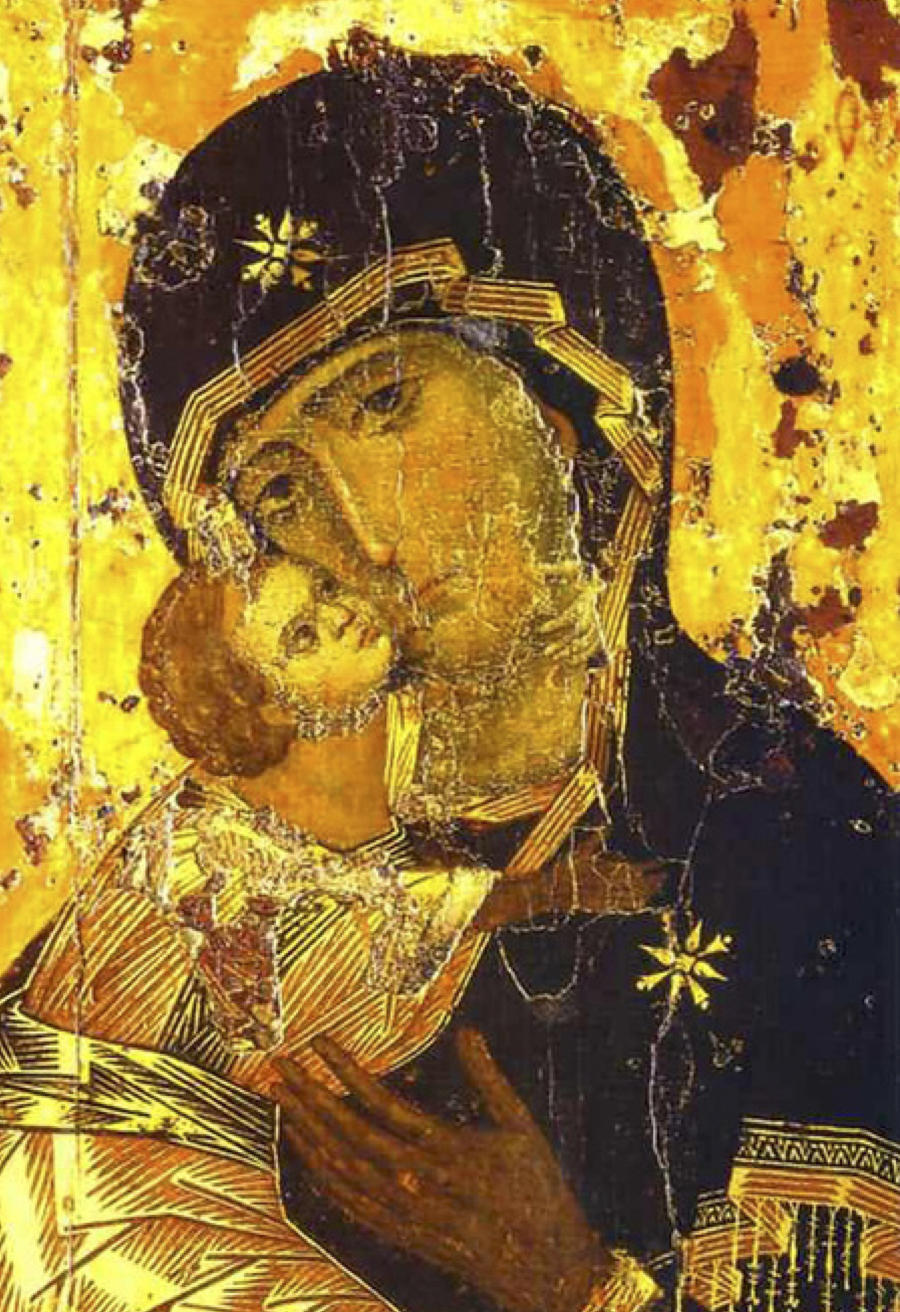
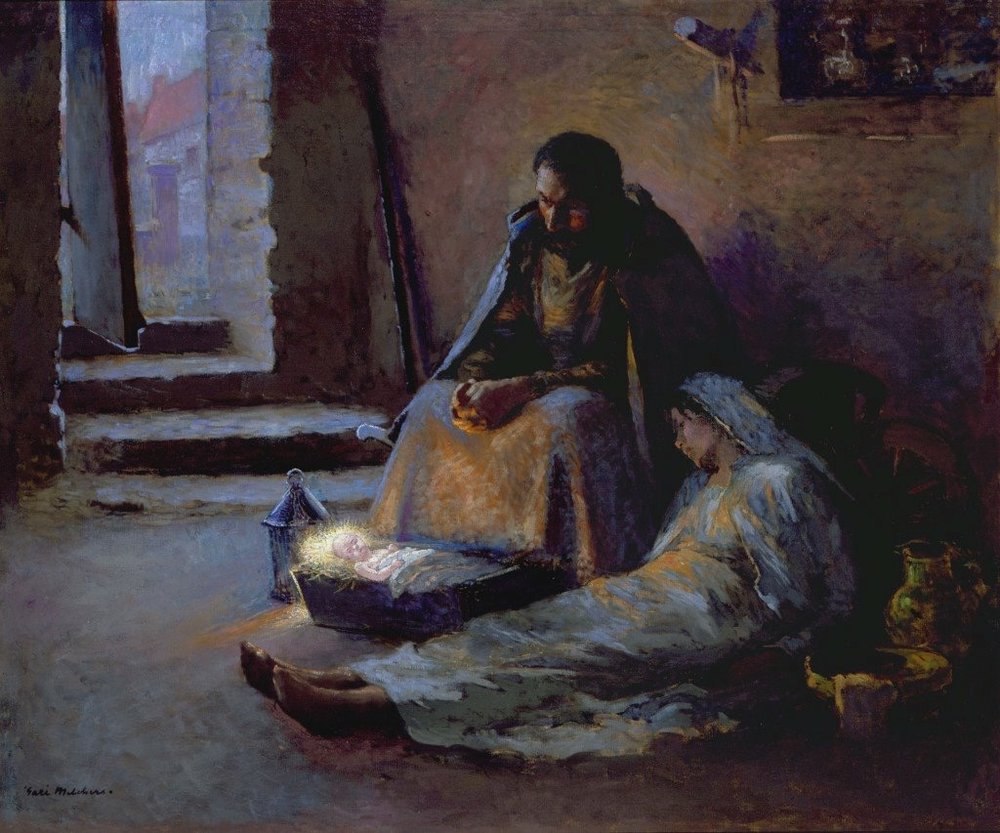
The Nativity of our Lord Jesus Christ

ADOTS Morning Prayer: Friday, 25 December 2020 — Christmas Day

In the Name of the Father, and of the Son, and of the Holy Spirit.  Amen.

“We’ve turned the corner on Covid,” President Trump said repeatedly in the run up to the presidential election.  “We’ve rounded the turn.  One day it will just disappear.”  It was a lie, not necessarily malicious, not necessarily disingenuous — just evidently, obviously wrong.  He offered false hope.  To the contrary, President-Elect Biden warns us often that “we are in for a long, dark winter.”  That seems to be closer to the truth, but a lot farther from hope.  To give some sense of optimism, Mr. Biden reminds us that this is America, and that there’s nothing Americans can’t do if they just put theirs minds to it and work together.  That, too, is a lie: not necessarily malicious, not necessarily disingenuous — just evidently, obviously wrong.  As I wrote these words earlier in the week, Congress was still deadlocked over the Covid Relief Package and had just passed an emergency resolution to fund the government for two more days so they could do nothing productive for forty-eight more hours.  Find me a private business as dysfunctional as Congress and I’ll show you a business that will not be in business in six months.  Yet, somehow we keep paying salaries for work not done.  To their credit, they were able to finalize both a bi-partisan Covid Relief bill and an omnibus spending bill to fund the government through September 2021.  President Trump, who had earlier signaled his willingness to sign the bill promptly threatened to veto it instead.  Such is our government.

What I long to see from government is some hint of wisdom, just the merest glimpse of righteousness:  to know and to do the right thing for the good of all the people, to bring justice to bear, justice with peace for the good of all the people, especially for those who have for too long known too little justice and peace.  Is that too much to ask?  Apparently so, because the damnable truth is that government can likely be no better than those it governs, certainly not in a democracy.  We get the government we chose, the government we want, some say the government we deserve.  And we are a mess:  far from wisdom and righteousness, strangers to justice and peace.

That is why we so desperately need Isaiah’s words this Christmas morning, why we need to hear and see and share his vision:

Isaiah 9:6–7 (ESV): 6  For to us a child is born, 

to us a son is given; 

  and the government shall be upon his shoulder, 

and his name shall be called 

  Wonderful Counselor, Mighty God, 

Everlasting Father, Prince of Peace. 

 7  Of the increase of his government and of peace 

there will be no end, 

  on the throne of David and over his kingdom, 

to establish it and to uphold it 

  with justice and with righteousness 

from this time forth and forevermore. 

  The zeal of the Lord of hosts will do this. 

Let’s start with the end of Isaiah’s vision:  the zeal of the Lord of hosts will do this.  Not our democracy, not our Congress, not our President, not our we are Americans and we can do anything false sense of bravado.  These are human institutions and they are part of the problem, like the ark which saved Noah and his family was not the solution, but part of the problem, because it bore within itself human sin.  Let’s get this straight:  some human governments are better than others — far better.  Some leaders show greater human wisdom and better judgment than others.  Some administrations approximate righteousness more closely than others.  But Isaiah’s vision applies to none of them.  None of them will usher in an eternal age of wisdom, peace, justice, and righteousness.  Unless God breaks into history, unless the zeal of the LORD of hosts accomplishes this, we are without hope and without a future.

But this day, this day, proclaims that the zeal of the LORD of hosts has done this; this day proclaims that God has acted.  For to us a child is born, to us a son is given; and the government shall be upon his shoulder.  This is no lie.  This is no false hope.  This is no failed hope.  This is no false optimism.  His name shall be called — his name is  even now called — Wonderful Counselor, Mighty God, Everlasting Father, Prince of Peace: Jesus.  We did not vote for his government; in fact, we have continually voted against it throughout history.  But — thanks be to God — this is no democracy.  God does not need our popular vote or even our electoral college.  The zeal of the LORD of hosts has accomplished this.

Now look:  human governments are still in rebellion against this divine government; read Psalm 2.  That is why they are all so dysfunctional.  We are — all of us — still in rebellion, more or less, against the righteous rule of the Prince of Peace.  That is why we still place our hope in the wrong parties, people, and policies.  We are all still part of the problem.  But God has acted, God is acting, and God will continue to act to accomplish his good purpose of wisdom, peace, justice, and righteousness.  Such a government is already, but not yet.  It is already a reality because God has acted in and through the incarnation of his Son.  It is not yet manifest fully among us because creation has yet to be fully restored and new Jerusalem has yet to come from heaven to earth like a bride adorned for her husband.  But, it is coming; that day is coming.  The zeal of the LORD of hosts will do this.

In the meantime, in the time of God’s patient waiting and working, our task and our privilege is to live as people who know this, as people who have been brought out of darkness into light:

Isaiah 9:2 (ESV): 2   The people who walked in darkness 

have seen a great light; 

  those who dwelt in a land of deep darkness, 

on them has light shone. 

This is us, those of us who are in Christ Jesus.  This light is the glory of God in the face of Jesus Christ, the one whose birth we celebrate this day.  For to us a child is born, to us a son is given.  Walk in this truth; live in this hope.

May yours be a holy and blessed Christmastide.  Amen.

Posted in Uncategorized | Leave a comment

O Virgo Virginum: O Virgin of Virgins

The O Antiphons:  O Virgo Virginum

(Isaiah 66:1-2, 6-11 / Psalm 113 / Luke 1:26-38)

In the words of the angel Gabriel and Elizabeth, mother of the forerunner of our Lord:  Hail Mary, full of grace; the Lord is with thee.  Blessed art thou among women, and blessed is the fruit of thy womb, Jesus.  Amen.

I have no real homily to offer today:  no explication of doctrine from my head, but rather a reflection from my heart as we approach the nativity of our Lord.

For seven days — starting on 16 December — the Church has been singing or chanting or saying the great O Antiphons, the Advent refrains that frame the Magnificat at Evening Prayer.  These antiphons form the basis for the hymn O Come, O Come Emmanuel, and they invite us to reflect on the Song of Mary — as we ought always to do —  through the lens of her Son, Jesus, specifically by invoking Biblical names or descriptions of the Messiah:  O Wisdom, O Adonai (Lord), O Root of Jesse, O Key of David, O Dayspring, O King of the Nations, O Emmanuel (God-with-us).  The O Antiphons are focused, laser-like, on Jesus.

But not today.  Today, the last of the O Antiphons shifts focus a bit:  O Virgo Virginum — O Virgin of virgins.  We sing today of the Blessed Virgin Mary.

O Virgo Virginum

O Virgin of virgins,

how shall this be?

for neither before thee was any like thee,

nor shall there be after.

Daughters of Jerusalem,

why marvel ye at me?

The thing which ye behold 

is a divine mystery.

I know that many faithful followers of Christ are wary of any devotion given to Mary lest the Church drift back into the medieval excesses of undue Marian piety.  While I understand and respect that, I think we need not throw out the baby with the bath, or in this case, the Baby’s mother with the bath.  God the Father honored Mary with the unique vocation of uniting humanity with Divinity in her womb.  The angel Gabriel, who stands in the presence of God, stood in Mary’s presence and hailed her as “the favored one,” meaning surely “the one whom God favors.”  This is proper honor.  And, if it is fitting for God to favor Mary and for Gabriel to called her blessed, should we do any less?  Any love we show for Mary, any devotion to her, redounds to the worship and praise of her Son, our Lord Jesus Christ.  Mary is worthy of honor only because Jesus is worthy of worship; we do not confuse the two.  We honor Mary; we worship the Lord Jesus.  We even see that right ordering of devotion expressed clearly in the antiphon itself.  Mary asks:

Daughters of Jerusalem,

why marvel ye at me?

The thing which ye behold 

is a divine mystery (emphasis added).

Mary is clear and we can be, too.  It is not about her, but about the divine mystery at work in and through her.

And we marvel at the mystery of what God did in and through Mary, the Virgin of virgins.  This excerpt from the Divine Liturgy of St. Basil the Great, one of the Eucharistic liturgies from the Orthodox Church, captures that mystery in two stunning images:

All of creation rejoices in you, O full of grace,

the ranks of Angels and the human race;

hallowed Temple and spiritual Paradise, glory of Virgins;

from you God was incarnate,

and He, who is our God before the ages, became a little child,

for He made your body a throne

and made your womb more spacious than the heavens (Divine Liturgy of St. Basil the Great).

He made your body a throne.  The Logos, the Word of God, the Lord — God from God, Light from Light, true God from true God, begotten, not made, of one Being with the Father — this one reigned eternally, enthroned at the right hand of the Father.  And yet, when he entered creation he chose as his first incarnate throne the body of a virgin daughter of Israel.  In Morning Prayer we sing the Benedictus Es, Domine:

Glory to you, Lord God of our fathers;

     you are worthy of praise; glory to you.

Glory to you for the radiance of your holy Name;

     we will praise you and highly exalt you for ever.

Glory to you in the splendor of your temple;

     on the throne of your majesty, glory to you.

Glory to you, seated between the Cherubim;

     we will praise you and highly exalt you for ever (BCP 2019, p. 19).

The throne of majesty.  Seated between the Cherubim.  Is Mary any less exalted when the Lord reigns from that throne, from the throne of her body?  No.  As we sing in the Te Deum:

You Christ, are the king of glory,

     the eternal Son of the Father.

When you took our flesh to set us free

     you humbly chose the Virgin’s womb (BCP 2019, p.18).

The Lord chooses his throne as he will.  He chose the body of Mary and, later, he chose the cross.  Both are glorified in his choosing and by his incarnate presence.  Why marvel at this — at her?  The thing which we behold is a divine mystery.

He made your womb more spacious than the heavens.  Solomon was granted the honor of building a temple for the Lord, the meeting place between God and man on earth.  And yet, Solomon himself knew the utter inadequacy of such a structure.  It is there in his planning:

2 Chronicles 2:3–6 (ESV): 3 And Solomon sent word to Hiram the king of Tyre: “As you dealt with David my father and sent him cedar to build himself a house to dwell in, so deal with me. 4 Behold, I am about to build a house for the name of the Lord my God and dedicate it to him for the burning of incense of sweet spices before him, and for the regular arrangement of the showbread, and for burnt offerings morning and evening, on the Sabbaths and the new moons and the appointed feasts of the Lord our God, as ordained forever for Israel. 5 The house that I am to build will be great, for our God is greater than all gods. 6 But who is able to build him a house, since heaven, even highest heaven, cannot contain him? Who am I to build a house for him, except as a place to make offerings before him?

It is there in his prayer of dedication:

1 Kings 8:27 (ESV): 27 “But will God indeed dwell on the earth? Behold, heaven and the highest heaven cannot contain you; how much less this house that I have built!

Heaven, even the highest heaven cannot contain God.  And yet for nine months the womb of Mary did just that.  For nine months the womb of Mary became more spacious than the heavens, even more spacious than the highest heavens.  This is not geometry.  This is not architecture.  This is the divine mystery of the incarnation and the honored role of Mary in it.  Scripture names Eve as the mother of all living, as the life-giver (cf Gen 3:20).  In some sense, she held in her womb all mankind.  The Church names Mary as Θεοτόκος (Theotokos), the Mother of God, for she held in her womb the savior of all the sons and daughters of Eve, the One who was fully man and fully God.  

In one sense Solomon was right:

27 “But will God indeed dwell on the earth? Behold, heaven and the highest heaven cannot contain you.

But, in another sense he was quite wrong.  God did dwell on earth — Emmanuel, God-with-us.  And though heaven cannot contain God, the womb of Mary proved more spacious than heaven, and encompassed her Creator.  Why marvel at this — at her?  The thing which we behold is a divine mystery.

The Anglican Church places little emphasis on Mary in its worship, though some Anglicans do in their personal piety.  It’s a bit ironic then that most Western churches — the Roman Catholic Church and the various Protestant bodies — do not count O Virgo Virginum among the O Antiphons; it is found almost exclusively in Anglican churches and among the few Anglican religious orders that remain.  I like to think that this is because we Anglicans rightly order our worship, giving honor to whom honor is due, and worship to Whom worship is due:  honor to Mary, worship to God alone.  The undeniable truth which we recognize, the truth which we sing in O Virgo Virginum is this: Mary was unique among women, uniquely readied for her role in our salvation.  Neither before her was any like her, nor shall there be after.

O Virgin of virgins,

how shall this be?

for neither before thee was any like thee,

nor shall there be after.

Daughters of Jerusalem,

why marvel ye at me?

The thing which ye behold 

is a divine mystery.

Amen.

Posted in Uncategorized | Leave a comment

O Radix Jesse (O Root of Jesse)

ADOTS Morning Prayer: Friday, 18 December 2020

O radix Jesse

O Root of Jesse,

which standest for an ensign of the people,

at whom kings shall shut their mouths,

to whom the Gentiles shall seek:

Come and deliver us,

and tarry not (The New English Hymnal, The Canterbury Press Norwich, 2002).

This is one of the O Antiphons that precedes and follows the Magnificat at Evening Prayer from 16 December to 23 December; it is the antiphon for this day.  You can find a complete list of the O Antiphons on page 712 in the BCP 2019.  

From at least the eighth century onward the faithful have chanted these antiphons — prophetic titles for Jesus — as a musical introduction to and summary of the Song of Mary, or, to mix metaphors, as a lens through which to read and understand the Magnificat as the fulfillment of Old Testament prophesies and as a preview of the coming kingdom.  These antiphons have the Advent flavor of past, present, and future:  already, not yet, coming in fullness.

Today’s antiphon — O radix Jesse, O root of Jesse — draws our attention to that great Advent prophet Isaiah son of Amoz, especially to chapter eleven of his written prophecy.

The chapter begins with a promise:

Isaiah 11:1 (ESV): 11 There shall come forth a shoot from the stump of Jesse, 

and a branch from his roots shall bear fruit. 

Because we are wont to read all Scripture through the lens of Christ, and because Jesus was, in human lineage, a son of David, son of Jesse, we might tend to identify this shoot from the stump of Jesse, this branch from his roots that shall bear fruit, as Jesus of Nazareth.  And that is, perhaps, the case.  But, I find that I’m drawn to Jerome’s interpretation instead:

But we understand the branch from the root of Jesse to be the holy Virgin Mary, who had no shoot connatural to herself. About her we read above: “Behold, a virgin will conceive and bear a son.” And the flower is the Lord our Savior, who said in the Song of Songs, “I am the flower of the field and the lily of the valleys” (Jerome, Commentary on Isaiah).

The Blessed Virgin Mary, the shoot, the branch, and Jesus the fruit of that branch:  it is a lovely image binding together Old and New Testaments with Mary being the bridge between the two and Jesus being the fulfillment of all that came before.

But, there is darkness in this image, too.  The branch comes not from the trunk of a great tree as we might expect, but from the stump, from the roots.  Jesse and his house, David and his dynasty have been brought low, the great tree felled until all that remains is a stump.  As Isaiah speaks these words, Ephraim, the ten northern tribes have fallen to Assyria and are no more.  The destruction of Judah and Jerusalem lies in the future, but is seen even now prophetically as a certainty.  A stump is all that remains:  a stump and a promise.

The promise is of restoration, not just of Ephraim and Judah — that is far to small a thing! — but a restoration of all creation:  a Kingdom of Righteousness to which all men, all nations, shall come, and a Righteous King and Judge, before whom all other kings will bow.

Isaiah 11:2–5 (ESV): 2  And the Spirit of the Lord shall rest upon him, 

the Spirit of wisdom and understanding, 

the Spirit of counsel and might, 

the Spirit of knowledge and the fear of the Lord. 

 3  And his delight shall be in the fear of the Lord. 

  He shall not judge by what his eyes see, 

or decide disputes by what his ears hear, 

 4  but with righteousness he shall judge the poor, 

and decide with equity for the meek of the earth; 

  and he shall strike the earth with the rod of his mouth, 

and with the breath of his lips he shall kill the wicked. 

 5  Righteousness shall be the belt of his waist, 

and faithfulness the belt of his loins. 

Can’t you just see Jesus here?  The Spirit of the Lord shall rest upon him, Isaiah says, and Matthew writes:

Matthew 3:16–17 (ESV): 16 And when Jesus was baptized, immediately he went up from the water, and behold, the heavens were opened to him, and he saw the Spirit of God descending like a dove and coming to rest on him; 17 and behold, a voice from heaven said, “This is my beloved Son, with whom I am well pleased.” 

With righteousness he shall judge the poor, and decide with equity for the meek of the earth, Isaiah says, and Jesus says:

3 Blessed are the poor in spirit, for theirs is the kingdom of heaven.

5 Blessed are the meek, for they shall inherit the earth (Matthew 5:3, 5, ESV).

This is the coming Righteous King and Judge.  And his kingdom?  Creation restored to newness of life, a return to the Garden with Jerusalem at its center:

Isaiah 11:6–9 (ESV): 6  The wolf shall dwell with the lamb, 

and the leopard shall lie down with the young goat, 

  and the calf and the lion and the fattened calf together; 

and a little child shall lead them. 

 7  The cow and the bear shall graze; 

their young shall lie down together; 

and the lion shall eat straw like the ox. 

 8  The nursing child shall play over the hole of the cobra, 

and the weaned child shall put his hand on the adder’s den. 

 9  They shall not hurt or destroy 

in all my holy mountain; 

  for the earth shall be full of the knowledge of the Lord 

as the waters cover the sea. 

Wolf and lamb, leopard and goat, calf and lion — all the ancient enmities gone, all fear gone, all danger gone, Isaiah sees.  And who reigns as King over this renewed creation?  

6 …a little child shall lead them (Isaiah 11:6).

And St. Luke responds:

Luke 2:8–14 (ESV): 8 And in the same region there were shepherds out in the field, keeping watch over their flock by night. 9 And an angel of the Lord appeared to them, and the glory of the Lord shone around them, and they were filled with great fear. 10 And the angel said to them, “Fear not, for behold, I bring you good news of great joy that will be for all the people. 11 For unto you is born this day in the city of David a Savior, who is Christ the Lord. 12 And this will be a sign for you: you will find a baby wrapped in swaddling cloths and lying in a manger.” 13 And suddenly there was with the angel a multitude of the heavenly host praising God and saying, 

 14  “Glory to God in the highest, 

and on earth peace among those with whom he is pleased!” 

Son of David, Savior, Christ the Lord — a baby wrapped in swaddling cloths and lying in a manger.  Glory to God in the highest, is right.  It is about all there is to say.  From the moment of this baby’s birth, the earth was indeed full of the knowledge of the LORD as the waters cover the sea, for in this child, the whole fullness of God dwells bodily (cf Col 2:9).  He is the image of the invisible God, the firstborn of all creation (Col 1:15).

Isaiah continues, and gives shape to the O Antiphon, O root of Jesse:

Isaiah 11:10 (ESV): 10 In that day the root of Jesse, who shall stand as a signal for the peoples—of him shall the nations inquire, and his resting place shall be glorious. 

And Matthew picks up the story:

Matthew 2:1–2 (ESV): 1 Now after Jesus was born in Bethlehem of Judea in the days of Herod the king, behold, wise men from the east came to Jerusalem, 2 saying, “Where is he who has been born king of the Jews? For we saw his star when it rose and have come to worship him.”

The nations, in the person of these Gentile magi, have come to inquire after the king.  And when they find him, they make glorious his resting place with their gifts and their worship:

Matthew 2:9–11 (ESV):  10 When they saw the star, they rejoiced exceedingly with great joy. 11 And going into the house, they saw the child with Mary his mother, and they fell down and worshiped him. Then, opening their treasures, they offered him gifts, gold and frankincense and myrrh.

This is the first fruits of the great in-gathering when all kings and all people of all nations see the signal raised, the banner of the great King, and all God’s people come streaming to the new Jerusalem as Isaiah foresees:

Isaiah 11:11–12 (ESV): 11 In that day the Lord will extend his hand yet a second time to recover the remnant that remains of his people, from Assyria, from Egypt, from Pathros, from Cush, from Elam, from Shinar, from Hamath, and from the coastlands of the sea. 

 12  He will raise a signal for the nations 

and will assemble the banished of Israel, 

  and gather the dispersed of Judah 

from the four corners of the earth. 

And here, Isaiah’s vision fails him a bit.  As grand as it is — the return of all Israel’s exiles — it is not grand enough.  That vision awaits St. John on Patmos:

Revelation 7:9–10 (ESV): 9 After this I looked, and behold, a great multitude that no one could number, from every nation, from all tribes and peoples and languages, standing before the throne and before the Lamb, clothed in white robes, with palm branches in their hands, 10 and crying out with a loud voice, “Salvation belongs to our God who sits on the throne, and to the Lamb!”

These are the faithful martyrs of the nations standing under the signal, under the ensign of Christ the Lamb, the king of all creation.

And so, with this great vision filling our view, with this drama told by Isaiah, Matthew, Luke, Paul, John and so many others ringing in our ears, we sing this day the great O Antiphon, O radix Jesse:

O Root of Jesse,

which standest for an ensign of the people,

at whom kings shall shut their mouths,

to whom the Gentiles shall seek:

Come and deliver us,

and tarry not.

Amen.

Posted in Uncategorized | Leave a comment

David and Whitewash: Sirach 47

O Lord, open my lips,

     and my mouth shall proclaim your praise.

In the Name of the Father, and of the Son, and of the Holy Spirit.  Amen.

Though it has been eclipsed recently in the public consciousness by news of the pandemic and the election, earlier this year our country was struggling mightily to come to grips with the ambiguous character and legacy of our history, of our founding fathers and of generations of civic leaders who followed them:  Christopher Columbus, “discoverer” of a new land which was not new at all, but which lay open for conquest at the cost of the indigenous peoples;  George Washington and Thomas Jefferson, champions and defenders of freedom, who yet owned slaves;  Andrew Jackson, President of the common man, who yet signed the Indian Removal Act which led to the deaths or relocations of unnumbered native Americans.  The list could go on, and does — sometimes reasonably, sometimes as an exercise in over-reaction and self-flagellation.  Statues are toppled and monuments are defaced and peoples are divided.  It is a struggle.

When I was a child, things were much simpler:  not better, just simpler.  Heroes were heroes — period.  In fourteen hundred ninety-two, Columbus sailed the ocean blue to give us this great new land; a courageous and noble explorer he was.  George Washington was the founder of our nation and its first president, an honorable man worthy of respect and admiration.  Thomas Jefferson was the primary author of the Declaration of Independence, the founder of the University of Virginia, a true polymath, a man deserving of honor.  These were the stories from the history texts — and the common imagination — of my youth.  They were — and even this expression is fraught now — they were whitewashed, sanitized of their inherent moral ambiguity and conflict.  I do not stand in judgment of any of these men, though critique of the educational historians who distorted their stories is perhaps appropriate.  We are, all of us, mixed bags of good and evil, virtue and vice.  Why should we expect our great historical figures to be different?

Unlike the history books of my childhood, the Bible — particularly the historical narratives of the Pentateuch, Joshua, Judges, 1 and 2 Samuel, 1 and 2 Kings, 1 and 2 Chronicles — the Bible presents the leaders of Israel warts and all.  The biblical authors weigh these men in the balances of covenant faithfulness, and some come up wanting in spite of their otherwise positive contributions.  Saul beat back the Philistines and began to establish Israel as a sovereign nation, yet he was a disappointment, a failed, self-absorbed king; God repented that he had ever made Saul king and ripped the kingdom from his grasp.  Solomon started well, but didn’t run the race faithfully to the end; he became old and fat and complacent and was lured away from single-hearted devotion to embrace foreign wives and their idols.  His son, Rehoboam, was just an immature jerk from the start, and he alienated — lost — ten of the twelve tribes:  civil war in the time of the fourth king of Israel.  The united monarchy lasted no more than one hundred twenty years.  Jeroboam, Rehoboam’s rival, was given control of those ten northern tribes; he was the worst of the lot, with no redeeming graces.  He immediately drew Samaria into apostasy and things went downhill from there.  These are the stories of Israel’s “founding fathers” as the Bible presents them, without whitewash.

If you were paying close attention, you probably noticed that I skipped David in this lineage of Israel’s kings.  Well, how does he stack up?  David is the archetypal king of Israel, the exemplar against which all other kings are measured.  Put David on one pan of the balance scale and any other king of Israel or Judah on the other, and the scale comes crashing down in David’s favor.  And yet:  and yet if we refuse to whitewash the record, we must also note that David had his failures, and that they were not minor.  He was a headstrong and sometimes violent man whose pride and temper got away with him; if not for the intervention of Abigail, for instance, David would have murdered Nabal and all Nabal’s men just for boorishness — not really a capital offense.  Then there is the whole sordid affair with Bathsheba and her husband Uriah, one of the truly good men in all scripture.  And what did it get him?  Betrayal by his king and death by treachery, all to hide David’s adultery with Bathsheba.  And the end of David’s life was not without blemish.  Against his counselors’ advice, against God’s instruction, he numbered his troops, somehow forgetting that God was his refuge and strength.  Even on his death bed, David gave his heir and king apparent a hit list, acting more like a Mafia don than a righteous king of Israel.  That is David — the man after God’s own heart — warts and all; and it is all in the biblical record.  

But, it’s not here in our reading this morning, not in Sirach 47, which reads as a paean of praise to David:  chosen of God, faithful and brave shepherd, giant killer, mighty man of war, sweet psalmist of Israel, worshipper extraordinaire, head of an everlasting dynasty.  What about the reality of David’s sin?  Where is that?  There is one brief mention of it:  just one, but it’s all and everything we need to know.

11 The Lord took away his sin (Sirach 47:11a).

The truest telling of David’s life lies not in recounting David’s sin, but in extolling the Lord’s forgiveness.  We see in David something we never saw in Saul or Solomon or Jeroboam or Rehoboam, and it made all the difference:

1 Have mercy upon me, O God, in your great goodness;*

according to the multitude of your mercies wipe away my offences.

2 Wash me thoroughly from my wickedness*

and cleanse me from my sin.

3 For I acknowledge my faults,*

and my sin is ever before me.

4 Against you only have I sinned, and done this evil in your sight,*

so that you are justified in your sentence, and blameless in your judgment.

9 Turn your face from my sins,*

and blot out all my misdeeds.

10 Create in me a clean heart, O God,*

and renew a right spirit within me.

11 Cast me not away from your presence,*

and take not your holy Spirit from me.

12 O give me the comfort of your help again,*

and sustain me with your willing Spirit (Ps 51, selected verses, BCP 2019).

David knew the destructive power of sin.  He was not spared its consequences; it ripped his family and the kingdom apart.  But David also knew the redemptive power of repentance:  of contrition (godly sorrow), confession, amendment of life, all of which we see in this outpouring of his heart to God in Psalm 51.  Most importantly, David knew the character of God:

17 The sacrifice of God is a troubled spirit;

a broken and contrite heart, O God, you shall not despise (Ps 51).

So it is that God himself “whitewashed” David’s story:

7 You shall purge me with hyssop, and I shall be clean;

you shall wash me, and I shall be whiter than snow (Ps 51).

It is disingenuous for historians to whitewash the lives of their subjects.  It is disastrous for sinners to whitewash their own lives.  But it is the very essence of the Gospel for God to whitewash the life of a sinner who falls before him with a troubled spirit, with a broken and contrite heart.  Sirach’s telling of David’s story is a foreshadowing of the Gospel.

There is an old hymn from my childhood — and by it you will know immediately that I’m no cradle Anglican — an old hymn that sings of this holy whitewashing:

For nothing good have I

Whereby thy grace to claim;

I’ll wash my garments white

In the blood of Calv’ry’s Lamb.

Jesus paid it all,

All to him I owe;

Sin had left a crimson stain,

He wash’d it white as snow (Jesus Paid It All, E. M. Hall and J. T. Grape).

That was as true for David as it is for you and me.  All the good that he had done – and he had done much good — gave him no claim on God’s grace.  All the evil that he had done — and he had done great evil — had left a crimson stain, a bloody stain on his life.  But, he embraced the Gospel insofar as he knew it:  Have mercy upon me, O God, in your great goodness; according to the multitude of your mercies, wipe away my offences.  And though David did not know it, though he could not know it, he was calling out for mercy to his descendant — the son of David, the Son of God, Jesus Christ our Lord.  All forgiveness is from Jesus Christ, from his sacrificial death; there simply is no forgiveness apart from him.  David was forgiven through Jesus Christ, the Lamb of God slain from the foundations of the world.  That is why it is possible to recognize the Gospel in the Old Testament — even in the Apocrypha when it appears.  Sirach’s record of Israel’s kings is the Gospel hiding in plain sight, if we have eyes to see; hence, the Collect for the Second Sunday in Advent:

Blessed Lord, who caused all Holy Scripture to be written for our learning:  Grant us so to hear them, read, mark, learn, and inwardly digest them, that by patience and the comfort of your holy Word we may embrace and ever hold fast the blessed hope of everlasting life, which you have given us in our Savior Jesus Christ; who lives and reigns with you and the Holy Spirit, one God, for ever and ever.  Amen.

Advent is a penitential season, a time for examen, a time for confession, a time for us — as David did — to seek the mercy of the Lord, and not mercy only, but amendment of life.  May it be said about us, as Sirach says about David:  The Lord took away his sin.  Amen.                                                          

Posted in Uncategorized | Leave a comment

Advents Past, Present, and Future

In the Name of the Father, and of the Son, and of the Holy Spirit.  Amen.

One of the symptoms of Covid-19 — for some, at least — is loss of the senses of taste and smell.  One of the symptoms of being caught up in this age of plague — for most everyone, including myself — is loss of the sense of time.  I wake in the morning with no awareness of which day of the week it is, much less which day of the month.  I have to look at my watch or at a calendar to orient myself in time.  I’m not certain why this “symptom” is so widespread.  Perhaps it is the near universal disruption of normal routines.  Perhaps it is that every newscast, every newspaper has had essentially the same news day after day for nine months, like a pregnancy that never develops and never ends.  What we need is a “birth,” an occasion to mark time, to let us know when, in the scheme of things, we are.

Frankly, that’s one reason I’m so glad to see Advent come, that and the simple fact that our purple paraments and vestments are so lovely, much more attractive than the green ones which have adorned the first months of worship in time of pandemic.  Yes, it’s time for a change of color and story and spirit.  It is time, and past time, to re-orient ourselves in the liturgical seasons, to reclaim a sense of time.  Goodbye ordinary time — or whatever your parish calls it — and hello Advent.

But, honestly speaking, Advent is a confusing season for such temporal re-orientation.  Perhaps confusing isn’t quite the right word; it’s more complex than confusing, because Advent orients us in three different times simultaneously.  It calls us to stand in the Present and look to the Past — the incarnation of Jesus of Nazareth — while also looking to the Future when Jesus the Christ, Jesus the Righteous, will come again to judge the living and the dead.  Past, present, and future collide in Advent.  Or, perhaps we can say that past, present, and future are held in tension in Advent.  And we are called to live in that tension.

The collect of the day, the Collect for the First Sunday in Advent and the week following, captures this tension of Advents past, present, and future perfectly:

Almighty God, give us grace to cast away the works of darkness, and put on the armor of light, now in the time of this mortal life in which your Son Jesus Christ came to visit us in great humility; that in the last day, when he shall come again in his glorious majesty to judge both the living and the dead, we may rise to the life immortal; through him who lives and reigns with you and the Holy Spirit, one God, now and for ever. Amen.

You see it, right, the trinity of times?

Almighty God, give us grace to cast away the works of darkness, and put on the armor of light, now in the time of this mortal life:  PRESENT MOMENT

…in which your Son Jesus Christ came to visit us in great humility:  PAST (INCARNATION)

…that in the last day, when he shall come again in his glorious majesty to judge both the living and the dead:  FUTURE (JUDGMENT)

Advent calls us to live in this moment with an eye toward both the past and the future:  with grateful hearts for the past incarnation of our Lord, and with watchful spirits for his future return as judge.  Advent calls us, in this moment, because of both past and future, to “cast away the works of darkness, and put on the armor of light.”  Advent calls us to live in the reality of the incarnation as we move toward the promised appearance of the Judge, so that, in that day, we may rise to the life immortal.

And this brings us to the question famously posed by Francis Schaefer:  How then should we live — in Advent, certainly, but also in every season?

Sirach 21:1–2 (RSVCE): 1 Have you sinned, my son? Do so no more, 
but pray about your former sins.
2 Flee from sin as from a snake;
for if you approach sin, it will bite you.
It’s teeth are lion’s teeth,
and destroys the souls of men.

So answers Jesus, the Son of Sirach, in our first reading.  His wisdom is a call to penance.  To live in Advent is to embrace penance, hence the special emphasis in some parishes on this sacrament in this season.  Penance includes examen, an introspection that searches the deep and often hidden places of our hearts for traces of sin.  This is not self-introspection only; rather, it is the searching light of God’s Spirit:

23 Search me, O God, and know my heart;*

try me and examine my thoughts.

24 Look well if there be any way of wickedness in me,*

and lead me in the way everlasting (Ps 139: 23-24, BCP 2019).

Who dares issue such an invitation, knowing full well that:

the heart itself is but a small vessel, yet dragons are there, and there are also lions; there are poisonous beasts and all the treasures of evil (St. Macarius).

It is only in light of the incarnation that we dare issue such an invitation; for, in the incarnation Jesus assumed our humanity — for love of us — and knows full well our human weakness:

Hebrews 4:14–16 (ESV): 14 Since then we have a great high priest who has passed through the heavens, Jesus, the Son of God, let us hold fast our confession. 15 For we do not have a high priest who is unable to sympathize with our weaknesses, but one who in every respect has been tempted as we are, yet without sin. 16 Let us then with confidence draw near to the throne of grace, that we may receive mercy and find grace to help in time of need. 

It is only with confidence in the incarnation that we may issue the invitation:  Search me, O God, and know my heart.

But penance is about more than just introspection; it includes repentance and confession, as well.  Pray about your former sins, Sirach instructs us.  And what would such prayer be if not repentance and confession?  Confess your sins to God — and perhaps to a faithful priest — with “humble and obedient hearts that we may obtain forgiveness by his infinite goodness and mercy” (BCP 2019, pp. 11-12), knowing this:

1 John 1:8–9 (ESV): 8 If we say we have no sin, we deceive ourselves, and the truth is not in us. 9 If we confess our sins, he is faithful and just to forgive us our sins and to cleanse us from all unrighteousness. 

And this, too, depends on the incarnation, on the death of Jesus in the flesh:

1 Peter 3:18 (ESV): 18 For Christ also suffered once for sins, the righteous for the unrighteous, that he might bring us to God, being put to death in the flesh but made alive in the spirit.

Jesus died for us in the flesh.  And what does incarnation mean but in the flesh?  Our forgiveness depends fully on the incarnation of Jesus.

Introspection, repentance, confession:  there is more yet.  Penance — true penance — requires amendment of life, a commitment to change, God being our helper.  Again from Sirach:

Sirach 21:1–2 (RSVCE): 1 Have you sinned, my son? Do so no more

but pray about your former sins. 

Flee from sin as from a snake

for if you approach sin, it will bite you. 

Its teeth are lion’s teeth, 

and destroy the souls of men (emphasis added). 

This heartens back to God’s admonition to Cain, even as Cain plotted the murder of his brother:

Genesis 4:5–7 (ESV):  6 The Lord said to Cain, “Why are you angry, and why has your face fallen? 7 If you do well, will you not be accepted? And if you do not do well, sin is crouching at the door. Its desire is contrary to you, but you must rule over it.” 

Sin is a power that seeks to conquer and destroy the children of God.  Do not continue in it.  Flee from it.  Rule over it, by the grace and power of God.

And again, the incarnation is instrumental.  The simple fact is this:  without the incarnation, I am a slave to sin; I am dead in sin; I am wholly unable to help myself.  It is only the birth, death, resurrection, and ascension of Jesus Christ — the incarnation writ large and full — that frees me from the power of sin, offers me new life, and empowers me to resist sin.

And so it is that Sirach offers us a good Advent word:

Sirach 21:1–2 (RSVCE): 1 Have you sinned, my son? Do so no more, 
but pray about your former sins.
2 Flee from sin as from a snake;
for if you approach sin, it will bite you.
It’s teeth are lion’s teeth,
and destroys the souls of men.

I am glad for the re-orientation in time that Advent gives us, even if it is a bit complex. From beginning to end, Advent depends upon the incarnation as it looks forward to the judgment:  past, present, and future, all held in tension.  May yours be a holy and blessed Advent.  Amen.

Posted in Uncategorized | Leave a comment

Swedish Death Cleaning

Friday, 27 November 2020

(Sirach 7)

For we brought nothing into the world,

and it is certain we carry nothing out.

The LORD gave, and the LORD has taken away;

blessed be the name of the LORD (BCP 2019, p. 250).

In the Name of the Father, and of the Son, and of the Holy Spirit.  Amen.

I may have mentioned before that I love books.  So does my wife, which is one of the reasons I love her so much.  Our marriage of forty-three years is secured not only by the vows we made before God, but by the horrible thought of having to fight for custody of communal books:  better to stay together for the sake of the library.

I haven’t purchased or read it yet, but one of my favorite book titles of the last couple of years comes from Margareta Magnusson:  The Gentle Art of Swedish Death Cleaning.  This is the way Amazon describes the book:

In Sweden there is a kind of decluttering called döstädning, meaning “death” and städning meaning “cleaning.” This surprising and invigorating process of clearing out unnecessary belongings can be undertaken at any age or life stage but should be done sooner than later, before others have to do it for you. In The Gentle Art of Swedish Death Cleaning, artist Margareta Magnusson, with Scandinavian humor and wisdom, instructs readers to embrace minimalism. Her radical and joyous method for putting things in order helps families broach sensitive conversations, and makes the process uplifting rather than overwhelming.

The basic idea behind the book is simple enough:  no one wants to dispose of your stuff when you die.  So, you do your family a great service by “death cleaning” while you are still alive:  by giving away what you no longer need or use, by accumulating less, by eliminating the stuff that clutters your life and the space in which you live it.  I really need this book.  I need to read it and then give it away, so that it doesn’t become an ironic example.

I look around the room from which I’m speaking to you, my study at Apostles.  As relatively minimal as it is, it is still chocked with stuff that means a great deal to me and which will become nothing but a burden to those who will come after me.  On the wall behind my desk are my framed, ordination certificates.  Where will these end up when I’m gone?  Who could possibly want them?  There is a marble topped table behind me which serves as an altar.  It was first used in the Oak Ridge National Labs, then donated to the Oak Ridge School System, then re-purposed as a demonstration table by my wife who taught there.  It was to be thrown away when she retired, so she was allowed to take it.  It is now an altar and it means a great deal to me.  When I’m gone, it will be a burden to the one who inherits this study:  a back breakingly heavy burden to the one who has to move it.  There are icons and pictures and books and coffee cups — lots of coffee cups.  If I embraced death cleaning in my study, what would be left?  Who would want my stuff when I’m gone?

Our morning reading from Sirach brings all this to mind.  This book, The Wisdom of Jesus the Son of Sirach, is one of the apocryphal books that we read, not to establish doctrine, but “for example of life and instruction of manners” (Article VI).  It is also called Ecclesiasticus which I’ve heard translated as the Church Book, so named because the early church put so much stock in its wisdom.  If you haven’t read it, or haven’t read it in awhile, I commend it to you.

So, what in Sirach reminded me of The Gentle Art of Swedish Death Cleaning?  

In all you do, remember the end of your life, and you will never sin (Sirach 7:36).

This is a Swedish death cleaning of the whole of your life, not for the sake of those who come after you and must deal with the stuff you’ve left behind — though that’s important, too — but for your own sake, for the sake of your soul.  It is a guard against spiritual clutter.

In all you do, remember the end of your life, and you will never sin (Sirach 7:36).

Döstädning, the Swedes call it:  death cleaning.  Memento mori the early Latin-speaking Christians called it:  remembrance of death.  Regardless of the language you choose, the same pastoral theology lies at the heart of the Ash Wednesday liturgy.  You know the words and the action I mean:

Then ashes are imposed with the following words

Remember that you are dust, and to dust you shall return (BCP 2019, p. 545).

The idea has even entered the popular, self-help culture.  Stephen Covey, author of The Seven Habits of Highly Effective People, identified it as the second of his seven habits:  Begin with the end in mind.  Now, granted, he did not have death as the end in mind, but it is the natural extension of his principle, his idea writ large and ultimate.  

In all you do, remember the end of your life, and you will never sin (Sirach 7:36).

This takes on special significance for those who follow Christ, because we know the end of our life is not really the end of our life.

2 Corinthians 5:10 (ESV): 10 For we must all appear before the judgment seat of Christ, so that each one may receive what is due for what he has done in the body, whether good or evil. 

So, from a Christian perspective, we might amend Sirach a bit:

In all you do, remember the end of your life — that you must appear before the judgment seat of Christ — and you will never sin.

So, let me get practical — pastoral — for a moment.  How can we use this notion of death cleaning or remembrance of death as we work out our salvation with fear and trembling?

Have you ever struggled with a decision?  Have you ever faced a choice and felt the need for some key to discernment, a key that seemed just beyond reach?  Try this:

In all you do, remember the end of your life — that you must appear before the judgment seat of Christ — and you will never sin.

Ask yourself this question:  Which decision, which choice would I want to present and defend to Christ when I appear before his great judgment seat?  Because your life will end and you will appear before Christ and you will give account on that day for what you’ve done, even for the idle words you have spoken.  And so will I; so will we all.

In all you do, remember the end of your life — that you must appear before the judgment seat of Christ — and you will never sin.

Here’s another good exercise, another good question to ask in the vein of döstädning and memento mori:  What kind of person do I want to be when I die and stand before the judgment seat of Christ?  Keep asking follow up questions.  What must I do, or refrain from doing now, in the present moment, to become that kind of person?  What should fill my mind?  What should occupy my hands, my work?  What relationships should I pursue and what relationships should I relinquish?

In all you do, remember the end of your life — that you must appear before the judgment seat of Christ — and you will never sin.

And in keeping with the notion of death cleaning, of giving away in the present what you can’t hold onto after death, try this question:

What of my time, talent, and treasure am I hoarding now that I should be giving away?

That one pinches a bit, doesn’t it?  Henry David Thoreau insisted that we cannot kill time without wounding eternity.  I might add that we cannot hoard time for our own without robbing eternity.  And how often do we deny a talent — a God-given gift — not out of genuine humility but simply because we don’t want to be bothered to share it, to do the hard and time-consuming work of exercising the gift that God has given us for the benefit of his Kingdom.  And treasure:  hoarding treasure?  Me?  The second coat in my closet cries out against me when my brother or sister who has none shivers in the cold.  And to think that, at my death, someone will have to figure out what to do with that coat, when I could spare them that trouble right now.

Please understand, beloved, that I am not trying to make you feel guilty:  far from it!  These words of Sirach and these words are mine are not intended to look backward in judgment, but to point the way forward in hope.

In all you do, remember the end of your life, and you will never sin (Sirach 7:36).

This isn’t guilt inducing, but life giving.  That’s what we long for, isn’t it?  To remember the end of our life now so that we will not sin in the time of our mortal life, so that we will be pleasing to our Lord when we stand before his judgment seat, so that we will hear his glorious words, “Well done, good and faithful servant.  Enter into the joy of your Lord.”

This kind of death cleaning is really life cleaning.

In all you do, remember the end of your life, and you will never sin (Sirach 7:36).

Amen.

Posted in Uncategorized | 1 Comment

Thanksgiving in a Plague Year

(Deut 8 / Psalm 65 / James 1:17-27 / Matthew 6:25-33)

Collect

Most merciful Father, we humbly thank you for all your gifts so freely bestowed upon us:  for life and health and safety, for strength to work and leisure to rest, for all that is beautiful in creation and in human life; but above all we thank you for our spiritual mercies in Christ Jesus our Lord; who with you and the Holy Spirit lives and reigns, one God, for ever and ever.  Amen.

In the Name of the Father, and of the Son, and of the Holy Spirit.  Amen.

Here’s a question for you:  Is it possible to preach a Thanksgiving sermon in the midst of a pandemic?  That’s the question I’ve been grappling with as this day has approached.  It must be; priests and pastors around the world are doing it today.  So, the real issue apparently is not whether it’s possible to preach a Thanksgiving sermon, but rather what kind of Thanksgiving sermon it’s proper to preach in this plague year of 2020.

I looked backwards to the Thanksgiving sermons I preached in 2018 and 2019.  They are quite serviceable, true to Scripture, at least adequate if not inspiring.  But, I couldn’t recycle either one of them and preach it today, not that I would.  The “tone” would be off and I would appear a bit tone deaf myself — perhaps like Polyanna — or, worse still, insensitive to the real pain — physical, mental, and spiritual — this pandemic has caused and is causing.  The sermons are true, but they are not timely for our present circumstance.

I started one sermon and wrote for two, two and a half hours, knowing full well that it would not be the one I preached.  I wrote it to exorcise certain thoughts and words from my heart and mind — to exorcise my words so I might have some hope of hearing God’s words.  Then I worked an hour or so on a second attempt.  No good:  it preached “around” the given texts and not from them — a bit cowardly.  It’s a strange business, this writing of sermons, even in the best of times.  And these aren’t the best of times.

Well, if it must be done, best to grasp the nettle and get on with it.  Listen again to Jesus’ words from our Gospel lesson; his words are the nettle we must grasp:

Matthew 6:25–34 (ESV): 25 “Therefore I tell you, do not be anxious about your life, what you will eat or what you will drink, nor about your body, what you will put on. Is not life more than food, and the body more than clothing? 26 Look at the birds of the air: they neither sow nor reap nor gather into barns, and yet your heavenly Father feeds them. Are you not of more value than they? 27 And which of you by being anxious can add a single hour to his span of life? 28 And why are you anxious about clothing? Consider the lilies of the field, how they grow: they neither toil nor spin, 29 yet I tell you, even Solomon in all his glory was not arrayed like one of these. 30 But if God so clothes the grass of the field, which today is alive and tomorrow is thrown into the oven, will he not much more clothe you, O you of little faith? 31 Therefore do not be anxious, saying, ‘What shall we eat?’ or ‘What shall we drink?’ or ‘What shall we wear?’ 32 For the Gentiles seek after all these things, and your heavenly Father knows that you need them all. 33 But seek first the kingdom of God and his righteousness, and all these things will be added to you. 

34 “Therefore do not be anxious about tomorrow, for tomorrow will be anxious for itself. Sufficient for the day is its own trouble. 

Do not be anxious about your life.  How does that sound to you right now?  We are as awash in anxiety as a fish is in water.  We can’t escape it.  It’s in every masked face we see, and in the eyes above the mask.  It’s in the distance between people and in the isolation that imprisons us in our homes.  It’s in the absence of family gatherings today or in the empty chairs around the table.  It’s in every media outlet we read or watch or hear; it overwhelms social media.  It’s in the graphs of Covid cases, Covid hospitalizations, and Covid deaths.  It’s the unspoken context of every conversation, the largest data point in every decision made.  “Do not be anxious about your life,” Jesus says, and we puzzle now, perhaps more than ever, over that seemingly impossible command — not a friendly suggestion, not merely an encouraging word, but a command:  Do not be anxious about your life.

I wish I could honestly tell you that I have banished anxiety from my life, but I can’t because I haven’t.  But, I’m working on it as a spiritual discipline, because I want to be faithful to our Lord and because I want my relationship with the Father to be like His relationship with the Father, the essence of which is love and trust:  God’s love for us, and our trust in Him.  God loves his creation, right down to the birds of the air and the lilies of the field.  They are care free in the care of God.  God has not forgotten them, has not abandoned them for even a moment; He feeds them freely and clothes them with splendor.  Given that, Jesus asks this rhetorical question:  “Are you not of more value than they?”  And, if you are of more value that they — as of course you are — then how much more God will do for you than merely feed you or clothe you.  So, why are you anxious?  Why are we anxious?

Perhaps we don’t like the way God cares for us.  Even the Israelites grew tired of manna and quail:

Numbers 21:4–5 (ESV): 4 From Mount Hor they set out by the way to the Red Sea, to go around the land of Edom. And the people became impatient on the way. 5 And the people spoke against God and against Moses, “Why have you brought us up out of Egypt to die in the wilderness? For there is no food and no water, and we loathe this worthless food.”

Are we perhaps anxious because we want something more or different than God provides — something beyond manna each morning, something beyond our daily bread?  Are we perhaps anxious because we want something more or different than the kingdom of God, when God has nothing more or different — and certainly nothing more glorious — to offer us than himself and his kingdom?  May I adapt the words of James, the brother of our Lord?

You desire and do not have, so you are anxious.  You covet and cannot obtain, so you worry.  You ask and do not receive, because you ask wrongly, to spend it on your comfort and security (James 4:2-3, adapted).

God has given us himself this day, and has given us the day itself.  Do we want more?  Do we need more?  Are we anxious for more?

Are we perhaps anxious because we don’t know what tomorrow holds or because we are fearful that God might run out of provisions or might forget us?  Jesus’ words about that can sound a bit depressing on the surface, but there is great comfort there when read in light of the whole Sermon on the Mount.

34 “Therefore do not be anxious about tomorrow, for tomorrow will be anxious for itself. Sufficient for the day is its own trouble. 

It sounds as if Jesus is saying, “You don’t have time to worry about tomorrow.  You’ll be too busy dealing with today’s troubles.”  I don’t think that quite captures his meaning.  Sure, we may have trouble today.  We do; we are in the midst of a plague.  But, we also have grace for today, grace that abounds freely from God, grace sufficient for this day’s trouble.  It’s not mainly about trouble; it’s mainly about grace.  And the same will be true tomorrow, when tomorrow comes.  What I do not have, what God does not necessarily give me, is tomorrow’s grace today.  Just as the Israelites had to gather manna each morning — daily bread provided by God — so I have to wait on God to provide each day’s grace, day by day, not in advance.  But, I know this:  just as God was faithful to provide manna in the wilderness day by day for forty years, so he has always been faithful to provide grace in my wilderness day by day for sixty-three years.  He has not failed me yet and I have no reason to believe he will fail me tomorrow.  I am as certain of tomorrow’s grace as if I already had it.  So we need not be anxious about tomorrow just because we don’t know what it holds or even if we are fairly certain that it holds trouble.  God will give us tomorrow’s grace tomorrow, and that is enough.  It has always been more than enough.

Perhaps we are anxious for our very lives or for the lives of those we love?  Rising infection and hospitalization rates throughout most of the country would seem to be cause for anxiety.  Hospital ICUs nearing maximum capacity and exceeding that in some places would seem to be cause for anxiety.  Over a quarter of a million deaths would seem to be cause for anxiety.  Now, I don’t want to minimize the devastating toll of this pandemic on human life, and I don’t want to be flippant about any of this.  But, here’s the truth.  I am going to die, and so are you, if the Lord tarries.  It seems this pandemic has caused many people to confront — to personally confront, to really confront — that difficult truth for perhaps the first time.  And that is a great, though perhaps hidden, grace.  To them, perhaps even to us, Jesus’ words initially may provide only cold comfort, if any comfort at all:

27 And which of you by being anxious can add a single hour to his span of life?

Is this just some kind of Jewish fatalism?  If it’s your time, it’s your time; no need to worry about it.  I don’t think so, because that’s not the Gospel.  Jesus tells us not to be anxious for our lives because they are in God’s hands.  Jesus tells us not to be anxious for our lives because, soon for him and long ago for us, death was defeated and no longer exercises any real power over us.  One day death will beckon us into its dark prison, and we will enter that cold door.  But, it will open not onto the grave but into paradise and the presence of God.  Our death is not a problem to be solved; that problem was solved on Calvary and in the Garden when Jesus died our death and rose again for our eternal life.  So, we need not be anxious for our lives.  I will die.  I may die in this pandemic, though I will take every reasonable and faithful precaution to prevent that.  But, when I die, by the grace of God, even at the grave I will make my song, Alleluia, Alleluia!

So, here’s a question for you:  Is it possible to preach a Thanksgiving sermon in the midst of a pandemic?  I think so, and it starts with these words:  Do not be anxious.  Not about your life, what you will eat or what you will drink, nor about your body, what you will put on.  God knows, God cares, God’s grace abounds.  And that is reason enough, and more than enough, for Thanksgiving today, tomorrow, and every day unto the ages of ages.  Amen.

Posted in Uncategorized | Leave a comment

Apollos and the Twelve: Acts 18:24-19:7

O God the Father, Creator of heaven and earth,

     Have mercy upon us.

O God the Son, Redeemer of the world,

     Have mercy upon us.

O God the Holy Spirit, Sanctifier of the faithful,

     Have mercy upon us.

O holy, blessed, and glorious Trinity, one God,

     Have mercy upon us.

I can cook a meal — when I have to — and you could eat it — if you had to.  But no one will ever confuse me with a chef.  A cook can slavishly follow a recipe and produce edible fare; that’s me.  But a chef?  A chef can open the pantry, look inside to see what’s available, and produce a gourmet meal from seemingly random ingredients, with no recipe needed.  There’s training involved there, but there is gift, too, I think.

I like to watch chefs at work; my whole family does.  We enjoy several cooking shows; the Great British Baking Show and Chopped are favorites.  Chopped is a competition in three rounds.  In the first round, four chefs are given the same mystery basket of four ingredients and given thirty minutes to prepare an appetizer which must include all the ingredients.  Easy enough, right?  Well, not so much if you receive a basket containing blood orange syrup, the African spice blend ras el hanout (whatever that is), hot cross buns, and lamb testicles.  And yes, that was an actual basket on the show; I couldn’t make that up!  There are two more thirty minute rounds — entree and dessert — each with equally difficult baskets.

At the end of thirty minutes each chef presents his or her dish to a panel of three judges, themselves respected, celebrity chefs.  I love the comments of the panel; some have even become running jokes in my family.  One, in particular goes something like this.

Well, all of the components of the dish are there.  But they seem to stand alone; there’s nothing there to pull them together into one, cohesive dish.  It lacks a unifying element.  You know what it’s missing?  Something unctuous like a fried egg on top.  The yoke running throughout the dish would just elevate everything.

It sounds a little pretentious, doesn’t it?  But you know what it means.  You’ve had a good meal, a good meal that could have been great but for one missing thing:  a little salt, more cheese, a touch of vinaigrette — something to pull it all together.

And this brings us to Apollos.  Listen to the way Luke describes him:

Acts 18:24–25 (ESV): 24 Now a Jew named Apollos, a native of Alexandria, came to Ephesus. He was an eloquent man, competent in the Scriptures. 25 He had been instructed in the way of the Lord. And being fervent in spirit, he spoke and taught accurately the things concerning Jesus….

I’m sure you can say all that about your clergy:  eloquent, well versed in Scripture, knowledgeable in the way of the Lord, fervent in spirit, able to teach accurately.  Would that Apostles’ parishioners could say even part of that about me!

And yet, while all the components of a good “dish” are there, they seem to stand alone.  They lack a unifying element to pull them all together into one, perfect whole:  something unctuous — and yes, the pun is intended — something unctuous on top to run throughout the dish, to bind everything together, to elevate everything.

We are given a pointer in the text about the missing “ingredient:”  he [Apollos] knew only the baptism of John.  Luke probably assumes we have read his first volume, the Gospel, and that we know what this is pointing toward.  But, perhaps a reminder is in order:

Luke 3:15–16 (ESV): 15 As the people were in expectation, and all were questioning in their hearts concerning John, whether he might be the Christ, 16 John answered them all, saying, “I baptize you with water, but he who is mightier than I is coming, the strap of whose sandals I am not worthy to untie. He will baptize you with the Holy Spirit and fire.

John baptized in water for — as an act of — repentance, in preparation for the baptism yet to come:  the baptism in the name of Jesus, for forgiveness of sins, for new birth, and for the indwelling of the Holy Spirit.  As eloquent, well versed, knowledgeable, and fervent as he was, Apollos lacked this one crucial, unifying element:  baptism in the name of Jesus, which I think we can assume to mean baptism as Jesus commanded his disciples — in the name of the Father, and of the Son, and of the Holy Spirit.  It is the next story which tells us why such baptism was, and still is, absolutely crucial.

Paul comes to Ephesus and there meets some twelve disciples — true believers.  But, again, there is something missing, and Paul asks them about it:

Acts 19:2–6 (ESV): 2 And he said to them, “Did you receive the Holy Spirit when you believed?” And they said, “No, we have not even heard that there is a Holy Spirit.” 3 And he said, “Into what then were you baptized?” They said, “Into John’s baptism.” 4 And Paul said, “John baptized with the baptism of repentance, telling the people to believe in the one who was to come after him, that is, Jesus.” 5 On hearing this, they were baptized in the name of the Lord Jesus. 6 And when Paul had laid his hands on them, the Holy Spirit came on them, and they began speaking in tongues and prophesying. 

You see what’s missing here, right?  The Holy Spirit.  There are disciples, there are teachers who are eloquent and versed, knowledgeable and fervent and yet…and yet there is something missing:  the indwelling presence and power of the Holy Spirit.  Oh, I’d like to be thought of as Apollos was described:  eloquent, well versed, knowledgeable, fervent.  I’d like to be recognized as a disciple as these twelve were.  But above all that, I’d like to be known as one filled with the Holy Spirit, as one baptized in the name of the Lord Jesus with the Holy Spirit and with fire.

Presumably, Priscilla and Aquila baptized Apollos as well as expounding to him the way of God more accurately; we are not given that detail, but the story of the twelve renders that deduction almost inescapable.  We don’t know how Apollos responded to his baptism though I think his response likely followed the pattern of the twelve:  the Holy Spirit came on them; and they spoke with tongues and prophesied.  In the first century, in that moment, that is how the Holy Spirit often manifested his presence.  Please understand, I am not saying that one must speak in tongues as evidence of the indwelling Holy Spirit; far from it!  Some of my brothers and sisters have this gift and many others do not.  Speaking in tongues is merely one gift of the Holy Spirit, and a lesser one at that.  Here’s the evidence Paul gives of the indwelling presence and power of the Holy Spirit:

Galatians 5:22–26 (ESV): 22 But the fruit of the Spirit is love, joy, peace, patience, kindness, goodness, faithfulness, 23 gentleness, self-control; against such things there is no law. 24 And those who belong to Christ Jesus have crucified the flesh with its passions and desires. 

25 If we live by the Spirit, let us also keep in step with the Spirit. 26 Let us not become conceited, provoking one another, envying one another. 

This is the fried egg on top of eloquence, knowledge, fervor, discipleship.  This is what binds them all together into a unified whole.  This — the Holy Spirit and the fruit he bears in the lives of the faithful — is the crucial, unctuous ingredient that elevates the dish.

The ACNA often describes itself as consisting of three streams:  Evangelical, Anglo-Catholic, and Charismatic.  This approach is heralded and derided in about equal measures, from what I can see.  When I explain this to newcomers to our parish, I like to describe these streams as differing emphases.  Evangelical Anglicans emphasis the Word; Anglo-Catholics, the Sacraments; and Charismatics, the Spirit.  Word, Sacrament, Spirit.  We don’t say, “Pick any two.”  None of the three is optional.  No stream is sufficient alone, apart from the great river.  Each is but a tributary of the whole.  Apollos was Evangelical, clearly gifted in and devoted to the Word.  But that was not enough.  He lacked the Spirit which came through the Sacrament of baptism.  When these three streams finally converged into one raging river in him, he became a powerful force for the Gospel.  It is no different today:  Word, Sacrament, Spirit — that’s a dish worthy of the Master Chef, the only dish worthy of the Master Chef.

So, how is it with you?  Is your faith wholly devoted to the Word, but perhaps lacking a bit in appreciation of the Sacraments and the sacramental way of living?  Is your faith centered around the Eucharist, but perhaps not fully attentive to the movement of the Spirit in your own life?  Is your faith on fire with the Spirit, but perhaps lacking a bit of grounding in the Scriptures?  Christ came that you might have life, and might have it abundantly.  Such abundance requires Word, Sacrament, and Spirit — these three, all three.

May I close with a prayer from the BCP 2019?  For your reference, it is collect 91, page 673.  While it is written in the first person, I pray it on behalf of us all.

O Holy Spirit, beloved of my soul, I adore you.  Enlighten me, guide me, strengthen me, console me.  Tell me what I should do; give me your orders.  I promise to submit myself to all that you desire of me and to accept all that you permit to happen to me.  Let me only know your will.  Amen.

Posted in Uncategorized | Leave a comment

Egypt: A Reflection on Isaiah 31

In the Name of the Father, and of the Son, and of the Holy Spirit.  Amen.

There is a genre of fiction literature called Alternate History.  Have you heard of it?  Its authors speculate on how the world would be different if some pivotal moment in history had not happened or had happened differently.  Suppose the Nina, Pinta, and Santa Maria had gone down in a storm with all hands lost just before Columbus “discovered” America.  What then?  What if Ulysses Grant had gotten drunk the night before a decisive Civil War battle and had been too hung over to lead his troops?  Suppose Abraham Lincoln had lost his bid for re-election?  What if the assassination plot against John Kennedy had been foiled before the fatal shot was fired?  You see how this works.  It’s all speculative, all imagination.

Well, I’m going to ask you to think about such an alternate reality for a bit, and I promise there is method to my madness.  Imagine that both Canada and Mexico are superpowers and that what remains of the United States is militarily weak, economically impoverished, and isolated from any allies.  Canada has already invaded from the north and has taken the northern tier of states:  New England, the rust belt, the mid-west, Washington D. C. — all gone, all territories of Canada.  And now, Canada has its eye on the southern and southwestern states that remain, states that have formed a new government — the Southern States of America — with Atlanta as its capital.  Imagine you are the president of the Southern States and you know that Canadian troops are on the move, coming for you next.  What do you do?

There are not many good options.  You could sue for terms of surrender, I suppose, and hope that Canada might leave you a bit of autonomy.  But, those Canadians have a reputation for being brutal — eh? — so you dare not entrust your hopes, or your territory, to them.  So, you seize on a desperate plan.  You appeal to Mexico, the only other superpower that might hold Canada at bay.  You promise Mexico tribute, say access to the grain fields of Kansas and Iowa and perhaps the oil fields of Texas, if they will ally with you against Canada.  After all, you do have some history with Mexico, even though most of it is bad.  Can they be trusted?  Are they powerful enough to rout Canada’s military?  Are there any other options?

Now, back to the real world and real history.  Replace Canada with Assyria, the northern states with Israel/Samaria, the Southern States with Judah, and Mexico with Egypt and you have the setting for Isaiah 31.  A much weakened Judah is sandwiched between the two regional superpowers:  Assyria to the north and east, and Egypt to the south and west.  Assyria has already conquered the ten northern tribes, destroyed Samaria, and taken its people into exile.  Now, Assyria has its eye on Judah and Jerusalem.  Nothing stands in its way, at least humanly speaking.  What is Hezekiah, king over Judah, to do?

Well, you guessed it, or you already knew the history.  Hezekiah turned to Egypt for help.  He bought their military strength with silver and gold and with allegiance to Pharaoh.  And what did God think of that, God who was always the protector of his righteous people?

Isaiah 31:1–3 (ESV): Woe to those who go down to Egypt for help 

and rely on horses, 

  who trust in chariots because they are many 

and in horsemen because they are very strong, 

  but do not look to the Holy One of Israel 

or consult the Lord! 

 2  And yet he is wise and brings disaster; 

he does not call back his words, 

  but will arise against the house of the evildoers 

and against the helpers of those who work iniquity. 

 3  The Egyptians are man, and not God, 

and their horses are flesh, and not spirit. 

  When the Lord stretches out his hand, 

the helper will stumble, and he who is helped will fall, 

and they will all perish together. 

And so, Assyria marched against Judah, not at all intimidated by any threat from Egypt.

2 Kings 18:13–21 (ESV): 13 In the fourteenth year of King Hezekiah, Sennacherib king of Assyria came up against all the fortified cities of Judah and took them. 14 And Hezekiah king of Judah sent to the king of Assyria at Lachish, saying, “I have done wrong; withdraw from me. Whatever you impose on me I will bear.” And the king of Assyria required of Hezekiah king of Judah three hundred talents of silver and thirty talents of gold. 15 And Hezekiah gave him all the silver that was found in the house of the Lord and in the treasuries of the king’s house. 16 At that time Hezekiah stripped the gold from the doors of the temple of the Lord and from the doorposts that Hezekiah king of Judah had overlaid and gave it to the king of Assyria. 17 And the king of Assyria sent the Tartan, the Rab-saris, and the Rabshakeh with a great army from Lachish to King Hezekiah at Jerusalem. And they went up and came to Jerusalem. When they arrived, they came and stood by the conduit of the upper pool, which is on the highway to the Washer’s Field. 18 And when they called for the king, there came out to them Eliakim the son of Hilkiah, who was over the household, and Shebnah the secretary, and Joah the son of Asaph, the recorder. 

19 And the Rabshakeh said to them, “Say to Hezekiah, ‘Thus says the great king, the king of Assyria: On what do you rest this trust of yours? 20 Do you think that mere words are strategy and power for war? In whom do you now trust, that you have rebelled against me? 21 Behold, you are trusting now in Egypt, that broken reed of a staff, which will pierce the hand of any man who leans on it. Such is Pharaoh king of Egypt to all who trust in him. 

So much for Egypt; Assyria holds them in scorn.  But now — get this! — Assyria goes too far.  Listen to the rest of the Rabshakeh’s speech.

2 Kings 18:28–35 (ESV): 28 Then the Rabshakeh stood and called out in a loud voice in the language of Judah: “Hear the word of the great king, the king of Assyria! 29 Thus says the king: ‘Do not let Hezekiah deceive you, for he will not be able to deliver you out of my hand. 30 Do not let Hezekiah make you trust in the Lord by saying, The Lord will surely deliver us, and this city will not be given into the hand of the king of Assyria.’ 31 Do not listen to Hezekiah, for thus says the king of Assyria: ‘Make your peace with me and come out to me. Then each one of you will eat of his own vine, and each one of his own fig tree, and each one of you will drink the water of his own cistern, 32 until I come and take you away to a land like your own land, a land of grain and wine, a land of bread and vineyards, a land of olive trees and honey, that you may live, and not die. And do not listen to Hezekiah when he misleads you by saying, “The Lord will deliver us.” 33 Has any of the gods of the nations ever delivered his land out of the hand of the king of Assyria? 34 Where are the gods of Hamath and Arpad? Where are the gods of Sepharvaim, Hena, and Ivvah? Have they delivered Samaria out of my hand? 35 Who among all the gods of the lands have delivered their lands out of my hand, that the Lord should deliver Jerusalem out of my hand?’ ” 

It is one thing to hold Egypt in derision; it is quite another to scorn the God of Abraham, Isaac, and Jacob.  When these words were reported to King Hezekiah, he tore his clothes, covered himself with sackcloth, and went into the house of the LORD.  He repented of his foolishness in trusting Egypt, he prayed, and God heard his prayer.  God sent Isaiah to the king’s counselors:

2 Kings 19:6–8 (ESV): 6 Isaiah said to them, “Say to your master, ‘Thus says the Lord: Do not be afraid because of the words that you have heard, with which the servants of the king of Assyria have reviled me. 7 Behold, I will put a spirit in him, so that he shall hear a rumor and return to his own land, and I will make him fall by the sword in his own land.’ ” 

And so it happened.  God — not Egypt — rescued Jerusalem from the hand of the great king, the king of Assyria:

2 Kings 19:35–37 (ESV): 35 And that night the angel of the Lord went out and struck down 185,000 in the camp of the Assyrians. And when people arose early in the morning, behold, these were all dead bodies. 36 Then Sennacherib king of Assyria departed and went home and lived at Nineveh. 37 And as he was worshiping in the house of Nisroch his god, Adrammelech and Sharezer, his sons, struck him down with the sword and escaped into the land of Ararat. And Esarhaddon his son reigned in his place. 

Is all this just history, recorded in Scripture simply because it happened?  Or is there in this history a word for us?

I am drawn to this prophetic proclamation in our reading from Isaiah 31, and I offer it as God’s word to us today, a word ancient but ever new:

Isaiah 31:1(ESV): 1 Woe to those who go down to Egypt for help 

and rely on horses, 

  who trust in chariots because they are many 

and in horsemen because they are very strong, 

  but do not look to the Holy One of Israel 

or consult the Lord! 

We have Egypts aplenty in our world today, and we are wont to turn to them for deliverance — to rely on their horses and chariots and horsemen — instead of looking to the Holy One of Israel, instead of consulting the Lord.  Just a few examples.

Let me be absolutely clear about this:  I don’t care how you voted in the presidential election; I really don’t care.  That is between you and God and is none of my business.  But my spirit was deeply troubled when I watched the victory speeches by Kamala Harris and Joe Biden — not troubled so much by what they said as by what I saw in the crowd:  hands raised, faces uplifted toward the victorious politicians, tears streaming, shouts of joy and victory.  That was church, and that was a worship service.  It was a people going down to Egypt for help.  And it would have been no different at a Trump-Pence victory rally.  For many today, on both ends of the political spectrum, politics is their Egypt, and a candidate is their Pharaoh.

Isaiah 31:1(ESV): 1 Woe to those who go down to Egypt for help 

and rely on horses, 

  who trust in chariots because they are many 

and in horsemen because they are very strong, 

  but do not look to the Holy One of Israel 

or consult the Lord! 

Brothers and sisters, it must not be so among us.  We must not look to Egypt for our salvation and forsake the Lord our God.

For many today, science is their Egypt.  In the last half-century I do not recall a time when science has been so hailed as our hope for salvation.  “Follow the science,” we are told, and we are expected to forget that science and technology created many of the very problems we now look to science and technology to save us from.  I’m no Luddite or skeptic:  science is a tool — and a good one when used properly and in its place.  But the tool of science can be used to fashion an idol in its own image.  It threatens to displace our faith in the Holy One of Israel when it is heralded as our salvation. It becomes Egypt:

Isaiah 31:1(ESV): 1 Woe to those who go down to Egypt for help 

and rely on horses, 

  who trust in chariots because they are many 

and in horsemen because they are very strong, 

  but do not look to the Holy One of Israel 

or consult the Lord! 

New sociological and philosophical understandings, new cultural movements appear to many as Egypt:  critical race theory, expanded definitions of gender, Black Lives Matter — the organization, not the principle — and White Supremacy.  All of these are embraced by certain adherents as the salvation for our world:  these and not the Gospel, these and not the Holy One of Israel.

Isaiah 31:1(ESV): 1 Woe to those who go down to Egypt for help 

and rely on horses, 

  who trust in chariots because they are many 

and in horsemen because they are very strong, 

  but do not look to the Holy One of Israel 

or consult the Lord! 

Now, let’s make this more personal.  Each of us probably has an Egypt — or several Egypts — we tend to turn to in times of trouble.  It might be the Egypt our own competence, trusting in the power of our own might to deliver us.  It might be the Egypt of our wealth — such as it is — in which we put our hope for security instead of looking to God for our daily bread.  It might be the Egypt of pleasure, or perhaps of distraction, by which we anesthetize ourselves to the true danger we are in.  How easy it is to entertain or distract ourselves to death.  You have your Egypt and I have mine.  But the word of the Lord rings out to us as it did to Hezekiah:

Isaiah 31:1(ESV): 1 Woe to those who go down to Egypt for help 

and rely on horses, 

  who trust in chariots because they are many 

and in horsemen because they are very strong, 

  but do not look to the Holy One of Israel 

or consult the Lord! 

We cannot go back to Egypt because we have renounced it in our baptismal vows:

Do you renounce the devil and all the spiritual forces of wickedness that rebel against God?

Do you renounce the empty promises and deadly deceits of this world that corrupt and destroy the creatures of God?

Do you renounce the sinful desires of the flesh that draw you from the love of God?

To each of these questions we responded:  I renounce them.  We have declared before God and the Church that we will not look to Egypt, that we will never return there.  And we must not.  Amen.

Posted in Uncategorized | 3 Comments

Decisions, Decisions

In the Name of the Father, and of the Son, and of the Holy Spirit.  Amen.

When our daughter was still quite young, my wife and I realized that she had the ability to outsmart us and that the price of effective parenting was eternal vigilance.  So, we made a pact:  whenever our daughter asked one of us for something that was the least bit questionable, the one she asked would reply, “What did your mother say?” or “What did your father say?”  That was a simple recognition that kids will play parents off one against the other if the parents aren’t careful.  If the first parent doesn’t give the desired answer, go ask the other.  There is even a more egregious childhood tactic than this:  “Well, dad, or mom, said I could!”  If you are a parent, you know these games.

So, my wife and I agreed to make parenting decisions together.  And, that worked for many years:  two parents “against” one child — decent odds.  Little did I know that my wife and daughter would turn that two against one strategy against me and together decide to bring home a cat they knew I didn’t want.  I know I should, but I haven’t quite forgiven my wife for that act of betrayal.

How do you, and your family, make decisions?  I’m not talking about trivial decisions or decisions that affect only one party.  I’m talking about substantive decisions that have far reaching consequences:  whether to move across the country for a job opportunity, whether to homeschool a child or to enroll him in public or private school, whether to move an aging parent in with you or to provide more skilled care in a residential facility — that sort of thing.  There are some families, I suspect, where the father is the “head of the house” in the sense of unilaterally making all such decisions.  I don’t know how that works because I’ve never been part of such a family.  My wife is smarter than I am in many ways and certainly more gifted is some areas than I am.  We discuss all matters together, but I don’t hesitate to defer to her when she has the expertise that I lack.  And, she does the same with me.  There are other families who are tended by a single parent, eighty percent of them by a single mother (2015 statistic).  What a burden of decision-making that places on the shoulders of one person.  I don’t know how those parents do it.  Going back to the garden, God knew that Adam needed a helpmate.  No parent — male or female — was intended to go it alone.

Think of the first century Church as a family, a growing family at that.  At first, it was close knit, one hundred twenty or so who had been with Jesus throughout his ministry.  When Jesus was among them, he made the decisions:  easy enough.  When he ascended into heaven, Peter assumed leadership as Jesus had indicated he should and as the Holy Spirit led.  His leadership doesn’t seem to have been unilateral or dictatorial; it just seems that the others naturally deferred to him.  They knew him, and they knew of the special relationship he had had with Jesus.

But then the Church grew, unexpectedly — three thousand souls in one day.  And it dispersed with the beginning of the persecution in Jerusalem.  New leaders arose in local congregations and in larger regions.  Charismatic evangelists — not least Paul — took the Gospel into new regions, established new churches among new people groups — Gentiles — and fostered new customs and even a new and broader understanding of the Gospel than that found among the original disciples in Jerusalem.  Was this getting out of hand?  Who was in charge here?  Who was making the decisions on behalf of the Church, or was it churches now instead of Church, with each group making its own decisions?

These are the questions that our text from Acts 15 addresses.  A group of Christians from Judea — read this probably as zealous Jewish Christians from Jerusalem — have heard that Paul is extending the Gospel to the Gentiles without requiring circumcision, Sabbath keeping, dietary restrictions and the like.  Paul seems to be promoting a Gentile Christianity alongside or even apart from a Jewish Christianity.  On whose authority?  Who gave Paul the right to make such decisions?  And so they confront Paul on his home turf in Syrian Antioch, and no small dispute erupted.  And right there a momentous decision was made on behalf of the Church:  a decision this important must be made not by one individual, but by a council of the Church, which, in this case, meant the apostles and elders in Jerusalem.

These apostles and elders gathered together to consider the matter.  They debated among themselves.  They listened to Peter recount the troika of visions that led him to the home of Cornelius where he witnessed the outpouring of the Holy Spirit on the Gentiles gathered there.  Then the whole assembly fell silent and listened to Barnabas and Paul recount the signs and wonders God had done through them on behalf of the Gentiles.  All the while a clear consensus was growing.  The Holy Spirit was speaking to the assembled Church.  When James, the bishop of the Jerusalem church, spoke, he spoke not the mind of one person or even of one faction, but of the assembled Church.  And then when he, or the group, drafted a letter with the results of the council’s deliberations, it contained these two phrases which established precedent — and super-precedent — for the Church moving forward:  “it seemed good to us, having come to one accord” (Acts 15:25a) and “it has seemed good to the Holy Spirit and to us” (Acts 15:28a).  Not “me” but “us.”  Not “by our own authority” but by the Holy Spirit.

And that is how the Church makes decisions:  conciliarism — not one man, not one faction, but authorized representatives of the whole body gathered together to consider a matter, to listen to one another, and to submit to the Holy Spirit.  That is how major issues were decided in and by the Church during its first millennium.  Conciliarism gave us the canon of Scripture, the Nicene Creed, and the great ecumenical councils.  Ours is a conciliar faith.  To depart from a conciliar understanding of the faith is to walk the way of heresy and to travel beyond the borders of the one, holy, catholic, and Apostolic Church.  Heresy almost always starts with, “Well, I know that’s what the Church says, but I believe…” and ends with a denial of the authority of Scripture and the authority of the consensus of the Church.  Who cares if you have concluded the virgin birth is a sacred myth; the Church has spoken to affirm it.    What does it matter — except for your eternal salvation — that you have concluded that it is simply not possible to believe in the bodily resurrection of Christ; the Church is certain of it.  So you no longer believe that no man comes to the Father but through Christ the Son; the Church still believes and insists on it.  Why ask me what I believe about a certain issue when the Church has decided centuries ago.  Ask me what the Church believes; that’s what matters!

This is why it is essential that we read Scripture with the one, holy, catholic, and Apostolic Church.  That is why it is essential that pray with the one, holy, catholic, and Apostolic Church.  That is why it is essential that we worship, that we preach the word, that we administer the Sacraments with the one, holy catholic, and Apostolic Church.

Now, that raises questions — or should raise questions — in the mind of every good Anglican.  Did we not abandon the conciliar Church when we rejected Rome and the Pope?  The short answer — the long answer would take, well, a long time — the short answer is no.  We rejected Roman practices and doctrines that were not established through conciliarism.  We rejected unilateralism in the Church of Rome, in the Western Church.  We insisted on a final appeal not to one faction of the Church, but to the one, holy, catholic, and Apostolic Church itself.  The Anglican rejection of the authority of Rome was the Anglican affirmation of the authority of the conciliar Church, the one, holy, catholic, and Apostolic Church.

In our Province — the ACNA — and in our Diocese — ADOTS — we are clear about this.  Among others, The Fundamental Declarations of our Province (BCP 2019, pp. 766-767) identify these elements as “characteristic of the Anglican Way, and essential for membership:”

1. We confess the canonical books of the Old and New Testaments to be the inspired Word of God, containing all things necessary for salvation, and to be the final authority and unchangeable standard for Christian faith and life.

4. We confess as proved by most certain warrants of Holy Scripture the historic faith of the undivided church as declared in the three Catholic Creeds:  the Apostles’, the Nicene, and the Athanasian.

5. Concerning the seven Councils of the undivided Church, we affirm the teaching of the first four Councils and the Christological clarifications of the fifth, sixth, and seventh Councils, in so far as they are agreeable to the Holy Scriptures.

All of these are statements of conciliarity, an embrace of the one, holy, catholic, and Apostolic Church over one man or one faction.  It all started in Jerusalem with a group of Church representative meeting together to decide what in the world to do about those pesky Gentiles.  It all started in Jerusalem where the groundwork was laid for holy decision-making in the Church.  It is this process, superintended by the Holy Spirit, that even allows us to speak meaningfully of the one, holy, catholic, and Apostolic Church of our Lord Jesus Christ, to whom, with the Father and the Holy Spirit, be honor and glory now and unto the ages of ages.  Amen.

Posted in Uncategorized | 3 Comments