As I write this, several islands in the Caribbean and many cities across the breadth of central Florida are struggling with the aftermath of Hurricane Ian; the coastal towns of South Carolina are in the crosshairs. War continues in Ukraine and the economic fallout from that localized conflict threatens global economies, supply chains, and energy and food resources. The global pandemic has loosened its stranglehold a bit recently, but its memory is fresh, and winter in the northern hemisphere may herald its resurgence there. I haven’t heard much about “murder hornets” lately; probably some more virulent pest ate them — something the media can use to terrify us once again. These seem to be “evil” days. We are, after all, in the last days — not in the “Left Behind” sense, but in the last days nonetheless — as St. Paul reminded Timothy:
2 Timothy 3:1 (RSVCE): 1 But understand this, that in the last days there will come times of stress.
Times of stress, hard days, difficult days — evil days. St. Paul was speaking mainly of human evil, as he details:
2 Timothy 3:2–5 (ESV): 2 For people will be lovers of self, lovers of money, proud, arrogant, abusive, disobedient to their parents, ungrateful, unholy, 3 heartless, unappeasable, slanderous, without self-control, brutal, not loving good, 4 treacherous, reckless, swollen with conceit, lovers of pleasure rather than lovers of God, 5 having the appearance of godliness, but denying its power. Avoid such people.
But, it is not only human evil. Both Romans 8 and nearly the whole of Revelation portray the last days as a time when creation is and will be out-of-joint, groaning in the throes of labor as something new is being born.
The great theologians — St. Thomas Aquinas, for example — tell us that evil is nothing at all. By that they mean that evil is not a created thing, that it has no substantive or essential existence of its own; rather, evil is simply a privation of the good just as darkness is a privation of light, or cold a privation of heat. Evil is an existential vacuum, the lack of anything substantive. Theologically this is a crucial distinction. If we say evil is a thing with its own existence, then we must also say that God created evil, since, in the words of the Nicene Creed:
We believe in one God,
the Father, the Almighty,
maker of heaven and earth,
of all that is, visible and invisible (BCP 2019, p. 109).
To avoid casting God as the creator and author of evil, we must say that good “is” and evil “is not.”
While this is true, it is a bit difficult to imagine. A lie, for example, seems to be more substantial than just the absence of truth. The falsely substantive illusion of evil may simply be due to the tangible existence of agents of evil. Humans create an absence of truth; humans lie. Rains and tides flood towns and winds destroy dwellings; hurricanes rage. A virus decimates the global populace; Covid rampages. It is not that these agents are doing nothing; it is rather that, in the end, what they do contributes to nothingness, to the vacuum of “is not.”
Scripture offers another, perhaps less philosophical but more intuitive, way to think about the nothingness of evil. Evil ultimately stems from man’s worship of that which is not, specifically of that which is not God. It started in the Garden when our first parents chose the lie — the privation of truth — over the word and promise and warning of God. It continues in our own lives when we do the same. St. Paul paints the picture of the human downward spiral into nothingness in Romans 1:18ff. The praiseworthy or damnable truth is that we become like that which we worship. Worship the nothingness of evil and become insubstantial, ephemeral, nothing at all — ones given up to their own inherent nothingness by the God who called them into being ex nihilo.
This worship of the void distorts all relationships: creature to creation, person to person, man to God. Relationships intended by God to be life-giving and nourishing become death-dealing and void. These relationships become existential black holes, devouring all that is until only that which is not remains: the stress and trouble of the evil days.
There is great good news in all this, though one has to plumb the Gospel to find it. The good news starts here: God is and, even more, God is love. That means that love is substantial, weighty because it is the being of God himself. That love, that essential “is-ness,” was made manifest to us in the person of Jesus Christ, fully God and fully man, the absolute fullness of being. In his life, ministry, and most profoundly in his death, he took upon himself all the non-being that threatened to reduce creation and man to nothing-at-all, and he filled it so full to overflowing with Being that the void could not contain it and life burst forth from the great nothing, trampling down the “is not” forever. Oh, it is still around; it is not yet destroyed, though on the last great day it will be. People still lie. Hurricanes still rage. Viruses still decimate. But, we know the truth now; we know that they are nothing at all, that they do not have real power to do the one deadly thing — to separate us from the love of God. And, in ways we cannot quite perceive, we know, too, that God uses even this nothingness to his glory and to the welfare of his people. He creates good ex nihilo as he always has.
In these last days, it falls to God’s people to worship the One Who Is (“I AM”) and to be his dual agents of creation: to contribute to that which is by telling the truth, by rescuing those suffering under the burden of creation gone awry, by practicing a host of healing arts, and most of all by worshiping the God who is: the Father, the Son, and the Holy Spirit.
Fr. John A. Roop Canon Theologian, Anglican Diocese of the South
Finishing Well: Session One — Identity
The Lord be with you. And with your spirit. Let us pray.
A Collect for Guidance Heavenly Father, in you we live and move and have our being: We humbly pray you so to guide and govern us by your Holy Spirit, that in all the cares and occupations of our life we may not forget you, but may remember that we are ever walking in your sight; through Jesus Christ our Lord. Amen.
Introduction I enjoy track and field competitions: watching them, not participating in them. I’m the farthest thing from an expert on that sport, but I have noticed a few things in years of watching races. There is very little strategy in the short races, in the sprints: start fast, run as hard as you can, cross the finish line first. That’s it. But, in the middle and long distance races, strategy is essential. Too fast in the early laps and fatigue will catch up with you before the end. Too slow in the early laps and you simply will not be able to make up for lost distance and time. Stay with the pack and you risk being boxed in and unable to make your move at the right time. There is great art and science, strategy and skill, to running a race and to finishing a race well. Finishing well does not happen by accident, but only by intention: purpose, practice, persistence.
1 Corinthians 9:24–27 (ESV): Do you not know that in a race all the runners run, but only one receives the prize? So run that you may obtain it. 25 Every athlete exercises self-control in all things. They do it to receive a perishable wreath, but we an imperishable. 26 So I do not run aimlessly; I do not box as one beating the air. 27 But I discipline my body and keep it under control, lest after preaching to others I myself should be disqualified.
Paul likens our lives in Christ to a race. Like any analogy, this one fails if we push it too far and demand more of it than Paul intended. What he meant is clear enough though. Finishing this race well will not happen by accident, but only by intention: purpose, practice, persistence. This race of faith — for most of us — is not a sprint, but a middle or long distance race, perhaps even a marathon. Finishing well brings us the victory and the prize.
Some ten years after writing this to the Corinthian Church, Paul was imprisoned in Rome and was confident that his death was imminent. He wrote what would become his final canonical letter to Timothy, a second bit of correspondence to his young protégé. Paul was still thinking about the race, still thinking about finishing well:
2 Timothy 4:6–8 (ESV): For I am already being poured out as a drink offering, and the time of my departure has come. 7 I have fought the good fight, I have finished the race, I have kept the faith. 8 Henceforth there is laid up for me the crown of righteousness, which the Lord, the righteous judge, will award to me on that day, and not only to me but also to all who have loved his appearing.
Paul has run well. Paul has finished well. All that remains is the breaking of the runners’ tape at the finish line and the awarding of the prize, the crown of righteousness.
Perhaps midway between the letters of 1 Corinthians and 2 Timothy, Paul wrote to the Philippian Church. He writes of his goal to gain Christ, to be found in him, to know him and the power of his resurrection.
Philippians 3:12–16 (ESV): Not that I have already obtained this or am already perfect, but I press on to make it my own, because Christ Jesus has made me his own. 13 Brothers, I do not consider that I have made it my own. But one thing I do: forgetting what lies behind and straining forward to what lies ahead, 14 I press on toward the goal for the prize of the upward call of God in Christ Jesus. 15 Let those of us who are mature think this way, and if in anything you think otherwise, God will reveal that also to you. 16 Only let us hold true to what we have attained.
Straining forward. Have you ever seen the finish of a very close race where the runners lean forward near the finish, sometimes leaning so far that they go tumbling across the finish line? If we want to finish this race of faith — this life we’ve been given in Christ — and finish well, then between the starter’s pistol and the breaking of the runners’ tape at the finish line, we must strain forward, we must press on toward the goal with all the purpose, practice, and persistence God makes possible for us.
If national and family statistics hold true, I’m in the final few laps of this race. Finishing well becomes more important to me daily, and certainly yearly. Unlike Paul, I haven’t done it yet, so I am no expert. But, I’m learning. This class is a chance for us to learn together — to learn from God and from the saints and from one another — what it means to finish well: with purpose, practice, and persistence. But, before the end comes the beginning, and it is to that we now turn.
At the Starting Line: Identity There are a few things in life that make me viscerally and irrationally irritated. Here’s one for example. In America, until this last generation, we had a simple rule that made the movement of people and vehicles go smoothly: keep to the right. We drive on the right side of the road. We go up, or down, the right side of the stairs. We enter, or exit, the right hand door in a set of double doors. When walking down a crowded hallway, we keep to the right. At least, we used to. But, not anymore it seems, and that irritates me, largely because I don’t understand the change. I open a right-side door to enter a building and ten people stream through coming out, leaving the proper exit door unused. Or I can’t make my way through a hallway because people are walking toward me on the right side, which is actually the wrong side. It is a little thing, I know, but it’s irritating to me.
Here’s another pet peeve, and I’ll bet you’ve experienced it. You are in a meeting — perhaps it’s a professional or social gathering, a workshop, a class, a club — probably the first such meeting for the group. The host announces, “Let’s begin by going around the room and introducing ourselves to one another. Just stand and say a few words about yourself.” At this point, I’m looking for the exit. I hate this exercise, and that is describing my reaction mildly; it is a fiercely visceral and irrational hatred, but it is real and it is mine nonetheless.
I’ve thought about why I dislike the practice so much, and I’ve decided on these explanations.
1. It is intrusive. No one should be forced to reveal personal details to strangers. What I reveal, to whom I reveal it, and when I reveal it should be entirely my choice.
2. It is reductionist. I have lived over six decades, and now I am expected to reduce a full and rich life to a few bullet points in fifteen seconds? I am larger than that, and I resent being reduced to that.
3. It is pointless. Do I honestly think any of the twenty people in the room care about the tidbits of my life? Will I honestly remember anything anyone else says? No and no. It’s a grand waste of time inflicted upon a group by someone who doesn’t know how to open a meeting properly.
These are just rationalizations after the fact. I didn’t come to hate the practice because of these notions. They are just the way I try to justify to myself and others why I hate it. They may really be as irrational as my underlying irritation.
But there is something important we can learn from that irritating exercise, so let’s stay with it for a moment. When people are asked to introduce themselves in that way, what kinds of things do they typically say?
My name is [name].
I am [occupation].
I am [marital status] and I have [number of children].
For fun I like to [interests and hobbies].
I am here today because [reason for attending].
Here’s the rub. Sooner or later almost all of these identity markers will be preceded by, “I used to do,” or “I used to be.” Many of these important things by which we create and define our identity will one day change. Those of mature years — like myself — know that they may change several times over. Taking myself as an example:
I used to be a student, an engineer, and a teacher. Now, I am retired from all that.
I am married, but one day either my wife will be a widow or I will be a widower — unless I fall asleep at the wheel while she’s my passenger and we go together.
I have a grown daughter, which means that I am no longer a father in the same sense as I once was. While I will always be her father, the nature of that parental relationship has changed.
I used to hike, bike, run, teach karate, teach scuba diving, teach banjo and guitar, but no more. I don’t really seem to have a hobby, as such, any longer.
So here’s the question: when you are no longer your job, when the defining familial relationships have ended or changed, when you have left passionate hobbies behind — in short, when you’ve stripped away almost everything that people think constitute identity — what is left? Who are you when you are not these things, when you are not who you used to be?
For the Christian, the answers to these questions are rooted in baptism. First, in the Rite of Holy Baptism, the candidate is named. This may be the birth name, or a new, baptismal name may be chosen. Once the candidate has been baptized, the Celebrant — typically priest or bishop — makes the sign of cross on the candidate’s forehead with the Oil of Chrism, saying:
N., you are sealed by the Holy Spirit in Baptism and marked as Christ’s own for ever. Amen.
And then the Celebrant prays:
Heavenly Father, we thank you that by water and the Holy Spirit you have bestowed upon this your servant the forgiveness of sin, received him as your own child by adoption, made him a member of your holy Church, and raised him to the new life of grace. Sustain him, O Lord, in your Holy Spirit, that he may enjoy everlasting salvation through Jesus Christ our Lord. Amen.
What is happening in the Sacrament? In part, the candidate, whether infant or adult, is being given a new identity: a child of God by adoption and a member of the holy Church (the body of Christ) — Christ’s own for ever.
Now, imagine this. The next time you are asked to introduce yourself at a first meeting, stand and say:
My name is [N.]. I am a child of God by adoption in baptism and a member of the one, holy, catholic, and Apostolic Church of the Lord Jesus Christ. I am sealed as Christ’s own forever.
I’ve actually seen something like this happen at the University of Tennessee. On the first day of class, my mathematics professor walked in and said:
Hello. My name is [N.]. All you really need to know about me is this: I am a servant of the Most High God.
And, with that, he began our first class. As an aside, on the last day of class, the students spontaneously rose and gave him a standing ovation for the excellence with which had conducted the class and the care he had shown for his students. He finished well the work he had begun — teaching a mathematics class — for the glory of God.
Here is the point to all this. In Christ, our identity is given by God and received, not constructed, by us. Christian identity is a gift. It is fundamentally relational; Christian identity is not isolated in the individual but is created and defined in relationship to God.
And, that identity persists. For the faithful Christian there is no, “I used to be,” in that identity. We remember this and insist on it at the time of death. In the Commendation — the Last Rites — the priest once again anoints the dying with oil — in a beautiful act of symmetry with the oil of chrism at baptism — and says:
Depart, O Christian soul, out of this world; In the Name of God the Father Almighty who created you; In the Name of Jesus Christ who redeemed you; In the Name of the Holy Spirit who sanctifies you.
May your rest be this day in peace, and your dwelling place in the Paradise of God.
And then the priest prays:
Into your hands, O merciful Savior, we commend your servant N (using the name given at baptism, ending the race as it began). Acknowledge, we humbly beseech you, a sheep of your own fold, a lamb of your own flock, a sinner of your own redeeming. Receive him into the arms of your mercy, into the blessed rest of everlasting peace, and into the glorious company of the saints in light. Amen.
Though the metaphorical language is a bit different in the rites of Holy Baptism and the Burial of the Dead, the identity is the same: child of God (baptism), sheep of Christ’s fold (commendation), member of the holy Church (baptism), lamb of Christ’s own flock (commendation). This identity persists from baptism to death, and even beyond. There is no “used to be” in it. This is who you are when all other worldly markers of identity are relinquished by choice or stripped away by circumstances, age, or infirmity.
Are these other markers of identity unimportant then: professional and familial relationships, goals, hobbies, and the like? Not at all! They are the way — in our moment, in our place — that we express, work out, and grow into our God given baptismal identity, provided they are faithful to and consonant with that identity. They are not our essential identity, but they are expressions — hopefully, Godly expressions — of it. Though they may — almost certainly will — change with time, the fundamental/essential identity we received in baptism will not change.
If we are to finish the race well, we must know who we are. For the Christian, the truth of who we are lies in the truth of whose we are.
Why is this important? As we age, our enlightened, Western culture imposes on us — or tries to impose on us — a false sense of identity. What is the image — and the expectations — of older people in our culture?
“I am sixty-five and I guess that puts me in with the geriatrics,” James Thurber remarked. “But if there were fifteen months in every year, I’d only be forty-eight. That’s the trouble with us: We number everything.”
To be over sixty-five in an age like ours is to feel bad even when we feel good. We are, after all, “old” now. Except, we don’t feel “old.” And we don’t think “old.” And we work very hard at not looking “old” — whatever looking old is supposed to mean. But, oh, we have been taught to mind “old.” We’re too old to get a job, they tell us — but they want us to volunteer all the time. We’re too old to drive a car, they fear — but there are proportionally far more automobile accidents caused by drivers between the ages of eighteen and twenty-five than by drivers over sixty-five. We’re too old to get health insurance — but we haven’t been seriously ill for years.
Which leads us to the larger question, the real question: what difference does it make how wise we are, how well we are, how alert we are, how involved we are after we’re sixty-five? After all, once you reach retirement age in this culture, everything is canceled. We’re “old” now, and we know it. And the rest of the world knows it, too. We’re “old” — translate “useless,” translate “unwanted,” translate “out of place,” translate “incompetent.” We are the over-the-hill-gang, our birthday cards say. And we laugh — as well as we can — but, if the truth were known, the laugh comes with a stab in the psyche (Chittister, 2008, p. 21-22).
Our culture is schizophrenic when it comes to the elderly. If we are financially able, they expect to find us in retirement villages squandering our time and money checking off our bucket lists. If we have fewer resources, they expect us to be in nursing homes placing a financial burden on our families — selfish either way. If we are still highly competent and in positions of leadership, they want us to step aside or step down to make way for the next generation; then they want us to baby-sit the children of that next generation. These are generalizations, a painting with broad strokes, stereotypes. But, they are true often enough to have become stereotypes. Our culture does not really have a consistent set of values when it comes to the elderly, a firm set of convictions of the worth and dignity of prior generations. That does not surprise me; our culture has lost the sense of worth and dignity of human life, because it has lost a sense of human identity rooted and grounded in God.
But, it should be different — very different — in the Church. Far from not knowing what to do with the elderly, the Church should have some great and clear expectations for them. We need to rethink our language to better express this. In the Christian ethos, in the Church, we do not have so much the elderly as we do the Elders, not so much the vulnerable as the venerable, not so much the wizened (the shriveled) as the wise. It should be this way in our churches. If it is not, it is because the elders, the churches, or both have been seduced and ensnared by the culture; it is because we have forgotten or failed to live into our identity. That is why we must recover our theology of the creation of man in the image of God, and the renewal/rebirth of that image in the water of baptism. Neither the Church corporately nor we individually can allow the culture to establish our identities:
Romans 12:1–2 (ESV): I appeal to you therefore, brothers, by the mercies of God, to present your bodies as a living sacrifice, holy and acceptable to God, which is your spiritual worship. 2 Do not be conformed to this world, but be transformed by the renewal of your mind, that by testing you may discern what is the will of God, what is good and acceptable and perfect.
As the Church we struggle with this conformity to the world in all areas, and certainly with respect to our elders. I find it telling that our Book of Common Prayer has a collect For the Elderly, but not a prayer of thanksgiving for and empowerment of the elders among us.
56. FOR THE ELDERLY Look with mercy, O God our Father, on all whose increasing years bring them weakness, distress, or isolation [especially _____]. Provide for them homes of dignity and peace; give them understanding helpers, and the willingness to accept help; and as their strength diminishes, increase their faith and their assurance of your love; through Jesus Christ our Lord. Amen.
Why not this also?
56 B. FOR THE ELDERS Look with continued blessing, O God our Father, on all whose increasing years have worked in them, through your grace, spiritual strength, wisdom, and faithfulness. Provide for them places of service and challenge befitting their gifts; give them willing children in the faith that they may raise up and equip a new generation for service; and, as they run with perseverance the race before them, let them press on toward the prize of the upward call in Christ Jesus, who with you and the Holy Spirit, lives and reigns, one God, for ever and ever. Amen.
Here’s the truth we all must face. If we live long enough — if God grants us the gift of years — we will diminish physically and in that limited sense become elderly. The real question is whether we will also grow in spiritual strength and become elders. That must be our goal as we run the race of faith and near the finish line.
Let us pray.
Collect (The Baptism of Our Lord) Eternal Father, at the baptism of Jesus you revealed him to be your Son, and your Holy Spirit descended upon him like a dove: Grant that we, who are born again by water and the Spirit, may be faithful as your adopted children; through Jesus Christ our Lord, who lives and reigns with you and the Holy Spirit, one God, now and for ever. Amen.
APPENDIX
Old Age In Scripture It is not only our culture that is ambivalent toward aging; Scripture itself offers a mixed perspective on advancing years.
Moses is extolled for his vigor until the moment he died according to the word of the LORD.
Deuteronomy 34:7–8 (ESV): 7 Moses was 120 years old when he died. His eye was undimmed, and his vigor unabated. 8 And the people of Israel wept for Moses in the plains of Moab thirty days. Then the days of weeping and mourning for Moses were ended.
Joshua was making the divisions of the land that was yet to be conquered, and Caleb, the only other adult remaining from the original spying of the land forty years earlier had a request:
Joshua 14:6–12 (ESV): 6 Then the people of Judah came to Joshua at Gilgal. And Caleb the son of Jephunneh the Kenizzite said to him, “You know what the Lord said to Moses the man of God in Kadesh-barnea concerning you and me. 7 I was forty years old when Moses the servant of the Lord sent me from Kadesh-barnea to spy out the land, and I brought him word again as it was in my heart. 8 But my brothers who went up with me made the heart of the people melt; yet I wholly followed the Lord my God. 9 And Moses swore on that day, saying, ‘Surely the land on which your foot has trodden shall be an inheritance for you and your children forever, because you have wholly followed the Lord my God.’ 10 And now, behold, the Lord has kept me alive, just as he said, these forty-five years since the time that the Lord spoke this word to Moses, while Israel walked in the wilderness. And now, behold, I am this day eighty-five years old. 11 I am still as strong today as I was in the day that Moses sent me; my strength now is as my strength was then, for war and for going and coming. 12 So now give me this hill country of which the Lord spoke on that day, for you heard on that day how the Anakim were there, with great fortified cities. It may be that the Lord will be with me, and I shall drive them out just as the Lord said.”
Caleb is requesting giant territory. He has been waiting forty-five years and now, at age eighty-five, he plans to kill him some giants. And he did.
Joshua died just ten years shy of Moses, at the age of 110 years, apparently leading Israel until the moment of his departure. It was near the end of his life when he gathered the people and testified to the faithfulness of God by recounting Israel’s history. And he challenged them:
Joshua 24:14–15 (ESV): 14 “Now therefore fear the Lord and serve him in sincerity and in faithfulness. Put away the gods that your fathers served beyond the River and in Egypt, and serve the Lord. 15 And if it is evil in your eyes to serve the Lord, choose this day whom you will serve, whether the gods your fathers served in the region beyond the River, or the gods of the Amorites in whose land you dwell. But as for me and my house, we will serve the Lord.”
David extols the faithfulness of God that he has seen manifest throughout his long life:
Psalm 37:25 (ESV): 25 I have been young, and now am old, yet I have not seen the righteous forsaken or his children begging for bread.
And there is this general teaching in Proverbs:
Proverbs 16:31 (ESV): 31 Gray hair is a crown of glory; it is gained in a righteous life.
Yet, against this favorable view of old age in the Old Testament, there stands Ecclesiastes 12, one of the most depressing chapters in perhaps the most depressing book in all Scripture:
Ecclesiastes 12:1–8 (ESV): 12 Remember also your Creator in the days of your youth, before the evil days come and the years draw near of which you will say, “I have no pleasure in them”; 2 before the sun and the light and the moon and the stars are darkened and the clouds return after the rain, 3 in the day when the keepers of the house tremble, and the strong men are bent, and the grinders cease because they are few, and those who look through the windows are dimmed, 4 and the doors on the street are shut—when the sound of the grinding is low, and one rises up at the sound of a bird, and all the daughters of song are brought low— 5 they are afraid also of what is high, and terrors are in the way; the almond tree blossoms, the grasshopper drags itself along, and desire fails, because man is going to his eternal home, and the mourners go about the streets— 6 before the silver cord is snapped, or the golden bowl is broken, or the pitcher is shattered at the fountain, or the wheel broken at the cistern, 7 and the dust returns to the earth as it was, and the spirit returns to God who gave it. 8 Vanity of vanities, says the Preacher; all is vanity.
Don’t be fooled by the poetic language. The Preacher is saying that old age is nothing but diminishment, misery, and futility; that is what we all have to look forward to: evil days with no pleasure in them. Arms grow weak, legs won’t hold us up, teeth fall out, eyesight fades, ears can’t pick out a friend’s voice, desire vanishes and fears prevail.
So, surveying the Old Testament, we are left with that very mixed impression of old age. And, that is true to my experience. Advancing in years is a mixed bag.
The New Testament is a bit more consistently optimistic. It witnesses to the faithfulness and blessedness of elders such as Zechariah and Elizabeth, aged parents of John the Baptist; Simeon (presumed to be old) and Anna the Prophetess who saw and bore prophetic witness to Jesus as he was presented in the Temple. Then there is the designation of leaders in the church as πρεσβύτεροι (presbyters), which is rightly translated as elders: elders in the faith, certainly, but also likely mature in years. The church is also instructed to honor — that is, to support — widows who are elderly, sixty years or older. There is the sense in the New Testament that God honors years of faithfulness and continues to put these elders to good and productive Gospel work. In the New Testament we do not find the dismal view of old age that Ecclesiastes presents in the Old Testament.
Paul also has a word about growing older and the diminishment that comes from it. I will just mention it here and circle back around to it later:
2 Corinthians 4:16–5:1 (ESV): 16 So we do not lose heart. Though our outer self is wasting away, our inner self is being renewed day by day. 17 For this light momentary affliction is preparing for us an eternal weight of glory beyond all comparison, 18 as we look not to the things that are seen but to the things that are unseen. For the things that are seen are transient, but the things that are unseen are eternal.
References
Chittister, J. (2008). The gift of years: Growing older gracefully. Katonah, NY: BlueBridge.
Collect Lord Jesus, you called Matthew from collecting taxes to become your apostle and evangelist: Grant us the grace to forsake all covetous desires and inordinate love of riches, that we may follow you as he did and proclaim to the world around us the good news of your salvation; for with the Father and the Holy Spirit you live and reign, one God, now and for ever. Amen.
In the Name of the Father, and of the Son, and of the Holy Spirit. Amen.
Nina Totenberg is the legal affairs correspondent for National Public Radio (NPR); I’ve enjoyed listening to her segments for many years, particularly her coverage of the Supreme Court. She has just released a book, Dinners With Ruth: A Memoir on the Power of Friendships, which Amazon describes this way:
Celebrated NPR correspondent Nina Totenberg delivers an extraordinary memoir of her personal successes, struggles, and life-affirming relationships, including her beautiful friendship of nearly fifty years with Supreme Court Justice Ruth Bader Ginsburg.
I have not yet read the book, but both an interview I heard with Totenberg and Terry Gross on NPR and the book description on Amazon make this much clear: the memoir is about Totenberg’s experiences with important people like Justice Ginsburg. That means that Totenberg is a participant in the story and not just a reporter of it; it means that the book will be as much about her as it is about those people she has encountered through the years. And, that is, to some extent, the nature of a modern memoir.
But, it is not the nature of a Gospel. I heard about Totenberg’s book and I listened to the NPR interview just as I had begun working on this homily for the Feast of St. Matthew the Evangelist. As I listened and thought, it struck me just how different a Gospel is from a modern memoir. In a memoir, the author is front and center as a character in the book; in a Gospel, the human author is almost entirely absent, a reporter only and not often present as a participant. That is certainly true in St. Matthew’s Gospel. This is essentially Matthew’s only appearance in his “memoir” of Jesus:
Matthew 9:9–13 (ESV): 9 As Jesus passed on from there, he saw a man called Matthew sitting at the tax booth, and he said to him, “Follow me.” And he rose and followed him.
10 And as Jesus reclined at table in the house, behold, many tax collectors and sinners came and were reclining with Jesus and his disciples. 11 And when the Pharisees saw this, they said to his disciples, “Why does your teacher eat with tax collectors and sinners?” 12 But when he heard it, he said, “Those who are well have no need of a physician, but those who are sick. 13 Go and learn what this means: ‘I desire mercy, and not sacrifice.’ For I came not to call the righteous, but sinners.”
Matthew even writes of himself in the third person: a man called Matthew. This man called Matthew was sitting at a tax booth by the sea in Capernaum (Mk 2:1, 13-14) when Jesus passed by, so we assume that Matthew was a tax collector, though the text doesn’t actually say that. Irenaeus (c. 175-185), Origen (c. 210) as quoted by Eusebius in the 3rd century, and Jerome (382) all attest that Matthew was, indeed, a tax collector; that is the witness of the Church Fathers, and I am happy to accept it; but, they don’t know that from the text. Jesus called him to follow and he did. Some time afterward, Matthew hosted a meal in his house for Jesus and his disciples and also for various tax collectors and sinners in Matthew’s social circle. We know a bit about tax collectors, but who were these sinners invited to the gathering? It seems unlikely that Matthew was consorting with brigands and prostitutes. Amy Jill-Levine, a professor of New Testament and Jewish Studies at Vanderbilt Divinity School, makes the case that sinners as used in the Gospels likely refers to unscrupulous rich people who neglected the poor and failed to meet the reasonable needs and expectations of their community. They are rich, yes, but they are not benefactors. Think of an obscenely wealthy owner or CEO of a modern company — we won’t name names — who pays his employees less than minimum wage or who places them in very poor and even dangerous working conditions or who subcontracts out manufacturing to foreign sweatshops that use child labor.
Put all this together: who were the tax collectors and sinners? It seems likely that they were the movers-and-shakers, the wealthy power brokers, and the mid-to-upper level bureaucrats in the Roman counterculture who preyed upon the general Jewish populace. These are the people who knew where true power lay: with Rome and with mammon. Fittingly then, Matthew’s Gospel has a distinctive emphasis on power and authority. Though he was once in that circle of tax collectors and sinners, he is a disciple of Jesus now, and that has turned his notions of power and authority upside down or really right side up. St. Matthew’s Gospel is all about the Kingship of Jesus, all about the Kingdom of God breaking into the present moment in Jesus’ person and ministry. It is also about the coming of his Kingdom in its fullness on the last day. In this sense, it is about the locus of real power and authority.
If this reading of the context is indeed correct, it provides some helpful background for understanding Matthew’s “memoir.” Opening lines of books, opening paragraphs are important; they can either capture or lose a reader immediately. Matthew’s opening is not very promising to a modern reader — a genealogy. But the structure of that genealogy is important; Matthew uses it to stake a claim about power. It begins with a bold proclamation:
Matthew 1:1 (ESV): 1 The book of the genealogy of Jesus Christ, the son of David, the son of Abraham.
If Matthew wrote originally in Hebrew as some early church historians assert, then he would not have used the Greek word “Christ” to describe Jesus, but rather its Hebrew equivalent “Messiah.” So, from the very beginning, he announces to his Jewish readers that Jesus is the anointed one of Israel, the fulfillment of the hopes of Israel, specifically the hopes for the restoration of the Davidic monarchy — the King — and the fulfillment of the Abrahamic covenant to make Israel a kingdom of priests to God: king and kingdom front and center.
Even the way Matthew structures his genealogy supports his emphasis on Jesus as King and on Jesus’ movement — his followers — as kingdom. Matthew intentionally divides the generations from Abraham to Jesus into three sets of fourteen generations. Much has been made of the number fourteen, and much of the number forty-two — three times fourteen. After all, academic papers must be written and dissertations published, to quote Fr. Stephen DeYoung. Whatever these numbers may mean, the three divisions themselves clearly speak of king and kingdom. The first division of fourteen generations ends with David, the great king of Israel, and thus with the establishment of the Kingdom. The second division ends with Jechoniah, the penultimate king of Judah captured and deported to Babylon by Nebuchadnezzar, the apparent end of the Davidic monarchy and the destruction of the kingdom. The third division ends with Jesus, who is called the Christ/Messiah, whom Matthew will unveil in his Gospel as the true and final Davidic king and as the one who will establish God’s true and eternal kingdom on earth as it is in heaven. Matthew is clear from the beginning: his Gospel is the annals of the great King and the establishment of his kingdom. This — not with Rome — is where true power lies.
And then to double down on that theme, Matthew moves quickly to the account of the Magi.
Matthew 2:1–2 (ESV): 2 Now after Jesus was born in Bethlehem of Judea in the days of Herod the king, behold, wise men from the east came to Jerusalem, 2 saying, “Where is he who has been born king of the Jews? For we saw his star when it rose and have come to worship him.”
What do the magi seek; whom do they seek? The king of Israel. There is something almost comedic about this passage. A new king has been born in Israel, but only foreign, pagan astrologers and sages seem to know anything about it: not the titular king, Herod, and not the religious authorities, the chief priests and scribes. Something is happening outside the existing power structures. God is judging the existing power structures, and so God announces that judgment and the new king and kingdom first to foreigners and pagans. And when at last the magi find the true king in Bethlehem, they bow down to him, worship him, and bring him kingly treasures. In the persons of these three or twelve or some other number of wisemen, the nations bow down before the true king opening the way for all the kingdoms of the world to become part of God’s eternal kingdom: power and kingdom once again.
We could follow this thread further throughout the Gospel, and I encourage you to do so. But, I want to turn to one more aspect of king and kingdom in Matthew’s Gospel: the kingdom agenda. Every politician has a “stump speech” in which he/she sketches out his/her vision of human flourishing, of what life in the body politic will be during his/her administration. England is experiencing this right now: the second Elizabethan Age has ended and a new Caroline age has begun; the prime ministership of Boris Johnson has ended and the administration of Liz Truss has begun. What will life in England and the Commonwealth look like? Here in the States we are preparing for mid-term elections, and the parties have very different agendas. What will this election mean for us?
In the opening chapters of his Gospel, Matthew presents Jesus as the true king of Israel unto whom the nations will also bow down. Then Matthew moves rather quickly to an expression of Jesus’ kingdom agenda; he gives us Jesus’ stump speech, the Sermon on the Mount. This is what it means to be a citizen of the the Kingdom of God, under the authority of Messiah Jesus. This is what it means for humans to flourish in the Kingdom of God. The Sermon on the Mount is, among many other things, an attack on prevailing notions of power and privilege, a re-definition of true power and authority.
Who are the powerful, who are those in authority, who are the ones who get ahead in most every culture? The haughty in spirit (the self-assured), the privileged and successful, the strong and dominant, the ones who play fast and loose with the rules, the ones who never forget and who always exact revenge, the duplicitous and the schemers, those who always bring a gun to a knife fight, those who always defend their rights and them some. But not in Jesus’ kingdom. No, in his kingdom the blessed ones are the poor in spirit, those who mourn, the meek, the ones longing for righteousness, the merciful, the pure in heart, the peacemakers, and those who are persecuted for being that way.
In Jesus’ kingdom there will be no violence because there will be no anger, there will be no sexual abuse because there will be no lust, there will be no fraud because yes will mean yes and no will mean no, there will be no poverty because there will be no greed, there will be no retaliation because there will be forgiveness, there will be no anxiety because we will all be seeking first the kingdom of God and his righteousness, there will be no lives destroyed by winds and waves of evil because all lives will be founded on the rock of Christ. This is the king and the kingdom that Matthew proclaims in his Gospel, all throughout his Gospel, even as it nears its end.
Matthew 27:11 (ESV): 11 Now Jesus stood before [Pilate] the governor, and the governor asked him, “Are you the King of the Jews?” Jesus said, “You have said so.”
The Jewish authorities have accused Jesus of claiming to be King of the Jews. They “get it;” they understand what Jesus is doing and saying and just what is at stake for them. Pilate asks Jesus if it is true, if he is King of the Jews. Don’t be fooled by the idiom: “You have said so,” means yes in no uncertain terms. Pilate gets it; that’s why — speaking more prophetically than he knew — he had the titulus crucis inscribed, “This is Jesus, the King of the Jews.” It is significant that the inscription was in three languages — Aramaic, Latin, and Greek — a royal proclamation not just to the Jews, but to the nations; this is the magi come full circle. “We seek the King of the Jews,” the magi had said. Well, here he is, enthroned on a cross; see his crown of thorns and his subjects — one thief on either side. And on the cross we see another distinctive — perhaps the distinctive — between this King and his Kingdom and the kings of this world and theirs. Earthly kings throughout history have sacrificed the people for the nation and its higher good; they have sacrificed the people for their own, royal self-interest. But this King, Jesus, sacrifices himself for the good of the people and the world — sacrifices himself for his enemies and for those who nailed him to the cross. That is a different kind of king and kingdom; it is the king and kingdom that Matthew proclaims in his Gospel.
And we dare not miss the ending of that Gospel, after the resurrection, right before Jesus’ ascension to the right hand of the Father and his accession to the throne:
Matthew 28:16–20 (ESV): 16 Now the eleven disciples went to Galilee, to the mountain to which Jesus had directed them. 17 And when they saw him they worshiped him, but some doubted. 18 And Jesus came and said to them, “All authority in heaven and on earth has been given to me. 19 Go therefore and make disciples of all nations, baptizing them in the name of the Father and of the Son and of the Holy Spirit, 20 teaching them to observe all that I have commanded you. And behold, I am with you always, to the end of the age.”
All authority in heaven and on earth unto the end of the age. That’s Matthew’s King and that’s his kingdom. That’s our King and his kingdom.
So, as the Gospel ends, we know nothing more about its author than we did: a man called Matthew, probably a tax collector called to be a disciple. But we know everything Matthew wanted us to know because he’s told us about Jesus. Amen.
Parables: Session 5 The Persistent Widow and the Friend at Midnight
The Lord be with you. And with your spirit. Let us pray.
O Lord, teach us to seek you, and as we seek you, show yourself to us; for we cannot seek you unless you show us how, and we will never find you unless you show yourself to us. Let us seek you by desiring you, and desire you by seeking you; let us find you by loving you, and love you in finding you; through Jesus Christ our Lord, who is the way, the truth, and the life. Amen (BCP 2019, p. 672. For Seeking God, adapted).
We have spent four weeks reading and learning better how to read parables. Let’s put our skills to the test in this final session with two somewhat related parables: The Persistent Widow and The Friend at Midnight.
The Parable of the Persistent Widow
Luke 18:1–8 (ESV): 18 And he told them a parable to the effect that they ought always to pray and not lose heart. 2 He said, “In a certain city there was a judge who neither feared God nor respected man. 3 And there was a widow in that city who kept coming to him and saying, ‘Give me justice against my adversary.’ 4 For a while he refused, but afterward he said to himself, ‘Though I neither fear God nor respect man, 5 yet because this widow keeps bothering me, I will give her justice, so that she will not beat me down by her continual coming.’ ” 6 And the Lord said, “Hear what the unrighteous judge says. 7 And will not God give justice to his elect, who cry to him day and night? Will he delay long over them? 8 I tell you, he will give justice to them speedily. Nevertheless, when the Son of Man comes, will he find faith on earth?”
Let’s start by considering some basic information.
Do we know the context for the parable: who, what, when, where, why?
We have to read a bit of previous and subsequent text to answer some of these questions. In Luke 17:11 we see that Jesus is on his way to Jerusalem; then given what happens shortly after the parable — the Triumphal Entry in Luke 19 — we know that his was Jesus’ last journey to Jerusalem on the way to the cross. So, this is among Jesus’ final parables, which likely makes them particularly significant and pointed.
To whom was the parable given? Again, reading backwards to Luke 17:22, it seems likely that Jesus is speaking to his disciples, probably those traveling with him to the Passover, and perhaps to a larger crowd of interested pilgrims.
What was the purpose of the parable? About this we don’t have to wonder; Luke tells us in Luke 18:1. Always pray and don’t lose heart.
Who are the main characters in the parable? The protagonist is a persistent widow seeking justice against her adversary. The antagonist is a judge who neither feared God nor respected man.
I chose this parable specifically to introduce one additional consideration in our reading of parables: Be aware of — and challenge — preconceived notions. Widow and judge may conjure certain images and understandings either from our prior reading of Scripture or from our own cultural context and experience. These images may well prove to be valid, but they should always be examined nonetheless.
Let’s start with the judge. What is our image of a judge? How does that align with the biblical character of judge?
In Scripture, there are at least two types of judges: military leaders who deliver the people from their adversaries and elders who apply the law with wisdom, discernment, and equity. Two points are important here: (1) it is God who appoints or raises up judges, and (2) the law being applied is not civil law as we consider it — laws made by people to serve the agreed on common welfare — but rather God’s law given to promote the holiness of Israel. That the judge in the parable neither fears God nor respects man says that he is failing in every way to judge as God intends. He is a false judge. This is crucial for interpreting the parable; it tells us that the parable is an anti-allegory. For God’s sake — literally — we are not to identify the judge as God! Just the opposite. God is wholly unlike the judge. God wants to, and will, give justice to his elect. The point is that if forceful perseverance wins over an unrighteous judge, how much more will it prevail with a righteous God who loves us.
And, now to the widow. What images come to mind when we read about widows? In the Torah, widows are often linked with the orphans and the strangers, people who were on the margins of society, powerless, and economically challenged. The Law treats them with special consideration and provides for their welfare. In the Psalms, God is presented frequently as their champion, as the one who cares for them and provides for them. It was not always so with the ones God appointed to care for them.
Luke 20:45–47 (ESV): 45 And in the hearing of all the people he said to his disciples, 46 “Beware of the scribes, who like to walk around in long robes, and love greetings in the marketplaces and the best seats in the synagogues and the places of honor at feasts, 47 who devour widows’ houses and for a pretense make long prayers. They will receive the greater condemnation.”
And then, following this condemnation of the Scribes, Jesus reinforces the notion of the poor widow:
Luke 21:1–4 (ESV): 21 Jesus looked up and saw the rich putting their gifts into the offering box, 2 and he saw a poor widow put in two small copper coins. 3 And he said, “Truly, I tell you, this poor widow has put in more than all of them. 4 For they all contributed out of their abundance, but she out of her poverty put in all she had to live on.”
So the stark contrast is drawn between the rich, avaricious, powerful, faithless Scribes and the poor, generous, powerless, faithful widow. We probably bring this image of a widow to our reading of the Parable of the Persistent Widow, as well we should. If we do that, knowing that the parable is really about persistent prayer, what image of prayer do we have?
But, the Bible — both Old and New Testaments — presents a contrasting view of widows, as well. For this insight I’m indebted to Amy Jill-Levine, whom I’ve referenced before, and her book on the parables, Short Stories By Jesus.
There is Tamar whose story we find in Genesis 38. She is the twice-widowed daughter-in-law of Judah. When Judah fails to care for her as custom required, she takes matters into her own hands. She disguises herself as a prostitute, seduces Judah, and becomes pregnant by her father-in-law. When, after three month, her pregnancy is discovered, Judah — not knowing that he is the father — intends to burn her for immorality. When she finally tells him the story and produces damning evidence against him, he responds, “She is more righteous than I.” Here we have a strong widow who takes matters into her own hands and wrests what she wants from a prominent but heedless man. The widow “bests” the powerful man.
There are Naomi and Ruth, both widowed. Naomi “coaches” Ruth on how to win the heart and hand of her kinsman redeemer Boaz who then together become the great grandparents of King David. A righteous Moabite widow takes matters into her own hands and enters the line of the Messiah.
There is Judith. If you haven’t read this book that we count among the Apocryphal books, I recommend it; it is a rousing good story and one included in our Daily Office lectionary. Spoiler alert: Judith — a widow — is a beautiful, seductive assassin who single handedly saves all post-exhilic Israel by decapitating an enemy general. A righteous widow takes matters into her own hands, bests a foolish and gullible man, and saves a nation.
In the New Testament (Acts 9:36 ff) there is Dorcas/Tabitha whom Peter raised from the dead. She was praised by the widows in Joppa for her good works and charity. Here I make the assumption — and it is just that — that Tabitha was one of this group of widows. If so, we have a widow of some means who by her good works and the love they engendered garnered the favor of the man Peter.
These examples — and there may well be others — present an alternate and perhaps contrary image of widows as strong, independent, wise and capable women, fully able to hold their own in a “man’s world.”
Now, bring that image to the parable of the persistent widow. Does it change or nuance your interpretation? Let me add another bit of information from the Greek language this time. The judge says, ‘Though I neither fear God nor respect man, 5 yet because this widow keeps bothering me, I will give her justice, so that she will not beat me down by her continual coming.’ Many translations have “lest she wear me out by her continual coming.” The ESV “not beat me down” is closer, but isn’t quite there unless you understand “beat me down” in the sense of physical violence. The Greek connotes a physical assault resulting in a black eye. The judge is afraid of the woman and acquiesces.
Now, the point of the parable is still the same regardless of what image of the widow you hold: pray always and don’t lose heart. But the nature of the prayer may be different: not the pleading, hope-against-hope of a poor, powerless widow but the persistent, forceful call on God to do what is right, what he has promised his people to do. The image that comes to mind is Jacob wresting with God at the Jabbok. He has a hold on God and will not let go — even if it costs him his life — until God blesses him. That just may be the right image of the widow in this parable. She has a hold on the judge and will not let go until he grants her justice. This is the kind of faith that Jesus wants to find on earth when he comes. Will he? That’s the question he leaves for his disciples. Will they develop this kind of faith? Will they persevere in it? You see why that question may be important given what is about to occur in Jerusalem. You see why that question might be important two millennia later when we are awaiting his return and the fulfillment of his promises. The parable contains not just a promise, but a challenge, as well.
The Friend at Midnight
Luke 11:1–13 (ESV): 11 Now Jesus was praying in a certain place, and when he finished, one of his disciples said to him, “Lord, teach us to pray, as John taught his disciples.” 2 And he said to them, “When you pray, say:
“Father, hallowed be your name. Your kingdom come. 3 Give us each day our daily bread, 4 and forgive us our sins, for we ourselves forgive everyone who is indebted to us. And lead us not into temptation.”
5 And he said to them, “Which of you who has a friend will go to him at midnight and say to him, ‘Friend, lend me three loaves, 6 for a friend of mine has arrived on a journey, and I have nothing to set before him’; 7 and he will answer from within, ‘Do not bother me; the door is now shut, and my children are with me in bed. I cannot get up and give you anything’? 8 I tell you, though he will not get up and give him anything because he is his friend, yet because of his impudence he will rise and give him whatever he needs. 9 And I tell you, ask, and it will be given to you; seek, and you will find; knock, and it will be opened to you. 10 For everyone who asks receives, and the one who seeks finds, and to the one who knocks it will be opened. 11 What father among you, if his son asks for a fish, will instead of a fish give him a serpent; 12 or if he asks for an egg, will give him a scorpion? 13 If you then, who are evil, know how to give good gifts to your children, how much more will the heavenly Father give the Holy Spirit to those who ask him!”
This parable is also spoken to disciples and is also a teaching related to prayer. And, it is another example of anti-allegory. God is not like the sleeping friend who doesn’t want to get up and share bread. In fact, the parable turns on just that fact. God will answer if you ask, will be found if you seek him, will open if you knock on the door. God is a good father who gives better than we can desire or pray for. This is a clear teaching against the theologically unsound proverb: “Be careful what you pray for; you might get it.” No, God does not use prayer against us to harm us. He doesn’t give a serpent when we ask for a fish. Even more, he gives a fish when we ask — ignorantly — for a serpent. I’m not a great fan of the song by Chris Tomlin, but his lyrics get it right:
You’re a good, good Father It’s who You are… And I’m loved by You It’s who I am… (Good Good Father).
There are two underlying cultural traits that are central to the meaning of this parable: hospitality and shame.
The large icon of the Trinity by Andrei Rublev that hangs in our narthex is actually titled The Hospitality of Abraham. It commemorates the visit of three “men” — the appearance of the Lord — to Abraham at the oaks of Mamre:
Genesis 18:1–5 (ESV): 18 And the Lord appeared to him by the oaks of Mamre, as he sat at the door of his tent in the heat of the day. 2 He lifted up his eyes and looked, and behold, three men were standing in front of him. When he saw them, he ran from the tent door to meet them and bowed himself to the earth 3 and said, “O Lord, if I have found favor in your sight, do not pass by your servant. 4 Let a little water be brought, and wash your feet, and rest yourselves under the tree, 5 while I bring a morsel of bread, that you may refresh yourselves, and after that you may pass on—since you have come to your servant.”
At this point Abraham may well have had no idea that these strangers were special in any sense, no idea they were divine. Yes, the text tells us that this was the Lord, but it is simply three men that Abraham sees. So, what you have here may be simply an example of Ancient Near Eastern hospitality. It was expected that you would care for strangers in a time before Hampton Inns and Waffle Houses. To fail to do so would have been a shameful breach of cultural norms. It would have brought dishonor on the family; if it occurred in a village, it would have brought shame on the entire village.
Now, bring this idea to bear on our parable. The man who has a friend show up unexpectedly is obliged to show hospitality if not from friendship alone then from Ancient Near Eastern cultural norms. To fail to do would bring disgrace upon himself and shame upon his village. When he sees his cupboard is bear, it is reasonable — even in the middle of the night — to go to a neighbor for help. This puts the neighbor in exactly the same situation; he must show hospitality or shame the village. It is inconceivable that he would say, “Go away. I can’t be bothered.” This parable was meant to be shocking to the listeners; surely none of their neighbors would do such a thing! And that’s the point. If you can’t imagine a neighbor withholding hospitality and bringing shame on himself and the village, how much more should it be inconceivable for God to act that way. For God to withhold good from his covenant people, for God to refuse the simply hospitality of welcome and food and drink, would bring shame upon God’s own self and upon God as the center of the community. Unthinkable! It is with that understanding that we can pray the Our Father. It is with that understanding that we can confidently ask God for daily bread. So again comes the “lesson” of the parable: ask, seek, knock and you will receive even better than you imagine. Knowing that, be bold in asking. Ask for bread and forgiveness, sure, but push on to ask for the Holy Spirit, for the very presence of God within: “…how much more will the Heavenly Father give the Holy Spirit to those who ask him!”
Conclusion
At the conclusion of a series of parables in Matthew’s Gospel, Jesus asks his disciples a pointed question:
Matthew 13:51–52 (ESV): 51 “Have you understood all these things?” They said to him, “Yes.” 52 And he said to them, “Therefore every scribe who has been trained for the kingdom of heaven is like a master of a house, who brings out of his treasure what is new and what is old.”
This is an important word for us. Every scribe — everyone who longs to understand the word and the parables — must be trained for the kingdom of heaven. The parables don’t necessarily yield up their meaning to the casual reader or listener, to the one who dismisses them as quaint stories. You have to work on the them, and you have to let them work on you. And, if you do, then, like a master of the house you will find old treasures there — the primary meaning of the texts, what you’ve always known to be true about the parables — and new treasures — insights and challenges that you’ve never seen before. That’s why the parables have staying power and why they are ever familiar and ever new. Amen.
The Lord be with you. And with your spirit. Let us pray.
22. FOR STEWARDSHIP OF CREATION O merciful Creator, your loving hand is open wide to satisfy the needs of every living creature: Make us always thankful for your loving providence, and give us grace to honor you with all that you have entrusted to us; that we, remembering the account we must one day give, may be faithful stewards of your good gifts; through Jesus Christ our Lord, who with you and the Holy Spirit lives and reigns, one God, for ever and ever. Amen.
Introduction Sixty years ago tomorrow, 12 September 1962, President John F. Kennedy gave one of his most famous speeches. It was at Rice University that he announced his intent to land a man on the moon and to return him safely in this decade, the 1960s; sixty years later we are attempting to repeat the endeavor.
That was one of several bold initiatives he proposed in that speech. And he said this about them:
“We choose to go to the moon. We choose to go to the moon in this decade and do the other things, not because they are easy, but because they are hard, because that goal will serve to organize and measure the best of our energies and skills, because that challenge is one that we are willing to accept, one we are unwilling to postpone, and one which we intend to win.”
There are certain things we do in life specifically because they are hard, because we need to challenge ourselves, to know our strengths and weaknesses, because the things themselves are worth doing. Keep that in mind during this lesson.
We can be certain of our interpretation of a parable when Jesus himself provides the explanation, as with the Parable of the Sower. If not certain, we can be at least quite confident of our interpretation when the evangelist provides the context that evoked the parable and/or the summary/moral that concludes it, as with the Parables of the Lost Sheep, Lost Coin, and Lost Son. Our confidence decreases significantly if we lack both of these, both explanation and context. We make relatively uncertain conjectures and hold them up for scrutiny to see how they align with truths we hold to be certain. And we hold those conjectures humbly and lightly. Some few parables are so ambiguous that interpretation is especially fraught with difficulty. But, I think I would be disingenuous, I think I would fail in teaching a class on parables, if I did not tackle one of these difficult ones, not because it is east, but because it is hard. I have chosen one that I have struggled with for years, not because I now have the “answers,” but because I don’t, and because it will be a useful exercise to struggle with this together. I am not alone in my confusion; I have consulted several commentaries, both ancient and modern, and there is no consistent or predominant interpretation offered. This has stumped better minds than mine. The parable I have chosen is the Parable of the Dishonest Manager.
The Dishonest Manager (Lk 16:1-9)
Luke 16:1–9 (ESV): 16 He also said to the disciples, “There was a rich man who had a manager, and charges were brought to him that this man was wasting his possessions. 2 And he called him and said to him, ‘What is this that I hear about you? Turn in the account of your management, for you can no longer be manager.’ 3 And the manager said to himself, ‘What shall I do, since my master is taking the management away from me? I am not strong enough to dig, and I am ashamed to beg. 4 I have decided what to do, so that when I am removed from management, people may receive me into their houses.’ 5 So, summoning his master’s debtors one by one, he said to the first, ‘How much do you owe my master?’ 6 He said, ‘A hundred measures of oil.’ He said to him, ‘Take your bill, and sit down quickly and write fifty.’ 7 Then he said to another, ‘And how much do you owe?’ He said, ‘A hundred measures of wheat.’ He said to him, ‘Take your bill, and write eighty.’ 8 The master commended the dishonest manager for his shrewdness. For the sons of this world are more shrewd in dealing with their own generation than the sons of light. 9 And I tell you, make friends for yourselves by means of unrighteous wealth, so that when it fails they may receive you into the eternal dwellings.
Notice that we are given no context for this parable. The audience is the broad group identified as disciples, those who have made some commitment to Jesus and to the Kingdom of God as he envisions and lives it. That’s some help toward interpretation — we have to assume that this parable will be in keeping with his general kingdom teaching, as in the Sermon on the Mount, for example — some help, but not much.
The parable begins with a rich man; we’ll see as the parable progresses that this is a very rich man, not just comfortable, but abounding in wealth. “Rich man” is probably not a neutral term in the parable; the disciples likely had a visceral reaction to it, and that is likely what Jesus intended. But, positive or negative? If I started a story with, “There was a certain Republican/Democrat,” that would establish an emotional response and a set of expectations that could vary from highly favorable to nearly demonic depending on the listeners’ identification with the group. So, which is it here — positive or negative? We don’t know, but, if this parable is consistent with the whole of Jesus’ teaching, which interpretation would we lean toward? I think of the parable of the Rich Man and Lazarus or the Rich Fool who tears down his barns. I think of Jesus’ frequent warnings about the dangers of wealth and his statement that it is so difficult for a rich man to enter the Kingdom that only God can bring it about. I think of the Rich, Young Ruler and the spiritual impediment that wealth presented him. I think about some members of the early church selling homes and land and giving the money to be used at the Apostles’ discretion. So, the overall tenor of Jesus’ teaching is that wealth, while not necessarily evil, tends to twist people in unhealthy ways and distorts their humanity. So, rightly or wrongly, I tend to have a negative view of this rich man from the outset. Is that important? Well, possibly. If we try to interpret the parable allegorically, I need to know whether the characters are positive or negative. For example, I would absolutely miss the mark if I tried to allegorize the Judge in the parable of the Persistent Widow as God. The judge is wicked; God is righteous. Is it important in this parable? Perhaps not as much, because we will not approach the parable as an allegory. But, still it’s worth noting; it adds “color” to the parable, if nothing more.
So, we have a very rich man, maybe shady, maybe not. But we’ll keep an eye on him and our hands on our wallets just in case. The rich man has a manager; here, think business manager or accountant. Think Joseph over Potiphar’s house just before his fall from grace, or else Joseph over Pharaoh’s House — Egypt — just after his return to grace. Someone — and the parable does not identify this person or persons — brings a charge against the manager that he is squandering his master’s possessions. Interestingly, we are never given to know with certainty whether the specific charges are true or not, though Jesus does characterize the manager as unrighteous, often translated as dishonest or wicked.
The rich man calls the manager on the carpet and says, “I know what you’ve been up to. Turn in the ledgers. You’re fired.” At this point, what do you expect to happen? Think of the Parable of the Unforgiving Servant (Mt 18:21-35). When his ten thousand talent debt was called in — an enormous sum and one that was impossible to pay — the debtor fell on his knees before this creditor and begged for patience, for a little more time to pay down the debt. This kind of reaction is what I would expect in this parable, too, some response to the rich man: either a denial of the charges or a plea for mercy and time to make restitution. Instead, the manager just accepts the reality and finality of the situation and begins to look for a good way forward. Does that suggest anything? So, as the parable starts, I think we have a possibly shady rich man and a certainly dishonest manager who has just been fired.
What now? The manager has an internal dialogue in which he takes stock of his pretty desperate situation. Fired. Too weak or lazy or both for hard blue collar work. Too proud to beg. But not too upset to scheme his way out of this. He hasn’t turned in the ledgers yet, which means he can still make transactions on behalf of his employer. Technically he’s already been fired, but, thankfully, nobody knows that yet. He is going to “buy” his way into the good graces of his boss’s debtors, so maybe one of them will give him a job; that is probably what “receive me into their house” means.
He calls in the debtors one by one and decreases their debts. They write out a new IOU and the manager probably signs it; together they “fix” the books to the great advantage of the debtors. It’s here we find out the true wealth of the rich man; these debts are large and the debtors receive quite a discount. It is here that the various interpretations of the parable offer different options. Three stand out.
1. The crooked rich man has been charging interest to his fellow Jews, which is against the spirit of the Torah, though technically he is exploiting a loophole. Interest that is charged on money and payed back with money is forbidden. But, if interest is levied on goods or paid back “in kind,” i.e., with material goods like oil and wheat, interest may be charged. Even so, that would be an example of the rich exploiting the system on par with major corporations and billionaires using loopholes to avoid paying income tax today: maybe not illegal, but shady and frowned on by the “common” people. If the manager simply eliminates interest and has each debtor write the bill only for the principle, the rich man can hardly complain publicly; if he did so he would be shamed by his charging of interest. The manager curries favor with the debtors and the rich man is stuck in a problem of his own making. Clever.
2. The rich man is in the clear — doing the right thing, charging no interest — but the manager has been tacking on his own service charge and pocketing the difference. This might explain the charges against him. If this is the case, then the manager’s solution is brilliant. He makes restitution — against his will, yes, but he makes restitution nonetheless. Since the debtors don’t know what he’s been up to, they would think that the discount comes from the rich man, so that this generous action would raise the rich man’s community esteem. He’ll very likely take credit for it rather than blaming the manager. And, lastly, by doctoring the books, the manager erases all evidence of his mismanagement. This is brilliant, if it’s “true” to the story.
3. It doesn’t matter whether the rich man is shady or not, the manager is crooked and simply cheats his boss out of a lot of oil and wheat by lowering the claims against the debtors. He buys his way into the debtors’ good graces by defrauding his boss. In this view he probably starts as a cheat, but he certainly ends as one.
So, which of these is right? That’s part of the difficulty with the parable; we don’t know. There are details “missing” that we’d like to have to righty interpret the parable. What does it tell us that we don’t have them? Either they are unimportant and we can rightly understand the meaning without them or else the original hearers would have understood perfectly those cultural elements that leave us baffled. So, there may be nuances to the parable that we will never uncover; we may have to be content with a general meaning that harmonizes well with the whole of Jesus’ teaching.
Now, in our culture, we might expect the rich man to be livid; whichever interpretation is right, he’s lost a large sum of money. Instead, he commends the manager for being shrewd! We don’t know if he re-hired the manager, but we do know that he was impressed with the manager’s cleverness and resourcefulness. He’s probably the kind of guy you’d want working for you and not for your competitor. You want your crooked manager to be smarter than the crook managing your competitors’ accounts.
On the surface, that seems strange. But our culture has the same quirk: we grudgingly — and not so grudgingly — admire the good-hearted knave, the likable rogue. And what makes them so likable? Their cleverness. Their resourcefulness. There is the thief Flambeau in Chesterton’s Father Brown Mysteries. There is Robin Hood who stole, yes, but redistributed the stolen wealth from the rich to the poor (hints of the parable?). More recently, in film, there is Disney’s Aladdin, the “gutter rat,” and Captain Jack Sparrow, chief rogue of the pirates. Before them there was Han Solo in Star Wars and after him there is Star Lord in The Guardians of the Galaxy. All of these are slightly — and some more than slightly — disreputable; but, against our better moral judgment, we like them and root for them anyway because they are the clever and resourceful underdogs.
I would argue that the same is true in Scripture; there is a rather exalted place for the scoundrel, the conniving trickster, the one who profits at the expense of others. There is Abraham who lies to Abimelech and is enriched at Abimelech’s expense (Gen 20:1-18). There is his son Isaac who does exactly the same thing to Abimelech — probably the son of the Abimelech his father had cheated: like father, like son in both cases. There is Isaac’s younger son Jacob, the supreme scoundrel of Scripture, who cheated his brother Esau out of the birthright; who stole Esau’s blessing by colluding with his mother to deceive his blind, invalid father; who enriched himself at the expense of his brother-in-law Laban; and who tried to bribe his way back into his brother’s good graces upon his return to Canaan. And, in the interest of gender equity, let’s not forget Jacob’s favored wife Rachel who stole her brother’s household gods and lied to his face to conceal them. And in none of these cases did Scripture speak a word against these actions! You get the sense that Moses winked at them; “See how clever our people are?!” In fact, you get the sense that God is working through these actions to bless his chosen ones, the rogues through whom he will redeem Israel and the world. In the end, they are God’s chosen rogues on a journey with him toward holiness.
Is that what’s going on in the parable? Is the manager a likable scoundrel whom we are to admire for his cleverness? Well, it seems as if the rich man feels this way.
That’s the parable. It seems pretty ambiguous to us. Jesus closes it out and points toward in meaning by saying:
8 The master commended the dishonest manager for his shrewdness. For the sons of this world are more shrewd in dealing with their own generation than the sons of light. 9 And I tell you, make friends for yourselves by means of unrighteous wealth, so that when it fails they may receive you into the eternal dwellings.
Apparently, the parable has to do with the shrewd use of money; Jesus’ disciples are to emulate the manager, not in his dishonesty — if it were dishonesty — but in his cleverness and resourcefulness. The last verse puts me in mind of the Parable of the Rich Man (Dives) and Lazarus: make friends of yourselves by means of unrighteous wealth, so that when it fails they may receive you into the eternal dwellings. What if Dives had shown compassion to Lazarus: had fed and clothed him, had brought a doctor to tend his wounds, had shown him even a modicum of human decency? Perhaps then, when Dives died, Lazarus might have received him with joy and welcomed into a blessed place at Abraham’s bosom, two brothers side-by-side in the eternal dwellings. What if the “goats” — and I don’t mean the greatest of all time — the ones on the left in the final judgment (Mt 25:31-46) had fed the hungry, given drink to the thirsty, welcomed the stranger, clothed the naked, visited the sick and the imprisoned? In other words, what if they had used their wealth and their resources shrewdly in this manner? Would they not then have inherited the kingdom prepared for them from the foundation of the world? What if the rich fool in that other parable had not built — or planned to build — bigger barns but rather had filled his old barns to overflowing and then had given what was left to the poor? Would his life have been required of him that night? And when he finally died, would he not have been welcomed into the eternal habitations? What if we all were as shrewd with our Master’s money as the manager was with his master’s money?
I suspect there is much in this parable that I am missing. But, I think what we’ve said is a reasonable take on it and comports well with the whole of Jesus’ teaching in the Gospels. Money matters. James, the brother of our Lord, is very clear on this and very harsh in his condemnation of hoarded wealth:
James 5:1–6 (ESV): 5 Come now, you rich, weep and howl for the miseries that are coming upon you. 2 Your riches have rotted and your garments are moth-eaten. 3 Your gold and silver have corroded, and their corrosion will be evidence against you and will eat your flesh like fire. You have laid up treasure in the last days. 4 Behold, the wages of the laborers who mowed your fields, which you kept back by fraud, are crying out against you, and the cries of the harvesters have reached the ears of the Lord of hosts. 5 You have lived on the earth in luxury and in self-indulgence. You have fattened your hearts in a day of slaughter. 6 You have condemned and murdered the righteous person. He does not resist you.
Before we leave this topic of wealth — really the right use of money — and because I alluded to it earlier, perhaps it would be a good time to say just a bit about the Parable of the Rich Fool.
Luke 12:13–21 (ESV): 13 Someone in the crowd said to him, “Teacher, tell my brother to divide the inheritance with me.” 14 But he said to him, “Man, who made me a judge or arbitrator over you?” 15 And he said to them, “Take care, and be on your guard against all covetousness, for one’s life does not consist in the abundance of his possessions.” 16 And he told them a parable, saying, “The land of a rich man produced plentifully, 17 and he thought to himself, ‘What shall I do, for I have nowhere to store my crops?’ 18 And he said, ‘I will do this: I will tear down my barns and build larger ones, and there I will store all my grain and my goods. 19 And I will say to my soul, “Soul, you have ample goods laid up for many years; relax, eat, drink, be merry.” ’ 20 But God said to him, ‘Fool! This night your soul is required of you, and the things you have prepared, whose will they be?’ 21 So is the one who lays up treasure for himself and is not rich toward God.”
Luke helps us out with this one; he gives both the context — a financial dispute between brothers — and the topic, the dangers of covetousnesses. The premise of the parable is simple enough: a rich man’s land produces a bumper crop. This is a great blessing for the man and could be a great blessing for the poor, but the man actually turns it into a curse. Jesus very subtly hints at the problem in the premise statement; if you blink, you’ll miss it: “The land of a rich man.” See it? Probably not; we need to read a bit further as the man conducts his inner dialogue. “I have nowhere to store my crops.” OK: the land is his, the crops are his, the barns are his. Do you see any hints of an acknowledgment of God or of the fact that the rich man is God’s steward — God’s manager if we borrow language from the other parable — God’s steward of all that has been entrusted to him? I do not think this man has been praying his Psalms:
Psalm 50:10–15 (ESV): 10 For every beast of the forest is mine, the cattle on a thousand hills. 11 I know all the birds of the hills, and all that moves in the field is mine. 12 “If I were hungry, I would not tell you, for the world and its fullness are mine. 13 Do I eat the flesh of bulls or drink the blood of goats? 14 Offer to God a sacrifice of thanksgiving, and perform your vows to the Most High, 15 and call upon me in the day of trouble; I will deliver you, and you shall glorify me.”
I don’t think he had been reading his Scripture — or attending a traditional Anglican Church during the offertory:
Yours, O LORD, is the greatness and the power, and the glory, and the victory, and the majesty; for everything in heaven and on earth is yours; yours is the Kingdom, O LORD, and you are exalted as Head above all. All things come from you, O LORD, And of your own have we given you (BCP 2019, p. 114. 1 Chr 29:11, 14).
The land is God’s land. The crops are God’s crops. The proper response to abundance is a sacrifice of thanksgiving, which would involve, among other things, caring for the poor. This rich man doesn’t even sing “This Land Is Your Land, This Land Is My Land.” For him it’s just, “This Land Is My Land.”
You really see this play out in the repeated use of the first person in his internal dialogue.
What shall I do, for I have nowhere to store my crops. I will do this: I will tear down my barns and build larger ones, and the I will store all my grain and my goods. And I will say to my soul (His soul — really?!), “Soul, you have ample goods laid up for many years; relax, eat, drink, be merry.”
Nary a mention of God: the man talks with himself, seeks his own counsel, instead of conversing with God and seeking God’s counsel.
And then God turns the table and reveals the man’s true condition. Notice the change in language: no longer a self-satisfied “I” but an accusatory “you.”
Fool! This night your soul is required of you, and the things you have prepared, whose will they be?
The rich fool makes a double mistake: he thinks he is rich in goods and rich in time. He neglects to see that he is not the owner of his wealth but God’s steward of it, and he fails to realize that his time is in God’s hands. Pride, greed, and presumption — an unholy trinity of sin. Throw in lack of compassion and you have the perfect storm that just might cost you your life.
And Jesus even caps off the parable with the moral: “So is the one who lays up treasure for himself and is not rich toward God.” The rich man should have been as clever with his wealth as the shrewd manager was with his master’s wealth. It is all God’s anyway, which means we are all managers and stewards of that relative wealth God has entrusted to our keeping. Will we use it shrewdly? That’s the question these parables leave us with.
Yours, O LORD, is the greatness and the power, and the glory, and the victory, and the majesty; for everything in heaven and on earth is yours; yours is the Kingdom, O LORD, and you are exalted as Head above all. All things come from you, O LORD,
And of your own have we given you (BCP 2019, p. 114. 1 Chr 29:11, 14).
The Altar Guild: A Narrative Theology and Lectio Fr. John A. Roop Canon Theologian, Anglican Diocese of the South
Almighty and eternal God, so draw our hearts to Thee, so guide our minds, so fill our imagination, so control our wills, that we may be wholly Thine, utterly dedicated unto Thee; and then use us, we pray Thee, as Thou wilt, and always to Thy glory and the welfare of Thy people; through our Lord and Savior Jesus Christ. Amen.
In the Name of the Father, and of the Son, and of the Holy Spirit. Amen.
Foreword
I describe this brief paper as a narrative theology and lectio on the ministry of the Altar Guild. I mean simply that the following thoughts are more suggestive than didactic, more on the order of parable than discourse. And that means that the real work is left to the reader. A parable is a riddle, a puzzle to be solved by living with it, in it, and through it until the moment of insight comes unexpectedly with both blessing and challenge. So it must be with the narratives that follow. None speaks directly to the ministry of the Altar Guild, certainly not as a theological manual to parallel the “how to” manuals that cover the operational details of the ministry. But the spirit, the nature, of the ministry of the Altar Guild permeates each story. Taken together, they impart a narrative theology of the Altar Guild that opens to its members through prayerful reading and reflection, that is, through the practice of lectio.
Have you ever noticed how many red cars there are on the roads these days? You will now simply because your attention has been drawn to them. The same is true in reading Scripture. Have you ever noticed how many texts speak to the ministry of the Altar Guild? You will now.
Lastly, an author should note his or her own biases. I am not impartial in writing about and for the Altar Guild. It is a ministry that is close to my heart. As both parishioner and priest, I have been blessed by the dedicated, humble, behind-the-scenes ministry of the faithful women and men who serve Christ and his Church through the Altar Guild. May God bless you.
INTRODUCTION
Any theology of the ministry of the Altar Guild more naturally falls into the realm of the sanctified imagination than in the domain of dogma or doctrine, more images and stories than propositions and creeds. But, it is none the poorer for that; Jesus was a master of images and stories and no disciple is above his master. That theology begins here:
Mark 14:12–16 (ESV): 12 And on the first day of Unleavened Bread, when they sacrificed the Passover lamb, his disciples said to him, “Where will you have us go and prepare for you to eat the Passover?” 13 And he sent two of his disciples and said to them, “Go into the city, and a man carrying a jar of water will meet you. Follow him, 14 and wherever he enters, say to the master of the house, ‘The Teacher says, Where is my guest room, where I may eat the Passover with my disciples?’ 15 And he will show you a large upper room furnished and ready; there prepare for us.” 16 And the disciples set out and went to the city and found it just as he had told them, and they prepared the Passover.
These two disciples, identified as Peter and John in St. Luke’s parallel account (Lk 22:8), constitute the first Christian Altar Guild, or at least the pre-image of it; they prepared the Paschal feast at which our Lord Jesus first spoke the Words of Institution, first offered bread and wine as his Body and Blood, first celebrated the Eucharist. It was both a first and a last:
Luke 22:14–16 (ESV): 14 And when the hour came, he reclined at table, and the apostles with him. 15 And he said to them, “I have earnestly desired to eat this Passover with you before I suffer. 16 For I tell you I will not eat it until it is fulfilled in the kingdom of God.”
It is not only Jesus who waits for the fulfillment of the Eucharistic feast in the kingdom of God; it is the Church, as well. The Church — and, indeed, all creation — awaits that feast to come when “the kingdom of the world has become the kingdom of our Lord and of his Christ” (Rev 11:15), when he shall reign for ever, when the table is spread at the marriage supper of the Lamb:
Revelation 19:6–9 (ESV): 6 Then I heard what seemed to be the voice of a great multitude, like the roar of many waters and like the sound of mighty peals of thunder, crying out,
“Hallelujah! For the Lord our God the Almighty reigns. 7 Let us rejoice and exult and give him the glory, for the marriage of the Lamb has come, and his Bride has made herself ready; 8 it was granted her to clothe herself with fine linen, bright and pure”— for the fine linen is the righteous deeds of the saints.
9 And the angel said to me, “Write this: Blessed are those who are invited to the marriage supper of the Lamb.” And he said to me, “These are the true words of God.”
Who will make the preparations for that feast? Those who are invited constitute a single body, the Bride of Christ, and the Bride will be busy making herself ready, adorning herself in fine linen, bright and pure. Peter and John, along with the rest of the Twelve, will be on their thrones judging the twelve tribes (see Luke 22:28 ff), or else lost in worship (see Rev 19:4 ff). Perhaps the angels? Perhaps the Father himself will make ready the feast; it would not be uncharacteristic of our self-giving, condescending God.
Between the Last Supper and the Marriage Supper of the Lamb, the responsibility and the great privilege of preparing the Eucharistic Feast and setting the Table — which is none other than the altar on which the Church’s sacrifice of praise and thanksgiving is offered perpetually — falls to those redeemed by the Body and Blood presented there. That holy ministry falls to the Altar Guild.
BIBLICAL IMAGES
Old Testament Eating and drinking is no small part of the Biblical narrative. The first fall of man is imaged by the eating of that which was as yet forbidden, the fruit of the tree of the knowledge of good and evil. Noah rightly celebrated his salvation and the renewal of the earth by planting a vineyard, producing wine, but foolishly by drinking to excess. It must be assumed that the stomach was made for food and food for the stomach and that all the children of Adam and Eve have sustained themselves through eating and drinking.
But, feasting, particularly holy feasting, is another matter. It is perhaps — almost certainly — not coincidental that the first true feast mentioned in Scripture is the eucharistic feast celebrated by Melchizedek king of Salem upon the victory of Abram over the four kings of the plain.
Genesis 14:17–20 (ESV): 17 After his return from the defeat of Chedorlaomer and the kings who were with him, the king of Sodom went out to meet him at the Valley of Shaveh (that is, the King’s Valley). 18 And Melchizedek king of Salem brought out bread and wine. (He was priest of God Most High.) 19 And he blessed him and said,
“Blessed be Abram by God Most High, Possessor of heaven and earth; 20 and blessed be God Most High, who has delivered your enemies into your hand!”
And Abram gave him a tenth of everything.
Bread and wine: who prepared that first feast? It seems unlikely, though not impossible, that Melchizedek the priest and king made the preparations directly. No, that work probably fell to unnamed servants of the king: “Go, bake bread. Go, fill the skins with wine.” Little did they know that they were preparing a eucharistic feast to celebrate the victory of God for, in, and through his chosen servant Abram. Little did they know that they were the prototypical Altar Guild, faithful servants working behind the scenes with bread and wine to spread a table of triumph and praise.
Any preparation of any feast, any spreading of any table, is an act of hospitality, the roots of which run deeply in Scripture.
Genesis 18:1–8 (ESV): 18 And the Lord appeared to him [Abraham] by the oaks of Mamre, as he sat at the door of his tent in the heat of the day. 2 He lifted up his eyes and looked, and behold, three men were standing in front of him. When he saw them, he ran from the tent door to meet them and bowed himself to the earth 3 and said, “O Lord, if I have found favor in your sight, do not pass by your servant. 4 Let a little water be brought, and wash your feet, and rest yourselves under the tree, 5 while I bring a morsel of bread, that you may refresh yourselves, and after that you may pass on—since you have come to your servant.” So they said, “Do as you have said.” 6 And Abraham went quickly into the tent to Sarah and said, “Quick! Three seahs of fine flour! Knead it, and make cakes.” 7 And Abraham ran to the herd and took a calf, tender and good, and gave it to a young man, who prepared it quickly. 8 Then he took curds and milk and the calf that he had prepared, and set it before them. And he stood by them under the tree while they ate.
One of the greatest holy icons of the Church, written by Andrei Rublev in the 15th century, depicts this event: The Hospitality of Abraham. The icon features three “men” — considered to be the Old Testament image of the Holy Trinity — sitting at table, two of them blessing what has been prepared. Whether it is table or altar or both is perhaps intentionally left ambiguous. But, whatever it is, there is an open space for one more guest at the feast, a space whose perspective beckons the viewer inward to be seated there.
This act of holy hospitality is credited to Abraham in both Scripture and icon; but, it was Sarah and an anonymous young man who prepared the feast, who made the hospitality of Abraham possible. Sarah and the young man were a two person Altar Guild setting the altar/table for Abraham’s use, and for God’s. And that is the way with every act of hospitality; it involves dual agency — God and man working together — and manifold agents: those who prepare, those who host, and those who feast. At the Church’s altar the Altar Guild prepares, the priest hosts in persona Christi for it is indeed Christ’s table and feast, and the people of God eat and drink, dual agency and manifold agents offering the Church’s ultimate act of sacramental hospitality.
Sarah was integral to the hospitality of Abraham because she, too, was part of the covenant. In like token, the Altar Guild is integral to Holy Communion not as members of the New Covenant only, but as those who help make possible its proclamation and as those who extend Christ’s own hospitality to the world.
Perhaps the nearest the Old Testament comes to an institutionalized Altar Guild is the Levites:
1 Chronicles 23:28–32 (ESV): 28 For their duty was to assist the sons of Aaron for the service of the house of the Lord, having the care of the courts and the chambers, the cleansing of all that is holy, and any work for the service of the house of God. 29 Their duty was also to assist with the showbread, the flour for the grain offering, the wafers of unleavened bread, the baked offering, the offering mixed with oil, and all measures of quantity or size. 30 And they were to stand every morning, thanking and praising the Lord, and likewise at evening, 31 and whenever burnt offerings were offered to the Lord on Sabbaths, new moons, and feast days, according to the number required of them, regularly before the Lord. 32 Thus they were to keep charge of the tent of meeting and the sanctuary, and to attend the sons of Aaron, their brothers, for the service of the house of the Lord.
The Levites did not serve at the altar as sacrificial priests; their priesthood was of a different character: that of assisting the priestly sons of Aaron, that of handling and cleansing holy things, that of maintaining the sanctuary, that of assisting with bread, that of praising the Lord morning and evening as a kind of firstfruits of praise on behalf of the whole congregation. The service of the Levites was thoroughly imminent — the work of hands — and yet thoroughly transcendent — the work of hearts: earthly labor for the welfare of God’s people and spiritual labor for God’s glory alone. It is not that the Levites were not priests; it is that they were Levites. Nothing in the economy of God should be defined by what it is not, but rather by what God, in his wisdom and providence, has called it to be.
The Altar Guild is not the priesthood. It is not the diaconate. It is the Altar Guild — thanks be to God — doing the work that God has given it to do, a work not unlike the work of the Levites. Theirs are the practical matters, the details and scope of which vary from parish to parish and diocese to diocese. This is the technē — the “know how” — the contents of the Altar Guild Manual: Eucharists, baptisms, confirmations, weddings, funerals and the full range of “ordinary” and “special” services in the annual round of worship of any church. These do not happen, and certainly do not happen smoothly, if the Altar Guild fails to attend appropriately to the practical matters. Ironically, perhaps, the more proficient the Altar Guild is at these practical matters, the less the Altar Guild is noticed; and that, paradoxically, is high praise.
Yes, it is important that the Altar Guild is proficient in the practical “skills” of the vocation. But it is even more important that the Altar Guild is faithful in prayer and praise like the Levites, standing every morning and every evening in thanking and praising the Lord.
There are many other Old Testament stories germane to the ministry of the Altar Guild. One would be remiss in failing to mention that wise woman Abigail whose preparation and provision for David and his men spared her household from certain destruction and saved David from the destructiveness of sin (1 Samuel 25). Her story was both tragedy and comedy: tragedy because it ended in the death of Nabal, her fool of a husband, and comedy because it ended in her wedding to David. It is astounding how bread and wine — along with sheep, grain, raisins, and figs — can rewrite a personal story, a family story, a national story.
Or that unnamed Altar Guild member who spread a table for enemies — perhaps even in the valley of the shadow of death — and spilled the wine on the table, overfilling and overflowing the cup (Psalm 23). What does it mean — what would it mean — to set the table/altar among enemies and why would we do such a thing? Is it an act of personal privilege and gloating — See what you’re missing?! — or is it an invitation to cease being enemies and join in the feast? The Eucharist is offered not just for us, but for the life of the world, and there are many enemies of the cross out there. And what of an overflowing cup: a symbol of abundance and favor, or a moment of inattention? Would one who fills the chalice to overflowing even be asked to serve again? There is puzzlement, dissonance, and possible calamity in this Psalm as well as wonder, harmony, and salvation, and that is true of all ministry, not least the ministry of the Altar Guild.
Or, on a darker note, Uzzah who laid his hand upon the ark of the covenant to steady it while transporting it in an unauthorized and therefore unholy manner (see 2 Sam 6). He perished — God struck him down — for daring to treat holy things in a common, ordinary, profane way. How does that speak to those who enter the chancel, approach the altar, and handle holy things?
Stories that speak — at least obliquely — to the ministry of the Altar Guild abound throughout the Old Testament. They are found in the New Testament, as well.
New Testament Where to begin? The Gospels are overflowing with narratives and images that inform the theology of the Altar Guild. Elizabeth, Zechariah, John the Baptist, the Blessed Virgin Mary, Joseph: all of these made preparation for the coming of our Lord, and all of these speak to the humble, faithful character of those who serve in a ministry of preparation. To ponder the mystery of holy Mary who prepared her heart and body — her life in its fullness — to receive the Lord is perhaps enough. To cultivate that same spirit is the true meaning and purpose of any theology of the Altar Guild.
Where to begin? Perhaps with the beginning of Jesus’ own ministry, with the first of the signs Jesus did at Cana in Galilee, with the first manifestation of his glory.
John 2:1–9 (ESV): 2 On the third day there was a wedding at Cana in Galilee, and the mother of Jesus was there. 2 Jesus also was invited to the wedding with his disciples. 3 When the wine ran out, the mother of Jesus said to him, “They have no wine.” 4 And Jesus said to her, “Woman, what does this have to do with me? My hour has not yet come.” 5 His mother said to the servants, “Do whatever he tells you.”
6 Now there were six stone water jars there for the Jewish rites of purification, each holding twenty or thirty gallons. 7 Jesus said to the servants, “Fill the jars with water.” And they filled them up to the brim. 8 And he said to them, “Now draw some out and take it to the master of the feast.” So they took it. 9 When the master of the feast tasted the water now become wine, and did not know where it came from (though the servants who had drawn the water knew)….
This is a good story: celebration, impending social disaster, minor conflict, surprising resolution, celebration restored and heightened. There is a wonderful cast of characters, too: Jesus and his disciples (who certainly contributed to the faux pas with the wine), Mary, the bridegroom, and the master of ceremonies. But, it is another group of characters that speaks most directly to the Altar Guild: the servants at the feast, those who made preparations.
The “view from below” is often clearer than the view from above; servants see things, servants know things that their masters do not. The servants knew that the water jars were filled to the brim with water; after all, they had filled the jars, trip after trip to the well, moving a half-ton of water that afternoon, with not so much as a please or thank you. They did it at Jesus’ bidding, which is itself a strange thing since he had no official capacity at the wedding beyond that of guest. The servants — at least one of their number — drew out some of the water to take to the master of the feast, again at Jesus’ direction. And when the master tasted this new, most excellent vintage, he had no idea from whence it had come, “though the servants who had drawn the water knew” (John 2:9). Servants see things; servants know things. Servants were the first to glimpse the wonder of the first of Jesus’ signs and wonders, the first manifestation of his glory.
Altar Guild members see things, know things that others might not: how the slant of light streaming in through the windows in the silence of the nave before the parishioners arrive speaks eloquently of the moment of creation when God said, “Let there be light,” speaks eloquently of Jesus who is himself the light of the world; how the small red stain on the purificator can cause a catch in the throat and a tear in the eye upon the realization that this is the blood of Christ shed for you and for many for the forgiveness of sins; how the cleaning of chalices and patens and linens is not, as Emily Dickinson wrote, “the bustle in the house the morning after death,” but rather the culmination of the feast of Christ’s victory in which “he broke the bonds of death, trampling Hell and Satan under his feet” (BCP 2019, p. 133), a feast that will be repeated until he comes again. Servants see things; servants know things.
Of course the “high and mighty” see things, too, know things, too — but often only when they leave their places at the head of the table to wash feet, often only when they become servants themselves.
John 19:38–42 (ESV): 38 After these things Joseph of Arimathea, who was a disciple of Jesus, but secretly for fear of the Jews, asked Pilate that he might take away the body of Jesus, and Pilate gave him permission. So he came and took away his body. 39 Nicodemus also, who earlier had come to Jesus by night, came bringing a mixture of myrrh and aloes, about seventy-five pounds in weight. 40 So they took the body of Jesus and bound it in linen cloths with the spices, as is the burial custom of the Jews. 41 Now in the place where he was crucified there was a garden, and in the garden a new tomb in which no one had yet been laid. 42 So because of the Jewish day of Preparation, since the tomb was close at hand, they laid Jesus there.
Important men, esteemed men — Joseph and Nicodemus — making the “last” preparations for the body of Christ. What did they see? What did they know? That their master was good and dead? That his “movement” was good and dead? That if they were not careful they would all be good and dead? Still, they came to do what they could to honor their master, a costly affair this gift of spices and tomb.
Not all local customs are the same, and the preparation of the table/altar will vary from parish to parish. But, often, the Altar Guild will place the empty chalice on the altar, cover it with a purificator, and place on top of the chalice the paten with the Priest’s Host, the one that will be broken at the Fraction. Over the paten is placed the pall. This is a burial of sorts. The bread (priest’s host) which will become the body of Christ, is buried in the tomb of the paten, wrapped in linen cloths (the pall). Over that is placed the veil, just as a stone was rolled against the opening of the tomb. The Altar Guild performs, week by week, the ministry that Joseph and Nicodemus performed just that once — the reverent preparation of Christ’s body for burial. But the Altar Guild sees and knows what Joseph and Nicodemus could not, that they are making preparations not for the ending of things — “the sweeping up the heart and putting love away” (Dickinson) — but for the beginning of things, for the restoration of all things.
The table after a feast is always a bit in disarray: chairs pushed back from the table, bowls partially empty, plates dirty, napkins on the table and in the chairs. It is the same at the altar, and it falls to the Altar Guild to clean up the “mess.” Here the Gospel narrative moves to the first day of the week, to Peter and John running to the tomb upon hearing Mary Magdalene’s startling news:
John 20:3–10 (ESV): 3 So Peter went out with the other disciple, and they were going toward the tomb. 4 Both of them were running together, but the other disciple outran Peter and reached the tomb first. 5 And stooping to look in, he saw the linen cloths lying there, but he did not go in. 6 Then Simon Peter came, following him, and went into the tomb. He saw the linen cloths lying there, 7 and the face cloth, which had been on Jesus’ head, not lying with the linen cloths but folded up in a place by itself. 8 Then the other disciple, who had reached the tomb first, also went in, and he saw and believed; 9 for as yet they did not understand the Scripture, that he must rise from the dead. 10 Then the disciples went back to their homes.
What a mess: stone rolled away, tomb empty, linen cloths just lying around, “napkin” folded and in another place altogether. Who “cleaned up”? Perhaps not that day — there was much confusion, after all — but the next day, surely someone came and retrieved the linen cloths and the face cloth, relics not of Jesus’ death any longer, but tangible witnesses of his resurrection. Perhaps that is a fitting way for the Altar Guild to view its work: preparing the body of Christ for burial as it lays the altar and collecting the relics of the resurrection as it cleans up — both actions holy work.
Perhaps one final bit of the narrative — this one on the same day, but in a different place, a home in Emmaus.
Luke 24:28–31 (ESV): 28 So they [Cleopas, his companion, and Jesus] drew near to the village to which they were going. He [Jesus] acted as if he were going farther, 29 but they urged him strongly, saying, “Stay with us, for it is toward evening and the day is now far spent.” So he went in to stay with them. 30 When he was at table with them, he took the bread and blessed and broke it and gave it to them. 31 And their eyes were opened, and they recognized him. And he vanished from their sight.
Someone baked the bread and set the table and had all in readiness when Cleopas, his companion, and a stranger reclined at table. That table became an altar and those unnamed servants became an Altar Guild. Little did they realize that the bread they had prepared was no ordinary bread and their daily routine of preparing a meal was no ordinary task. It was sacramental, the outward and physical sign and proclamation of the resurrection. It was the material, the form, through which blind eyes were opened, chilled hearts kindled, and sleeping hope awakened, as it is to this day.
CONCLUSION
From Melchizedek to Cleopas, from the territory around Sodom to a home in Emmaus and beyond to New Jerusalem, the great narrative that is Holy Scripture features tables and feasts and servants who prepared them. It is holy work, the work of hands and hearts lovingly offered to the glory of God and the welfare of his people. May the Lord bless you for your faithful service.
Almighty God, grant we beseech Thee, that all who handle holy things and approach Thy holy altar, may do so with reverent hearts, and may perform their duties and fulfill their ministry with such faith and devotion that it may rise with acceptance before Thee and obtain Thy blessing, through Jesus Christ our Lord. Amen.
The Lord be with you. And with your spirit. Let us pray.
Almighty God, who sent your Son our Saviour, Jesus Christ, to seek and to save that which was lost: Grant us your grace diligently to search for the wayward and prodigal, for those who through ignorance, hardness of heart, or contempt of your Word and Commandment neither believe nor are repentant. Bring them home, we pray, and number them among your children, that they may be yours for ever; through Jesus Christ our Lord, who lives and reigns with you and the Holy Spirit, one God, world without end. Amen (adapted from BCP 2019, 64. FOR THE UNREPENTANT, p. 665).
THE ORDINAL of the Book of Common Prayer 2019 requires — not suggests, not makes optional, but requires — the bishop to be “ready, with all faithful diligence, to banish and drive away from the Church all erroneous and strange doctrine contrary to the God’s Word, and both privately and publicly to call upon others and encourage them to do the same” (BCP 2019, p. 504). Similarly, the priest is required — again, by sacred vow — to do precisely the same “and to use both public and private admonitions and exhortations, to the weak as well as the strong…as need shall require and occasion shall be given” (BCP 2019, p. 491). While the BCP doesn’t use this language, and while there is much more to being bishop and priest than this, these two orders of clergy are the official “watchdogs” of the Great Tradition, of the orthodox faith.
But, there are other kinds of watchdogs, as well. I suspect that most ideological societies and organizations, groups founded on shared religious, political, or social/cultural convictions, have self-appointed watchdogs to ensure the conformity and orthodoxy of their members and, barring that, even to denounce errant members and nonmembers. Tucker Carlson on Fox News is such a conservative Republican watchdog, and Brian Stelter is perhaps his liberal Democratic counterpart at CNN, for example. Greta Thunberg is a self-appointed climate watchdog, and David Hogg fills the same role with respect to gun violence. There is even an unofficial ACNA Facebook group so filled with these watchdogs — with priests very irresponsibly calling other ACNA priests and bishops heretics — that it is a toxic, hate-filled, unchristian place to be. Whenever you hear perjorative terms like RHINO or DINO (Republican/Democrat In Name Only) bandied about carelessly, or heretic and traitor, you’re probably listening to one of these watchdogs.
In the latter part of Israel’s second temple period, the Pharisees emerged as the religious watchdogs of the nation. They were a separatist group as their name implies; Pharisee derives from an Aramaic word meaning separated or set apart. They were set apart for holiness, for ritual purity according to a very strict, literal interpretation of Mosaic Law. To the Pharisees, those who didn’t observe the Law as they did were not merely wrong, they were dangerous and detrimental to the salvation of the nation. It was sin that led to the exile of the people generations earlier, and it was present sin that was keeping the people in exile under Roman occupation. Eliminate sin — or exclude sinners from among the people — and God will establish his Kingdom, which means God will redeem, vindicate, and restore Israel and Israel’s king. If you are a sinner, you are not just morally bankrupt, you are letting the side down.
So, from the beginning, the stage was set for conflict between the Pharisees and this upstart rabbi from Nazareth who sat rather loosely on the Law. He seemed to show no respect whatsoever for the Sabbath; he plucked grain and healed on the day of rest. He and his disciples neglected the ritual washings. He touched lepers and dead bodies. He presumed to speak as one with authority over the Law: “You have heard it said…but I say to you….” He usurped the prerogatives of God by offering forgiveness of sins, by claiming to be greater than the Temple, by making himself equal with God. And, perhaps worst of all in the minds of these separate ones, he consorted with the sinful rabble, with the very ones who were delaying God’s rescue of Israel. These accounts seem vaguely humorous as we read them, but this was all very serious business to the Pharisees and to Jesus.
The Lost Parables
This brings us to the text for today, a series of ‘“lost parables” in Luke 15, the last of which is perhaps the most famous of Jesus’ parables, the Prodigal Son. Luke gives us the context for the parables so that we know the issue that Jesus is addressing, which gives us an interpretive key. It’s all about the Pharisees and their policy of separation.
Luke 15:1–3 (ESV): 15 Now the tax collectors and sinners were all drawing near to hear him. 2 And the Pharisees and the scribes grumbled, saying, “This man receives sinners and eats with them.” 3 So he told them this parable:
So, what’s the problem? Jesus, a rabbi who claims to speak for God and, even worse, claims to be the son of God, is sharing table fellowship with those who are impure: tax collectors and sinners. He is acting out symbolically God’s acceptance and welcome of these people. And that is a problem for these purity watchdogs.
Who are these people? Tax collectors aren’t just sinners, they are collaborators with Rome: sinners and traitors. Then there are the unspecified “sinners.” Who are they? We don’t know in any detail, but Amy Jill-Levine, Professor of New Testament Studies at Vanderbilt University Divinity School writes:
The Gospels generally present sinners as wealthy people who have not attended to the poor…. Thus, in a first-century context, sinners, like tax collectors, are individuals who have removed themselves from the common welfare, who look to themselves rather than to the community (Jill-Levine, A. Short Stories By Jesus (2014). Harper One.).
She goes on to liken them to “drug pushers, insider traders, arms dealers, and, especially, colonial collaborationists” (ibid).
She is certainly correct that the greedy rich are presented as sinners, e.g. Dives in the parable with Lazarus, the rich fool who tears down barns to build bigger ones. But, the woman who washes Jesus feet with her tears is also called a sinful woman, and it is unlikely that she was among the wealthy. So, sinners probably includes those who were morally suspect as well as those who were exclusively concerned about their own welfare to the detriment of the community. The result is the same for all; the Pharisees grumble that Jesus welcomes them and eats with them. It is to that grumbling that Jesus addresses his parables.
The first two of the lost parables form a cohesive unit, though within that unit there may be some progression of thought; there is not simple repetition, but rather some real change. Jesus begins with a parable about lost sheep.
The Lost Sheep (Lk 15:3-7)
Luke 15:3–7 (ESV): 3 So he told them this parable: 4 “What man of you, having a hundred sheep, if he has lost one of them, does not leave the ninety-nine in the open country, and go after the one that is lost, until he finds it? 5 And when he has found it, he lays it on his shoulders, rejoicing. 6 And when he comes home, he calls together his friends and his neighbors, saying to them, ‘Rejoice with me, for I have found my sheep that was lost.’ 7 Just so, I tell you, there will be more joy in heaven over one sinner who repents than over ninety-nine righteous persons who need no repentance.
So, given the context of the parable — the Pharisees’ grumbling against Jesus for his welcoming of sinners and Jesus’ use of parables as an apology — what stands out to you? What point(s) is Jesus trying to make and how does the parable do that?
First, the lost sheep is part of the flock, intended to be with the flock. Outside the flock is not its normal place; it cannot flourish there. But, just as importantly, the flock itself is diminished by the absence of the lost sheep. Even more importantly, the Shepherd who owns the sheep is impoverished by the loss of the one sheep. So, all benefit when the lost sheep is rescued.
Now, here’s an important question, one whose answer is perhaps not as obvious as it seems: In the parable, whom does the shepherd represent? In the first instance, the shepherd should represent the Pharisees who have appointed themselves watchdogs/shepherds over the people. So, Jesus is saying to the Pharisees, “You should be the ones searching for these lost sheep of Israel, welcoming the tax collectors and sinners to repentance and fellowship. That would be as reasonable as a real shepherd going in search of a real lost sheep.” But, since that is not happening, someone else must be the shepherd; someone else must go in search of the sheep. In the second instance, then, it is Jesus who becomes the shepherd. This shift is crucial because it is an act of rebuke and judgement. The Pharisees knew their Scripture, the Law and the Prophets; they would not have missed what Jesus was doing here with an allusion to Ezekiel 34.
Ezekiel 34:1–16 (ESV): 34 The word of the Lord came to me: 2 “Son of man, prophesy against the shepherds of Israel; prophesy, and say to them, even to the shepherds, Thus says the Lord God: Ah, shepherds of Israel who have been feeding yourselves! Should not shepherds feed the sheep? 3 You eat the fat, you clothe yourselves with the wool, you slaughter the fat ones, but you do not feed the sheep. 4 The weak you have not strengthened, the sick you have not healed, the injured you have not bound up, the strayed you have not brought back, the lost you have not sought, and with force and harshness you have ruled them. 5 So they were scattered, because there was no shepherd, and they became food for all the wild beasts. My sheep were scattered; 6 they wandered over all the mountains and on every high hill. My sheep were scattered over all the face of the earth, with none to search or seek for them.
7 “Therefore, you shepherds, hear the word of the Lord: 8 As I live, declares the Lord God, surely because my sheep have become a prey, and my sheep have become food for all the wild beasts, since there was no shepherd, and because my shepherds have not searched for my sheep, but the shepherds have fed themselves, and have not fed my sheep, 9 therefore, you shepherds, hear the word of the Lord: 10 Thus says the Lord God, Behold, I am against the shepherds, and I will require my sheep at their hand and put a stop to their feeding the sheep. No longer shall the shepherds feed themselves. I will rescue my sheep from their mouths, that they may not be food for them.
11 “For thus says the Lord God: Behold, I, I myself will search for my sheep and will seek them out. 12 As a shepherd seeks out his flock when he is among his sheep that have been scattered, so will I seek out my sheep, and I will rescue them from all places where they have been scattered on a day of clouds and thick darkness. 13 And I will bring them out from the peoples and gather them from the countries, and will bring them into their own land. And I will feed them on the mountains of Israel, by the ravines, and in all the inhabited places of the country. 14 I will feed them with good pasture, and on the mountain heights of Israel shall be their grazing land. There they shall lie down in good grazing land, and on rich pasture they shall feed on the mountains of Israel. 15 I myself will be the shepherd of my sheep, and I myself will make them lie down, declares the Lord God. 16 I will seek the lost, and I will bring back the strayed, and I will bind up the injured, and I will strengthen the weak, and the fat and the strong I will destroy. I will feed them in justice.
The Pharisees have failed to shepherd Israel, to search for the lost sheep of the house of Jacob, so God himself has come in the person of Jesus to rescue his sheep who have been scattered. This is a provocative parable because it indicts the Pharisees and identifies Jesus with the God of Abraham, Isaac, and Jacob.
Second, the welcoming home of the lost sheep is not a cause for grumbling, but an occasion for celebration. Friends and neighbors come to celebrate in a show of communal fellowship; what is good for one is good for all. Why would you not celebrate? If you are envious. If you have a hard heart. If you are indifferent to the welfare of the other. If you do not love your neighbor as yourself or if you restrict the definition of neighbor to one exactly like you.
Third, we have the “moral” of the story: “Just so, I tell you, there will be more joy in heaven over one sinner who repents than over ninety-nine righteous persons who need no repentance” (Lk 15:7). Two things stand out here. First, Jesus is welcoming repentant sinners which, in some sense, redefines repentance as being willing to accept Jesus, to come to him, to sit at table with him. The invitation to fellowship is not purity as the Pharisees demanded, but repentance as Jesus offered. Second, Jesus is prodding the Pharisees toward some needed self-examination: are you really like the ninety-nine sheep? have you really no need for repentance? Here, we need to pair this parable with another that Jesus would tell shortly.
Luke 18:9–14 (ESV): 9 He also told this parable to some who trusted in themselves that they were righteous, and treated others with contempt: 10 “Two men went up into the temple to pray, one a Pharisee and the other a tax collector. 11 The Pharisee, standing by himself, prayed thus: ‘God, I thank you that I am not like other men, extortioners, unjust, adulterers, or even like this tax collector. 12 I fast twice a week; I give tithes of all that I get.’ 13 But the tax collector, standing far off, would not even lift up his eyes to heaven, but beat his breast, saying, ‘God, be merciful to me, a sinner!’ 14 I tell you, this man went down to his house justified, rather than the other. For everyone who exalts himself will be humbled, but the one who humbles himself will be exalted.”
The parable of the lost sheep is a simple story, but it packs a punch. And while the Pharisees are still pondering it, still reeling from it a bit, Jesus launched into a second similar parable about a lost coin.
The Lost Coin (Lk 15:8-10)
Luke 15:8–10 (ESV): 8 “Or what woman, having ten silver coins, if she loses one coin, does not light a lamp and sweep the house and seek diligently until she finds it? 9 And when she has found it, she calls together her friends and neighbors, saying, ‘Rejoice with me, for I have found the coin that I had lost.’ 10 Just so, I tell you, there is joy before the angels of God over one sinner who repents.”
I’m old. I know this because I will no longer stoop down to pick up a penny, a nickel, or a dime on the pavement; it’s not worth the risk of hurting my back. A quarter gives me pause. I will pick up a dollar. In the scheme of things, not even a dollar will make or break my economic status. If I find that a dollar or even five dollars have fallen out of my pocket, I don’t really get upset. But, a hundred dollars? Now that’s real money. A thousand dollar check? Oh, yeah, I’ll look for that!
Jesus tells of a woman who loses one silver coin, one-tenth of her savings. The coin in the parable is a drachma, which was a typical amount a laborer earned in a single day. In modern terms, given the federal minimum wage, that’s about fifty-eight dollars. It may not seem like a devastating loss to us, but, imagine losing one-tenth of your savings. With the current economy, we really don’t have to image. If you have a retirement account, you’ve lost far more than that recently. So, for a woman to lose this much was significant. It might be devastating if she were a widow or if this were part of a dowry.
This woman does exactly what you would expect, exactly what any reasonable person in her circumstance would have done. She lights a lamp, sweeps, searches; she does everything she can do, and she continues searching until she finds the coin. Then, as in the previous parable, she invites friends and neighbors to celebrate with her. And, of course, they come. They are happy for her; grumbling against her is unthinkable. It it will be just like this in heaven when the angels take the place of friends and neighbors and rejoice over one sinner who repents.
Well, there are many similarities between the two parables, and the overall point is the same. So, why tell them both? Are there any significant differences?
First, a sheep is animate and a coin is not. A sheep can do things like wander off. A coin cannot; things are done to a coin to cause it to be misplaced. How does this relate to tax collectors and sinners? Are they sheep or are they coins? The answer is yes; some are more like sheep and some are more like coins. A man decides to pursue a life of cheating and theft because he’s good at it and because it’s easier than working: sheep. A man is born into an abusive family and becomes an abuser himself: somewhere between sheep and coin. A childless Jewish woman is widowed and has no financial support; she ends up prostituting herself to live: more coin than sheep. The son of a tax collector is shamed and ostracized due to his father’s occupation: coin. So what is Jesus saying? Well, perhaps that it matters little how a person became a tax collector or sinner; God searches for sheep and coin alike. We tend to make distinctions that God doesn’t make.
Second, there is a matter of scale. Remember that the Pharisees were often in the upper socioeconomic order in Israel and that they cared very much about money. To lose a drachma would mean little or nothing to a Pharisee, something like me losing five dollars. It was not a thing of great value to him. But, the drachma was precious to the woman, something of great value. What about the tax collectors and sinners? They were nothing to the Pharisees, of no value whatsoever. But, to God, they possess great value, so much so that he goes to great length to search them out, just like the woman with the coin.
The two parables are similar, yes, but each contains some insight the other does not, and, taken together, they complement each other. But, it is the third lost parable, the Prodigal Son, that really drives things home. The other two were jabs; this is the knock out punch.
The Prodigal Son (Lk 15:11-32)
11 And he said, “There was a man who had two sons. 12 And the younger of them said to his father, ‘Father, give me the share of property that is coming to me.’ And he divided his property between them. 13 Not many days later, the younger son gathered all he had and took a journey into a far country, and there he squandered his property in reckless living. 14 And when he had spent everything, a severe famine arose in that country, and he began to be in need. 15 So he went and hired himself out to one of the citizens of that country, who sent him into his fields to feed pigs. 16 And he was longing to be fed with the pods that the pigs ate, and no one gave him anything.
17 “But when he came to himself, he said, ‘How many of my father’s hired servants have more than enough bread, but I perish here with hunger! 18 I will arise and go to my father, and I will say to him, “Father, I have sinned against heaven and before you. 19 I am no longer worthy to be called your son. Treat me as one of your hired servants.” ’ 20 And he arose and came to his father. But while he was still a long way off, his father saw him and felt compassion, and ran and embraced him and kissed him. 21 And the son said to him, ‘Father, I have sinned against heaven and before you. I am no longer worthy to be called your son.’ 22 But the father said to his servants, ‘Bring quickly the best robe, and put it on him, and put a ring on his hand, and shoes on his feet. 23 And bring the fattened calf and kill it, and let us eat and celebrate. 24 For this my son was dead, and is alive again; he was lost, and is found.’ And they began to celebrate.
25 “Now his older son was in the field, and as he came and drew near to the house, he heard music and dancing. 26 And he called one of the servants and asked what these things meant. 27 And he said to him, ‘Your brother has come, and your father has killed the fattened calf, because he has received him back safe and sound.’ 28 But he was angry and refused to go in. His father came out and entreated him, 29 but he answered his father, ‘Look, these many years I have served you, and I never disobeyed your command, yet you never gave me a young goat, that I might celebrate with my friends. 30 But when this son of yours came, who has devoured your property with prostitutes, you killed the fattened calf for him!’ 31 And he said to him, ‘Son, you are always with me, and all that is mine is yours. 32 It was fitting to celebrate and be glad, for this your brother was dead, and is alive; he was lost, and is found.’ ”
This parable has been written on and preached from so frequently, that you don’t need me to comment on all the details. Instead, I want to focus on this parable as the capstone of the three, on how it accentuates the themes of the other two and turns the whole sequence of parables right back on the Pharisees in a way they could not miss or wriggle out of. For that, we need only look at some of the differences between this parable and the other two.
First, the son is neither a sheep — somewhat dull witted and prone to wander off — nor a coin — inanimate and incapable of wandering off. Instead, he is insolent and willful. Unlike the sheep or coin, he actually is a sinner, who with a high hand sins against his father. To drive this home, Jesus enumerates some of his actual sins: he fails to honor his father, he squanders his living with prostitutes if the elder brother is to be believed, he violates the purity laws by associating with gentiles and slopping hogs. It is doubtful that the Pharisees had someone this thoroughly sinful in mind when then grumbled.
Second, the protagonist in the parable is not a shepherd or a woman, but a father. The younger son sins against the family patriarch and, by extension, against the whole family. The minute Jesus invokes the image of the Father, it is clear — since he so frequently speaks of God as Father — that he is alluding to God in the parable. The younger son has sinned against God and has fled from his presence.
Third, the foreign land of the youth’s choosing has not proved to be the paradise he dreamed of. Instead, he finds himself in exile and servitude. This is an important part of the story because it evokes the ancient memory of Egypt and nearer memory of Babylon. This is truly brilliant story telling because Jesus equates the experience of the younger son — the tax collectors and sinners — with the corporate experience of all Israel. To the Pharisees this says that the tax collectors and sinners against whom they grumble are the direct descendants — and are no different — than their own ancestors; they are the sons of tax collectors and sinners, those whose sin drove Judah into exile and kept them there for seventy years!
The central — and most surprising — difference between this parable and the other two lies in this: the shepherd searches for the lost sheep and the woman searches for the lost coin, but no one searches for the lost son. I don’t want to push this too far because I’ve never read any commentary that addresses it, but I think it should have fallen to the eldest son to search for the younger on behalf of a grieving father. Think of Saul looking for his father’s donkeys. Think of the father’s only son sent as emissary to the wicked tenants in another of Jesus’ parables. If I am reading this correctly — and you can decide for yourself — then the “righteous” son should have gone in search of the “sinning” son on behalf of the father. But, he doesn’t. Even worse, when the younger son repents — perhaps genuinely, though that is debatable — and returns home, the elder son grumbles against both father and son. He fails to honor his father even though the father pleads with him, and he fails to love his neighbor — his own brother — as himself. He is devoured by his own greed and jealousy. And notice the thing that pushes the elder son over the edge: his father welcomes the sinner and eats with him. There is the knockout punch. The Pharisees could not possibly miss that Jesus is telling this parable against them. Even so, Jesus does it with grace and with an open invitation to the Pharisees:
31 And he said to him, ‘Son, you are always with me, and all that is mine is yours. 32 It was fitting to celebrate and be glad, for this your brother was dead, and is alive; he was lost, and is found.’ ”
The inclusion of tax collectors and sinners does not mean the exclusion of the Pharisees. They, too, are God’s beloved children and all that he has is theirs for the taking. All they have to do is join the feast and sit at the table with their brothers. Jesus left the invitation open.
Application
Now, having seen what the parable would have meant in context to the original audience, we can ask what applications it has for us.
How have you heard the parable most frequently applied? What is the great lesson of it in most sermons, formation classes, and Bible studies? In my experience the focus is typically on the father and the theme/moral is the outrageous love of God for the sinner, indeed for all of us. No matter what we’ve done God will love us and welcome us home. And, that is true; I don’t want to minimize that. But, in Jesus’ telling, the prime focus was not on God or the younger son, but on the elder brother. What will you do when you see God welcoming home the disreputable, the outcast, the challenging? We want to see ourselves as the younger son who is loved by the Father beyond all reasonable expectations. Fine. But Jesus was speaking to the elder brothers in the crowd, and I think we should start by seeing ourselves first in that role. That’s when the parable begins to do the work Jesus intended it to do. How will we respond as elder brothers and sisters who have remained at home faithfully doing the work God has given us to do when the shameful brother comes home to a hero’s welcome? Will we sulk, or will we rejoice?
Frankly, I’m not impressed by the younger brother’s “conversion.” In moral theology there is a different between contrition and attrition. Contrition is true Godly sorrow for one’s sins and repentance based solely on the love for God. Attrition is sorrow that one was caught and pseudo-repentance based on fear of punishment/consequences. I don’t see the younger son as contrite; I see him as attrite. He is tired of being destitute and starving and realizes he can find food and shelter back with dad. So, he practices a speech and goes home. In other words, he’s hit bottom and has no other viable option. Attrition is not contrition. It is not perfect repentance, but it’s not nothing. It is perhaps the beginning of true repentance, the first steps of coming home. And the parable says it’s worth celebrating. The prodigals may still stink of the pigstye and their repentance may be imperfect and perhaps self-serving, but they are moving in the right direction. We should throw a party. We don’t demand moral perfection before accepting the younger brother home; the desire to be home is enough, at least enough to celebrate. Then comes the cleaning up, the process of re-integrating the prodigal into the family. Real repentance has to happen; real change must take place. But, that takes time and patience. At least the prodigal is home.
Lastly, this parable challenges us to ask about the tax collectors and sinners in our day. Who are the prodigals we frankly do not want to see return home, the ones we think are so far beyond the pale that return is impossible, the ones we just don’t want to deal with? I leave that as a question for each of us to grapple with. If we do that well, the parable has done its work.
The Parables in the Gospel of St. Luke Fr. John A. Roop
Lesson 2: The Good Samaritan (Luke 10:25-37)
The Lord be with you. And with your spirit.
Let us pray.
Almighty and eternal God, so draw our hearts to thee, so guide our minds, so fill our imaginations, so control our wills, that we may be wholly thine, utterly dedicated to thee; and then use us, we pray thee, as thou wilt, and always to thy glory and the welfare of thy people; through our Lord and Savior Jesus Christ. Amen (BCP 2019, p. 668, traditional language).
On almost any ranking of most well known and most beloved parables, I suspect that the Parable of the Good Samaritan would appear near the top, jockeying with the Prodigal Son for first and second place. It has transcended its original context, first century Jewish culture, and even Christian culture to become part of the Western ethos, even among non-Christians. It speaks to the deeply human issue of the limits of concern and probes the common human question, To whom are we responsible?
In his classic work of Christian apologetics, Mere Christianity, C. S. Lewis built the case for the existence of a moral law within all people: one we all know but didn’t choose or create, one that comes to us — one that is in us — from “outside” us. As I remember, he uses the example of a man who happens upon a burning home in which people are trapped. He does not know the people. By the standards of culture, he is certainly free to prioritize his own safety over theirs. It is perfectly logical and culturally acceptable for him call for the professionals and then be on his way. And yet, if he learns the next day that a child died in the fire, he will still feel — illogically, perhaps — he will still feel that he should have gone in the house and attempted a rescue, that the limits of his responsibility somehow encompassed those strangers. It is not a stretch to see that as a re-telling of the Parable of the Good Samaritan. The truth of that parable is written deeply within us.
The Parable of the Good Samaritan Though we are familiar with the broad outlines of the parable, let’s start by listening to it again.
Luke 10:25–37 (ESV): 25 And behold, a lawyer stood up to put him to the test, saying, “Teacher, what shall I do to inherit eternal life?” 26 He said to him, “What is written in the Law? How do you read it?” 27 And he answered, “You shall love the Lord your God with all your heart and with all your soul and with all your strength and with all your mind, and your neighbor as yourself.” 28 And he said to him, “You have answered correctly; do this, and you will live.”
29 But he, desiring to justify himself, said to Jesus, “And who is my neighbor?” 30 Jesus replied, “A man was going down from Jerusalem to Jericho, and he fell among robbers, who stripped him and beat him and departed, leaving him half dead. 31 Now by chance a priest was going down that road, and when he saw him he passed by on the other side. 32 So likewise a Levite, when he came to the place and saw him, passed by on the other side. 33 But a Samaritan, as he journeyed, came to where he was, and when he saw him, he had compassion. 34 He went to him and bound up his wounds, pouring on oil and wine. Then he set him on his own animal and brought him to an inn and took care of him. 35 And the next day he took out two denarii and gave them to the innkeeper, saying, ‘Take care of him, and whatever more you spend, I will repay you when I come back.’ 36 Which of these three, do you think, proved to be a neighbor to the man who fell among the robbers?” 37 He said, “The one who showed him mercy.” And Jesus said to him, “You go, and do likewise.”
Rhetorical Structure Let’s begin by looking at the rhetorical structure of the interaction between Jesus and the lawyer. If we envision it as a play, there are two acts, each with four scenes. I am indebted to Kenneth Bailey for this structural scheme (Bailey, p. 285). He presents it as two separate dialogues while I present it as two scenes in the same play, but the primary analysis is his.
ACT I
Scene 1: The Lawyer’s Question: Teacher, what shall I do to inherit eternal life?
Scene 2: Jesus’ Question: What is written in the Law? How do you read it?
Scene 3: The Lawyer’s Answer: You shall love the Lord your God with all your heart and with all your soul and with all your strength and with all your mind, and your neighbor as yourself.
Scene 4: Jesus’ Answer: You have answered correctly; do this, and you will live.
ACT II
Scene 1: The Lawyer’s Question: And who is my neighbor?
Scene 2: The Parable and Jesus’ Question: Which of these three, do you think, proved to be a neighbor to the man who fell among the robbers?
Scene 3: The Lawyer’s Answer: The one who showed him mercy.
Scene 4: Jesus’ Answer: You go, and do likewise.
It is a beautifully constructed bit of writing, which shows that Jesus was a profoundly good theologian and orator. We will look more at the Q&A proper in a bit. But, for now, let’s turn our attention to some historical and cultural background.
History and Culture The account opens with a lawyer standing to ask Jesus a question. We hear “lawyer” and we naturally think “attorney.” But, you know that a Jewish lawyer was not the same as an English barrister or an American attorney. The lawyer (or scribe) has an ancient and venerable heritage in Judaism. As I write this, we have just finished reading the Ezra-Nehemiah accounts in the Daily Office. Ezra was a priest, but he was also a lawyer/scribe. The description of his vocation in Ezra 7:8-11 gives us an appreciation for the nature and work of a Jewish lawyer:
Ezra 7:8–11 (ESV): 8 And Ezra came to Jerusalem in the fifth month, which was in the seventh year of the king. 9 For on the first day of the first month he began to go up from Babylonia, and on the first day of the fifth month he came to Jerusalem, for the good hand of his God was on him. 10 For Ezra had set his heart to study the Law of the Lord, and to do it and to teach his statutes and rules in Israel.
11 This is a copy of the letter that King Artaxerxes gave to Ezra the priest, the scribe, a man learned in matters of the commandments of the Lord and his statutes for Israel….
This is the vocation of a Jewish lawyer: to study the Law of the Lord, and to do it and to teach his statutes and rules in Israel. In the first century there was an additional charge: to help adjudicate religious Law in the Sanhedrin, the great Jewish Council of Elders. Lawyers had voice and vote in the Council.
So, this man who comes to Jesus to ask a question of the Law is himself a recognized expert in the Law. Notice his posture: he stands to ask his question. On this surface, this seems like the appropriately humble approach. Rabbis sat to teach and disciples stood to learn. In behavior this lawyer presents as a student — a genuine inquirer — asking for wisdom from his Rabbi; he even addresses Jesus as Rabbi/Teacher. But his humility is sham. He did not ask a genuine question in order to learn, but rather posed a challenge in order to test Jesus. So, the lawyer is disingenuous from the start. Whether the gathered people knew it or not is uncertain, but Jesus certainly realized the ploy; he had seen it often enough. And that explains the structure of the encounter.
The lawyer poses his question, most likely to trap Jesus in some fine point of the Law. Instead of answering directly, Jesus turns the question back on the lawyer and gives him the chance to show off for the crowd: “What does the Law say? How do you read it?” And the lawyer answers well, giving what was likely a standard answer to such a question. So, Jesus answers the question without answering the question. He commends the lawyer and tell him to do just as he said: “You have answered correctly; do this, and you will live.” The problem is that the lawyer can’t do this perfectly; no one can. A deeper problem is that the lawyer doesn’t even want to; remember, this was a trap and not an honest inquiry.
Jesus has dodged the first bullet, so the lawyer pulls the trigger again with his second question: “And who is my neighbor?” He asked the first question to test/trap Jesus. Why does he ask the second question? To justify himself. I don’t know exactly and fully what that means, but I suspect there are at least two elements at play: (1) to establish his position as an expert in the Law and as the equal or better of this itinerant Rabbi from Nazareth, and (2) to show his own righteousness, i.e., to show that by any reasonable definition of neighbor he was already loving his neighbor as himself.
Before we move on from the lawyer’s question, it might be helpful to try to answer the question — “And who is my neighbor?” — as the lawyer might have done. Suppose Jesus had turned the question around on him immediately as he had done previously and asked: “What does it say in the Law? How do you read it?” The lawyer might have had trouble quoting “chapter-and-verse” but the essence of his answer would have been on the order of “righteous Jews who interpret and live the Law as he does,” in other words, people just like himself: his community, his tribe, his party. It’s not too hard — most of the time — to love people like you. But not them; not the others.
But Jesus doesn’t quite turn the question back to the lawyer — not yet, at least. Instead, Jesus tells the parable and closes it not with an answer — the parable was the answer — but with a question, just like he did in Act I. And notice this, because it is inherent in so many of Jesus’ parables. In Act I Jesus appealed to the Law; in Act II he tells a story and appeals to his own authority. His words take the place of the Law in the sense of fulfilling the Law. This is just like the Sermon on the Mount where Jesus says repeatedly, “You have heard it said (in the Law), but I say to you…”.
Now, before we get into the details of the parable itself, we need to look at a few members of the cast.
Priests you know. Levites assisted the priests. When the Tabernacle was in use, the Levites cared for the physical structure and its utensils and transported it during the movement in the wilderness. During the second temple period (Jesus’ time) the Levites were liturgical singers/musicians, Temple guards, and general assistants to the priests. If you think of them as a blend of deacons, altar guild, vestry, ushers, acolytes, and choir, you won’t be far off. Priests and Levites were the clerical class of Jesus’ day.
The other major player — other than the Jew who is beaten and left for dead — is an unnamed Samaritan. No name is necessary because they are interchangeable; they are all the same, just as Jews were in Nazi Germany. Once you had said Jew, you didn’t need to specify which one; they were all the same. Once you’ve said Samaritan in a story told to a Jewish audience, you didn’t need to say anything more.
But who were they really, and what was the source of enmity between the Jews and the Samaritans? It’s a Hatfield and McCoy like feud story of ancient vintage. It began seven centuries before the telling of the parable, with the destruction and deportation of the northern tribes of Israel (722-721 BC) — whose capital was Samaria — by the Assyrians. It is detailed in 2 Kings 17:24-41 — a long passage, but one worth reading. It documents the standard practice of Assyria once it had conquered a people and taken them into exile. Instead of leaving the land empty, the Assyrians moved other conquered people into it to secure the territory and to work it to pay tribute. As we enter the text, Israel has been conquered and taken into exile by the king of Assyria.
2 Kings 17:24–41 (ESV): 24 And the king of Assyria brought people from Babylon, Cuthah, Avva, Hamath, and Sepharvaim, and placed them in the cities of Samaria instead of the people of Israel. And they took possession of Samaria and lived in its cities. 25 And at the beginning of their dwelling there, they did not fear the Lord. Therefore the Lord sent lions among them, which killed some of them. 26 So the king of Assyria was told, “The nations that you have carried away and placed in the cities of Samaria do not know the law of the god of the land. Therefore he has sent lions among them, and behold, they are killing them, because they do not know the law of the god of the land.” 27 Then the king of Assyria commanded, “Send there one of the priests whom you carried away from there, and let him go and dwell there and teach them the law of the god of the land.” 28 So one of the priests whom they had carried away from Samaria came and lived in Bethel and taught them how they should fear the Lord.
29 But every nation still made gods of its own and put them in the shrines of the high places that the Samaritans had made, every nation in the cities in which they lived. 30 The men of Babylon made Succoth-benoth, the men of Cuth made Nergal, the men of Hamath made Ashima, 31 and the Avvites made Nibhaz and Tartak; and the Sepharvites burned their children in the fire to Adrammelech and Anammelech, the gods of Sepharvaim. 32 They also feared the Lord and appointed from among themselves all sorts of people as priests of the high places, who sacrificed for them in the shrines of the high places. 33 So they feared the Lord but also served their own gods, after the manner of the nations from among whom they had been carried away.
[34 To this day they do according to the former manner. They do not fear the Lord, and they do not follow the statutes or the rules or the law or the commandment that the Lord commanded the children of Jacob, whom he named Israel. 35 The Lord made a covenant with them and commanded them, “You shall not fear other gods or bow yourselves to them or serve them or sacrifice to them, 36 but you shall fear the Lord, who brought you out of the land of Egypt with great power and with an outstretched arm. You shall bow yourselves to him, and to him you shall sacrifice. 37 And the statutes and the rules and the law and the commandment that he wrote for you, you shall always be careful to do. You shall not fear other gods, 38 and you shall not forget the covenant that I have made with you. You shall not fear other gods, 39 but you shall fear the Lord your God, and he will deliver you out of the hand of all your enemies.” 40 However, they would not listen, but they did according to their former manner.]
41 So these nations feared the Lord and also served their carved images. Their children did likewise, and their children’s children—as their fathers did, so they do to this day.
So, who are the Samaritans? Mongrels. Half-bloods. Idolaters. And, to make matters even worse, when Judah returned from Babylonian captivity to rebuild Jerusalem, the Samaritans weren’t there waiting with open arms. First, the Samaritans tried to infiltrate the effort — likely to sabotage it — by pretending to be true Jews. When that didn’t work, they opposed the rebuilding — open and surreptitiously — in every way possible. That account is found in Ezra 4:1-6:
[Ezra 4:1–6 (ESV): 4 Now when the adversaries of Judah and Benjamin heard that the returned exiles were building a temple to the Lord, the God of Israel, 2 they approached Zerubbabel and the heads of fathers’ houses and said to them, “Let us build with you, for we worship your God as you do, and we have been sacrificing to him ever since the days of Esarhaddon king of Assyria who brought us here.” 3 But Zerubbabel, Jeshua, and the rest of the heads of fathers’ houses in Israel said to them, “You have nothing to do with us in building a house to our God; but we alone will build to the Lord, the God of Israel, as King Cyrus the king of Persia has commanded us.”
4 Then the people of the land discouraged the people of Judah and made them afraid to build 5 and bribed counselors against them to frustrate their purpose, all the days of Cyrus king of Persia, even until the reign of Darius king of Persia.
6 And in the reign of Ahasuerus, in the beginning of his reign, they wrote an accusation against the inhabitants of Judah and Jerusalem.]
So, not just mongrels and half-bloods, but ancient, idolatrous enemies. The Jews hated the Samaritans and the Samaritans hated the Jews — Hatfields and McCoys — and each group thought itself righteous.
Now, we can enter the parable.
Parable of the Good Samaritan An unnamed man was going down from Jerusalem to Jericho. Even though he is unnamed, he is not unidentified; we know everything we need to know about him. If he is going down from Jerusalem (Jerusalem is on a mountain, so leaving Jerusalem is always going down), if he is going down from Jerusalem, he is a Jew. At least that would be the common presumption of those hearing the story.
It was then a rough and dangerous road, and to travel it alone was a bit foolhardy. So, none of Jesus’ listeners would have been surprised at the man’s fate: beaten, robbed, stripped, left for dead. Now, enter the cast of main characters: a priest and a Levite. They both see their fellow Jew’s predicament, and they both pass by on the other side. There are several justifiable reasons they might behave this way. If the man is dead, they will be rendered ritually impure and unable to fulfill their liturgical duties. But wait: at least in the case of the priest — and it is assumed in the case of the Levite — he is going “down” the road: down, away from Jerusalem, away from any liturgical responsibilities. Fear of ritual impurity cannot explain their action. Perhaps they are just scared. Perhaps the thieves are still in the area waiting for more travelers: best not to linger. After all, they don’t know this man. Why prioritize his welfare over their own? Lewis might have an answer to that objection; it’s the burning house problem. Or it might just be that the wounded man is not one of them, not in their tribe or party: not a member of the family, not a friend, not a priest, not a Levite, maybe not a righteous Jew. In other words, he was not a neighbor as the lawyer defined neighbor. You might not think them particularly noble or hospitable for not stopping, but you can perhaps understand and excuse their actions.
Can we now engage in a bit of speculation? When Jesus said, “But,” indicating that someone else would come down the road, who do you think (1) the lawyer and (2) the people thought that someone would be? And what did they think that someone would do? Well, we can’t know, but it’s interesting to wonder about that.
We do know who actually came next in the story, and we can be almost certain that he came as a surprise: a Samaritan. When the priest and the Levite failed to stop, while we might understand their reasoning, there is still a nagging voice inside that whispers, “Yes, but…”. But the voice is silenced by the Samaritan’s arrival. Boo! Hiss! Of course he won’t stop and no good Jew would even want him to. Better to die with honor that to be saved by a Samaritan — unless you happen to be the one beaten, robbed, stripped, and left for dead. But — Surprise! What’s this Jesus playing at?! — the Samaritan does stop and provide every assistance to the wounded Jew, putting himself at risk and incurring not a little cost. You know the details about the bandaging and the wine and the inn and the money. It is the most amazing surprise ending of an otherwise conventional story.
Now, having told this parable — and presenting it as the true fulfillment of the Law — Jesus asks his question to the lawyer: “Which of these three, do you think, proved to be a neighbor to the man who fell among the robbers?” There is an important twist here that we can’t afford to miss. The lawyer asked Jesus, “And who is my neighbor?” This is a question that seeks to define the limit of neighborliness, that intends to minimize the meaning of neighbor and to determine who falls outside boundary. But, Jesus’ question is different and opposite in intent. If I may paraphrase, Jesus’ question is, Who became a neighbor in the story? Don’t worry about who falls into the limited and limiting category of “your neighbor.” Instead, expand the boundaries of mercy and neighborliness to ask, “To whom may I become a neighbor?” And the parable answers that: to anyone in need, even to my enemy.
The lawyer cannot save face now, even though he tries feebly to do by refusing to say the word Samaritan: “The one who showed him mercy,” is the best he can muster, showing that he got the point of the story but is unwilling to acknowledge its moral claim on him.
Jesus has the final word: “You go, and do likewise.” That is the answer to the original question, “What must I do to inherit eternal life?” because to go and to do likewise is to accept Jesus’ authority and to become his true disciple. Jesus is showing a new way to be Israel and a new way to be human, a way based on showing mercy. That is, I think, the meaning of the parable in its historical and cultural context.
Application Now that we have a sense of what the parable likely meant to the original audience, we can perhaps safely ask what it should mean to us. What lessons might we draw from it?
Do not let the strictures of nationality, party, tribe, or even enmity limit mercy. Now, lest anyone misunderstand me, I note that in another encounter with a Samaritan — the woman at the well, Photini — Jesus made clear that the Samaritans were wrong about some important matters of worship and that salvation was of the Jews. He did not endorse the errors of the Samaritans; rather, he spoke correcting truth. But, in doing so, he treated the Samaritan woman with dignity and mercy. There are many groups with whose agendas we must disagree: LGBTQ and transgender activists, radical pro-choice advocates, advocates of Wokeism, the virulent new atheists, etc. We must speak truth against these agendas. But we must show mercy to those who are left beaten, robbed, stripped, and dying from the delusion of these false ideologies. The real enemy, the one enemy that we are perhaps allowed to consider an enemy, is Satan and his fallen angels — the robbers in Jesus’ parable.
Having said that, we are not finished. We need to remember what Ken Bailey said about parables: we don’t try to mine them for morals and then leave the parable behind; instead, the parable becomes a house in which we are invited to take up residence and out of whose windows we are to view the world. In other words, whatever our answer to what this parable means for us, that answer is not complete; it is never finished, and we never exhaust the parable. We continue to live in the parable because it continues to shape our worldview and our obedience. We must continually ask, To whom may I become a neighbor? and What would that look like?
Let us pray.
Increase, O God, the spirit of neighborliness among us, that in peril we may uphold one another, in suffering tend to one another, and in homelessness, loneliness, or exile befriend one another. Grant us brave and enduring hearts that we may strengthen one another, until the disciplines and testing of these days are ended, and you again give peace in our time; through Jesus Christ our Lord. Amen (BCP 2019, p. 659).
BIBLIOGRAPHY
Bailey, K.E. (2008). Jesus Through Middle Eastern Eyes. InterVarsity Press.
The Feast of Saint Bartholomew the Apostle (Dt 18:15-18 / Ps 91 / 1 Cor 4:9-15 / Lk 22:24-30)
Collect of Saint Bartholomew the Apostle Almighty and everlasting God, who gave to your apostle Bartholomew grace truly to believe and to preach your Word: Grant that your Church may love what he believed and preach what he taught; through Jesus Christ our Lord, who lives and reigns with you and the Holy Spirit, one God, for ever and ever. Amen.
In the name of the Father, and of the Son, and of the Holy Spirit. Amen.
ON THE FEAST OF ALL SAINTS each year, the church reads from the Wisdom of Sirach, chapter 44, a passage entitled Hymn in Honor of Our Ancestors. I find it amongst the most beautiful and inspiring of the church’s seasonal readings, a very “human” one that I refer to not infrequently. The passage “divides” thematically midway through, and I will pause between sections to reflect a bit on each part of the text.
Sirach 44:1–15 (NRSVCE): 44 Let us now sing the praises of famous men, our ancestors in their generations. 2 The Lord apportioned to them great glory, his majesty from the beginning. 3 There were those who ruled in their kingdoms, and made a name for themselves by their valor; those who gave counsel because they were intelligent; those who spoke in prophetic oracles; 4 those who led the people by their counsels and by their knowledge of the people’s lore; they were wise in their words of instruction; 5 those who composed musical tunes, or put verses in writing; 6 rich men endowed with resources, living peacefully in their homes— 7 all these were honored in their generations, and were the pride of their times. 8 Some of them have left behind a name, so that others declare their praise.
Glorious men: rulers, warriors, counselors, sages, prophets, musicians. Who in the Old Testament might we count among this esteemed fellowship? Joseph must be named — interpreter of dreams and vice-regent of Egypt. Surely David fits the bill, checking many of the boxes: warrior, ruler, musician. So, too, does David’s son Solomon: ruler, sage, man of wealth and renown. Elijah and Elisha, Isaiah, Jeremiah, Ezekiel, Daniel and a host of the prophets must be included. Surely the Patriarchs (Abraham, Isaac, and Jacob), Moses the Law-Giver, and Joshua the Conqueror are among the famous men in our story. These men were honored, some in their generations and all in the generations to come. They have left behind a name so that their praises are declared.
But, there is another set of our ancestors whom we also honor. The Wisdom of Sirach describes them this way.
9 But of others there is no memory; they have perished as though they had never existed; they have become as though they had never been born, they and their children after them. 10 But these also were godly men, whose righteous deeds have not been forgotten; 11 their wealth will remain with their descendants, and their inheritance with their children’s children. 12 Their descendants stand by the covenants; their children also, for their sake. 13 Their offspring will continue forever, and their glory will never be blotted out. 14 Their bodies are buried in peace, but their name lives on generation after generation. 15 The assembly declares their wisdom, and the congregation proclaims their praise.
Two different groups of people: one renowned and honored in their generations, their exploits and accomplishments the stuff of song and legend, and a second one little known or remembered, uncelebrated in their time, though nonetheless known by their children and by God. We sing their praises, too. Most of us fall in this second group. We’re not rulers. We’re not rich or famous. We are, most of us, ordinary folk trying to do our ordinary best in the work that’s been given us to do: in loving our friends and families, in honoring our vows and our vocations, in contributing to our communities, in helping strangers, in living faithfully toward our God. We have not made a name for ourselves beyond our own small circle, if even there. But, our children — in the flesh and in the spirit — will remember us. And, most importantly, God will remember us.
Two groups, the mighty and the ordinary. So, let me ask you: into which group would you put the Twelve, the Apostles of our Lord? Rulers, warriors, counselors, sages, prophets, musicians, the mighty and renowned or the more humble and ordinary folk like you and me? We know what Jesus intended, don’t we? The first clue comes from whom he picked: not the powerful, the rich or the elite, but fishermen, a tax collector, a Zealot and other assorted ordinary folk. Another clue — and more than just a clue — comes from words Jesus spoke to them very near the end of his ministry, on his last night with them, in fact:
Luke 22:24–27 (ESV): 24 A dispute also arose among them, as to which of them was to be regarded as the greatest. 25 And he said to them, “The kings of the Gentiles exercise lordship over them, and those in authority over them are called benefactors. 26 But not so with you. Rather, let the greatest among you become as the youngest, and the leader as one who serves. 27 For who is the greater, one who reclines at table or one who serves? Is it not the one who reclines at table? But I am among you as the one who serves.
Clearly, Jesus didn’t want them to act like the powerful, rich, and elite. To the contrary, he wanted them to be the least, the servants of all. Were they well thought of in their generation, highly esteemed? Hardly: here’s how St. Paul describes the Apostles amongst whose number he counted himself:
1 Corinthians 4:9–13 (ESV): 9 For I think that God has exhibited us apostles as last of all, like men sentenced to death, because we have become a spectacle to the world, to angels, and to men. 10 We are fools for Christ’s sake, but you are wise in Christ. We are weak, but you are strong. You are held in honor, but we in disrepute. 11 To the present hour we hunger and thirst, we are poorly dressed and buffeted and homeless, 12 and we labor, working with our own hands. When reviled, we bless; when persecuted, we endure; 13 when slandered, we entreat. We have become, and are still, like the scum of the world, the refuse of all things.
The scum of the earth: fools, weak, disreputable, hungry and thirsty, poorly dressed, homeless, reviled, persecuted, slandered — that’s how they were considered, how they considered themselves, and how they truly were in their generation. And that brings us to Bartholomew, whose feast the Church celebrates this day.
Far from being renowned in his generation and thereafter, even the Church knows almost nothing about him beyond his inclusion among the Twelve. He never speaks in the Gospels. No faithful deeds, much less any mighty deeds, are attributed to him. He is a cipher, a blank. All that we know is that Jesus chose him near the beginning of his ministry, that he accompanied Jesus throughout his ministry, and that he was still there after the crucifixion and resurrection, sitting in the upper room as Pentecost approached, waiting and praying for something that he could not even imagine. He was among those who cast lots to find a replacement for Judas, and he was there when the Spirit blew that upper room to kingdom come and fire fell from heaven and the firstfruits of the Kingdom of God came on earth as it is in heaven. After that, Bartholomew disappears from the official record.
There are some hints about him in the traditions of the church though — nothing certain, but interesting nonetheless. The book Lesser Feasts and Fasts 2000 has this:
Some sources credit Bartholomew with having written a Gospel, whose existence was known to Jerome and Bede, but which is lost today. There is a tradition that Bartholomew traveled to India, and Eusebius reports that when Pantaenus of Alexandria visited India, between 150 and 200, he found there “the Gospel according to Matthew” in Hebrew, which had been left behind by “Bartholomew, one of the Apostles.”
An ancient tradition maintains that Bartholomew was flayed alive at Albanopolis in Armenia (The Episcopal Church. Lesser Feasts and Fasts 2000 (2001). Church Publishing, Inc. p. 338.).
Even these few traditions are bare-boned: a Gospel by Matthew — not even by Bartholomew himself — just left behind in India and a very brief word about Bartholomew’s martyrdom. Because his martyrdom is placed in Armenia, he is the patron saint of that country and venerated there as the founder of the Armenian Apostolic Church. Also, in what seems to me an ironic and gruesome twist for someone skinned alive, Bartholomew is venerated as the patron saint of bookbinders, tanners (leather workers), and butchers — all vocations that work with skins.
Had the Church asked me about patronage, I would have suggested that Bartholomew would make an excellent patron saint for ordinary people, for all of us who are not rich and powerful, famous and influential, noble and elite. Not for masters, but for servants. Not for the celebrated but for the unknown. Not for the Peters and Pauls and the spiritual giants, but for the Bobs and Bettys who are faithful in their way and in their day. For the ones about whom Paul writes:
1 Corinthians 1:26–31 (ESV): 26 For consider your calling, brothers: not many of you were wise according to worldly standards, not many were powerful, not many were of noble birth. 27 But God chose what is foolish in the world to shame the wise; God chose what is weak in the world to shame the strong; 28 God chose what is low and despised in the world, even things that are not, to bring to nothing things that are, 29 so that no human being might boast in the presence of God. 30 And because of him you are in Christ Jesus, who became to us wisdom from God, righteousness and sanctification and redemption, 31 so that, as it is written, “Let the one who boasts, boast in the Lord.”
Bartholomew was as much an Apostle as Peter was, as James and John were, as Paul would be. He answered Jesus’ call. He proved to be a faithful disciple. He witnessed the crucifixion, the resurrection, and the ascension. He was filled by the Holy Spirit on Pentecost, and he fulfilled Jesus’ commission to go into all the world making disciples, baptizing them in the name of the Father and of the Son and of the Holy Spirit, teaching them to observe all that Jesus had commanded. And, in the moment of decision, he took up his own cross and followed Jesus to death and to life everlasting.
And though we know little about Bartholomew, we are his children in the faith and we honor him, just as Sirach said:
12 Their descendants stand by the covenants; their children also, for their sake. 13 Their offspring will continue forever, and their glory will never be blotted out. 14 Their bodies are buried in peace, but their name lives on generation after generation. 15 The assembly declares their wisdom, and the congregation proclaims their praise.
This congregation proclaims Bartholomew’s praise along with countless other congregations across the globe today.
In the Gospel text appointed for the feast day, Jesus warned the Apostles against trying to be the greatest by the world’s standard. Instead, they were to be the least and the servants of all. That word was given to the Apostles and surely Bartholomew was there; we know he was because Jesus spoke those words at the Last Supper. It’s crucial that we remember that those words are for us, too; Jesus’ criteria for greatness in the kingdom of God has not changed. Seek the low place, the place of service, not at the head of the table but at the feet of the Master. It is good to recall those things every time we come to the table to eat the same meal that Bartholomew ate on that Passover. But it is equally important that we hear and remember the rest of Jesus’ words, the ones that followed immediately after his instructions about the greatness of lowliness and service:
Luke 22:28–30 (ESV): 28 “You are those who have stayed with me in my trials, 29 and I assign to you, as my Father assigned to me, a kingdom, 30 that you may eat and drink at my table in my kingdom and sit on thrones judging the twelve tribes of Israel.
You and I won’t sit on thrones judging the twelve tribes of Israel; that is reserved for the Apostles, Bartholomew included. But, please God, I want it said about me that I have stayed with Jesus through trials and all. And I do want to eat and drink at his table in his kingdom. I am content to be forgotten in this world, my name barely remembered if at all, if only I can be faithful unto death like Bartholomew. Amen.
The Parables in the Gospel of St. Luke Fr. John A. Roop
Lesson 1: Introduction To Parables
The Lord be with you. And with your spirit.
Let us pray.
O God, without whose beauty and goodness our souls are unfed, without whose truth our reason withers: Consecrate our lives to your will, giving us such purity of heart, such depth of faith, and such steadfastness of purpose, that in time we may come to think your own thoughts after you; through Jesus Christ our Savior. Amen.
CAN YOU IMAGINE a culture apart from its stories? How could it transmit its history, its values, its aspirations, its fundamental beliefs about itself and the world without stories? How could it draw outsiders into the culture and integrate them? How could it replicate itself in the lives of the next generation? Stories seem fundamental to culture, to what it means to be human.
Why do we like stories so much? They educate us while entertaining us. They move us, allowing us to express our emotions. They appeal to all our senses and imagination, as we immerse ourselves in the story. They create a common bond as we listen to stories together or tell them to one another. They create continuity across generations. They challenge us. It is no wonder then that Jesus used stories to communicate the essence of the Kingdom of God; it is no wonder that he was a master story teller. It is no wonder he was known for his parables.
Over the next few weeks we will give attention to several parables recorded in the Gospel according to St. Luke, a Gospel chock-full of parables, more so than any other Gospel. Some scholars count twenty-eight parables in Luke’s Gospel, though that precise number depends to some degree on what counts as a parable. And that is a good place to start — what does count as a parable? In other words, what is a parable?
The Nature of Parables
QUESTION: What is a parable?
Most of us who went to Sunday School as children have a ready answer: A parable is an earthly story with a heavenly meaning. And that is true, but in the same sense as saying Buckingham Palace is a house is true. It is the official London residence of the Queen of England, so, in that sense, it is a house. But, it is far more, isn’t it? It is the administrative seat of English monarchy, the symbol of the monarchy as the White House is the symbol of the Presidency and the Capitol the symbol of democracy. It is that place toward which the English people look in times of celebration, difficulty, and uncertainty. It is a house, but it is more than just a house.
In the same way, a parable may well be an earthly story with a heavenly meaning, but it is more than just an earthly story with a heavenly meaning.
Jesus, who almost certainly spoke Aramaic as his mother tongue, would have called parables mathelin. Mathelin connotes a figure of speech on the order of a puzzle or a riddle. And what do we do with puzzles and riddles? We puzzle over them; we try to riddle them out. We know there is a meaning there to be discerned; some get it quickly and others of us take a bit longer. But we keep working on it and it keeps working on us until we finally “get it” in a moment of insight. That is the essence of a mathelin: a puzzle or a riddle.
The Aramaic mathelin was translated into Greek as παραβολή, parabolē — parable. Parabolē connotes bringing one thing alongside another. A parable is a teaching aid brought close by a truth to explain and illustrate that truth by way of comparison. Aesop’s Fables are parables in this sense. If I want to illustrate the danger of arrogance and over-confidence and the importance of dogged determination and steady work, I might lay alongside those truths the story of the Tortoise and the Hare. And here we are moving more toward the modern concept of parable: a story that explains or illustrates a great truth. Then it is just a hop, a skip, and a jump to our Sunday School definition: an earthly story with a heavenly meaning.
But, more in keeping with the original meaning of mathelin, the Gospels contain several different forms of the literary type we call parables.
Story: The Rich Fool (Lk 12:13-21) Notice that this story is given to us in context. We know why Jesus told this parable, to whom, and under what circumstance. Jesus even gives the “moral” of the parable before he tells it.
Proverb: Can the blind lead the blind? (Lk 6:39 ff)
Metaphor: Comparison of a Person To a Fruit Tree (Lk 6:43-45)
Simile: The Mustard Seed and the Leaven (Lk 13:18-21)
Quasi-Allegory: Parable of the Sower (Lk 8:4-15) This is not a true allegory because not every element of the story is given a particular interpretation/meaning and because the true meaning of the story is greater than and lies beyond the sum of the individual elements. The meaning is not found in the allegorical identifications themselves.
Riddle: Whose Son Is the Christ? (Mt 22:41-46)
So, there are many different types of parables. Can we bring all these forms together under a general definition/description? If you asked me for a general definition of parable I might offer something like this:
A parable is a varied literary device used to illustrate or elucidate a great truth and to provoke a response to that truth.
That latter idea of provocation is particularly important. In the parables, Jesus wasn’t just explaining; he was challenging and provoking his listeners. That is a key element to proper interpretation of many of his parables. Having heard a parable, you are called upon to respond to the reality that the Kingdom of God is at hand in the person of Jesus, and that response typically involves repentance, some kind of deep change.
Before we leave this consideration of the nature of parables, we should hear from Kenneth Bailey from his classic work Jesus Through Middle Eastern Eyes. Bailey was himself a professor of Middle Eastern New Testament Studies and spent four decades living in the Middle East — Egypt, Lebanon, Jerusalem, and Cyprus — where he taught New Testament. He immersed himself in the Middle Eastern cultures and leaned to read Scripture through that lens. He offers an excellent cultural approach to the parables. As to the nature of parables, Bailey considers them to be extended metaphors; here he is concerned primarily with the narrative parables. He writes:
A metaphor communicates in way that rational arguments cannot. Pictures easily trump but do not replace abstract reasoning. A powerful television image communicates meaning that a thousand words cannot express. When used in theology to create meaning, the parable challenges the listener in ways that abstract statements of truth cannot approach. Yet the two are often linked, and both critical to the task of theology.
Theologians often use “illustrations” to infuse energy and clarification into their abstract reflections…A metaphor, however, is not an illustration of an idea; it is a mode of theological discourse. [Author’s note: I might express it this way. A parable is not an illustration of an abstract theological idea; it is its own type of theology. Just as baptism is not a symbol or illustration of new birth but is new birth itself, so parables aren’t primarily illustrations of abstract theological thought; they are themselves theology.]. The metaphor does more than explain meaning, it creates meaning. A parable is an extended metaphor and as such it is not a delivery system for an idea but a house in which the reader/listener is invited to take up residence.
The listener/reader of the parable is encouraged to examine the human predicament through the worldview created by the parable. The casing is all that remains after a shell is fired. It’s only purpose is to drive the shell in the direction of the target. It is easy to think of a parable in the same way and understand it as a good way to “launch” an idea. Once the idea is “on its way” the parable can be discarded. But this is not so. If the parable is a house in which the listener/reader is invited to take up residence, then that person is urged by the parable to look on the world through the windows of that residence (K. E. Bailey, Jesus Through Middle Eastern Eyes (2008, Downers Grove IL: InterVarsity Press), pp. 280-281).
This idea of taking up residence within a parable, of seeing the world through its windows, highlights the importance of cultural reading and of refusing to reduce the parable to a simple moral principle. Parables create thought worlds, and thought worlds are rich and complex.
One last idea about the nature of parables: they are not always verbal literary devices. Jesus frequently used “enacted parables.” What he did told a story in order to illustrate, elucidate, and provoke a response. The raising of Lazarus (How did the Jewish leaders respond?), the Triumphal Entry (How did the crowds responds? The Pharisees?), the cleansing of the Temple (How did the chief priests and scribes respond?), the washing of feet (How did Peter respond?), the Last Supper (How did Judas respond?): these are all parables; they tells stories with deep meanings and challenges, but they tell the stories through actions. We won’t look at these enacted parables specifically in this course, but what we say about verbal parables can also be used to open up these enacted parables.
The next question we might consider is this: Why did Jesus speak in parables?
The Purpose of ParablesJesus was asked that very question by his disciples just after he had spoken the parable of the sower.
Matthew 13:10–17 (ESV): 10 Then the disciples came and said to him, “Why do you speak to them in parables?” 11 And he answered them, “To you it has been given to know the secrets of the kingdom of heaven, but to them it has not been given. 12 For to the one who has, more will be given, and he will have an abundance, but from the one who has not, even what he has will be taken away. 13 This is why I speak to them in parables, because seeing they do not see, and hearing they do not hear, nor do they understand. 14 Indeed, in their case the prophecy of Isaiah is fulfilled that says:
“ ‘ “You will indeed hear but never understand, and you will indeed see but never perceive.” 15 For this people’s heart has grown dull, and with their ears they can barely hear, and their eyes they have closed, lest they should see with their eyes and hear with their ears and understand with their heart and turn, and I would heal them.’
16 But blessed are your eyes, for they see, and your ears, for they hear. 17 For truly, I say to you, many prophets and righteous people longed to see what you see, and did not see it, and to hear what you hear, and did not hear it.
This sounds as if Jesus is using the parables to be purposely abstruse, to hide meaning from everyone but the inner circle. On closer reading, though, a different picture emerges that goes something like this.
Jesus’ ministry is a puzzle, a riddle — remember the Aramaic mathelin; his ministry is, in itself, an enacted parable. Some people see what he’s doing — the signs and wonders — and hear what he’s saying — “Repent, for the kingdom of heaven is at hand.” — and they “get it,” at least in part. Others remain puzzled, not least because of their spiritual blindness, deafness, and hardness of heart. Jesus’ spoken parables are a way to break through those spiritual illnesses, to sneak behind their defenses. Some will puzzle out these riddles — like Nicodemus did — and become disciples. Some will not. But the idea with the parables is to communicate obliquely, not directly. People are hardened against a direct approach, but it might be possible to infiltrate behind their defenses with stories, and riddles, and puzzles. The purpose is to communicate, not to confuse. Those who needed to “get” the parables got them, sometimes too clearly for their comfort.
It worked just this way with C. S. Lewis. In his case the parables came in the form of Norse myths, which he dearly loved long before he had any “taste” for Christianity. The Norse myths had sneaked behind his rational defenses and moved him in a supra-rational way. Then when his friends Tolkien and Dyson pointed out that everything Lewis loved most in the Norse myths had come true in the Gospel, Lewis was gobsmacked; he realized that the Gospel was true myth and he fell in love with it. Jesus got people thinking about his stories and riddles so that at least some of them would see his stories come alive in his words and deeds. This is, in part, why he spoke in parables.
Amy Jill-Levine, Professor of New Testament and Jewish Studies at Vanderbilt Divinity School, writes this about the mystery and difficulty of parables:
What makes the parables mysterious, or difficult, is that they challenge us to look into the hidden aspects of our own values, our own Ives. They bring to the surface unasked questions, and they reveal the answers we have always known, but refuse to acknowledge. Our reaction to them should be one of resistance rather than acceptance. For our own comfort, we may want to foreclose the meaning rather than allow the parable to open into multiple interpretations. We are probably more comfortable proclaiming a creed than prompting a conversation or pursuing a call.
Religion has been defined as designed to comfort the afflicted and to afflict the comfortable. We do well to think of the parables of Jesus as doing the afflicting. Therefore, if we hear a parable and think, “I really like that” or, worse, fail to take any challenge, we are not listening well enough (Jill-Levine, A. Short Stories by Jesus (2015). Harper One.).
Another very basic and historical reason for parables is simply that Jesus’ culture was an oral, story-telling culture familiar with the literary genre of parables. Parables are memorable; they stick with you and work on you. We may well remember Jesus’ parables long after we have forgotten one of his discourses. They also allow you to say things indirectly that you might not be able to safely say directly, e.g., “Render unto Caesar the things that are Caesar’s and unto God the things that are God’s.”
The Challenge of Reading/Interpreting Parables Many of the skills needed to read and understand the parables are those common to reading all Biblical literature. But, it is good to review them.
• Read historically: exegesis before hermeneutics. In other words, try — as best you can — to determine how the various groups who first heard the parable would have understood it in their cultural context (exegesis). Only then do we have a chance of rightly applying the parable to our (sometimes) very different situation (hermeneutics). That means some historical background study may well be necessary. Jesus was speaking to various cultural groups: Pharisees, Scribes, Sadducees, Priests, Romans, common people. It is helpful to know the worldview of each of these groups to understand how they would have received a particular parable. Also, Jesus was part of — the fulfillment of — the drama of salvation that is the ancient story from Eden to Calvary, and especially part of the story of Israel. He was speaking out of and into that story. To understand his parables it is necessary to understand the broad sweep of the Biblical narrative/history. Jesus’ parables were often directed to the fulfillment of Israel’s story and to his role as Israel’s Messiah. Do not overlook that and jump too quickly to personal application.
• Consider the events that precipitated the parable. Why did Jesus tell this parable when, how, and to whom he told it? This can often unlock the meaning of the parable. Consider the parable of Dives (the Rich Man) and Lazarus in Luke 16:14, 15a, 19-31. What is the purpose and meaning of this parable?
• Look for the primary meaning of the parable. Yes, there is often an abundance of meaning in the text, but Jesus often told the parables in response to a particular question or issue. And that means there is a primary meaning that must take precedence over everything else we might want to say about the parable. The parable of Dives and Lazarus is a case in point. This is a parable that occurs in two acts, a mini-play, as it were: Act I outside the rich man’s house and Act II in Sheol. I have heard and read discussions of this parable that focus on the geography of the afterlife: Sheol divided into two regions, Hades and Abraham’s Bosom with fire on one side and water on the other with a great abyss between the two. This is the background context for the parable: fair enough. But is it the point of the parable? Was Jesus trying to spell out for the people the exact geography of the afterlife? No; they were already familiar with that. Jesus was using that common worldview to make other points: (1) that our actions in this life have eternal consequences and that mercy matters, (2) that God is just and that he cares for the poor, and (3) that many who reject the calls for justice and mercy in the Law and the Prophets would not be brought to repentance even if someone returned from the dead to warn them. These are the notions Jesus wanted to communicate — not the geography of the afterlife. Look for the primary meaning of the parable and do not be distracted by background context. Think of primary also in terms of sequence — coming first: first the “obvious/plain” meaning and later expanded/nuanced meanings.
• Consider the responses of the various groups who heard the parable. Sometimes these are spelled out, sometimes implied by what we know of the groups. Consider the parable of the Wicked Tenants (Lk 20:9-18) and the response in Lk 20:19-20. Knowing how the scribes and chief priests responded, knowing that they understood that the parable was spoken against them, is the key to properly interpreting the parable.
These are some of the literary “tools” we will use as we explore the parables of Jesus.
I suggested that we should look for the primary meaning of the parable, what the context demands and what the original audience would have heard. It is a matter of focus, of trying not to be so distracted by the peripheral details of the story that you miss the plot. But, having done that, having determined the primary meaning, we should sit with the parable for awhile to give it a chance to work on us, to open out into other meanings and other challenges. Stay with the parable until challenged by it. Remember that parables were not told to just to illustrate or instruct. They we told to provoke response. And that means they are inherently challenging. If you have read a parable and have not been challenged by it, you probably haven’t read it deeply enough. Amy Jill-Levine expresses this well, I think:
Too often we settle for easy interpretations: we should be nice like the Good Samaritan; we will be forgiven, as was the prodigal son; we should pray and not lose heart like the importuning widow. When we seek universal morals from a genre that is designed to surprise, challenge, shake up, or indict and look for a single meaning in a form that opens to multiple interpretations, we are necessarily limiting the parable and, so, ourselves.
If we stop with the easy lessons, good through they may be, we lose the way Jesus’s first followers would have heard the parables, and we lose the genius of Jesus’s teaching. Those followers, like Jesus himself, were Jews, and Jews knew that parables were more than children’s stories or restatements of common knowledge. They knew that parables and the tellers of parables were there to prompt them to see the world in a different way, to challenge, and at times to indict.
We might be better off thinking less about what they “mean” and more about what they can “do”: remind, provoke, refine, confront, disturb…(ibid).
Over the next few weeks, I hope you will find yourselves reminded, provoked, confronted, and disturbed — not my my words, but by Jesus’ words in the parables he told.
The schedule for the class follows.
Session 2: The Good Samaritan (Lk 10:25-37)
Session 3: The “Lost” Parables (Lk 15)
Session 4: The Dishonest Manager (Lk 16:1-9) and The Rich Fool (Lk 12:13-21)
Session 5: Anti-Allegories: The Friend at Midnight (Lk 11:5-13) and the Persistent Widow (Lk 18:1-8)




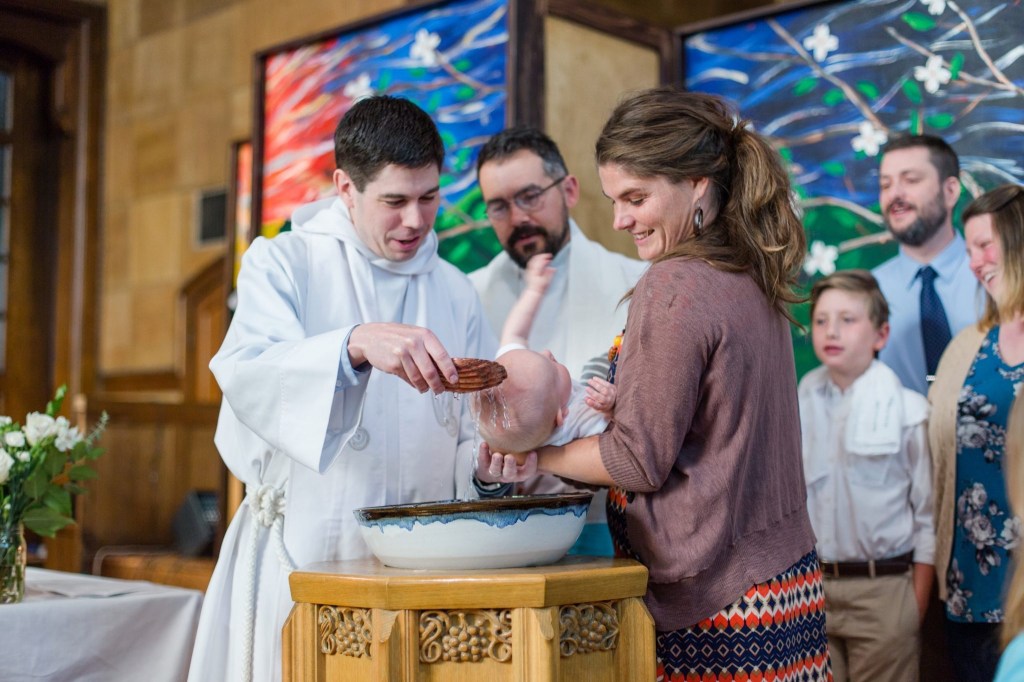








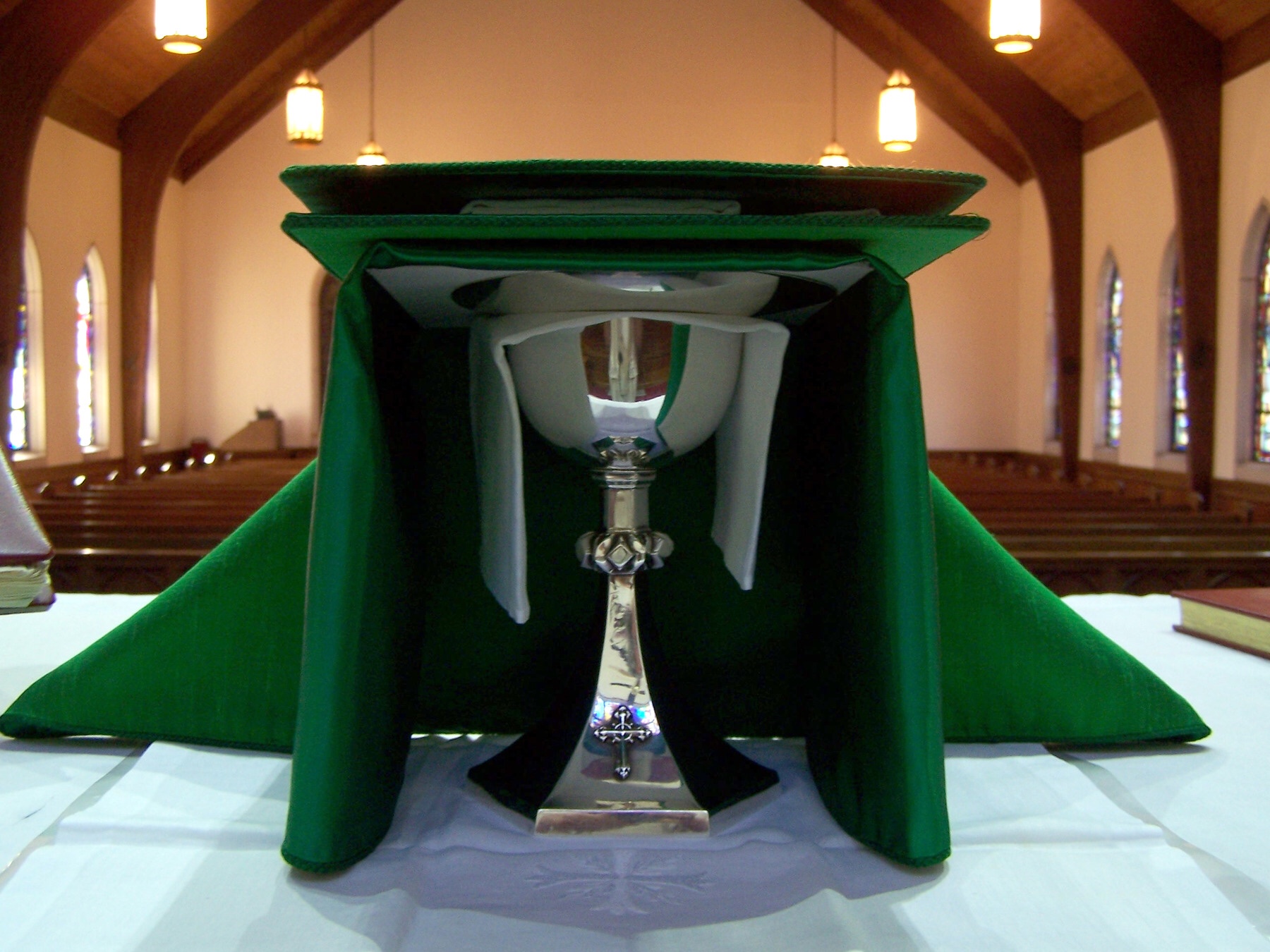




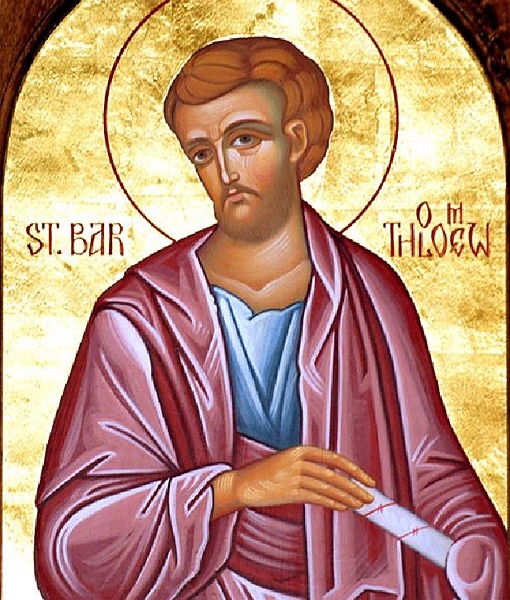




 First Blessings