I rose a bit earlier than usual this morning which gave me the opportunity to pray the Office of Vigils from the St Bernard Breviary in the still and dark of a house at rest. The selection of Psalms for the day, 110-118, was rich, indeed. Among others, this passage stood out:
1 Not unto us, O Lᴏʀᴅ, not unto us, but unto your Name give the praise,* for your loving mercy and for your truth’s sake.
2 Why shall the nations say, * “Where now is their God?”
3 As for our God, he is in heaven; * he has done whatsoever pleased him.
4 Their idols are silver and gold, * even the work of human hands.
5 They have mouths, but they speak not; * eyes have they, but they see not.
6 They have ears, but they hear not; * noses have they, but they smell not.
7 They have hands, but they feel not; feet have they, but they walk not;* neither is there any sound in their throat.
8 Those who make them are like them, * and so are all who put their trust in them.
9 But you, O house of Israel, trust in the Lᴏʀᴅ; * he is their helper and defender.
10 You house of Aaron, put your trust in the Lᴏʀᴅ; * he is their helper and defender.
11 You who fear the Lᴏʀᴅ, put your trust in the Lᴏʀᴅ; * he is their helper and defender (Ps115:1-11, BCP 2019, pp. 422-423).
Idols, the statues of silver and gold, are nothing at all, the work of human hands: mute, deaf, blind, impotent, immobile — useless. And here is the Psalmist’s solemn judgement: those who make them and those who worship them are like them — useless, nothing at all. There is a sober truth here: we become like that which we worship. Worship idols and lose those human powers and properties which you falsely attributed to the idols and hoped to gain in expansive measure from them.
St. Paul goes further in his assessment than did the Psalmist. In considering the issue of eating meat offered to idols and participating in the sacrifices, the Apostle writes:
19 What do I imply then? That food offered to idols is anything, or that an idol is anything? 20 No, I imply that what pagans sacrifice they offer to demons and not to God. I do not want you to be participants with demons. 21 You cannot drink the cup of the Lord and the cup of demons. You cannot partake of the table of the Lord and the table of demons. 22 Shall we provoke the Lord to jealousy? Are we stronger than he (1 Cor 10:19-22)?
Standing behind the nothing-at-all silver and gold idols are the demons, receiving the worship offered to the idols. Again comes the caution: we become like that which we worship — not just nothing-at-all, but less than human and, God forbid!, a partner with the demons.
The names of the idol-demons change throughout time and vary with cultures. In the Ancient Near East we read of Ashtoreth, Baal, Chemosh, Dagon, Milcom, and others. Jesus spoke of Mammon. The Greeks and the Romans had gods seemingly without number, even an unknown god just to cover all their bases. And, we have our own gods, those which have persisted across time and cultures: Mammon, Mars, Aphrodite, and Fama. We do not call them by those names, but the gods and the demons behind them are the same: Wealth, Power/Violence, Lust, and Fame (also Rumor and Gossip). Everyday we see them elevated and worshiped and — Lord, have mercy! —we are becoming like them. Obscene wealth is concentrated in the grasping hands of the few while the many are struggling to afford housing, health care and groceries: Mammon. Violence is common in our schools and on our streets and power/might is celebrated as the right standard of behavior: Mars. The pornography industry thrives and the powerful (Mars, again) sexually abuse the weak and innocent with apparent impunity: Aphrodite. The insatiable quest for fame and honor is on clear display at every level of society and is supported by rumor and gossip and mockery targeted against any who might vie for a share of the spotlight: Fama.
And again the biblical warning comes: we become like that which we worship — sub-human and finally nothing at all if we worship the gods who are no gods.
9 But you, O house of Israel, [you, O Church] trust in the Lᴏʀᴅ; * he is their helper and defender.
10 You house of Aaron [you the Royal Priesthood of the baptized], put your trust in the Lᴏʀᴅ; * he is their helper and defender.
11 You who fear the Lᴏʀᴅ, put your trust in the Lᴏʀᴅ; * he is their helper and defender.
How To Read the Pauline Epistles 1, 2 Thessalonians: The Day of the Lord and Life in the Meantime
The Lord be with you. And with your spirit. Let us pray.
Almighty God, give us grace to cast away the works of darkness, and put on the armor of light, now in the time of this mortal life in which your Son Jesus Christ came to visit us in great humility; that in the last day, when he shall come again in his glorious majesty to judge both the living and the dead, we may rise to life immortal; through him who lives and reigns with you and the Holy Spirit, one God, now and for ever. Amen (BCP 2019, p. 598).
Introduction: A Bishop’s Dilemma
Residents of Goma, DRC Fleeing Rwandan Soldiers
I remember where I was in the early evening of 29 January 2025, sometime between 6:00 and 6:30. I was pulling out of the KFC parking lot onto Kingston Pike; I was heading home. I remember this because of what I heard on the radio: a brief interview with Anglican Bishop Martin Gordon on All Things Considered, a program on National Public Radio. Bishop Gordon was and is the Bishop of Goma, a city in the Democratic Republic of Congo (DRC). For years, there has been armed conflict between Rwanda and the DRC. In days just prior to the NPR interview, Rwandan soldiers had taken much of Goma and a nearby city, and the situation was dire. Bishop Gordon and his family fled the city to safety across the border. Here is the part of the interview that gripped me. I’m reading Bishop Gordon’s words from a transcript of the interview. The whole transcript and the audio recording is linked following.
Anglican Bishop Martin Gordan
GORDON: We left on Saturday lunchtime. It was eerily quiet. Some of our friends and others had been leaving from Thursday. But the city of Sake to the west of Goma, which was a red line for many NGOs that had fallen, and our government had already suggested that all its citizens left. So we had some time. We had some time to pack. We drove over the border in relative calm. And as we crossed the border, we saw many of our friends and colleagues, particularly those with children, also seeking to leave.
I mean, ironically, one of the challenge – the main challenge we had leaving that day was to get our car papers in order. But we know that we’re some of the few with the possibility and the means to escape. Most of the clergy and all of the believers, the Anglican believers, and all of our other colleagues are still in Goma. And they’re the ones who have been suffering. Goma has had no power since Friday. Internet’s been patchy. There’s little water in some of the city. Hospitals are overflowing.
What so vexed me about that statement is the vision of a bishop fleeing his diocese and leaving his clergy and his people trapped there. It is not my place to judge the bishop, and I dare not. Lord, have mercy upon him. The situation was much more complex than I could imagine from the safety of a car filled with the smell of the Colonel’s Original Recipe chicken. I suspect that the clergy and people left behind, those who simply could not get out, encouraged their bishop to escape to safety. I think I would do so for my bishop in a similar circumstance. And, I suspect the bishop left with a conflicted heart: to stay or to leave must have been a gut-wrenching decision. And, while separated from his people, I am certain that he prayed diligently for them, longed for news from them, longed to return to them. Keep the bishop’s story in mind as we consider the background of the Thessalonian correspondence.
Historical Background: Acts
St. Paul’s Second Missionary Journey
The historical reconstruction of Paul’s engagement with the Thessalonians is based on the texts in Acts 16-18 and 1 Thessalonians 1-3. As with all reconstructions, some of the details are uncertain, but, in this case, the general overview is pretty clear.
Paul set out on his second missionary journey late in AD 49. It would last for three years and take Paul and the Gospel to a new continent and to some of the most prominent cities in the Roman Empire.
After visiting the churches he and Barnabas had founded just a few years earlier (AD 44-46) Paul seemed lost for a bit, trying to go first to this region and then to that one, but being forbidden by the Holy Spirit to do so. He eventually arrived at Troas where God finally gave him his itinerary in a vision: cross over to Europe, go to Macedonia, and preach the Gospel there. And so, Paul and Silas, with their companion Timothy — and perhaps Luke, as well — did just that, sailing a short distance across the Aegean to Samothrace and the next day to Neapolis. From there the company went overland to Philippi, a leading city of Macedonia.
You likely remember the events in Philippi: the conversion of Lydia, the first Christian convert in Europe; the exorcism of the slave girl with the subsequent arrest and beating of Paul and Silas; the conversion of the Philippian jailer and his family and Paul’s hasty exit from the city the next morning at the request — and urging — of the authorities. And then, passing through Amphipolis and Apollonia, it was on to Thessalonica.
Ruins in Thessaloniki (Thessalonica)
Thessalonica was, in many ways, the principal city of Macedonia, the capital of the region. It was a “free city,” which meant is was governed by its own elected officials and not by Roman governors and was also free from having Roman soldiers garrisoned there. It was financially prosperous. While it was a Gentile city, it also had a sizeable Jewish population, so, on arriving, Paul reasoned in the synagogue for three weeks and, when not preaching, worked his tent making trade to support the ministry. He had some success: a few Jews accepted Jesus as the Messiah as did apparently many more of the Gentile God-fearers and the prominent women of the city. As usual, though, he met with some opposition in the synagogue, and though the text in Acts 17 doesn’t mention it explicitly, it seems likely, based on 1 Thessalonians, that Paul turned to the Gentiles for some brief time. Perhaps it was that move that caused even greater opposition by the Jewish leaders, ending with a mob; with Paul’s host, Jason, being dragged before the city authorities; with the payment of security money — apparently some kind of financial guarantee that Paul would leave the city — and with Paul and company’s exit from Thessalonica. Here is the resonance with Bishop Gordon’s story. In the city, in Thessalonica, there is violent opposition to this nascent Christian movement, and in the midst of that, the Apostle flees the city, leaving the church and its local leaders to face the persecution alone. There may be good, practical reasons for this: with Paul out of sight and mind the trouble might fizzle out. But, from our vantage point of safety nearly two millennia later, the optics are bad, like a captain abandoning a sinking ship, leaving the crew behind to try to keep it afloat.
Paul and his companions traveled a few miles to Berea and once again had some success at the synagogue there: so much success, in fact, that the Jews back in Thessalonica heard of it and sent agitators to Berea, forcing Paul out once again. Though “on the run” again, Paul’s heart was still in Thessalonica, and he desperately wanted to know how the church there was faring in the face of the opposition that had driven him out of two cities now. It seems that Silas remained at Berea to “finish up” the work as best he could. Timothy was dispatched back to Thessalonica to get the report on their condition that Paul wanted, while other brothers accompanied Paul to Athens. It was in Athens that Paul — alone now — offered his apology for the faith before the Areopagus— really, defended himself before this council against serious charges that might have resulted in his death. After that trial, Paul left Athens for Corinth.
The Areopagus in Athens
It was in Corinth that Timothy and Silas reconnected with Paul and gave the report from Macedonia generally, and from Thessalonica specifically. The news was good; the church, even in the midst of trouble, was sound. That good report and Timothy’s report of some doctrinal confusion and questions in the church was the occasion for Paul’s letters back to the Thessalonians, written likely in AD 51 with the first and second letters probably separated only by a matter of several weeks or perhaps a few months.
1 Thessalonians
The first three chapters of 1 Thessalonians rehearse the history of St. Paul’s relationship with the church — the background that we have discussed — from Paul’s perspective. They are filled with encouragement — particularly important for a church facing persecution — and with praise, thanksgiving, and love. This passage is typical:
2 We give thanks to God always for all of you, constantly mentioning you in our prayers, 3 remembering before our God and Father your work of faith and labor of love and steadfastness of hope in our Lord Jesus Christ. 4 For we know, brothers loved by God, that he has chosen you, 5 because our gospel came to you not only in word, but also in power and in the Holy Spirit and with full conviction. You know what kind of men we proved to be among you for your sake. 6 And you became imitators of us and of the Lord, for you received the word in much affliction, with the joy of the Holy Spirit, 7 so that you became an example to all the believers in Macedonia and in Achaia. 8 For not only has the word of the Lord sounded forth from you in Macedonia and Achaia, but your faith in God has gone forth everywhere, so that we need not say anything. 9 For they themselves report concerning us the kind of reception we had among you, and how you turned to God from idols to serve the living and true God, 10 and to wait for his Son from heaven, whom he raised from the dead, Jesus who delivers us from the wrath to come (1 Thess 1:2-10).
…how you turned to God from idols.
Notice what Paul thanks God for: their work of faith (an interesting pairing of words!), labor of love (this is all seeming very active), and steadfastness of hope. Paul is convinced about the authenticity of their faith and calling because the Gospel worked in them powerfully as evidenced by the Holy Spirit, not least by turning them from idols to the true God. Verse 10 is nod toward one of the doctrinal issues bothering the church, and one that Paul addresses in both letters: to wait for his Son from heaven. The second coming of Jesus is at issue for them, apparently in the forefront of their thought. More about this later.
It is in chapters 4 and 5 that St. Paul turns to orthopraxis, to the right living that comes from their faith, and to clearing up a matter of confusion that is troubling the church.
Sexual Morality and Brotherly Love
First, Paul speaks to sexual immorality. Given the depths of sexual license and perversity plaguing our culture, we may be forgiven, perhaps, for thinking that this is a modern problem. But any reading of Scripture and history will disabuse us of that false notion. Sex is one of the strongest drives of our fallen human nature, and, because of that, it is a passion that must be carefully and closely circumscribed. Paul writes:
4 Finally, then, brothers, we ask and urge you in the Lord Jesus, that as you received from us how you ought to walk and to please God, just as you are doing, that you do so more and more. 2 For you know what instructions we gave you through the Lord Jesus. 3 For this is the will of God, your sanctification: that you abstain from sexual immorality; 4 that each one of you know how to control his own body in holiness and honor, 5 not in the passion of lust like the Gentiles who do not know God; 6 that no one transgress and wrong his brother in this matter, because the Lord is an avenger in all these things, as we told you beforehand and solemnly warned you. 7 For God has not called us for impurity, but in holiness. 8 Therefore whoever disregards this, disregards not man but God, who gives his Holy Spirit to you (1 Thess 4:1-8).
First, note God’s will for each of us: sanctification — not just being declared holy (set apart) in our adoption as children of God, but actually becoming holy in our manner of life, by what we do and by what we refrain from doing. You’ll note this same dual emphasis in our prayer of confession from the Daily Office: we have left undone those things which we ought to have done, and we have done those things which we ought not to have done (BCP 2019, p. 12).
In this instance, the Thessalonians — and we — are to refrain/abstain from sexual immorality. Sexual sin is a violation of brotherly love — a transgression of and a wrong done to a Christian brother/sister. It is important that St. Paul couches this in terms of a violation of brotherly love, because sexual immorality seems to be a blind spot in lives otherwise characterized by brotherly love:
9 Now concerning brotherly love you have no need for anyone to write to you, for you yourselves have been taught by God to love one another, 10 for that indeed is what you are doing to all the brothers throughout Macedonia. But we urge you, brothers, to do this more and more, 11 and to aspire to live quietly, and to mind your own affairs, and to work with your hands, as we instructed you, 12 so that you may walk properly before outsiders and be dependent on no one (1 Thess 4:9-12).
It is ironic that a church known throughout the whole region of Macedonia for its brotherly love cannot see that sexual immorality is itself a gross violation of brotherly love. This is a blind spot that Paul has to correct.
Also, here Paul introduces another matter of right living that he will explore more in his second letter. It stems from confusion about last things. Paul tells the Thessalonians to work with their hands, to provide for their own needs, and not to be dependent on — not to “mooch off” of — anyone else. That, too, is a matter of brotherly love.
Work with your hands.
I’m impressed with the very practical, commonsense nature of Paul’s instruction: keep your heads down, mind your own business, work and mange you affairs well. Remember that the Christians in Thessalonica are under suspicion. This behavior would show the surrounding pagan community that Christians are good citizens and good neighbors. With this, Paul turns to the point of confusion: the last things.
The Coming of the Lord
This brief teaching from Paul on the coming of the Lord is important not just for the Thessalonians, but for all of us. And it is a point of confusion, still, and a matter of some contention. Let’s consider it in it’s original context. Apparently, in Paul’s absence, some members of the church have died or perhaps some are afraid of dying in the persecution. So questions have risen: We thought Christ would have come by now. Have we missed it? What should we be looking for? What about those who die before Christ returns? Do they simply lose out on the kingdom? In partial answer — there is more in 2 Thessalonians — Paul writes this:
13 But we do not want you to be uninformed, brothers, about those who are asleep, that you may not grieve as others do who have no hope. 14 For since we believe that Jesus died and rose again, even so, through Jesus, God will bring with him those who have fallen asleep. 15 For this we declare to you by a word from the Lord, that we who are alive, who are left until the coming of the Lord, will not precede those who have fallen asleep. 16 For the Lord himself will descend from heaven with a cry of command, with the voice of an archangel, and with the sound of the trumpet of God. And the dead in Christ will rise first. 17 Then we who are alive, who are left, will be caught up together with them in the clouds to meet the Lord in the air, and so we will always be with the Lord. 18 Therefore encourage one another with these words (1 Thess 4:13-18).
There are several important points to mention, though we can only do so briefly.
First, the model in all this is Jesus and his resurrection. As Jesus rose bodily, our dead — and we, if the Lord tarries — will rise bodily; the notion of disembodied souls dwelling somewhere beyond this world is Platonic, not Christian. As for the dead, specifically, they are not disadvantaged or disenfranchised by having died, but rather prioritized. They will rise first, then the living will follow. Then all of us will be caught up in the cloud to meet the Lord and finally to live with him for ever. So, they could be at peace about their beloved dead. This matter of being caught up in the air is a point of confusion not least because we miss the first century cultural references. Suppose an important Roman official were to visit a city like Thessalonica. It is a significant event in the life of the city, one requiring the bestowing of proper honor upon the visitor. And that required a proper escort. The high ranking citizens of the city, and perhaps a significant portion of the populace, would meet the official visitor outside the city to escort him into the city with proper honor. At that point, he might take up his residence with them.
Super Bowl Parade: Welcoming the Victors to the City
You see this same scenario in the Triumphal Entry, when people went outside the city of Jerusalem to meet Jesus and to escort him into the city. You see the same at the end of Acts when St. Paul finally arrives at Rome:
14b And so we came to Rome. 15 And the brothers there, when they heard about us, came as far as the Forum of Appius and Three Taverns to meet us. On seeing them, Paul thanked God and took courage. 16 And when we came into Rome, Paul was allowed to stay by himself, with the soldier who guarded him (Acts 28:14b-16).
So, to put the picture together: upon the Lord’s return, the dead in Christ will rise first and then together with those who are alive — all of them in their resurrection bodies — they will go out (up?) to meet Christ and to escort him to earth where his kingdom will be finally established. The image isn’t of souls going to heaven but of resurrected bodies welcoming Jesus to earth.
What do the Thessalonians do — what do we do — in the meantime as we await the coming of the Lord.? That is the subject of the fifth and final chapter.
The Day of the Lord
First, the world is going to continue just as it always has until the continuity of history is interrupted suddenly by the arrival of Christ — like a thief coming at night — and the wicked, those living in darkness, will not escape the coming destruction. But, we are to be awake and sober. God has not prepared us for destruction, but for salvation. And the key for us in the meantime is to cultivate the virtues of faith, hope, and love. That is how we will be ready. How we live in the meantime matters, not least how we live together in the Christian community, in the fellowship of the church.
Final Instructions
Here is what Paul says about the fellowship.
12 We ask you, brothers, to respect those who labor among you and are over you in the Lord and admonish you, 13 and to esteem them very highly in love because of their work. Be at peace among yourselves. 14 And we urge you, brothers, admonish the idle, encourage the fainthearted, help the weak, be patient with them all. 15 See that no one repays anyone evil for evil, but always seek to do good to one another and to everyone. 16 Rejoice always, 17 pray without ceasing, 18 give thanks in all circumstances; for this is the will of God in Christ Jesus for you. 19 Do not quench the Spirit. 20 Do not despise prophecies, 21 but test everything; hold fast what is good. 22 Abstain from every form of evil (1 Thess 5:12-22).
This is the nature of life in the Christian community. It is a community ordered by faithful servant leaders who admonish, encourage, and help the people with patience, and who, in return are respected, esteemed, and loved. It is a life characterized by love — by willing and acting for the good of the other — and by joy, prayer, thanksgiving, the charisms of the Spirit, by discernment, perseverance, and purity.
And with this we will leave 1 Thessalonians and look very briefly at St. Paul’s second letter.
2 Thessalonians
We will focus on a single issue in Paul’s second letter because it seems to be the issue that occasioned the letter: the timing and signs of Christ’s return. Paul knew and taught that the return of Christ was/is imminent; there is nothing standing in its way, nothing that must happen first. In previous classes, we have presented the drama of redemption as a play in several acts, and that analogy is helpful here. The play looks like this:
ACT I: Creation
ACT II: Fall
ACT III: Israel
ACT IV: Jesus
ACT V: Church
We are currently in Act V. There is no Act VI before the return of Jesus. His return ends Act V and ends this particular play. In that sense, his return is imminent, the next thing in the play. But, there are some signs during Act V that point toward the end of the play approaching soon. That is the issue that Paul addresses in 2 Thessalonians 2. What he writes to the Thessalonians is a clarification for them of things he had told them earlier, in person. For us, it is a point of confusion, because we lack that background. We don’t know what they knew, what Paul had told them in person. Frankly, the Church for nearly two millennia has not known what to make of this except very generally. Certainly, I can do no better. But, we can sketch out the general outlines of the signs pointing toward Christ’s return.
3 Let no one deceive you in any way. For that day will not come, unless the rebellion comes first, and the man of lawlessness is revealed, the son of destruction, 4 who opposes and exalts himself against every so-called god or object of worship, so that he takes his seat in the temple of God, proclaiming himself to be God. 5 Do you not remember that when I was still with you I told you these things? 6 And you know what is restraining him now so that he may be revealed in his time. 7 For the mystery of lawlessness is already at work. Only he who now restrains it will do so until he is out of the way. 8 And then the lawless one will be revealed, whom the Lord Jesus will kill with the breath of his mouth and bring to nothing by the appearance of his coming. 9 The coming of the lawless one is by the activity of Satan with all power and false signs and wonders, 10 and with all wicked deception for those who are perishing, because they refused to love the truth and so be saved. 11 Therefore God sends them a strong delusion, so that they may believe what is false, 12 in order that all may be condemned who did not believe the truth but had pleasure in unrighteousness (2 Thess 2:3-12).
The Sermon of the Antichrist
Near the end of Act V — The Church, just prior to the coming of the Lord, there will be a rebellion of sorts, perhaps a total disruption of the social order, and out of that there will arise a “pseudo-savior,” one with such power that he appears god-like; the power that he has is satanic. And, he — the lawless one — will deceive many; he will demand and receive worship and will exalt himself as God. Apparently, many will be happy to worship him because of his power and the signs he works. About further details, we have no information; Paul had told the Thessalonians more about this in person, but he seems reticent to write more here; so, we have only this — bare bones. But, at some point, the true nature of the lawless one will be revealed, Christ will return and destroy him, blowing him away with his breath like so much chaff.
Of course, we want to know more, and some build enormous castles based on this “grain” of a foundation. This is my conviction: while the Church does not understand this fully now, we will know what we need to know when we need to know it. In the meantime, we hold fast to what we have received, we press on toward the high calling that is ours in Christ Jesus, and we accept as our own this blessing, which Paul offered to the Thessalonians:
16 Now may our Lord Jesus Christ himself, and God our Father, who loved us and gave us eternal comfort and good hope through grace, 17 comfort your hearts and establish them in every good work and word (2 Thess 2:16-17).
Photograph of the Pleiades Star Cluster courtesy of Dave Wells
I like astronomy, or rather I would do if it were not for having to wander outside after dark for it. Not for me, this sentiment of poet Sarah Williams:
I have loved the stars too fondly to be fearful of the night (Sarah Williams, From The Old Astronomer (To His Pupil)).
It is not fear of the night that keeps me from the stars, but love of soft bed, warm blanket, and dear wife dreaming beside me. These have I loved too fondly to be gazing idly at the night sky.
I am no magi. I would not have marked the rising of his star in the east nor forsaken comforts of hearth and home for an uncomfortable journey to who knows where, at “just the worst time of the year / For a journey, and such a long journey” (T. S. Eliot, Journey of the Magi).
I would not have arrived at Jerusalem — confounded, foolish — searching for a new king in the old king’s palace — and such an old king — showing the gaps in my wisdom and depending on foreign priests with their foreign books to point the way. And the way to where? To a town — to a hamlet — of little note, to the house of bread. To a house, just one ordinary house among a handful of other ordinary houses, not even postcard worthy: Having Fun. Wish you were here. Not much, not really.
I would not have entered the house — rude to drop in unexpectedly! — would not have seen the mother and child — wouldn’t want to disturb family time — would not have been driven to my knees in worship and with offering — old age and arthritic knees, you know.
I am no magi.
But, what if I were? What wonders, what signs — what stars — might I see if I were to venture outside in the dark and look upward?
[In this post I mention the T. S. Eliot poem “Journey of the Magi.” I commend it to you. Following is a link to an audio recording of Hugh Laurie reading the poem: https://youtu.be/qyas4QpWM-E?si=WPAuyCf1l8U_inaa .]
The Lord be with you. And with your spirit. Let us pray.
Almighty God, whose blessed apostles Peter and Paul glorified you by their martyrdom: Grant that your Church, instructed by their teaching and example, and knit together in unity by your Spirit, may ever stand firm upon the one foundation, which is Jesus Christ our Lord; who lives and reigns with you, in the unity of the Holy Spirit, one God, now and for ever. Amen.
The Class Over the next several weeks we will be flying over several of St. Paul’s letters at 20,000 feet — not a detailed exploration of everything in each letter, but a broad overview of background and themes to help you in your own reading and study of these letters as they are coming up in the Daily Office readings. You can see the syllabus/schedule in the handout and the Daily Office reading schedule either in the service bulletin or on page 739 in the BCP 2019 in the Second Lesson column.
Identity and Inclusion Our parish is named Apostles Anglican Church, a name that our founding members attribute to answered prayer. Right there in the middle of the name is the claim that we are Anglicans: Apostles Anglican Church. Now, if someone wanted to be contentious — or maybe just curious — he might ask, “What makes you Anglican? By what virtue or criteria do you identify as Anglican?”
Well, there are many ways to answer our friend, but the simplest might be this: our parish belongs to the Anglican Diocese of the South (ADOTS); since the diocese is Anglican, so are all its constituent parishes. But, if our friend were “pushy” — and let’s assume he is — he might repeat his challenge: “Well, what makes the diocese Anglican?” At the risk of being accused of just kicking the can down the road, we might answer, “The diocese is part of the Anglican Province in North America (ACNA), so all dioceses belonging to the ACNA are Anglican.”
You see by now our friend’s next move. “But surely that just begs the question. By what virtue is the province, the ACNA, Anglican?” We have no choice now; we’ve started down this path, so we answer: “The ACNA belongs to GAFCON, the Global Fellowship of Confessing Anglicans, comprising the majority of Anglicans worldwide. We are recognized by and in full communion with GAFCON and thus with the majority of the other Anglicans in the world. They say we are Anglican, as Anglican as anybody, as Anglican as it’s possible to be! Surely, that’s good enough for you.”
It seems like we’ve finally backed our friend into a corner, that he must relent in his challenge. But then comes the sound of a clearing throat and a voice that says — in a British accent — “Not so fast. I object. Only those provinces in full communion with the Church of England — with the Archbishop of Canterbury — are authentically Anglican. Since we (note the royal “we”) as Archbishop of Canterbury do not acknowledge your province, you are not officially a member of the Anglican Communion and thus are not authentically Anglican.” Hmmm.
Compass Rose of the Anglican Communion
Well, there are good answers to this objection. And, it is not my intent to plant doubts in any minds about our Anglican bona fides. We are, indeed, as Anglican as any other Anglicans, and I can mount a good defense for that assertion, I think. My point is this: as long as religious groups have existed, there have been questions about and controversies around who’s is and who’s out. If you are Orthodox, everyone is out but you. If you are Roman Catholic, you and the Orthodox are in, but no others. If you are Anglican, the Orthodox and Roman Catholics are in as are many of our Protestant cousins, but the Mormons are out as are any groups who deny the authority of Scripture, the efficacy and necessity of the two dominical Sacraments, and the Creeds.
The issues of Christian identity and inclusion are as fresh as today’s newspapers and as old as the Church. They lie at the heart of St. Paul’s letter to the Galatians and are never far from his mind in his other epistles. If we miss this as the presenting issue and governing theme of Galatians we will misunderstand the entire epistle. St. Paul is not — as many of the Reformers assumed — talking about how individuals “are saved” — faith versus works — but rather about who’s in and who’s out, about the criteria for inclusion, and about who gets to say. Let’s see how St. Paul deals with these issues.
Context of Galatians Galatians may well be St. Paul’s earliest epistle; it is, at least, very early in his corpus — probably written around 48/49 — which means that the problem of inclusion arose early in the life of the Church and has dogged it ever since. Paul wrote Galatians either shortly before or shortly after the Jerusalem Council (Acts 15) which was precisely about the ethnic identity of the Church and the inclusion of the Gentiles.
The epistle was written to the churches in Galatia, a region in central Turkey. The ethnic Galatians, settlers from Gaul (modern day France) lived in the northern part of the region, but the entire region, north and south, was called Galatia by the Romans. Paul and Barnabas visited the southern cities on their first missionary journey and certainly established some churches in those cities: Perga, Lystra, Derbe, Iconium, and Antioch in Pisidia. He and Silas revisited these cities and ventured north and west in Galatia on their second and third journeys. It isn’t clear to which of these churches the epistle to the Galatians was addressed; you will read about the “northern hypothesis” versus the “southern hypothesis.” This debate is largely concerned with dating the letter. For our purposes it matters little; we can consider it a circular letter to be shared throughout the region to whatever churches existed when it was written. But, importantly, it was not written to a single church; it was a circular letter of general importance to all Paul’s churches in the region, indicating the pervasiveness of the problem that Paul is addressing.
Nature of the Problems Before we can tackle the Who’s In – Who’s Out problem we have to take one step back and ask, “In or out of what?” What is the group whose membership we are questioning? And to get that straight, we have to ask an even more basic question of identity: Who is Jesus?
Suppose we had asked the Jewish Christians in the Jerusalem Church that question: Who is Jesus? Note that I chose the Jerusalem Church because of its position as the “Mother Church” in which the pillars of the movement — Peter, James, and John — resided. In terms of the growing Church, Jerusalem was at least the first among equals and probably more in most people’s minds. I don’t know what these three pillars might have answered if asked to speak to the question — Who is Jesus? — formally by the Church. We can get some insight into their understanding by reading their letters. Still, they issued no creedal-type statement on the matter. But, from Paul we know what one group in Jerusalem thought, a prominent group at least in terms of the trouble they caused. These Jewish Christians, rightly or wrongly called Judaizers, considered Jesus to be the Jewish Messiah. Jesus is the one foretold by the prophets, the one to fully end the exile of Judah, the Davidic King who would usher in the Kingdom of God and sort out the nations under Israel. This was a thoroughly Judeo-centric understanding of Jesus. And it clearly answers our earlier question: In or out of what?
What is the group whose membership we are questioning? For the Judaizers the group is Israel so that the question is this: Who’s in or who’s out of Israel? And that is not a difficult question to answer. Israel is not a people constituted solely by ethnicity — biological descendants of Abraham — but also by covenant and Law. Even those who are not ethnically Jewish can become part of Israel through the covenant by submission to the Law. If you want to be part of the Messiah’s present and coming kingdom (renewed Israel), part of his righteous rule, you must become part of Israel through covenant (circumcision) and Law (Sabbath, Passover, keeping kosher, etc.). The Church, in this view, comprised those Jews and Gentile converts who recognized Jesus as Messiah. That’s who’s in. Everyone else is out. For the Judaizers, Jesus has come to Israel, for Israel and for all those who “become” Israel through embracing the covenant and keeping the Law.
There is a second part to this which is crucial for understanding the pressure campaign that the Judaizers wage upon Paul’s congregations. The work of the Messiah has begun, but it is not complete. And it will not progress toward completion until Israel — and all those claiming to follow the Jewish Messiah — demonstrate covenant faithfulness in part through fidelity to the Law. If you are a Jesus follower — or claim to be — but are not keeping the Law, then you are letting the side down and keeping the Kingdom at bay. This is important; it’s a matter of eschatology. The renewal of all things, the end of exile and the exaltation of Israel cannot be realized apart from covenant and Law.
Now, put yourself in the place of these Judaizers when they learn that Paul is going all around the Mediterranean basin starting mixed churches of Jews and Gentiles — Jesus followers all — and telling the Gentiles that they need not be circumcised or keep Sabbath or foreswear bacon. He is insisting that they are grafted into Israel — that they become the sons and daughters of Abraham — not by covenant and Law, but solely by faith in Jesus. And he is telling the Jewish Christians that in Christ there is no longer any distinction between the two groups, no Jews or Greeks, just one body in Christ. So, the Jews can associate freely with the Gentiles, eat with them, share Communion with them. The Gentiles are no longer unclean, they are no longer Gentile sinners.
What is Paul thinking? Why would he do such a thing? How would you answer this as a Judaizer? Well, there are a few possibilities. Paul was not one of the twelve. He hadn’t spent three years tramping around Galilee and Judea with Jesus, hadn’t heard the parables or the Sermon on the Mount, hadn’t learned from the source. Perhaps he was just confused; perhaps he had just misunderstood the Gospel. That is the most innocent explanation. But, the more suspicious among the Judaizers saw something more nefarious. Paul is a self-promoter, a self-appointed Apostle, who is out to build a following for himself, and so he is soft-pedaling the requirements of the faith to suck the Gentiles in. Don’t want to be circumcised? No problem — no need to. Don’t want to keep Sabbath? No problem — all days are the same. Don’t want to keep kosher? No problem — you can eat anything you like, even meat offered to idols, if you give thanks first. All that matters is faith in Christ. Of course a false apostle would water down the teaching in order to please men and to create a name and a following for himself.
So, the Judaizers begin to dog Paul’s missionary footsteps, coming in when he moved on, questioning the authenticity of his apostolate, questioning his motives, sowing doubts about his grasp of the Gospel, “correcting” his false doctrine by insisting that the Gentiles must be circumcised and keep the Law to be true followers of the Jewish Messiah and to be “in” the coming Kingdom. And, many of the churches in Galatia have begun to waver; the Judaizers are making inroads. That is the problem that St. Paul’s Epistle To the Galatians addresses: matters of identity and inclusion.
The Text: A Survey If you were Paul, where would you start in making your defense? I might start with what I think to be a common sense principle of propaganda: If the messenger is not trusted, the message is not believed. The Judaizers have attacked Paul’s credibility, his authority to speak as an Apostle. Until that is defended, what he has to say is suspect. So he begins with an apology/defense of himself and his ministry.
1 Paul, an apostle—not from men nor through man, but through Jesus Christ and God the Father, who raised him from the dead— 2 and all the brothers who are with me…
He fires the opening shot: (1) I am an apostle, and (2) my apostolate does not depend upon authorization by other men, buts rest entirely upon Jesus Christ and God the Father. He will come back to this self-defense later, but he breaks off momentarily to discuss the seriousness of the problem that the Judaizers have caused.
6 I am astonished that you are so quickly deserting him who called you in the grace of Christ and are turning to a different gospel— 7 not that there is another one, but there are some who trouble you and want to distort the gospel of Christ. 8 But even if we or an angel from heaven should preach to you a gospel contrary to the one we preached to you, let him be accursed. 9 As we have said before, so now I say again: If anyone is preaching to you a gospel contrary to the one you received, let him be accursed.
There are some matters in the Church that we call adiaphora, indifferent; we can agree to disagree on them because they don’t cut to the core of the faith. I like chant, you like contemporary worship music: adiaphora, unless the difference creates a barrier to fellowship.
You use the KJV Bible, I use the ESV translation: adiaphora.
You do not recognize the Sacraments of baptism and Holy Communion, I recognize both: adiaphora? No, because the Sacraments cut to the core of the faith.
You believe the Bible is the inspired Word of God and the authoritative standard for faith and practice, I believe it is a human record of people’s best ideas about God that has some good insights but which is not binding on us today: adiaphora? No, not all all. So, what about this matter of Gentiles needing to convert to Judaism and to keep the Law if they are to be Christ followers: adiaphora or not? Well, Paul minces no words; this is not a matter on which we can agree to disagree. The Judaizers are preaching a false Gospel that is no Gospel at all. They are anathema; they are cursed. And Paul strengthens his denunciation. If an angel should preach a different Gospel, then let the angel be anathema. The mention of an angel might have some particular significance here. The Law was mediated/delivered to Moses through angels (Gal 3:19-20). Paul may be hinting at this: if even an angel tried to deliver the Law to you and you to Law now that the Gospel has come — which is exactly what the Judaizers are doing — then even the angel would be anathema.
Having completed this judgment, Paul returns to the defense of his ministry in Gal 1:11-2:14. It is a many-sided defense and time won’t allow us to explore it in detail, but we can summarize the charges against Paul and his responses.
Charge: You were not part of the Twelve. You didn’t hear the Gospel from Jesus, and you’ve muddled it either from ignorance or intent.
Defense: I received the Gospel directly through a revelation of Jesus Christ (Gal 1:12). No muddled human teaching or misunderstanding was involved.
Charge: You are teaching a different Gospel than the pillars of the Jerusalem Church — Peter, James, and John.
Defense: To the contrary, I submitted my understanding of the Gospel to those “pillars” of the Church and they added nothing to it; that is, they did not add circumcision and the Law to what I was teaching. Rather, they acknowledged that I had been entrusted with the Gospel to the Gentiles just as Peter had been for the Jews. They gave me — and those with me — the right hand of fellowship, full endorsement. And later, when Peter tried to backtrack on this at Antioch and please the Judaizers, I publicly rebuked him to his face; he was in the wrong and I was in the right (Gal 2:1-11).
Charge: You are just trying to please men, to make things easy for them and to make things easy for yourself.
Defense: If I were trying to make things easy on myself, I would just go along with the Judaizers since they are the ones making life hard for me. But that would be unfaithful to the cross of Christ (Gal 5:7-12).
There are more charges and defenses in the text — you can locate those — but these give you a good sense of how Paul views his own ministry vis-à-vis the Twelve and the Judaizers.
Now, we can move to the heart of Paul’s arguments against adding the Law to the Gospel as a requirement for Gentile inclusion. Here is his summary statement:
15 We ourselves are Jews by birth and not Gentile sinners; 16 yet we know that a person is not justified by works of the law but through faith in Jesus Christ, so we also have believed in Christ Jesus, in order to be justified by faith in Christ and not by works of the law, because by works of the law no one will be justified (Gal 2:15-16).
Here Paul is saying something along these lines. The Judaizers, those “Jews by birth,” are telling you that you can be justified — made right with God and brought into the covenant community — only by keeping the Law. That’s a good one! It never worked for them or for any of their forebears. The whole history of Israel testifies to the fact that the Law justifies no one — and those Judaizers know it. That is why — if they would just admit it — they, too, have come to believe in Jesus, because only faith in him, and not the works of the Law, justifies anyone.
And now Paul offers some tangible evidence to back up his contention. It is based on this observation: some — perhaps all — of Paul’s churches were what we might call charismatic; gifts of the Spirit were present and active. So, Paul challenges the Galatians with this question:
3:1 O foolish Galatians! Who has bewitched you? It was before your eyes that Jesus Christ was publicly portrayed as crucified. 2 Let me ask you only this: Did you receive the Spirit by works of the law or by hearing with faith? 3 Are you so foolish? Having begun by the Spirit, are you now being perfected by the flesh (Gal 3:1-3)?
Paul’s logic goes like this. It is the Spirit that unites you to God in Christ and makes you part of the covenant community. And you received the Spirit through faith. What can the Law add to that? Now, here, not realizing this is a rhetorical question, some of those persuaded by the Judaizers might dare to respond: The Law unites us to Abraham and makes us part of God’s people. Not so, Paul replies. Abraham and his descendants were God’s people before — without — the Law. They were his people by faith, which is precisely how you become his people in Christ. It’s all right there in the Scriptures:
5 Does he who supplies the Spirit to you and works miracles among you do so by works of the law, or by hearing with faith— 6 just as Abraham “believed God, and it was counted to him as righteousness”?
7 Know then that it is those of faith who are the sons of Abraham. 8 And the Scripture, foreseeing that God would justify the Gentiles by faith, preached the gospel beforehand to Abraham, saying, “In you shall all the nations be blessed.” 9 So then, those who are of faith are blessed along with Abraham, the man of faith (Gal 3:5-9).
Paul argues that the covenant was prior to the Law and is, in fact, primary over the Law. The Law, which was given four centuries after the covenant, did not abolish or even amend the covenant. Faith, by which Abraham entered into the covenant, is still what is required today — not the Law. Now, you can probably understand why the Gentiles might be getting confused by all this. If it’s all about the covenant and faith, what was the Law for? Paul anticipates this confusion and this question and has his response ready. It comes in a pretty dense passage in Gal 3:19-29, a passage you should read prayerfully and work out on your own. But here are the key points.
The Law was added because of transgressions (Gal 3:19). In other words, the Law was a sin management system. It revealed what was right for God’s people, both in their relationships to God and to one another; it ordered their society; it gave them a way to purify themselves and the whole people from sin — through the sacrificial system — so that God might live among them; and it served as a guardian to teach and to unite them until the coming of Christ “so that the promise by faith in Jesus Christ might be given to those who believe” (Gal 3:22b). The Law was never an end unto itself, but was always at the service of the covenants (Old and New), always pointing toward Christ. And that is why the Law is no longer needed: not that it was bad and must be done away with, but rather that it was good and has now completed its purpose in bringing people to Jesus.
24 So then, the law was our guardian until Christ came, in order that we might be justified by faith. 25 But now that faith has come, we are no longer under a guardian, 26 for in Christ Jesus you are all sons of God, through faith. 27 For as many of you as were baptized into Christ have put on Christ. 28 There is neither Jew nor Greek, there is neither slave nor free, there is no male and female, for you are all one in Christ Jesus. 29 And if you are Christ’s, then you are Abraham’s offspring, heirs according to promise (Gal 3:24-29).
Now, there’s always one student in every class that intentionally takes the instruction in the wrong direction, who just pushes every boundary. “Oh, Paul, so if the Law doesn’t matter, then, as long as we believe in Jesus, you are saying that we can behave anyway we want to?” After the facepalm, Paul responds:
16 But I say, walk by the Spirit, and you will not gratify the desires of the flesh. 17 For the desires of the flesh are against the Spirit, and the desires of the Spirit are against the flesh, for these are opposed to each other, to keep you from doing the things you want to do. 18 But if you are led by the Spirit, you are not under the law. 19 Now the works of the flesh are evident: sexual immorality, impurity, sensuality, 20 idolatry, sorcery, enmity, strife, jealousy, fits of anger, rivalries, dissensions, divisions, 21 envy, drunkenness, orgies, and things like these. I warn you, as I warned you before, that those who do such things will not inherit the kingdom of God. 22 But the fruit of the Spirit is love, joy, peace, patience, kindness, goodness, faithfulness, 23 gentleness, self-control; against such things there is no law. 24 And those who belong to Christ Jesus have crucified the flesh with its passions and desires (Gal 5:16-24).
How you live matters very much; in fact, it is the evidence of whether your faith is authentic and whether you actually belong to Jesus. If your life exhibits none of the fruit of the Spirit, but rather the passions of the flesh, take care; do not presume that by a mere statement of belief you are justified. Real faith produces real fruit. This is not just a caution for the Galatians, but for all of us.
So What? I hope this class has given you some background and a better context with which to read and understand St. Paul’s letter. But, frankly, while interesting, this can all seem a bit far removed from us, can’t it? We are not in danger of being pressured into keeping the Jewish Law, are we? So, how might God speak to us through the text.
There is a danger in every time of someone or some group insisting on a Jesus-And Gospel: Jesus-And a particular political party or agenda, Jesus-And a particular social justice movement or cause, Jesus-And a particular church affiliation. I’ve even seen – far too often — Jesus-And a particular style of vestments or the renunciation of vestments entirely. Unless you are a Christian [fill in the blank] you are not a Christian at all. But, Paul keeps bringing his churches — and those churches we belong to today — back to Jesus, back to real faith in Jesus as the necessary and sufficient means criterion for inclusion in the people of God: a good lesson for us all.
And, with that, we’ll give St. Paul the final word:
14 But far be it from me to boast except in the cross of our Lord Jesus Christ, by which the world has been crucified to me, and I to the world.
18 The grace of our Lord Jesus Christ be with your spirit, brothers. Amen (Gal 6:14, 18).
Opening Lines: A Reflection on the Prologue of St. John’s Gospel (Isa 61:10-62:5, Ps 147:12-20, Gal 3:23-4:7, John 1:1-18)
The Lord be with you. And with your spirit. Let us pray.
Almighty God, who hast given us thy only-begotten Son to take our nature upon him, and as at this time to be born of a pure Virgin: Grant that we being regenerate, and made thy children by adoption and grace, may daily be renewed by thy Holy Spirit; through the same our Lord Jesus Christ, who liveth and reigneth with thee and the same Spirit, ever one God, world without end. Amen.
Charles Dickens
Charles Dickens was a master of opening lines, perhaps not the master, but certainly a contender for the title as these examples show.
From A Tale of Two Cities:
It was the best of times, it was the worst of times, it was the age of wisdom, it was the age of foolishness, it was the epoch of belief, it was the epoch of incredulity, it was the season of Light, it was the season of Darkness, it was the spring of hope, it was the winter of despair, we had everything before us, we had nothing before us, we were all going direct to Heaven, we were all going direct the other way — in short, the period was so far like the present period, that some of its noisiest authorities insisted on it being received, for good or for evil, in the superlative degree of comparison only (Charles Dickens, A Tale of Two Cities).
From A Christmas Carol:
Marley was dead, to begin with, there is no doubt whatever about that (Charles Dickens, A Christmas Carol).
From David Copperfield:
Whether I shall turn out to be the hero of my own life, or whether that station will be held by anyone else, these pages must show (Charles Dickens, David Copperfield).
I envy Dickens’ gift for beginnings, because I struggle with starting a story, a lesson, a sermon myself, because I know that the whole course of what follows is set by that first line, by that first thought. Imagine if A Tale of Two Cities had opened with this:
Life was pretty much then as it is now, only more so.
Would anyone have bothered to read the second line? And to borrow from another author, “Hi — How are ya? — my name’s Bob,” would be a poor alternative indeed for “Call me Ishmael.” Opening lines matter.
The Four Evangelists
Now, if I am intimidated by the empty page, I can scarcely imagine the trepidation of the four evangelists — Matthew, Mark, Luke, and John — as they sat before a fresh parchment or spoke first words into the silence for a scribe to record. The Gospel, the good news of Jesus Christ: Where do we begin? What words are adequate for the task?
1 The book of the genealogy of Jesus Christ, the son of David, the son of Abraham (Matt 1:1).
St. Matthew begins with a genealogy. St. Matthew begins with Abraham and David because he wants to root his story in the ancient story of Israel, to show Jesus as the fulfillment, the climax of that story: not a bad opening.
1 The beginning of the gospel of Jesus Christ, the Son of God.
2 As it is written in Isaiah the prophet… (Mark 1:1-2a).
St. Mark begins with a particular prophecy from Isaiah, a prophecy about a messenger who will come to prepare the way of the Lord, to make his paths straight, a prophecy fulfilled in John the Baptist. That is a catchy introduction.
5 In the days of Herod, king of Judea, there was a priest named Zechariah, of the division of Abijah. And he had a wife from the daughters of Aaron, and her name was Elizabeth (Luke 1:5).
St. Luke, after explaining how and why he came to write the story at all, begins the tale proper with Zechariah and Elizabeth, the old and barren couple who miraculously will birth John the baptist, reminiscent of Abram and Sarai and their son Isaac. Well, you can’t go wrong with a little historical and symbolic context like that.
These three evangelists, each in his own way, each with his own opening line, root the Gospel in the story of Israel: calling, covenant, kingdom, prophets. That is the three. But what of St. John, the fourth evangelist? What of St. John the Theologian?
1 In the beginning was the Word, and the Word was with God, and the Word was God (John 1:1).
Before calling and covenant, before kingdom and prophets, even before the beginning of all things there was God, and it is with God that St. John starts his story, with God and with the Word. But, what is this Word of which the evangelist speaks? Perhaps, as in some Jewish thought, the Word may be identified with Wisdom as we find in Proverbs?
As Wisdom speaks:
22 “The Lord possessed me at the beginning of his work, the first of his acts of old.
23 Ages ago I was set up, at the first, before the beginning of the earth.
24 When there were no depths I was brought forth, when there were no springs abounding with water.
25 Before the mountains had been shaped, before the hills, I was brought forth,
26 before he had made the earth with its fields, or the first of the dust of the world.
27 When he established the heavens, I was there; when he drew a circle on the face of the deep,
28 when he made firm the skies above, when he established the fountains of the deep,
29 when he assigned to the sea its limit, so that the waters might not transgress his command, when he marked out the foundations of the earth,
30 then I was beside him, like a master workman, and I was daily his delight, rejoicing before him always,
31 rejoicing in his inhabited world and delighting in the children of man” (Prov 8:22-31).
Or perhaps, as in Greek thought, the Word might be identified with the rational principle inherent in creation, with the reason we have cosmos/order and not chaos? This notion might even be implied in the original language where Word is λογος (logos). Mathematics is rational; it is logical (logos). Nature is amenable to scientific discovery and explanation because it is rational; it is logical (logos). Perhaps the Word is that abstract principle of logic which permeates all of creation.
Richard Feynman and the logic of physics
But no, neither of these descriptions — neither Wisdom nor Logic — encompasses nor exhausts St. John’s meaning:
1 In the beginning was the Word, and the Word was with God, and the Word was God (John 1:1).
The very last conviction St. John expresses in that opening line is the one that makes all the difference, the one that makes St. John’s opening line distinct from all others: and the Word was God — not just the wisdom of God, not merely the logic of God, but fully God. If that does not startle us and confound us, then we are not paying attention. Before anything at all was brought into being, there was God and there was the Word — pre-existent, in some sense beyond existence itself, not things like other things that will come to be. And the relationship between God and the Word is not rendered transparent by St. John’s language; it is rendered mysterious. If the Word is with God, how is the Word God? This statement made about humans would be nonsense, mere gibberish. And John was there at the start. And John was with Bob, and John was Bob. Spoken about men, this is the opposite of logos; it is mere babbling. Yes, precisely. It cannot be said about men. But, it can be said about God and must be said about the Word; it is a mystery, but it is not nonsense. In some sense yet to be worked out by St. John — in some sense yet to be worked out by the Church for generations — between God and the Word there is both differentiation (the Word was with God) and perfect identification (the Word was God).
The Word was with God and the Word was God from before the beginning. And again, with these opening words, St. John plunges us into mystery: In the time before there was time? In the place before there was place? This is obscure to us; for us there is only darkness in that time of no time and disorientation in that place of no place. But for God, for the Word? No, they precede time; they encompass space.
So, St. John moves on:
2 He [the Word] was in the beginning with God. 3 All things were made through him, and without him was not any thing made that was made. 4 In him was life, and the life was the light of men. 5 The light shines in the darkness, and the darkness has not overcome it (John 1:2-5).
The Word, who was with God and who was God from before the beginning, became the beginning of all things. The late Carl Sagan, astronomer and popularizer of science not least through his book and television series Cosmos wrote:
The Cosmos is all that is or was or ever will be. Our feeblest contemplations of the Cosmos stir us — there is a tingling in the spine, a catch in the voice, a faint sensation, as if a distant memory, of falling from a height. We know we are approaching the greatest of mysteries (Carl Sagan, Cosmos).
Carl Sagan
That is a lovely piece of writing, even reminiscent of St. John’s Prologue, but it is not science and it is not true. The Cosmos is not all that is or was or ever will be. The cosmos was spoken into being by the Word who from before the beginning of all things was with God and who was God and through whom all things — this cosmos and even, if there be others — were made. All created things that you see, all created things that you do not see, all these things exist. But the Word, the Word in the language of St. Thomas Aquinas, the Word being God is ipsum esse subsistens, the very act of “to be,” the ground of being, the One who cannot not be, the One in whom and through whom and for whom all things exist and have their contingent being. This is a great mystery, and even our feeblest contemplations of it stir us not just with a tingling in the spine or a catch in the voice, but with life itself, with light shining in the darkness, with a light that penetrates and illumines the darkness and which cannot be overcome by the darkness.
Though we are already awash in mysteries, there is yet more, always more. This Word who from before the beginning was with God and who was God, this Word who is beyond existence and who called into being everything that does exist, this Creator Word, entered his creation as creature. And the Word did so without ceasing to be the Word, without ceasing to be with God and to be God. And that reality is so mysterious, so luminous, so holy that we usually kneel in worship when we read its description by St. John:
14 And the Word became flesh and dwelt among us +, and we have seen his glory, glory as of the only Son from the Father, full of grace and truth (John 1:14).
The Church of the Nativity in Bethlehem where the Word Became Flesh
The mystery of the Cosmos pales in comparison to this. This Word is…well:
15 He is the image of the invisible God, the firstborn of all creation. 16 For by him all things were created, in heaven and on earth, visible and invisible, whether thrones or dominions or rulers or authorities—all things were created through him and for him. 17 And he is before all things, and in him all things hold together. 18 And he is the head of the body, the church. He is the beginning, the firstborn from the dead, that in everything he might be preeminent. 19 For in him all the fullness of God was pleased to dwell, 20 and through him to reconcile to himself all things, whether on earth or in heaven, making peace by the blood of his cross (Col 1:15-20).
This Word who was in the form of God — who was with God and who was God — this Word:
7 emptied himself, by taking the form of a servant, being born in the likeness of men (Phil 2:7).
And though the Word emptied himself of all his divine prerogatives, he did not and could not empty himself of himself; he did not and could not cease to be what he is from all eternity: the Word who is with God and who is God. And so, when the Word became flesh to dwell among us, we saw glory, glory as of the only Son from the Father, full of grace and truth. We saw God with skin on, not skin as a suit to be donned and doffed at will, but humanity as assumed into the divine nature unto the ages of ages, as human nature drawn into the divine life and united with the divine nature in One Person, in the Word made Flesh, in the God-man Jesus Christ. The Word became flesh. God descended to earth and humanity ascended into heaven. He is the perfect image, the perfect icon, of the invisible God because he is God himself. All that we know of God, we know through him, because “no one has ever seen God; the only God, who is at the Father’s side, he has made him known” (John 1:18).
Now, for two final mysteries in this great Prologue of St. John’s Gospel, these great opening lines.
The Word became flesh and dwelt — pitched his tent — among us, the Word who is life and light. And the world preferred death, the world chose darkness instead.
10 He was in the world, and the world was made through him, yet the world did not know him. 11 He came to his own, and his own people did not receive him (John 1:10-11).
Even when a man was sent from God — John the Forerunner — who came as a witness to the Light that all might believe through him, they did not recognize, they did not receive the Word made flesh: not all of them, not the people prepared through covenant, through Law, through Kings and prophets. But, here and there, in fits and starts, now and then a few did receive him, did hear the Word, did see the light, did find life in him. And,
12 [But] to all who did receive him, who believed in his name, he gave the right to become children of God, 13 who were born, not of blood nor of the will of the flesh nor of the will of man, but of God (John 1:12-13).
Here we are getting near one of the deepest mysteries of all. Why did the Word who was with God and who was God become flesh to dwell among us as one of us? In the words of St. Irenaeus of Lyon:
For it was for this end that the Word of God was made man, and He who was the Son of God became the Son of man, that man, having been taken into the Word, and receiving the adoption, might become the son of God (Irenaeus, Against Heresies (Book III, Chapter 19.1)).
In paraphrase, He, the Word, became what we are so that we might become what he is: not divine by nature, but a participant in the divine nature, and thus the sons and daughters of God by the grace of adoption — not by a legal fiction, but by the indwelling Holy Spirit who unites us to the Word and transforms us into the likeness of the Son.
Is there a deeper mystery than this, that from before the foundations of the world the foreknowledge and will of God included the creation of human beings who would one day bear his own image and be called — be made — his own sons/daughters, and that through the incarnation of the Word?
This theme is close to the heart of St. John. In his first epistle he wrote:
1 See what kind of love the Father has given to us, that we should be called children of God; and so we are. The reason why the world does not know us is that it did not know him. 2 Beloved, we are God’s children now, and what we will be has not yet appeared; but we know that when he appears we shall be like him, because we shall see him as he is. 3 And everyone who thus hopes in him purifies himself as he is pure (1 John 3:1-3).
Through the incarnation of the Word; through his life, death, resurrection, ascension, and with the descent of the Holy Spirit; through faith and baptism; through word and sacrament and prayer and repentance; through the grace of God we are not only called children of God, but so we are. And while now we bear that image so incompletely, so imperfectly, when the Word, our Lord Jesus Christ, appears yet again among us, when we see him truly as he is, we will be like him.
Opening lines matter, and, for my money, St. John — not Dickens — was the master.
In the beginning was the Word.
1 In the beginning was the Word, and the Word was with God, and the Word was God. 2 He was in the beginning with God. 3 All things were made through him, and without him was not any thing made that was made. 4 In him was life, and the life was the light of men. 5 The light shines in the darkness, and the darkness has not overcome it.
14 And the Word became flesh and dwelt among us, and we have seen his glory, glory as of the only Son from the Father, full of grace and truth.
Waiting Well and Faithfully: A Homily on Isaiah 60 (Isaiah 60, Psalm 119:25-48, Luke 18:1-30)
Collect of the Third Sunday in Advent O Lord Jesus Christ, you sent your messengers the prophets to preach repentance and prepare the way for our salvation: Grant that the ministers and stewards of your mysteries may likewise make ready your way, by turning the hearts of the disobedient toward the wisdom of the just, that at your second coming to judge the world, we may be found a people acceptable in your sight; for with the Father and the Holy Spirit you live and reign, one God, now and for ever. Amen.
Our King and Savior now draws near: O come, let us adore him.
We are now past the midpoint of Advent; we can almost see the bright radiance of the angels over a pasture outside Bethlehem and almost hear them tuning up their Glorias — the light at the end of the tunnel of Advent, so to speak. Our waiting for the celebration of Jesus’ first Advent is nearly over, and we know it from the calendar. But, we are still waiting for his second Advent, and we have no idea where we are in that timeline; there is no human calendar for that. So far, it has been two thousand years and counting. It may be two thousand years more. It may be before our next breath. I may live to see it, I may not. Robert Benson, one of my favorite authors and a man I only half-jokingly say ruined my life, wrote an Honest-to-God memoir titled “Between the Dreaming and the Coming True.” And that is precisely where we are as we await the second Advent: somewhere — and God only knows where — between the dreaming and the coming true.
Robert Benson: Between the Dreaming and the Coming True
We might as well be honest. Some have given up waiting and just put that second Advent out of mind. These assume they will live and die and the world will go right along until it doesn’t. Maybe Jesus will return, maybe humans will destroy themselves before that, or maybe the whole thing will just drag on interminably. Or, as Christians, they believe — with conviction — that Jesus will return. But they are Christians formed unwittingly and unknowingly by Bayesian statistics: the probability of something happening today or tomorrow that hasn’t happened in the prior two thousand years is vanishingly near zero. So, those folk do not wake up every morning thinking, “Today could be the day!”
Then there are others who do wake up each morning thinking of and even longing for Jesus’ immediate return: that this day might be the day is their greatest hope. I find this to be true especially for those who are advanced in years and perhaps a bit life-weary and also for those who are suffering or grieving various losses. Come, Lord Jesus is a real and heart-felt prayer for these dear souls.
Many of us — honestly, I suspect most Christians — fall somewhere in-between. We think about Jesus’ second Advent not daily but from time to time: maybe during Advent as we are doing now, maybe when the lectionary guides us into 1 Corinthians or 1 Thessalonians or Revelation, maybe when we attend a funeral. But all of us, whether consciously and expectantly or unconsciously and dimly are waiting; we are in the “not yet” of the Christian story. The issue for us is how to wait well. What do we need in order to wait well?
To begin answering this question — and there is much more to it than I’ll be able to say — I want to draw a few lessons from Isaiah 60, one of our readings for Evening Prayer today. To see the text as a passage on waiting, we must understanding that the people who heard it were likely in exile in Babylon. Jerusalem had been destroyed, the temple had been razed, and the Judeans had been carried away to a foreign land. Surely, in that dire situation, at least from time to time, someone told the story of Egypt and the Exodus, keeping some hope alive that what God had done before he might just do again. And, just as surely, someone rehearsed the covenants that God had made with Abraham and David — covenants that don’t end with the people in exile. So, at least some of the people are waiting, waiting for God to do something, anything. We have to hear Isaiah in that context. What is needed for the people to wait well, to wait faithfully?
First, the people need a prophet and a vision. It is easy in the midst of waiting, especially when the waiting is prolonged, to get so accustomed to the ordinary, to the mundane state of affairs, that we lose the vision of what is possible; for us as Christians, we might even lose the vision of what is promised. That is where the prophets come in, the Biblical prophets and those with prophetic gifts among us, gifts of speaking the word of God in powerful new ways, gifts of painting a vision, in word and image, of what God has promised. When our African-American brothers and sisters were waiting in the exile of justice denied, of a Constitutional covenant unfulfilled, a prophet arose to speak a vision, a dream:
I say to you today, my friends, so even though we face the difficulties of today and tomorrow, I still have a dream. It is a dream deeply rooted in the American dream.
I have a dream that one day this nation will rise up and live out the true meaning of its creed: “We hold these truths to be self-evident, that all men are created equal.”
I have a dream that one day on the red hills of Georgia, the sons of former slaves and the sons of former slave owners will be able to sit down together at the table of brotherhood.
I have a dream that one day even the state of Mississippi, a state sweltering with the heat of injustice, sweltering with the heat of oppression, will be transformed into an oasis of freedom and justice.
I have a dream that my four little children will one day live in a nation where they will not be judged by the color of their skin but by the content of their character.
I have a dream today.
A prophet and a vision. And though it did not come true in Martin Luther King’s lifetime, and though it still has not come true in its fulness, it is this vision that proclaims what is possible, what is promised. It is this vision that keeps people waiting and working faithfully. If we are going to wait well, we need prophets with a vision. Listen to this vision from Isaiah given to a people in exile:
Arise, shine, for your light has ‘come,* and the glory of the LORD has dawned up’on you.
For behold, darkness covers the ‘land;* deep gloom enshrouds the ‘peoples.
But over you the LORD will ‘rise,* and his glory will appear up’on you.
Nations will stream to your ‘light,* and kings to the brightness of your ‘dawning.
Your gates will always be ‘open;* by day or night they will never be ‘shut
They will call you, The City of the ‘Lord,* the Zion of the Holy One of ‘Israel.
Violence will no more be heard in your ‘land,* ruin or destruction within your ‘borders.
You will call your walls, Sal’vation,* and all your portals, ‘Praise.
The sun will no more by your light by ‘day;* by night you will not need the brightness of the ‘moon.
The LORD will be your everlasting ‘light,* and your God will be your ‘glory (Surge, Illuminare. BCP 2019, p. 80).
This is the prophetic vision the people need in order to wait faithfully and well: the sunrise of the glory of God upon his people, a new Jerusalem with walls of Salvation and portals or Praise, the nations streaming to the light streaming from Zion, the LORD in their midst as their everlasting light and glory. Yes, this is what the people long for. But, when, Lord? And the answer comes from another prophet, from Habakkuk:
“Write the vision; make it plain on tablets, so he may run who reads it.
3 For still the vision awaits its appointed time; it hastens to the end—it will not lie. If it seems slow, wait for it; it will surely come; it will not delay” (Hab 2:2-3).
Wait for it; it will come. In its appointed time, it will surely come. To wait faithfully and well, we must have a prophetic vision.
To wait well we also need songs. Earlier I quoted a bit of Martin Luther King, Jr.’s “I Have a Dream Speech.” But the Civil Rights Movement of which he was the prophetic heart also had songs, anthems like “We Shall Overcome,” by Pete Seeger:
We shall overcome We shall overcome We shall overcome someday
Oh, deep in my heart I do believe We’ll overcome someday
We shall live in peace We shall live in peace We shall live in peace someday
Oh, deep in my heart I do believe We’ll live in peace someday
There are other verses, but these will do for now. This is the prophetic vision turned to prayer, for, as the saints know, he who sings prays twice. We saw this during the 1960s anti-war movement with Peter, Paul, and Mary’s singing of Bob Dylan’s “Blowin’ In the Wind.”
Peter, Paul, and Mary
We saw this during the aftermath of 9/11 and the pursuit of the Global War on Terror; you couldn’t turn on the radio without hearing Lee Greenwood singing “God Bless the U.S.A.” Songs turn vision to prayer. Songs rouse us from our stupor. Songs help us wait, watch, and work. The Psalmists knew this. Paul and Silas knew this as they waited in prison at midnight for the dawn to come singing hymns and spiritual songs. St. John knew this as he wrote the visions he saw on Patmos, visions filled with songs and hymns so that his seven churches — some of them under persecution — could turn the visions into prayer as they waited well and faithfully for the visions to come true.
Make of this what you will. Many Muslims believe that the Qur’an prohibits prohibits music, both instrumental and vocal. In some hadith, the oral tradition of Islam, singing is prohibited by teaching such as this (see “Islam and music” in Wikipedia):
“Singing sprouts hypocrisy in the heart as rain sprouts plants”
And,
“There will be among my Ummah [Islamic community] people who will regard as permissible adultery, silk, alcohol and musical instruments.”
I don’t intend to make a straw man of Islam, here, but I would like to contrast this near prohibition of song with the opening verses of Psalms 95 and 96:
O come, let us sing unto the LORD; let us heartily rejoice in the strength of our salvation. Let us come before his presence with thanksgiving and show ourselves glad in him with psalm (Ps 95:1-2, BCP 2019, p. 394).
And,
O sing unto the LORD a new song; sing unto the LORD, all the whole earth. Sing unto the LORD and praise his Name; tell of his salvation from day to day (Ps 96:1-2, BCP 2019, p. 395).
We Christians are a singing people, not least because singing turns vision into prayer and enables us to wait faithfully and well.
Before we draw a line under this and move on, I want to note that the Church has felt so strongly about turning prophetic vision into song and song into prayer that selections from this passage in Isaiah have been sung for generations in the canticle we know as the Third Song of Isaiah. It is included in the Book of Common Prayer for singing/praying in Morning and Evening Prayer. It is one of many prophetic visions turned into song and prayer: the Song of Zechariah (Benedictus), the Song of Mary (Magnificat), the Song of Simeon (Nunc Dimittis). If we are to wait well and faithfully, we need songs.
Prophetic vision becomes song, song becomes prayer, and prayer become hope. If we are to wait well and faithfully we must have hope. Biblical hope is not mere wishful thinking — what we’d like to have happen but are pretty sure won’t. No. Biblical hope is rock solid certainty based on God’s word and character. St. Paul is an Apostle of hope and Romans is an epistle of hope. Listen to him:
5 Therefore, since we have been justified by faith, we have peace with God through our Lord Jesus Christ. 2 Through him we have also obtained access by faith into this grace in which we stand, and we rejoice in hope of the glory of God. 3 Not only that, but we rejoice in our sufferings, knowing that suffering produces endurance, 4 and endurance produces character, and character produces hope, 5 and hope does not put us to shame, because God’s love has been poured into our hearts through the Holy Spirit who has been given to us (Rom 5:1-5).
We can be at peace in our suffering — we can even rejoice — because we have hope that does not put us to shame. And that hope is a gift of God’s love made real to us by the Holy Spirit. Because of hope we can endure; read that “hope makes it possible to wait well and faithfully.”
Now, let’s tie this up and put a bow on it by considering a portion of the glorious eighth chapter of Romans. How do we wait, even in the midst of suffering?
18 For I consider that the sufferings of this present time are not worth comparing with the glory that is to be revealed to us. 19 For the creation waits with eager longing for the revealing of the sons of God. 20 For the creation was subjected to futility, not willingly, but because of him who subjected it, in hope 21 that the creation itself will be set free from its bondage to corruption and obtain the freedom of the glory of the children of God. 22 For we know that the whole creation has been groaning together in the pains of childbirth until now. 23 And not only the creation, but we ourselves, who have the firstfruits of the Spirit, groan inwardly as we wait eagerly for adoption as sons, the redemption of our bodies. 24 For in this hope we were saved. Now hope that is seen is not hope. For who hopes for what he sees? 25 But if we hope for what we do not see, we wait for it with patience (Rom 8:18-25).
This text, you see, is speaking of waiting for the second Advent of Christ; it speaks to us, because that is where we live between the dreaming and the coming true. And in the between time, we suffer; all of creation groans because it is out of join and winding down. What make our waiting possible? We are waiting for the grand consummation of all things, the renewal of creation and our full inheritance as sons and daughters of God, our full bodily redemption. This is our hope. Because this hope is a gift of the Spirit, even though we don’t see it yet, we can wait for the fullness of our salvation in the certainty of hope. If we are to wait well and faithfully, we need hope.
So, there you have some thoughts from Isaiah — and others — about how to wait well and faithfully for the second Advent of our Lord. To wait we need a prophetic vision. We need that vision turned into song and prayed as we sing. And we need those songs and prayers to stoke our hope for the good things to come.
Our King and Savior now draws near. O come, let us adore him.
Advent with Isaiah: Session 4 — Signs, Signs, Everywhere a Sign (Isaiah 7:1-17)
The Lord be with you. And with your spirit. Let us pray.
Stir up your power, O Lord, and with great might come among us; and as we are sorely hindered by our sins from running the race that is set before us, let your bountiful grace and mercy speedily help and deliver us; through Jesus Christ our Lord, to whom, with you and the Holy Spirit, be honor and glory, now and for ever. Amen.
To begin this last session, let’s think through an unlikely scenario — unlikely here at Apostles, but not necessarily so in many churches with a more prominent charismatic character. After service someone approaches you and says, “During prayer this morning, the Lord gave me a word for you. The Spirit told me that in six months [x, y, and z] will happen to you and you should do [this, that, and the other] in preparation and response.” Now suppose that what is “prophesied” to happen and what you are to do about it are not trivial matters, but rather ones of great important and meaning. This raises significant questions — important ones. What would your response be to this brother or sister and to his/her word? Would you accept this as a word from the Lord and follow the guidance given? What criteria would/could you use to determine the true origin of the “prophetic” word? [Have the class discuss this at their tables.]
Well, there are several “tests” that might be useful.
First, you certainly should/would compare the word of the prophet to the Word of God. Is this word in keeping with Scripture? If not, it must be disregarded. But, this test might well be ambiguous. A specific word might be generally in accordance with Scripture but not be a word of God for you. For example, suppose your friend had said, “The Spirit told me that you are to sell all that you have, give it to the poor, and follow Jesus into Gospel ministry.” Well, we have seen that in Scripture; it was something that the Lord required of someone, so it is not opposed to Scripture. But, is God requiring it of you here and now? This test doesn’t answer that question. Not everything present in Scripture is taught by Scripture as a normative mandate for all.
Second, you might enter into a period of discernment — prayer (likely with fasting) and spiritual direction with trusted spiritual mentors and guides. St. Ignatius gives good guidance on this process and you might refer to his rules for the discernment of spirits.
St. Ignatius of Loyola
Third, you might consider— you almost certainly would consider — the human source of the word. Is this a person through whom the Lord has spoken before, a person with a “track record” of listening well to the Spirit? Has he/she spoken such prophetic words to people before? Have they come to pass? This gets us at the ultimate test from Deuteronomy:
15 “The Lord your God will raise up for you a prophet like me from among you, from your brothers—it is to him you shall listen— 16 just as you desired of the Lord your God at Horeb on the day of the assembly, when you said, ‘Let me not hear again the voice of the Lord my God or see this great fire any more, lest I die.’ 17 And the Lord said to me, ‘They are right in what they have spoken. 18 I will raise up for them a prophet like you from among their brothers. And I will put my words in his mouth, and he shall speak to them all that I command him. 19 And whoever will not listen to my words that he shall speak in my name, I myself will require it of him. 20 But the prophet who presumes to speak a word in my name that I have not commanded him to speak, or who speaks in the name of other gods, that same prophet shall die.’ 21 And if you say in your heart, ‘How may we know the word that the Lord has not spoken?’— 22 when a prophet speaks in the name of the Lord, if the word does not come to pass or come true, that is a word that the Lord has not spoken; the prophet has spoken it presumptuously. You need not be afraid of him” (Deut 18:15-22).
This is a foolproof test: if the prophecy did not come true, it was not from the Lord. But, there is a major problem with that test: it is a post hoc, “after-the-fact,” test. You can never know the truth of the prophecy in real time — now — but only later, sometimes too late to respond properly. It’s like having someone give you, in advance, the winning lottery numbers, and then waiting until after the drawing to see if the numbers were right. You need to know the quality of the prophecy before the fact, before its fulfillment or nullification. How does Scripture deal with that?
The tradition arose in Israel of asking the prophet for a sign that would vouch for the prophecy beforehand. If the sign came true, the assumption was that the prophecy would likewise come true. Let’s consider a couple of examples.
Early in the book of Judges, Israel is under the thumb of Midian. The angel of the Lord appears to Gideon and promises to deliver Israel through his military leadership. This is a life-or-death prophecy. If Gideon rises up rashly, if he has not truly heard a word from God, then he and those who follow him will perish and the situation will get even worse for Israel. So, Gideon asks for a sign — two signs, in fact — that the prophecy will come true.
36 Then Gideon said to God, “If you will save Israel by my hand, as you have said, 37 behold, I am laying a fleece of wool on the threshing floor. If there is dew on the fleece alone, and it is dry on all the ground, then I shall know that you will save Israel by my hand, as you have said.” 38 And it was so. When he rose early next morning and squeezed the fleece, he wrung enough dew from the fleece to fill a bowl with water. 39 Then Gideon said to God, “Let not your anger burn against me; let me speak just once more. Please let me test just once more with the fleece. Please let it be dry on the fleece only, and on all the ground let there be dew.” 40 And God did so that night; and it was dry on the fleece only, and on all the ground there was dew (Judges 7:36-40).
Based on this twofold sign, Gideon trusted the prophecy and acted accordingly, to the salvation of Israel.
We see this testing of prophecy again in the ministry of Isaiah.
1 In those days Hezekiah became sick and was at the point of death. And Isaiah the prophet the son of Amoz came to him and said to him, “Thus says the Lord, ‘Set your house in order, for you shall die; you shall not recover.’ ” 2 Then Hezekiah turned his face to the wall and prayed to the Lord, saying, 3 “Now, O Lord, please remember how I have walked before you in faithfulness and with a whole heart, and have done what is good in your sight.” And Hezekiah wept bitterly. 4 And before Isaiah had gone out of the middle court, the word of the Lord came to him: 5 “Turn back, and say to Hezekiah the leader of my people, Thus says the Lord, the God of David your father: I have heard your prayer; I have seen your tears. Behold, I will heal you. On the third day you shall go up to the house of the Lord, 6 and I will add fifteen years to your life. I will deliver you and this city out of the hand of the king of Assyria, and I will defend this city for my own sake and for my servant David’s sake.” 7 And Isaiah said, “Bring a cake of figs. And let them take and lay it on the boil, that he may recover.”
8 And Hezekiah said to Isaiah, “What shall be the sign that the Lord will heal me, and that I shall go up to the house of the Lord on the third day?” 9 And Isaiah said, “This shall be the sign to you from the Lord, that the Lord will do the thing that he has promised: shall the shadow go forward ten steps, or go back ten steps?” 10 And Hezekiah answered, “It is an easy thing for the shadow to lengthen ten steps. Rather let the shadow go back ten steps.” 11 And Isaiah the prophet called to the Lord, and he brought the shadow back ten steps, by which it had gone down on the steps of Ahaz (2 Kings 20:1-11).
Again, the sign gave credence to the prophecy. The fulfillment of the sign pointed toward the fulfillment of the prophecy.
There are New Testament examples, as well. Here is one appropriate for the coming season of Christmastide. It is from St. Luke’s gospel.
8 And in the same region there were shepherds out in the field, keeping watch over their flock by night. 9 And an angel of the Lord appeared to them, and the glory of the Lord shone around them, and they were filled with great fear. 10 And the angel said to them, “Fear not, for behold, I bring you good news of great joy that will be for all the people. 11 For unto you is born this day in the city of David a Savior, who is Christ the Lord. 12 And this will be a sign for you: you will find a baby wrapped in swaddling cloths and lying in a manger” (Luke 2:8-12).
The prophecy is the coming of a Savior, of the Messiah. The sign is a baby, one swaddled and lying in a manger.
Lastly, I’ll just note that we see the demand for a sign as a recurring theme in Jesus’ own ministry. “What sign will you give us?” the Scribes and Pharisees and Sadducees asked Jesus probably often. Jesus’ most notable response was, “No sign will be given you other than the sign of Jonah,” pointing toward his own death and resurrection.
So, in Scripture, signs accompany prophecies and serve as an earnest of the fulfillment to come.
And that brings us to the text for today. I have extended it a bit beyond the lectionary to provide the context for the pertinent passage. Here is the context.
1 In the days of Ahaz the son of Jotham, son of Uzziah, king of Judah, Rezin the king of Syria and Pekah the son of Remaliah the king of Israel came up to Jerusalem to wage war against it, but could not yet mount an attack against it. 2 When the house of David was told, “Syria is in league with Ephraim,” the heart of Ahaz and the heart of his people shook as the trees of the forest shake before the wind.
3 And the Lord said to Isaiah, “Go out to meet Ahaz, you and Shear-jashub your son, at the end of the conduit of the upper pool on the highway to the Washer’s Field. 4 And say to him, ‘Be careful, be quiet, do not fear, and do not let your heart be faint because of these two smoldering stumps of firebrands, at the fierce anger of Rezin and Syria and the son of Remaliah. 5 Because Syria, with Ephraim and the son of Remaliah, has devised evil against you, saying, 6 “Let us go up against Judah and terrify it, and let us conquer it for ourselves, and set up the son of Tabeel as king in the midst of it,” 7 thus says the Lord God:
“ ‘It shall not stand, and it shall not come to pass.
8 For the head of Syria is Damascus, and the head of Damascus is Rezin. And within sixty-five years Ephraim will be shattered from being a people.
9 And the head of Ephraim is Samaria, and the head of Samaria is the son of Remaliah. If you are not firm in faith, you will not be firm at all’ ” (Isaiah 7:1-9).
If you want to read about the fulfillment of this prophecy, about the fall of Rezin, head of Damascus, head of Syria and about the fall of Israel to the Assyrians, look to 2 Kings 16 and 17. The prophecy came true, but Ahaz, in the moment, had no way of knowing it would do. So, what might you expect him to have done? He might have asked Isaiah for a sign; in fact, it seems that Isaiah expected him to do. It is what he should have done. We pick up the story in Isaiah 7:10-17.
10 Again the Lord spoke to Ahaz: 11 “Ask a sign of the Lord your God; let it be deep as Sheol or high as heaven.” 12 But Ahaz said, “I will not ask, and I will not put the Lord to the test.” 13 And he said, “Hear then, O house of David! Is it too little for you to weary men, that you weary my God also? 14 Therefore the Lord himself will give you a sign. Behold, the virgin shall conceive and bear a son, and shall call his name Immanuel. 15 He shall eat curds and honey when he knows how to refuse the evil and choose the good. 16 For before the boy knows how to refuse the evil and choose the good, the land whose two kings you dread will be deserted. 17 The Lord will bring upon you and upon your people and upon your father’s house such days as have not come since the day that Ephraim departed from Judah—the king of Assyria” (Isaiah 7:10-17)!
Ahaz should have asked for a sign. When he didn’t, the Lord told him to ask. Again, Ahaz did not, hiding under the mask of false piety. If you read the texts again you get a different picture of Ahaz, not as pious, but as cowardly and faithless. So, the Lord takes the initiative and offers a sign himself. A virgin will conceive and bear a son. By the time the child is weaned to solid food — curds and honey — Syria and Israel will no longer be a threat to Judah.
So, how can we summarize the prophecy and the sign? What are the key elements?
1. It is the prophecy of divine deliverance, of God himself coming to be with his people for their salvation. The salvation, in this immediate context, is rescue from Syria and Ephraim/Israel.
2. The sign of the prophecy is the conception and birth of a son in whom and through whom God will dwell with his people for their salvation, hence the son’s name Immanuel, God with us.
3. The deliverance will not look as might be expected; it will be a time of judgment for the people.
Before we move on to the ultimate fulfillment of this prophecy, I should address one controversial translation issue in Isaiah 7:14b. The ESV reads:
Behold, the virgin shall conceive and bear a son, and shall call his name Immanuel.
The word in the Hebrew text that is translated “virgin” — the word that Isaiah would have used — is almah. It is the word for a young woman who has reached puberty and sexual maturity and is thus of marriageable status. There is nothing in the word that specifically mandates virginity, though virginity would have been a reasonable assumption for such young women in that culture.
Now, let’s move forward about five centuries, to the Jewish translation of the Hebrew Scriptures into Greek, a translation we call the Septuagint. Note that this translation is still some two-hundred fifty years before Jesus. It would have been the translation that many of the early Christians used. It is common for the New Testament authors to use the Septuagint when quoting the Old Testament.
When the translators rendered almah from Hebrew into Greek, they chose the Greek word parthenos — not merely young woman, but specifically “virgin.” Since this was before the conception and birth of Jesus, there was no collusion to give a particular Christian emphasis to Isaiah. The reasonable explanation of the choice of parthenos is simply that “virgin” was the common reading and understanding of Isaiah’s prophecy: when he said almah everyone understood he was speaking of a virgin and not just of a young woman. So, it was proper for the Greek translators to use “virgin” and for our English translations to say “virgin.” And it is clearly the tradition and understanding that Saints Matthew and Luke drew from in their Gospels. Let’s turn now to their use of Isaiah’s prophecy.
St. Matthew: The Birth of Jesus Christ
18 Now the birth of Jesus Christ took place in this way. When his mother Mary had been betrothed to Joseph, before they came together she was found to be with child from the Holy Spirit. 19 And her husband Joseph, being a just man and unwilling to put her to shame, resolved to divorce her quietly. 20 But as he considered these things, behold, an angel of the Lord appeared to him in a dream, saying, “Joseph, son of David, do not fear to take Mary as your wife, for that which is conceived in her is from the Holy Spirit. 21 She will bear a son, and you shall call his name Jesus, for he will save his people from their sins.” 22 All this took place to fulfill what the Lord had spoken by the prophet:
23 “Behold, the virgin shall conceive and bear a son, and they shall call his name Immanuel” (which means, God with us).
24 When Joseph woke from sleep, he did as the angel of the Lord commanded him: he took his wife, 25 but knew her not until she had given birth to a son. And he called his name Jesus (Matt 1:18-25).
The angel tells Joseph that he is being caught up into the further fulfillment of Isaiah’s prophecy, that whatever God did to rescue Judah during and after the reign of Ahaz, there is more to come. Ahaz and Judah were being saved from a military threat. But what about God’s people in Joseph’s time? What are they being saved from? Jesus (savior) will save the people from their sins. The one to be born of a virgin will be Immanuel — God with us — because only God can save from sin.
There are some interesting dynamics at play in this story. For Isaiah, the conception and birth of a son from a virgin is the sign of something more important — a military rescue. For Matthew, Mary’s virginal conception and birth is the most important thing; the angelic vision in his dream is the sign. The baby is center stage, because he will be Jesus (savior) and Immanuel (God with us.)
Now, let’s consider Luke’s account.
St. Luke: The Annunciation
26 In the sixth month the angel Gabriel was sent from God to a city of Galilee named Nazareth, 27 to a virgin betrothed to a man whose name was Joseph, of the house of David. And the virgin’s name was Mary. 28 And he came to her and said, “Greetings, O favored one, the Lord is with you!” 29 But she was greatly troubled at the saying, and tried to discern what sort of greeting this might be. 30 And the angel said to her, “Do not be afraid, Mary, for you have found favor with God. 31 And behold, you will conceive in your womb and bear a son, and you shall call his name Jesus. 32 He will be great and will be called the Son of the Most High. And the Lord God will give to him the throne of his father David, 33 and he will reign over the house of Jacob forever, and of his kingdom there will be no end.”
34 And Mary said to the angel, “How will this be, since I am a virgin?”
35 And the angel answered her, “The Holy Spirit will come upon you, and the power of the Most High will overshadow you; therefore the child to be born will be called holy—the Son of God. 36 And behold, your relative Elizabeth in her old age has also conceived a son, and this is the sixth month with her who was called barren. 37 For nothing will be impossible with God.” 38 And Mary said, “Behold, I am the servant of the Lord; let it be to me according to your word.” And the angel departed from her (Luke 1:26-38).
Two observations about this encounter:
First, Mary is quite clear that παρθενος (virgin) is the right word to describe her. She, better than anyone else, knew the proper translation.
Second, the reason that her virginity is central to the story is that the identity of the child is central to the story: He will be called the Son of the Most High; he will be called holy — the Son of God. We don’t have time to delve into incarnational theology; it is enough to know that that is precisely what is occurring here. God himself is taking on flesh so that he might dwell among us. The Holy Spirit facilitates — I have no better word — the incarnation of the Logos; that is the divine aspect. Mary offers her humanity; that is the human aspect. These two natures are united as a single person, the God-man Jesus of Nazareth, not only God with us, but also God as us. As glorious as human birth is, it cannot accomplish this union. So, no human male can be involved. And the only way to ensure that, is for a virgin to conceive by the Holy Spirit.
And with that, Isaiah has now led us through Advent and has brought us to Bethlehem, to the manger, to the fulfillment of all his prophecies about God’s rescue of his people, about the renewal of all creation, about the inclusion of all people, about God with us. All that went awry in the Garden, all the history of Israel, all the Law and the Prophets, were pointing to this moment, to the one. So, let’s close these lessons — and soon this Advent season — with the Advent antiphon from Morning Prayer:
Our King and Savior Now Draws Near. O, come, let us adore him.
The Lord be with you. And with your spirit. Let us pray.
O Lord Jesus Christ, you sent your messengers the prophets to preach repentance and prepare the way for our salvation: Grant that the ministers and stewards of your mysteries may likewise make ready your way, by turning the hearts of the disobedient toward the wisdom of the just, that at your second coming to judge the world, we may be found a people acceptable in your sight; for with the Father and the Holy Spirit you live and reign, one God, now and for ever. Amen.
The Falls of Man
We are used to speaking of the fall of man as if it were a singular event, one and done. But, Scripture — the first eleven chapters of Genesis — and the tradition of the Church recognize three falls with very different consequences.
Genesis 3: Primal Disobedience
There are many consequences of the sin of Adam and Eve — pain in childbirth and the difficulty of work in a resistant creation — but none more significant than death: in the day you eat of it [the tree of the knowledge of good and evil] you shall surely die (Gen 2:17). It was through this first fall that death entered Eden and man became subject to corruption.
Genesis 4: Fratricide
Nowhere in the account of Adam and Eve is sin mentioned explicitly. That enters the story in the second fall, Cain’s murder of Abel. After the Lord rejects Cain’s sacrifice, while Cain is still sulking and nursing his anger, The Lord said to him:
“Why are you angry, and why has your face fallen? 7 If you do well, will you not be accepted: And if you do not do well, sin is crouching at the door. Its desire is contrary to you, but you must rule over it” (Gen 4:6-7).
The language here would have been clearer and more evocative to Ancient Near Eastern (ANE) readers than to us. Sin was personified as a crouching demon coming up from the underworld and out into our world through cracks in the earth. The implication is that Cain’s wrong choice has the power to release sin into the world in a way it had not been before. So, the consequence of Cain’s fratricide — the second fall of man — is the ubiquity of sin and human slavery to it.
Genesis 11: The Tower of Babel
Throughout Scripture, and in much of the ANE literature, the dwelling places of the gods are associated with mountains or high places; Eden itself is often pictured as a garden on a mountain. It was on high places and in gardens or groves of trees that pagan temples were built and sacrifices were offered. That is the context for Genesis 11 and the building of the Tower of Babel. The people are building a ziggurat, an artificial mountain on which to worship God. It was an attempt to reach God, to bring God down to them, to manipulate and control God through their ritual worship. Though the people started the project with a common language that made coordinated effort possible, God confused that language creating different people groups which he scattered over the face of the earth. This is the origin of the nations, and a consequence of the third fall.
But, there is likely more to it than this. There are hints in Scripture and in the tradition that God assigned to each nation a governing angel with God himself choosing Israel as his own. In the Song of Moses just before his death we find:
8 When the Most High gave to the nations their inheritance, when he divided mankind, he fixed the borders of the peoples according to the number of the sons of God.
9 But the Lord’s portion is his people, Jacob his allotted heritage (Deut 32:8-9).
In the book of Daniel, we read of the princes of the kingdoms of Persia and Greece who are engaged in spiritual battles with the archangel Michael. These are often understood as the angels who were given charge over those nations — angels that abandoned their God-given governance and accepted worship as gods themselves. So, one of the consequences of the third fall of man at Babel was dominion of the fallen powers over the peoples of the earth.
So there we have the three falls of man and their different consequences: death, slavery to sin, and the dominion of the fallen powers over the nations and people of the earth. But, in each of the falls, there is also a common consequence, a repeated theme whenever man refuses a relationship of righteousness with God. At the end of the story of Adam and Eve’s disobedience, what happens to them? They are sent into exile out of the garden. After Cain’s murder of Abel, what is his punishment? He was driven away from the presence of the Lord — a fugitive and a wanderer on the face of the earth — and he settled in the land of Nod, east of Eden. And at the tower of Babel? The people were dispersed over the face of all the earth. The common theme in all the falls is exile.
Exile
We may not make much of this, but exile was considered tantamount to spiritual death; to be driven away from the presence of God was to die. In the Church age — in St. Paul’s time and in ours — that is why excommunication is the ultimate rebuke of sin. It is exile away from God in the Sacraments and in the worshiping Body of Christ, and is therefore, if prolonged, the path to death. To be clear, the purpose of excommunication is not death, but rather repentance and restoration. But if repentance is refused, the sinner has left the path of life and is walking the way of death. Psalm 1 and Jesus’ own Sermon on the Mount make it clear that there are only two ways: one of righteousness and fruitfulness and one of sin, exile, and destruction.
This is why the ultimate punishment for God’s people in the Old Testament was exile. We’ve seen that in the accounts of the falls of man in Genesis. Moving on in the story, Joseph was sold into slavery away from his people and his God. The children of the Patriarchs were exiles in Egypt and endured a sort of living death in slavery. The generation of the Exodus was exiled to wandering outside the promised land for their disobedience and all the adults, save Joshua and Caleb, died there. The northern kingdom, Israel/Ephraim, was taken into exile by Assyria and ceased to be a people — the death of ten of the twelve tribes. And Judah will be only a hundred fifty years or so behind Israel. Babylon, in wave after wave of invasions, will capture Judah and Jerusalem and carry the best of the land into exile.
With this background, we come to Isaiah, specifically to Isaiah 35.
Isaiah and Exile
The scope of Isaiah’s vision is sweeping. Historically, it spans the events of some two centuries: from before the destruction of the northern kingdom of Israel/Ephraim in 722 B.C., to the fall of Jerusalem in 587 B.C., through the subsequent exile in Babylon and the beginning of the repatriation to Jerusalem in 538 B.C. As I mentioned in our first session, this has led some scholars to postulate the work of three prophets collected in a book under the single name of Isaiah. Other scholars are content to accept a single man named Isaiah living before the Assyrian exile of Israel and speaking prophetically of the future events. It makes little difference to me; it is message and not the messenger that matters most. But the point of this is clear: Isaiah covers tumultuous events related to exile. Exile is the ultimate judgment of God upon his people. It is the consequence of sin, the judgment of death, and the enslavement to the fallen and foreign powers. It is the three falls of man writ large.
While exile is the ultimate judgment, it is not the final word.
Return and renewal: this is what Isaiah sees; this is what is recorded in Isaiah 35. Let’s take a few minutes to read and discuss Isaiah 35 at our tables. Here are some questions for your consideration:
1. What stands out to you as particularly significant?
2. What is God’s role in the return from exile? What is the people’s role?
3. How did this vision “play out” historically for Judah?
4. Are there any New Testament (Gospel) resonances with the text?
5. What meaning does the text have for us, not least when we find ourselves in self-imposed exile?
Isaiah 35
1 The wilderness and the dry land shall be glad; the desert shall rejoice and blossom like the crocus;
2 it shall blossom abundantly and rejoice with joy and singing. The glory of Lebanon shall be given to it, the majesty of Carmel and Sharon [This is beginning to look like the renewal of creation].
They shall see the glory of the Lord, the majesty of our God.
3 Strengthen the weak hands, and make firm the feeble knees.
4 Say to those who have an anxious heart, “Be strong; fear not! Behold, your God will come with vengeance, with the recompense of God He will come and save you [What form does the vengeance of God take? Cf Rom 8:1-4].”
5 Then the eyes of the blind shall be opened, and the ears of the deaf unstopped;
6 then shall the lame man leap like a deer, and the tongue of the mute sing for joy[Cf Luke 7:18-23]. For waters break forth in the wilderness, and streams in the desert;
7 the burning sand shall become a pool, and the thirsty ground springs of water; in the haunt of jackals, where they lie down, the grass shall become reeds and rushes.
8 And a highway shall be there, and it shall be called the Way of Holiness; the unclean shall not pass over it. It shall belong to those who walk on the way; even if they are fools, they shall not go astray.
9 No lion shall be there, nor shall any ravenous beast come up on it; they shall not be found there, but the redeemed shall walk there.
10 And the ransomed of the Lord shall return and come to Zion with singing; everlasting joy shall be upon their heads; they shall obtain gladness and joy, and sorrow and sighing shall flee away[Cf Ps 137 and Psalm 126].
[Discuss]
Some of the Judean exiles returned from Babylon starting around 538 B.C. In fits and starts, over the next several decades, they rebuilt the walls of Jerusalem and restored a semblance of the temple, nothing near as grand as in Solomon’s day, but a serviceable temple nonetheless. And yet, this vision that Isaiah had for the end of exile was not realized. The prophets who were among the returned exiles — notably Haggai and Zechariah — noticed this and attributed the lack of blessing and fulfillment to the people’s continuing iniquity and lack of true piety. This indictment by Haggai is typical.
Haggai
1 In the second year of Darius the king, in the sixth month, on the first day of the month, the word of the Lord came by the hand of Haggai the prophet to Zerubbabel the son of Shealtiel, governor of Judah, and to Joshua the son of Jehozadak, the high priest: 2 “Thus says the Lord of hosts: These people say the time has not yet come to rebuild the house of the Lord.” 3 Then the word of the Lord came by the hand of Haggai the prophet, 4 “Is it a time for you yourselves to dwell in your paneled houses, while this house lies in ruins? 5 Now, therefore, thus says the Lord of hosts: Consider your ways. 6 You have sown much, and harvested little. You eat, but you never have enough; you drink, but you never have your fill. You clothe yourselves, but no one is warm. And he who earns wages does so to put them into a bag with holes.
7 “Thus says the Lord of hosts: Consider your ways. 8 Go up to the hills and bring wood and build the house, that I may take pleasure in it and that I may be glorified, says the Lord. 9 You looked for much, and behold, it came to little. And when you brought it home, I blew it away. Why? declares the Lord of hosts. Because of my house that lies in ruins, while each of you busies himself with his own house. 10 Therefore the heavens above you have withheld the dew, and the earth has withheld its produce. 11 And I have called for a drought on the land and the hills, on the grain, the new wine, the oil, on what the ground brings forth, on man and beast, and on all their labors” (Hag 1:1-11).
The geographical exile is over for these repatriated Judeans. But the real exile — the separation from God — is far from over. The vision of Isaiah is still just a vision. The exile will not end, the vision will not be realized, until the fall and its consequences are dealt with once and for all: sin, death, and domination by the powers. But Judah is not up to the task; it never was. Israel/Judah was always intended to be the people not by whom but through whom God would act to defeat sin, death, and dominion by the fallen powers. Remember what we read earlier in Isaiah 35:
4 Say to those who have an anxious heart, “Be strong; fear not! Behold, your God will come with vengeance, with the recompense of God He will come and save you.
Behold, your God will come. He will come and save you. And that points us toward Advent: toward the incarnation of God the Son — God with us — who will come with vengeance toward sin, death, and dominion by the fallen powers but with mercy toward those who are subject to these powers. The Son incarnate is the new Adam who will restore man and renew creation.
Jesus Rescues Adam and Eve
That is what St. Paul says in Romans:
6 For while we were still weak, at the right time Christ died for the ungodly. 7 For one will scarcely die for a righteous person—though perhaps for a good person one would dare even to die— 8 but God shows his love for us in that while we were still sinners, Christ died for us. 9 Since, therefore, we have now been justified by his blood, much more shall we be saved by him from the wrath of God. 10 For if while we were enemies we were reconciled to God by the death of his Son, much more, now that we are reconciled, shall we be saved by his life. 11 More than that, we also rejoice in God through our Lord Jesus Christ, through whom we have now received reconciliation.
12 Therefore, just as sin came into the world through one man, and death through sin, and so death spread to all men because all sinned— 13 for sin indeed was in the world before the law was given, but sin is not counted where there is no law. 14 Yet death reigned from Adam to Moses, even over those whose sinning was not like the transgression of Adam, who was a type of the one who was to come.
15 But the free gift is not like the trespass. For if many died through one man’s trespass, much more have the grace of God and the free gift by the grace of that one man Jesus Christ abounded for many. 16 And the free gift is not like the result of that one man’s sin. For the judgment following one trespass brought condemnation, but the free gift following many trespasses brought justification. 17 For if, because of one man’s trespass, death reigned through that one man, much more will those who receive the abundance of grace and the free gift of righteousness reign in life through the one man Jesus Christ.
18 Therefore, as one trespass led to condemnation for all men, so one act of righteousness leads to justification and life for all men (Rom 5:6-18).
And there it is: the beginning of the end of exile through the defeat of sin, death, and the powers. Isaiah’s vision isn’t yet complete — there is much more to come — but it is truly and finally well begun, the work of God accomplished through the obedience of a man, his incarnate Son.
That brings us to the second sense of this Advent season. Yes, we place ourselves with the repatriated Judeans and look forward to the coming — to the Advent — of the Messiah who would fulfill Isaiah’s vision. But, Isaiah’s vision is still not complete though the Messiah has come. As Christians, we speak of this situation as inaugurated eschatology; that is, we are in the beginning of the last days — the renewal has started, but it is not yet complete. So, we are awaiting the second Advent of the Messiah, the second coming of the Lord Jesus, at which time Isaiah’s vision will be perfectly fulfilled as we read in Revelation 21 and 22. At that time, death, sin, and the dominion of the powers will be not only defeated — that happened at the death resurrection, and ascension of Jesus — but also eliminated entirely, old tales long forgotten. So, we still wait with longing; that is the nature of Advent. And we still say, as in Morning Prayer:
I had vivid and strange dreams throughout much of the night: demons, exorcisms, that sort of thing. They were not particularly disturbing — much less so than my typical “anxiety” dream of being late for my last college final and then realizing that I haven’t been to that class all semester and have no idea where the class meets. That’s a real tangled sheets, cold sweat experience, that is. No, I woke as normal though my wife tells me I coughed a bit through the night.
When I arrived at church this morning and began the readings for Morning Prayer it was with a certain anticipation. In Advent each year we spend a goodly amount of time in Sirach (Ecclesiasticus) which is among my favorite books in the wisdom literature corpus. I opened to chapter 34 as appointed for the day and read:
1 A man of no understanding has vain and false hopes, and dreams give wings to fools. 2 As one who catches at a shadow and pursues the wind, so is he who gives heed to dreams. 3 The vision of dreams is this against that, the likeness of a face confronting a face. 4 From an unclean thing what will be made clean? And from something false what will be true? 5 Divinations and omens and dreams are folly, and like a woman in travail the mind has fancies. 6 Unless they are sent from the Most High as a visitation, do not give your mind to them. 7 For dreams have deceived many, and those who put their hope in them have failed. 8 Without such deceptions the law will be fulfilled, and wisdom is made perfect in truthful lips (Sirach 34:1-8, RSV).
Dreams: do not give your mind to them lest you be a man of no understanding, a fool, for they are shadows and wind, follies and fancies. Unless. Unless they are sent from the Most High as a visitation, as say with Joseph or Daniel or St. Joseph the husband of the Blessed Virgin Mary or St. Paul or St. John the elder. Then, pay attention; wake up and act.
How do we tell the difference between dreams of the brain and dreams of the mind/heart, between biological/psychological phenomena and spiritual revelation? That was the question Sirach posed me this morning. And while I have no definitive answers, I have some tentative ones inspired by the saints and Church Fathers.
If a dream rightly convicts me of sin and leads me to repentance, I should consider it as a visitation from the Most High. A movement toward needed and genuine repentance is a true work of the Spirit and it can come in many forms, including dreams.
If a dream conduces toward greater faith, hope, and love for God and neighbor, I should welcome it as a consolation from God.
Conversely, if a dream disturbs me for no good reason — see above — I should simply reject it, put it out of mind, and move on.
If a dream challenges and diminishes faith, hope, and love, if it suggests a path contrary to Scripture or the teachings of the Church, then it categorically is not a visitation from the Lord and must be rejected.
I suspect the vast majority of dreams, many of which are simply forgotten, have no spiritual significance at all. But, some have had and some do have, and those that lead us along the right way to God are a gift of sleep.
I have amended The Great Litany with a few additions for my personal use. Because so many seem to struggle with sleep, I have adopted this from Compline:
To guide us waking and guard us sleeping, that awake we may watch with Christ, and asleep we may rest in peace, We beseech you to hear us, good Lord.
The Lord be with you. And with your spirit. Let us pray.
Blessed Lord, who caused all Holy Scriptures to be written for our learning: Grant us so to hear them, read, mark, learn, and inwardly digest them, that by patience and the comfort of you holy Word we may embrace and ever hold fast the blessed hope of everlasting life, which you have given us in our Savior Jesus Christ; who lives and reigns with you and the Holy Spirit, one God, for ever and ever. Amen.
Moonshiners and Banjo Players
I can trace both my paternal and maternal family lines back two generations only; I know my grandparents’ names on both sides. Beyond that, my heritage is a blank to me. From a photograph I know there are moonshiners and banjo players in the Roop mix — poor Appalachian farmers eking out a living from creek bottom soil. My brother has done some work on the Roop family tree and can go back several generations earlier — I’m not certain how many — but I have never been sufficiently interested to pursue it. In non-tribal cultures and in self-made man societies, genealogies don’t really count for much.
But, in the Ancient Near East, family, clan, tribe — these were everything. The idea of an impoverished, two generational memory like mine would have been laughably pathetic, an amnesia of monumental proportions. The opening of St. Matthew’s Gospel — the book of the genealogy of Jesus Christ, son of David, son of Abraham — which is boring to us, might well have riveted the attention of its early Jewish readers. And, it is actually important to all of us, whether we can link names with stories or not. The overall form and structure of the genealogy is significant. Let’s take a look at it in Matthew 1.
The first verse tells the whole story in outline by linking three names: Jesus Christ, though Christ is not a name but a title; David; and Abraham: The book of the genealogy of Jesus Christ, the son of David, the son of Abraham (Matt 1:1). What can we say in summary about each?
Abraham: the founding Patriarch, the initial recipient of the covenant. God promised Abraham a people/nation and a land and also promised that through Abraham and his seed — and note that seed is singular (Gal 3:16) as St. Paul insists — all the nations of the earth would be blessed.
Abraham
David: the great King of Israel. God promised David a house, an everlasting dynasty that would rule over the people of Abraham forever and to which the nations of the earth would join themselves.
Jesus (Christ): the one in whom and through whom both the Abrahamic and Davidic covenants would be fulfilled.
These three — Abraham, David, and Jesus Christ — along with one historical event — the deportation of Judah to Babylon — give a threefold structural backbone to the genealogy: from Abraham to David, from David to the deportation, from the deportation to Jesus Christ. Matthew closes the genealogy with an important and explicit summary of this structure:
17 So all the generations from Abraham to David were fourteen generations, and from David to the deportation to Babylon fourteen generations, and from the deportation to Babylon to the Christ fourteen generations (Matt 1:17).
If it seems like this division of the genealogy into three, fourteen generation sections is miraculous, well, I’m sorry; it’s not. It is artificial; it is intentional, carefully crafted and symbolic. There are many generations that St. Matthew simply leaves out to create the three times fourteen scheme because he is far less interested in a full accounting of people than in a full accounting of the story. We have to do a little arithmetic and numerology to see what’s going on. The structure is significant in at least two ways.
First, we need to know that many languages — Old Testament Hebrew among them — used letters for numbers: aleph for one, bet for two, gimel for three and so on. But, it can work in the other direction too: numbers can be substituted for the letters in words so that words can then have their own numerical values. That is true in Greek, also, and it seems to be what lies behind the number 666 in Revelation. The numerical value of the name Nero is 666. I mention this bit of numerology (gematria) because it has significance for our understanding of St. Matthew’s genealogy of Jesus. Remember it is divided into three sets of fourteen generations. Fourteen in the numerical value of the name David. So, the genealogy provides a drumbeat through its threefold division: David, David, David. And what’s the point of this? Jesus is a king like David; he is David’s son and heir. The Gospel according to St. Matthew insists on the kingship of Jesus from the very opening page. But, there is more.
David = 14
Here’s a little arithmetic; three fourteens is the same as six sevens. What do we know about the number seven as it is used in Scripture? Seven is, in some sense, God’s number, a number signifying perfection, at least in the sense of completion. Do you recall some occurrences of seven in Scripture and in church tradition?
Seven days of creation
Sabbath Day
Sabbath Year
Jubilee (50th year following the seventh sabbath year)
Seven signs in St. John’s Gospel
Sevens in Revelation: Churches, Seals, Trumpets, Angels, Plagues, Bowls
Seven deadly sins and the seven virtues (four cardinal — prudence, justice, fortitude, temperance — and three theological — faith, hope, love.)
So, if seven symbolizes perfection and completion, what would six mean? It is the number of man, because man was created on the sixth day. It is a symbol of the reach or limit of human effort; man works for six days and then rests. No human effort is needed on the seventh day; all things are in God’s hands. Six is, ironically, both a symbol of incompleteness (human effort is always incomplete) and a signpost pointing toward completeness in God, that is, a completion that depends not on man’s effort alone, but upon the work of God.
Now, back to Matthew’s genealogy: does the scheme of six sevens make better sense? All of man’s effort from Abraham until Jesus has left the great story of redemption incomplete, unfinished. It is the best man has been able to do, but it is not enough. Then Jesus inaugurates the seventh seven, a Jubilee of sorts, God taking over to complete what man alone could not do: bring the story of redemption, to its fulfillment. So, Matthew is stating through the structure of his genealogy that Jesus is the culmination of history, that God’s work finds it completion, its perfection, in and through him: not Abraham, not David, but the new King, the complete King, Jesus.
Now, one last observation on the genealogy. It starts at an impossibly low point, with an old man and his barren wife who are promised a land and offspring as numberless as the stars. And, contrary to the “laws of nature” it happens. The trajectory of the story is upward, and it reaches its zenith with David: a land, a people, and a great king. But, in the very next generation, the story starts its downward trend. Solomon is not as faithful as David and the united kingdom is near civil war at his death. That dissolution is realized in his son’s reign and the kingdom is divided, never to reunite again historically and politically. The next milestone in the genealogy is the deportation to Babylon; the kingdom is lost and the dynasty of David apparently ends. And, even though a remnant of Judah returns fifty years or so later, the kingdom is not truly reestablished, in part because the rebuilt temple is devoid of the presence of God. If we imagine this whole story as a tree, Abraham is the sapling, David the mature tree, and the deportation and following is the stump of the felled tree. And that leads us to the next seven in the genealogy, Jesus the Christ, and also to our text from Isaiah 11.
The Seventh Seven
I’d like you to take a few minutes at your tables to read through the text; perhaps one person could read it aloud to the group. Then discuss what stands out to you given the background that we examined from St. Matthew’s genealogy.
1 There shall come forth a shoot from the stump of Jesse, and a branch from his roots shall bear fruit.
2 And the Spirit of the Lord shall rest upon him, the Spirit of wisdom and understanding, the Spirit of counsel and might, the Spirit of knowledge and the fear of the Lord.
3 And his delight shall be in the fear of the Lord. He shall not judge by what his eyes see, or decide disputes by what his ears hear,
4 but with righteousness he shall judge the poor, and decide with equity for the meek of the earth; and he shall strike the earth with the rod of his mouth, and with the breath of his lips he shall kill the wicked.
5 Righteousness shall be the belt of his waist, and faithfulness the belt of his loins.
6 The wolf shall dwell with the lamb, and the leopard shall lie down with the young goat, and the calf and the lion and the fattened calf together; and a little child shall lead them.
7 The cow and the bear shall graze; their young shall lie down together; and the lion shall eat straw like the ox.
8 The nursing child shall play over the hole of the cobra, and the weaned child shall put his hand on the adder’s den.
9 They shall not hurt or destroy in all my holy mountain; for the earth shall be full of the knowledge of the Lord as the waters cover the sea.
10 In that day the root of Jesse, who shall stand as a signal for the peoples—of him shall the nations inquire, and his resting place shall be glorious (Isa 11:1-10).
[Discuss what the groups noticed.]
So, Isaiah begins with the recognition that the tree of Judah has been felled and that only a stump remains, the stump of Jesse, David’s father. But Isaiah sees a new shoot — which will become a fruit bearing branch — coming from the stump. It is through this shoot that the story will begin again and reach its perfection/completion.
And why/how will this shoot succeed where David’s story had failed? Because it will not be merely a human effort, but the work of the Lord as evidenced by the Spirit of the Lord resting upon the branch. Remember, in St. Matthew’s genealogy this is the seventh seven, the fullness of the Lord’s work. Isaiah makes clear that the shoot/branch is a Spiritually filled person — a “him,” so our language going forward will reflect that.
It is worth some time to discuss the Spirit of the Lord in verses 2 and 3a. There is something a bit hidden in our English translations of these verses that is a bit clearer in the Greek version of the Old Testament. Notice how the Spirit of the Lord is described:
Spirit of wisdom and understanding
Spirit of counsel and might
Spirit of knowledge and the fear of the Lord.
But, in the next verse, the phrase “the fear of the Lord is repeated.” In Greek, that is distinguished from the previous “fear of the Lord;” it would best be translated as the spirit of piety or godliness. Now, let’s count these spirits, or virtues of grace as they are sometimes called: wisdom, understanding, counsel, might, knowledge, fear of the Lord, piety/godliness — seven spiritual virtues. Once again we see the number seven. And what would it mean here? That the shoot from the stump of Jesse will have the fullness, the perfection, of the Spirit and the full complement of the virtues of grace. Everyone before was spiritually incomplete; this one will be spiritually perfect, fully equipped for the work he is to accomplish.
Before going on in the text, I want to consider how this plays out sacramentally in the Church, specifically in the sacrament of Confirmation. Listen to this description ofConfirmation from the BCP 2019:
In Confirmation, through the Bishop’s laying on of hands and prayer for daily increase in the Holy Spirit, God strengthens the believer for Christian life in the service of Christ and his kingdom. Grace is God’s gift, and we pray that he will pour out his Holy Spirit on those who have already been made his children by adoption and grace in Baptism (BCP 2019, p. 174).
The Christian cannot rightly engage in the service of Christ and his kingdom without the grace of the Holy Spirit. Now, listen to the prayer that the bishop offers:
Almighty and everlasting God we beseech you to strengthen these your servants for witness and ministry through the power of your Holy Spirit. Daily increase in them your manifold virtues of grace: the spirit of wisdom and understanding, the spirit of counsel and might, the spirit of knowledge and true godliness, and the spirit of holy fear, now and for ever. Amen (BCP 2019, p. 178).
Did you catch it? The bishop prays for each confirmand to receive the same fullness of the Holy Spirit — the same sevenfold virtues of grace — that Isaiah attributes to the shoot from the stump of Jesse. And that is because our work, too, must be the work of the Lord if it is to carry the story forward. We are still living in the seventh seven generation of Jesus, and we are carrying on his work in the same power of the Spirit that filled him. This is the theology of the sacrament of Confirmation and shows how it fits into the story of redemption.
Now, what is the work for which the shoot of Jesse is filled with the Spirit? Look at verses 3 – 5. This is the work of a king. This is how a righteous king governs the people of God and ultimately governs the world. Not to get too political, and not at all partisan: this is the high standard to which we must hold our elected officials accountable. They will fail, yes, because they are not the shoot from the stump of Jesse; we must remind them of that, too, because they all too often have grandiose visions of their own importance and power. But, this is the standard we must continually point them toward.
What are the characteristics of such governance? What would characterize our political/social life under such a ruler? What does the text say?
He will not judge or act based upon polls or pundits (what his eyes see or his ears hear) but rather by righteousness — not by what is expedient or advantageous, but rather by what is right. For that he will need the Spirit of wisdom and understanding. And notice in verse 4 the particular judgment given on behalf of the poor and the meek, the ones who have long been denied righteous judgment. The criteria for “success” of a ruler is not whether the rich are getting richer and the powerful are gaining more influence and reduced restrictions on the exercise of their power, but rather on whether the poor are being lifted up and cared for and whether the meek are able to come out of the shadows and live.
This kind of care, this kind of social justice, requires strength from the king/governor, because there will be pushback from the rich and the powerful, from those who have great vested interest in maintaining the status quo. Notice the end of verse 4: “he will strike the earth with the rod of his mouth, and with the breath of his lips he shall kill the wicked.” There is nothing soft here. Those who resolutely oppose true justice will be destroyed; they will not be allowed to subvert righteousness. For this kind of strength, the ruler will need the Spirit of counsel and might. Might without counsel is subject to abuse. Counsel without might is prey to futility.
To summarize all this, Isaiah uses two words in verse 5 to describe the characteristics of this ruler and his kingdom: righteousness (justice) and faithfulness. Faithfulness to what? To God, to the covenant, to his vocation, to the people. This is what we look for in part from our leaders, and what we are promised in full from the shoot from the stump of Jesse. This was the longing of Israel, and it is reflected in many of the Psalms, Psalm 72 being a prime example. Listen to the words and see if you notice familiar themes.
[Read Psalm 72]
It’s all there, isn’t it? Righteous judgment, defense and vindication of the poor and justice for them, punishment for wrongdoers, flourishing for the righteous. This is the King Israel longed for, the one Isaiah says is coming. This is the King we say has already come in Jesus.
But it won’t be just the social order that is transformed by the king; the created order will be renewed, as well. Look at verses 6-9. Nature, which is often now “red of tooth and claw” will be healed of the ancient enmities, the need to prey on others for one’s own survival. This is more than mere peace; it is shalom, a putting to rights of all that has been corrupted so that all things are in harmony and all things can flourish.
The Peaceable Kingdom by Edward Hicks
This is exactly what St. Paul points toward in Romans 8:
18 For I consider that the sufferings of this present time are not worth comparing with the glory that is to be revealed to us. 19 For the creation waits with eager longing for the revealing of the sons of God. 20 For the creation was subjected to futility, not willingly, but because of him who subjected it, in hope 21 that the creation itself will be set free from its bondage to corruption and obtain the freedom of the glory of the children of God. 22 For we know that the whole creation has been groaning together in the pains of childbirth until now. 23 And not only the creation, but we ourselves, who have the firstfruits of the Spirit, groan inwardly as we wait eagerly for adoption as sons, the redemption of our bodies. 24 For in this hope we were saved. Now hope that is seen is not hope. For who hopes for what he sees? 25 But if we hope for what we do not see, we wait for it with patience (Rom 8:18-25).
This is still in the future; it is still our hope. And that raises a question. If Jesus is the shoot from the stump of Jesse who will bring about social justice, peace, and renewal of creation, do we see any evidence of that already among his people — not complete, of course, but some signposts pointing in the right direction? Has Jesus made any difference?
[Discuss]
Historian Tom Holland — himself a non-believer — attributes all that is best in Western culture to the influence of Jesus Christ. So many of the things we take for granted were unheard of even in the highest of the ancient cultures, Greek and Roman: the equality and dignity of all men; the God-given and therefore unalienable rights of life, liberty, and the pursuit of happiness; the responsibility of a society to care for the weakest among them; freedom governed by responsibility; the rule of law and not of sheer power; and so on. There is a direct line from Isaiah through Jesus Christ to these fundamental principles which are outworkings of the Gospel. So, as we perhaps too often say, there is an already-not yet character to the prophet’s words, to the Gospel, to the Church, and to the world. The great renewal has begun, but it is not yet complete. We, please God, model it in the Church to show what is possible and what is intended. We work it out in the world in our own vocations. We pray for it with groaning too deep for words, and we hope for it with faith. That is the nature of Advent, this period of waiting and watching and working between the first advent of the shoot from the stump of Jesse and the second advent of the King of Glory.
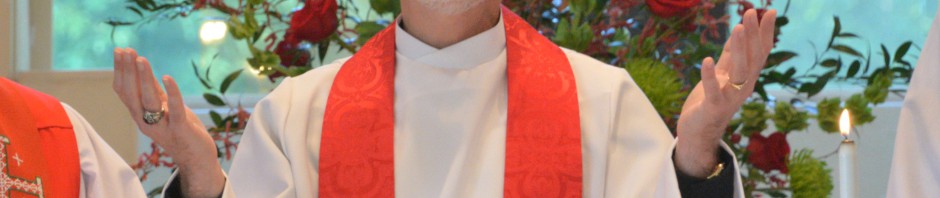
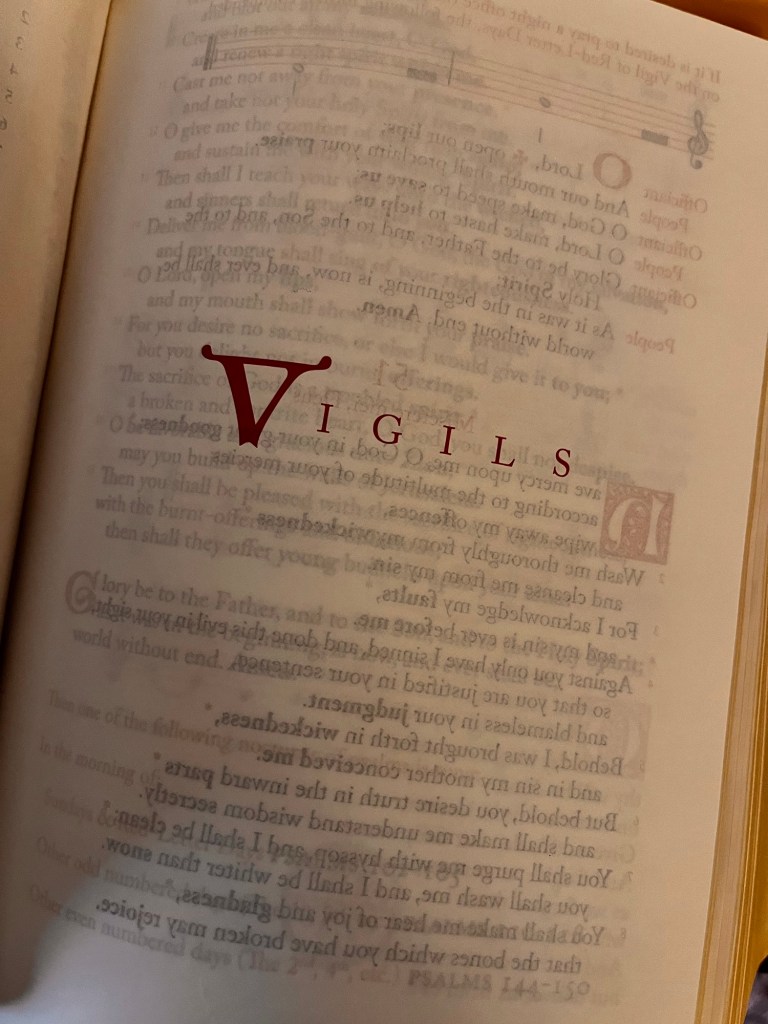



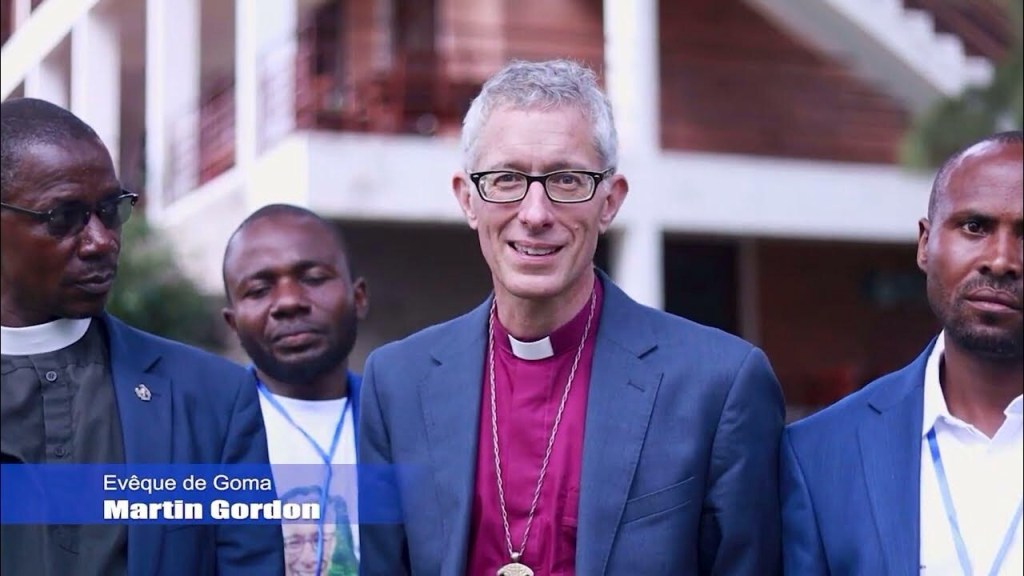


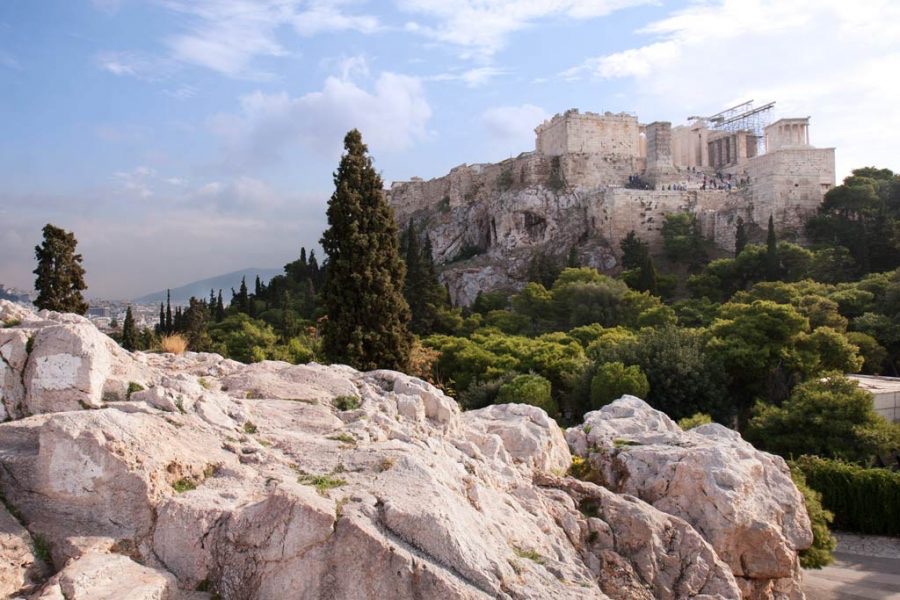




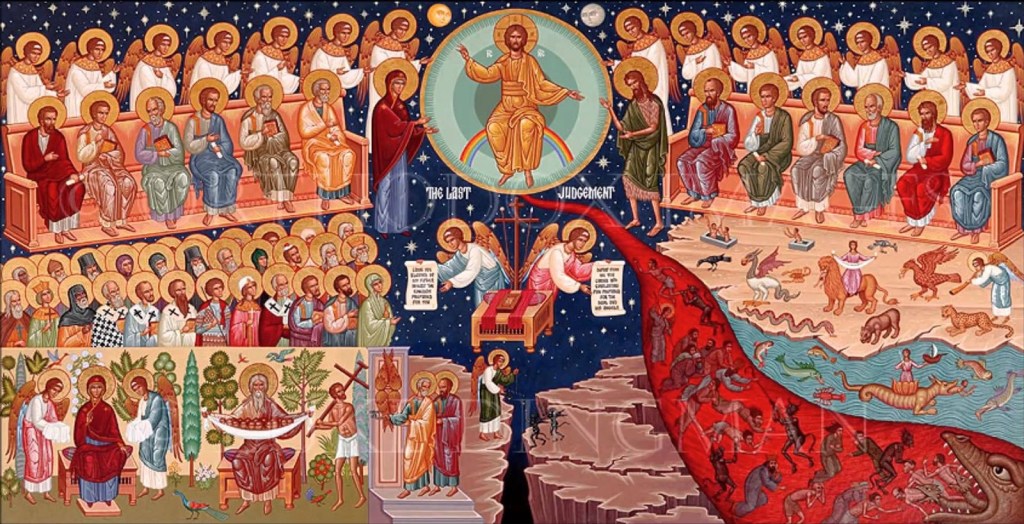
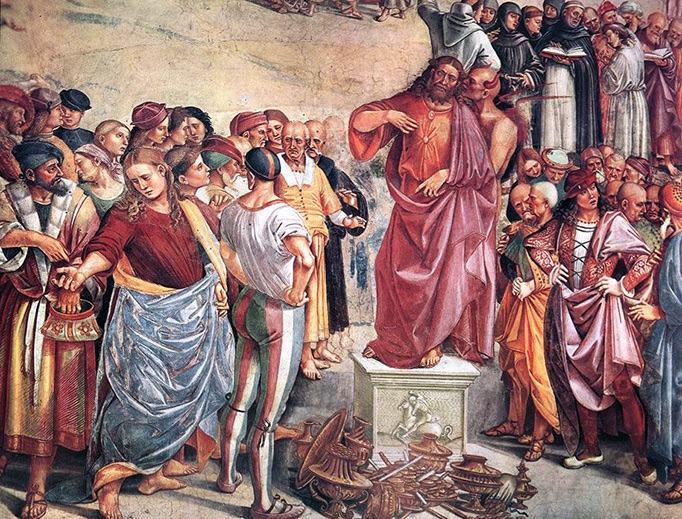


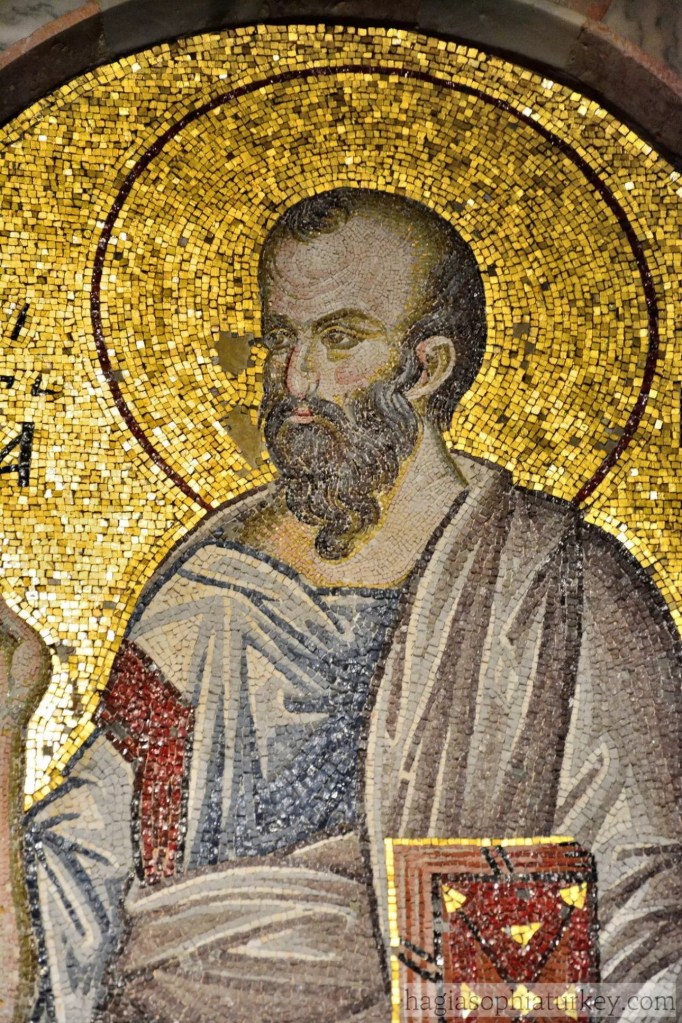



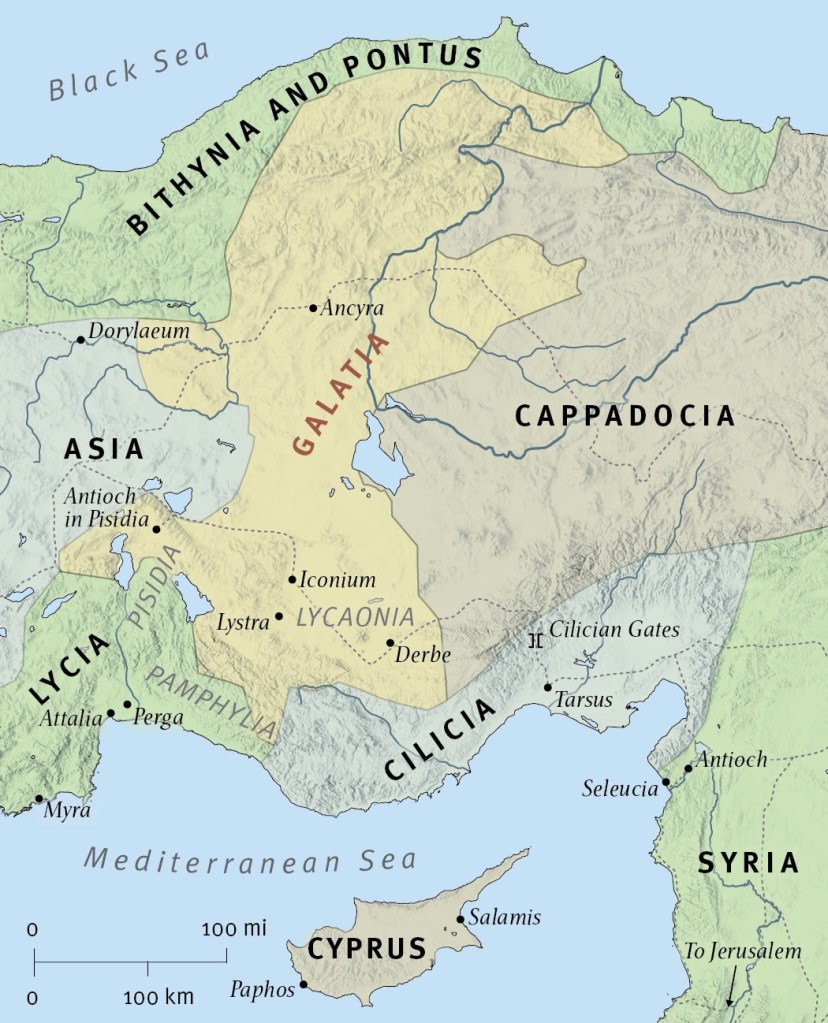

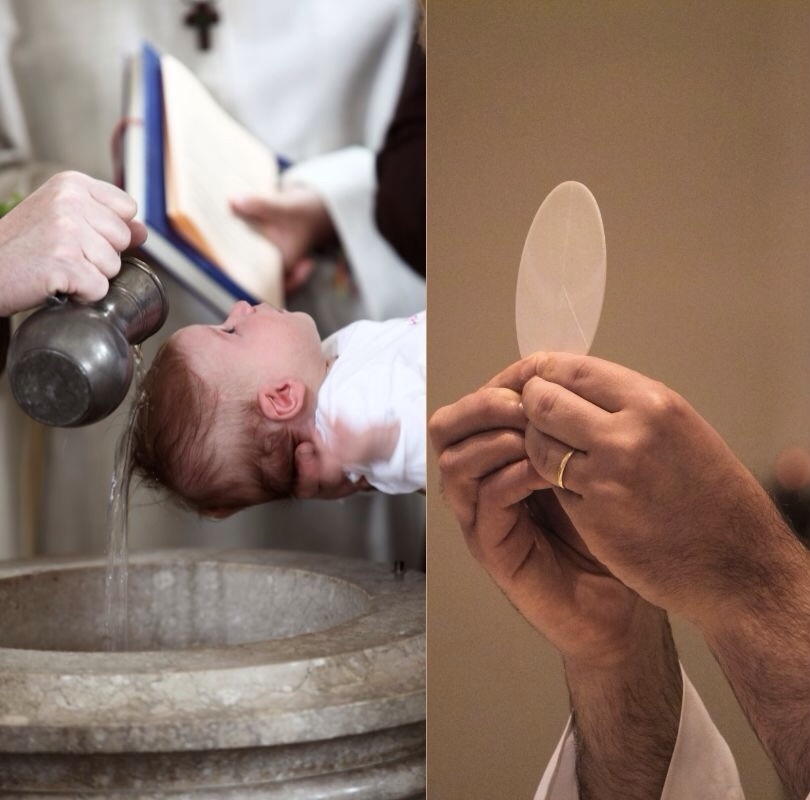
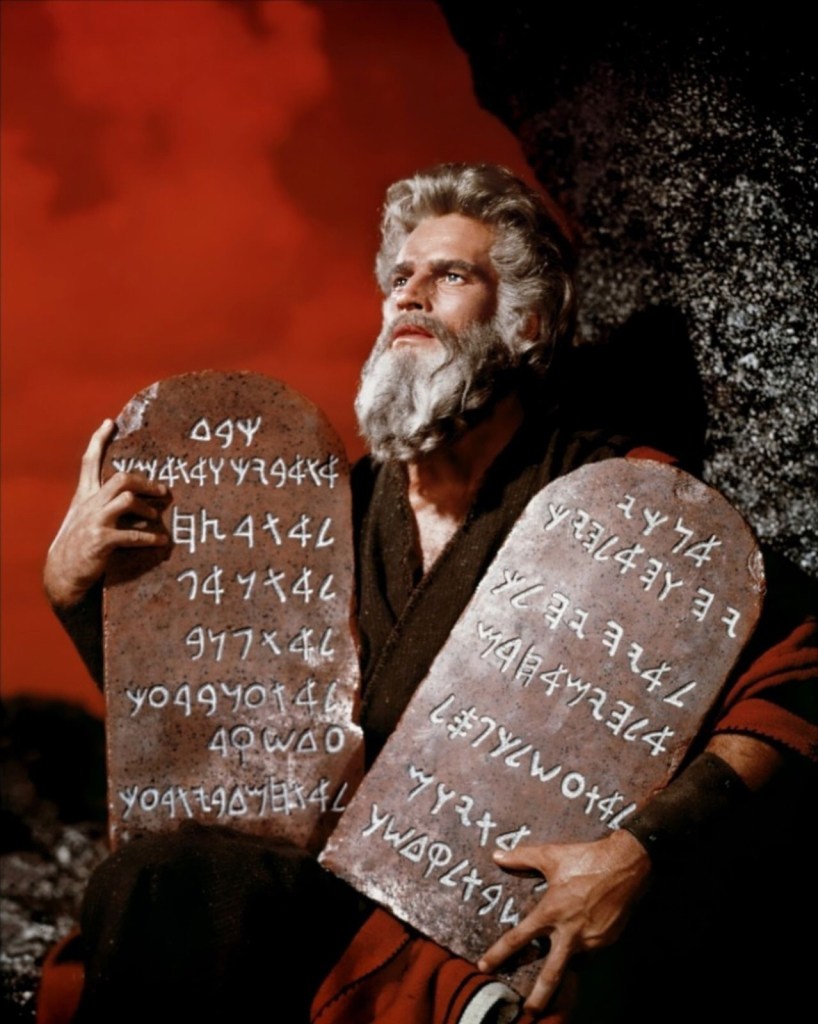



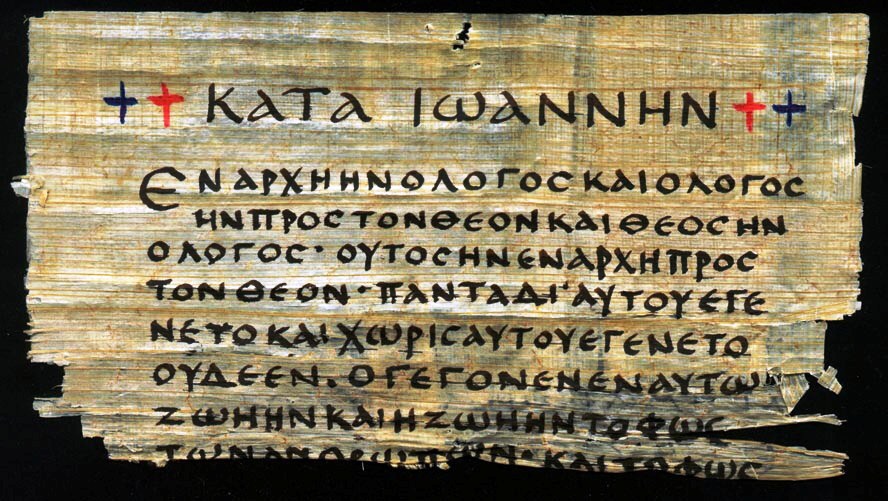


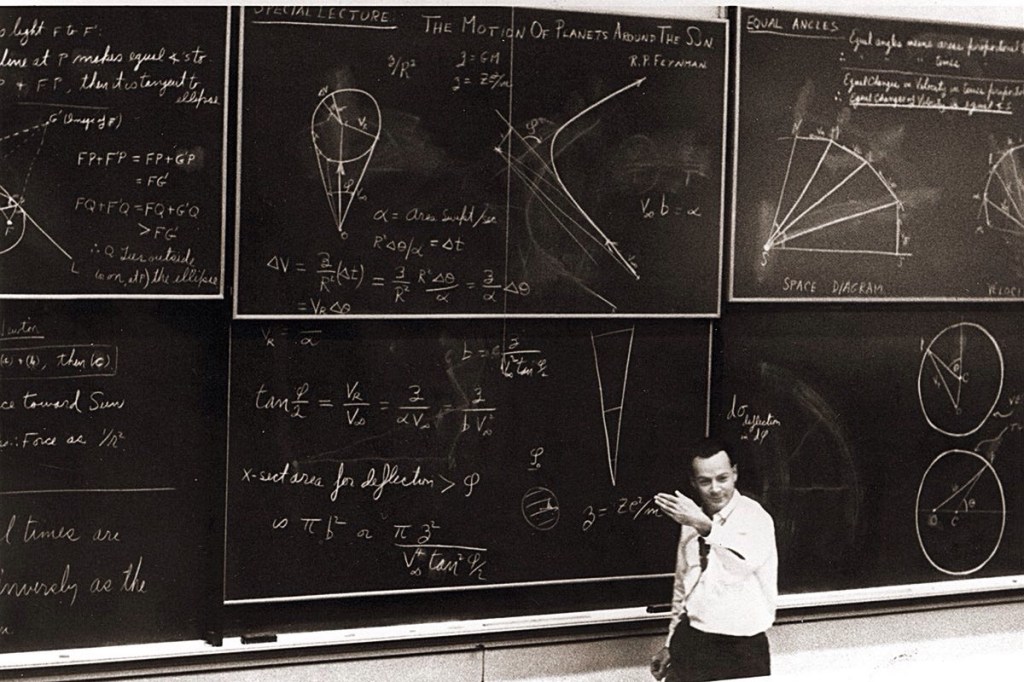



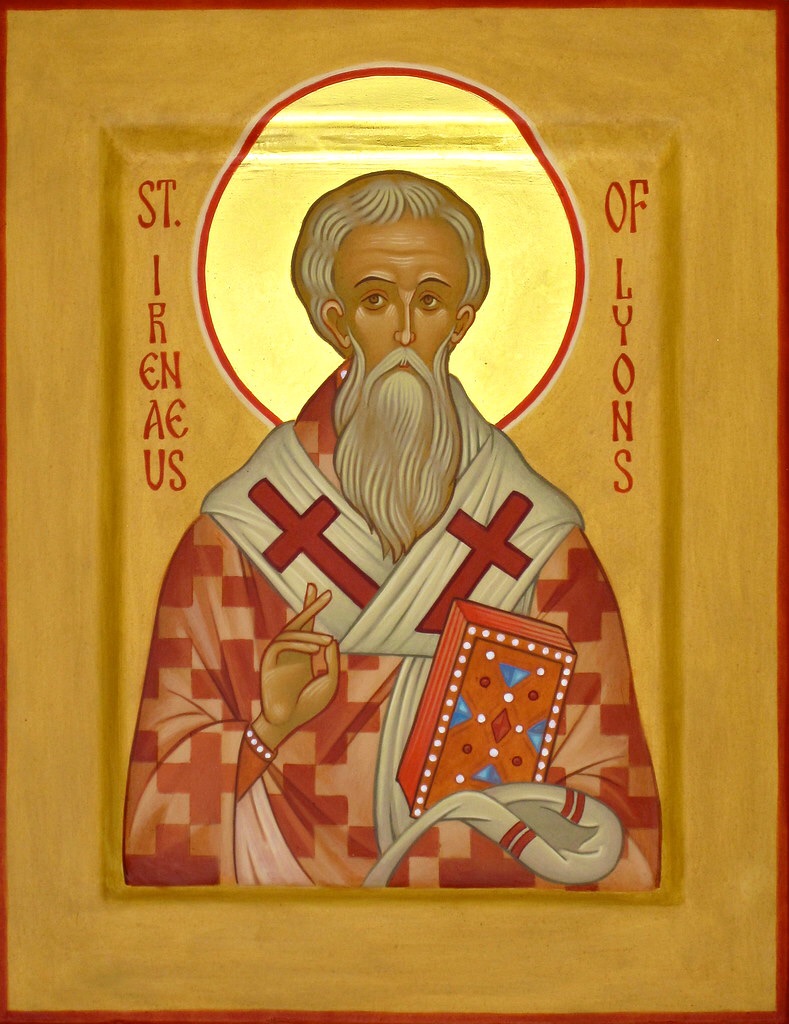




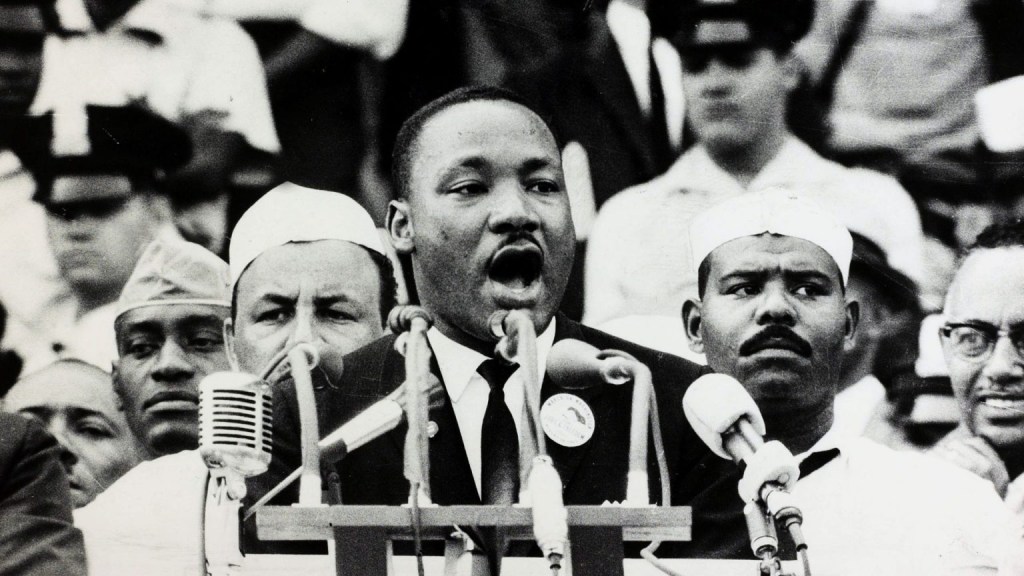













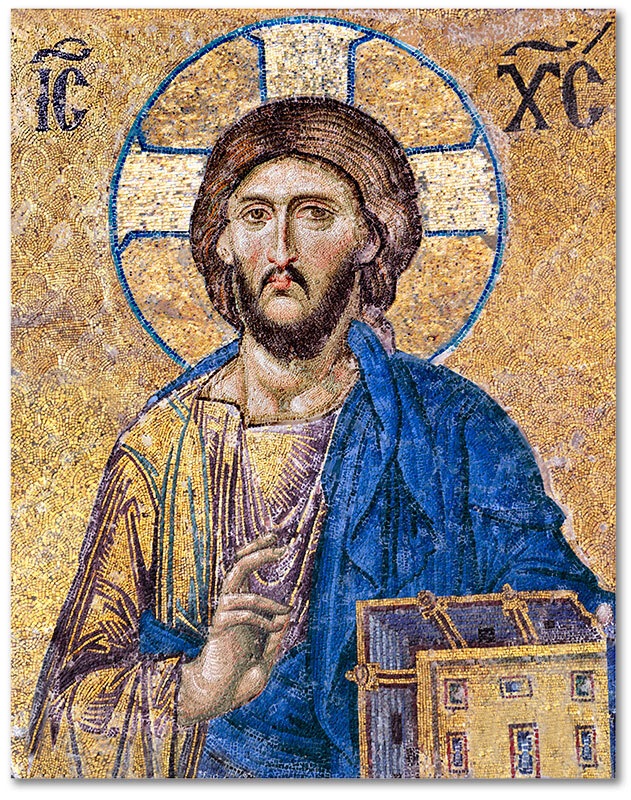
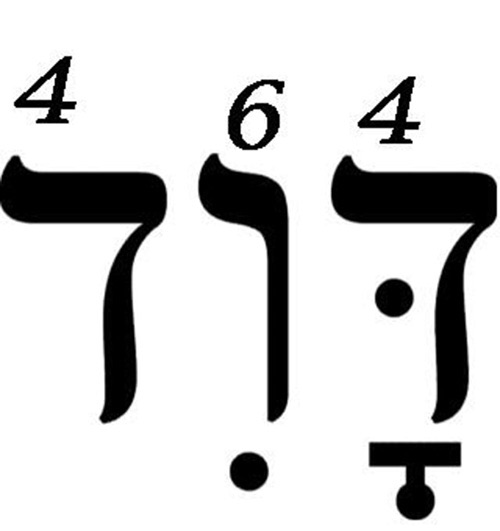


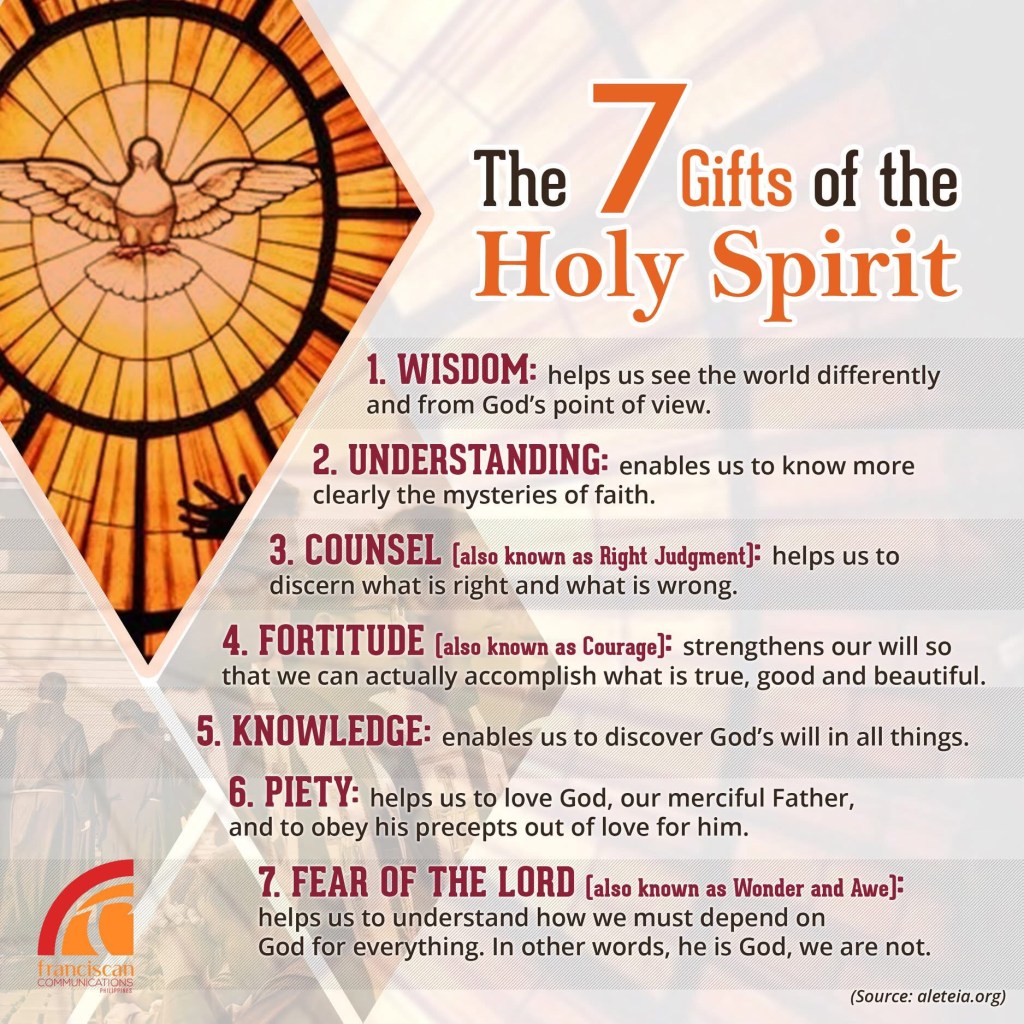
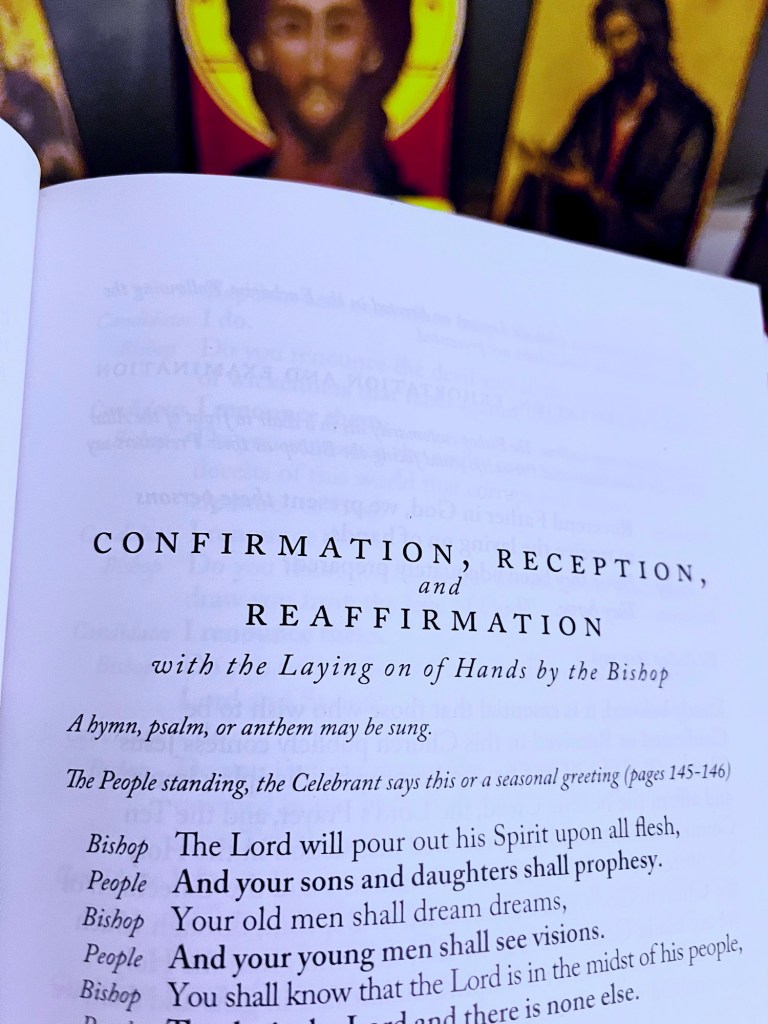
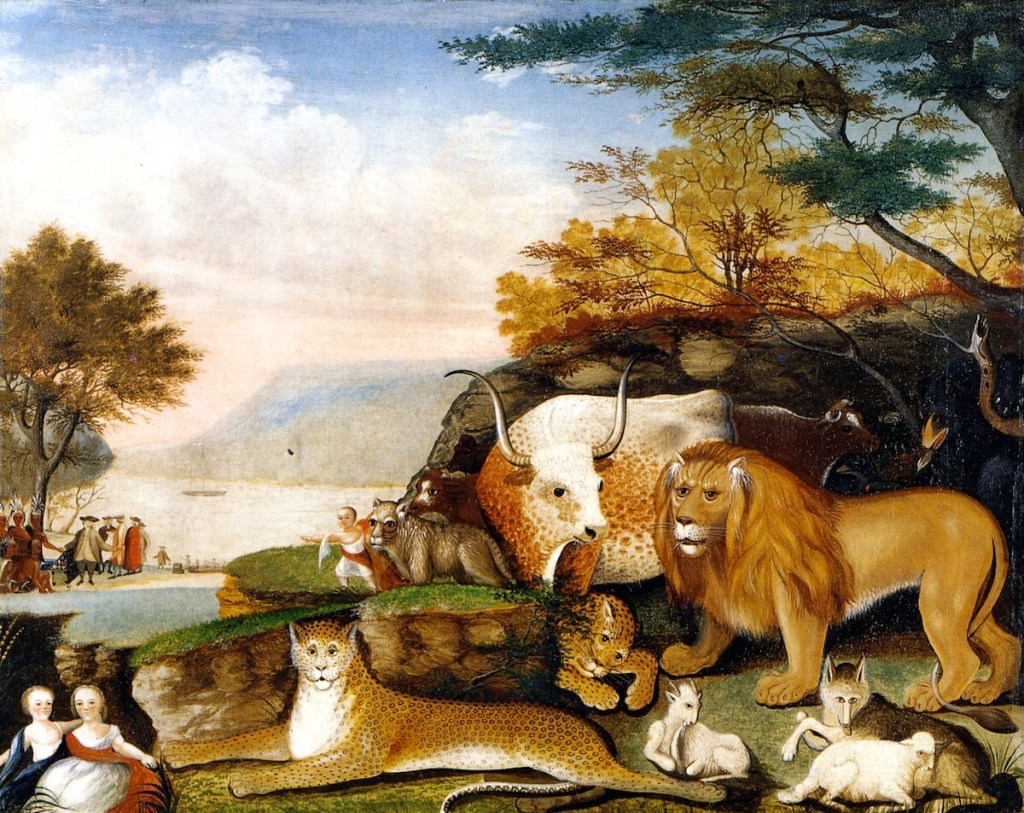


 First Blessings