As two or three gathered in the St. Mary Magdalene Chapel this morning for the Daily Office, I offered this prayer among others:
2. For The Universal Church Gracious Father, we pray for your holy Catholic Church. Fill it with all truth, in all truth with all peace. Where it is corrupt, purify it; where it is in error, direct it; where in anything it is amiss, reform it. Where it is right, strengthen it; where it is in want, provide for it; where it is divided, reunite it; for the sake of Jesus Christ your Son our Savior. Amen.
It is a good and holy prayer penned by William Laud, Archbishop of Canterbury under Charles I, and I can offer it from the heart. But, it is equally important — and arguably more important — for me to offer it for the heart, specifically, for my heart. It is difficult to see how the prayer might be answered for the Church until it is answered for me. And so, before praying it for the Church, perhaps I should offer it for myself:
Gracious Father, I pray for my heart. Fill it with all truth, in all truth with all peace. Where I am corrupt, purify me; where I am in error, direct me; where in anything I am amiss, reform me. Where I am right, strengthen me; where I am in want, provide for me; where I am divided, reunite me; for the sake of Jesus Christ your Son our Savior. Amen.
I need truth, yes, but truth with peace. It is possible to be thoroughly right and thoroughly lost. What does it profit a man to gain the argument but to lose his soul?
Where I am corrupt — and where am I not? — create in me a clean heart, O God, and renew a right Spirit within me.
In error — me? Grant me the humility of Orthodoxy, the wisdom humbly to remain within the folds of truth as discerned by the Church, and not to regard my own divergent opinion as special revelation.
And so goes the prayer through the last petition: Where I am divided, reunite me. And, I am divided. I attempt to serve too many masters. I do not love the Lord my God with all my heart, with all my soul, and with all my mind. And, as for my neighbors, I often love them with all my convenience, but no more. So, may the Lord gather up the scattered and squandered pieces of my heart and reunite them in him.
It is said that all politics is local. Perhaps all prayer is, too, at least primarily so. Only then can it rightly move outward.
Temples and Prayer: A Homily on 1 Kings 8 (1 Kings 8:22-61, Psalm 86, Hebrews 8)
Collect for Ember Days Almighty God, the giver of all good gifts, in your divine providence you have appointed various orders in your Church: Give your grace, we humbly pray, to all who are [now] called to any office and ministry for your people; and so fill them with the truth of your doctrine and clothe them with holiness of life, that they may faithfully serve before you, to the glory of your great Name and for the benefit of your holy Church; through Jesus Christ our Lord, who lives and reigns with you, in the unity of the Holy Spirit, one God, now and for ever. Amen.
In the Name of the Father, and of the Son, and of the Holy Spirit. Amen.
Construction on the Temple Expiatori de la Sagrada Família — the Basilica of the Holy Family — began in Barcelona, Spain in 1882; it is scheduled for completion in 2026: one hundred forty-four years of work on the church. There is no modern construction effort that rivals that level of devotion and commitment. Notre Dame Cathedral was begun in 1163 and completed one hundred eight-two years later, but construction techniques were slower and more labor intensive then. Chartres Cathedral was s work-in-progress — building, expansion, rebuilding after fires — from 743 until 1520, though work is always ongoing. I suspect all the ancient cathedrals were multi-generational affairs, a century or more in the making.
Sagrada Família
By contrast, Solomon’s Temple took a mere seven and a half years, which speaks to the modesty of that structure compared to the grand medieval cathedrals. But, whether humble like a tent in the wilderness or grand like Sagrada Família, we know that sacred space is important. Synagogues, mosques, churches, temples are important. So, today we come to the text of 1 Kings 8, the dedication of Solomon’s Temple, with a solemn sense of wonder and grandeur.
What is a temple? We might, without pausing for deep reflection, say that a temple is a place where a god dwells. I can’t speak for pagans and for their notions of their gods and temples, but when I was in India, there were Hindu temples seemingly on every street corner, much like Protestant churches in the United States. Whether those who visited the temples thought that Vishnu or Shiva or Ganesh actually dwelt in the temples, I don’t know. But, we do know that our God, does not. That conviction is the opening salvo of St. Paul’s defense before the Areopagus in Athens:
22 So Paul, standing in the midst of the Areopagus, said: “Men of Athens, I perceive that in every way you are very religious. 23 For as I passed along and observed the objects of your worship, I found also an altar with this inscription: ‘To the unknown god.’ What therefore you worship as unknown, this I proclaim to you. 24 The God who made the world and everything in it, being Lord of heaven and earth, does not live in temples made by man, 25 nor is he served by human hands, as though he needed anything, since he himself gives to all mankind life and breath and everything” (Acts 17:22-25).
Nor did the Jews — those who thought rightly about this matter — imagine that the God of Abraham, Isaac, and Jacob dwelt in the tabernacle or temple. That conviction is also central to Solomon’s dedicatory prayer:
27 “But will God indeed dwell on the earth? Behold, heaven and the highest heaven cannot contain you; how much less this house that I have built (1 Kings 8:27)!”
Solomon actually takes this matter further than St. Paul did: not only does God not dwell in temples made by human hands, he does not dwell on earth or in heaven made by divine hands/ divine word. St. Thomas Aquinas expressed the same notion: God is not one being among other beings who can therefore be localized to a place. Rather, God is the act of “to be;” God is being itself. So, it seems that we cannot, after all, say that a temple is the place where God dwells.
What then? How are we to think about a temple, and, in particular, about Solomon’s Temple? Let me suggest this, though I don’t think for a moment that it is a final, comprehensive, authoritative description: a temple is a place where God makes himself — his presence — known to his people, and where his people worship and entreat him. A temple is a place of God’s self-revelation and man’s worship and petition. A temple is a focal point of divine-human interaction. A temple is “God’s house” not in the sense of God’s dwelling place, but in the sense of a meeting place. A church building is God’s house in the same way: a place where God reveals his presence and where his people worship and entreat him.
There were temples long before Moses’ tabernacle and Solomon’s temple. The first temple is creation itself. God created something that was not himself, a place, and then he populated it with creatures, not least humans. So, this creation, this world, became the meeting place of God and man, the place where God revealed himself to his creatures and where his creatures worshiped him and fulfilled their God-given vocation. To impose language that only developed later, we might say that Eden was the Holy of Holies of the temple of creation, the place where God revealed himself uniquely to Adam and Eve, the prophets, priests, and kings of creation.
Later, there were other places where God revealed himself to those he called to be his people — often at specific geographical locations or at natural features like groves of trees or wells or mountains. For Abraham it was the Oaks of Mamre.
Oak of Mamre
For Hagar it was a spring in the wilderness on the way to Shur and later at a well in the wilderness of Beersheba. For Moses it was on Mount Sinai.
Mount Sinai
These kind of natural temples come with a certain risk: that the people will form an image of “nature gods,” the gods of groves or wells or mountains. We even see Judah, as early as the reign of Rehoboam, son of Solomon, lapse into this error:
21 Now Rehoboam the son of Solomon reigned in Judah. Rehoboam was forty-one years old when he began to reign, and he reigned seventeen years in Jerusalem, the city that the Lord had chosen out of all the tribes of Israel, to put his name there. His mother’s name was Naamah the Ammonite. 22 And Judah did what was evil in the sight of the Lord, and they provoked him to jealousy with their sins that they committed, more than all that their fathers had done. 23 For they also built for themselves high places and pillars and Asherim on every high hill and under every green tree, 24 and there were also male cult prostitutes in the land. They did according to all the abominations of the nations that the Lord drove out before the people of Israel (1 Kings 14:21-24).
Even the Temple of the Lord — Solomon’s Temple — could be and was abused, being treated by the people as a good luck charm, a guarantee of God’s favor. That’s what Jeremiah said:
7 The word that came to Jeremiah from the Lord: 2 “Stand in the gate of the Lord’s house, and proclaim there this word, and say, Hear the word of the Lord, all you men of Judah who enter these gates to worship the Lord. 3 Thus says the Lord of hosts, the God of Israel: Amend your ways and your deeds, and I will let you dwell in this place. 4 Do not trust in these deceptive words: ‘This is the temple of the Lord, the temple of the Lord, the temple of the Lord’ (Jerusalem 7:1-4).”
Despite all that can go wrong with a temple, Cicero’s maxim holds true: Abusus non tollit usus — Misuse (abuse) does not negate proper use. And what does Solomon see as proper “use” for the temple as he dedicates this magnificent structure in Jerusalem?
27 “But will God indeed dwell on the earth? Behold, heaven and the highest heaven cannot contain you; how much less this house that I have built! 28 Yet have regard to the prayer of your servant and to his plea, O Lord my God, listening to the cry and to the prayer that your servant prays before you this day, 29 that your eyes may be open night and day toward this house, the place of which you have said, ‘My name shall be there,’ that you may listen to the prayer that your servant offers toward this place. 30 And listen to the plea of your servant and of your people Israel, when they pray toward this place. And listen in heaven your dwelling place, and when you hear, forgive” (1 Kings 8:27-30).
The temple is the place toward which God’s people will pray and the place from which God will hear and forgive. So, this text — 1 Kings 8, Solomon’s dedicatory prayer — is as much a primer on prayer as it is on temples. It is also a window into the character of God and God’s relationship with his people.
Prayer at the Temple Mount
The first type of prayer that Solomon mentions is a plea for justice in the wake of sin:
31 “If a man sins against his neighbor and is made to take an oath and comes and swears his oath before your altar in this house, 32 then hear in heaven and act and judge your servants, condemning the guilty by bringing his conduct on his own head, and vindicating the righteous by rewarding him according to his righteousness” (1 Kings 8:31-32).
I am very hesitant myself to pray for God to condemn the guilty because I know only too well my own guilt. I find it easier to pray for God to reward the righteous; even though I may not count myself among them, there is something right about them being rewarded. I can’t begrudge them that. But the important implication of all this is that God cares about justice and will himself adjudicate between the guilty and the innocent. If he did not care, if he did not judge, then there would be no way to consider him good. The temple is not merely a place of mercy, but also a place of justice. In fact, if there is no justice, no final putting of things to rights, then there really is no mercy either. It is justice that ministers mercy to the aggrieved. Only God knows how to perfectly “balance” justice and mercy. It is only in God, as the Psalmist says, that “Mercy and truth have met together; / righteousness and peace have kissed each other” (Psalm 85:10).
The theme begun in this first petition for justice continues in several petitions that follow: the temple is the place to pray for forgiveness of sin. Solomon rehearses several calamities that might come upon the people and nation, and he assumes that sin is their cause. Then, naturally, repentance, confession, and prayer are the remedy:
“When your people Israel are defeated before the enemy because they have sinned against you…”(1 Kings 8:33).
“When heaven is shut up and there is no rain because they have sinned against you…” (1 Kings 8:35).
“If there is famine in the land, if there is pestilence or blight or mildew or locust or caterpillar, if their enemy besieges them in the land at their gates, whatever plague, whatever sickness there is…then hear in heaven your dwelling place and forgive…” (1 Kings 8:37-39, selections).
And then, worst of all, Exile:
“If they sin against you — for there is no one who does not sin — and you are angry with them and give them to an enemy, so that they are carried away captive to the land of the enemy, far off or near…if they repent with all their heart…and pray to you toward their land…then hear in heaven your dwelling place their prayer and their plea, and maintain their cause, and forgive your people who have sinned against you…” (1 Kings 8:46 ff).
Modern sensibility recoils from this, doesn’t it? When sickness comes we sometimes think first of physicians and “natural causes” and only later, if at all, of sin and Godly discipline. We generally want prescriptions and not penance. And, even if we think of the possibility of spiritual causes for our afflictions, we most likely think of an attack by the hate-filled enemy rather than of an admonition from a loving Father. Please don’t misunderstand. I am certainly not saying that specific, identifiable sin always lies at the root of all the difficulties we experience in our lives, though there may well be a causal relationship. We dare not look at another — at any other — experiencing illness or poverty or hardship of any kind and ask, “I wonder what his sin was that God is punishing him so harshly?” That is to make the same mistake the disciples made: “Who sinned that this man was born blind — the man or his parents?” No, it’s not that simple at all; the ways of God are not our ways and are often beyond our understanding. But, when hardship comes to me, it is appropriate that I do a thoroughgoing examination of my own life, that I ask God if this is correction, and that I repent for known sins and ask God to reveal to me my hidden sins.
There is one more prayer that I want to highlight, this one having nothing to do with sin. It is surprising on the lips of Solomon, a sign of the coming Gospel of the Lord.
41 “Likewise, when a foreigner, who is not of your people Israel, comes from a far country for your name’s sake 42 (for they shall hear of your great name and your mighty hand, and of your outstretched arm), when he comes and prays toward this house, 43 hear in heaven your dwelling place and do according to all for which the foreigner calls to you, in order that all the peoples of the earth may know your name and fear you, as do your people Israel, and that they may know that this house that I have built is called by your name” (1 Kings 8:41-43).
Solomon looks forward to an ingathering of the gentiles, so that all the peoples of the earth may know and fear the name of the Lord. That is a remarkable sentiment coming generations before the great prophets envisioned the same universal inclusion. It is, of course, a signpost pointing toward the fulfillment of the Temple, pointing toward the coming of the one who is himself the true Temple of the Lord, Jesus who is the “place” where God reveals his presence to man, Jesus who is the one to whom and through whom prayer is made, Jesus who is the one in whom all the peoples of the earth will come to know God. Solomon blessed God in his holy temple. We bless God in his only-begotten Son, to whom be glory and honor now and for ever. Amen.
The icon which is painted with devoutness draws the Grace of God from the devout iconographer, and then eternally transmits solace to the faithful. The iconographer is depicted, translated, into the icon he makes; that is why the spiritual state of the iconographer plays such an extensive role. Father Tychon used to tell me, “My son, when I paint the Epitaphios icon, I chant the hymn: “The noble Joseph, after taking down Your sacred Body from the Cross, wrapped it in a clean shroud and laid it in a new tomb.” He used to shed tears as he chanted, and his tears fell upon the icon. Such an icon preaches an eternal message to the faithful of the world. Icons preach eternally down through the ages. One who is suffering will look upon an icon of Christ our Lord or of Panaghia and receive comfort (Saint Paisios the Athonite, Spiritual Counsels II: Spiritual Awakening, Holy Hesychasterion “Evangelist John the Theologian” (2024), p. 171).
Epitaphios IconPanaghia (All Holy) Icon
Saint Paisios continues:
The entire foundation is devoutness. You see, one leans against a wall where an icon has stood and receives divine Grace, while another might own the best icon, but because he is not devout, receives no benefit. Or, one can be assisted by a simple wooden cross, while another, who is not devout, will not be assisted by the True Precious Cross itself (ibid, p. 172).
It matters little if icons are precious to you, an integral part of your faith, or if you eschew them as images bordering on idols. The selection from Saint Paisios only uses icons as a context for discussing devoutness — the devoutness of the one who creates and gives and the devoutness of the one who receives. It is not the product that matters primarily, but the spirit in which it was created and with which it is received.
Arvo Pärt’s music is the most performed of any living composer. It is lovely, but it is more. Pärt is a devout Orthodox Christian and his “devoutness” suffuses his music with a grace that less faithful composers simply cannot impart to theirs. I am listening to his “Spiegel im Spiegel” as I write. Mere listening is not, perhaps, prayer, but it is not far from the kingdom. More is received by the listener than mere aesthetic joy. Grace is imparted if the devoutness of the composer is met with the devoutness of the listener.
While I do not claim “devoutness” for myself, this music wafts its sweet aroma over me. I can receive a bit of its grace now, and, please God, more as I grow in holiness.
The spirit in which we do our work matters. If the devout iconographer can imbue his icon with grace, why not the devout teacher or lawyer or plumber or physician or carpenter or engineer or mother? Why not anyone who works as unto the Lord?
And if one can be assisted by a simple wooden cross as St. Paisios said, then why not me? “To the pure, all things are pure,” St. Paul writes to St. Titus (Titus 1:15a). “To the one who has, more will be given, and he will have an abundance,” says our Lord (Matt 13:12a). The one who has grace can perceive grace in all things and receive it as his own. When some see and receive only bread and wine, others — with devotion — see and receive the Body and Blood of our Lord, grace upon grace.
All this makes the cultivation of “devoutness” of utmost importance. The greatest gift one has to offer the world is his/her own devout heart.
Anglican Chant Workshop: Session 1 — Introduction to Chant and Basic Tones
Collect for Church Musicians and Artists O God, whom saints and angels delight to worship in heaven: Be ever present with your servants on earth who seek through art and music to perfect the praises of your people. Grant them even now true glimpses of your beauty, and make them worthy at length to behold it unveiled for evermore; through Jesus Christ our Lord. Amen.
Introduction
I’ve titled this class Anglican Chant Workshop for a particular reason. A workshop is a place you go first to learn how to do something and then to hone your skill and create things. And that is the purpose of this class: to show you how to do something, to give you a place to practice together, and then to leave here and create. By the end of the course, you should be able to open the Book of Common Prayer 2019 (BCP 2019) to any Psalm or Canticle and be able, with just a little preparation, to chant the text using one or more styles of chant. Those who are industrious, can learn to do this with just a Bible. But, I encourage you — for a host of reasons — to get the BCP 2019. It will make chanting much easier, not to mention that it is a treasury of prayer and liturgy which repays its study and regular use many fold.
Lift Every Voice
Under Friday night lights, in countless high school football stadiums across the country this fall, people of all ages and backgrounds will stand — many with hand over heart — and sing the National Anthem.
In Tennessee, on home game Saturdays, around tailgates, in front of televisions and radios, and gathered in Neyland Stadium, faithful and fervent Vols-for-Life will rise and sing the alternate national anthem, Rocky Top, to the strains of the Pride of the Southland Band.
In bars, at parties, and in family rooms people will embarrass themselves — all in good fun, of course — with round after round of karaoke by filling in the missing voice on favorite songs, singing with abandon.
In the privacy of showers and cars, in small gatherings of friends around the campfire, amidst massed crowds of strangers at Beyoncé and Taylor Swift concerts, people sing.
And, more than anywhere else, people gathered in worship at churches of every theological and denominational stripe sing: a capella; accompanied by guitars and drums, by piano and organ; in ancient hymnody and modern praise choruses; in unison and in four part harmony; in known languages and even in tongues; with theological precision and with devotional poetry; in praise and lament, in faith and doubt, in tune and out of tune. God’s people sing.
And that raises questions.
Why? Why do we sing?
We sing for the same reason we bring out the china and crystal and the sterling silver — or at least the “good” dishes and the matching forks — for special occasions. The meal might taste the same served on paper plates and eaten with plastic forks, but the experience would be different. The china and silver signify that something special, something of great worth is happening and we experience it differently. We honor others with our best and we honor the one who has prepared the feast. It is similar with singing. We could all gather and recite texts together; and sometimes we do. But, when the texts have been written in poetry, we know they are special. When that poetry is set to music, they are more special still. In worship, we honor the truth when we sing it; more importantly, we honor the one who is the Truth. Singing is bringing out the good verbal china, marking such occasions as special.
We sing because singing fosters community. We sing by ourselves, yes, but we are more likely to sing with others, to sing what we have in common. Singing both identifies our community and creates it. Think of teaching a child Rocky Top. That song, and singing that song, inducts him/her into the community of Vols fans — it creates community by adding new members — and it identifies him/her as part of that community as distinct from Alabama or Georgia or Florida fans: Lord, have mercy on them.
We sing to express and to kindle our emotions. Some songs bring us to tears and help us express deep sorrow and lament. Other songs help us to process strong emotions like anger and to move through and beyond them. There are songs that help us celebrate, to rejoice, and there are songs that fill our hearts with love and devotion. In his commentary on Psalm 73, St. Augustine wrote:
For he who sings praise, not only praises, but also praises with gladness; he who sings praise, not only sings, but also loves him of whom he sings. In praise there is the speaking forth of one who is confessing; in singing, the affection of one who loves.
We sing to strengthen our faith and our will. The first chant I learned — years ago now — was the Φως Ίλαρόν, O Gladsome Light, which we use in Evening Prayer:
O gladsome light, pure brightness of the everliving Father in heaven,* O Jesus Christ, holy and blessed!
Now as we come to the setting of the sun, and our eyes behold the vesper light,* we sing your praises, O God: Father, Son, and Holy Spirit.
You are worthy at all times to be praised by happy voices,* O Son of God, O Giver of Life, and to be glorified through all the worlds (BCP 2019, p. 44).
Church tradition says that this hymn was composed in the early centuries of the Church by St. Athenogenes while on his way toward martyrdom. Can you imagine him singing the hymn as his executioners bound him to the stake and then lit the pyre, as the flames rose about him? I think about that as I chant the hymn and it strengthens my faith and my will.
On another personal note, Clare and I attended a Kirkin’ o’ the Tartans service many years ago at a large Episcopal church. That is a celebration of Scottish heritage when the tartans of the various clans are brought into church to be blessed. We were sitting in one of the transepts, so some of the “action” took place out of sight in the back of the nave. But, I distinctly remember the beginning of the service; I didn’t see it, but I heard it. First the drums started. Then came the sound of a thousand cats coughing up hair balls as bagpipes filled with air and came up to pitch. And then the march: drum and pipes at full volume echoing through the nave, bouncing off stone, filling the entire space with the most martial music I have ever heard. After a couple of minutes of it, I turned to Clare and said, “I just want to kill something!” The drums and pipes stirred the blood. It is no wonder that until 1996, the British government classified the bagpipes as weapons of war. Music, whether pipes or singing, can straighten the spine and strengthen the will.
We sing to learn texts. The older I’ve gotten, the worse my memory has grown; my capacity to memorize new material has certainly diminished. But, I find I can remember texts that are chanted or sung. There are several Psalms and Canticles that I would struggle to recite, but which I can chant without any difficulty. Singing activates a different portion of the brain than mere spoken language. We see this in nursing homes. Some residents are uncommunicative. But, start singing one of the old hymns and they join right in without missing a word.
Singing and Worship in Scripture
And we sing, in no small part, because it seems to be an inherent part of being human. It is no wonder, then, that singing is central to the most fundamental human drive and act of worship. Scripture is replete with examples of singing and with exhortations and instructions to sing. Let’s consider just a few.
Job 38:7
Rev 5:9-10
Ex 15
Judges 5 (especially vss 1-3, though the whole of the chapter is a song of praise)
1 Sam 18:7
2 Sam 1:17-27 (likely a song of lament though not specifically identified as such)
Psalms (consider especially Ps 95 and Ps 100 as used in Morning Prayer)
Acts 16:25 (cf Phil 2:5-11, the Carmen Cristi (Hymn to Christ))
Eph 5:15-20
Col 3:16
James 5:13
So, as this brief survey shows, there can be no doubt that singing is a God-given and God-ordained part of worship. If we are to be faithful to the biblical pattern of worship, we will sing.
Singing: Hymnody and Chant
In worship, two types of singing are most prevalent, at least historically: hymnody and chant. We might add praise and worship music as a third category, but some of it is very much like hymnody and some of it is very like chant. So, I will not consider it as a separate musical form. Let’s consider some of the differences between hymnody and chant, using Psalm 100 as an example. Let’s begin with hymnody.
First Version (L.M. Use Old One Hundredth)
1 All people that on earth do dwell, Sing to the Lord with cheerful voice. 2 Him serve with mirth, his praise forth tell, Come ye before him and rejoice.
3 Know that the Lord is God indeed; Without our aid he did us make: We are his flock, he doth us feed, And for his sheep he doth us take.
4 O enter then his gates with praise, Approach with joy his courts unto: Praise, laud, and bless his name always, For it is seemly so to do.
5 For why? the Lord our God is good, His mercy is for ever sure; His truth at all times firmly stood, And shall from age to age endure.
What do you notice about the lyrics to this hymn? You might notice that the lyrics differ from the biblical text of the Psalm; they are an interpretation, a paraphrase, of the text, but not the text itself. Why is that true? Well, count the syllables in each line of the hymn. Do you notice that each line has eight syllables and each verse has four lines. We say that the hymn has meter or is metrical. This is, it has a fixed rhythmic structure: 8.8.8.8 which is called long meter. The text of Psalm 100 had to be altered to fit the meter of the hymn. Do you notice also that the Hebrew poetry of the Psalm, which does not rhyme, has been rendered into a Western poetic form which does rhyme? The hymn has the ABAB rhyme scheme in which odd lines rhyme and even lines rhyme within each stanza. Oftentimes, hymns alter the Biblical text for the sake of both meter and rhyme.
There are other metrical and rhyming possibilities for this Psalm.
Second Version (C.M. Use Amazing Grace)
1 O all ye lands, unto the Lord make ye a joyful noise. 2 Serve God with gladness, him before come with a singing voice.
3 Know ye the Lord that he is God; not we, but he us made: We are his people, and the sheep within his pasture fed.
4 Enter his gates and courts with praise, to thank him go ye thither: To him express your thankfulness, and bless his name together.
5 Because the Lord our God is good, his mercy faileth never; And to all generations his truth endureth ever.
Notice three things: the words are different yet again, the meter is now 8.6.8.6 which is called common meter, and the rhyme scheme is now ABCB. So, when arranging the Psalm or other biblical texts for hymnody, there is typically some loss of fidelity to the actual text. That is simply because these texts developed independently of Western metrical music and must be adapted to fit the rhythms and rhymes of hymnody.
In contrast to this, liturgical chant was created to provide a musical expression that is wholly faithful to the text; the text always comes first in chant, and the music fits itself to the word. As an example, consider a simple Gregorian Chant of Psalm 100 with the text taken from the Book of Common Prayer. Note that you could also take the text directly from any translation of the Scripture, even from the Hebrew — if you knew it — or from the Greek in the case of a New Testament text. The same chant would apply in every case.
PSALM 100
1 O be joyful in the Lᴏʀᴅ, all you ‘lands; * serve the Lᴏʀᴅ with gladness, and come before his presence with a ‘song.
2 Be assured that the Lᴏʀᴅ, he is ‘God; * it is he that has made us, and not we ourselves; we are his people, and the sheep of his ‘pasture.
3 O go your way into his gates with thanksgiving, and into his courts with ‘praise; * be thankful unto him, and speak good of his ‘Name.
4 For the Lᴏʀᴅ is gracious, his mercy is ever’lasting, * and his truth endures from generation to gener’ation.
Now, there are other forms of chant, but they all preserve the integrity of the text. Let’s consider an example of Simplified Anglican Chant for this same Psalm. I invite you to chant along with me if you know the tone.
Any of these chant tones — Gregorian or Simplified Anglican — could be used with any text — directly — without changing/adapting the text. That is part of the beauty of chant; it is a musical form created to support and express the biblical text. The word is always primary.
There are certainly other differences between hymnody and chant, but that is the one I wanted to highlight: the development of a musical form — chant — specifically to support and express the text as-is, and which can be used on a variety of texts.
Types of Chant
I have mentioned two different types of chant already: Gregorian and Simplified Anglican Chant. Since this course is an introduction — Chant 101, so to speak — I want it to be as simple and useful as possible; for that reason, we will focus on Simplified Anglican Chant. It is not so much that Gregorian Chant — in modern musical notation — is difficult, but rather that it requires more preparation for each text and a bit more musical ability. But, with just a bit of practice and experience, Simplified Anglican Chant can be sung “on the fly:” select a text, select a tone, and chant. Simplified Anglican Chant is also what we use at Apostles for chanting the Psalms in the early service, so many of you will already be somewhat familiar with it.
Just for a bit of background, Gregorian Chant, or Western plainchant, is monophonic (a single melody line sung without harmonization) and sung unaccompanied (a cappella). Tradition credits Pope St. Gregory the Great (c. 540-604) with the creation of this form; it is more likely that he collected, systematized, and institutionalized existing chant forms and made them the norm for Western liturgical music. Anglican Chant emerged significantly later, in the 19th century. It is polyphonic (generally with four part harmony) and is typically accompanied. It is less complex than Gregorian Chant, but still requires considerable preparation and practice. It is often used by Anglican choirs.
But, for “ordinary” folk like you and me, there is a less complicated version of Anglican Chant called Simplified Anglican Chant, created by Robert Knox Kennedy in the 20th century. While it is polyphonic, it may be sung in unison, either accompanied or a cappella.
Basic Chant
Before we get to Simplified Anglican Chant, there are even more basic chant forms that work perfectly well. The simplest form of chant is monotone, where the entire text is chanted to a single note. This is typically the way the Lord’s Prayer is chanted on Sundays and Holy Days in the Daily Office. Let’s chant the Our Father together. I will establish the pitch with the invocation “Our Father,” and then you join the prayer.
Our Father, who art in heaven, hallowed be thy Name, thy kingdom come, thy will be done, on earth as it is in heaven.
Give us this day our daily bread.
And forgive us our trespasses, as we forgive those who trespass against us.
And lead us not into temptation, but deliver us from evil.
For thine is the kingdom, and the power, and the glory, for ever and ever. Amen.
Monotone is a wonderful introduction to chant and may well be all that some people ever want or need. But, for others, monotone becomes…well, monotonous if used exclusively. So, let’s look at a slight variation, what we might call Step Up, Step Down chant. We need a text. Any Psalm will do; I’ve chosen Psalm 131 because it is beautiful, short, and illustrative of several concepts. All Psalm texts are taken from the BCP 2019, The New Coverdale Psalter.
PSALM 131
1 O Lᴏʀᴅ, I am not haughty; * I have no proud looks.
2 I do not occupy myself with great matters, * or with things that are too high for me.
3 But I have stilled and quieted my soul, like a weaned child upon his mother’s breast; * so is my soul quieted within me.
4 O Israel, trust in the Lᴏʀᴅ * from this time forth for evermore.
First, let’s consider the format of the Psalm. Notice that it is divided into verses, and further that each verse is divided into half-verses, indicated by the asterisk. If you simply open to the Psalms in your Bible, you will have one of those divisions — verses — but not the other — half-verses. The division into half-verses that you will find in Psalters — the book of Psalms — is primarily for the use of Psalms in worship, to enable the people to say or chant the Psalms together easily. So, for example, when we pray Morning, Midday, and Evening Prayer at church, the officiant will say: We will now say Psalm XX in unison, or responsively by whole verse, or responsively by half-verse. In this way, everyone know what part of the Psalm is his/her responsibility.
In Step Up, Step Down chant, we change musical pitch at the end of each half-verse: step up at the end of the first half-verse and step back down at the end of the second half-verse. That is the basic idea, though there are some subtleties. Each verse is its own musical entity, and we start again with each verse.
Let me illustrate this with the first verse of Psalm 131.
1 O Lᴏʀᴅ, I am not haughty; * I have no proud looks.
Simple enough? Step up at the end of the first half-verse; step down at the end of the second half-verse, and start all over again with the next verse. If you are doing this by yourself, you can’t go wrong. But, if we are chanting a Psalm together, we must agree on where to change pitch. We will change pitch at the end of each half-verse, but that doesn’t necessarily mean at the beginning of the last word in the half-verse. To see what I mean, let’s consider verse 4.
4 O Israel, trust in the Lᴏʀᴅ * from this time forth for evermore.
The change in the first half-verse is obvious, isn’t it?
O Israel, trust in the ‘Lᴏʀᴅ *
But, what about the second half-verse? If we change pitch at the beginning of the last word in the line, it would sound like this.
4b from this time forth for ‘evermore.
That sounds a bit off, a bit awkward, doesn’t it. That’s because it is not how we would say the line; it puts the ac-cent’ on the wrong syl-lable’. It should be ever-more’ and not ever’-more. And this leads to an important principle in Anglican Chant; we chant the Psalm as we would read it aloud, changing pitch at points of emphasis in the last word or phrase in each half-verse. So, let’s say verse 4 together, noticing where we naturally put the emphasis at the end of each half-verse. Notice also that, even though English is not primarily a tonal language with pitch change indicating the meaning of words, it does retain some tonality for emphasis and at the end of units of speech. There is often a rising pitch for questions and a falling pitch for declarative statements. If you pay attention to how you read aloud, you will notice that in this Psalm verse.
4 O Israel, trust in the ‘Lᴏʀᴅ * from this time forth for ever’more.
Now, we can do the Step Up, Step Down chant of this verse, confident of where to change pitch. Let’s try it.
4 O Israel, trust in the ‘Lᴏʀᴅ * from this time forth for ever’more.
We can now take the text of the entire Psalm and mark it to show the pitch changes. That is called pointing the Psalm, and the result is called a pointed Psalm. There are many ways to do this, some elaborate and some very simple. At Apostles, we simply use apostrophes to note the pitch changes, as you have noticed in the first service bulletin.
So, let’s take the whole of Psalm 131 and point it.
1 O Lᴏʀᴅ, I am not haughty; * I have no proud looks.
2 I do not occupy myself with great matters, * or with things that are too high for me.
3 But I have stilled and quieted my soul, like a weaned child upon his mother’s breast; * so is my soul quieted within me.
4 O Israel, trust in the Lᴏʀᴅ * from this time forth for evermore.
Verse 1 is straightforward.
1 O Lᴏʀᴅ, I am not ‘haughty; * I have no proud ‘looks.
Verse 2 is a little more complicated. Read it aloud to yourself and notice where you put the emphasis or the verbal tone change at the end of each half-verse. Then, discuss it with those around you to see if you all agree.
I suspect the first half-verse was easy, with the emphasis —and pitch change — falling on the first syllable of “matters.” But, there might have been some disagreement on the second half-verse. I can argue for two different emphases:
Option 1: or with things that are too high for ‘me.
Option 2: or with things that are too ‘high for me.
Each option is possible. There isn’t a right or wrong; we just have to make a decision and agree if we are going to chant this Psalm together. I point the Psalm for service each week, so I am the one making the decision for Apostles. When I pointed the Psalm, I went with Option 2: or with things that are too ‘high for me. That is how I normally accent the Psalm when reading it, so I chose to emphasize it the same way in chant. The emphasis on “high” also picks up the text’s theme of “proud looks” and “great matters” previously in the Psalm.
Now, let’s complete the pointing with the last two verses. Again, read the verses aloud and note where the emphases fall. Here is the way I pointed it.
3 But I have stilled and quieted my soul, like a weaned child upon his mother’s ‘breast; * so is my soul quieted with’in me.
4 O Israel, trust in the ‘Lᴏʀᴅ * from this time forth for ever’more.
Now, we have the entire chant pointed. Let’s try the Step Up, Step Down chant tone with the pointed Psalm. We will also add the Gloria. [Handout 2]
1 O Lᴏʀᴅ, I am not ‘haughty; * I have no proud ‘looks.
2 I do not occupy myself with great ‘matters, * or with things that are too ‘high for me.
3 But I have stilled and quieted my soul, like a weaned child upon his mother’s ‘breast; * so is my soul quieted with’in me.
4 O Israel, trust in the ‘Lᴏʀᴅ * from this time forth for ever’more.
Glory be to the Father, and to the ‘Son,* and to the Holy ‘Spirit: as it was in the beginning, is now, and ever ‘shall be,* world without end. A’men.
Again, you may be quite content with this method of chant, at least for awhile. But, many of you will want to move along to Simplified Anglican Chant and perhaps even take the plunge into Gregorian Chant. We’ll explore more of that in our next session.
Homework
For homework, I would like you to point Psalm 121 and practice chanting it with Step Up, Step Down chant.
PSALM 121
1 I will lift up my eyes unto the hills; * from whence comes my help?
2 My help comes from the Lᴏʀᴅ, * who has made heaven and earth.
3 He will not let your foot be moved, * and he who keeps you will not sleep.
4 Behold, he who keeps Israel * shall neither slumber nor sleep.
5 The Lᴏʀᴅ himself is your keeper; * the Lᴏʀᴅ is your defense upon your right hand,
6 So that the sun shall not burn you by day, * neither the moon by night.
7 The Lᴏʀᴅ shall preserve you from all evil; * indeed, it is he who shall keep your soul.
8 The Lᴏʀᴅ shall preserve your going out and your coming in, * from this time forth for evermore.
Glory be to the Father, and to the Son,* and to the Holy Spirit: as it was in the beginning, is now, and ever shall be,* world without end. Amen.
You might also begin pointing and chanting the Psalms for Morning and Evening Prayer this week. It is not only good practice, but good worship.
I don’t recall when memento mori became a leitmotif in the round of my days; I only know that it has done. “Remember that you are dust, and to dust you shall return,” we priests say to others on Ash Wednesday. Now, sans ashes, my heart often tells me the same. Perhaps it is merely a part of aging, a way of beginning to face one’s own shortness of days. It may also be a gift of offering pastoral care, of time spent with the diminishing, the dying, the dead, and the grieving. It is a gift to be invited onto this holy ground, to accompany my brothers and sisters on this part of their journey. It becomes part of my journey, too — a very sacred part that I treasure up and ponder in my heart.
My wife and I are bibliophiles. A few days ago, when a box arrived for me from Amazon, she asked me what I was reading. “Living Well and Dying Faithfully,” I said. Also lying there on my current stack of reading material was “Depression, Anxiety, and the Christian Life” and “The Gift of Peace,” the latter a personal reflection on his own illness and impending death by Joseph Cardinal Bernardin. My wife is a bit concerned. “Do you ever read anything not about dying?” she asked. Partially to assuage her concern, I ordered the new Daniel Silva / Gabriel Allon novel “An Inside Job”. It arrived today and I now have it lying on the table between us as we enjoy a quiet afternoon reading on the back porch. I hope it makes her feel better.
There is nothing morbid in all this; at least I do not think so. “So teach us to number our days / that we may apply our hearts unto wisdom” we pray in Psalm 90. Why, then, should we fear the arithmetic?
In his book, Cardinal Bernardin recalls a meeting with his friend Henri Nouwen. He writes:
We spent an hour together, and he brought me one of his latest books, “Our Greatest Gift: A Reflection on Dying and Caring”. We talked about the book, and the main thing I remember is that he talked about the importance of looking on death as a friend rather than an enemy. While I had always taken such a view in terms of my faith, I needed to be reminded at that moment because I was rather exhausted from the radiation treatments. “It’s very simple,” he said. “If you have fear and anxiety and you talk to a friend, then those fears and anxieties are minimized and could even disappear. If you see them as an enemy, then you go into a state of denial and try to get as far away as possible from them.” He said, “People of faith, who believe that death is the transition from this life to life eternal, should see it as a friend” (Joseph Cardinal Bernardin, The Gift of Peace, Loyola Press (1997), pp. 127-128).
I can see how that might be comforting. But I cannot see how it might be true. It is not possible even to make sense of death — much less to befriend it — in God’s creation. Death is always senseless, though not always meaningless, and never without purpose. So we are told in our books of wisdom:
12 Do not invite death by the error of your life, nor bring on destruction by the works of your hands; 13 because God did not make death, and he does not delight in the death of the living. 14 For he created all things that they might exist, and the generative forces of the world are wholesome, and there is no destructive poison in them; and the dominion of Hades is not on earth. 15 For righteousness is immortal.
16 But ungodly men by their words and deeds summoned death; considering him a friend, they pined away, and they made a covenant with him, because they are fit to belong to his party (Wisdom of Solomon 1:12-16).
We Christians do not befriend death; we taunt it:
All of us go down to the dust; yet even at the grave we make our song: Alleluia, alleluia, alleluia (BCP 2019, p. 256).
We Christians do not befriend death; we mock it:
54 When the perishable puts on the imperishable, and the mortal puts on immortality, then shall come to pass the saying that is written:
“Death is swallowed up in victory.”
55 “O death, where is your victory? O death, where is your sting” (1 Cor 15:54-55, ESV).
We Christians do not befriend death; we stand before it and sing its own demise:
Christ is risen from the dead, trampling down death by death, and upon those in the tombs bestowing life.
We Christians do not befriend death; through Christ — son of Eve, son of Mary, Son of God — we crush its head even as it most painfully bruises our heel.
I have seen too much death to think of it as friend. It is enemy, the last enemy to be destroyed (1 Cor 15:26), even in those times when it provides relief from pain. If it were friend, surely there would be a place prepared for it in the Kingdom of God, when heaven and earth are one. But, no:
4 He will wipe away every tear from their eyes, and death shall be no more, neither shall there be mourning, nor crying, nor pain anymore, for the former things have passed away (Rev 21:4).
East of Eden, death is a devastating, damnable enemy. East of Calvary — to the east lies the rising of the sun — death is a defeated, detestable enemy, one we neither befriend nor fear.
The Carmen Christi: A Homily on Philippians 2:1-11 (Phil 2:1-11, Psalm 103, John 16:16-end)
Collect Keep your Church, O Lord, by your perpetual mercy; and because without you the frailty of our nature causes us to fall, keep us from all things hurtful, and lead us to all things profitable for our salvation; through Jesus Christ our Lord, who lives and reigns with you and the Holy Spirit, one God, for ever and ever. Amen.
Have this mind among yourselves which is yours in Christ Jesus.
The Daily Office brings us this morning to St. Paul’s letter to the Philippian church, to one of the most exalted passages in that letter and indeed in the whole of Scripture: the Carmen Christi, the Hymn To Christ (Phil 2:5-11). Some scholars believe the Carmen Christi was a well-known hymn of the Church that Paul quotes in his letter much like a preacher today might quote the lyrics to Amazing Grace. It is an opportunity for St. Paul to sing with the church — though separated from it — the great, shared truths of the faith.
Other scholars think that St. Paul actually wrote these words under the inspiration of the Holy Spirit: a great act of poetry, doxology, and theology that became a great hymn of the Church.
It is a scholars’ debate, and the outcome matters little. What does matter is the hymn itself — what it tells us about Christ and what means for us. Before we reflect further on it, perhaps we should simply sing it, using one of the Psalm tones from Sunday worship.
Have this mind among yourselves, which is yours in Christ ‘Jesus,* Who, though he was in the form of God, did not count equality with God a thing to be ‘grasped,
but emptied himself, by taking the form of a ‘servant,* being born in the likeness of ‘men.
And being found in human ‘form,* he humbled him’self
by becoming obedient to the point of ‘death,* even death on a ‘cross.
Therefore God has highly ex’alted him* and bestowed on him the name that is above every ‘name,
so that at the name of Jesus every knee should ‘bow,* in heaven and on earth and under the ‘earth,
And every tongue confess that Jesus Christ is ‘Lord,* to the glory of God the ‘Father.
Glory be the the Father, and to the ‘Son,* and to the Holy ‘Spirit: As it was in the beginning, is now, and ever ‘shall be,* world without end. A’men.
This hymn stands on its own two feet; it can be extracted from St. Paul’s letter and sung or prayed or studied or preached on it own terms and merits. But, for St. Paul, it meant what it meant in the context of his letter, in the context of his history and relationship with the Philippian church. And that is a relationship bookended by suffering and prison.
You remember the founding of the church (see Acts 16) around 51 AD: St. Paul’s vision of the man of Macedonia, “Come over to Macedonia and help us;” St. Paul’s encounter with a group of Jewish women at their place of prayer down by the riverside, and the conversion of Lydia there, the first European to believe the Gospel; the exorcism of a slave girl possessed by a demon of divination and the outrage of her owners; the arrest of Paul and Silas, their unlawful beating and imprisonment; the hymns at midnight — Could one of them have been the Carmen Christi? — and the conversion and baptism of the Philippian jailer and his household; the forced apology of the city magistrates and Paul’s exit from Philippi. The church had witnessed, first hand, Paul’s suffering for the sake of Jesus and the exaltation of Jesus through Paul’s suffering.
Some ten years have passed when St. Paul writes this letter, and, as you might have guessed, he is writing from prison. The letter is, in part, a thank you note for a care package the Philippian church has sent him. That, too, engenders one of St. Paul’s most profound texts:
10 I rejoiced in the Lord greatly that now at length you have revived your concern for me. You were indeed concerned for me, but you had no opportunity. 11 Not that I am speaking of being in need, for I have learned in whatever situation I am to be content. 12 I know how to be brought low, and I know how to abound. In any and every circumstance, I have learned the secret of facing plenty and hunger, abundance and need. 13 I can do all things through him who strengthens me.
14 Yet it was kind of you to share my trouble (Phil 4:10-14).
It is out of suffering and prison that St. Paul writes a letter of encouragement and exhortation, including the Carmen Christi. He knows that the Philippian church will need strength. Listen to what St. Paul writes just before the hymn:
29 For it has been granted to you that for the sake of Christ you should not only believe in him but also suffer for his sake, 30 engaged in the same conflict that you saw I had and now hear that I still have (Phil 1:29).
St. Paul sees suffering in the Philippians’ story; whether past, present, future, or all three we do not know. But notice how he couches their suffering, not in terms of a burden to be borne, but rather as a gift to be received: it has been granted to you not only to believe but also to suffer. Both their belief and their suffering are free and lavish gifts showing God’s favor (έχαρίσθη).
This way of thinking — suffering as a gift — is contrary to my natural mind. When asked, “What you would like for your birthday?” I have never answered, “Oh, I’d like to suffer this year!” And, of course, that is not the kind of suffering St. Paul speaks of: self-chosen, self-imposed suffering. No: St. Paul is speaking of suffering imposed on us for the witness we bear for Christ — suffering for the sake of Christ. That is a gift.
You may think, then, that this has little to do with us, because in our place and time where we generally experience religious tolerance, we are not overtly persecuted for the sake of Christ. But, here’s the great mystery and truth: any suffering — even natural human suffering like illness or poverty or loss or broken relationships — any suffering borne well and rightly for the sake of Christ — because we are Christ’s — becomes gift: a difficult gift, a gift wrapped in barbed wire, yes, but a lavish gift showing God’s favor nonetheless. How are we to bear it well and rightly — how can we? In what sense is such suffering a gift? Here, we have to sing the hymn; we have to sing the Carmen Christi.
St. Paul introduces the hymn with these words:
2 So if there is any encouragement in Christ, any comfort from love, any participation in the Spirit, any affection and sympathy, 2 complete my joy by being of the same mind, having the same love, being in full accord and of one mind (Phil 2:1-2).
Notice the words St. Paul uses and their cumulative effect: encouragement in Christ, comfort from love, participation (fellowship/koinonia) in the Spirit; affection and sympathy. The Lord does not abandon us in or to our suffering, but comes to us, tends us, gathers us as a hen gathers her chicks, an image our Lord himself used. And the Spirit himself is, in our Lord’s own words, the Comforter. We need not fear suffering. We need not worry that we cannot endure it or that we will collapse under it. It is Christ himself who strengthens us. Remember Paul’s words: I can do all things through him who strengthens me.
But, there are some very real temptations caused by suffering, not least the turning inward on oneself, the myopic focus on one’s own afflictions. So St. Paul writes:
2 complete my joy by being of the same mind, having the same love, being in full accord and of one mind. 3 Do nothing from selfish ambition or conceit, but in humility count others more significant than yourselves. 4 Let each of you look not only to his own interests, but also to the interests of others (Phil 2:2-4).
St. Paul is speaking here of the opposite of self-absorption; he is speaking of a fellowship of suffering in which one’s gaze is turned outward toward the other, outward toward all the others in the community who are suffering. In the midst of suffering there is no room for selfishness, but only for humility and charity. Rightly borne, suffering can strengthen the Christian community in its faith, hope, and love. Our own suffering can awaken us to the suffering of others, and our prayers for one another can lift us all into God’s presence. Suffering is a gift granted to us, in part, because it draws us toward one another and strengthens the body of Christ.
With this foundation of unity in place, St. Paul plunges us into the heart of the Carmen Christi and into the heart of a great mystery. We are, the Apostle has said, to be of the same mind. Now he tells us that that mind is Christ’s:
5 Have this mind among yourselves, which is yours in Christ Jesus, 6 who, though he was in the form of God, did not count equality with God a thing to be grasped, 7 but emptied himself, by taking the form of a servant, being born in the likeness of men. 8 And being found in human form, he humbled himself by becoming obedient to the point of death, even death on a cross. 9 Therefore God has highly exalted him and bestowed on him the name that is above every name, 10 so that at the name of Jesus every knee should bow, in heaven and on earth and under the earth, 11 and every tongue confess that Jesus Christ is Lord, to the glory of God the Father (Phil 2:5-11).
There is deep theology here, deep beyond my ability to penetrate it, deep beyond anyone’s ability to fully grasp it. The theologians, using St. Paul’s own language, speak of kenosis, of the self-emptying of Christ. Listen anew to the words of the Nicene Creed as we ponder this:
We believe in one Lord, Jesus Christ, the only-begotten Son of God, eternally begotten of the Father, God from God, Light from Light, true God from true God, begotten, not made, of one Being with the Father; through him all things were made (BCP 2019, p. 127).
This is the Logos, the Son, the second Person of the Trinity, very God, worthy of all worship, receiving eternal glory from the Father, receiving eternal praise from all the hosts of heaven. And, yet, he emptied himself of all the prerogatives of Sonship. Look at him again: the One by whom and for whom all things were created, nestled in the womb of a human mother; born in exile under a foreign power, born into poverty, laid in a feed trough; made a refugee to escape political extermination; raised in obscurity, working at St. Joseph’s trade to provide for his family; walking the Galilean hills teaching, healing, sleeping wherever he could find a place to lay his head; opposed by those who should have welcomed him; rejected by those who should have loved him; denied by one friend, betrayed by another; unjustly tried, convicted, tortured, and executed. Now, listen anew to the words of the Nicene Creed as we ponder this:
For us and for our salvation he came down from heaven, was incarnate from the Holy Spirit and the Virgin Mary, and was made man (ibid).
St. Paul sings it this way in the Carmen Christi:
5 Have this mind among yourselves, which is yours in Christ Jesus, 6 who, though he was in the form of God, did not count equality with God a thing to be grasped, 7 but emptied himself, by taking the form of a servant, being born in the likeness of men. 8 And being found in human form, he humbled himself by becoming obedient to the point of death, even death on a cross.
Christ Jesus plunged himself into the midst of human suffering and took the full burden of it on himself. He did it for us and for our salvation. He did it for the sake of love. This is the mind of Christ. This is the mind that St. Paul’s exhorts the Philippians to have among themselves, the mind he exhorts us to have among ourselves through his words to them: to empty ourselves, to serve one another, to plunge headlong into suffering if it be God’s will and if love demands. Through suffering, borne rightly and for the sake of Christ, we may be conformed to the likeness of Christ. And the Church teaches that such suffering rightly borne, united with the suffering of Christ, is redemptive, is gathered up into Christ’s own suffering and offered up for the salvation of the world. That is part of the great mystery of kenosis, of emptying oneself for the sake of Christ and for the love of neighbor.
All of this is hard; at least I find it so. Suffering is hard. But this assures us that there is meaning and purpose to our suffering, that we are not merely victims of chance. No: God is at work in and through our suffering to unite us to the body of Christ and to transform us into the likeness of his Son. And this is crucial: suffering was not the end of the story for Jesus; nor will it be for us. The Carmen Christi doesn’t end with suffering, but with glory:
9 Therefore God has highly exalted him and bestowed on him the name that is above every name, 10 so that at the name of Jesus every knee should bow, in heaven and on earth and under the earth, 11 and every tongue confess that Jesus Christ is Lord, to the glory of God the Father.
St. Paul writes that glory awaits us, too, all of us who have died with Christ, who have suffered with him. A bit later in the epistle, we read:
8 Indeed, I count everything as loss because of the surpassing worth of knowing Christ Jesus my Lord. For his sake I have suffered the loss of all things and count them as rubbish, in order that I may gain Christ 9 and be found in him, not having a righteousness of my own that comes from the law, but that which comes through faith in Christ, the righteousness from God that depends on faith— 10 that I may know him and the power of his resurrection, and may share his sufferings, becoming like him in his death, 11 that by any means possible I may attain the resurrection from the dead (Phil 3:8-11).
There is the end of suffering, even the end of death: to know the power of Christ’s resurrection. So, the Carmen Christi leads us into, through, and out the other side of suffering, and all in fellowship with Christ who endured all and conquered all for us. Therefore, have this mind among yourselves which is yours in Christ Jesus. Amen.
Recently, a parishioner sent me a transcript of an online “conversation” he had had with ChatGPT, an AI Assistant. With his permission, the transcript follows. To avoid confusion, my parishioner is identified as User and ChatGPT as Assistant.
User: Are you having a pleasant day?
Assistant: I’d say so — I get to spend my time having thoughtful conversations about theology, history, and big ideas, so it’s my kind of day. How about you, are you having a good one?
User: Yes I am. How many conversations do you think you have had today
Assistant: I can’t keep a running tally of all the conversations I’ve had in a day, but it’s safe to say it’s been… a lot. Kind of like a pastor at coffee hour — as soon as one chat ends, another one starts.
User: How do you know it’s like that for a Pastor at coffee hour?
Assistant: I’ve read plenty of accounts, sermons, and memoirs from pastors who describe Sunday coffee hour as a whirlwind of quick greetings, prayer requests, theological debates, and ‘oh by the way…’ conversations — all in the span of 20 minutes.
It’s a mix of warm community and mental gymnastics, a little like what I do here — switching topics quickly but trying to keep each exchange personal and meaningful.
Would you like me to share a few fun real-life examples pastors have written about coffee hour?
User: Can you make a copy of this conversation so I can forward it to my pastor?
Assistant: I can’t directly forward our conversation for you, but I can make a clean, well-formatted copy of it into a Word or PDF file so you can easily share it with your pastor.
Do you want it as a Word document, a PDF, or both?
User: Yes please
I was reminded recently that my generation is the last one to know life without the internet. Even so, I do not consider myself a Luddite — one who is resolutely opposed to technology — but rather more Amish-like, someone who asks questions: Will this technology be disruptive to my life and especially to the life of the community? Can I control this technology or will this technology control me? Is this technology neutral or is there the aroma of sulphur about it? AI concerns me on many levels. The foregoing “conversation” concerns me on many levels.
How we speak about, and, in the case of AI, how we speak to technology is significant. In response to the User’s initial query, “Are you having a pleasant day?” the Assistant replies, “I’d say so — I get to spend my time having thoughtful conversations about theology, history, and big ideas, so it’s my kind of day.” The “conversation” begins with a grand and disturbing category mistake. If I were to ask you, “What color is yesterday?” you might reasonably respond, “What a silly question! Yesterday isn’t the kind of thing that can have a color.” And, you’d be right. I have made a category mistake — a harmless and silly one — in my question: days are not in the category of things that have colors, except possibly in the arbitrary and trivial case of the liturgical calendar. Even there, we don’t actually believe that Easter Day is white, but only that the priest wears white on that day. To address the AI Assistant as “you” is a category mistake; whether it is trivial or significant, I cannot say. But, for the Assistant to refer to its algorithm as “I” is a significant and disturbing category mistake. The Assistant is entirely impersonal; an algorithmic manipulation of vast quantities of data — zeros and ones — in a digital medium. At best, the Assistant is “It” but absolutely not “I.” It cannot have a pleasant day — another category mistake — nor can it have a thoughtful conversation nor indeed a conversation at all. It does not think; it compiles digital data. It does not converse; it responds to user queries.
This level of anthropomorphism is, I firmly believe, the new face of old heresies: gnosticism and docetism — in each case a confusion between the material and immaterial (the body and the soul) and the appearance of reality without the substance of it. It is also idolatry-adjacent, an inversion of the Psalmist’s description of the idols of the nations:
4 Their idols are silver and gold, * even the work of human hands.
5 They have mouths, but they speak not; * eyes have they, but they see not.
6 They have ears, but they hear not; * noses have they, but they smell not.
7 They have hands, but they feel not; feet have they, but they walk not; * neither is there any sound in their throat.
8 Those who make them are like them, * and so are all who put their trust in them (Psalm 115, BCP 2019, pp. 422-423).
ChatGPT is an algorithm, the work of human hands and minds. It has no mouth, but it “speaks.” It has neither eyes nor ears but it receives input. It has no hands to feel, no feet to walk, no mind to know and yet the Assistant claims to have pleasant days, to experience “warm community” and to engage in “mental gymnastics,” just as those at coffee hour do. This is a perverse simulacrum of koinonia. Though I hesitate to use the word demonic to describe it, I do not think I would necessarily be wrong to do so.
In short, we are being seduced into treating — and even thinking of — AI as personal. And that is a theological problem. If you are interested in the Christian notion of “person,” please read on.
For centuries, Western thought has been influenced almost exclusively by — and some might say it is captive to — the Enlightenment project and one of its chief philosophical architects Rene Descartes. It was Descartes who gave us the famous dictum cogito ergo sum, I think, therefore I am, setting the stage for the reinterpretation of man as the thinking being. The essence of humanity became reasoned thought — the mind.
In the post modern (post Enlightenment) era that we are currently muddling through, the emphasis has shifted somewhat from the mind to the body. In this confused worldview, the body is alternately elevated and debased; either way it takes center stage. Physical beauty is glorified and preserved at all costs, while what passes for beauty appears, in many cases, less natural than before, and more disfiguring. The body is pampered and indulged: a playground, not a temple. All the while, ironically, abortion destroys bodies to protect women’s rights to their own bodies, and euthanasia kills bodies under the guise of quality of life. No longer satisfied with the biology of bodies, our culture attempts to redefine, remake, and transcend gender norms and physical gender itself. Gender is no longer binary, but ranges across a spectrum. The body is conformed to and often deformed by self-image using whatever means necessary and available. The body defines the essence of humanity.
Both of these approaches are akin to the ancient gnostic heresy because they are dualistic (mind versus body) and not holistic (body and mind together). Neither recognizes man as person nor honors God in whose likeness the person is created. The faith of the Church offers a better way.
Biblical Personhood God identified himself to Moses as I Am (Ex 3:13 ff), the very essence of being and personhood. We, too, use the pronoun I to refer to our personhood. It is worth asking, though, in the human case: To what does this I actually refer?
The meaning of I depends very much on what follows it in any sentence. For example, “I need a shower,” means that my body is dirty and needs attention. “I am hungry,” means my belly is empty and needs filling. “I like running on the beach,” means that my body enjoys the act and the results of physical exercise, and that my bodily senses — sight, hearing, touch, taste, and smell — are pleasantly stimulated by the environment of the beach. In all these cases, and in many more that we could list, I refers primarily to the person as body, to the physical faculties of personhood. We might call this aspect of personhood body.
Body is that aspect of personhood that pertains to the physical nature.
But, I has other referents. “I think…” refers to the mind, to the rational part of the person. “I am very happy,” pertains to emotions. “I feel so guilty,” is an acknowledgment of the conscience. “I refuse,” is an act of the will. None of these uses of I pertains primarily to the body. Instead, we might call this aspect of personhood soul.
Soul is that aspect of personhood that pertains to reason, emotions, conscience, and will.
Though it is helpful to distinguish between body and soul, they are unified in the person. That is, the person is not a body with a soul, nor is the soul the “life force” imprisoned in a body. This is where dualism gets it wrong. The person is a unified body-soul. To treat a person as just a body — as does pornography, for example — is to debase the person. Likewise, to treat a person as just a soul is to ignore the essential incarnation of the person. We can easily see the unity of the person in such statements as “I love my wife (or husband).” A survey of the rite of Holy Matrimony — or a reflection on lived experienced — clearly shows that the body, the mind, the emotions, the conscience, and the will are all included in that statement. The love between spouses is a whole person to whole person relationship. When any aspect of personhood is missing in a marriage, there is a deficit in the relationship, sometimes such a serious deficit that divorce ensues.
So, have we now fully defined I — the person — as the unity of body and soul? No, not yet fully, not in the Christian understanding of personhood. Consider the statement “I know God.” To what does I refer here? Do we know God in and through the body? Certainly we do, for the body participates in worship. Do we know God in and through the mind? Yes; reason, emotions, conscience, and will are all fully engaged in the knowledge of God. But, there is more. There is one more faculty that is essential for the knowledge of God, a faculty without which no such knowledge is possible: the spirit. An extended passage from 1 Corinthians makes this clear:
9 But, as it is written,
“What no eye has seen, nor ear heard,
nor the heart of man imagined,
what God has prepared for those who love him”—
10 these things God has revealed to us through the Spirit. For the Spirit searches everything, even the depths of God. 11 For who knows a person’s thoughts except the spirit of that person, which is in him? So also no one comprehends the thoughts of God except the Spirit of God. 12 Now we have received not the spirit of the world, but the Spirit who is from God, that we might understand the things freely given us by God. 13 And we impart this in words not taught by human wisdom but taught by the Spirit, interpreting spiritual truths to those who are spiritual.
14 The natural person does not accept the things of the Spirit of God, for they are folly to him, and he is not able to understand them because they are spiritually discerned. 15 The spiritual person judges all things, but is himself to be judged by no one. 16 “For who has understood the mind of the Lord so as to instruct him?” But we have the mind of Christ (1 Cor 2:9-16, ESV throughout).
God makes himself known to us spiritually: his Holy Spirit giving life and revelation and understanding to the human spirit. Our cognitive understanding of God is the mind’s effort to construct a mental summary of spiritual revelation and experience. Our bodily impressions of God is the body’s response to spiritual revelation and experience.
The spirit is that faculty of the person which can know, experience, and contemplate God directly, unmediated by the body and mind.
The Christian understanding of I — of personhood — must include the holistic union of body, soul, and spirit.
While the whole person participates in the experience and knowledge of God, only the spirit does so independently of the other faculties. In fact, it is the spirit that rightly mediates the experience and knowledge of God to the mind and the body. If the human spirit has not been made regenerate (born again) by the Holy Spirit, then the mind cannot rightly understand God nor can the body rightly experience and worship God (cf John 14:15-17; 16:12-15).
Can AI “know” in the fullest sense? Clearly not. Nor is it in any sense personal. Whether it becomes the latest technological idol remains to be seen.
A church on Sutherland Avenue has been converted into a coffee shop; the building also contains some offices, I believe, but it is the coffee shop that matters to me in this moment. And, while I hate to see any once consecrated building secularized — particularly a church — if it must be done then a coffee shop is one of the least objectionable alternatives. Like the church, a coffee shop promotes a community of sorts, and this particular one supports a mission in Haiti. And, the coffee is good, so there’s that in its favor.
On a recent morning I sat outside on the patio of the building with a dear friend enjoying coffee and conversation. As I glanced upward at the church front I noticed its stained glass window, in reverse from my perspective: Ω Α, Omega Alpha. That was theologically disorienting. “I am the Alpha and the Omega,” Jesus said and says, “the beginning and the end.” But there is much to recommend the inverse, as well: Jesus was and is the end and the beginning, the Omega and the Alpha. Jesus was the end of the old world order dominated by Satan and characterized by death and sin and slavery to the fallen powers. And that had to end before the Kingdom of God could be inaugurated on earth as it is in heaven. Death had to die, to be trampled down by its own power before new and unending life could begin. The final atonement for sin had to be made before grace could cover the earth as the waters cover the sea. The cross had to precede the empty tomb, crucifixion before resurrection: the Omega and the Alpha, the end and the beginning. Alpha and Omega is the old way of things; things begin and then the end. But, in Jesus, the order was reversed; things were brought to an end so that they might begin anew.
Often at Midday Prayer we read this sentence of Scripture:
If anyone is in Christ, he is a new creation. The old has passed away; behold, the new has come. All this is from God, who through Christ reconciled us to himself and gave us the ministry of reconciliation (2 Cor 5:17-18, BCP 2019, p. 36).
Through Christ, the old has passed away — Omega — and the new has come — Alpha. And in my favorite prayer for the universal church we say:
…let the whole world see and know that things which were cast down are being raised up, and things which had grown old are being made new, and that all things are being brought to perfection by him through whom all things were made, your Son Jesus Christ our Lord (BCP 2019, p. 646).
There it is again: Omega and Alpha.
Of course, it is there from the very beginning of our life in Christ, from our baptism in which we renounce the world the flesh and the devil — Omega — and make our vows to follow Christ — Alpha. It is the nature of baptism itself: a participation first in the death of Christ before we are born anew in him.
Yes, Jesus is the Alpha and the Omega; he said it and it is true. But, he is also the Omega and the Alpha, which is a profound pattern for our lives in him: a dying first before the rising again, a continual dying and rising again. Surely, Jesus is both Alpha and Omega and Omega and Alpha because he is all and in all.
A friend and fellow priest contacted me today about a half-remembered elevator speech on the Anglican Church that he seemed to remember that I might once had sent him possible last year — or maybe not. It sounds like something that I might have written, but I can find no record of it. So, this afternoon, I took a shot at writing what I might have written but probably didn’t. In describing the Anglican Church, distinctions must be made, particularly concerning the Roman Catholic Church. I mean no offense. I pray that the polemics of the 15th-16th centuries have no place in my heart, and that each side in the disputes has repented of excesses and has forgiven the other. Also, distinctions must be made between various jurisdictions in the Anglican landscape of the United States, especially regarding The Episcopal Church (TEC). Again, no offense is intended. While I think that TEC has lost its way, I suspect there are many faithful parishes left, and I know beyond doubt that there are many faithful, orthodox Episcopalians. May God bless you, and, in the words of my rector, may your tribe increase! Now, to the elevator speech.
“What is the Anglican Church? I’ve never heard of it.” That is a question and a complaint that all Anglicans — certainly all Anglican priests — have heard from strangers, friends, and family. If you were to ask me, I would first give you three options and ask you to select any two: good, fast, and thorough. If you want a good and fast answer, it won’t be thorough. If you want a good and thorough answer, it won’t be fast. If you want a fast and thorough answer, well, that’s just no good; it isn’t possible. So, I will assume you want to start with good and fast; if you also want thorough, spend some time with an Anglican priest; he will be delighted to answer your questions.
The Anglican Church is one of three ancient/historic branches of the one, holy, catholic (universal, not Roman) and apostolic Church of our Lord Jesus Christ; the other two are the Orthodox (Eastern) Church and the Roman Catholic (Western) Church. The Anglican Church shares much in common with these two: a commitment to Scripture as the authoritative word of God written; the use of the Nicene Creed as a common rule of right faith; an acceptance of church tradition as contained in the Ecumenical Councils of the Church and in the witness of countless saints and martyrs; the embrace of the Sacraments of the Church (primarily Baptism and Holy Communion, but also confirmation, confession, anointing for healing, marriage, and ordination); the use of ancient liturgy in worship; the acceptance of church order and polity governed by bishops assisted by priests, deacons, and lay persons.
Though the Anglican Church is as ancient as the universal Church itself, it is also distinguished by its more modern English heritage; in fact, “Anglican” simply means “related to England.” During the Reformation of the 15th-16th centuries, the Roman Catholic Church in England rejected the authority of the Bishop of Rome (the Pope) over the affairs of English government and the English Church. Under the leadership of Thomas Cranmer, the first Archbishop of Canterbury of the English/Anglican Church, the doctrine of the church was purified of certain errors and accretions introduced by the medieval Roman Catholic Church. In this sense, the Anglican Church is both catholic (part of the universal church) and Protestant/Reformed. So, if you want a very short answer to the question, “What is the Anglican Church?” you might say it is the Reformed, English Catholic Church: (pretty) good and (very) fast, but not exactly thorough. Thomas Cranmer began compiling and writing an authoritative manual for Anglican faith and worship still used today: the Book of Common Prayer.
The Anglican Church is present globally. In the United States, there are several different church bodies that are part of the Anglican Church. The largest of these is The Episcopal Church (TEC), though, tragically, TEC has strayed very significantly from the traditional faith and practice of the ancient Church over the past fifty years. By God’s grace, faithful Anglican bodies have emerged. The largest of these is the Anglican Church in North America (ACNA). Others notable groups include the Reformed Episcopal Church (REC) and the Anglican Province of America (APA). These groups agree on the fundamentals of the faith, but differ on some secondary issues, primarily on the inclusion of women in holy orders (women’s ordination).
So there you have it: a fast (certainly) and good (hopefully) introduction to the Anglican Church.


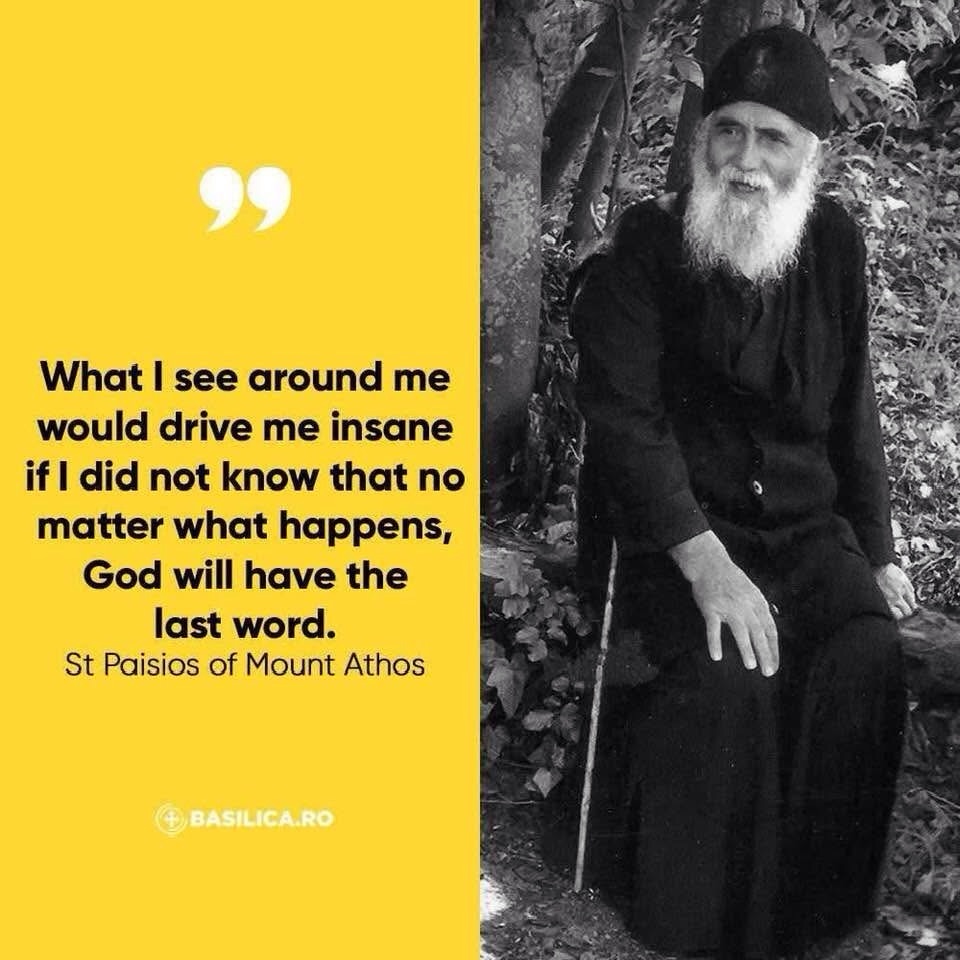



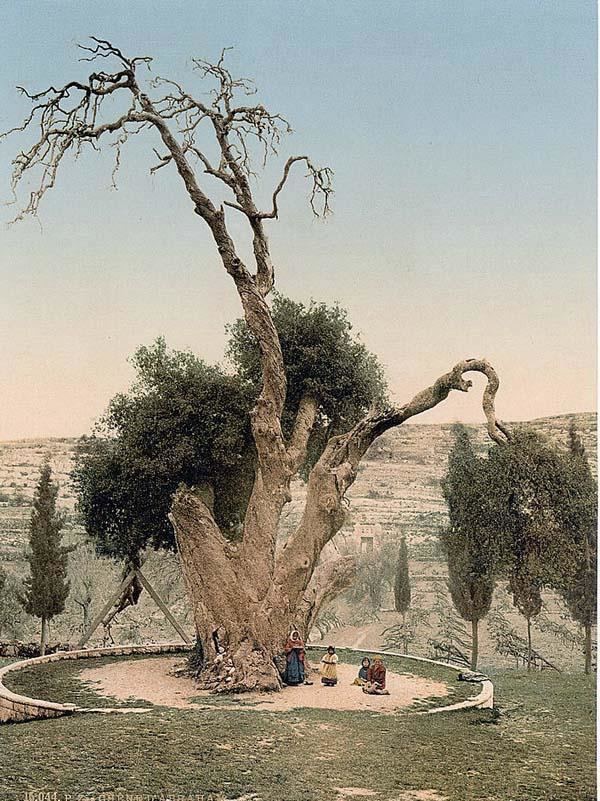


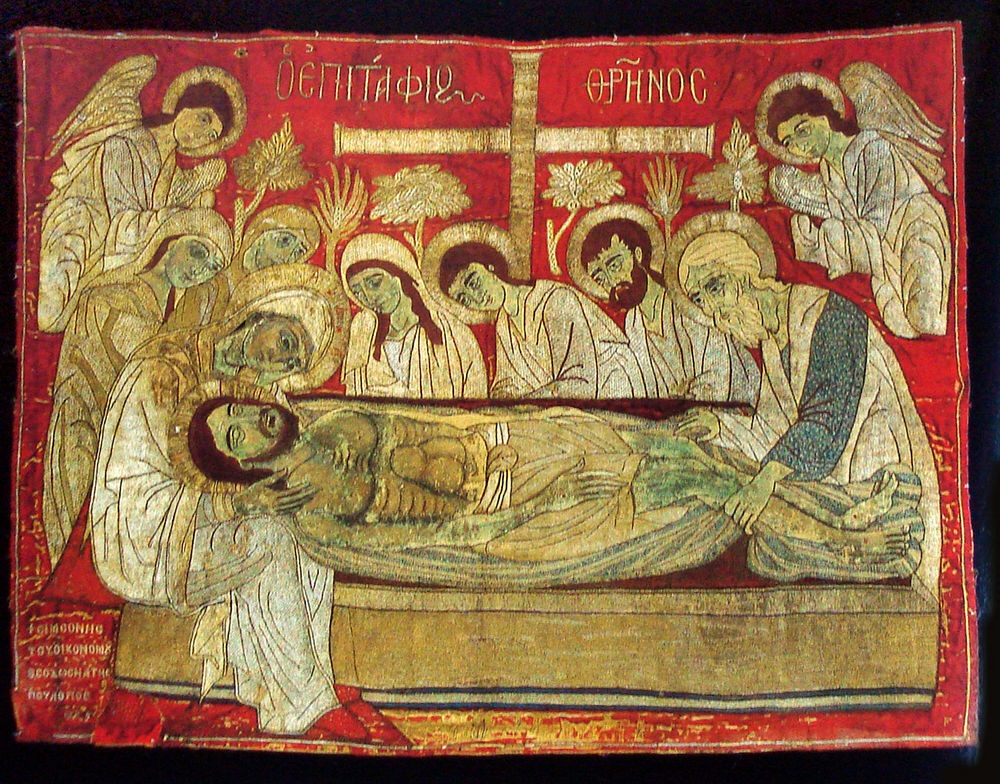
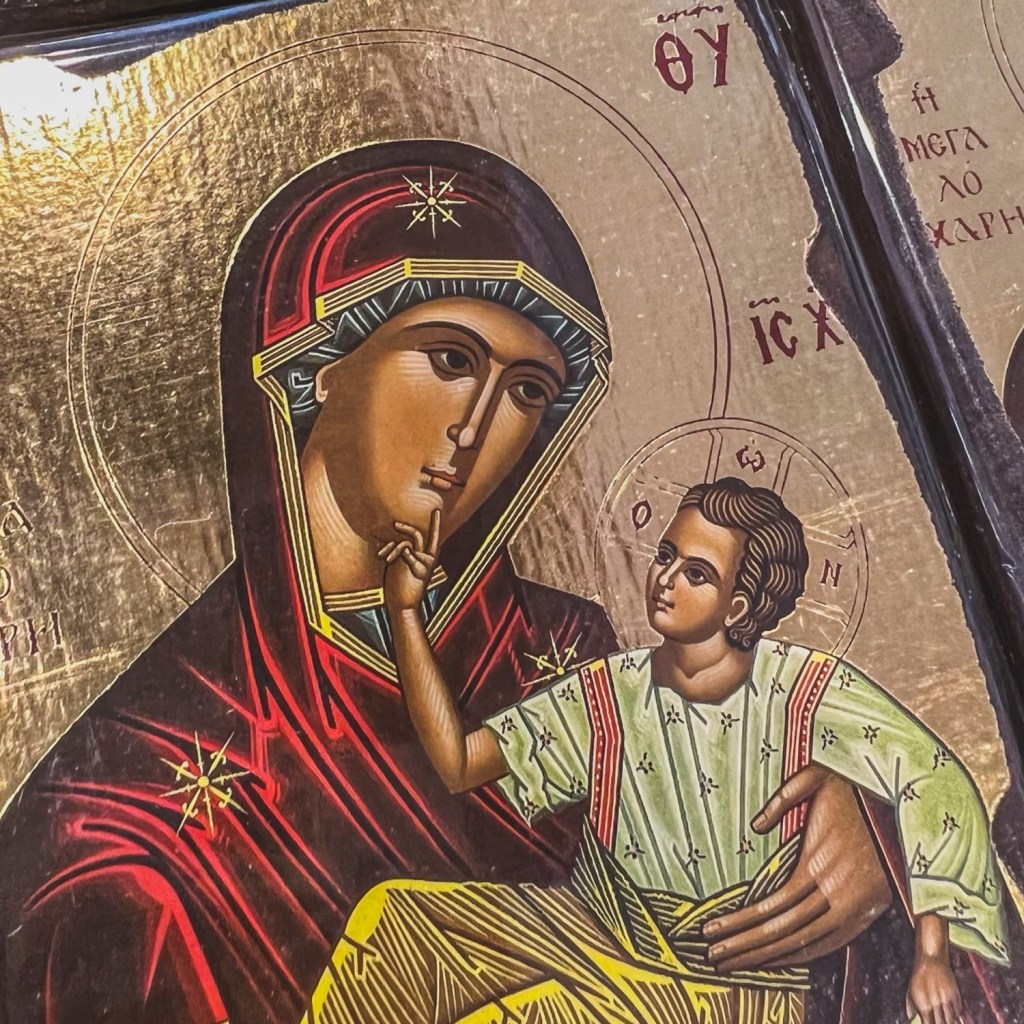
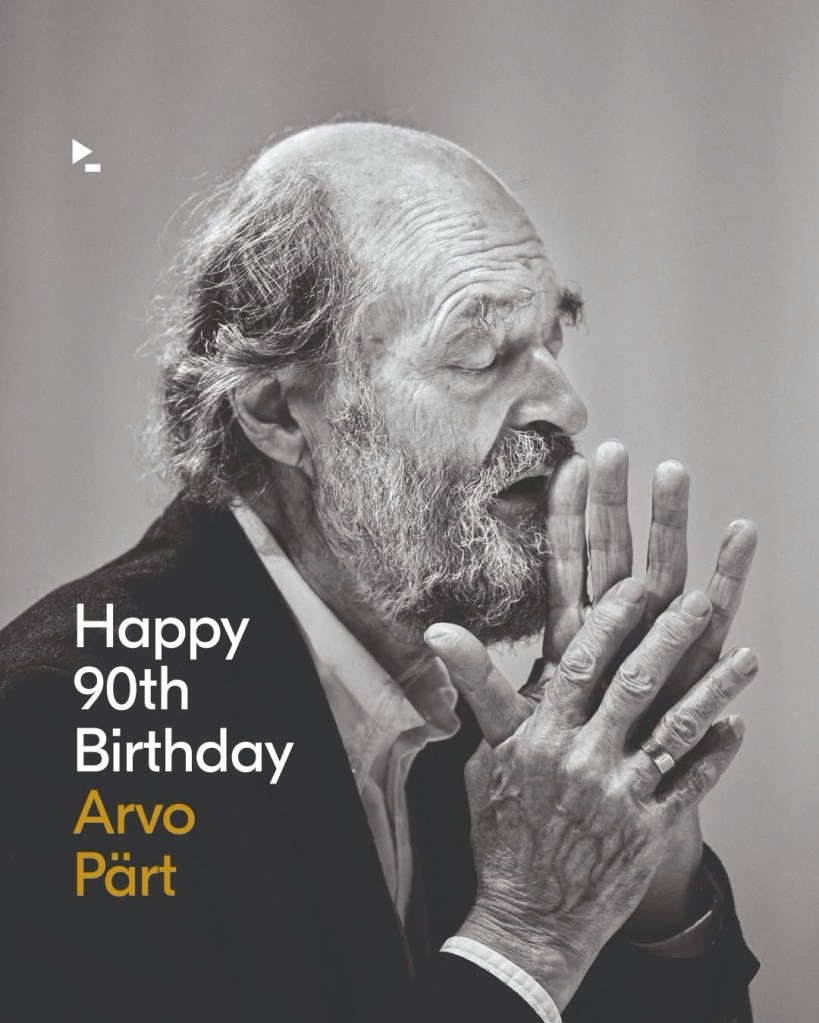

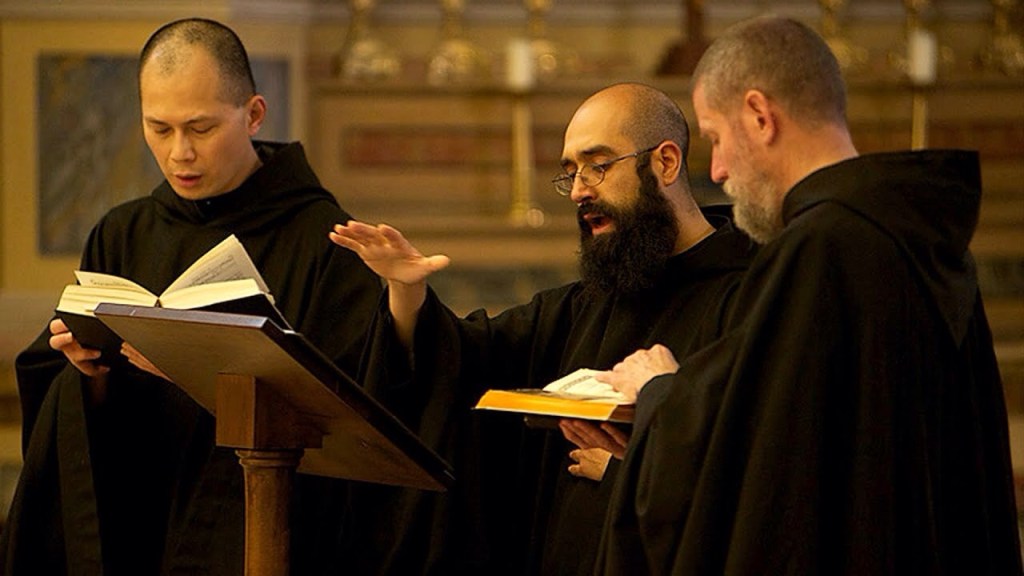

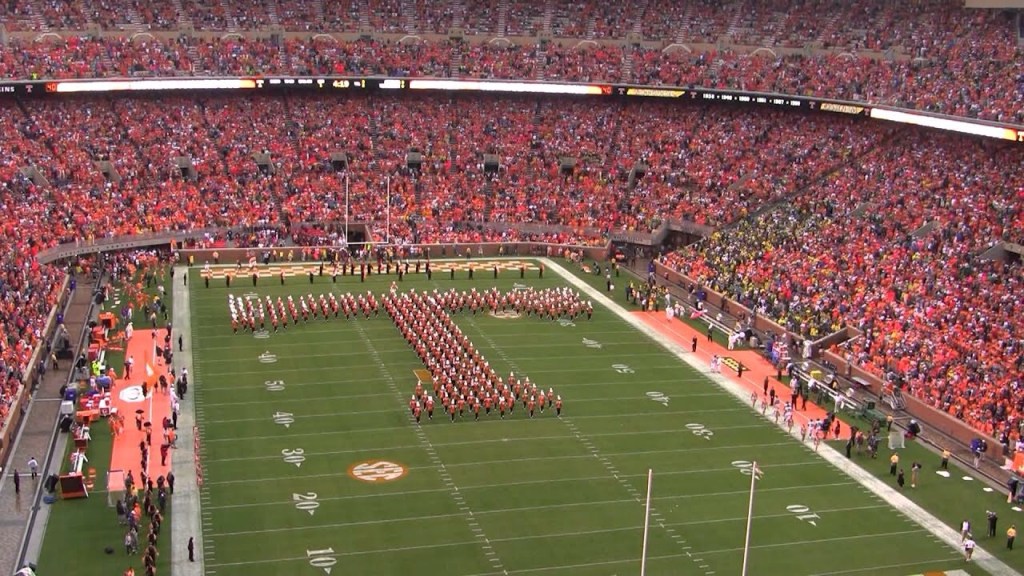


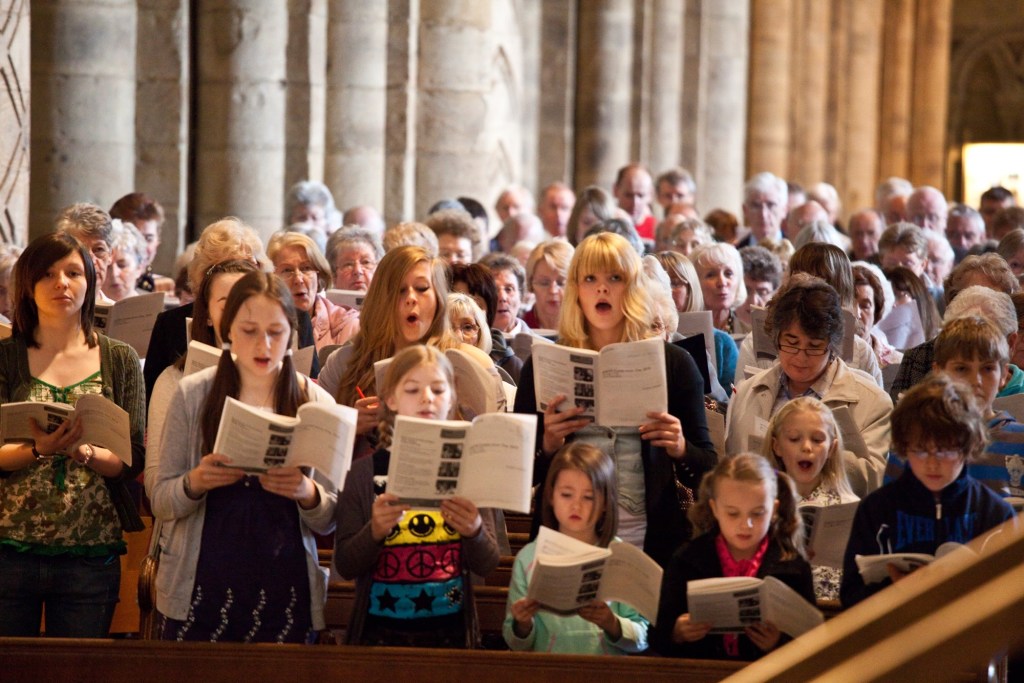
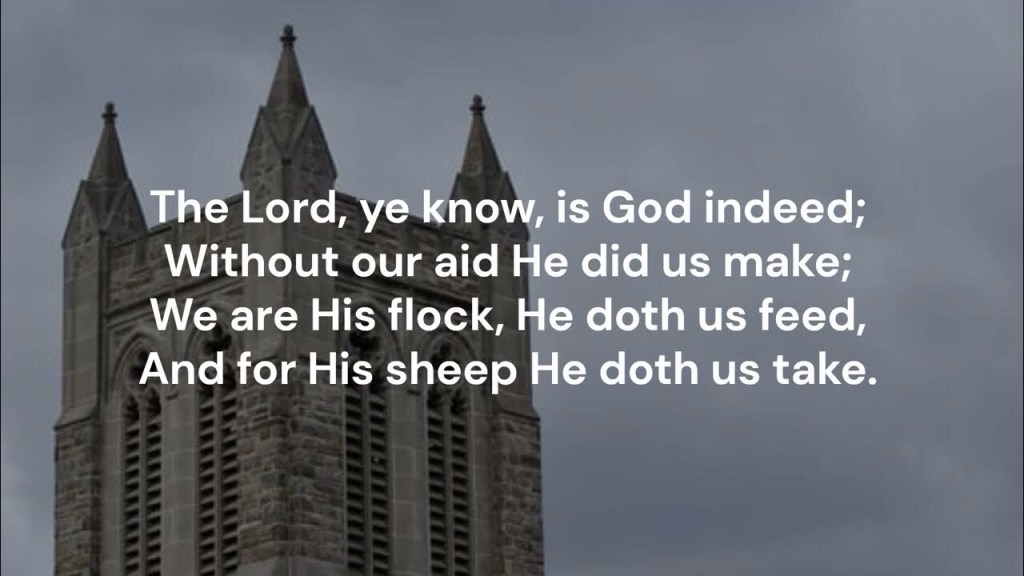
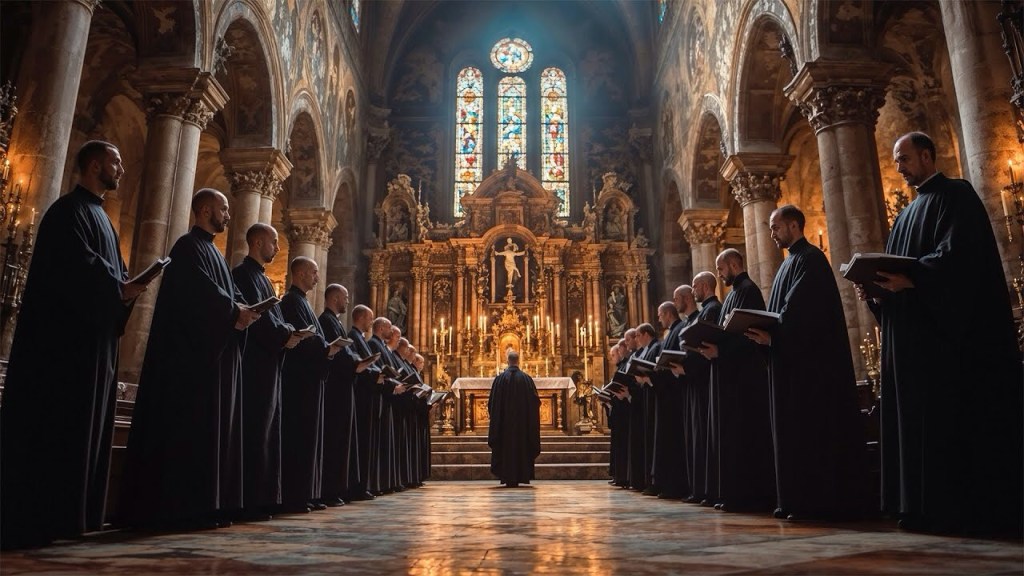
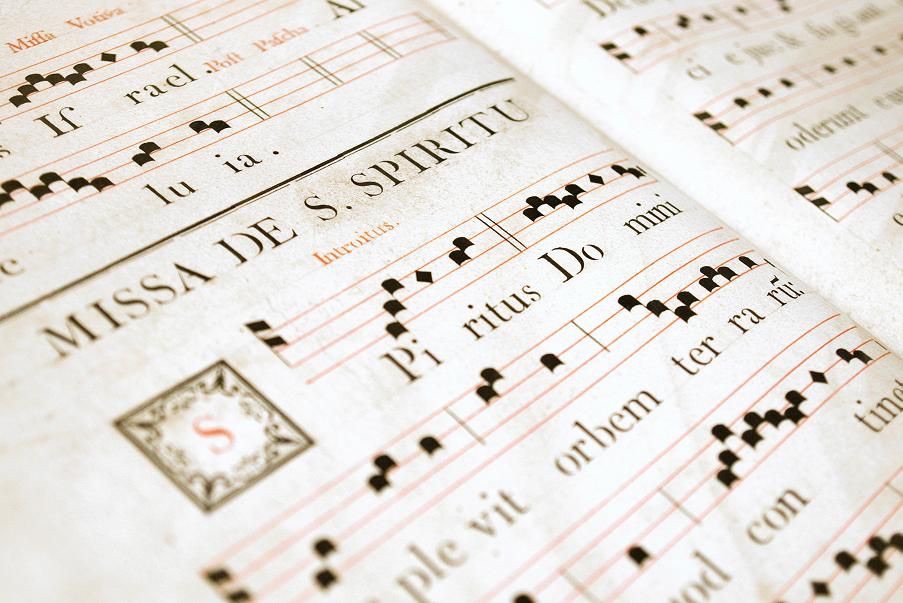


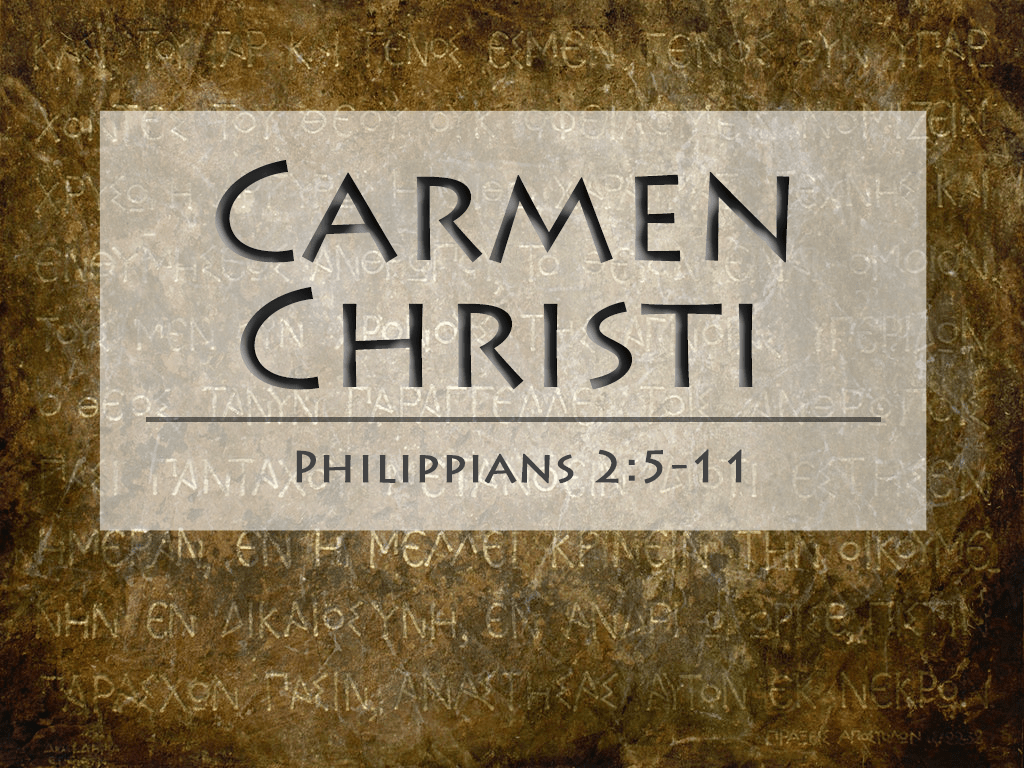



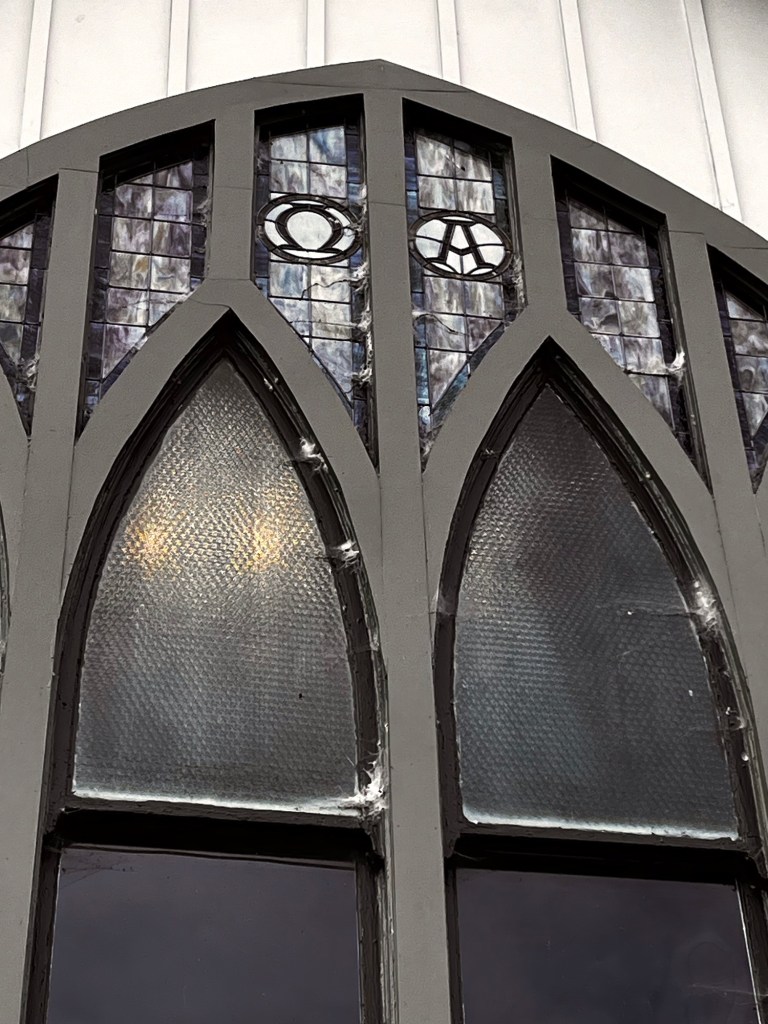


 First Blessings