Thoughts on the Election

No one has sought pastoral counsel from me as the election looms.  That does not surprise me.  The Roman Catholic faithful seem to value the spiritual guidance of their clergy on such matters:  not so Anglicans.  Ironically, the very body who united church and state under the monarch of England, seems most willing to divorce the two in our current milieu.  Perhaps that is uniquely American.

So, no one need read what follows since no one asked for it.  It is likely of limited value, if any at all.  I am writing it primarily for myself; writing helps me sort my thoughts.  I post it on the off chance that it might help another think through these difficult issues.

We must begin with hard truths, ones which we often dismiss to the detriment of clear, biblical thinking.  The United States is not Israel, our President (whoever that may be) is not the son of David, and our god(s) is not the God of Abraham, Isaac, and Jacob.  We are not one nation under God — the motto notwithstanding — but are diverse and separate peoples under many gods and no gods at all.  If we do not understand this, we will not understand the nature of governance required of us.

Israel was, from its inception, a theocracy, a people ruled by God.  There were many vice regents:  patriarchs, priests, prophets, kings.  But God was the monarch.  This has never been the case with the United States, and it is not now.  We can argue over the extent to which the founders envisioned a nation influenced by the Judeo-Christian ethos and ethic, but this always has been a nation under law, under the Constitution, not under God in any meaningful sense.  Our most recent Supreme Court nominee is at least clear about that when she insists that her rulings will be based upon a strict, originalist reading of the Constitution and not upon her personal Christian faith.

Further, the multitude of churches notwithstanding, the United States is religiously pluralistic.  I would go so far as to say idolatrous.  Four gods share sovereignty in our national pantheon:  Mars, the god of power and violence; Mammon, the god of wealth and greed; Eros, the god of unbridled sensuality; and Moloch, the god most associated with child sacrifice.  We are not Israel and we are not the Kingdom of God; we are a pagan nation in which many Christians live.

What follows from these truths as Christians enter the polling place with fear and trembling?

First, we are exiles — resident aliens — in a foreign and pagan land.  Perhaps the most direct instruction on how we are to live as such is found in Jeremiah’s letter to the exiles:

Jeremiah 29:4–7 (ESV): 4 “Thus says the Lord of hosts, the God of Israel, to all the exiles whom I have sent into exile from Jerusalem to Babylon: 5 Build houses and live in them; plant gardens and eat their produce. 6 Take wives and have sons and daughters; take wives for your sons, and give your daughters in marriage, that they may bear sons and daughters; multiply there, and do not decrease. 7 But seek the welfare of the city where I have sent you into exile, and pray to the Lord on its behalf, for in its welfare you will find your welfare.”

Live.  Increase and do not decrease.  Seek the welfare of the city/nation.  Pray to the Lord on its behalf.  I do not believe that either Jeremiah or the exiles held out hope of converting Babylon, of somehow uniting that nation and its people to Israel as god-fearers.  Rather, they sought to live undisturbed lives, to worship their God, and to contribute to the welfare of their families and their communities.  The rest they left to God.  I suggest that this is the way we are to live, though we are also called to proclaim the Gospel not only with our lips, but in our lives.

This is perhaps the most we can expect from our nation now:  to leave us alone, to allow us to practice our faith, and to make possible our welfare and the welfare of our communities — all communities.  These modest — though challenged — goals will inform my voting.  I do not expect — though I pray for — a revival that turns our nation to God.  We have had great revivals, of course, but we have always remained a nation under law (Constitution) and not under God.  I do not look to a President or a party to lead or promote religious revival.

Perhaps the best we can hope for now is that our nation becomes a righteous pagan nation.  What would that look like?  It would look like equal justice for all people; care for the poor, the widow, the orphan, the stranger; restraint in the use of power; sexual morality; recognition of the deceit of our false gods; respect for and protection of all lives; and freedom for the people of God to practice their faith.  It would look like all that Egypt was not before God came in judgment and delivered his people.  It would look like all that Babylon will not be at the end.

No one candidate for President and no one political party embodies all these characteristics, promises all these blessings.  We live in Babylon (or Egypt) and not Israel.  Our President is representative of a political party and not a vice regent of God.  And so election decisions are difficult and complex.  Many faithful Christians will “get it wrong” in the voting booth — whatever that means — though none of us can say with certainty which ones those will be.  Prayer, humility, and faith are required going into the booth.  Prayer, humility, and faith are required coming out of the booth.  And grace — the grace to accept that faithful Christians seeking to honor God in their votes may reach a different decision than us on which candidate and party will guide the United States in becoming a more righteous pagan nation.

In the end, the nations of the earth — all Egypts, all Babylons — will be judged; Revelation 18 is a sobering prophecy.  The United States need not think itself exempt.  But, in the end beyond the end — in the end that is no end — there is yet hope for the healing of the nations:

Revelation 21:22–22:2 (ESV): 22 And I saw no temple in the city, for its temple is the Lord God the Almighty and the Lamb. 23 And the city has no need of sun or moon to shine on it, for the glory of God gives it light, and its lamp is the Lamb. 24 By its light will the nations walk, and the kings of the earth will bring their glory into it, 25 and its gates will never be shut by day—and there will be no night there. 26 They will bring into it the glory and the honor of the nations. 27 But nothing unclean will ever enter it, nor anyone who does what is detestable or false, but only those who are written in the Lamb’s book of life.

22:1 Then the angel showed me the river of the water of life, bright as crystal, flowing from the throne of God and of the Lamb 2 through the middle of the street of the city; also, on either side of the river, the tree of life with its twelve kinds of fruit, yielding its fruit each month. The leaves of the tree were for the healing of the nations. 

Even so, come, Lord Jesus.

Posted in Uncategorized | 3 Comments

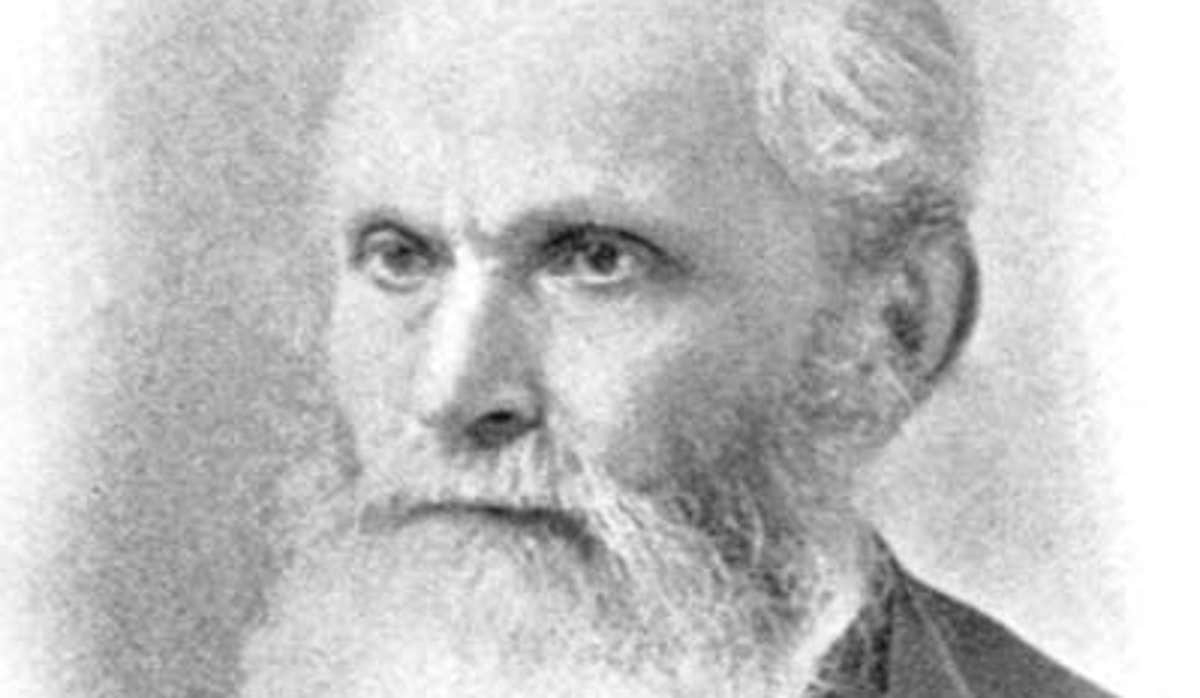
Samuel Joseph Isaac Schereschewsky, Bishop of Shanghai

In the Name of the Father, and of the Son, and of the Holy Spirit.  Amen.

Recently I’ve tried to disentangle myself from some of the Anglican Facebook groups, at least the ones that are hotbeds of controversy, discord, and acrimony, which is to say most of them.  Still, occasionally for reasons I don’t understand, a post from one of those discontinued groups pops up and catches my attention.  Recently, it happened; someone posted this question:

What is the most disappointing aspect of Anglicanism?

You see what I mean?  This question treats a hornets’ nest like a piñata; it is absolutely designed to be incendiary.  So, I just scrolled on by without reading any more, without engaging at all.  But, weak willed and weak minded as I am, I obviously did engage, because here I am talking about it.  And clearly I’ve been thinking about it.

There are so many possible answers to that question.  Don’t get me wrong:  Anglicanism is my home — the place where God has prepared me a room — and I love it.  But, the old home place does need some repair:  walls need painting, the garden could stand weeding, the roof leaks here and there, and crazy Uncle Ed needs a good talking to.  So it is in every part of God’s kingdom here on earth.  Still, the question hangs in the air:

What is the most disappointing aspect of Anglicanism?

I don’t know; there are so many possible answers.  A strange one came to my mind, and I’d like to offer it, not as the most disappointing aspect of Anglicanism, but as — well I think — a serious deficiency of piety nonetheless.  Now, I will acknowledge that many of the great minds of Anglicanism would disagree with what I am about to say:  Cranmer, Jewell, Law, Lewis, Wright.  Nevertheless, I think this is a deficiency of Anglicanism:  its refusal to make saints.  I don’t mean that Anglicanism lacks the power to form people into saints:  hardly.  Anglicanism has produced saints aplenty, and not a few right here among us.  I mean the refusal to recognize the saints it has produced.  Anglicanism lacks a process for canonizing saints.  Have you noticed that the saints we recognize at our Noon Eucharists are all pre-Reformation saints, which means they come from the time before the Great Schism (AD 1054) or else they are Roman Catholic or Orthodox saints:  not a single uniquely Anglican saint among the group.  We honor many modern Anglicans, but we do not call them saints.  Why not?  And, why do I think this is a deficiency?

The Why not? is pretty straightforward, I think.  Anglicanism formed in opposition to the accretions to the faith and abuses of the faith in the medieval Roman Catholic Church, not least the undue emphasis on the saints marked by pilgrimages, relics, and prayers to the saints.  Fair enough.  But surely the baby doesn’t have to be thrown out with the bath, though it often was.  Surely, there is a valid place for saints in the life of the Church.

Here’s why I think that’s important.  Saints bear witness to the truth and power of the Gospel.  The life of a saint is so countercultural — to all cultures of all times — so unexpected and unusual, that it makes no sense unless the person is mad or the Gospel is true.  And even the greatest critics of the Church can’t argue that all our saints are mad.  You’ve heard the old saying, I’m sure:  Truth is stranger than fiction.  Or, as Mark Twain said, “The difference between reality and fiction is that fiction has to make sense.”  That is the essence of the life of a saint:  it is a stranger than fiction; it makes no sense — unless the Gospel is true.

I thought of this as I reflected on the life of Samuel Isaac Joseph Schereschewsky (6 May 1831- 15 October 1906).  Here’s a man that few have ever heard of — of whom I had never heard until recently — who should be acknowledged as an Anglican saint simply because nothing but the truth of the Gospel can explain his life.

Our story starts in Russian Lithuania on 6 May 1831 where a son was born into a pious Jewish family, a son they named Samuel Isaac Joseph Schereschewsky.  Joseph was orphaned at a young age and raised by an elder half-brother.  This brother recognized Joseph’s promise as a student and provided him with a good education, preparing Joseph to become a rabbi.  While Joseph was in rabbinical school someone — God knows his name — gave Joseph a copy of the New Testament in Hebrew from the London Society for Promoting Christianity Amongst the Jews.  Why Joseph even read it only God knows, but as he read it, gradually his certainty grew that this Jesus he met on its pages was the fulfillment of the hope of Israel, that this Jesus he met on its pages was the Messiah for whom he longed.  

After further study in Frankfurt, Germany — where he added German to the Yiddish, Polish, and Russian he already spoke — and after two more years of study at the University of Breslau, Joseph emigrated to the United States in 1854.  A year later he was baptized and began to worship with a Baptist congregation.  He then continued his studies for a time at the Western Theological Seminary of the Presbyterian Church in Pennsylvania before joining the Episcopal Church and transferring to the General Theological Seminary.  His planned two years of study in the seminary didn’t materialize.  Instead, he volunteered for missionary work in China and, upon his ordination to the diaconate in 1859 he shipped out for Shanghai.  Do you begin to see why this story is too strange to be fiction:  a Lithuanian Jew studying for the rabbinate, is converted to Christianity by reading a Hebrew New Testament, travels to the United States for further study, becomes an Anglican, and interrupts his study to travel to China for missionary work?  You can’t make this stuff up; no one would believe it.

Joseph was ordained to the Anglican priesthood in China, transferred to Peking, and in 1861 began translating the Bible into Chinese.  Can you see why he might do that?  It was a New Testament in his own language — Hebrew — through which the Spirit worked for his conversion.  He started his translation with the Psalms, a good Anglican thing to do, and later translated The Book of Common Prayer into Mandarin.

In 1875, Joseph returned to the States for health reasons.  After two years there, Joseph was consecrated as Anglican Bishop of Shanghai (though he had frequently refused consecration) on the condition that the Episcopal House of Bishops would support him in the building of a college in Shanghai.  Two years after his return to Shanghai he founded St. John’s College.  He served as Bishop of Shanghai for six years until he felt compelled to resign for health reason; he had suffered a stoke in 1881.  He returned to the United States with the understanding that, when his health permitted, he would return to China to complete his translation of the Bible.

His health never recovered, but he returned to China regardless in 1895.  Now, get this:  following his stroke he was almost completely paralyzed and his power of speech was all but gone.  Yet, for twenty years — in the States, in China, and in Japan — he continued and completed his work of translating the Old Testament into Mandarin, typing out some two thousand pages with the middle finger of one crippled hand.  Not satisfied with this, he also translated the whole Bible into another traditional Chinese dialect, wenli.  Four years before his death, Joseph said of these efforts, “I have sat in this chair for over twenty years.  It seemed very hard at first.  But God knew best.  He kept me for the work for which I am best fitted.”  This doesn’t make sense to me, unless the Gospel is true.

In 1897 Schereschewsky relocated to Tokyo where he died on 15 October 1906.

I think, just maybe, Anglicanism needs a way to canonize such a man.  His life, like the lives of all saints, bears unimpeachable witness to the truth of the Gospel, because there is no other reasonable explanation for his life.  Schereschewsky’s life, in many ways, parallels the life of another great saint:  Saul of Tarsus.  Both were trained rabbis.  Both were struck down and changed by the word of God:  Paul by the spoken word of Jesus and Joseph by the written word of the New Testament.  Both gave themselves unreservedly to a people not their own for the sake of the Gospel.  Both suffered physical hardships and both recognized God’s providential care in and through what they suffered.  Both served the written word of God:  Paul by writing it and Joseph by translating it.  If Paul is a saint, then why not Joseph?  And, if these men can be, then why not us?

Let us pray.

Collect

O God, in your providence you called Joseph Schereschewsky from his home in Eastern Europe to the ministry of this Church, and sent him as a missionary to China, upholding him in his infirmity, that he might translate the Holy Scriptures into languages of that land.  Lead us, we pray, to commit our lives and talents to you, in the confidence that when you give your servants any work to do, you also supply the strength to do it; through Jesus Christ, our Lord, who lives and reigns with you and the Holy Spirit, one God for ever and ever.  Amen.

(Information taken from Lesser Feasts and Fasts 2000 and from Wikipedia

https://en.wikipedia.org/wiki/Samuel_Isaac_Joseph_Schereschewsky, accessed 10 October 2020.)

Posted in Uncategorized | Leave a comment

Jumpin’ Jehosephat

In the Name of the Father, and of the Son, and of the Holy Spirit.  Amen.

Jumpin’ Jehosephat!  That’s the way I said it when I was a kid, because that’s the way Yosemite Sam said it on the Saturday morning cartoons:  Jumpin’ Jehosephat!  I had no idea then what it meant.  It was just a big word that sounded cool, and you could use it pretty much whenever and however you wanted.  Surprised?  Jumpin’ Jehoseohat!  Angry?  Jumpin’ Jehosephat!  Happy?  Jumpin’ Jehosephat!

It was years before I learned that Jehoshaphat was a ninth century B.C. king of Judah, a good king — which was pretty rare — and one who followed in the righteous ways of his ancestor David and his father Asa.  But the Jumpin’ part?  Well, I’ve never really figured that out.  I’ve read the biblical texts closely looking for something that might explain it, but to no avail.  There’s no running, dancing, or jumping to be found in Jehoshaphat’s story.

So, here recently, I did what you do when you are stumped:  I googled it.  The first recorded use of Jumpin’ Jehosephat is from an 1866 adventure tale — Headless Horseman — written by British author Mayne Reid.  It appears as an exclamation with no particular explanation of its origin.  Somehow it caught on and entered the culture, particularly the pop culture of television sitcoms.  It’s most likely a euphemistic way of implicitly invoking the divine name without explicitly encroaching on its dignity:  “Jumpin’ Jehosephat” instead of “Jesus Jehovah,” much like “O Gosh” instead of “O God” or “Jiminy Cricket” instead of “Jesus Christ.”

I’ve been thinking about all of this recently since our Daily Office readings have camped us out in the life of King Jehoshaphat of Judah.  The preacher in me, wanting to find some good sermon hook, wants to make something out of Jumpin’ Jehoshaphat:  a jump is like a leap and maybe Jehoshaphat made some great leap of faith that I can glom onto for a homily.  But, no:  Jehoshaphat lived a steadily faithful life — a long obedience in the same direction as Eugene Peterson described such a life.  His father Asa had followed the Lord, mainly — not fully, but substantially enough to be considered one of the few righteous kings of Judah.  He had even taken action against his own mama for making “a detestable image of Asherah” (ref 2 Chron 15:16).  At the very end of his life, Asa went off the rails a bit, looking to Syria for protection instead of the Lord and jailing the seer Hanani for reproving him.  And, when he grew seriously ill, Asa refused to call upon the Lord and looked to physicians instead.  So, he died.  Asa’s latter day failures become something of a cautionary tale for his son Jehoshaphat.  

Jehoshaphat begins his reign well:

2 Chronicles 17:3–6 (ESV): 3 The Lord was with Jehoshaphat, because he walked in the earlier ways of his father David. He did not seek the Baals, 4 but sought the God of his father and walked in his commandments, and not according to the practices of Israel. 5 Therefore the Lord established the kingdom in his hand. And all Judah brought tribute to Jehoshaphat, and he had great riches and honor. 6 His heart was courageous in the ways of the Lord. And furthermore, he took the high places and the Asherim out of Judah. 

He appointed officials to take the Book of the Law throughout all the cities of Judah and to teach the people from it.  In an act of discernment Jehoshaphat sought out a true prophet of the Lord, even though he then failed to heed the prophet’s warning.  He established godly justice.

2 Chronicles 19:5–10 (ESV): He appointed judges in the land in all the fortified cities of Judah, city by city, 6 and said to the judges, “Consider what you do, for you judge not for man but for the Lord. He is with you in giving judgment. 7 Now then, let the fear of the Lord be upon you. Be careful what you do, for there is no injustice with the Lord our God, or partiality or taking bribes.” 

8 Moreover, in Jerusalem Jehoshaphat appointed certain Levites and priests and heads of families of Israel, to give judgment for the Lord and to decide disputed cases. They had their seat at Jerusalem. 9 And he charged them: “Thus you shall do in the fear of the Lord, in faithfulness, and with your whole heart: 10 whenever a case comes to you from your brothers who live in their cities, concerning bloodshed, law or commandment, statutes or rules, then you shall warn them, that they may not incur guilt before the Lord and wrath may not come upon you and your brothers. Thus you shall do, and you will not incur guilt. 

This is a good man:  not perfect, but a good man, a righteous king.  As I read his story, though, I keep waiting for the shoe to drop, for Jehoshaphat to go wrong in the end, as his daddy did.  And the opportunity comes, just as it had come for Asa.

2 Chronicles 20:1–3 (ESV): After this the Moabites and Ammonites, and with them some of the Meunites, came against Jehoshaphat for battle. 2 Some men came and told Jehoshaphat, “A great multitude is coming against you from Edom, from beyond the sea; and, behold, they are in Hazazon-tamar” (that is, Engedi). 3 Then Jehoshaphat was afraid…

This is the moment of decision, the moment in which his father Asa had failed and had sought help from Syria instead of from the Lord.  What will the son do?  We pick up the story:

2 Chronicles 20:3–4 (ESV): Then Jehoshaphat was afraid and set his face to seek the Lord, and proclaimed a fast throughout all Judah. 4 And Judah assembled to seek help from the Lord; from all the cities of Judah they came to seek the Lord. 

Jehoshaphat prayed a great prayer — you heard it in our reading this morning — a great prayer remembering the faithfulness of God, confessing his own absolute dependence upon God, and calling out for deliverance from God.  And God answered through the words of a Levite prophet:

2 Chronicles 20:15–17 (ESV): Thus says the Lord to you, ‘Do not be afraid and do not be dismayed at this great horde, for the battle is not yours but God’s. 16 Tomorrow go down against them. Behold, they will come up by the ascent of Ziz. You will find them at the end of the valley, east of the wilderness of Jeruel. 17 You will not need to fight in this battle. Stand firm, hold your position, and see the salvation of the Lord on your behalf, O Judah and Jerusalem.’ Do not be afraid and do not be dismayed. Tomorrow go out against them, and the Lord will be with you.” 

And so it was that Jehoshaphat learned from the failure of his father.  And so it was that Jehoshaphat looked to the Lord.  And so it was that the battle was indeed the Lord’s — that Jehoshaphat’s part was to fast and pray and look on in wonder as the Lord fought for his people.  I love the way Jehoshaphat stood before the enemy armies:

2 Chronicles 20:20–22 (ESV): And they [Jehoshaphat and the army of Judah] rose early in the morning and went out into the wilderness of Tekoa. And when they went out, Jehoshaphat stood and said, “Hear me, Judah and inhabitants of Jerusalem! Believe in the Lord your God, and you will be established; believe his prophets, and you will succeed.” 21 And when he had taken counsel with the people, he appointed those who were to sing to the Lord and praise him in holy attire, as they went before the army, and say, 

  “Give thanks to the Lord, 

for his steadfast love endures forever.” 

22 And when they began to sing and praise, the Lord set an ambush against the men of Ammon, Moab, and Mount Seir, who had come against Judah, so that they were routed. 

This is even better than following bagpipes and drums into battle!  The singers in holy attire — the choir! — led the way.  And it was when they began to sing and praise that the Lord acted to deliver his people.

So, what do I make of this story?  Taken together, the story of father and son, Asa and Jehoshaphat, lays before us the two ways that Scripture and the Fathers so often talk about:  the way of righteousness and the way of disobedience, the way of life and the way of death.  And that poses the challenge:  choose you this day which way you will walk.  Speaking as an elder in the faith myself — that is, as someone who is no longer young — I find it significant that this decision comes to both father and son in the waning days of their reigns and lives, at a time when power may be fading, when personal resources are diminishing.  What will you do as your time grows short?  When your own power and options are ebbing, can you acknowledge your absolute dependence upon the Lord?  Can you believe that, just as he has always been faithful, he will be faithful to the end and beyond?  This is an old man’s story and challenge.

But, there’s more here than that.  There is the response of leader and people when confronted with insurmountable threat.  Well, you can see where I might take this, right?  Our country, our world, is a mess.  Frankly, the difficulties we face seem to me insurmountable:  global pandemic, racism and violence, political and social divisions, economic downturn, natural disasters, climate change, international tensions, and the list goes on.  I have never been more pessimistic about the state of the world than I am now; of course, I’ve never been as old as I am now, and this story suggests that might have something to do with my attitude.  Don’t get me wrong:  I’m pessimistic that humans, in their own power and wisdom, have any chance to solve these problems.  That Enlightenment ship has sailed and sunk.  But, I am hopeful — as much or more than ever — because Christ is risen victorious and the battle is the Lord’s.  Now look:  I don’t expect our President — Donald Trump now and whoever will be elected in November — to call for national prayer and fasting and to humble himself publicly before the Lord.  Not going to happen.  But, I do expect the Church to do these things.  I do expect the Church to lead the way, to sing to the Lord and to praise him in holy attire, to go before the nations and say:

Give thanks to the Lord,

     for his steadfast love endures forever.

And, when we begin to sing and praise, to bow down and worship, the Lord just might act to deliver us — if not from our problems, then at least in and through them and out the other side.  He will act; he has acted.  The battle is his, and he is faithful.  In fact, we might even be surprised at the wonders we see.  Jumpin’ Jehosephat!

Posted in Uncategorized | Leave a comment

I’m Tired, Boss

A Homily for ADOTS Morning Prayer:  25 September 2020

(Hebrews 13:1-5)

In the Name of the Father, and of the Son, and of the Holy Spirit.  Amen.

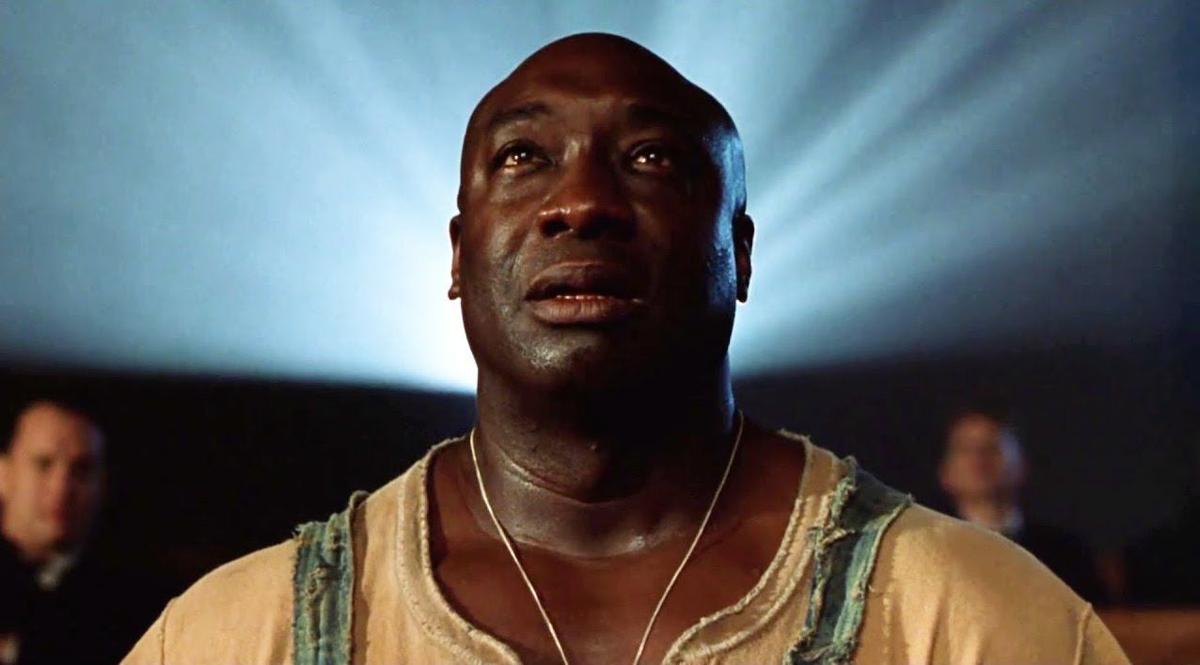
“I’m tired, boss. Tired of being on the road, lonely as a sparrow in the rain. I’m tired of never having me a buddy to be with to tell me where we’s going to, coming from, or why. Mostly, I’m tired of people being ugly to each other. I’m tired of all the pain I feel and hear in the world…every day. There’s too much of it. It’s like pieces of glass in my head…all the time. Can you understand? …”

You may recognize that as a quote from the Stephen King character, John Coffey, in the novel and film The Green Mile.  Coffey is a giant of a black man:  simple-minded, gentle, gifted with miraculous powers, and awaiting execution for a brutal crime he did not commit.  I can’t understand the tiredness he felt, but something deep within me resonates with his sentiment:  “I’m tired, boss…Mostly, I’m tired of people being ugly to each other.”  

“Being ugly” is a Southern colloquialism; others may use it, but it’s ours.  It has nothing to do with looks and everything to do with behavior.  Pretty people can be ugly and often are, as if their good looks give them the privilege and right to be nasty to other people.  That’s what being ugly means:  being nasty or hateful or rude or mean or dismissive or any of a number of other unpleasant behaviors.  And like John Coffey, I’m tired of people being ugly to each other.

Recently, I left an Anglican Facebook group because I got tired of people being ugly to each other over things both grand and small, important and trivial, relevant and arcane — really over everything and nothing at all.  Now, I’m not saying I am morally superior to any of them.  I felt the pull toward being ugly myself and left the group — hopefully — before I gave in to that temptation.  I’m tired of people being ugly to each other.

I’m tired of people being ugly to each other over whether to wear a mask or not.

I’m tired of people being ugly to each other over issues of racial justice and which lives matter.

I’m tired of Trump and Biden and Pelosi and McConnell being ugly to each other — and to all of us — and I’m tired of their supporters and political parties being ugly to each other.

I’m tired of CNN being ugly to conservatives and Fox being ugly to liberals.

I’m tired of Protestants being ugly to Catholics and Catholics being ugly to Protestants.

I’m tired of Reformed Anglicans being ugly to Anglo-Catholics and both those groups being ugly to Charismatic Anglicans.

I’m tired, boss.  Mainly, I’m tired of people being ugly to each other.  Can you understand?

I’m tired because this is not the way it’s supposed to be.  I’m tired because it goes against the grain of the Spirit within each us, even as it gratifies the darker impulses within each of us.  I’m tired because this is not the better way, the true way of Christ.  But this is:

Hebrews 13:1–5 (ESV): Let brotherly love continue. 2 Do not neglect to show hospitality to strangers, for thereby some have entertained angels unawares. 3 Remember those who are in prison, as though in prison with them, and those who are mistreated, since you also are in the body. 4 Let marriage be held in honor among all, and let the marriage bed be undefiled, for God will judge the sexually immoral and adulterous. 5 Keep your life free from love of money, and be content with what you have, for he has said, “I will never leave you nor forsake you.” 

If there is an opposite virtue to the vice of being ugly, it must be showing brotherly love.  Saint Paul, or whoever wrote this epistle, doesn’t waste any time telling us about the nature of brotherly love; he assumes we know.  Most of us do.  Most of us have a sibling or a friend closer than a brother, someone who is like a second self to us, someone who could ask anything of us and it not be too much:  a Jonathan to David, a Mary and Martha to Lazarus.  Think about that person.  Can you imagine yourself being ugly to him, to her?  Perhaps, because we are fallen creatures.  But how it would grieve you until you had made amends and restored the relationship.  So, Paul, or whoever wrote this epistle, wastes no time describing brotherly love.  He simply says, “Let brotherly love continue.”  This is the characteristic he’s interested in:  the persistence, the resilience, the relentlessness of brotherly love.  Let brotherly love continue.

Do not neglect to show hospitality to strangers.  Now, we move outward from those who are like brothers to us, to those we don’t know, to those who might become brothers.  Such hospitality is a solemn duty in Benedictine monasteries; St. Benedict included it in his Rule, in Chapter 53:

Let all guests who arrive be received like Christ, 

for He is going to say, 

“I came as a guest, and you received Me” (Matt. 25:35).

And to all let due honor be shown,

especially to the domestics of the faith and to pilgrims.

How can we be ugly to the one in front of us, if we are obliged to receive him or her as Christ himself, especially if that one belongs to the household of faith?  Mother Teresa considered and treated the destitute of Calcutta as if they were Christ in the distressing disguise of the poor.  That’s true Christian hospitality:  showing the stranger, the outcast, the despised the same care you would show Christ himself.  Do not neglect to show hospitality to strangers.

Remember those who are in prison, as though in prison with them.  I doubt that Saint Paul, or whoever wrote this epistle, had murderers, rapists, drug dealers, thieves, and other assorted miscreants in mind.  He was probably thinking about those who were imprisoned for the faith.  I could be wrong about this, but in context I think it makes sense.  Remember them.  Remember doesn’t mean simply to call to mind after a state of forgetfulness.  When God remembered the Hebrews in Egypt he delivered them from their captivity.  Remember means to take whatever action you can to deliver, restore, and comfort.  In Paul’s day it meant to send food to the prisoners, to visit them, to supply their physical, emotional, and spiritual needs.  In our day it might look like supporting organizations that work on behalf of persecuted Christians, writing letters to petition governments for release of wrongly incarcerated Christians, lobbying our own government to allow immigration of persecuted Christian minorities.  In every day it means praying for those in prison as we would pray for ourselves if we were there with them.  And, I really might be wrong about the murderers and rapists.  I know a group in Knoxville — KnoxCAM, the Knoxville Christian Arts Ministries — who takes the love of God into regional correction facilities by proclaiming the Gospel through art and drama and music and dance.  Prisoners have become brothers and sisters in Christ through that ministry.  These artists, too, are remembering those who are in prison, as though in prison with them. 

Let marriage be held in honor…for God will judge the sexually immoral and adulterous.  What’s the big deal about sex?  Why does God seem so interested in what goes on between consenting adults in the privacy of their bedrooms?  Because, as Saint Paul tells us, marriage is an icon of the relationship between Christ and the Church:  husbands loving their wives with the self-sacrificing love of Christ for the Church and wives being solely devoted to their husbands as the Church must be solely devoted to Christ.  In this allegorical image, sexual immorality is idolatry or apostasy.  But, there’s something else, too.  One of the worst ways of being ugly to a person is to use that person, to treat that person as something less than a person.  Sexual immorality does precisely that:  pornography, casual sex (whatever that means), coerced sex, prostitution — all of these treat the other, an image bearer of God, as a body to be used for one’s own ends.  Sexual immorality holds true commitment, full self-giving, at arm’s length.  It may, in some cases, seem beautiful, but it masks ugliness.

Keep your life free from love of money.  One of the memes of this time of Covid-19 says, We’re All In The Same Boat.  That’s a lie.  We’re all in the same flood, perhaps, but not in the same boat.  The rich are riding out the flood in yachts, the middle class on pontoon boats, and the poor are clinging to debris in the water just trying not to drown.  But, the poor are drowning by the score anyway.  They are the low-paid essential workers who must risk their health and the health of their families to serve the rest of us.  They are the ones most at risk of eviction, the ones most likely to have no health insurance, the ones infected at the highest rates, and the ones least likely to survive.  Here is the truth we all know, the truth that is crystal clear at the moment:  our society is based on love of money; that is the nature of capitalism.  It must not be so among us, not in the Church.  Keep your life free from the love of money.

“I’m tired, boss. Tired of being on the road, lonely as a sparrow in the rain. I’m tired of never having me a buddy to be with to tell me where we’s going to, coming from, or why. Mostly, I’m tired of people being ugly to each other. I’m tired of all the pain I feel and hear in the world…every day. There’s too much of it. It’s like pieces of glass in my head…all the time. Can you understand? …”

Are you tired of people being ugly to each other?  There’s a better way.  Amen.

Posted in Uncategorized | Leave a comment

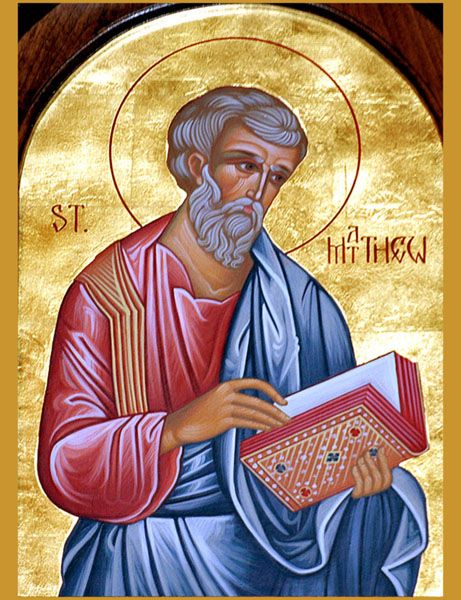
Feast of Saint Matthew

Collect

Lord Jesus, you called Matthew from collecting taxes to become your apostle and evangelist:  Grant us the grace to forsake all covetous desires and inordinate love of riches, that we may follow you as he did and proclaim to the world around us the good news of your salvation; for with the Father and the Holy Spirit you live and reign, one God, now and for ever.  Amen.

In the Name of the Father, and of the Son, and of the Holy Spirit.  Amen.

Have you ever known someone who jumps on every bandwagon, who embraces every new fad that comes along, who always acts quickly and apparently without deep thought — a person with little concept of stability? “This is the greatest thing,” he/she says, and you’re thinking, “Yeah, the greatest thing since the last greatest thing you found and before the next greatest thing you’ll move on to.”  Change:  in our modern, first-world setting, we can do change; change is easy because we have expansive options.  Don’t like your boss?  Quit:  there are other jobs out there.  Tired of your wife or husband?  Try a no-fault divorce — irreconcilable differences or some such thing.  Disappointed in your church?  Leave.  There’s a church on every corner; you might even want to try a totally different denomination or even a new faith to see what it has on offer.

This ability to change and to choose — at least readily and easily — is relatively new to the human experience, yet another mixed blessing of the Enlightenment.  Even now it’s limited in scope and extent; the developing world knows little of it, nor do those burdened under totalitarian regimes.  It is primarily a Western, first world, democratic phenomenon. It seems natural to us, a self-evident truth: the right to life, liberty, and the pursuit of happiness.

Perhaps this is even the lens through which we read the calling of Matthew:

Matthew 9:9 (ESV): As Jesus passed on from there, he saw a man called Matthew sitting at the tax booth, and he said to him, “Follow me.” And he rose and followed him. 

Jesus’ bandwagon rolls by and Matthew jumps on it.  Is that it?  Is it as simple as that?  “I’ll try this for awhile, see what Jesus has to offer.  If he’s not the real deal, I can always find another job or maybe even go back to collecting taxes.”  Hardly.  Not in the Roman world Matthew inhabited.  This was the end of life as he knew it, and there was no going back.  Options did not abound for someone like Matthew.  Choosing was not something a tax collector did, and change was not really a viable option.  And yet Matthew did choose; he chose Jesus.  Matthew did change, did exchange the economic stability of the tax booth for the vagaries of discipleship.  That’s no small thing, and we are left wondering why he did it.  I don’t intent to play biblical psychologist and try to unearth Matthew’s emotional state or psychic motivations.  But his own writing — its structure and organization — does give us some important insight to this change.

Consider the way Matthew orders his account.  Chapters 5-7 present the Sermon on the Mount, Jesus’ great manifesto of the Kingdom of God.  For depth and breadth, for truth and beauty, there was nothing like it before and nothing like it since.  Jesus is the fulfillment of Moses and this is the fulfillment of the Law and the Prophets.  

Chapter 8 focuses on Jesus’ power to heal and on his authority to command nature.  It begins with a leper:

Matthew 8:1–3 (ESV): When he came down from the mountain, great crowds followed him. 2 And behold, a leper came to him and knelt before him, saying, “Lord, if you will, you can make me clean.” 3 And Jesus stretched out his hand and touched him, saying, “I will; be clean.” And immediately his leprosy was cleansed. 

As a physical condition, leprosy was devastating.  But — you know this — it was also devastating from social and spiritual perspectives.  A leper was an outcast from society and could not enter the Temple to worship.  Notice what the leper says to Jesus:  “Lord, if you will, you can make me clean.”  I don’t want to make more of this than is warranted, but the leper did not ask to be healed; he asked to be made clean, which would allow him to go home, allow him to go to Temple.  Of course that required healing, but it was being made whole socially and spiritually that he longed for.  Is Matthew telling us something here?  Is he explaining his own motivation?  As a tax collector he was a social pariah in his community.  He could go to Temple, but his welcome was uncertain.  Remember the Pharisee in the Temple treasury who thanked God aloud that he was not like this tax collector.

Then, still in chapter 8, comes the tale of the Centurion who asks Jesus to heal his servant:

Matthew 8:5–12 (ESV): When he had entered Capernaum, a centurion came forward to him, appealing to him, 6 “Lord, my servant is lying paralyzed at home, suffering terribly.” 7 And he said to him, “I will come and heal him.” 8 But the centurion replied, “Lord, I am not worthy to have you come under my roof, but only say the word, and my servant will be healed. 9 For I too am a man under authority, with soldiers under me. And I say to one, ‘Go,’ and he goes, and to another, ‘Come,’ and he comes, and to my servant, ‘Do this,’ and he does it.” 10 When Jesus heard this, he marveled and said to those who followed him, “Truly, I tell you, with no one in Israel have I found such faith. 11 I tell you, many will come from east and west and recline at table with Abraham, Isaac, and Jacob in the kingdom of heaven, 12 while the sons of the kingdom will be thrown into the outer darkness. In that place there will be weeping and gnashing of teeth.”

Once again, this is the story of an outsider who is brought inside through his faith and the Lord’s mercy, an outsider whose faith exceeds that of Israel.  And notice the parable Jesus employs:  the outsider is invited to feast at table with Abraham, Isaac, and Jacob in the kingdom, while the insiders are thrown out into the darkness.  Hold that parable in mind.

In chapter 9, some people bring a bed-ridden paralytic to Jesus.  Before anyone speaks, Jesus takes the initiative and says, “Take heart, my son; your sins are forgiven.”  Outrageous, blasphemous unless true.

Matthew uses these stories — the Sermon on the Mount, the cleansing of the leper, the welcome of the Centurion to the patriarchal banquet, and the forgiveness of the paralytic — Matthew uses these stories as prelude to his own call:

Matthew 9:9 (ESV): As Jesus passed on from there [from the healing of the paralytic], he saw a man called Matthew sitting at the tax booth, and he said to him, “Follow me.” And he rose and followed him.

In structuring his Gospel this way, I wonder if Matthew is trying to explain himself to his readers.  I wonder if he is trying to tell us that his decision to follow Jesus wasn’t impetuous or foolhardy.  I wonder is he is saying something along these lines:

I wanted some truth and some beauty — something beyond the power and greed of Rome, something beyond my own power and greed — something like the Sermon on the Mount.

I wanted to be cleansed like the leper, to be part of a community again, to be able to worship again.

I wanted to be welcomed at table in the kingdom of God, just like that foreigner, the Centurion.

I wanted to be forgiven just like the paralytic.

Matthew 9:9 (ESV): As Jesus passed on from there, he saw a man called Matthew sitting at the tax booth, and he said to him, “Follow me.” And he rose and followed him.

Now, if I read the Gospel right, here’s a clue.  What’s the very first thing Matthew did upon following Jesus?  He hosted a banquet.  He sat down at table with Jesus in the kingdom of God, as someone who had heard the truth, as someone who had been cleansed and welcomed into community, as someone whose sins had been forgiven, as an outsider welcomed to Abraham’s table.

The account of that banquet is telling:

Matthew 9:10–13 (ESV): And as Jesus reclined at table in the house, behold, many tax collectors and sinners came and were reclining with Jesus and his disciples. 11 And when the Pharisees saw this, they said to his disciples, “Why does your teacher eat with tax collectors and sinners?” 12 But when he heard it, he said, “Those who are well have no need of a physician, but those who are sick. 13 Go and learn what this means: ‘I desire mercy, and not sacrifice.’ For I came not to call the righteous, but sinners.” 

Who receives an invitation?  Tax collectors and (other) sinners.  Who is excluded?  The Pharisees, the self-styled sons of the kingdom.  This is Jesus’ parable enacted, Jesus’ parable incarnate:  “Many will come from east and west and recline at table with Abraham, Isaac, and Jacob in the kingdom of heaven, while the sons of the kingdom will be thrown into the outer darkness” (Mt 8:11-12).

This is Matthew’s story as he told it himself.  I think he wanted us to know his story, and I think he wanted us to know that this could be our story, as well.

Looking for truth and beauty?  Follow Jesus.

Looking for true community, true fellowship, true worship?  Follow Jesus.

Looking to sit at table in the kingdom of God?  Follow Jesus.

Looking to have your sins forgiven?  Follow Jesus.

Matthew 9:9 (ESV): As Jesus passed on from there, he saw a man called Matthew sitting at the tax booth, and he said to him, “Follow me.” And he rose and followed him.

Amen.

Posted in Uncategorized | Leave a comment

Slave Labor

   In the Name of the Father, and of the Son, and of the Holy Spirit.  Amen.

The Bible is a difficult book:  complex, confounding, challenging.  Anyone who tells you differently has never read it, never understood it, or never taken it seriously.  It will bring you to your knees in repentance, and it will raise you to your feet in outrage.  There are passages that I wish had never made it past the editor, and there are passages to which I can only respond with great difficulty, “Thanks be to God.”  And yet, these very passages are the ones that I need to cast down the idols I have created, to destroy the  false images of God I have cobbled together from my favorite highlighted and underlined verses.  These difficult texts reveal some aspect of the nature of God or some depth of human sin that I would miss without them.  They are needful even if unwelcome.

The morning reading from 1 Kings is a case in point:

15 And this is the account of the forced labor that King Solomon drafted to build the house of the LORD…

20 All the people who were left of the Amorites, the Hittites, the Perizzites, the Hivites, and the Jebusites, who were not of the people of Israel — 21 their descendants who were left after them in the land, whom the people of Israel were unable to devote to destruction — these Solomon drafted to be slaves, and so they are to this day (1 Kings 9:15a, 20-21, ESV throughout).

Solomon’s Temple, the House of the Lord, the meeting place of heaven and earth where God’s presence dwelt among his people, was built with slave labor:  with slave labor.  Do you find that disturbing?  I do.  And, the story grows even darker if you follow it back in time some two centuries.  These enslaved peoples — the Amorites, the Hittites, the Perizzites, the Hivites, and the Jebusites — were the remnant, were all who were left, of the seven Canaanite tribes devoted for absolute destruction during Joshua’s conquest of Canaan:  genocide for the fathers, slavery for their children.  Do you find that disturbing?  I do.

Go further back still into the age of pre-history and you will find the origin of this antipathy toward the Canaanites.

Genesis 9:18–25 (ESV): The sons of Noah who went forth from the ark were Shem, Ham, and Japheth. (Ham was the father of Canaan.) 19 These three were the sons of Noah, and from these the people of the whole earth were dispersed.

20 Noah began to be a man of the soil, and he planted a vineyard. 21 He drank of the wine and became drunk and lay uncovered in his tent. 22 And Ham, the father of Canaan, saw the nakedness of his father and told his two brothers outside. 23 Then Shem and Japheth took a garment, laid it on both their shoulders, and walked backward and covered the nakedness of their father. Their faces were turned backward, and they did not see their father’s nakedness. 24 When Noah awoke from his wine and knew what his youngest son had done to him, 25 he said,

“Cursed be Canaan;

a servant of servants shall he be to his brothers.”

And there it is:  Noah’s son Ham dishonored his father and the fate of seven nations was sealed:  genocide and slavery.  Do you find that disturbing?  I do.

If you don’t find this story disturbing, then nothing that follows is likely to make sense to you.  If you do find the story disturbing, what follows may still not make sense to you, but I think it is a biblical answer — at least a partial answer — to a few of the difficult questions this story raises.

Let’s start here:  genocide and slavery are the results of human sin, always and everywhere they appear.  There was no place for them in God’s good creation and there will be no place for them in God’s renewed creation.  There is no place for them now in the Kingdom of God.  That God commanded the destruction of the Canaanites is a confusing example of God drawing straight with the crooked lines of human sin, of God using fallen men and women in their fallen ways to nonetheless accomplish his good and perfect will of the restoration of all things.  I do not know how this will happen.  But, as Dostoevsky writes in The Brothers Karamazov:

I believe like a child that suffering will be healed and made up for, that all the humiliating absurdity of human contradictions will vanish like a pitiful mirage, like the despicable fabrication of the impotent and infinitely small Euclidean mind of man, that in the world’s finale, at the moment of eternal harmony, something so precious will come to pass that it will suffice for all hearts, for the comforting of all resentments, for the atonement of all the crimes of humanity, of all the blood they’ve shed; that it will make it not only possible to forgive but to justify all that has happened.

I might nuance some fine points of Dostoevsky’s theology, but the heart of his statement is correct:  God will redeem this story of the Canaanites, will put to rights both the genocide and the slavery, not by condoning them or by dismissing them but by repudiating them, judging them, and redeeming them.  I believe this, in part, because this redemption has already begun.

The morning reading from Hebrews points the way forward.  The earthly tent of meeting — whether it was the Tabernacle wrought through the inspired craftsmanship of Bezalel and Aholiab or Solomon’s Temple exacted from the labor of post-genocidal slaves — the earthly tent of meeting spoke of the presence of God among his people, yes, but it shouted of the separation of God from his people.

6 These preparations having thus been made, the priests go regularly into the first section [the Holy Place], performing their ritual duties, 7 but into the second [the Most Holy Place] only the high priest goes, and he but once a year, and not without taking blood, which he offers for himself and for the unintentional sins of the people.  8 By this the Holy Spirit indicates that the way into the holy places is not yet opened as long as the first section is still standing (Heb 9:6-8). 

The way into the presence of God is not open as long as the former Tabernacle, the former Temple is still standing.  These served only as a reminder of the sin of Israel.  No  house built with slave labor is a fit meeting place for God and man.  And that means that no house built with human hands is a fit meeting place for God and man because all those who build it are slaves to sin.  Every human place of worship was built by slaves to sin as a reminder of sin.  But:

Hebrews 9:11–14 (ESV): But when Christ appeared as a high priest of the good things that have come, then through the greater and more perfect tent (not made with hands, that is, not of this creation) 12 he entered once for all into the holy places, not by means of the blood of goats and calves but by means of his own blood, thus securing an eternal redemption. 13 For if the blood of goats and bulls, and the sprinkling of defiled persons with the ashes of a heifer, sanctify for the purification of the flesh, 14 how much more will the blood of Christ, who through the eternal Spirit offered himself without blemish to God, purify our conscience from dead works to serve the living God. 

Through the greater and more perfect tent (not made with hands, that is, not of this creation) Christ entered once for all into the holy places.  The more perfect tent, the more perfect dwelling place of God with man, was Christ himself whose person was not made with hands, whose divine nature was not created.  And here images rush together and intersect to create a matrix of symbolic meaning beyond full human comprehension.  I’ve argued that no temple built by slave labor could be a fitting meeting place for God and man.  And yet, in the divine irony of God, his Son comes as that perfect meeting place — God with us — but, get this, he comes in the form of a slave, humbling himself by becoming obedient to the point of death, even death on a cross (cf Phil 2:7 ff).  A divine slave comes to destroy the Temple built by slave labor so that we might have access to God the Father through him, freed from our slavery to sin.  This is judgment against genocide and slavery and the sin that gave rise to them.  This is the inauguration of Dostoevsky’s vision of the healing of all human suffering and the eternal harmony to be revealed in Christ at the world’s finale.

I want to speak beautifully, compellingly of this, but my words are too small.  I just know that there’s something here — someone here — and that that Someone is Christ, to whom be the glory and honor now and unto the ages of ages.  Amen.

Posted in Uncategorized | Leave a comment

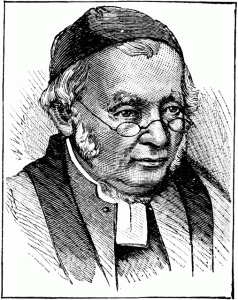
Edward Bouverie Pusey, Priest and Teacher of the Faith

         O God, our Heavenly Father, you raised up your faithful servant Edward Bouverie Pusey to be a pastor in your Church and to feed your flock:  Give abundantly to all pastors the gifts of your Holy Spirit, that they may minister in your household as true servants of Christ and stewards of your divine mysteries; through Jesus Christ our Lord, who lives and reigns with you and the Holy Spirit, one God, for ever and ever.  Amen.

In the Name of the Father, and of the Son, and of the Holy Spirit.  Amen.

NEARLY SIX YEARS AGO, shortly after his election as Archbishop of the Anglican Church in North America (ACNA), Foley Beach was interviewed on a range of topics related to his vision for our province.  One question asked then — and a question that seems always in the forefront of Anglican discussion — concerns Anglican identity.  Who are we as Anglicans?  What is distinct about us?  Here is an excerpt from that interview.

Q: How would you define the Anglican identity”? What does ACNA distinctively have to offer both Christians and non-Christians in America? Should Anglicans have more of a “confessional” identity? Is the new catechism an attempt to develop a more confessional identity, especially given Dr. Packer’s recommendation to teach it in ACNA parishes at the Provincial Assembly?

Abp. Beach: Let me answer that last question first. I think a lot of us get in trouble when we think we have the Anglican identity, because we’re a diverse lot. From our formation days back in the Reformation, we’ve been a diverse group. Currently—and this is something I think that’s very distinctive about who we are— we are a group that is Anglo-Catholic, Evangelical, and Charismatic. Some call that the ‘Three Streams,’ and that’s a simple way of explaining it. But, even some of our most Anglo-Catholic folks would be more charismatic than I am. All of us tend to have those three streams somewhere in our mix.

I think that’s very unique for American Christianity today. All of us have our core; my core would be evangelical. Although I have the other two pieces, my core or default is evangelical. But, these streams enable us to bring the richness of the breadth of Christianity, and it’s truly powerful when these streams are together.

In its best moments, the ACNA particularly, and Anglicanism generally, can be described as unity in diversity.  There is a core deposit of the faith contained in Scripture, Creeds, and Church Councils; on this consensual faith we must all agree.  This faith once delivered to the saints is embodied and lived sacramentally in Baptism and the Eucharist; in these we must all participate.  The fullness and authenticity of that faith is taught, protected, and defended by the godly historic Episcopate — by our bishops, and by those entrusted by them to be teachers of the faith; in this lies our connection to the Apostolic faith.  This faith is expressed for worship, tradition, and order in the Book of Common Prayer, including the Ordinal (the services for ordinations) and the Thirty-Nine Articles of Religion (a brief exposition of some disputed points of doctrine).  In all of these lies the unity of Anglicanism.

But there is diversity in the way we understand, practice, and embody this one faith.  This diversity is largely a matter of emphasis — more stylistic differences and differences of interpretation than fundamental differences — though there are some substantive disagreements.  This diversity is often characterized as the three streams of Anglicanism that Archbishop Foley mentioned:  Evangelical, Anglo-Catholic, and Charismatic.  Painting with a very broad brush, I might describe these three streams as Word, Sacrament, and Spirit.

The Evangelical Stream shares the Reformers’ emphasis on the Word of God and the necessity of a personal faith in Jesus as Lord and Savior.  I share that emphasis.

The Anglo-Catholic Stream shares the Reformers’ emphasis on the faith as understood and practiced by the earliest Church Fathers — those closest to the Apostles — and on the power and effectiveness of the Sacraments (Baptism, Eucharist, and others, as well).  I share that emphasis.

The Charismatic Stream shares the Church’s emphasis on the continuing presence and activity of the Holy Spirit, not least through the gifts the Spirit provides the Church:  vocations, administration, discernment, faith, healing, knowledge, teaching, tongues, interpretation of tongues, and more.  I share that emphasis.

This diversity, when held together, strengthens the whole Church.  And, as Archbishop Foley mentioned, “all of us tend to have those three streams somewhere in our mix.”  Apostles Anglican Church does.  I do.  Most every Anglican I know does to some extent.  And I think that is a good thing, a spiritually healthy thing.

But, as our Archbishop also mentioned, we all tend to favor one stream a bit over the others; think of our preferred stream as our native language of faith.  We “speak” it fluently and without thinking while we must translate in all the other streams.  The man whose feast we celebrate today, Edward Bouverie Pusey, was Anglo-Catholic, perhaps the most influential Anglo-Catholic spokesman ever to grace our church.

Before we look a bit at Pusey’s life and influence, I should say a word about the term catholic.  When we say in the Apostles’ Creed, “I believe in the holy Catholic Church,” or in the Nicene Creed, “We believe in the one holy catholic and apostolic Church,” we are not referring to the Roman Catholic Church.  The catholic church of the Creeds is the universal church — that is what catholic means — the church spread throughout the world and throughout time.  It is a way of stating that there is only one Church of our Lord Jesus Christ, passed down to us through the Apostles, governed by Scripture, guided and protected by bishops, nourished on the Word and Sacraments.  The Roman Catholic Church is one family of members of that Church, as is the Orthodox Church, as is the Anglican Church.  Our branch of the family grew up in England — that’s what Anglican means — and its children moved to many other places throughout the world, including those Colonies that became the United States.  So, the term Anglo-Catholic simply means the English branch of the one, universal Church.  In that sense, all of us who are Anglicans are Anglo-Catholics.  This was one of Pusey’s insights and emphases, an earlier version of the ACNA notion of three streams.  He considered the one holy catholic and Apostolic Church as a great river flowing in three branches:  the Roman Catholic Church, the Orthodox Church, and the Anglican Church, because these three have preserved the fullness of the faith.  This meant that, unlike many of his Anglican contemporaries, Pusey did not view the Roman Catholic Church in apocalyptic terms as Babylon or the Pope as the Antichrist.  As the Articles of Religion state, Rome has erred.  But Pusey still considered it as a branch of the true Church.

Now, just a bit of biography.  Pusey was born in 1800 to a lower-level, upperclass family.  His parents were devout, but strictly so in the sense of a severe and rigorous practice of the faith.  Pusey carried that demeanor with him throughout his life.  His parents provided him an excellent education and Pusey emerged as a recognized scholar in theology and in Semitic languages (languages of the Old Testament).  At age twenty-seven he was appointed Professor of Hebrew at the University of Oxford.  A year later he was ordained to the priesthood and appointed as Canon of Christ Church Cathedral at Oxford.  He served in both of these positions until his death at age eighty-two.

Around the time of his ordination, Pusey began to associate with and share the views of John Henry Newman and John Keble.  To understand these views, we need to look at the purpose and consequences of the English Reformation.  The initial purpose of the Reformation in the sixteenth century was to purify the Roman Catholic Church of errors in and additions to the faith.  The way the Reformers proposed to do this was through an appeal to Scripture and to the faith and practice of the early church, before the Church had split into its Eastern and Western branches.  The Word and the Fathers:  these were to provide the pattern for right faith and worship.  As the English Reformers considered the state of the Roman Catholic Church they recognized that some elements of Roman faith and practice had to be retained, some had to be reformed, and some had to be rejected.  For example, the orders of deacon, priest, and bishop had to be retained as the Biblical and historical practice of the Church.  The Eucharist — both its theology and its liturgy — had to be reformed.  The very notions of purgatory, indulgences, and the treasury of merit of the saints had to be rejected.  Retained, reformed, rejected:  this was the process of the English Reformation.

The English Reformers were quite zealous for this work and quite anxious — both for religious and political reasons — to define the English Church in stark contrast to the Roman Catholic Church.  The process of reform was not always charitable and not always faithful to its original intent.

So, some three hundred years later, Newman and Keble — both at Oxford University — began to reassess how well the Reformers had accomplished their task.  In retaining, reforming, and rejecting elements of faith and practice, how true had the Reformers been to their guides of the Word and the Fathers?  Newman and Keble felt that, in many cases, the Reformers had been overzealous, that they had thrown out the proverbial baby with the bath.They were concerned that the Reformers had so emphasized the Protestant nature of the English Church — a nature different than the Roman Catholic Church — that they had forsaken its catholic identity, its unity with the one, holy, catholic and Apostolic Church.  So they began to move for a reclamation of the catholicity of the English Church.  Because of their association with the university, their movement became known as the Oxford Movement.  Pusey “joined” and became influential in the movement, so much so that detractors of the movement began to refer to its members as “Puseyites.”

So, what changes did the Oxford Movement — and particularly Pusey — want to see?

The first was simply a change in perceived identity:  less Protestant and more catholic (with a little c, not Roman but universal).  They felt the English Church had overemphasized its continuity with Reformers like Luther and Calvin and had underemphasized its continuity with the historic Roman Catholic and Orthodox Churches, the historic, universal church.

There were specific theologies, practices, and structures that also required reconsideration and, in some cases, reappropriation.  Under Henry VIII, religious orders had been eliminated and monasteries looted and destroyed.  Pusey was quite intent on re-establishing religious orders, and the Oxford Movement resulted in this, for both men and women.  The practice of auricular confession — confession by an individual to a priest — had been largely rejected by the English Church.  Since Pusey found warrant for it both in Scripture and in the Fathers, he sought its restoration.  That we accept that practice today is largely a result of the Oxford Movement.  Pusey was also concerned that the English Church had lost the sense of  importance — the centrality — of the Eucharist.  It was celebrated infrequently in the English Church; Pusey and the Oxford Movement pushed toward greater emphasis and more frequent celebration of the Eucharist.  Part of his legacy is our weekly celebration of Holy Eucharist.

Pusey was equally concerned about the sacrament of Holy Baptism — not about its practice, but about its theology.  What happens in baptism?  He felt that the English Church had lost its convictions about baptismal regeneration:  about new birth, forgiveness of sin, and the indwelling of the Holy Spirit that comes in and through baptism.  Pusey wrote this:

Our life in Christ is, throughout, represented as commencing when we are by Baptism made members of Christ and children of God.  That life may through our negligence afterwards decay, or be choked, or smothered, or well-nigh extinguished, and by God’s mercy again be renewed and refreshed; but a commencement of life in Christ after Baptism, a death unto sin and a new birth unto righteousness, at any other period that at the one first introduction into God’s covenant, is as little consonant with the general representations of Holy Scripture, as a commencement of physical life long after our natural birth is with the order of His Providence” (Pusey, Tracts, 5, 28, see also 172).

His language is not our language, but his meaning is clear enough.  You are born again, cleansed of sin, and made the child of God by adoption through the Holy Spirit in baptism.  To say that all these occur only later — when you repent and confess faith for example — is like saying you are born only when you are old enough to blow out your own birthday candles.  Baptism is not the end of our salvation, but it is the beginning of it.

In all these matters, Pusey was moving the English Church toward a reclamation of its catholic identity (with a little c, not Roman, but universal).  He always based his theology in Scripture and in the practice of the universal church.  He always pursued a Biblical Catholicism.

Pusey, along with Newman, Keble, and others in the Oxford Movement published their ideas in short articles called Tracts for the Times.  Because of this, the Oxford Movement is sometimes called Tractarianism.

Pusey continued his work at Oxford University, his writing and editing, until his death in 1882.

His legacy to us is a re-emphasis on the common faith and heritage of the church, and his conviction that the Anglican Church is one of the three, great branches comprising the one, holy, catholic and Apostolic Church of our Lord Jesus Christ.  From Pusey we get the understanding that the English Church is certainly reformed, but that it is Reformed catholicism (with a little c, not Roman, but universal).  For that, we celebrate Pusey’s life and influence and give thanks to God for his servant Edward Bouverie Pusey.  Amen.
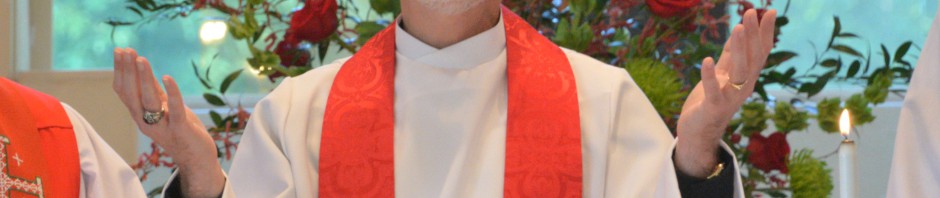
Posted in Uncategorized | 1 Comment

Holy Cross Day

   In the Name of the Father, and of the Son, and of the Holy Spirit.  Amen.

The siege began on 14 April, in the year 70 AD.  Four years earlier the Jews had rebelled against Rome, and Rome had finally had enough of that irritation.  From that moment, Jerusalem was doomed.  The siege lasted only four months, four difficult, horrible months for the Jews trapped in the city.  The walls were breached in August, and by 8 September the Roman General Titus — soon to be Emperor — had razed the city and the temple.  All was ruin and rubble.

Some sixty years later, circa 130, the Emperor Hadrian began to rebuild Jerusalem as a Roman city, Aelia Capitolina.  This reconstruction altered the landscape of Jerusalem; many holy sites were lost — some covered with fill dirt and rubble, some buried under new construction — Calvary and the Holy Sepulchre among them.

Fast forward to the reign of Constantine (AD 306 – 337) who ended the formal Roman persecution against the Christians in 313 and declared Christianity a tolerated religion.  Surely, Constantine had political motives for this, but his own conversion to the faith seems genuine, so that he may rightly be called the first Christian Emperor.  He built churches and supported the clergy.  He called the Council of Nicaea to deal with heresy and to define and unify the orthodox faith.  And he turned his attention toward the holy city of Jerusalem.

The holy places in Jerusalem needed churches to mark them and to serve as sites for pilgrimage, so Constantine thought; he set about the task of locating those sites and building those churches.  None were more important than Calvary and the Holy Sepulchre, sites lost during the building of Aelia Capitolina.   Pious legend tells how Constantine awarded his devout Christian mother Helena the honorable task of locating those sites and directing the building of the churches.  The early Church historian Eusebius wrote this about Helena:

Especially abundant were the gifts she bestowed on the naked and unprotected poor. To some she gave money, to others an ample supply of clothing; she liberated some from imprisonment, or from the bitter servitude of the mines; others she delivered from unjust oppression, and others again, she restored from exile. While, however, her character derived luster from such deeds … , she was far from neglecting personal piety toward God. She might be seen continually frequenting His Church, while at the same time she adorned the houses of prayer with splendid offerings, not overlooking the churches of the smallest cities. In short, this admirable woman was to be seen, in simple and modest attire, mingling with the crowd of worshipers, and testifying her devotion to God by a uniform course of pious conduct” (The Life of Constantine, XLIV, XLV).

The stories of how Helena located Calvary and the true cross of Christ are many and varied.  I’ll mention just two that I like.  While searching for Calvary, Helena noticed a large patch of an aromatic herb unknown to her.  She felt compelled to dig in that spot and there she uncovered the wood from three separate crosses, those of the thieves and Jesus.  As an aside, that herb is now named basil, from the Greek basileus meaning king.  Many churches are decorated with basil plants in observance of Holy Cross Day.

So far, so good; Helena had discovered Calvary and wood from three crosses.  But which one was the true cross of Christ?  A woman suffering from a terminal illness was brought to the spot and asked to touch the wood from each of the crosses in turn.  When she touched the wood of the last one, she was miraculously healed; that must be the true cross of Christ.  And so began the veneration of the Holy Cross of our Lord Jesus.  The church built on that site to house the cross was completed on 13 September 335 and formally dedicated the next day, 14 September, which we now observe as Holy Cross Day.

Holy Cross Day is an occasion to think deeply about the cross, to venerate it:  not to worship it but to reverence it, to honor it as the instrument on which and through which the Lord Jesus triumphed over sin and death, trampling hell and Satan under his feet.  This is a day perhaps to sit silently before the cross, to gaze at it in wonder,  to sing its glory.  In the church of my youth we had no custom of venerating the cross, but we did sing this:

On a hill far away stood an old rugged cross

The emblem of suffering and shame

And I love that old cross where the dearest and best

For a world of lost sinners was slain

So I’ll cherish the old rugged cross

Till my trophies at last I lay down

And I will cling to the old rugged cross

And exchange it some day for a crown (The Old Rugged Cross, The Rev’d George Bernard)

In the Anglican Church, as part of the Good Friday liturgy, we may observe Devotion Before the Cross.  A covered wooden cross is brought into the church in the sight of the people.  As it is uncovered, this antiphon is said or sung:

Behold the wood of the Cross, on which was hung the world’s Salvation.

O come, let us adore him.

Anthems follow:

We glory in your Cross, O Lord,

and praise and glorify your holy resurrection;

for by virtue of your Cross

joy has come to the whole world (Anthem 1, BCP 2019, p. 574).

And this:

We adore you, O Christ, and we bless you,

because by your holy Cross you have redeemed the world (Anthem 2, p. 574).

Those who are not Christians are sometimes puzzled at our devotion to the cross.  Why take a murder weapon and make it the symbol of the faith?  Why venerate the cross?  This is a good day to reflect on those questions.

The Roman Empire was certainly one of the world’s greatest civilizations, but, at its core, it was based upon violence — threatened and real — and upon power, brute force exercised by the government.  Its military instilled fear and obedience.  Its justice did likewise.

As an expression of its power and with the purpose of instilling fear, Rome devised the most brutal form of execution then known:  crucifixion.  Its purpose was not merely to physically torture and destroy the victim, but to publicly debase and humiliate the victim as a deterrent against similar crimes.  Through the beatings, the forced march through town, the nailing of hands and feet, the stripping naked of the victim, the hours of agony suspended between heaven and earth, the mocking by the gathered crowds, Rome was declaring the victim to be sub-human, vermin, worthy only of being exterminated.  All this came to Jesus not for anything he had done, not for any sin he had committed, but for us and for our salvation.  He bore our sins on the cross in our stead.  So the cross tells the great truth about us.  Look at Jesus; this is what sin had done to us, what sin had reduced us to.  That was our true state.  When Pilate said, “Behold, the man,” he wasn’t just speaking about Jesus beaten, bloody, and shamed.  He was speaking about mankind — about all of us and each of us — under the burden of sin.  We sometimes wink and smile at sin:  white lies, harmless infidelities, petty thefts, small betrayals, momentary anger — little things that everyone does.  But the cross will not tolerate that self-deception.  Look at Jesus on the cross.  That is the result of your white lies, your harmless infidelities, and all the rest.  That is what your sin has reduced you to.  We venerate the cross because it confronts us with the damnable truth of our sin like nothing else can do.

But the cross also reveals to us the length, the depth, the breadth, and the height of God’s love for us in Christ Jesus, the willingness of God, in Christ, to sacrifice himself for us and for our salvation.  The cross declares that those created in the image of God, though beaten, marched through town, stripped naked, nailed to a tree, mocked by evil powers through their own sins, are nevertheless the beloved of God in whose image they may be restored.  We venerate the cross because it reveals to us the self-sacrificing, unfathomable love of God for us like nothing else can do.

There is no way to explain this, no words of human wisdom adequate for the mystery of the cross.  There is only proclamation, adoration, veneration.  As Paul writes:

1 Corinthians 1:18–21 (ESV): For the word of the cross is folly to those who are perishing, but to us who are being saved it is the power of God. 19 For it is written, 

  “I will destroy the wisdom of the wise, 

and the discernment of the discerning I will thwart.” 

20 Where is the one who is wise? Where is the scribe? Where is the debater of this age? Has not God made foolish the wisdom of the world? 21 For since, in the wisdom of God, the world did not know God through wisdom, it pleased God through the folly of what we preach to save those who believe.

1 Corinthians 2:1–2 (ESV): And I, when I came to you, brothers, did not come proclaiming to you the testimony of God with lofty speech or wisdom. 2 For I decided to know nothing among you except Jesus Christ and him crucified.

We venerate the cross because we worship Christ Jesus and him crucified.

Holy Cross Day also marks the beginning of the Fall Ember Days, the Wednesday, Friday, and Saturday following Holy Cross Day.  These are days to fast and pray for those called to ordained ministry in the Church, but also to remember that we are all called to ministry, that is, we are all called to take up our cross daily and follow Jesus.  As another hymn from my childhood asked:

Must Jesus bear the cross alone

And all the world go free?

No, there’s a cross for ev’ry one,

And there’s a cross for me.

But, the hymn continues:

O precious cross!  O glorious crown!

O resurrection day!

Ye angels, from the stars come down

And bear my soul away (Must Jesus Bear the Cross Alone?, Thomas Shepherd).

Amen.

Posted in Uncategorized | Leave a comment

Neglect

In the Name of the Father, and of the Son, and of the Holy Spirit.  Amen.

I have seen cars destroyed in a split second, in brake-squealing, fender-crunching collisions, and I have seen cars destroyed over time through lack of routine maintenance:  failure to change oil, check fluid levels, follow the service schedule.  I have seen houses burn to the ground in a matter of minutes, and I have seen houses slowly crumble when left vacant and unattended.  I have seen relationships instantaneously explode through a single act of infidelity, and I have seen relationships slowly disintegrate through years of inattention.  I have seen faith rejected in anger and confusion over God’s apparent absence in a moment of crisis, and I have seen faith squandered — more just gradually lost than cast away.

So I understand the sense of caution and warning in our reading from Hebrews:

Hebrews 2:1–3 (ESV): Therefore we must pay much closer attention to what we have heard, lest we drift away from it. 2 For since the message declared by angels proved to be reliable, and every transgression or disobedience received a just retribution, 3 how shall we escape if we neglect such a great salvation?

Drift away.  Neglect.  The concern here is not something dramatic like blasphemy, heresy, or apostasy; it is the drifting away of the soul from God through neglect of the relationship.  When I taught high school I used to tell my senior students that if they kept in contact with just two or three of their school friends after graduation, they would be doing well.  Of course, they doubted me.  And then time went by.  Ten years passed and they realized they hadn’t heard from or seen their high school BFFs — Best Friends Forever — in a decade, though we have more social media than ever.  There was no falling out, no hard feelings.  They were just in different places, doing different things, with different people, and pursuing different priorities.  High School friends just naturally drift away from one another, not through animus but through neglect.  And, as the writer of Hebrews warns us, that can happen with God, as well:  not that God drifts away from us or neglects us, but that we grow slack and cold and distant toward God.

We start out fired up to pray without ceasing, then little-by-little we find ourselves skipping Morning Prayer.  We start out longing to come into the courts of the Lord, then little-by-little we find ourselves “worshipping” in nature instead of in church:  in the mountains or at the lake, on the golf course or at the Little League or soccer game.  We start out to read the Bible through in a year and little-by-little we hit Leviticus, then we opt for binge watching the Office instead.  None of this is a repudiation of the Gospel.  None of this is a rejection of the faith.  Of course we still believe.  It is just a drifting away, a neglect.

Hebrews 2:1–3 (ESV): Therefore we must pay much closer attention to what we have heard, lest we drift away from it. 2 For since the message declared by angels proved to be reliable, and every transgression or disobedience received a just retribution, 3 how shall we escape if we neglect such a great salvation?

How shall we escape if we neglect such a great salvation?  An equally pressing question is this:  How do we escape neglecting such a great salvation?  How do we keep from drifting away?

The whole thrust of the Epistle to the Hebrews is that we drift away from the true faith — we lose our way — when we take our eyes off Jesus and look to something else, to anything else.  We humans are easily distracted.

Long before we had GPS with a nice, British voice saying, “In 500 feet, turn left onto Robinson Road,” we had directions that sounded like this:  

Go a couple of miles past that filling station — I think it’s a Shell or an Exxon, I can’t remember — and you’ll see a blue house on the right; turn left there and go to the second big curve and turn right.

The reality never looked like the directions though.  First you came to a BP, not a Shell or Exxon.  Is that the right filling station?  You take a chance and turn.  Then, a little way further, you see a bright blue house; but it’s on the left, not on the right.  And so it goes.  Because things don’t look exactly as expected, it’s easy to get lost, easy to drift away from the right path.

That is the second warning in our Hebrews’ text; keeping our eyes on Jesus is not as easy as we think, because things don’t always look like we expect.  We read:

Hebrews 2:7–8 (ESV): You made him for a little while lower than the angels; 

you have crowned him with glory and honor,

8  putting everything in subjection under his feet.”

Now in putting everything in subjection to him, he left nothing outside his control. At present, we do not yet see everything in subjection to him.

We are expecting a blue house on the right, but it appears on the left.  We are expecting to see Jesus with everything in subjection under his feet and yet, when we look around, we see the nations in rebellion against him, not subject to him as promised.  So, do we turn now or go straight?  Keep to the course.  Keep looking to Jesus:  not to what you see with your eyes when you look around, but to what you see and know to be true through faith:

Hebrews 2:8–9 (ESV): At present, we do not yet see everything in subjection to him. 9 But we see him who for a little while was made lower than the angels, namely Jesus, crowned with glory and honor because of the suffering of death, so that by the grace of God he might taste death for everyone. 

Where do we see Jesus crowned with glory and honor if not in the world around us?  In the worship of the Church.  In the words of Scripture.  In the bread and wine of the Eucharist.  In the lives of the saints.  In the depths of a heart purified by prayer and fasting and repentance and service.

There is a two-fold warning in this Hebrews’ text:  don’t neglect such a great salvation and so drift away from the faith, and don’t take your eyes off Jesus no matter what the world around you looks like.

I think this is a fitting word at the moment.  During this time of Covid-19 restrictions, many of our habits of worship have been interrupted and curtailed.  As we grow used to this “new abnormal,” as an emotional malaise sets in, it might be easy to neglect our great salvation, to drift away from an intentional practice of our faith.  But now those core disciplines of our tradition — daily Morning and Evening Prayer, weekly Eucharist, personal devotions — become perhaps more important than ever.  During this time of social unrest — with both legitimate protest and unwarranted violence — during this time of heated political partisanship, during this time of natural disasters, during this time when almost everything in this world seems to be in rebellion against the kingdom of God, it might be easy to take our eyes off Jesus.  But now the exercise of our faith, the opening of our eyes to its reality, may be more important than ever if we are to see Jesus crowned with glory and honor because of his suffering and death, so that by the grace of God he might taste death for everyone.

This is a good time to read Hebrews; I’m glad our lectionary has landed us there.  From start to finish its message is two-fold:  the superiority of Jesus and the need to hold fast to him.  We must not neglect our great salvation.  We must not drift away.  We must fix our eyes on Jesus, the author and perfecter of our faith.  Amen.

Posted in Uncategorized | Leave a comment

What Can the Righteous Do?

In the Name of the Father, and of the Son, and of the Holy Spirit.  Amen.

There is an old saying — at least I’ve heard it all my life — that I will have to clean up a bit for Morning Prayer:  “When you’re up to your waist in alligators, it’s hard to remember that you came here to drain the swamp.”  Unfortunately, “drain the swamp” now has political connotations; that’s not what I have in mind at all.  I’m thinking more theologically, more along these lines:  the moment of crisis is not the best time to tackle deep, theological questions.

A young woman — a new widow with an infant child — talks to her priest very soon after burying her husband.  “Why did this happen to him, to me?  He was a good man, a faithful man.  How could the Lord do this to us?”  The woman is in crisis.  If I were her priest, I would not attempt to answer her questions at that moment; I would not delve into the issue of theodicy with her in that state.  Even if I could explain perfectly — and I can’t — that wouldn’t matter.  She doesn’t really want an explanation.  She wants her husband back.  She wants her life back.  She wants the pain to cease.

When you’re up to your waist in alligators, it’s hard to remember that you came here to drain the swamp.

So, I would assure her of God’s love for her, for her child, and for her husband.  I would assure her of the church’s love, and I would commit on behalf of the church to walk with her through her grief, to support her as family, to meet any needs she and her child might have going forward.  I would talk to her of hope and of resurrection.  I would tell her to cast her grief and her questions upon God in prayers of lament.  I would encourage her to hunker down, to hold on, to drink deeply from the well of faith.  There will be time later to deal with her questions.

This is, in part, why I have been reticent to do much public theology in this time of pandemic and social unrest.  Why has God allowed Covid-19 to devastate our world?  Has he brought this plague upon us as punishment?  Why so many natural disasters in the midst of it:  hurricanes, derecho, wildfires, floods?  What is God up to?  Good questions, all, but now may not be the right time for them.  Hunker down, hold on, drink deeply from the well of faith.  We’ll talk later, we’ll theologize later when the moment of crisis has passed.

When you’re up to your waist in alligators, it’s hard to remember that you came here to drain the swamp.

I am not trying to avoid the difficult questions.  The church can and must address them.  I am suggesting that timing is important; timing is of the Lord.  Better than dealing with these questions in the midst of a crisis or even after it, is resolving them before the moment of crisis:  better to be prepared than to recover.

Psalm 11 — a Psalm of David — is a good place to start.  If anyone knew moments of crisis, it was David.  He could navigate them, withstand them, because his faith, his life, were founded on the goodness and faithfulness of God before the moments of crisis broke over him.  He could say:

Psalm 11:1–3 (ESV): In the Lord I take refuge; 

  how can you say to my soul, 

“Flee like a bird to your mountain, 

 2  for behold, the wicked bend the bow; 

they have fitted their arrow to the string 

to shoot in the dark at the upright in heart; 

 3  if the foundations are destroyed, 

what can the righteous do?” 

This is a man who knew how to hunker down in the Lord, to hold fast to the Lord, to drink deeply from the well of faith.  This is a man who had found the Lord to be a safe refuge, a rock, a fortress.  This is a man who could ignore the anxiety around him, dismiss the fearful advice the mob:  “Run away.  Flee like a bird to your mountain.”  The  mountain here may be an allusion to the high places, those hilltops where pagans and even Israel sacrificed to the gods of the nations.  “Hedge your bets,” the mob shouts.  “Grasp for security wherever it might be found.”  Our culture has its mountains too, its high places where sacrifices are offered to the false gods of pleasure, prosperity, power, and pride.  “Run away:  flee like a bird to these mountains,” says the mob.  No:  in the Lord we take refuge.

Then comes the key question, the one we need to have answered before the evil day comes, before the time of crisis:  “If the foundations are destroyed, what can the righteous do?”  In one sense, that’s a false question; its assumption is in error.  It’s like asking:  What color is yesterday?  It is a false question because the foundations of the righteous cannot be destroyed.

Ephesians 2:19–22 (ESV): So then you are no longer strangers and aliens, but you are fellow citizens with the saints and members of the household of God, 20 built on the foundation of the apostles and prophets, Christ Jesus himself being the cornerstone, 21 in whom the whole structure, being joined together, grows into a holy temple in the Lord. 22 In him you also are being built together into a dwelling place for God by the Spirit. 

This foundation — the foundation of the righteous — cannot be destroyed because it is built upon the witness of the apostles and prophets and held fast by Jesus Christ the cornerstone.  The holy temple of the Lord built on this foundation cannot be destroyed.  This is the wisdom of Psalm 11, written a millennium before Jesus, because it looked forward to Jesus.  In answer to the question “If the foundations are destroyed, what can the righteous do?” David answers simply:

Psalm 11:4 (ESV): The Lord is in his holy temple; 

the Lord’s throne is in heaven…

The only foundation that really matters — the foundation of the Lord’s holy temple — cannot be destroyed because God dwells in the temple and secures it.  His throne may be in heaven, but as Isaiah saw, his train fills the temple on earth.  No, the foundation cannot be destroyed, but it can be shaken, it should be shaken by the praise of angels, archangels, and all the company of the righteous in heaven and on earth:

Isaiah 6:1–4 (ESV): In the year that King Uzziah died I saw the Lord sitting upon a throne, high and lifted up; and the train of his robe filled the temple. 2 Above him stood the seraphim. Each had six wings: with two he covered his face, and with two he covered his feet, and with two he flew. 3 And one called to another and said: 

  “Holy, holy, holy is the Lord of hosts; 

  the whole earth is full of his glory!” 

4 And the foundations of the thresholds shook at the voice of him who called, and the house was filled with smoke. 

What can the righteous do in the moment of crisis when the world cries “Flee to the high places and offer sacrifices to the gods of the nations”?  The righteous come to the temple of the Lord whose foundations can never be destroyed.  The righteous lift up their voices in the cry, “Holy, holy, holy is the Lord of hosts!” and they shake the foundations of that temple with praise.  The righteous hunker down, hold fast, and drink deeply from the well of faith

The foundations of false security, of first world privilege, of scientific omniscience and omnipotence, of political protection are being destroyed around us.  False expectations of health and long life, of a hospitable natural world, of social progress are being destroyed around us.  The thin veneer of faith of our post-Christian culture is being stripped away and the chasm at the heart of Christendom is being laid bare.  Fine.  Good. So be it.  Thanks be to God, even.  That which is false must crumble so that which is true may be seen to stand firm, immovable.

Haggai 2:5–9 (ESV): My Spirit remains in your midst. Fear not. 6 For thus says the Lord of hosts: Yet once more, in a little while, I will shake the heavens and the earth and the sea and the dry land. 7 And I will shake all nations, so that the treasures of all nations shall come in, and I will fill this house with glory, says the Lord of hosts. 8 The silver is mine, and the gold is mine, declares the Lord of hosts. 9 The latter glory of this house shall be greater than the former, says the Lord of hosts. And in this place I will give peace, declares the Lord of hosts.’ ” 

What can the righteous do?  Take refuge in the Lord who is in his holy temple, whose throne is in heaven.  Amen.

Posted in Uncategorized | Leave a comment