Session 4: Signs, Signs, Everywhere a Sign

Apostles Anglican Church
Fr. John A. Roop
Advent with Isaiah: Session 4 — Signs, Signs, Everywhere a Sign
(Isaiah 7:1-17)
The Lord be with you.
And with your spirit.
Let us pray.
Stir up your power, O Lord, and with great might come among us; and as we are sorely hindered by our sins from running the race that is set before us, let your bountiful grace and mercy speedily help and deliver us; through Jesus Christ our Lord, to whom, with you and the Holy Spirit, be honor and glory, now and for ever. Amen.
To begin this last session, let’s think through an unlikely scenario — unlikely here at Apostles, but not necessarily so in many churches with a more prominent charismatic character. After service someone approaches you and says, “During prayer this morning, the Lord gave me a word for you. The Spirit told me that in six months [x, y, and z] will happen to you and you should do [this, that, and the other] in preparation and response.” Now suppose that what is “prophesied” to happen and what you are to do about it are not trivial matters, but rather ones of great important and meaning. This raises significant questions — important ones. What would your response be to this brother or sister and to his/her word? Would you accept this as a word from the Lord and follow the guidance given? What criteria would/could you use to determine the true origin of the “prophetic” word? [Have the class discuss this at their tables.]
Well, there are several “tests” that might be useful.
First, you certainly should/would compare the word of the prophet to the Word of God. Is this word in keeping with Scripture? If not, it must be disregarded. But, this test might well be ambiguous. A specific word might be generally in accordance with Scripture but not be a word of God for you. For example, suppose your friend had said, “The Spirit told me that you are to sell all that you have, give it to the poor, and follow Jesus into Gospel ministry.” Well, we have seen that in Scripture; it was something that the Lord required of someone, so it is not opposed to Scripture. But, is God requiring it of you here and now? This test doesn’t answer that question. Not everything present in Scripture is taught by Scripture as a normative mandate for all.
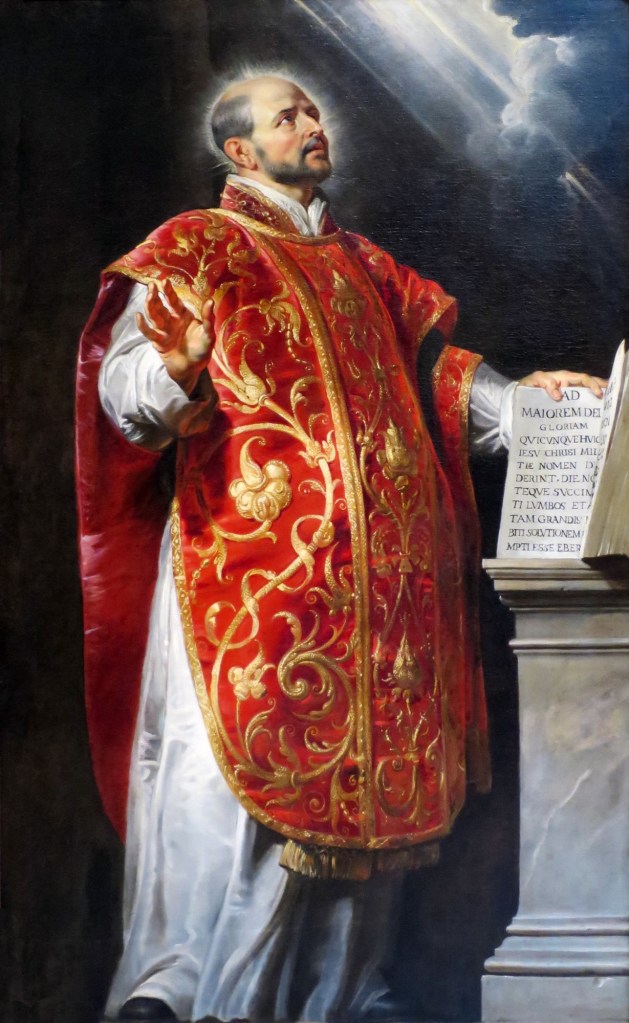
Second, you might enter into a period of discernment — prayer (likely with fasting) and spiritual direction with trusted spiritual mentors and guides. St. Ignatius gives good guidance on this process and you might refer to his rules for the discernment of spirits.
Third, you might consider— you almost certainly would consider — the human source of the word. Is this a person through whom the Lord has spoken before, a person with a “track record” of listening well to the Spirit? Has he/she spoken such prophetic words to people before? Have they come to pass? This gets us at the ultimate test from Deuteronomy:
15 “The Lord your God will raise up for you a prophet like me from among you, from your brothers—it is to him you shall listen— 16 just as you desired of the Lord your God at Horeb on the day of the assembly, when you said, ‘Let me not hear again the voice of the Lord my God or see this great fire any more, lest I die.’ 17 And the Lord said to me, ‘They are right in what they have spoken. 18 I will raise up for them a prophet like you from among their brothers. And I will put my words in his mouth, and he shall speak to them all that I command him. 19 And whoever will not listen to my words that he shall speak in my name, I myself will require it of him. 20 But the prophet who presumes to speak a word in my name that I have not commanded him to speak, or who speaks in the name of other gods, that same prophet shall die.’ 21 And if you say in your heart, ‘How may we know the word that the Lord has not spoken?’— 22 when a prophet speaks in the name of the Lord, if the word does not come to pass or come true, that is a word that the Lord has not spoken; the prophet has spoken it presumptuously. You need not be afraid of him” (Deut 18:15-22).

This is a foolproof test: if the prophecy did not come true, it was not from the Lord. But, there is a major problem with that test: it is a post hoc, “after-the-fact,” test. You can never know the truth of the prophecy in real time — now — but only later, sometimes too late to respond properly. It’s like having someone give you, in advance, the winning lottery numbers, and then waiting until after the drawing to see if the numbers were right. You need to know the quality of the prophecy before the fact, before its fulfillment or nullification. How does Scripture deal with that?
The tradition arose in Israel of asking the prophet for a sign that would vouch for the prophecy beforehand. If the sign came true, the assumption was that the prophecy would likewise come true. Let’s consider a couple of examples.
Early in the book of Judges, Israel is under the thumb of Midian. The angel of the Lord appears to Gideon and promises to deliver Israel through his military leadership. This is a life-or-death prophecy. If Gideon rises up rashly, if he has not truly heard a word from God, then he and those who follow him will perish and the situation will get even worse for Israel. So, Gideon asks for a sign — two signs, in fact — that the prophecy will come true.
36 Then Gideon said to God, “If you will save Israel by my hand, as you have said, 37 behold, I am laying a fleece of wool on the threshing floor. If there is dew on the fleece alone, and it is dry on all the ground, then I shall know that you will save Israel by my hand, as you have said.” 38 And it was so. When he rose early next morning and squeezed the fleece, he wrung enough dew from the fleece to fill a bowl with water. 39 Then Gideon said to God, “Let not your anger burn against me; let me speak just once more. Please let me test just once more with the fleece. Please let it be dry on the fleece only, and on all the ground let there be dew.” 40 And God did so that night; and it was dry on the fleece only, and on all the ground there was dew (Judges 7:36-40).
Based on this twofold sign, Gideon trusted the prophecy and acted accordingly, to the salvation of Israel.
We see this testing of prophecy again in the ministry of Isaiah.
1 In those days Hezekiah became sick and was at the point of death. And Isaiah the prophet the son of Amoz came to him and said to him, “Thus says the Lord, ‘Set your house in order, for you shall die; you shall not recover.’ ” 2 Then Hezekiah turned his face to the wall and prayed to the Lord, saying, 3 “Now, O Lord, please remember how I have walked before you in faithfulness and with a whole heart, and have done what is good in your sight.” And Hezekiah wept bitterly. 4 And before Isaiah had gone out of the middle court, the word of the Lord came to him: 5 “Turn back, and say to Hezekiah the leader of my people, Thus says the Lord, the God of David your father: I have heard your prayer; I have seen your tears. Behold, I will heal you. On the third day you shall go up to the house of the Lord, 6 and I will add fifteen years to your life. I will deliver you and this city out of the hand of the king of Assyria, and I will defend this city for my own sake and for my servant David’s sake.” 7 And Isaiah said, “Bring a cake of figs. And let them take and lay it on the boil, that he may recover.”
8 And Hezekiah said to Isaiah, “What shall be the sign that the Lord will heal me, and that I shall go up to the house of the Lord on the third day?” 9 And Isaiah said, “This shall be the sign to you from the Lord, that the Lord will do the thing that he has promised: shall the shadow go forward ten steps, or go back ten steps?” 10 And Hezekiah answered, “It is an easy thing for the shadow to lengthen ten steps. Rather let the shadow go back ten steps.” 11 And Isaiah the prophet called to the Lord, and he brought the shadow back ten steps, by which it had gone down on the steps of Ahaz (2 Kings 20:1-11).

Again, the sign gave credence to the prophecy. The fulfillment of the sign pointed toward the fulfillment of the prophecy.
There are New Testament examples, as well. Here is one appropriate for the coming season of Christmastide. It is from St. Luke’s gospel.
8 And in the same region there were shepherds out in the field, keeping watch over their flock by night. 9 And an angel of the Lord appeared to them, and the glory of the Lord shone around them, and they were filled with great fear. 10 And the angel said to them, “Fear not, for behold, I bring you good news of great joy that will be for all the people. 11 For unto you is born this day in the city of David a Savior, who is Christ the Lord. 12 And this will be a sign for you: you will find a baby wrapped in swaddling cloths and lying in a manger” (Luke 2:8-12).
The prophecy is the coming of a Savior, of the Messiah. The sign is a baby, one swaddled and lying in a manger.
Lastly, I’ll just note that we see the demand for a sign as a recurring theme in Jesus’ own ministry. “What sign will you give us?” the Scribes and Pharisees and Sadducees asked Jesus probably often. Jesus’ most notable response was, “No sign will be given you other than the sign of Jonah,” pointing toward his own death and resurrection.
So, in Scripture, signs accompany prophecies and serve as an earnest of the fulfillment to come.
And that brings us to the text for today. I have extended it a bit beyond the lectionary to provide the context for the pertinent passage. Here is the context.
1 In the days of Ahaz the son of Jotham, son of Uzziah, king of Judah, Rezin the king of Syria and Pekah the son of Remaliah the king of Israel came up to Jerusalem to wage war against it, but could not yet mount an attack against it. 2 When the house of David was told, “Syria is in league with Ephraim,” the heart of Ahaz and the heart of his people shook as the trees of the forest shake before the wind.
3 And the Lord said to Isaiah, “Go out to meet Ahaz, you and Shear-jashub your son, at the end of the conduit of the upper pool on the highway to the Washer’s Field. 4 And say to him, ‘Be careful, be quiet, do not fear, and do not let your heart be faint because of these two smoldering stumps of firebrands, at the fierce anger of Rezin and Syria and the son of Remaliah. 5 Because Syria, with Ephraim and the son of Remaliah, has devised evil against you, saying, 6 “Let us go up against Judah and terrify it, and let us conquer it for ourselves, and set up the son of Tabeel as king in the midst of it,” 7 thus says the Lord God:
“ ‘It shall not stand,
and it shall not come to pass.
8 For the head of Syria is Damascus,
and the head of Damascus is Rezin.
And within sixty-five years
Ephraim will be shattered from being a people.
9 And the head of Ephraim is Samaria,
and the head of Samaria is the son of Remaliah.
If you are not firm in faith,
you will not be firm at all’ ” (Isaiah 7:1-9).
If you want to read about the fulfillment of this prophecy, about the fall of Rezin, head of Damascus, head of Syria and about the fall of Israel to the Assyrians, look to 2 Kings 16 and 17. The prophecy came true, but Ahaz, in the moment, had no way of knowing it would do. So, what might you expect him to have done? He might have asked Isaiah for a sign; in fact, it seems that Isaiah expected him to do. It is what he should have done. We pick up the story in Isaiah 7:10-17.
10 Again the Lord spoke to Ahaz: 11 “Ask a sign of the Lord your God; let it be deep as Sheol or high as heaven.” 12 But Ahaz said, “I will not ask, and I will not put the Lord to the test.” 13 And he said, “Hear then, O house of David! Is it too little for you to weary men, that you weary my God also? 14 Therefore the Lord himself will give you a sign. Behold, the virgin shall conceive and bear a son, and shall call his name Immanuel. 15 He shall eat curds and honey when he knows how to refuse the evil and choose the good. 16 For before the boy knows how to refuse the evil and choose the good, the land whose two kings you dread will be deserted. 17 The Lord will bring upon you and upon your people and upon your father’s house such days as have not come since the day that Ephraim departed from Judah—the king of Assyria” (Isaiah 7:10-17)!
Ahaz should have asked for a sign. When he didn’t, the Lord told him to ask. Again, Ahaz did not, hiding under the mask of false piety. If you read the texts again you get a different picture of Ahaz, not as pious, but as cowardly and faithless. So, the Lord takes the initiative and offers a sign himself. A virgin will conceive and bear a son. By the time the child is weaned to solid food — curds and honey — Syria and Israel will no longer be a threat to Judah.
So, how can we summarize the prophecy and the sign? What are the key elements?
1. It is the prophecy of divine deliverance, of God himself coming to be with his people for their salvation. The salvation, in this immediate context, is rescue from Syria and Ephraim/Israel.
2. The sign of the prophecy is the conception and birth of a son in whom and through whom God will dwell with his people for their salvation, hence the son’s name Immanuel, God with us.
3. The deliverance will not look as might be expected; it will be a time of judgment for the people.
Before we move on to the ultimate fulfillment of this prophecy, I should address one controversial translation issue in Isaiah 7:14b. The ESV reads:
Behold, the virgin shall conceive and bear a son, and shall call his name Immanuel.
The word in the Hebrew text that is translated “virgin” — the word that Isaiah would have used — is almah. It is the word for a young woman who has reached puberty and sexual maturity and is thus of marriageable status. There is nothing in the word that specifically mandates virginity, though virginity would have been a reasonable assumption for such young women in that culture.
Now, let’s move forward about five centuries, to the Jewish translation of the Hebrew Scriptures into Greek, a translation we call the Septuagint. Note that this translation is still some two-hundred fifty years before Jesus. It would have been the translation that many of the early Christians used. It is common for the New Testament authors to use the Septuagint when quoting the Old Testament.
When the translators rendered almah from Hebrew into Greek, they chose the Greek word parthenos — not merely young woman, but specifically “virgin.” Since this was before the conception and birth of Jesus, there was no collusion to give a particular Christian emphasis to Isaiah. The reasonable explanation of the choice of parthenos is simply that “virgin” was the common reading and understanding of Isaiah’s prophecy: when he said almah everyone understood he was speaking of a virgin and not just of a young woman. So, it was proper for the Greek translators to use “virgin” and for our English translations to say “virgin.” And it is clearly the tradition and understanding that Saints Matthew and Luke drew from in their Gospels. Let’s turn now to their use of Isaiah’s prophecy.
St. Matthew: The Birth of Jesus Christ
18 Now the birth of Jesus Christ took place in this way. When his mother Mary had been betrothed to Joseph, before they came together she was found to be with child from the Holy Spirit. 19 And her husband Joseph, being a just man and unwilling to put her to shame, resolved to divorce her quietly. 20 But as he considered these things, behold, an angel of the Lord appeared to him in a dream, saying, “Joseph, son of David, do not fear to take Mary as your wife, for that which is conceived in her is from the Holy Spirit. 21 She will bear a son, and you shall call his name Jesus, for he will save his people from their sins.” 22 All this took place to fulfill what the Lord had spoken by the prophet:
23 “Behold, the virgin shall conceive and bear a son,
and they shall call his name Immanuel” (which means, God with us).
24 When Joseph woke from sleep, he did as the angel of the Lord commanded him: he took his wife, 25 but knew her not until she had given birth to a son. And he called his name Jesus (Matt 1:18-25).
The angel tells Joseph that he is being caught up into the further fulfillment of Isaiah’s prophecy, that whatever God did to rescue Judah during and after the reign of Ahaz, there is more to come. Ahaz and Judah were being saved from a military threat. But what about God’s people in Joseph’s time? What are they being saved from? Jesus (savior) will save the people from their sins. The one to be born of a virgin will be Immanuel — God with us — because only God can save from sin.
There are some interesting dynamics at play in this story. For Isaiah, the conception and birth of a son from a virgin is the sign of something more important — a military rescue. For Matthew, Mary’s virginal conception and birth is the most important thing; the angelic vision in his dream is the sign. The baby is center stage, because he will be Jesus (savior) and Immanuel (God with us.)
Now, let’s consider Luke’s account.
St. Luke: The Annunciation
26 In the sixth month the angel Gabriel was sent from God to a city of Galilee named Nazareth, 27 to a virgin betrothed to a man whose name was Joseph, of the house of David. And the virgin’s name was Mary. 28 And he came to her and said, “Greetings, O favored one, the Lord is with you!” 29 But she was greatly troubled at the saying, and tried to discern what sort of greeting this might be. 30 And the angel said to her, “Do not be afraid, Mary, for you have found favor with God. 31 And behold, you will conceive in your womb and bear a son, and you shall call his name Jesus. 32 He will be great and will be called the Son of the Most High. And the Lord God will give to him the throne of his father David, 33 and he will reign over the house of Jacob forever, and of his kingdom there will be no end.”
34 And Mary said to the angel, “How will this be, since I am a virgin?”
35 And the angel answered her, “The Holy Spirit will come upon you, and the power of the Most High will overshadow you; therefore the child to be born will be called holy—the Son of God. 36 And behold, your relative Elizabeth in her old age has also conceived a son, and this is the sixth month with her who was called barren. 37 For nothing will be impossible with God.” 38 And Mary said, “Behold, I am the servant of the Lord; let it be to me according to your word.” And the angel departed from her (Luke 1:26-38).
Two observations about this encounter:
First, Mary is quite clear that παρθενος (virgin) is the right word to describe her. She, better than anyone else, knew the proper translation.
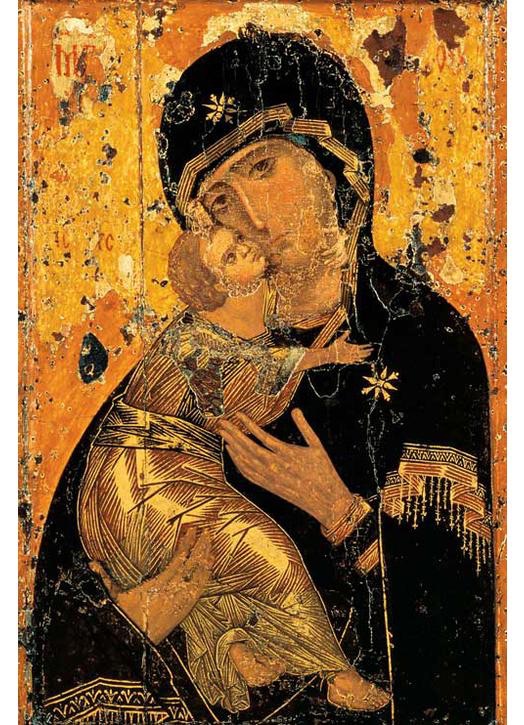
Second, the reason that her virginity is central to the story is that the identity of the child is central to the story: He will be called the Son of the Most High; he will be called holy — the Son of God. We don’t have time to delve into incarnational theology; it is enough to know that that is precisely what is occurring here. God himself is taking on flesh so that he might dwell among us. The Holy Spirit facilitates — I have no better word — the incarnation of the Logos; that is the divine aspect. Mary offers her humanity; that is the human aspect. These two natures are united as a single person, the God-man Jesus of Nazareth, not only God with us, but also God as us. As glorious as human birth is, it cannot accomplish this union. So, no human male can be involved. And the only way to ensure that, is for a virgin to conceive by the Holy Spirit.
And with that, Isaiah has now led us through Advent and has brought us to Bethlehem, to the manger, to the fulfillment of all his prophecies about God’s rescue of his people, about the renewal of all creation, about the inclusion of all people, about God with us. All that went awry in the Garden, all the history of Israel, all the Law and the Prophets, were pointing to this moment, to the one. So, let’s close these lessons — and soon this Advent season — with the Advent antiphon from Morning Prayer:
Our King and Savior Now Draws Near.
O, come, let us adore him.
Amen.


 First Blessings