I admire the thoroughness and consistency with which the Roman Catholic Church has developed its social teaching through the generations. As far as I can tell, we Anglicans lack the same theological breadth, depth, and height in this area. What we do have — and I treasure it — are social convictions that proceed from a core Anglican principle: lex orandi, lex credendi — the law (rule) of prayer is the law (rule) of faith. I have even seen the principle extended: lex orandi, lex credendi, lex vivendi — as we pray, so we believe, and so we live. This simply means that our theology is found in our prayers, and that both our theology and our prayers — please, God — are found in our lives. If I am right, we should look to our prayers for Anglican social teaching, not least to The Great Litany (ACNA BCP 2019, pp. 91-99).
It is clear from The Great Litany that Anglicans are pro-birth:
To protect the unborn and their parents, and to preserve all women in childbirth; We beseech you to hear us, good Lord (BCP 2019, p. 94).
But, pro-birth — as central as it is to Anglican social teaching — is at significant remove from a consistent pro-life conviction. A full-blown pro-life theology would require as much care and advocacy for the children once they are born, once they have grown, once they are elderly and infirm and costly and inconvenient and burdensome. It would require advocacy for those on death row in our prisons. It would demand a pro-life stance for those who flee danger and oppression in their own countries of origin and seek refuge among us: humane treatment, the dignity due to all image bearers of God, the commitment to loving neighbor as self, even if the self is a Jew and the neighbor a Samaritan. So we pray:
That it may please you to show mercy on all prisoners and captives; refugees, the homeless, and the hungry; and all those who are desolate and oppressed, We beseech you to hear us, good Lord (ibid).
Even these categories, already so extensive as to make all of us squirm uncomfortably, are not broad enough:
To have mercy upon all people, We beseech you to hear us, good Lord.
All people. If we do not hesitate and stammer when we pray that, we are probably mindlessly mouthing words. All people: Blacks and Whites, Asians and Latinos, Jews and Palestinians, Russians and Ukrainians, Christians and Muslims and any other dichotomies you care to enumerate. And because we do not always — and perhaps not even often — fulfill our conviction of lex orandi, lex credendi, lex vivendi, The Great Litany places these words in our mouths that they might descend to and transform our hearts:
That it may please you to give us true repentance; to forgive us all our sin, negligence, and ignorance; and to endue us with the grace of your Holy Spirit to amend our lives according to your holy Word, We beseech you to hear us, good Lord (ibid, p. 95).
The Democrats are right — and wrong. The Republicans are wrong — and right. The Great Litany is simply right: full stop. So, we Anglicans who pray it have no reason or right to remain muddled or ambivalent or divided along partisan lines. Rather, we must — to be faithful to the Tradition and to our own patrimony — pray as we have learned, believe as we pray, and live as we believe.
The GospelAccording To Jesus (Neh 8:1-12, Ps 113, 1 Cor 12:12-27, Luke 4:14-21)
“The Spirit of the Lord is upon me, because he has anointed me to proclaim good news to the poor.”
I once read that Johann Sebastian Bach claimed he could hear the first four or five measures of another composer’s work and then finish that composition himself, as the actual composer intended. That is not an outrageous or arrogant assertion, not really; Bach insisted that any competent composer could have done the same. It is simply a recognition that Baroque music then — and even whatever it is that passes for music today — was and is formulaic; it develops according to an established pattern, a common structure. Pop songs today — think Taylor Swift — generally have this pattern:
Intro
Verse
Pre-Chorus
Chorus
Rinse and Repeat (more of the same)
Bridge
Outro
The intro announces the musical theme of the song: the rhythm, the key, the chord progression. Any good record producer could hear the intro of a song and know pretty well what is to follow. Like Bach said, it is all there in the first four or five measures.
This is true to a lesser extent, but still true, with many sermons. Listen well to the intro — the part of the sermon that I am delivering right now — and you may well be able to predict how the sermon is going to develop. When I was young, and still often today, the typical sermon format was:
Intro
Three Points
Closing
Beat the Baptists to the Buffet
The intro announces the theme — usually in the Scriptures, sometimes in a prayer, and perhaps even in a brief overview of the three points to follow. Hearing just that much — hearing just the intro — many other preachers could complete the sermon quite satisfactorily, and many attentive parishioners could predict where the sermon is going. Let’s test this out.
In my intro thus far, I have told you that Bach could listen to the first four of five measures of an unknown composition and then complete it. I have explained that this was likely true because music then and now has an established structure. I have even shown you the common format of a pop song for example. And then, in a strategic move, I switched topics from musical composition to homiletics — to preaching; a sermon, like a song, often has a structure and content that may sometimes be predicted from its intro. So, where do you expect me to go now with this sermon? Can you predict my next move, assuming I am not being intentionally deceptive?
You might reasonably expect me to show you how this works using a real sermon as an example. And that is exactly what I intend to do, using not one of my sermons, but one of our Lord’s, Jesus’s first recorded sermon in St. Luke’s Gospel.
Luke 4:16–21 (ESV) 16 And [Jesus] came to Nazareth, where he had been brought up. And as was his custom, he went to the synagogue on the Sabbath day, and he stood up to read. 17 And the scroll of the prophet Isaiah was given to him. He unrolled the scroll and found the place where it was written,
18 “The Spirit of the Lord is upon me, because he has anointed me to proclaim good news to the poor. He has sent me to proclaim liberty to the captives and recovering of sight to the blind, to set at liberty those who are oppressed, 19 to proclaim the year of the Lord’s favor.”
20 And he rolled up the scroll and gave it back to the attendant and sat down. And the eyes of all in the synagogue were fixed on him. 21 And he began to say to them, “Today this Scripture has been fulfilled in your hearing.”
That is all that St. Luke provides us of Jesus’s sermon proper right here; I presume that there was more — St. Luke more than implies it — but we do not have it. So, we have to consider this not as the full sermon, but rather as the intro to the sermon that follows. I want to suggest to you that the rest of St. Luke’s Gospel, the entirety of his Gospel, isthe sermon that follows from this intro: not just what we hear Jesus say, but also what we see him do. In this intro Jesus announces the in-breaking, the inauguration, of the kingdom of God — in his person, and in the people’s presence —the firstfruits of the great vision of Isaiah. What then should they — what then should we — expect to see as this sermon develops over the next three years?
If Bach was right, if I am right to extend Bach’s claim from musical compositions to sermons, then it is all there in the intro:
Good news to the poor
Liberty for the captives
Recovery of sight for the blind
Liberty for the oppressed
Jubilee (the year of the Lord’s favor) — the restoration and renewal of all things
My friends, taken together this is the Gospel of our Lord Jesus Christ; he even names it as ευαγγελιον, as good news, as the good news of God’s kingdom coming on earth as it is in heaven. You can work through the dense theology of St. Paul’s Epistle to the Romans — and you should do — to see how all this good news works out, but you will find there no better explication of the Gospel than these words of the Lord: blessing for the poor, liberty for the captives, healing for the blind and, by extension, for all those with all sorts of physical and spiritual illnesses, freedom for the oppressed, and Jubilee, God’s putting to rights of all things — including ourselves — all things that we have desecrated through our complicity with the world, the flesh, and the devil. From the intro, this is what we expect to see in Jesus’s great sermon that comprises the rest of St. Luke’s Gospel. And it is so.
In my Bible you do not even have to turn a page to see this begin unfolding. Jesus leaves Nazareth for Capernaum. There he teaches with authority in the synagogue. And though we do not have his lesson plan, I think we can state confidently that in his teaching he announces the good news of the kingdom of God, not with words only, but with deeds of power. Right there, in the midst of the synagogue, a demon manifests and Jesus rebukes the unclean spirit and casts it out with just a word, setting at liberty the man who had been oppressed, just as the intro of the sermon had said.
From the synagogue, Jesus goes to Simon Peter’s house, and learning that Simon’s mother-in-law is ill with a fever, Jesus rebukes the fever and heals her. And later that same day, when the Sabbath is over, multitudes come — the sick and those bringing their sick with them — and Jesus lays hands on every one of them and heals them of physical and spiritual disease. Almost certainly, some blind recovered their sight, just as the intro had said.
Continuing to peruse the text, we see in short order Jesus cleanse a leper, heal a paralytic, restore a man’s withered hand.
Oh, and then Jesus speaks great good news to the poor, the captives, the oppressed, those longing for Jubilee:
Luke 6:20–23 (ESV) 20 And he lifted up his eyes on his disciples, and said:
“Blessed are you who are poor, for yours is the kingdom of God. 21 “Blessed are you who are hungry now, for you shall be satisfied.“Blessed are you who weep now, for you shall laugh. 22 “Blessed are you when people hate you and when they exclude you and revile you and spurn your name as evil, on account of the Son of Man! 23 Rejoice in that day, and leap for joy, for behold, your reward is great in heaven; for so their fathers did to the prophets.
It was all there in the intro, in that so very brief word in the synagogue of Nazareth, and now we hear it and see it playing out in the sermon of Jesus’s life: blessing for the poor, liberty for the captives, healing for the blind and, by extension, for all those with all sorts of illnesses, freedom for the oppressed, and Jubilee, God’s putting to rights of all things — including ourselves — all things that we have desecrated through our complicity with the world, the flesh, and the devil. This is the Gospel. This is kingdom come. This is the intro of the sermon fleshed out in the life of Jesus and in the lives of flesh and blood people.
This presentation of the Gospel, which is Jesus’s own presentation of the Gospel, does not look much like the Campus Crusade Four Spiritual Laws or the oft-trod Romans Road. There is no talk of man’s sin and separation from God. There is no mention of Jesus’s death, resurrection, and ascension. There is no insistence upon accepting Jesus as your personal Lord and Savior: no promise of heaven if you do and warning of hell if you don’t. There is no Sinner’s Prayer. So, some would say that this is not the Gospel at all. The problem with saying that is simple; Jesus says, in word and deed, that it is the Gospel. Jesus says the good news, the Gospel, is blessing for the poor, liberty for the captives, healing for the blind and for all those with all sorts of illnesses, freedom for the oppressed, and Jubilee. Jesus says that the Gospel is all about what God is doing in and through his Son to inaugurate the kingdom of God on earth as it is in heaven. So what about these other, more familiar aspects?
What about sin and separation from God? It is absolutely true; that is the condition of all fallen men and women born into this fallen world: subject to death, in bondage to sin, and under the dominion of the fallen powers, separated from God. But, that is not good news; that is not Gospel. The Gospel is the proclamation of liberty for those captive to sin, death, and the powers.
What about Jesus’ death, resurrection, and ascension? It is all absolutely true and it is all absolutely essential for the Gospel. But, it is not, in itself the Gospel. Rather, it is the power of the Gospel, the means by which the Gospel is realized. It is the victory of Jesus by which he “conquered sin, put death to flight, and gave us the hope of everlasting life” (BCP 2019, p. 22): no death, resurrection, and ascension of Jesus — no Gospel. As our Eucharistic liturgy proclaims:
In obedience to your will, he stretched out his arms upon the Cross and offered himself once for all, that by his suffering and death we might be saved. By his resurrection he broke the bonds of death, trampling Hell and Satan under his feet. As our great high priest, he ascended to your right hand in glory, that we might come with confidence before the throne of grace (BCP 2019, p. 133).
What of accepting Jesus as your personal Lord and Savior? That is non-negotiable. It is the first of the affirmations of the Rite of Holy Baptism:
Question: Do you turn to Jesus Christ and confess him as your Lord and Savior?
Answer: I do (BCP 2019, p. 164).
No other answer is permitted. And for those who are baptized as infants and so do not take this vow for themselves at baptism, there is this word in the Preface for Confirmation:
The Anglican Church requires a public and personal profession of the Faith from every adult believer in Jesus Christ. Confirmation or Reception by a Bishop is its liturgical expression (BCP 2019, p. 174).
Accepting Jesus as one’s personal Lord and Savior in baptism is not the Gospel; but it is the way each of us receives the Gospel, the way in which we are enfolded into the Gospel so that it becomes good news for us.
Heaven and hell? Surely that is part of the Gospel? Well, yes and no. Hell is not part of the Gospel because it is in no way good news. Rather, hell is that eternal separation from God that one willingly chooses when one rejects the Gospel. Hell is the anti-gospel: eternal poverty, eternal captivity, eternal blindness, eternal oppression, eternal loss and eternal death. Lord, have mercy: may it never be for those we love, for those God loves. As for Heaven, it is part of the Gospel, but not as so often portrayed. Heaven is not a place to which our disembodied souls eternally escape the confines of this world and of our bodies when we die. That notion entirely ignores resurrection. No, heaven is God’s realm which will one day be joined to the new earth, where we, in our resurrected bodies, will dwell with God and he with us:
Revelation 21:1–4 21 Then I saw a new heaven and a new earth, for the first heaven and the first earth had passed away, and the sea was no more. 2 And I saw the holy city, new Jerusalem, coming down out of heaven from God, prepared as a bride adorned for her husband. 3 And I heard a loud voice from the throne saying, “Behold, the dwelling place of God is with man. He will dwell with them, and they will be his people, and God himself will be with them as their God. 4 He will wipe away every tear from their eyes, and death shall be no more, neither shall there be mourning, nor crying, nor pain anymore, for the former things have passed away.”
Now, that is good news, isn’t it? That is Gospel. The description of that union of heaven and earth sounds so very much like the intro to Jesus’s sermon, to his proclamation of Gospel: no tears, no death, no mourning or crying or pain anymore. All of those will be old tales, long forgotten when the Scripture has been fulfilled.
18 “The Spirit of the Lord is upon me, because he has anointed me to proclaim good news to the poor. He has sent me to proclaim liberty to the captives and recovering of sight to the blind, to set at liberty those who are oppressed, 19 to proclaim the year of the Lord’s favor” (Luke 4:18-19).
That is the Gospel according to Jesus, according to the intro to his sermon in the synagogue at Nazareth all those years ago, and the full text of it in his every word and deed that followed. And all of us — having received the ευαγγελιον, the good news — have been commissioned by the Lord Jesus and empowered by the Holy Spirit to proclaim it, to be evangelists in our world, in our time, not only with our lips, but in our lives. And that commission is not optional; it is not for some, but for all. That is the thrust of Jesus’s very sobering words in the Gospel of St. Matthew:
Matthew 25:31–46 (ESV) 31 “When the Son of Man comes in his glory, and all the angels with him, then he will sit on his glorious throne. 32 Before him will be gathered all the nations, and he will separate people one from another as a shepherd separates the sheep from the goats. 33 And he will place the sheep on his right, but the goats on the left. 34 Then the King will say to those on his right, ‘Come, you who are blessed by my Father, inherit the kingdom prepared for you from the foundation of the world. 35 For I was hungry and you gave me food, I was thirsty and you gave me drink, I was a stranger and you welcomed me, 36 I was naked and you clothed me, I was sick and you visited me, I was in prison and you came to me.’ 37 Then the righteous will answer him, saying, ‘Lord, when did we see you hungry and feed you, or thirsty and give you drink? 38 And when did we see you a stranger and welcome you, or naked and clothe you? 39 And when did we see you sick or in prison and visit you?’ 40 And the King will answer them, ‘Truly, I say to you, as you did it to one of the least of these my brothers, you did it to me.’
41 “Then he will say to those on his left, ‘Depart from me, you cursed, into the eternal fire prepared for the devil and his angels. 42 For I was hungry and you gave me no food, I was thirsty and you gave me no drink, 43 I was a stranger and you did not welcome me, naked and you did not clothe me, sick and in prison and you did not visit me.’ 44 Then they also will answer, saying, ‘Lord, when did we see you hungry or thirsty or a stranger or naked or sick or in prison, and did not minister to you?’ 45 Then he will answer them, saying, ‘Truly, I say to you, as you did not do it to one of the least of these, you did not do it to me.’ 46 And these will go away into eternal punishment, but the righteous into eternal life.”
The proof of Jesus’s faithfulness to his Father was his proclamation of the Gospel in word and deed. The proof of our faithfulness to Jesus is our proclamation of the Gospel in word and deed; we have that from Jesus himself.
So, brothers and sisters, it is now our God-given vocation — an inherent part of our Christian identity as prophets, priests, and kings — to go forth into the world proclaiming the Gospel even as Jesus himself did:
Good news to the poor
Liberty for the captives
Recovery of sight for the blind
Liberty for the oppressed
Jubilee (the year of the Lord’s favor) — the restoration and renewal of all things,
in the Name of the Father, and of the Son, and of the Holy Spirit. Amen.
The Epiphany of Our Lord Jesus Christ (Isa 60:1-9, Ps 72:1-11, Eph 3:1-13, Matt 2:1-12)
The Lord has shown forth his glory: O come, let us adore him.
After twelve days celebrating the Feast of the Incarnation, we draw the liturgical curtains closed on Christmastide this evening: Thanks be to God! I say “Thanks be to God!” not in a flippant or weary or cynical way — I take great delight in observing the Nativity of our Lord — but rather out of the conviction that we must not let the Story get stuck at Christmas like the Will Ferrell character Ricky Bobby does, praying still and always to “Dear Eight Pound, Six Ounce, Newborn Baby Jesus, in your golden fleece diapers, with your curled-up, fat, balled-up little fists pawin’ at the air.” It is not insignificant that our culture remembers Jesus — if at all — mainly at his birth and then, through cultural indifference and disbelief, freezes the story there until next year. A baby is cute and lovable and harmless; it makes no demands, issues no challenges except to its sleep-deprived parents. The rest of us can smile at its eight pound, six ounce cuteness and be on our way about our lives as we choose to live them. But, like it or not, ready or not, willing or not the baby does not stay in the manger; the Story moves on. Its next major chapter is the Epiphany of our Lord Jesus Christ, the shining forth of the glory of God, in Jesus, upon the Gentiles, upon the nations. That is what the Church observes this day.
The Epiphany raises many questions, not least this one: Who is the president of Andorra? Now, I am certain that you are generally familiar with the Principality of Andorra, the sixth smallest European state, located in the Pyrenees Mountains, sandwiched between France on the North and Spain on the South: everyone knows that. But who is the President of Andorra? Ah, trick question, you say, and right you are; Andorra has no president. It is ruled by Co-Princes, the Bishop of Urgell in Spain and the President of France. It is governed by a parliament, the General Council, headed by the Prime Minister who serves as chief executive. What is that Prime Minister’s name? I’ll bet you don’t know that. If anyone does, I offer my sincerest apologies. Honestly, I don’t know myself, and, frankly, I don’t care. Andorra, as a political entity, has no meaning for me whatsoever. When the Bishop of Urgell retires and the Catholic Church appoints a successor who will then be Co-Prince over Andorra, the world will little notice. When a new Prime Minister is elected, the event will not make the headlines in our newspapers. It is doubtful that any high ranking government officials from the United States will travel to Andorra for the installation of a Co-Prince or a Prime Minister there. The United States Ambassador to Spain, who secondarily represents our nation to Andorra, might do, but mainly as a formality. Andorra is a little, out of the way place, with no great political or economic power, and so the rest of the world pays it little attention.
Yes, the Epiphany raises many questions, and it always has done, like this one: Who is the King of the Jews — where may he be found? Had you asked this in the days of Caesar Augustus during the first registration when Quirinius was governor of Syria, the inhabitants of Judea — and of Galilee and Samaria — would have answered easily enough: Herod, whose palace is in Jerusalem. How far this knowledge rippled outward from the epicenter of Jerusalem, I have no idea. The political intelligentsia in Rome and in the Roman provinces around Judea knew, of course: but ordinary folk in the hinterlands, probably not. The goings-on in a small Levantine fiefdom mattered hardly at all in the broader world. Little Judea in the vast Roman Empire then was not unlike tiny Andorra in the world beyond the European Union now: a political entity of little meaning to hardly anyone whatsoever. Prime Ministers of Andorra now and Kings of the Jews then come and go, and the rest of the world remains largely unaffected and uninterested.
So, it is rather surprising that a foreign “delegation” of Magi arrived in Jerusalem in the days of Caesar Augustus shortly after the first registration when Quirinius was governor of Syria saying, “Where is he who has been born king of the Jews? For we saw his star when it rose and have come to worship him” (Matt 2:2, ESV throughout). These three sages — the Eastern Church says twelve, but we know better — these three “wise men” were astrologers, keen observers of the heavens who sought meaning in stars and planets, in comets and meteors, in their alignments and conjunctions, omens which the Jews themselves were not allowed to consult. And yet, for his purposes, God, in his mercy, chose to reveal this good news to pagans in a way that pagans would understand, a star to the astrologers. And that raises another interesting question worth pondering later: how might God reveal himself, through the Church, to the neo-pagan culture in which we live? But I digress: back to the story! What astronomical phenomenon the Magi witnessed to prompt their pilgrimage is still the subject of debate among our own scientific astrologers; we call them astronomers, but they are still observing, still seeking meaning in the skies not so unlike the Magi of old. And how they discerned that this particular heavenly manifestation had to do with the Jews and with the birth of a Jewish king — well, that, too, is a mystery. St. John Chrysostom suggests that these Magi were descendants of Balaam, the Old Testament Gentile prophet hired to curse the Hebrews, the one who blessed them instead, the one who said:
Numbers 24:15–17a (ESV):
“The oracle of Balaam the son of Beor, the oracle of the man whose eye is opened, 16 the oracle of him who hears the words of God, and knows the knowledge of the Most High, who sees the vision of the Almighty, falling down with his eyes uncovered: 17 I see him, but not now; I behold him, but not near: a star shall come out of Jacob, and a scepter shall rise out of Israel.”
Perhaps St. Chrysostom was right and the cult of Magi had preserved the prophecy generationally (https://catholicism.org/chrysostom-epiphany.html). All we know for certain is this: in the providence of the God of the Jews, the God who made the heavens and all their vast array, God made this mystery known to the Magi.
They began their trek along the path the star led not as some official delegation, not as ambassadors of their people to greet the new king of some nearby people and perhaps to seek political, military, and economic alliances, but rather as seekers after the truth, compelled by the truth as revealed in the night sky. As so they followed the star to Jerusalem with the question: “Where is he who has been born king of the Jews? For we saw his star when it rose and have come to worship him.”
Their talk of a new king of the Jews took the old king of the Jews — King Herod — by surprise, and it troubled him. And, when this brutal, unpredictable King was troubled, everyone around him — the entire city of Jerusalem — was troubled, and rightly so, as we see later in the story. Herod asked his own wise men — the chief priest and scribes, those familiar with the Law and the Prophets — the same question the Magi had posed: Where is he who has been born king of the Jews?
Matthew 2:5–6 (ESV):
5 They told him, “In Bethlehem of Judea, for so it is written by the prophet:
6 “ ‘And you, O Bethlehem, in the land of Judah, are by no means least among the rulers of Judah; for from you shall come a ruler who will shepherd my people Israel.’ ”
Bethlehem — a hamlet far less important than Jerusalem then, probably less important than Andorra, now? Yes, Bethlehem, the house of bread by translation, the ancestral village of King David. And so, instructed by Herod to go to Bethlehem, find the child, worship and bring word back to the palace of his exact location, the Magi resumed their pilgrimage. The star, which they had seemingly “lost” as they first arrived at Jerusalem, reappeared and led them unerringly not just to Bethlehem, but to the very house where the Holy Family had taken up residence. Jesus was no longer a baby in a manger, but a child in a house.
Matthew 2:11–12 (ESV):
11 And going into the house, they saw the child with Mary his mother, and they fell down and worshiped him. Then, opening their treasures, they offered him gifts, gold and frankincense and myrrh. 12 And being warned in a dream not to return to Herod, they departed to their own country by another way.
And, here, the Magi disappear from the record. What did they leave their homes to see? I wonder. The newborn King of the Jews is the answer given in the story, but why? Who cares about the Prime Minister of Andorra? What foreign dignitaries would come with such over-the-top gifts to mark his inauguration? Who cared about the King of the Jews, about a new King of the Jews? A new Caesar, yes; the birth a new son of Caesar would reverberate throughout the entire empire. But, a King of the Jews? Maybe a thirty-second segment on the 6 o’clock local news on a slow news day, but nothing more.
What did the Magi leave their homes to see? I wonder. And, did they know what they had seen when they had seen the child, when they had presented their gifts and had re-mounted their camels and slipped secretly and quietly out toward home? Were they satisfied or disappointed by what they found there? Apparently they did not know the Jewish scriptures in great detail, certainly neither the Psalms nor the Prophets. They came because of the star, but apparently not because of the Scriptures. But, it’s all there for those with eyes to see and ears to hear:
Psalm 72:9-11 (BCP 2019) 9 Those who dwell in the wilderness shall kneel before him; * his enemies shall lick the dust. 10 The kings of Tarshish and of the isles shall give presents; * the kings of Arabia and Seba shall bring gifts. 11 All kings shall fall down before him; * all nations shall do him service.
Isaiah 60:1–3, 6 (ESV): Arise, shine, for your light has come, and the glory of the Lord has risen upon you. 2 For behold, darkness shall cover the earth, and thick darkness the peoples; but the Lord will arise upon you, and his glory will be seen upon you. 3 And nations shall come to your light, and kings to the brightness of your rising.
6 A multitude of camels shall cover you, the young camels of Midian and Ephah; all those from Sheba shall come. They shall bring gold and frankincense, and shall bring good news, the praises of the Lord.
Isaiah wrote his words of prophecy some seven centuries before the Magi set out to follow the star, wrote them about the return of Judah from Babylonian exile, wrote them about the future exaltation and glory of Judah in the sight of all the nations. And though neither Isaiah nor the Magi knew it, in the final sense the prophet wrote these words about Jesus and about the Magi themselves: about the star rising upon Jesus, about its glory seen over the place where he was, about the nations in the persons of these Magi coming to that light, about the three kings of the orient coming to the brightness of the rising of the Son of God. Here is the great mystery of God that neither Isaiah nor the Magi could have known: just as Jesus became Judah to fulfill God’s covenant purposes that all nations should be blessed through Abraham and his offspring— Jesus stood in Judah’s place to be faithful in their stead — so, too, the Magi became the nations, stood in their stead as the firstfruits of all faithful Gentiles who would one day bow before this King of the Jews, including you and me. Through the great mercy of God revealed to the prophet Isaiah, in the Magi we journey out of the deep darkness covering all the earth and come to the glory of the Lord in the face of Jesus, we bow before the new King of the Jews and present our offerings of gold, frankincense, and myrrh — of faith, hope, and love. If we do not let Jesus leave the manger — if the narrative gets stuck there — and if we do not let the Magi come to worship, then we exclude ourselves and all the nations from the story, then darkness still covers the earth, thick darkness over all peoples. Thanks be to God that Christmas is over and that Epiphany — the shining forth of the glory of God upon the nations — has come! The Magi came looking for the King of the Jews. They found their King, the King of the Nations, the King of all creation, the King of kings and Lord of lords.
Did the Magi understand all of that or any of that? T. S. Eliot imagined they did — at least a bit — in his poem Journey of the Magi (https://youtu.be/DagXUbTkuM4?si=tTVaHxlCUUJdWaml). Here is the last stanza, the recollection of one of the Magi, long since returned home:
All this was a long time ago, I remember, And I would do it again, but set down This set down This: were we led all that way for Birth or Death? There was a Birth, certainly We had evidence and no doubt. I had Seen birth and death, But had thought they were different this Birth was Hard and bitter agony for us, like Death, our death. We returned to our places, these Kingdoms, But no longer at ease here, in the old dispensation, With an alien people clutching their gods. I should be glad of another death.
Pilgrimage leaves the pilgrims changed. It is another, a different one, who returns home. Something has died on the way — often a hard and bitter agony — and something has been born. So, yes, the Magi went to see and to honor a birth. But in Jesus, birth and death are so closely intertwined that it is impossible to tease them apart. The birth the Magi came to honor was in service of the death to come, the death which saves the world. And make no mistake. T. S. Eliot was right about this: if we come with the Magi to the place where Jesus is, thinking to honor his birth, we will find our own death waiting for us there: a death to the world, the flesh, and the devil, a death to ourselves that leaves us “no longer at ease here among an alien people clutching their gods.” If we return home unchanged, we went as tourists and not as pilgrims. We found the new Kings of the Jews, but not our King.
There is an epilogue to this tale of the Magi, a dark ending. I would like to pass over it, but conscience will not allow; that would be faithless to God’s word and to you. When Herod had told the Magi to return and report the child’s exact location in Bethlehem, his intent was not to worship but to destroy. And when the Magi did not return with news, Herod was not dissuaded. If a surgical strike was no longer possible, then a genocide of sorts would have to do: kill all the male children two years old and under in Bethlehem; the Death of the Innocents we call it. Bethlehem was a small village so it is doubtful that many children were slaughtered to the gods of power and pride, but even one mother’s son is one too many.
Epiphany is a season of light, the manifestation of the glory of God to all peoples and all nations. This light will either illuminate you and make you holy, or else blind you and drive you mad. This glory will either bring you to your knees in worship like the Magi or stand you on your feet in defiance like Herod. Epiphany beckons us, not with a star but with the Holy Spirit, to our own pilgrimage of repentance, to our own obeisance before the King of the Jews, the King of all the nations. To kneel or to stand is our choice: glory or madness.
Epiphany is a season of light, yes, but light casts shadows when sin interposes. Herod sought to destroy the light, but he could not. A dream, a hasty flight to Egypt — God’s providence — saved the child and his parents. And so it is to this very day. The light still shines and shadows are still cast, but in the mysterious providence of God the darkness will not, cannot prevail.
John 1:1–5 (ESV):
1 In the beginning was the Word, and the Word was with God, and the Word was God. 2 He was in the beginning with God. 3 All things were made through him, and without him was not any thing made that was made. 4 In him was life, and the life was the light of men. 5 The light shines in the darkness, and the darkness has not overcome it.
The Lord has shown forth his glory: O come, let us adore him.
The Story Doesn’t Always Go the Way You Had in Mind (Isaiah 61, Psalm 119:49-72, Luke 18:31-19:10)
Collect for the Third Sunday in Advent O Lord Jesus Christ, you sent your messengers the prophets to preach repentance and prepare the way for our salvation: Grant that the ministers and stewards of your mysteries may likewise make ready your way, by turning the hearts of the disobedient toward the wisdom of the just, that at your second coming to judge the world, we may be found a people acceptable in your sight; for with the Father and the Holy Spirit you live and reign, one God, now and for ever. Amen.
Collect for Ember Days Almighty God, the giver of all good gifts, in your divine providence you have appointed various orders in your Church: Give your grace, we humbly pray, to all who are [now] called to any office and ministry for your people; and so fill them with the truth of your doctrine and clothe them with holiness of life, that they may faithfully serve before you, to the glory of your great Name and for the benefit of your holy Church; through Jesus Christ our Lord, who lives and reigns with you, in the unity of the Holy Spirit, one God, now and for ever. Amen.
Our King and Savior nows draw near; O come, let us adore him.
In the Name of the Father, and of the Son, and of the Holy Spirit. Amen.
Fifty-two years ago this month, Warner Brothers released the Robert Redford film Jeremiah Johnson about a Mexican-American War veteran who leaves civilization behind for a life as a mountain man: a trapper, hunter, and a trader when he is forced to come into town. He has had enough of people and enough of killing; now he wants a solitary life. The film was shot in the mountains of Utah, and the imagery is stunningly beautiful. The soundtrack is a perfect marriage of music and story. But, the lyrics of the main ballad, written by Tim McIntire, announce from the opening scene that all will not be well:
Jeremiah Johnson made his way into the mountains Bettin’ on forgettin’ all the troubles that he knew The trail was wide and narrow And the eagle or the sparrow Showed the path he was to follow as they flew. A mountain man’s a lonely man And he leaves a life behind It ought to have been different, but oftimes you will find, That the story doesn’t always go that way you had in mind. Jeremiah’s story was that kind. . . Jeremiah’s story was that kind.
I cannot help but hear echos of the biblical and prophetic in these lines:
It ought to have been different, but oftimes you will find, That the story doesn’t always go that way you had in mind. Jeremiah’s story was that kind. . . Jeremiah’s story was that kind.
The Jeremiah in the lyrics is the Jeremiah Johnson of the film, of course, but it could just as well be Jeremiah the prophet or Isaiah the prophet or any of the other biblical prophets, and the story that doesn’t go the way you had in mind could be the story of Israel or Judah or the story of all humanity. How many times hearing these stories have we thought, it ought to have been different?
Adam and Eve dwelt in Paradise with all their needs met, with a grand vocation, with the very source of life at their ready access, with God in their midst, and yet they listened to the tempter and embraced his lie. They became subject to death, to sin, to the fallen powers as they were exiled into a world of their own desecration. It ought to have been different, but the story doesn’t always go the way you had in mind.
God called Abram to head a people through whom God would redeem the mess Adam and Eve had created and each subsequent generation had exacerbated. And in just three generations this family found itself doing slave labor for the Egyptians and found its male babies being sacrificed to the gods of Egyptian power. It ought to have been different, but the story doesn’t always go the way you had in mind.
With a mighty hand and an outstretched arm, God judged the Egyptians and delivered the Hebrews only to have them return to Egypt in heart and mind and to fall prostrate before a god of their own making. That generation wandered in the wilderness for forty years until their bodies littered the desert; only three adults survived the trek. It ought to have been different, but the story doesn’t always go the way you had in mind.
God led this second generation — the sons and daughters of slaves — into the land of promise and empowered them to dispossess the indigenous inhabitants whose cup of iniquity was full. But the third generation, and several following, forgot God. They did what was right in their own eyes, and God gave them up to oppressors. When they finally remembered God and called to him for deliverance, God raised up Judges to free his people from oppression. And then the cycle started again, round after round: deliverance, forgetfulness, idolatry, oppression, repentance and back around again. It ought to have been different, but the story doesn’t always go the way you had in mind.
Finally, and prematurely, the people demanded a king and God acquiesced. But this united kingdom lasted only three generations — through kings Saul, David, and Solomon — with mixed results. Then, when Solomon’s son demonstrated arrogant foolishness and a total disregard for God’s standards of rule, God divided the kingdom: Israel in the north, which immediately became apostate, and Judah in the south which remained somewhat faithful somewhat longer. God delivered Israel up to the Assyrians, and Israel — ten tribes — was dispersed through the nations and lost from the story. Judah fared a bit better, but they, too, put their faith in the wrong things — treacherous political alliances, wealth, false gods — until God removed himself from their midst and delivered his temple and his people over to the Babylonians. It ought to have been different, but the story doesn’t always go the way you had in mind.
And this is where we find the story as we read Isaiah 61: Judah in exile in Babylon with its story stalled, if not derailed entirely. And there is no way to move forward, no way out, humanly speaking. Only a deus ex machina will do: a god from a machine. A deus ex machina is a theatrical device from ancient Greek and Roman dramas used to resolve a hopeless plot line, a stalled and derailed story. An actor representing a god was lowered to the stage by a crane or similar device — hence, god from a machine — and the god used his/her powers to do that which was humanly impossible, to put the story right again, to get it moving in the right direction. In fiction, I find the deus ex machina absolutely detestable, the mark of a totally incompetent author. In history, I find the deus ex machina absolutely essential, the mark of a totally compromised humanity and a God absolutely devoted to their redemption.
In Isaiah 61 we have not a deus ex machina but rather theDeum de Deo, lumen de Lumine, Deum verum de Deo vero: God from God, Light from Light, true God from true God. It is not some actor using a feeble literary plot device who can set the story of Judah on its feet again, but rather the Author himself entering the story as the protagonist, as the only one who who can bring the story to its proper end. That is Isaiah’s proclamation; that is God’s proclamation through Isaiah. It ought to have been different, and it will be; God will make it so. The story doesn’t always go the way you had in mind, but this one will do; God will make it so.
Isaiah 61:1–4 (ESV):
The Spirit of the Lord God is upon me,
because the Lord has anointed me
to bring good news to the poor;
he has sent me to bind up the brokenhearted,
to proclaim liberty to the captives,
and the opening of the prison to those who are bound;
2 to proclaim the year of the Lord’s favor,
and the day of vengeance of our God;
to comfort all who mourn;
3 to grant to those who mourn in Zion—
to give them a beautiful headdress instead of ashes,
the oil of gladness instead of mourning,
the garment of praise instead of a faint spirit;
that they may be called oaks of righteousness,
the planting of the Lord, that he may be glorified.
4 They shall build up the ancient ruins;
they shall raise up the former devastations;
they shall repair the ruined cities,
the devastations of many generations.
Notice how down-to-earth the story is. It begins moving again in the right direction only when the poor get some good news. And what would that look like? Your debts have been paid off; you’re flush with all your creditors. You even have a little bit of cushion so that you no longer have to worry where you next meal is coming from or where you’re going to sleep tonight. The story begins moving in the right direction only when the brokenhearted get some relief. And what would that look like? Those who have been rejected and cast out are welcomed home again. Those who have lost everything find themselves restored and renewed. Those who have been vilified are now vindicated. Those who went out weeping, carrying the seed have returned with joy, bringing their sheaves with them (Ps 126:7). The story begins moving in the right direction again only when the captives have been set free. And what would that look like? The convicted are pardoned. The hostages are freed. The refugee camps are dismantled and emptied because they are no longer needed; the exiles are on their way home. This is what it looks like when God from God, Light from Light, true God from true God enters the stalled story and starts it moving again in the right direction. This is what was promised to Judah in the midst of Babylonian exile, promised by the prophet Isaiah.
But, it was also promised again in a synagogue in Nazareth. The return of the Judean exiles was just a signpost pointing toward the putting to rights of an even greater story — the story of fallen man and cursed creation.
Luke 4:16–21 (ESV):
16 And [Jesus] came to Nazareth, where he had been brought up. And as was his custom, he went to the synagogue on the Sabbath day, and he stood up to read. 17 And the scroll of the prophet Isaiah was given to him. He unrolled the scroll and found the place where it was written,
18 “The Spirit of the Lord is upon me,
because he has anointed me
to proclaim good news to the poor.
He has sent me to proclaim liberty to the captives
and recovering of sight to the blind,
to set at liberty those who are oppressed,
19 to proclaim the year of the Lord’s favor.”
20 And he rolled up the scroll and gave it back to the attendant and sat down. And the eyes of all in the synagogue were fixed on him. 21 And he began to say to them, “Today this Scripture has been fulfilled in your hearing.”
What the Father did in part for Judah, the Son — the anointed one — will do in full for all men and women, for all creation. It was still at this point only a proclamation of the good things to come — still only good news, gospel — but it was and is coming at last in its fullness. No longer will we need to say:
It ought to have been different, but oftimes you will find, That the story doesn’t always go that way you had in mind.
It will be different. The story will reach its proper end.
That is the way Isaiah 61 works in the grand narrative of redemption. But, perhaps it can be personalized, as well? Each of us inhabits a story. And sometimes our stories stall out; sometimes they derail. Sometimes we become acutely aware that it ought to have been different, that it hasn’t gone the way we had in mind, and that there is no way for us to put it right ourselves. We find ourselves in some way deeply impoverished, brokenhearted, captive, bound. We are stalled, stuck; we can’t move forward. Then all we can do is listen for the word from outside, from Deum de deo, God from God:
18 “The Spirit of the Lord is upon me,
because he has anointed me
to proclaim good news (Luke 4:18).
The anointed one has come, is coming to us again and again, and will come on the last great day to put the story fully to rights. In the meantime, he gets our stalled stories moving again, perhaps not precisely in the way we had in mind, but always in a better way, in the right way. We may see that now and we may not, but we live by faith and not by sight. It is the year of the Lord’s favor, this year and every year for those who have heard and received the proclamation of the good news.
There is one other aspect of Isaiah’s proclamation that we cannot overlook:
Isaiah 61:6 (ESV):
6 but you shall be called the priests of the Lord;
they shall speak of you as the ministers of our God.
A minister is a representative, one who acts on behalf of another to accomplish the other’s purpose. If it is God’s purpose to give good news to the poor, to bind up the brokenhearted, to proclaim liberty to the captives and the opening of the prisons to those who are bound — and it is — then that must become our work, our ministry. God moves our stalled stories forward so that we might become his agents in the world to get other stories moving again in the right direction. In so doing, we become priests of the Lord: those who mediate God to the world and who gather up the pain and suffering and hope and praise of the world and offer it all back to God. As Jesus for Judah, so, too, the Church for the world: the ones anointed to bring good news.
Isaiah 61:11 (ESV):
11 For as the earth brings forth its sprouts,
and as a garden causes what is sown in it to sprout up,
so the Lord God will cause righteousness and praise
The Lord Rebuke You: A Reflection on Luke 4:31-end (Isaiah 33, Psalm 52, Luke 4:31-end)
Collect Stir up, O Lord, the wills of your faithful people, that bringing forth in abundance the fruit of good works, they may be abundantly rewarded when our Savior Jesus Christ comes to restore all things; who lives and reigns with you and the Holy Spirit, one God, for ever and ever. Amen.
In the Name of the Father, and of the Son, and of the Holy Spirit. Amen.
When I first started teaching there was a bit of professional folk-wisdom making the rounds, something passed down from veteran teachers to novices to help the newbies prepare and deliver a lesson. It went like this:
Tell them — the students — what you’re going to tell them. Tell them. And then tell them what you told them.
The Tennessee Department of Education couched that in fancy terms. The lesson should have a set, a preview to motivate the learning and to give a scaffold on which to hang the new content. Having told the students what you’re going to tell them in the set, the lesson moved to the body, the core content for the day. The lesson then ended with closure in which you led the students in summarizing the main points of the lesson. Essentially you told them or they told you what you had told them in the lesson. Fancy edu-babble aside, it all boils down to this:
Tell them what you’re going to tell them. Tell them. And then tell them what you told them.
It is really good, sound advice; there are many preachers — and their blessed and long suffering parishioners — who could benefit from it.
Purveyors of the written word have long followed this scheme also. Books have forewords, introductions, tables of contents. Academic articles have abstracts. Technical or business reports have executive summaries. All of these are ways of telling the reader beforehand what the author is going to tell them in the text following. Tell them what you’re going to tell them.
This is true not just in popular or technical writing. We see this play out in the Gospels, too. In some cases, the Evangelist offers the preview. In other cases it is Jesus himself who provides the executive summary of his coming ministry. The latter is the case in the Gospel according to St. Luke; at the beginning of his ministry, Jesus tells those in the Nazareth synagogue what he is going to tell the Jews, not in word only, but in sacred, prophetic action throughout his coming ministry. This is the beginning of Jesus’ first sermon as recorded by St. Luke.
Luke 4:14–21 (ESV): And Jesus returned [from his temptation] in the power of the Spirit to Galilee, and a report about him went out through all the surrounding country. And he taught in their synagogues, being glorified by all.
And he came to Nazareth, where he had been brought up. And as was his custom, he went to the synagogue on the Sabbath day, and he stood up to read. And the scroll of the prophet Isaiah was given to him. He unrolled the scroll and found the place where it was written,
“The Spirit of the Lord is upon me, because he has anointed me to proclaim good news to the poor. He has sent me to proclaim liberty to the captives and recovering of sight to the blind, to set at liberty those who are oppressed,to proclaim the year of the Lord’s favor.”
And he rolled up the scroll and gave it back to the attendant and sat down. And the eyes of all in the synagogue were fixed on him. And he began to say to them, “Today this Scripture has been fulfilled in your hearing.”
Here, quoting Isaiah, Jesus tells the hometown crowd — and Luke tells us — what Jesus is going to tell them and what he’s going to do in his ministry over the next three years: to proclaim good news — gospel — to the poor, liberty to the captives, and sight to the blind; to set free those who are oppressed; and to announce the Year of Jubilee in which debts are forgiven, slaves are emancipated, and the ancestral land is returned to its hereditary owners — in short, to redeem and renew Israel.
Did the people understand that set? Hardly, but that didn’t stop Jesus. He went about saying and doing exactly what he had said he would say and do. If some didn’t get it, so much the worse for them. But some, as we’ll see in today’s text got a glimpse, however faint and fuzzy, of Jesus’ agenda. And all heard it and saw it enacted again and again.
We begin hearing and seeing it fulfilled immediately as today’s Gospel lesson shows. It takes place hard on the heels of the sermon in Nazareth. I want to read a portion of the text again. There is a theme in it, a recurring word that is characteristic of Jesus’ ministry from the very start. Let’s listen for it.
Luke 4:31–41 (ESV): And [Jesus] went down to Capernaum, a city of Galilee. And he was teaching them on the Sabbath, and they were astonished at his teaching, for his word possessed authority. And in the synagogue there was a man who had the spirit of an unclean demon, and he cried out with a loud voice, “Ha! What have you to do with us, Jesus of Nazareth? Have you come to destroy us? I know who you are—the Holy One of God.” But Jesus rebuked him, saying, “Be silent and come out of him!” And when the demon had thrown him down in their midst, he came out of him, having done him no harm. And they were all amazed and said to one another, “What is this word? For with authority and power he commands the unclean spirits, and they come out!” And reports about him went out into every place in the surrounding region.
And he arose and left the synagogue and entered Simon’s house. Now Simon’s mother-in-law was ill with a high fever, and they appealed to him on her behalf. And he stood over her and rebuked the fever, and it left her, and immediately she rose and began to serve them.
Now when the sun was setting, all those who had any who were sick with various diseases brought them to him, and he laid his hands on every one of them and healed them. And demons also came out of many, crying, “You are the Son of God!” But he rebuked them and would not allow them to speak, because they knew that he was the Christ.
Did you notice what Jesus did three times in this brief text? Twice Jesus rebuked demons and once he rebuked a fever. Let’s put these two Gospel texts together, the set and the body of Jesus’ lesson. It seems that in order to proclaim good news to the poor and liberty to the captives, to give sight to the blind, to set free all who are oppressed, to end Israel’s exile and to renew God’s people, Jesus must rebuke all those powers — specifically all those spiritual powers — that stood athwart the will of God.
This rebuke of the powers is a theme not just in the Gospels, but throughout Scripture. The flood was a rebuke of the evil powers that had subjugated the entire world, save one family. The confusion of tongues at Babel was a rebuke on the spirit of pride and idolatry that unified the people in their willful disobedience to God. The Exodus was a rebuke of the Egyptian gods who lent their power and legitimacy to the brutal dynasty that enslaved God’s people and refused to acknowledge God’s sovereignty. The conquering of Canaan and the destruction of some of its indigenous tribes was a rebuke of their idol worship, child sacrifice, and other acts of iniquity — a cup of evil full to overflowing. The exile was a rebuke of faithless priests, false prophets, wicked kings, idolatrous and self-absorbed people and the evil powers that stood behind them all. It seems that rebuke is an inherent first step in redemption and renewal.
So, we see Jesus engaged in a Gospel ministry of rebuke, not just in this passage, but throughout his ministry. In the midst of a storm on the Sea of Galilee, when roused from his nap by the terrified fishermen:
[And] he awakened and rebuked the wind and said to the sea, “Peace! Be still!” And the wind ceased, and there was a great calm (Mk 4:39).
When Peter rebuked Jesus for saying that he must soon suffer many things, be rejected, and killed, Jesus turned to the disciples and to Peter and,
…he rebuked Peter and said, “Get behind me, Satan! For you are not setting your mind on the things of God, but on the things of man” (Mk 8:33).
And though the word “rebuke” is not used explicitly in the woes that Jesus pronounces on the scribes and Pharisees in Matthew 23, it is rebuke nonetheless, rebuke of a corrupt religious system that serves itself rather than God.
It is true that Jesus went about healing and doing good. It is equally true that Jesus went about rebuking the powers, demonstrating his authority over them, and announcing that their days were numbered. Based on 1 John 3:8, the collect we prayed last week (Proper 27) gets the dual nature of Jesus’ ministry just right:
O God, whose blessed Son came into the world that he might destroy the works of the devil and make us children of God and heirs of eternal life: Grant that, having this hope, we may purify ourselves as he is pure; that, when he comes again with power and great glory, we may be made like him in his eternal and glorious kingdom; where he lives and reigns with you and the Holy Spirit, one God, for ever and ever. Amen (BCP 2019, p. 622).
Notice the order of things in the collect: destroy the works of the devil and make us children of God — rebuke and then redeem.
I want to suggest that it actually was the fallen powers that Jesus rebuked. That is clear in the case of the demons. But what about the fever, the storm, the scribes and Pharisees, Peter? I think we are intended to see behind all these things and perceive in them the work of the devil, just as Jesus saw through them. Anything that stands athwart the will of God is complicit with the devil, perhaps only as a pawn is complicit with the chess master wielding it, but caught up in the opposition to God nonetheless.
There is a fresco by 16th-century Italian artist Luca Signorelli called The Preaching of the Antichrist. In this outdoor scene, crowds are milling about a man elevated on a pedestal preaching to the them, the figure of the Antichrist. The devil is standing close behind the preacher. He is whispering in the preacher’s ear and his arm is inserted through a fold in the preacher’s robe, so that it is unclear whether it is the preacher’s hand or the devil’s hand emerging from the sleeve and pointing toward the people. So, what is the perspective of the painting and the point of it for us? Behind anything that stands in opposition to God, there lurks the power of the devil, and the devil and his influence are often cleverly disguised, hiding in plain sight and rarely noticed or questioned. And yet, that is what we are called to see and called to rebuke.
Our call to rebuke the powers comes with a caveat from St. Jude, servant of Jesus Christ and brother of St. James. He wrote to challenge the behavior of ungodly people, people who were perverting the grace of the Lord Jesus into sensuality, and even denying the Lord. It is tempting to feel our spiritual superiority over such people, to rise up in opposition to them and to say, “I rebuke you!” But hear what St. Jude says:
But when the archangel Michael, contending with the devil, was disputing about the body of Moses, he did not presume to pronounce a blasphemous judgment, but said, “The Lord rebuke you” (Jude 9).
If not even the archangel Michael would rebuke the devil by his own authority, then perhaps we should be cautious of over-zealous pride ourselves. It is the Lord who rebukes, sometimes through his agents like angels and humans, but always by his authority and in his name. Unless we know the Lord’s mind on a given issue, unless we can say with confidence, “The Lord rebuke you!” then we should guard our own tongues, as St. James cautions.
So, I want to suggest that the best way for us to rebuke the fallen powers is not necessarily through a verbal censure, but rather through the quality of our lives. Every remembrance of our baptism and the identity it conferred upon us as children of God is a rebuke of the fallen powers of tribalism, racism, nationalism, sexism or any other and every other “ism” that roots our identity in anything other than Christ. Every act of sacrificial giving is a rebuke of the power of Mammon. Every instance of repentance or forgiveness is a rebuke of the power of pride. Every act of true worship is a rebuke of idolatry. Every honoring of sabbath is a rebuke of the gods of usefulness and productivity. Every embrace of peace-making is a rebuke of Mars, the god of war and violence. Every act of marital fidelity or unmarried chastity in the face of temptation is a rebuke of Eros, the god of lust. Every proclamation of the truth is a rebuke of the father of lies. Every act of unity is a rebuke of the powers that would pit us against one another and divide us. Every act of neighbor-love and especially every act of enemy-love is a rebuke of hatred. And we could extend this list almost indefinitely. We are constantly being called to rebuke the dark powers that vaunt themselves against God and stand athwart his purposes. These rebukes are good and right because they are done with the authority of and in the name of the Lord Jesus Christ. And, if we rebuke the dark powers in this way, what is true of the Lord, will be true of each of us:
“The Spirit of the Lord is upon me, because he has anointed me to proclaim good news to the poor. He has sent me to proclaim liberty to the captives and recovering of sight to the blind, to set at liberty those who are oppressed, to proclaim the year of the Lord’s favor.”
Elections, Baptism, and Sainthood (Deut 6:1-9, Ps 119:1-16, Heb 7:23-28, Mark 12:28-34)
Hear what our Lord Jesus Christ says:
You shall love the Lord your God with all your heart and with all your soul and with all your mind. This is the first and great commandment. And the second is like it: You shall love your neighbor as yourself.
In the name of the Father, and of the Son, and of the Holy Spirit. Amen.
Two days hence, and the long national nightmare of the 2024 presidential campaign will be over, news which calls for the liturgical response:
Let us bless the Lord. Thanks be to God.
During the past several months of this political torture, I have re-evaluated my commitment to The Thirty-Nine Articles of Religion, specifically to Article XXII which asserts that “The Romish Doctrine concerning Purgatory…is a fond thing, vainly invented, and grounded upon no warranty of Scripture, but rather repugnant to the Word of God” (BCP 2019, p. 780). While I believe that repudiation to be theologically sound, this political season has nonetheless felt like purgatory but without the spiritual benefits of purification. All politics and politicians seem as before: crass, crude, tribal, narcissistic, proud, power hungry — nothing to indicate that purgation is substantially underway and that the bliss of heaven might be anywhere near.
We have been assured by candidates, surrogates, and pundits that this is the most consequential election in history: the most consequential for the economy and the environment, for human rights and the right to life, for immigration and foreign policy, for war or peace, for democracy or totalitarianism or socialism or marxism, the most consequential for the free world and even for the planet — everything expressed in superlatives, written in title font and boldface, punctuated with multiple exclamation points. For over six decades Smokey Bear has pointed to me from posters and television screens reminding me that only I can prevent forest fires. Only me: that’s a heavy burden — one I didn’t sign up for and one that I don’t know that I can bear! The same is being said about this election. Every single vote matters, which means my vote matters supremely. Only I can prevent an existential crisis for these United States. Not only do I have to prevent forest fires, now I also have to decide the future of the world, and all on Tuesday next, barring early voting. That yoke is hard, and that burden is heavy.
The antithesis of this political fear mongering is the utopian political vision. Each candidate has promised the dawning of a new and golden age if only he or she is elected, a time like none before: economic prosperity, corporate justice, world peace, and personal freedom hitherto unknown.
All this is a lie; all this false propaganda, all these empty promises, all this weighty anxiety, all this tribal division, all this visceral hatred comes from the father of lies who wants our vision to be cast no further than the next four years; who wants our vices to dominate our virtues; who wants our hopes to be anchored in party or program or person; who wants us to see our tribe, our agenda, our society, our country as the ultimate good for which all else must be sacrificed. All this is a lie. Decades ago C. S. Lewis offered a different perspective, the true perspective:
Nations, cultures, arts, civilisations — these are mortal, and their life is to ours as the life of a gnat (C. S. Lewis, The Weight of Glory, HarperOne (2001), p. 46).
I do not want to trivialize any of the things Lewis mentioned, nor did he: nations, cultures, arts, civilisations, nor even our own upcoming presidential election. I do not want to trivialize them, but I do want to relativize them, because Scripture does, because the Gospel does. I want to put them in their proper, relative place in the great narrative of redemption, to dethrone them and to make them subservient to the Gospel. Either Donald Trump or Kamala Harris will be elected President of the United States on Tuesday, and either way Jesus will still be Lord. Our democracy will likely survive the election and the next four years, but, even if it does not, the Kingdom of God will stand. Our nation is built upon a Constitution written by exceptionally brilliant but still fallible men and now governed by men and women not so obviously brilliant but certainly as fallible; but the Church is built upon the Rock of Jesus the Christ, the Son of the living God, and upon his delegated Apostolic authority, and nothing, not even the gates of hell, will prevail against it.
Nations, cultures, arts, civilisations — these are mortal, and their life is to ours as the life of a gnat (C. S. Lewis, The Weight of Glory, HarperOne (2001), p. 46).
Brothers and sisters, what will happen on Tuesday next is important, but it is also as nothing compared to what will happen here this day. Here in this place on this day, the word of God is proclaimed and is “living and active, sharper than any two-edged sword, piercing to the division of soul and of spirit, of joints and marrow, and discerning the thoughts and intentions of the heart” (Heb 4:12). Here in this place on this day, we will humbly confess our sins to Almighty God, who is “faithful and just to forgive our sins and to cleanse us from all unrighteousness” (1 John 1:9). Here in this place on this day, the prayers of the saints, the prayers of the people, will rise before God to be offered with much incense on the golden altar before God’s throne, will rise before God from the hand of the angel to be answered with the power of thunder and lightning and the rumbling of an earthquake, as fire from that altar is cast down to earth, prayers offered and answered (see Rev 8:1-5). Here in this place on this day, the Last Supper in the Upper Room on the last Passover of the Old Covenant and the Wedding Supper of the Lamb yet to come on the last, great day come rushing together from past and future into our present, and we stand at the intersection of what was and what is yet to be, at the intersection of heaven and earth and we feast on the bread and wine of the Kingdom of God, on the Body and Blood of the Lord Jesus Christ given for you and for me and for us all.
In describing what happens in this place — in any little church — on this day, Frederica Mathewes-Green writes:
In a few hours heaven will strike earth like lightning on this spot. The worshippers in this little building will be swept into a divine worship that proceeds eternally, grand with seraphim and incense and God enthroned, “high and lifted up. The house was full of his glory” (Isaiah 6:1). The foundations of that temple shake with the voices of angels calling “Holy” to each other, and we will be there, lifting fallible voices in the refrain, an outpost of eternity. If this is true, it is the most astonishing thing that will happen in our city today (Frederica Mathewes-Green, At The Corner of East and Now, Prologue).
Is this more astonishing, more consequential, more existentially important than the upcoming election? Oh, yes: more than any election anywhere, anytime. We have come this morning not to a mere polling place to cast a mere vote:
Hebrews 12:22–24 (ESV): 22But [we] have come to Mount Zion and to the city of the living God, the heavenly Jerusalem, and to innumerable angels in festal gathering, 23and to the assembly of the firstborn who are enrolled in heaven, and to God, the judge of all, and to the spirits of the righteous made perfect, 24and to Jesus, the mediator of a new covenant, and to the sprinkled blood that speaks a better word than the blood of Abel.
We have come to enter the presence of God with confidence through the mediation of Jesus the eternal high priest who is able to save to the uttermost those who draw near to God through him, since he always lives to make intercession for them (see Heb 7:23-25).
Is this more astonishing, more consequential, more existentially important than the upcoming election? Oh, yes! But, let us make no mistake, brothers and sisters; this, too, is all about election.
Ephesians 1:3–14 (ESV): 3Blessed be the God and Father of our Lord Jesus Christ, who has blessed us in Christ with every spiritual blessing in the heavenly places, 4even as he chose us in him before the foundation of the world, that we should be holy and blameless before him. In love 5he predestined us for adoption to himself as sons through Jesus Christ, according to the purpose of his will, 6to the praise of his glorious grace, with which he has blessed us in the Beloved. 7In him we have redemption through his blood, the forgiveness of our trespasses, according to the riches of his grace, 8which he lavished upon us, in all wisdom and insight 9making known to us the mystery of his will, according to his purpose, which he set forth in Christ 10as a plan for the fullness of time, to unite all things in him, things in heaven and things on earth.
11In him we have obtained an inheritance, having been predestined according to the purpose of him who works all things according to the counsel of his will, 12so that we who were the first to hope in Christ might be to the praise of his glory. 13In him you also, when you heard the word of truth, the gospel of your salvation, and believed in him, were sealed with the promised Holy Spirit, 14who is the guarantee of our inheritance until we acquire possession of it, to the praise of his glory.
From before the foundations of the world, God the Father chose to have a people for himself in and through his Son Jesus Christ: an elect people who would themselves become his sons, an elect people upon whom to shower the riches of his grace of redemption and forgiveness, an elect people upon whom to bestow an inheritance of hope, an elect people upon whom to place the seal of his Holy Spirit to guarantee that inheritance. This, brothers and sisters, is the most consequential election of all time, when God voted for you and for all who have and who will confess that Jesus is Lord to the glory of God the Father.
This election has nothing to do with a new, temporal, political administration in Washington, but rather with the in-breaking of a new kingdom, with the Kingdom of God making itself manifest in the midst of this fallen world. It is not new administration, but rather new creation.
If anyone is in Christ — new creation. The old has passed away; look, the new has come (2 Cor 5:17, author’s translation).
Brothers and sisters, new creation will burst upon us this day in this place as we bring four children to the water of baptism: four children who through their own faith and the faith of their parents, the obedience of the Church, the love of God the Father, the grace of our Lord Jesus Christ, and the fellowship of the Holy Spirit will this day in this place join the elect sons and daughters of God. If anyone is in Christ — as these four soon will be — new creation! This new creation is witness to the world of the sovereignty of God. This new creation is witness to the Church of the faithfulness of God. This new creation is witness to you and to me of the redemptive, sacrificial, saving love of God by which we are sealed with the Holy Spirit and guaranteed our inheritance.
On the day when Jesus came from Galilee to the Jordan to John, to be baptized by him, in the moment Jesus came up out of the water:
Matthew 3:16–17 (ESV): the heavens were opened to him, and he saw the Spirit of God descending like a dove and coming to rest on him; 17and behold, a voice from heaven said, “This is my beloved Son, with whom I am well pleased.”
On this day in this place, when we bless the water of baptism, it becomes for us sacramentally the water of that same Jordan, so that those baptized in it are washed with the water Jesus himself sanctified by his baptism, so that they may indeed “be cleansed from sin, be born again, and continue for ever faithful in the risen life of Jesus Christ our Savior…[to whom with the Father and] the Holy Spirit, be all honor and glory, now and forever” (BCP 2019, p. 168). On this day in this place, with the eyes and ears of faith we too see the Holy Spirit descend as each newly baptized child of God is signed with the cross and sealed as Christ’s own forever, and we hear the declaration of the Father, “This is my beloved child in whom I am well pleased.” Brothers and sisters, remember your own baptism and rejoice. Remember that you are part of and testimony to new creation and give thanks. Remember that you are elect among the people of God and praise God — the Father, the Son, and the Holy Spirit — for the wonder of that, for the wonder of his love.
These four children soon to be baptized will become infants in Christ. As wonderful as that is, they must not remain so. Nor can we. Hear St. Paul:
Ephesians 4:11–16 (ESV): 11And [Christ] gave the apostles, the prophets, the evangelists, the shepherds and teachers, 12to equip the saints for the work of ministry, for building up the body of Christ, 13until we all attain to the unity of the faith and of the knowledge of the Son of God, to mature manhood, to the measure of the stature of the fullness of Christ, 14so that we may no longer be children, tossed to and fro by the waves and carried about by every wind of doctrine, by human cunning, by craftiness in deceitful schemes. 15Rather, speaking the truth in love, we are to grow up in every way into him who is the head, into Christ, 16from whom the whole body, joined and held together by every joint with which it is equipped, when each part is working properly, makes the body grow so that it builds itself up in love.
We are — these four and all of us — to grow into the stature of the fullness of Christ: a tall order, a high calling, yes. French novelist Léon Bloy expressed it this way in his work “The Woman Who Was Poor:”
The only real sadness,
the only real failure,
the only great tragedy in life,
is not to become a saint.
In baptism, these four will be made saints, just as we were, all of us, made saints. Now, moving on from baptism, the vocation given to all of us, the task before all of us, is to become saints, to become truly what we truly are. We do this to the degree that we pierce to the heart of things:
Mark 12:28–31 (ESV): 28And one of the scribes came up and heard them disputing with one another, and seeing that [Jesus] answered them well, asked him, “Which commandment is the most important of all?” 29Jesus answered, “The most important is, ‘Hear, O Israel: The Lord our God, the Lord is one. 30And you shall love the Lord your God with all your heart and with all your soul and with all your mind and with all your strength.’ 31The second is this: ‘You shall love your neighbor as yourself.’ There is no other commandment greater than these.”
The saint is not one who is sinless, not one who works miracles, not one who has prophetic powers, not one who understands all mysteries and all knowledge, not one who gives away all his goods and who even gives up his life (see 1 Cor 13:1-3). Saints may indeed do all these things, but that is not the essence of sainthood. If they do all these things but do not have love, they gain nothing. The saint is the one who loves the Lord with all his heart, with all his soul, with all his mind, and with all his strength and who loves his neighbor beyond all constraints of self-interest. Our high calling is to become such saints ourselves and to help others — not least to help these four children soon to be baptized here — to become such saints.
Go vote on Tuesday if your sense of civic duty compels you, if the Spirit convicts you, and if you haven’t already voted early. Vote with prayer, perhaps with a prayer of national repentance for the mess we have made of the blessings God has given our nation. Two weeks ago I commended my ballot to God and the scanner with the sign of the Cross, not knowing then or now whether I made the right decision, but trusting, as Thomas Merton prayed, that my desire to please God does, in fact, please him. I voted with the faith that whomever is elected, however the nation fares under the coming administration, the Kingdom of God will prevail. I voted with an eye toward this day, toward these baptisms, toward this act and proclamation of new creation in which we “let the whole world see and know that things which were cast down are being raised up, and things which had grown old are being made new, and that all things are being brought to their perfection by him through whom all things were made” (BCP 2019, p. 646), even Jesus Christ our Lord, to whom with the Father and the Holy Spirit be honor and glory now and unto the ages of ages. Amen.
The Lord be with you. And with your spirit. Let us pray.
Grant us, Lord, not to be anxious about earthly things, but to love things heavenly; and even now, as we live among things that are passing away, to hold fast to those that shall endure; through Jesus Christ our Lord, who lives and reigns with you and the Holy Spirit, one God, for ever and ever. Amen.
Introduction
When I first began teaching high school nearly thirty-five years ago, teachers were required by the state to use the Tennessee Instructional Model to plan and deliver our lessons; it gave a uniform structure and format to all instruction. I certainly used it … when I was being evaluated by my administrators, and then I largely forgot about it every other day in the school year. In all fairness, though, it did sharpen the focus of a lesson by having the teacher complete this statement at the outset: By the end of this lesson the student will know _____ and be able to do _____. That statement emphasized the twofold nature of student-centered education as the state envisioned it: to know and to do. It was not a successful lesson if the teacher only provided information and the student received it. Knowledge calls for response: to know and to do are the two sides of the coin of education.
We see that same emphasis throughout Scripture; the grand story that is being told — the proclamation of the Gospel — calls for a response. This is certainly true in Hebrews. The author has made his case for the superiority of Jesus over the whole of the Law and prophets: Jesus as the superior revelation, Jesus as the superior high priest, Jesus as the superior sacrifice. All that went before was a signpost pointing to Jesus and he is the final, superior destination toward which it pointed. And that superior telos, that superior fulfillment, calls for a superior response on the part of God’s people, a response of faith, endurance, and sacrifice. It is not enough to know; one must do. It is to that response that the author turns his attention in Hebrews 11-13.
Hebrews 11: Our Response of Faith
I do not know exactly how I managed it, but I completed many years of schooling and even became a fully functioning adult never having had a single biology course — not in high school, not in college. Now, I’m not proud of that, and, I know that it represents a significant gap in my knowledge. Perhaps for that sin God gave me a wife who worked in the medical field and later taught biology and anatomy and physiology and a daughter who majored in biology education. That means I have heard a lot of biology talk through the years. I even listened enough to learn this one thing: The mitochondrion is the powerhouse of the cell. I have very little idea of exactly what that means, but I’ve been assured by both my wife and daughter that it is true. I actually did some reading about it in preparation for this lesson. As I understand it, the mitochondrion, part of the structure of certain types of cells — certainly those cells found in humans — breaks down glucose to produce the energy rich molecule ATP which in turns powers cellular functions. The cell couldn’t do anything it does without the mitochondria providing the energy.
I wonder if there is a spiritual analog to mitochondria? Bear with my foolishness for a moment; I think this might be helpful. If we consider each one of us as a cell in the body of Christ — I know St. Paul calls us members, larger structures like hands and feet and eyes and ears, but if, for a moment, we think on the cellular level — what might be the mitochondria of that spiritual cell, the powerhouse of it that makes possible all cellular function? And, what are those essential cellular functions?
There is more than one answer that I could offer and defend as candidate for spiritual mitochondria. But, in the context of Hebrews, I think the author would answer faith. Faith is to spiritual life as mitochondria are to biological life: that without which there is no power to live and to function.
The mitochondrion is the powerhouse of the cell — a pithy, memorable description. What is faith? How might we describe it?
Hebrews 11:1 (ESV): 1 Now faith is the assurance of things hoped for, the conviction of things not seen.
This is not the way I first learned this verse, nor is it the way I prefer it even now. I think the King James translation captures the original language better:
Hebrews 11:1 (KJV): 1 Now faith is the substance of things hoped for, the evidence of things not seen.
This is a weightier and more tangible wording than what we find in the ESV. The author of Hebrews has called his audience to place their hope in Jesus as the superior revelation, the superior high priest, the superior sacrifice. It is faith that gives substance to that hope, faith that constitutes the substrate, the foundation of that hope. And, faith provides the evidence, the proof of the superiority of Jesus. When we are speaking of faith in this way, it is important to do so robustly and fully. Faith is not merely a belief in something. Rather faith — living faith, as the Reformers called it — includes notitia (conceptual knowledge), assensus (agreement/assent), and fiducia (faithfulness/obedience). This kind of faith is weighty, substantial, evidentiary. This kind of faith empowers us to function as those who are committed to the superiority of Jesus, just as the mitochondria empower the cell to function biologically.
What are these spiritual functions that faith empowers? That answer comprises the remainder of Hebrews 11. I want to enumerate some of these functions according to the text and discuss just a few of them. Let’s start by filling in this blank from Hebrews 11: By faith we ________:
Understand (vs 3) — Faith is not a blind acceptance of things we do not understand but rather the means by which we understand/experience truth beyond mere reason and even beyond mere cognition. Faith is itself a way of knowing because it opens us up to relationship and experience.
Offer acceptable sacrifices (vs 4) — Think here of the widow of Zarephath who offered to Elijah, because he was the prophet of God, a portion of what would have been her final meal. Only faith could have empowered her to do that, and through her faithful sacrifice she received the blessing of life for herself and for her son. Since the sacrifices we offer to God we offer through Christ, it is faith in him that makes our sacrifices acceptable.
Please God (vs 6) — God certainly wants our love, yes, but the precursor of love is faith. There is, it seems to me, some significance to the order of things in 1 Corinthians 13: now these three remain — faith, hope, and love.
Show holy fear and become heirs of righteousness (vs 7)
Obey beyond our knowledge (vs 8) — This notion was captured well in a prayer by Trappist Monk Thomas Merton. I think it would have sounded true to Abraham, I know it sounds true to me, and I suspect it might to some of you. It is faith which powers obedience beyond our knowledge:
My Lord God, I have no idea where I am going. I do not see the road ahead of me. I cannot know for certain where it will end. Nor do I really know myself, and the fact that I think that I am following Your will does not mean that I am actually doing so. But I believe that the desire to please You does in fact please You. And I hope I have that desire in all that I am doing. I hope that I will never do anything apart from that desire. And I know that, if I do this, You will lead me by the right road, though I may know nothing about it. Therefore, I will trust You always though I may seem to be lost and in the shadow of death. I will not fear, for You are ever with me, and You will never leave me to face my perils alone. Amen.
Receive God’s promises (vs 11) — In the general absolution offered at the Eucharist the priest says, “Almighty God, our heavenly Father, who in his great mercy has promised forgiveness of sins to all those who sincerely repent and with true faith turn tohim….” It is faith that makes God’s promises and blessing accessible to us. You remember when Jesus was rejected in his hometown, that he then did only a few mighty works there because of their lack of faith (Mt 13:58).
Pass testing (vss 17-18) — We are all tested: sometimes by God; sometimes by the world, the flesh, and the devil; sometimes by our own human weaknesses and passions. No one escapes testing. Faith does not help us to avoid testing, but it does help us to endure it, to find meaning in it, to walk with God through it, to pass it and to grow from it.
Bless the next generation (vs 21)
Renounce the world (vss 23-28)
Conquer (vss 29-30)
Are preserved/spared (vs 31) — I would like to extend this notion of being preserved/spared by our faith to one of the great Reformation debates: the perseverance of the saints. What confidence do we or can we have that ultimately we will be justified? I like the answer that N. T. Wright gives on this. He says, in paraphrase, that our faith is the evidence in the present moment that we shall be justified on the last great day. That threads the needle as well as any answer that I have ever seen; it allows me to come boldly before God through Jesus, our great high priest, and it cautions me to guard and nurture the faith that is in me.
The author of Hebrews says he would like to say much more about faith, but that time fails him (Heb 11:32), as it does us. But, I commend to you the remainder of the chapter, Heb 11:32-40.
Hebrews 12: Our Response of Endurance
I ran track in high school…for one week. I don’t know what madness possessed me to think I was a runner or why in the world the coach thought I should run the long distance events. But, rather than building me up to them gradually, he started me out running miles on that first day of practice. I just didn’t have the endurance for that kind of race, nor did I have much faith that I would survive long enough to develop that kind of endurance. So, I quit after a week.
My lack of endurance for track was of no real importance; it made no long term difference to either the coach or me that I quit. But, when it comes to our response to Jesus, endurance is crucial; it matters very much whether you quit or endure.
Hebrews 12:1–2 (ESV): 1 Therefore, since we are surrounded by so great a cloud of witnesses, let us also lay aside every weight, and sin which clings so closely, and let us run with endurance the race that is set before us, 2 looking to Jesus, the founder and perfecter of our faith, who for the joy that was set before him endured the cross, despising the shame, and is seated at the right hand of the throne of God.
The SEC — and certainly the Tennessee Volunteers — are known for packing football stadiums with rabid and noisy fans. The sheer number of raucous Vol-for-Life fans at Neyland Stadium does at least two things beyond filling the coffers of the UT Athletic Department: it energizes our team and it demoralizes and confuses our opponents. The Tennessee players are surrounded by a great cloud of witnesses and that makes it easier for the players to lay aside fatigue, pain, self-doubt — anything that holds them back from victory — and play with endurance the game that is set before them.
Well, you see the analogy. We have a great race of faith before us — sometimes a sprint but always a marathon — and we too are surrounded by a great cloud of witnesses. Who are these witnesses? In the context of Hebrews 11, the witnesses are the faithful of generations gone before, what we might call the communion of saints. I see in this word witness/μαρτύρων a double entendre: a witness is one who has seen something and one who testifies to what was seen. They were witnesses in their day to the faithfulness of God and they testified to it in the faithfulness of their lives/response. And they are still doing so, because the witness of their lives is testimony to us. And, the implication is that they are also watching us, witnessing our struggles and victories, encouraging us as fans encourage the Vols.
But, the author moves from this great cloud of witnesses to a single witness, Jesus. To whom was Jesus a witness? Again, I think there is a double meaning at work. Jesus, in enduring the cross, was a witness to the powers and principalities — both human and spiritual — that God’s love was the unconquerable power victorious over death, sin, and all the would-be powers of this fallen world. And Jesus’s endurance for the sake of the joy to come is witness to those that follow him of what it means to take up the cross and follow him, and of the suffering and glory of doing so. If we are faithful, we are and will be seated in the heavenly places with Christ Jesus (see Eph 2:6). So, in the race of faith set before us, we keep looking to Jesus as the example of faithful endurance:
Hebrews 12:3 (ESV): 3 Consider him who endured from sinners such hostility against himself, so that you may not grow weary or fainthearted.
This talk of endurance prompts some questions. First, where do all the struggles in our life of faith come from?
Our baptismal vows begin with a threefold renunciation:
Do you renounce the devil and all the spiritual forces of wickedness that rebel against God?
Do you renounce the empty promises and deadly deceits of this world that corrupt and destroy the creatures of God?
Do you renounce the sinful desires of the flesh that draw you from the love of God?
We often summarize these renunciations as a rejection of the world, the flesh, and the devil, a sort of unholy trinity. But that rejection is hard and it’s costly and it’s not one-and-done; it has to be renewed moment by moment. Take each of the renunciations in turn. What are we renouncing, and why is it difficult?
The world: How difficult is it to be out of step with the prevailing cultural expectations/norms?
The flesh: How difficult is it to curb our pleasures and to embrace sacrifice, lack, and suffering?
The devil: How difficult is it to discern and reject the lies of the devil?
So, we have these three powers ranged against us, and we are called to endure in our struggle against them. A great help in that is to see and understand this struggle as purposeful, even as a means of grace from God to us. Let me offer an analogy. In my twenties and thirties I studied and then taught karate. When a prospective student was seeking information about our school, I learned to expect two questions: What does it take to get a black belt, and how long will it take? I had a ready answer: ten dollars and about five minutes. I can sell you a black belt from our storeroom for ten dollars and we can complete the transaction in about five minutes, and then you will have a black belt if that’s what you really want. But, if you want to become a black belt practitioner of the art, then we’re talking years of hard work. You must submit yourself to the discipline of the art and endure the struggle of training day in and day out, trusting that it is for your good — not to make getting a black belt arbitrarily difficult, but so that you are transformed into a particular kind of person. Then, you can wear the belt legitimately and not as an imposter. To simply sell you a black belt would be to treat you and the discipline with disrespect.
Now, back to Hebrews. Why do we have to struggle so much against the world, the flesh, and the devil? Why such need for endurance? Because we are being submitted to a necessary discipline of transformation by God himself who loves us as sons and daughters and not as imposters (illegitimate children).
Hebrews 12:7–11 (ESV): 7 It is for discipline that you have to endure. God is treating you as sons. For what son is there whom his father does not discipline? 8 If you are left without discipline, in which all have participated, then you are illegitimate children and not sons. 9 Besides this, we have had earthly fathers who disciplined us and we respected them. Shall we not much more be subject to the Father of spirits and live? 10 For they disciplined us for a short time as it seemed best to them, but he disciplines us for our good, that we may share his holiness. 11 For the moment all discipline seems painful rather than pleasant, but later it yields the peaceful fruit of righteousness to those who have been trained by it.
I think this is profoundly important for the spiritual life: to accept the struggle and suffering that come as if from the Lord, to accept it as God’s loving discipline — not as punishment, but as training — either allowed or sent because he loves us and wants us to grow into maturity as his sons and daughters. That at least provides a meaningful answer to the question of “Why?” that people struggle with in the midst of suffering and loss. Why is this happening to me/us? It is part of God’s loving discipline meant for your good and not for your destruction.
Given that understanding, how should we respond?
Hebrews 12:12–13 (ESV): 12 Therefore lift your drooping hands and strengthen your weak knees, 13 and make straight paths for your feet, so that what is lame may not be put out of joint but rather be healed.
In Man’s Search for Meaning Viktor Frankl wrote, “Those who have a ‘why’ to live, can bear with almost any ‘how’.” To the extent we recognize and accept suffering as discipline, we have the “why.”
We do not have time to explore the remainder of this chapter, but I commend to your reading and reflection Hebrews 12:18-24; it is a glorious vision of where we stand in the New Jerusalem. I think about it often as we come together at the Eucharist.
Hebrews 13: Our Response of Sacrifice
The ESV provides a chapter heading for Hebrews 13: Sacrifices Pleasing to God. I’m a bit ambivalent about that heading; I understand it, and it makes sense on one level. But at a deeper level, I’m not so sure. Let me ask this. The pearl merchant in Jesus’s parable who sold all his other pearls to obtain the one: was that a sacrifice? Had the rich young ruler sold all his goods, given them to the poor and followed Jesus, would that have been a sacrifice? Did St. Francis who actually did renounce his former life of status, privilege, and wealth for a life of holy poverty consider that a sacrifice or a gain? Is it a sacrifice to give up a false identity based on the passing values of this world — the world, the flesh, and the devil — for a true identity as sons and daughters of God? Or is it, instead, a laudable exchange — a great and praiseworthy blessing?
The Sea/Laudable Exchange (St. Clare, adapted by John Michael Talbot)
Leave the things of earth for the things of eternity. Choose the things of heaven o’er the goods of the earth: To obtain the hundred fold in the place of the one, and so possess a blessed and eternal life.
What a laudable exchange! What a great and praiseworthy blessing! What a laudable exchange!
Because of this I have resolved to always progress from good to better, to be faithful in his service, to always progress from virtue to virtue: To obtain the hundred fold in the place of the one, and so possess a blessed and eternal life.
What a laudable exchange! What a great and praiseworthy blessing! What a laudable exchange!
Leave the things of earth for the things of eternity.
So, I think this chapter outlines a Christian discipline of sacrificing the ways of the world for the treasures of the kingdom of God, which, in the end, is not sacrifice at all, but a laudable exchange.
The author starts with the most fundamental discipline which is foundational to all that follows: Let brotherly love continue (Heb 13:1).
St. Thomas Aquinas defines love as “willing the good of the other,” in other words, as loving when there is no advantage to you in so doing, no good that will accrue to you. Who am I to disagree with the Angelic Doctor, as Aquinas is known? But it seems to me that there may be something beyond this or more fundamental: refusing to recognize anyone as other, realizing that God loves us all, and that there is such a thing as the common good to which we must be devoted. I don’t mean to introduce politics here, but before God my child is no more important than the child of a refugee huddled at the border. Love of the other is important, as we will see in the next verse, but it is not ultimate: brotherly love is both the foundation and the pinnacle of Christian love.
But, there are those who in this world are “others;” more accurately, there are those who are strangers to us. To them, we are to show hospitality (Heb 13:2). We think of showing hospitality to those we know, but the actual word used here — φιλοξενίας — literally means “love of stranger.” That is a challenge to us, because we live in a very different culture than that of the original audience of this epistle. Though I’ve done so, I would not want my wife to give a ride to a stranger, nor would I be likely to invite a homeless stranger to spend the night in my house. I am bound by a certain fear or caution. But I am also bound by this discipline of hospitality. So, I have to continue to struggle to see what that looks like in our cultural setting, as do you, as does the Church.
Imprisonment was a threat and reality for those to whom this letter came. In that time, prison was not punishment; it was where you waited for trial, where you waited to learn what the punishment would be. The conditions were brutal and your welfare was of no concern to the authorities. They did not supply your needs; you were dependent upon family and friends for food, clothing — all the necessities. So, the author writes almost certainly about Christian prisoners:
Hebrews 13:3 (ESV): 3 Remember those who are in prison, as though in prison with them, and those who are mistreated, since you also are in the body.
But, what about our very different cultural context? We should still remember the prisoners, as many individuals and Christian organizations do. Knox CAM (www.knowcam.org) — the Knoxville Christian Arts Ministry — presents the Gospel of Christ through music, drama, and dance in Tennessee Prisons. Men of Valor “encourages [incarcerated men] with the hope of the Gospel of Jesus Christ, welcomes them into the family of God, trains them in the Biblical principles of manhood, and with a very structured plan, helps them to become the men, husbands, fathers, and members of society that God created them to be” (www.men-of-valor.org). There are ways in which we can still remember those in prison and support those who are already doing so.
Another part of our discipline is sexual purity:
Hebrews 13:4 (ESV): 4 Let marriage be held in honor among all, and let the marriage bed be undefiled, for God will judge the sexually immoral and adulterous.
Our culture tells us that sex is a private matter, no one’s business but our own, and that casual, recreational sex — emotionally and spiritually meaningless sex — is quite harmless and even beneficial. It’s a lie. Marriage and the marital sexual relationship is an icon of Christ and the Church, an icon of utter self-sacrificing commitment. All sexual relations create a bond between partners: more is joined than bodies, and that has profound emotional, psychological, and spiritual implications. We live in a culture addicted to “casual, meaningless sex” and broken by that addiction. We have a better way, a discipline that promotes wholeness and integrity.
Then the author cautions us once again about greed — Hebrews 13:5 (ESV): 5 Keep your life free from love of money, and be content with what you have, for he has said, “I will never leave you nor forsake you.” — but I’ll pass over that since we have discussed it in some detail earlier.
Finally, the author moves to the inner dynamics of the Christian community:
Hebrews 13:7, 17 (ESV): 7 Remember your leaders, those who spoke to you the word of God. Consider the outcome of their way of life, and imitate their faith.
17 Obey your leaders and submit to them, for they are keeping watch over your souls, as those who will have to give an account. Let them do this with joy and not with groaning, for that would be of no advantage to you.
When a deacon or priest is ordained in our diocese, that ordinand must take an Oath of Canonical Obedience — both orally and in writing:
…I do promise, here in the presence of Almighty God and of the Church, that I will pay true and canonical obedience in all things lawful and honest to the Bishop of the Anglican Diocese of the South, and his successor, so help me God (BCP 2019, p. 485).
Now, most Christians are not ordained to vocational ministry, but the author still calls them to obedience to their spiritual leaders: not to abusive spiritual leaders or to manipulative ones, but to those way of life models that of Christ, whose faith is worth imitating, and who are caring for the souls of those for whom they have spiritual responsibility.
Conclusion
This must conclude our overview of the Epistle to the Hebrews in which we have considered the superiority of Christ: the superior revelation, the superior high priest, the superior sacrifice, and our superior response. I hope it has stirred in you a desire to explore this letter in more detail. It seems fitting to close with the final benediction of the letter itself:
Hebrews 13:20–21 (ESV): 20 Now may the God of peace who brought again from the dead our Lord Jesus, the great shepherd of the sheep, by the blood of the eternal covenant, 21 equip you with everything good that you may do his will, working in us that which is pleasing in his sight, through Jesus Christ, to whom be glory forever and ever.
And the blessing of God Almighty — the Father, the Son, and the Holy Spirit — be among you and remain with you always. Amen.
Hebrews 9-10: Jesus, the Superior Yom Kippur Sacrifice
The Lord be with you. And with your spirit. Let us pray.
Almighty God, you gave your only Son to be for us both a sacrifice for sin and an example of godly living: Give us grace thankfully to receive his inestimable benefits, and daily to follow the blessed steps of his most holy life; through Jesus Christ our Lord, who lives and reigns with you and the Holy Spirit, one God, for ever and ever. Amen (BCP 2019, p. 612).
Introduction
As you might guess, I drink a fair amount of coffee each day, not as much as when I worked for the government or for the school system, but a fair amount still. It has been said that a preacher is a machine for turning coffee into sermons; the same is true with teachers and lessons, at least in my case. I do not wash my cup after each refill; a coffee cup is like a cast iron skillet: too much cleaning kills the flavor. So, I generally do just a quick rinse every day or so. But, from time to time I notice that a more serious coffee stain has built up on the white inside of the cup; I know then that it is time for a deep cleansing to restore the cup to its pristine condition: soap and water and some scrubbing.
This same pattern can obtain with human relationships. Have you ever found yourself in a serious, heated argument with…well, it’s usually with a spouse over something that is really trivial, an argument whose intensity cannot in any way be justified by the triggering event? What is going on there? What has really made this relational landmine lethal is the accumulation of unresolved past hurts and slights and disagreements. They have built up; they have stained the relationship and only a deep emotional cleaning, only deep repentance and mutual forgiveness, will restore the relationship to its proper condition.
This pattern of accumulated stain or residue is fairly obvious in the physical and emotional realms of life, but what about in the spiritual realm? The disciplines and practices of the Church suggest that it is a spiritual phenomenon also. Each day in the Daily Office we confess our sin to God and read words of pardon. And yet, the weight of unresolved guilt and shame can — and for many does — accumulate until something more, a deeper cleansing, is required. And the Church provides for that in the Rite of Reconciliation of Penitents (Confession), in which one is encouraged to make a thorough self-examination and self-revelation so that the stain can be cleansed deeply; absolution the Church calls it. Or, on a more communal level, the Church offers the entire penitential season of Lent, a time for repentance, for setting aside harmful spiritual habits that have accumulated over the past year, for doing a thorough spiritual Spring Cleaning in preparation for Easter.
This understanding of the accumulating residue of sin and the practice of a deep cleansing of it — an atonement for it — were at the heart of the Jewish sacrificial system. Failure to account for the reality of the accumulated weight of sin, failure to deal with stain and residue of it, ultimately led to the exile first of Israel and then of Judah (see Lev 18:24-30, Num 35:30-34, Is 24:1-13, 2 Kings 17:1-23).
Here is the theological paradigm of sacrifice in simplified form.
It was, from the beginning, God’s intent to have a people for himself — all people ultimately — among whom he would dwell. That is the meaning of God’s rest on the seventh day of creation; God entered into his resting place, his habitation/abode in the midst of Eden with the proto-humans Adam and Eve. But, his presence with them — or their ability to remain in his presence — was contingent upon their obedience, their holiness. When they were disobedient, they were exiled outside the Garden, away from the immediate presence of God, not least for their own protection, lest they experience what some call “death by holiness,” the destruction of sinful man by the presence of a holy God.
Still, God’s intent to dwell among a people did not change. He created a people — through Abraham and his offspring — to be his own and among whom he might dwell. But, these people, too, bore the weight of sin. Those through whom God determined to resolve the sin problem were themselves part of the sin problem; the physicians were themselves infected with the terminal disease, so to speak.
So, God gave them a system for managing sin — not eliminating it, but managing it — so that he might dwell among them and they might live safely in his presence; God gave Israel the sacrificial system of the Law. There was a daily and seasonal round of sacrifices that, if I may use this language, “rinsed” the sins of the people much as I rinse my coffee cup. But, all that sin left a residue which accumulated over the course of a year until a deeper cleaning was required. This residue accumulated on the people, on the priests, on the tabernacle with its altar and other furnishings, on the mercy seat, on the land. And that had to be dealt with. Let’s try this analogy: think of the daily and seasonal round of sacrifices like a Dyson vacuum cleaner sucking up dirt and debris each week. Of course, all that “gunk” accumulates until finally the canister is full and must be emptied. How was the canister of Israel’s sin emptied each year? What act deep cleaned the residue of each year’s sin so that God and Israel might dwell together for another year? Yom Kippur — the Day of Atonement.
The ritual actions for this holiest day of the year are found in Leviticus 16; it is worth reading the entire chapter as the background for Hebrews. Since time won’t allow for that now, I will summarize.
Yom Kippur was the only day each year that anyone might enter the Holy of Holies and enter into the presence of God enthroned above the mercy seat. Only the high priest could do so and only with carefully prescribed sacrifices. He first offered a bull as a sin offering for his own sin and the sin of his house. He took the blood of the sacrifice and sprinkled it on the mercy seat. Then he offered a goat for the sins of the people and sprinkled its blood on the mercy seat in similar fashion. The high priest then moved outward from the Holy of Holies sprinkling blood and making atonement as he went:
Leviticus 16:16–19 (ESV): 16 Thus he shall make atonement for the Holy Place, because of the uncleannesses of the people of Israel and because of their transgressions, all their sins. And so he shall do for the tent of meeting, which dwells with them in the midst of their uncleannesses. 17 No one may be in the tent of meeting from the time he enters to make atonement in the Holy Place until he comes out and has made atonement for himself and for his house and for all the assembly of Israel. 18 Then he shall go out to the altar that is before the Lord and make atonement for it, and shall take some of the blood of the bull and some of the blood of the goat, and put it on the horns of the altar all around. 19 And he shall sprinkle some of the blood on it with his finger seven times, and cleanse it and consecrate it from the uncleannesses of the people of Israel.
There are other rites and rituals performed on the Day of Atonement, but they are all directed toward the same purpose: a deep cleansing from the residual stain of sin so that God might dwell with his people. Yom Kippur is as essential to the story of Israel as is the Passover. The Passover managed death; the Day of Atonement managed sin.
We are conditioned by the Gospels and by our liturgy to think of Jesus as the fulfillment of the Passover lamb. One of the earliest testimonies to Jesus, given by John the Baptist, was the proclamation: “Behold, the Lamb of God, who takes away the sin of the world” (John 1:29b)! And, at the Last Supper, Jesus enfolded the meaning of his death in the symbolic context of the Passover meal. In our own liturgy, at the fraction — the breaking of the bread — we say, “Alleluia! Christ our Passover Lamb has been sacrificed once for all upon the cross.” So, yes, Jesus is the reality that the signpost of the Passover lamb had been pointing toward throughout all those generations.
But, it is equally true — though rarely noted explicitly — that Jesus is also the fulfillment of the Yom Kippur bull and goat whose blood served to cleanse the Tabernacle, the people, and the land. And, in the overabundance of meaning characteristic of all things related to Jesus, he is not just the bull and goat, but also the great and final High Priest who offers the blood of the bull and goat as the atoning sacrifice. The author of Hebrews leaves the Passover symbolism to the rest of Scripture; his interest is in the Day of Atonement.
Hebrews 9: Christ as the Fulfillment of Yom Kippur
All this is the background for Hebrews 9 in which the author presents Christ as the fulfillment of the Day of Atonement and thus of the entire sacrificial system.
Hebrews 9:1–10 (ESV): 9 Now even the first covenant had regulations for worship and an earthly place of holiness. 2 For a tent was prepared, the first section, in which were the lampstand and the table and the bread of the Presence. It is called the Holy Place. 3 Behind the second curtain was a second section called the Most Holy Place, 4 having the golden altar of incense and the ark of the covenant covered on all sides with gold, in which was a golden urn holding the manna, and Aaron’s staff that budded, and the tablets of the covenant. 5 Above it were the cherubim of glory overshadowing the mercy seat. Of these things we cannot now speak in detail.
6 These preparations having thus been made, the priests go regularly into the first section, performing their ritual duties, 7 but into the second only the high priest goes, and he but once a year, and not without taking blood, which he offers for himself and for the unintentional sins of the people. 8 By this the Holy Spirit indicates that the way into the holy places is not yet opened as long as the first section is still standing 9 (which is symbolic for the present age). According to this arrangement, gifts and sacrifices are offered that cannot perfect the conscience of the worshiper, 10 but deal only with food and drink and various washings, regulations for the body imposed until the time of reformation.
Let’s draw just a couple of major points from this passage. First, as long as the tabernacle stands with its veil of separation between the Holy Place and the Most Holy Place, as long as the Yom Kippur ritual is restricted to the human high priest on just one day each year, as long as the blood of bulls and goats is the only sacrifice offered, it all stands as witness of the impossibility of God dwelling fully among his people and of the people’s ready access to God. Further, the annual repetition of the sacrifice means that sin has only been managed temporarily and not dealt with once for all. The blood of bulls and goats can temporarily cleanse the worshippers, but it cannot solve the deeper sin issue; it cannot perfect the conscience. But, after all, these sacrifices were never intended to deal fully and finally with sin. They pointed toward the final Yom Kippur sacrifice in Christ. And it is to that reality that the author turns his attention.
Hebrews 9:11–14 (ESV): 11 But when Christ appeared as a high priest of the good things that have come, then through the greater and more perfect tent (not made with hands, that is, not of this creation) 12 he entered once for all into the holy places, not by means of the blood of goats and calves but by means of his own blood, thus securing an eternal redemption. 13 For if the blood of goats and bulls, and the sprinkling of defiled persons with the ashes of a heifer, sanctify for the purification of the flesh, 14 how much more will the blood of Christ, who through the eternal Spirit offered himself without blemish to God, purify our conscience from dead works to serve the living God.
Hebrews 9:24–28 (ESV): 24 For Christ has entered, not into holy places made with hands, which are copies of the true things, but into heaven itself, now to appear in the presence of God on our behalf. 25 Nor was it to offer himself repeatedly, as the high priest enters the holy places every year with blood not his own, 26 for then he would have had to suffer repeatedly since the foundation of the world. But as it is, he has appeared once for all at the end of the ages to put away sin by the sacrifice of himself. 27 And just as it is appointed for man to die once, and after that comes judgment, 28 so Christ, having been offered once to bear the sins of many, will appear a second time, not to deal with sin but to save those who are eagerly waiting for him.
The high priest enters into a replica — a copy — of the holy places year after year with the blood of bulls and goats to offer a temporary sacrifice for the cleansing of the people’s sin. But that sacrifice has no power to defeat sin or to change the heart of the people; rather it manages sin and reminds people of it. But Christ, the Great High Priest, enters into the reality of which the earthly tabernacle was but a shadow. And he enters both as priest and sacrifice, the High Priest bringing with him his own blood to make eternal redemption, to deal with the problem of sin once for all, and to purify the conscience — to transform the inner person — of all people whom he represents before the living God. That means that Christ’s priesthood is superior to the Levitical priesthood, as the author has already argued, and that his sacrifice is superior to those prescribed by the Law. The author summarizes that argument in Heb 10:1-18, which I commend to your reading.
I’ve noted that we most generally identify Jesus’s sacrifice as the fulfillment of the Passover lamb, the Lamb of God who takes away the sin of the world. But, I’ve also argued, along with the author of Hebrews, that Jesus must also be seen as the Yom Kippur bull and goat. I would argue further that these two great festivals come crashing together in the Passion-Resurrection-Ascension narrative, that they are fulfilled there.
There is an interesting exchange between Jesus and Mary Magdalene on the morning of the resurrection:
John 20:16–18 (ESV): 16 Jesus said to her, “Mary.” She turned and said to him in Aramaic, “Rabboni!” (which means Teacher). 17 Jesus said to her, “Do not cling to me, for I have not yet ascended to the Father; but go to my brothers and say to them, ‘I am ascending to my Father and your Father, to my God and your God.’ ” 18 Mary Magdalene went and announced to the disciples, “I have seen the Lord”—and that he had said these things to her.
It seems from this passage that Jesus’s work of atonement is not yet complete and will not be until he ascends to his Father. We often think of the Ascension of Jesus in terms of his enthronement at the right hand of God; N. T. Wright even argues that Christ the King Sunday is superfluous — and even misleading — because we already celebrated his enthronement earlier in the liturgical year on the feast of the Ascension. But that is not all that the Ascension is. Before it is the enthronement of the King, it is the entry of the Great High Priest into the Holy Places in heaven where he presents his own blood for the atonement of the whole world. And that makes possible God’s dwelling among his people in the Person of the Holy Spirit: hence Pentecost immediately following the Ascension.
Now, all of this has great implications for us. The Yom Kippur sacrifices still left a barrier between God and man. The high priest could not enter the Most Holy Place for another year and the people could not enter either of the holy places. But, with the fulfillment of Yom Kippur in Jesus, the barrier was removed.
Hebrews 10:19–22 (ESV): 19 Therefore, brothers, since we have confidence to enter the holy places by the blood of Jesus, 20 by the new and living way that he opened for us through the curtain, that is, through his flesh, 21 and since we have a great priest over the house of God, 22 let us draw near with a true heart in full assurance of faith, with our hearts sprinkled clean from an evil conscience and our bodies washed with pure water.
The purpose of the Yom Kippur sacrifices was never to bring the people directly into the presence of God, but that is precisely the purpose and the effect of Jesus’s sacrifice. Our access to God is always mediated through Jesus, but it is direct access nonetheless; we can come confidently before God. This is precisely what we say in the Eucharistic liturgy each week:
As our great high priest, he ascended to your right hand in glory, that we might come with confidence before the throne of grace (BCP 2019, p.133).
So, to those Jewish Christians who might be contemplating a return to Judaism, the author reminds them of just what they are giving up: access to the holy places, direct communion with God the Father through the great High Priest Jesus Christ. We are to draw near to God (1) with a true heart, (2) in full assurance of faith, (3) with our hearts sprinkled clean from an evil conscience, and (4) with our bodies washed with pure water. Let’s think of these requirements from the standpoint of the original audience of the epistle:
True heart: not a heart divided between the Law and the Gospel, between Judaism and Christianity
Full assurance of faith: not wavering between works and faith but trusting entirely in the completed work of Christ
Hearts sprinkled clean from an evil conscience: with the inner transforming power of Christ’s sacrifice, with God’s law now written on our hearts
Bodies washed with pure water: with the cleansing that comes not from outer washings of the Law but from baptism into Christ
And now the author encourages those who might be wavering to hang on, not just in faith, but also in practice.
Hebrews 10:23–25 (ESV): 23 Let us hold fast the confession of our hope without wavering, for he who promised is faithful. 24 And let us consider how to stir up one another to love and good works, 25 not neglecting to meet together, as is the habit of some, but encouraging one another, and all the more as you see the Day drawing near.
Apparently, some of the audience of the epistle was beginning to absent itself from the Sunday Eucharist, neglecting to meet together on the appointed day. The author emphasizes that when life is hard, when we are suffering or facing persecution or wavering in our faith — as was the case with the audience of this epistle — we particularly need one another and the encouragement that comes from being part of a body. So we meet together, we stir up a spirit of love and good works in one another. Whether the “Day” to which the author refers is Sunday, the day of meeting, or the coming day of the Lord when Jesus returns is not clear; perhaps it’s both. But the message is the same either way: hang on, meet together, encourage one another. This is certainly a message for the Western Church today when attendance is plummeting and is seen as optional, at best. So dies the faith and so dies the Church.
What follows next is very sobering and cautionary. What of those who, having been Christ followers, have now abandoned the faith and returned to Judaism?
Hebrews 10:26–31 (ESV): 26 For if we go on sinning deliberately after receiving the knowledge of the truth, there no longer remains a sacrifice for sins, 27 but a fearful expectation of judgment, and a fury of fire that will consume the adversaries. 28 Anyone who has set aside the law of Moses dies without mercy on the evidence of two or three witnesses. 29 How much worse punishment, do you think, will be deserved by the one who has trampled underfoot the Son of God, and has profaned the blood of the covenant by which he was sanctified, and has outraged the Spirit of grace? 30 For we know him who said, “Vengeance is mine; I will repay.” And again, “The Lord will judge his people.” 31 It is a fearful thing to fall into the hands of the living God.
Suppose a Christ follower returns to Judaism. He will find in the Law no effective sacrifice for sins — as the author has been arguing — and so he will go on deliberately sinning. That way leads to judgment and punishment, not least because it is a repudiation of Christ, a proclamation that his blood his worthless. It is an outrage to and thus a sin against the Holy Spirit. And, as Jesus himself made clear, blasphemy against the Holy Spirit is not a sin that will be forgiven. This pulling back from the Church, this distancing of oneself from Christ is a life-and-death matter, not a viable option.
The author ends this section with a reminder of his audience’s former devotion and an encouragement to return to that same commitment.
Hebrews 10:32–36 (ESV): 32 But recall the former days when, after you were enlightened, you endured a hard struggle with sufferings, 33 sometimes being publicly exposed to reproach and affliction, and sometimes being partners with those so treated. 34 For you had compassion on those in prison, and you joyfully accepted the plundering of your property, since you knew that you yourselves had a better possession and an abiding one. 35 Therefore do not throw away your confidence, which has a great reward. 36 For you have need of endurance, so that when you have done the will of God you may receive what is promised.
The author speaks of former days after their enlightenment. “Enlightenment” is baptismal language; the early Church spoke of baptism and chrismation (the anointing with oil for the gift of the Holy Spirit) as enlightenment. So, he is calling them to remember the time of their initiation into Christ, the early days of first and fervent devotion. He reminds them of how difficult it was: hard struggle, suffering, reproach, affliction, imprisonment, loss of property. But they happily endured those things because of the superiority of Christ and because of the great reward promised them in Christ. So, why do they seem on the verge of throwing away their confidence now? Nothing in Christ has changed. He will come. They will receive what he has promised if they endure.
Hebrews 10:37–38 (ESV): 37 For, “Yet a little while, and the coming one will come and will not delay; 38 but my righteous one shall live by faith, and if he shrinks back, my soul has no pleasure in him.”
The author immediately follows this cautionary word with an encouraging and hopeful one. It may be more prayer than actual observation.
Hebrews 10:39 (ESV): 39 But we are not of those who shrink back and are destroyed, but of those who have faith and preserve their souls.
That expresses the reason for which this letter is written: an encouragement not to shrink back — to return to Judaism — but rather to press on in the faith.
Discussion
All this may seem like an interesting bit of cultural theology; at least, I hope it was interesting. But what does it mean for us in a far different culture?
How many of you were raised in church? What was the prevailing attitude toward God in the church of your youth? How would you describe your church’s understanding of the relationship between you and God: “warm and fuzzy” — cozy, distant, abstract, loving, fearful?
What did you call the main worship area of your church, what we call the nave here? In the Christian Church of my youth, we called it the “sanctuary.” I honestly never thought much about the connotations of that word when I was younger: did you? What does it connote to you now? Sanctuary comes from the Latin “sanctus” which means “holy.” The sanctuary, literally, is the holy place. But what else does sanctuary connote? If you’ve seen Disney’s version of the Hunchback of Notre Dame, you know. Sanctuary connotes a refuge, a safe place. I would suggest that this double connotation is true, but that it is only true because of Jesus. The holy place — the place where God dwells — can also be the safe place for us only because of Jesus and his great act of atonement for us in the last, great Yom Kippur.
Can you imagine being part of the Exodus generation. The tabernacle, with its sanctuary — its holy place — was set in the center of the people with the tribes camped round about. It was the place where God dwelt among his people. It was holy, certainly. But, was it safe? Was God safe? The whole edifice of the Law, the whole structure of the tabernacle suggested that God was not safe, or rather that because of sin it was not safe for man to enter into God’s presence. The sanctuary was a holy place, but not a safe place — not until Jesus. Jesus’s atoning sacrifice — this final Yom Kippur — both purified us and brought down the barriers between God and man so that the heavenly sanctuary — the heavenly holy place — might also be the heavenly refuge and place of safety for all those in Christ Jesus, for all those to whom his purifying blood has been applied. That is as true for us now as it was for Israel then. That’s what the author of Hebrews is defending. That is, in part, how it applies to us.
Memorial to Latimer and Ridley at the location of their martyrdom on Broad Street, Oxford
Apostles Anglican Church Fr. John A. Roop
Hugh Latimer and Nicholas Ridley, Bishops and Martyrs (1 Cor 3:5-17, Ps 142, John 15:20-16:1)
Collect Keep us, O Lord, constant in faith and zealous in witness, that, like your servants Hugh Latimer and Nicholas Ridley, we may live in your fear, die in your favor, and rest in your peace; for the sake of Jesus Christ your Son our Lord, who lives and reigns with you and the Holy Spirit, one God, now and for ever. Amen.
Now if anyone builds on the foundation with gold, silver, precious stones, wood, hay, straw — each one’s work will become manifest, for the Day will disclose it, because it will be revealed by fire, and the fire will test what sort of work each one has done (1 Cor 3:12-13, ESV).
In the Name of the Father and of the Son and of the Holy Spirit. Amen.
The Church calendar is replete with commemorations of martyrs. Today is no exception; on 16 October the Anglican Church honors two of its most noted martyrs, Bishops Hugh Latimer and Nicholas Ridley. Along with Archbishop Thomas Cranmer these three are known as the Oxford Martyrs for the place of their public execution.
Persecution and martyrdom have been the reality for the Church from its inception. As with the head, so with the body: just as Jesus was treated as a blasphemer by the Jews and an insurrectionist by the Romans and was unjustly executed, so too were his followers treated. Persecution is a recurring theme in the Acts of the Apostles: Peter and James called before the Jewish Council and threatened for healing and speaking in the name of Jesus; the Apostles beaten by the Council and ordered not to speak again in the name of Jesus; Stephen stoned by the Council for doing signs and wonders in the name of Jesus and for contending powerfully for Jesus against the Jews in synagogue debates; Christians throughout the region and even into Damascus seized and arrested by Saul of Tarsus; Paul and his companions beaten repeatedly in town after town, jailed in not a few, and finally executed by Roman officials. The Church has never shied away from persecution and martyrdom, but rather has embraced it as a grace, sometimes embracing it too readily, sometimes even seeking it out.
Persecution and martyrdom have remained constant from the beginning of the Church until now. But the nature and the context of it has changed throughout the years. In the first few decades of the Christian era the persecution came primarily from the Jewish authorities or was instigated by them and implemented by the civil power of Rome; that is what we see in Acts. But, after 70 A.D., with the destruction of Jerusalem and the temple, the Jews were no longer the primary antagonists against Christians. That dishonor fell to the Roman Empire. Christians were seen by Rome as a threat to the civic order — as what we might call today “unpatriotic” — because they refused their civic duty of emperor worship and by so doing they showed disloyalty to the empire. And, the Christian social ethic was so out of step with Rome — treating men, women, children, and slaves with equal human dignity; insisting upon sexual purity and the sanctity of marriage; eschewing abortion and infanticide; caring for the poor, the sick, the abandoned — so out of step with Rome that Christianity was viewed as disruptive to social order. And, as the empire declined and imploded, the powers that be needed a scapegoat; the Christians were conveniently at hand.
With Constantine, the nature of persecution changed yet again. Christianity, in rapid succession, went from being illegal and persecuted, to tolerated, to preferred, to official. Now, instead of the power of the government being arrayed against the Church, the Church had the power of the government behind it. Instead of being persecuted, the Church could now persecute those — both those inside and outside — who disagreed with its official doctrines: heretics, apostates, infidels. The Western Church — the Roman Catholic Church — crowned emperors and exercised authority over nations and peoples and accumulated vast holding of land and wealth; the Church ruled the Holy Roman Empire through its proxies and dealt harshly with those who fell afoul of it. Persecution became a politico-religious weapon used by the Church to ensure a type of orthodoxy and political fealty.
There are great dangers when the Church obtains this kind and scope of power, when the zeal of the Church is enforced by the power of the state, when the persuasive appeal of the Gospel is sublimated to the coercive demands of empire. This cautionary history raises very modern questions and concerns about Christians seeking to use the power of government to implement social agendas rather than the power of the Gospel to change hearts. Without going further down this path, suffice it to say that this is a matter for concerted prayer and discernment during our upcoming election. Is the Church putting its faith in political power or in the power of the Gospel?
This complex and — I think highly questionable — alliance between Church and State brings us to the martyrs the Anglican Church remembers this day: Bishops Hugh Latimer and Nicholas Ridley (d. 16 October 1555). The English Reformation was a messy and bloody affair not least because of the relationship between Church and State, between the monarchy of England and the Church of England and the hostile and complex relationship of each of those with the Pope and the Roman Catholic Church. And all of this was made more convoluted by Henry VIII’s dysfunctional marital and family dynamics, the resulting instability of his dynasty, and the struggle for power upon his death. Add to this the fact that within the Church of England there were diverse and contradictory opinions about which direction the Church itself should go: from nearly Catholic but without the Pope to more reformed than the Continental Reformers to antiseptic, anti-traditional Puritanism. And caught up in the whirlwind of all this were the ordinary worshipping folk of England who probably just wanted to be left alone to worship as they always had.
Throughout these tumultuous years the pendulum of power swung first one way and then another. Sometimes the traditionalists were ascendant, sometimes the Reformers, sometimes the Puritans, and sometimes even the Roman Catholics. Those who were not in power, were certainly in danger, perhaps never more so that when Mary I, daughter of Henry VIII, became Queen of England and Ireland. She was a staunch Roman Catholic and was determined to reverse and eradicate every vestige of the English Reformation and return the English Church to Rome. That put the leaders of the English Reformation in her crosshairs. In her five year reign she had more than two hundred eighty reformers in the Church of England burned at the stake, earning her the moniker “Bloody Mary.” It was only two years into her reign when she martyred Bishops Latimer and Ridley.
What were their offenses? Let’s leave aside the political answer to that question, not because it’s unimportant but because I’m not well versed enough in the political history of England to answer it. Let’s focus instead on the theological answer. On the Anglican spectrum from Reformed, those who embraced the Protestant faith and practice of Luther and Calvin, to Anglo-Catholic, those who tended toward the sacramental faith and practice of the Roman Catholic Church, both Latimer and Ridley were very far toward the Reformed end of that spectrum, that end which Mary sought to eradicate.
What were some of the major theological issues for Latimer and Ridley? Both men were charged with and convicted of denying the real presence of Christ in the Eucharist, in other words, of denying the Roman Catholic doctrine of transubstantiation in which the bread ceases to bread and becomes instead the actual, physical body of Christ “hidden” under the appearance of bread. Instead, in the Oxford Disputations of 1554, Ridley wrote:
“The true Church doth acknowledge a Presence of Christ’s body in the Lord’s Supper to be communicated to the godly by grace…spiritually and by a sacramental signification, but not as a corporeal Presence of the body of his flesh.”
Latimer and Ridley maintained that Christ was spiritually — but not bodily — present to the godly as the bread was eaten. So, to these men, when Christ said in the words of institution, “This is my body,” he meant it only in a spiritual sense, but not in a corporeal, physical, sense. The bread does not cease to be bread, but becomes also the sacramental means by which the faithful feed spiritually on the body of Christ. The Anglican Articles of Religion say:
The Supper of the Lord is not only a sign of the love that Christians ought to have among themselves one to another; but rather is a Sacrament of our Redemption by Christ’s death: insomuch that to such as rightly, worthily, and with faith, receive the same, the Bread which we break is a partaking of the Body of Christ; and likewise the Cup of Blessing is a partaking of the Blood of Christ.
The Body of Christ is given, taken, and eaten, in the Supper, only after an heavenly and spiritual manner. And the mean whereby the Body of Christ is received and eaten in the Supper is Faith (BCP 2019, p. 783).
All of these distinctions are subtle. Both Anglicans and Roman Catholics agree that the Eucharist is a sacrament, a physical means by which God imparts spiritual grace. Both agree that the bread is more than bread and the wine is more than wine. Both agree that the Eucharist is a real participation in the Body and Blood of Christ. Latimer and Ridley were martyred because they would not specify the mechanism by which this is true; they would not affirm that the bread and wine cease to be what they were before the words of institution and become physically the body and blood of Christ afterwards. Would you be willing to be burned at the stake for that distinction? What doctrine is important enough for you to die?
In addition, Ridley, particularly, was an iconoclast, a destroyer of images. He would have been appalled and scandalized by our nave with its processional and altar crosses, its stained class windows, its icons. These weren’t matters of indifference to him, but matters of idolatry associated with the Roman Catholic Church. Most Anglicans today disagree with him. Certainly our use of these images has nothing to do with idolatry; they are beautiful and meaningful aids to worship but never objects of worship. We think — I certainly think — that Ridley was simply wrong, that he was over-reacting against all Roman practices. And yet, he was willing to die for that belief. Again, that raises the question: What doctrine is important enough for you to die?
Our appointed text for today from 1 Corinthians is for me both fitting and ironic. It has nothing directly to do with martyrdom, but it does relate to a final testing by fire, to the possibility of loss and to the hope for gain.
1 Corinthians 3:10–15 (ESV): 10 According to the grace of God given to me, like a skilled master builder I laid a foundation, and someone else is building upon it. Let each one take care how he builds upon it. 11 For no one can lay a foundation other than that which is laid, which is Jesus Christ. 12 Now if anyone builds on the foundation with gold, silver, precious stones, wood, hay, straw— 13 each one’s work will become manifest, for the Day will disclose it, because it will be revealed by fire, and the fire will test what sort of work each one has done. 14 If the work that anyone has built on the foundation survives, he will receive a reward. 15 If anyone’s work is burned up, he will suffer loss, though he himself will be saved, but only as through fire.
St. Paul is not speaking here of the fire of martyrdom, but rather the fire of judgment, of the fiery test of one’s workmanship. Latimer and Ridley were willing to suffer the fire of martyrdom in the flesh so that they would not suffer loss in the fire of judgment on the last Day. This much is clear: everyone’s work will be tested and its quality revealed by fire. This much is opinion: one’s work may be tested here — as was Latimer’s and Ridley’s — or it will be tested in the day of judgment. The important thing either way is that one’s work is built on the foundation of Christ and that one builds to the best of one’s ability, using the best materials available: faith, hope, love — especially love, because St. Paul reminds us that while these three abide, the greatest is love.
As the fire was kindled around them, Ridley said to Latimer, very reminiscent of the three young men in the furnace, “Be of good heart, brother, for God will either assuage the fury of the flame, or else strengthen us to abide it.” A moment later, in response, Latimer said, “Be of good comfort, Master Ridley, and play the man; we shall this day light such a candle by God’s grace, in England, as I trust shall never be put out.”
Mary hoped to destroy them in her fire, but God was simply testing their work. It passed through the fire and it survives to this day, just as Latimer hoped. May their reward be great in heaven. Amen.
Hebrews 5-8: The Superiority of the Melchizedekan Priesthood and the New Covenant
The Lord be with you. And with your spirit. Let us pray.
Holy and gracious Father: In obedience to your will, our Lord Jesus stretched out his arms upon the Cross and offered himself once for all, that by his suffering and death we might be saved. By his resurrection he broke the bonds of death, trampling Hell and Satan under his feet. As our great high priest, he ascended to your right hand in glory, that we might come with confidence before the throne of grace. Accept, we pray, the mediation he offers for us that you might be our God and we might be your holy people; through the same Jesus Christ our Lord. Amen.
Introduction
What is the greatest challenge facing the Church today? If not the greatest, what are some of the most pressing challenges?
Roman Catholic Bishop Robert Barron, the founder of Word on Fire Ministries, is likely the most widely known and influential of the modern Roman Catholic evangelists. He has a large online presence; through it and his Word on Fire Institute he seeks to educate a new generation of lay apologists and evangelists. He considers this one of the most pressing needs in today’s Church because of what he calls the “dumbing down” of the faith in the post-Vatican II generation.
In an interview following World Youth Day 2023, Barron said:
He sees a causal relationship between that “dumbing down” and the rise of the “nones,” those who identify with no religion. He thinks that when those young people asked probing questions of the faith, they received simplistic, and sometimes no, answers from the Church and they became disenchanted and ultimately disaffiliated.
I’m not qualified to speak to that issue in the Roman Catholic Church, but in a broader cultural sense, I think Bishop Barron is spot on. The critics of our faith in this last few generations have asked serious questions of the Church, and the Church has been caught flat-footed. How many of the Church’s children — of our children — have been led astray and ultimately away from the faith by the New Atheism of Dawkins and Hitchens or the pervasive materialism of the West or the metanarrative of individual autonomy simply because the Church was caught up in cultural relativism and had forgotten its own story or failed to tell it compellingly and in a intellectually credible manner? It isn’t that our Tradition doesn’t have the answers — we have two thousand years of humanity’s greatest intellectuals in our ranks — but rather that the Church has failed to plumb the depths of its own teaching. We haven’t always grown up into doctrinal maturity.
Where Bishop Barron may miss the mark a bit is in his conviction that this is a modern problem. It is not. It is precisely part of the problem that the author of Hebrews grapples with in the first decades of the Church:
Hebrews 5:7–6:3 (ESV): 7 In the days of his flesh, Jesus offered up prayers and supplications, with loud cries and tears, to him who was able to save him from death, and he was heard because of his reverence. 8 Although he was a son, he learned obedience through what he suffered. 9 And being made perfect, he became the source of eternal salvation to all who obey him, 10 being designated by God a high priest after the order of Melchizedek.
11 About this we have much to say, and it is hard to explain, since you have become dull of hearing. 12 For though by this time you ought to be teachers, you need someone to teach you again the basic principles of the oracles of God. You need milk, not solid food, 13 for everyone who lives on milk is unskilled in the word of righteousness, since he is a child. 14 But solid food is for the mature, for those who have their powers of discernment trained by constant practice to distinguish good from evil.
6:1 Therefore let us leave the elementary doctrine of Christ and go on to maturity, not laying again a foundation of repentance from dead works and of faith toward God, 2 and of instruction about washings, the laying on of hands, the resurrection of the dead, and eternal judgment. 3 And this we will do if God permits.
Two millennia earlier, the author had the same complaint as Bishop Barron: I want to move on to the deep matters of the faith, the deeps matters of Christology, but I can’t because you haven’t yet grasped the basics of the catechism. And that, just as Barron observes, can lead to a falling away from the faith.
Hebrews 6:4–8 (ESV): 4 For it is impossible, in the case of those who have once been enlightened, who have tasted the heavenly gift, and have shared in the Holy Spirit, 5 and have tasted the goodness of the word of God and the powers of the age to come, 6 and then have fallen away, to restore them again to repentance, since they are crucifying once again the Son of God to their own harm and holding him up to contempt. 7 For land that has drunk the rain that often falls on it, and produces a crop useful to those for whose sake it is cultivated, receives a blessing from God. 8 But if it bears thorns and thistles, it is worthless and near to being cursed, and its end is to be burned.
This is a difficult passage, but its main point, taken in context of the purpose of the epistle is clear enough. If you, having been baptized into Christ (enlightened), having tasted the heavenly gift (perhaps figuratively the gift of grace, perhaps tangibly the Eucharist), and having received the gift of the Holy Spirit then abandon the faith and return to Judaism, know this: there is no repentance there in Judaism, in its sacrificial system, for you — no sacrifice for your sins, no efficacious priesthood for your sanctification, nothing.
But, the author maintains hope about those to whom he writes:
Hebrews 6:9–12 (ESV): 9 Though we speak in this way, yet in your case, beloved, we feel sure of better things—things that belong to salvation. 10 For God is not unjust so as to overlook your work and the love that you have shown for his name in serving the saints, as you still do. 11 And we desire each one of you to show the same earnestness to have the full assurance of hope until the end, 12 so that you may not be sluggish, but imitators of those who through faith and patience inherit the promises.
In his hope then, the author explores some necessary and encouraging Christology; he presents an argument for the superiority of the priesthood of Christ over the Levitical priesthood and the superiority of the New Covenant over the Old Covenant.
The Priesthood of Christ
If the author intends to make the case that Christ’s priesthood is superior to the Jewish priesthood, he has a major initial obstacle to overcome. Can you spot the problem? The Jewish priesthood is hereditary and restricted to the tribe of Levi, and the high priesthood to the house of Aaron. But what of Jesus? He is the Lion of the tribe of Judah, and has no right to the Levitical priesthood. How might the author have addressed this objection — not how did he, but how might he have?
He might simply have said that God is God and is free to make whomever he wishes a priest. Why would that not be a satisfactory argument? It would place Jesus outside the story of Israel, almost as a usurper and disrupter of the story, rather than being the fulfillment of it. That answer won’t do.
No, the author chooses a more subtle and fundamental approach, and one we also see St. Paul use in Galatians to show the superiority of faith over the works of the Law. Let’s see how St. Paul marshals his argument.
Galatians 3:15–19a (ESV): 15 To give a human example, brothers: even with a man-made covenant, no one annuls it or adds to it once it has been ratified. 16 Now the promises were made to Abraham and to his offspring. It does not say, “And to offsprings,” referring to many, but referring to one, “And to your offspring,” who is Christ. 17 This is what I mean: the law, which came 430 years afterward, does not annul a covenant previously ratified by God, so as to make the promise void. 18 For if the inheritance comes by the law, it no longer comes by promise; but God gave it to Abraham by a promise. 19 Why then the law? It was added because of transgressions, until the offspring should come to whom the promise had been made.
So the Galatians’ question is this: Are we justified by faith or by the works of the Law? Paul’s response is to return to the story of Israel, which means to return to the story of the first Patriarch, Abraham. God made a covenant with Abraham through which and by which Abraham was justified by faith. It wasn’t until four centuries later that the Law was given. Even so, the Law did not nullify the covenant. It was instead a temporary constraint on the people due to their sin until the one offspring of Abraham — Jesus Christ —would come to perfectly fulfill the covenant of faithfulness and inherit the promise for all those in him. Here is the essence of the argument: there is something earlier and more fundamental than the Law which finds its fulfillment in Jesus.
Now, that is the same reasoning that the author of Hebrews applies to the priesthood. There was a priesthood earlier — four centuries earlier — and more fundamental than the Levitical priesthood, one related to Abraham, one that pointed toward and finds its fulfillment in Jesus Christ. The Levitical priesthood was a temporary constraint on the people due to their sin at Sinai (see Ex 32:25-29). But, it did not abrogate the earlier priesthood; it simply provided for the people until the true high priest of the earlier and more fundamental priesthood arrived. The true high priesthood is not Levitical, but Melchizedekan. Here is how the author of Hebrews tells the story.
Hebrews 7:1–10 (ESV): 7 For this Melchizedek, king of Salem, priest of the Most High God, met Abraham returning from the slaughter of the kings and blessed him, 2 and to him Abraham apportioned a tenth part of everything. He is first, by translation of his name, king of righteousness, and then he is also king of Salem, that is, king of peace. 3 He is without father or mother or genealogy, having neither beginning of days nor end of life, but resembling the Son of God he continues a priest forever. 4 See how great this man was to whom Abraham the patriarch gave a tenth of the spoils! 5 And those descendants of Levi who receive the priestly office have a commandment in the law to take tithes from the people, that is, from their brothers, though these also are descended from Abraham. 6 But this man who does not have his descent from them received tithes from Abraham and blessed him who had the promises. 7 It is beyond dispute that the inferior is blessed by the superior. 8 In the one case tithes are received by mortal men, but in the other case, by one of whom it is testified that he lives. 9 One might even say that Levi himself, who receives tithes, paid tithes through Abraham, 10 for he was still in the loins of his ancestor when Melchizedek met him.
First, let’s establish that Melchizedek was at least a signpost pointing toward Jesus, and possibly a pre-incarnate appearance of Jesus in the Old Testament. Melchizedek is without father and mother and had neither beginning nor end of days; he is eternal, and his priesthood is eternal, just like the Son of God. His name identifies him as king of righteousness and king of peace, two qualities that find their ultimate expression and fulfillment in Jesus.
Second, the author shows that Melchizedek was superior to Abraham. What are the two indicators or this? That Melchizedek blessed Abraham and that Abraham paid a tithe to Melchizedek. This notion of tithes is particularly important in making the case of the superiority of the Melchizedekan priesthood over the Levitical priesthood. It is an argument that might seem foreign to our ears but which would have entirely reasonable to those reading Hebrews, to those in a patriarchal, hierarchical culture. The core notion is this: the patriarch acts on behalf of the family; whatever is true for the father is true for the children. So, if Abraham paid tithes to Melchizedek, then through him his children paid tithes to Melchizedek. Since Abraham was the father of all Israel, then all his offspring — even the Levitical priests — paid a tithe to Melchizedek. And that shows the superiority of the Melchizedekan priesthood over the Levitical priesthood. Since Melchizedek pointed toward Jesus, Jesus is the fulfillment of the superior priesthood. The author concludes:
Hebrews 7:15–19 (ESV): 15 This becomes even more evident when another priest arises in the likeness of Melchizedek, 16 who has become a priest, not on the basis of a legal requirement concerning bodily descent, but by the power of an indestructible life. 17 For it is witnessed of him,
“You are a priest forever, after the order of Melchizedek.”
18 For on the one hand, a former commandment is set aside because of its weakness and uselessness 19 (for the law made nothing perfect); but on the other hand, a better hope is introduced, through which we draw near to God.
So, there we have the conclusion of the argument; Jesus is a priest forever after the order of Melchizedek, and his priesthood is superior to the Levitical priesthood. Now, we see how that argument fits with the author’s purpose, the purpose of emphasizing the superiority of Christianity over Judaism with the goal of keeping Jewish-Chrisitian converts in the fold. But, why do we care — we Gentile-Christians?
Well, we might start our answer to that question by returning to Galatians. The major premise of the epistle is that Gentiles do not come to Christ through the works of the Law, but rather through the promise of the Covenant: not through Moses, but through Abraham. So, it is not quite accurate to say that Gentiles come to Christ as Gentiles but rather as the adopted (in-grafted) children of Abraham.
Galatians 3:7–9 (ESV): 7 Know then that it is those of faith who are the sons of Abraham. 8 And the Scripture, foreseeing that God would justify the Gentiles by faith, preached the gospel beforehand to Abraham, saying, “In you shall all the nations be blessed.” 9 So then, those who are of faith are blessed along with Abraham, the man of faith.
Our faith brings us into the covenant, and that covenant has a priesthood which mediates our access to God. The argument is not that the priesthood has been abolished, but that it has been fulfilled in Christ. The argument is not that we don’t need a mediating priest, but that Christ, the great high priest, is our mediator. And that applies to Jews and Gentiles alike, of the first century and of the twenty-first century. We — all of us — need a priest-mediator, and that is precisely what we have in, and only in, Jesus Christ.
The author is not finished demonstrating the superiority of Christ’s priesthood.
Hebrews 7:18–28 (ESV): 18 For on the one hand, a former commandment is set aside because of its weakness and uselessness 19 (for the law made nothing perfect); but on the other hand, a better hope is introduced, through which we draw near to God. 20 And it was not without an oath. For those who formerly became priests were made such without an oath, 21 but this one was made a priest with an oath by the one who said to him:
“The Lord has sworn and will not change his mind, ‘You are a priest forever.’ ”
22 This makes Jesus the guarantor of a better covenant. 23 The former priests were many in number, because they were prevented by death from continuing in office, 24 but he holds his priesthood permanently, because he continues forever. 25 Consequently, he is able to save to the uttermost those who draw near to God through him, since he always lives to make intercession for them. 26 For it was indeed fitting that we should have such a high priest, holy, innocent, unstained, separated from sinners, and exalted above the heavens. 27 He has no need, like those high priests, to offer sacrifices daily, first for his own sins and then for those of the people, since he did this once for all when he offered up himself. 28 For the law appoints men in their weakness as high priests, but the word of the oath, which came later than the law, appoints a Son who has been made perfect forever.
So, what are the advantages of Jesus’ priesthood?
First, he is the priest of a better covenant. Each week in the Words of Institution, as he consecrates the wine, the priest says, “Drink this, all of you; for this is my Blood for the New Covenant, which is shed for you, and for many, for the forgiveness of sins.” In the first covenant, God elected and then created a people through whom he would ultimately deal with the problem of sin. In the New Covenant — which is the fulfillment of the old — God finally deals with sin, destroys the power of sin and forgives our sin — through the blood of Jesus. We will return to the characteristics of this better covenant in a moment, but for now we simply note that Jesus is the priest of a better covenant.
Second, he is a priest forever — a perpetual priest — which means he makes continual, eternal intercession on our behalf.
Third, he is a blameless, perfect priest: holy, innocent, unstained, separated from sinners, and exalted above the heavens. Why is this important? Because as we will see next week, Jesus is not only our great high priest, but also our sinless sacrifice.
Hebrews 8 continues the contrast between the priesthoods — Levitical and Melchizedekan — by emphasizing that one is earthly and partial, while the other is heavenly and complete. To introduce this notion, let me ask a question based on our liturgy. In the Eucharistic Prayer the priest says:
Therefore we praise you, joining our voices with Angels and Archangels and with all the company of heaven, who for ever sing this hymn to proclaim the glory of your Name:
and then the Celebrant and People together sing:
Holy, Holy, Holy, Lord God of power and might, heaven and earth are full of your glory. Hosanna in the highest. Blessed is he who comes in the Name of the Lord. Hosanna in the highest (BCP 2019, p. 115).
Why do we sing that? Why do we sing at all, and why do we sing those words? Because we have been given a glimpse of heavenly worship and we copy that here on earth (see Is 6:3): as in heaven, so on earth.
Each Sunday when we gather, we always include readings from Scripture, our fellowship with one another and with God, the Eucharist, and our common prayers. Why do we do these things? Because that was the pattern the Apostles established for the Church (see Acts 2:42).
Why do we have an altar, a credence table, priests in vestments, incense (at least on “Special” occasions), and all the bells and smells associated with Anglicanism? Because that’s what we see when we read Scripture.
My point in all of this is that we aren’t — or at least we shouldn’t be — making up worship as we go, according to our preferences or the latest trends advocated by church growth experts. We are following a Biblical pattern that God has established; God tells us how he wants to be worshipped.
Where do we get this idea, that there is a heavenly pattern of worship that we are to observe? Let’s return to the Exodus account, to Israel at Sinai.
Exodus 24:15–18 (ESV): 15 Then Moses went up on the mountain, and the cloud covered the mountain. 16 The glory of the Lord dwelt on Mount Sinai, and the cloud covered it six days. And on the seventh day he called to Moses out of the midst of the cloud. 17 Now the appearance of the glory of the Lord was like a devouring fire on the top of the mountain in the sight of the people of Israel. 18 Moses entered the cloud and went up on the mountain. And Moses was on the mountain forty days and forty nights.
So what was Moses doing for the forty days and nights? I want to suggest that he was learning how to worship in the heavenly sanctuary and how to replicate that on earth. Let’s continue the text.
Exodus 25:1–9 (ESV): 25 The Lord said to Moses, 2 “Speak to the people of Israel, that they take for me a contribution. From every man whose heart moves him you shall receive the contribution for me. 3 And this is the contribution that you shall receive from them: gold, silver, and bronze, 4 blue and purple and scarlet yarns and fine twined linen, goats’ hair, 5 tanned rams’ skins, goatskins, acacia wood, 6 oil for the lamps, spices for the anointing oil and for the fragrant incense, 7 onyx stones, and stones for setting, for the ephod and for the breastpiece. 8 And let them make me a sanctuary, that I may dwell in their midst. 9 Exactly as I show you concerning the pattern of the tabernacle, and of all its furniture, so you shall make it.
Exactly as I show you…you shall make it. Much of the rest of Exodus consists of instructions for the tabernacle, its furniture, the priests’ vestments — all the necessary accoutrements of worship. Moses was to copy heavenly worship on earth.
Now, with that in place, let’s return to Hebrews. How is Christ’s priesthood superior to the Levitical priesthood?
Hebrews 8:1–7 (ESV): 8 Now the point in what we are saying is this: we have such a high priest, one who is seated at the right hand of the throne of the Majesty in heaven, 2 a minister in the holy places, in the true tent that the Lord set up, not man. 3 For every high priest is appointed to offer gifts and sacrifices; thus it is necessary for this priest also to have something to offer. 4 Now if he were on earth, he would not be a priest at all, since there are priests who offer gifts according to the law. 5 They serve a copy and shadow of the heavenly things. For when Moses was about to erect the tent, he was instructed by God, saying, “See that you make everything according to the pattern that was shown you on the mountain.” 6 But as it is, Christ has obtained a ministry that is as much more excellent than the old as the covenant he mediates is better, since it is enacted on better promises. 7 For if that first covenant had been faultless, there would have been no occasion to look for a second.
What is the major distinction between the priesthoods here? The Levitical priests served a copy — and thus a shadow — of the heavenly things set up by men, but Jesus, our great high priest, serves in the heavenly tabernacle, in the true tent that the Lord set up. Jesus, our high priest, sits at the right hand of the Majesty in heaven, which is to say that he is in the position of authority and that he exercises that authority not least in his high priestly role. To go back to the Levitical priesthood, then, would be to prefer the copy to the original, the shadow to the reality.
And, as the high priest of heavenly realities, Jesus is thereby the priest of a new and better covenant:
Hebrews 8:10–13 (ESV): 10 For this is the covenant that I will make with the house of Israel after those days, declares the Lord: I will put my laws into their minds, and write them on their hearts, and I will be their God, and they shall be my people. 11 And they shall not teach, each one his neighbor and each one his brother, saying, ‘Know the Lord,’ for they shall all know me, from the least of them to the greatest. 12 For I will be merciful toward their iniquities, and I will remember their sins no more.”
13 In speaking of a new covenant, he makes the first one obsolete. And what is becoming obsolete and growing old is ready to vanish away.
It is Jesus’s priesthood that makes it possible for us to know God, to have his law written in our hearts (by the indwelling Holy Spirit), and for us to be the people of God. That is what would be lost in the return to an inferior priesthood and an old covenant: not that the Levitical priesthood and the Old Covenant were bad, but that they were partial and temporary. The perfect and eternal is found only in Jesus.
Lastly, what has this to do with us? It was always God’s intent to have a holy people, a kingdom of priests. The Old Covenant, the Law, and the Levitical priesthood pointed the way toward that, but could not accomplish it. But Jesus changed all that according to St. Peter:
1 Peter 2:1–5 (ESV): 2 So put away all malice and all deceit and hypocrisy and envy and all slander. 2 Like newborn infants, long for the pure spiritual milk, that by it you may grow up into salvation— 3 if indeed you have tasted that the Lord is good. 4 As you come to him, a living stone rejected by men but in the sight of God chosen and precious, 5 you yourselves like living stones are being built up as a spiritual house, to be a holy priesthood, to offer spiritual sacrifices acceptable to God through Jesus Christ.
1 Peter 2:9–10 (ESV): 9 But you are a chosen race, a royal priesthood, a holy nation, a people for his own possession, that you may proclaim the excellencies of him who called you out of darkness into his marvelous light. 10 Once you were not a people, but now you are God’s people; once you had not received mercy, but now you have received mercy.
We now share in the royal priesthood of Christ. It is our priestly duty and joy to offer spiritual sacrifices acceptable to God through Jesus Christ and to proclaim the excellencies of him who called us out of darkness into his marvelous light. The priesthood of Jesus is superior in no small part because it embraces us and invites us to share his life and mission.
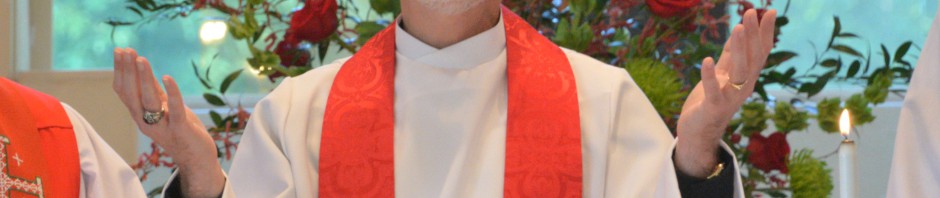






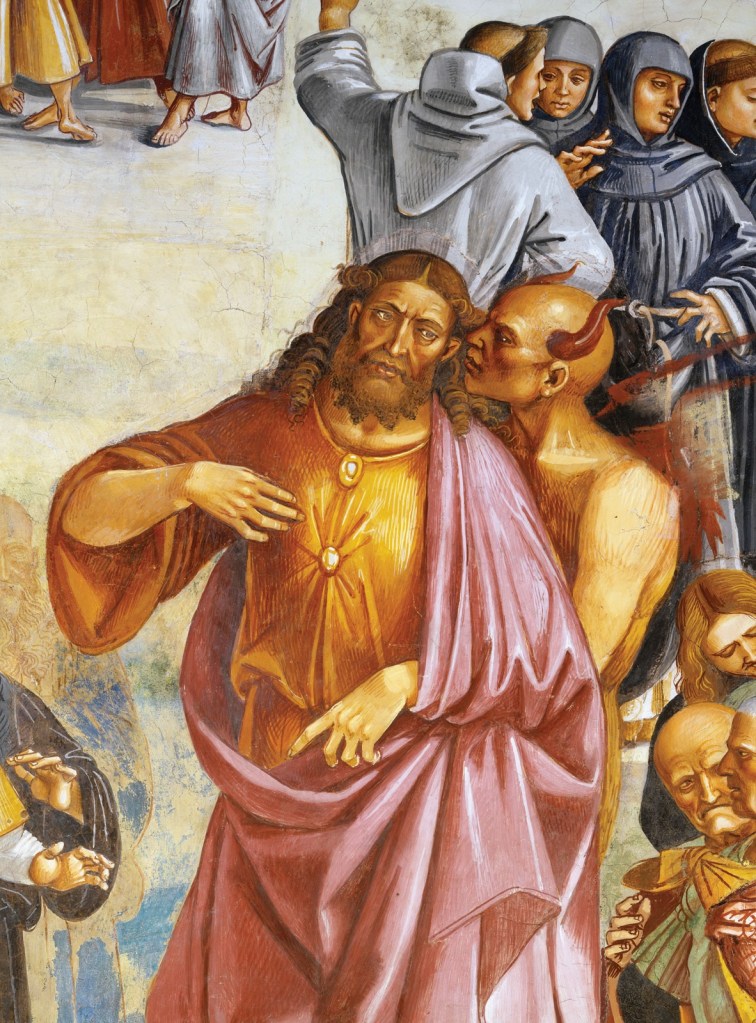




 First Blessings