First this: I grieve the death of Pope Francis not because I am a Roman Catholic — I am Anglican — but because he was/is a brother and father in Christ; a bishop of the one, holy catholic and Apostolic Church; the shepherd of 1.4 billion Christians; and the most visible and recognized face of the Church in the Western world. The See of Canterbury in the Church of England lies vacant and has done since Epiphany. Neither the Church of England nor the Anglican Communion has in place a titular head and the world little knows nor cares. The See of Rome is vacant and all eyes turn there in mourning for the late Pope and in expectation for the conclave and the selection of his successor. The Pope matters on the world stage in a way that other religious leaders simply do not. So, I too, an Anglican, grieve the death of Pope Francis.
I have found the public reactions to and reflections on his papacy interesting. Apparently, Pope Francis was both the devil and God’s gift of mercy to a rigid Church, a breath of spring promising new life and an evil wind blowing the Barque of St. Peter toward the shoals of apostasy, a much needed correction to the conservative orthodoxy of his immediate predecessor or a liberal activist held in check only by the power and inertia that characterizes the Catholic magisterium. This may be the theological and ecclesial legacy of Pope Francis: deep ambiguity — the ability to keep both ends of the theological spectrum confused and off balance. Perhaps that is not surprising from a Jesuit, or so the caricature goes. It is a trait worthy of the great historical Anglican divines at any rate. It is a trait perhaps born from abounding love insufficiently disciplined by discernment.
History will judge Pope Francis’ legacy. God will judge his service. In Francis’ own words: Who am I to judge? May the Lord bless his servant Francis and have mercy on me, a sinner.
Many commentators — from the “talking heads” of the media to the “man on the street” captured in candid interviews — have noted, with great approval, the simplicity of Pope Francis, his rapport with the “common man,” his refusal of the grand trappings of the papacy. Francis did not dress as a pope dresses, live where a pope lives, eat what a pope eats. As Jimmy Carter was to the U.S. presidency, so Francis was to the papacy — just a simple man, just one of us. Perhaps that is the answer to the chorus from Joan Osborne’s song “One Of Us:”
What if God was one of us Just a slob like one of us Just a stranger on the bus Tryin’ to make His way home?
I mean no disrespect and no irreverence by that. This insistence on identification with the common man can flow naturally from great humility, as I am confident it did with Pope Francis. It can also flow from a manipulative, performative, humbler-than-thou attitude: a mere affectation, a lack of discernment, or a failure to appreciate the tradition. Think here of a young, “hyper-relevant,” non-denominational, evangelical preacher in t-shirt and ripped jeans prowling the stage in the darkened auditorium filled with the mist of multiple smoke machines. Nor is Anglicanism immune from this drive toward commonality run amok. Lord, have mercy.
The dark side of simplicity is iconoclasm, or, in my own tradition’s history, a Puritanism that paints over images, shatters stained glass windows, removes the Cross from the chancel and candles from the altar, eschews stoles and chasubles, and prefers brutalist church architecture to the grandeur of the gothic cathedral. The dark side of simplicity is sterility, bare white walls and ceilings replacing the word manifest in shape and form and color. The dark side of simplicity is the common denominator, the desecration of the holy by making it too readily accessible, too ordinary: a sacrifice which costs nothing, a god before whose presence no one needs veil his face or put off his sandals — a burning bush used to roast hot dogs and make s’mores.
I don’t want my bishop to be ordinary, to be just one of the guys. By his office he is a successor of the Apostles. I want a bishop who inspires me, who, by his words and example, calls me to holiness, who causes me to lift my eyes and my heart to God. I want a church building that takes my breath away with beauty because overwhelming beauty is an attribute of God. I want my church to sound different — in its music and worship and teaching — than the shopping mall or workplace or radio; to smell different — yes, the subtle aroma of burning candles and the pungency of incense; to look different in its art and architecture than the functional, pagan world around me. I want to say as did the representatives of Kiev Rus when first witnessing Orthodox worship, “Truly we did not know if we were in heaven or on earth, for never have we seen such beauty!” Why else would the desperately poor contribute to and work on the construction of the great cathedrals generation after generation? In their poverty, the cathedrals gave them a signpost of beauty and grandeur pointing to God and to hope.
My father Merl and my mother Kathleen were close friends with their long-time preacher Bob Black and his wife Blanche. They ate together, fished together — they shared life and friendship together over many decades. And after years of that, it was always, Merl, Kathleen, Blanche, and Mr. (or Preacher) Black — never Bob to my mother and father. He was both common in his person and set apart in his vocation. That is the opposite of ambiguity. That is recognition that holiness matters, that holiness, in part, means “set apart.” It is recognizing, in the person of His servant, that God is both immanent and transcendent, or, as Mr. Beaver says of Aslan, not safe but good.
Our culture has forgotten holiness and has no appreciation for beauty, but it longs for both. It transgresses everything; it knows more of pornography than of covenantal marital intimacy. It chooses the common, the mediocre, so that it can feel better about its own deficiencies, its own baseness. In the midst of that, it needs a church that is resolutely dedicated to goodness, truth, and beauty; a church that seeks to lift heart and mind and eyes to heaven; a church that does not make the Lord God Almighty common and ordinary. This is not a commentary on or a judgment of Pope Francis and his commitment to simplicity: far from it. But his death and the outpouring of public admiration for his simplicity and commonality has stirred my thinking. What the people think they want is not always what they truly need.
I witnessed a miracle yesterday, a parting of the veil between heaven and earth on Good Friday. That day is always theologically challenging. How do you explain the cross? How do you make sense of the death of God? And even here, some will choke on that language — the death of God — and rightly so; it is an affront to our reason, though the Church’s belief declares it is so. Just as Mary was Theotokos — the God-bearer — so, too, the cross. The One it bore was God; the One who died on it was God. If God was born of the Virgin Mary in Bethlehem, then God also died on the cross outside Jerusalem. We can, and we must make fine theological distinctions about the two natures of Christ — divine and human — in one Person. We must be faithful to the Creeds, to Chalcedon. Still, Good Friday is always theologically challenging. How do you explain the cross? How do you make sense of the death of God?
So, in our minds, in our churches, in our liturgies we often build walls around the cross — walls meant to honor the cross, of course, but also to protect the faithful from the theological dissonance of it or to explain that dissonance away, as if that were possible. Sermons, hymns, prayers — all these good and very good things — become stones in those walls. But yesterday, I witnessed a miracle. The walls came down. The bare cross, in all its stark reality, was planted near the altar rail and the faithful were invited to come to it — to be confronted by it — and to offer their acts of devotion to the Lord who had suffered there and died there. The nave of this church became Golgotha, and there was no hiding from the cross. Nor were there any more attempts to explain it: theology later, devotion now.
One by one they came. Some knelt — some with pain and difficulty due to age or injury. Some grasped the wood of the cross as a drowning man might grasp a rope thrown into the water. Some touched it gently as one might touch a coffin when saying goodbye one last time. Some made the sign of the cross and stood with bowed head. Some — not a few — cried. One by one they came: children who had little notion of what they were doing, but being formed by it nonetheless; the elderly — among whom I must now count myself — having, through the years, known their own suffering and loss and perhaps sensing their own bodily mortality more now than before; men and women, sinners all, drawn to the cross as to a beacon of hope in the midst of despair. I witnessed a miracle yesterday: the Communion of Saints in this little place, Saints being drawn inexorably to the cross, where no more words were necessary, where no explanation beyond love and mercy was possible, to the intersection of heaven and earth.
I was recently asked to write an apology for baptism from an Anglican perspective. Those of you familiar with Anglicanism know how daunting a request that was, as if there is a single Anglican perspective on the Sacraments! The presenting issue was the necessity of baptism, and on that, we Anglicans do agree: baptism and the Lord’s Supper are generally necessary to salvation (BCP 1662, Catechism). So, I set out to write a brief apology for that understanding, not a detailed theology of baptism, but merely a biblical and ecclesial justification for it.
An Anglican Perspective on Baptism
Introduction: A Gift Imagine being presented a beautiful and precious gift and responding to the giver, “Yeah, but do I have to take it?” This is the way those in sacramental churches — like the Anglican Church — think of baptism: as a profoundly wonderful gift offered to us by God himself. So, we don’t question him, his motives, the gift itself, or our need for it; we simply receive it with gratitude and joy. To do anything else or anything less would seem to us ungrateful and dismissive of God’s love. We dare not ask God, “Yeah, but do I have to take it?” Nor do we really want to argue about baptism with our brothers and sisters in other churches. The two sacraments — baptism and the Lord’s Supper — are meant to bring all God’s family together, not to drive us apart. That being said, I will be glad to explain the Anglican understanding of baptism. It is the same understanding that the whole Church held for the first fifteen hundred years of its existence, until novel ideas about the sacraments, and even rejection of them, were introduced during the Reformation.
Commitment to Scripture and How We Read It Let’s start with this: the Anglican Church is committed to the authority of Scripture. The Anglican Church in North America (ACNA), the province of the Anglican Church to which I belong, makes this declaration:
We confess the canonical books of the Old and New Testaments to be the inspired Word of God, containing all things necessary for salvation, and to be the final authority and unchangeable standard for Christian faith and life.
So, we turn to Scripture for our understanding of baptism. How does Scripture speak to us about such matters? Many people simply look to the Bible as a rule book; that is, they look for a very simple and direct rule along the lines of “You shall do X,” or “You shall not do Y.” And such rules are certainly found in Scripture. But, that is not the only way — and perhaps not even the most important way — that Scripture directs us and orders our lives. When the prophet Nathan needed to convict King David of his sin against Uriah and Bathsheba, he told David a story. And, Jesus did the same in his extensive use of parables. So, Scripture also guides us through stories: real stories (history) and fictional stories (parables, proverbs, songs). The Bible also uses examples, foreshadowing, and figural patterns. For example, Melchizedek in the Old Testament is seen as a figure of Christ in the New Testament. Moses and Elijah are seen as symbols of the Law and Prophets in the New Testament account of the Transfiguration. In the Old Testament God appears on mountain tops (particularly Sinai) hidden by clouds and smoke. Think again of the New Testament account of the Transfiguration: Jesus on a mountain top hidden by a cloud. Is that a direct statement that Jesus is divine? No, but it is a figural statement that he is. I mention all this simply to say that we need to read Scripture broadly, as the ancient Church did, and not merely looking for rules. So, let’s give that a try with baptism.
Let’s start with Abram. When God chose to create a people for himself, Israel, he started with Abram and Sarai. He made a covenant with them: he would be their God and they would be his people. And he gave them a sign of the covenant; all males would be circumcised. If you wanted to belong to God’s people, this was the way; circumcision made you part of the family and marked you as part of the family. To reject circumcision was to reject God and to be excluded from his people. Believing in God wasn’t enough. God gave them something to do.
Now, notice how St. Paul sees circumcision in the Old Testament as a pre-figuring of baptism in the New Testament. It would be good to read Colossians 2:6-15 in full, but I’ll quote just a portion of that passage:
9 For in him [Jesus] the whole fullness of deity dwells bodily, 10 and you have been filled in him, who is the head of all rule and authority. 11 In him also you were circumcised with a circumcision made without hands, by putting off the body of the flesh, by the circumcision of Christ, 12 having been buried with him in baptism, in which you were also raised with him through faith in the powerful working of God, who raised him from the dead. 13 And you, who were dead in your trespasses and the uncircumcision of your flesh, God made alive together with him, having forgiven us all our trespasses, 14 by canceling the record of debt that stood against us with its legal demands. This he set aside, nailing it to the cross (Col 2:9-14).
What circumcision did for Israel in the Old Testament — making you part of the covenant and the people of God — baptism does in the New Testament. But baptism does even more: in baptism we die with Christ and are raised to new life with him, and we are forgiven all our trespasses. That’s the way St. Paul understood baptism — part of the way — and that’s how the Church understood it for fifteen hundred years. But, there is more.
Consider the Exodus. God used the plagues to deliver the Hebrews (Israel) from Egypt, but what did God use to save them? He used a symbol of baptism: the crossing of the Red Sea. God parted the waters, Israel went down into the Sea and across it, and when the Egyptian army tried to follow, they were destroyed by the water. Notice all the things at work in that image. Israel’s entering into the Sea was a final rejection of their old way of life in slavery to Egypt and entrance into a new life as God’s free people. The drowning of the Egyptian army was victory over the enemy of God’s people and the deliverance of God’s people from death. That is precisely what baptism offers: the rejection of the old life and the embrace of the new life in Christ, and the victory over sin and death. That is why an Anglican baptismal service begins with rejections of (1) the devil and all the spiritual forces of wickedness that rebel against God, (2) the empty promises and deadly deceits of this world that corrupt and destroy the creatures of God, and (3) the sinful desires of the flesh that draw you from the love of God. Then, comes the embrace of the new life in a series of questions: Do you (1) turn to Jesus Christ and confess him as your Lord and Savior? (2) joyfully receive the Christian Faith, as revealed in the Holy Scriptures of the Old and New Testaments? (3) [promise to] obediently keep God’s holy will and commandments, and walk in them all the days of your life? All this is a Red Sea moment.
After forty years of wandering in the wilderness, Israel is finally ready to enter the promised land, finally ready to receive the blessings of the covenant. And how do they do that? They cross the Jordan River when it was in flood stage. This is another symbol of baptism. They enter the water as exiles and wanderers and they come out on the other side to inherit all the promises of God. Again, that is what baptism does for us. It is the way in which we inherit/receive all the blessings of God’s new covenant with us in Christ.
This crossing of the Jordan was repeated generations later when Judah returned from exile in Babylon. Crossing the Jordan became a powerful symbol for the people — a symbol of coming home and of receiving God’s blessings. That is why John the Baptist doing his work at the Jordan was so significant and why Jesus being baptized there was so evocative: in Jesus, through baptism, we may all come home and receive God’s blessings. These stories all tie together to show the importance and the blessings of baptism.
There is more to be said about symbols of baptism in the Old Testament. Read 1 Peter 2:18-22 to see how St. Peter connects the flood and the ark with baptism. He concludes with this:
21 Baptism, which corresponds to this, now saves you, not as a removal of dirt from the body but as an appeal to God for a good conscience, through the resurrection of Jesus Christ, 22 who has gone into heaven and is at the right hand of God, with angels, authorities, and powers having been subjected to him.
Maybe you see now why I started out by comparing baptism to a great gift that God offers us. Who would ask, “Yeah, but do I have to take it?”
Another reason we Anglicans hold baptism to be so important is simply that Jesus commanded it. You can see that in Matthew 28:16-20:
16 Now the eleven disciples went to Galilee, to the mountain to which Jesus had directed them. 17 And when they saw him they worshiped him, but some doubted. 18 And Jesus came and said to them, “All authority in heaven and on earth has been given to me. 19 Go therefore and make disciples of all nations, baptizing them in the name of the Father and of the Son and of the Holy Spirit, 20 teaching them to observe all that I have commanded you. And behold, I am with you always, to the end of the age.”
If Jesus said to baptize — and certainly to be baptized — I am not inclined to question whether it is necessary or whether I have to do it or whether there is some other way to become part of Jesus’ family.
The “Puzzle” of Acts It is also interesting to note how often baptism appears in Acts. When someone heard and believed the Gospel, they were baptized; that is clear throughout the book. That shows how the earliest Church understood the Old Testament and the teachings/commands of Jesus. There was no arguing over it; they just did it. Notice in Acts 2:38 how St. Peter connects repentance and baptism with the forgiveness of sins and the outpouring of the Holy Spirit. Is it possible to live the Christian life without forgiveness and the indwelling of the Holy Spirit? St. Peter doesn’t seem to think so.
Now, let me address an issue with Acts. We modern people like precise patterns and instructions. A comes first, followed by B, then C and all the way down the alphabet: always in this precise order. We apparently like that rigid organization more than God does. Sometimes in Acts the Holy Spirit comes first, followed by baptism (as with Cornelius and his household). Sometimes it’s the other way around. But, the two are linked together even though the order varies. It is not either-or but both-and.
Sacrament, Not Magic I also want to be clear about this: baptism is not magic. It is a means — a sacrament — through which God acts, but it is not automatic. We never force God to act by doing something. So, no one can state with confidence: I have been baptized, therefore I am saved. Baptism does not stand alone. Faith, repentance, baptism, the Lord’s Supper, obedience, life in the Church: all of these are necessary for living the Christ-life, for growing into the likeness of Christ, which is what salvation really is. Baptism in no more magic than saying, “I believe that Jesus is the Christ and I accept him as my Lord and Savior.” Neither one of those alone is sufficient. All these things belong together throughout the whole of one’s life. We are “saved” with our last breath.
Not for Me To Say One other note specifically about baptism. We are bound to baptism in a way that God is not. Here is what I mean. God is free to save someone apart from baptism — God is free to do anything he wants to in keeping with his character — but the Church cannot assure someone of his salvation apart from baptism. Suppose someone were to challenge me by saying, “I have not been baptized. Are you saying I am not saved?” My answer would be, “No, I’m not saying that at all. It is not for me to say. God might choose to save you apart from baptism, but he has not promised in Scripture to do that. Instead, he has told us and shown us repeatedly that he works through baptism for salvation and he has commanded us to be baptized. So, why resist it? Why not just do as he has said?”
Be Baptized To the extent that I am allowed to speak for all Anglicans everywhere, this is what we believe about baptism. It is what the vast majority of Christians have believed — and still do believe — from the very beginning of the Church (with the Apostles) until now. It is only in the last five hundred years that any significant portion of the Church has thought and taught otherwise. So, really the burden of proof is on those who want to change the Church’s ancient doctrine and say that baptism is not necessary. I really don’t understand the desire to do that, when it is easier simply to do what Christ and the Apostles said to do and did themselves: be baptized.
Wednesday of Holy Week (Isa 50:4-9; Ps 69:6-14, 21-22; Heb 9:11-28, Matt 26:1-25)
Two Ways and the Road Not Taken
Collect Assist us mercifully with your grace, Lord God of our salvation, that we may enter with joy upon the meditation of those mighty acts by which you have promised us life and immortality; through Jesus Christ our Lord, who lives and reigns with you and the Holy Spirit, one God, for ever and ever. Amen.
Both here and in all your churches throughout the whole world, we adore you, O Christ, and we bless you, because by your Holy Cross you have redeemed the world. Amen.
YOU may remember this poem from your high school English class: The Road Not Taken, by Robert Frost:
Two roads diverged in a yellow wood, And sorry I could not travel both And be one traveler, long I stood And looked down one as far as I could To where it bent in the undergrowth;
Then took the other, as just as fair, And having perhaps the better claim, Because it was grassy and wanted wear; Though as for that the passing there Had worn them really about the same,
And both that morning equally lay In leaves no step had trodden black. Oh, I kept the first for another day! Yet knowing how way leads on to way, I doubted if I should ever come back.
I shall be telling this with a sigh Somewhere ages and ages hence: Two roads diverged in a wood, and I— I took the one less traveled by, And that has made all the difference.
In this poem — which was really intended as a joke for a fellow poet and indecisive hiking companion — Frost enters the great Two Ways moral tradition of Scripture. It is there from the earliest accounts: choices — decisions, two ways — and their consequences. Adam and Eve must choose between obedience to God and autonomy, between trusting God to define what is good and bad and the desire to have the knowledge of good and evil themselves, between being content to be creatures and trying to become like God by following the serpent, between life and death: two ways in each case. Two roads diverged in the Garden, and the one they took made all the difference. Cain must choose between resisting the sin crouching at his door and giving in to his basest desires to strike down his brother. Two roads diverged, and the one Cain chose made all the difference. Abram must choose to stay in Ur of the Chaldees with his familiar gods or else to strike out to an unknown destination on the word of an unknown God: truly two roads diverging. And so it goes throughout Scripture.
The two ways appear again at the end of Joshua’s story, in his farewell charge and address to Israel:
14 “Now therefore fear the Lord and serve him in sincerity and in faithfulness. Put away the gods that your fathers served beyond the River and in Egypt, and serve the Lord. 15 And if it is evil in your eyes to serve the Lord, choose this day whom you will serve, whether the gods your fathers served in the region beyond the River, or the gods of the Amorites in whose land you dwell. But as for me and my house, we will serve the Lord” (Joshua 24:14-15, ESV throughout unless otherwise noted).
Two ways: serve the Lord or else serve the gods of the nations.
The Two Ways tradition flowers in the Old Testament wisdom literature. Psalm 1 introduces it by distinguishing between the way of the righteous and the way of the sinners, and many of the following psalms reinforce it.
1 Blessed is the man who has not walked in the counsel of the ungodly, nor stood in the way of sinners, and has not sat in the seat of the scornful;
2 But his delight is in the law of the Lᴏʀᴅ, and on his law will he meditate day and night.
3 And he shall be like a tree planted by the waterside, that will bring forth his fruit in due ‘season.
4 His leaf also shall not wither; and look, whatever he does, it shall prosper.
5 As for the ungodly, it is not so with them; but they are like the chaff, which the wind scatters away from the face of the earth.
6 Therefore the ungodly shall not be able to stand in the judgment, neither the sinners in the congregation of the righteous.
7 For the Lᴏʀᴅ knows the way of the righteous, but the way of the ungodly shall perish (BCP 2019, p. 270).
Two ways: the way of the righteous which leads to fruitfulness and the way of the sinners, the ungodly, which leads to destruction. And so it goes throughout the Psalms.
The Two Ways in Proverbs are wisdom or knowledge on the one path and foolishness on the other, as we see in Chapter 1:
7 The fear of the Lord is the beginning of knowledge; fools despise wisdom and instruction (Prov 1:7).
Torah, Prophets, Writings: the Old Testament is filled with the Two Ways tradition. Roads diverge. Choices must be made. And those choices make all the difference.
It’s not just the Old Testament: the New Testament is filled with the Two Ways tradition also. At the end of the Sermon on the Mount, Jesus contrasts the wise man who built his house upon the rock, upon the foundation of Jesus’ words, to the foolish man who built his house on the sand of easy, conventional wisdom (cf Matt 7:24-27). Two ways, and which way you choose makes all the difference, especially when the rains come and the wind blows and the waters rise. St. Paul, writing to the Corinthian Church, marks the diverging roads clearly by planting the cross at the fork of the two ways:
18 For the word of the cross is folly to those who are perishing, but to us who are being saved it is the power of God (1 Cor 1:18).
Deadly folly or God’s saving power: these are the two ways delineated by the cross.
And again he writes:
25 For the foolishness of God is wiser than men, and the weakness of God is stronger than men (1 Cor 1:25).
Of course St. Paul writes ironically here, encouraging the Corinthians, and us, to choose the path of God’s foolishness and weakness, which is really the way of wisdom and strength.
We could continue to add examples but I think the point is clear: the Two Ways tradition is a major scriptural theme. We must make decisions — we must choose one path and not another — and which path we choose makes all the difference.
Enough abstraction: what does this look like with flesh on it? Well, that is precisely the question our Gospel reading answers: two ways, two people, two choices — choices which make all the difference.
It is Wednesday night in Holy Week. No one except Jesus knows what is to come, but there has been excitement and tension in the air since Sunday last with the raucous entrance into Jerusalem, an inaugural parade of sorts, a flaunting of Rome’s authority. The cleansing of the Temple escalated matters with its public chastisement of scribes and Sadducees and priests. The next couple of days were filled with parables, with harsh public debate, with woes pronounced upon Scribes and Pharisees, and with prophecies of the end of Jerusalem and the Temple — the final judgment. Nerves are strained and raw.
But now, it is midweek —Wednesday night — and Jesus has left Jerusalem for Bethany, left controversy behind — very briefly — for the company of friends, for a meal together.
6 Now when Jesus was at Bethany in the house of Simon the leper, 7 a woman came up to him with an alabaster flask of very expensive ointment, and she poured it on his head as he reclined at table. 8 And when the disciples saw it, they were indignant, saying, “Why this waste? 9 For this could have been sold for a large sum and given to the poor.” 10 But Jesus, aware of this, said to them, “Why do you trouble the woman? For she has done a beautiful thing to me. 11 For you always have the poor with you, but you will not always have me. 12 In pouring this ointment on my body, she has done it to prepare me for burial. 13 Truly, I say to you, wherever this gospel is proclaimed in the whole world, what she has done will also be told in memory of her” (Matt 26:6-13).
St. John has a parallel account in which he gives a few more details: (1) he identifies the woman with the ointment as Mary, the sister of Lazarus; (2) he names the disciple who raised the complaint about the monetary waste — 300 denarii — as Judas Iscariot; (3) and he provides a window into Judas’s true motivation — greed:
4 But Judas Iscariot, one of his disciples (he who was about to betray him), said, 5 “Why was this ointment not sold for three hundred denarii and given to the poor?” 6 He said this, not because he cared about the poor, but because he was a thief, and having charge of the moneybag he used to help himself to what was put into it John 12:4-6).
Now, back to the story as told by St. Matthew. Mary has “squandered” a year’s wages in an extravagant act of devotion. She has been castigated publicly by Judas, prominently, and apparently also by some others of the disciples. Jesus has praised her for the beautiful thing she has done even linking it, a bit cryptically, to his burial, and he has publicly rebuked Judas for his condemnation of the woman. And then there is this word:
14 Then one of the twelve, whose name was Judas Iscariot, went to the chief priests 15 and said, “What will you give me if I deliver him over to you?” And they paid him thirty pieces of silver. 16 And from that moment he sought an opportunity to betray him (Matt 26:14-16).
And here we see the Two Ways tradition fleshed out in the lives of two of Jesus’ disciples: Mary and Judas. Remember that St. Paul placed the cross at the diverging of paths. The Gospels — this story and others — place Jesus there. Every road ultimately leads to Jesus, to a decision about him; and there the road splits in two, the paths diverge, a choice must be made, and the choice — the road taken or not taken — makes all the difference.
All throughout the Gospels we find these moments when the road splits. “Come, follow me,” Jesus says, and a choice must be made. “Do you want to go away as well?” Jesus asks his disciples, and the road forks. “Who do you say that I am?” comes the question with only two answers: You are the Christ, the Son of God or else you are not. Which road will you take? Your choice, the road you decide to follow, makes all the difference.
Let’s continue with this story of Mary and Judas, just a little further, just a matter of a few days. Late on Thursday night Judas betrays Jesus, not for his stolen share of the 300 denarii, but for a paltry 30 pieces of silver, the price of a slave, the traitor’s wages. There is no psychologizing of Judas in the Gospels, no hand-wringing over why he did why he did. He was a thief and an opportunist who sold his soul to satan for pocket change. There is no weeping for him, only warning for us.
The next morning, Friday, Judas encounters Jesus one last time, and finds himself standing at a final fork in the road.
3 Then when Judas, his betrayer, saw that Jesus was condemned, he changed his mind and brought back the thirty pieces of silver to the chief priests and the elders, 4 saying, “I have sinned by betraying innocent blood.” They said, “What is that to us? See to it yourself.” 5 And throwing down the pieces of silver into the temple, he departed, and he went and hanged himself (Matt 27:3-5).
At that moment, at the moment Judas realized his great sin, the road at his feet forked into the same two paths that face each of us when we realize our own sin: one path leads to repentance and hope, the other to hardness of heart or despair. Once again, Judas chose badly.
And what of Mary when she learned that Jesus had been condemned? We have no Gospel word naming her, but we are certain that female followers of Jesus kept vigil at the cross; I have no reason to doubt that Mary was present.
Skip ahead to the morning of the first day of the week, Resurrection Morning. Where is Judas? Perhaps still hanging, perhaps fallen to the ground by now, perhaps awaiting his burial in the Potter’s Field that the wages of his treachery had purchased. Where was his soul? That is known only to God, and we dare not limit God’s mercy. But no reason is given us for optimism.
And Mary? Tradition tells us that she is among the Myrrh Bearing Women, making their way to the tomb to properly anoint Jesus’ body for burial. Though she doesn’t know it, and couldn’t imagine it, she is on the way to the “Great Reveal,” to the good news of the resurrection of the Lord and the defeat of death itself.
Two people, two ways, two very different ends. The road you choose makes all the difference.
I shall be telling this with a sigh Somewhere ages and ages hence: Two roads diverged in a wood, and I— I took the one less traveled by, And that has made all the difference.
The Annunciation of our Lord Jesus Christ to the Virgin Mary Fr. John A. Roop (Luke 1:26-38)
On this Feast of the Annunciation of our Lord Jesus Christ to the Virgin Mary, let us pray.
O Lord, arise, help us, and deliver us for thy Name’s sake.
O GOD, we have heard with our ears, and our fathers have declared unto us, the noble works that thou didst in their days, and in the old time before them.
O Lord, arise, help us, and deliver us for thine honor.
Glory be to the Father, and to the Son, and to the Holy Ghost;
As it was in the beginning, is now, and ever shall be, world without end. Amen.
(from The Litany, BCP 1928)
These are words from The Litany in the Book of Common Prayer 1928 — full of implied questions and pleas, really.
WHERE IS THE LORD in the midst of all this? Why does he seem so far from our groanings and so deaf to our prayers? These words echo Psalm 77:
5 I consider the days of old; * I call to remembrance the years that are past.
6 In the night I commune with my own heart; * I meditate and search my spirit.
7 Will the Lord cast me off for ever, * and will he no more show his favor?
8 Is his mercy gone for ever, * and has his promise come utterly to an end for evermore?
9 Has God forgotten to be gracious, * and will he withhold his loving-kindness in displeasure?
10 And I said, “Has his right hand become weak; * has the hand of the Most High lost its strength?” (Psalm 77, BCP 2019)
The Psalmist was pouring out his heart personally. But his words capture the national longing of first-century Israel, as the Jews prayed these Psalms and pondered their plight.
Five hundred years earlier the Jews had returned from geographic exile in Babylon. But, in every way that really mattered, they were still in exile in the first century.
Contrary to God’s promise to David — or so it seemed — there was no king from David’s house sitting on the throne of Israel. Had God not promised David an everlasting house, an eternal kingdom?
Contrary to the hope of Israel, the temple — though it had been beautifully restored/rebuilt by Herod the Great — was an empty shell. The ark of the covenant was lost and the shekinah glory of God, the very presence of God, was absent from the Holy of Holies. Ezekiel had witnessed God’s exit from the Temple before its destruction, and God apparently had not returned.
Contrary to Israel’s longing, God was silent. For some four hundred years, no word of God had come to and through the prophets; there were no prophets left in the land. Amos had been right:
11 “Behold, the days are coming,” declares the Lord God, “when I will send a famine on the land— not a famine of bread, nor a thirst for water, but of hearing the words of the Lord” (Amos 8:11, ESV throughout).
Where is the Lord in the midst of all this? Why does he seem so far from our groanings and so deaf to our prayers? Has he broken his covenant, the covenant he made with our Fathers: with Abraham and Isaac and Jacob, with David?
26 In the sixth month the angel Gabriel was sent from God to a city of Galilee named Nazareth, 27 to a virgin betrothed to a man whose name was Joseph, of the house of David. And the virgin’s name was Mary (Lk 1:26-27).
Has God forgotten Israel? No: this is his answer. Has God broken his covenant with Abraham, Isaac, Jacob, and David? No: this is his answer. Has the hand of the Most High lost its strength? No: this is his answer.
The story of the Annunciation is God’s answer to his people’s lament and longing. It is a lovely story. But it is also powerful and mysterious, and we cannot let its beauty obscure these great realities. God has come at last — after generations of faithful laments and prayers and longings — God has come at last to rescue and redeem his people: not as they expected, but as God knows and wills, as God has decreed from the foundations of the world.
28 And he [Gabriel] came to her [Mary] and said, “Greetings, O favored one, the Lord is with you!” 29 But she was greatly troubled at the saying, and tried to discern what sort of greeting this might be. 30 And the angel said to her, “Do not be afraid, Mary, for you have found favor with God. 31 And behold, you will conceive in your womb and bear a son, and you shall call his name Jesus (Lk 1:28-31).
We sometimes read the account of the Annunciation tentatively, as if holding our breath waiting for and hoping for Mary’s yes to Gabriel’s strange greeting. But look again. This is not an invitation; this is a proclamation of what God will do through Mary, his favored one, the one who is blessed among women, the one who is full of grace. God does not wait for or need Mary’s yes in this moment because he has blessed her, because he has filled her with grace, because her life has become a yes, because she could no more bring herself to refuse this blessing than God could break his covenant with Israel. God and Mary are in this together, each participating in the great mystery of the Incarnation. When Mary says to Gabriel, “Behold, I am the servant of the Lord; let it be to me according to your word,” it is more a statement of fact, this is who I am — it is more a summary of her entire life — than it is a yes to this one particular moment. God was not worried that Mary would say, “No, thank you; I’d rather not.” God does not stand helpless before his creation in that, or in any, way. As surely,
…as rain and snow fall from the heavens and return not again but water the earth, Bringing forth life and giving growth, seed for sowing and bread for eating, So is God’s word that goes forth from his mouth; it will not return to him empty; But it will accomplish that which he purposed, and prosper in that for which he sent it (Quaerite Dominum, selected verses, adapted).
You will conceive in your womb and bear a son, and you shall call his name Jesus.
If Mary conceives in her womb and bears a son, this child will be a man, fully human. That is exactly what Mary expects. She is young, very likely, but she is not naive. She knows the ways of men and women. She knows of sexual relations. But she also knows that she is a virgin, and must remain so throughout her betrothal. And it is precisely that which confuses her. How shall this be? What shall I do?
But the Annunciation is not about what Mary is to do; it is a proclamation of what God is doing through Mary. It is a proclamation of prevenient grace.
35 And the angel answered her, “The Holy Spirit will come upon you, and the power of the Most High will overshadow you; therefore the child to be born will be called holy — the Son of God” (Lk 1:35).
God the Father, the Most High, is acting. God the Holy Spirit is being set loose in the world. God the Son is being made flesh to dwell among us. This is the answer not only to Mary’s questions. This is the answer to Israel’s prayers and longing. This is the answer to creation’s groaning for release. This is the answer to Adam’s sin and the bondage of all his sons and daughters under sin and death. This is the beginning of the gospel of Jesus Christ, the Son of God (cf Mk 1:1). Yes, the one to be conceived in Mary’s womb is fully human, but he is also fully God. He is Jesus, the one who saves. He is Emmanuel — God with us.
32 He will be great and will be called the Son of the Most High. And the Lord God will give to him the throne of his father David, 33 and he will reign over the house of Jacob forever, and of his kingdom there will be no end” (Lk 1:32-33).
And where does this annunciation lead? In the words of our liturgy:
In obedience to your will, he stretched out his arms upon the Cross and offered himself once for all, that by his suffering and death we might be saved. By his resurrection he broke the bonds of death, trampling Hell and Satan under his feet. As our great high priest, he ascended to your right hand in glory, that we might come with confidence before the throne of grace (Renewed Ancient Text, BCP 2019, p. 133).
The Annunciation is the beginning of the Gospel proclamation. There is a straight line from the Annunciation through the Crucifixion, Resurrection, Ascension, Reign, and glorious Return of the one to be conceived in Mary’s womb: son of man and Son of God, to whom be the glory, now and for ever, world without end. Amen.
Apostles Anglican Church Fr. John A. Roop 3 Lent 2025
Repent, for the Kingdom of Heaven Is at Hand: A Reflection on Luke 13:1-17
17 From that time Jesus began to preach, saying, “Repent, for the kingdom of heaven is at hand” (Matt 4:17, ESV throughout unless otherwise noted).
From the very beginning, this brief announcement, “Repent, for the kingdom of heaven is at hand,” was the beating heart of Jesus’ gospel proclamation; his every word and deed were commentary on it, examples of it, and signposts pointing toward it. Had Jesus’ ministry been a modern political campaign, that slogan — “Repent, for the kingdom of heaven is at hand.” — would have emblazoned billboards, decorated car bumpers, flooded the internet with memes, and been printed on countless baseball caps and t-shirts. I can imagine Jesus using it at every stump speech throughout Galilee, into Judea and even in Samaria. And yet, as central as it was to his ministry, it was little understood or embraced then as the Gospels show; I am not certain it is much better understood or embraced today as the state of the world, the state of the Church, and the state of my own heart show.
“Repent, for the kingdom of heaven is at hand.” It is a two part statement, indicative and imperative, a truth compelling a response. The kingdom of heaven is at hand; that is indicative. It points out, it brings to notice something not immediately visible to the casual observer, something not obvious on the face of it (The American Heritage Dictionary, 5th Edition, online). Volumes have been written on that simple statement, attempting to disclose its depth of meaning. For our purposes, this should suffice: “The kingdom of heaven is at hand” means that God is on the move to fulfill his covenants, to deliver his people, to return them from exile, to right all that is wrong, and finally to dwell among his people as their God. It was a message to Israel, first and foremost, and then, through Israel, to the world. This is what Israel — the Judeans — had been hoping for and praying for for five centuries. And now, this Jesus says it’s here; the kingdom of heaven is at hand.
Now, that bring us to the imperative, to the required action: Repent. If you want to enter into the kingdom of heaven, if you want to engage with, to participate in what God is doing in the world, there is only one way: repent. And here, if we are to have any chance of understanding what Jesus meant, we have to disabuse ourselves of bad translations, partial meanings, Medieval theology, and Reformation debates. Sometimes a story is the best way to disclose meaning.
16 And behold, a man came up to [Jesus], saying, “Teacher, what good deed must I do to have eternal life?” 17 And he said to him, “Why do you ask me about what is good? There is only one who is good. If you would enter life, keep the commandments.” 18 He said to him, “Which ones?” And Jesus said, “You shall not murder, You shall not commit adultery, You shall not steal, You shall not bear false witness, 19 Honor your father and mother, and, You shall love your neighbor as yourself.” 20 The young man said to him, “All these I have kept. What do I still lack?” 21 Jesus said to him, “If you would be perfect, go, sell what you possess and give to the poor, and you will have treasure in heaven; and come, follow me.” 22 When the young man heard this he went away sorrowful, for he had great possessions.
23 And Jesus said to his disciples, “Truly, I say to you, only with difficulty will a rich person enter the kingdom of heaven” (Matt 19:16-23).
Let’s be clear about this, because Jesus made it explicit. This whole encounter is a kingdom of heaven moment. The man doesn’t use those words — he asks about gaining eternal life — but Jesus reframes the man’s language when he comments, “Only with difficulty will a rich person enter the kingdom of heaven.” Regardless of what the man thought he was asking, he was really seeking the kingdom of heaven. And Jesus told him what the required repentance looked like for him: “If you would be perfect, go, sell what you possess and give to the poor, and you will have treasure in heaven; and come, follow me.” Repent, for the kingdom of heaven is at hand. Notice — this is important — there is no talk here about sin. The man says he has kept the commandments, and Jesus apparently accepts his claim as true. There is no talk about godly sorrow. The required repentance is something much deeper, something much more fundamental. To repent (μετανοέω) is to change one’s mind, to rethink one’s purposes. It is not sweeping the dirty floor of a home, but bulldozing the house and rebuilding from the foundation up, laying a different foundation entirely. The man’s foundation of wealth and privilege and security was far too weak, too fragile, to bear the weight of the kingdom of heaven. He had to tear it down and start over; he had to repent. And sadly, he could not bring himself to do that.
We see this call for repentance as radical reorientation, as re-thinking the very foundation of life, throughout Scripture. Jesus tells Nicodemus that he must be born again, as total a change as you can imagine. His old life is not consonant with the kingdom of heaven. St. Paul says repentance required him to relinquish every single thing that had been dear to him — every accolade, every achievement, every badge of honor and identity — in order to gain Christ, in order to enter the kingdom of heaven. Everyone that Jesus called, he called away from an old life, an old way of being, into a new life: repentance.
Now, this brings us to our Gospel text this morning. Jesus is on the move. Following the Transfiguration, he set his face steadfastly toward Jerusalem, even knowing what was to come there, precisely knowing what was to come there. He is surrounded by his core followers, a group of loyal Galilean disciples. As he goes through towns and villages, the crowd around him swells: some followers, some curiosity seekers, probably some largely disinterested fellow pilgrims just on the way to Jerusalem for the Passover.
1 There were some present at that very time who told him about the Galileans whose blood Pilate had mingled with their sacrifices (Luke 13:1).
We have no other details about this event, but it isn’t difficult to construct a plausible scenario. Galilee was a hot-bed of discontent and resistance against Roman rule; there was enough mutual hatred and suspicion to go around. Some Galileans had probably gone to Jerusalem recently to offer sacrifice. They had said the wrong thing to the wrong person or looked the wrong way at the wrong Roman soldier or maybe they had done nothing at all but talk too loudly in their distinctive hillbilly Galilean accent. They may just have caught Pilate on a bad day. But the order was given and the soldiers came, and they were struck down, their blood flowing like the blood of their sacrifices, metaphorically, if not actually, mingling with it.
Why tell Jesus this? Well, he is a Galilean, after all, leading a group of Galileans into the same temple precinct where the blood might still stain the pavement. Nerves are raw; tensions are high. This is a warning of what could happen, of the kind of situation he should expect. He might ought to know. But, as if often the case, Jesus’ response is not direct, but slant; it appears a non sequitur.
2 And he answered them, “Do you think that these Galileans were worse sinners than all the other Galileans, because they suffered in this way? 3 No, I tell you; but unless you repent, you will all likewise perish” (Luke 13:2-3).
And there it is again, in an unexpected place, this imperative to repent: unless you repent, you will all likewise perish. Once again, Jesus isn’t talking about being sorry for some minor infraction of the Law, about moral anguish over that one fleeting covetous thought you had about your neighbor’s donkey. It is deeper than that; it’s a rich, young man sell-all-that-you-have moment of decision. You have built your life upon the wrong foundation, in fact, upon no foundation at all. Like a foolish man you have built the house of your life on sand. And the rains will fall, and the floods will come, and the winds will blow — sooner than you think — and that house will fall. God has called you to be a holy people, a kingdom of priests, a light to the nations and you have squandered that on petty politics, bad religion, and minimal physical security. Repent or perish.
24 “Everyone then who hears these words of mine and does them will be like a wise man who built his house on the rock. 25 And the rain fell, and the floods came, and the winds blew and beat on that house, but it did not fall, because it had been founded on the rock” (Matt 7:24-25).
Repent, for the kingdom of heaven is at hand. Build a new house on a secure foundation.
And then Jesus doubles down; he tells them of disaster:
4 “Or those eighteen on whom the tower in Siloam fell and killed them: do you think that they were worse offenders than all the others who lived in Jerusalem? 5 No, I tell you; but unless you repent, you will all likewise perish” (Luke 13:4-5).
Again, no details about the event, but that doesn’t matter. Jesus’ point is clear. You are no different than the Galileans. You are no better than the eighteen in Siloam. You are not exempt from the coming judgment. Repent or perish.
And then, in a parable, Jesus tells them the tenuous, precarious nature of their situation:
“A man had a fig tree planted in his vineyard, and he came seeking fruit on it and found none. 7 And he said to the vinedresser, ‘Look, for three years now I have come seeking fruit on this fig tree, and I find none. Cut it down. Why should it use up the ground?’ 8 And he answered him, ‘Sir, let it alone this year also, until I dig around it and put on manure. 9 Then if it should bear fruit next year, well and good; but if not, you can cut it down’ ” (Luke 13:6b-9).
If this is allegory, no key is provided in the text. There are multiple possibilities, but resonances with the prophets and with others of Jesus’ own parables suggest this as a likelihood: God is the man who had the fig tree planted, Jesus is the vinedresser, and Israel is the fig tree.
Israel is God’s own fig tree, planted in a vineyard — in a land flowing with milk and honey — nurtured and tended. And yet, it has failed to bear fruit, year after year, generation after generation. And now God lays the axe to the root of Israel. But before the axe falls, Jesus the vinedresser, pleads for mercy, for one last chance to make Israel fruitful: just the rest of this year to dig and fertilize, just a few more days or weeks to proclaim, “Repent, for the kingdom of heaven is at hand.” The situation is dire; the time of destruction is imminent. Notice how the parable is left open ended; there is one brief moment of hope, one life-or-death question: Will Israel repent? We don’t have to wait long for the answer: just a few days, perhaps a few weeks, just until Jesus reaches Jerusalem:
18 In the morning, as he was returning to the city, he became hungry. 19 And seeing a fig tree by the wayside, he went to it and found nothing on it but only leaves. And he said to it, “May no fruit ever come from you again!” And the fig tree withered at once (Matt 21:18-19).
There is a time for repentance — a finite time — and after that, judgment. Repent, for the kingdom of heaven is at hand.
Well, here a compassionate preacher would tell a joke to lighten this dark mood a bit.
So, an art history major major, an MDiv seminarian, and an engineering major have each been sentenced to death by guillotine. Don’t ask why; it’s just a joke, a bit of gallows humor. The art major puts his head in the cradle. The executioner pulls the rope…and nothing. The blade doesn’t fall. “Well,” he says to his surprised intended victim, “we are only allowed to try this once. You are free to go.” The seminarian takes his place kneeling under the blade. The executioner pulls the rope…and again nothing. He, too, is released. The engineer kneels, places his head in the cradle, looks upward at the blade, and says, “Hey, wait a minute. I see the problem!”
Of course, this is no joke. There is a time for repentance, for respite from destruction. But it is a finite time. After that, the blade — be it axe or guillotine — will fall. Repent, for the kingdom of heaven is at hand, and that kingdom comes either as release or as judgment; you decide.
So, here we are in the midst of Lent, near the middle of the most penitential of the Church’s liturgical seasons. And the Church calls out to her children for acts of devotion and discipline: prayer, fasting, almsgiving, confession, study, contemplation, service. And that is meet and right, and we should — each of us — respond to the Church’s invitation as God wills. But these difficult texts remind us that there is an even more fundamental and radical call, this one from our Lord, himself: Repent, for the kingdom of heaven is at hand.
In the midst of our good — very good — Lenten disciplines, perhaps we also need to look deeper, to the very foundations of our lives, and ask the gut wrenching questions that might keep us up at night:
What is the very foundation of my life: really? Is it sand or rock?
Is my hope placed in political party, security, wealth, ideology, success or any of a host of other dead ends that culture and my own fallen nature offer up to me on a platter? Do I need — at least metaphorically and as God wills — to sell everything I have and give it to the poor so that I might better follow Jesus unencumbered?
Do I think there is plenty of time left to make a serious start of repentance, even though the vinedresser has been digging and fertilizing for years already?
Do I … well, you have your own questions as I have mine.
Brothers and sisters, I don’t say these things — I don’t ask these questions — to make you afraid or to shame you or to question your deep love for and devotion to our Lord. God forbid! This call to repentance is not a harsh judgment for those in Christ but an invitation to deeper, fuller life for all of us. Jesus did not call the young man to sell all his possessions to deprive him of them, but to free him from their slavery. Repentance is the way of freedom, the way of liberation, the way of joy. Jesus’ proclamation, “Repent, for the kingdom of heaven is at hand,” is good news, the very best of news. It is the announcement of the arrival of the long anticipated wedding feast and the reminder that it’s time to put on our party clothes. Repent, for the kingdom of heaven is at hand. Shed your dirty clothes and don your finery; the wedding feast here. That is why our text today ends with the great release and with great joy:
10 Now he was teaching in one of the synagogues on the Sabbath. 11 And behold, there was a woman who had had a disabling spirit for eighteen years. She was bent over and could not fully straighten herself. 12 When Jesus saw her, he called her over and said to her, “Woman, you are freed from your disability.” 13 And he laid his hands on her, and immediately she was made straight, and she glorified God (Luke 13:10-13).
This — this freedom — is what God our Father wants for us and offers us through our Lord Jesus Christ as we repent. And, yes, we have been freed already in the water of baptism: glory to God! But, by the abundant grace of God, there is even more. We — Dare I say all of us? — are still troubled by disabling spirits, still bent over and curved inward on ourselves, still not standing as straight or tall as we long to do, and as God beckons us to do. And so the call continues to go out from our Lord Jesus, not just to a fallen world, but to his very own brothers and sisters, to his beloved bride: Repent, for the kingdom of heaven is at hand.
In the Name of the Father, and of the Son, and of the Holy Spirit. Amen.
St. Joseph, Husband of the Virgin Mary and Guardian of Jesus 19 March 2025 (2 Sam 7:4, 8-16; Ps 89:1-4, 19-29; Rom 4:13-18; Luke 2:41-52)
Collect O God, who from the family of your servant David raised up Joseph to be the guardian of your incarnate Son and the husband of his virgin mother: Give us grace to imitate his uprightness of life and his obedience to your commands; through Jesus Christ our Lord, who lives and reigns with you and the Holy Spirit, one God, for ever and ever. Amen.
In the Name of the Father, and of the Son, and of the Holy Spirit. Amen.
Anyone who has raised a child or who has spent significant time around children — perhaps nieces and nephews — has bumped up hard against the nature-nurture debate. First time parents may have an image of their child as a tabula rosa, a blank slate, an unformed mind upon which they may write only that which is good and true and beautiful. Such parents are quickly disabused of that notion. Biologists, psychologists, sociologists — a veritable host of -ologists — insist that much of human behavior is hardwired, present in our very genetic makeup, a matter of nature and not nurture. With this, even the theologians agree. We were created in the image of God, but something has gone wrong; there is now a problem with our nature: original sin or ancestral sin, we call it. We are, all of us, born slightly askew of spiritual true north: inclined toward selfishness, predisposed toward sin as an inheritance from our parents and their parents and so forth back to Adam and Eve and their first generation of offspring. While admitting the power of both nature and nurture, the Church considers nature primary. Yes, we were created in the image of God: nature. When our first parents disobeyed, sin deformed us ever after: fallen nature. When we are born again in Christ, we are freed from sin’s power: restored nature. From start to finish, nature is central to understanding our humanity.
So, in its theology, the Church has often — perhaps even primarily — focused on nature, not least as it tried to formulate and articulate an understanding of the nature of Christ. The Church set this down definitively, for all time, at the Fourth Ecumenical Council — Chalcedon — in 451:
Following the holy Fathers we teach with one voice that the Son [of God] and our Lord Jesus Christ is to be confessed as one and the same [Person], that he is perfect in Godhead and perfect in manhood, very God and very man, of a reasonable soul and [human] body consisting, consubstantial with the Father as touching his Godhead, and consubstantial with us as touching his manhood; made in all things like unto us, sin only excepted; begotten of his Father before the worlds according to his Godhead; but in these last days for us men and for our salvation born [into the world] of the Virgin Mary, the Mother of God according to his manhood. This one and the same Jesus Christ, the only-begotten Son [of God] must be confessed to be in two natures, unconfusedly, immutably, indivisibly, inseparably [united], and that without the distinction of natures being taken away by such union, but rather the peculiar property of each nature being preserved and being united in one Person and subsistence, not separated or divided into two persons, but one and the same Son and only-begotten, God the Word, our Lord Jesus Christ, as the Prophets of old time have spoken concerning him, and as the Lord Jesus Christ hath taught us, and as the Creed of the Fathers hath delivered to us (https://earlychurchtexts.com/public/chalcedonian_definition.htm, accessed 3/7/2025).
Clear? Well, it would take quite some time to tease all the meaning out of that definition. The main point here is that the Church was extremely concerned with the nature of Jesus, with the two natures of Jesus, fully God and fully man, united, but not confused/intermingled, in one person. What the Fathers at Chalcedon did not include in this definition was a discussion of nurture. In the great nature-nurture debate, they focused exclusively on nature, which raises the question: Can we say anything meaningful about Jesus’ nurture, and, by extension, about our own? How did his parents, his village, his culture, his environment, and countless other factors shape him? We have two tantalizing hints in St. Luke’s Gospel:
ESV: Luke 2:39-40, 52
39 And when they [Joseph and Mary] had performed everything according to the Law of the Lord, they returned into Galilee, to their own town of Nazareth. 40 And the child grew and became strong, filled with wisdom. And the favor of God was upon him.
52 And Jesus increased in wisdom and in stature and in favor with God and man.
Jesus grew up. He learned things. He developed good relationships with God and with his neighbors. All of this speaks of nurture. His nature — and here we should specify his human nature — was nurtured into fullness by all the forces that nurture and shape every human being: family, village, culture, environment and countless other intangible influences.
I mention this because today the Church observes the Feast of St. Joseph, the husband of the Virgin Mary and the guardian of Jesus. Surely, among all the other influences that nurtured Jesus in his humanity, Joseph — perhaps only Mary excepted — claims pride of place. It seems most likely to me that attentive, loving parents were and are the chief agents of nurture — at least into the adolescent years — of children in patriarchal cultures. Joseph, certainly, would have nurtured Jesus, would have formed him in what it meant to be a man, a second temple Judean man, in Galilee. We get some hints of that in Scripture.
We first encounter Jospeh, the genealogy excepted, in St. Matthew’s Gospel, in the birth narrative.
18 Now the birth of Jesus Christ took place in this way. When his mother Mary had been betrothed to Joseph, before they came together she was found to be with child from the Holy Spirit. 19 And her husband Joseph, being a just man and unwilling to put her to shame, resolved to divorce her quietly. 20 But as he considered these things, behold, an angel of the Lord appeared to him in a dream, saying, “Joseph, son of David, do not fear to take Mary as your wife, for that which is conceived in her is from the Holy Spirit. 21 She will bear a son, and you shall call his name Jesus, for he will save his people from their sins.” 22 All this took place to fulfill what the Lord had spoken by the prophet:
23 “Behold, the virgin shall conceive and bear a son,
and they shall call his name Immanuel”
(which means, God with us). 24 When Joseph woke from sleep, he did as the angel of the Lord commanded him: he took his wife, 25 but knew her not until she had given birth to a son. And he called his name Jesus (Matt 1:18:25).
Notice how Joseph is described in this text; notice his character. He was a just/righteous man and unwilling to put Mary to shame. Let’s deal first with Joseph as a just/righteous man. What would that description have meant in this context? That Joseph knew, kept, and honored the Law. And, in a case such as this incident with Mary, the Law was clear.
“But, if someone takes a wife and he lives with her, and it happens that she does not find favor before him because he found in her a shameful thing, then he shall write her a document of divorce, and he shall give it into her hands, and he shall dismiss her from his house” (Deut 24:1, Lexham LXX).
The language here is very pointed as applied to Joseph and Mary. If a man finds in his wife — and his betrothed would be in that category — a shameful thing, it is just to issue her a document of divorce. And what does Joseph find in Mary? A child conceived in unfaithfulness, in adultery, or so Joseph could only imagine: a shameful thing. And so Joseph’s righteous mind and heart would move him toward divorce. In a small village, such an “affair” — both in sexual and legal terms — would be a public scandal, a shame that would ruin Mary and her family. And right here, something other than justice comes into play: mercy. Joseph, while recognizing the justice in divorcing Mary, is unwilling to do so publicly, but instead plans to send her away privately. And in this dual intent of his heart, we see in Joseph the fulfillment of the Psalmist’s words:
10 Steadfast love and faithfulness meet; righteousness and peace kiss each other. 11 Faithfulness springs up from the ground, and righteousness looks down from the sky (Psalm 85:10-11).
Justice and mercy meet together and kiss one another in Joseph’s heart. There is a lot going on here, and I hope I can make my thinking about it clear. Joseph found a shameful thing — a baby conceived in unfaithfulness, he imagines — in Mary. He determines to act righteously in accordance with the Law in Deuteronomy; but he also determines to act with mercy to save Mary and her family from her “sin.” Now, notice how the angel addresses all these matters in his words to Joseph. The baby in Mary’s womb is not a shameful thing, but rather the Holy One, conceived by the Holy Spirit. There is no cause for divorce; righteousness/justice has been preserved. And the son to be born will be named Jesus — savior — because he will save his people from their sins, just as Joseph, in his mercy, had determined to “save” Mary and her family from her (supposed) sin. Righteousness and mercy: these lie at the heart of Joseph’s character, not in tension with one another exactly, but in embrace. And perhaps that is one reason — and not a small one — that God the Father selected Joseph to be the husband of Mary and the guardian of Jesus. Who better to nurture the human nature of Jesus than one in whom justice and mercy meet? And can’t we see this play out later in Jesus’ own encounter with the woman taken in adultery?
John 8:2–11 (ESV): 2 Early in the morning [Jesus] came again to the temple. All the people came to him, and he sat down and taught them. 3 The scribes and the Pharisees brought a woman who had been caught in adultery, and placing her in the midst 4 they said to him, “Teacher, this woman has been caught in the act of adultery. 5 Now in the Law, Moses commanded us to stone such women. So what do you say?” 6 This they said to test him, that they might have some charge to bring against him. Jesus bent down and wrote with his finger on the ground. 7 And as they continued to ask him, he stood up and said to them, “Let him who is without sin among you be the first to throw a stone at her.” 8 And once more he bent down and wrote on the ground. 9 But when they heard it, they went away one by one, beginning with the older ones, and Jesus was left alone with the woman standing before him. 10 Jesus stood up and said to her, “Woman, where are they? Has no one condemned you?” 11 She said, “No one, Lord.” And Jesus said, “Neither do I condemn you; go, and from now on sin no more.”
Thirty years earlier, this woman might have been Mary, had Joseph not shown both justice and mercy. Like father, like son. Sin no more, Jesus says: that is righteousness. Neither do I condemn you, Jesus says: that is mercy. Of course, it is the heart of God we see on display here. But, it is also the heart of Joseph, and perhaps it is an example of nature and nurture.
Joseph did the hard thing because it was God’s will. A few years later he had another dream.
13 Now when they had departed, behold, an angel of the Lord appeared to Joseph in a dream and said, “Rise, take the child and his mother, and flee to Egypt, and remain there until I tell you, for Herod is about to search for the child, to destroy him.” 14 And he rose and took the child and his mother by night and departed to Egypt 15 and remained there until the death of Herod. This was to fulfill what the Lord had spoken by the prophet, “Out of Egypt I called my son” (Matt 2:13-15).
A message in a dream: leave, flee, upend your life yet again. And the impressive thing to me is Joseph’s response: he woke from the dream, gathered mother and child, and left, perhaps even that same night. Apparently, there was no long deliberation, no fretful making of plans, just a steadfast commitment to act in obedience to the will of God.
And we see that same trait in Jesus, don’t we? In his great bread of life discourse Jesus says:
38 For I have come down from heaven, not to do my own will but the will of him who sent me (John 6:38).
And then, in the great moment of anguish in Gethsemane, Jesus prays to his God and Father,
42 saying, “Father, if you are willing, remove this cup from me. Nevertheless, not my will, but yours, be done” (Luke 22:42).
I wonder how many times in his life Jesus had seen obedience to God — even costly obedience — modeled by Joseph?
There are other hints in Scripture of the ways Joseph may have nurtured Jesus’ human nature. Joseph was a faithful Jew. We see him fulfilling the requirements of the Law in all the matters surrounding Jesus’ birth: the circumcision and naming, the purification of Mary in the temple. We see him taking his family to the temple for the Passover as required in the Law. And then there is this telling note about Jesus:
16 And he came to Nazareth, where he had been brought up (emphasis added). And as was his custom (emphasis added), he went to the synagogue on the Sabbath day, and he stood up to read (Luke 4:16).
Jesus went to the synagogue on the Sabbath as was his custom. Where do you think he learned that custom? There were certainly many factors at play, but not least the example of his father; Jesus had been brought up to be observant. Even today, studies have found a strong correlation between a father’s practice of the faith — church attendance is a typical measure — and the religious habits of the adult children.
We don’t know much about the dynamics of Jesus’ household, nor about how long Joseph lived; so, much of what I’ve said is speculative. But there are enough hints in scripture to make the speculation plausible. The picture that emerges of Joseph is that of a just and merciful man, a man obedient to the will of God, a religious/pious man: a good husband for Mary and a faithful guardian of Jesus, one who modeled these things for Jesus and helped form his human nature. So, it is fitting and proper for the Church to offer and celebrate Joseph as a model of holy masculinity, of what it means to be a righteous man, a good husband, and a faithful father. Amen.
DISCLOSURE I begin with self-disclosure. I find myself in agreement with many of President Trump’s stated objectives: the elimination of waste, fraud, and abuse in government spending; the right-sizing of the federal bureaucracy; the establishment of control at the southern border; the promotion of a rational, science-based, and transparent health policy; the end of war between Russia and Ukraine; the establishment of peace in Gaza and Israel. But, I find myself in almost total disagreement with the means by which the President, his cabinet, and his aides are attempting to implement those objectives and the attitudes with which they are doing so. I do not believe I am alone in this tension between objectives and means. How then are we, as Christians, and, in my case, how am I as an Anglican Christian and priest, to navigate this ideological no-man’s land? My reading of “The Challenge of Acts: Rediscovering What the Church Was and Is,” by N. T. Wright has prompted some reflections, though I do not suppose for one moment that Dr. Wright would endorse what follows. In further self-disclosure, I write what follows more as priest than as citizen, though I am irreducibly both. What are we to do?
NOT YET First, we must avoid the error of triumphalism, of over realized eschatology, the presumption that God’s good end has, or will, come upon us in and through this current — or any — administration, that this current — or any — administration will be the one to usher in God’s kingdom on earth as it is in heaven. Anglicans are fond of saying that we live in the already but not yet of the kingdom: that Jesus is already reigning at the right hand of the Father, but that his reign is not yet fully implemented on earth. It is this “not yet” that we must lean into in this moment. While some earthly governments are more righteous than others, none will be the means by which God ushers in the kingdom. To pretend otherwise is a category mistake and a misunderstanding of the Gospel. Governments are responsible under God for the just and righteous use of the power entrusted to them by God himself, in the case of democracy, for the power entrusted by God acting through the consent of the governed. Even the best of governments can only enforce laws consonant with kingdom justice — no small thing. But they cannot change hearts. They cannot offer the life of the kingdom or the sacraments of grace. Nor can they build the kingdom of God. The best that a government can do is to be a good government, but not a surrogate for the Church, and not an instrument to be used by the Church. I pray that the current administration will be the most righteous and godly, the most just, these United States have ever known. And, if it is, it will, at best, allow the Church to be the Church unencumbered and will ensure the best of human justice for all people. It will not usher in the kingdom.
THE PRAYERS WE PRAY Second, we — the Church — must take seriously the prayers we pray, not least the Post Communion Prayer:
And now, Father, send us out to do the work you have given us to do,to love and serve you as faithful witnesses of Christ our Lord (BCP 2019, p. 137).
We have work to do, not least to do mercy, to love justice, and to walk humbly with our God (Micah 6:8); to love God supremely and to love our neighbor as ourselves; to
show forth [God’s] praise, not only with our lips, but in our lives, by giving up our selves to [his] service, and by walking before [him] in holiness and righteousness all our days (BCP 2019, p. 25)
If we embrace this vocation fully — if we live the prayers we pray — we will not have time to be enthralled by either the triumphs or failures of government. We will simply be focused on the work that God has given us, as Christ’s Church corporately and as Christ’s disciples individually, to do. Sometimes that work will bring us in league with the government, and sometimes it will place us in opposition to it; we should expect nothing else. I do not see the Apostles, the first deacons, the disciples obsessing over the latest news from Rome or Jerusalem or expecting either to aid them in living their own Christian discipleship. If the authorities — political and religious — inadvertently facilitated Christian evangelism, then thanks be to God. Roman roads were useful, as were Roman chains and trials. Roman citizenship had its benefits, even though St. Paul’s real citizenship was in heaven. Synagogues were convenient meeting places and presented opportunities to present the Gospel; they were also venues for beatings and exclusion. Glory to God for all things. To the extent the Church can work with and benefit from government without capture or compromise, let it do so. But, sooner or later — likely sooner rather than later — the Church will find itself against the grain of government, running afoul of its methods if not is objectives. Securing the border and enacting just immigration policy is in line with the Church’s social teaching; separating families is not. The Church may support the former, but not the latter. And the Church must stand in the gap to care for those affected. Right-sizing the governmental workforce is reasonable; doing so arbitrarily, with gleeful abandon and with no compassion for those negatively impacted, is not, nor is it consonant with loving one’s neighbor. And the Church might well need to provide tangibly and charitably for those affected by loss of employment and income. In other words, the Church must not define itself in relation to the government — neither unquestioningly in support of it nor stubbornly in opposition to it — but rather must get on about the business of being the Church.
WATER IS THICKER THAN BLOOD Third, we must insist that the water of baptism runs deeper than the blood of political tribalism and nationalism. “We the people,” is not an alternate creed to “We believe.” Republican Red and Democratic Blue are not liturgical colors. St. Paul was clear in his letter to the Galatians, and in others of his writings, that the cross of Christ has abolished the cultural barriers that separate people: Jew and Gentile, slave and free, rich and poor, male and female. As important as our common citizenship may be, it is subordinate to our common humanity and especially to our common baptismal identity. I must make common cause with my Republican or Democratic brother or sister in Christ — common cause in and for Christ — beyond the divisiveness of partisanship. If being across the political aisle from a brother or sister in Christ makes it difficult to kneel side by side one another at the altar rail, then I have robbed the Gospel of its power and I am presenting false witness to the Church and to the world. Repent, for the kingdom of heaven is at hand.
DO NOT BE AFRAID Fourth, we must temper the news and social media — CNN, Fox, NPR, mainstream, alternative — with Good News, the Gospel. Perhaps it is past time to spend more time in the pages of Scripture than on the screens of doom. Media are fear mongers who stoke division. The true herald of God so often begins, “Do not be afraid. I bring you good news.”
As bells go, this one is modest — more a dinner bell than a cathedral bell. But it is ours, and it will call the faithful to prayer at this little outpost of the Kingdom of Heaven on Robinson Road. It will peal birth, death, and, over all else, Resurrection. If the traditions of the Church are true — and I believe they are — it will do far more than that.
I first read the story a quarter century ago in a book whose title resides in neurons with few and faulty synaptic connections. The book was old even then, in the library archives and not in the stacks. It was a spiritual memoir and travelogue of a pilgrimage to Christian monasteries in the deserts of Egypt and in the Holy Land. At one monastery, the bedouins and Muslims from nearby villages were wont to bring their sick for prayers of healing and their demon possessed for exorcism: Muslims seeking out Christian prayer. As I recall the tale, a group of villagers had brought several of their demonized and gathered them outside the walls of the monastery awaiting the ministrations of the monks. It was near the time for prayer and the abbey bells began to ring. The sound terrorized the demon possessed; more to the point, the sound terrorized the demons. Those who were oppressed began to cover their ears and scream, “Not the bells! Not the bells! When you ring the bells, She comes!”
When you ring the bells, She comes. Lest there be any doubt, the “She” to whom the demons referred, the “She” who the demons feared, is “She” to whom the Archangel Gabriel announced the Incarnation, “She” who answered, “Behold, I am the handmaiden of the Lord. May it be done to me according to your word.” It is “She” to whom the Church gives the name Theotokos, the God-bearer, “She” who the Church hails as full of grace, the Blessed Virgin Mary. “When you ring the bells,” the demons wail, “She comes:” not gentle and meek and mild, but in terrifying power as the one who routs the fallen powers, a soldier of her Son, a warrior who makes even Joan of Arc seem like a conscientious objector.
The modest bell that we installed and blessed this Ash Wednesday will certainly call the faithful to prayer. But it will also terrify the demons and all the spiritual powers standing athwart the purpose of God. It will also call saints and angels to battle in the spiritual realms. And She just may come.
[A group of fellow Anglican priests asked me to offer a few pre-lenten observations on fasting. Following is the text of the brief presentation I made.]
I don’t think that Scripture contains an explicit theology of fasting. Instead, in both the Old and New Testaments, we see multiple examples of God’s people, and even pagans, actually fasting in a variety of circumstances and for a variety of reasons, and we are left to construct a theology inductively: from example to principle, from practice to theory. And it may be that it isn’t necessary or even possible to form a detailed theology of fasting; it may be enough to say that the example of Scripture — and the Church — tells us to fast under these circumstances, that it is somehow instinctive to man and pleasing to God. So, I thought to do a quick and partial survey of some examples of fasting in Scripture to see what we might glean.
It might, at first, seem like a stretch to say that the first example of fasting occurs in Eden, but I think the point can be made. God fills the garden with plants and trees from which man can freely eat. But, without explanation, God plants one tree — and points it out — from which man must not eat. It is this tree alone that creates the first fasting rule: total abstinence. The rule isn’t arbitrary: the tree is toxic to obedience, to relationship, and to life of man and to the state of the world. That it was a fast, and a difficult one, is seen from Genesis 3:6:
Genesis 3:6 (ESV):
6 So when the woman saw that the tree was good for food, and that it was a delight to the eyes, and that the tree was to be desired to make one wise, she took of its fruit and ate, and she also gave some to her husband who was with her, and he ate.
I don’t much care for steak, until all the Fridays in Lent, when I see that a steak is good for food, and a delight to the eyes (and nose), and to be desired to satisfy one’s stomach. I know how Eve felt. So, Adam and Eve broke the fasting rule with disastrous consequences. This is an example of perpetual, total abstinence because that which seems good and delightful to us is, instead, toxic. Since we don’t keep Kosher, food doesn’t fall into this category for us. But some forms of sexuality at all times and all forms of sexuality at some times do. Substance abuse does. Idolatry, too, and a whole list of practices that might momentarily delight us and ultimately destroy us. What God has forbidden we must fast from. There are other examples of perpetual fasts in Scripture. I’m thinking here of a perpetual Nazirite vow: a total abstinence from grapes, wine, and raisins. This fast was for setting oneself apart to God for some special purpose.
There are fasts in Scripture that seem almost instinctive. A person in deep sorrow simply has no appetite. That natural instinct may then be ritualized: fasting as a sign of mourning. So, upon learning of the lengthy exile of his people, for example, Daniel forgoes delicacies, meat, and wine to denote his mourning (Dan 10:1-3). People convicted of sin and compelled to repentance may be so focused on things spiritual, that things material — like eating — are pushed aside. Think here — among many other examples — of Nineveh upon hearing Jonah’s message of destruction (Jonah 3:6-10). From greatest to least, from man to beast, everyone fasted as a sign of repentance, fasted in sackcloth. And there is fasting as sacrifice, as an offering to God that we hope will make him propitious towards us. David fasted and prayed for God to have mercy on and spare his firstborn son from Bathsheba. That fast did not avail, and David abandoned it upon learning of the child’s death. These kinds of fasts — in times of sorrow, repentance, and intercession — seem to me to be instinctive. We somehow intuit that they are appropriate and then they become ritualized so that in such times we resort to them even if we might no longer be driven by instinct to do so.
Neither Jesus nor his disciples were known for fasting during the years of his ministry — in fact, to the contrary — but we do know of one instance in which he did fast. He fasted for forty days either before or during his time of temptation; the language is a bit ambiguous on the timing. This is an interesting episode that raises a fundamental question: Did Jesus fast to make himself weak and vulnerable or to make himself strong and fortified? I think the answer is yes to both. Certainly, forty days of fasting weakens the body and slows the mind, which may well be exactly what is needed in a moment of spiritual conflict. In a weakened state, I can no longer trust my own resources to save me; I must depend solely on the strength that comes from God. As St. Paul says, “When I am weak, then I am strong.” I know, from experience, that when I am facing a significant spiritual challenge, I should do so with fasting and prayer.
In at least two instances in the New Testament, fasting is associated with worship and discernment. Following his blinding outside Damascus and before the arrival of Ananias, Saul fasted from both food and water for three days (Acts 9:9). Certainly that was a period of profound discernment: What did the vision mean? What does his life look like going forward? What is he to do next? How will he — blinded as he is — fulfill any commission that the Lord Jesus gave him? This fasting, too, was almost certainly wrapped up with mourning and repentance and sacrifice. Then later, when Saul was in Antioch, the leaders there were fasting and praying — worshipping and seeking God’s will — when the Spirit set aside Barnabas and Saul for their first evangelistic mission (Acts 13:2): fasting for worship and discernment.
My sense of things — and that’s all it is, my sense of things — is that fasting is a God-given “instinct” in all these and other circumstances that we have ritualized, much like prayer for Anglicans — a natural instinct ritualized in the BCP and in a rule of life. And that brings me to the final “type” of fasting I want to mention.
First, there is “rule of life” fasting: regular fasting undertaken as a spiritual discipline, like following the fasting rubrics in the BCP or like the fasting you may have undertaken in your rule of life. This is probably not instinctive, but rather is ritualized and regulated. What is the value of that? Well, there is the possibility that it is of little use at all. It can become like spiritual background noise that is just there but that hardly rises to the level of our attention; it is just something we do because our rule calls for it. It may not even be so stringent as to be noticeable. And, it is not for any particular purpose like mourning or repentance or discernment. But, if this regular fasting pinches a bit, it can remind us that we do need to mourn for the state of the world and the state of our souls — always; that we must be engaged in ongoing repentance for the sake of our salvation; that we are always engaged in spiritual combat beyond our own strength; and that we always need discernment to see as God sees.
Let me give an example of how this might work. You are probably familiar with the prayer of confession in the Daily Office in the BCPs 1662 and 1928. I will quote just the pertinent part:
ALMIGHTY and most merciful Father; We have erred, and strayed from thy ways like lost sheep. We have followed too much the devices and desires of our own hearts. We have offended against thy holy laws. We have left undone those things which we ought to have done; And we have done those things which we ought not to have done; And there is no health in us. But thou, O Lord, have mercy upon us, miserable offenders (BCP 1928).
You get the phrase that was, lamentably, excised from the BCP 2019: miserable offenders. “Miserable” has nothing to do with how we feel when we pray the confession, but rather with our true state as we pray it. Here is an analogy that I read somewhere. Imagine a man in a train speeding along the track. He is having a perfectly pleasant experience, perhaps enjoying a good meal and conversation in the dining car. He feels anything but miserable. And yet, unbeknownst to him, there is another train on the same track barreling toward him in the opposite direction with another passenger also having a pleasant experience. Despite their feelings, they are both miserable, i.e., they are both in a pitiable and desperate state. What they need is something to alert them — and the two engineers! — to the truth. That’s what the words in the confession do and why their absence is damaging; they alert us to our true state, even if said routinely. And that is just what fasting as a spiritual discipline can do. It can alert us to the fact that we are miserable: that we need to mourn, that we need to repent, that we must not depend on our own strength in spiritual combat, that we need wisdom and discernment from above. The act of fasting as a discipline can actually awaken us to the fact that we need the fast more than we might have thought, for all the different reasons we see in Scripture.
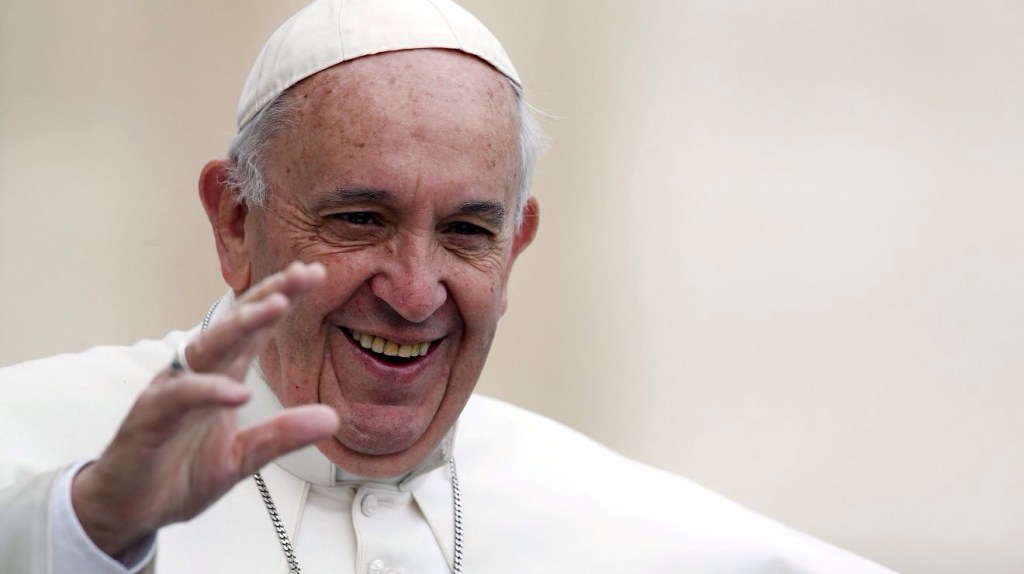

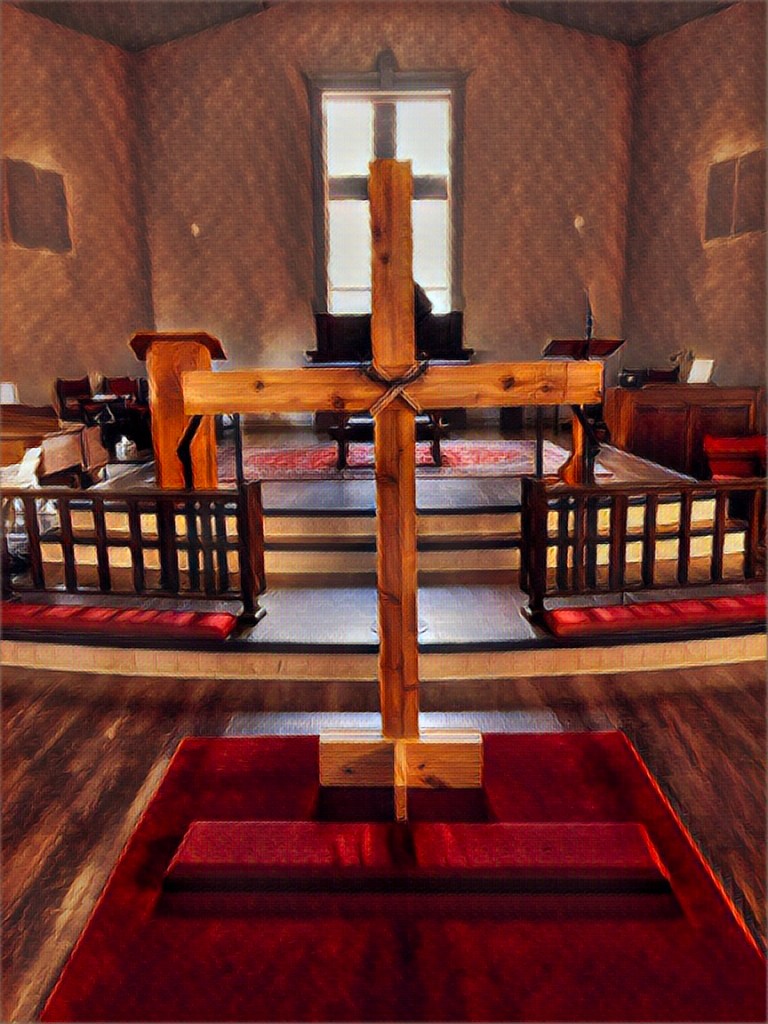

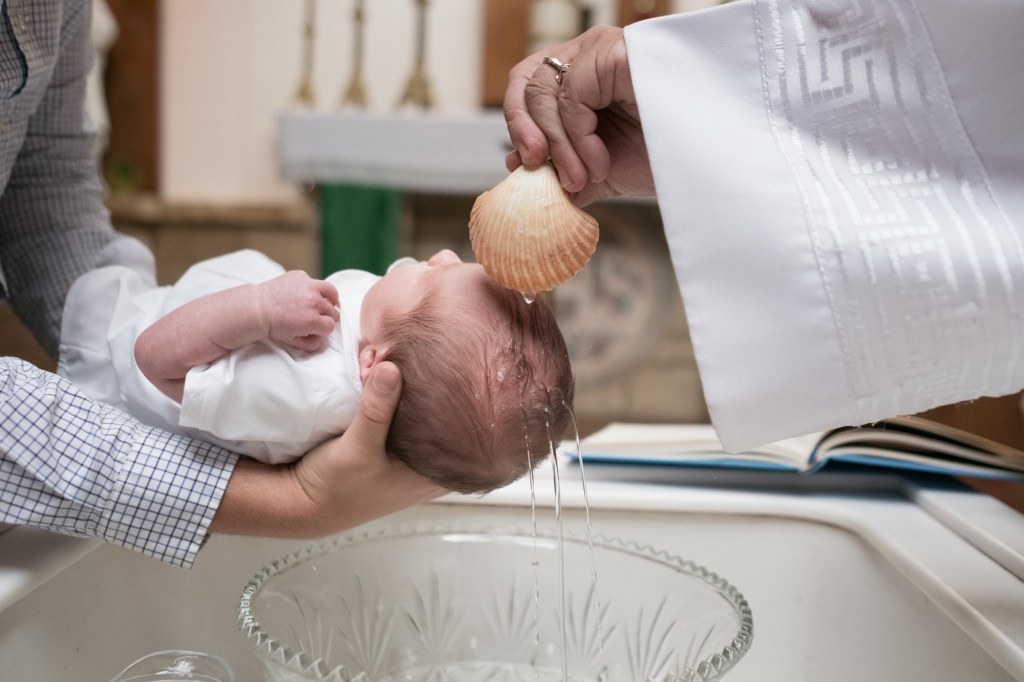



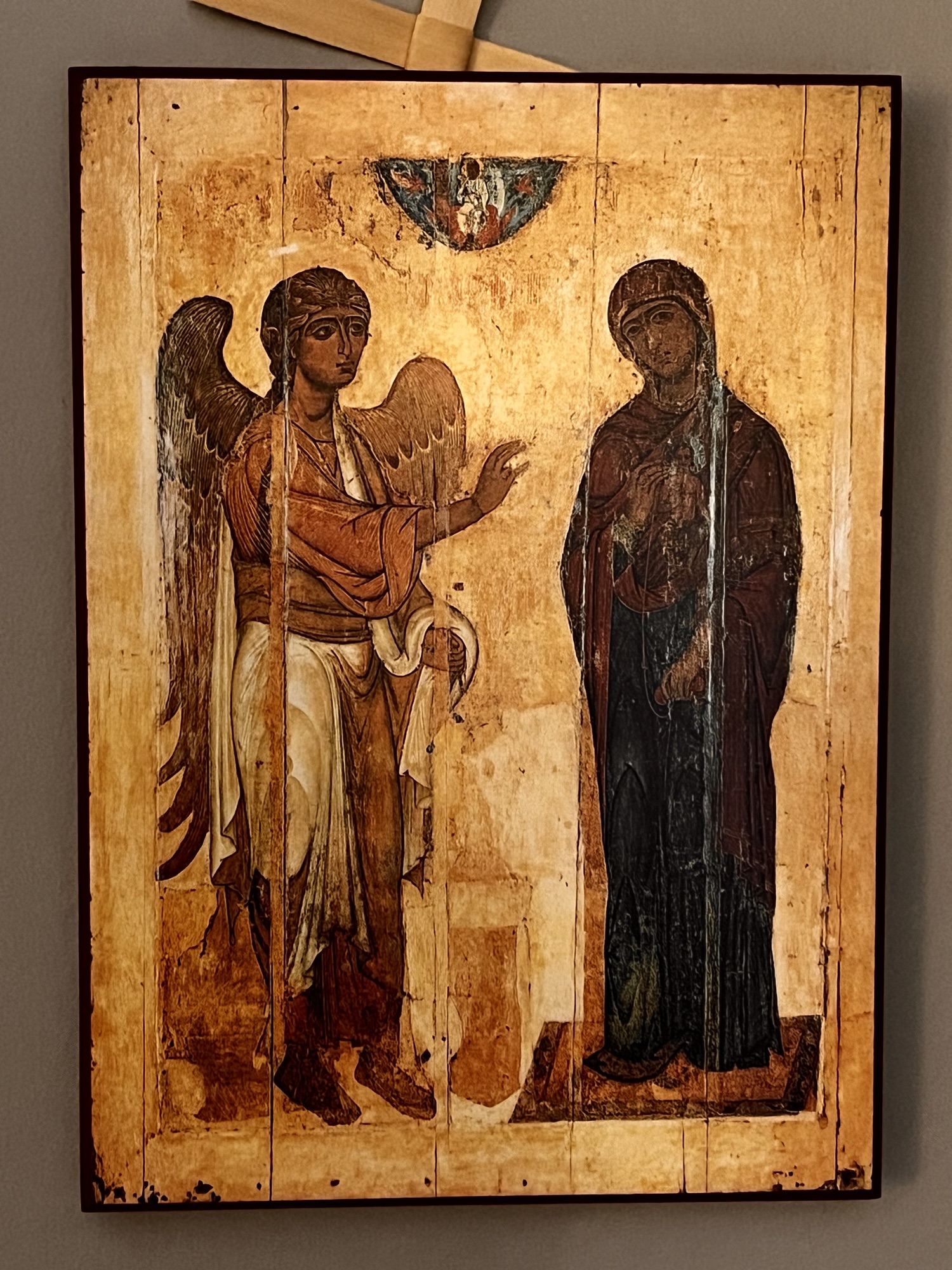



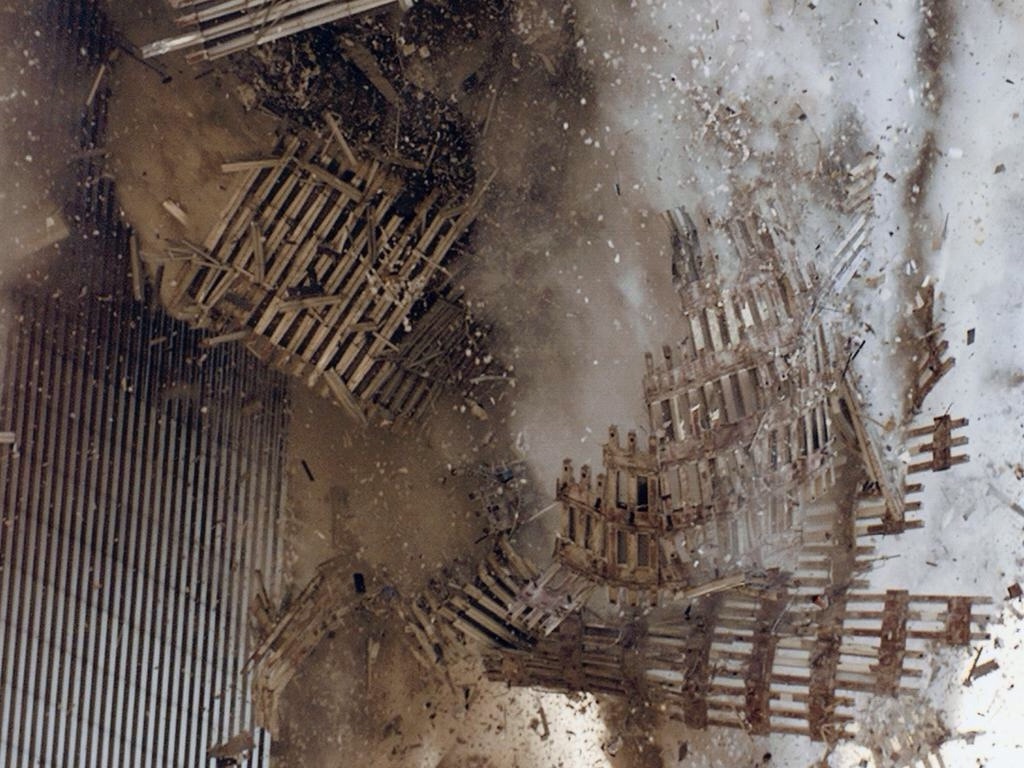


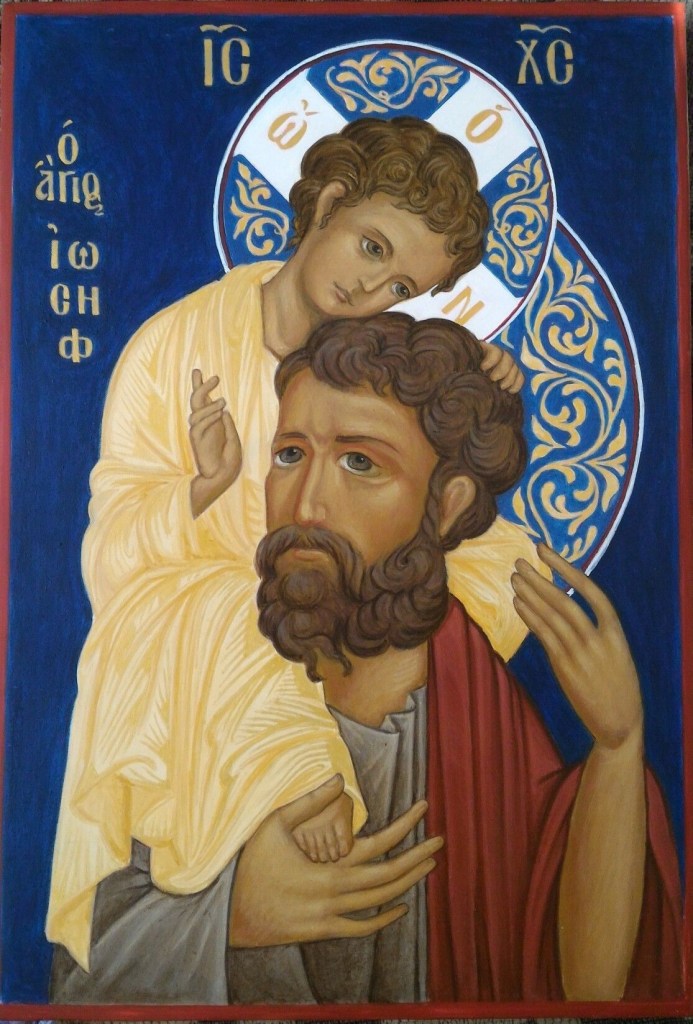


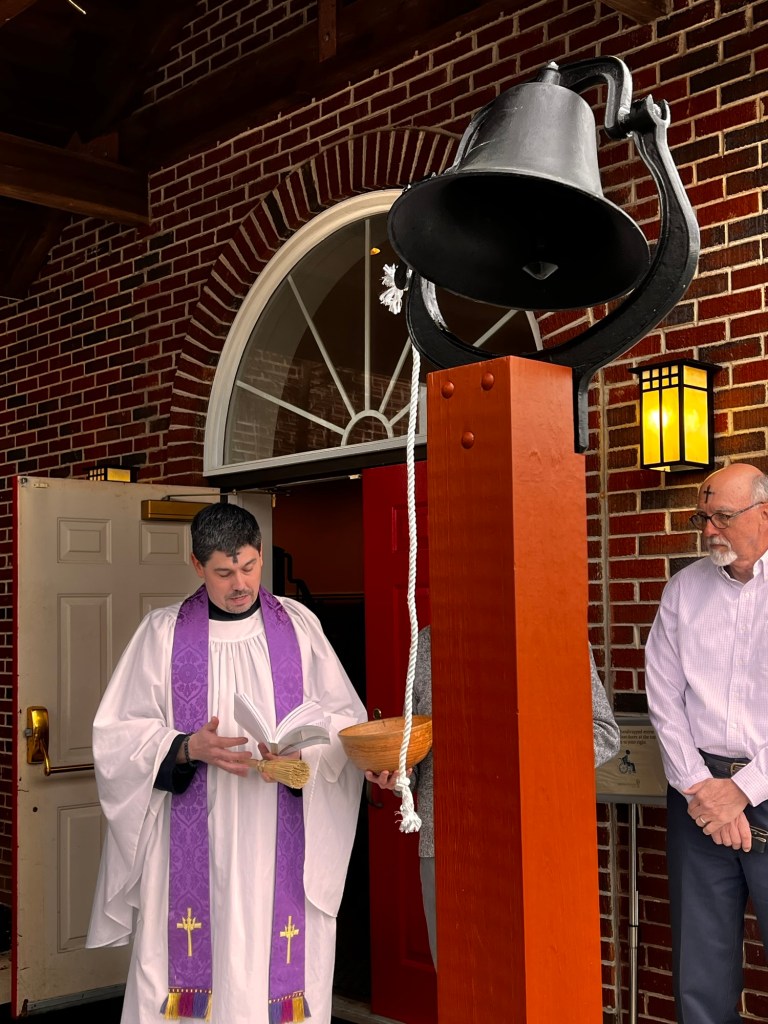

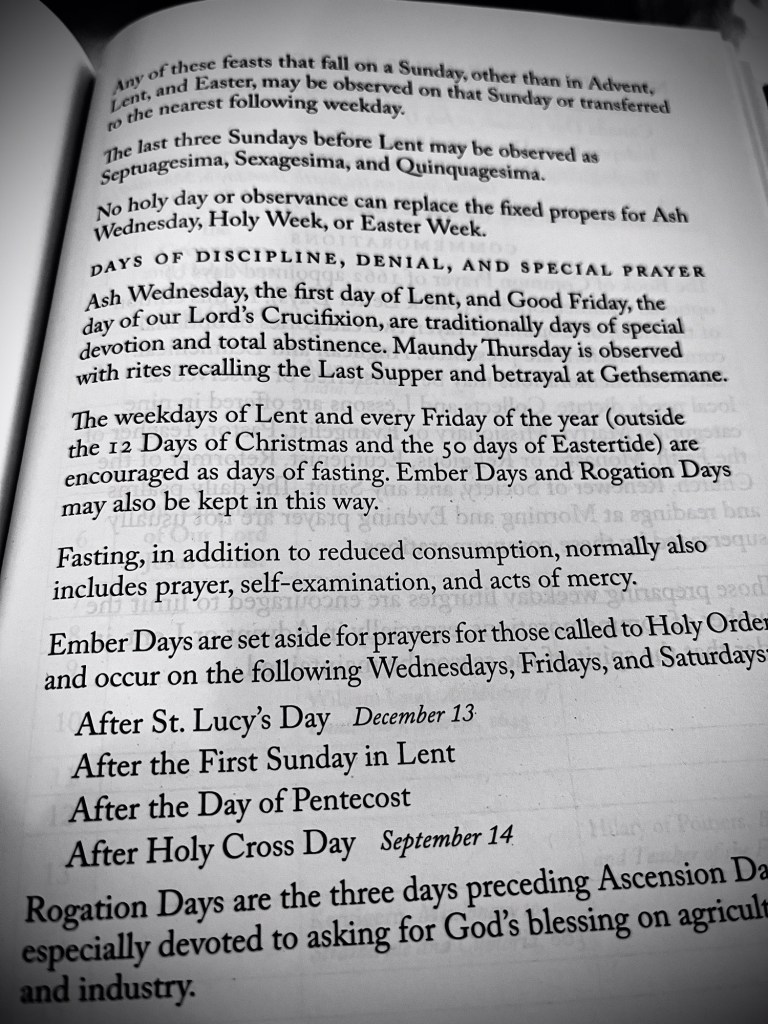


 First Blessings