A Theology of Illness from the Book of Common Prayer 1662
I write about illness from a state of good health, at least to the best of my knowledge. And that makes the writing both difficult and necessary. It is difficult because several people whom I love dearly are now facing health crises, and I fear lest they misinterpret what follows as callous. It is anything but. I share their burdens as I can, which primarily means through prayer. But, I am convinced that the type of observations which follow may best be written from the sidelines of suffering, as it were, in preparation for the real thing to come or else having come through the crucible of suffering. I suspect the three young men were able to praise God in the midst of the seven times hotter furnace only because they had praised him in better times and had worked through the consequences of doing so before Nebuchadnezzar erected his statue and demanded worship on pain of death. I want to think through the matter of illness clearly now so that when my time comes, as I suspect it will, I am not caught unawares. And, I hope that by the mercies of God, those who are in the thick of things right now might find some comfort here.
A priest is not a medical doctor, though he is most certainly a physician of souls and bodies. His training and tools — both diagnostic and treatment — differ from those of medical doctors. In his “little black bag” the priest carries not a stethoscope nor a sphygmomanometer but rather a prayer book and a Bible, an oil stock, a stole, and perhaps the Sacrament. His treatment includes prayer with anointing and laying on of hands, the Rite of Reconciliation (confession) with absolution, spiritual counsel and comfort, and perhaps the Holy Eucharist. While a medical doctor might speak of infections, cancers, and physical deterioration, a priest might speak of trials, sin, and passions. Priests do not — should not and must not — pit themselves against medical doctors or eschew the medical arts. Sirach (Ecclesiasticus) expresses the proper synergistic relationship of priest and physician, of prayer and medicine:
38 Honor physicians for their services, for the Lord created them; 2 for their gift of healing comes from the Most High, and they are rewarded by the king. 3 The skill of physicians makes them distinguished, and in the presence of the great they are admired. 4 The Lord created medicines out of the earth, and the sensible will not despise them. 5 Was not water made sweet with a tree in order that its power might be known? 6 And he gave skill to human beings that he might be glorified in his marvelous works. 7 By them the physician heals and takes away pain; 8 the pharmacist makes a mixture from them. God’s works will never be finished; and from him health spreads over all the earth. 9 My child, when you are ill, do not delay, but pray to the Lord, and he will heal you (Sirach 38:1-9, Holy Bible with Apocrypha, ESV).
We priests and our parishioners pray for the medical professions:
Almighty God, whose blessed Son Jesus Christ went about doing good, and healing all manner of sickness and disease among the people: Continue in our hospitals his gracious work among us [especially in __________]; console and heal the sick, grant to the physicians, nurses, and assisting staff wisdom and skill, diligence and patience; prosper their work, O Lord, and send down your blessing upon all who serve the suffering; through Jesus Christ our Lord. Amen (BCP 2019, p. 661).
Patients often ask medical doctors questions that begin with “what” or “how” or even “when;” the questions asked of priests often begin with “why.” The medical doctors are questioned about physiology and treatment, the priests about theology. Mystery obtains in both areas, though I suspect that medical training prepares the physicians of bodies to answer the questions posed to them better than does the training of priests. God help us if it is not so; God help us if it is so.
The Book of Common Prayer provides Rites of Healing and prayers for the sick. Since these rites and prayers are reflections on and applications of Scripture arranged for prayer and worship, one might expect to find in them a biblical theology of sickness and healing and perhaps even an answer to those questions that begin with “why.” Alas, that is not the case of late; no clearly articulated spirituality of illness and healing is found in such modern revisions of the Prayer Book as the BCP 1928 and the BCP 2019. Fortunately, the BCP 1662, “a standard for Anglican doctrine and discipline” (Fundamental Declarations of the Province (6), BCP 2019, p. 767) supplies what is otherwise lacking. These words come from another time, from a different context, from a world in which priests and prayer were perhaps more intimately associated with healing than were physicians and medicine. The words are strange to our ears and the theology is perhaps an affront to both modern heart and mind formed by the Enlightenment project — at least initially. But this is the wisdom of our fathers and mothers, and it is worthy of both respect and consideration.
Soon after entering the house of the sick the priest using the BCP 1662 offers this prayer:
HEAR US, almighty and most merciful God and Saviour. Extend thy accustomed goodness to this thy servant, who is grieved with sickness. Sanctify, we beseech thee, this thy fatherly correction to him, that the sense of his weakness may add strength to his faith, and seriousness to his repentance, that, if it shall be thy good pleasure to restore him to his former health, he may lead the rest of his life in thy fear and to thy glory; or else give him grace so to take thy visitation, that after this painful life is ended, he may dwell with thee in life everlasting, through Jesus Christ our Lord. Amen (The 1662 Book of Common Prayer: International Edition, InterVarsity Press (2021), p. 325, Endnote 1).
Following the prayer, the priest exhorts the sick person with these or similar words:
DEARLY beloved, know this, that almighty God is the Lord of life and death, and of all things pertaining to them, such as youth, strength, health, age, weakness, and sickness. Wherefore, whatsoever your sickness is, know you certainly that it is God’s visitation. And for whatsoever cause this sickness is sent unto you — whether it be to try your patience, for the example of others, and that your faith may be found in the day of the Lord laudable, glorious, and honourable, to the increase of glory and endless felicity; or else it be sent unto you to correct and amend in you whatsoever doth offend the eyes of your heavenly Father — know you certainly that if you truly repent you of your sins, and bear your sickness patiently, trusting in God’s mercy for his dear Son Jesus Christ’s sake, and render unto him humble thanks for his fatherly visitation, submitting yourself wholly unto his will, it shall turn to your profit, and help you forward in the right way that leadeth unto everlasting life (ibid, p. 326, Endnote 2).
There is a depth of theology in this prayer and in this exhortation. It begins with a conviction of the sovereignty of God, “the Lord of life and death, and of all things pertaining to them” including health and sickness. The sick person is not theologically abandoned to the accidents and incidents of chance; rather, sickness and health, life and death are in the hands of God and his accustomed goodness: “whatsoever your sickness is, know you certainly that it is God’s visitation.” Whether this is a comforting or disconcerting assertion perhaps depends on one’s understanding of the nature of God. That it is intended for comfort is made clear in the assertion that one is in the “hands of God and his accustomed goodness.” It certainly challenges the modern mind to include illness within the loving care of God, to understand that illness might indeed be a blessing and a holy correction meant to strengthen faith and give seriousness to repentance, to lead to a holy life or else to a holy death.
As to why this sickness has occurred — and that is so often the pressing question — the exhortation offers several possibilities: as a test of patience; as an example to others; to make one’s faith laudable, glorious, and honourable; to increase one’s reward of glory and felicity; or as a correction. There is no reason to believe this list is exhaustive, but it is univocal; God intends this and every illness for one’s good in this age and in the age to come, intends illness for one’s spiritual profit.
How then is the sick person to cooperate with God to ensure that God’s visitation of illness accomplishes that for which it was intended? Repent of sins, bear sickness patiently, trust in God’s mercy, render thanks to God even for the illness — Glory to God for all things (Chrysostom) — and submit wholly to God’s will.
The language of sickness as God’s visitation, of sickness as something sent, is jarring to our modern sensibilities. The notion of God as the causal agent of illness is, perhaps, a theological step too far for many — but surely not the notion of God as the redemptive agent of illness. If it is too much to say that God visits us with illness, surely we can maintain that God visits us in and through, in the midst of, illness. Surely we can believe that God forms us — perfects us — through illness just as Jesus was perfected through suffering (Heb 2:10). Surely we can use illness as an impetus to repent, to amend our lives, to give glory to God through our patient endurance and submission to his will. Surely we can begin to move our questions beyond Why? to What is God doing here? and How might I use this illness for my spiritual welfare?
Can we hear these words? Can we bear this theology? Can we who have, perhaps unwittingly, embraced a materialist attitude toward illness dare acknowledge its spiritual dimension? These are difficult words; perhaps that, along with the West’s increasing “faith” in medical science and technology, explains why this theology of illness disappeared from the Book of Common Prayer. But these are gracious words also, words that assure us that God is not absent from our most difficult moments; that God is resolutely acting for us and for our salvation in and through our most difficult moments; that meaning can be found, and glory, in our most difficult moments; that the answer to the questions that start with “why” are always “because God loves us.”
ENDNOTES
While a form of this prayer is retained in the BCPs 1928 and 2019, both are reduced in theological content:
HEAR us, Almighty and most merciful God and Saviour; extend thy accustomed goodness to this thy servant who is grieved with sickness. Visit him, O Lord, with thy loving mercy, and so restore him to his former health,that he may give thanks unto thee in thy Holy Church; through Jesus Christ our Lord. Amen (BCP 1928, p. 309).
Sanctify, O Lord, the sickness of your servant N., that the sense of his weakness may add strength to his faith and seriousness to his repentance; and grant that he may live with you in everlasting life; through Jesus Christ our Lord. Amen (BCP 2019, p. 233).
No such exhortation is present in either the BCPs 1928 or 2019.
The Theology of the Holy Spirit Session 3: The Holy Spirit in the Sacramental Life of the Christian
The Lord be with you. And with your spirit. Let us pray.
O God the Father, Creator of heaven and earth, Have mercy upon us.
O God the Son, Redeemer of the world, Have mercy upon us.
O God the Holy Spirit, Sanctifier of the faithful, Have mercy upon us.
O holy, blessed, and glorious Trinity, one God, Have mercy upon us (The Great Litany, BCP 2019, p. 91).
Introduction Linda and I had very different approaches on how to start the school year and particularly on how to deal with the first unit of instruction and the first exam in our classes. We were both math teachers at a good high school and we both taught advanced mathematics to excellent students. Linda was a “motherly” type with a gentle approach: start slowly and make the first exam easy so that even the weaker students could score well on it. Her goal was to encourage her students, to prop them up. I was an “engineer” type with a more survival of the fittest approach: hit the academic ground running full speed and make the first exam very challenging so that everyone would struggle with it — not be crushed by it, but leave knowing they had been in a good fight. My goal was to motivate those advanced students with high expectations and to make those expectations clear from the start. It’s always easier to starts “tight” and loosen up than to start with low expectations and to try to raise them later. Never smile until Christmas was the advice a principal gave me once.
I have no idea who was right — Linda or me — or whether there even is a “right” in such things; we each had success with our own students and our own approaches. Honestly, our differences were more likely a matter of personal temperament than of pedagogical philosophy. But, you can probably see how that temperament still plays out in how I construct a course, even a spiritual formation course. We hit the theological ground running these past two weeks. To mix metaphors, we dove into the deep end, or maybe I just threw you into the deep end: Scriptural history, theological process, bats (epistemology — how we know things — and the limits of knowledge and perception), and the mysteries of the Trinity. Even I wouldn’t want to take a test on those first two classes!
So, today, let’s take a breath, pun intended. Πνευμα (pneuma) is the Greek word for breath/wind and spirit. It’s time for something a little more tangible, perhaps something a bit more familiar: the Holy Spirit in life of the Christian and in the life of the Church — our engagement, individually and corporately, with the Holy Spirit throughout our spiritual life. Today we will see how that engagement with the Holy Spirit takes place — not exclusively but prominently — through the sacraments. So, it might be good to review what we mean by a sacrament. The ACNA catechism, To Be A Christian, poses this question:
121. What is a sacrament?
Would you like to “take a stab” at an answer before we get the “official” version?
A sacrament is an outward and visible sign of an inward and spiritual grace. God gives us the sign as a means by which we receive that grace and as a tangible assurance that we do in fact receive it (To Be A Christian, pp. 55-56).
In a sacrament, God is doing something inwardly (spiritually) and thus invisibly to the person receiving the sacrament in faith. The form of the sacrament — what we say and do and see — is both the outward sign of God’s inner work of grace, the means by and through which that grace is administered, and a tangible sign and remembrance of that inner work. What we will find is that the Holy Spirit is the divine agent acting in and through the sacraments throughout the whole of our lives in Christ.
Birth: Baptism
So, here is a question: Considering the Gospel as a narrative, where does the Holy Spirit first appear in the story chronologically? The Holy Spirit is first mentioned in conjunction with the conception of Jesus in the Gospels according to Sts. Matthew and Luke:
18 Now the birth of Jesus Christ took place in this way. When his mother Mary had been betrothed to Joseph, before they came together she was found to be with child from the Holy Spirit (Mt 1:18).
34 And Mary said to the angel, “How will this be, since I am a virgin?”
35 And the angel answered her, “The Holy Spirit will come upon you, and the power of the Most High will overshadow you; therefore the child to be born will be called holy—the Son of God (Lk 1:34-35).
Now: What is the second chronological appearance of the Holy Spirit in the Gospels? For that, we can refer to the remaining two Gospels, Mark and John, neither of which have a birth narrative of Jesus. In each of them, Jesus first comes on the scene in his baptism. And it is there that we see the Holy Spirit.
9 In those days Jesus came from Nazareth of Galilee and was baptized by John in the Jordan. 10 And when he came up out of the water, immediately he saw the heavens being torn open and the Spirit descending on him like a dove. 11 And a voice came from heaven, “You are my beloved Son; with you I am well pleased” (Mk 1:9-11).
29 The next day he saw Jesus coming toward him, and said, “Behold, the Lamb of God, who takes away the sin of the world! 30 This is he of whom I said, ‘After me comes a man who ranks before me, because he was before me.’ 31 I myself did not know him, but for this purpose I came baptizing with water, that he might be revealed to Israel.” 32 And John bore witness: “I saw the Spirit descend from heaven like a dove, and it remained on him. 33 I myself did not know him, but he who sent me to baptize with water said to me, ‘He on whom you see the Spirit descend and remain, this is he who baptizes with the Holy Spirit.’ 34 And I have seen and have borne witness that this is the Son of God” (John 1:29-34).
Now, we put down two dots on the paper: Jesus’ conception/birth and his baptism. I want to put one other dot on the paper and then connect all of them: Jesus’ discussion with Nicodemus.
1 Now there was a man of the Pharisees named Nicodemus, a ruler of the Jews. 2 This man came to Jesus by night and said to him, “Rabbi, we know that you are a teacher come from God, for no one can do these signs that you do unless God is with him.” 3 Jesus answered him, “Truly, truly, I say to you, unless one is born again he cannot see the kingdom of God.” 4 Nicodemus said to him, “How can a man be born when he is old? Can he enter a second time into his mother’s womb and be born?” 5 Jesus answered, “Truly, truly, I say to you, unless one is born of water and the Spirit, he cannot enter the kingdom of God. 6 That which is born of the flesh is flesh, and that which is born of the Spirit is spirit. 7 Do not marvel that I said to you, ‘You must be born again.’ 8 The wind blows where it wishes, and you hear its sound, but you do not know where it comes from or where it goes. So it is with everyone who is born of the Spirit” (John 3:1-8).
Now, let’s put all this together; let’s connect the dots:
The Holy Spirit is the agent of spiritual conception and birth in the Christian life. Sacramentally, that occurs in baptism.
If the Holy Spirit does not convict us and draw us to the Father, we will never be spiritually conceived. If the Holy Spirit does not descend upon us in our baptism, we will never be spiritually reborn.
We do not — we cannot — know precisely what Jesus’ baptism meant for him and what the descent of the Holy Spirit entailed, but we can say, because Scripture says, what it means for us: it is new birth in Christ through the forgiveness of sins. Baptism is more than that, but it is, at the heart of it, new birth through the forgiveness of sins. The Holy Spirit is the operative agent of new birth in baptism. As St. Peter preached on the Day of Pentecost:
38 And Peter said to them, “Repent and be baptized every one of you in the name of Jesus Christ for the forgiveness of your sins, and you will receive the gift of the Holy Spirit” (Act 2:38).
To see how this is reflected in our sacramental life together, listen to The Exhortation in the Rite of Holy Baptism:
Dearly beloved, Scripture teaches that we were all dead in our sins and trespasses, but by grace we may be saved through faith. Our Savior Jesus Christ said, “Unless one is born of water and the Spirit, he cannot enter the kingdom of God”; and he commissioned the Church to “make disciples of all nations, baptizing them in the Name of the Father, and of the Son, and of the Holy Spirit.” Here we ask our heavenly Father that these Candidates, being baptized with water, may be filled with the Holy Spirit, born again, and received into the Church as living members of Christ’s body. Therefore, I urge you to call upon God the Father, through our Lord Jesus Christ, that of his abundant mercy he will grant to these Candidates that which by nature they cannot have (BCP 2019, p. 162).
In baptism, through the Holy Spirit, something happens to the individual: new birth. But, something also happens, through the Holy Spirit, to the Church: a new family member is added. The Church reproduces and grows by baptism through the Holy Spirit’s conception and birth of a new child of God. I said that today we would begin to look at the Holy Spirit in the life of the Christian and in the life of the Church. Here we see that the Holy is the life of the Christian and the life of the Church. But, there is more.
Growth: Eucharist
Romans were not known for the value they placed on human life. If an unwanted child was born — one too many, one from the wrong mother, one ill-formed including often simply being female — that baby was often exposed to the elements, thrown on a garbage heap, left to starve or perhaps even worse. Christians were known for saving those children, for adopting them as their own, because life — as a gift from God — matters to Christians. The idea of starving a child is inconceivable, abominable. As a bare minimum, we feed and nourish our young. And, we do that spiritually, sacramentally, as well. When a child of God is born in baptism, we feed that child sacramentally on the body and blood of Christ in the Eucharist. Everyone is welcome on equal terms to the family meal. Birth, nourishment, and growth go together.
Now, that was not always the case in the Anglican Church and is not universally the case today. In many parts of the Anglican Communion the church waits until Confirmation before admitting a young person to the Eucharist. And, though infants are invited to the altar in the ACNA, the decision to commune a given infant or child rests finally with the parent(s). It is a matter of prudential judgment discerned, ideally, with the rector or other priest of the parish. That doesn’t negate the point I am making, simply that as there is a sacrament of new birth (baptism) so, too, there is a sacrament of nourishment and growth and that the Holy Spirit is the active agent in each.
In the Eucharistic Prayer — The Great Thanksgiving — the priest offers a prayer of epiclesis, a prayer to call down the Holy Spirit upon the bread and wine to make them be for the faithful the body and blood of Christ. One of our Eucharistic liturgies has these words:
We celebrate the memorial of our redemption, O Father, in this sacrifice of praise and thanksgiving, and we offer you these gifts [of bread and wine].
Sanctify them by your Word and Holy Spirit to be for your people the Body and Blood of your Son Jesus Christ. Sanctify us also, that we may worthily receive this holy Sacrament, and be made one body with him, that he may dwell in us and we in him (BCP 2019, Holy Eucharist: Renewed Ancient Text, pp. 133-134).
It is the Holy Spirit, acting in conjunction with the Word — not least the Words of Institution given by Jesus himself — who makes Christ sacramentally present to us in bread and wine. As the Holy Spirit makes new birth possible in baptism, so He makes nourishment, growth, and life in Christ possible in the Eucharist. About this, Jesus said:
53b“Truly, truly, I say to you, unless you eat the flesh of the Son of Man and drink his blood, you have no life in you. 54 Whoever feeds on my flesh and drinks my blood has eternal life, and I will raise him up on the last day. 55 For my flesh is true food, and my blood is true drink. 56 Whoever feeds on my flesh and drinks my blood abides in me, and I in him. 57 As the living Father sent me, and I live because of the Father, so whoever feeds on me, he also will live because of me” (John 6:53b-57).
The Church understands this to speak of the Eucharist and of the essential role it plays in the life and growth of the faithful. And still there is more.
Maturity: Confirmation
Many traditional cultures have a rite of passage in which an adolescent member of the tribe or community assumes the responsibilities of adulthood. There is the Jewish Bar Mitzvah, the Hispanic Quinceañera, the indigenous Australian Walkabout, the Native American Vision Quest. In the United States of my youth, it was the first solo drive in the car with your new driver’s license or maybe the high school graduation.
The Church is a traditional culture. A child of God is born in baptism, is nourished and grows through the Eucharist. What is the rite of passage to maturity? Confirmation is the Christian rite of passage from spiritual adolescence to spiritual maturity. It entails a mature, public affirmation of those baptismal vows taken by a parent(s) on one’s behalf as an infant. It is a public act of taking on oneself the adult responsibilities and ministries of the Christian faith. And, once again, the Holy Spirit — acting through the bishop in his prayers, anointing, and laying on of hands — is the active agent in this sacrament. Here is how the BCP describes Confirmation in the preface to the rite:
The Anglican Church requires a public and personal profession of the Faith from every adult believer in Jesus Christ. Confirmation or Reception by a Bishop is its liturgical expression. Confirmation is clearly grounded in Scripture: the Apostles prayed for, and laid their hands on those who had already been baptized (2 TIMOTHY 1:6-7; ACTS 8:14-17; 19:6).
In Confirmation, through the Bishop’s laying on of hands and prayer for daily increase in the Holy Spirit, God strengthens the believer for Christian life in the service of Christ and his kingdom. Grace is God’s gift, and we pray that he will pour out his Holy Spirit on those who have already been made his children by adoption and grace in baptism (BCP 2019, p. 174).
In particular, the Bishop prays that each Confirmand will be strengthened through the power of the Holy Spirit with seven virtues of grace: the spirit of wisdom and understanding, the spirit of counsel and might, the spirit of knowledge and true godliness, and the spirit of holy fear (see BCP 2019, p. 178). This rite acknowledges what should be an obvious truth: we cannot face the adult challenges of this world, we cannot live as mature Christians who continue to grow in Christ-likeness, without the empowering presence of the Holy Spirit, not statically, but dynamically — ever increasing.
These three — Baptism, Eucharist, and Confirmation — are the sacramental rites of initiation and inclusion: rites of birth, growth, and coming of age. And all three are utterly dependent upon the Holy Spirit.
Sickness and Healing: Confession
But human growth — physical, mental, emotional growth — is not an uninterrupted process of moving from good to better to best; there are setbacks along the way. We all get tired from time to time, ill or injured, depressed — perhaps not clinically, but just stuck and out of sorts. In such times, growth may slow or cease, or we may even regress to a prior state.
The same is true in the spiritual life. We generally move forward — please, God — but sometimes in a “two steps forward one step back” sort of way, and sometimes, if we are honest, in a “one step forward two steps back” sort of way. Sometimes we err and stray like lost sheep; follow too much the devices and desires of our own hearts; offend against God’s holy laws, leaving undone those things we ought to have done, and doing those things we ought not to have done. Sometimes we know, we really know, that, apart from His grace, there is no health in us, and we know that we need spiritual healing (see BCP 2019, p. 12). The word we put to that recognition is conviction and the process of restoration to spiritual health we call repentance. And the Holy Spirit is, once again, the divine agent active in this process.
In The Great Litany (BCP 2019, pp. 91-97) — which I most heartily commend to you as part of your personal rule of prayer — we pray:
That it may please you to give us true repentance; to forgive us all our sin, negligence, and ignorance; and to endue us with the grace of your Holy Spirit to amend our lives according to your holy Word,
We beseech you to hear us, good Lord (BCP 2019, p. 95).
The sacramental expression of repentance and restoration to spiritual health is the Rite of Healing called Reconciliation of Penitents, or, more commonly, Confession. And notice that the process depends on the grace of the Holy Spirit.
If you have never made use of sacramental confession, I know it may seem daunting or embarrassing or off-putting. Many people going into confession — especially for the first time — say, “I hate confession.” Coming out, it’s always, “I love confession.” Conviction by the Holy Spirit is never pleasant: I hate confession. But absolution and amendment of life by the Holy Spirit is pure grace: I love confession.
As a priest, I learned — from a novel of all places — and adopted as my own a simple rule: If anyone asks, “Father, will you hear my confession?” the answer is always “yes,” because the Holy Spirit is present and active in that request. No one truly seeks confession unless prompted by the Holy Spirit. And even if someone should come half-heartedly or with mixed motives, the Holy Spirit will be there to “ambush” them and the moment will become holy.
The Holy Spirit is not present only in the acts of conviction and repentance, but also in the absolution pronounced by the priest. We have this from Jesus’ own words on the day of Resurrection:
19 On the evening of that day, the first day of the week, the doors being locked where the disciples were for fear of the Jews, Jesus came and stood among them and said to them, “Peace be with you.” 20 When he had said this, he showed them his hands and his side. Then the disciples were glad when they saw the Lord. 21 Jesus said to them again, “Peace be with you. As the Father has sent me, even so I am sending you.” 22 And when he had said this, he breathed on them and said to them, “Receive the Holy Spirit. 23 If you forgive the sins of any, they are forgiven them; if you withhold forgiveness from any, it is withheld” (John 20:19-23).
There we have the πνευμα(pneuma) — the breath, the wind, the Holy Spirit — given by Jesus to those who will shepherd the Church for the express purpose of forgiveness of sins: not that the shepherds themselves have the power of forgiveness, but rather that the Holy Spirit works in and through them to accomplish the forgiveness that the shepherds — by the authority of Jesus — pronounce. There are several forms of absolution provided by the Book of Common Prayer. These two options from the Daily Office emphasize the role of the Holy Spirit:
Almighty God, the Father of our Lord Jesus Christ, desires not the death of sinners, but that they may turn form their wickedness and live. He has empowered and commanded his ministers to pronounce to his people, being penitent, the absolution and remission of their sins. He pardons and absolves all who truly repent and genuinely believe his holy Gospel. For this reason, we beseech him to grant us true repentance and his Holy Spirit, that our present deeds may please him, the rest of our lives may be pure and holy, and that at the last we may come to his eternal joy; through Jesus Christ our Lord. Amen (BCP 2019, p. 12-13).
Here the invocation of the Holy Spirit is directed toward empowerment to please God through our deeds in the present, to live the remainder of our lives in purity and holiness, and to arrive safely at last into God’s eternal joy: strength, empowerment, and hope.
The next option for absolution has a different emphasis:
The Almighty and merciful Lord grant you absolution and remission of all your sins, true repentance, amendment of life, and the grace and consolation of his Holy Spirit (ibid, p. 13).
Here it is the grace and consolation of the Holy Spirit that the absolution offers. It draws on the nature and role of the Holy Spirit as the paraclete: the helper, the comforter, the advocate, the spirit by which we know God to be not our judge, but our Father, our Abba as St. Paul writes:
14 For all who are led by the Spirit of God are sons of God. 15 For you did not receive the spirit of slavery to fall back into fear, but you have received the Spirit of adoption as sons, by whom we cry, “Abba! Father!” 16 The Spirit himself bears witness with our spirit that we are children of God, 17 and if children, then heirs—heirs of God and fellow heirs with Christ, provided we suffer with him in order that we may also be glorified with him (Rom 8:14-17).
From conviction and repentance to amendment of life and absolution, to empowerment and consolation, this rite of spiritual healing — confession — is a work of the Holy Spirit.
Healing: Unction
Over the past five centuries, Western culture has experienced a great redefinition and diminishment of what it means to be human. I start by blaming the 17th century mathematician and philosopher René Descartes, though the root of the problem probably goes as far back as the 14th century to William of Ockham, an English Franciscan theologian and philosopher. Descartes was a wonderful mathematician, but a misguided philosopher. You probably know his great proclamation on the existence and nature of man: Cogito, ergo sum — I think, therefore I am. St. Thomas Aquina described God as ipsum esse, the essence of being. As we said last week, to be God is to be. Descartes described man as cogito ens cogitans, as a thinking being. To be is to think, or to think is to be. There is man reduced to cognition; what is most essential about man is that he thinks. Gone is man as the image bearer of God. In subsequent years things went from bad to worse with the rise of scientific materialism. I think the physicist Richard Feynman gave this view its boldest and clearest expression in this quote from his famous series of lectures on introductory physics given at Cal Tech:
In other words, there is nothing that living things do that cannot be understood from the point of view that they are made of atoms acting according to the laws of physics (https://www.feynmanlectures.caltech.edu/I_01.html, accessed 06/07/2025).
Even though Feynman was one of the most brilliant physicists of the twentieth century, he was nonetheless ignorant in the spiritual sense. He was afflicted with the most fundamental of the spiritual illnesses of the heart: ignorance of God. The Fathers of the Church, the desert Fathers, the great saints, theologians, and mystics of our faith — male and female alike — concur on a holistic understanding of man’s nature consisting of body, mind, and spirit: not just body (atoms in motion) as Feynman concluded, not primarily mind (as Descartes emphasized), but a trinity of body, mind, and spirit. That is why, when the Church provides pastoral care, it cares for the whole person. That brings us to the pastoral rite of Ministry To The Sick.
The outward signs of this sacramental ministry are the anointing with oil (unction) and the laying on of hands with prayer. Listen to what is said, and note the holistic understanding of human nature and the role of the Holy Spirit.
N., I anoint you with oil and I lay my hands upon you in the Name of the Father, and of the Son, and of the Holy Spirit. Amen.
Lord Jesus Christ, heal this your servant, sustain him with your presence, drive away all sickness of body, mind, and spirit, and give to him that victory of life and peace which will enable him to serve you both now and ever more. Amen.
As you are outwardly anointed with this holy oil, so may our heavenly Father grant you the inward anointing of the Holy Spirit. Of his great mercy, may he forgive you your sins, release you from suffering, and restore you to wholeness and strength. May he deliver you from all evil, preserve you in all goodness, and bring you to everlasting life; through Jesus Christ our Lord. Amen (BCP 2019, pp. 225-226).
Here, the Holy Spirit is presented as the divine active agent in the holistic healing of the human person: body, mind, and spirit. That healing includes forgiveness of sins, release from suffering, restoration of wholeness and strength, deliverance from evil, preservation in goodness, and ultimately, eternal life. I would like to say much more about each of these — about healing generally — but that is another course!
Death: Last Rites
Edited in Prisma app with Femme
At some point, will will die — all of us — unless Christ returns before that day. That is what our Ash Wednesday service proclaims: Remember that you are dust, and to dust you shall return. It is a great comfort and encouragement to me to know that, just as the Holy Spirit was present at my new birth in Christ, he will be present at my falling asleep in Christ. Here is the Commendation At The Time of Death that I have been privileged to speak over several saints and that I pray one day will be spoken over me:
Depart, O Christian soul, out of this world; In the Name of God the Father Almighty who created you; In the Name of Jesus Christ who redeemed you; In the Name of the Holy Spirit who sanctifies you. May your rest be this day in peace, and your dwelling place in the Paradise of God (BCP 2019, p. 240).
Now, I don’t want to make too much of the precise language used her, but I do find it interesting. The work of God the Father in my creation is past tense: who created you. The work of Jesus Christ is past tense: who redeemed you. But the work of the Holy Spirit is present and continuing: who sanctifies you. The work of the Holy Spirit will be past tense, if ever at all, only with my last breath. Until then, my sanctification is the ongoing work of the Holy Spirit, and that is a comforting and encouraging thought.
Summary
Today we have considered the ministry of the Holy Spirit in and through the sacraments of the Church: baptism (birth), Eucharist (growth), confirmation (maturity), confession and unction (healing), and last rites (death). The Holy Spirit is the divine active agent in all these sacraments which means that every aspect of our individual and corporate spiritual lives is absolutely dependent on the grace and ministry of the Holy Spirit. Next session — God willing — we will consider growth in the Spirit.
On the Wedding of Tyler Maybrier and Mary Kathleen Roop
A Divine Comedy
In the Name of the Father, and of the Son, and of the Holy Spirit. Amen.
ON BEHALF of Apostles Anglican Church, the Maybrier and Roop families, and Tyler and Mary Kathleen, I welcome you to this joyous celebration of Holy Matrimony. I want you to know that I know that none of you has come here today to hear me speak, nor are you likely to remember much, if anything at all, of what I will say. I am going to speak anyway, of course, but briefly. My role here is complicated a bit by overlapping relationships, so I have decided to speak as both father and father: as father of a most precious daughter and future father-in-law of a good man, and as a spiritual father — as a priest. I will say to Mary Kathleen and Tyler, in your presence, what I hope any faithful priest would say on the occasion of their marriage.
Those who know about such things tell the rest of us that there are two great, fundamental literary forms: tragedy and comedy. It is the ending of a story that determines into which category it falls. A tragedy ends with a funeral; a comedy ends with a wedding. According to the British poet Lord Byron:
All tragedies are finish’d by a death, All comedies are ended by a marriage; The future states of both are left to faith.
What about the great human story: is it tragedy or comedy?
The Gospel of our Lord Jesus Christ assures us that the human story is not a tragedy, that it does not lead us to and leave us at the grave, that it does not end as a funeral. Jesus said:
“I am the resurrection and the life. Whoever believes in me, though he die, yet shall he live, and everyone who lives and believes in me shall never die” (John 11:25b-26a, ESV throughout unless otherwise noted).
The great Gospel proclamation of Easter tells us that the human story is not a tragedy:
Alleluia! Christ is risen from the dead, trampling down death by death, and upon those in the tombs bestowing life. Alleluia!
The Gospel Sacraments ensure that the human story is not a tragedy. Every baptism is a sacrament of new and unending life, a very earthy and physical signpost pointing away from tragedy, telling us that the story of this one dripping wet child of God will not end as a funeral.
So, the Gospel of our Lord Jesus Christ assures us that the human story is not a tragedy. But, what of comedy?
The Revelation of our Lord Jesus Christ given to St. John — the last word about the last things in the last book of Holy Scripture, the end of this present story and the beginning of the next — assures us that the human story, the story of all the redeemed in Christ, is a comedy, that it leads us to a feast, that it ends as a marriage.
6 Then I heard what seemed to be the voice of a great multitude, like the roar of many waters and like the sound of mighty peals of thunder, crying out,
“Hallelujah! For the Lord our God the Almighty reigns.
7 Let us rejoice and exult and give him the glory, for the marriage of the Lamb has come, and his Bride has made herself ready;
8 it was granted her to clothe herself with fine linen, bright and pure”—
for the fine linen is the righteous deeds of the saints.
9 And the angel said to me, “Write this: Blessed are those who are invited to the marriage supper of the Lamb.” And he said to me, “These are the true words of God” (Rev 19:6-9).
When God wants a symbol of the very best He has in mind for his redeemed people, of the very best he has in mind for new creation, he chooses a wedding as the figure for the joyful consummation of all things: the Church, the Bride, united with Christ, the Bridegroom. The story of God and his people, the story of God and his creation, is not a tragedy; rather the story is a comedy — the Divine Comedy — and its end is the Marriage Supper of the Lamb.
The Divine Comedy (Dante and Beatrice)
Dearly beloved: We have gathered together in the presence of God to witness and bless the joining together of Tyler Maybrier and Mary Kathleen Roop in Holy Matrimony. Why? They could have gone to the Court House to be married: a great savings of time, trouble, and money for everyone. Instead, they have come here and we have gathered here with them. Why? Because this wedding is not just a chapter in their story. Nor is it simply a chapter in the story of these two families represented, or of the host of friends who have graced us all with their presence. No: this is a chapter in the story of the people of God — the whole people of God. This wedding is a signpost pointing toward the Great Wedding Feast to come when the Church is united with Christ in what can only be described as a marriage. This wedding of these two dear people is itself a proclamation that God longs for every human story to be a Divine Comedy and not a human tragedy.
In a world filled with doubt and suspicion, this wedding is a proclamation of faith. In a world filled with disillusionment and despair, this wedding is a proclamation of hope. In a world filled with division and hostility, this wedding is a proclamation of love. Tyler, Mary Kathleen: just as your marriage begins with this holy trinity of faith, hope, and love, know this; your marriage must be nurtured, sustained, and preserved by those same graces.
In a tragic televised interview — now many years past — Diana, Princess of Wales, acknowledged that her marriage to Prince Charles was doomed from the start because there were always three present in it: herself, Charles, and Camilla Parker Bowles, Charles’s lover. In that case, three was one too many. But, Tyler and Mary Kathleen, there will be three present in your marriage; there must be three present in your marriage: each of you and the Lord Jesus. But he is present there not as an interloper, not in a destructive or competitive way. He is there to bless. He is there to bind you together. He is there to deepen your faith, hope, and love. This is a mystery, but it is nonetheless true. The greater your faith in the Lord, the greater your faith in one another. The fuller your hope in the Lord, the fuller your hope in one another. The deeper and richer your love for the Lord, the deeper and richer your love for one another. Cultivate your relationship with him, that he might bless and nourish your relationship with one another. It is only through union with Him that you can rightly and fully be united with one another. It is the Lord Jesus, who through his Holy Spirit, will make the two of you truly one. Your marriage can find its source and summit only in Him.
Tyler, know this: in a few minutes Mary Kathleen — along with all her stuff and her cats — will belong to you. But, before that, she belongs to Christ. Treat her as His beloved and all will be well. And Mary Kathleen, know this: in a few minutes Tyler — along with all his vehicles and toys — will belong to you. But, before that, he belongs to Christ. Treat him as a joint heir with Jesus and all will be well.
I told this to Tyler on the day he asked my blessing to propose to you, Mary Kathleen. Now I say it again to both of you. The true purpose of your marriage is not to be happy, though we all long to see both of you happy, and we pray — please, God — that it may be so. But, the purpose of your marriage is to be holy. Your marriage is the means by which God is calling each of you — calling both of you together — to holiness. Now, I know this is a joyous occasion — truly so — and I do not want to dampen that spirit, but it is also a time for challenging truth. And the truth is this: the way of holiness is the way of the cross, and the way of marriage is the way of martyrdom. Tyler, I have warned you all along that you are getting a glorious handful with my daughter. I suspect Tony and Anne Marie have shared similar sentiments about Tyler with you, Mary Kathleen. The truth is that two beautiful, wonderful, precious, messy, complicated, selfish, and prideful people — two redeemed sinners — come here to be married. That is true whenever two people — any two people — present themselves for Holy Matrimony. Your marriage is the means of your transformation, the means through which God will make you saints. And that involves a series of little personal deaths for the sake of a greater united resurrection. You must put to death the need to be right. You must put to death the need to have your own way. You must put to death the need to manipulate and dominate and change the other. You must put to death and bury deeply the assorted hurts and slights and rashly spoken words that are part and parcel of every marriage. And — this is a great act of martyrdom — you must learn to forgive, not just seven times as St. Peter hoped, but seventy times seven — again and again and again — as Jesus corrected him. And, just to be clear, both of you must do all these things. And in so doing, you will find something quite remarkable. Tyler, you will become the man that you have always wanted to be — the man God created you to be — and the husband that Mary Kathleen needs. And Mary Kathleen, you will become the woman you have always longed to be — the woman God created you to be — and the wife that Tyler needs. The two of you have it within you, by the grace of God, to become saints, and marriage is the context you have chosen in which to do that.
Most everything I have said here can be summed up in Jesus’ own words — far better words than mine. Hear what our Lord Jesus Christ says:
You shall love the Lord your God with all your heart and with all your soul and with all your mind. This is the first and great commandment. And the second is like it: You shall love your neighbor as yourself.
Of course, in this setting of marriage, I need to make clear that your closest neighbor is your husband or your wife. I also need to make clear that love is not romance and endorphins; love is willing and acting for the good of the other. So, love that neighbor — the one who shares life with you — as you love yourself. St. Paul says as much specifically to husbands, though I do not think he would object if we extend his thought also to wives:
28 In the same way [the way that Christ loves the Church] husbands should love their wives as their own bodies. He who loves his wife loves himself. 29 For no one ever hated his own flesh, but nourishes and cherishes it, just as Christ does the church, 30 because we are members of his body. 31 “Therefore a man shall leave his father and mother and hold fast to his wife, and the two shall become one flesh.” 32 This mystery is profound, and I am saying that it refers to Christ and the church. 33 However, let each one of you love his wife as himself, and let the wife see that she respects her husband.
First, this: love the Lord your God with all your heart and with all your soul and with all your mind. Second, this: love you husband, love your wife, as you love yourself because he or she is yourself; you are one flesh. You flourish or fail together. I am hopeful and confident in the Lord — all of us gathered here are hopeful — that you will flourish.
And so, dear ones, may the Lord write the story of your life together truly as a Divine Comedy.
In the Name of the Father, and of the Son, and of the Holy Spirit. Amen.
I did not watch the televised coverage of the recent parade celebrating the 250th anniversary of the United States Army. But, in the few clips I have seen on the television or online, I have been heartened by one thing: how sloppy our service men and women looked in procession by comparison to their Russian, Chinese, or North Korean counterparts. These other nations know how to parade: perfect goose-stepping synchronization, arms swinging in perfect unison, spit shine on every boot. Our soldiers just kind of ambled down the street in the same general direction with no grand sense of purpose or polish. You can see a better procession most Sundays in many Anglican churches. And for that, I am grateful; it gives me hope. It means that our military is not practiced in parading its might for show. We don’t beat our chests before the world or crow about our lethality. We may on occasion have to exercise power, but we don’t boast of it. At least we didn’t used to.
As I thought about this I remembered the first episode of the Aaron Sorkin HBO series The Newsroom, which premiered on 24 June 2012.
Jeff Daniels in The Newsroom
The opening sequence is profane in language but profoundly good in writing. The character played by Jeff Daniels, a washed up and jaded news anchor, is sitting on a panel — I think on a college campus — when he and the other panelists are asked by a twenty-something girl, “Can you say in one sentence or less, what makes America the greatest country in the world?” He tries to sidestep the question, but, when pressed he blurts out, “It’s not. It’s not the greatest country in the world.” After justifying his position he then says:
We sure used to be. We stood up for what was right! We fought for moral reasons, we passed and struck down laws for moral reasons. We waged wars on poverty, not poor people. We sacrificed, we cared about our neighbors, we put our money where our mouths were, and we never beat our chest. We built great big things, made ungodly technological advances, explored the universe, cured diseases, and cultivated the world’s greatest artists and the world’s greatest economy. We reached for the stars, and we acted like men. We aspired to intelligence; we didn’t belittle it; it didn’t make us feel inferior. We didn’t identify ourselves by who we voted for in the last election, and we didn’t scare so easy. And we were able to be all these things and do all these things because we were informed. By great men, men who were revered. The first step in solving any problem is recognizing there is one—America is not the greatest country in the world anymore (Aaron Sorkin, The Newsroom, HBO (24 June 2012)).
To be clear, I don’t believe in some long ago American utopia. For this reason, in principle I don’t believe in MAGA, in some long lost or squandered period of greatness to which we must claw our way back. When might that have been? During the Gilded Age when robber barons ruled supreme? During either of the World Wars or the Korean War or the Vietnam War or the various Gulf War conflicts? During Jim Crow and segregation? During Watergate or any of the various “Gates” since? When was America’s moment of greatness to which MAGA would return us? Every moment has its greatness and its squalor, the present moment included.
But we can, I believe despite all the evidence to the contrary, by the grace of God be a good people; we have it within us even though our politicians — on both sides of the aisle — do not demonstrate it themselves or call it forth from their constituents. Our congressmen and senators, our judges, our president and his cabinet should engrave upon their hearts and minds the vision of good, righteous government extolled in Psalm 72. And so should all those who vote. For Christians, this — not fifty-one percent of the thirty-five percent who actually vote — is the only godly electoral mandate. It is to this that all democratically elected officials — and perhaps those who elect them — must answer to God.
Psalm 72
1 Give the King your judgments, O God, * and your righteousness to the King’s son.
2 Then shall he judge your people with righteousness * and defend the poor with justice.
3 The mountains also shall bring peace, * and the little hills righteousness to the people.
4 He shall vindicate the poor among the people, * defend the children of the poor, and punish the wrongdoer.
5 They shall fear you as long as the sun and moon endure, * from one generation to another.
6 He shall come down like the rain upon the mown grass, * even as showers that water the earth.
7 In his time shall the righteous flourish, * even an abundance of peace, so long as the moon endures.
8 His dominion shall be also from one sea to the other, * and from the river unto the world’s end.
9 Those who dwell in the wilderness shall kneel before him; * his enemies shall lick the dust.
10 The kings of Tarshish and of the isles shall give presents; * the kings of Arabia and Seba shall bring gifts.
11 All kings shall fall down before him; * all nations shall do him service.
12 For he shall deliver the poor when he cries, * the needy also, and the one that has no helper.
13 He shall be favorable to the lowly and needy, * and shall preserve the lives of the poor.
14 He shall deliver them from falsehood and wrong, * and dear shall their blood be in his sight.
15 Long may he live! And unto him shall be given the gold of Arabia; *prayer shall ever be made unto him, and daily shall he be blessed.
16 There shall be an abundance of grain on the earth, thick upon the hilltops; * its fruit shall flourish like Lebanon, its grain like the grass upon the earth.
17 His Name shall endure for ever; his Name shall remain as long as the sun. * All the nations shall be blessed through him and shall call him blessed.
18 Blessed be the Lᴏʀᴅ God, even the God of Israel, * who alone does wondrous things;
19 And blessed be the Name of his majesty for ever; * and all the earth shall be filled with his majesty. Amen, Amen (BCP 2019).
To borrow from Sorkin’s words: We’re not. We’re not this anymore, if we ever were. But we sure could be.
The Theology of the Holy Spirit Session 2: The Holy Spirit in the Creeds
The Lord be with you. And with your spirit. Let us pray.
O God the Father, Creator of heaven and earth, Have mercy upon us.
O God the Son, Redeemer of the world, Have mercy upon us.
O God the Holy Spirit, Sanctifier of the faithful, Have mercy upon us.
O holy, blessed, and glorious Trinity, one God, Have mercy upon us (The Great Litany, BCP 2019, p. 91).
Introduction: What Is It Like to Be a Bat? In 1974, an American philosopher Thomas Nagel published a paper in The Philosophical Review whose title was this question: “What Is It Like to Be a Bat?” It is probably one of the most important and influential philosophical papers published in the last half century or so. It is — to the extent I understand it — a consideration of the limits of human knowledge and perspective. Let me try to explain the basic notion, the “big picture,” of the paper.
There are many things we can say about bats just through observation. Bats navigate the world primarily by echo-location instead of by sight, as humans do. Bats fly where humans walk or ride in vehicles. Bats eat insects and most humans try not to. Bats hang upside down on branches or cave walls to sleep, while humans sleep prone on Sleep Number mattresses. More could be said about bat physiology and behavior, but what we know comes by observation and study. And none of that observation and study tells us in the least what it is like to be a bat, to engage with and to perceive the world as a bat does. There is a fundamental and inescapable difference between a bat’s perspective of itself and the world and a human’s perspective of batness. Even if we attempt to understand or imagine what it is like to be a bat, we are, at best, imagining what it would be like to have our human understanding and perception in a bat’s body, simply because it is our brain trying to understand or imagine being a bat. When we ask for example, “What would it be like to fly?” we are really asking what it would be like for us as humans to fly in a bat’s body, not what it must be like for a bat to fly in its own body. We simply cannot bridge those limits of understanding, perception, and perspective. We cannot know what it is like to be a bat.
We bump up hard against those same limitations when we speak of God: Father, Son, and Holy Spirit. We can know and say some things by observation and study. We can know and say more by revelation, by God making himself known. But, there are inherent limits to our knowledge, perception, and perspective. We cannot know what it is like to be God. So, we can and will and must say some things — hold as true some doctrines — that are beyond the limits of our understanding. That is not — it should not be — a cause of embarrassment; it is simply a humble recognition of the inherent limits of human knowledge. God is in a way that we are not, and we cannot perceive what it is like to be God. We can use analogies and metaphors, but all of them ultimately break down if pushed too far. Even the best are false in the sense of being partial: God from our perspective and not from God’s own perspective.
Remember the process of spiritual knowledge that we discussed last week: experience, dissonance, Scripture and the life and worship of the Church. This week, I would add to that creeds, councils, and catechisms. We experience something of the Holy Spirit. If it is a new experience for the Church or for us, as we often see in the pages of Scripture, we experience a certain cognitive and spiritual dissonance. To resolve that dissonance, to figure out what the experience means, we search the Scriptures in communion with the Church and in participation with its life and worship. Our fathers in the faith followed that same process and then expressed their “findings” in creeds and councils and catechisms. These tell us the truth about God and protect us from error in thinking and speaking of God, but they, too, pretty quickly reach the limits of human understanding. So, we will say not infrequently: this concept is true; we know it by revelation, by experience/observation, through the faith and practice of the Church and her saints, but we do not understand it fully. We do not know what it is like to be a bat, nor do we know what it is like to be God. Creeds, councils, and catechisms are essential, are vital in protecting us from error, but they cannot fully bridge the limits of our understanding. As N. T. Wright might describe them, they are signposts pointing toward the truth. And the truth sometimes lies far down a fog covered road.
Even given the limits of human understanding, and precisely because of the limits of human understanding, we receive and treasure these creeds as truth experienced and truth revealed, as truth verified by Scripture and expressed by the Church. We say it this way in the Fundamental Declarations of the Province (ACNA):
We confess as proved by most certain warrants of Holy Scripture the historic faith of the undivided church as declared in the three Catholic Creeds: the Apostles’, the Nicene, and the Athanasian (BCP 2019, p. 767).
It is now to these creeds we turn in our engagement with the Holy Spirit.
The Apostles and Nicene Creeds The Apostles Creed in the Daily Office and the Nicene Creed in the service of Holy Eucharist are the two creeds that we use in worship most frequently. Drawing from Scripture — prominently from the Gospels of Sts. Matthew and Luke — both of these creeds emphasize the agency of the Holy Spirit in the incarnation of our Lord.
Apostles Creed
I believe in Jesus Christ, his only Son, our Lord. He was conceived by the Holy Spirit and born of the Virgin Mary.
Nicene Creed
We believe in one Lord, Jesus Christ, the only-begotten Son of God, eternally begotten of the Father, God from God, Light from Light, true God from true God, begotten, not made, of one Being with the Father; through him all things were made. For us and for our salvation he came down from heaven, was incarnate from the Holy Spirit and the Virgin Mary,and was made man.
There is much to unpack there, particularly in the Nicene Creed. Let’s start with this question: Why is the agency of the Holy Spirit in the incarnation of Jesus Christ crucial to the Church’s understanding of the Holy Spirit?
The vital principle at work here is simply this: like begets like. Here is how St. James puts it in a series of rhetorical questions:
11 Does a spring pour forth from the same opening both fresh and salt water? 12 Can a fig tree, my brothers, bear olives, or a grapevine produce figs? Neither can a salt pond yield fresh water (James 3:11-12).
An olive tree produces olives and a fig tree produces figs; like begets like. Very early — it’s clearly present in the Gospels and in the Epistles — the Church concluded that the man Jesus was also God, though defining clearly what that means was a few centuries in coming. The Creeds insist on it: Jesus, the only-begotten Son of God, the eternally begotten, God from God. Here, when speaking of the eternally begotten Son, we are speaking of the Logos/Word, the Second Person of the Trinity. But what of Jesus of Nazareth, God incarnate, both fully God and fully man? The Holy Spirit was the agent of incarnation. The Holy Spirit was instrumental in the union of God and man in the womb of the Blessed Virgin Mary. But this is surely beyond the power of any man to accomplish. What then is the conclusion we must draw? Simply that the Holy Spirit must also be God, though in a way not yet specified. So, in the incarnation, we have the Trinity foreshadowed: the Father eternally begets the Son, the Son takes to himself a human nature, and the Holy Spirit is the agent of that incarnation. This is a principle that we will see throughout Scripture and the thinking of the Fathers: Father, Son, and Holy Spirit act together. More about this later.
The Holy Spirit appears again in both Creeds.
Apostles Creed
I believe in the Holy Spirit, the holy catholic Church, the communion of saints, the forgiveness of sins, the resurrection of the body, and the life everlasting. Amen.
This seems to be like the kitchen drawer we all have. You know the one — the odds-and-ends drawer that has everything in it that we don’t know what else to do with. It seems like a lot of theological whatnots crammed into this “stanza” of the creed willy nilly. But, there may be more order to this than we first see. Notice that both the Apostles Creed and the Nicene Creed have three sections or stanzas: one for God the Father, one for God the Son, and one for God the Holy Spirit. So all this apparent hodgepodge might not be that at all. Let’s turn to the Nicene Creed, in its section about the Holy Spirit.
Nicene Creed
We believe in the Holy Spirit, the Lord, the giver of life, who proceeds from the Father [and the Son], who with the Father and the Son is worshiped and glorified, who has spoken through the prophets. We believe in one holy catholic and apostolic Church. We acknowledge one Baptism for the forgiveness of sins. We look for the resurrection of the dead, and the life of the world to come. Amen.
There is more here than in the Apostles Creed, but there are some common features between them: the Church, forgiveness of sins, resurrection, everlasting life (life of the world to come). So, what does this overlap in the Creeds in the section on the Holy Spirit tell us? At least this: that the Holy Spirit is God present and active in the Church, in forgiveness of sins (not least in Baptism), in the resurrection to come, and in eternal life. We see this expanded, fleshed out, in the faith and practice of the Church, not least in the Sacraments which we will examine in a subsequent lesson. But, just from this we can see that the Holy Spirit is integral to the entire life of faith, from our new birth in baptism, to the life and ministry of the Church, to the coming resurrection and life in the kingdom. The Nicene Creed also mentions the Holy Spirit speaking through the prophets, that is, the role of the Holy Spirit in the inspiration of Scripture. The Holy Spirit suffuses, empowers, makes possible every aspect of Christian life.
The Athanasian Creed Now, let’s turn our attention to a less well known and less used Creed, the Athanasian Creed, the one we recite on Trinity Sunday. This is strictly a creed of the Western Church; it does not enter into the faith and practice of the Eastern Church, the Orthodox Churches. It is longer than the other creeds, seemingly repetitious/redundant — though it really isn’t — and challenging. But, it will well repay the time spent with it. We will limit our reflection on it to the first section of the Creed which deals with the nature of the Trinity. The second section is devoted to Christology, the nature of Christ.
The Creed opens with an essential distinction between Substance and Person.
Whosoever will be saved, before all things it is necessary that he hold the Catholic Faith. Which Faith except everyone do keep whole and undefiled, without doubt he shall perish everlastingly. And the Catholic Faith is this: That we worship one God in Trinity, and Trinity in Unity, neither confounding the Persons, nor dividing the Substance. For there is one Person of the Father, another of the Son, and another of the Holy Ghost. But the Godhead of the Father, of the Son, and of the Holy Ghost, is all one, the Glory equal, the Majesty co-eternal. Such as the Father is, such is the Son, and such is the Holy Ghost.
Do you remember the philosophical paper we started our discussion with: “What Is It Like to Be a Bat”? The essence of the paper is that it is impossible for humans to bridge their inherent limits of understanding, perception, and perspective and therefore it is impossible to know what it is like to be a bat. We can know things about bats, study and describe bat behavior, but we can never know or experience these things from a bat’s perspective. How much more is that true of the Trinity! We cannot know from God’s perspective what it means to be both Trinity and Unity. That doesn’t mean we shouldn’t and can’t say some true things about the nature of God — in fact we must in order to define the orthodox faith and to avoid error — but it does mean that everything we think and say is limited by our human understanding, perspective, language, and images. So, we say about the Creed, this is what we believe/know to be true based on Scripture, revelation, reason, the life and worship of the Church — what we believe/know to be true even though we cannot fully understand, perceive, or explain how it is so.
We start with the most fundamental notion of all, the most fundamental revelation of God to Israel: Hear, O Israel, the LORD our God, the LORD is one. There are other spiritual, other heavenly beings that Scripture refers to as gods and sons of God, but they are created beings, created by this Most High God spoken of in the Creed. They do not share in the fullness of his being as the Creed will reveal it.
This one God exists in triune form: one God — that is, one Substance — in three Persons: the Father, the Son, and the Holy Spirit; the Creed says Holy Ghost, but I will continue to use Holy Spirit. This — the distinction between Substance and Person — is where things get dicey, and I will have to resort to images that fail if pushed too far. I think they are helpful, but they are limited; remember the bat.
Let’s try to distinguish between Substance and Person. I am going to imagine something that we cannot do, that certainly cannot be done, though the Creed also takes a stab at it. Imagine taking a sheet of paper and writing down all the essential characteristics of God, everything that makes God God. We can get a sense of this by scanning the Creed; here are some divine characteristics that it mentions:
Uncreated: everything other than God was created by God, but God himself is the First Cause, the Unmoved Mover, uncreated by anything else. Do you remember the name by which God revealed himself to Moses? I Am: all being resides in him. God is not one created being among other; he is the uncreated source of all being. God does not, in that sense, even exist as we exist. He is self-existent and we are not. We are contingent; we might not have been. But God is not contingent; God could not not be. To be God is to be.
Incomprehensible: he is far beyond the limits of our understanding, beyond our power to grasp and encompass.
Eternal: God is self-sufficiently without beginning and without end. We had a beginning, at conception; God did not. We do not have an eternal future in ourselves; it is granted only by God.
So, we have these three characteristics of God enumerated in the Creed: uncreated, incomprehensible, eternal. Imagine that it is possible to continue this list to include all the defining characteristics of God. We might title this list “God’s Nature” or “God’s Substance.” Only God has all these characteristics, and anyone who has them all is God. What we find — by revelation — is that there is only One. And yet, within that One — constitutive of that One — there is a distinction of Persons, three in number identified as Father, Son, and Holy Spirit. Each has the Substance of God; it is not divvied up among the three. Each is uncreated, incomprehensible, eternal, glorious, majestic. Each is Lord. There is only one God. But, there are three Persons; there is distinction in the unity: not three Gods, but three Persons in the Unity of the Godhead.
So, where does the distinction lie? The Person of the Son — not the humanity of Jesus, but the Person of the eternal Son/Word/Logos — is begotten of the Person of the Father, but the Father is not begotten. The Person of the Holy Spirit proceeds from the Father — not begotten like the Son, but proceeding — but the Father is not proceeding. All of this is to say that there is a distinction among Persons, but no distinction in Substance. To ask what that means is to ask what it’s like to be a bat. The best we can do is to echo the Creed. The Persons of the Trinity are not interchangeable; they are not identical. But, they are one in Substance and indivisible — equal in glory and honor and worship. Here is how the Creed says it:
So are we forbidden by the Catholic Religion, to say, There be three Gods, or three Lords. The Father is made of none, neither created, nor begotten. The Son is of the Father alone, not made, nor created, but begotten. The Holy Ghost is of the Father and of the Son, neither made, nor created, nor begotten, but proceeding. So there is one Father, not three Fathers; one Son, not three Sons; one Holy Ghost, not three Holy Ghosts. And in this Trinity none is afore, or after other; none is greater, or less than another; But the whole three Persons are co-eternal together and co-equal. So that in all things, as is aforesaid, the Unity in Trinity and the Trinity in Unity is to be worshiped. He therefore that will be saved must thus think of the Trinity.
Why is this so important to our discussion of the Holy Spirit? Remember the process we discussed in the first lesson: experience, dissonance, Scripture, the faith and worship of the Church. This understanding of the Trinity did not happen instantaneously. It took the Church generations to go through this process and to be able to articulate its faith in creeds and councils and catechisms and liturgies. The acceptance of the Holy Spirit as God was the last brick to be put in place. It is all there in Scripture, but learning to read the Scripture rightly, to see what was there all along, was a process, a process aided by the Holy Spirit himself.
Window at Monastery of Our Lady of the Holy Spirit, Conyers, GA
The implications of this understanding are vast. When we are born of water and Spirit in baptism, it is God himself, in the Person of the Holy Spirit, who births us; we become children of God. When the Holy Spirit indwells us, it is God himself, in the Person of the Holy Spirit, who unites himself to us. When we take up the Scripture breathed out by the Spirit, it is God’s own word and it is God himself, in the Person of the Holy Spirit, who helps us discern the truth in it.
The unity with distinction of the Trinity is also a paradigm for the Church. There is only one Church, so we believe and so we say each day or week in the Creeds: one holy catholic and Apostolic Church. That is true because there is one Lord, one faith, one Baptism — one Holy Spirit who unites us. We might — echoing the language of the Athanasian Creed — say that the Church is one in substance. But, there is distinction and even diversity in that unity; there are many persons in the Church. The Church is comprised of people from every family, language, people and nation. The Spirit draws all these people together, makes them one without erasing their differences, and gives a variety of gifts. Here is how St. Paul describes it in 1 Corinthians:
4 Now there are varieties of gifts, but the same Spirit; 5 and there are varieties of service, but the same Lord; 6 and there are varieties of activities, but it is the same God who empowers them all in everyone. 7 To each is given the manifestation of the Spirit for the common good. 8 For to one is given through the Spirit the utterance of wisdom, and to another the utterance of knowledge according to the same Spirit, 9 to another faith by the same Spirit, to another gifts of healing by the one Spirit, 10 to another the working of miracles, to another prophecy, to another the ability to distinguish between spirits, to another various kinds of tongues, to another the interpretation of tongues. 11 All these are empowered by one and the same Spirit, who apportions to each one individually as he wills.
12 For just as the body is one and has many members, and all the members of the body, though many, are one body, so it is with Christ. 13 For in one Spirit we were all baptized into one body—Jews or Greeks, slaves or free—and all were made to drink of one Spirit.
14 For the body does not consist of one member but of many (1 Cor 12:4-14).
So, the unity with distinction of the Church is a signpost pointing to the very nature of the Trinity, a signpost made possible by the unifying power of the Holy Spirit in the Church and the gifting of individual Christians for the good of the Church.
The whole notion of personhood — one God in three Persons — has important implications for us, as well. As I have presented it in this lesson, following the approach of the Athanasian Creed, I have based personhood on distinctives. The Son is a Person by virtue of being begotten of the Father; the Holy Spirit is a Person by virtue of proceeding from the Father; the Father is a Person by virtue of being neither begotten not proceeding. It was necessary for the Creed’s purposes to present personhood in this way. But there is something other than differences that is just as fundamental to personhood: relationships.
Let me explain using a personal example. I had just turned twenty when Clare and I were married. This September we will celebrate our 48th anniversary. I am the person that I am in large part due to that relationship. I barely know where I start and leave off and where Clare does. I don’t think in terms of John any longer, but rather in terms of John and Clare. Had we never met and never married, had I married someone else or joined a monastery, I would be a different person today. My personhood is dependent upon that relationship, but not on that one only. I was born into a particular family, had a certain circle of friends, was raised in a particular church, and now I am here in relationship with you. All of these relationships are an essential part of my personhood. My point is this: personhood, in the fullest sense, is contingent upon relationship. So, when we are talking about God in three Persons, we are necessarily talking about God in relationship; relationship is part of the nature of God. If God were a monad — a single, undifferentiated entity — from all eternity, God would not be a Person. But our God is a God in relationship with himself and with us.
Human relationships can be healthy or unhealthy, transactional or self-giving, parasitic or mutually beneficial. What about the relationship between God and man? There are many images from Scripture that we can use to illustrate it, but I like the one that Bp. Robert Barron uses frequently: the burning bush. Moses had almost certainly seen bushes on fire before, if only in the fires he kindled on those long nights tending the sheep. But this one was different. What was so intriguing to Moses about this burning bush? It was not consumed. When God in-dwelt the bush, he did not diminish or destroy it; God occupied the same space without competition. Instead, God’s relationship with the bushed enhanced the bush, glorified it, transfigured it while leaving it fully itself. In fact, it made the bush more itself than it ever was before. That is the essence of our relationship with God. When the Holy Spirit indwells a Christian, that relationship is not competitive. More of the Holy Spirit does not mean less of the person. Rather, the Holy Spirit enhances the person, transforms the person, transfigures the person while making that person more truly and fully himself/herself. Our true personhood lies in relationship with our God in three Persons, mediated especially through the Holy Spirit.
This has important implications for the Church. If our full personhood is contingent on relationships, then we need one another in the Church; we become persons together. But, I want to suggest that the trinitarian model — three persons in relationship — is a necessary paradigm for all Christian relationships: never just two, but always three. The third in every Christian relationship is always Christ. Dietrich Bonhoeffer explored this triune Christian relationship most profoundly in his book Life Together:
Because Christ stands between me and others, I dare not desire direct fellowship with them. As only Christ can speak to me in such a way that I may be saved, so others, too, can be saved only by Christ himself. This means that I must release the other person from every attempt of mine to regulate, coerce, and dominate him with my love. The other person needs to retain his independence of me; to be loved for what he is, as one for whom Christ became man, died, and rose again, for whom Christ bought forgiveness of sins and eternal life. Because Christ has long since acted decisively from my brother, before I could begin to act, I must leave him his freedom to be Christ’s; I must meet him only as the person that he already is in Christ’s eyes. This is the meaning of the proposition that we can meet others only through the mediation of Christ (Dietrich Bonhoeffer, Life Together, HarperCollins (1993), pp. 26-27).
Dietrich Bonhoeffer
Bonhoeffer speaks about Christ standing between me and the other. But, I would suggest that it is the Holy Spirit who mediates between us, because it is the Holy Spirit who indwells each of us and who unites us one with another in Christ. I wouldn’t want to argue that point; what is essential is that all Christian relations be triune in form and nature. So, the Trinity once again becomes the paradigm for our life together.
Conclusion
There is much more to be gleaned from the Creeds, but we have made a good beginning regarding the Holy Spirit. And what have we found?
The Holy Spirit is God in all respects. He — not It — is consubstantial with, of the same Substance as, both the Father and the Son. That is, there are no essential characteristics of the divine nature that the Holy Spirit lacks. Therefore, he is worthy of equal praise, honor, and majesty as the Father and the Son: as to the Father and to the Son, so to the Holy Spirit.
Yet, though of the same Substance, the Holy Spirit is not identical to either the Father or the Son; he is his own distinct Person as are the Father and the Son. He is a distinct Person in his procession from the Father [and from the Son], and in the unique relationship he has with both the Father and the Son. The Holy Spirit’s role is unique in creation, redemption, and restoration. For example, the Holy Spirit did not die for our sins; the incarnate Son of God accomplished that. But, the Holy Spirit was the divine agent of the incarnation who made possible our redemption through Jesus Christ. The Father, the Son, and the Holy Spirit are one in purpose but distinct in activity.
The Holy Spirit is God present with, in, and through the Church: in our birth in baptism, in our strengthening in the Eucharist, in our healing through confession, in our gifting for ministry, in our unity in relationship (the communion of saints). The self-giving mutuality of the Holy Trinity is the paradigm for our life in the Church.
We do not know what it is like to be a bat; nor do we know what it is like to be God. But we do know from experience, from Scripture, from the faith and practice of the Church, and from the Creeds that the Holy Spirit is essential to our individual lives and to the life of the Church.
I close with an Orthodox prayer to the Holy Spirit.
The Lord be with you. And with your spirit. Let us pray.
O Heavenly King, Comforter, Spirit of Truth who art everywhere present and fillest all things, Treasury of Good Things and Giver of Life: come and dwell in us and cleanse us of all impurity, and save our souls, O Good One. Amen.
The Theology of the Holy Spirit Session 1: Epistemology — Pattern and Process
The Lord be with you. And with your spirit. Let us pray.
O God the Father, Creator of heaven and earth, Have mercy upon us.
O God the Son, Redeemer of the world, Have mercy upon us.
O God the Holy Spirit, Sanctifier of the faithful, Have mercy upon us.
O holy, blessed, and glorious Trinity, one God, Have mercy upon us (The Great Litany, BCP 2019, p. 91).
Motivation In my former life as a teacher, particularly in my calculus classes, I would often tell students at the beginning of a unit or a lesson that I wanted to begin by motivating the lesson to follow. Motivation didn’t mean exciting the students about the lesson, but rather explaining why it was important — worth our time — and why, perhaps, they should be excited about it whether or not they actually were. So, as we approach this course with the somewhat intimidating name “The Theology of the Holy Spirit,” I would like to take a moment to motivate it.
First, a note about the task and nature of theology. Reformed theologian Sinclair Ferguson said this:
The goal of theology is the worship of God. The posture of theology is on one’s knees. The mode of theology is repentance.
To which I say, yes, absolutely. This is my ultimate goal for the class: to lead us into worship, to bring us to our knees in prayer, and to foster a life of repentance, all in and through the Holy Spirit. That is motivation enough, I think, but there is more. The more comes in answer to two questions:
Why a class on the Holy Spirit?
Why now?
The two questions are very nearly one, and, if I start with the second question — Why now? — that will become clear.
The Christian year features two main cycles of Holy Days: the Incarnation (Christmas) Cycle and the Paschal (Easter) Cycle. Each year begins with Advent, four Sundays of preparation for the Nativity of our Lord. Then comes the twelve days of Christmas followed by Epiphany, the manifestation of Christ to the Gentiles. That ends the Incarnation Cycle. The next major cycle begins with Lent, a forty-ish day season of preparation for the Passion and Resurrection of our Lord. Then comes the forty day celebration of Easter which “ends” with the Feast of the Ascension. Ascensiontide is then observed for the next ten days leading to Pentecost, the commemoration of the outpouring of the Holy Spirit upon the disciples and upon the Church. That ends the second of the two main cycles. And that is where we find ourselves today. But, what of the long season from Pentecost until the next Advent? Some call it Ordinary Time because it falls outside the extraordinary cycles of Christmas and Easter. Some mark it by counting the Sundays after Pentecost; some others count the Sundays after Trinity. Whatever we call it, however we count it, it is anything but ordinary. It is the season of the Holy Spirit: indwelling the Church, mediating the presence of Christ in and among us, and empowering the Church for its mission in the world. Its liturgical color is green, the color of the Holy Spirit because it is the color of life and growth.
EXCURSUS The liturgical color red is often associated with the Holy Spirit. Properly speaking, red symbolizes the outpouring and the gifts of the Holy Spirit; that is why red is associated with Pentecost and often with ordinations. Green symbolizes the ongoing presence and ministry of the Holy Spirit within the Church.
So, why now? Because we have now entered the liturgical season after Pentecost, the season of the Holy Spirit. Why at all? Because the Holy Spirit mediates the ongoing presence of Christ to us and to Church; the Spirit unites us to Christ. The Holy Spirit empowers the Church for Gospel ministry, and, through the ministry of the Church, the Holy Spirit calls the world to repentance and to Christ himself. How all this plays out in the life of the Church will be central to the classes to follow.
That is my motivation for the course: why it is important and why, hopefully, we can be excited about it.
Introduction It is always good to begin a course with a word from the Lord, this one a parable following Jesus’ presentation of the Lord’s Prayer to his disciples.
5 And [Jesus] said to them, “Which of you who has a friend will go to him at midnight and say to him, ‘Friend, lend me three loaves, 6 for a friend of mine has arrived on a journey, and I have nothing to set before him’; 7 and he will answer from within, ‘Do not bother me; the door is now shut, and my children are with me in bed. I cannot get up and give you anything’? 8 I tell you, though he will not get up and give him anything because he is his friend, yet because of his impudence he will rise and give him whatever he needs. 9 And I tell you, ask, and it will be given to you; seek, and you will find; knock, and it will be opened to you. 10 For everyone who asks receives, and the one who seeks finds, and to the one who knocks it will be opened. 11 What father among you, if his son asks for a fish, will instead of a fish give him a serpent; 12 or if he asks for an egg, will give him a scorpion? 13 If you then, who are evil, know how to give good gifts to your children, how much more will the heavenly Father give the Holy Spirit to those who ask him (Luke 13:5-13)!”
When I consider my prayers, it seems I often ask our heavenly Father for the equivalent of fish and eggs — health and security and success for myself and for those I love, good things — instead of asking for what Jesus says our Father longs to give us and is sure to give us: the Holy Spirit. I want to amend that, not to cease praying for tangible blessings — we are human beings, after all, and need daily bread — but to properly order those desires under the more important blessing of the Holy Spirit. Perhaps we can do this together — at least throughout this course — so that we can spur one another on to deeper and fuller fellowship in and with the Holy Spirit. So, I want to suggest that, if we haven’t already, we begin to take Jesus seriously in this matter — to pray for the Holy Spirit, not just for specific gifts of the Holy Spirit, but for the Holy Spirit himself. It might be a very simple prayer as was the Lord’s Prayer, itself: Heavenly Father, fill me with your Holy Spirit. For the duration of this course, at least, I encourage you to make this, or a prayer like it, part of your daily prayer rule: “Heavenly Father, fill me with your Holy Spirit.”
During the course, I hope to foster intentional engagement with the Holy Spirit, not as an object of study, but as the personal presence of God with us and in us and through us. The Jewish theologian Martin Buber distinguished between two basic types of relationships: I-It and I-Thou. I-It is how one relates to things; the relationship is functional, instrumental, often detached. I have an I-It relationship with a hammer, a fountain pen, perhaps with a idea or agenda. I-Thou is how one relates to another person; it should be characterized by freedom, mutual respect, and, ideally, love. I have an I-Thou relationship with you, with my wife and family and friends, and ultimately with God. Our relationship with the Holy Spirit is I-Thou, because the Holy Spirit is a Person, not a thing — he, not it. We will explore just what it means to be a person and how that relates to the Holy Spirit later, but it is important from the start to know that the Holy Spirit is Who and not what.
EXCURSUS And here a note about language is in order. One of the words for Spirit in Hebrew is ruach; grammatically, that word is feminine, just as the Spanish word mesa (table) is feminine. In Greek, the word for Spirit is pneuma; that word is grammatically neuter, neither masculine nor feminine. Now, it should be obvious that grammatical gender has nothing at all to do with biology or physiology; it tells us nothing at all about the reality to which the word refers; there is no physical sense in which a table is feminine. Nonetheless, based in part on fallacious linguistic reasoning, it has become somewhat popular in recent years to refer to the Holy Spirit as “she,” something along the order of the divine feminine counterpart to God the Father. I will not do that; I will, instead use the traditional pronoun “he” for two fundamental reasons. First, and most importantly, when our Lord Jesus referred to the Holy Spirit — which is, as we will see, his Spirit — he does so with the masculine pronoun he. I feel on sure footing when I follow the lead of Jesus. Secondly, since the Holy Spirit was the generative agent in the incarnation — the Holy Spirit overshadowed Mary and she conceived — and since Mary was the feminine agent in the incarnation, the use of the feminine pronoun for the Holy Spirit would be inconsistent with the natural order of conception and might even contribute to the current confusion regarding anthropology and gender. So, I will use “he” to identify the Holy Spirit confident of this: whatever “he” means as applied to the Holy Spirit, it has nothing to do with biology.
Four Stories Today, to set the stage for the remainder of the course, we’ll listen to some stories — four of them, I think, though others might emerge in conversation. The four I have in mind are the journey to Emmaus, the Ascension, the first Christian Pentecost, and the aftermath of Pentecost as narrated by St. Luke in the Acts of the Apostles.
Emmaus
It is the afternoon of the first day of the week. Cleopas and his companion — I like to think it was his wife because that ties the story back to Adam and Eve — Cleopas and his companion are on their way home from Jerusalem to Emmaus, a walk of some eight miles. How would you describe their demeanor and their inner state?
Are you familiar with the term cognitive dissonance? It is the state of dis-ease that arises from trying to hold in mind two conflicting and irreconcilable notions, neither of which you seem capable of relinquishing. Most of us have experienced it even if we couldn’t put words to it. Cleopas and his companion had seen and heard things, had experienced things with Jesus that they simply couldn’t doubt. They had heard him teach with authority and best the Pharisees, Sadducees, and priests in theological challenges. They had seen him cast out demons, give sight to the blind, cure lepers, make the lame walk, and perhaps even raise the dead. They had heard him pronounce forgiveness of sins and claim to be greater than David, Solomon, and the Temple. And through all this, the conviction grew that Jesus might just be the one to redeem Israel, might just be the Messiah.
Until they experienced something else: Jesus’ crucifixion. And there is the cognitive dissonance; crucified and Messiah are mutually exclusive notions as far as Cleopas and his companion are concerned, words that don’t belong together. They had witnessed both Jesus’ Messianic words and deeds and his crucifixion and they cannot either reject one or reconcile both. They are stuck. Now, let’s pick up the story as St. Luke tells it.
13 That very day two of them were going to a village named Emmaus, about seven miles from Jerusalem, 14 and they were talking with each other about all these things that had happened. 15 While they were talking and discussing together, Jesus himself drew near and went with them. 16 But their eyes were kept from recognizing him. 17 And he said to them, “What is this conversation that you are holding with each other as you walk?” And they stood still, looking sad. 18 Then one of them, named Cleopas, answered him, “Are you the only visitor to Jerusalem who does not know the things that have happened there in these days?” 19 And he said to them, “What things?” And they said to him, “Concerning Jesus of Nazareth, a man who was a prophet mighty in deed and word before God and all the people, 20 and how our chief priests and rulers delivered him up to be condemned to death, and crucified him. 21 But we had hoped that he was the one to redeem Israel. Yes, and besides all this, it is now the third day since these things happened. 22 Moreover, some women of our company amazed us. They were at the tomb early in the morning, 23 and when they did not find his body, they came back saying that they had even seen a vision of angels, who said that he was alive. 24 Some of those who were with us went to the tomb and found it just as the women had said, but him they did not see.” 25 And he said to them, “O foolish ones, and slow of heart to believe all that the prophets have spoken! 26 Was it not necessary that the Christ should suffer these things and enter into his glory?” 27 And beginning with Moses and all the Prophets, he interpreted to them in all the Scriptures the things concerning himself (Luke 24:13-27).
This story gives us a pattern that becomes very important in our engagement with the Holy Spirit: new experience, cognitive/spiritual dissonance, Scripture. The new experience is the precipitating event. The cognitive/spiritual dissonance is the result of that experience. The Scripture is the means by which the dissonance is resolved, specifically the Scripture read through the lens of Jesus.
Let’s continue the story.
28 So they drew near to the village to which they were going. He acted as if he were going farther, 29 but they urged him strongly, saying, “Stay with us, for it is toward evening and the day is now far spent.” So he went in to stay with them. 30 When he was at table with them, he took the bread and blessed and broke it and gave it to them. 31 And their eyes were opened, and they recognized him. And he vanished from their sight. 32 They said to each other, “Did not our hearts burn within us while he talked to us on the road, while he opened to us the Scriptures?” 33 And they rose that same hour and returned to Jerusalem. And they found the eleven and those who were with them gathered together, 34 saying, “The Lord has risen indeed, and has appeared to Simon!” 35 Then they told what had happened on the road, and how he was known to them in the breaking of the bread (Luke 24:28-35).
We’ve seen the importance of Scripture. Cleopas and his companion note how their hearts burned within them as the stranger explained the Scriptures. Remember here Jesus’ own words about the heart: Blessed are the pure in heart, for they shall see God. Their hearts were burning, were being purified. Then what happens? Their eyes are opened to see God — to see the resurrected Christ — in the breaking of bread, in the Eucharist. So, the pattern expands: experience, dissonance, Scripture, the Sacraments and worship of the Church. This is the way we make sense of our experience: through the Scriptures and the Sacraments, through the faith, practice, and worship of the Church. This pattern is especially important when it comes to the Holy Spirit, because experience unmediated by Scripture and the historical faith and practice of the Church has led to great disorder and excess amongst some in the Church. We cannot deny our experience, but we must interpret it rightly through Scripture, the Sacraments, and the faith and worship of the Church.
Ascension
Forty days after the encounter on the road to Emmaus, Jesus gathers his disciples for final instructions and for a farewell of sorts. Notice again the emphasis on experience, dissonance, Scripture read through the lens of Jesus, and worship.
44 Then he said to them, “These are my words that I spoke to you while I was still with you, that everything written about me in the Law of Moses and the Prophets and the Psalms must be fulfilled.” 45 Then he opened their minds to understand the Scriptures, 46 and said to them, “Thus it is written, that the Christ should suffer and on the third day rise from the dead, 47 and that repentance for the forgiveness of sins should be proclaimed in his name to all nations, beginning from Jerusalem. 48 You are witnesses of these things. 49 And behold, I am sending the promise of my Father upon you. But stay in the city until you are clothed with power from on high.”
50 And he led them out as far as Bethany, and lifting up his hands he blessed them. 51 While he blessed them, he parted from them and was carried up into heaven. 52 And they worshiped him and returned to Jerusalem with great joy, 53 and were continually in the temple blessing God (Luke 24:44-53).
This is much like the story of Emmaus, with an added element: the announcement of a new, upcoming experience — the sending of the Father’s promise, the clothing with power from on high. Have the disciples been prepared for this? Do they have any idea what Jesus is talking about? In broad terms, they do, though I think they could not predict exactly what they are in for ten days later. In the Upper Room discourse recorded by St. John, Jesus promises his disciples that the Father will send another helper when Jesus is no longer physically present with them: the Holy Spirit. You will find this in John 14:15-31 and 16:1-15. This leads to a class assignment, a bit of homework. I ask you to read John 14-16 slowly, thoughtfully, and prayerfully several times this week and perhaps in the weeks to come. Remember that these were among Jesus’ parting words to his closest disciples; they carry a special weight, and the Holy Spirit features prominently in the discourse.
Pentecost
The disciples do not have to wait long — though the wait probably seemed to them interminable — for the Father’s promise.
2 When the day of Pentecost arrived, they were all together in one place. 2 And suddenly there came from heaven a sound like a mighty rushing wind, and it filled the entire house where they were sitting. 3 And divided tongues as of fire appeared to them and rested on each one of them. 4 And they were all filled with the Holy Spirit and began to speak in other tongues as the Spirit gave them utterance (Acts 2:1-4).
Here’s the new experience: a sound like a rushing wind, tongues of fire alighting on each of them, a filling with the Holy Spirit, speaking in other known tongues which the disciples had not previously learned. A crowd gathered and the disciples began to speak to them. Notice the response.
5 Now there were dwelling in Jerusalem Jews, devout men from every nation under heaven. 6 And at this sound the multitude came together, and they were bewildered, because each one was hearing them speak in his own language. 7 And they were amazed and astonished, saying, “Are not all these who are speaking Galileans? 8 And how is it that we hear, each of us in his own native language (Acts 2:5-8)?
Do you see the pattern beginning again: experience, cognitive/spiritual dissonance? What do you expect to see next? If the pattern holds, we expect to see the disciples make recourse to the Scriptures read through the lens of Jesus to make sense of the experience. And that is exactly what we do, in fact, see. In his answer to the crowds, Peter turns to the prophet Joel to show that what they are experiencing is precisely what the prophet spoke of (Acts 2:14-22). Then Peter speaks of Jesus and interprets Psalms 16 and 110 through the lens of Jesus. It is the Scripture that must rightly interpret, must make sense of, their experience.
But the pattern has another step: experience, dissonance, Scripture, the Sacraments and worship of the Church. Let’s finish Acts 2; listen for the conclusion of the pattern.
37 Now when they heard this they were cut to the heart, and said to Peter and the rest of the apostles, “Brothers, what shall we do?” 38 And Peter said to them, “Repent and be baptized every one of you in the name of Jesus Christ for the forgiveness of your sins, and you will receive the gift of the Holy Spirit. 39 For the promise is for you and for your children and for all who are far off, everyone whom the Lord our God calls to himself.” 40 And with many other words he bore witness and continued to exhort them, saying, “Save yourselves from this crooked generation.” 41 So those who received his word were baptized, and there were added that day about three thousand souls.
42 And they devoted themselves to the apostles’ teaching and the fellowship, to the breaking of bread and the prayers. 43 And awe came upon every soul, and many wonders and signs were being done through the apostles. 44 And all who believed were together and had all things in common. 45 And they were selling their possessions and belongings and distributing the proceeds to all, as any had need. 46 And day by day, attending the temple together and breaking bread in their homes, they received their food with glad and generous hearts, 47 praising God and having favor with all the people. And the Lord added to their number day by day those who were being saved (Acts 2:37-47).
Those who believed Peter were baptized and began to take part in the sacramental life of the Church: the apostles’ teaching, the fellowship, the breaking of bread and the prayers. That is the way to make sense of a religious experience, not least one involving the Holy Spirit.
Now, contained in that story, there is a promise that we dare not miss, particularly given our present purpose. It is found in Acts 2:38-39.
38 And Peter said to them, “Repent and be baptized every one of you in the name of Jesus Christ for the forgiveness of your sins, and you will receive the gift of the Holy Spirit. 39 For the promise is for you and for your children and for all who are far off, everyone whom the Lord our God calls to himself.”
Acts of the Apostles
The Holy Spirit — and I dare say the experience of the Holy Spirit — is not just for the Twelve but is a promise for all baptized believers. And that is precisely what the rest of Acts shows us. The title of the book in many Bibles is “The Acts of the Apostles,” but it would more rightly be called “The Acts of the Holy Spirit,” because the Holy Spirit is the protagonist of the story, the most prominent actor. The Apostles are struggling, trying to keep up the the Spirit, trying to make sense of it all in real time through Scripture, sacramental worship, and by taking council together. And the pattern we’ve noticed presents itself — sometime in full, sometimes in part — over and over again.
In Acts 3, Peter and John heal a lame beggar in the Temple precincts and are arrested by the Temple officials and held overnight. The next day, Peter — filled with the Holy Spirit (Acts 4:8) — makes his defense before the authorities who are astonished at his boldness and eloquence. The officials have experience a healing, a powerful defense from an uneducated man and they are astonished: experience and dissonance. They break the pattern by failing to search the Scriptures, but not so with the Church. The Church turns to the Psalms, read through the lens of Jesus, to understand what is going on, and they pray. And what is the result?
31 And when they had prayed, the place in which they were gathered together was shaken, and they were all filled with the Holy Spirit and continued to speak the word of God with boldness (Acts 4:31).
The outcome of the pattern was yet another experience of the Holy Spirit. And so the pattern starts again.
Read Acts 10-11 for the account of Peter and Cornelius; the Holy Spirit’s “fingerprints” are all over this story from Peter’s threefold vision, to Cornelius’ vision, to Peter’s preaching to a house full of Gentiles, to the falling of the Holy Spirit on those Gentiles culminating in their baptism. This is all brand new, and it is all quite confusing. How is Peter, how are the Apostles and Elders, how is the Church to make sense of all this? Peter makes an attempt to explain it all in Jerusalem, but the confusion and disagreement does not go away. It is still simmering — and threatening to boil over — years later when Paul and Barnabas are preaching to the Gentiles. Finally, a council is held in Jerusalem to make sense of it all. And where do the leaders turn to make sense of the experience of Peter, Paul, and Barnabas, and of the the Antioch Church for that matter? They turn to Scripture and learn that this was God’s plan all along (see Acts 15). And when they finally reached a biblical understanding, St. James the Righteous said that it seemed good to the Holy Spirit and to them.
I encourage you to continue perusing the book of Acts to see this pattern: experience, dissonance, Scripture, sacramental worship. A classic example is the “conversion” of Saul recounted first in Acts 9:1-22. I encourage you to read that sometimes the week. This pattern propelled the Church from 120 disillusion people in hiding in Jerusalem to many small communities of the faithful — both Jews and Gentiles — spread throughout the Roman Empire, from Jerusalem to Rome itself. The Church was empowered and driven forward by an experience of the Holy Spirit, by the presence of the Holy Spirit in individuals and in the fellowship. And it was an experience interpreted by Scripture read through the lens of Jesus and lived out in the sacramental worship of the Church.
These observations raise questions. Should this pattern be normative for the Church in every generation? Should we — here and now — be experiencing the Holy Spirit acting in ways that baffle us and drive us to the Scriptures, to the Sacraments, to the faith and practice of the Church, to council with fellow believers? If so, what might that look like and how can we prepare ourselves for it? If not, why not? These are questions we’ll keep in the background — and sometimes in the foreground — over the next few weeks as we explore the theology of the Holy Spirit.
EXCURSUS I want to close with a final story, this one from my own experience. A Christian colleague at Maryville High School where I taught for twenty-six years once asked me an intriguing and an off-the-wall question: “If the Holy Spirit were a character on the Andy Griffith Show, who would he be?” I was stumped and told my friend so. “Earnest T. Bass,” he said.
Earnest T. Bass
Do you remember the show and the character? If not, you can find clips on YouTube, though you’d need whole episodes to fully appreciate the character. So, why the Holy Spirit in the guise of Earnest T. Bass? Well, no one knew exactly where Earnest T. came from or exactly where he went when he left. He breezed into town as he wished, caused an uproar, left everyone wondering what in the world had happened and what, if anything it meant, and then he disappeared until next time, whenever that might be. And yet somehow his presence worked; things were messier because of him but things would have been poorer without him. With proper respect and reverence, I have to admit that’s not a bad description of the Holy Spirit.]
Let us pray.
Heavenly Father, fill us with your Holy Spirit. Amen.
A recent episode of the Unbelievable? podcast features a frank and respectful discussion between two psychiatrists and colleagues, Dr. Claire Brickell and Dr. Brandon Unruh, both of whom specialize in treatment of severe personality disorders such as Narcissistic Personality Disorder (NPD) and Borderline Personality Disorder (BPD). Dr. Brickell is a secular materialist who sees no need or room for God in life or therapy; Dr. Unruh is a Christian who brings that worldview to his therapy, not necessarily overtly, but as the foundation of his own understanding of meaning and health. Theirs is an interesting collaboration and it is an interesting conversation.
At one point the discussion turned to the humility of recognizing that the patient-doctor roles could have easily been reversed, that the doctor might well have been the one suffering from a mental health issue. The following dialogue is from the podcast transcript. It begins with Dr. Unruh, who introduces the notion of grace, and alternates thereafter between Drs. Brickell and Unruh.
“Because of course, I really, hopefully, I mean, I pray that I really share your humility and the sense of the power in, well, the sense of there but for the grace of God go I is how I would say it. You know, I both know it just could be us at any time on the other side of the couch, so to speak.”
“But why would God grace you and not them?”
“That’s a deep question.”
“Because I feel better about it being just luck. Because then there isn’t like an entity, a supposedly all-powerful and all-knowing and all-loving entity that is gracing some more than others.”
“That’s where I think it’s a little dicey, because from my perspective, I don’t think I can say who God has graced more than anyone else, actually. And this goes to the problem of ego. Difficult to say sort of how much blessing or grace is there for one person at any one particular moment in their lives. What’s God doing through suffering and tragedy? So, that maybe is a whole other conversation, but I agree, it’s not a question that’s answered easily. I take the point.”
The phrase “there but for the grace of God go I” caught my attention. Christians — all people, but I am particularly interested in Christians at this moment — use cliches rather thoughtlessly. I appreciate that Dr. Brickell did not let this one pass without challenge: “But why would God grace you and not them?”
It seems that both Drs. Unruh and Brickell, while having very different views on God, share a common notion of grace, specifically that the patient has been denied it to a significant degree and that the doctor has received it in abundance. Now, to be fair, Dr. Brickell does not believe in grace; she sees it simply as lucky. The patient has been unlucky; she has been luckier. So, the issue of why God would grace one more than another is not really her issue, except, perhaps, as an argument against the Christian concept of a good, fair, and just God. It simply is not a question that a materialist has to answer as does a Christian.
Dr. Unruh makes a good move toward an answer but doesn’t have the time to develop it, particularly since it is tangential to the topic of the podcast. So, I would like to take it a bit further.
First, we must move beyond a simplistic and false notion of grace as tangible blessings as the conversation seemed to imply: mental and physical health, economic security, satisfying emotional relationships. These are great blessings, yes, but they are not synonymous with grace. Grace is God present and active in the life of a person to sanctify that person, to make that person God’s very own, and to bring that person to the fullness of salvation. Grace is an inner working that is not always visibly manifested. To assume that the patient struggling with a personality disorder has been “less graced” by God than the doctor who is not similarly struggling is not humility — in fact, in can mask pride — but rather a deep misunderstanding of grace. I am simply not given to know what God is doing in the heart — used in the patristic sense — of another, of how grace abounds there. That is true not just in the case of psychiatric patients but also of those with dementia or those in a coma. It is true for us all, though from time to time God may grant us glimpses of his presence in the life of another.
The other issue is the very limited, temporal nature of our understanding. The fact is that, in the age to come, the patient struggling now may well be revealed as a great and glorious saint whose brightness outshines ten thousand like me who considered themselves more graced in the days of our mortal life. God makes saints as he will, but there seems to be a correlation between suffering and purification. Jesus did, after all, tell us to take up a cross and follow him.
There is something in this discussion that puts me in mind of the Holy Fools for Christ seen frequently in the Russian Orthodox tradition, men and women whose behavior and lives are so bizarre, so countercultural, so apparently poor and disordered, that they are rejected by polite society as hopeless cases. And yet, these are the saints in the making, saints in disguise, men and women who looking at the rest of us merely normal people might be thinking, “There but for the grace of God go I.”
The Old Testament lesson for Morning Prayer today — Joshua 7, the cleansing of Israel’s sin by the stoning of Achan — is brutal in every sense of the world: disobedience, death, and destruction enough to go around. How are we to read such a text? What are we to make of it? What are we to “do” with it?
The Church Fathers teach us four senses of Scripture, four interpretive lens through which Scripture may — and must — be read: literal, allegorical/typological, tropological, and anagogical.
The literal sense of Scripture is the most fundamental of the four; we must start there as the primary, foundational meaning of Scripture. This requires rightly viewing scripture according to its genre of literature. If the text is a historical narrative, as is Joshua 7, then we approach it as a historian might, with a historian’s questions: What happened and why? What were the precursor events and what followed subsequently? How does this event fit in with the overall historical narrative? If the text is poetry, as are the Psalms, then we read them with a poet’s heart and asking a poet’s questions of the text. We ask why God might have chosen to express a particular truth through song or proverb. The literal sense of Scripture takes the text seriously as literature.
The allegorical/typological sense of Scripture looks for sign posts in the Old Testament pointing toward their fulfillment in the life of Christ and in the life of the Church. When St. Peter compares the purifying effects of the great flood to the waters of baptism, that is an allegorical reading. St. Paul reads covenant theology allegorically when he compares the Law (the old covenant) to Hagar and faith (the new covenant) to Sarah.
The tropological sense of Scripture is its moral sense. It considers how this text points toward right living. It is Scripture read in the ethical imperative mode: now, go and do likewise.
The anagogical sense looks toward last things. What does this text say about the age to come, and perhaps how we should understand and live in this age in which the Kingdom of God is inaugurated but not yet here in its fullness?
So, how do we read Joshua 7. All four senses might well be present and useful, but I am drawn to a tropological reading of it. This text speaks of the danger of hidden sin and of the need to root it out step-by-step and to utterly destroy it when it is found. It demands a thorough, honest to God, self-examination, bringing forth every aspect of my life tribe by tribe, clan by clan, family by family, person by person until my sin lies exposed before God (and perhaps before a priest in confession). And when that sin is rightly and fully identified, when repentance is evident, then I must move to amendment of life, to the utter repudiation and elimination of that sin. I must stone it, burn it with fire, and stone it again until all that remains is a heap of charred rocks. Little sins winked at become large sins which destroy us. We must ruthlessly root them out and destroy them first. If you try to take Ai without cleansing the sins of Jericho from your life, if you try to move ahead carrying with you those things devoted to destruction, disaster lies ahead. When we read this text literally, we speak of the sin of Achan. When we read it tropologically, we speak of Achan as our sin which must be eliminated.
The Feast of the Ascension (Acts 1:1-11, Ps 47, Ephesians 1:15-23, Mark 16:9-20)
Present in Power and Dominion
God has gone up with a shout of triumph,* the Lord with the sound of the trumpet (Ps 47:5, BCP 2019).
Brothers and Sisters, the Word of God to us on this Feast of the Ascension is simple and true. The powers-that-be, the rulers and kingdoms of this world furiously rage against it, stand up and take counsel together to oppose it. But the Lord laughs; he holds them in derision. The wise of this world, the philosophers and debaters of this age consider it folly and scoff at it. No matter: the Lord has chosen the foolish things, the weak things through which to demonstrate his wisdom and his strength. The Church sometimes seems to doubt it or forget it or ignore it. My own hardened heart too often seems impervious to it. But, Brothers and Sisters, the Word of God to us on this Feast of the Ascension is simple and true. This one sentence is sufficient to speak it:
The message of the Ascension is not Christ in absentia — not Christ gone away and distant — but Christ in authority, present with us in power and dominion.
We proclaim that message in our liturgy as we worship our Lord not from afar but in intimate Communion with him.
Yours, O Lord, is the greatness, and the power, and the glory, and the victory and the majesty. For everything in heaven and on earth is yours;
Yours is the kingdom, O Lord, And you are exalted as Head above all.
The message of the Ascension is not Christ in absentia — not Christ gone away and distant — but Christ in authority, present with us in power and dominion.
Is that not what our Lord told us on the Mount of Ascension when he spoke to his disciples?
“All authority in heaven and on earth has been given to me. 19 Go therefore and make disciples of all nations, baptizing them in the name of the Father and of the Son and of the Holy Spirit, 20 teaching them to observe all that I have commanded you. And behold, I am with you always, to the end of the age” (Matthew 28:18b-20, ESV unless otherwise noted).
All authority. With you always. So I say again — not I but Christ:
The message of the Ascension is not Christ in absentia — not Christ gone away and distant — but Christ in authority, present with us in power and dominion.
Is this not what our Lord told us in the Upper Room when he spoke to his disciples?
15 “If you love me, you will keep my commandments. 16 And I will ask the Father, and he will give you another Helper, to be with you forever, 17 even the Spirit of truth, whom the world cannot receive, because it neither sees him nor knows him. You know him, for he dwells with you and will be in you.
18 “I will not leave you as orphans; I will come to you. 19 Yet a little while and the world will see me no more, but you will see me. Because I live, you also will live. 20 In that day you will know that I am in my Father, and you in me, and I in you. 21 Whoever has my commandments and keeps them, he it is who loves me. And he who loves me will be loved by my Father, and I will love him and manifest myself to him” (John 14:15-21).
This Helper, this Spirit of truth, is the Holy Spirit, whom Scripture calls the Spirit of Jesus Christ (Phil 1:19), the Spirit of Jesus (Acts 16:7), the Spirit of [God’s] Son (Gal 4:6). Let’s save the great depths of trinitarian theology for Pentecost and Trinity Sunday, two and three Sundays hence. But, whatever else we can and must say about such matters, this much is clear: this Helper, this Spirit of Truth, this Holy Spirit makes Jesus present with us, in us, and through us, now and unto the ages of ages. Jesus is not absent from us, not gone away and distant, but is present with us in power and dominion in the person of the Holy Spirit.
Where is Christ present today? He is present in his Church, so much so that, writing to the Church in Corinth, St. Paul equates the Church with the very body of Christ, saying:
27 Now you are the body of Christ and individually members of it (1 Cor 12:27).
Each of the faithful gathered here, having been washed in the water of baptism and sealed with the Holy Spirit as Christ’s own forever, is a member of Christ’s body: you, me, each one of us. In our unity with one another we comprise the body of Christ in this place. In our unity with our brothers and sisters across the world, we comprise the body of Christ throughout space. In our unity with our brothers and sisters across the generations, we comprise the body of Christ throughout time. Where is Christ present today? Look around this room. Look in the mirror. Christ is present in his Church. He always has been; he always will be.
Where is Christ present today? He is present, sacramentally, in the Eucharist, in Holy Communion.
16 The cup of blessing that we bless, is it not a participation in the blood of Christ? The bread that we break, is it not a participation in the body of Christ? 17 Because there is one bread, we who are many are one body, for we all partake of the one bread (1 Cor 10:16-17).
We need not linger long over precisely how we participate in the body and blood of Christ in the Eucharist to know him present when we do so. “Take, eat, this is my body,” our Lord said, not “Take, understand, and if you do, this is my body.” Christ is present with us when we gather at Table with him. Christ is present with us when we feast upon the sacrifice of his body and blood in the bread and wine of the Eucharist. Where is Christ present today? Come to the altar; taste and see that the Lord is good.
Where is Christ present today? The English poet and Jesuit priest Gerard Manley Hopkins writes that:
Christ plays in ten thousand places, Lovely in limbs, and lovely in eyes not his To the Father through the features of men’s faces (As Kingfishers Catch Fire).
Christ is present in ten thousand places in men’s faces that are not his and yet are his, but not always lovely in limbs and eyes and features.
Where is Christ present today in those ten thousand places? Christ is present in the hungry, in the thirsty, in the stranger, in the naked, in the sick, in the prisoner — in the least of these he calls his brothers: Christ present, as Mother Teresa was wont to say, in the most distressing disguise of the poor. Christ is also present in those who give them — who give Him — something to eat and something to drink, who welcome them and welcome him, who clothe them and clothe him, who care for them and care for him, who visit them and visit him. For in as much as we do it to the least of these his brothers, we do it to him. Where is Christ present today? Who needs you? Help him, help her, and you will find Christ present there. Refuse to help him, refuse to help her and you will miss the presence of Christ there.
The message of the Ascension is not Christ in absentia — not Christ gone away and distant — but Christ in authority, present with us in power and dominion.
Yes, Christ is present: in all the baptized faithful, in the Church, in the Sacrament of Holy Eucharist, in the least of these our brothers, and in ten thousands other ways and places some of which we know and some of which we have yet to discover. But what of Christ’s authority? What of his power and dominion? How is that exercised? Where is it manifest?
Let’s begin with Jesus’ own words to his disciples just before his ascension.
14 Afterward he appeared to the eleven themselves as they were reclining at table, and he rebuked them for their unbelief and hardness of heart, because they had not believed those who saw him after he had risen. 15 And he said to them, “Go into all the world and proclaim the gospel to the whole creation. 16 Whoever believes and is baptized will be saved, but whoever does not believe will be condemned. 17 And these signs will accompany those who believe: in my name they will cast out demons; they will speak in new tongues; 18 they will pick up serpents with their hands; and if they drink any deadly poison, it will not hurt them; they will lay their hands on the sick, and they will recover.”
19 So then the Lord Jesus, after he had spoken to them, was taken up into heaven and sat down at the right hand of God. 20 And they went out and preached everywhere, while the Lord worked with them and confirmed the message by accompanying signs (Mark 16:14-20).
Yes, I know that this text is not present in the oldest manuscripts of St. Mark’s Gospel. Some would exclude it from consideration because of that; some would exclude it, I suspect, because they are scandalized by it: demons and tongues and serpents and poison and healing and such like. Who but the most credulous, backwoods residents of southern Appalachia could embrace such a thing? Well, I do, for one, though you might consider me a credulous, backwoods resident of southern Appalachia. You might be right. Even so, there is enough similar language present in the best of manuscripts to legitimize this text, and it is in the canon of Scripture we have received from the Church. So let me suggest this reading of the text: Christ’s authority is demonstrated, he is present in power and dominion, whenever a demonic stronghold is breached, whenever the Gospel is proclaimed in a way that renders it truly heard anew, whenever the fangs of that ancient foe — that serpent in the Garden — are broken, whenever the poison of sin is rendered harmless by grace, whenever the sick — no, let’s say more — whenever the dead are raised to new life in Christ.
Demonic strongholds abound. There are dark, demonic powers behind and instantiated in all the structures of power, passion, and greed that corrupt and destroy the creatures of God: in every war that mocks the innocence of children and desecrates the sanctity of all human life; in every economic system that preys on the poor so that the luxury of the wealthy might increase; in every government that cares more for power than for justice and mercy; in every business and industry that treats human beings as cogs in the great machine of profit; in an all-pervasive plague of pornography that views every single person involved in it as an object to be used up and discarded. And on and on it goes. But with every baptismal renunciation, in every serious renewal of vows, demons are cast out and Christ’s authority is manifest. Every time peace is waged instead of war — on a personal level and on the international stage — demons are cast out and Christ’s power is demonstrated. Every time government power lust is exposed and repudiated and justice is demanded, demons are cast out and the dominion of Christ is witnessed. Whenever a Christian overtips a server in the name of Christ or gives money to the beggar on the Cedar Bluff exit ramp, whenever a captive is freed from pornography or drugs or alcohol, whenever any blow is struck anywhere in any way against the principalities and powers and structures that stand athwart the will of God and stand against his people, demons are cast out. Brothers and sisters, by your baptism, by your filling with the Holy Spirit, you are engaged in the battle against demonic strongholds; you are the frontline exorcists of the Church, the ones who act in the authority of Christ to make his power and dominion known.
Christ’s authority is demonstrated when his disciples speak in new tongues. In a world filled with lies, the truth is new tongue. In a culture hopelessly muddled about what it means to be an image bearer of God, about the meaning of human life, about what is good and true and beautiful, a discerning and godly word is a new tongue. In a relationship desecrated with bitterness and slander and envy and enmity and hurt enough to go around, “I’m sorry — please forgive me,” is a new tongue. Wherever God is forgotten or ignored, the Gospel is a new tongue. Brothers and sisters, not all of us have the spiritual gift of tongues. But we have all been commissioned to speak a new tongue. Open your mouth and speak in Christ’s name; that is a new tongue, a Pentecostal moment. Speak with the authority of Christ.
Do you want to take snakes in hand and drink poison without harm? The snake — the serpent — is none other than the satan, the accuser of the brethren, and his poison is the lies he tells, the passions he stirs, the sin he incites. You need not fear the serpent nor his poison. The head of the ancient serpent has been crushed under the heel of the Son of Eve, the Son of Mary, the Son of God. The serpent has no power but what we yield to it. We strip the serpent of its power, we neutralize its poisonous venom, we show the authority of Christ and his power over the serpent by fixing our eyes on the cross, by guarding our thoughts, by filling our hearts and minds with prayer and praise, by refusing to be an accuser of our brothers and sisters before God, and by getting up again and again every time we fall. We fall and we rise, we fall and we rise, we fall and we rise through confession, godly counsel, and absolution. We rise again through the authority, power, and dominion of Jesus Christ who himself defeated the serpent in the wilderness, in the Garden, on the cross, and in hell itself. We rise through him, and when do, Christ’s authority is on clear display.
The great adventure that is the book of Acts starts with this commission from Jesus:
6 So when they had come together, they asked him, “Lord, will you at this time restore the kingdom to Israel?” 7 He said to them, “It is not for you to know times or seasons that the Father has fixed by his own authority. 8 But you will receive power when the Holy Spirit has come upon you, and you will be my witnesses in Jerusalem and in all Judea and Samaria, and to the end of the earth” (Acts 1:6-8).
There it is again: presence — the Holy Spirit — and power. And notice that the presence and power are missional: when you have received power, when the Holy Spirit has come upon you, you will be witnesses. Witnesses are those who have seen things and heard things and know things and who then testify to the truth of what they have experienced. And that is what we see throughout Acts. Not just the Apostles, but deacons and prophetesses, a soldier and a business woman, a foreign court official and a jailer, tentmakers and “ordinary” folk witness Jesus and witness to Jesus and make Christ present in authority and power. They turn the world upside down. And so may we. We don’t have to be eloquent. We don’t need to be intellectual. We simply need to witness to what we have seen and heard and known of Jesus, and the Lord will be present with us in authority and power.
Acts gives us one more lesson, one more example of where Jesus is present in authority and power. When his witnesses are arrested and jailed, when his witnesses are beaten and stoned, when his witnesses are falsely accused and excluded, when his witnesses are bound and shipwrecked, when his witnesses are misunderstood and humiliated, when his witnesses join him in the fellowship of suffering for his sake, Jesus is present in authority and power.
Having recounted the suffering and hardship he had born for Christ and his prayer to be released from a particular thorn in the flesh, St. Paul concludes with this:
8 Three times I pleaded with the Lord about this, that it should leave me. 9 But he said to me, “My grace is sufficient for you, for my power is made perfect in weakness.” Therefore I will boast all the more gladly of my weaknesses, so that the power of Christ may rest upon me. 10 For the sake of Christ, then, I am content with weaknesses, insults, hardships, persecutions, and calamities. For when I am weak, then I am strong (2 Cor 12:8-10).
Where is Christ present with us? Where is his authority and power manifest to us and to the world? In weaknesses, insults, hardships, persecutions, and calamities. In all the sufferings of this world born with and for Christ. It is a strange way to manifest authority and power, but so was the cross.
So, there you have it, brothers and sisters. I started with this, and I will end with this. The Word of God to us on this Feast of the Ascension is simple and true.
The message of the Ascension is not Christ in absentia — not Christ gone away and distant — but Christ in authority, present with us in power and dominion.
God has gone up with a shout of triumph,* the Lord with the sound of the trumpet (Ps 47:5, BCP 2019).
Glory be to the Father, and to the Son, and to the Holy Spirit. Amen.
Creation and Sabbath: A Rogation Day Reflection (Ecclesiasticus 43, Psalm 107:1-9, 1 Cor 3:10-14, Matt 6:19-24)
Collect Almighty God, Lord of heaven and earth: We humbly pray that your gracious providence may give and preserve to our use the harvests of the land and of the seas, and may prosper all who labor to gather them, that we, who are constantly receiving good things from your hand, may always give you thanks; through Jesus Christ our Lord, who lives and reigns with you and the Holy Spirit, one God, for ever and ever. Amen.
In the Name of the Father, and of the Son, and of the Holy Spirit.
On this last of the three Rogation Days, I’d like to think with you about the relationship between the Gospel and the natural order — the creation.
Earlier this month — on the first Sunday — I went for an afternoon walk at Lakeshore Park just a matter of minutes from my house. I used to walk there often, but somehow I’ve gotten out of the habit; it has been maybe two years since I was last there. You may know the property. From 1886 to 1976 it was the campus of the East Tennessee Hospital for the Insane, and it was, frankly, a dismal and disturbing place. In 1976 the name was changed to Lakeshore Mental Health Institute. Whether anything else about it was changed, I don’t know. The Institute is closed now — since 2013 — and all the land is owned by the City of Knoxville who, along with the non-profit Lakeshore Park Conservancy has worked to create a public park complex of walking trails, ball fields, playgrounds, and pavilions. It is a “beauty from ashes” story.
As I walked this recent Sunday, I was delighted to see that the Conservancy is returning a significant portion of the developed land to wild native meadowland: grasses, trees, and wildflowers. There are fields full of clover — both white and pink — and there are gold and purple flowers I can’t name. I spent an hour or so just leisurely walking and looking and enjoying.
But that whole time I had the feeling that something was wrong, something was missing. And then it dawned on me. Not a single honeybee was to be seen, not a single butterfly. I saw one, and only one, bumblebee — other than that, no large pollinators. As a child, I could not have walked barefoot through a meadow like that, or even through my own small yard, for fear of stepping on and being stung by the bees that seemed to be on every clover. They were everywhere; now they are nowhere. Say what you will, but in the short geological span of sixty years, something has changed, and that something is not for the good.
Our weather is different now than when I was young. The TVA&I Fair has always started early in September, generally the first Friday. And we always had to wear sweaters when I was a teenager; it was cool to cold in the evenings. Now it’s t-shirts and shorts at the fair. Now I have to pay Glenn to mow my yard into November. Now we have more devastating floods and tornadoes than I ever remember. The heat is making some southwestern cities — think Phoenix — dangerous in the summer months, especially for those who are homeless or for the working poor who cannot afford the electric bill for air conditioning.
The landscape is different now than when I was young, too. There is far more development and far less farm land. Much more is paved over now, which increases runoff and localized flooding and elevates temperatures in the summer months. Forests are shrinking along with the glaciers and ice shelf. The ocean level is rising, and some inhabited islands will soon be under water.
Are we the cause of all this? Partly — particularly those of us in the developed and developing nations who monopolize resources and commodify nature. Some of the changes may be natural cycles of weather variation that human population and demands increase and that consumption has exacerbated. We may not be the whole problem, but we are part of it; I am part of it.
All of this was on my mind during and after my walk at Lakeshore Park. And I wondered: what is the appropriate Christian response to this? Pope Francis — of blessed memory — published an Encyclical Letter on Christian responsibility vis à vis the environment, on care for our common home. Laudato Si’ — Praise be to you — he titled it, quoting his namesake St. Francis of Assisi:
“Laudato Si’, mi’ Signore”… “Praise be to you, my Lord, through our Sister, Mother Earth, who sustains and governs us, and who produces various fruit with coloured flowers and herbs” (Encyclical Letter Laudato Si’ of the Holy Father Francis: On Care for our Common Home, 1).
Pope Francis continued:
This sister now cries out to us because of the harm we have inflicted on her by our irresponsible use and abuse of the goods with which God has endowed her. We have come to see ourselves as her lords and masters, entitled to plunder her at will. The violence present in our hearts, wounded by sin, is also reflected in the symptoms of sickness evident in the soil, in the water, in the air and in all forms of life. This is why the earth herself, burdened and laid waste, is among the most abandoned and maltreated of our poor; she “groans in travail” (Rom 8:22). We have forgotten that we ourselves are dust of the earth (cf Gen 2:7); our very bodies are made up of her elements, we breathe her air and we receive life and refreshment from her waters (ibid, 2).
This Encyclical was not received with universal acclaim. Some — not a few — voiced their opposition to it, encouraging Pope Francis to stick to Church business — to get his own house in order and to get about the work of saving souls — and to leave the environment to the scientists and politicians. But that won’t do. The Gospel is good news for all creation, or it’s not the Gospel at all. It is the proclamation that all things are being and will be healed and restored. As Isaiah sees it:
6 The wolf shall dwell with the lamb, and the leopard shall lie down with the young goat, and the calf and the lion and the fattened calf together; and a little child shall lead them.
7 The cow and the bear shall graze; their young shall lie down together; and the lion shall eat straw like the ox.
8 The nursing child shall play over the hole of the cobra, and the weaned child shall put his hand on the adder’s den.
9 They shall not hurt or destroy in all my holy mountain; for the earth shall be full of the knowledge of the Lord as the waters cover the sea (Isa 11:6-9, ESV throughout unless otherwise noted).
And St. Paul links humanity, creation, and the Gospel in his Epistle to the Romans:
19 For the creation waits with eager longing for the revealing of the sons of God. 20 For the creation was subjected to futility, not willingly, but because of him who subjected it, in hope 21 that the creation itself will be set free from its bondage to corruption and obtain the freedom of the glory of the children of God. 22 For we know that the whole creation has been groaning together in the pains of childbirth until now. 23 And not only the creation, but we ourselves, who have the firstfruits of the Spirit, groan inwardly as we wait eagerly for adoption as sons, the redemption of our bodies. 24 For in this hope we were saved (Rom 8:19-24a).
This text points beyond what we will experience or realize in our lifetime, but what we do now — if we are to be faithful to the Gospel and to Christ’s command to proclaim it — has to point toward that ultimate release of creation from futility. We have to ease creation’s groaning and serve as midwife to its new birth. So, it just won’t do to say the Church needs to get about the business of saving souls and leave all the environmental “stuff” to the “experts” — the scientists and politicians. How we treat creation is a spiritual matter, a matter of creation and redemption.
This is true, in part, because creation — the natural order — is presented as an entity that worships God, not least through declaring God’s glory. We see that theme throughout the Psalms.
Psalm 19
1 The heavens declare the glory of ‘God,* and the firmament shows his ‘handiwork. 2 One day speaks to an’other,* and one night gives knowledge to an’other. 3 There is neither speech nor ‘language,* and their voices are not ‘heard; 4 But their sound has gone out into all ‘lands* and their words to the ends of the ‘world (Ps 19:1-4, BCP 2019, p. 289).
Photograph courtesy of David Wells
Psalm 98
5 Show yourselves joyful in the Lord, all you ‘lands;* sing, rejoice, and give ‘thanks. 6 Praise the Lord with the ‘harp;* sing with the harp a psalm of thanks’giving. 7 With trumpets also and ‘horns,* O show yourselves joyful before the Lord, the ‘King. 8 Let the sea make a noise, and all that is ‘in it,* the round world, and those who dwell there’in. 9 Let the rivers clap their hands, and let the hills be joyful together before the ‘Lord,* for he has come to judge the ‘earth (Ps 98:5-9, BCP 2019, p. 397).
Sunrise at Ponce Inlet, FL
The heavens declaring the glory of God, the sea making a noise of praise, the rivers clapping their hands in worship, the hills joyful before the Lord: and why? Because the Lord has come to judge the earth, that is, to judge in favor of the earth by restoring all creation and by freeing it to worship fully once again.
This notion of the earth — of all the natural order — being a worshiping entity is at the heart of the Law, the Torah, as well. Do you remember the fourth commandment?
Remember the Sabbath Day and keep it holy.
To whom does that commandment apply?
It applies to all Israelites, to their slaves — foreign or domestic — and to their animals. Then, by implication, it must also apply to the land. No one may work the land on the Sabbath. No one may treat the land as a tool or commodity. On the Sabbath it is recognized as gift, as belonging to God, as an entity that too must be given a day of rest to worship God in its unique way. But it is not a day only. Every seventh year the land must be given a sabbath — a full year in which to rest, to lie fallow, to produce only what the agency of God calls forth.
25:1 The Lord spoke to Moses on Mount Sinai, saying, 2 “Speak to the people of Israel and say to them, When you come into the land that I give you, the land shall keep a Sabbath to the Lord. 3 For six years you shall sow your field, and for six years you shall prune your vineyard and gather in its fruits, 4 but in the seventh year there shall be a Sabbath of solemn rest for the land, a Sabbath to the Lord. You shall not sow your field or prune your vineyard. 5 You shall not reap what grows of itself in your harvest, or gather the grapes of your undressed vine. It shall be a year of solemn rest for the land. 6 The Sabbath of the land shall provide food for you, for yourself and for your male and female slaves and for your hired worker and the sojourner who lives with you, 7 and for your cattle and for the wild animals that are in your land: all its yield shall be for food (Lev 25:1-7).
This was the Lord’s command, but there is no indication that Israel ever took it seriously. In fact, there is evidence to the contrary. Listen to Jeremiah’s prophecy of the coming exile of Judah.
11 This whole land shall become a ruin and a waste, and these nations shall serve the king of Babylon seventy years. 12 Then after seventy years are completed, I will punish the king of Babylon and that nation, the land of the Chaldeans, for their iniquity, declares the Lord, making the land an everlasting waste (2 Chron 25:11-12).
Seventy years of exile. Why seventy years? Listen to the explanation from 2 Chronicles.
20 He took into exile in Babylon those who had escaped from the sword, and they became servants to him and to his sons until the establishment of the kingdom of Persia, 21 to fulfill the word of the Lord by the mouth of Jeremiah, until the land had enjoyed its Sabbaths. All the days that it lay desolate it kept Sabbath, to fulfill seventy years (2 Chron 36:20-21).
The length of exile was determined by the number of years Judah had failed to allow the land to keep the sabbath. They had failed to allow the land to rest and worship for seventy sabbath years. That means they had been disobedient — they had treated the land as their own, as a commodity to be exploited rather than as a gift from God — for four hundred ninety years — seventy sabbath year cycles.
Now, to wrap this up, we turn to Daniel in exile, nearing the end of the seventy years.
9:1 In the first year of Darius the son of Ahasuerus, by descent a Mede, who was made king over the realm of the Chaldeans— 2 in the first year of his reign, I, Daniel, perceived in the books the number of years that, according to the word of the Lord to Jeremiah the prophet, must pass before the end of the desolations of Jerusalem, namely, seventy years (Dan 9:1-2).
Daniel knew the prophecy of the seventy years. And he is reminding God, in the prayer that follows, that Judah’s sentence has been served, that the land has enjoyed its sabbaths these past seventy years, that it is time for God to act to bring his people home. The answer, delivered by the Archangel Gabriel is, in one way, not good news at all. In another sense, it is pure Gospel:
24 “Seventy weeks are decreed about your people and your holy city, to finish the transgression, to put an end to sin, and to atone for iniquity, to bring in everlasting righteousness, to seal both vision and prophet, and to anoint a most holy place (Dan 9:24).
Not seventy years, but seventy weeks of years — four hundred ninety years — will be required to atone and to bring in everlasting righteousness: one year of exile for every year in the seventy sabbath cycles of disobedience that precipitated the exile. Count forward four hundred ninety years from Daniel; the Archangel Gabriel is there again, bringing another message, this one to a young virgin in Nazareth — a message that she will be anointed by the overshadowing of the Holy Spirit, that her womb will become a most holy place, and that her son will be the Son of the Most High.
I’ve traced this story from Torah to Psalms, from prophesy to history simply to show that how we treat the land — how we treat the entire created order — matters greatly to God because God’s creation is not our commodity to be used and exploited as we please. To defile nature, to keep it from worshiping God in its own way, is to sin greatly before the Lord and to deny the Gospel message of the renewal of all things.
That is why it made my spirit sing to see the meadow restored to Lakeshore Park. That small act of conservation is, when seen through eyes of faith, an in-breaking of the Kingdom of God and a signpost pointing toward the new heavens and the new earth. It is, in its own way, a proclamation of the Gospel.
Let us pray:
O merciful Creator, your loving hand is open wide to satisfy the needs of every living creature: Make us always thankful for your loving providence, and give us grace to honor you with all that you have entrusted to us; that we, remembering the account we must one day give, may be faithful stewards of your good gifts; through Jesus Christ our Lord, who with you and the Holy Spirit lives and reigns, one God, for ever and ever. Amen.
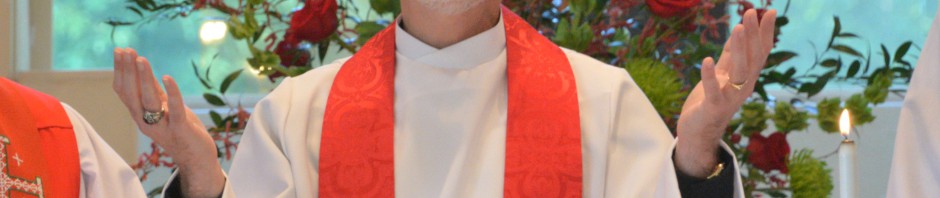
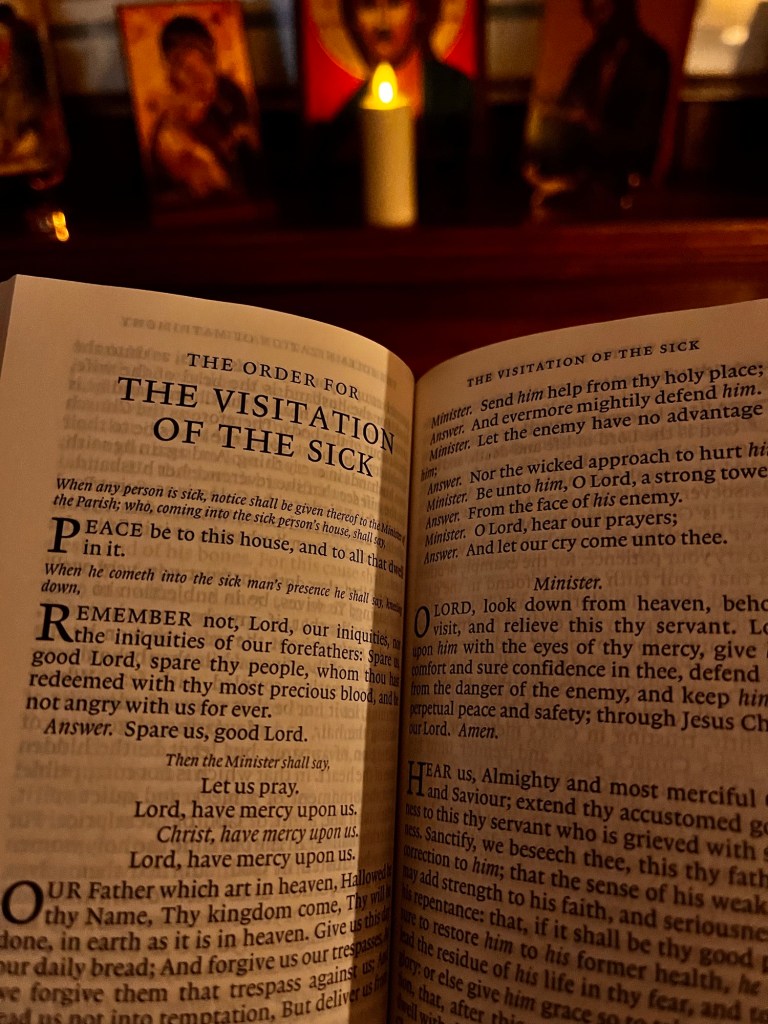


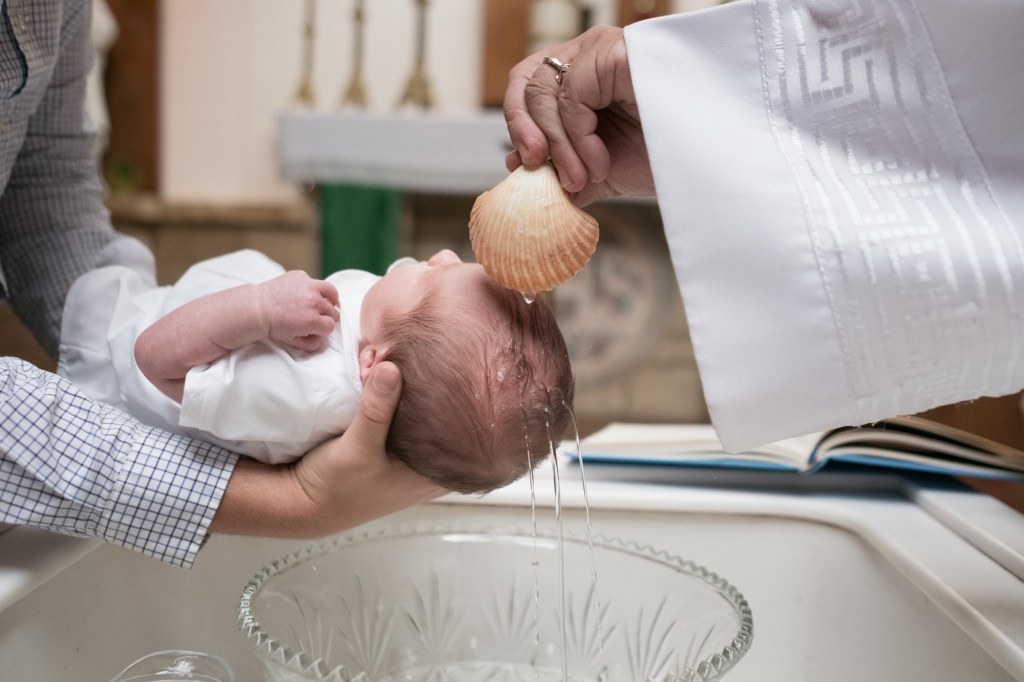
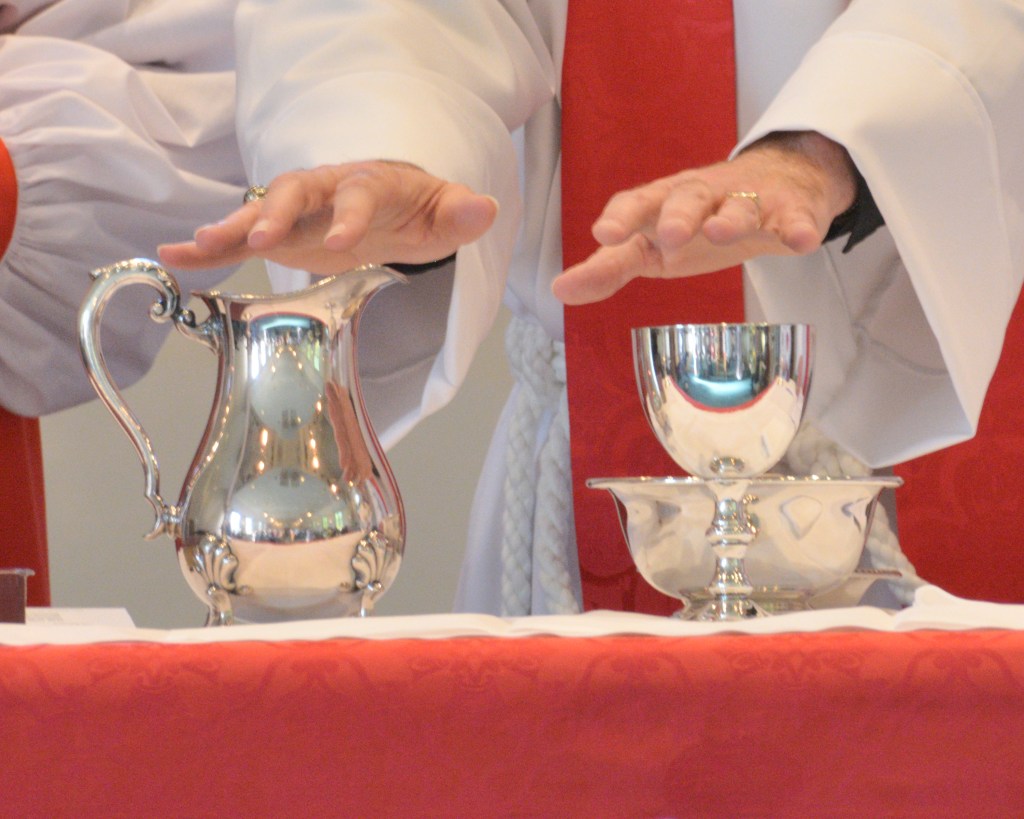
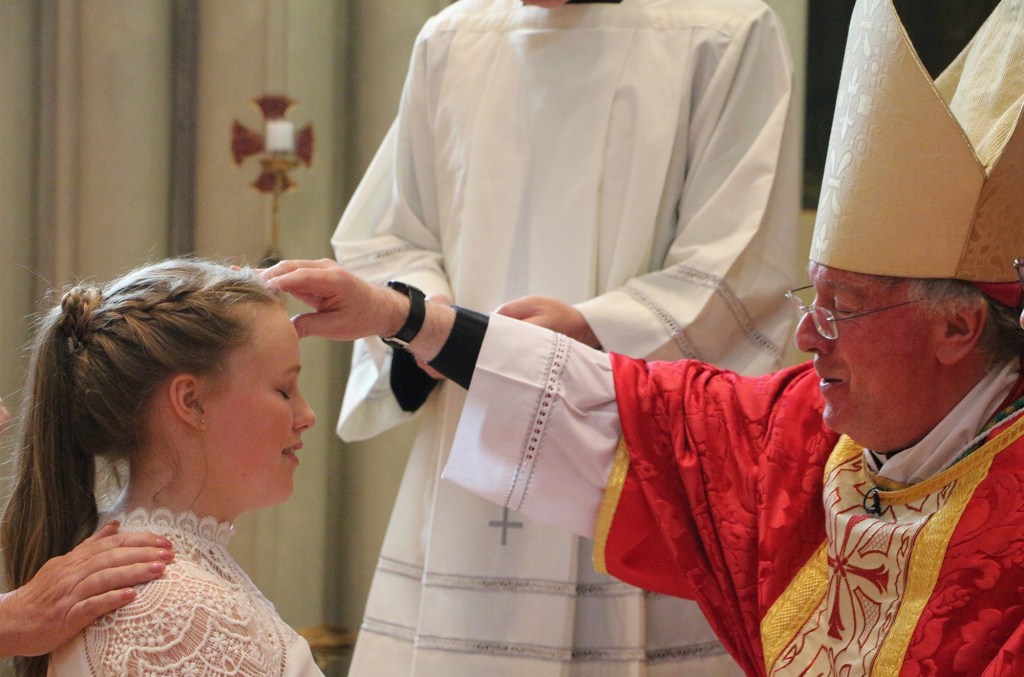
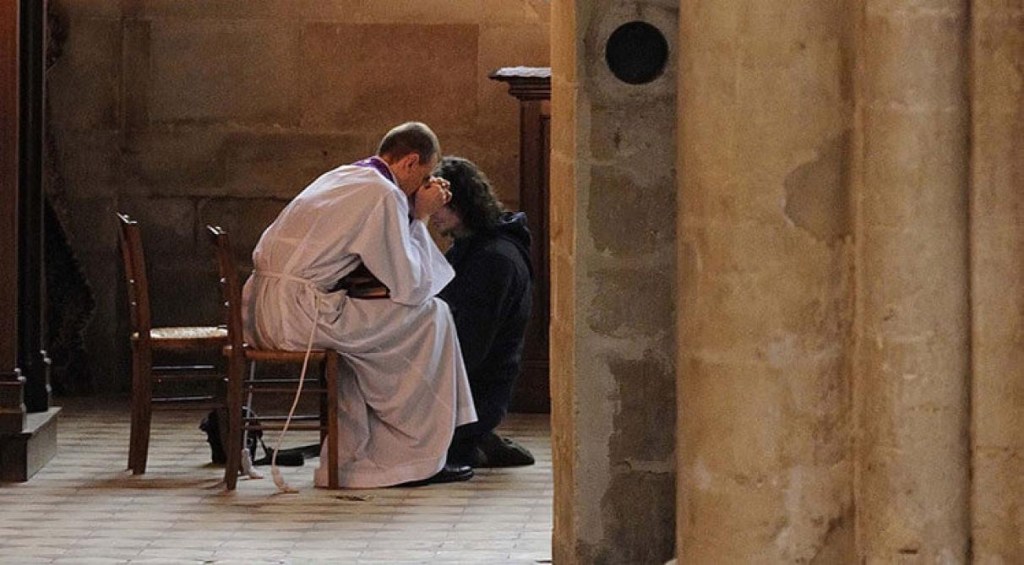


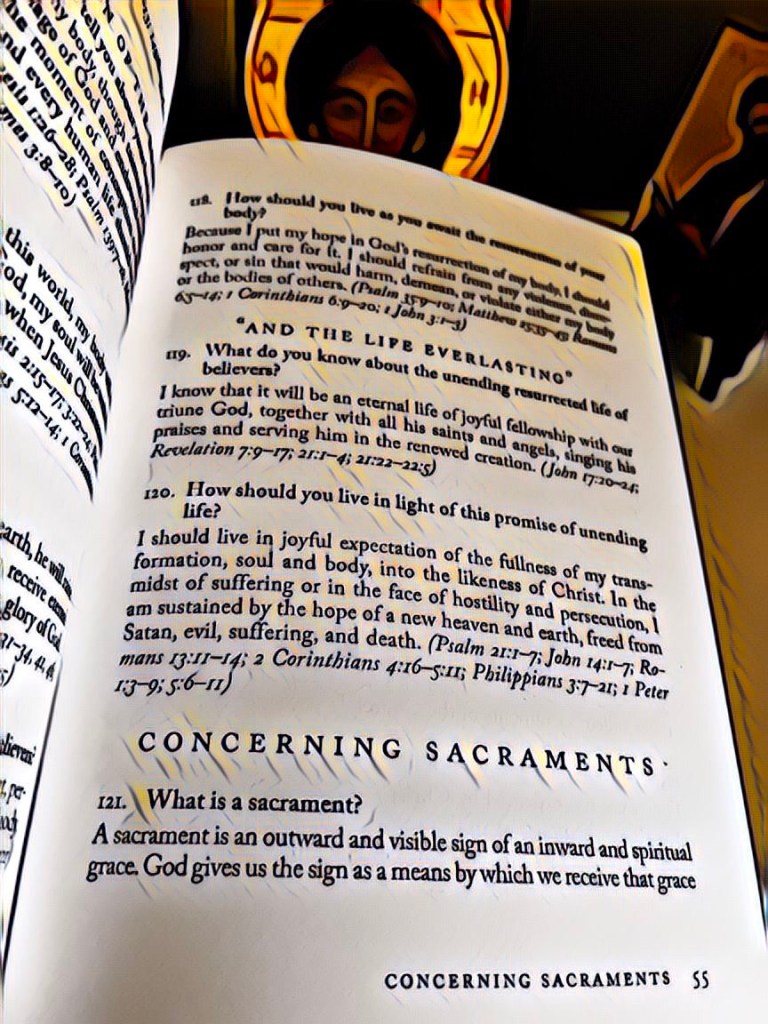

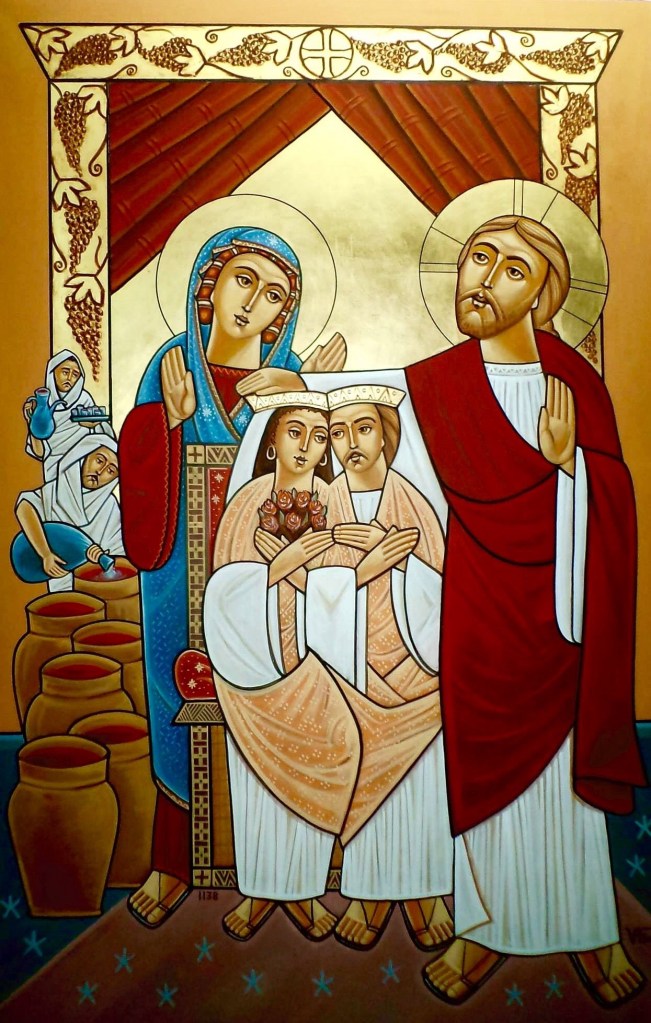





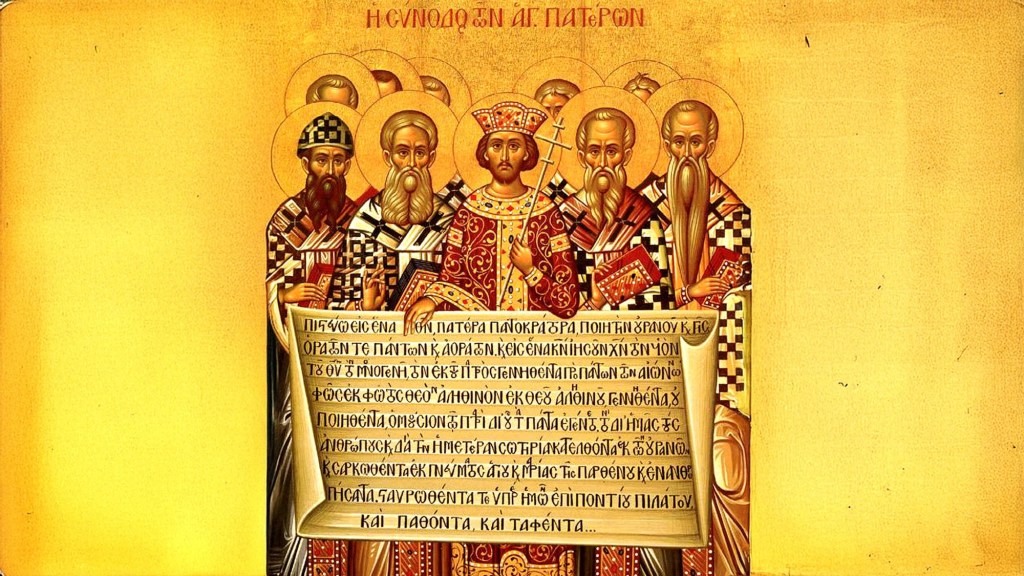

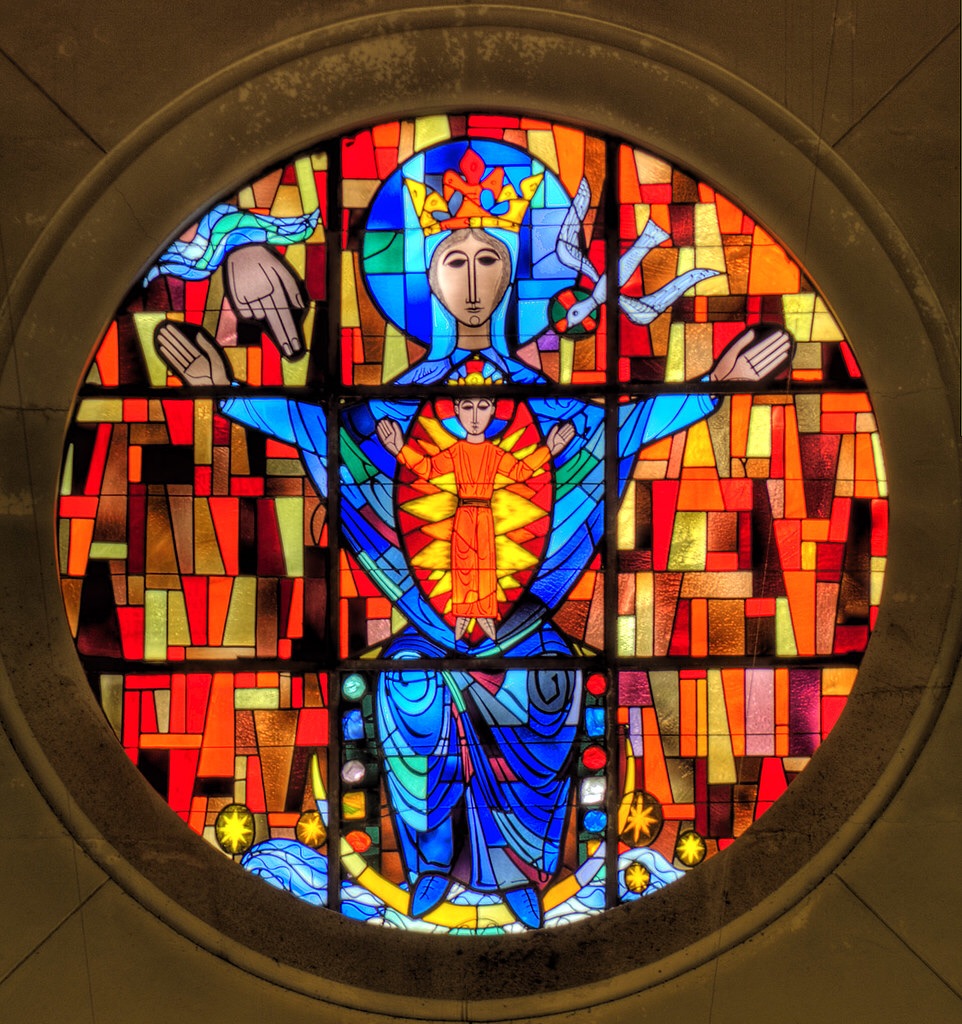






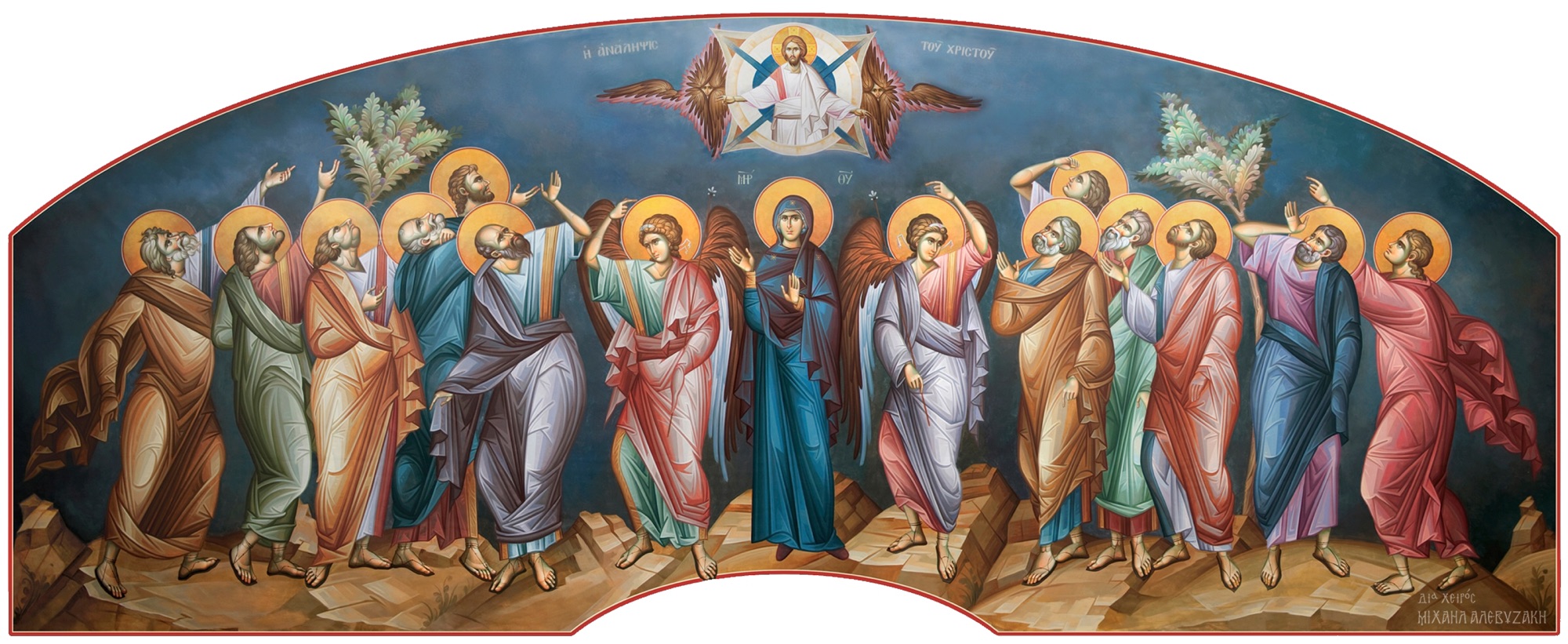


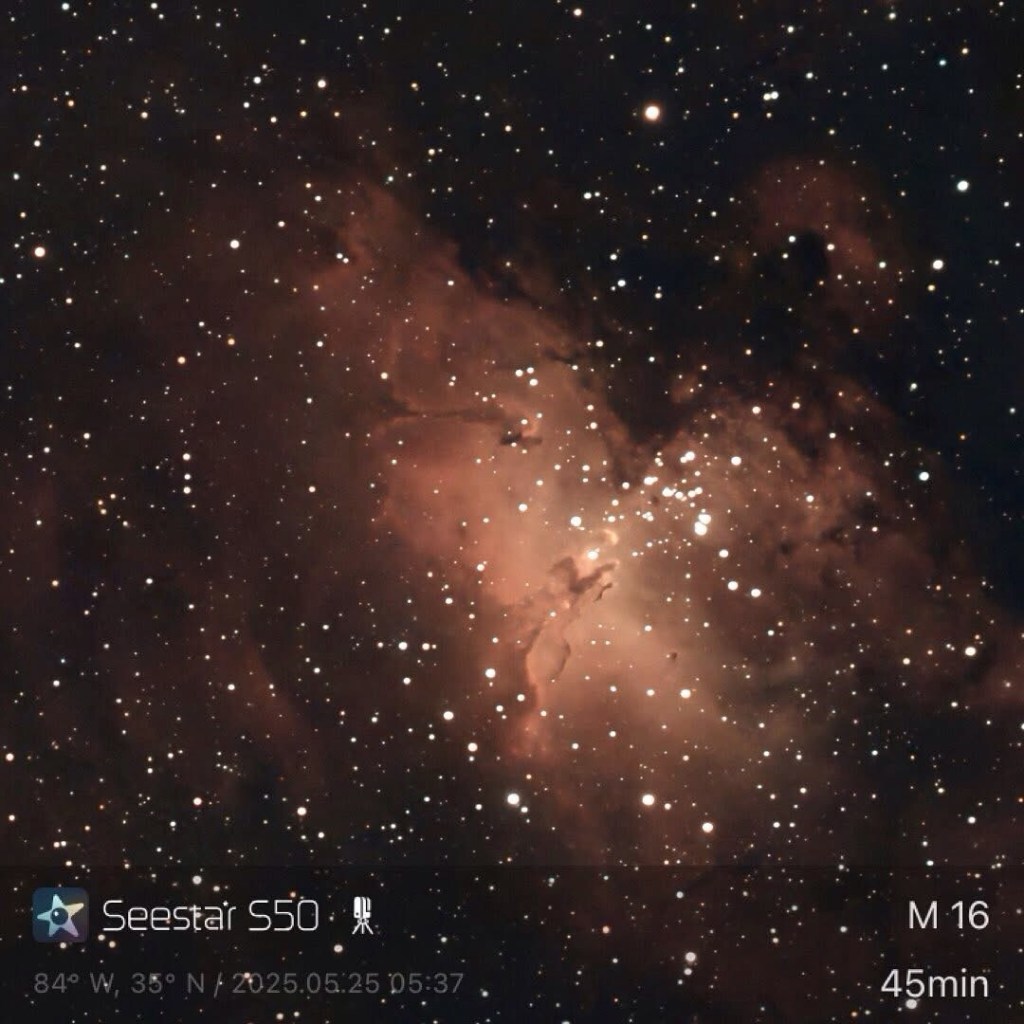




 First Blessings