The St. Benedict Center for Spiritual Formation (https://stbenedict-csf.org/), for which I serve as instructor and cell group leader, began a new course of training for spiritual directors this week — a two year program (Conversatio) offering an orthodox, classical approach to spiritual formation and spiritual direction. In one session, Fr. Jack King, director of the center, read a description of a modern spiritual director, Father John Eudes Bamberger, the late abbot of the Abbey of the Genesee, as described by Henri Nouwen in his book “The Genesee Diary:”
John Eudes listened to me with care and interest, but also with a deep conviction and a clear vision; he gave me much time and attention but did not allow me to waste a minute; he left me fully free to express my feelings and thoughts but did not hesitate to present his own; he offered me space to deliberate about choices and to make decisions but did not withhold his opinion that some choices and decisions were better than others; he let me find my own way but did not hide the map that showed the right direction. In our conversation, John Eudes emerged not only as a listener but also as a guide, not only as a counselor but also as a director (Henri Nouwen, The Genesee Diary, Image (2013, kindle), Introduction).
John Eudes BambergerHenri Nouwen
There is much more — much more — that must be said about spiritual direction and the spiritual director, even at an introductory level, but that is a good place to start: someone who will listen with care and interest and with a deep conviction (of the centrality of Christ) and a clear vision (of the way to Christlikeness); someone who freely gives time and attention (not least in prayer); someone who offers space and freedom for the directee to find his/her own way, provided that way leads to the Triune God as revealed in Scripture, in the Creeds, in the faith and practice of the Church, and ultimately in Jesus Christ, God incarnate, fully God and fully man; someone who has the map and has himself/herself walked a good bit of the territory.
I first read “The Genesee Diary” many years ago now, and it remains one of my favorite of Henri Houwen’s books. I have picked it up again now.
In another reflective moment, Nouwen writes in it:
I remember vividly how the Jesuits in high school made me write above almost every page, A.M.D.G. (Ad Majorem Dei Gloriam — To the Greater Glory of God), but I am overwhelmed by the realization of how little of that has become true during the twenty-four years since high school (ibid, p. 29).
That passage took me aback: twenty-four years since high school for Nouwen as he wrote. It is now fifty years since high school for me as I read. And yet, what he writes, reads true. Would that the entirety of that fifty years had been lived to the greater glory of God. But, there is today in which to do so, and, perhaps by the grace of God, tomorrow. May it, in his mercy, be so.
The Theology of the Holy Spirit Session 6: Discerning the Movement of the Holy Spirit
The Lord be with you. And with your spirit. Let us pray.
O God the Father, Creator of heaven and earth, Have mercy upon us.
O God the Son, Redeemer of the world, Have mercy upon us.
O God the Holy Spirit, Sanctifier of the faithful, Have mercy upon us.
O holy, blessed, and glorious Trinity, one God, Have mercy upon us (The Great Litany, BCP 2019, p. 91).
Introduction
Small To Large
Sometimes in presenting ideas it is best to go from small to large, from the very specific to the very general. That is most often the way a mathematical proof is presented. Start small with a few definitions, a few axioms, and work your way upward to a larger, more general theorem. Alternately, we might start with large and general notions and work our way downward toward the specific implications of the larger idea. That might be the way one would present the vision statement for an organization, for example. Start with the large scale, guiding principles and goals for the organization, and then work your way downward to what that means for each each division, each unit, each individual in the organization — from general down to granular.
It is that latter approach — from large and general to small and specific — that we have pursued in this course on The Theology of the Holy Spirit. We began with the very general notion of epistemology, of how we know what we know about the Holy Spirit. And, we noticed in Scripture — not least in the Acts of the Apostles — a process: experience, spiritual/cognitive dissonance, Scripture, Sacraments, Church all leading to a right understanding of that initial experience. Next, we considered the Holy Spirit in the three Creeds of the Western Church: the Nicene Creed, the Apostles’ Creed, and the Athanasian Creed. We saw how they defined the nature and work of the Holy Spirit, one of the divine persons of the triune God. Then, we turned our attention to the agency of the Holy Spirit in the Sacramental life of the Church and the Christian, from new birth in baptism, through every stage in the life of the believer, and pointing onward to eternal union with Christ. In the fourth lesson we began to consider how it is possible to grow in the Spirit, to increase our awareness of and participation with what the Spirit is doing — how to kindle and to avoid quenching the Spirit. Last week we looked at the evidence of the Spirit in our corporate and individual lives as we examined the fruit and gifts of the Spirit. Today we will become still more specific, as we look for ways to become more aware of the movement of the Holy Spirit in our individual lives.
Discerning the Movement of the Holy Spirit
Any course on the Holy Spirit should come back again and again to the book of Acts in which the Holy Spirit is the lead actor and everyone else is in the supporting cast. So, we start there today with a scene near the beginning of St. Paul’s second missionary journey in Acts 16. Paul and Silas set out to visit and strengthen the churches that Paul and Barnabas had established on their earlier mission. At Lystra they add Timothy to their team. And then we get this somewhat strange word about the trio:
6 And they went through the region of Phrygia and Galatia, having been forbidden by the Holy Spirit to speak the word in Asia. 7 And when they had come up to Mysia, they attempted to go into Bithynia, but the Spirit of Jesus did not allow them. 8 So, passing by Mysia, they went down to Troas. 9 And a vision appeared to Paul in the night: a man of Macedonia was standing there, urging him and saying, “Come over to Macedonia and help us.” 10 And when Paul had seen the vision, immediately we sought to go on into Macedonia, concluding that God had called us to preach the gospel to them (Acts 16:6-10).
Apparently, Paul had intended to travel throughout Asia, but the Holy Spirit forbade him. How? I wonder. Then Paul says, “Well, if not Asia, we’ll go to Bithynia.” But, once again, the Holy Spirit — identified here as the Spirit of Jesus — says no. Again, how that was communicated to Paul is not told us. But then, sometime later, during the night, Paul sees a vision of a man of Macedonia beckoning Paul and the team to come there; given the prominence of the Holy Spirit throughout the account, I assume the vision was prompted by the Spirit. Paul took this as a sign that a European mission was the will of God.
So, we see in this brief text the Holy Spirit working to direct St. Paul’s ministry in ways we know and in ways we don’t. That is true throughout Acts; we see the Holy Spirit revealing God’s will to various people in various ways: through the casting of lots, something equivalent to flipping a coin or drawing straws (Act 1:15 ff); through an act akin to teleportation (Acts 8:39-40); through repeated visions and direct words (Acts 10:17-20); in council with church leaders through their sharing stories and searching the Scriptures (Acts 15:1-29); through the words of “ordinary” disciples speaking prophetically (Acts 21:1-4).
This is the witness of Scripture: that the Holy Spirit reveals the will of God to God’s people, directs their actions, informs their understanding. That was clearly the case in the Apostolic era, and we believe it to be true also today, true throughout the history and the future of the Church. That conviction is expressed in many of our prayers, not least in this collect for guidance:
Collect for Guidance
O God, by whom the meek are guided in judgment, and light rises up in darkness for the godly: Grant us, in all our doubts and uncertainties, the grace to ask what you would have us do, that the Spirit of wisdom may save us from all false choices; that in your light we may see light, and in your straight path we may not stumble; through Jesus Christ our Lord. Amen (BCP 2019, p. 669).
So the question seems to be not whether the Holy Spirit is actively revealing God’s will to us — collectively and individually — but rather how he is doing so. Where do we look to find the Holy Spirit and how do we properly discern his guidance? And, given the human penchant for delusion, how do we distinguish the voice of the Holy Spirit from our own voices? These are some of the questions that we’ll consider in this final session on The Theology of the Holy Spirit.
I will draw heavily on the spirituality of St. Ignatius of Loyola (1491-1556), the Spanish theologian and founder of the Society of Jesus (the Jesuits). St. Ignatius devoted the greater part of his thinking to matters of discernment, of noticing and listening to the movements of the Holy Spirit. Throughout his life he worked to formulate and document this spirituality in a program of spiritual direction known now as “The Spiritual Exercises of St. Ignatius.” That is the work that I will draw from.
St. Ignatius of Loyola
First Principle and Foundation: A Spiritual Audio Equalizer
You are familiar with audio equalizers? They allow you to adjust certain frequency ranges in the music you are listening to in order to customize your listening experience: a little more bass, normal midrange, a little upper end boost. They can especially help those of us who are “getting” older as we lose the ability to hear certain frequencies as well, particularly high frequencies. I hear bass well, but the treble is a bit diminished. I may need to turn one frequency down and boost the other if I am to hear the music rightly.
There is a spiritual analogy here. We have many “voices” speaking to us, vying for our attention and our obedience. Out of all these voices, it is the Holy Spirit’s that we want to hear distinctly. We want to boost that one and turn down the others. Some we will be able to turn down and others we’ll simply have to recognize as distortions and learn to disregard. The main voice that I need to turn down is my own, my own set of desires and hopes and expectations and fears and doubts clamoring incessantly in my head and demanding my attention and my action. I need a spiritual audio equalizer to tune that out. That is what St. Ignatius provides us in his First Principle and Foundation:
Man is created to praise, reverence, and serve God our Lord, and by this means to save his soul.
The other things on the face of the earth are created for man to help him in attaining the end for which he is created.
Hence, man is to make use of them in as far as they help him in the attainment of this end, and he must rid himself of them in as far as they prove a hindrance to him.
Therefore, we must make ourselves indifferent to all created things, as far as we are allowed free choice and are not under any prohibition. Consequently, as far as we are concerned, we should not prefer health to sickness, riches to poverty, honor to dishonor, a long life to a short life. The same holds true for all other things.
Our one desire and choice should be what is more conducive to the end for which we are created (St. Ignatius of Loyola, The Spiritual Exercises of St. Ignatius (Louis J. Puhl, trans.), Loyola Press (1951), p. 12, hereafter The Exercises).
This principle tells us who we are (creatures, not the creator), what we are made for (to praise, reverence, and serve God), what all other things are here for (to help us fulfill our purpose), and how we must use them or let them alone (only for the attainment of our purpose). All of this is foundational. Then, St. Ignatius states the principle that turns down and filters out the voice of our disordered desires so that we can listen to the Holy Spirit:
Therefore, we must make ourselves indifferent to all created things, as far as we are allowed free choice and are not under any prohibition. Consequently, as far as we are concerned, we should not prefer health to sickness, riches to poverty, honor to dishonor, a long life to a short life. The same holds true for all other things.
Holy Indifference is the spiritual equalizer we need if we are to hear distinctly the voice of the Holy Spirit. I must filter out my preferences and turn up and focus on that for which I was made: to love, praise, and worship the Lord and to be obedient to his will. That is not as easy as using a few slider bars on a digital audio app. It requires a lifetime of discipline: prayer, worship, Scripture, sacraments, confession, participation in the life of the Church, renewing of the mind and heart. But, it does provide us a test in any given moment of discernment, really a prerequisite for any true discernment: Am I indifferent? Do I want only the will of God? Am I committed to fulfilling the purpose for which I am created? Am I listening to myself, or to the Holy Spirit? I find this First Principle and Foundation a necessary reminder in moments of discernment, in moments when I am not certain I am listening clearly to the Holy Spirit.
Listen To Your Life
We’ve spoken so far of listening clearly, of picking out the Holy Spirit’s voice from among all the other voice vying for our attention. The next matter to consider is this: What are we listening to? Where do we expect to hear the voice of the Holy Spirit?
When we think of listening to or looking for the guidance of the Holy Spirit, where are some places we normally turn? Scripture, prayer, liturgy, sacraments, the teaching of the Church, the council of the saints past and present: all of these are places and ways in which the Holy Spirit speaks to us. But, all of these speak to us in the midst of, in the context of our own lives. It is in the midst of our lives that we read Scripture, pray, participate in liturgy, receive the sacraments, listen to the teachings of Church and Creeds and Councils. When we listen for the Holy Spirit, we must listen to our lives.
Frederick Buechner — of blessed memory — novelist, memoirist, sometimes teacher and preacher, wrote compellingly about the need to listen to our lives. You do not have to agree with every detail of his writing to know it generally to be true.
Frederick Buechner
Listen:
If God speaks anywhere, it is into our personal lives that he speaks. Someone we love dies, say. Some unforeseen act of kindness or cruelty touches the heart or makes the blood run cold. We fail a friend, or a friend fails us, and we are appalled at the capacity we all of us have for estranging the very people in our lives we need the most. Or maybe nothing extraordinary happens at all — just one day following another, helter-skelter, in the manner of days. We sleep and dream. We wake. We work. We remember and forget. We have fun and are depressed. And into the thick of it, or out of the thick of it, at moments of even the most humdrum of our days, God speaks. But what do I mean by saying that God speaks?
He speaks not just through the sounds we hear, of course, but through events in all their complexity and variety, through the harmonies and disharmonies and counterpoint of all that happens…. To try to express in even the most insightful and theologically sophisticated terms the meaning of what God speaks through the events of our lives is as precarious a business as to try to express the meaning of the sound of rain on the roof or the spectacle of the setting sun. But I choose to believe that he speaks nonetheless, and the reason that his words are impossible to capture in human language is of course that they are ultimately always incarnate words. They are words fleshed out in the everydayness no less than in the crises of our own experience (from Frederick Buechner, The Sacred Journey and Listening to Your Life).
Buechner starts with a conditional statement, an if-then bit of logic: if God speaks anywhere, then it is into our personal lives that he speaks. We might want to hedge that around with all kinds of clarifications and nuance, and that is as it should be. But really he is saying no more than the obvious; if the Holy Spirit is going to speak to me, if must be in the context of — in the midst of and through — the events of my life: events including prayer, worship and the reading of Scripture; the cooking of meals and the doing of dishes; the serving of others and the being served by them; my sin and repentance and absolution; the moments of joy and despair and routine. All of it: God is speaking in all of it, in all the moments of our lives. And he is speaking through the moments of our lives as the medium/mode of communication. A painter uses color and perspective to speak truth. A dancer uses movement and form to express meaning. God uses human lives to reveal himself. That is why Scripture is primarily a narrative, a story of God revealing himself in and through a people, in and through the lives of men and women and families and tribes and nations and the church. Buechner is saying that what is true in Scripture — God revealing himself to and through people in the context of their lives — is still true; God is revealing himself in and through the mess and muddle and glory of your life and of mine, not just in the extraordinary moments, but in the everydayness of it.
What should our response be to that, to the fact that the Holy Spirit is speaking? Buechner suggests this:
Listen to your life. All moments are key moments. I discovered that if you really keep your eye peeled to it and your ears open, if you really pay attention to it, even such a limited and limiting life as the one I was living on Rupert Mountain opened up onto extraordinary vistas. Taking your children to school and kissing your wife goodbye. Eating lunch with a friend. Trying to do a decent day’s work. Hearing the rain patter against the window. There is no event so commonplace but that God is present within it, always hiddenly, always leaving you room to recognize him or not to recognize him, but all the more fascinatingly because of that, all the more compellingly and hauntingly….If I were called upon to state in a few words the essence of everything I was trying to say both as a novelist and as a preacher, it would be something like this: Listen to your life. See it for the fathomless mystery that it is. In the boredom and pain of it no less than in the excitement and gladness: touch, taste, smell your way to the holy and hidden heart of it because in the last analysis all moments are key moments, and life itself is grace (Frederick Buechner, from Now and Then and Listening to Your Life).
Listen to your life; listen to what the Holy Spirit is saying in and through your life. That may sound simple, but it is so easy to be so busy living life that we fail to take time to listen to it, to notice the Holy Spirit speaking in and through the ordinary — and sometimes the extraordinary — events of our lives. St. Ignatius of Loyola made this listening to life the non-negotiable center of his spirituality and that of the Jesuit order. He insisted that each Jesuit offer a Prayer of Examen each day — usually twice each day — a time of listening to the Holy Spirit through the events of the day. There are many ways of praying the Examen, but each is essentially a prayerful review of the events of the day with the help of the Holy Spirit, listening for and discerning the meaning of those events. What follows is the basic pattern.
Prayer of Examen
• Preparation: Take a moment to settle down, focus your attention on prayer, and ask the Holy Spirit to guide you in the following examen. This could be as simple as sitting briefly in silence, taking a few breaths, and praying: Come Holy Spirit, reveal the meaning of my day.
• Thanksgiving: Express your gratitude to God for the gift of the day, for the blessings of it (be specific), and perhaps even for the challenges of it (God was present there, too).
• Review: Review the events of the day. When/where were you aware of God’s presence and pleasure? Where were you unaware of God’s presence and pleasure? When did you follow God closely and when did you stray? Thank God for the former and ask forgiveness for the latter.
• Preview: Look ahead to the next day. Consider the opportunities and challenges it will offer, and ask the Holy Spirit to guide you through it and to help you be attentive to his presence it it.
• Closure: Take a moment to end the examen with silence or perhaps with a brief prayer.
This is simply an outline. If you think it might be a helpful part of your rule of prayer, experiment with it and adapt it. It is simply a tool to help you listen, with the Holy Spirit, to your life, to the way God reveals himself in and through the events of your life. Some of you may journal regularly. That, too, is a way of listening prayerfully to your life. The method is less important than the listening.
Consolation and Desolation
What do we listen for when we listen to our lives? There are many ways to answer that question, but St. Ignatius listened primarily for the voice of the Holy Spirit in the consolations and desolations that we experience. For Ignatius, consolation and desolation are spiritual terms and not merely emotional terms on the order of joy or sadness, peace or anxiety. Consolation and desolation point toward the movement of the Holy Spirit in one’s life, or toward the movement of the evil spirit. Let’s consider St. Ignatius’s definitions of these two states.
3. SPIRITUAL CONSOLATION. I call it consolation when an interior movement is aroused in the soul, by which it is inflamed with love of its Creator and Lord, and as a consequence, can love no creature on the face of the earth for its own sake, but only in the Creator of them all. It is likewise consolation when one sheds tears that move to the love of God, whether it be because of sorrow for sins, or because of the sufferings of Christ our Lord, or for any other reason that is immediately directed to the praise and service of God. Finally, I call consolation every increase of faith, hope, and love, and all interior joy that invites and attracts to what is heavenly and to the salvation of one’s soul by filling it with peace and quiet in its Creator and Lord (The Exercises, p. 142).
First, Ignatius notes that consolation is a movement aroused in the soul; it is not primarily a psychological or emotional state, though these may be attendant to consolation. The soul is involved when one is moved to — inflamed with — love for God. Let me offer an example of the difference between consolation and an emotional state. Imagine you are at the beach or in the mountains and you see a glorious sunset; you are moved deeply by its beauty.
Smokey Mountain Sunset
If you stop there — just deeply moved by its beauty — it is likely that you are having an emotional experience, which is itself a grace from God; but, it is not what Ignatius means by consolation. Now, suppose, while viewing the sunset, you are drawn upward to the contemplation and praise of God the creator and of Jesus Christ the true light. Suppose you are moved to pray or sing the Phos Hilaron:
O gladsome light, pure brightness of the everliving Father in heaven, O Jesus Christ, holy and blessed!
Now as we come to the setting of the sun, and our eyes behold the vesper light, we sing your praises, O God: Father, Son, and Holy Spirit.
You are worthy at all times to be praised by happy voices, O Son of God, O Giver of Life, and to be glorified through all the worlds (BCP 2019, p. 44).
That is consolation, because you are moved to love for God, because you are rejoicing in the beauty of creation not merely for its own sake, but for the sake of the Creator of all beauty. That is a movement of the Holy Spirit.
St. Ignatius also mentions tears as a sign of consolation. As before, this is not merely a matter of emotion. Instead, these tears are a movement of the Spirit that ends not with sadness or even catharsis, but instead with praise and service of God. Think of tears shed in confession, when sitting quietly in prayer, or when bearing some burden of a brother or sister in Christ. Tears are indicative of consolation when they are not an end in themselves, but when they lead to God.
Lastly, St. Ignatius calls consolation every movement of the Spirit that leads to an increase of faith, hope, and love. For me, this is the gold-standard litmus test of consolation: Am I moving toward greater faith, hope, and love? If so, I am being moved by the Holy Spirit.
It is in the time of consolation that you are being moved and directed by the Holy Spirit. So, we listen to our lives for moments such as those with confidence that the Holy Spirit was/is present and active.
Conversely, St. Ignatius defines spiritual desolation. As you listen to his definition, keep in mind that, as with spiritual consolation, this is not primarily an emotional or psychological state, but rather a spiritual condition.
4. SPIRITUAL DESOLATION. I call desolation what is entirely the opposite of what is described in the third rule, as darkness of soul, turmoil of spirit, inclination to what is low and earthly, restlessness rising from many disturbances and temptations which lead to want of faith, want of hope, want of love. The soul is wholly slothful, tepid, sad, and separated, as it were, from its Creator and Lord. For just as consolation is the opposite of desolation, so the thoughts that spring from consolation are the opposite of those that spring from desolation (ibid).
Just listen again to some of the key terms and phrases to get a feel for desolation.
Darkness of soul
Turmoil of spirit
Inclination to the low and earthly
Restlessness, disturbance, temptation
Want (lack) of faith, hope, and love
A slothful, tepid, sad soul which feels separated from it Creator
These characteristics are not normal sadness or clinical depression. This is a spiritual matter. The person experiencing spiritual desolation is operating not under the influence of the Holy Spirit but of the evil spirit. This is a battle for the welfare of one’s soul. As you listen to your life, pay attention to times of desolation. When did they come? What precipitated them? What ended them? We look for patterns so that we can battle the evil spirit effectively this time and in the times to come.
St. Ignatius instructs us to examine our lives — remember his emphasis on the Prayer of Examen — paying special attention to consolation as a movement of the Holy Spirit and desolation as a movement of the evil spirit. He emphasizes three aspects to this examination:
Awareness: Become aware when some spiritual movement is taking place in your soul, either of consolation or of desolation.
Understanding: Discern the meaning and direction of the movement. Is it from the Holy Spirit or from the evil spirit?
Action: Take proper action to accept and move with the Holy Spirit or to reject and move counter to the evil spirit.
St. Ignatius of Loyola: Rules for Discernment of Spirits
These definitions of consolation and desolation come from The Spiritual Exercises of St. Ignatius of Loyola, the third and fourth of his fourteen rules for discernment of spirits. We do not have time to consider the other rules in this class, but I do want you to have access to them, and I do recommend that you take time to prayerfully consider them. They provide great insight into the movement of the Holy Spirit — and of the evil spirit — in our lives, and they offer ways to respond appropriately to each movement. Fr. Timothy Gallagher is a noted authority in Ignatian spirituality, and I will provide you his simplified paraphrase of the rules of discernment. I will also add some comments of my own in italics.
Fr. Timothy Gallagher’s Paraphrase of the Ignatian Rules of Spiritual Discernment
Rules for becoming aware and understanding the different movements that are caused in the soul, the good ones, to receive them, and the bad ones, to reject them.
1. When a person lives a life of serious sin, the enemy fills the imagination with images of sensual pleasures; the good spirit stings and bites in the person’s conscience, God’s loving action, calling the person back. [A feeling of peace is not a reliable indication of a movement of the Holy Spirit. If a person is living in sin or moving toward sin, the opposite is true. The Holy Spirit will sting and bite the conscience of that person to lead him to repentance. It is the evil spirit who will bring a sense of peace to lure the unsuspecting person to destruction. Remember, there is a way that seems good to man, but its end is destruction.]
2. When a person tries to avoid sin and to love God, this reverses: now the enemy tries to bite, discourage, and sadden; the good spirit gives courage and strength, inspirations, easing the path forward. [Expect resistance from the evil spirit when you are progressing toward increasing faith, hope, love, and obedience.]
3. When your heart finds joy in God, a sense of God’s closeness and love, you are experiencing spiritual consolation. Open your heart to God’s gift!
4. When your heart is discouraged, you have little energy for spiritual things, and God feels far away, you are experiencing spiritual desolation. Resist and reject this tactic of enemy!
5. “In time of desolation, never make a change!” When you are in spiritual desolation, never change anything in your spiritual life. [This must be clarified. If you have made spiritual decisions in a time of consolation — when you were under the guidance of the Holy Spirit — never change those in a time of desolation. Suppose after prayerfully considering the matter, in a time of consolation you committed to praying Morning Prayer each day. Now, six months later, you are experiencing signs of spiritual desolation: slothfulness, a disinterest in spiritual things, etc. Now, you are tempted to stop praying Morning Prayer. This is where this most valuable rule “kicks in.” In a time of desolation — a time when, by definition, you are under the influence of the evil spirit — NEVER make a change to a commitment made in a previous time of consolation. Wait until the desolation is over, then reassess matters in a time of consolation.]
6. When you are in spiritual desolation, use these four means: prayer (ask God’s help!), meditation (think of Bible verses, truths about God’s faithful love, memories of God’s fidelity to you in the past), examination (ask – What am I feeling? How did this start?), and suitable penance (don’t just give in and immerse yourself in social media, music, movies . . ..). Stand your ground in suitable ways!
7. When you are in spiritual desolation, think of this truth: God is giving me all the grace I need to get safely through this desolation.
8. When you are in spiritual desolation, be patient, stay the course, and remember that consolation will return much sooner than the desolation is telling you.
9. Why does a God who loves us allow us to experience spiritual desolation? To help us see changes we need to make; to strengthen us in our resistance to desolation; and to help us not get complacent in the spiritual life.
10. When you are in spiritual consolation, remember that desolation will return at some point, and prepare for it.
11. The mature person of discernment: neither carelessly high in consolation nor despairingly low in desolation, but humble in consolation and trusting in desolation.
12. Resist the enemy’s temptations right at their very beginning. This is when it is easiest.
13. When you find burdens on your heart in your spiritual life, temptations, confusion, discouragement, find a wise, competent spiritual person, and talk about it.
14. Identify that area of your life where you are most vulnerable to the enemy’s temptations and discouraging lies and strengthen it.
The goal of all that we have said today is simply to become attentive to the movement of the Holy Spirit in your life: through focusing on the fundamental purpose of your life, through frequent self-examination, by listening to your life, and by becoming aware of the times of consolation and desolation that we all experience. The Holy Spirit is the very presence of God in us, uniting us to Christ, presenting us to God our Father. And we want to be aware of what is happening so that we can cooperate with it. We end this course with the prayer we offered in the first class: Heavenly Father, fill me/us with your Holy Spirit. Amen.
The Theology of the Holy Spirit Session 5: Fruit and Gifts of the Spirit
The Lord be with you. And with your spirit. Let us pray.
O God the Father, Creator of heaven and earth, Have mercy upon us.
O God the Son, Redeemer of the world, Have mercy upon us.
O God the Holy Spirit, Sanctifier of the faithful, Have mercy upon us.
O holy, blessed, and glorious Trinity, one God, Have mercy upon us (The Great Litany, BCP 2019, p. 91).
Introduction: Identity
Identity has been on my mind lately as I have helped my daughter navigate her post-wedding name change through the Department of Motor Vehicles (DMV) and the Social Security Administration (SSA). That process has raised all kinds of questions like: (1) Why are governmental agencies — at both the county and federal levels — so unresponsive to citizens’ questions and needs? and, more philosophically, (2) What is the nature of the relationship between one’s name and one’s identity?
Anyway, identity has been on my mind lately. And that has raised a theological question that actually is important, not least for our understanding of the Holy Spirit: What is the most fundamental identity of a Christian? Asked in other words: How does God the Father see us — most fundamentally? Note that the last question is akin to these: (1) Who is buried in Lincoln’s tomb? and (2) What color black horse did Alexander the Great ride? The answer is explicit in the question. If we are to call and consider God “our Father” then we are, by definition, God’s children.
Let’s confirm this logic with Scripture, as we always should do.
3 Blessed be the God and Father of our Lord Jesus Christ, who has blessed us in Christ with every spiritual blessing in the heavenly places, 4 even as he chose us in him before the foundation of the world, that we should be holy and blameless before him. In love 5 he predestined us for adoption to himself as sons through Jesus Christ, according to the purpose of his will, 6 to the praise of his glorious grace, with which he has blessed us in the Beloved (Eph 1:3-6).
4 But when the fullness of time had come, God sent forth his Son, born of woman, born under the law, 5 to redeem those who were under the law, so that we might receive adoption as sons. 6 And because you are sons, God has sent the Spirit of his Son into our hearts, crying, “Abba! Father!” 7 So you are no longer a slave, but a son, and if a son, then an heir through God (Gal 4:4-7).
So, based on these Scriptures — and there are others like them — what is our most fundamental identity as Christians? We are adopted sons of God. I don’t want to make too much of the gendered nature of these texts — adopted sons — in part because Roman laws of adoption were complex beyond my level of interest. But, it seems to be generally true that sons had certain rights (and obligations) that daughters did not have. To be adopted as sons — even as female “sons” — is to receive the full benefits of the familial relationship. It is also true that other texts — we will look at one in 1 John in a moment — say that we are children of God, not specifically sons.
But, I am very interested in this notion of adoption. What I say next is not to diminish adoption in any sense — God forbid! — but simply to identify it for what it is. Adoption is a civic action that creates a legal relationship in lieu of a biological relationship. We place great emotional significance on adoption, as is appropriate. The Romans did not. For them it was more a matter of succession and inheritance than of emotional relationship. Adoption conferred rights and responsibilities. Adoption changed the legal status of the one adopted, but not the fundamental nature of that person.
Now, bear with me as we push this a little further; it is important that we do so. I’ve made the claim that, in ancient Rome, adoption affected a change in legal status, but not (necessarily) a change in nature. But, the picture is more complex than that. Imagine a son — it could equally well be a daughter — adopted as pre-adolescent. By that age certain patterns of behavior will have been formed; a certain self-understood identify will have been fashioned. Now, place that pre-adolescent in a new family with very different patterns and identity. He is legally a son, but not yet a son in terms of nature. That will grow over time as he forms new relationships, learns and adopts new values and behaviors, and comes to represent, in himself, what his new family represents. He has become, by the grace of adoption, what the family is by nature. He demonstrates all the characteristics of the family, and he is, in every sense but biology, a true son. Or, he may refuse his full sonship by holding onto his pre-adoption values and behaviors. This change in nature isn’t automatic; it must be accepted, pursued, and developed.
Fruit of the Spirit
Now, let’s begin to relate all this to the Holy Spirit. It is in baptism that we are adopted as sons of God. And we have seen previously that the Holy Spirit is the divine agent of that baptismal identity. Galatians 4:6 emphasizes that again: it is the presence of the Holy Spirit in our hearts that allows us to cry to God, “Abba! Father!” Now, here is the question — the essential question: Is that adoption merely a civic action — a legal matter, so to speak — or does it accomplish, in some sense yet to be defined, a change in nature?
The answer isn’t either/or but both/and. In baptism we are transferred from one kingdom to another: freed from the dominion of Satan and made citizens of heaven. Likewise we are released from slavery to sin; its power over us is broken. There is some juridical — some quasi-legal — language and imagery there. But, at the same time, we are born again of water and Spirit. By God’s grace and through the agency of the Holy Spirit, there is a change in — really, a renewal of — nature, at least the beginning of a change and renewal. Now, it is up to us to grow into the fullness of that renewed nature, to take on the values and behaviors of a true son in our new family, the family of God.
Now, let me switch images. Suppose it is wintertime and, while walking, we happen upon a grove of fruit trees. Not being either botanists or farmers, we might well not recognize, simply from the bark or the shape of the tree, what kind of tree it is.
How could we ever tell, definitively, the species of tree? Well, it will require a bit of patience, but we could come back when the tree is bearing fruit; that would tell us its true identity, its true nature. The proof of the nature is in the fruit.
You probably see where I am going with this. The proof of one’s nature — whether fallen or renewed — is in the fruit of one’s life, either fruit of the flesh or fruit of the Spirit. If we wish to move from merely the status of sonship to the fullness of it, we must move from the fruit of the flesh — or from a general barrenness — to the fruit of the Spirit.
16 But I say, walk by the Spirit, and you will not gratify the desires of the flesh. 17 For the desires of the flesh are against the Spirit, and the desires of the Spirit are against the flesh, for these are opposed to each other, to keep you from doing the things you want to do. 18 But if you are led by the Spirit, you are not under the law. 19 Now the works of the flesh are evident: sexual immorality, impurity, sensuality, 20 idolatry, sorcery, enmity, strife, jealousy, fits of anger, rivalries, dissensions, divisions, 21 envy, drunkenness, orgies, and things like these. I warn you, as I warned you before, that those who do such things will not inherit the kingdom of God. 22 But the fruit of the Spirit is love, joy, peace, patience, kindness, goodness, faithfulness, 23 gentleness, self-control; against such things there is no law. 24 And those who belong to Christ Jesus have crucified the flesh with its passions and desires.
25 If we live by the Spirit, let us also keep in step with the Spirit. (Gal 5:16-25).
Now, I need to slightly nuance what a said earlier. I said that the proof of one’s nature — whether fallen or renewed — is in the fruit of one’s life, either fruit of the flesh or fruit of the Spirit. More precisely, I should say that the presence of the desires of the flesh and the absence of the fruit of the Spirit, is pretty compelling evidence that one has not moved on from the status of sonship to the reality and fullness of it. This is not a call to begin judging those around us — God forbid! But it is a call for self-examination, and for attention to those areas where we are not as fruitful as we should be.
Love, joy, peace, patience, kindness, goodness, faithfulness, gentleness, and self-control: are these the words that people use to describe us collectively and individually? Which ones on the list might they leave out in the description? This character, these traits: this is what it means for the Holy Spirit to move us from the mere status of sons to the true nature of sons. Jesus gives this character as a goal for us, and as a defining feature of our identity:
43 “You have heard that it was said, ‘You shall love your neighbor and hate your enemy.’ 44 But I say to you, Love your enemies and pray for those who persecute you, 45 so that you may be sons of your Father who is in heaven. For he makes his sun rise on the evil and on the good, and sends rain on the just and on the unjust (Matt 5:43-45).
Jesus focuses on love as the prime virtue. But all the rest — joy, peace, patience, kindness, goodness, faithfulness, gentleness and self-control — flow from that love. They are all made possible by the Holy Spirit. They are made real by our cooperation — our participation — with the Holy Spirit. We are fellow-workers with the Holy Spirit in the cultivation of the virtues of sonship. We have to desire these virtues, seek them not least through prayer, practice them at every opportunity, repent when we fail to do, and start again.
Dorothy Day
Roman Catholic social advocate Dorothy Day, founder of the Catholic Worker Movement, said that Christians should make decisions, should take actions, based on the corporal and spiritual works of mercy which reflect and make tangible the fruit of the Spirit:
Corporal Works of Mercy
To feed the hungry;
To give drink to the thirsty;
To clothe the naked;
To shelter the homeless;
To visit the sick;
To free the captive;
To bury the dead.
Spiritual Works of Mercy
To instruct the ignorant;
To counsel the doubtful;
To admonish sinners;
To bear wrongs patiently;
To forgive offenses willingly;
To comfort the afflicted;
To pray for the living and the dead.
These are wonderful practices for us, particularly as a rule of life for our behavior. But, we could also use the fruit of the Spirit in a similar way. Simply ask, “Does the course of action I am considering demonstrate and nurture love, joy, peace, patience, kindness, goodness, faithfulness, gentleness, and self-control?” If not, then it is not the way of the Spirit. We could simply ask ourselves: In this moment how should I act to show love, joy, peace, patience, kindness, goodness, faithfulness, gentleness and self-control? Then, do that.
I close this section on the fruit of the Spirit with words from St. Peter and from St. John. Remember that our goal — God’s purpose for us — is to move from the status of sonship to the divine nature of sonship. That is exactly what St. Peter emphasizes in his second letter:
3 His divine power has granted to us all things that pertain to life and godliness, through the knowledge of him who called us to his own glory and excellence, 4 by which he has granted to us his precious and very great promises, so that through them you may become partakers of the divine nature, having escaped from the corruption that is in the world because of sinful desire. 5 For this very reason, make every effort to supplement your faith with virtue, and virtue with knowledge, 6 and knowledge with self-control, and self-control with steadfastness, and steadfastness with godliness, 7 and godliness with brotherly affection, and brotherly affection with love. 8 For if these qualities are yours and are increasing, they keep you from being ineffective or unfruitful in the knowledge of our Lord Jesus Christ. 9 For whoever lacks these qualities is so nearsighted that he is blind, having forgotten that he was cleansed from his former sins. 10 Therefore, brothers, be all the more diligent to confirm your calling and election, for if you practice these qualities you will never fall. 11 For in this way there will be richly provided for you an entrance into the eternal kingdom of our Lord and Savior Jesus Christ (2 Peter 1:3-11).
St. Peter says that these qualities he enumerates — and you see great overlap in his list and St. Paul’s fruit of the Spirit — if they are ours and they are increasing, confirm our calling and our election. In the language we have been using, these qualities take us beyond the status of sonship to the reality of the divine nature of sonship.
St. John writes similarly about moving from status to nature, but with an even broader outlook, an outlook that keeps in mind the end of all things:
28 And now, little children, abide in him, so that when he appears we may have confidence and not shrink from him in shame at his coming. 29 If you know that he is righteous, you may be sure that everyone who practices righteousness has been born of him.
3 See what kind of love the Father has given to us, that we should be called children of God; and so we are. The reason why the world does not know us is that it did not know him. 2 Beloved, we are God’s children now, and what we will be has not yet appeared; but we know that when he appears we shall be like him, because we shall see him as he is. 3 And everyone who thus hopes in him purifies himself as he is pure (1 John 2:28-3:3).
We are sons now, and as we abide in him and practice righteousness we may be certain of that, and I think it is fair to say that we will grow more deeply into our sonship. But there is something greater out there for us in the future, at Christ’s appearing: the fullness of our sonship that we cannot now even begin to imagine. And because we hope for that — and here “hope” means the absolute assurance of something that we know to be coming — we purify ourselves now. We cooperate with the Holy Spirit in deepening the nature of our sonship. We cultivate the fruit of the Spirit.
Gifts of the Spirit
Having looked at the fruit of the Spirit, now we turn out attention to the gifts of the Spirit. While there are several catalogs of these gifts in Scripture — not identical, but with significant agreement — we will focus primarily on St. Paul’s discussion of them in 1 Corinthians. I do this, in part, because the Corinthian church(es) were struggling to come to grips with these spiritual gifts, and St, Paul goes into quite a bit of detail to help them manage these manifestations of the Spirit. The whole of 1 Corinthians 12-14 is essential for an understanding of the spiritual gifts. We begin with 1 Cor 12:1-11.
12 Now concerning spiritual gifts, brothers, I do not want you to be uninformed. 2 You know that when you were pagans you were led astray to mute idols, however you were led. 3 Therefore I want you to understand that no one speaking in the Spirit of God ever says “Jesus is accursed!” and no one can say “Jesus is Lord” except in the Holy Spirit.
4 Now there are varieties of gifts, but the same Spirit; 5 and there are varieties of service, but the same Lord; 6 and there are varieties of activities, but it is the same God who empowers them all in everyone. 7 To each is given the manifestation of the Spirit for the common good. 8 For to one is given through the Spirit the utterance of wisdom, and to another the utterance of knowledge according to the same Spirit, 9 to another faith by the same Spirit, to another gifts of healing by the one Spirit, 10 to another the working of miracles, to another prophecy, to another the ability to distinguish between spirits, to another various kinds of tongues, to another the interpretation of tongues. 11 All these are empowered by one and the same Spirit, who apportions to each one individually as he wills (1 Cor 12:1-11).
First, notice that there were a variety of spiritual gifts operative in the church: wisdom, knowledge, faith, healing, miracles, prophecy, discernment of spirits, tongues, and interpretation of tongues. This list is probably typical but not exhaustive of the first century spiritual gifts. All of these, in their great diversity, are from the same source and directed toward the same purpose.
What is the source of the spiritual gifts? The same Spirit, the same Lord, the one Spirit, one and the same Spirit: though there is a diversity of gifts, there is a unity of source. These gifts come from the Spirit and are not simply natural abilities, though they may be natural abilities perfected — raised to a new level — by the Spirit. As St. Thomas Aquinas said, “Grace does not destroy nature, but perfects it.” For example, in 1 Cor 12:28, St. Paul lists administration as a spiritual gift. We all know people who have a natural ability to organize, manage, and generally run things — all kinds of things — well: excellent administrators. But, the church isn’t a business or a committee. It needs to be administered well, but not in the same way as some of these other endeavors. So, God, through the Spirit, can perfect the natural ability of administration for use in the church. “Grace does not destroy nature, but perfects it.”
What is the purpose of the spiritual gifts? The purpose of the spiritual gifts is the common good. What is the implication here? A spiritual gift is not given to an individual for his/her private use and edification, but rather to share with the church for the upbuilding of all.
A Piece of the Continent
A poem by the Anglican divine John Donne comes to mind:
No man is an island, Entire of itself; Every man is a piece of the continent, A part of the main.
If a clod be washed away by the sea, Europe is the less, As well as if a promontory were: As well as if a manor of thy friend’s Or of thine own were.
Any man’s death diminishes me, Because I am involved in mankind. And therefore never send to know for whom the bell tolls; It tolls for thee.
The central notion of the poem is the interconnectedness of all humanity; we each, in some way, depend upon the other, and the contributions of each are essential to the welfare of the whole. Such is church and the spiritual gifts. Each of us here has some of the spiritual gifts; none has all. And so we share in a spiritual gift potluck — we pitch in what we have — so that everyone may partake and be nourished. From the seemingly most invisible or insignificant gift to the apparently most public and important gift, all are from God and all are essential to the common good.
Let me mention one often overlooked but absolutely essential spiritual gift; it’s not on St. Paul’s list simply because I think he assumed it in writing to the church. It is the gift of presence. Your being here matters for the common good. This parish, the catholic Church, the world depends upon your presence here in worship: your praise, your prayers, your confession, your Communion, your koinonia (fellowship), your learning and growth, your transformation into the likeness of Christ. The gift of presence is no small gift, no insignificant gift, and it is the essential foundation of every other gift given for the common good.
Let’s take a moment to look through the list of spiritual gifts that St. Paul mentions to the Corinthians. There is nothing particularly privileged about this list — there are others — but this one is characteristic, and it gives us a sense of some of the gifts needed for the common good and for the mission of the church.
The first gift actually precedes the list: no one can say, “Jesus is Lord” except in the Holy Spirit. If we read that claim in context, St. Paul seems to be comparing Christian worship to the pagan worship from which many in the Corinthian church had come. Imagine a pagan priest in some ecstatic state standing before an idol speaking and praising in either a known or an unknown tongue. Whatever he/she is saying, it is not, “Jesus is Lord.” It is only the Holy Spirit that leads one to make that confession.
Now, we must be clear here. There are many charlatans out there posing as Christians, posing as ministers, posing as those filled the the Holy Spirit, saying “Jesus is Lord.” And, yet they are devoid of the Spirit. Their invocation of the Lord’s name is nothing more than blasphemy. As Jesus himself said:
21 “Not everyone who says to me, ‘Lord, Lord,’ will enter the kingdom of heaven, but the one who does the will of my Father who is in heaven. 22 On that day many will say to me, ‘Lord, Lord, did we not prophesy in your name, and cast out demons in your name, and do many mighty works in your name?’ 23 And then will I declare to them, ‘I never knew you; depart from me, you workers of lawlessness’” (Matt 7:21-23).
To truly say “Jesus is Lord,” is to make that confession not only with one’s lips, but with one’s life, as we pray in the General Thanksgiving. And no one can say “Jesus is Lord” with both lips and life without the gift of the Holy Spirit. This is the first spiritual gift that each of us must have, the grace to truly make the confession, “Jesus is Lord.”
Now, to the list proper, with just a brief word about each spiritual gift.
Wisdom
St. Paul does not define what he means by wisdom, but we have a library of wisdom literature in Scripture: Job, Psalms, Proverbs, Ecclesiastes, Song of Solomon, and, in the deuterocanonical books, Wisdom of Solomon, and Sirach. From these we can formulate a reasonable definition of wisdom. So, for example, from Proverbs:
10 The fear of the Lord is the beginning of wisdom,
and the knowledge of the Holy One is insight (Prov 9:10).
From this and from many other passages, we might describe wisdom as insight into the nature and will of God that brings us into a proper relationship of worship and piety. Wisdom is not primarily knowing about God, but rather knowing God himself. It is seeing things from God’s perspective and having insight into his will.
I would contrast wisdom with one of the classical spiritual illnesses of the heart: ignorance of God, in which one simply carries on his life as if there is no God.
Knowledge
The word St. Paul uses here is γνωσις (gnosis), a deep, inner apprehension of something. Spiritual knowledge would be living in the presence and with the awareness of God such that one orders one’s entire life around God. Involved in that is knowing how to order one’s life appropriately, knowing what God would have one do in any situation. The church needs people with knowledge to do pastoral care, spiritual direction, serve on vestry, teach classes, mentor, and a host of other activities. I would contrast knowledge with another of the illnesses of the heart: forgetfulness of God, in which one fails to engage with God, fails to seek his will, fails to live and move and have his being in God.
Faith
Well, all of us have faith, don’t we? Yes, but we might get a better appreciation of what St. Paul means if we speak of faithfulness instead of faith. What is the difference? Unfortunately, for us faith usually implies only or mainly right belief — believing the right things and having said the right things. But, faithfulness connotes a living relationship of integrity. Faithfulness to your spouse meaning more than having made vows, more than recognizing that you are actually married. It means more than just not having an affair. Faithfulness means leading a life of self-sacrificial service for your spouse, of putting your spouse’s welfare above your own, of loving devotion to your spouse regardless of the cost. We have people in the church who are faithful to God in this way. We call them saints: historical saints recognized by the whole church and contemporaneous local saints who are recognized only by those in the parish with them. But, to live a truly saintly life is a spiritual gift.
Healing
The elders (priests and bishops) in the Church have a sacramental ministry of healing through the rite of unction (see James 5:13-16). But, parallel to that there is a charismatic ministry of healing, i.e., the spiritual gift of healing not essentially related to ordination. There are simply some whose prayers for healing are especially effective. Though it is a bit outside our own Anglican tradition, I have read of elders (spiritual fathers) on Mt. Athos who can affect healing from a great distance. A pilgrim comes to seek healing for a loved one and the elder — even before the request is made — tells the pilgrim to go home, that his loved one is well. I do not have such a gift. Healing in which I am used by God comes, when it does, through prayer and anointing. But, I have no reason to doubt that some indeed have this unique gift of healing. Like all gifts, it is subject to the will of God; it is not a blank check, nor is it under the control of the one through whom the Spirit works.
Miracles
These would be manifestations of God’s power and glory in ways beyond physical healing. Exorcism might fall in the category of miracles. So might the reading of hearts, the ability to penetrate the secret needs or thoughts of another. Jesus did many miracles including multiplication of food, control of weather and other aspects of nature, appearing behind closed and locked doors. Any such “interruption” of the ordinary operation of nature might be considered a miracle.
Prophecy
We usually associate prophecy with foretelling the future. But, prophecy is also simply associated with seeing the present from God’s point of view and then speaking a word of guidance or correction/reproof. That is largely what the Old Testament prophets did. Prophecy is being particularly attuned to the voice of God and then speaking the word he gives.
Discernment of spirits
We have this word from St. John:
4 Beloved, do not believe every spirit, but test the spirits to see whether they are from God, for many false prophets have gone out into the world. 2 By this you know the Spirit of God: every spirit that confesses that Jesus Christ has come in the flesh is from God, 3 and every spirit that does not confess Jesus is not from God. This is the spirit of the antichrist, which you heard was coming and now is in the world already. 4 Little children, you are from God and have overcome them, for he who is in you is greater than he who is in the world. 5 They are from the world; therefore they speak from the world, and the world listens to them. 6 We are from God. Whoever knows God listens to us; whoever is not from God does not listen to us. By this we know the Spirit of truth and the spirit of error (1 John 4:1-6).
St. John likely has something very specific in mind here. In the early church there were traveling prophets who went from church to church giving prophetic words. Some prophets were genuine — in the sense of being filled with the Spirit and speaking words in keeping with the orthodox faith — and some were not. So, St. John is cautioning the church to test every utterance (spirit) of such prophets. There was, in some cases, a very simple test: the confession that Jesus had come in the flesh. This is an acknowledgment of the incarnation, that Jesus was fully God and fully man. If a prophet cannot say yes to that, he is a false prophet and his spirit is that of antichrist. In John’s day, there was a notion that Jesus only appeared to be human, but was instead God in disguise. That is a false spirit. In our day, the Jehovah’s Witnesses do not rightly worship Jesus, nor do they believe that he is equal with God the Father. Again, that is a false spirit and is of the antichrist.
Some errors are not so clear cut. And for those, we need people who are gifted by the Holy Spirit with the gift of spiritual discernment.
Tongues and Interpretation of Tongues
By tongues, I understand St. Paul to refer to speaking languages of the spiritual realm and not of the natural realm. This might be a case of the Holy Spirit helping us in our weakness — when we don’t know how to pray as we ought — interceding for us with groanings too deep for words (cf Rom 8:26-27). It might be an example of exuberant praise for which no human language is sufficient. It might be an example of God giving a prophetic word in a spiritual language to make it clear that the word is from God and not from man. And there are certainly other reasons why the gift of tongues might be given.
It is a powerful gift, because, as St. James writes, the tongue has great power. And, because of that that, it is a gift that must be carefully controlled when used in public worship. The most basic condition for the public use of tongues is that an interpretation of the utterance be given also. And remember why: the spiritual gifts are for the common good. If I do not understand what was spoken in a tongue, it is of no benefit to me whatsoever. But, I can benefit from the translation/interpretation.
Summary
We started this lesson with the fundamental notion of Christian identity: that we are children of God. That familial relationship is both a matter of status — given to us in full at baptism — and nature, into which grow through our cooperation with the Holy Spirit. The fruit of the Spirit is the outward evidence that we are indeed growing in the divine nature, growing in our likeness to Christ. We grow not only individually but in fellowship with one another. And, in that fellowship, in the church, the Spirit gifts believers with a variety of gifts needed for the common good — always for the common good.
St. Paul tells the Corinthians to earnestly desire the higher gifts, though he doesn’t specify which those are. I see no reason that we should not aspire to those as well and to pray for them, provided we seek them not for our glory but for the common good. Then, of course, Paul goes on to say, that there is an even more excellent way than even the highest of the Spiritual gifts: the way of love. That, we should all seek.
If Christ Is Not Raised: A Homily on 1 Corinthians 15 (1 Sam 7, Pascha Nostrum, 1 Cor 15:1-34)
Collect Let your merciful ears, O Lord, be open to the prayers of your humble servants; and, that we may receive what we ask, teach us by your Holy Spirit to ask only those things that are pleasing to you; through Jesus Christ our Lord, who with you and the same Spirit lives and reigns for ever and ever. Amen.
But in fact Christ has been raised from the dead, the firstfruits of those who have fallen asleep (1 Cor 15:20).
In the Name of the Father, and of the Son, and of the Holy Spirit. Amen.
Whenever the lectionary affords me the opportunity to preach or teach on 1 Corinthians, I gladly take it. I may have mentioned before — I almost certainly have — that 1 Corinthians is my favorite of St. Paul’s letters. That’s quite a claim given the glories of Ephesians, Philippians, and Colossians — the breathtaking Christology and ecclesiology of those epistles — and the height, depth, and breadth of the theology in Romans. But, I’ll take 1 Corinthians for its down-to-earth, boots-on-the-ground, how-to-be-the-Church character. The church(es) in Corinth were trying their best to be faithful in the midst of a very pagan culture, and that is a messy business. They were a cantankerous group, divided along social, ethnic, and religious fault lines. They were confused about many things, and they seemed certain about many things that they were actually arrogantly wrong about. It may be that the phrase “herding cats” — or its Greek equivalent — was coined by St. Paul about the Corinthian Christians. And I love them, and St. Paul, for all that. Bless them, they were trying. And St. Paul’s answers to their questions, answer many of our questions. St. Paul’s instructions and corrections to that church, keep this church, and all those churches that give heed to the epistle, on the straight and narrow.
St. Paul has dealt with a host of issues in the first fourteen chapters of the letter. It’s sort of a clearing of the deck so that, as he nears the end of the letter, he can finally focus on the most important thing, on the thing that is absolutely central, on the thing that is of first importance. And what is it? It is the proclamation of the Gospel centered on the death, burial, and resurrection of Jesus Christ.
15 Now I would remind you, brothers, of the gospel I preached to you, which you received, in which you stand, 2 and by which you are being saved, if you hold fast to the word I preached to you—unless you believed in vain.
3 For I delivered to you as of first importance what I also received: that Christ died for our sins in accordance with the Scriptures, 4 that he was buried, that he was raised on the third day in accordance with the Scriptures, 5 and that he appeared to Cephas, then to the twelve. 6 Then he appeared to more than five hundred brothers at one time, most of whom are still alive, though some have fallen asleep. 7 Then he appeared to James, then to all the apostles. 8 Last of all, as to one untimely born, he appeared also to me (1 Cor 15:1-8).
St. Paul writes very dense text; there is much to tease out, much to unpack in these few verses. He says that the Corinthians are in the process of being saved through the Gospel, indicating that salvation isn’t a one-and-done event, but an ongoing process. That would be interesting to explore, wouldn’t it? But, alas, we haven’t the time. He also notes the importance of holding fast to the Gospel and the possibility of not doing so, of believing in vain. Again, important ideas that we don’t have time for just now. I want us to focus on what Paul focuses on, as shown by the following text in chapter fifteen; and that is the resurrection.
What is the first thing Paul says about Jesus’ resurrection? It was in accordance with the Scriptures (1 Cor 15:4b). That means that the resurrection was the climax, the fulfillment of the story of Israel. And since Israel was God’s answer — God’s solution — to man’s captivity to sin, death, and the dark powers, the resurrection is the culminating event that declares victory over that unholy trinity. The resurrection proclaims forgiveness, life, and freedom. Let’s go further. The overarching theme of Scripture is God’s resolute commitment to live among his people as their God, to be united to them as a groom is to his bride. The resurrection ushers in God’s kingdom — new creation — in which this dwelling of God with man, this in-dwelling of God in man, is realized. Strip the resurrection from the Gospel, and nothing is left of value. That is the very point that St. Paul makes in the following verses.
12 Now if Christ is proclaimed as raised from the dead, how can some of you say that there is no resurrection of the dead? 13 But if there is no resurrection of the dead, then not even Christ has been raised. 14 And if Christ has not been raised, then our preaching is in vain and your faith is in vain. 15 We are even found to be misrepresenting God, because we testified about God that he raised Christ, whom he did not raise if it is true that the dead are not raised. 16 For if the dead are not raised, not even Christ has been raised. 17 And if Christ has not been raised, your faith is futile and you are still in your sins. 18 Then those also who have fallen asleep in Christ have perished. 19 If in Christ we have hope in this life only, we are of all people most to be pitied (1 Cor 15:12-19).
This whole passage is one dismal, one brutal, conditional — if-then — statement. If Christ has not been raised, then: (1) our preaching and your faith are empty, (2) we are blasphemers, (3) you are still in slavery to sin, (4) the dead have truly perished, (5) we are without hope and thus we are the most pitiable of people because we have lived in false hope. Take away the resurrection and our faith is nothing more than a house of cards that comes tumbling down around us.
That analysis by St. Paul presents a challenge to us and to all Christians. Have we so built our faith and our lives around the resurrection of Jesus — is it so integral to who we are — that we would be absolutely devastated to learn that Christ was not raised? Is it so central to us that we would see no reason to continue living if it were somehow proven false? I don’t want to jump too quickly to the expected answer. Over sixty-nine percent of the people in the world put no stock in the resurrection. They either actively reject it in favor of another religious narrative or they give it no thought at all. And, they go right on living apparently without a crushing sense of hopelessness and lack of meaning. So, it is possible. The question is whether it’s possible for us. How central is the resurrection to us? Have we truly built our lives around it? Do we really know what is at stake? I think it is good to ponder that as a way of reorienting our lives, if need be. It’s all too possible to build our lives around and to find our meaning in lesser things. Far too many do.
For St. Paul, the only way to deal with such a conditional argument is to deny the premise:
20 But in fact Christ has been raised from the dead, the firstfruits of those who have fallen asleep (1 Cor 15:20).
How do you know, Paul? How do you know that Christ has been raised from the dead? To which Paul would answer: “It’s all right there in the Scriptures; it’s what they pointed to all along. And even more than that, I’ve seen him. All the Apostles have seen him. His brother James has seen him. Hundreds have seen him.” Well, good for them, and I mean that not flippantly. Good for them and for those who heard and believed their testimony. Good for us who have heard and believed their testimony written in the pages of Scripture, handed down in the Tradition of the Church, codified in the Creeds, proclaimed in our liturgies. But, there is something else that compels me to believe in the resurrection, too. These people — many of them who had seen Jesus after the crucifixion — died precisely for proclaiming the resurrection. And they didn’t have to. They could simply have held on to the teachings of Jesus without worshipping him as God or insisting on his resurrection. There are many who do that today, who say Jesus was a good man, a good moral teacher and the world would be better if we all followed his teaching. But the resurrection? No — it’s not necessary to them. But these eyewitnesses of the resurrection that Paul enumerates died for insisting that it was necessary, that it was true. And, again, that presents a great challenge to us, doesn’t it? Are we so convinced of the resurrection that we would die rather than repudiate it? And, I think more importantly, are we so convinced of the resurrection and of its non-negotiable importance that we will live for it, center our lives around it, and proclaim it not only with our lips but in our lives? It is good to ponder that from time to time as a way to re-orient our lives.
It is not just that the resurrection somehow proved that Jesus is God. It’s not just the hope that if Jesus was raised from the dead, then we will be, too. All of that is important, yes, but the reality is much bigger than that. The resurrection ushers in an entirely new reality: the new creation, the kingdom of God.
20 But in fact Christ has been raised from the dead, the firstfruits of those who have fallen asleep. 21 For as by a man came death, by a man has come also the resurrection of the dead. 22 For as in Adam all die, so also in Christ shall all be made alive. 23 But each in his own order: Christ the firstfruits, then at his coming those who belong to Christ. 24 Then comes the end, when he delivers the kingdom to God the Father after destroying every rule and every authority and power. 25 For he must reign until he has put all his enemies under his feet. 26 The last enemy to be destroyed is death. 27 For “God has put all things in subjection under his feet.” But when it says, “all things are put in subjection,” it is plain that he is excepted who put all things in subjection under him. 28 When all things are subjected to him, then the Son himself will also be subjected to him who put all things in subjection under him, that God may be all in all (1 Cor 15:20-28).
What was done by Adam in the beginning of the story — what took the whole story in the wrong direction — has been undone by Christ — the story has been put back on track — and the resurrection is the agent and the evidence of that. Adam brought death — which was never God’s intent — and Christ brings life. Adam introduced death into the world, and Christ will destroy death; his resurrection is the proclamation and firstfruits of that. In the end, of which the resurrection was the beginning, everything, every power, that attempts to stand athwart the will of God, will be brought into subjection under Christ and God will be all in all, as was always intended. The resurrection is the proclamation that all shall be well, and all shall be well, and all manner of things shall be well. It is a new world out there. The old has passed away. Behold, the new has come. And the resurrection was the dawn of that new world.
St. Paul walks his dear Corinthian brothers and sisters through all this great theology, and he answers so many of their speculative questions like those concerning the composition and nature of the resurrection body. But, in the end, he moves beyond theology and minute details. He is simply overcome with the glory of the resurrection and only poetic words of doxology will do:
50 I tell you this, brothers: flesh and blood cannot inherit the kingdom of God, nor does the perishable inherit the imperishable. 51 Behold! I tell you a mystery. We shall not all sleep, but we shall all be changed, 52 in a moment, in the twinkling of an eye, at the last trumpet. For the trumpet will sound, and the dead will be raised imperishable, and we shall be changed. 53 For this perishable body must put on the imperishable, and this mortal body must put on immortality. 54 When the perishable puts on the imperishable, and the mortal puts on immortality, then shall come to pass the saying that is written:
“Death is swallowed up in victory.”
55 “O death, where is your victory?
O death, where is your sting?”
56 The sting of death is sin, and the power of sin is the law. 57 But thanks be to God, who gives us the victory through our Lord Jesus Christ (1 Cor 15:50-56).
Because of the resurrection, St. Paul can taunt death, and so can we. Its sting is gone. Its power is gone. Its ability to make us afraid is gone. And we, with St. Paul, can say, “Thanks be to God, who gives us the victory through our Lord Jesus Christ.”
But in fact Christ has been raised from the dead, the firstfruits of those who have fallen asleep (1 Cor 15:20).Amen.
The Theology of the Holy Spirit Session 4: Growth In the Spirit
The Lord be with you. And with your spirit. Let us pray.
O God the Father, Creator of heaven and earth, Have mercy upon us.
O God the Son, Redeemer of the world, Have mercy upon us.
O God the Holy Spirit, Sanctifier of the faithful, Have mercy upon us.
O holy, blessed, and glorious Trinity, one God, Have mercy upon us (The Great Litany, BCP 2019, p. 91).
Introduction: Binary or Spectrum
Icon of the Transfiguration of Our Lord Jesus Christ
In my office I have a small icon of the Transfiguration of our Lord Jesus Christ. It is there, in part, to remind me of the truth proclaimed in the Troparion of the Transfiguration, a short hymn used in the Orthodox liturgy to celebrate the feast:
When Thou wast transfigured on the mountain, O Christ our God, Thou didst show Thy glory to Thy disciples as far as they could bear it. Let Thy everlasting light illuminate also us sinners through the intercessions of the Mother of God. Giver of Light, glory to Thee.
Let’s not concern ourselves with “the intercessions of the Mother of God” for the moment, nor let that distract us from the main point of the hymn: Christ revealed his glory to his disciples “as far as they could bear it.” And, we ask, in that hymn, to be illuminated in like manner, insofar as we can bear it. God condescends to our weakness and accommodates himself to our limitations. That, in itself, is good news, but it implies even better news. As our ability to perceive God grows, as we can bear more of his glory, he will reveal himself to us in greater degree.
This is a spiritual example of a common facet of human life: some things are binary — on/off, either/or, yes/no — while other things lie along a spectrum — more or less, better or worse, stronger or weaker. If you have ever taken a restaurant survey to get five dollars off on your next visit, you have encountered both of these options. For example, “Were you greeted upon your arrival?” is a binary question and your answer choices will be yes or no. “On a scale from 1 to 5 with 1 being poor and 5 being excellent, rate your overall experience on this visit,” presents you with a spectrum of choices.
Another common example is a single pole light switch versus a rheostat, a dimmer switch. A single pole switch is binary; it has two positions — on and off. But, a dimmer allows you to choose the level of brightness of the lights along a spectrum from off to full brightness. You probably have both kinds of lights in your home, just as we do in the nave.
We get ourselves into a muddle — and sometimes into deep trouble — when we confuse these two, as our culture tends to do. Until the last generation or two for example, we were certain that gender is binary, male or female. Now, we are told that gender lies along a spectrum, that it is highly non-binary. We see the confusion and human damage that has caused. One theory of morality acknowledges intrinsically good and intrinsically evil acts, a binary relationship. Another moral perspective says that no act is in and of itself good or evil but is simply more or less justified by its consequences or the intent of the active agent or something else — a moral spectrum.
So, why all this talk about binary and spectrum? Because, I want to talk about the Holy Spirit and to ask this question: Is the Holy Spirit in the life of a person binary or does the Holy Spirit lie along a spectrum? Is the Holy Spirit yes/no or more/less? What do you think?
Consider this passage from Romans.
5 For those who live according to the flesh set their minds on the things of the flesh, but those who live according to the Spirit set their minds on the things of the Spirit. 6 For to set the mind on the flesh is death, but to set the mind on the Spirit is life and peace. 7 For the mind that is set on the flesh is hostile to God, for it does not submit to God’s law; indeed, it cannot. 8 Those who are in the flesh cannot please God.
9 You, however, are not in the flesh but in the Spirit, if in fact the Spirit of God dwells in you. Anyone who does not have the Spirit of Christ does not belong to him. 10 But if Christ is in you, although the body is dead because of sin, the Spirit is life because of righteousness. 11 If the Spirit of him who raised Jesus from the dead dwells in you, he who raised Christ Jesus from the dead will also give life to your mortal bodies through his Spirit who dwells in you (Rom 8:5-11).
What does this sound like to you: binary or spectrum? It sounds quite binary to me: flesh or Spirit, death or life, in Christ or not in Christ. It seems we either have the Spirit or we don’t.
But, there are other passages that seem to place the Holy Spirit on a spectrum, passages that emphasize someone being “filled with the Holy Spirit” particularly in moments of challenge or when decisive speech or action is required. When Peter and John are called before the Jewish Council to offer a defense for healing a lame beggar and for preaching in the name of Jesus, we read, “Then Peter, filled with the Holy Spirit, said to them…”. And later, in this same story, the church in Jerusalem gathers to pray and we read:
31 And when they had prayed, the place in which they were gathered together was shaken, and they were all filled with the Holy Spirit and continued to speak the word of God with boldness (Acts 4:31).
Again, with St. Stephen as he made his defense:
55 But he, full of the Holy Spirit, gazed into heaven and saw the glory of God, and Jesus standing at the right hand of God. 56 And he said, “Behold, I see the heavens opened, and the Son of Man standing at the right hand of God” (Acts 7:55-56).
We could multiply examples, but I think these are sufficient to answer the question: Is the Holy Spirit yes/no or more/less, binary or along a spectrum? The answer is yes, both/and. It is binary in this way: we receive the indwelling presence of the Holy Spirit at baptism; it is the Holy Spirit who unites us to Christ. Those who have the Holy Spirit are Christ’s; those who do not are not. But, the extent to which the Holy Spirit empowers us, gifts us, uses us seems to lie along a spectrum so that it is possible to experience and speak of being filled with the Holy Spirit in a deeper and fuller way.
This kind of language runs throughout the Rite of Confirmation:
Almighty and everliving God, we beseech you to strengthen these your servants for witness and ministry through the power of your Holy Spirit. Daily increase in them your manifold virtues of grace: the spirit of wisdom and understanding, the spirit of counsel and might, the spirit of knowledge and true godliness, and the spirit of holy fear, now and for ever. Amen (BCP 2019, p. 178).
Or this, for Reaffirmation of baptismal vows:
N., the Holy Spirit, who has begun a good work in you, direct and empower you by his grace, that you may continue in the service of our Lord Jesus Christ all the days of your life (ibid, p. 179).
So, for the remainder of our time together in this lesson, I would like to explore this notion of greater awareness of, greater empowerment by, greater cooperation with the Holy Spirit. The goal is that it may be truly said of each of us, “And full of the Holy Spirit…”.
More Holy Spirit I’ve heard Bishop Frank Lyons on several occasions use the phrase “More Holy Spirit.” I’ve never asked him his theology on this, whether he thinks we can actually have more of the Person of the Holy Spirit or whether he means we can, by our cooperation, be more attentive to and empowered by the Holy Spirit. It doesn’t really matter so much for our discussion. Either way, we are seeking to live so that the Holy Spirit is more manifestly present in and through us. As always, in matters of the Holy Spirit, we turn to Scripture.
Keep the Commandments Earlier in the course I assigned some “homework”: prayerfully reading John 14-16, Jesus’ final discourse to his disciples on the night he was betrayed, a text suffused with the Holy Spirit. Let’s start there, particularly with John 14. Remember that our goal is to cultivate greater awareness of, greater empowerment by, and greater cooperation with the Holy Spirit. Hear Jesus:
21 Whoever has my commandments and keeps them, he it is who loves me. And he who loves me will be loved by my Father, and I will love him and manifest myself to him” (John 14:21).
23 Jesus answered him, “If anyone loves me, he will keep my word, and my Father will love him, and we will come to him and make our home with him” (John 14:23).
This seems to be a foundational text, a starting point for being filled with the Holy Spirit. And what is required? Obedience and love. There is a strange, bi-conditional symmetry in what Jesus says here: If you keep my commandment, then you will love me, and if you love me, then you will keep my word. The arrow goes both direction: obedience implies love which, in turn, implies obedience.
The Arrow Goes Both Directions
To see why, perhaps we need only remember Jesus’ expression of the great commandment:
You shall love the Lord your God with all your heart and with all your soul and with all your mind. This is the first and great commandment. And the second is like it: You shall love your neighbor as yourself.
This is love and commandment united. Love and obedience are “circular” and build upon, feed upon one another. Henri Nouwen once sought out spiritual direction from Mother Teresa. She told him:
Spend one hour each day in adoration of your Lord [love], and never do anything you know is wrong [obedience]. Follow this and you’ll be fine.
Love and obedience, obedience and love.
Of course, the great and second commandments are summaries which have to be fleshed out. Jesus said, “If anyone loves me, he will keep my word.” Jesus’ word consists of all that he said and did: in his own person and ministry; in the lives and witness of the Apostles; in the canon of Scripture; in the Creeds and in the ongoing life of the one, holy, catholic and Apostolic Church. But, if we need a place to start with this love-obedience cycle, I might suggest the Sermon on the Mount. The Sermon both reflects and cultivates/nourishes a Spirit empowered life. Keep this word of Jesus and you will be empowered by the Spirit who will then enable you to keep this word more fully, and around the circle we go. And, in this way, love for God and love for neighbor will grow. A life of loving obedience is crucial for a Spirit-filled life.
Soak In the Scriptur
23 When they were released, they went to their friends and reported what the chief priests and the elders had said to them. 24 And when they heard it, they lifted their voices together to God and said, “Sovereign Lord, who made the heaven and the earth and the sea and everything in them, 25 who through the mouth of our father David, your servant, said by the Holy Spirit,
“ ‘Why did the Gentiles rage, and the peoples plot in vain?
26 The kings of the earth set themselves, and the rulers were gathered together, against the Lord and against his Anointed’—
27 for truly in this city there were gathered together against your holy servant Jesus, whom you anointed, both Herod and Pontius Pilate, along with the Gentiles and the peoples of Israel, 28 to do whatever your hand and your plan had predestined to take place. 29 And now, Lord, look upon their threats and. grant to your servants to continue to speak your word with all boldness, 30 while you stretch out your hand to heal, and signs and wonders are performed through the name of your holy servant Jesus.” 31 And when they had prayed, the place in which they were gathered together was shaken, and they were all filled with the Holy Spirit and continued to speak the word of God with boldness.
There is much about life and growth in the Spirit in this account.
First, notice how the church went back to Scripture — to Psalm 2 — to make sense of the current events, even though the Psalm had been written a thousand years earlier. The church hearkened back to that Psalm with the conviction that the Holy Spirit had spoken through David in his day in a way that would guide the church in their day. That means that the story the church was living was not random or haphazard but rather was mapped out, was playing out under the auspices of the Holy Spirit who had already provided a guide for living through it well.
Soak In the Scripture
The church today, no less than the church in the first century, faces all kinds of challenges from within and without. These do not take the Holy Spirit by surprise. Holy Scripture provides a guide for us, as it did for them, in what it looks like to live in-step with the Spirit and empowered by the Spirit. It is critical then for us to know ourselves to be living in a Holy Spirit authored story and to immerse ourselves in that story as recorded in the Holy Scripture, which is itself inspired by the Holy Spirit so much so that the Word is called the sword of the Spirit (see Eph 6:17). All of that is a long way of saying that if we wish to be filled with and empowered by the Holy Spirit we must soak ourselves in the Scriptures.
Pray in the Spirit Second, notice that the Scripture became their prayer: because the Holy Spirit said x through David, now the church prays y in accordance with that. St. Paul writes this instruction to the Ephesian church as if they will know exactly what he means, while I’m left scratching my head. We break in in the middle of one of Paul’s long sentences:
18 praying at all times in the Spirit, with all prayer and supplication. To that end, keep alert with all perseverance, making supplication for all the saints, 19 and also for me, that words may be given to me in opening my mouth boldly to proclaim the mystery of the gospel, 20 for which I am an ambassador in chains, that I may declare it boldly, as I ought to speak (Eph 6:18-20).
Praying at all times in the Spirit, Paul says. Some maintain that Paul is referring to exercising one of the charismatic gifts, praying in tongues. That might be, though I’m not convinced, in part because that gift is not universal; not everyone in the church has it. But, everyone in the church can pray in the Spirit as we see the church in Jerusalem doing in the Acts account. Search the Scripture. Discern together how the Spirit is moving in accordance with Scripture, and align your prayers with that movement of the Spirit. The interesting thing in both of these passages is that praying in and with the Spirit involved a prayer for boldness to proclaim the Gospel. That is a Spirit-filled prayer: a prayer in the Spirit, if you will. If we would be filled with the Holy Spirit, we must pray in the Spirit, in accordance with Scripture, as we understand it and as best we can.
Let’s take this notion about prayer a step further. There is something about prayer that unites us to the Spirit, that invokes the Spirit working in us, in a unique powerful way:
26 Likewise the Spirit helps us in our weakness. For we do not know what to pray for as we ought, but the Spirit himself intercedes for us with groanings too deep for words. 27 And he who searches hearts knows what is the mind of the Spirit, because the Spirit intercedes for the saints according to the will of God (Rom 8:26-27).
Many times I have prayed ignorant prayers. I don’t know which ones they were, and I thought at the time they were appropriate. And, I often find today that I do not know exactly how to pray in a given situation. I find myself simply praying, “Lord, have mercy,” more than ever before, because I think that prayer always fits. But St. Paul assures us that, even when we don’t know how to pray, the Holy Spirit prays for us. Here I am babbling some words because words are what I have, while the Holy Spirit is praying in and with and for me in a way that is beyond words. When I don’t always know what God’s will is in a given situation, the Holy Spirit does, and he is praying in me in accordance with God’s will. This is prayer in the Spirit and is available to all of us if we will but pray. All of this is a long of saying pray: pray the Scriptures, not least the Psalms, pray for boldness to proclaim the Gospel, pray knowing that the Holy Spirit is interceding for you.
Act “As-If” Third, notice the result of the church’s prayer.
31 And when they had prayed, the place in which they were gathered together was shaken, and they were all filled with the Holy Spirit and continued to speak the word of God with boldness (Acts 4:31).
They church prayed for boldness to speak the word of God and the Holy Spirit filled them with power to do it. I sometimes wonder if living in the power of the Holy Spirit isn’t as simple as acting as if you are living in the power of the Holy Spirit — because you are. Could it be as simple as this? Ask yourself what a Spirit-filled person would do in this situation, and then do it, because you are a Spirit-filled person. We can pray all day long, “Lord, teach me to swim,” but if we never get in the water and start doing those things that swimmers do, we’ll never know if our prayers were answered. We will never be empowered to swim. One word of caution here: there is a vast difference between boldness and recklessness. This is where the church comes in. We do our discernment of how a Spirit-filled person would act, of how God is calling me to act, in the communion of the church. By ourselves, we can easily deceive ourselves. So, in Acts we see the church praying and discerning together, and then acting.
Let’s pause here for a recap. To be filled with and empowered by the Holy Spirit we have seen the importance of keeping Jesus’ commandments/word; of soaking oneself in the Scripture and of living according to Scriptural story; of praying in the Spirit — praying the Scripture — not least in praying for boldness to proclaim the Gospel; and of discerning a proper course of action with the Church, and then of acting “as if” you are empowered by the Spirit.
Do Not Quench the Spirit Now we come to another of St. Paul’s terse instructions.
16 Rejoice always, 17 pray without ceasing, 18 give thanks in all circumstances; for this is the will of God in Christ Jesus for you. 19 Do not quench the Spirit. 20 Do not despise prophecies, 21 but test everything; hold fast what is good (1 Thess 5:16-21).
Kindle and quench are two very different actions. When I start the new fire at the Easter Vigil, I have everything carefully prepared before hand. All the kindling material is properly arranged in the brazier and I have the fire striker at hand. Imagine if when I were attempting to spark the flame that Fr. Rob began pouring water on the whole thing. I’m trying to kindle; he’s trying to quench. Who is more likely to be successful? Kindling a fire seems a lot harder than quenching it.
In this brief set of instructions from St. Paul, you see both actions at play: kindling the Holy Spirit and quenching the Holy Spirit. Amongst other practices that we’ve seen, we kindle the Holy Spirit by rejoicing, by praying without ceasing, by giving thanks in all circumstances. And then Paul pivots: Do not quench the Spirit, he writes. How do we do that; how do we keep from quenching the Spirit? St. Paul mentions one way, though I will suggest some others, as well. Do not despise prophecies.
There are important assumption buried in that statement: that the church is a prophetic body, that is, that the prophetic ministry is present and active in the church; that the Holy Spirit is — at times, though apparently not always — the divine Person who inspires the prophets and their prophecies; and that to despise or reject out of hand that ministry is potentially to quench the Spirit. Acts has several examples of prophets and at least one example of prophetesses. In 1 Corinthians 14, St. Paul gives guidance on the conduct of the prophets and their ministry within the worship of the church. Some churches today claim that the prophetic ministry ceased in the first century or with the completion of the canon of Scripture. Some say that it is still powerfully present and base much of their faith and practice around it. Still others accept its ongoing presence in the church but sit very uncomfortably with it.
Since I am leading this class, you have a right to know where I stand. I am not a cessationist. I believe that the Holy Spirit is still present in the Church manifesting himself through gifts given for the common good, gifts such as wisdom, knowledge, faith, healing, miracles, prophecy, spiritual discernment, tongues, and interpretation of tongues, among others (see 1 Cor 12:4 ff). I believe that despising any of these, to use St. Paul’s language, is to quench the Spirit. But, to give ourselves over to them in an uncritical, unreserved way — as was apparently happening in the church at Corinth — is also to quench the Spirit by failing to distinguish between what is genuinely from the Spirit and what is counterfeit. We must carefully thread the needle. Let me give two examples: one imaginary and one actual.
Imagine that Fr. Jack were to announce from the pulpit one Sunday morning that the Holy Spirit had revealed to him that Apostles Anglican Church should [fill in the blank with something pretty significant]. What would we do with that announcement? I hope we would, as St. Paul says, test everything. I would have lots of questions:
How did the Spirit reveal this to you?
To whom else, if anyone, has the Spirit revealed this?
Have you prayerfully discerned this with the clergy, with the vestry, with a discernment committee, with the bishop?
How is this supported by Scripture?
How does this align with the mission and values of Apostles and of ADOTS?
I’m just getting started with questions; others will arise through conversation. None of this is meant to deny the general possibility of a real prophetic word from the Spirit. It is meant to test, to verify that this particular word is from the Spirit. It is nepsis, watchfulness. We don’t bar the gates to the city, but we also don’t fling them open wide to all and sundry. Instead, we place a watchman, a guard, over them to determine precisely whom to admit.
Now, the actual case. Several years ago, I was invited to preach the ordination sermon for my friend Andy; he was being ordained to the priesthood in the ACNA, but in another diocese. During the service, the bishop gathered all the attending clergy around Andy for prayer and laying on of hands. One of the deacons present said something along these lines: “I have a prophetic word to speak over Andy in tongues. I have asked the bishop’s permission and he has granted it.” She then proceeded to pray in tongues after which she said, “Is there anyone here who has an interpretation of these words? If not, I do.” Since none other of the clergy had an interpretation, she gave it. This was the proper way to avoid quenching the Spirit and to properly order all things, just as St. Paul outlines in 1 Cor 14. As to whether the prophetic word was true, time would tell.
We are called to thread a spiritual needle here: not to quench the Spirit, but not to uncritically accept every claim of inspiration by the Holy Spirit. This is the issue of discernment which we will address more fully in a later class. Just as an aside, the Orthodox elders say that if there is any doubt about the authenticity of a word of vision purporting to be from the Lord, it should be rejected. If it is from the Holy Spirit, He will get your attention again in a more certain way.
Summary
We have only scratched the surface in this topic of growth in the Spirit, but what we have said is a good starting place. We have seen the importance of:
Obedience: Keep the commandments, and repent when you have failed to do so.
Scripture: Soak in the story until it becomes truly your story and governs how you think and live.
Prayer in the Spirit: Pray in accordance with Scripture and the Church, and with confidence in the Holy Spirit’s intercession.
Bold Action: After careful discernment in communion with the church, act “as if” you are in-dwelt and empowered by the Holy Spirit, because you are.
Kindle, not Quench: Do not discount the work of the Holy Spirit, but do not accept everything uncritically.
Let us pray.
Heavenly Father, fill us with your Holy Spirit. Amen.
For Fathers’ Day, my daughter purchased tickets to the Van Gogh Immersive Exhibition currently on tour in Maryville. She knew that I would like to go, and she knew that I refuse to use ticket agents. Neither liars nor thieves not the sexually immoral nor anyone associated with Ticket Master will enter the kingdom of heaven. I do not know if Ticket Master sold the Van Gogh tickets, and the point is I would never have found out. And so, I would have missed a beautiful experience.
The exhibit was not only beautiful but also deeply moving and thought provoking. Van Gogh had thought to be a pastor and had trained for the vocation. But, in the end, a “higher” calling beckoned him, higher for him: the bringing forth of beauty into the world.
Van Gogh had a fascination with sunflowers and painted a series of pictures, some flowers lying loose on the table, some in vases. As I looked at the series and compared the individual paintings, this one especially captured my attention.
There is less detail on this painting than in those we more usually see.
A question came unbidden to mind and stopped me in my tracks before the paintings for some time: How did Van Gogh know when a painting was finished? Looking at the more minimal detail of the first painting, what led him to discern that one brush stroke fewer would leave the painting incomplete and one brush stroke more would mar its integrity with excess? And, from there my mind moved to what constitutes a finished life.
I have long thought that every life ends as an unfinished “work in progress;” now I am not so certain. At the end of his life, Jesus cried out, “It is finished.” Would one fewer breath have been incomplete and one more breath superfluous? The Gospel of St. Matthew says that, with a final cry, Jesus yielded up his spirit. That might simply be St. Matthew’s way of saying that Jesus died, but it seems that more is implied, that Jesus chose the moment of relinquishing his life: now, not a moment too soon, and not a moment later. How did he know, as a man, that the “painting” was finished?
And, what of my life? Am I confident enough in the providence of God to believe that my life will be complete in the moment of my departure, that one fewer breath would have left me undone and that one more might have destroyed me? To believe that is to understand — to truly understand — Jesus’ final cry, “Father, into your hands I commit my spirit!”
Van Gogh was an incomparable painter. Today, he served me as a faithful pastor.
A Theology of Illness from the Book of Common Prayer 1662
I write about illness from a state of good health, at least to the best of my knowledge. And that makes the writing both difficult and necessary. It is difficult because several people whom I love dearly are now facing health crises, and I fear lest they misinterpret what follows as callous. It is anything but. I share their burdens as I can, which primarily means through prayer. But, I am convinced that the type of observations which follow may best be written from the sidelines of suffering, as it were, in preparation for the real thing to come or else having come through the crucible of suffering. I suspect the three young men were able to praise God in the midst of the seven times hotter furnace only because they had praised him in better times and had worked through the consequences of doing so before Nebuchadnezzar erected his statue and demanded worship on pain of death. I want to think through the matter of illness clearly now so that when my time comes, as I suspect it will, I am not caught unawares. And, I hope that by the mercies of God, those who are in the thick of things right now might find some comfort here.
A priest is not a medical doctor, though he is most certainly a physician of souls and bodies. His training and tools — both diagnostic and treatment — differ from those of medical doctors. In his “little black bag” the priest carries not a stethoscope nor a sphygmomanometer but rather a prayer book and a Bible, an oil stock, a stole, and perhaps the Sacrament. His treatment includes prayer with anointing and laying on of hands, the Rite of Reconciliation (confession) with absolution, spiritual counsel and comfort, and perhaps the Holy Eucharist. While a medical doctor might speak of infections, cancers, and physical deterioration, a priest might speak of trials, sin, and passions. Priests do not — should not and must not — pit themselves against medical doctors or eschew the medical arts. Sirach (Ecclesiasticus) expresses the proper synergistic relationship of priest and physician, of prayer and medicine:
38 Honor physicians for their services, for the Lord created them; 2 for their gift of healing comes from the Most High, and they are rewarded by the king. 3 The skill of physicians makes them distinguished, and in the presence of the great they are admired. 4 The Lord created medicines out of the earth, and the sensible will not despise them. 5 Was not water made sweet with a tree in order that its power might be known? 6 And he gave skill to human beings that he might be glorified in his marvelous works. 7 By them the physician heals and takes away pain; 8 the pharmacist makes a mixture from them. God’s works will never be finished; and from him health spreads over all the earth. 9 My child, when you are ill, do not delay, but pray to the Lord, and he will heal you (Sirach 38:1-9, Holy Bible with Apocrypha, ESV).
We priests and our parishioners pray for the medical professions:
Almighty God, whose blessed Son Jesus Christ went about doing good, and healing all manner of sickness and disease among the people: Continue in our hospitals his gracious work among us [especially in __________]; console and heal the sick, grant to the physicians, nurses, and assisting staff wisdom and skill, diligence and patience; prosper their work, O Lord, and send down your blessing upon all who serve the suffering; through Jesus Christ our Lord. Amen (BCP 2019, p. 661).
Patients often ask medical doctors questions that begin with “what” or “how” or even “when;” the questions asked of priests often begin with “why.” The medical doctors are questioned about physiology and treatment, the priests about theology. Mystery obtains in both areas, though I suspect that medical training prepares the physicians of bodies to answer the questions posed to them better than does the training of priests. God help us if it is not so; God help us if it is so.
The Book of Common Prayer provides Rites of Healing and prayers for the sick. Since these rites and prayers are reflections on and applications of Scripture arranged for prayer and worship, one might expect to find in them a biblical theology of sickness and healing and perhaps even an answer to those questions that begin with “why.” Alas, that is not the case of late; no clearly articulated spirituality of illness and healing is found in such modern revisions of the Prayer Book as the BCP 1928 and the BCP 2019. Fortunately, the BCP 1662, “a standard for Anglican doctrine and discipline” (Fundamental Declarations of the Province (6), BCP 2019, p. 767) supplies what is otherwise lacking. These words come from another time, from a different context, from a world in which priests and prayer were perhaps more intimately associated with healing than were physicians and medicine. The words are strange to our ears and the theology is perhaps an affront to both modern heart and mind formed by the Enlightenment project — at least initially. But this is the wisdom of our fathers and mothers, and it is worthy of both respect and consideration.
Soon after entering the house of the sick the priest using the BCP 1662 offers this prayer:
HEAR US, almighty and most merciful God and Saviour. Extend thy accustomed goodness to this thy servant, who is grieved with sickness. Sanctify, we beseech thee, this thy fatherly correction to him, that the sense of his weakness may add strength to his faith, and seriousness to his repentance, that, if it shall be thy good pleasure to restore him to his former health, he may lead the rest of his life in thy fear and to thy glory; or else give him grace so to take thy visitation, that after this painful life is ended, he may dwell with thee in life everlasting, through Jesus Christ our Lord. Amen (The 1662 Book of Common Prayer: International Edition, InterVarsity Press (2021), p. 325, Endnote 1).
Following the prayer, the priest exhorts the sick person with these or similar words:
DEARLY beloved, know this, that almighty God is the Lord of life and death, and of all things pertaining to them, such as youth, strength, health, age, weakness, and sickness. Wherefore, whatsoever your sickness is, know you certainly that it is God’s visitation. And for whatsoever cause this sickness is sent unto you — whether it be to try your patience, for the example of others, and that your faith may be found in the day of the Lord laudable, glorious, and honourable, to the increase of glory and endless felicity; or else it be sent unto you to correct and amend in you whatsoever doth offend the eyes of your heavenly Father — know you certainly that if you truly repent you of your sins, and bear your sickness patiently, trusting in God’s mercy for his dear Son Jesus Christ’s sake, and render unto him humble thanks for his fatherly visitation, submitting yourself wholly unto his will, it shall turn to your profit, and help you forward in the right way that leadeth unto everlasting life (ibid, p. 326, Endnote 2).
There is a depth of theology in this prayer and in this exhortation. It begins with a conviction of the sovereignty of God, “the Lord of life and death, and of all things pertaining to them” including health and sickness. The sick person is not theologically abandoned to the accidents and incidents of chance; rather, sickness and health, life and death are in the hands of God and his accustomed goodness: “whatsoever your sickness is, know you certainly that it is God’s visitation.” Whether this is a comforting or disconcerting assertion perhaps depends on one’s understanding of the nature of God. That it is intended for comfort is made clear in the assertion that one is in the “hands of God and his accustomed goodness.” It certainly challenges the modern mind to include illness within the loving care of God, to understand that illness might indeed be a blessing and a holy correction meant to strengthen faith and give seriousness to repentance, to lead to a holy life or else to a holy death.
As to why this sickness has occurred — and that is so often the pressing question — the exhortation offers several possibilities: as a test of patience; as an example to others; to make one’s faith laudable, glorious, and honourable; to increase one’s reward of glory and felicity; or as a correction. There is no reason to believe this list is exhaustive, but it is univocal; God intends this and every illness for one’s good in this age and in the age to come, intends illness for one’s spiritual profit.
How then is the sick person to cooperate with God to ensure that God’s visitation of illness accomplishes that for which it was intended? Repent of sins, bear sickness patiently, trust in God’s mercy, render thanks to God even for the illness — Glory to God for all things (Chrysostom) — and submit wholly to God’s will.
The language of sickness as God’s visitation, of sickness as something sent, is jarring to our modern sensibilities. The notion of God as the causal agent of illness is, perhaps, a theological step too far for many — but surely not the notion of God as the redemptive agent of illness. If it is too much to say that God visits us with illness, surely we can maintain that God visits us in and through, in the midst of, illness. Surely we can believe that God forms us — perfects us — through illness just as Jesus was perfected through suffering (Heb 2:10). Surely we can use illness as an impetus to repent, to amend our lives, to give glory to God through our patient endurance and submission to his will. Surely we can begin to move our questions beyond Why? to What is God doing here? and How might I use this illness for my spiritual welfare?
Can we hear these words? Can we bear this theology? Can we who have, perhaps unwittingly, embraced a materialist attitude toward illness dare acknowledge its spiritual dimension? These are difficult words; perhaps that, along with the West’s increasing “faith” in medical science and technology, explains why this theology of illness disappeared from the Book of Common Prayer. But these are gracious words also, words that assure us that God is not absent from our most difficult moments; that God is resolutely acting for us and for our salvation in and through our most difficult moments; that meaning can be found, and glory, in our most difficult moments; that the answer to the questions that start with “why” are always “because God loves us.”
ENDNOTES
While a form of this prayer is retained in the BCPs 1928 and 2019, both are reduced in theological content:
HEAR us, Almighty and most merciful God and Saviour; extend thy accustomed goodness to this thy servant who is grieved with sickness. Visit him, O Lord, with thy loving mercy, and so restore him to his former health,that he may give thanks unto thee in thy Holy Church; through Jesus Christ our Lord. Amen (BCP 1928, p. 309).
Sanctify, O Lord, the sickness of your servant N., that the sense of his weakness may add strength to his faith and seriousness to his repentance; and grant that he may live with you in everlasting life; through Jesus Christ our Lord. Amen (BCP 2019, p. 233).
No such exhortation is present in either the BCPs 1928 or 2019.
The Theology of the Holy Spirit Session 3: The Holy Spirit in the Sacramental Life of the Christian
The Lord be with you. And with your spirit. Let us pray.
O God the Father, Creator of heaven and earth, Have mercy upon us.
O God the Son, Redeemer of the world, Have mercy upon us.
O God the Holy Spirit, Sanctifier of the faithful, Have mercy upon us.
O holy, blessed, and glorious Trinity, one God, Have mercy upon us (The Great Litany, BCP 2019, p. 91).
Introduction Linda and I had very different approaches on how to start the school year and particularly on how to deal with the first unit of instruction and the first exam in our classes. We were both math teachers at a good high school and we both taught advanced mathematics to excellent students. Linda was a “motherly” type with a gentle approach: start slowly and make the first exam easy so that even the weaker students could score well on it. Her goal was to encourage her students, to prop them up. I was an “engineer” type with a more survival of the fittest approach: hit the academic ground running full speed and make the first exam very challenging so that everyone would struggle with it — not be crushed by it, but leave knowing they had been in a good fight. My goal was to motivate those advanced students with high expectations and to make those expectations clear from the start. It’s always easier to starts “tight” and loosen up than to start with low expectations and to try to raise them later. Never smile until Christmas was the advice a principal gave me once.
I have no idea who was right — Linda or me — or whether there even is a “right” in such things; we each had success with our own students and our own approaches. Honestly, our differences were more likely a matter of personal temperament than of pedagogical philosophy. But, you can probably see how that temperament still plays out in how I construct a course, even a spiritual formation course. We hit the theological ground running these past two weeks. To mix metaphors, we dove into the deep end, or maybe I just threw you into the deep end: Scriptural history, theological process, bats (epistemology — how we know things — and the limits of knowledge and perception), and the mysteries of the Trinity. Even I wouldn’t want to take a test on those first two classes!
So, today, let’s take a breath, pun intended. Πνευμα (pneuma) is the Greek word for breath/wind and spirit. It’s time for something a little more tangible, perhaps something a bit more familiar: the Holy Spirit in life of the Christian and in the life of the Church — our engagement, individually and corporately, with the Holy Spirit throughout our spiritual life. Today we will see how that engagement with the Holy Spirit takes place — not exclusively but prominently — through the sacraments. So, it might be good to review what we mean by a sacrament. The ACNA catechism, To Be A Christian, poses this question:
121. What is a sacrament?
Would you like to “take a stab” at an answer before we get the “official” version?
A sacrament is an outward and visible sign of an inward and spiritual grace. God gives us the sign as a means by which we receive that grace and as a tangible assurance that we do in fact receive it (To Be A Christian, pp. 55-56).
In a sacrament, God is doing something inwardly (spiritually) and thus invisibly to the person receiving the sacrament in faith. The form of the sacrament — what we say and do and see — is both the outward sign of God’s inner work of grace, the means by and through which that grace is administered, and a tangible sign and remembrance of that inner work. What we will find is that the Holy Spirit is the divine agent acting in and through the sacraments throughout the whole of our lives in Christ.
Birth: Baptism
So, here is a question: Considering the Gospel as a narrative, where does the Holy Spirit first appear in the story chronologically? The Holy Spirit is first mentioned in conjunction with the conception of Jesus in the Gospels according to Sts. Matthew and Luke:
18 Now the birth of Jesus Christ took place in this way. When his mother Mary had been betrothed to Joseph, before they came together she was found to be with child from the Holy Spirit (Mt 1:18).
34 And Mary said to the angel, “How will this be, since I am a virgin?”
35 And the angel answered her, “The Holy Spirit will come upon you, and the power of the Most High will overshadow you; therefore the child to be born will be called holy—the Son of God (Lk 1:34-35).
Now: What is the second chronological appearance of the Holy Spirit in the Gospels? For that, we can refer to the remaining two Gospels, Mark and John, neither of which have a birth narrative of Jesus. In each of them, Jesus first comes on the scene in his baptism. And it is there that we see the Holy Spirit.
9 In those days Jesus came from Nazareth of Galilee and was baptized by John in the Jordan. 10 And when he came up out of the water, immediately he saw the heavens being torn open and the Spirit descending on him like a dove. 11 And a voice came from heaven, “You are my beloved Son; with you I am well pleased” (Mk 1:9-11).
29 The next day he saw Jesus coming toward him, and said, “Behold, the Lamb of God, who takes away the sin of the world! 30 This is he of whom I said, ‘After me comes a man who ranks before me, because he was before me.’ 31 I myself did not know him, but for this purpose I came baptizing with water, that he might be revealed to Israel.” 32 And John bore witness: “I saw the Spirit descend from heaven like a dove, and it remained on him. 33 I myself did not know him, but he who sent me to baptize with water said to me, ‘He on whom you see the Spirit descend and remain, this is he who baptizes with the Holy Spirit.’ 34 And I have seen and have borne witness that this is the Son of God” (John 1:29-34).
Now, we put down two dots on the paper: Jesus’ conception/birth and his baptism. I want to put one other dot on the paper and then connect all of them: Jesus’ discussion with Nicodemus.
1 Now there was a man of the Pharisees named Nicodemus, a ruler of the Jews. 2 This man came to Jesus by night and said to him, “Rabbi, we know that you are a teacher come from God, for no one can do these signs that you do unless God is with him.” 3 Jesus answered him, “Truly, truly, I say to you, unless one is born again he cannot see the kingdom of God.” 4 Nicodemus said to him, “How can a man be born when he is old? Can he enter a second time into his mother’s womb and be born?” 5 Jesus answered, “Truly, truly, I say to you, unless one is born of water and the Spirit, he cannot enter the kingdom of God. 6 That which is born of the flesh is flesh, and that which is born of the Spirit is spirit. 7 Do not marvel that I said to you, ‘You must be born again.’ 8 The wind blows where it wishes, and you hear its sound, but you do not know where it comes from or where it goes. So it is with everyone who is born of the Spirit” (John 3:1-8).
Now, let’s put all this together; let’s connect the dots:
The Holy Spirit is the agent of spiritual conception and birth in the Christian life. Sacramentally, that occurs in baptism.
If the Holy Spirit does not convict us and draw us to the Father, we will never be spiritually conceived. If the Holy Spirit does not descend upon us in our baptism, we will never be spiritually reborn.
We do not — we cannot — know precisely what Jesus’ baptism meant for him and what the descent of the Holy Spirit entailed, but we can say, because Scripture says, what it means for us: it is new birth in Christ through the forgiveness of sins. Baptism is more than that, but it is, at the heart of it, new birth through the forgiveness of sins. The Holy Spirit is the operative agent of new birth in baptism. As St. Peter preached on the Day of Pentecost:
38 And Peter said to them, “Repent and be baptized every one of you in the name of Jesus Christ for the forgiveness of your sins, and you will receive the gift of the Holy Spirit” (Act 2:38).
To see how this is reflected in our sacramental life together, listen to The Exhortation in the Rite of Holy Baptism:
Dearly beloved, Scripture teaches that we were all dead in our sins and trespasses, but by grace we may be saved through faith. Our Savior Jesus Christ said, “Unless one is born of water and the Spirit, he cannot enter the kingdom of God”; and he commissioned the Church to “make disciples of all nations, baptizing them in the Name of the Father, and of the Son, and of the Holy Spirit.” Here we ask our heavenly Father that these Candidates, being baptized with water, may be filled with the Holy Spirit, born again, and received into the Church as living members of Christ’s body. Therefore, I urge you to call upon God the Father, through our Lord Jesus Christ, that of his abundant mercy he will grant to these Candidates that which by nature they cannot have (BCP 2019, p. 162).
In baptism, through the Holy Spirit, something happens to the individual: new birth. But, something also happens, through the Holy Spirit, to the Church: a new family member is added. The Church reproduces and grows by baptism through the Holy Spirit’s conception and birth of a new child of God. I said that today we would begin to look at the Holy Spirit in the life of the Christian and in the life of the Church. Here we see that the Holy is the life of the Christian and the life of the Church. But, there is more.
Growth: Eucharist
Romans were not known for the value they placed on human life. If an unwanted child was born — one too many, one from the wrong mother, one ill-formed including often simply being female — that baby was often exposed to the elements, thrown on a garbage heap, left to starve or perhaps even worse. Christians were known for saving those children, for adopting them as their own, because life — as a gift from God — matters to Christians. The idea of starving a child is inconceivable, abominable. As a bare minimum, we feed and nourish our young. And, we do that spiritually, sacramentally, as well. When a child of God is born in baptism, we feed that child sacramentally on the body and blood of Christ in the Eucharist. Everyone is welcome on equal terms to the family meal. Birth, nourishment, and growth go together.
Now, that was not always the case in the Anglican Church and is not universally the case today. In many parts of the Anglican Communion the church waits until Confirmation before admitting a young person to the Eucharist. And, though infants are invited to the altar in the ACNA, the decision to commune a given infant or child rests finally with the parent(s). It is a matter of prudential judgment discerned, ideally, with the rector or other priest of the parish. That doesn’t negate the point I am making, simply that as there is a sacrament of new birth (baptism) so, too, there is a sacrament of nourishment and growth and that the Holy Spirit is the active agent in each.
In the Eucharistic Prayer — The Great Thanksgiving — the priest offers a prayer of epiclesis, a prayer to call down the Holy Spirit upon the bread and wine to make them be for the faithful the body and blood of Christ. One of our Eucharistic liturgies has these words:
We celebrate the memorial of our redemption, O Father, in this sacrifice of praise and thanksgiving, and we offer you these gifts [of bread and wine].
Sanctify them by your Word and Holy Spirit to be for your people the Body and Blood of your Son Jesus Christ. Sanctify us also, that we may worthily receive this holy Sacrament, and be made one body with him, that he may dwell in us and we in him (BCP 2019, Holy Eucharist: Renewed Ancient Text, pp. 133-134).
It is the Holy Spirit, acting in conjunction with the Word — not least the Words of Institution given by Jesus himself — who makes Christ sacramentally present to us in bread and wine. As the Holy Spirit makes new birth possible in baptism, so He makes nourishment, growth, and life in Christ possible in the Eucharist. About this, Jesus said:
53b“Truly, truly, I say to you, unless you eat the flesh of the Son of Man and drink his blood, you have no life in you. 54 Whoever feeds on my flesh and drinks my blood has eternal life, and I will raise him up on the last day. 55 For my flesh is true food, and my blood is true drink. 56 Whoever feeds on my flesh and drinks my blood abides in me, and I in him. 57 As the living Father sent me, and I live because of the Father, so whoever feeds on me, he also will live because of me” (John 6:53b-57).
The Church understands this to speak of the Eucharist and of the essential role it plays in the life and growth of the faithful. And still there is more.
Maturity: Confirmation
Many traditional cultures have a rite of passage in which an adolescent member of the tribe or community assumes the responsibilities of adulthood. There is the Jewish Bar Mitzvah, the Hispanic Quinceañera, the indigenous Australian Walkabout, the Native American Vision Quest. In the United States of my youth, it was the first solo drive in the car with your new driver’s license or maybe the high school graduation.
The Church is a traditional culture. A child of God is born in baptism, is nourished and grows through the Eucharist. What is the rite of passage to maturity? Confirmation is the Christian rite of passage from spiritual adolescence to spiritual maturity. It entails a mature, public affirmation of those baptismal vows taken by a parent(s) on one’s behalf as an infant. It is a public act of taking on oneself the adult responsibilities and ministries of the Christian faith. And, once again, the Holy Spirit — acting through the bishop in his prayers, anointing, and laying on of hands — is the active agent in this sacrament. Here is how the BCP describes Confirmation in the preface to the rite:
The Anglican Church requires a public and personal profession of the Faith from every adult believer in Jesus Christ. Confirmation or Reception by a Bishop is its liturgical expression. Confirmation is clearly grounded in Scripture: the Apostles prayed for, and laid their hands on those who had already been baptized (2 TIMOTHY 1:6-7; ACTS 8:14-17; 19:6).
In Confirmation, through the Bishop’s laying on of hands and prayer for daily increase in the Holy Spirit, God strengthens the believer for Christian life in the service of Christ and his kingdom. Grace is God’s gift, and we pray that he will pour out his Holy Spirit on those who have already been made his children by adoption and grace in baptism (BCP 2019, p. 174).
In particular, the Bishop prays that each Confirmand will be strengthened through the power of the Holy Spirit with seven virtues of grace: the spirit of wisdom and understanding, the spirit of counsel and might, the spirit of knowledge and true godliness, and the spirit of holy fear (see BCP 2019, p. 178). This rite acknowledges what should be an obvious truth: we cannot face the adult challenges of this world, we cannot live as mature Christians who continue to grow in Christ-likeness, without the empowering presence of the Holy Spirit, not statically, but dynamically — ever increasing.
These three — Baptism, Eucharist, and Confirmation — are the sacramental rites of initiation and inclusion: rites of birth, growth, and coming of age. And all three are utterly dependent upon the Holy Spirit.
Sickness and Healing: Confession
But human growth — physical, mental, emotional growth — is not an uninterrupted process of moving from good to better to best; there are setbacks along the way. We all get tired from time to time, ill or injured, depressed — perhaps not clinically, but just stuck and out of sorts. In such times, growth may slow or cease, or we may even regress to a prior state.
The same is true in the spiritual life. We generally move forward — please, God — but sometimes in a “two steps forward one step back” sort of way, and sometimes, if we are honest, in a “one step forward two steps back” sort of way. Sometimes we err and stray like lost sheep; follow too much the devices and desires of our own hearts; offend against God’s holy laws, leaving undone those things we ought to have done, and doing those things we ought not to have done. Sometimes we know, we really know, that, apart from His grace, there is no health in us, and we know that we need spiritual healing (see BCP 2019, p. 12). The word we put to that recognition is conviction and the process of restoration to spiritual health we call repentance. And the Holy Spirit is, once again, the divine agent active in this process.
In The Great Litany (BCP 2019, pp. 91-97) — which I most heartily commend to you as part of your personal rule of prayer — we pray:
That it may please you to give us true repentance; to forgive us all our sin, negligence, and ignorance; and to endue us with the grace of your Holy Spirit to amend our lives according to your holy Word,
We beseech you to hear us, good Lord (BCP 2019, p. 95).
The sacramental expression of repentance and restoration to spiritual health is the Rite of Healing called Reconciliation of Penitents, or, more commonly, Confession. And notice that the process depends on the grace of the Holy Spirit.
If you have never made use of sacramental confession, I know it may seem daunting or embarrassing or off-putting. Many people going into confession — especially for the first time — say, “I hate confession.” Coming out, it’s always, “I love confession.” Conviction by the Holy Spirit is never pleasant: I hate confession. But absolution and amendment of life by the Holy Spirit is pure grace: I love confession.
As a priest, I learned — from a novel of all places — and adopted as my own a simple rule: If anyone asks, “Father, will you hear my confession?” the answer is always “yes,” because the Holy Spirit is present and active in that request. No one truly seeks confession unless prompted by the Holy Spirit. And even if someone should come half-heartedly or with mixed motives, the Holy Spirit will be there to “ambush” them and the moment will become holy.
The Holy Spirit is not present only in the acts of conviction and repentance, but also in the absolution pronounced by the priest. We have this from Jesus’ own words on the day of Resurrection:
19 On the evening of that day, the first day of the week, the doors being locked where the disciples were for fear of the Jews, Jesus came and stood among them and said to them, “Peace be with you.” 20 When he had said this, he showed them his hands and his side. Then the disciples were glad when they saw the Lord. 21 Jesus said to them again, “Peace be with you. As the Father has sent me, even so I am sending you.” 22 And when he had said this, he breathed on them and said to them, “Receive the Holy Spirit. 23 If you forgive the sins of any, they are forgiven them; if you withhold forgiveness from any, it is withheld” (John 20:19-23).
There we have the πνευμα(pneuma) — the breath, the wind, the Holy Spirit — given by Jesus to those who will shepherd the Church for the express purpose of forgiveness of sins: not that the shepherds themselves have the power of forgiveness, but rather that the Holy Spirit works in and through them to accomplish the forgiveness that the shepherds — by the authority of Jesus — pronounce. There are several forms of absolution provided by the Book of Common Prayer. These two options from the Daily Office emphasize the role of the Holy Spirit:
Almighty God, the Father of our Lord Jesus Christ, desires not the death of sinners, but that they may turn form their wickedness and live. He has empowered and commanded his ministers to pronounce to his people, being penitent, the absolution and remission of their sins. He pardons and absolves all who truly repent and genuinely believe his holy Gospel. For this reason, we beseech him to grant us true repentance and his Holy Spirit, that our present deeds may please him, the rest of our lives may be pure and holy, and that at the last we may come to his eternal joy; through Jesus Christ our Lord. Amen (BCP 2019, p. 12-13).
Here the invocation of the Holy Spirit is directed toward empowerment to please God through our deeds in the present, to live the remainder of our lives in purity and holiness, and to arrive safely at last into God’s eternal joy: strength, empowerment, and hope.
The next option for absolution has a different emphasis:
The Almighty and merciful Lord grant you absolution and remission of all your sins, true repentance, amendment of life, and the grace and consolation of his Holy Spirit (ibid, p. 13).
Here it is the grace and consolation of the Holy Spirit that the absolution offers. It draws on the nature and role of the Holy Spirit as the paraclete: the helper, the comforter, the advocate, the spirit by which we know God to be not our judge, but our Father, our Abba as St. Paul writes:
14 For all who are led by the Spirit of God are sons of God. 15 For you did not receive the spirit of slavery to fall back into fear, but you have received the Spirit of adoption as sons, by whom we cry, “Abba! Father!” 16 The Spirit himself bears witness with our spirit that we are children of God, 17 and if children, then heirs—heirs of God and fellow heirs with Christ, provided we suffer with him in order that we may also be glorified with him (Rom 8:14-17).
From conviction and repentance to amendment of life and absolution, to empowerment and consolation, this rite of spiritual healing — confession — is a work of the Holy Spirit.
Healing: Unction
Over the past five centuries, Western culture has experienced a great redefinition and diminishment of what it means to be human. I start by blaming the 17th century mathematician and philosopher René Descartes, though the root of the problem probably goes as far back as the 14th century to William of Ockham, an English Franciscan theologian and philosopher. Descartes was a wonderful mathematician, but a misguided philosopher. You probably know his great proclamation on the existence and nature of man: Cogito, ergo sum — I think, therefore I am. St. Thomas Aquina described God as ipsum esse, the essence of being. As we said last week, to be God is to be. Descartes described man as cogito ens cogitans, as a thinking being. To be is to think, or to think is to be. There is man reduced to cognition; what is most essential about man is that he thinks. Gone is man as the image bearer of God. In subsequent years things went from bad to worse with the rise of scientific materialism. I think the physicist Richard Feynman gave this view its boldest and clearest expression in this quote from his famous series of lectures on introductory physics given at Cal Tech:
In other words, there is nothing that living things do that cannot be understood from the point of view that they are made of atoms acting according to the laws of physics (https://www.feynmanlectures.caltech.edu/I_01.html, accessed 06/07/2025).
Even though Feynman was one of the most brilliant physicists of the twentieth century, he was nonetheless ignorant in the spiritual sense. He was afflicted with the most fundamental of the spiritual illnesses of the heart: ignorance of God. The Fathers of the Church, the desert Fathers, the great saints, theologians, and mystics of our faith — male and female alike — concur on a holistic understanding of man’s nature consisting of body, mind, and spirit: not just body (atoms in motion) as Feynman concluded, not primarily mind (as Descartes emphasized), but a trinity of body, mind, and spirit. That is why, when the Church provides pastoral care, it cares for the whole person. That brings us to the pastoral rite of Ministry To The Sick.
The outward signs of this sacramental ministry are the anointing with oil (unction) and the laying on of hands with prayer. Listen to what is said, and note the holistic understanding of human nature and the role of the Holy Spirit.
N., I anoint you with oil and I lay my hands upon you in the Name of the Father, and of the Son, and of the Holy Spirit. Amen.
Lord Jesus Christ, heal this your servant, sustain him with your presence, drive away all sickness of body, mind, and spirit, and give to him that victory of life and peace which will enable him to serve you both now and ever more. Amen.
As you are outwardly anointed with this holy oil, so may our heavenly Father grant you the inward anointing of the Holy Spirit. Of his great mercy, may he forgive you your sins, release you from suffering, and restore you to wholeness and strength. May he deliver you from all evil, preserve you in all goodness, and bring you to everlasting life; through Jesus Christ our Lord. Amen (BCP 2019, pp. 225-226).
Here, the Holy Spirit is presented as the divine active agent in the holistic healing of the human person: body, mind, and spirit. That healing includes forgiveness of sins, release from suffering, restoration of wholeness and strength, deliverance from evil, preservation in goodness, and ultimately, eternal life. I would like to say much more about each of these — about healing generally — but that is another course!
Death: Last Rites
Edited in Prisma app with Femme
At some point, will will die — all of us — unless Christ returns before that day. That is what our Ash Wednesday service proclaims: Remember that you are dust, and to dust you shall return. It is a great comfort and encouragement to me to know that, just as the Holy Spirit was present at my new birth in Christ, he will be present at my falling asleep in Christ. Here is the Commendation At The Time of Death that I have been privileged to speak over several saints and that I pray one day will be spoken over me:
Depart, O Christian soul, out of this world; In the Name of God the Father Almighty who created you; In the Name of Jesus Christ who redeemed you; In the Name of the Holy Spirit who sanctifies you. May your rest be this day in peace, and your dwelling place in the Paradise of God (BCP 2019, p. 240).
Now, I don’t want to make too much of the precise language used her, but I do find it interesting. The work of God the Father in my creation is past tense: who created you. The work of Jesus Christ is past tense: who redeemed you. But the work of the Holy Spirit is present and continuing: who sanctifies you. The work of the Holy Spirit will be past tense, if ever at all, only with my last breath. Until then, my sanctification is the ongoing work of the Holy Spirit, and that is a comforting and encouraging thought.
Summary
Today we have considered the ministry of the Holy Spirit in and through the sacraments of the Church: baptism (birth), Eucharist (growth), confirmation (maturity), confession and unction (healing), and last rites (death). The Holy Spirit is the divine active agent in all these sacraments which means that every aspect of our individual and corporate spiritual lives is absolutely dependent on the grace and ministry of the Holy Spirit. Next session — God willing — we will consider growth in the Spirit.
On the Wedding of Tyler Maybrier and Mary Kathleen Roop
A Divine Comedy
In the Name of the Father, and of the Son, and of the Holy Spirit. Amen.
ON BEHALF of Apostles Anglican Church, the Maybrier and Roop families, and Tyler and Mary Kathleen, I welcome you to this joyous celebration of Holy Matrimony. I want you to know that I know that none of you has come here today to hear me speak, nor are you likely to remember much, if anything at all, of what I will say. I am going to speak anyway, of course, but briefly. My role here is complicated a bit by overlapping relationships, so I have decided to speak as both father and father: as father of a most precious daughter and future father-in-law of a good man, and as a spiritual father — as a priest. I will say to Mary Kathleen and Tyler, in your presence, what I hope any faithful priest would say on the occasion of their marriage.
Those who know about such things tell the rest of us that there are two great, fundamental literary forms: tragedy and comedy. It is the ending of a story that determines into which category it falls. A tragedy ends with a funeral; a comedy ends with a wedding. According to the British poet Lord Byron:
All tragedies are finish’d by a death, All comedies are ended by a marriage; The future states of both are left to faith.
What about the great human story: is it tragedy or comedy?
The Gospel of our Lord Jesus Christ assures us that the human story is not a tragedy, that it does not lead us to and leave us at the grave, that it does not end as a funeral. Jesus said:
“I am the resurrection and the life. Whoever believes in me, though he die, yet shall he live, and everyone who lives and believes in me shall never die” (John 11:25b-26a, ESV throughout unless otherwise noted).
The great Gospel proclamation of Easter tells us that the human story is not a tragedy:
Alleluia! Christ is risen from the dead, trampling down death by death, and upon those in the tombs bestowing life. Alleluia!
The Gospel Sacraments ensure that the human story is not a tragedy. Every baptism is a sacrament of new and unending life, a very earthy and physical signpost pointing away from tragedy, telling us that the story of this one dripping wet child of God will not end as a funeral.
So, the Gospel of our Lord Jesus Christ assures us that the human story is not a tragedy. But, what of comedy?
The Revelation of our Lord Jesus Christ given to St. John — the last word about the last things in the last book of Holy Scripture, the end of this present story and the beginning of the next — assures us that the human story, the story of all the redeemed in Christ, is a comedy, that it leads us to a feast, that it ends as a marriage.
6 Then I heard what seemed to be the voice of a great multitude, like the roar of many waters and like the sound of mighty peals of thunder, crying out,
“Hallelujah! For the Lord our God the Almighty reigns.
7 Let us rejoice and exult and give him the glory, for the marriage of the Lamb has come, and his Bride has made herself ready;
8 it was granted her to clothe herself with fine linen, bright and pure”—
for the fine linen is the righteous deeds of the saints.
9 And the angel said to me, “Write this: Blessed are those who are invited to the marriage supper of the Lamb.” And he said to me, “These are the true words of God” (Rev 19:6-9).
When God wants a symbol of the very best He has in mind for his redeemed people, of the very best he has in mind for new creation, he chooses a wedding as the figure for the joyful consummation of all things: the Church, the Bride, united with Christ, the Bridegroom. The story of God and his people, the story of God and his creation, is not a tragedy; rather the story is a comedy — the Divine Comedy — and its end is the Marriage Supper of the Lamb.
The Divine Comedy (Dante and Beatrice)
Dearly beloved: We have gathered together in the presence of God to witness and bless the joining together of Tyler Maybrier and Mary Kathleen Roop in Holy Matrimony. Why? They could have gone to the Court House to be married: a great savings of time, trouble, and money for everyone. Instead, they have come here and we have gathered here with them. Why? Because this wedding is not just a chapter in their story. Nor is it simply a chapter in the story of these two families represented, or of the host of friends who have graced us all with their presence. No: this is a chapter in the story of the people of God — the whole people of God. This wedding is a signpost pointing toward the Great Wedding Feast to come when the Church is united with Christ in what can only be described as a marriage. This wedding of these two dear people is itself a proclamation that God longs for every human story to be a Divine Comedy and not a human tragedy.
In a world filled with doubt and suspicion, this wedding is a proclamation of faith. In a world filled with disillusionment and despair, this wedding is a proclamation of hope. In a world filled with division and hostility, this wedding is a proclamation of love. Tyler, Mary Kathleen: just as your marriage begins with this holy trinity of faith, hope, and love, know this; your marriage must be nurtured, sustained, and preserved by those same graces.
In a tragic televised interview — now many years past — Diana, Princess of Wales, acknowledged that her marriage to Prince Charles was doomed from the start because there were always three present in it: herself, Charles, and Camilla Parker Bowles, Charles’s lover. In that case, three was one too many. But, Tyler and Mary Kathleen, there will be three present in your marriage; there must be three present in your marriage: each of you and the Lord Jesus. But he is present there not as an interloper, not in a destructive or competitive way. He is there to bless. He is there to bind you together. He is there to deepen your faith, hope, and love. This is a mystery, but it is nonetheless true. The greater your faith in the Lord, the greater your faith in one another. The fuller your hope in the Lord, the fuller your hope in one another. The deeper and richer your love for the Lord, the deeper and richer your love for one another. Cultivate your relationship with him, that he might bless and nourish your relationship with one another. It is only through union with Him that you can rightly and fully be united with one another. It is the Lord Jesus, who through his Holy Spirit, will make the two of you truly one. Your marriage can find its source and summit only in Him.
Tyler, know this: in a few minutes Mary Kathleen — along with all her stuff and her cats — will belong to you. But, before that, she belongs to Christ. Treat her as His beloved and all will be well. And Mary Kathleen, know this: in a few minutes Tyler — along with all his vehicles and toys — will belong to you. But, before that, he belongs to Christ. Treat him as a joint heir with Jesus and all will be well.
I told this to Tyler on the day he asked my blessing to propose to you, Mary Kathleen. Now I say it again to both of you. The true purpose of your marriage is not to be happy, though we all long to see both of you happy, and we pray — please, God — that it may be so. But, the purpose of your marriage is to be holy. Your marriage is the means by which God is calling each of you — calling both of you together — to holiness. Now, I know this is a joyous occasion — truly so — and I do not want to dampen that spirit, but it is also a time for challenging truth. And the truth is this: the way of holiness is the way of the cross, and the way of marriage is the way of martyrdom. Tyler, I have warned you all along that you are getting a glorious handful with my daughter. I suspect Tony and Anne Marie have shared similar sentiments about Tyler with you, Mary Kathleen. The truth is that two beautiful, wonderful, precious, messy, complicated, selfish, and prideful people — two redeemed sinners — come here to be married. That is true whenever two people — any two people — present themselves for Holy Matrimony. Your marriage is the means of your transformation, the means through which God will make you saints. And that involves a series of little personal deaths for the sake of a greater united resurrection. You must put to death the need to be right. You must put to death the need to have your own way. You must put to death the need to manipulate and dominate and change the other. You must put to death and bury deeply the assorted hurts and slights and rashly spoken words that are part and parcel of every marriage. And — this is a great act of martyrdom — you must learn to forgive, not just seven times as St. Peter hoped, but seventy times seven — again and again and again — as Jesus corrected him. And, just to be clear, both of you must do all these things. And in so doing, you will find something quite remarkable. Tyler, you will become the man that you have always wanted to be — the man God created you to be — and the husband that Mary Kathleen needs. And Mary Kathleen, you will become the woman you have always longed to be — the woman God created you to be — and the wife that Tyler needs. The two of you have it within you, by the grace of God, to become saints, and marriage is the context you have chosen in which to do that.
Most everything I have said here can be summed up in Jesus’ own words — far better words than mine. Hear what our Lord Jesus Christ says:
You shall love the Lord your God with all your heart and with all your soul and with all your mind. This is the first and great commandment. And the second is like it: You shall love your neighbor as yourself.
Of course, in this setting of marriage, I need to make clear that your closest neighbor is your husband or your wife. I also need to make clear that love is not romance and endorphins; love is willing and acting for the good of the other. So, love that neighbor — the one who shares life with you — as you love yourself. St. Paul says as much specifically to husbands, though I do not think he would object if we extend his thought also to wives:
28 In the same way [the way that Christ loves the Church] husbands should love their wives as their own bodies. He who loves his wife loves himself. 29 For no one ever hated his own flesh, but nourishes and cherishes it, just as Christ does the church, 30 because we are members of his body. 31 “Therefore a man shall leave his father and mother and hold fast to his wife, and the two shall become one flesh.” 32 This mystery is profound, and I am saying that it refers to Christ and the church. 33 However, let each one of you love his wife as himself, and let the wife see that she respects her husband.
First, this: love the Lord your God with all your heart and with all your soul and with all your mind. Second, this: love you husband, love your wife, as you love yourself because he or she is yourself; you are one flesh. You flourish or fail together. I am hopeful and confident in the Lord — all of us gathered here are hopeful — that you will flourish.
And so, dear ones, may the Lord write the story of your life together truly as a Divine Comedy.
In the Name of the Father, and of the Son, and of the Holy Spirit. Amen.
I did not watch the televised coverage of the recent parade celebrating the 250th anniversary of the United States Army. But, in the few clips I have seen on the television or online, I have been heartened by one thing: how sloppy our service men and women looked in procession by comparison to their Russian, Chinese, or North Korean counterparts. These other nations know how to parade: perfect goose-stepping synchronization, arms swinging in perfect unison, spit shine on every boot. Our soldiers just kind of ambled down the street in the same general direction with no grand sense of purpose or polish. You can see a better procession most Sundays in many Anglican churches. And for that, I am grateful; it gives me hope. It means that our military is not practiced in parading its might for show. We don’t beat our chests before the world or crow about our lethality. We may on occasion have to exercise power, but we don’t boast of it. At least we didn’t used to.
As I thought about this I remembered the first episode of the Aaron Sorkin HBO series The Newsroom, which premiered on 24 June 2012.
Jeff Daniels in The Newsroom
The opening sequence is profane in language but profoundly good in writing. The character played by Jeff Daniels, a washed up and jaded news anchor, is sitting on a panel — I think on a college campus — when he and the other panelists are asked by a twenty-something girl, “Can you say in one sentence or less, what makes America the greatest country in the world?” He tries to sidestep the question, but, when pressed he blurts out, “It’s not. It’s not the greatest country in the world.” After justifying his position he then says:
We sure used to be. We stood up for what was right! We fought for moral reasons, we passed and struck down laws for moral reasons. We waged wars on poverty, not poor people. We sacrificed, we cared about our neighbors, we put our money where our mouths were, and we never beat our chest. We built great big things, made ungodly technological advances, explored the universe, cured diseases, and cultivated the world’s greatest artists and the world’s greatest economy. We reached for the stars, and we acted like men. We aspired to intelligence; we didn’t belittle it; it didn’t make us feel inferior. We didn’t identify ourselves by who we voted for in the last election, and we didn’t scare so easy. And we were able to be all these things and do all these things because we were informed. By great men, men who were revered. The first step in solving any problem is recognizing there is one—America is not the greatest country in the world anymore (Aaron Sorkin, The Newsroom, HBO (24 June 2012)).
To be clear, I don’t believe in some long ago American utopia. For this reason, in principle I don’t believe in MAGA, in some long lost or squandered period of greatness to which we must claw our way back. When might that have been? During the Gilded Age when robber barons ruled supreme? During either of the World Wars or the Korean War or the Vietnam War or the various Gulf War conflicts? During Jim Crow and segregation? During Watergate or any of the various “Gates” since? When was America’s moment of greatness to which MAGA would return us? Every moment has its greatness and its squalor, the present moment included.
But we can, I believe despite all the evidence to the contrary, by the grace of God be a good people; we have it within us even though our politicians — on both sides of the aisle — do not demonstrate it themselves or call it forth from their constituents. Our congressmen and senators, our judges, our president and his cabinet should engrave upon their hearts and minds the vision of good, righteous government extolled in Psalm 72. And so should all those who vote. For Christians, this — not fifty-one percent of the thirty-five percent who actually vote — is the only godly electoral mandate. It is to this that all democratically elected officials — and perhaps those who elect them — must answer to God.
Psalm 72
1 Give the King your judgments, O God, * and your righteousness to the King’s son.
2 Then shall he judge your people with righteousness * and defend the poor with justice.
3 The mountains also shall bring peace, * and the little hills righteousness to the people.
4 He shall vindicate the poor among the people, * defend the children of the poor, and punish the wrongdoer.
5 They shall fear you as long as the sun and moon endure, * from one generation to another.
6 He shall come down like the rain upon the mown grass, * even as showers that water the earth.
7 In his time shall the righteous flourish, * even an abundance of peace, so long as the moon endures.
8 His dominion shall be also from one sea to the other, * and from the river unto the world’s end.
9 Those who dwell in the wilderness shall kneel before him; * his enemies shall lick the dust.
10 The kings of Tarshish and of the isles shall give presents; * the kings of Arabia and Seba shall bring gifts.
11 All kings shall fall down before him; * all nations shall do him service.
12 For he shall deliver the poor when he cries, * the needy also, and the one that has no helper.
13 He shall be favorable to the lowly and needy, * and shall preserve the lives of the poor.
14 He shall deliver them from falsehood and wrong, * and dear shall their blood be in his sight.
15 Long may he live! And unto him shall be given the gold of Arabia; *prayer shall ever be made unto him, and daily shall he be blessed.
16 There shall be an abundance of grain on the earth, thick upon the hilltops; * its fruit shall flourish like Lebanon, its grain like the grass upon the earth.
17 His Name shall endure for ever; his Name shall remain as long as the sun. * All the nations shall be blessed through him and shall call him blessed.
18 Blessed be the Lᴏʀᴅ God, even the God of Israel, * who alone does wondrous things;
19 And blessed be the Name of his majesty for ever; * and all the earth shall be filled with his majesty. Amen, Amen (BCP 2019).
To borrow from Sorkin’s words: We’re not. We’re not this anymore, if we ever were. But we sure could be.
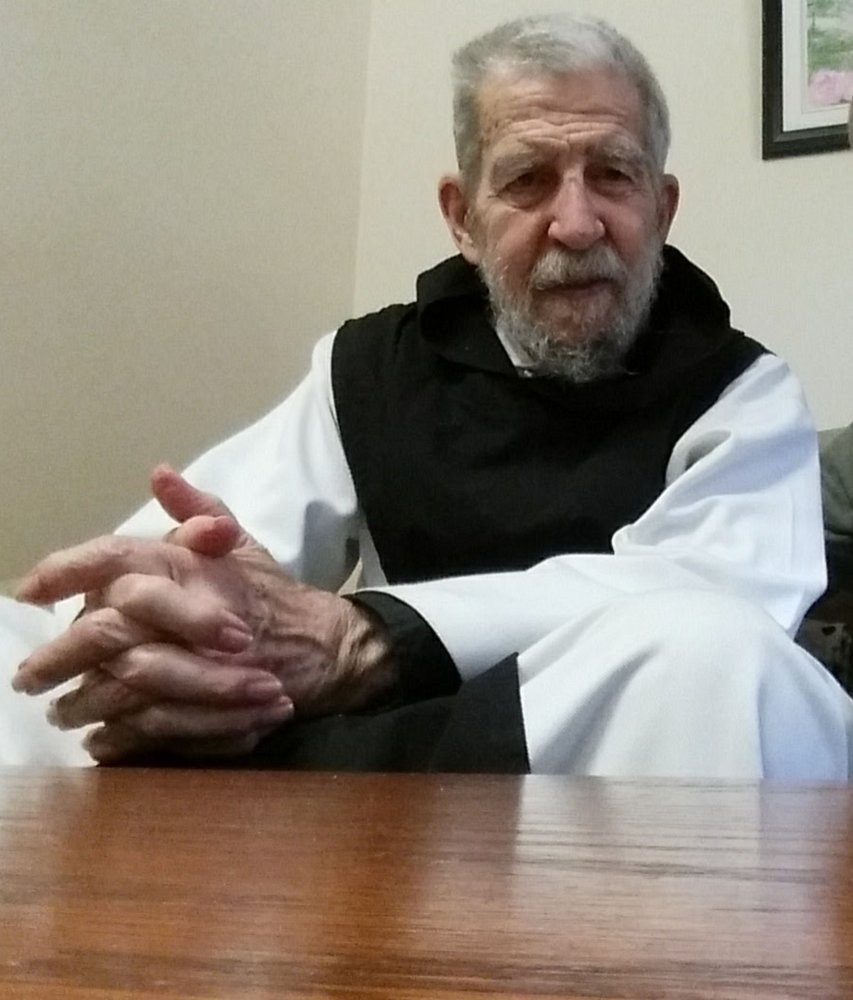
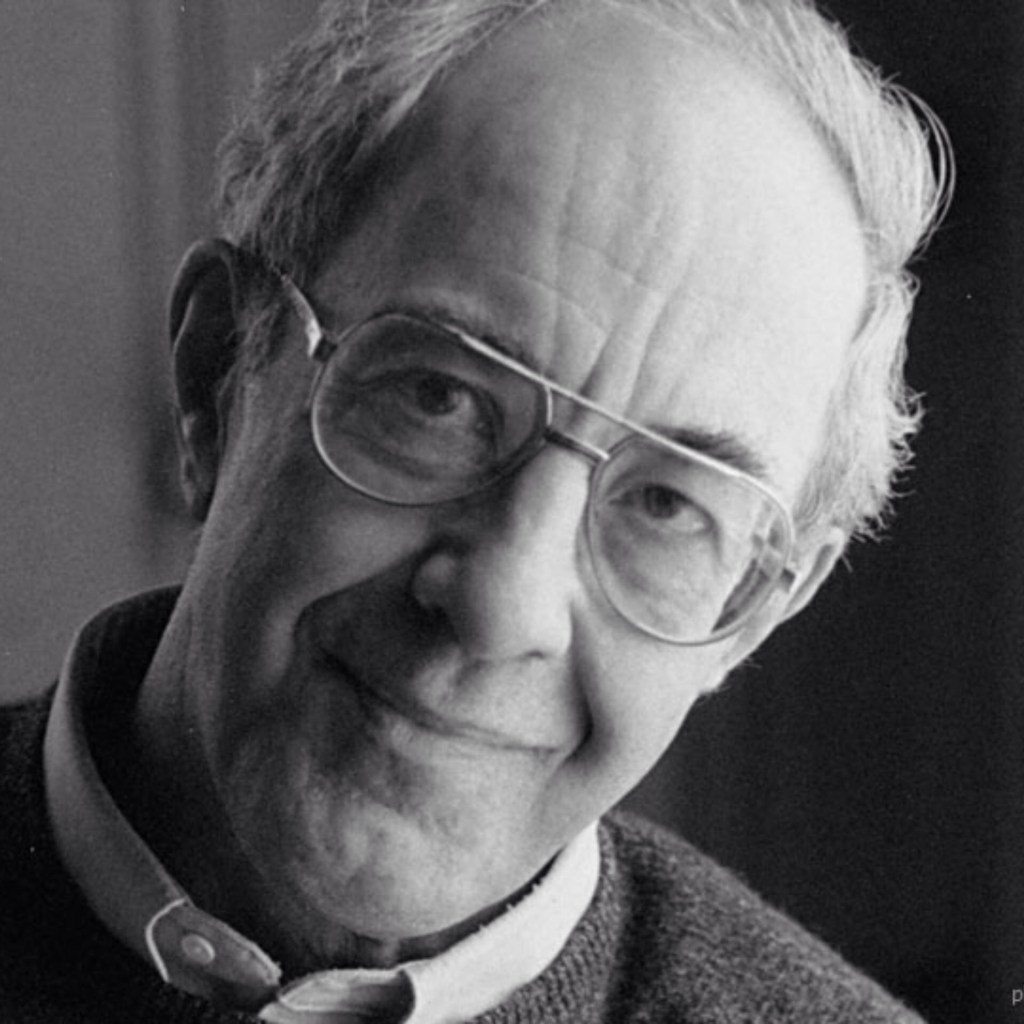
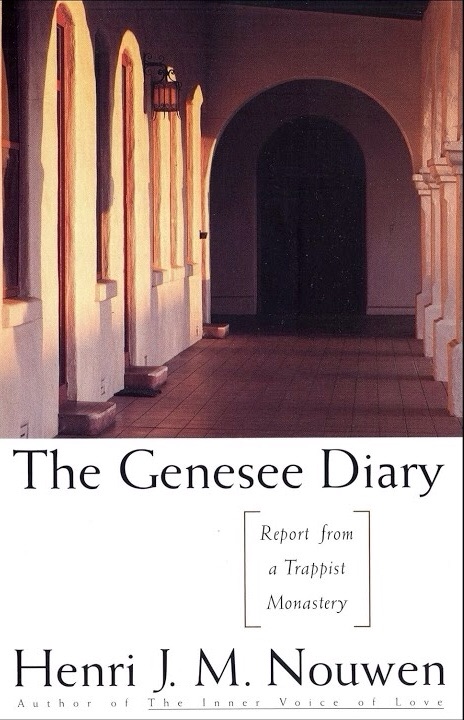











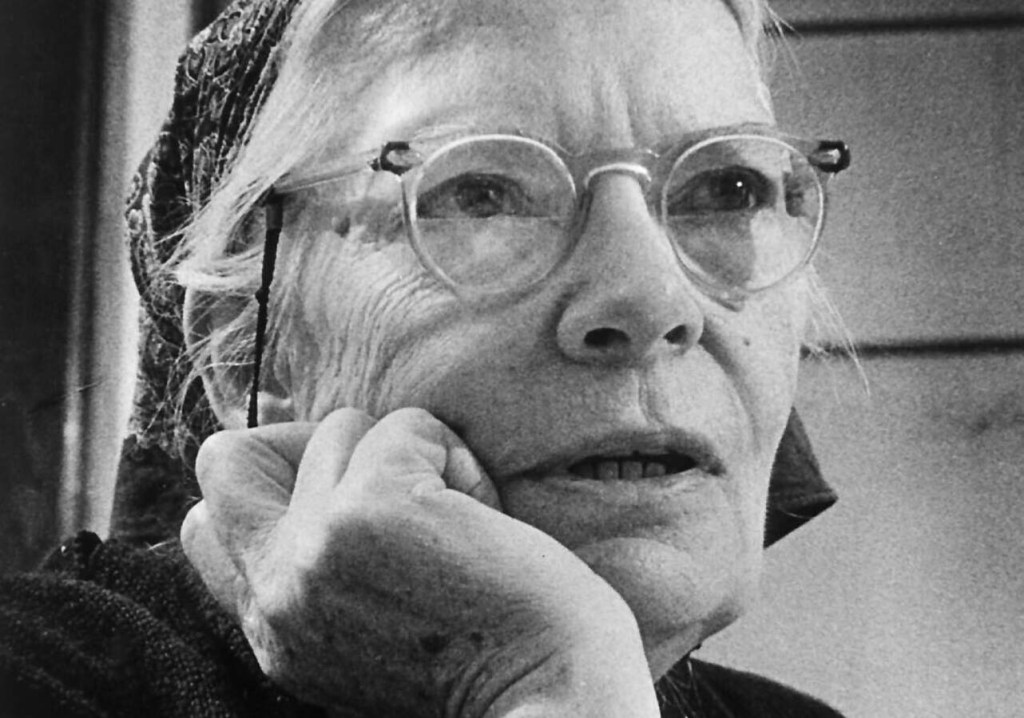










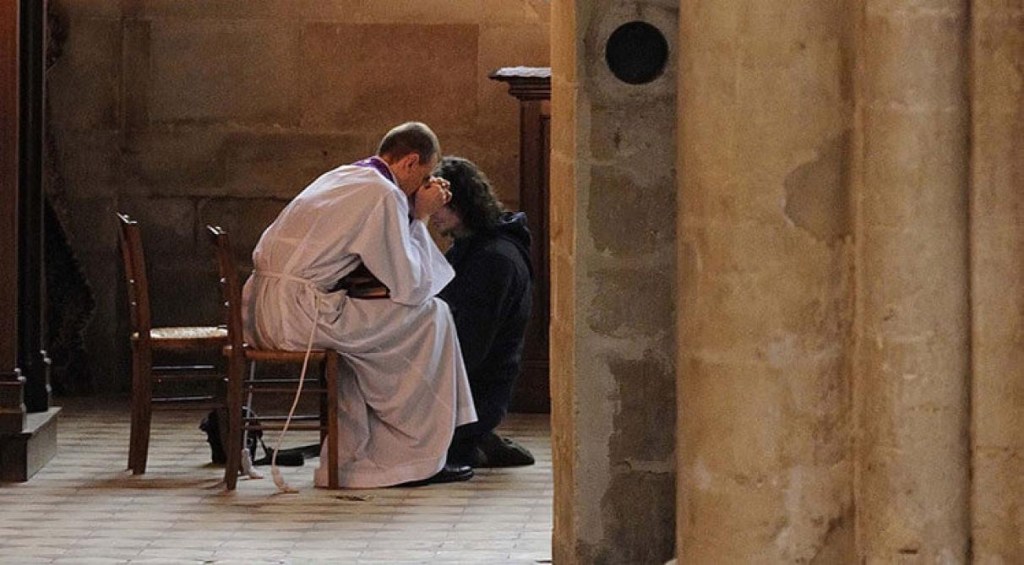



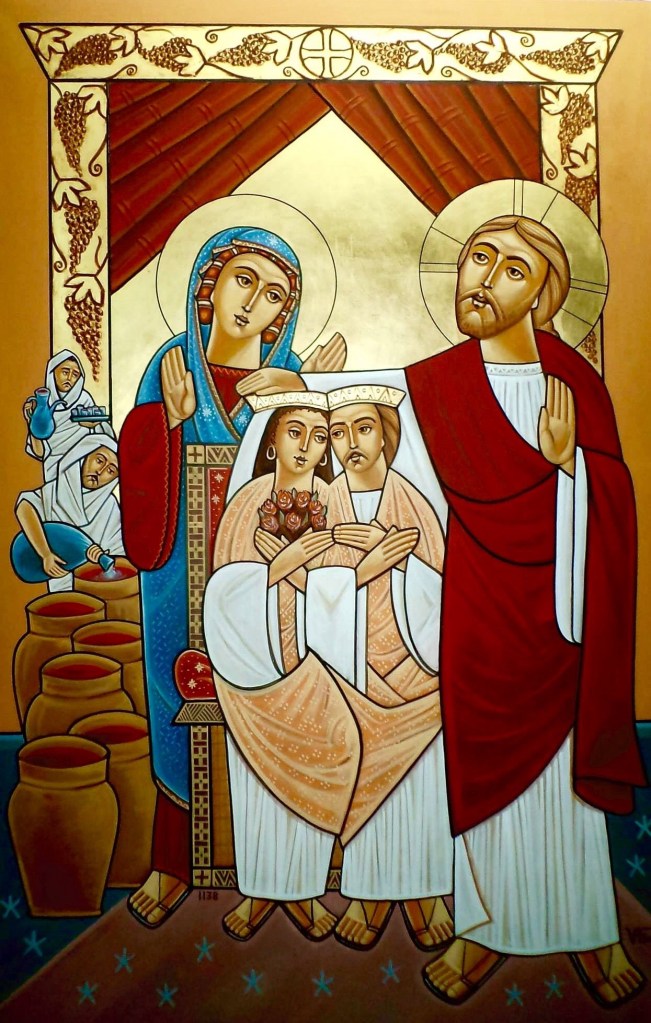



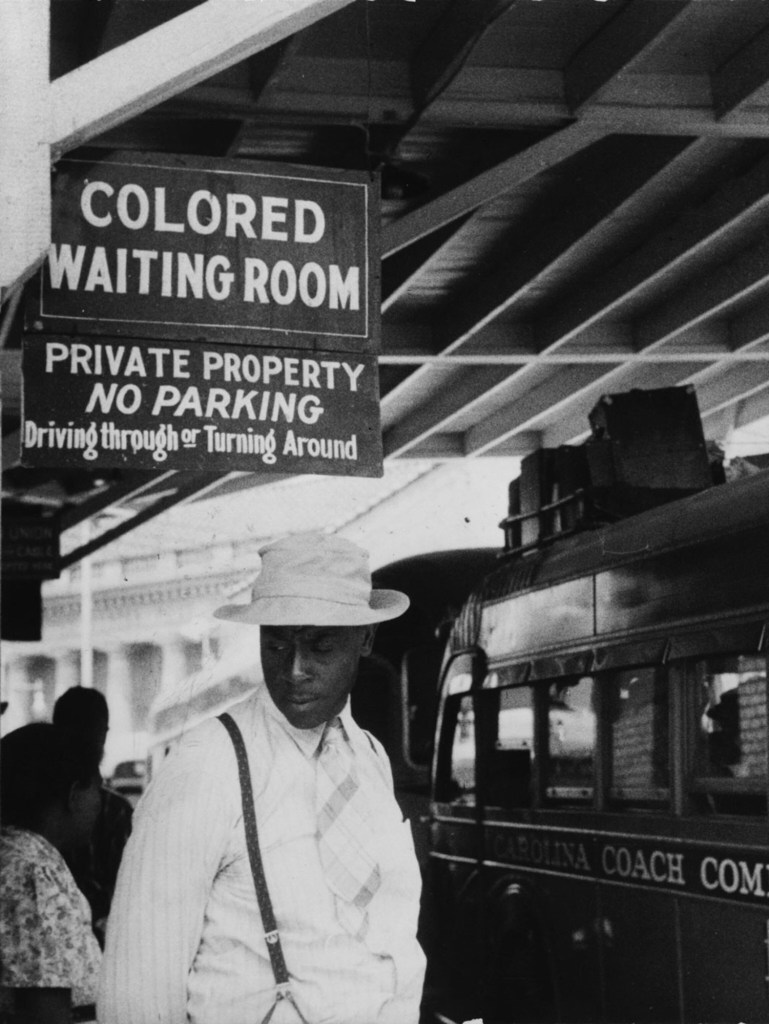
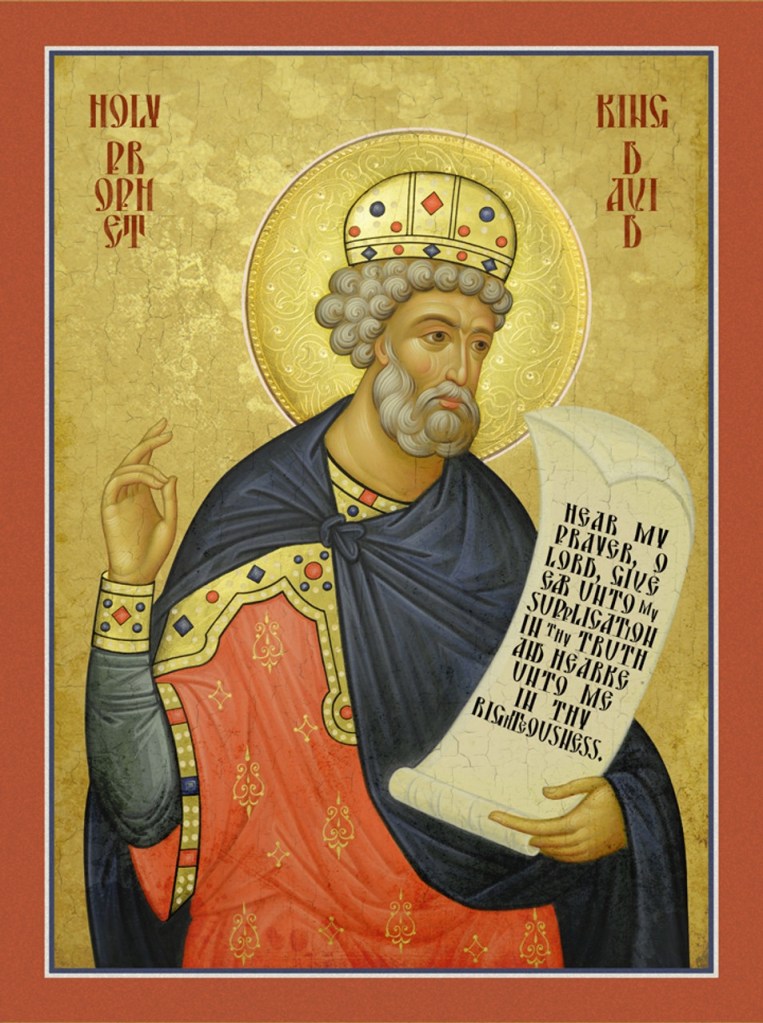


 First Blessings