The Committal was a family affair, held in a small, but very lovely, family cemetery. There were, perhaps, twenty people there including the three priests who were honored to commit our brother’s body to the earth and to the Lord’s keeping. Having completed the opening anthems, I stepped to the grave to bless the ground in which the body of this saint of God would be laid to rest. And, I prayed:
O God, whose blessed Son was laid in a tomb in the garden: Bless, we pray, this grave, set apart for the repose of your servant, that he whose body is buried here may rest from his labors in peace and quietness, until the resurrection on the last day, when the New Jerusalem comes down, the dead are raised, and the righteous are called to the marriage supper of the Lamb; through Jesus Christ our Lord. Amen (BCP 2019, p. 261).
I have prayed this prayer before, blessed graves before; but for some reason, this prayer on this day demanded my attention and has garnered my thought since. What, exactly, is a priest doing when he blesses a grave? What did I think then, and what do I think now, that I was doing?
Based on the prayer itself, we are setting apart the grave as a place of repose for a servant of God. We are announcing to both worlds — seen and unseen — that this is hallowed ground and should be respected as such; the ground should be undisturbed so that the one who reposes there may do so in peace and quietness until the resurrection. If the ground has not been previously blessed, this prayer is, in effect, a minor exorcism of place, a specific instance of St. Anthony’s lesser exorcism:
Alleluia! Behold the cross of the Lord. Begone, all evil powers. The Lion of the tribe of Judah, the Root of David has conquered. Alleluia!
The blessing of a grave is not different in kind from the blessing of a house or the blessing of place in the service of Compline:
Visit this place, O Lord, and drive far from it all snares of the enemy; let your holy angels dwell with us to preserve us in peace; and let your blessing be upon us always; through Jesus Christ our Lord. Amen (BCP 2019, p. 63).
In fact, with minor changes, the two prayers are essentially interchangeable. At a grave side, a priest might just as well pray:
Visit this ground, O Lord, and drive far from it all snares of the enemy; let your holy angels dwell here to preserve this holy ground and the one who reposes in it in peace; and let your blessing be upon him/her always; through Jesus Christ our Lord.
Of all this, I am fairly certain, because it follows directly from the Book of Common Prayer, our Anglican tradition, and Scripture. About what follows, I am less certain. I would not teach it as public faith, but I gladly hold it as private piety.
The Great Tradition of the Church and the experience of the saints bears witness to guardian angels: that each of us — either at birth or at baptism — is graced with an angel to minister to us, to direct us toward salvation, to protect and defend us along the way. I have no reason to doubt that and every reason to believe it.
Collect of Holy Michael and All Angels (BCP 2019, p. 632) Everlasting God, you have ordained and constituted in a wonderful order the ministries of angels and mortals: Mercifully grant that, as your holy angels always serve and worship you in heaven, so by your appointment they may help and defend us here on earth (emphasis added); through Jesus Christ our Lord, who lives and reigns with you and the Holy Spirit, one God, for ever and ever. Amen.
The spirit of my brother who recently fell asleep in the Lord no longer needs the help and defense of his guardian angel; his spirit is with the Lord, beyond all snares of the enemy or troubles of this mortal life. But his body? That reposes in the earth which is still the domain of spiritual warfare. Might it be — and this is speculative theology, at best! — that at the blessing of the grave, the saint’s guardian angel takes his stand there, defending the saint’s body from all spiritual desecration by the evil one, in whatever form that might take? There is this cryptic passage in Jude, after all:
Jude 9 (ESV): 9 But when the archangel Michael, contending with the devil, was disputing about the body of Moses, he did not presume to pronounce a blasphemous judgment, but said, “The Lord rebuke you.”
I would not want to make too much of this; nor would I wish to neglect it.
Simply as a matter of personal piety, it comforts me to think that when the family departs the cemetery the saint’s body is not left alone, but rather remains in the care of the angel who watched over him throughout his life and ushered his spirit safely home. It is an image I can’t quite shake and don’t want to do: an angel standing by the grave — vigilant and awe-full — watching over the saint and worshiping God until the last great day, until the final trumpet, until the dead in Christ arise, until this body of this saint rises.
A Matter of Purity: A Reflection on the Syrophoenician Woman (Mark 7:1-30 and Matthew 15:1-28)
Collect of Purity Almighty God, to you all hearts are open, all desires known, and from you no secrets are hid: Cleanse the thoughts of our hearts by the inspiration of your Holy Spirit, that we may perfectly love you, and worthily magnify your holy Name; through Christ our Lord. Amen.
In the Name of the Father, and of the Son, and of the Holy Spirit. Amen.
St. Peter was speaking specifically of St. Paul’s letters, when he wrote this in his Second Epistle:
There are some things in them that are hard to understand, which the ignorant and unstable twist to their own destruction, as they do the other Scriptures (2 Pe 3:16b, ESV).
Amen: some parts of St. Paul’s writing and thinking are complex and challenging and even confusing. It takes careful and prolonged study of the whole of his corpus to begin to understand his vision of the victory of God in the person and work of Jesus, of how that victory is implemented in the life and work of the Church, of how Israel and the nations — the Gentiles — are made one new people in the Kingdom of God, and how their unity is a signpost pointing to the in-breaking of the Kingdom of God.
And, it’s not just St. Paul; the whole of Scripture is challenging, as anyone who has really read it knows. The idea that a person who has no prior knowledge of the Christian faith could take up a Bible, read it front to back, and make good sense of it does not make good sense itself. Some parts will be crystal clear, of course. But some other parts, many of them, will be as opaque as coal. This is one reason the Church insists on the importance of the public reading of Scripture. It is the communal reading and proclamation and preaching and study that provide a context in which the accumulated wisdom of the Church can unveil the true sense of the Scripture.
I mention this because we encounter a difficult and challenging passage in our Gospel reading this afternoon, one which is easily misconstrued, and one which is often twisted by those outside the church and even used by those inside the church to support their own agendas. This passage requires careful reading and a thorough understanding of Jesus’ mission. I am speaking of Jesus’ encounter with the Syrophoenician woman who sought healing for her demon possessed daughter. Let’s hear the text again.
Mark 7:24–30 (ESV): 24 And from there he arose and went away to the region of Tyre and Sidon. And he entered a house and did not want anyone to know, yet he could not be hidden. 25 But immediately a woman whose little daughter had an unclean spirit heard of him and came and fell down at his feet. 26 Now the woman was a Gentile, a Syrophoenician by birth. And she begged him to cast the demon out of her daughter. 27 And he said to her, “Let the children be fed first, for it is not right to take the children’s bread and throw it to the dogs.” 28 But she answered him, “Yes, Lord; yet even the dogs under the table eat the children’s crumbs.” 29 And he said to her, “For this statement you may go your way; the demon has left your daughter.” 30 And she went home and found the child lying in bed and the demon gone.
How does this story strike you? A desperate woman comes to Jesus, falls at his feet, and begs him to heal her daughter who is tormented by a demon. And how does Jesus respond? It seems that he rebuffs her, rudely dismisses her as a dog amidst Jewish children, as one who has no claim on him and no reason to expect a favorable answer. On the surface, that seems cold, heartless, a bit xenophobic — some might say racist: not the image of Jesus that rings most true to most of us. So, what’s going on in this confusing and challenging passage?
Context matters. Both Mark and Matthew place this encounter immediately following a dispute with the Pharisees and scribes over the nature of purity
Mark 7:1-8, 14-22 (ESV): 7 Now when the Pharisees gathered to him, with some of the scribes who had come from Jerusalem, 2 they saw that some of his disciples ate with hands that were defiled, that is, unwashed. 3 (For the Pharisees and all the Jews do not eat unless they wash their hands properly, holding to the tradition of the elders, 4 and when they come from the marketplace, they do not eat unless they wash. And there are many other traditions that they observe, such as the washing of cups and pots and copper vessels and dining couches.) 5 And the Pharisees and the scribes asked him, “Why do your disciples not walk according to the tradition of the elders, but eat with defiled hands?” 6 And he said to them, “Well did Isaiah prophesy of you hypocrites, as it is written,
“ ‘This people honors me with their lips, but their heart is far from me; 7 in vain do they worship me, teaching as doctrines the commandments of men.’ 8 You leave the commandment of God and hold to the tradition of men.”
14 And he called the people to him again and said to them, “Hear me, all of you, and understand: 15 There is nothing outside a person that by going into him can defile him, but the things that come out of a person are what defile him.” 17 And when he had entered the house and left the people, his disciples asked him about the parable. 18 And he said to them, “Then are you also without understanding? Do you not see that whatever goes into a person from outside cannot defile him, 19 since it enters not his heart but his stomach, and is expelled?” (Thus he declared all foods clean.) 20 And he said, “What comes out of a person is what defiles him. 21 For from within, out of the heart of man, come evil thoughts, sexual immorality, theft, murder, adultery, 22 coveting, wickedness, deceit, sensuality, envy, slander, pride, foolishness. 23 All these evil things come from within, and they defile a person.”
Purity is not determined externally: unwashed hands and cutlery, what type of food is consumed, that sort of thing. No, purity is internal, a matter of the heart. How do you recognize whether one is pure or impure? Look at what proceeds from his heart; evil thoughts, murder, adultery, sexual immorality, theft, false witness, slander are signs of impurity. If this is the measure, then on several counts the Pharisees and scribes do not fare very well. On the purity scale, they may not be grubby, but they are at best unkempt and a bit smelly.
We know now the measure of impurity, but what of purity? What are the marks of a pure heart? Jesus doesn’t answer that implied question in so many words. Instead, he travels immediately to Tyre and Sidon, a Gentile region, an unclean place full of unclean people. And it is there that he encounters — it is there he is accosted by — a Canaanite woman, a Syrophoenician. Remember that Israel has a long history with the Canaanites, and that that history was not good. There was plenty of ancient enmity and distrust to go around, not to mention — but we must mention — that the Canaanites were almost the definition of impurity to the Jews. We see that in the disciples response to the crying of this woman for mercy: “Send her away, for she is crying out after us” (Mt 15:23b). It is not that her request is outrageous. It is simply that it is outrageous for such an impure Gentile woman to make any request at all from a Jewish rabbi.
Jesus answers her as the Pharisees and scribes, as his own disciples might have done, had they bothered to answer at all: “Let the children be fed first, for it is not right to take the children’s bread and throw it to the dogs,” (Mk 7:27). In one sense, Jesus is merely — and rightly — pointing out that his mission was not to everyone, but only to the Jews. He had come to fulfill the Covenant, the Law, and the Prophets, to bring the story of Israel to its proper conclusion, to initiate a new covenant for all people, and to inaugurate the Kingdom of God. Jesus’ mission was to the Jews so that through the Jews the Gospel might come to all families, languages, peoples and nations. “Let the children be fed first.”
But, in another sense, Jesus is upholding the standard Jewish notions of purity — children versus dogs — just long enough to let it crumble under the weight of the Gospel: “…it is not right to take the children’s bread and throw it to the dogs.” The disciples must have been pleased with this answer; they likely expected the woman to slink away, properly chastised. Oh, but she was a good and fierce mother, determined to do all in her power to provide healing for her daughter. And probably still on her knees, probably through tears, she responds: “Yes, Lord, yet even the dogs eat the crumbs that fall from their masters’ table,” (Mt 15:27). What a dense statement this is — full of meaning. First, she calls Jesus “Lord,” acknowledging his superiority and her inferiority. She embraces this demeaning slur of “dog” and acknowledges that the Jews are children and masters. And she asks not for a choice portion of food from the table; she will be satisfied with scraps and with crumbs that fall forgotten to the floor.
And now Jesus responds, not as the Pharisees and scribes would have done, not as his own disciples urged him to do, but as the Lamb of God who takes away the sins of the world: “O woman, great is your faith! Be it done for you as you desire,” (Mt 15:28a).
And this is the answer — this woman, this impure, Gentile woman is the answer — to the questions left hanging in the previous encounter with the Pharisees and scribes: What of purity? What of the marks of a pure heart? Love, in this case the reckless, indefatigable love of a mother for her daughter. Humility, in this case the willingness to embrace the status of inferiority. Faith, in this case the willingness to place all her trust, all her hope, in Jesus. That is what comes from her heart. And that is what marks her out as pure before God.
So, taken together, these two stories define the notion of purity in radical contrast to the understanding of Jesus’ culture. The Pharisees, the separate one, who kept most scrupulously the Law of Moses according to the traditions of the elders were revealed as impure before God because of the filth kept housed in the recesses of their hearts. The Syrophoenician woman, the Gentile woman, who was disdained and dismissed by Jesus’ own disciples, was revealed as pure before God because of the love, humility, and faith that flowed outward from her heart.
It took generations for the Church to come to grips with this radical notion, and perhaps we’ve not done so fully even now. “Oh, yes,” the Church said, “we suppose the Gospel can be extended to the Gentiles — if we must do — but only if they first become Jews.” St. Paul begged to differ. The Gospel is for the Gentiles as Gentiles, he insisted, and for all people — all people — who call upon the name of the Lord Jesus Christ and live according to his commandments:
Romans 10:12–13 (ESV): 12 For there is no distinction between Jew and Greek; for the same Lord is Lord of all, bestowing his riches on all who call on him. 13 For “everyone who calls on the name of the Lord will be saved.”
Whatever else the story of the Syrophoenician woman means — and it is a rich, multivalent story — it means at least this: purity before God is a matter of the heart, a matter of love, humility, and faith. This story and this meaning form the heart of one of the most dearly loved and well-known Anglican prayers, The Prayer of Humble Access, which we say immediately before receiving the Body and Blood of Christ:
We do not presume to come to this your table, O merciful Lord, trusting in our own righteousness, but in your abundant and great mercies. We are not worthy so much as to gather up the crumbs under your table; but you are the same Lord whose character is always to have mercy. Grant us, therefore, gracious Lord, so to earth the flesh of your dear Son Jesus Christ, and to drink his blood, that our sinful bodies may be made clean by his body, and our souls washed through his most precious blood, and that we may evermore dwell in him, and he in us. Amen.
Those words turn Scripture into prayer; they capture the encounter between the Syrophoenician Woman and Jesus perfectly and then offer the woman to us as a model for our Eucharistic life: humility and trust on her part, righteousness and mercy on God’s part.
Yes purity before God is a matter of the heart, a matter of love, humility, and faith. So sure, wash your hands and clean your knives and forks. But, more importantly, purify your heart. Amen.
Jannes, Jambres and the Stories We Tell: A Reflection on 2 Timothy 3
16 All Scripture is breathed out by God and profitable for teaching, for reproof, for correction, and for training in righteousness, 17 that the man of God may be complete, equipped for every good work (2 Timothy 3:16-17, ESV).
O Lord, open our lips; And our mouth shall proclaim your praise. Amen.
This morning, I exercise the preacher’s prerogative to extend the lectionary reading a bit. You have heard the latter part of 2 Timothy 3; but, that text stands on and flows from the former part of the chapter that we did not read. Its fullest sense depends on the contrast it draws to what went before: not that, but this. So, we have the former words.
2 Timothy 3:1–9 (ESV): 3 But understand this, that in the last days there will come times of difficulty. 2 For people will be lovers of self, lovers of money, proud, arrogant, abusive, disobedient to their parents, ungrateful, unholy, 3 heartless, unappeasable, slanderous, without self-control, brutal, not loving good, 4 treacherous, reckless, swollen with conceit, lovers of pleasure rather than lovers of God, 5 having the appearance of godliness, but denying its power. Avoid such people. 6 For among them are those who creep into households and capture weak women, burdened with sins and led astray by various passions, 7 always learning and never able to arrive at a knowledge of the truth. 8 Just as Jannes and Jambres opposed Moses, so these men also oppose the truth, men corrupted in mind and disqualified regarding the faith. 9 But they will not get very far, for their folly will be plain to all, as was that of those two men.
In the last days, Paul writes, there will come times of difficulty. This is less a prophecy about those years and months and days immediately preceding the Second Coming of our Lord — whenever that may be — as it is an observation about the times through which Paul and Timothy were then living, as it is an observation about the times in which you and I are now living. The death, burial, resurrection, and ascension of Jesus marked the end of one age and the beginning of a new age: the last days. The Church always has lived and the Church always will live in the last days. And, in the last days, there will always come times of difficulty, characterized by people who oppose the truth, who are corrupted in mind and disqualified regarding the faith. You heard Paul’s description of these people; we don’t need to rehearse it yet again, because you know these people, because you live and work and play among these people, because this is a picture not just of first century pagan culture but also of twenty-first century post-modern Western culture — a culture that has rejected God and godliness.
Paul likens these “last days” people to Jannes and Jambres who opposed Moses. From Jewish sources — from the Talmud — we learn that Jannes and Jambres were the chief magicians of Pharaoh, those who, for a time, imitated the signs and wonders that Moses and Aaron worked before Pharaoh and even the plagues God brought upon Egypt.
Exodus 7:8–13 (ESV): 8 Then the Lord said to Moses and Aaron, 9 “When Pharaoh says to you, ‘Prove yourselves by working a miracle,’ then you shall say to Aaron, ‘Take your staff and cast it down before Pharaoh, that it may become a serpent.’ ” 10 So Moses and Aaron went to Pharaoh and did just as the Lord commanded. Aaron cast down his staff before Pharaoh and his servants, and it became a serpent. 11 Then Pharaoh summoned the wise men and the sorcerers, and they, the magicians of Egypt, also did the same by their secret arts. 12 For each man cast down his staff, and they became serpents. But Aaron’s staff swallowed up their staffs. 13 Still Pharaoh’s heart was hardened, and he would not listen to them, as the Lord had said.
Jannes and Jambres, chief of the sorcerers of Egypt. And know this: they thought that their opposition of Moses and Aaron was good and right and proper. Why? Because they had been raised on and formed by the story of Egypt: the story that spoke of — the story that assured them of — the manifest destiny of Egypt and Pharaoh and the gods, the divine right of Egypt to conquer, the divine right of Pharaoh to rule, the divine right of the gods to be served and worshipped. It belonged to the Hebrews to be Egypt’s slaves. It belonged to the Hebrews’ god to be humiliated and dismissed by the pantheon of Egypt in the persons of Jannes and Jambres and a company of sorcerers. It belonged to the Hebrews’ leaders, Moses and Aaron, to be destroyed by Pharaoh. This was the story that Jannes and Jambres had been told, and the story they were inhabiting.
The notion of self-made man or self-made woman is so much foolishness then, now, and always. We are made by the stories we are told, by the stories we inhabit, by the stories we believe and act upon. So it was with Jannes and Jambres; so it was with our fathers and mothers, so it is with us, so it will be with our children.
The story that Jannes and Jambres learned on their mothers’ laps, the story they breathed and drank in simply by being Egyptian, the story they practiced and mastered under the tutelage of their mentors in the mystic arts — these stories worked … for awhile, worked until they didn’t work any longer. They worked until the seventh plague, until the boils came:
Exodus 9:11 (ESV): 11 And the magicians could not stand before Moses because of the boils, for the boils came upon the magicians and upon all the Egyptians.
And Jannes and Jambres watched Egypt brought to its knees by the Hebrews. Jannes and Jambres watched Pharaoh humbled before two former slaves. Jannes and Jambres watched their gods — their impotent, little, no-gods-at-all — brought low before the God of Abraham, Isaac, and Jacob. Jannes and Jambres watched as their story unraveled before them as the great cultural lie it was.
So, Paul writes to Timothy:
8 Just as Jannes and Jambres opposed Moses, so these men [these last days men] also oppose the truth, men corrupted in mind and disqualified regarding the faith. 9 But they will not get very far, for their folly will be plain to all, as was that of those two men.
And now — only now — are we ready for today’s text:
2 Timothy 3:10–13 (ESV): 10 You, however, have followed my teaching, my conduct, my aim in life, my faith, my patience, my love, my steadfastness, 11 my persecutions and sufferings that happened to me at Antioch, at Iconium, and at Lystra—which persecutions I endured; yet from them all the Lord rescued me. 12 Indeed, all who desire to live a godly life in Christ Jesus will be persecuted, 13 while evil people and impostors will go on from bad to worse, deceiving and being deceived.
You, however: you, Timothy, are not like Jannes and Jambres, not like the “last days” men all around you in Ephesus. You are not opposed to the truth, not corrupted in mind, not disqualified regarding the faith. Why? Because you have heard, you have believed, you have inhabited, you have acted upon a different story. Timothy had been formed by the story, by the Gospel, of the Lord Jesus Christ that he heard first from his grandmother Lois and his mother Eunice, the story in which he was confirmed by the laying on of Paul’s hands and the gift of God, the story he had witnessed firsthand in the life of the apostle: a life of patience, love, steadfastness, persecution, and suffering — a life of all godliness. This is a story that does not fail because it is the one true story of the one true God redeeming one true people for himself. The world — evil people and imposters — will go from bad to worse because the story they have been told, the story they tell themselves, is false and dehumanizing and demonic. But you, Timothy, and you, my brothers and sisters, you may go from one degree of glory to another — if you choose — by holding fast to the story of Jesus.
2 Timothy 3:14–17 (ESV): 14 But as for you, continue in what you have learned and have firmly believed, knowing from whom you learned it 15 and how from childhood you have been acquainted with the sacred writings, which are able to make you wise for salvation through faith in Christ Jesus. 16 All Scripture is breathed out by God and profitable for teaching, for reproof, for correction, and for training in righteousness, 17 that the man of God may be complete, equipped for every good work.
Where do we learn this true story? Please God, from our godly grandmothers and grandfathers, from our mothers and fathers in the flesh and in the faith, from our elder brothers and sisters in the Way. We learn the true story in the community of the Church — in the body of Christ — in worship and prayer and service. Yes to all of that, and thanks be to God for it! But here, in this his final letter, Paul points his son Timothy toward the “sacred writings, which are able to make you wise for salvation through faith in Christ Jesus” (2 Tim 3:15). Where do we learn the story? From the Scriptures which narrate the true story from the creation of all things by Christ and for Christ to the recapitulation of all things in Christ. That, brothers and sisters, is our story.
Now, I am going to get myself into trouble. So, pay attention; you don’t want to miss this. If we have been formed more by the story of the United States of America than by the story of Israel and the Church, then we are living by the wrong story. If we can sing more Top 40 hits — if the Top 40 chart is still a thing — than we can sing psalms and hymns and spiritual songs, then we are living by the wrong story. If our concept of justice has been shaped more by the Constitution than by the Law, the prophets, the Sermon on the Mount, and the two great commandments, then we are living by the wrong story. If we are influenced more by social media influencers or the Kardashians or the rich and famous of Hollywood or CNN or Fox News or one of the political parties or some ideological demagogue than we are by the saints — by the Fathers and Mothers of the faith — then we are living by the wrong story. If our schedules, our priorities, our spending is more determined by the demands, priorities, and values of a world that does not know and acknowledge our Lord Jesus than by the reality of the Kingdom of God, then we are living by the wrong story. And all of us, brothers and sisters — myself chief among us — all of us here and there, now and then are living by the wrong story. And all of us, brothers and sisters — myself chief among us — all of us need to repent whenever, wherever, and however that is true: repent today, repent tomorrow, repent every day that God grants us life and breath. And we need to come again and again and yet again to the sacred writings which are able to make us wise for salvation through faith in Christ Jesus. For,
2 Timothy 3:16–17 (ESV): 16 All Scripture is breathed out by God and profitable for teaching, for reproof, for correction, and for training in righteousness, 17 that the man of God may be complete, equipped for every good work.
All Scripture is breathed out by God, not just those passages highlighted and underlined in our Bibles, not just those passages that comfort us and make us feel good about God and ourselves, not just those passages that vindicate our opinions and agendas, not just those passages that are ever so interesting to us. The purpose of Scripture is not to satisfy our curiosity, not to indulge our questions, not to bless our inordinate desires, but rather to form us into the people of God, into a kingdom of priests — holy and faithful men and women. Back in the dark ages of my public school education at Lonsdale Elementary and Rule High schools, we were taught history — world, American, and Tennessee history — yes, and civics and economics, too, not simply to inform us, but rather to form us according to the values of this people to whom we belong so that we might effectively take our place in this nation as patriotic, productive, and responsible citizens. The texts we read, the parts of the founding documents we memorized, were the tools that the state-sponsored, state-mandated, and state-funded educational system wielded to shape us. But, as good as they might have been, they were not breathed out by God. They were not always profitable for reproof, for correction, or for training in righteousness except in the limited domain of American citizenship — not a bad thing, but not an ultimate concern. To become citizens, immigrants must pass a rigorous test on these same topics — history and civics — a test that probably few of us could pass without studying. It is a first step of formation, of drawing people out of one story into another story, a step of formation in which the government has a vested interest. And that, too, is what Scripture does. No matter from whence you’ve come, no matter who you were, this story — the story of Scripture — is your story now. This is who you are. This is your people. This is your God.
Scripture makes us into one, new people. Scripture fits us for life in the Kingdom of God, by reproof, correction, and training in righteousness. That is a sobering thought; if we read Scripture and are not on a regular basis reproved by it, corrected by it, trained in righteousness by it, then either we are already perfect or else we are not really reading Scripture. I am not yet perfect, as those who love me most and know me best remind me. I am a work in progress, God’s work in progress. So, like Timothy, I need the God-breathed Scripture to reprove me, to correct me, to make me complete, to equip me for every good work. We all do, don’t we?
We need this transformational power of Scripture not only for our own sakes, but for the sake of the world, a world full of diminished, disorienting, delusional, destructive, demonic, dead-end stories — stories like those that formed Jannes and Jambres. The word of God — Scripture — is intensely personal, but it is never private. It is certainly for us in the Church, but it must also be through us to the world.
2 Timothy 4:1–5 (ESV): 4 I charge you in the presence of God and of Christ Jesus, who is to judge the living and the dead, and by his appearing and his kingdom: 2 preach the word; be ready in season and out of season; reprove, rebuke, and exhort, with complete patience and teaching. 3 For the time is coming when people will not endure sound teaching, but having itching ears they will accumulate for themselves teachers to suit their own passions, 4 and will turn away from listening to the truth and wander off into myths. 5 As for you, always be sober-minded, endure suffering, do the work of an evangelist, fulfill your ministry.
Some are called by God and ordained by the church to be preachers of the word, authorized to reprove, rebuke, and exhort publicly and privately — always with patience and sound teaching. I am duty bound, by sacred vow before God and the church, to do this, as are all ordained clergy in the Anglican Church. Woe to me if I do not do. But evangelism? That is no proprietary domain of the clergy. You are duty bound, by sacred vow before God and the church, to do this, in season and out of season, as are all baptized believers. You are called to be an evangelist, all of you. Perhaps the simplest way to do this is to immerse yourself in Word and Sacrament until you are formed by the story these two tell and then to go into the world, your world — your school, your office, your team, your club, your reading group, your local coffee shop — and there live out the story genuinely, unpretentiously, unashamedly. Then, when people see the fruit of this different story, when they ask why you are not fearful but rather have a spirit of power and of love and of self-control, then you can answer, then you can speak the word that you have read on the pages of Scripture, that you have heard preached and taught, and so fulfill your ministry as evangelist.
As I bring this homily to a close, I want to say that this was not what I wanted to write or preach. This was the text I was given, and I’ve tried to be faithful to it; ultimately God will judge that. No, I really wanted to write and to speak a love letter to the book that is God’s love letter to us, to Holy Scripture. I wanted to move you to such aching longing for the word of God that you couldn’t wait to get home and read it for yourself, to find your delight in the word of the Lord. I wanted to stoke your wonder at the great treasure that we have in ink on paper: a word written by the God who called all creation into being by his word spoken, a word written by the God who became the word incarnate to redeem you and all the world, a word written by God and carried on the breath — the Spirit — of God to sanctify his people. The Word was, the Word is, the Word ever shall be, and we have this great treasure written in a language we understand, at a price we can afford, in a country that still allows us to have it and read it. I am a Christian because the story in this book makes better sense of the world and my experience of it and myself than any competing story ever told. I am a Christian because the story in this book is good and true and beautiful and can still, after all these years, perhaps because of all these years, make me weep with joy and make my heart ache with longing. That is the homily I wanted to give you this morning, but I just don’t have the words. Thanks be to God, the Scriptures do. Amen.
What if? The Daily Office confronts us today with the great mystery of Christ’s passion in Gethsemane and with his abandonment in that moment by his closest followers (see Mt 26:31-56). At their arrival on the Mount of Olives, Jesus had warned them all that he, the shepherd, would be stuck down, and that they, the sheep of the flock, would be scattered. With his wonted bravado, Peter declared that he would never fall away, even if it meant his death, though all the others might do. And all the rest said the same.
The group arrived at Gethsemane and Jesus took Peter, James, and John to a secluded place so that they all might pray. Jesus’ words to the three were simple: “Remain here, and watch with me.”
After anguished prayer, Jesus returned to find the three asleep. To Peter he said:
“So, could you not watch with me one hour? Watch and pray that you may not enter into temptation; the spirit indeed is willing, but the flesh is weak” (Mt 26:40b-41, RSV).
This sad scenario is repeated three times: Jesus praying in agony and the three sleeping in disregard.
What if? What if Peter had watched and prayed, not just for Jesus, but for himself that he might not enter into temptation? Would he then, just hours later, have denied the Lord before the rooster’s crow? We will never know, because he did not watch and pray. And because he did not, he failed the Lord in the moment of decision. What if?
What if I watch and pray: that I will not fall into temptation, that my spirit would be willing and my flesh strong, that God’s will — not mine — be done, that those I love might love the Lord, that the Church — and my local parish — might be a place where the Word is truly preached and truly heard and the Sacraments faithfully administered and faithfully received, that the Holy Spirit would ignite in us — in me — a zealous love of the Gospel and a heart for evangelism? What if? I will never know if I do not pray. But what if I do?
The Lord be with you. And with your spirit. Let us pray.
Collect Almighty God, you have given us the treasure of the knowledge of your glory in the face of Jesus Christ, a treasure we hold in jars of clay: Grant us never to lose heart amidst our afflictions, our perplexity, and our weakness for Jesus’ sake, but rather ever to look to you that your grace my increase our faith and thanksgiving; through Jesus Christ our Lord, who with you and the Holy Spirit live and reign, one God, world without end. Amen.
Introduction: Limitations and Freedom As I get older, I find the words “used to” entering my conversations more frequently. I “used to” be in this or that profession, but now I am retired. I “used to” enjoy this or that hobby, but I gave those up some time ago. I used to clean the shower drain after washing my hair, but there’s not much need to do that any longer.
There is the tendency for those who see themselves as elderly or getting older to also see life in the past tense, “used to” instead of “am” or “planning to.” And, realistically, age does impose some limitations. In my 20s, I was a good swimmer. Now, in my mid 60s with two bad rotator cuffs, that just isn’t an option; my body won’t let me do that. Mentally, I used to — See how those words creep in? — I used to multi-task well, but now, to be effective, I must focus more intentionally on the single task at hand. The litany could continue, but you understand: “used to.”
Now, here’s a challenge. Can you complete the sentence, “I used to,” in a positive way? Yes, there are some positive ways to complete “used to,” as well. When I was younger, I used to worry a lot about a lot of “problems” that I now realize weren’t problems at all — just minor inconveniences. Age has given me some perspective about what is important and about what isn’t. I “used to” have a lot of time ahead of me — time to waste. Now that the time ahead is shorter, I savor the moments; I tend to invest time instead of wasting it, and that is a good thing. I used to act impulsively and often with too little information and wisdom. Now, I have a lifetime of experience to inform my thinking and my decisions, and I believe my judgment is better than before.
The elderly may think in terms of past tense and “used to,” about current limitations instead of present opportunities and future hopes. But not the elders: elders are informed by the past. They are enriched by it. But, they are not bound by it. They are not continually living in it. Elders acknowledge certain physical and mental limitations of age, but they also find in these limitations certain opportunities and even freedoms. Where the elderly sometimes see burdens, the elders can perceive blessings.
To return to the race analogy, the point is straightforward: the race is not over until we cross the finish line. Age brings with it both limitations and opportunities, burdens and blessings, both of which God uses for our good, and both of which we are to use for his glory and for the welfare of his people. I have seen the unfortunate tendency in some churches for one generation to retire, to step back, sit down and say, “Well, we’ve done our work, our share. Now it’s time for the next generation to step up and do theirs.” Speaking frankly, that is a selfish refusal to be the elders the church needs. But, it can go the other way also. The younger generation can discount and push aside the very elders whose practical and spiritual wisdom, counsel, and mentoring they desperately need. That is a refusal to learn from the saints of God, and a squandering of a treasure that God has deposited in the Church. We pray to avoid both of these errors.
But, if looking backward, if living a nostalgic “used to be” life is a problem, so is looking forward in fear of what may await us: diminishment in body and mind. In what may be the latter stages of the race, how do we look forward in hope in the midst of likely decline? Good theology and good practice point toward the answers. So, we move now to some essential theology.
Biblical Personhood God identified himself to Moses as I Am (Ex 3:13 ff), the very essence of being and personhood. We, too, use the pronoun I to refer to our personhood. It is worth asking, though, in the human case: To what does this I actually refer?
The meaning of I depends very much on what follows it in any sentence. For example, “I need a shower,” means that my body is dirty and needs attention. “I am hungry,” means my belly is empty and needs filling. “I like running on the beach,” means that my body enjoys the act and the results of physical exercise, and that my bodily senses — sight, hearing, touch, taste, and smell — are pleasantly stimulated by the environment of the beach. In all these cases, and in many more that we could list, I refers primarily to the person as body, to the physical faculties of personhood. We might call this aspect of personhood body.
Body is that aspect of personhood that pertains to the physical nature.
But, I has other meanings, also. “I think…” refers to the mind, to the rational part of the person. “I am very happy,” pertains to emotions. “I feel so guilty,” is an acknowledgment of the conscience. “I refuse,” is an act of the will. None of these uses of I pertains primarily to the body. Instead, we might call this aspect of personhood soul.
Soul is that aspect of personhood that pertains to reason, emotions, conscience, and will.
Though it is helpful to distinguish between body and soul, they are unified in the person. That is, the person is not a body with a soul, nor is the soul the “life force” imprisoned in a body. The person is an integrated body-soul. To treat a person as just a body — as does pornography, for example — debases the person. Likewise, to treat a person as just a soul ignores the essential incarnation of the person. We can easily see the unity of the person in such statements as “I love my wife (or husband).” A survey of the rite of Holy Matrimony — or a reflection on lived experienced — clearly shows that the body, the mind, the emotions, the conscience, and the will are all included in that statement. The love between spouses is a whole person to whole person relationship. When any aspect of personhood is missing in a marriage, there is a deficit in the relationship, sometimes such a serious deficit that divorce ensues.
So, have we now fully defined I — the person — as the unity of body and soul? No, not yet fully, not in the Christian understanding of personhood. Consider the statement “I know God.” To what does I refer here? Do we know God in and through the body? Certainly we do, for the body participates in worship; that is essential to sacramental worship. Do we know God in and through the soul? Yes; reason, emotions, conscience, and will are all fully engaged in the knowledge of God. But, there is more. There is one more faculty that is essential for the knowledge of God, a faculty without which no such knowledge is possible: the spirit. An extended passage from 1 Corinthians makes this clear:
9 But, as it is written, “What no eye has seen, nor ear heard, nor the heart of man imagined, what God has prepared for those who love him”—
10 these things God has revealed to us through the Spirit. For the Spirit searches everything, even the depths of God. 11 For who knows a person’s thoughts except the spirit of that person, which is in him? So also no one comprehends the thoughts of God except the Spirit of God. 12 Now we have received not the spirit of the world, but the Spirit who is from God, that we might understand the things freely given us by God. 13 And we impart this in words not taught by human wisdom but taught by the Spirit, interpreting spiritual truths to those who are spiritual.
14 The natural person does not accept the things of the Spirit of God, for they are folly to him, and he is not able to understand them because they are spiritually discerned. 15 The spiritual person judges all things, but is himself to be judged by no one. 16 “For who has understood the mind of the Lord so as to instruct him?” But we have the mind of Christ (1 Cor 2:9-16, ESV).
God makes himself known to us spiritually: his Holy Spirit giving life and revelation and understanding to the human spirit. Our cognitive understanding of God is the mind’s effort to construct a mental summary of spiritual revelation and experience. Our bodily impressions of God is the body’s response to spiritual revelation and experience.
The spirit is that faculty of the person which can know, experience, and contemplate God directly, unmediated by — and unhindered by — the body and soul. It is the spirit which should rightly order both body and soul as the king rightly orders his kingdom.
The Christian understanding of I — of personhood — must include the holistic union of body, soul, and spirit.
The whole person participates in the experience and knowledge of God: the spirit most directly. Then, the spirit rightly mediates the experience and knowledge of God to the mind and the body. If the human spirit has not been made regenerate (born again) by the Holy Spirit, then the mind cannot rightly understand God nor can the body rightly experience and worship God (cf John 14:15-17; 16:12-15).
Entropy Any one who has lived any time at all has bumped up hard against entropy: the tendency toward chaos, the winding down and wearing out of all things. Paul tells us it was not always so:
Romans 8:19–22 (ESV): For the creation waits with eager longing for the revealing of the sons of God. 20 For the creation was subjected to futility, not willingly, but because of him who subjected it, in hope 21 that the creation itself will be set free from its bondage to corruption and obtain the freedom of the glory of the children of God. 22 For we know that the whole creation has been groaning together in the pains of childbirth until now.
John promises it will not always be so:
Revelation 21:1–4 (ESV): Then I saw a new heaven and a new earth, for the first heaven and the first earth had passed away, and the sea was no more. 2 And I saw the holy city, new Jerusalem, coming down out of heaven from God, prepared as a bride adorned for her husband. 3 And I heard a loud voice from the throne saying, “Behold, the dwelling place of God is with man. He will dwell with them, and they will be his people, and God himself will be with them as their God. 4 He will wipe away every tear from their eyes, and death shall be no more, neither shall there be mourning, nor crying, nor pain anymore, for the former things have passed away.”
But, my experience, and I dare say yours as well, says it is so now; all creation is subject to entropy, and that includes us. In life and in the race of faith, we get tired, we pull muscles, we sprain ankles, we hit the wall.
As an Anglican priest, I provide such pastoral care as I can to those who labor under the burden of entropy. Often this means supporting parishioners who are caring for aging family members. Sometimes it means walking beside those who are experiencing their own physical or mental decline. The practical difficulties are many: providing or finding proper in-home care, locating a reputable and affordable residential facility when that time comes, managing troublesome symptoms and behaviors. I am no expert on these practical matters; others are often better able to assist. The community of the Church and of clinical and social service professionals is needed.
But, in addition to these practical struggles, there is frequently the emotional and spiritual battle against hopelessness as the condition deteriorates day by day: the loss of autonomy, the sense of futility, the long goodbye, a sense of guilt. There is the issue of meaning: what significance does a life in physical and/or mental decline have — my own life or that of a loved one? Is it worth living any longer? Where is God in the midst of this? These are theological questions, and the wisdom of the Church — not my wisdom, but the wisdom of the Church — speaks to them, offering hope in decline.
This is the wisdom of the Church: that outward disability or decline — physical and/or mental — may actually be the context for great inward, spiritual growth; it certainly does not hinder such growth.
For the Christian, this is akin to the mystery of Holy Saturday. There was real loss on Good Friday; Jesus had been crucified and his body was lying dead in a tomb, the ultimate expression of human entropy. Yet, in spirit, he was trampling down Death by death, breaking the bonds of hell, setting the prisoners free, and preparing for a glorious resurrection: all hidden, all unseen except through the eyes of faith. Here is the question that presents us: Can we believe that a similar hidden mystery is unfolding in the life of a loved one with advancing dementia or in the spirit of a comatose patient or in the inner recesses of a severely mentally handicapped person? Can we be convinced that this is true even in the absence of any visible evidence? I am convinced; it is a matter of faith attested to clearly in Scripture.
In several of his books, Henri Nouwen recounts how the severely physically and mentally disabled residents of Daybreak, a L’Arche community founded by Jean Vanier, became his spiritual mentors. Nouwen saw, with the eyes of faith, what many could not see: that the Spirit is not hindered by human frailty, and that great saints who are in continual, hidden Communion with God may also be bedridden and need their diapers changed.
How can we understand this? Baptism — as is so often the case — is the place to start.
Baptism: Body, Mind, and Spirit When the church baptizes an infant, it acknowledge that a relationship with God doesn’t depend necessarily on the state of one’s body or mind; baptism is an outward and visible sign, in word and water, of an inward and spiritual grace. It is primarily and essentially an act of God in which we receive his grace. An infant is capable of only the most basic bodily functions and lacks language necessary for complex mental processing. But from the moment of baptism the new child of God has an intimate relationship with the Father, through the Son, in the Holy Spirit, even though that relationship may not be experienced by the body and almost certainly isn’t perceived by the mind. It is a relationship between God’s Spirit and the human spirit (cf Article XXVII. Of Baptism).
This is one of the most important proclamations of infant baptism; God is at work, beyond our understanding, relating to us and transforming us.
Ideally, the body and mind grow to participate more fully in this relationship throughout life, but not always. Developmental difficulty, accident, or illness may limit physical and mental participation. But these do not hinder the essential spiritual relationship, which is hidden and ongoing, and which transcends both body and mind.
Inner and Outer Self This sacramental understanding has important pastoral implications not just for infant baptism, but also for those in advanced states of physical or mental decline and for their families. It offers a way forward into and through the difficult questions that face every pastoral caregiver — whether priest, family member, or friend — in every nursing home, rehab unit, Alzheimer’s facility, and hospice room. It offers the Gospel amidst physical and/or mental decline, the Gospel which is good news not just for the world to come but for the world here and now. Paul expresses it this way:
16 So we do not lose heart. Though our outer self is wasting away, our inner self is being renewed day by day. 17 For this light momentary affliction is preparing for us an eternal weight of glory beyond all comparison, 18 as we look not to the things that are seen but to the things that are unseen. For the things that are seen are transient, but the things that are unseen are eternal (2 Cor 4:16-18, ESV throughout).
When the outer self — body and mind — is wasting away, the good news concerns the inner self — the spirit — which is being renewed day by day. When the human mind is too diminished to engage the world, the Christian hope — and by hope I do not mean wish or pipe dream, but rather the firm conviction of faith — the Christian hope is that our spirit prays – and the Holy Spirit prays – though the mind is unfruitful:
Romans 8:26–27 (ESV): Likewise the Spirit helps us in our weakness. For we do not know what to pray for as we ought, but the Spirit himself intercedes for us with groanings too deep for words. 27 And he who searches hearts knows what is the mind of the Spirit, because the Spirit intercedes for the saints according to the will of God.
We can see only the body, which might be functionally disabled by injury, ravaged with disease or lying in a coma. We can sense that the mind is no longer clear. Ever since Descartes’ cogito ergo sum — I think, therefore I am — we have tended to falsely equate the person with the mind – a mind that might be cognitively idle or perhaps wandering in long forgotten or even imagined pathways. But in the midst of impaired bodies and minds, our sacramental faith assures us that the spirit is alive and engaged with God in mysterious and holy ways to which we are not privy. Though often hidden from external witnesses, the Holy Spirit ministers to the human spirit, prayer ascends, worship proceeds, and inner renewal is a reality. So even this state of diminished physical and mental life is holy and precious. All of life, from conception to natural death is holy and precious because the Spirit is at work in ways we cannot always perceive and, at best, can only dimly imagine.
An Example from Scripture We can see the distinction between the inner and outer person in Luke’s account of the Visitation.
39 In those days Mary arose and went with haste into the hill country, to a town in Judah, 40 and she entered the house of Zechariah and greeted Elizabeth. 41 And when Elizabeth heard the greeting of Mary, the baby leaped in her womb. And Elizabeth was filled with the Holy Spirit, 42 and she exclaimed with a loud cry, “Blessed are you among women, and blessed is the fruit of your womb! 43 And why is this granted to me that the mother of my Lord should come to me? 44 For behold, when the sound of your greeting came to my ears, the baby in my womb leaped for joy. 45 And blessed is she who believed that there would be a fulfillment of what was spoken to her from the Lord” (Lk 1:39-45).
The baby in Elizabeth’s womb is John, who will be known as the Baptist or the Forerunner of our Lord, and who, even from before birth, heralds the Lord. Notice that even in the womb — before cognitive thought has developed, before language, before a full range of emotions — John recognizes Jesus and responds with a leap (body) and with joy (emotions/mind). How is this possible? It is the action of the Holy Spirit revealing truth to both John’s and Elizabeth’s spirits. Especially in John’s case, this is an example of spiritual knowledge (revelation) received independently of body and spirit — given directly from the Holy Spirit to the human spirit. John would later grow in both body and mind and use both in the service of the Lord. But, from the very beginning, his spirit exercised his vocation of heralding the Lord. His spirit recognized his Lord even from before birth.
Implications What does this mean for one in decline, or for those who care for loved ones in decline? It means that we have every reason to hope and to believe that even in the midst of increasing bodily frailty and cognitive loss, God is still present and at work with the person’s spirit. We may — rightly — mourn the decline of body and mind, but we need not and should not doubt that the spirit is being nourished by God and transformed into the likeness of Christ. What we see with our eyes is only the outer part of the person, the part which may be in decline. But the inner part of the person, the spirit, may be moving from one degree of glory to another.
This is our Christian hope in the midst of bodily and mental decline: precisely that the inner self, the spirit, is being renewed day by day though the transient body and mind are fading away for the moment. At the resurrection there will be a new body, imperishable and immortal, enlivened by the spirit transformed by God’s grace into the likeness of Christ.
In the meantime we hold fast to and rejoice in this word from St. Paul:
Romans 8:35–39 (ESV): 35 Who shall separate us from the love of Christ? Shall tribulation, or distress, or persecution, or famine, or nakedness, or danger, or sword? 36 As it is written,
“For your sake we are being killed all the day long; we are regarded as sheep to be slaughtered.”
37 No, in all these things we are more than conquerors through him who loved us. 38 For I am sure that neither death nor life, nor angels nor rulers, nor things present nor things to come, nor powers, 39 nor height nor depth, nor anything else in all creation, will be able to separate us from the love of God in Christ Jesus our Lord.
What can separate us from the from the love of Christ? Shall advancing age, increasing limitations, physical or mental decline? No, in all these things we are more than conquerors through him who loved us.
Personal Note: Preparing for the Harvest As a priest, I visit memory care facilities to provide pastoral care to parishioners experiencing the advancing symptoms of dementia. I remember taking Holy Communion to such a dear saint. Before the Eucharist we simply visited for awhile talking about anything and nothing at all. Sometimes my sister was lucid, and sometimes she was not. During our talk she was in many different places and times. As much as I enjoyed our visit, I mourned that the part of her that I could know and relate to — body and soul — was declining. But I rejoiced that God was at work in her spirit, that she communed directly with her Creator and Redeemer, unhindered by failing body and soul, that her life still had eternal meaning and purpose even in the midst of outward decline. Approaching that mystery is like standing on holy ground.
When I prepared the hospital tray table as altar and began to celebrate Holy Eucharist, my dear sister became fully present in body, soul, and spirit. She boldly said the Lord’s Prayer. She said the priests’ words along with me because she had heard them so often and knew them so well. She held out her hands to receive the Body of Christ and eagerly drank from the small chalice containing his Blood of the new covenant. She made the sign of the cross. She could do these things because she had done them for years, for the whole of her long life.
I have seen this in other circumstances, when a group from our parish holds a service in a local residential care facility, for example. Residents in advanced stages of dementia and largely non-verbal nevertheless sing the old hymns with us and say the familiar Scriptures with us (e.g. John 3:16, Psalm 23) or at least recognize them and acknowledge them with a smile or a nod.
These saints are reaping in their old age what they sowed in their youth. They are harvesting in the midst of decline what they planted in their strength.
The Preacher, the son of David, instructs us (Eccles 12:1-8):
1 Remember also your Creator in the days of your youth, before the evil days come and the years draw near of which you will say, “I have no pleasure in them” (Eccles 12:1).
Some degree of diminishment of body and mind will come to us all, if we live long enough. How may we prepare for it, so that we receive it, too, as God’s grace? By spending a life remembering our Creator: engaging with such spiritual disciplines as worship, prayer, study and reflection upon Scripture will yield an abundant inner harvest even in the midst of outer decline.
A Note for Caregivers What are the implications for pastoral care — from priest, family, or friends — in the midst of decline? We must act on and model what we believe. We must treat the saint in decline as a saint, as someone who is in deep and ongoing spiritual relationship with God, regardless of the outward state of mind or body. We must respect what God is doing at every stage in life, and we must do what we can, also. We can pray for and with our brother or sister. We can sing psalms and hymns and spiritual songs. We can read Scripture aloud even if others assure us that our brother cannot hear us or no longer understands what is said. We must share Christ’s body and blood with our sister, if she is able to receive them. And, as much as anything, we must simply show up to witness, to marvel at, and to honor the glorious, sometimes hidden, work of God in the lives of his saints; the ministry of presence is a powerful witness to the Gospel. And we must not despair at what has been lost, but instead rejoice in the unseen work that God is still doing to perfect the saint in front of us.
Fall and Renewal Physical and mental decline are truly signs of the fall. Yet, even in the midst of such decline, the one baptized in the name of the Father, the Son, and the Holy Spirit is inwardly nourished and spiritually renewed in hidden and holy ways. This is our hope and our faith.
Let us pray.
Most loving Father, you will us to give thanks for all things, to dread nothing but the loss of you, and to cast all our care on the One who cares for us. Preserve us from faithless fears and worldly anxieties, and grant that no clouds of this mortal life may hide from us the light of that love which is immortal, and which you have manifested unto us in your Son, Jesus Christ our Lord. Amen.
Francis of Assisi (c. 1181 – 4 October 1226) Fr. John A. Roop (Galatians 6:14-18, Psalm 148:7-14, Matthew 11:25-30)
Collect Most high, omnipotent, good Lord, grant your people grace to renounce gladly the vanities of this world; that, following the way of blessed Francis, we may for love of you delight in your whole creation, with perfectness of joy; through Jesus Christ our Lord, who lives and reigns with you and the Holy Spirit, one God, for ever and ever. Amen.
In the Name of the Father, and of the Son, and of the Holy Spirit. Amen.
St. Francis once was living at the Convent of the Portiuncula, with Brother Masseo of Marignano, a man of great sanctity and great discernment, who held frequent converse with God; for that reason St. Francis loved him much. One day, as St. Francis was returning from the forest, where he had been in prayer, Brother Masseo, wishing to test the humility of the saint, went to meet him exclaiming: “Why after you? Why after you?” To which St. Francis answered: “What is this? What do you mean?” Brother Masseo answered: “I mean, why is it that all the world goes after you; why do all men wish to see you, to hear you, and to obey your word? For you are neither handsome nor learned, nor are you of noble birth. How is it, then, that all the world goes after you?”
St. Francis, hearing these words, rejoiced greatly in spirit, and lifting up his eyes to heaven, remained for a long time with his mind rapt in God; then, coming to himself, he knelt down, returning thanks to God with great fervor of spirit, and addressing Brother Masseo, said to him: “Would you know why all men come after me? Know that it is because the Lord, who is in heaven, who sees the evil and the good in all places — because, I say, his holy eyes have found among men no one more wicked, more imperfect, or a greater sinner than I am; and to accomplish the wonderful work he intends to do, he has found no creature more vile than I am on earth; for that reason he has chosen me, to confound all strength, beauty, greatness, noble birth, and all the sciences of the world, that men may learn that every virtue and every good gift comes from him, and not from any creature, that none may glory before him; but if any one glory, let him glory in the Lord, to whom belongs all glory in eternity.”
Then Brother Masseo, at such a humble answer, given with so much fervor, was greatly impressed, and learned with certainty that St. Francis was well grounded in humility (Brother Ugolino, The Little Flowers of St. Francis of Assisi).
With the possible exceptions of St. Mary and St. Nicholas, there is likely no more widely and deeply revered saint than Francis of Assisi. And like his companion Masseo, it is reasonable for us to wonder why. Externally, there was little to commend him. He was the spoiled son of an Italian cloth merchant at just that point in history when the merchant class was on the ascendancy both in wealth and political influence. Francis was the leader of a local gang of young men in Assisi, those given to mischief and drinking and romantic exploits. He wasted his time and his father’s money with these adolescent adventures. He had visions of the glories and honor of chivalry and tried to earn a knighthood in battle with the nearby rival city of Perugia. Instead, he was captured and imprisoned, a sobering turn of events that likely began the deep self-examination that led Francis to his conversion. It didn’t happen all at once, but over months and years, Giovanni di Pietro di Bernardone — his birth name — died, and Francis of Assisi — St. Francis — was born again.
Even then, there was little to commend him. While contemplating the cross in the tumbled-down local church of San Damiano, Francis received a vision — heard a voice saying: “Francis, go and rebuild my church which, as you see, is falling down.” Even here, Francis misunderstood the heavenly voice and thought it had something to do with carpentry and construction: refurbish this abandoned church at San Damiano. He did, and in the process gained some followers. But, the Lord intended more.
Francis embraced a radical form of spirituality centered around three vows: poverty, chastity, and obedience. It is hard to see these as particularly attractive, but, by the grace of God they were, and a group of dedicated men formed around Francis, a group which became an official order in the Church, the fratres minores — the friars minor, the little brothers. And this group did, indeed, rebuild the Church that was falling down. This little group did change the world. And Francis, Giovanni di Pietro di Bernardone, became Saint Francis of Assisi.
There are many good and sound theological definitions of a saint. I’m partial to this very imprecise — but quite true — description: A saint is a fool for Christ that everyone admires and that no one want to imitate. How true that is about Francis. The world loves him. The world admires, even reveres him. But few choose to imitate him as he really was, not as we re-create him to be — some gentle, animal-loving, tree-hugging, peace-promoting flower child, left wing radical. There is an element of truth in that description, but, taken in isolation it distorts the true nature of the saint. He was a faithful son of the Church who expressed his vocation through Gospel poverty, chastity, and obedience. Apart from those three vows, it is impossible to truly understand Francis. So, it is to those vows we turn.
Poverty As a young man, Francis was formed by the notion of chivalry, of a knight’s devotion to a lady. This relationship between knight and lady was one of chaste love in which the knight pledged himself to the honor and defense of his lady, a relationship in which he would risk anything, suffer anything in order to serve his lady. Francis’ patroness, his love, was Lady Poverty.
And why? Because when Jesus came among us he came not in riches but in poverty. Francis saw poverty as the way to follow the King of glory because Jesus himself chose poverty. For Francis, Jesus was the model in everything, the one to be imitated in everything. If Jesus were poor, then Francis and his followers would choose poverty.
He felt so strongly about this that the Friars Minor were prohibited from even touching money. They worked to provide for their needs when possible and begged when no work was available, but they accepted no money as wages or alms, only food and other material goods like clothing. Francis lived at a transition period in history when money was vying with titles in determining what a man was and what opportunities he had; Francis’ time was the rise of the merchant class. And Francis knew — perhaps by family experience — that money had a way of transforming itself into mammon, the idol and god of wealth, and transforming its owners into idol worshippers. Better to honor Lady Poverty and to follow her way to the Lord.
That attitude, the willing embrace of poverty, is counter cultural wherever and whenever it appears, in Francis’ twelfth century Umbria or in our twenty-first century Knoxville. While Jesus repeatedly warned of the dangers of wealth, he did not generally advocate absolute poverty for all. Neither has the Church. Neither did Francis. Francis depended upon wealthy patrons to support his ministry. But his way — not everyone’s way — but his was was the way of poverty.
Is there anything we can learn from Francis about wealth and poverty? Yes, I think so, and it comes by way of the Third Order Franciscans, lay people who follow the way of Francis while still living in the world: working in their professions, serving their families, taking their places in their communities and in the church. Their vows replace the vow of poverty with the vow of simplicity. They possess money, but they resist being possessed by money. They practice contentment with what they have while resisting the siren call of the new, the better, the fancier, the more impressive. They do not hoard goods; instead they give generously.
This goes against the grain of our consumer culture that tempts us to build meaning and identity around what we own. But the new thing we just had to have today becomes the old thing we wouldn’t be caught dead with tomorrow. Paradoxically, simplicity is more deeply satisfying than is satisfying every material desire. We have a lot to learn from Francis’ devotion to Lady Poverty.
Chastity Francis was not always devoted to chastity. If the stories about his youth are correct, his romantic and sexual escapades were the stuff of juicy gossip in Assisi. But all that changed with his conversion; the Friars Minor were expected to be chaste, which for them meant celibate.
Most of us are not called to be celibate. Some are, and it is a holy calling and a gift from God for the good of the Church. Celibates can teach us much about agapē, about holy love. Celibates love and love deeply, but they do not love possessively; there is no sense of ownership in their love. That means they can love the other precisely as other, not for their own benefit but for the benefit of the other, always willing the good of the other. And, holy celibates, those who are celibate as a calling from God, can teach us about rightly ordered love. Because they love God supremely, they are free to love all men subordinately. Celibacy is to be honored among us, not dismissed or diminished as unfortunate and — please God — temporary.
While celibacy is not for everyone, chastity is. Chastity is rightly ordered love within relationships. If single, chastity is expressed by celibacy. If married, chastity is expressed by fidelity. But chastity involves much more than just rightly ordered sexual relations. Chastity is a matter of the heart — the spiritual center of a person — as much as it is a matter of the body. It was this type of chastity that Jesus taught about in the Sermon on the Mount:
Matthew 5:27–30 (ESV): 27 “You have heard that it was said, ‘You shall not commit adultery.’ 28 But I say to you that everyone who looks at a woman with lustful intent has already committed adultery with her in his heart. 29 If your right eye causes you to sin, tear it out and throw it away. For it is better that you lose one of your members than that your whole body be thrown into hell. 30 And if your right hand causes you to sin, cut it off and throw it away. For it is better that you lose one of your members than that your whole body go into hell.
Lust is a violation of chastity. Failure to guard the eyes is a violation of chastity. Pornography is a violation of chastity, and one that is epidemic in our society. Any base, impure thought, word, or deed is a violation of chastity. It takes firm commitment and strenuous spiritual discipline to keep a vow of chastity, but, like Francis, it is that to which we are called.
Obedience In my ordination to the diaconate and the priesthood, I was required to publicly subscribe to the Oath of Canonical Obedience:
And I do promise, here in the presence of Almighty God and of the Church, that I will pay true and canonical obedience in all things lawful and honest to the Bishop of the Anglican Diocese of the South, and his successors, so help me God (BCP 2019, p. 485).
That was a sobering moment and act, because obedience does not come naturally to me. I have since found it to be a great blessing, but it is an acquired taste.
Francis was an obedient son of the Church. And, this is where many people misunderstand Francis. They want to extract him from his place in the church and make him spiritual but not religious, a saint for believers and atheists alike. But, that won’t do. Francis was a faithful Roman Catholic who obeyed his hierarchy from pope to bishop to parish priest, because he found in them the righty and duly authorized representatives of Christ.
Francis was absolutely obedient to Jesus as revealed in the Church and in Scripture. It has been said about Francis that for him, the Bible was not so much a book to be read as a script to be acted out. Why did Francis really embrace Gospel poverty? Because he read Jesus’ encounter with the rich young ruler as a commandment to himself, and he obeyed. Can you imagine living that way, or at least more nearly that way? What if we actually took the Sermon on the Mount as the script for our lives and determined to be obedient to it? What would change in your life, in my life? That was the nature of Francis’ obedience.
Why You? Masseo asked, “Why you, Francis?” His question reminds me of some comments I heard about Queen Elizabeth II following her death. One of her former Royal Chaplains, Gavin Ashenden, tried to explain why everyone seemed to love her, even those who have no use for the monarchy. He said that most people were drawn to a kindly, old lady who loved dogs and horses, who smiled and waved to everyone, who dressed in bright colors and always carried a handbag, who served faithfully for over seven decades. But, Ashenden went further. What they were really drawn to — though most didn’t know it, he said — was the fruit of the Spirit that she bore in her life. She loved the Lord Jesus and cultivated a life of Christian virtue. And that attracted people.
So, why Francis? Not because he loved animals and all nature, not because he preached and practiced peace, not because he cared for the poor, but rather because he loved Jesus above all else, because he disciplined himself to follow Jesus by embracing poverty, chastity, and obedience, because he exemplified the Christian virtues and bore the fruit of the Spirit. And people were and are and always will be attracted to that. That is among the most important lessons we can learn from Francis: the best evangelists are not those who know the most about Jesus and the faith, but those who most love Jesus and practice obedience to him.
Blessing May the Lord bless you. May the Lord keep you. May He show His face to you and have mercy. May He turn to you His countenance and give you peace. The Lord bless you.
About midway through the race, the veteran runner noticed a novice in front of him begin to falter. His breathing was irregular and labored; his steps lacked rhythm. Eventually, he stumbled off the course and fell to the ground where he lay exhausted.
After the veteran finished the race in quite a respectable time, he jogged back to where he had last seen the novice, to check on him and to provide him some encouragement. The novice was sitting up now, but still defeated in body, mind, and spirit by the race.
As the two runners talked, the veteran eventually asked the novice about his training regimen, about how he had prepared for this race. The novice admitted that he had never run before and that he had done no training. He had recently watched the track and field events on the Olympics coverage and had become inspired to run, though he never got around to running. He had even read a couple of books on the sport and bought an expensive pair of running shoes. He had registered for the race, showed up, laced on the shoes, and responded to the starter’s pistol along with the crowd. And he had died midway through the race.
I wonder if anything like this ever really happens? Is anyone really foolish enough to enter a grueling race without training? And if he does so, does he really expect to finish well, or even to finish at all?
Let’s look at a related scenario; in this one I’ll give a real and personal example. Some thirty-five years ago, I studied and practiced karate, usually five days a week, two or three hours each session. I was a black belt — as was my wife who was/is much more dangerous than I ever was! — and I was an instructor. Fast forward to today. Now, I have a black belt; it is hanging in my closet. But, I no longer am a black belt. I have not kept up the disciplined practice necessary to retain those skills I once had. I am still very dangerous, but mainly to myself; I would certainly hurt myself if I tried some of the techniques I took for granted three decades ago.
At the heart of both of these examples lies the issue of identity. The novice runner pretended to an identity he did not actually have. In my case, I have relinquished an identity that I once had through lack of discipline.
Training to finish well
In our first session we discussed the importance of identity, of knowing whose we are and of letting that identity given to us in baptism — and not by our culture and not by ourselves — letting that identity given to us in baptism determine who we are, how we live, and how we run the race of faith. In this session we will focus on the development of that identity. Baptism is birth; now we must grow. Or, to keep with our race analogy, baptism, and the identity it bestows on us, qualifies us for the race and gets us to the starting line. But it is practice — disciplined training — that gets us to the finish line. The early Christians and the Desert Fathers had a name for this disciplined training: askesis, asceticism. We often think of an ascetic as a gaunt, haggard, worn-out someone suffering from too little sleep and too little food, someone weakened by abuse of the body. But that is not the Christian way at all. A Christian ascetic is someone who has devoted himself or herself to those disciplines and practices designed to strengthen one for the race of faith. These are the champion runners and ultimately the elders of the faith. What does their training, their askesis, look like?
We have spoken about spiritual elders, about those who are finishing the race well. You may be blessed to know some of these saints. Some of you are among them, the spiritual elders here at Apostles, though you are likely too humble to think of yourselves in that way. We have had several here who have now gone on before us, and we have several still with us. I’d like you to think about an elder or elders you have know. Or, if you have not known one personally, think about your image, your vision, of a spiritual elder.
What are the spiritual characteristics of these elders that set them apart, that mark them as elders?
This is what we want to look like when we grow up, what we need to look like to finish well. They haven’t developed these characteristics automatically or accidentally or without effort. This is the result of disciplined training of body, mind, and spirit — training that is motivated and empowered by the Holy Spirit. So now we need to ask:
What kind of practice/training produces this kind of person, the kind of person who is finishing the race well?
Before we try to answer than, before we look at these training disciplines, we may need a word of theological clarification is needed, especially for those who might be concerned about works righteousness. These disciplines are not works we do to acquire or ensure salvation. Nor are they primarily our works. Paul writes this to the Ephesians:
Ephesians 2:8–10 (ESV): For by grace you have been saved through faith. And this is not your own doing; it is the gift of God, 9 not a result of works, so that no one may boast. 10 For we are his workmanship, created in Christ Jesus for good works, which God prepared beforehand, that we should walk in them.
And this to the Philippians:
Philippians 2:12–13 (ESV): Therefore, my beloved, as you have always obeyed, so now, not only as in my presence but much more in my absence, work out your own salvation with fear and trembling, 13 for it is God who works in you, both to will and to work for his good pleasure.
Taking these texts together, Paul says that salvation is a gift of the Lord, by grace through faith. But, the gift is intended to produce good works (cf James) — works which the Lord himself has established. It is through these works that we work out (express, develop, and mature) our salvation. Even the will to do these works and the power to accomplish them is from the Lord. So, while there is no room for laziness or negligence in our spiritual efforts, there is also no room for pride in our spiritual disciplines, no concept of earning God’s favor. Article XIV. OF WORKS OF SUPEREROGATION, makes this explicit:
Voluntary Works besides, over, and above, God’s Commandments, which they call Works of SUPEREROGATION, cannot be taught without arrogancy and impiety: for by them men do declare, that they do not only render unto God as much as they are bound to do, but that they do more for his sake, than of bounded duty is required: whereas Christ saith plainly, When ye have done all that are commanded to you say, We are unprofitable servants.
We do not make God beholden to us by our spiritual disciplines and training. But through our spiritual disciplines and training, we work out our salvation with fear and trembling: according to the will of God, empowered by the Spirit of God, to the glory of God.
Now, we know our identity given to us in baptism. We also have a vision of spiritual eldership. Further, God has given us the desire to work this vision out in our own lives, and he will certainly empower us to do so. The question remains: How do we work this out so that we might mature in our baptismal identity, grow into spiritual eldership, and finish the race well?
What kind of practice/training produces this kind of person, the kind of person who is finishing the race well?
Though Scripture is filled with answers to this question, three passages seem particularly clear, succinct, and helpful for our discussion.
Philippians 4:4–9 (ESV): 4 Rejoice in the Lord always; again I will say, rejoice. 5 Let your reasonableness [Note: gentleness is a better translation than reasonableness.] be known to everyone. The Lord is at hand; 6 do not be anxious about anything, but in everything by prayer and supplication with thanksgiving let your requests be made known to God. 7 And the peace of God, which surpasses all understanding, will guard your hearts and your minds in Christ Jesus.
8 Finally, brothers, whatever is true, whatever is honorable, whatever is just, whatever is pure, whatever is lovely, whatever is commendable, if there is any excellence, if there is anything worthy of praise, think about these things. 9 What you have learned and received and heard and seen in me—practice these things, and the God of peace will be with you.
Colossians 3:1–17 (ESV): 1 If then you have been raised with Christ, seek the things that are above, where Christ is, seated at the right hand of God. 2 Set your minds on things that are above, not on things that are on earth. 3 For you have died, and your life is hidden with Christ in God. 4 When Christ who is your life appears, then you also will appear with him in glory.
5 Put to death therefore what is earthly in you: sexual immorality, impurity, passion, evil desire, and covetousness, which is idolatry. 6 On account of these the wrath of God is coming. 7 In these you too once walked, when you were living in them. 8 But now you must put them all away: anger, wrath, malice, slander, and obscene talk from your mouth. 9 Do not lie to one another, seeing that you have put off the old self with its practices 10 and have put on the new self, which is being renewed in knowledge after the image of its creator. 11 Here there is not Greek and Jew, circumcised and uncircumcised, barbarian, Scythian, slave, free; but Christ is all, and in all.
12 Put on then, as God’s chosen ones, holy and beloved, compassionate hearts, kindness, humility, meekness, and patience, 13 bearing with one another and, if one has a complaint against another, forgiving each other; as the Lord has forgiven you, so you also must forgive. 14 And above all these put on love, which binds everything together in perfect harmony. 15 And let the peace of Christ rule in your hearts, to which indeed you were called in one body. And be thankful. 16 Let the word of Christ dwell in you richly, teaching and admonishing one another in all wisdom, singing psalms and hymns and spiritual songs, with thankfulness in your hearts to God. 17 And whatever you do, in word or deed, do everything in the name of the Lord Jesus, giving thanks to God the Father through him.
Ephesians 5:15–21 (ESV): 15 Look carefully then how you walk, not as unwise but as wise, 16 making the best use of the time, because the days are evil. 17 Therefore do not be foolish, but understand what the will of the Lord is. 18 And do not get drunk with wine, for that is debauchery, but be filled with the Spirit, 19 addressing one another in psalms and hymns and spiritual songs, singing and making melody to the Lord with your heart, 20 giving thanks always and for everything to God the Father in the name of our Lord Jesus Christ, 21 submitting to one another out of reverence for Christ.
What are the imperatives, the training regimen for the face of faith, contained in these texts?
Philippians 4:4-9
• Rejoice (always)
• Pray (in everything) with thanksgiving
• Think on good things
• Practice imitating the saints
Colossians 3:1-17
• Seek the things above (live as a citizen of heaven and prioritize heavenly things)
• Put off immorality, impurity, passions, evil desire, and covetousness
• Put on compassion, kindness, humility, meekness, patience, forgiveness, and LOVE
• Dwell in the Word, and let it dwell in you
• Sing psalms, hymns, and spiritual songs
• Give thanks (in all things)
Ephesians 5:15-21
• Use time wisely
• Seek the Lord’s will
• Practice mutual submission
Though it doesn’t appear specifically in these passages, there is one other discipline/practice that runs throughout Scripture and fills every page of St. John’s Revelation — in some sense the most important practice: worship. The truth is simple: we become like that which we worship.
All of these things should be part of a rule of life for all Christians, but certainly for those who are training to finish the race well. As a practical starting point, we should conform our lives to the Duties of the Laity expressed in the ACNA Constitution and Canons; this forms a fundamental rule of life on which we can build.
Conclusion
If we want to finish well, we must train properly; we must discipline our bodies, minds, and spirits. There are certainly other important disciplines that we have not mentioned or said much about: fasting, silence, service, alms-giving, for example. But the ones we have mentioned are enough for a lifetime of work. Two things remain, and they fall both to you individually and to us as the Body of Christ: (1) to work out, with fear and trembling, what these disciplines must look like in our given situations, and (2) to begin. It is never too late to begin; it is never too late to begin again.
The French novelist Leon Bloy wrote this:
“The only real sadness, the only real failure, the only great tragedy in life, is not to become a saint.”
As I get older, I think about that more than ever, and I am more than ever convinced that it is true. Becoming a saint is a matter of dual agency between God and man. Another French novelist, Emile Zola, expressed that truth in this quote about artists:
“The artist is nothing without the gift, but the gift if nothing without work.”
I cannot be a saint without the gift of God’s grace, but I will not be a great saint — an elder — without the disciplined work of the Spirit with which I participate.
Let us pray.
Go before us, O Lord, in all our doings with your most gracious favor, and further us with your continual help; that in all our works begun, continued, and ended in you, we may glorify your holy Name, and finally, through your mercy, obtain everlasting life; through Jesus Christ our Lord. Amen.
As I write this, several islands in the Caribbean and many cities across the breadth of central Florida are struggling with the aftermath of Hurricane Ian; the coastal towns of South Carolina are in the crosshairs. War continues in Ukraine and the economic fallout from that localized conflict threatens global economies, supply chains, and energy and food resources. The global pandemic has loosened its stranglehold a bit recently, but its memory is fresh, and winter in the northern hemisphere may herald its resurgence there. I haven’t heard much about “murder hornets” lately; probably some more virulent pest ate them — something the media can use to terrify us once again. These seem to be “evil” days. We are, after all, in the last days — not in the “Left Behind” sense, but in the last days nonetheless — as St. Paul reminded Timothy:
2 Timothy 3:1 (RSVCE): 1 But understand this, that in the last days there will come times of stress.
Times of stress, hard days, difficult days — evil days. St. Paul was speaking mainly of human evil, as he details:
2 Timothy 3:2–5 (ESV): 2 For people will be lovers of self, lovers of money, proud, arrogant, abusive, disobedient to their parents, ungrateful, unholy, 3 heartless, unappeasable, slanderous, without self-control, brutal, not loving good, 4 treacherous, reckless, swollen with conceit, lovers of pleasure rather than lovers of God, 5 having the appearance of godliness, but denying its power. Avoid such people.
But, it is not only human evil. Both Romans 8 and nearly the whole of Revelation portray the last days as a time when creation is and will be out-of-joint, groaning in the throes of labor as something new is being born.
The great theologians — St. Thomas Aquinas, for example — tell us that evil is nothing at all. By that they mean that evil is not a created thing, that it has no substantive or essential existence of its own; rather, evil is simply a privation of the good just as darkness is a privation of light, or cold a privation of heat. Evil is an existential vacuum, the lack of anything substantive. Theologically this is a crucial distinction. If we say evil is a thing with its own existence, then we must also say that God created evil, since, in the words of the Nicene Creed:
We believe in one God,
the Father, the Almighty,
maker of heaven and earth,
of all that is, visible and invisible (BCP 2019, p. 109).
To avoid casting God as the creator and author of evil, we must say that good “is” and evil “is not.”
While this is true, it is a bit difficult to imagine. A lie, for example, seems to be more substantial than just the absence of truth. The falsely substantive illusion of evil may simply be due to the tangible existence of agents of evil. Humans create an absence of truth; humans lie. Rains and tides flood towns and winds destroy dwellings; hurricanes rage. A virus decimates the global populace; Covid rampages. It is not that these agents are doing nothing; it is rather that, in the end, what they do contributes to nothingness, to the vacuum of “is not.”
Scripture offers another, perhaps less philosophical but more intuitive, way to think about the nothingness of evil. Evil ultimately stems from man’s worship of that which is not, specifically of that which is not God. It started in the Garden when our first parents chose the lie — the privation of truth — over the word and promise and warning of God. It continues in our own lives when we do the same. St. Paul paints the picture of the human downward spiral into nothingness in Romans 1:18ff. The praiseworthy or damnable truth is that we become like that which we worship. Worship the nothingness of evil and become insubstantial, ephemeral, nothing at all — ones given up to their own inherent nothingness by the God who called them into being ex nihilo.
This worship of the void distorts all relationships: creature to creation, person to person, man to God. Relationships intended by God to be life-giving and nourishing become death-dealing and void. These relationships become existential black holes, devouring all that is until only that which is not remains: the stress and trouble of the evil days.
There is great good news in all this, though one has to plumb the Gospel to find it. The good news starts here: God is and, even more, God is love. That means that love is substantial, weighty because it is the being of God himself. That love, that essential “is-ness,” was made manifest to us in the person of Jesus Christ, fully God and fully man, the absolute fullness of being. In his life, ministry, and most profoundly in his death, he took upon himself all the non-being that threatened to reduce creation and man to nothing-at-all, and he filled it so full to overflowing with Being that the void could not contain it and life burst forth from the great nothing, trampling down the “is not” forever. Oh, it is still around; it is not yet destroyed, though on the last great day it will be. People still lie. Hurricanes still rage. Viruses still decimate. But, we know the truth now; we know that they are nothing at all, that they do not have real power to do the one deadly thing — to separate us from the love of God. And, in ways we cannot quite perceive, we know, too, that God uses even this nothingness to his glory and to the welfare of his people. He creates good ex nihilo as he always has.
In these last days, it falls to God’s people to worship the One Who Is (“I AM”) and to be his dual agents of creation: to contribute to that which is by telling the truth, by rescuing those suffering under the burden of creation gone awry, by practicing a host of healing arts, and most of all by worshiping the God who is: the Father, the Son, and the Holy Spirit.
Fr. John A. Roop Canon Theologian, Anglican Diocese of the South
Finishing Well: Session One — Identity
The Lord be with you. And with your spirit. Let us pray.
A Collect for Guidance Heavenly Father, in you we live and move and have our being: We humbly pray you so to guide and govern us by your Holy Spirit, that in all the cares and occupations of our life we may not forget you, but may remember that we are ever walking in your sight; through Jesus Christ our Lord. Amen.
Introduction I enjoy track and field competitions: watching them, not participating in them. I’m the farthest thing from an expert on that sport, but I have noticed a few things in years of watching races. There is very little strategy in the short races, in the sprints: start fast, run as hard as you can, cross the finish line first. That’s it. But, in the middle and long distance races, strategy is essential. Too fast in the early laps and fatigue will catch up with you before the end. Too slow in the early laps and you simply will not be able to make up for lost distance and time. Stay with the pack and you risk being boxed in and unable to make your move at the right time. There is great art and science, strategy and skill, to running a race and to finishing a race well. Finishing well does not happen by accident, but only by intention: purpose, practice, persistence.
1 Corinthians 9:24–27 (ESV): Do you not know that in a race all the runners run, but only one receives the prize? So run that you may obtain it. 25 Every athlete exercises self-control in all things. They do it to receive a perishable wreath, but we an imperishable. 26 So I do not run aimlessly; I do not box as one beating the air. 27 But I discipline my body and keep it under control, lest after preaching to others I myself should be disqualified.
Paul likens our lives in Christ to a race. Like any analogy, this one fails if we push it too far and demand more of it than Paul intended. What he meant is clear enough though. Finishing this race well will not happen by accident, but only by intention: purpose, practice, persistence. This race of faith — for most of us — is not a sprint, but a middle or long distance race, perhaps even a marathon. Finishing well brings us the victory and the prize.
Some ten years after writing this to the Corinthian Church, Paul was imprisoned in Rome and was confident that his death was imminent. He wrote what would become his final canonical letter to Timothy, a second bit of correspondence to his young protégé. Paul was still thinking about the race, still thinking about finishing well:
2 Timothy 4:6–8 (ESV): For I am already being poured out as a drink offering, and the time of my departure has come. 7 I have fought the good fight, I have finished the race, I have kept the faith. 8 Henceforth there is laid up for me the crown of righteousness, which the Lord, the righteous judge, will award to me on that day, and not only to me but also to all who have loved his appearing.
Paul has run well. Paul has finished well. All that remains is the breaking of the runners’ tape at the finish line and the awarding of the prize, the crown of righteousness.
Perhaps midway between the letters of 1 Corinthians and 2 Timothy, Paul wrote to the Philippian Church. He writes of his goal to gain Christ, to be found in him, to know him and the power of his resurrection.
Philippians 3:12–16 (ESV): Not that I have already obtained this or am already perfect, but I press on to make it my own, because Christ Jesus has made me his own. 13 Brothers, I do not consider that I have made it my own. But one thing I do: forgetting what lies behind and straining forward to what lies ahead, 14 I press on toward the goal for the prize of the upward call of God in Christ Jesus. 15 Let those of us who are mature think this way, and if in anything you think otherwise, God will reveal that also to you. 16 Only let us hold true to what we have attained.
Straining forward. Have you ever seen the finish of a very close race where the runners lean forward near the finish, sometimes leaning so far that they go tumbling across the finish line? If we want to finish this race of faith — this life we’ve been given in Christ — and finish well, then between the starter’s pistol and the breaking of the runners’ tape at the finish line, we must strain forward, we must press on toward the goal with all the purpose, practice, and persistence God makes possible for us.
If national and family statistics hold true, I’m in the final few laps of this race. Finishing well becomes more important to me daily, and certainly yearly. Unlike Paul, I haven’t done it yet, so I am no expert. But, I’m learning. This class is a chance for us to learn together — to learn from God and from the saints and from one another — what it means to finish well: with purpose, practice, and persistence. But, before the end comes the beginning, and it is to that we now turn.
At the Starting Line: Identity There are a few things in life that make me viscerally and irrationally irritated. Here’s one for example. In America, until this last generation, we had a simple rule that made the movement of people and vehicles go smoothly: keep to the right. We drive on the right side of the road. We go up, or down, the right side of the stairs. We enter, or exit, the right hand door in a set of double doors. When walking down a crowded hallway, we keep to the right. At least, we used to. But, not anymore it seems, and that irritates me, largely because I don’t understand the change. I open a right-side door to enter a building and ten people stream through coming out, leaving the proper exit door unused. Or I can’t make my way through a hallway because people are walking toward me on the right side, which is actually the wrong side. It is a little thing, I know, but it’s irritating to me.
Here’s another pet peeve, and I’ll bet you’ve experienced it. You are in a meeting — perhaps it’s a professional or social gathering, a workshop, a class, a club — probably the first such meeting for the group. The host announces, “Let’s begin by going around the room and introducing ourselves to one another. Just stand and say a few words about yourself.” At this point, I’m looking for the exit. I hate this exercise, and that is describing my reaction mildly; it is a fiercely visceral and irrational hatred, but it is real and it is mine nonetheless.
I’ve thought about why I dislike the practice so much, and I’ve decided on these explanations.
1. It is intrusive. No one should be forced to reveal personal details to strangers. What I reveal, to whom I reveal it, and when I reveal it should be entirely my choice.
2. It is reductionist. I have lived over six decades, and now I am expected to reduce a full and rich life to a few bullet points in fifteen seconds? I am larger than that, and I resent being reduced to that.
3. It is pointless. Do I honestly think any of the twenty people in the room care about the tidbits of my life? Will I honestly remember anything anyone else says? No and no. It’s a grand waste of time inflicted upon a group by someone who doesn’t know how to open a meeting properly.
These are just rationalizations after the fact. I didn’t come to hate the practice because of these notions. They are just the way I try to justify to myself and others why I hate it. They may really be as irrational as my underlying irritation.
But there is something important we can learn from that irritating exercise, so let’s stay with it for a moment. When people are asked to introduce themselves in that way, what kinds of things do they typically say?
My name is [name].
I am [occupation].
I am [marital status] and I have [number of children].
For fun I like to [interests and hobbies].
I am here today because [reason for attending].
Here’s the rub. Sooner or later almost all of these identity markers will be preceded by, “I used to do,” or “I used to be.” Many of these important things by which we create and define our identity will one day change. Those of mature years — like myself — know that they may change several times over. Taking myself as an example:
I used to be a student, an engineer, and a teacher. Now, I am retired from all that.
I am married, but one day either my wife will be a widow or I will be a widower — unless I fall asleep at the wheel while she’s my passenger and we go together.
I have a grown daughter, which means that I am no longer a father in the same sense as I once was. While I will always be her father, the nature of that parental relationship has changed.
I used to hike, bike, run, teach karate, teach scuba diving, teach banjo and guitar, but no more. I don’t really seem to have a hobby, as such, any longer.
So here’s the question: when you are no longer your job, when the defining familial relationships have ended or changed, when you have left passionate hobbies behind — in short, when you’ve stripped away almost everything that people think constitute identity — what is left? Who are you when you are not these things, when you are not who you used to be?
For the Christian, the answers to these questions are rooted in baptism. First, in the Rite of Holy Baptism, the candidate is named. This may be the birth name, or a new, baptismal name may be chosen. Once the candidate has been baptized, the Celebrant — typically priest or bishop — makes the sign of cross on the candidate’s forehead with the Oil of Chrism, saying:
N., you are sealed by the Holy Spirit in Baptism and marked as Christ’s own for ever. Amen.
And then the Celebrant prays:
Heavenly Father, we thank you that by water and the Holy Spirit you have bestowed upon this your servant the forgiveness of sin, received him as your own child by adoption, made him a member of your holy Church, and raised him to the new life of grace. Sustain him, O Lord, in your Holy Spirit, that he may enjoy everlasting salvation through Jesus Christ our Lord. Amen.
What is happening in the Sacrament? In part, the candidate, whether infant or adult, is being given a new identity: a child of God by adoption and a member of the holy Church (the body of Christ) — Christ’s own for ever.
Now, imagine this. The next time you are asked to introduce yourself at a first meeting, stand and say:
My name is [N.]. I am a child of God by adoption in baptism and a member of the one, holy, catholic, and Apostolic Church of the Lord Jesus Christ. I am sealed as Christ’s own forever.
I’ve actually seen something like this happen at the University of Tennessee. On the first day of class, my mathematics professor walked in and said:
Hello. My name is [N.]. All you really need to know about me is this: I am a servant of the Most High God.
And, with that, he began our first class. As an aside, on the last day of class, the students spontaneously rose and gave him a standing ovation for the excellence with which had conducted the class and the care he had shown for his students. He finished well the work he had begun — teaching a mathematics class — for the glory of God.
Here is the point to all this. In Christ, our identity is given by God and received, not constructed, by us. Christian identity is a gift. It is fundamentally relational; Christian identity is not isolated in the individual but is created and defined in relationship to God.
And, that identity persists. For the faithful Christian there is no, “I used to be,” in that identity. We remember this and insist on it at the time of death. In the Commendation — the Last Rites — the priest once again anoints the dying with oil — in a beautiful act of symmetry with the oil of chrism at baptism — and says:
Depart, O Christian soul, out of this world; In the Name of God the Father Almighty who created you; In the Name of Jesus Christ who redeemed you; In the Name of the Holy Spirit who sanctifies you.
May your rest be this day in peace, and your dwelling place in the Paradise of God.
And then the priest prays:
Into your hands, O merciful Savior, we commend your servant N (using the name given at baptism, ending the race as it began). Acknowledge, we humbly beseech you, a sheep of your own fold, a lamb of your own flock, a sinner of your own redeeming. Receive him into the arms of your mercy, into the blessed rest of everlasting peace, and into the glorious company of the saints in light. Amen.
Though the metaphorical language is a bit different in the rites of Holy Baptism and the Burial of the Dead, the identity is the same: child of God (baptism), sheep of Christ’s fold (commendation), member of the holy Church (baptism), lamb of Christ’s own flock (commendation). This identity persists from baptism to death, and even beyond. There is no “used to be” in it. This is who you are when all other worldly markers of identity are relinquished by choice or stripped away by circumstances, age, or infirmity.
Are these other markers of identity unimportant then: professional and familial relationships, goals, hobbies, and the like? Not at all! They are the way — in our moment, in our place — that we express, work out, and grow into our God given baptismal identity, provided they are faithful to and consonant with that identity. They are not our essential identity, but they are expressions — hopefully, Godly expressions — of it. Though they may — almost certainly will — change with time, the fundamental/essential identity we received in baptism will not change.
If we are to finish the race well, we must know who we are. For the Christian, the truth of who we are lies in the truth of whose we are.
Why is this important? As we age, our enlightened, Western culture imposes on us — or tries to impose on us — a false sense of identity. What is the image — and the expectations — of older people in our culture?
“I am sixty-five and I guess that puts me in with the geriatrics,” James Thurber remarked. “But if there were fifteen months in every year, I’d only be forty-eight. That’s the trouble with us: We number everything.”
To be over sixty-five in an age like ours is to feel bad even when we feel good. We are, after all, “old” now. Except, we don’t feel “old.” And we don’t think “old.” And we work very hard at not looking “old” — whatever looking old is supposed to mean. But, oh, we have been taught to mind “old.” We’re too old to get a job, they tell us — but they want us to volunteer all the time. We’re too old to drive a car, they fear — but there are proportionally far more automobile accidents caused by drivers between the ages of eighteen and twenty-five than by drivers over sixty-five. We’re too old to get health insurance — but we haven’t been seriously ill for years.
Which leads us to the larger question, the real question: what difference does it make how wise we are, how well we are, how alert we are, how involved we are after we’re sixty-five? After all, once you reach retirement age in this culture, everything is canceled. We’re “old” now, and we know it. And the rest of the world knows it, too. We’re “old” — translate “useless,” translate “unwanted,” translate “out of place,” translate “incompetent.” We are the over-the-hill-gang, our birthday cards say. And we laugh — as well as we can — but, if the truth were known, the laugh comes with a stab in the psyche (Chittister, 2008, p. 21-22).
Our culture is schizophrenic when it comes to the elderly. If we are financially able, they expect to find us in retirement villages squandering our time and money checking off our bucket lists. If we have fewer resources, they expect us to be in nursing homes placing a financial burden on our families — selfish either way. If we are still highly competent and in positions of leadership, they want us to step aside or step down to make way for the next generation; then they want us to baby-sit the children of that next generation. These are generalizations, a painting with broad strokes, stereotypes. But, they are true often enough to have become stereotypes. Our culture does not really have a consistent set of values when it comes to the elderly, a firm set of convictions of the worth and dignity of prior generations. That does not surprise me; our culture has lost the sense of worth and dignity of human life, because it has lost a sense of human identity rooted and grounded in God.
But, it should be different — very different — in the Church. Far from not knowing what to do with the elderly, the Church should have some great and clear expectations for them. We need to rethink our language to better express this. In the Christian ethos, in the Church, we do not have so much the elderly as we do the Elders, not so much the vulnerable as the venerable, not so much the wizened (the shriveled) as the wise. It should be this way in our churches. If it is not, it is because the elders, the churches, or both have been seduced and ensnared by the culture; it is because we have forgotten or failed to live into our identity. That is why we must recover our theology of the creation of man in the image of God, and the renewal/rebirth of that image in the water of baptism. Neither the Church corporately nor we individually can allow the culture to establish our identities:
Romans 12:1–2 (ESV): I appeal to you therefore, brothers, by the mercies of God, to present your bodies as a living sacrifice, holy and acceptable to God, which is your spiritual worship. 2 Do not be conformed to this world, but be transformed by the renewal of your mind, that by testing you may discern what is the will of God, what is good and acceptable and perfect.
As the Church we struggle with this conformity to the world in all areas, and certainly with respect to our elders. I find it telling that our Book of Common Prayer has a collect For the Elderly, but not a prayer of thanksgiving for and empowerment of the elders among us.
56. FOR THE ELDERLY Look with mercy, O God our Father, on all whose increasing years bring them weakness, distress, or isolation [especially _____]. Provide for them homes of dignity and peace; give them understanding helpers, and the willingness to accept help; and as their strength diminishes, increase their faith and their assurance of your love; through Jesus Christ our Lord. Amen.
Why not this also?
56 B. FOR THE ELDERS Look with continued blessing, O God our Father, on all whose increasing years have worked in them, through your grace, spiritual strength, wisdom, and faithfulness. Provide for them places of service and challenge befitting their gifts; give them willing children in the faith that they may raise up and equip a new generation for service; and, as they run with perseverance the race before them, let them press on toward the prize of the upward call in Christ Jesus, who with you and the Holy Spirit, lives and reigns, one God, for ever and ever. Amen.
Here’s the truth we all must face. If we live long enough — if God grants us the gift of years — we will diminish physically and in that limited sense become elderly. The real question is whether we will also grow in spiritual strength and become elders. That must be our goal as we run the race of faith and near the finish line.
Let us pray.
Collect (The Baptism of Our Lord) Eternal Father, at the baptism of Jesus you revealed him to be your Son, and your Holy Spirit descended upon him like a dove: Grant that we, who are born again by water and the Spirit, may be faithful as your adopted children; through Jesus Christ our Lord, who lives and reigns with you and the Holy Spirit, one God, now and for ever. Amen.
APPENDIX
Old Age In Scripture It is not only our culture that is ambivalent toward aging; Scripture itself offers a mixed perspective on advancing years.
Moses is extolled for his vigor until the moment he died according to the word of the LORD.
Deuteronomy 34:7–8 (ESV): 7 Moses was 120 years old when he died. His eye was undimmed, and his vigor unabated. 8 And the people of Israel wept for Moses in the plains of Moab thirty days. Then the days of weeping and mourning for Moses were ended.
Joshua was making the divisions of the land that was yet to be conquered, and Caleb, the only other adult remaining from the original spying of the land forty years earlier had a request:
Joshua 14:6–12 (ESV): 6 Then the people of Judah came to Joshua at Gilgal. And Caleb the son of Jephunneh the Kenizzite said to him, “You know what the Lord said to Moses the man of God in Kadesh-barnea concerning you and me. 7 I was forty years old when Moses the servant of the Lord sent me from Kadesh-barnea to spy out the land, and I brought him word again as it was in my heart. 8 But my brothers who went up with me made the heart of the people melt; yet I wholly followed the Lord my God. 9 And Moses swore on that day, saying, ‘Surely the land on which your foot has trodden shall be an inheritance for you and your children forever, because you have wholly followed the Lord my God.’ 10 And now, behold, the Lord has kept me alive, just as he said, these forty-five years since the time that the Lord spoke this word to Moses, while Israel walked in the wilderness. And now, behold, I am this day eighty-five years old. 11 I am still as strong today as I was in the day that Moses sent me; my strength now is as my strength was then, for war and for going and coming. 12 So now give me this hill country of which the Lord spoke on that day, for you heard on that day how the Anakim were there, with great fortified cities. It may be that the Lord will be with me, and I shall drive them out just as the Lord said.”
Caleb is requesting giant territory. He has been waiting forty-five years and now, at age eighty-five, he plans to kill him some giants. And he did.
Joshua died just ten years shy of Moses, at the age of 110 years, apparently leading Israel until the moment of his departure. It was near the end of his life when he gathered the people and testified to the faithfulness of God by recounting Israel’s history. And he challenged them:
Joshua 24:14–15 (ESV): 14 “Now therefore fear the Lord and serve him in sincerity and in faithfulness. Put away the gods that your fathers served beyond the River and in Egypt, and serve the Lord. 15 And if it is evil in your eyes to serve the Lord, choose this day whom you will serve, whether the gods your fathers served in the region beyond the River, or the gods of the Amorites in whose land you dwell. But as for me and my house, we will serve the Lord.”
David extols the faithfulness of God that he has seen manifest throughout his long life:
Psalm 37:25 (ESV): 25 I have been young, and now am old, yet I have not seen the righteous forsaken or his children begging for bread.
And there is this general teaching in Proverbs:
Proverbs 16:31 (ESV): 31 Gray hair is a crown of glory; it is gained in a righteous life.
Yet, against this favorable view of old age in the Old Testament, there stands Ecclesiastes 12, one of the most depressing chapters in perhaps the most depressing book in all Scripture:
Ecclesiastes 12:1–8 (ESV): 12 Remember also your Creator in the days of your youth, before the evil days come and the years draw near of which you will say, “I have no pleasure in them”; 2 before the sun and the light and the moon and the stars are darkened and the clouds return after the rain, 3 in the day when the keepers of the house tremble, and the strong men are bent, and the grinders cease because they are few, and those who look through the windows are dimmed, 4 and the doors on the street are shut—when the sound of the grinding is low, and one rises up at the sound of a bird, and all the daughters of song are brought low— 5 they are afraid also of what is high, and terrors are in the way; the almond tree blossoms, the grasshopper drags itself along, and desire fails, because man is going to his eternal home, and the mourners go about the streets— 6 before the silver cord is snapped, or the golden bowl is broken, or the pitcher is shattered at the fountain, or the wheel broken at the cistern, 7 and the dust returns to the earth as it was, and the spirit returns to God who gave it. 8 Vanity of vanities, says the Preacher; all is vanity.
Don’t be fooled by the poetic language. The Preacher is saying that old age is nothing but diminishment, misery, and futility; that is what we all have to look forward to: evil days with no pleasure in them. Arms grow weak, legs won’t hold us up, teeth fall out, eyesight fades, ears can’t pick out a friend’s voice, desire vanishes and fears prevail.
So, surveying the Old Testament, we are left with that very mixed impression of old age. And, that is true to my experience. Advancing in years is a mixed bag.
The New Testament is a bit more consistently optimistic. It witnesses to the faithfulness and blessedness of elders such as Zechariah and Elizabeth, aged parents of John the Baptist; Simeon (presumed to be old) and Anna the Prophetess who saw and bore prophetic witness to Jesus as he was presented in the Temple. Then there is the designation of leaders in the church as πρεσβύτεροι (presbyters), which is rightly translated as elders: elders in the faith, certainly, but also likely mature in years. The church is also instructed to honor — that is, to support — widows who are elderly, sixty years or older. There is the sense in the New Testament that God honors years of faithfulness and continues to put these elders to good and productive Gospel work. In the New Testament we do not find the dismal view of old age that Ecclesiastes presents in the Old Testament.
Paul also has a word about growing older and the diminishment that comes from it. I will just mention it here and circle back around to it later:
2 Corinthians 4:16–5:1 (ESV): 16 So we do not lose heart. Though our outer self is wasting away, our inner self is being renewed day by day. 17 For this light momentary affliction is preparing for us an eternal weight of glory beyond all comparison, 18 as we look not to the things that are seen but to the things that are unseen. For the things that are seen are transient, but the things that are unseen are eternal.
References
Chittister, J. (2008). The gift of years: Growing older gracefully. Katonah, NY: BlueBridge.
Collect Lord Jesus, you called Matthew from collecting taxes to become your apostle and evangelist: Grant us the grace to forsake all covetous desires and inordinate love of riches, that we may follow you as he did and proclaim to the world around us the good news of your salvation; for with the Father and the Holy Spirit you live and reign, one God, now and for ever. Amen.
In the Name of the Father, and of the Son, and of the Holy Spirit. Amen.
Nina Totenberg is the legal affairs correspondent for National Public Radio (NPR); I’ve enjoyed listening to her segments for many years, particularly her coverage of the Supreme Court. She has just released a book, Dinners With Ruth: A Memoir on the Power of Friendships, which Amazon describes this way:
Celebrated NPR correspondent Nina Totenberg delivers an extraordinary memoir of her personal successes, struggles, and life-affirming relationships, including her beautiful friendship of nearly fifty years with Supreme Court Justice Ruth Bader Ginsburg.
I have not yet read the book, but both an interview I heard with Totenberg and Terry Gross on NPR and the book description on Amazon make this much clear: the memoir is about Totenberg’s experiences with important people like Justice Ginsburg. That means that Totenberg is a participant in the story and not just a reporter of it; it means that the book will be as much about her as it is about those people she has encountered through the years. And, that is, to some extent, the nature of a modern memoir.
But, it is not the nature of a Gospel. I heard about Totenberg’s book and I listened to the NPR interview just as I had begun working on this homily for the Feast of St. Matthew the Evangelist. As I listened and thought, it struck me just how different a Gospel is from a modern memoir. In a memoir, the author is front and center as a character in the book; in a Gospel, the human author is almost entirely absent, a reporter only and not often present as a participant. That is certainly true in St. Matthew’s Gospel. This is essentially Matthew’s only appearance in his “memoir” of Jesus:
Matthew 9:9–13 (ESV): 9 As Jesus passed on from there, he saw a man called Matthew sitting at the tax booth, and he said to him, “Follow me.” And he rose and followed him.
10 And as Jesus reclined at table in the house, behold, many tax collectors and sinners came and were reclining with Jesus and his disciples. 11 And when the Pharisees saw this, they said to his disciples, “Why does your teacher eat with tax collectors and sinners?” 12 But when he heard it, he said, “Those who are well have no need of a physician, but those who are sick. 13 Go and learn what this means: ‘I desire mercy, and not sacrifice.’ For I came not to call the righteous, but sinners.”
Matthew even writes of himself in the third person: a man called Matthew. This man called Matthew was sitting at a tax booth by the sea in Capernaum (Mk 2:1, 13-14) when Jesus passed by, so we assume that Matthew was a tax collector, though the text doesn’t actually say that. Irenaeus (c. 175-185), Origen (c. 210) as quoted by Eusebius in the 3rd century, and Jerome (382) all attest that Matthew was, indeed, a tax collector; that is the witness of the Church Fathers, and I am happy to accept it; but, they don’t know that from the text. Jesus called him to follow and he did. Some time afterward, Matthew hosted a meal in his house for Jesus and his disciples and also for various tax collectors and sinners in Matthew’s social circle. We know a bit about tax collectors, but who were these sinners invited to the gathering? It seems unlikely that Matthew was consorting with brigands and prostitutes. Amy Jill-Levine, a professor of New Testament and Jewish Studies at Vanderbilt Divinity School, makes the case that sinners as used in the Gospels likely refers to unscrupulous rich people who neglected the poor and failed to meet the reasonable needs and expectations of their community. They are rich, yes, but they are not benefactors. Think of an obscenely wealthy owner or CEO of a modern company — we won’t name names — who pays his employees less than minimum wage or who places them in very poor and even dangerous working conditions or who subcontracts out manufacturing to foreign sweatshops that use child labor.
Put all this together: who were the tax collectors and sinners? It seems likely that they were the movers-and-shakers, the wealthy power brokers, and the mid-to-upper level bureaucrats in the Roman counterculture who preyed upon the general Jewish populace. These are the people who knew where true power lay: with Rome and with mammon. Fittingly then, Matthew’s Gospel has a distinctive emphasis on power and authority. Though he was once in that circle of tax collectors and sinners, he is a disciple of Jesus now, and that has turned his notions of power and authority upside down or really right side up. St. Matthew’s Gospel is all about the Kingship of Jesus, all about the Kingdom of God breaking into the present moment in Jesus’ person and ministry. It is also about the coming of his Kingdom in its fullness on the last day. In this sense, it is about the locus of real power and authority.
If this reading of the context is indeed correct, it provides some helpful background for understanding Matthew’s “memoir.” Opening lines of books, opening paragraphs are important; they can either capture or lose a reader immediately. Matthew’s opening is not very promising to a modern reader — a genealogy. But the structure of that genealogy is important; Matthew uses it to stake a claim about power. It begins with a bold proclamation:
Matthew 1:1 (ESV): 1 The book of the genealogy of Jesus Christ, the son of David, the son of Abraham.
If Matthew wrote originally in Hebrew as some early church historians assert, then he would not have used the Greek word “Christ” to describe Jesus, but rather its Hebrew equivalent “Messiah.” So, from the very beginning, he announces to his Jewish readers that Jesus is the anointed one of Israel, the fulfillment of the hopes of Israel, specifically the hopes for the restoration of the Davidic monarchy — the King — and the fulfillment of the Abrahamic covenant to make Israel a kingdom of priests to God: king and kingdom front and center.
Even the way Matthew structures his genealogy supports his emphasis on Jesus as King and on Jesus’ movement — his followers — as kingdom. Matthew intentionally divides the generations from Abraham to Jesus into three sets of fourteen generations. Much has been made of the number fourteen, and much of the number forty-two — three times fourteen. After all, academic papers must be written and dissertations published, to quote Fr. Stephen DeYoung. Whatever these numbers may mean, the three divisions themselves clearly speak of king and kingdom. The first division of fourteen generations ends with David, the great king of Israel, and thus with the establishment of the Kingdom. The second division ends with Jechoniah, the penultimate king of Judah captured and deported to Babylon by Nebuchadnezzar, the apparent end of the Davidic monarchy and the destruction of the kingdom. The third division ends with Jesus, who is called the Christ/Messiah, whom Matthew will unveil in his Gospel as the true and final Davidic king and as the one who will establish God’s true and eternal kingdom on earth as it is in heaven. Matthew is clear from the beginning: his Gospel is the annals of the great King and the establishment of his kingdom. This — not with Rome — is where true power lies.
And then to double down on that theme, Matthew moves quickly to the account of the Magi.
Matthew 2:1–2 (ESV): 2 Now after Jesus was born in Bethlehem of Judea in the days of Herod the king, behold, wise men from the east came to Jerusalem, 2 saying, “Where is he who has been born king of the Jews? For we saw his star when it rose and have come to worship him.”
What do the magi seek; whom do they seek? The king of Israel. There is something almost comedic about this passage. A new king has been born in Israel, but only foreign, pagan astrologers and sages seem to know anything about it: not the titular king, Herod, and not the religious authorities, the chief priests and scribes. Something is happening outside the existing power structures. God is judging the existing power structures, and so God announces that judgment and the new king and kingdom first to foreigners and pagans. And when at last the magi find the true king in Bethlehem, they bow down to him, worship him, and bring him kingly treasures. In the persons of these three or twelve or some other number of wisemen, the nations bow down before the true king opening the way for all the kingdoms of the world to become part of God’s eternal kingdom: power and kingdom once again.
We could follow this thread further throughout the Gospel, and I encourage you to do so. But, I want to turn to one more aspect of king and kingdom in Matthew’s Gospel: the kingdom agenda. Every politician has a “stump speech” in which he/she sketches out his/her vision of human flourishing, of what life in the body politic will be during his/her administration. England is experiencing this right now: the second Elizabethan Age has ended and a new Caroline age has begun; the prime ministership of Boris Johnson has ended and the administration of Liz Truss has begun. What will life in England and the Commonwealth look like? Here in the States we are preparing for mid-term elections, and the parties have very different agendas. What will this election mean for us?
In the opening chapters of his Gospel, Matthew presents Jesus as the true king of Israel unto whom the nations will also bow down. Then Matthew moves rather quickly to an expression of Jesus’ kingdom agenda; he gives us Jesus’ stump speech, the Sermon on the Mount. This is what it means to be a citizen of the the Kingdom of God, under the authority of Messiah Jesus. This is what it means for humans to flourish in the Kingdom of God. The Sermon on the Mount is, among many other things, an attack on prevailing notions of power and privilege, a re-definition of true power and authority.
Who are the powerful, who are those in authority, who are the ones who get ahead in most every culture? The haughty in spirit (the self-assured), the privileged and successful, the strong and dominant, the ones who play fast and loose with the rules, the ones who never forget and who always exact revenge, the duplicitous and the schemers, those who always bring a gun to a knife fight, those who always defend their rights and them some. But not in Jesus’ kingdom. No, in his kingdom the blessed ones are the poor in spirit, those who mourn, the meek, the ones longing for righteousness, the merciful, the pure in heart, the peacemakers, and those who are persecuted for being that way.
In Jesus’ kingdom there will be no violence because there will be no anger, there will be no sexual abuse because there will be no lust, there will be no fraud because yes will mean yes and no will mean no, there will be no poverty because there will be no greed, there will be no retaliation because there will be forgiveness, there will be no anxiety because we will all be seeking first the kingdom of God and his righteousness, there will be no lives destroyed by winds and waves of evil because all lives will be founded on the rock of Christ. This is the king and the kingdom that Matthew proclaims in his Gospel, all throughout his Gospel, even as it nears its end.
Matthew 27:11 (ESV): 11 Now Jesus stood before [Pilate] the governor, and the governor asked him, “Are you the King of the Jews?” Jesus said, “You have said so.”
The Jewish authorities have accused Jesus of claiming to be King of the Jews. They “get it;” they understand what Jesus is doing and saying and just what is at stake for them. Pilate asks Jesus if it is true, if he is King of the Jews. Don’t be fooled by the idiom: “You have said so,” means yes in no uncertain terms. Pilate gets it; that’s why — speaking more prophetically than he knew — he had the titulus crucis inscribed, “This is Jesus, the King of the Jews.” It is significant that the inscription was in three languages — Aramaic, Latin, and Greek — a royal proclamation not just to the Jews, but to the nations; this is the magi come full circle. “We seek the King of the Jews,” the magi had said. Well, here he is, enthroned on a cross; see his crown of thorns and his subjects — one thief on either side. And on the cross we see another distinctive — perhaps the distinctive — between this King and his Kingdom and the kings of this world and theirs. Earthly kings throughout history have sacrificed the people for the nation and its higher good; they have sacrificed the people for their own, royal self-interest. But this King, Jesus, sacrifices himself for the good of the people and the world — sacrifices himself for his enemies and for those who nailed him to the cross. That is a different kind of king and kingdom; it is the king and kingdom that Matthew proclaims in his Gospel.
And we dare not miss the ending of that Gospel, after the resurrection, right before Jesus’ ascension to the right hand of the Father and his accession to the throne:
Matthew 28:16–20 (ESV): 16 Now the eleven disciples went to Galilee, to the mountain to which Jesus had directed them. 17 And when they saw him they worshiped him, but some doubted. 18 And Jesus came and said to them, “All authority in heaven and on earth has been given to me. 19 Go therefore and make disciples of all nations, baptizing them in the name of the Father and of the Son and of the Holy Spirit, 20 teaching them to observe all that I have commanded you. And behold, I am with you always, to the end of the age.”
All authority in heaven and on earth unto the end of the age. That’s Matthew’s King and that’s his kingdom. That’s our King and his kingdom.
So, as the Gospel ends, we know nothing more about its author than we did: a man called Matthew, probably a tax collector called to be a disciple. But we know everything Matthew wanted us to know because he’s told us about Jesus. Amen.



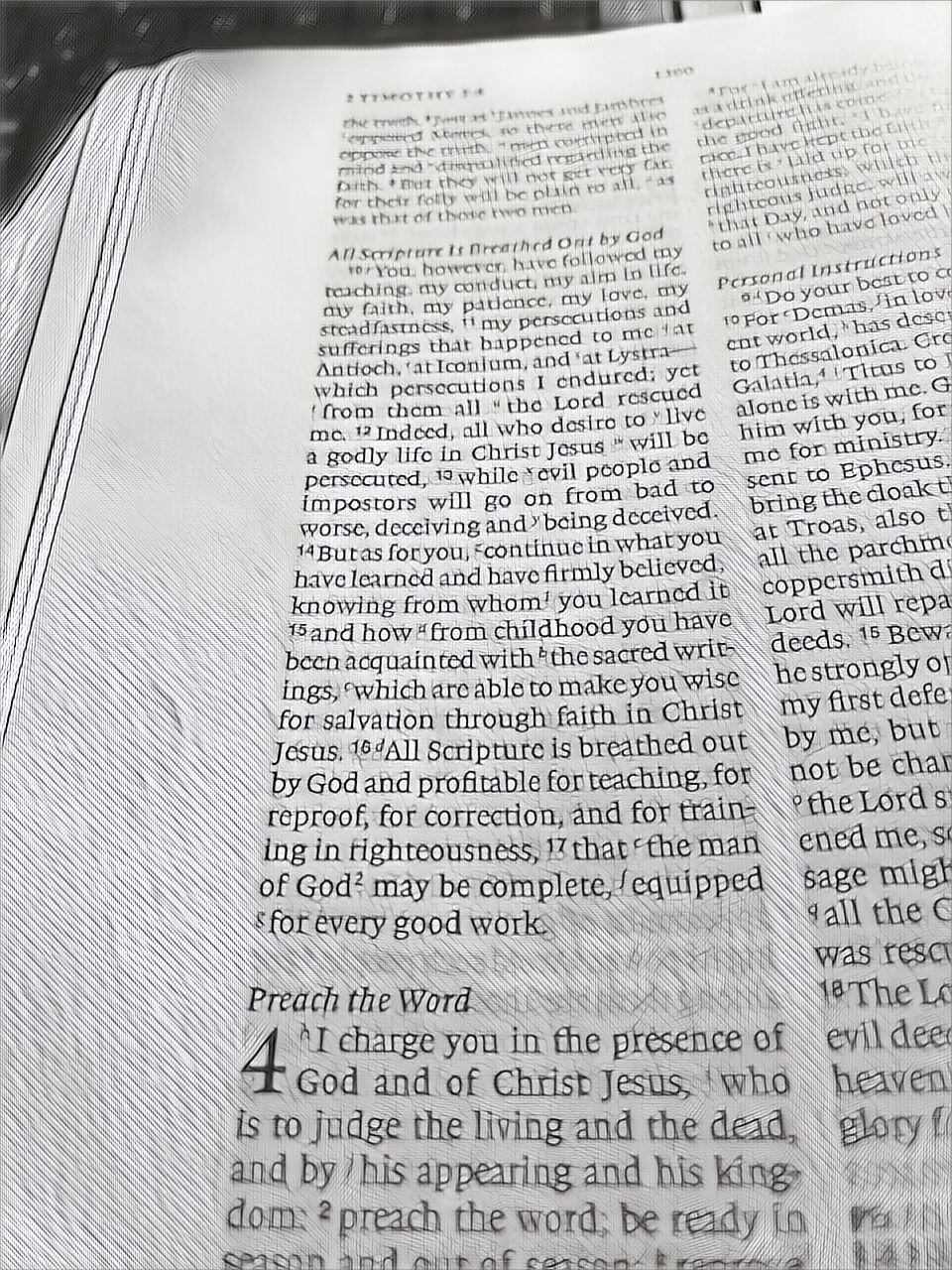





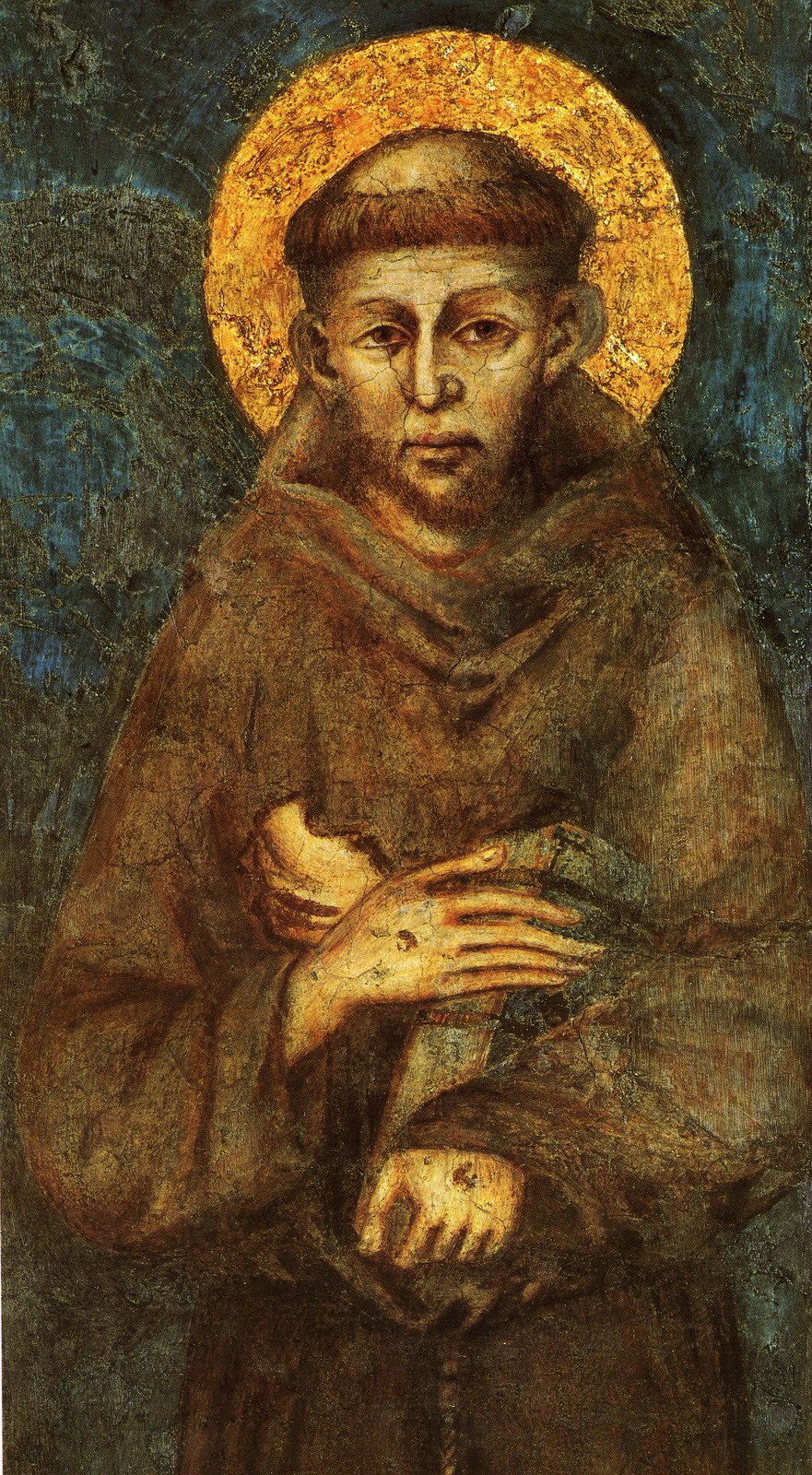

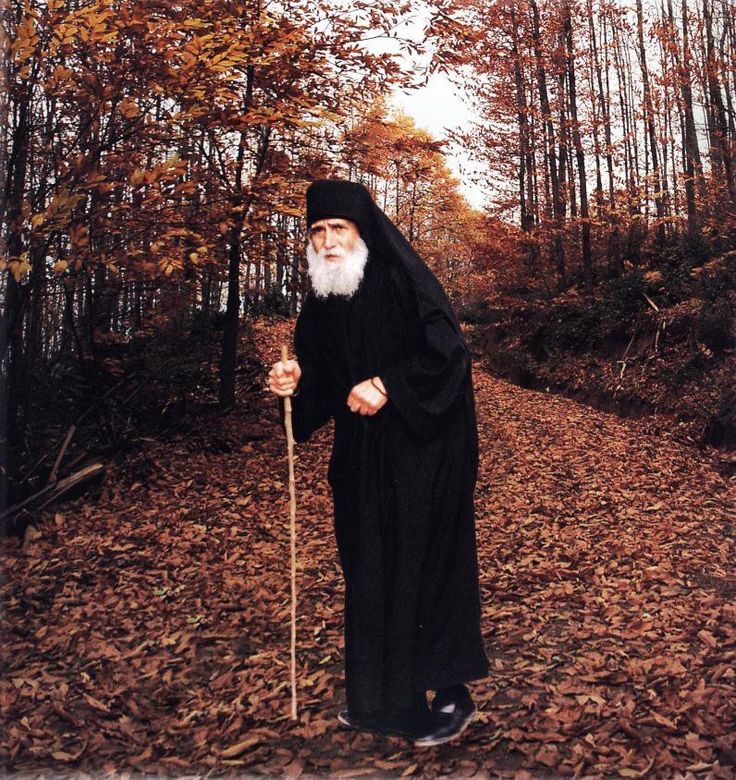




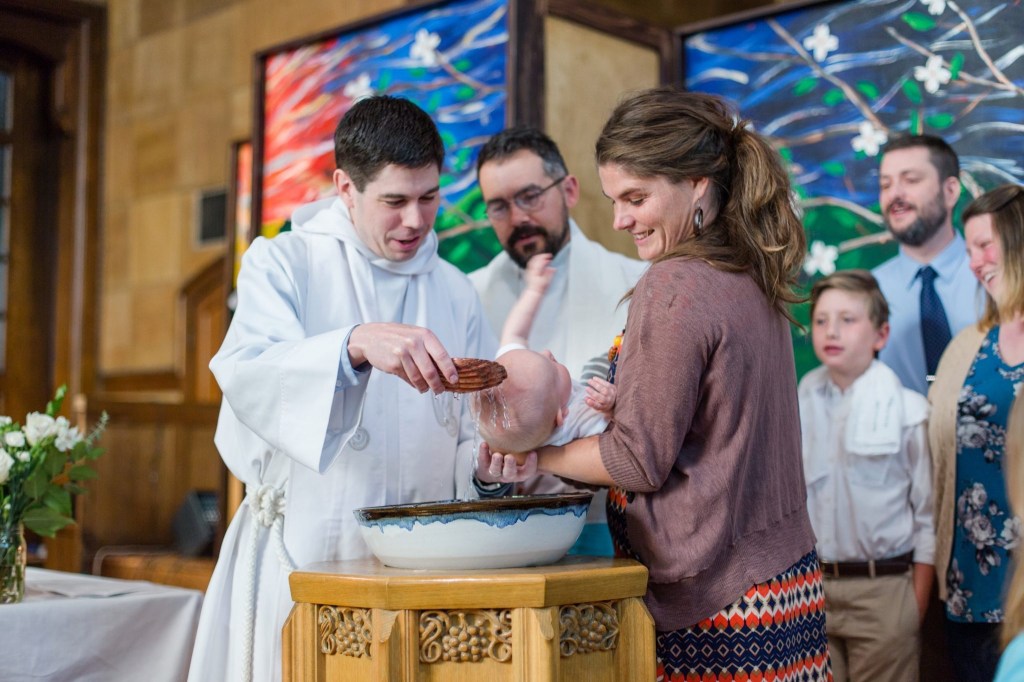




 First Blessings