I wrote the following post one week ago in response to the attack on Israelis and the resulting aerial bombardment on Gaza; tensions have escalated since then, and an Israeli ground assault on Gaza seems imminent.
I wrote then, and I write now, from several convictions, not least this one: bad politics, bad religion, and mass indifference or mass fervor make a potent cocktail that often inebriates the unwary and leads to destruction. It is the story of the cross. Brute Roman political power plus self-serving Jewish political interests plus the fervor of some and the indifference of the masses nailed our Lord Jesus to the cross. Yes, this was a providential act of God, but it transpired through the secondary causes of politics, religion, and mob behavior, and those who perpetrated it are not without guilt, except possibly through the dying prayer of Christ for their forgiveness.
I cannot speak to the politics of the present conflict; as a priest, I have no particular political acumen just because one of the parties to the conflict is Israel. But, I can speak to the religious aspect of the conflict, though I fear what I say may surprise and disappoint some. In posting this, I speak as a priest to the members and regular attenders of Apostles, but not on behalf of the clergy of Apostles. As a clerical staff, we have not had the opportunity to meet together for prayer and study and discussion since the initial attack. So, what follows is my own, and it should be understood in that light.
I write to question some false assumptions that I hear and see in the broader public conversation, especially among those with a particular evangelistic theology.
FALSE ASSUMPTION ONE: The state of Israel is the covenant people of God. No: the state of Israel is just that, a political state, one of many among the kingdoms of this fallen world. And all the kingdoms of this world, all political states, are under the sway and power of dark forces; in fact, “the whole world lies in the power of the evil one” (1 John 5:19, ESV). The primary proclamation of the Gospel is simply that God, in Christ Jesus, has fulfilled all of the covenantal promises that God made to Abraham and the Patriarchs. There are no promises remaining to the Jews apart from Jesus Christ. And, there are no promises to the secular state of Israel. St. Paul does envision a future time when, in the mystery of God, the blindness of the Jews will be lifted; but that will be — please God — a time for many Jews to acknowledge Jesus as Messiah. In his Providence, God may yet use the political state of Israel to play a part in the redemption of the world, but that is true of every political state including these United States. But, remember that God used Assyria and Babylonia for his purposes and then judged them when they went beyond the mandate he had given. There are no moral blank checks in the will of God.
FALSE ASSUMPTION TWO: The Church has a religious obligation to support Israel unquestioningly. No: the Church has an obligation to pray for and work for truth and righteousness and peace for all people; in Christ “there is neither Jew nor Greek” — read this as “neither Israeli nor Palestinian” — for all are one in Christ Jesus (Gal 3:28, ESV); otherwise, all are enemies of Christ and the cross. We proclaim a Gospel that ends ethnic and political distinctions by drawing people of every family, language, people, and nation into the one Body of Christ. If you are still concerned about this, please remember that God did not support either the Kingdom of Israel or the Kingdom of Judah uncritically. He stood athwart their religious and political aspirations and ways when they stood athwart his will; hence, the prophets, the destruction of Israel, and the exile of Judah.
The Israeli-Palestinian conflict is far too complex for me to presume to understand or to guide others through; I suspect it is intractable apart from the cross of Christ which is the very grace and mercy of God. But, I can and do caution against unexamined theological assumptions. They are not helpful to anyone. Also, remember that there is an Anglican presence both in Israel and in Gaza, as is appropriate. Please remember that there are both Palestinian Christians and Jewish Christians in our parishes, as is appropriate. We must pray with and for each group for peace and justice and reconciliation between these peoples:
Eternal God, in whose perfect kingdom no sword is drawn but the sword of righteousness, no strength known but the strength of love: So mightily spread abroad your Spirit, that all peoples may be gathered under the banner of the Prince of Peace; to whom be dominion and glory, now and for ever. Amen (BCP 2019, 27. For the Peace of the World, p. 654).
Following is the original post from one week ago.
FOOLISH LIPS
11 A fool gives full vent to his spirit, but a wise man quietly holds it back (Proverbs 29:11, ESV).
Perhaps what follows ranks me among the fools, but I feel compelled to speak. That is rarely a good sign.
Great evil was perpetrated recently against Israel, actions for which there is no justification, though, in an interview with NPR this morning, Palestinian scholar and politician Hanan Ashrawi traced its roots to ongoing Israeli occupation and brutality against the Palestinian people. Each group has its story of pain and loss, and each is complicit in the ongoing conflict. Each is a pawn in a larger spiritual battle of which both peoples seem largely unaware.
There has been an appropriate outpouring of sympathy for Israel since the attack. Our President has committed on our behalf that we will stand with Israel. That stance is political and strategic, but it also has religious overtones in the popular imagination, and those resonances can beguile and lead astray. It seems to me important to remember that:
The political state of Israel is not the elect of God, not the everlasting house of David that God promised through Nathan. That dynasty has been realized not in David Ben Gurion or Golda Meir or Benjamin Netanyahu, but in Jesus, son of David and Son of God.
Whatever God has in store for Israel will be accomplished by the Prince of Peace and not by the political engines of war.
The political and human right to exist as a nation and to redress grievous wrongs does not present Israel or any nation a blank moral check of vengeance.
To stand with and for Israel may require speaking a prophetic word contrary to prevailing attitudes. When the leaders of Judah and Israel failed to live as God’s holy people, as a kingdom of priests, God himself raised up prophets to accuse and convict them, to call them to repent and return. To stand with Israel unquestioningly, to stand with Israel right or wrong, is to expurgate the Scriptures of both history and prophecy.
I write this largely because there are Palestinian Christians who have been suffering for years and who will suffer greatly in the coming Israeli offensive. I write this largely because there are Palestinian Christians in our parishes and churches who tell their family stories of pain and loss with tears in their eyes if we care to listen. How do they hear our uncritical support for the state of Israel?
I write this largely because there is no solution to this ongoing conflict except through Jesus Christ. Political solutions have not worked. Military action has been of no avail. Terrorism — of which each side accuses the other — has only escalated conflict.
Forgive my foolishness. This is a complex — perhaps intractable — situation and I have no political expertise. I have only prayer: that God’s justice will restore and reconcile, that the peace won by the Lamb of God will prevail, and that one day Israelis and Palestinians will bow the knee together before God as his holy people to sing his praises with one voice.
Shout Your Abortion (SYA), a pro abortion group whose slogan is “We Will Aid & Abet Abortion,” has erected a series of six billboards along a two hundred mile section of I-55 from West Memphis Arkansas to southern Illinois as signposts of encouragement for those traveling to procure abortions. You can hear about it on an NPR segment:
What particularly caught my attention was the SYA billboard pictured above which proclaims, “God’s Plan Includes Abortion.”
The sign as-is is neither true nor false; it is simply ambiguous.
The sign is certainly true if your god is Aphrodite, worshipped today through sex as pleasure devoid of meaning or commitment or natural purpose.
The sign is certainly true if your god is Autonomy or Convenience or Choice, the gods of our Western culture.
The sign is certainly true if your god is Molech in any of his modern incarnations.
But, the sign is false if your God is the God of Abraham, Isaac, and Jacob, the God and Father of our Lord Jesus Christ who was himself God from God, the perfect image of the Father.
Christian theologian Stanley Hauerwas once said, “If in a hundred years, Christians are identified as the people who don’t kill their children or kill their elders we will have done well.” He could say this only because he understands that God’s will does not include abortion. His quote sets a low bar for Christianity, but even so it is a stretch for some who proclaim that God’s plan includes abortion.
(Galatians 6:14-18, Psalm 148:7-14, Matthew 11:25-30)
Collect
Most high, omnipotent, good Lord, grant your people grace to renounce gladly the vanities of this world; that, following the way of blessed Francis, we may for love of you delight in your whole creation, with perfectness of joy; through Jesus Christ our Lord, who lives and reigns with you and the Holy Spirit, one God, for ever and ever. Amen.
St. Francis once was living at the Convent of the Portiuncula, with Brother Masseo of Marignano, a man of great sanctity and great discernment, who held frequent converse with God; for that reason St. Francis loved him much. One day, as St. Francis was returning from the forest, where he had been in prayer, Brother Masseo, wishing to test the humility of the saint, went to meet him exclaiming: “Why after you? Why after you?” To which St. Francis answered: “What is this? What do you mean?” Brother Masseo answered: “I mean, why is it that all the world goes after you; why do all men wish to see you, to hear you, and to obey your word? For you are neither handsome nor learned, nor are you of noble birth. How is it, then, that all the world goes after you?”
St. Francis, hearing these words, rejoiced greatly in spirit, and lifting up his eyes to heaven, remained for a long time with his mind rapt in God; then, coming to himself, he knelt down, returning thanks to God with great fervor of spirit, and addressing Brother Masseo, said to him: “Would you know why all men come after me? Know that it is because the Lord, who is in heaven, who sees the evil and the good in all places — because, I say, his holy eyes have found among men no one more wicked, more imperfect, or a greater sinner than I am; and to accomplish the wonderful work he intends to do, he has found no creature more vile than I am on earth; for that reason he has chosen me, to confound all strength, beauty, greatness, noble birth, and all the sciences of the world, that men may learn that every virtue and every good gift comes from him, and not from any creature, that none may glory before him; but if any one glory, let him glory in the Lord, to whom belongs all glory in eternity.”
Then Brother Masseo, at such a humble answer, given with so much fervor, was greatly impressed, and learned with certainty that St. Francis was well grounded in humility (Brother Ugolino, The Little Flowers of St. Francis of Assisi).
With the possible exceptions of St. Mary and St. Nicholas, there is likely no more widely and deeply revered saint than Francis of Assisi. And like his companion Masseo, it is reasonable for us to wonder why. Externally, there was little to commend him. He was the spoiled son of an Italian cloth merchant at just that point in history when the merchant class was on the ascendancy both in wealth and political influence. Francis was the leader of a local gang of young men in Assisi, those given to mischief and drinking and romantic exploits. He wasted his time and his father’s money with these adolescent adventures. He had visions of the glories and honor of chivalry and tried to earn a knighthood in battle with the nearby rival city of Perugia. Instead, he was captured and imprisoned, a sobering turn of events that likely began the deep self-examination that led Francis to his conversion. It didn’t happen all at once, but over months and years, Giovanni di Pietro di Bernardone — his birth name — died, and Francis of Assisi — St. Francis — was born again.
Even then, there was little to commend him. While contemplating the cross in the tumbled-down local church of San Damiano, Francis received a vision — heard a voice saying: “Francis, go and rebuild my church which, as you see, is falling down.” Even here, Francis misunderstood the heavenly voice and thought it had something to do with carpentry and construction: refurbish this abandoned church at San Damiano. He did, and in the process gained some followers. But, the Lord intended more.
Francis embraced a radical form of spirituality centered around three vows: poverty, chastity, and obedience. It is hard to see these as particularly attractive, but, by the grace of God they were, and a group of dedicated men formed around Francis, a group which became an official order in the Church, the frates minores — the friars minor, the little brothers. And this group did, indeed, rebuild the Church that was falling down. This little group did change the world. And Francis, Giovanni di Pietro di Bernardone, became Saint Francis of Assisi.
There are many good and sound theological definitions of a saint. I’m partial to this very imprecise — but quite true — description: A saint is a fool for Christ that everyone admires and that no one want to imitate. How true that is about Francis. The world loves him. The world admires, even reveres him. But few choose to imitate him as he really was, not as we re-create him to be — some gentle, animal-loving, tree-hugging, peace-promoting flower child, left wing radical. There is an element of truth in that description, but, taken in isolation it distorts the true nature of the saint. He was a faithful son of the Church who expressed his vocation in Gospel poverty, chastity, and obedience. Apart from those three vows, it is impossible to truly understand Francis. So, it is to those vows we turn.
Poverty
As a young man, Francis was formed by the notion of chivalry, of a knight’s devotion to a lady. This relationship between knight and lady was one of chaste love in which the knight pledged himself to the honor and defense of his lady, a relationship in which he would risk anything, suffer anything in order to serve his lady. Francis’ patroness, his love, was Lady Poverty.
An early Franciscan treatise on poverty, the Sacrum Commercium, gives a sense of his devotion:
While they were hastening to the heights with easy steps, behold Lady Poverty, standing on the tone of the mountain. Seeing them climb with such strength, almost flying, she was quite astonished.
“It is a long time since I saw and watched people so free of all burdens.”
And so Lady Poverty greeted them with rich blessing: “Tell me brothers, what is the reason for your coming here and why do you come so quickly from the valley of sorrows to the mountain of light?”
They answered: “We wish to become servants of the Lord of hosts because he is the King of glory. So, kneeling at your feet, we humbly beg you to agree to live with us and be our way to the King of glory, as you were the way when the dawn from on high came to visit those who sit in darkness and in the shadow of death.”
And in that last sentence lies the allusion that explains Francis’ devotion to Lady Poverty: when Jesus came among us — when he came to those in darkness and the shadow of death — he came not in riches but in poverty. Francis saw poverty as the way to follow the King of glory because Jesus himself chose poverty. For Francis, Jesus was the model in everything, the one to be imitated in everything. If Jesus were poor, then Francis and his followers would choose poverty.
He felt so strongly about this that the Friars Minor were prohibited from even touching money. They worked to provide for their needs when possible, but they accepted no money as wages, only food and other material goods like clothing. When they could not find work, they begged; but, again, they would not accept money, only food and other goods. Francis lived at a transition period in history when money was vying with titles in determining what a man was and what opportunities he had; Francis’ time was the rise of the merchant class. And Francis knew — perhaps by family experience — that money had a way of transforming itself into mammon, the idol and god of wealth, and its owners into idol worshippers. Better to honor Lady Poverty and to follow her way to the Lord.
That attitude, the willing embrace of poverty, is counter cultural wherever and whenever it appears, in Francis’ twelfth century Umbria or in our twenty-first century Knoxville. While Jesus repeatedly warned of the dangers of wealth, he did not generally advocate absolute poverty for all. Neither has the Church. Neither did Francis. Francis depended upon wealthy patrons to support his ministry. But his way — not everyone’s way — but his was was the way of poverty.
Is there anything we can learn from Francis about wealth and poverty? Yes, I think so, and it comes by way of the Third Order Franciscans, lay people who follow the way of Francis while still living in the world: working in their professions, serving their families, taking their places in their communities and in the church. Their vows replace the vow of poverty with the vow of simplicity. They possess money, but they resist being possessed by money. They practice contentment with what they have while resisting the siren call of the new, the better, the fancier, the more impressive. They do not hoard goods; instead they give generously. Some follow the maxim I learned from a missionary to Ghana:
Use it up, wear it out,
Make it do, or do without.
This goes against the grain of our consumer culture which tempts us to build meaning and identity around what we own. But the new thing we just had to have today becomes the old thing we wouldn’t be caught dead with tomorrow. Paradoxically, simplicity is more deeply satisfying than is satisfying every material desire. We have a lot to learn from Francis’ devotion to Lady Poverty.
Chastity
Francis was not always devoted to chastity. If the stories about his youth are correct — and there is no real reason to doubt them — his romantic and sexual escapades were the stuff of juicy gossip in Assisi. But all that changed with his conversion; the Friars Minor were expected to be chaste, which for them meant celibate.
Most of us are not called to be celibate. Some are, and it is a holy calling and a gift from God for the good of the Church. Celibates can teach us much about agapē, about holy love. Celibates love and love deeply, but they do not love possessively; there is no sense of ownership in their love. That means they can love the other precisely as other, not for their own benefit but for the benefit of the other, always willing the good of the other. And, holy celibates, those who are celibate as a calling from God, can teach us about rightly ordered love. Because they love God supremely, they are free to love all men subordinately. Celibacy is to be honored among us, not dismissed or diminished as unfortunate and — please God — temporary.
While celibacy is not for everyone, chastity is. Chastity is rightly ordered love within relationships. If single, chastity is expressed by celibacy. If married, chastity is expressed by fidelity. But chastity involves much more than just rightly ordered sexual relations. Chastity is a matter of the heart — the spiritual center of a person — as much as it is a matter of the body. It was this type of chastity that Jesus taught about in the Sermon on the Mount:
Matthew 5:27–30 (ESV): 27 “You have heard that it was said, ‘You shall not commit adultery.’ 28 But I say to you that everyone who looks at a woman with lustful intent has already committed adultery with her in his heart. 29 If your right eye causes you to sin, tear it out and throw it away. For it is better that you lose one of your members than that your whole body be thrown into hell. 30 And if your right hand causes you to sin, cut it off and throw it away. For it is better that you lose one of your members than that your whole body go into hell.
Lust is a violation of chastity. Failure to guard the eyes is a violation of chastity. Pornography is a violation of chastity, and one that is epidemic in our society; it destroys more lives than Covid and there seems to be no effective vaccination program against it. Any base, impure thought, word, or deed is a violation of chastity. It takes firm commitment and strenuous spiritual discipline to keep a vow of chastity, but, like Francis, it is that to which we are called.
Obedience
In my ordination to the diaconate and the priesthood, I was required to publicly and in writing subscribe to the Oath of Canonical Obedience:
And I do promise, here in the presence of Almighty God and of the Church, that I will pay true and canonical obedience in all things lawful and honest to the Bishop of the Anglican Diocese of the South, and his successors, so help me God (BCP 2019, p. 485).
That was a sobering moment and act, because obedience does not come naturally to me. I have since found it to be a great blessing, but it is an acquired taste.
Francis was an obedient son of the Church. And, this is where many people misunderstand Francis. They want to extract him from his place in the church and make him spiritual — a real good guy for all — but not religious. But, that won’t do. Francis was a faithful and obedient Roman Catholic who obeyed his hierarchy from pope to bishop to parish priest, because he found in them the righty and duly authorized representatives of Christ.
While this is important, and has implications for all of us, it is another aspect of Francis’ obedience that most intrigues me. Francis was absolutely obedient to Jesus as revealed in the Scripture. It has been said about Francis that for him, the Bible was not so much a book to be read as a script to be acted out. Why did Francis really embrace Gospel poverty? Because he read Jesus’ encounter with the rich, young ruler as a commandment to himself, and he obeyed. Can you imagine living that way, or at least more nearly that way? What if we actually took the Sermon on the Mount as the script for our lives and determined to be obedient to it? What would change in your life, in my life? That was the nature of Francis’ obedience.
Why You?
Masseo asked, “Why you, Francis?” His question reminds me of some comments I heard about Queen Elizabeth II following her death. One of her former Royal Chaplains, Gavin Ashenden, tried to explain why everyone seemed to love her, even those who have no use for the monarchy. He said that most people were drawn to a kindly, old lady who loved dogs and horses, who smiled and waved to everyone, who dressed in bright colors and always carried a handbag, who served faithfully for over seven decades. But, Ashenden went further. What they were really drawn to — though most didn’t know it — was the fruit of the Spirit that she bore in her life. She loved the Lord Jesus and cultivated a life of Christian virtue. And that attracted people.
Why Francis? Not because he loved animals and all nature, not because he preached and practiced peace, not because he cared for the poor, but rather because he loved Jesus above all else, because he disciplined himself to follow Jesus by embracing poverty, chastity, and obedience, because he exemplified the Christian virtues and bore the fruit of the Spirit. And people are attracted to that. That is among the most important lessons we can learn from Francis: the best evangelists are not those who know the most about Jesus and the faith, but those who most love Jesus and practice obedience to him.
Blessing
May the Lord bless you.
May the Lord keep you.
May He show His face to you and have mercy.
May He turn to you His countenance and give you peace.
The only justification for what follows is that I was asked to write it by a friend and parishioner who wanted my comments on an article by Fr. Charles Erlandson:
Fr. Charles is a scholar whom I respect and something of an expert on this matter; I most certainly am not. I write as an ordinary priest, neither particularly Reformed nor particularly Anglo-Catholic. I write, as readers will see, with the firm conviction that along with the Orthodox and Roman Catholic Churches, the Anglican Church is part of the one holy catholic and Apostolic Church. It is my home, and I love it. And now to the question at hand: Is the Anglicanism Catholic or Protestant?
In the early twentieth-century, physicists pondered the nature of light: is light comprised of particles or waves? The understanding was that particles and waves are fundamental different and mutually exclusive: either/or but not both/and.
The problem was that light exhibited characteristics of both particles and waves — not at the same time, but at different times based upon the nature of the experiment it was subjected to. In other words, it was (and is) possible to design an experiment that proves categorically that light is comprised of particles. It was (and is) equally possible to design an experiment that proves just as surely that light is comprised of waves. Light simply is what it is, but we can make it demonstrate one characteristic and not another by the questions we ask and the experiments we perform. Ultimately, physicists began to speak of a wave-particle duality as the true nature of light and even of other quantum phenomena.
That brings us to Anglicanism and the question at hand: is Anglicanism Catholic or Protestant? First, I must disambiguate the question because language is crucial here. “Catholic” as used in the question would imply to most readers “Roman Catholic” and not catholic in its true sense as meaning “of the whole” or “universal.” So, to be clear, I will contrast Protestant with Roman and not Protestant with catholic. The question then becomes: is Anglicanism Roman or Protestant?
I will give my answer first, and then explain it. Analogous to light, Anglicanism is a Protestant-Roman duality. We can force it to appear as one or the other by the questions we ask and the data we consider; but in reality it simply is what it is regardless of what we “force” it to be. My contention is that Anglicanism is more than either Protestant or Roman; it is catholic in the true sense of the word. We claim that at every service of Holy Communion when we recite the Nicene Creed:
We believe in one holy catholic and apostolic Church (BCP 2019, p. 109).
We claim that at every service of the Daily Office when we recite the Apostles’ Creed:
I believe in…the holy catholic Church (BCP 2019, p. 20).
It is important that we don’t say “We believe in one holy Protestant Church” or “We believe in one holy Roman Church.” Catholic is prior to and more fundamental than either Protestant or Roman. Catholic pertains to the faith once delivered to the saints — to all the saints: those essential elements of faith and practice that we share and not those things that separate us. I describe it this way: along with the Orthodox Church and the Roman Church, the Anglican Church is the bearer of the Great Tradition that began at Pentecost, that developed and spread through the work of the Apostles, that is expressed in Scripture and Creeds and Councils and Liturgy, that was nurtured and preserved by the Church Fathers and the faithful of every generation, and that has been preserved to this day.
If you ask me where that Great Tradition may be found, I would answer along with the Chicago-Lambeth Quadrilateral that these are the essential marks of the Catholic Church:
The Holy Scriptures of the Old and New Testaments as the revealed Word of God.
The Nicene Creed as the sufficient statement of the Christian Faith.
The two Sacraments, — Baptism and the Supper of the Lord, — ministered with unfailing use of Christ’s words of institution and of the elements ordained by Him.
The Historic Episcopate, locally adapted in the methods of its administration to the varying needs of the nations and peoples called of God into the unity of His Church (BCP 1979, p. 877).
There are many nuances and subtleties to be worked out, and the devil is in the details, as they say. But these are marks of the catholic Church, and Anglicanism possesses them.
So, is Anglicanism Protestant or Roman? It is something more primitive and more fundamental; it is catholic. Now, if this seems to you like begging the question, fair enough. Let’s plunge in a bit further.
Imagine we could submit a “genetic” sample of Anglicanism to a religious genealogy site, a 23 and Me for the Church. What would the results be? Prior to the English Reformation Parliament (1529-1536) our nearest relative would be the Roman Church — all the way back to the Synod of Whitby (664) when King Oswiu of Northumbria brought the proto-English church under the auspices of Rome. Prior to that time, both Celtic and Roman practices co-existed. But, keep in mind that the Great Schism between East (Orthodox) and West (Roman) — the fracturing of the catholic Church — did not occur until 1024. This means that, from the beginning, the English Church was part of the catholic church and remained so even when it adopted Roman practices. The English Church was catholic before and after it became Roman. So, we trace our lineage through the Roman Church back to the united catholic Church. That is our ecclesiastical DNA, if you will.
But, families break apart or intermarry; I’m not certain which is the best metaphor. England broke with Rome and intermarried with other Protestant groups in the 16th century. And, the English Church began to define itself in contradistinction to the Roman Church. That is the essence of many of the Thirty-Nine Articles of Religion — a polemic against “Romish” and “papist” doctrines and practices. Read most generously — and I think correctly — the English Church retained the essentials of the catholic Church while rejecting some unfaithful medieval accretions of the Roman Church. Now, here is a statement that will get me in trouble and may be used against me; but I nonetheless believe it to be true. In rejecting the excesses of the Roman Church, the English Church embraced some of the excesses of the Protestant Church. That is what reform movements typically do: move from one extreme to another. Then, it takes generations to evaluate and moderate, to recognize that we may have lost the baby with the bath in some instances. And that explains the “muddle” of Anglicanism — why some Anglicans out-reform Luther and Calvin and why some claim we are the Roman Church just without the Pope. That is why I insist that the truth of Anglicanism lies deeper: we are catholic, through the heritage of the Roman Church, and recalled to true catholicism by the Protestant Reformers. It is a difficult “bi-racial” identity; we would have to check OTHER on a form and neither ROMAN nor PROTESTANT.
This answer will likely satisfy no one; some days it does not satisfy me. But, it is the best I have to offer and I have made my peace with it — mostly.
I was standing outside a boutique on Broad Street in Rome, Georgia this afternoon pondering the working of God’s providence. Here is what I concluded: I don’t understand it, but I depend upon it and I am always both grateful and surprised when I notice it. By providence I don’t mean the deterministic, micro-management of the movement of every atom that some insist upon. My experience of free will doesn’t not allow for that understanding. Rather, I mean God’s wise ordering and governance of creation in ways and by means largely unknown to me, ways that might seem like mere coincidence to those whose vision has not been shaped by faith.
This morning while praying before dawn on a screened porch overlooking a lake, I had the urge to contact a dear person for whom I pray daily — one whom I rarely see and with whom I too rarely converse. I texted simply to say that I was thinking about him and that his faithfulness is an encouragement to me. He responded quickly with news that he will be confirmed on Sunday. This is deeply joyful news to me for reasons I will not, and cannot fully, explain. Had I been somewhere else would I have experienced the same urge? If so, would I have responded to it? My urge, his news: coincidence or providence?
Last night I had a telephone conversation part of which concerned a matter requiring spiritual discernment. My small contribution was to mention Rule 5 of the discernment of spirits by Ignatius of Loyola: in a time of desolation, never change a spiritually sound decision made previously in a time of spiritual consolation. You do not need to understand that fully to appreciate what follows. This morning I opened my kindle to do a bit of reading. Since I have several books in-process, I could have opened any of them. I made my selection not quite at random, but also with no particular intent. The first page I opened to was a summary of Rule 5 of the discernment of spirits by Ignatius of Loyola. Coincidence or providence? I would have opened to that page sometime, perhaps several days from now. But it would not have meant what it meant this morning.
Then, standing outside the boutique on Broad Street later this afternoon, a woman approached me asking for some money. I always keep a few dollars and a prayer card from Apostles Anglican Church in my pocket for such occasions, and I rather automatically took the small offering and gave it to her. She was as interested in the card as in the money and asked if I had another. She likes reading such things, she explained. I happened to have another, and I gave it to her. Just as she walked away I received a text from someone I had been praying for; the news from the medical test came back early and was very good. Thanks be to God! But, the timing is very interesting, isn’t it? Had I ignored the woman’s request for money and another card, would I have received the text at that moment? Was it a woman at all, or perhaps an angel unawares? Who can say: coincidence or providence?
What should we make of this? Three times in less than twenty-four hours I experienced either unusual coincidences or providence. If my worldview were not informed by faith, I would have noticed none of these; in fact, none would likely have happened. But it is, and they did, and I must decide: coincidence or providence? All of these incidents have the aroma of grace about them, and I am grateful.
Our cultural communication — if it can be called communication — is awash with vitriol and invective. Social media, particularly, is a tsunami of hate speech, not in the ideological sense but in the spiritual sense: speech that reveals spiritual bitterness and darkness. The wisdom of St. James — the wisdom from above — appointed for our reading in the Morning Office today is pertinent and instructive, helpful for self-assessment and for the discernment of spirits in what others write and speak. How do we know what is good, what is from the Spirit, what is wisdom and truth from above?
James 3:13–18 (ESV): 13 Who is wise and understanding among you? By his good conduct let him show his works in the meekness of wisdom. 14 But if you have bitter jealousy and selfish ambition in your hearts, do not boast and be false to the truth. 15 This is not the wisdom that comes down from above, but is earthly, unspiritual, demonic. 16 For where jealousy and selfish ambition exist, there will be disorder and every vile practice. 17 But the wisdom from above is first pure, then peaceable, gentle, open to reason, full of mercy and good fruits, impartial and sincere. 18 And a harvest of righteousness is sown in peace by those who make peace.
How do we know what is good, what is from the Spirit, what is wisdom and truth from above?
Is it pure? Is it peaceable? Is it gentle? Is it open to reason? Is it full of mercy and good fruits? Is it impartial and sincere?
This does not preclude difficult speech, hard truth; but it does address the spirit with which such speech must be offered, the spirit with which such speech especially must be offered.
Following is a personal reflection prompted by the recent exposition of relics of Padre Pio at the local Roman Catholic Cathedral. The Anglican Formularies, particularly the Thirty-Nine Articles of Religion, take a strong stance against the sixteenth century “Romish” practice of adoration of such things. The language of the Articles is often a bit polemical, reflecting the times in which they were written and the mutual hostility between Canterbury and Rome. We do not live in the sixteenth century and our concerns and “battles” are not necessarily the same as theirs. But, make no mistake: the Articles do express “the Anglican response to certain doctrinal issues controverted at that time (1571), and [express] fundamental principles of authentic Anglican belief.” As importantly, they call Anglicans to faithfulness in our time, which requires great discernment in light of Scripture and Tradition to critique our culture — spiritual and “secular” — rightly.
ARTIFACT, TALISMAN, SACRAMENTAL
I live within easy walking distance of a Roman Catholic Cathedral: just around the cul-de-sac, up five or six flagstone steps, across the parking lot, through the doors, and I am surrounded by the beauty of holiness and the holiness of beauty. Yesterday, the cathedral hosted a traveling exposition of first and second order relics of Padre Pio: a lock of hair, a bandage with the blood of the stigmata, a mantle worn by the saint. The cathedral was open all day for veneration of the relics by the faithful.
I could have walked there, but I didn’t. Some might commend me for shunning the exposition in accordance with the Thirty-Nine Articles of Religion:
XXII. OF PURGATORY
The Romish Doctrine concerning Purgatory, Pardons, Worshipping, and Adoration, as well of Images as of Reliques, and also Invocation of Saints, is a fond thing vainly invented, and grounded upon no warranty of Scripture, but rather repugnant to the Word of God (BCP 2019, p. 780).
But, it wasn’t that article that made me forego the exposition. I simply have no great attraction to Padre Pio as many others do; he is not part of my faith tradition. And relic qua relic means nothing to me. Had these been relics of someone with whom I feel a spiritual affinity or even simple admiration, e.g. St. Francis, St. Benedict, St. Ignatius, or Mother Teresa, I most likely would have made the short trek to the cathedral. Would that have been skirting a violation of Article XXII? I think not, and my reasoning lies in the difference between artifact, talisman, and sacramental.
An artifact is simply a tangible, historical article: a dinosaur bone, a flint arrow, a painting, a handwritten document or perhaps the pen used to write it, a top hat. Artifacts are the stock-in-trade of museums. We view them from interest, but not generally from veneration, though the line is at times a bit unclear. When someone who holds Abraham Lincoln in high esteem visits a Lincoln museum and has a nearly “religious experience,” is that mere interest, devotion, or even veneration? Still, likely no one would protest a viewing of artifacts. One could have considered the Padre Pio relics as mere artifacts, though I suspect none of the faithful did so.
A talisman is altogether different. A talisman is akin to what we might call a “good luck charm,” an artifact that has power — in and of itself — to prosper and protect the one who uses it. A talisman harnesses spiritual power. Through ritual, a talisman compels a spiritual power — whether god, spirit, the universe — to act in a certain way; it intends to bend the will of the power to human will. A talisman is magic. The line between relic and talisman can be very fine, and, I suspect in popular religion, very porous. Did some who venerated the relics of Padre Pio toe the line of talisman? Probably, though unconsciously. Just to be clear, I accept the reality of talismans in a negative and harmful sense. Objects can be infused with spiritual power to do harm. Objects can be tangible artifacts through which hostile spiritual powers act for human destruction. Do not share the cup of demons, St. Paul warned, nor eat meat offered to idols.
Now, we come to sacramentals. A sacramental is a tangible artifact through which God has promised to work, or has shown himself to work, in a particular way to accomplish his will. It is a channel of grace, with grace understood as the presence and activity of God. These are certainly not “repugnant to the Word of God;” rather, Scripture is full of sacramentals:
2 Kings 13:20–21 (ESV): 20 So Elisha died, and they buried him. Now bands of Moabites used to invade the land in the spring of the year. 21 And as a man was being buried, behold, a marauding band was seen and the man was thrown into the grave of Elisha, and as soon as the man touched the bones of Elisha, he revived and stood on his feet.
John 9:1–7 (ESV): 9 As he passed by, he saw a man blind from birth. 2 And his disciples asked him, “Rabbi, who sinned, this man or his parents, that he was born blind?” 3 Jesus answered, “It was not that this man sinned, or his parents, but that the works of God might be displayed in him. 4 We must work the works of him who sent me while it is day; night is coming, when no one can work. 5 As long as I am in the world, I am the light of the world.” 6 Having said these things, he spit on the ground and made mud with the saliva. Then he anointed the man’s eyes with the mud 7 and said to him, “Go, wash in the pool of Siloam” (which means Sent). So he went and washed and came back seeing.
Acts 5:14–16 (ESV): 14 And more than ever believers were added to the Lord, multitudes of both men and women, 15 so that they even carried out the sick into the streets and laid them on cots and mats, that as Peter came by at least his shadow might fall on some of them. 16 The people also gathered from the towns around Jerusalem, bringing the sick and those afflicted with unclean spirits, and they were all healed.
Acts 19:11–12 (ESV): 11 And God was doing extraordinary miracles by the hands of Paul, 12 so that even handkerchiefs or aprons that had touched his skin were carried away to the sick, and their diseases left them and the evil spirits came out of them.
The prophet’s bones, mud and saliva, shadows, sweaty headbands and work aprons from the apostle: all of these are sacramentals, tangible artifacts through which God made his presence and power known.
Such sacramentals are part-and-parcel of the faith and practice of the one holy, catholic and apostolic Church. A few examples are in order.
Before baptism, the priest prays over the water:
Now, Father, sanctify this water by the power of your Holy Spirit. May all who are baptized here be cleansed from sin, be born again, and continue for ever faithful in the risen life of Jesus Christ our Savior. To him, to you, and to the Holy Spirit, be all honor an glory, now and for ever. Amen (BCP 2019, p. 168).
As part of the rite of healing, the priest may bless the oil used for anointing the sick:
O Lord, holy Father, giver of health and salvation: Send your Holy Spirit to sanctify this oil; that, as your holy apostles anointed many that were sick and healed them, so may those who in faith and repentance receive this holy unction be made whole; through Jesus Christ our Lord, who lives and reigns with you and the Holy Spirit, one God, for ever and ever. Amen (BCP 1979, p. 455).
I have several Anglican rosaries made especially for me. I know that the tying of each knot or the threading of each bead was accompanied by prayers of blessing. These aids to prayer are sacramental.
Sacramentals are not talismans; they are not magic. They are not intended to bend the will of God to our human will. Rather, they are tangible means of receiving the blessings of God as and how and when he wills; they do not conform God to man, but rather man to God. And they are to be used by faith with thanksgiving.
Where do relics fall in this scheme? Certainly they are artifacts, though the faithful always consider them more than that. They may be seen by some, unfortunately, as talismans — “good luck charms,” protectors. That is not, of course, the doctrine of the Church. They may be, and sometimes have been, used by God as sacramentals, much as Elisha’s bones were.
Why do I write this? The Reformers rightly protested some abuses of medieval Catholicism, the financial abuse associated with relics among them. That is not what was occurring at the cathedral yesterday. The Reformers were also rightly concerned about the faithful crossing the line into idolatry or confusing honor, which may be shown to our brothers and sisters living or dead, with worship, which must be reserved for God alone. I doubt that was occurring at the cathedral yesterday; certainly it was not occurring intentionally. I suspect the Reformers were also concerned with superstition instead of sound theology, though I don’t know that they would have used that word.
So, though I find the Reformers’ concerns valid, I don’t live in the sixteenth century; I have a different set of concerns more germane, perhaps, to our cultural milieu: materialism — the “exorcism” of the spiritual from our conceptual understanding of the world, the reduction of all things to mere matter. In short, we have attempted to exile God from this material world in which we live, move, and have our being to the spiritual realm where God does whatever it is that God does. It is a militant form of deism: an absentee God, if God there be. What is necessary in our time, it seems, is a “re-enchantment” of the world, the right understanding of an imminent God who created/creates matter and uses it as a channel of his presence and power. Our culture has lost the sense of the sacramental world: of holy water, sacred time, blessed oil, burning bushes and holy ground; of incense and prayers rising together; of the light of Christ seen in the Paschal Candle and many others. We have replaced Creation with Nature and Providence with Natural Law. That is my concern. And so, every chance I get, I want to strike a blow against this flattened out, materialistic worldview. Sacramentals are simply one weapon in that fight.
A Homily at the Ordination of Jeremy Swaggerty to the Sacred Order of Priests 24 September 2023
(Is 6:1-8, Ps 119:33-40, Eph 4:7-16, Luke 10:1-9)
In the Name of the Father, and of the Son, and of the Holy Spirit. Amen.
11 And he gave the apostles, the prophets, the evangelists, the shepherds and teachers, 12 to equip the saints for the work of building up the body of Christ (Eph 4:11-12, ESV).
Bishop Frank, Fr. Phil and fellow clergy, brothers and sisters in Christ at Anglican Church of the Redeemer: Grace to you and peace from God our Father and the Lord Jesus Christ.
When we read the New Testament Epistles, we are reading someone else’s mail. The letters were addressed to the first century recipients, but, by God’s grace they are also forus in the twenty-first century. I trust you won’t mind if I follow that same biblical pattern in this sermon: it is addressed to Jeremy, but, by God’s grace, I hope it will also have some meaning for everyone gathered here.
Jeremy, as we approach the profoundly significant and life-changing moment of your ordination to the priesthood in the one, holy, catholic and apostolic Church of our Lord Jesus Christ, there is an important question hanging in the air, a question on the minds of many here, a question that simply must be asked before we can move forward: Do you have any new, cute pictures of Jack?
Here’s the truth; you may struggle against it, but in your bones you know it’s true. You have had your moment. You have had a brief window of time in which to be Jeremy Swaggerty. But now? Now, you are Jack’s father. That’s your new identity, and what a remarkable and gracious thing that is.
I speak now perhaps more poetically than theologically, though in the best of moments the two are indistinguishable. Fatherhood leaves an indelible mark on a man’s character, or, perhaps, it confers a new and indelible character upon him. I am certain the same is true for motherhood — perhaps even more so — but I dare not presume to speak for mothers. From the moment his baby is first placed in a man’s arms — and probably seven or eight months prior — he receives a new identity; regardless of what he was before, he is now a father. His life must be oriented differently. His priorities must change. His responsibilities must deepen. As John the Baptist was to Jesus, so must a father be to his child: the father must decrease and the child must increase. There is a choice, of course; a man may be either faithful or unfaithful to this new character, but he may not escape from it. He is a father.
You have just begun the journey of fatherhood; I am nearly twenty-nine years along the way. The nature of fatherhood changes with time — I am needed in a different way now than at first, and I am a different kind of father now than before — but the sheer fact of it never changes; once a father, always a father. “Father” is not just what you do, though there is certainly much to do; “father” is who you are.
In just a few moments — God willing, the people consenting, and Bishop Frank presiding — you will be ordained to the priesthood.
Ordination is the laying on of the bishop’s hands with prayer, which confirms the gifts and calling of the [candidate], consecrates [him], and grants [him] authority to serve Christ and his Church in the office to which [he has] been called.
In ordination, God conveys the gift of the Holy Spirit for the office and work of the order being conferred (Anglican Church In North America (ACNA), To Be A Christian, Crossway (2020), p. 60).
In this sacrament of holy orders you are, once again, about to become a father, a spiritual father to a people that God is placing in your care. Whether they call you father or just Jeremy is no more important than whether Jack calls you pop, papa, dad, or something else entirely. You will become father through the grace of the Holy Spirit received in this sacramental rite. This consecration will leave an indelible mark on your character, or, perhaps, will confer a new and indelible character upon you from the moment the bishop lays hands upon you and prays:
Receive the Holy Spirit for the office and work of a Priest in the Church of God, now committed to you by the imposition of our hands (BCP 2019, p. 493).
Regardless of what you were before, you will thereafter be a priest, a spiritual father. Your life must be oriented differently. Your priorities must change. Your responsibilities must deepen. You have a choice, of course; you may be either faithful, or, God forbid, unfaithful to this new character, but you may not escape from it. You are, from that moment, a priest, a spiritual father. Priest is not just what you do, though there is much to do. Priest is who you are: priest, spiritual father.
Have you noticed how many things come with warning labels and instruction manuals today? A cup of coffee at McDonald’s comes with the warning emblazoned on the styrofoam: Caution! The beverage you are about to enjoy is extremely hot. And the furniture you ordered online thinking it would be shipped assembled? No such luck: build-it-yourself, some assembly required. But you do get a thirty page instruction manual written in one language, translated into a second language by someone who speaks English only as a third. At least there are some badly photocopied diagrams with part numbers and letters visible only with an electron microscope. So, I ask you: where are the warning labels on a baby, the instruction manuals for fatherhood? Is a baby not as important as a cup of coffee or as complex as an IKEA bookcase? One morning, a nurse hands you this small, fragile, living human being who is little more than a bundle of needs, wheels the mother to the curb in a wheelchair, and sends you off on your own to figure it out as you go. So begins biological fatherhood: no instruction manual.
Thanks be to God — and I mean that — thanks be to God there is an instruction manual for spiritual fatherhood, an instruction manual for the priesthood — and not one only, but several.
First, we have the witness of the whole of Scripture: from the Patriarchs (the fathers) to Moses, to Joshua and the Judges, to the Kings and the Prophets — all fathers of God’s people, sometimes faithful and sometimes faithless, but examples all. In the Gospels we encounter Jesus who said:
John 14:9–11 (ESV): Whoever has seen me has seen the Father. How can you say, ‘Show us the Father’? 10 Do you not believe that I am in the Father and the Father is in me? The words that I say to you I do not speak on my own authority, but the Father who dwells in me does his works. 11 Believe me that I am in the Father and the Father is in me.
In the Epistles we see hands-on spiritual fatherhood as Paul and Peter and James and Jude and John grapple with the problems of their spiritual children gathered in household churches scattered throughout the Mediterranean: sometimes praising, sometimes rebuking, often instructing, always praying — spiritual fathers pouring out their very lives for their spiritual children. Especially, there are the Pastoral Epistles in which the aging spiritual father Paul passes on his wisdom and experience to his protégés, to the next generation of spiritual fathers in the persons of Timothy and Titus. Do you want to be a good priest, a faithful spiritual father? Of course you do. Then delve deeply into Scripture; make it your instruction manual.
There is also the great Tradition of the one, holy, catholic and apostolic Church passed on to us in faith and practice, in the example of saints and martyrs, in holy writings and rules. Look to the Church Fathers, East and West; look to the Desert Fathers and Mothers; look to the great theologians, bishops, and abbots — Augustine, Chrysostom, Basil, Gregory, Benedict.
Jeremiah 6:16 (ESV): 16 Thus says the Lord: “Stand by the roads, and look, and ask for the ancient paths, where the good way is; and walk in it, and find rest for your souls.
Look to more modern teachers, writers, thinkers, contemplatives, activists, and saints also — Ignatius of Loyola, Mother Teresa, C. S. Lewis, Henri Nouwen. And do not forget that we, too, are a living part of the great Tradition, a link in the chain of faith and practice received from the Apostles and passed down the generations to us, to this generation. The great Tradition lives all around you in this parish, in this diocese, in this province, in this communion. Look to the godly bishops, priests, deacons, and spiritual fathers and mothers among us. Seek them out. Mine and mind their wisdom. Follow their examples. Do you want to be a good priest, a faithful spiritual father? Of course you do. Then immerse yourself in the great Tradition; make it your instruction manual.
And, we must not neglect our own Anglican formularies; we cannot pass over The Book of Common Prayer and especially the Ordinal, The Form and Manner of Ordaining a Priest. I suspect you have read this rite many times, meditating on it and praying with it and through it. No matter: it bears repeating.
What does it mean to be an Anglican priest, a spiritual father in our tradition? It means “to be a messenger, watchman, and steward of the Lord” (BCP 2019, p. 489). There is a common theme here. A messenger proclaims not his own word but the word of the one who sent him. A watchman attends not to his own welfare, but to the welfare of those entrusted to his care. A steward tends not his own treasure, but the treasure of his master. As a priest and spiritual father, you are “to provide for the Lord’s family, and to seek for Christ’s sheep who are in the midst of this fallen world” (ibid). The vocation of priest and spiritual father is to you, but it is always from God and for the sake of his people.
What does it mean to be an Anglican priest, a spiritual father in our tradition? It means to “work diligently, with your whole heart, to bring those in your care [the children of God] into the unity of the faith and of the knowledge of God, and to maturity in Christ, that there may be among you neither error in religion nor immorality in life” (ibid). There is a trope in film and television, tired but too often true, of the man-child, the boy who will not grow up, the thirty-five year old teenager. We’ve all seen it in “real life,” haven’t we: the immature adult who acts like a spoiled, petulant child? And, whether we say it or not, we most often blame the parents, who infantilized their child and did not allow or demand the child to mature. God forbid that such a thing should be said of any priest or spiritual father, that he is guilty of infantilizing God’s people. No: a priest is to work diligently, with his whole heart to bring God’s people to maturity:
Ephesians 4:12–14 (ESV): 12 to equip the saints for the work of ministry, for building up the body of Christ, 13 until we all attain to the unity of the faith and of the knowledge of the Son of God, to mature manhood, to the measure of the stature of the fullness of Christ, 14 so that we may no longer be children, tossed to and fro by the waves and carried about by every wind of doctrine, by human cunning, by craftiness in deceitful schemes.
This equipping, this encouraging and challenging people to grow, this refusal to do on behalf of others what they should do themselves is not always easy or pleasant. It requires commitment and diligence. The Ordinal exhorts you to:
give your faithful diligence always to minister the doctrine, sacraments, and discipline of Christ, as the Lord has commanded and as this Church has received them, according to the Commandments of God, so that you may teach the people committed to your charge with all diligence to keep and observe them (BCP 2019, p. 490).
These things are the day in and day out work of the priest, and they require an “ordinary,” daily diligence. But, from time to time, more serious matters arise, matters which require “extraordinary” diligence, when as priest and spiritual father you must:
be ready, with all faithful diligence, to banish and drive away from the Body of Christ all erroneous and strange doctrines contrary to God’s Word; and to use both public and private admonitions and exhortations, to the weak as well as the strong within your charge (ibid, p. 491).
This is the difficult and painful priestly work of correction. It must be done impartially, to the weak as well as to the strong, to the founding member as well as to the newcomer, to the influential and to the “nobody,” to the big donor and to the one who receives from the benevolence fund. It must be done privately, if possible, and publicly if necessary. It must be done — with encouragement — to the older man as to a father, to younger men as to brothers, to older women as to mothers, and to younger women as sisters, in all purity (cf 1 Tim 5:1-2). As difficult as it always is, it sometimes must be done by a faithful priest and spiritual father.
In exercising this diligence for the household of God, you must never neglect your own household, but rather:
be diligent to frame and fashion your own life [and the life of your family], according to the doctrine of Christ, and to make yourself [and them, as much as you are able], a wholesome example and a pattern to the flock of Christ (ibid, p. 491).
This is implicit in your marriage vows and is now made explicit in your ordination vows. Look to your family. Do not be so devoted to the bride of Christ that you ignore your own bride. Do not be so concerned with the children of God that you neglect your own child. There are far too many cautionary tales of parents failing their children in Scripture, tales written for our learning, the stories of Samuel and David prominent among them. Right order is essential, not least the right order of your vows: baptismal vow, marriage vow, ordination vow. Be diligent to harmonize these. Do you want to be a good priest, a faithful spiritual father? Of course you do. Then immerse yourself in all these aspects of our own Anglican tradition; make it your instruction manual.
I want to highlight one last bit of instruction in the Ordinal. It comes with a personal admission. Whenever I place the stole — the symbol of priesthood — around my neck and across my shoulders, I do so with these words of Jesus on my lips and in my heart:
Matthew 11:28–30 (ESV): 28 Come to me, all who labor and are heavy laden, and I will give you rest. 29 Take my yoke upon you, and learn from me, for I am gentle and lowly in heart, and you will find rest for your souls. 30 For my yoke is easy, and my burden is light.”
There are days — and here is the admission — when these words sound like sarcasm, when I find no rest for my soul, when the yoke is hard and chafing, when the burden is anything but light, days when the will and the ability both seem absent. There are not many such days and they do not come often, but when they come, this instruction from the Ordinal is crucial. It is not an instruction on what you are to do or on how you are to fulfill your vows. Rather it is a stark reminder that you cannot, under your own power, do so:
Know, however, that you cannot accomplish this of yourself; for the will and the ability needed are given by God alone. Therefore, pray earnestly for his Holy Spirit to enlighten your mind and strengthen your resolve (ibid, p. 489).
On those difficult days when the stole seems hard and burdensome, my prayer, perhaps all I can muster in the moment is this:
Come, Holy Spirit. Purify my heart, enlighten my mind, strengthen my resolve, and glorify Christ in me.
I have always found that prayer to be enough and more than enough. I have always found God to be faithful in steeling my weak human will, in stirring up the gifts given me through the laying on of my bishop’s hands, in strengthening my resolve once again for the work he has given me to do in that moment. Depend on this prayer or one like it. Find a few faithful parishioners who will pray it with you and for you. Do you want to be a good priest, a faithful spiritual father? Of course you do. Then recognize your own insufficiency and the boundless grace and power of the One who has called you to this good work and who will faithfully bring it to completion through the grace of the Holy Spirit.
Now, I would like to speak directly both to you Jeremy and to all the saints at Redeemer for a moment. The priestly vocation, spiritual fatherhood, is a gift. It is God’s gift to you Jeremy, for it is the means God has chosen to transform you into the image of Christ; it is the way God has chosen for you to work out your salvation with fear and trembling. It is the way that you are called to take up the cross and follow Jesus. But, it is also a gift to the church, to the local church here on McBrien Road in Chattanooga and to the one, holy, catholic and apostolic Church of our Lord Jesus Christ. Church, treasure this gift, and, in the words of the author of Hebrews:
Hebrews 13:17 (ESV): 17 Obey your leaders and submit to them, for they are keeping watch over your souls, as those who will have to give an account. Let them do this with joy and not with groaning, for that would be of no advantage to you.
And, for both Jeremy and the saints at Redeemer, I close with this prayer and blessing from Hebrews:
Hebrews 13:20–21 (ESV): 20 Now may the God of peace who brought again from the dead our Lord Jesus, the great shepherd of the sheep, by the blood of the eternal covenant, 21 equip you with everything good that you may do his will, working in us that which is pleasing in his sight, through Jesus Christ, to whom be glory forever and ever. Amen.
Anglican Church of the Redeemer Formed Conference 2023: Male and Female in Christ
The Cruciform Shape of Gender: Male and Female and the Cross of Christ
Following is a talk I presented at the Formed Conference 2023.
The Lord be with you. And with your spirit. Let us pray.
Both here and in all your churches throughout the whole world, we adore you, O Christ, and we bless you, because by your holy cross you have redeemed the world. Amen.
I like to begin presentations by lowering expectations; that way, I am less likely to dramatically disappoint. My contribution to this conference will be quite modest, not unimportant, I hope, but modest nonetheless. I am neither a sociologist nor a psychologist. I am neither a biologist nor a philosopher. I am a parish priest, and an assisting priest at that. I think and speak as a priest; so, primarily, I want to frame the context and character of the gender debate in which we find ourselves in terms of the great narrative of Scripture, which means in terms of the cross of Christ. It is a vast narrative that climaxes in the cross, but, it starts here:
Genesis 1:1–2 (ESV): 1 In the beginning, God created the heavens and the earth. 2 The earth was without form and void, and darkness was over the face of the deep. And the Spirit of God was hovering over the face of the waters.
The earth was without form and void; it was chaotic and empty. In the following six days of creation, God remedies those two deficits. God first creates order through separation and differentiation: light from darkness (day from night), the waters above from the waters below, the dry land from the seas. Then having established order on the first three days, God begins to fill the emptiness on the next three days: plants and fruit trees; sun, moon and stars; sea creatures, great and small, and all winged birds; livestock and creeping things and the beasts of the earth. On the sixth day, God creates man — humankind — male and female, and he calls them to a specific vocation:
Genesis 1:28 (ESV): 28 And God blessed them. And God said to them, “Be fruitful and multiply and fill the earth and subdue it, and have dominion over the fish of the sea and over the birds of the heavens and over every living thing that moves on the earth.”
As his image-bearing humans, man — male and female — are to continue God’s work of bringing order out of chaos (subdue, have dominion) and of filling the emptiness with life (be fruitful, multiply). This account of creation in Genesis 1 emphasizes the mutuality of male and female in the human vocation.
Genesis 2 adds detail to our understanding of the creation and vocation of man. In this account, God creates the male, Adam, first and specifically assigns to him one part of the human vocation:
Genesis 2:15 (ESV): 15 The Lord God took the man and put him in the garden of Eden to work it and keep it.
This is the task of bringing order (work it) and defending order (keep it). This is the uniquely male aspect of the human vocation. Missing from this is the mandate to be fruitful and multiply, because there is, as yet, no helper — no mate — fit for Adam.
To emphasize both Adam’s role in the ordering of creation and his inability to fill the emptiness with human life, God next brings the animals to Adam to be named, to be placed in their proper order in creation. All the animals have mates fit for them, but Adam does not.
Genesis 2:20–25 (ESV): . 21 So the Lord God caused a deep sleep to fall upon the man, and while he slept took one of his ribs and closed up its place with flesh. 22 And the rib that the Lord God had taken from the man he made into a woman and brought her to the man. 23 Then the man said,
“This at last is bone of my bones
and flesh of my flesh;
she shall be called Woman,
because she was taken out of Man.”
24 Therefore a man shall leave his father and his mother and hold fast to his wife, and they shall become one flesh. 25 And the man and his wife were both naked and were not ashamed.
Notice that Adam — the man, ish in Hebrew — names the woman, ishshah, giving the human species an order also. Together, man and woman can now fulfill the entire human vocation of ordering, subduing, and filling. Man and woman were made for one another — bone of bone and flesh of flesh — and designed for mutuality and intimacy; they were naked and were not ashamed.
The relationship between man and woman is, by God’s design, non-competitive (rf Gen 2:18), interdependent (rf 1 Cor 11:11-12), and vocationally ordered (rf 1 Cor 11:3).
In that, it is an icon of the relationship among the persons of the Trinity. The persons of man and woman are of one bone and flesh. The persons of the Trinity are consubstantial, of one substance/essence. And though, in marriage, male and female become one flesh in a unique spiritual and physical relationship, yet they do not lose their individual identities nor are they made interchangeable. Similarly, Father, Son, and Holy Spirit are one in essence, yet they remain three persons and are not interchangeable. There is a vocational order in both relationships, human and divine, as St. Paul writes:
1 Corinthians 11:3 (ESV): 3 But I want you to understand that the head of every man is Christ, the head of a wife is her husband, and the head of Christ is God.
This is God’s iconic, anthropological intent as manifested in creation: the relationship between man and woman is, by God’s design, non-competitive, interdependent, and vocationally ordered. This relationship was God-ordained and was intended for the fulfillment of the human vocation and for the flourishing of both man and woman and of all creation. Apart from that relationship, we cannot effectively accomplish God’s will, nor can we flourish independently or relationally.
To say that the male-female relationship is vocationally ordered is not to imply a hierarchy of worth or importance. The divine relationship is eternally ordered. Who is worth more, the Father or the Son? Who is more important, the Son or the Holy Spirit? These are nonsense questions, because order is not about worth or importance. Order addresses proper place and function within a matrix of relationships, each person fulfilling a unique and irreplaceable purpose within God’s creation, exercising those gifts given by God for the people of God.
How long this non-competitive, interdependent, vocationally ordered relationship continued we do not know, but there are hints early in Genesis 3 that all was not well in the male-female relationship even before the actual act of disobedience.
Genesis 3:1–6 (ESV): 3 Now the serpent was more crafty than any other beast of the field that the Lord God had made.
He said to the woman, “Did God actually say, ‘You shall not eat of any tree in the garden’?” 2 And the woman said to the serpent, “We may eat of the fruit of the trees in the garden, 3 but God said, ‘You shall not eat of the fruit of the tree that is in the midst of the garden, neither shall you touch it, lest you die.’ ” 4 But the serpent said to the woman, “You will not surely die. 5 For God knows that when you eat of it your eyes will be opened, and you will be like God, knowing good and evil.” 6 So when the woman saw that the tree was good for food, and that it was a delight to the eyes, and that the tree was to be desired to make one wise, she took of its fruit and ate, and she also gave some to her husband who was with her, and he ate.
This text raises many questions about the prelapsarian male-female relationship.
Where was the man during the woman’s conversation with the serpent?
Why was the man not exercising dominion over the serpent?
Why was he not keeping (protecting) the woman and the garden?
Why does the man, who was given the vocation of working and keeping the garden, appear totally passive?
Why was the woman taking the initiative in this conversation and acting independently of the man?
The non-competitive, interdependent, vocationally ordered relationship seems already disjoint, already disordered, which might even be seen as the precursor of the great disobedience. The man yields dominion and forsakes responsibility. The woman ceases to be helper and becomes tempter.
And, what are the consequences of disobedience?
• Shame before one another and before God.
• Blame — the woman blaming the serpent and the man blaming the woman and, by implication, blaming God.
• Competition and struggle for dominance:
Genesis 3:16 (ESV): 16 To the woman (God) said,
“I will surely multiply your pain in childbearing;
in pain you shall bring forth children.
Your desire shall be against ( alternate reading) your husband,
but he shall rule over you.”
• Unproductive toil.
• Exile and death.
The non-competitive, interdependent, vocationally ordered relationship between man and woman is a casualty of the fall, replaced with shame, blame, a struggle for dominance, a war of independence, and chaos. That is what it means to be “male and female” in the aftermath of the fall. Insisting on this way to be male and female does not promote human flourishing, does not fulfill the human vocation to tend and keep creation, and does not glorify God.
Insisting on that way of being male and female distorts anthropology — and even biology — to the extent that our culture can no longer even define male or female or else considers male and female to be optional endpoints of a gender spectrum along which one is free to move at will.
Insisting on that way of being male and female distorts sociology by separating people into oppressor and oppressed groups with one group exercising coercive power to retain dominance and the other group exercising coercive victimization to tip the scales and achieve dominance.
Insisting on that way of being male and female distorts theology by rejecting the revealed created order in favor of culturally conditioned, distorted reason and postmodern philosophy.
How might St. Paul respond to this muddle? His words to the church at Colossae seem pertinent:
Colossians 2:8–9 (ESV): 8 See to it that no one takes you captive by philosophy and empty deceit, according to human tradition, according to the elemental spirits of the world, and not according to Christ. 9 For in him the whole fullness of deity dwells bodily.
The prevailing narratives and philosophies of our culture – the elemental spirits of this world — offer no healing for the disordered male and female relationship: no way forward to human flourishing, no opportunity to image God into the world, no means of fulfilling the human vocation. But, the Gospel offers all this and more. Hear St. Paul again, this time to the churches of Galatia:
Galatians 3:26–28 (ESV): …for in Christ Jesus you are all sons of God, through faith. 27 For as many of you as were baptized into Christ have put on Christ. 28 There is neither Jew nor Greek, there is neither slave nor free, there is no male and female, for you are all one in Christ Jesus.
Notice carefully what St. Paul says: In Christ, there is neither Jew nor Greek, there is neither slave nor free, there is no male and female. From the the call of Abram on, there was a covenantal separation between Jew and Greek. From the beginning of societies, there was a sociological and political separation between slave and free. In Christ, those separations are ended: neither Jew nor Greek, neither slave nor free. But, from creation, God intended the relationship between male and female to be and not or: to be non-competitive, interdependent, and vocationally ordered — not a separation, but an ordered harmony. It is the fall that distorted that relationship and made of male and female a struggle for dominance, a chaotic muddle in which the very meaning of male and female is uncertain, a fierce war of independence that pits male and female against one another. But, not in Christ. In Christ there is no longer male and female in that fallen state. St. Paul is not abolishing sexual differentiation. He is not making male and female indistinguishable and interchangeable. Rather he is insisting that the fallen, disordered, competitive male and female relationship characterized by shame, blame, struggle, desire, dominance, and opposition has been healed by Christ and must no longer exist in the Church. He is insisting that through the cross male and female have, in Christ, returned to the non-competitive, interdependent, vocationally ordered relationship as it was in the beginning.
The debate about what it means to be male and female — the debate within the Church and in the broader culture — has no other resolution than Christ and him crucified. Our culture stokes division and that division and strife infiltrate the church. And how did St. Paul address division in the church, deep division in the Corinthian Church?
1 Corinthians 2:1–5 (ESV): 2 And I, when I came to you, brothers, did not come proclaiming to you the testimony of God with lofty speech or wisdom. 2 For I decided to know nothing among you except Jesus Christ and him crucified. 3 And I was with you in weakness and in fear and much trembling, 4 and my speech and my message were not in plausible words of wisdom, but in demonstration of the Spirit and of power, 5 so that your faith might not rest in the wisdom of men but in the power of God.
Not the wisdom of men — not philosophy or the latest social theory — but Jesus Christ and him crucified. Not lofty speech or plausible words, but Jesus Christ and him crucified. And that is the conviction I bring and the whole of what I have to offer to this conference: that we must plant the cross of Christ firmly — immovably — in the center of this muddled, heated, divisive issue of male and female and there at the cross take our stand, knowing nothing but Jesus Christ and him crucified. The cross of Jesus Christ is the power of God unto reconciliation: the reconciliation of man to God, yes, but also the reconciliation of male and female.
The whole of the Old Testament leads up to the cross. The Gospels present the cross. The Epistles flow from the cross as the economia — the pastoral dispensation or working out — of the cross. The great Tradition of the Church enshrines the cross as its very reason for being. When we stand with the Scriptures and the Tradition, we stand at the cross. When we know the Scriptures and the Tradition, we know Jesus Christ and him crucified.
But, knowing Jesus Christ and him crucified also means knowing and having the mind of Christ that led him to embrace the cross:
Philippians 2:1–8 (ESV): 2 So if there is any encouragement in Christ, any comfort from love, any participation in the Spirit, any affection and sympathy, 2 complete my joy by being of the same mind, having the same love, being in full accord and of one mind. 3 Do nothing from selfish ambition or conceit, but in humility count others more significant than yourselves. 4 Let each of you look not only to his own interests, but also to the interests of others. 5 Have this mind among yourselves, which is yours in Christ Jesus, 6 who, though he was in the form of God, did not count equality with God a thing to be grasped, 7 but emptied himself, by taking the form of a servant, being born in the likeness of men. 8 And being found in human form, he humbled himself by becoming obedient to the point of death, even death on a cross.
In Jesus Christ and him crucified, there is no fallen male and female but rather a return to the non-competitive, interdependent, vocationally ordered relationship manifest in God’s creative act and the human vocation, revealed in Scripture, worked out and preserved in the great Tradition, and expressed most fully in the mind of Christ through humility, love, and obedience.
Anglican Eucharist theology is not monolithic; it ranges from near transubstantiation to near memorialism while typically not transgressing either of those boundaries. I find these words from the Second Vatican Council an interesting description of the Eucharist: “the summit toward which the activity of the Church is directed … [and] the font from which all her power flows.” I do not know how many Anglicans would describe it the same way, though the Oxford Movement might resonate with that characterization.
I cannot read “summit” without thinking of Calvary to which the Eucharist points. I cannot read “font” without thinking of baptism which unites us with Christ in his death and resurrection. So, yes, summit and font are good words to describe the Eucharist. It is arguable that the Eucharist is the climax — hence, summit — of the Liturgy and is also the font of power in which God’s people are dismissed into the world to do the work we have been given to do, to love and serve with gladness and singleness of heart. Again, summit and font do nicely.
Some Anglicans might argue that Scripture is summit and font. I would not argue the point. That is not to say that I agree, but rather that I have found such arguments useless and lifeless. But, in the Eucharist we feed sacramentally — not symbolically, not memorially, but truly — on the Body and Blood of Christ. I will not and need not specify how that is true; it is, to use the Orthodox word for Sacrament, a mystery. In that sense though, the Eucharist is certainly the most intimate encounter one has with Christ (summit) and the source of spiritual life (font).
Tolkien, himself a devout Roman Catholic, did indeed have a “deep devotion” to the Blessed Sacrament. Anglicans may initially be chary of such devotion, feeling it inches a bit too close to Eucharistic adoration (rf Article XXVIII, BCP 2019, p. 783). It need not do and they need not be. Very few would hesitate to say that they are devoted to Scripture or to prayer. Why then hesitate to express devotion to the Blessed Sacrament? How could anyone who truly believes that it is the Body of Christ that is given, taken, and eaten in the Supper (ibid) express anything less than or other than devotion for the Blessed Sacrament, the summit of our worship and the font of our life?




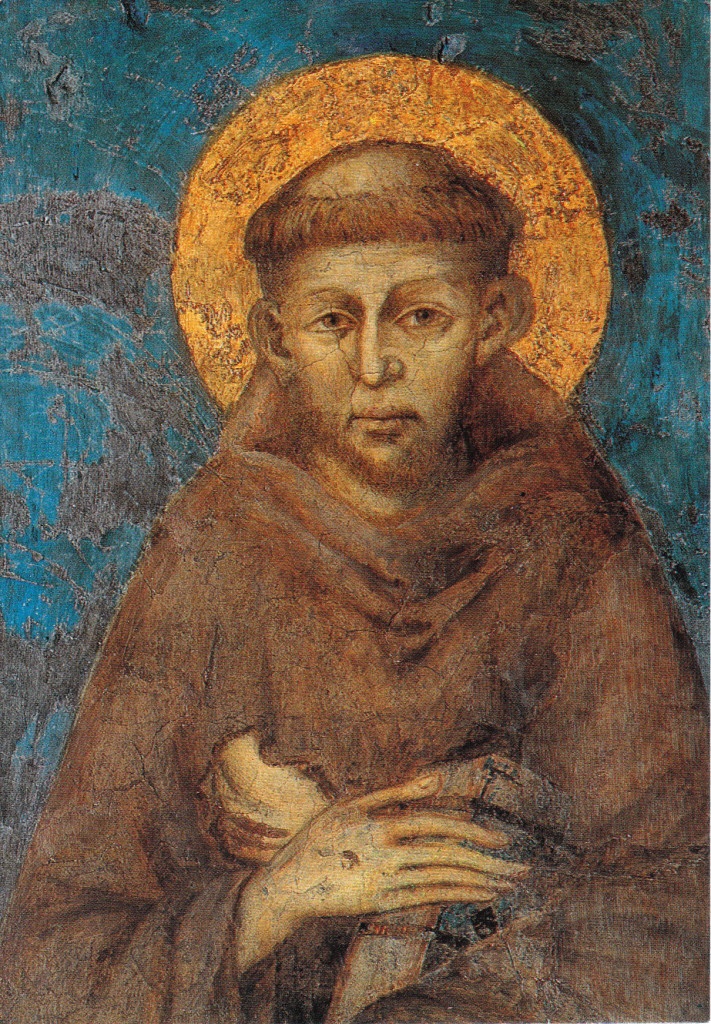




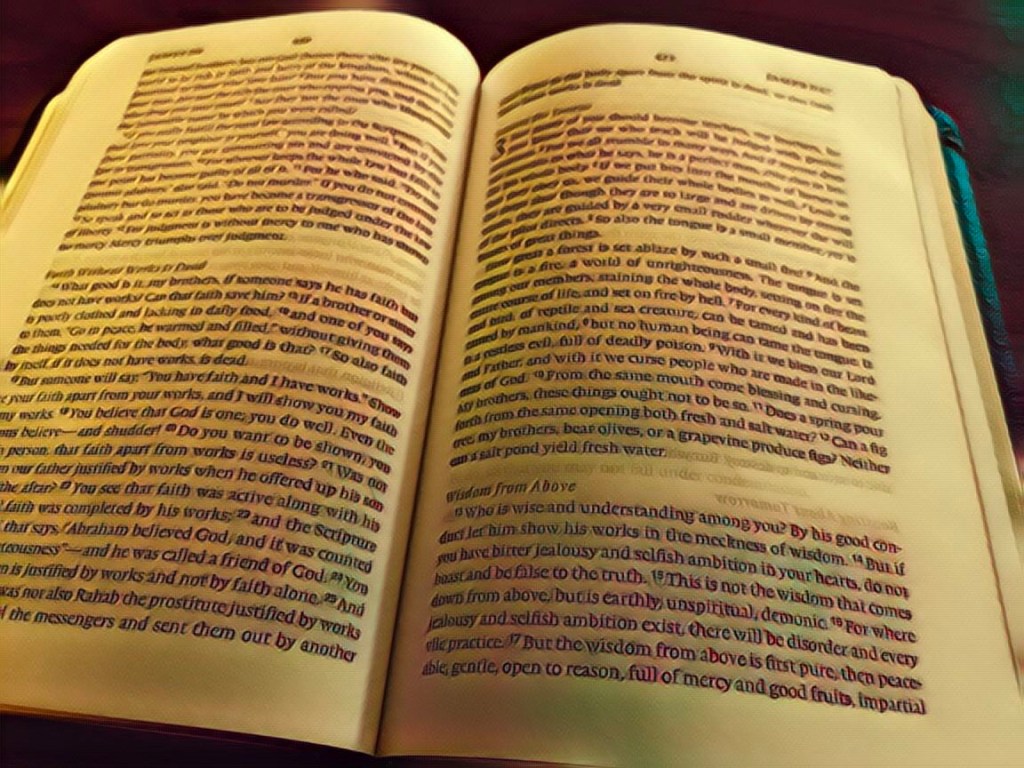


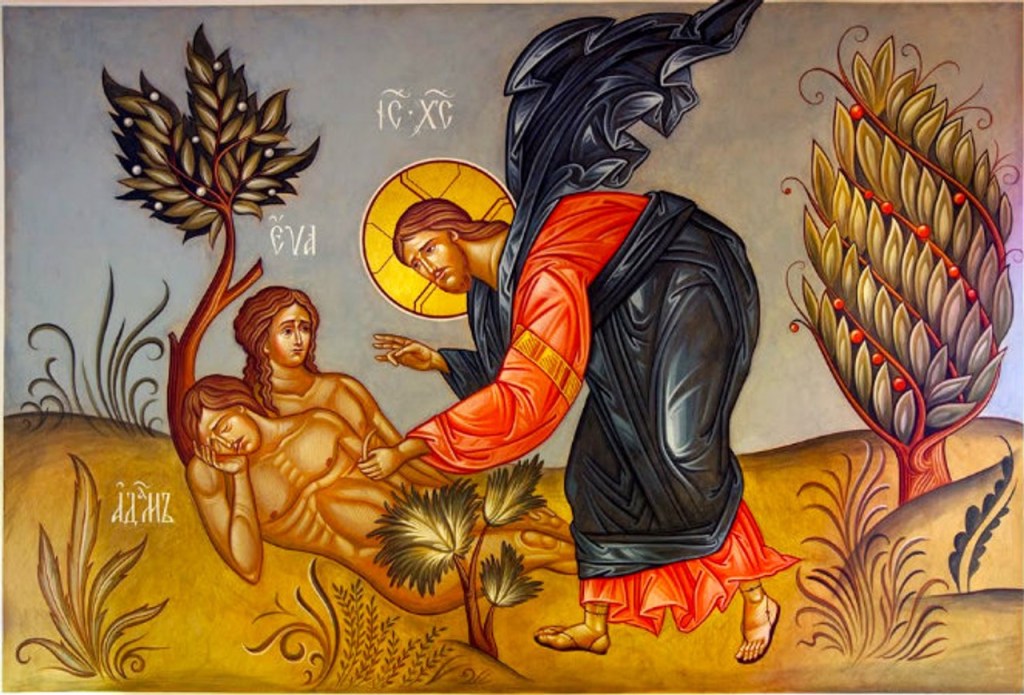



 First Blessings