Feast of the Ascension of Our Lord (Acts 1:1-11, Psalm 47, Ephesians 1:15-23, Luke 24:44-53)
Backwards and Forwards: A Reflection on Ascension and the Day of Atonement
In the Name of the Father, and of the Son, and of the Holy Spirit. Amen.
It is typical and proper on the Feast of the Ascension to focus on the enthronement of our Lord Jesus in “the heavenly places, far above all rule and authority and power and dominion, and above every name that is named, not only in this age but also in the one to come” (Eph 1:20b-21). But, that is not the only theme of Ascension. There is a less familiar one, but no less important one, that I’d like to bring to the fore this evening.
In my former life as a mathematics teacher I often gave my algebra and calculus students this two-fold bit of advice when they were struggling with a problem.
First, go back to the beginning. It is possible that you made some minor error early on that has now cascaded into a major road block. If you start over, you may well either catch the error before it grows or else not make it at all the second time through. Or, it may be that you need to go back to the beginning of the chapter and review the earlier material, the prerequisite knowledge for this section and this problem. In either case, the way forward may actually involve going back to the beginning.
Second, look forward to the ending. Check with BoB, which was our acronym for Back of Book (BoB). That is where the answers to the odd numbered problems were found. Sometimes the form of the solution will give you a hint to the method of solution, or will at least suggest something else you might try. Some students excelled at this “reverse engineering” process. We just called it working backwards from the answers. Whatever you call it, the method is the same: look forward toward the ending.
So, here was my advice in a nutshell:
When lost in the middle, go back to the beginning, and look forward to the ending.
It was good, sound mathematical pedagogy, and I think it has broader applications, say to theology and interpretation of Scripture. Have you ever found yourself in the middle of a Biblical text — maybe in the heart of Romans (probably chapters 9 through 11) or somewhere in the tall weeds of Revelation — only to realize that you are utterly baffled or, perhaps a little better, just a bit confused about how this passage fits into the larger whole. Then, my advice to you is the same as to my mathematics students:
When lost in the middle, go back to the beginning, and look forward to the ending.
Now, I would like to show you how this principle works in practice, using a passage from the Gospel according to St. John, a passage in which Jesus is speaking to his disciples on the night he was betrayed.
John 16:4b–11 (ESV): “I did not say these things to you from the beginning, because I was with you. 5 But now I am going to him who sent me, and none of you asks me, ‘Where are you going?’ 6 But because I have said these things to you, sorrow has filled your heart. 7 Nevertheless, I tell you the truth: it is to your advantage that I go away, for if I do not go away, the Helper will not come to you. But if I go, I will send him to you. 8 And when he comes, he will convict the world concerning sin and righteousness and judgment: 9 concerning sin, because they do not believe in me; 10 concerning righteousness, because I go to the Father, and you will see me no longer; 11 concerning judgment, because the ruler of this world is judged.
This passage may not confuse you, but it puzzled me for quite some time and left me with questions:
How could it possibly be to the disciples’ advantage, or to mine and yours, or to anyone’s that Jesus goes away?
What does Jesus mean when he says the Holy Spirit will not (perhaps cannot?) come until he ascends to his Father? How and why is the Ascension related to the outpouring of the Holy Spirit?
This seems to be a timely passage for us to tackle just now since it relates to this day’s observance of the Ascension (Jesus going away) and to Pentecost (the coming of the Holy Spirit) ten days hence. We’ll try our two-fold strategy on it:
When lost in the middle, go back to the beginning, and look forward to the ending.
All right: back to the beginning, in this case all the way back to the beginning of all things, to the creation story. Whatever else we might observe about the creation account in Genesis 1:1-2:3, it has the repetitive, progressive structure of a great liturgy: And God said…and there was…evening and morning…it was good, repeated six times all the while progressing toward the penultimate event, the creation of man, male and female. Those who study such Ancient Near Eastern texts tell us that this creation account has the structure of a temple dedication liturgy. It presents God’s creation of the universe, and particularly of the earth, the Garden, and man as the construction and dedication of a temple, nearing completion on the sixth day when God’s image bearers — not idols of wood or stone, but image-bearing humans — are placed in the temple and animated with the breath of God. It culminates on the seventh day when the high God takes up his residence in the holy place. Now, let’s get this because it’s central to all that follows: this temple, and particularly this holy place, was to be where God uniquely dwelt with his people. That was the purpose of the temple of creation — to be the dwelling place of God with his people. That’s the beginning.
Now, let’s look forward to the ending — to the end of the record, though not the end of the eternal story.
Revelation 21:1–4 (ESV): 1 Then I saw a new heaven and a new earth, for the first heaven and the first earth had passed away, and the sea was no more. 2 And I saw the holy city, new Jerusalem, coming down out of heaven from God, prepared as a bride adorned for her husband. 3 And I heard a loud voice from the throne saying, “Behold, the dwelling place of God is with man. He will dwell with them, and they will be his people, and God himself will be with them as their God. 4 He will wipe away every tear from their eyes, and death shall be no more, neither shall there be mourning, nor crying, nor pain anymore, for the former things have passed away.”
As in the beginning, so at the end. The first heaven and earth that God had created as a temple in which to dwell with his image bearing humans has passed away. But there is a new — a renewed — heaven and earth and a new Jerusalem which lies at their intersection. And it, not the Garden, is the final dwelling place of God with man. God’s purpose has remained constant from beginning to end: to dwell with his holy people. So much for those poor souls — Sartre and his existentialist devotees, and the new atheist sons and daughters of Hitchens and Dawkins — all those poor souls who say life has no meaning and the world has no purpose. The purpose, the telos, of all creation is to be the dwelling place of God with his people. And the human purpose is to dwell with God as his holy people.
The story of the whole of Scripture is of how God, in his providence, takes man from the Garden to New Jerusalem, from the beginning to the end. It is a long, winding, and sometimes torturous tale, and I’ll mention just a few of the most important milestones along the way.
The first woman was tempted and deceived by the father of lies, the ancient serpent, and the first man embraced her deception along with her. And by that action they forfeited the God-given holiness that allowed them to dwell in the holy place with God. The result was exile away from the presence of God. Call it punishment, if you will, but it was also protection. Sinful man cannot dwell in the presence of the holy God and live. That is the great conundrum that runs throughout Scripture: God created man to dwell with him as his holy people, but because man squandered his holiness he cannot dwell in the presence of God.
Adam and Eve are now exiled into a chaotic world, a hostile world in which their descendants will be born not into holiness, but into sin and slavery and alienation from one another and from God. And the human species, created to be holy image bearers, spirals downward into corruption, unable any longer to bear the presence of God.
So, what is God to do? He doesn’t abandon his purpose to have a holy people among whom to dwell; rather, he starts anew, a second creation (actually a third, if we count the flood). He calls a man, Abram, his wife, Sarai, and a few family members to form the nucleus of a new people, who will be for him a holy people, a kingdom of priests among whom he will live — a holy enclave in the midst of a fallen world. And, he will use this people as agents of holiness, to make God known, and ultimately through whom to purify the whole world so that God might once again dwell with humans.
This plan proceeds by fits and starts over centuries, through generations of Patriarchs until we reach Moses and a new chapter in the story of Israel. From the original old couple, Abraham and Sarah, God’s people have grown to six hundred thousand men, besides women and children. It is now time for God to dwell among them. On Sinai, God gives Moses a vision of the heavenly tabernacle and commands him to build an earthly counterpart in which God’s presence will reside, in the Holy of Holies of the tabernacle, between the outstretched wings of the cherubim, over the mercy seat. And God gives Moses a Law by which to purify his people so that God may dwell among them: not regulations only, but rituals of sacrifice to atone for sins committed, in order to restore holiness.
At the heart of this Law, as the greatest act of purification for the restoration of holiness, lies the Day of Atonement. Though sacrifices for the people’s sin are offered daily, sin leaves a residue, a taint, that contaminates the ark of the covenant with its mercy seat, the Holy of Holies, the Holy Place, the altar and its utensils, the tabernacle and its court, the people, the entire encampment, and ultimately the land promised to Abraham. And that must be addressed once each year, once every year, on Yom Kippur, the Day of Atonement when the high priest takes the blood of a goat behind the veil of the Holy of Holies, into the very presence of God, and sprinkles the blood on the mercy seat to make atonement for it, to purify it. The high priest then works his way outward purifying the entire tabernacle complex and the people and the land with the blood of the goat so that God can dwell among them for another year. Unless the High Priest enters the Holy of Holies with the blood of the goat, there is no purification and God cannot dwell among his people. The alternatives are exile or death, and there is little difference between the two. It is important to remember that this ritual purifies Israel only, not the nations of the world; God dwells in the midst of Israel only, and not among the nations of the world. Not yet, at any rate, though God will promise through the prophets that one day, through the seed of Abraham, the whole earth will be filled with the knowledge of the glory of God as the waters cover the sea (see Hab 2:14).
Let’s pause a moment to get our bearings.
In our quest to understand St. John’s challenging text about the Ascension, we have gone back to the beginning, and we have looked forward to the end. Now, perhaps, we can plunge into the heart of it.
On the day of resurrection, Jesus greets Mary Magdalene at the tomb and says to her:
John 20:17 (ESV): “Do not cling to me, for I have not yet ascended to the Father; but go to my brothers and say to them, ‘I am ascending to my Father and your Father, to my God and your God.’ ”
May I paraphrase Jesus’ words?
“Don’t hold on to me, now; we both still have work to do. Your task is to proclaim my resurrection to my other disciples. My task can only be completed when I ascend to the Father.”
And what is Jesus’ task? From our look backwards, we know. It is the great and final Yom Kippur, the Day of Atonement, not to purify Israel only, but to make atonement for the sin of the whole world, as Hebrews tells us:
Hebrews 9:11–14 (ESV): 11 But when Christ appeared as a high priest of the good things that have come, then through the greater and more perfect tent (not made with hands, that is, not of this creation) 12 he entered once for all into the holy places, not by means of the blood of goats and calves but by means of his own blood, thus securing an eternal redemption. 13 For if the blood of goats and bulls, and the sprinkling of defiled persons with the ashes of a heifer, sanctify for the purification of the flesh, 14 how much more will the blood of Christ, who through the eternal Spirit offered himself without blemish to God, purify our conscience from dead works to serve the living God.
Hebrews 9:24–26 (ESV): 24 For Christ has entered, not into holy places made with hands, which are copies of the true things, but into heaven itself, now to appear in the presence of God on our behalf. 25 Nor was it to offer himself repeatedly, as the high priest enters the holy places every year with blood not his own, 26 for then he would have had to suffer repeatedly since the foundation of the world. But as it is, he has appeared once for all at the end of the ages to put away sin by the sacrifice of himself.
Christ our Great High Priest ascended into heaven to enter the Holy of Holies — into the very presence of God the Father Almighty — to purify forever those who are his and to sanctify the whole world, so that God — in the person of the Holy Spirit — might be set loose in the world to dwell among his people at last. As St. John writes:
1 John 2:2 (ESV): 2 He is the propitiation for our sins, and not for ours only but also for the sins of the whole world.
It is too small a thing for the Great High Priest to purify an ark or a tent or a temple or a nation or a plot of land in the Middle East. The earth will be filled with the knowledge of the glory of God as the waters cover the sea. The God who created his image bearers so that he might dwell among them, will now, at last dwell among people from every family, language, people, and nation. Now all peoples may be included among his holy people. Now his holy presence is not limited to one place, but is everywhere present filling all things. Now, it is not only our Great High Priest who may come into the Holy of Holies one day each year, but also us:
Hebrews 10:19–23 (ESV): 19 Therefore, brothers, since we have confidence to enter the holy places by the blood of Jesus, 20 by the new and living way that he opened for us through the curtain, that is, through his flesh, 21 and since we have a great priest over the house of God, 22 let us draw near with a true heart in full assurance of faith, with our hearts sprinkled clean from an evil conscience and our bodies washed with pure water. 23 Let us hold fast the confession of our hope without wavering, for he who promised is faithful.
That is the good news of the Ascension: the world purified so that God, in the Person of the Holy Spirit, may dwell with his holy people — all his holy people — wherever they may be found, and so that his holy people — all this holy people — may enter into his presence without fear.
Was it to the disciples’ advantage, or to yours and mine, or to anyone’s that Jesus went away in the Ascension? Oh, yes; for in his Ascension, Jesus purified the world.
And what has all this to do with the coming of the Holy Spirit? The descent of the Holy Spirit is the firstfruits of God dwelling with his holy people at last, made possible by the final Day of Atonement. It is a foretaste of the new Jerusalem in which God will be all and in all.
What are we to say to all this? Psalm 47 gives us words:
1 O clap your hands together, all you peoples; O cry aloud unto God with shouts of joy.
2 For the LORD Most High is to be feared; he is the great King over all the earth.
6 O sing praises, sing praises unto our God; O sing praises, sing praises unto our King.
7 For God is the King of all the earth; think upon his mighty acts and praise him with a song (BCP 2019, pp. 328-329).
The Problem of Suffering: A Reflection on 1 Peter 5 (1 Peter 5, Ps 18:1-20, Luke 6:1-19)
1 Peter 4:16 (ESV): 16 Yet if anyone suffers as a Christian, let him not be ashamed, but let him glorify God in that name.
In the Name of the Father, and of the Son, and of the Holy Spirit. Amen.
The problem of suffering is often presented as a particularly Christian problem, and I suppose it is in this limited sense: if you are not a Christian you do not have to explain the presence of suffering or find meaning in it or justify how belief in an all-powerful, all-good, all-loving God is consistent with the presence of almost unimaginable suffering in the world. Suffering is just part of life — natural — and while you have to learn to manage it, there really is nothing to explain, no meaning to be found, and no god to justify in the face of painful evidence to the contrary. The world manages, but doesn’t explain suffering.
If you are a hedonist, your management philosophy is straightforward: maximize pleasure and minimize suffering. There is nothing good in suffering and nothing noble in bearing up under it. Avoidance is the ideal. The only problem with that approach is its impossibility. Sooner or later, suffering comes for us all, and we can no longer avoid it. Ironically, the very act of seeking to maximize pleasure often produces the very suffering it seeks to avoid. Seek the pleasant oblivion of alcohol and wake up with a hangover. Do that often, and become enslaved to drink.
The stoics among us have another approach, along the lines of Bobby McFerrin’s song Don’t Worry Be Happy. Since you have no control over when, where, and how suffering might come, there is no use in worrying about it. Live life to the full, put suffering out of mind, and deal with suffering if and as it comes. And, when it comes, the best approach is the classic British “stiff upper lip” or “Keep calm and carry on.” The way to manage suffering is to put it out of mind until it comes, and to bear it with dignity when it comes.
Another option, this one characteristic of Buddhism, is simply to deny the objective/external reality of suffering. Suffering is not “out there;” instead, suffering is an internal problem, an illusion born of human attachments. Siddhartha Gautama, the Buddha, realized this in his moment of enlightenment and expressed it his Four Noble Truths:
1. All of life is suffering.
2. The cause of suffering is craving.
3. The end of suffering is getting rid of craving and grasping.
4. The method to use in overcoming suffering is the Eightfold Path.
We need not seriously consider the Eightfold Path; unless you are a Buddhist the notion that suffering is merely an illusion is all blue smoke and mirrors, nice on paper, but useless where the rubber meets the road. That said, I would not want to dismiss too quickly the Buddha’s conviction that the end of suffering is getting rid of craving and grasping. I would want to baptize the idea, to infuse it with Christian meaning, but I would not want to dismiss it out of hand. Clinging to the wrong things can produce a kind of suffering.
I am certain that I have caricatured all these non-Christian suffering management strategies. Since I don’t share them, I am not expert on them, and I don’t have much sympathy for them. Even though we do not fully understand or share them, modern Christianity sometimes does have leanings toward each of these errant views. Like hedonists, we often try to avoid suffering or at least to minimize it, and I suppose there is nothing inherently wrong with that. But, it must not be avoided at all costs. And, sometimes, it must be positively embraced. Like stoics, we too often put suffering out of sight and out of mind until it hits us like a ton of bricks and we find ourselves unprepared for it. We shouldn’t borrow trouble; Jesus tells us not to be anxious about tomorrow. But, we also should not be spiritually unprepared for suffering when it comes. Like Buddhists, we sometimes very piously pretend that suffering is an illusion. In the face of real tragedy we smile and say, or someone smiles at us and says, “God is good, all the time. And all the time, God is good.” And while that is true in some sense, it is hard to mouth it through tears.
Suffering is a human reality common to us all, Christians and non-Christians alike. But, there is a uniquely Christian way of understanding it. And, there is also a kind of suffering that is uniquely Christian, a suffering that comes to us by virtue of being Christian: forgiving instead of taking revenge, sharing the burden of the world in prayer and service, ridicule or rejection for bearing the name of Christ, alienation from friends and family, financial or physical hardships. It wasn’t hyperbole when Jesus said that whoever would be his disciple must take up his cross daily and follow him. The cross, as a Christian symbol, doesn’t just point backward to Jesus, but proclaims an ever-present reality for all who bear his name, and that reality includes suffering.
So, how do — or how should — Christians deal with suffering? That question is implicit throughout St. Peter’s first letter, not least in the immediate prologue to the text appointed for us in the Daily Office and then throughout the appointed text itself.
1 Peter 4:12 (ESV): 12 Beloved, do not be surprised at the fiery trial when it comes upon you to test you, as though something strange were happening to you.
One of the great differences between first century and twenty-first century Christianity is the expectation of suffering: they did; we seem not to. The early Christians seemed to take suffering — and especially suffering for being a Christian — as a given; it was almost certain to happen sooner or later. We, in the West, think of suffering for being a Christian as an aberration, as something that may happen elsewhere or in another time, but not here, not now, not to us. So, we are shocked when it comes and uncertain how to handle it theologically and practically. We have lost the emphasis that, in baptism, the Church is making not just saints, but martyrs. So, Peter reminds us that suffering is nothing surprising; the near exemption from Christian suffering that we have had historically in the modern Western world is the exception, not the norm. Don’t be surprised; suffering as a Christian is nothing strange. Don’t be surprised; be prepared.
1 Peter 4:1-16 (ESV): 13 But rejoice insofar as you share Christ’s sufferings, that you may also rejoice and be glad when his glory is revealed. 14 If you are insulted for the name of Christ, you are blessed, because the Spirit of glory and of God rests upon you. 15 But let none of you suffer as a murderer or a thief or an evildoer or as a meddler. 16 Yet if anyone suffers as a Christian, let him not be ashamed, but let him glorify God in that name.
St. Peter also insists that the suffering we bear for Christ is the suffering we bear with Christ; it is our share, our portion, our participation in Christ’s sufferings. And Christ’s suffering was redemptive. It was the prelude to glory. Even more than that, in a great paradox and mystery, Christ was glorified in and through his suffering. His glory was not just on the far side of suffering, though it certainly was there, too; it was also manifest in his suffering. On the night of Jesus’ betrayal, just after Judas had left the Upper Room to arrange for Jesus’ arrest:
John 13:31 (ESV): 31 When he had gone out, Jesus said, “Now is the Son of Man glorified, and God is glorified in him.
In and through betrayal, arrest, denials, trials, beatings, mocking, crucifixion, and death, Jesus was manifesting the glory of God. Amidst shame, Jesus was glorified. You know that one of the characteristics of crucifixion — and a source of great suffering in it — was the shame heaped upon the victim: paraded through the streets as a criminal, stripped naked, staked out on a cross for public viewing, body left to decay on the cross and to feed the scavengers. It was shameful to the victim, to the family, to the community. The same is true with all our suffering for Christ; it is an attempt by the powers to shame the one who bears the name of Christ. St. Peter absolutely rejects that notion and turns it on its head.
1 Peter 4:16 (ESV): 16 Yet is anyone suffers as a Christian, let him not be ashamed, but let him glorify God in that name.
And then this:
1 Peter 4:19 (ESV): 19 Therefore let those who suffer according to God’s will entrust their souls to a faithful Creator while doing good.
If you are suffering for Christ, it is not that God has forgotten or abandoned you, but rather that you are fully embraced in the will of God. This is difficult to understand and perhaps to accept, but it is essential. If it was the will of God to save the world by entering into its suffering in the person of Jesus Christ, then it is also his will to continue, to work out, the redemption of the world through the suffering of those who bear the name of Christ. Trust that. Trust God. And keep doing good.
Then, St. Peter turns his attention to his fellow elders: bishops, priests:
1 Peter 5:1-5 (ESV): 1 So I exhort the elders among you, as a fellow elder and a witness of the sufferings of Christ, as well as a partaker in the glory that is going to be revealed: 2 shepherd the flock of God that is among you, exercising oversight, not under compulsion, but willingly, as God would have you; not for shameful gain, but eagerly; 3 not domineering over those in your charge, but being examples to the flock. 4 And when the chief Shepherd appears, you will receive the unfading crown of glory. 5 Likewise, you who are younger, be subject to the elders. Clothe yourselves, all of you, with humility toward one another, for “God opposes the proud but gives grace to the humble.”
Why single out the elders in a discussion of suffering? If you want to kill a snake, so the saying goes, you cut off its head. If you want to eradicate a movement, you kill its leaders. In times of persecution, the elders — bishops and priests — were the most likely targets, the ones most most likely to suffer. And that may be why St. Peter here reminds them of the gravitas of their office, of the need to be examples to the flock as Christ was an example to them, and of the reality that an unfading crown of glory lies on the far side of suffering.
And then to everyone, St. Peter says:
1 Peter 5:6-11 (ESV): 6 Humble yourselves, therefore, under the mighty hand of God so that at the proper time he may exalt you, 7 casting all your anxieties on him, because he cares for you. 8 Be sober-minded; be watchful. Your adversary the devil prowls around like a roaring lion, seeking someone to devour. 9 Resist him, firm in your faith, knowing that the same kinds of suffering are being experienced by your brotherhood throughout the world. 10 And after you have suffered a little while, the God of all grace, who has called you to his eternal glory in Christ, will himself restore, confirm, strengthen, and establish you. 11 To him be the dominion forever and ever. Amen.
There are three agents in this mystery of suffering: God, who allows suffering and who will bring you through it, and who will restore, strengthen, establish, and exalt you; you, the one who is suffering and who must be sober-minded and watchful; and the devil who seeks to exploit the suffering to your destruction. We have already spoken a bit about God, so let’s address the other spiritual agent, the devil. What is his role or purpose in suffering? He prowls around, looking for chinks in your armor, looking for breaches in the wall of faith, practice, and trust that he can exploit. He intimidates and frightens — or at least tries to — with his roaring. And the third agent — us: how are we to respond? Not by cowering or hunkering down, but by resisting in all the ways the Spirit enables and the Church gives us: by prayer and fasting, by repentance and confession, by Scripture and liturgy and psalmody, by the Sacraments, by the cultivation of the virtues, by assembling with the saints and by remembering and praying for those saints far from us who are experiencing the same — and often greater — suffering. There is great comfort, I think, in knowing that we are not alone in suffering.
And then St. Peter assures us of the one truth above all others that makes us able to endure suffering: God is sovereign now and ever. Our suffering is not outside the bounds of God’s will or dominion, which means that it has purpose and meaning and that it is intended for and will redound to our good.
There is really no place in our secular Western culture for suffering. Our goal is to avoid it, put it out of sight and mind, and eliminate it. As Orthodox priest Fr. Stephen Freeman says, the ultimate way to eliminate suffering is to eliminate the one suffering. This elderly person is suffering; in our mercy we will euthanize him. This baby will be born with a mental or physical disability that will include a certain amount of suffering — as we envision it — not just for the child but for the parents whose lives this child will complicate; in our mercy we will abort the baby. Death is preferable to suffering, particularly if the suffering is mine and the death is someone else’s. So our culture believes.
But that is not the mind and example of Christ, nor the way of the Church, as St. Peter knew it and taught it:
1 Peter 4:12–13 (ESV): 12 Beloved, do not be surprised at the fiery trial when it comes upon you to test you, as though something strange were happening to you. 13 But rejoice insofar as you share Christ’s sufferings, that you may also rejoice and be glad when his glory is revealed.
Let us pray.
Lord Jesus, who willingly embraced the shame and suffering of the cross for our sake and for our salvation: Grant us so faithfully to follow you that, when by God’s providence we, too, endure suffering for your Name’s sake, we may rejoice to share your sufferings, and endure with hope until your glory is revealed; who with the Father and the Holy Spirit live and reign, one God, for ever and ever. Amen.
After co-facilitating another excellent three-day cohort gathering of those training in spiritual direction with the St Benedict Center for Spiritual Formation (https://stbenedict-csf.org/), I am relaxing this afternoon with an iced coffee and one of my favorite books: “A Place of Healing for the Soul: Patmos.” As the book nears its end, the author has made his way from atheist to Orthodox Christian. In a few of the final chapters he seeks to describe the fundamental differences between Eastern and Western Christianity. I appreciate the simplicity and humor of these words:
In my experience, really committed Protestants tend to think of themselves as “saved” because they have accepted Jesus; Roman Catholics, on the other hand, see themselves as “sinners” in need of weekly absolution. Orthodox just think themselves luck.
There is, it seems to me, enough of the living truth in each of the three Churches to bring its members to Christ. Just as each has enough of fallen humanity to give the Holy Spirit a hard time (Peter France, A Place of Healing for the Soul: Patmos, Atlantic Monthly Press (2002), p. 168).
Despite being English, the author doesn’t specifically address the Anglican Church, perhaps because he sees it as Protestant or perhaps because, as in most things Anglican, there is no firm consensus on this issue. And for me? I agree with Metropolitan Kallistos Ware, of blessed memory. I “have been saved” through baptismal regeneration. I “am being saved” through participation in the Sacraments and the faith and life of the Church. I hope finally “to be saved” solely by the grace and mercy of the one who loves me and gave himself for me. If that can be described as “luck,” then I am lucky indeed. I think it is grace.
Apostles Anglican Church Fr. John A. Roop Canon Theologian, Anglican Diocese of the South
God’s Providence For Such A Time As This A presentation for Women of the Word
The Lord be with you. And with your spirit. Let us pray.
I. For the Universal Church O God of unchangeable power and eternal light: Look favorably on your whole Church, that wonderful and sacred mystery; by the effectual working of your providence, carry out in tranquility the plan of salvation; let the whole world see and know that things which were cast down are being raised up, and things which had grown old are being made new, and that all things are being brought to their perfection by him through whom all things were made, your Son Jesus Christ our Lord; who lives and reigns with you, in the unity of the Holy Spirit, one God, for ever and ever. Amen (BCP 2019, p, 646).
Introduction: Things Too Wonderful For Me
Scripture recounts history, codifies law, sings songs, quotes proverbs, unveils prophecies, tells parables, reveals God and man in visions and dreams and sermons and conversations in all the various events of human lives and societies that span over a millennium. Then, from these histories, laws, songs, prophecies, parables, and revelations we — collectively and individually — formulate doctrines to answer our questions and satisfy our curiosity. The process of doing this assumes — wrongly, I think — that the truth, that what is really essential, is not the history, law, song itself, but rather some abstract notion contained in and separable from the form in which it appears. Jesus did not really need to give us the parable of the Good Samaritan, for example; he could simply have said, “Everyone is your neighbor,” because that is the truth, the essence, the real meaning of the parable. The story was just a container for the truth, and we can dispense with the container once we have the truth. And though we act that way, we know it is not really true. The message and the form in which it is given are inseparably joined.
A famous choreographer and dancer once premiered a piece. She was asked afterwards by reporters what the piece meant, to which she replied along these lines: If I could explain it in words, I need not have danced it. The dance was irreducible to mere words; it was not a container for some essential truth. The dance was the truth. In the same way, the history, law, prophecies, parables, etc., are not mere containers of some truth, they are the truth as revealed by God and experienced by God’s people.
Even so, we all practice this kind of reductionism when reading Scripture, knowing that it robs us of much of the richness of God’s revelation. We all practice it when we think about and talk about Scripture; the only alternative is simply to quote Scripture — the whole of it in fact, so that we leave nothing out. And, that is not feasible. So, we select and abstract.
Then, having abstracted from what Scripture actually says to get these nuggets of immutable truth — let’s call them doctrines — we try to systematize these doctrines into a grand, sweeping theology in which each piece fits together with jigsaw puzzle perfection to make a perfectly clear and pleasing picture of God, man, and creation. Some attempts to do this are better than others. Some leave puzzle pieces lying on the table; some force pieces to fit where the do not really belong; some seem to borrow pieces from other puzzles and distort the picture. None of the attempts are entirely successful.
I mention this because it is what we will be doing today. You have asked me to speak to you about the providence of God. But Scripture does not present us a systematic theology in which the doctrine of providence is perfectly spelled out. Instead, Scripture gives us history in which we see God working, sometimes with gentle love and sometimes with tough love. It gives us law by which God orders the life of his people and in which we see part of God’s will. It gives us songs and proverbs that extol God’s loving care in creation and in the lives of his people. It gives us sermons — think of the Sermon on the Mount — that challenge us to trust in the father-like provision of God. And from all of these things, we will attempt to build a doctrine of providence that fits with other doctrines into a grand theology. We will fail. But, if the effort causes us to love and trust God more thoroughly and deeply, it will be a holy failure and well worth our time.
One other caveat is important before we begin. I strive always to speak with the Church when I speak for the church. I have no desire to say anything novel or to give you my opinion about a theological matter. I want to tell you what has been believed everywhere, always, and by all. On some things — the content of the Creeds, for example — I can do that because the Church has spoken with one voice. Providence is another matter entirely; the Church has not and does not speak with one voice on the details of this doctrine. While there are some basic notions of providence on which seemingly all, or at least most Christians agree, Calvinists do not view providence in the same way as the Orthodox or the Roman Catholics do. To complicate matters even further for us, the formularies that present Anglican doctrine do not provide a robust doctrine of providence. For that reason, Anglicans span the spectrum from Calvinism to near open theism. For the sake of full disclosure, I like to think I am a middle-of-the-road Anglican with no real sympathy for either end of the providential spectrum.
With all that in place, perhaps we should move now toward a working description — if not a precise definition — of providence.
St. Andrews Theological Dictionary offers this:
Providence refers to the benevolent oversight, provision, and purpose of God in directing the natural world, the flow of history, and the circumstances of each individual life.
I might simplify that a bit for our purposes:
Providence refers to God’s wise, good, and loving governance of creation, history, and individual lives as he shepherds all things toward his ultimate purpose.
Providence assumes that God is present and active in creation, in history, and in human lives and that all things are moving toward the fulfillment of his purpose. Even events that seem random — and may have an element of randomness in them, in fact — are nonetheless incorporated into God’s wise, good, and loving governance of all things and promote, or at least do not thwart, his purpose.
Being the heirs of the Enlightenment, we immediately want to know how God’s providence “works.” How is God active? How does he shepherd all things toward the accomplishment of his purpose? How does human free will fit into this, or is everything predetermined from the foundations of the world? What about evil: how does that fit with God’s providence to accomplish his will?
Here it is good to pause, and to listen to St. John Chrysostom (c. 347-407) in his own writing about providence:
Above all, we must not be overly inquisitive, either at the outset or afterwards (John Chrysostom, On the Providence of God, St. Herman of Alaska Brotherhood (2021), p. 77).
Or, perhaps we should pray Psalm 131:
1 O Lᴏʀᴅ, I am not haughty; * I have no proud looks.
2 I do not occupy myself with great matters, * or with things that are too high for me.
3 But I have stilled and quieted my soul, like a weaned child upon his mother’s breast; * so is my soul quieted within me.
4 O Israel, trust in the Lᴏʀᴅ * from this time forth for evermore (BCP 2019, p. 447).
None of this is intended to dissuade us from considering the topic, but it is a reminder to do so humbly, tentatively, and to trust in God even when we get no satisfying answers to our questions. It is a reminder of our fellowship with Job who, at the end of God’s self-revelation, said:
Job 42:2–6 (ESV): 2 “I know that you can do all things, and that no purpose of yours can be thwarted. 3 ‘Who is this that hides counsel without knowledge?’ Therefore I have uttered what I did not understand, things too wonderful for me, which I did not know. 4 ‘Hear, and I will speak; I will question you, and you make it known to me.’ 5 I had heard of you by the hearing of the ear, but now my eye sees you; 6 therefore I despise myself, and repent in dust and ashes.”
With all these cautions in place, let us begin.
Agents of Providence: Part 1 — Creation
There is no better place to begin than in the beginning, with the creation accounts as found in Genesis and the prologue of St. John’s Gospel.
Nature
A recurring theme in the Genesis account is God evaluating each day’s creative work with the assessment, “It is good.” Let’s take day 3 as an example:
Genesis 1:11–13 (ESV): 11 And God said, “Let the earth sprout vegetation, plants yielding seed, and fruit trees bearing fruit in which is their seed, each according to its kind, on the earth.” And it was so. 12 The earth brought forth vegetation, plants yielding seed according to their own kinds, and trees bearing fruit in which is their seed, each according to its kind. And God saw that it was good. 13 And there was evening and there was morning, the third day.
What does God mean when he says the vegetation — the plants and fruit trees — is good? That it is lovely to look at? That the fruit tastes good? That the reality on the ground matches what God had “envisioned?” The Hebrew word translated as good is tov. While tov can mean beautiful or pleasing, the more common connotation — and almost certainly the one intended in Genesis — is functional, fit for the intended purpose. God intended the vegetation to be fecund, capable of reproducing through its seed, self-perpetuating for the good of animals and man who would feed on it. So, God created the vegetation with a purpose in mind and fitted its nature for the fulfillment of that purpose. In that sense it was tov, good.
There is a hint of this in St. John’s prologue when he writes:
John 1:1–5 In the beginning was the Word, and the Word was with God, and the Word was God. 2 He was in the beginning with God. 3 All things were made through him, and without him was not any thing made that was made. 4 In him was life, and the life was the light of men. 5 The light shines in the darkness, and the darkness has not overcome it.
The Greek term that is translated as “Word” is logos. It means far more than spoken word. It connotes the reason or logic inherent in something; you even see logos in our word logic. It can mean the character or nature of a thing. It can mean the end or purpose for which something exists. When Christ the Logos of God created all things, he gave each created thing its own logos: its own inherent nature and reason for being, its own goal and created purpose. All creation is infused with logoi, with meaning and purpose and direction. Saying that creation is tov is saying that all creation is imbued with logoi and capable of achieving the various purposes for which God created it. And that means that the entire created order is an agent through which God exercises his providence, his good, wise, loving provision for all things as he shepherds all things toward his ultimate purpose. More about this later.
The entire created order is an agent through which God exercises his providence — his wise, good, loving governance of all things — as he shepherds all things toward his ultimate purpose.
Humans
Continuing with the creation account, we come to the creation of man, male and female, and the commissioning of man for the unique human vocation:
Genesis 1:26–31 (ESV): 26 Then God said, “Let us make man in our image, after our likeness. And let them have dominion over the fish of the sea and over the birds of the heavens and over the livestock and over all the earth and over every creeping thing that creeps on the earth.”
27 So God created man in his own image, in the image of God he created him; male and female he created them.
28 And God blessed them. And God said to them, “Be fruitful and multiply and fill the earth and subdue it, and have dominion over the fish of the sea and over the birds of the heavens and over every living thing that moves on the earth.” 29 And God said, “Behold, I have given you every plant yielding seed that is on the face of all the earth, and every tree with seed in its fruit. You shall have them for food. 30 And to every beast of the earth and to every bird of the heavens and to everything that creeps on the earth, everything that has the breath of life, I have given every green plant for food.” And it was so. 31 And God saw everything that he had made, and behold, it was very good. And there was evening and there was morning, the sixth day.
This is a rich passage; from it I will select just one point pertinent to our topic, though many others could be explored.
Note that God makes man, male and female, in the divine image. What that entails in its fullness, we likely cannot know. But what it connotes here, in this account, is relatively clear; the next sentence offers the explanation: “And let them have dominion over the fish of the sea and over the birds of the heavens and over the livestock and over all the earth and over every creeping thing that creeps on the earth.” Being made in God’s image entails exercising a delegated dominion and authority over a particular realm. As God is to all creation, so man is to be toward the earth: to rule, steward, and shepherd creation toward God’s intended purpose. Man is to accomplish this purpose by being fruitful and multiplying, by filling the earth and subduing it. This command to subdue the earth is interesting. It implies that, while paradise (Eden) is rightly ordered to accomplish God’s purpose, the rest of the earth is yet to be so, that it is the humans’ work, exercising the delegated authority of God, to bring God’s wise, good, and loving governance to bear to bring the whole earth to its proper purpose. And this means that humans are God’s agents of providence in the world, that God exercises his providence — his wise, good, and loving provision for all things — through his image bearers. The Psalmist wonders at this in Psalm 8:
4 What is man, that you are mindful of him, * the son of man, that you visit him? 5 You made him little lower than the angels, * to crown him with glory and honor. 6 You made him to have dominion over the works of your hands, * and you have put all things in subjection under his feet: 7 All sheep and oxen, * even the beasts of the field, 8 The birds of the air, and the fish of the sea, * and whatsoever walks through the paths of the seas. 9 O Lᴏʀᴅ our Governor, * how excellent is your Name in all the world (BCP 2019!
Notice how the Psalm insists on two complementary truths: the LORD is our Governor, and he has given dominion over the works of his hands to humans.
Humans are God’s agents of providence in the world, i.e., God exercises his providence — his good, wise, and loving governance of all things — through his image bearers.
It is this great truth, the providential vocation of human image bearers, that provides the context for the incarnation. When the first humans compromised their vocation, as we will see later, God did not abandon his intent. Rather, he himself provided the perfect human who incarnated the fullness of the divine image so that God himself in his humanity might be the ultimate human agent of providence. In Jesus, the plans of the sovereign God are not thwarted by the weakness of human flesh.
So far we have seen that God exercises his providence — his wise, good, and loving governance of all things — through creation and through his human image bearers.
Social and Power Structures
God also exercises his providence through human social and power structures — kingdoms, nations, rulers — often by judging them or by using them as instruments of his judgment. Three examples should suffice here: Pharaoh, Babylon, and Cyrus.
Pharaoh
Exodus 9:13–16 (ESV): 13 Then the Lord said to Moses, “Rise up early in the morning and present yourself before Pharaoh and say to him, ‘Thus says the Lord, the God of the Hebrews, “Let my people go, that they may serve me. 14 For this time I will send all my plagues on you yourself, and on your servants and your people, so that you may know that there is none like me in all the earth. 15 For by now I could have put out my hand and struck you and your people with pestilence, and you would have been cut off from the earth. 16 But for this purpose I have raised you up, to show you my power, so that my name may be proclaimed in all the earth.
God used Egypt providentially to feed and shelter Israel. Then, when Egypt exceeded its mandate, when it enslaved Israel, God used Pharaoh providentially to demonstrate God’s power over false gods and brutal human empire.
Babylon
Habakkuk 1:1–12 (ESV): 1 The oracle that Habakkuk the prophet saw. 2 O Lord, how long shall I cry for help, and you will not hear? Or cry to you “Violence!” and you will not save? 3 Why do you make me see iniquity, and why do you idly look at wrong? Destruction and violence are before me; strife and contention arise. 4 So the law is paralyzed, and justice never goes forth. For the wicked surround the righteous; so justice goes forth perverted.
This is Habakkuk’s assessment of the corruption of God’s people. He continues, now, with God’s response.
5 “Look among the nations, and see; wonder and be astounded. For I am doing a work in your days that you would not believe if told. 6 For behold, I am raising up the Chaldeans, that bitter and hasty nation, who march through the breadth of the earth, to seize dwellings not their own. 7 They are dreaded and fearsome; their justice and dignity go forth from themselves. 8 Their horses are swifter than leopards, more fierce than the evening wolves; their horsemen press proudly on. Their horsemen come from afar; they fly like an eagle swift to devour. 9 They all come for violence, all their faces forward. They gather captives like sand. 10 At kings they scoff, and at rulers they laugh. They laugh at every fortress, for they pile up earth and take it. 11 Then they sweep by like the wind and go on, guilty men, whose own might is their god!” 12 Are you not from everlasting, O Lord my God, my Holy One? We shall not die. O Lord, you have ordained them as a judgment, and you, O Rock, have established them for reproof.
God used Babylon providentially to reprove and judge Judah, to drive them from the land for their pollution of the land through injustice and idolatry.
Cyrus
Isaiah 45:1–7 (ESV): Thus says the Lord to his anointed, to Cyrus, whose right hand I have grasped, to subdue nations before him and to loose the belts of kings, to open doors before him that gates may not be closed: 2 “I will go before you and level the exalted places, I will break in pieces the doors of bronze and cut through the bars of iron, 3 I will give you the treasures of darkness and the hoards in secret places, that you may know that it is I, the Lord, the God of Israel, who call you by your name. 4 For the sake of my servant Jacob, and Israel my chosen, I call you by your name, I name you, though you do not know me. 5 I am the Lord, and there is no other, besides me there is no God; I equip you, though you do not know me, 6 that people may know, from the rising of the sun and from the west, that there is none besides me; I am the Lord, and there is no other. 7 I form light and create darkness; I make well-being and create calamity; I am the Lord, who does all these things.
God used Cyrus providentially — though Cyrus had no idea that he was being used as an instrument of the God of Israel — to return the exiles of Judah to the land when their time of purification was complete.
God uses human social and power structures as his instruments of providence, i.e., God exercises his providence — his wise, good, and loving governance of all things — through social and power structures, even those who are ignorant of him or who act against him. That last point is important. God uses providentially even those powers that are arrayed against him. More about this later.
God uses human social and power structures as his instruments of providence, i.e., God exercises his providence — his wise, good, and loving governance of all things — through social and power structures, even those who act against him.
Angels
Let’s bring this section to a close with one more notion. Thus far we have looked at physical and visible agents of God’s providence: creation, humans, and social and power structures. But, we must not neglect the invisible realm of creation, in particular, the angels. They, too, are agents of providence as Hebrews makes clear:
Hebrews 1:7 (ESV): 7 Of the angels he says,
“He makes his angels winds, and his ministers a flame of fire.”
Hebrews 1:14 (ESV): 14 Are they not all ministering spirits sent out to serve for the sake of those who are to inherit salvation?
Throughout Scripture, both the Old and New Testaments, we see God exercising his providence through the ministry of angels: protecting and guarding, judging and destroying, rescuing and comforting, revealing and proclaiming.
God uses angels as his agents of providence, i.e., God exercises his providence — his wise, good, and loving governance of all things — through angels who act as his ministering spirits.
Summary
We should pause to summarize what we have found before moving forward. There are two major notions:
1. When we speak of providence, we are referring to God’s wise, good, and loving governance of creation, history, and individual lives as he shepherds all things toward his ultimate purpose.
2. God’s providence is not a unilateral, autocratic action, not something that God does alone. Rather, God has created and empowered providential agents to work on his behalf and with his authority to accomplish his purpose. Those agents include natural elements (plants, animals, seas, etc.), humans, social and power structures, and angels.
Agents of Providence: Part 2 — Fall
The reason we are thinking about providence at all is that something seems to have gone drastically wrong with it. Just as we do not think about the air we breath until is it filled with pollen or smoke, so, too, with providence; when it seems, from our perspective, to be working well, we do not notice it. But, speaking frankly, the world does not seem to be under the wise, good, and loving governance of God. It does not seem to be under any governance that we can discern. Whether that is the case, is yet to be determined. But that something has gone wrong is obvious on the face of it. And Scripture agrees with that assessment.
Previously, we identified four agents of providence: nature, humans, social and power structures, and angels. Something has gone wrong with all these agents. Some have willingly rebelled against God and their God-given agency. Some have been deceived into abandoning the right use of agency. Some have been made unwillingly complicit in rebellion and abandonment. We will look briefly at the “fall” of each of the agents.
Angels
We start with the angelic rebellion.
Revelation 12:7–9 (ESV): 7 Now war arose in heaven, Michael and his angels fighting against the dragon. And the dragon and his angels fought back, 8 but he was defeated, and there was no longer any place for them in heaven. 9 And the great dragon was thrown down, that ancient serpent, who is called the devil and Satan, the deceiver of the whole world—he was thrown down to the earth, and his angels were thrown down with him.
This text is subject to varied interpretations, but the essence of it is clear enough; Satan and a group of angels rebelled against God, were defeated by Michael and the hosts loyal to God, and were thrown out of the heavenly realms to earth. No longer is this part of the heavenly host active agents of God’s providence; rather they scatter, accuse, and deceive the whole world. They are agents not of providence, but of chaos.
Humans and Nature
Notice that in Revelation 12, Satan is called “that ancient serpent” and is described as a deceiver. And that refers us to Genesis 3.
Genesis 3:1–7 (ESV): 3 Now the serpent was more crafty than any other beast of the field that the Lord God had made.
He said to the woman, “Did God actually say, ‘You shall not eat of any tree in the garden’?” 2 And the woman said to the serpent, “We may eat of the fruit of the trees in the garden, 3 but God said, ‘You shall not eat of the fruit of the tree that is in the midst of the garden, neither shall you touch it, lest you die.’ ” 4 But the serpent said to the woman, “You will not surely die. 5 For God knows that when you eat of it your eyes will be opened, and you will be like God, knowing good and evil.” 6 So when the woman saw that the tree was good for food, and that it was a delight to the eyes, and that the tree was to be desired to make one wise, she took of its fruit and ate, and she also gave some to her husband who was with her, and he ate. 7 Then the eyes of both were opened, and they knew that they were naked. And they sewed fig leaves together and made themselves loincloths.
St. Paul views Eve’s actions not as an act of rebellion, but rather as a lack of discernment; she was deceived by the Serpent and transgressed (see 1 Tim 2:14). The consequences of this deception and the transgression of both the woman and the man were enormous: the humans were exiled from the presence of God (spiritual death) and deprived of the tree of life (physical death); they forfeited their dominion of creation; and creation itself was cursed to no longer perfectly follow its logoi, its divine purposes. We read that not just in Genesis 3, but also in Romans 8:
Romans 8:19–22 (ESV): 19 For the creation waits with eager longing for the revealing of the sons of God. 20 For the creation was subjected to futility, not willingly, but because of him who subjected it, in hope 21 that the creation itself will be set free from its bondage to corruption and obtain the freedom of the glory of the children of God. 22 For we know that the whole creation has been groaning together in the pains of childbirth until now.
Now, humans and nature are no longer perfect agents of God’s providence, but are, at best, compromised in their ability to cooperate with God’s purpose. At worst, they actively oppose it.
Social and Power Structures
The sins of the fathers will be visited upon their children, we are told. And we see it immediately in the Genesis text. Adam and Eve’s first son Cain became a fratricide. Then when God drove Cain away from his presence, deprived him of his agrarian lifestyle, and cursed him to be a wanderer and a fugitive, Cain built a city and named it after his son Enoch (see Gen 4), the first society and power structure. The city quickly became not only a place of culture and technology (e.g., music and metallurgy), but also of violence.
Then comes the tower of Babel account in which people banded together (society) to thwart the purpose of God who had instructed them to disperse and fill the earth. Rather, they chose to create a name for themselves by exercising the power of their technology to construct another city. From here, social and power structures spiraled downward toward rebellion and chaos. When people band together, the societies they produce never perfectly function as agents of God’s providence. In fact, tribes, cities, and nations are most frequently portrayed as agents of violence, idolatry, and chaos in the biblical text, not least Jerusalem. Judah, the Davidic kingdom, failed to be God’s agents of providence and so incurred the judgment of God.
Summary
It is time to summarize again. God, who could have “scripted,” micromanaged, foreordained every single event throughout the whole history of creation, who could have been the sole agent of providence, instead engaged and invited nature, humans, social and power structures, and angels to be his fellow agents of providence, to move that portion of creation within their respective spheres of influence toward his ultimate purpose, to wisely govern in his name and on his behalf. But, angels rebelled, humans were deceived, nature was subjected to futility, and social and power structures sought autonomy. None of these agents of providence fulfilled their purpose, and the results of that are writ large in our world today: demonic spirits still deceive and destroy; humans increasingly ignore God and create idols for themselves and of themselves; nature is out of kilter; and social and power structures seem both ineffective, polarized and, in many cases, brutal. So, the question arises: What does God’s providence look like in such a time as this?
Providence: Part 3 — Agency or Instrumentality
In spite of the current state of affairs — a state that has existed from the first moment of rebellion against God — here is the Christian conviction: God is still sovereign and is still exercising his providence — his wise, good, and loving governance of all things as he moves them toward his ultimate purpose. On this, I think all Christians — wherever they find themselves on the spectrum of the theology of providence — can agree. And, here I should also say that the advertised title of my presentation today is a bit misleading, though not intentionally so: “God’s Providence For Such A Time As This.” That implies that this time — our time — is in some sense unique, that it is perhaps so dystopian that it calls into question God’s providence more than other times have. But it is not. All time has always been such a time as this: sometimes a bit better or worse in degree, but never different in kind. And God has always been and always will be sovereign. God’s providence has not, does not, and will not fail. Certainly, Jesus’ time was such a time as this, only more so. In Jesus’ time he called out, “My God! My God! Why have you forsaken me?” Where is providence in that? And yet, Jesus moved from that anguished question to, “Into your hands, I commend my spirit,” as profound an expression of faith in God’s providence as ever uttered. And, read the Sermon on the Mount; it is a testament to the providence of God:
Matthew 6:25–34 (ESV): 25 “Therefore I tell you, do not be anxious about your life, what you will eat or what you will drink, nor about your body, what you will put on. Is not life more than food, and the body more than clothing? 26 Look at the birds of the air: they neither sow nor reap nor gather into barns, and yet your heavenly Father feeds them. Are you not of more value than they? 27 And which of you by being anxious can add a single hour to his span of life? 28 And why are you anxious about clothing? Consider the lilies of the field, how they grow: they neither toil nor spin, 29 yet I tell you, even Solomon in all his glory was not arrayed like one of these. 30 But if God so clothes the grass of the field, which today is alive and tomorrow is thrown into the oven, will he not much more clothe you, O you of little faith? 31 Therefore do not be anxious, saying, ‘What shall we eat?’ or ‘What shall we drink?’ or ‘What shall we wear?’ 32 For the Gentiles seek after all these things, and your heavenly Father knows that you need them all. 33 But seek first the kingdom of God and his righteousness, and all these things will be added to you.
34 “Therefore do not be anxious about tomorrow, for tomorrow will be anxious for itself. Sufficient for the day is its own trouble.
Read Revelation, which allows for no doubt that the rebellion in the spiritual realm will be defeated, that man will be redeemed, that nature will be renewed, and that social and power structures will find their fulfillment in New Jerusalem in and through the perfect reign of God and of the Lamb. The scroll that only the Lamb is worthy to open is the unveiling and unrolling of history as is moves inexorably toward the fulfillment of God’s purpose, guided every moment by God’s providence. Read the entire Pauline corpus. Throughout, it expresses the conviction that the Church is evidence and agent of God’s providence.
Here is another conviction that I draw from Scripture: God still uses angels, humans, nature, and social and power structures in his good, wise, and loving governance of all things, either as agents of providence or as instruments of providence. Here is the distinction I want to make. An agent of providence is a willing participant, a co-worker with God in his providence. An instrument of providence is a recalcitrant tool that God uses for his purpose in spite of itself. In both cases the agent or the instrument acts with free will and is responsible, and in both cases God uses the action to further his purposes.
Concerning this conviction as it relates specifically to humans, N. T. Wright and Michael Bird write:
Given authority over God’s world, the humans tried to use it for their own advantage. The results were clear: exile from the garden, the Flood, the half-built tower and the confusion of tongues (Genesis 3 – 11). But — and again this points ahead to the paradox of politics — the Creator did not unmake the original purpose…the call to reflect God into his world has clearly not been rescinded. Faced with disaster, God calls a human, Noah, to engineer the immediate rescue operation. He then calls Abraham to be his partner in the slow, painful work of new creation itself. The human vocation is not abrogated: God still desires and intends to work in his world through obedient humans, and he continues to do so even when that obedience is at best patchy (N.T. Wright and Michael F. Bird, Jesus And The Powers, Zondervan Reflective (2024), p. 46).
Scripture does not provide a robust, detailed, systematic theology of how this works, and it is almost certain that we could not understand it even if it were provided. Instead the Scripture offers us history, law, songs, proverbs, prophecies, parables, visions, dreams, sermons, conversations, all of which exemplify and point toward God’s providence at work in such a time as this. And it invites us — it compels us — to trust in the wisdom, goodness, and love of God that we see in Jesus Christ, and also in the sovereign power that was on display supremely in the death and resurrection of the Lord.
God invited Abram and Sarai to be agents of providence in the creation of a people and a nation through whom God would redeem the world. And then God used other peoples and nations as instruments of providence to reprove and correct his people Israel: Egypt, Assyria, Babylon, Persia, Greece, Rome — all instruments of God’s providence, all acting freely in their in own interests yet being utilized providentially by God and held accountable for their free choices.
Balak, the son of the King of Moab, sent to the prophet Balaam to say about the people of Israel:
Numbers 22:5–6 (ESV): “Behold, a people has come out of Egypt. They cover the face of the earth, and they are dwelling opposite me. 6 Come now, curse this people for me, since they are too mighty for me. Perhaps I shall be able to defeat them and drive them from the land, for I know that he whom you bless is blessed, and he whom you curse is cursed.”
But, in the end, God used both Balak and Balaam as instruments of providence to bless Israel, not once, but four times. Men acting freely out of fear and treachery and greed, nonetheless became instruments of providence.
And there were Joseph’s brothers who nearly killed him but who settled finally for selling him into slavery instead. Though it took years to see it, Joseph was finally able to perceive how God had used even their evil deeds as instruments of providence:
Genesis 50:17–21 (ESV): 18 His brothers also came and fell down before him and said, “Behold, we are your servants.” 19 But Joseph said to them, “Do not fear, for am I in the place of God? 20 As for you, you meant evil against me, but God meant it for good, to bring it about that many people should be kept alive, as they are today. 21 So do not fear; I will provide for you and your little ones.” Thus he comforted them and spoke kindly to them.
These themes run throughout Scripture: God is sovereign over all and he uses angels, humans, nature, and social and power structures as either agents or instruments of his providence. Willing or unwilling, we are all caught up into the providence of God. We, the Church, have the privilege and responsibility of being agents, and not mere instruments, of God’s providence. That is true and possible because, through the victory of the cross, we are redeemed, renewed image bearers indwelt and empowered by the Holy Spirit. We then become God’s agents of providence as we pray and worship. We do that as we discern and do God’s will in the world, as we do the work God has given us to do as unto him, for his glory and for the welfare of his people. We do that as we suffer for the sake of Christ, as we unite the “ordinary” suffering of our lives with Christ’s redemptive suffering on the cross, as we share in the suffering of others and provide what comfort and relief we can. We do that as we engage in spiritual warfare, as we work to heal nature, as we strive for holiness in social and power structures through whatever influence God has given us, confident of this:
1 Corinthians 15:58 (ESV): 58 Therefore, my beloved brothers, be steadfast, immovable, always abounding in the work of the Lord, knowing that in the Lord your labor is not in vain.
God never abandoned his intent that his image bearing humans be his agents of providence in the world, being fruitful and bringing order — God’s justice — to all peoples and realms. In Christ, God has defeated the powers that worked to thwart that purpose and has set us free to fulfill our purpose. The Church should be the community in which and through which God’s providence is made most manifest.
Our Time
And now, because I was asked and expected to, I will speak a word about our time, about such a time as this, not because it is special, but because it is ours. I will mention two specific issues that challenge our understanding of God’s providence.
First: we face a presidential election this year. The obvious truth is that one of two deeply flawed candidates will be elected. Donald Trump is an ungodly man who exhibits none of the fruit of the spirit, but rather greed, licentiousness, lies, and self-idolatry. Joe Biden self-identifies as a pious Catholic while opposing the Church’s teaching by actively promoting the in utero murder of children, sinful sexuality, and errant anthropology. Let me be clear: from a Christian perspective — as a standard bearer of the Kingdom of God — neither man is fit to be president and neither has any apparent interest in being the agent of God’s providence. But, one will be elected, and one will be used as an instrument of God’s providence, just as Pontius Pilate was used as an instrument of God’s providence:
John 19:7–11 (ESV): 8 When Pilate heard this statement, he was even more afraid. 9 He entered his headquarters again and said to Jesus, “Where are you from?” But Jesus gave him no answer. 10 So Pilate said to him, “You will not speak to me? Do you not know that I have authority to release you and authority to crucify you?” 11 Jesus answered him, “You would have no authority over me at all unless it had been given you from above. Therefore he who delivered me over to you has the greater sin.”
God, acting through the free choice of the electorate, will allow one of these candidates a degree of authority for a limited time, and God will use that man as an instrument of his providence, perhaps to bless our nation or perhaps to rebuke and punish it. And God will hold that man accountable for what he does with that authority and that time. We need not wring our hands and wallow in anxiety at the outcome of the election — regardless of who is elected — because God will not be wringing his hands; rather, he will be exercising his sovereignty. This word from N. T. Wright and Michael F. Bird expresses the proper perspective:
…just as humans, liberated from sin, can take their rightful place as the royal priesthood, so the structures of governance, the tendons and ligaments of complex human society, are in principle reconciled. God intends that humans should share in running his world, and should be held accountable. Structures through which this happens — though still vulnerable to abuse and distortion — are not automatically evil. On the contrary, they are thus in principle reaffirmed and celebrated. As with everything else in God’s creation, once they stop being worshipped they stop being demonic (N. T. Wright and Michael F. Bird, Jesus And The Powers, Zondevan Reflective (2024), p. 60).
Second: as of 5 March 2024, over 31,000 people — the vast majority of them Palestinian civilians — had been killed in the Hamas attack on Israel and in Israel’s retaliatory response. Most of Gaza has been destroyed, and, at the time of writing, the humanitarian situation is dire and famine is imminent. The situation has only worsened since then. Let’s be clear: evil men on both sides of the conflict have done this. Self-serving nations in the immediate aftermath of World War II set the stage for this ongoing conflict; social and power structures were complicit then and are still complicit today. It is not hard for those with eyes to see and ears to hear to perceive the demonic at work, not least in the demonizing of each side by the other. It is difficult to identify anyone seeking to be an agent of God’s providence in this, save for those working for and praying for peace and God’s justice to come. And yet, God is sovereign, and in his sovereignty he has allowed evil men a degree of dominion just as he allowed Adam dominion in the Garden. And, as Adam was judged, these men and people and nations will likewise be judged.
What are we to make of this? First and foremost we want the hostages released, the victims on both sides to be made as whole as possible. We want the destruction to cease and we want lasting peace with Godly justice to reign. But, we also want to know what God is up to in the situation. We want to know how this constitutes wise, good, and loving governance. We want to know what good can come from this tragedy that justifies the horrors of the killing on both sides. And, the truth is, the frustrating truth is, we are not given to know; we do not and we likely cannot know now. Whether we ever will know is an open question. We cannot know the details of God’s providence, but we can know — through faith and through the word of God incarnate — the reality of God’s providence. God is sovereign and will use even this great evil, freely chosen by agents of evil for generations, as an instrument of his providence.
We cannot know what God is doing, but we can know what God would have us to do. Acting as agents of providence, we can enter into the pain of the situation by sharing with the suffering ones in our prayers: prayers for wisdom and forgiveness and repentance and peace and justice; prayers that the nations of the world will exert their God-given authority to pressure both sides in the conflict for a cessation of hostility and the establishment of lasting peace with justice; prayers that God will raise up a newer, wiser generation of leaders who will put this generation of children before the last generation of blame and grievance. We can comfort those who grieve. We can support aid organizations who work to alleviate suffering. We can speak prophetically of the Kingdom of God to the power structures of this world. We can disavow the false theology that identifies the current nation of Israel with the chosen people of God, and we can reject the terrorism of Hamas — or of any such group — as a legitimate means of resistance and protest. And we can let the violence in Gaza remind us that there is violence in our own inner city neighborhoods, the hunger in Gaza remind us that poverty and hunger are endemic in our city and state and nation, the injustice in the region remind us that our own legal system is multi-tiered and weighted against the poor, the people of color, the immigrant. And we can work with the skill and authority that God has granted us to alleviate these evils. If we do this, a certain degree of good will have emerged from this evil conflict, and we will have acted as agents of God’s providence.
Summary
St. John Chrysostom, Archbishop of Constantinople and great preacher and writer of the Church, died in exile in 407; his had been a difficult life and a tumultuous episcopacy. Yet, looking back on it, in the midst of the physical, mental, and spiritual burdens of exile, he wrote to his daughter in the faith, the deaconess Olympias, the statement that, more than any other, expressed his confidence in the providence of God: “Glory to God for all things.” It is said that those were also his final words.
This great saint wrote a treatise on providence entitled On The Providence of God. Among the themes he expounds, two seem to me most pertinent. First, we must not be too inquisitive into the ways of God, for we cannot understand them. Second, we must take a longer few of things than is our wont: a view beyond our time and beyond this world. I would like to close, with an excerpt from his book:
Above all, we must not be overly inquisitive, either at the outset or afterwards. But, if you are so curious and inquisitive, wait for the final outcome and see how things turn out. And do not be thrown into confusion, do not be troubled at the start. When an inexperienced man at first sees a goldsmith melting the gold and mixing it with ashes and chaff — if he does not wait till the end of things— he will think the gold is ruined. And, if a man who has been born and raised on the sea and is completely ignorant of how to care for the land is suddenly moved to the interior of the country, when he sees the wheat that has been stored away and protected behind doors and bars, and kept free from moisture, suddenly brought out by the farmer, scattered, thrown about, lying on the ground before all passersby, and not only not kept free from moisture, but given over to mire and mud without any protection, will he not consider the wheat to be ruined and pass judgment on the farmer who did these things? But this condemnation does not come from the nature of what is done, but from the inexperience and folly of him who is not judging well, casting his ballot immediately at the outset. If he waited for the summer and saw the fields waving, the sickle sharpened, and the wheat that has remained scattered and unprotected and rotted and ruined and given over to the mire now raised up and multiplied, appearing in full bloom, having put away that which is obsolete, set upright with great strength, as though having guards and a watch, raising its stalk up high, delighting the beholder, as well as providing nourishment and great benefit — then he would be highly amazed that, by way of such conditions, the fruit had been brought to such abundance and splendor.
Therefore, you too, O man, especially do not be inquisitive about the common Master of us all. But if you are so contentious and daring as to rage with such madness, then wait for the final outcome of events…. But by outcome I do not mean only the outcome in the present life — for often it will be here, as well — but also that in the life to come. God’s economy [and here we might say God’s providence] is directed toward a single end in each of these lives: our salvation and good repute (John Chrysostom, On the Providence of God, St. Herman of Alaska Brotherhood (2021), p. 77-78).
And so, pondering the mystery of God’s providence in this and every time, we say with St. John Chrysostom: Glory to God for all things. Amen.
The Superiority of Jesus: A Reflection on Hebrews 1-7 (Hebrews 7, Psalm 111, Mark 11:1-26)
Collect Almighty God, you gave your only Son to be for us both a sacrifice for sin and an example of godly living: Give us grace thankfully to receive his inestimable benefits, and daily to follow the blessed steps of his most holy life; through Jesus Christ our Lord, who lives and reigns with you and the Holy Spirit, one God, for ever and ever. Amen.
In the name of the Father, and the Son, and the Holy Spirit. Amen.
In our modern, or post-modern, Western culture we tend to compartmentalize our lives in ways that our pre-modern ancestors couldn’t have imagined. Consider your life as a house. In that house you have lots of rooms: one for family and one for friends; one for work and one for hobbies; one marked personal and one marked public, one for religion and one for politics, and so forth, with every aspect of your life sequestered in its own room, a room with no connecting doors to any other rooms— all aspects of life strictly compartmentalized. Say you decide to marry, a very personal decision. You expect that decision to have no impact on your religion or politics or work; it belongs only to the room marked personal or perhaps family. Or suppose you decide to switch political affiliations, to change parties. Again, you don’t expect that to intersect with religion or family or any other room. Now, I have overstated the case, surely, but the general principle is true: we tend to compartmentalize our lives.
Now, turn the clock back two millennia, to the beginning of the Christian era or to essentially any time before that. Imagine yourself as a first century Jew or Jewish Christian. And, again, consider your life as a house. It would be what is called today an open floor plan only taken to the extremes. There would be no interior walls at all, no rooms, no compartmentalization. Decisions affected your whole life, not just some part of it. There were no separate categories of religion and politics, because what we call religion was part of the whole familial/social contract; it was how every citizen lived in relationship to the powers — earthly and heavenly — and in relation to one another. That is, in large part, why the Roman authorities were so confused and angry that Christians refused to offer incense to the Emperor. It had nothing to do with personal belief, a category that didn’t exist; believe what you will — Rome didn’t care. The offering to the emperor was a social contract; refusing to do it was letting the society, the polis, down. It was a tear in the fabric of communal life. And marriage had nothing to do with love; if that developed fine, if not, fine. Marriage was a social contract that bound entire families together. A marriage contract had vast economic, social, and perhaps political ramifications. I am not overstating the case here; if anything, to the contrary. Life was integrated and non-compartmentalized.
Now, back to first century Judaism. Imagine the implications of a first century Jew becoming a Christian. That would not be merely a private or personal decision; remember that life wasn’t compartmentalized that way. That decision would affect every part of life: who you ate with and socialized with and did business with; who you could marry; where you shopped; who, where, when, and how you worshipped; how you related to the Roman powers; and so on throughout the whole of your life. And not just your life, but the lives of your extended family. Baptism into Christ was not only a spiritual rebirth; it was also a cultural rebirth. It wasn’t just a transfer from the kingdom of darkness into the kingdom of light; it was transfer from one way of being in this world to another way of being. You were truly born again, which meant you died to what had been before. Most of us don’t have that radical sense of disjunction when coming to Christ, so it may be hard for us to appreciate the radical nature of such a change, and the strong pull to return to a way of life that was familiar and comfortable, rich and nourishing. It was a difficult decision for a Jew to become a Christian; it was probably just as difficult on a daily basis to remain a Christian. So much was lost in the transition. Was it a good exchange?
The epistle to the Hebrews, which we have begun reading recently in the Daily Office, was written in large part to deal with that issue: to call these Jewish converts — if we can use that word — to remain steadfast in their decision, and to resist the strong attraction to return to the fold of Judaism. The author’s strategy is to show how all that was so treasured in Judaism is still present to the disciple of Jesus but now in elevated, superior fashion — how Jesus fulfills all that was partial in Judaism, or how Judaism was the signpost that pointed toward Jesus all along.
Let’s start with a very brief resumé of the first six chapters of Hebrews, leading to the reading for today, Hebrews 7.
First, the author acknowledges the importance and validity of the Jewish experience with God throughout history. The message of God in and through Jesus is not discontinuous with that; it is the next and final step of that experience and the ultimate revelation of God to his people and through his people, for the world:
Hebrews 1:1–9 (ESV): 1 Long ago, at many times and in many ways, God spoke to our fathers by the prophets, 2 but in these last days he has spoken to us by his Son, whom he appointed the heir of all things, through whom also he created the world. 3 He is the radiance of the glory of God and the exact imprint of his nature, and he upholds the universe by the word of his power. After making purification for sins, he sat down at the right hand of the Majesty on high, 4 having become as much superior to angels as the name he has inherited is more excellent than theirs.
5 For to which of the angels did God ever say,
“You are my Son, today I have begotten you”?
Or again,
“I will be to him a father, and he shall be to me a son”?
6 And again, when he brings the firstborn into the world, he says,
“Let all God’s angels worship him.”
God spoke to our [Jewish] fathers — to the Patriarchs and our ancestors throughout the generations — by prophets: no doubt about that, and no disrespect to that revelation. But now, God has spoken definitively and finally by his Son, the heir of all things, and the creator of all things — the one who reveals God perfectly because he is the exact imprint of God’s divine nature. In Judaism you have the prophets; in Jesus you have the one about whom the prophets spoke, the one true God who spoke through the prophets. The revelation in and through Jesus is superior to the revelation of the prophets.
And then the author speaks of angels. Why angels? It is not simply that angels are spiritual beings in some sense superior to us, but rather that the angels were thought to have played a role in mediation between God and man. The Book of Jubilees, which was written by the second century B.C., was an influential Jewish work well known during the second temple period (post-exile through the destruction of the temple). It was certainly familiar to the New Testament authors and the Church Fathers. It gives further traditions about the Genesis and Exodus accounts. In Jubilees, God does not give the Torah directly to Moses, but rather through the mediation of the angel of presence. The Law came from God, through the mediation of an angel, to man. Now, instead, Jesus is being presented as the only mediator between God and man because he is the only one in whom God and man truly meet in his person. So, the author shows, from the Hebrew Scriptures, that the Son is in all ways superior to the angels; thus, Jesus is superior to the angels — a better mediator. The author summarizes:
Hebrews 2:1–4 (ESV): 2 Therefore we must pay much closer attention to what we have heard, lest we drift away from it. 2 For since the message declared by angels proved to be reliable, and every transgression or disobedience received a just retribution, 3 how shall we escape if we neglect such a great salvation? It was declared at first by the Lord, and it was attested to us by those who heard, 4 while God also bore witness by signs and wonders and various miracles and by gifts of the Holy Spirit distributed according to his will.
So much for angels. What of Moses, arguably the most significant figure in Jewish thought and life? Here the author asks his readers to consider the people of God as a house. He writes:
Hebrews 3:1–6 (ESV): 3 Therefore, holy brothers, you who share in a heavenly calling, consider Jesus, the apostle and high priest of our confession, 2 who was faithful to him who appointed him, just as Moses also was faithful in all God’s house. 3 For Jesus has been counted worthy of more glory than Moses—as much more glory as the builder of a house has more honor than the house itself. 4 (For every house is built by someone, but the builder of all things is God.) 5 Now Moses was faithful in all God’s house as a servant, to testify to the things that were to be spoken later, 6 but Christ is faithful over God’s house as a son. And we are his house, if indeed we hold fast our confidence and our boasting in our hope.
Moses was faithful in God’s house, and should be honored for that. But, he was faithful as a trusted servant is faithful. He didn’t build the house, nor did he own the house; his authority in it was a delegated authority. But Jesus built the house — remember he created all things — and is faithful in that house as a son, as the heir with all the authority that applies. So, as honorable and faithful as Moses was, Jesus is vastly superior to him as a son is superior to a servant.
And now, at last, we come to the topic of today’s reading: the priesthood. The author has shown how Jesus’ mediation of the New Covenant is superior to the angel’s mediation of the Old Covenant. He has shown how Jesus’ faithfulness in the house of God’s people as a Son is superior to Moses’ faithfulness as a servant. Now, he will show how Jesus’ ministry as priest is superior to that of the Levitical priests. In doing this — in maintaining that Jesus’ priesthood is superior —there is one great hurdle to overcome. Do you see it? The priesthood “belongs” — by divine appointment — to the tribe of Levi. But, Jesus is of the tribe of Judah. There is a Catch-22 at play here. Jesus can only be the Messiah, the rightful king and descendant of David, if he belongs to the tribe of Judah. But, if he is the rightful King, it seems that he cannot then also be the rightful High Priest, because he would be of the wrong tribe. How will the author overcome this dilemma? By appealing to a more ancient and fundamental priesthood than that of Levi. Yes, during the Exodus, the tribe of Levi was appointed to bear the priesthood. But, six generations before that — some four hundred and thirty years prior — there was another, more fundamental priesthood, the priesthood of Melchizedek. For a time, the Levitical priesthood existed in parallel with the Melchizedekan priesthood, never in a way to supplant it or replace it, but as a sign pointing toward it. The Levitical priesthood, realized in Aaron and his descendants, always pointed toward the fulfillment of the priesthood in Melchizedek, so that Jesus is indeed the rightful and final high priest.
Here is how the reasoning goes — some of it explicit in Hebrews and some of it more subtle.
The covenant is prior to, and thus more fundamental than, the Law. So, Abraham and covenant have priority over Moses and Law. The priest to whom Abraham submitted, the priest who mediated God to Abraham and Abraham to God, is more fundamental than the priesthood inaugurated through Moses. Here is how the author of Hebrews introduces this notion. He first states that Jesus has become a priest forever after the order of Melchizedek. Then this:
Hebrews 7:1-3 (ESV): 1 For this Melchizedek, king of Salem, priest of the Most High God, met Abraham returning from the slaughter of the kings and blessed him, 2 and to him Abraham apportioned a tenth part of everything. He is first, by translation of his name, king of righteousness, and then he is also king of Salem, that is, king of peace. 3 He is without father or mother or genealogy, having neither beginning of days nor end of life, but resembling the Son of God he continues a priest forever.
So, the argument goes like this. Melchizedek — who was not from the tribe of Levi — was a priest four centuries before Aaron and the Levitical priesthood. Abraham tithed to him and received a blessing from him; this shows the superiority not only of Melchizedek over Abraham, but also the superiority of his priesthood over that priesthood which would be appointed to Abraham’s descendants. Not only this, but Melchizedek is a mysterious figure, an eternal figure with neither father nor mother nor genealogy nor death certificate: either an image of Jesus or a pre-incarnate appearance of Jesus himself. That is why the author continues:
Hebrews 7:15–19 (ESV): 15 This becomes even more evident when another priest arises in the likeness of Melchizedek, 16 who has become a priest, not on the basis of a legal requirement concerning bodily descent, but by the power of an indestructible life. 17 For it is witnessed of him,
“You are a priest forever, after the order of Melchizedek.”
18 For on the one hand, a former commandment is set aside because of its weakness and uselessness 19 (for the law made nothing perfect); but on the other hand, a better hope is introduced, through which we draw near to God.
Here, the author quotes the enigmatic psalm of David, Psalm 110, with which Jesus himself baffled the Jewish authorities:
1 The Lᴏʀᴅ said unto my Lord, “Sit at my right hand, * until I make your enemies your footstool.”
2 The Lᴏʀᴅ shall send the scepter of your power out of Zion: * “Rule in the midst of your enemies.”
3 In the day of your power the people, in holy raiment, shall offer you freewill offerings; * from the womb of the morning, the dew of your youth belongs to you.
4 The Lᴏʀᴅ has sworn and will not recant: * “You are a priest for ever after the order of Melchizedek.”
So, YHWH has appointed Jesus as a priest forever after the order of Melchizedek: Jesus, the last and eternal great high priest, superior in every way to the temporary Levitical high priests.
So, that catches us up with our reading of Hebrews: Jesus, superior to prophets; Jesus, superior to angels; Jesus, superior to Moses; Jesus — the great and eternal Melchizedekan high priest — superior to the Levitical priesthood. That is, in part, why the Jewish Christians should hold on, should remain faithful to Jesus in spite of the difficulties they face and the attractions of their former life.
But what, if anything, does that have to do with us? There is a straight line from the argument of Hebrews to this great truth of our lives: Jesus is superior to everything that we might hold to be good and true and beautiful and worthy, superior to everything that we might be called to relinquish in order to gain him and to be found in him; superior to all that we could ask or imagine. He alone is worthy of our worship and honor and glory; he alone is worthy of our very selves. To exchange everything for Jesus is the most laudable exchange, and one which will enrich us beyond all measure. Amen.
William Law, Priest and Teacher of the Faith (1761) (Philippians 3:7-14, Psalm 1, Matthew 6:1-6, 16-21)
Collect O God, by whose grace your servant William Law, kindled with the flame of your love, became a burning and shining light in your Church: Grant that we may also be aflame with the spirit of love and discipline, and walk before you as children of light; through Jesus Christ our Lord, who lives and reigns with you, in the unity of the Holy Spirit, one God, now and for ever. Amen.
In the name of the Father, and the Son, and the Holy Spirit. Amen.
Here at Apostles, and really in the Anglican Church as a whole, we most often observe ecumenical feasts and fasts: holy days and holy men and women recognized by the one holy catholic and Apostolic Church, by the whole Church — Orthodox, Roman Catholic, and Anglican together. But, from time to time, we especially acknowledge our own: Anglicans who have exemplified a saintly devotion and service to the Lord and to his Church, who have contributed to the life and growth of the Church in profound ways. The Anglican Church has no mechanism for canonizing saints; but, if we did, these people would be on the list.
William Law (d. 1761) is a such a man, a good, faithful Church of England priest in the 18th century: a school master, a private tutor, the very image of a devout churchman.
Law noticed, in his time, a great disparity between the public and private devotion most people exhibited — church attendance, regularity of prayer, for example — and their manner of life in the world. The question that vexed him was this: Why does religious devotion seem to make so little difference in the Christian’s way of life? Why are religiously devout Christians, those who regularly attend church and say their prayers, so little different in their everyday pursuits and manners than those who exhibit no such religious devotion? That was an 18th century concern, but it seems to me as pertinent now as then, the primary difference being that in the 21st century, Christians have also begun forsaking even religious devotion in increasing numbers. The nones, those with no religious affiliation, represent the fastest growing “religious” demographic in our country. Even so, along with Law, I am concerned that of those who do profess the faith, who do attend church at least somewhat regularly, look so much like their secular counterparts. When I grow honestly introspective, I grow concerned that the Gospel has not made more impact on my manner of being in the world than it has.
In answer to these questions and concerns, and to propose a remedy for the problem, William Law issued a serious call to a devout and holy life. That was the title of the book he wrote in 1728: A Serious Call to a Devout and Holy Life (hereafter Serious Call). It was an influential work, and his was an influential life. Based on his life, teaching, preaching, and writing it is said by some that:
More than any other man, William Law laid the foundations for the religious revival of the eighteenth century, the Evangelical Movement in England, and the Great Awakening in America (Lesser Feasts and Fasts 2000, Church Publishing Incorporated (2001), p. 218).
Law’s great conviction, which he expresses repeatedly in his book, was this simple truth:
If we are to follow Christ, it must be in our common way of spending every day. If we are to live unto God at any time or in any place, we are to live unto him in all times and in all places. If we are to use anything as the gift of God, we are to use everything as his gift (Serious Call).
The practice of religion, Law knew and we know, is more than outward acts of religious piety like attending church and saying grace before meals. As important as those practices are, they alone do not make a person devout. Law writes this:
He therefore is the devout man who lives no longer to his own will, or the way and spirit of the world, but to the sole will of God, who considers God in everything, who serves God in everything, who makes all the parts of his common life parts of piety by doing everything in the name of God and under such rules as are conformable to His glory. The short of the matter is this, either reason and religion prescribe rules and ends to all the ordinary actions of our life, or they do not. If they do, then it is as necessary to govern all our actions by those rules as it is necessary to worship God. For if religion teaches us anything concerning eating and drinking or spending our time and money; if it teaches us how we are to use and contemn the world; if it tells us what tempers we are to have in common life, how we are to be disposed toward all people, how we are to behave toward the sick, the poor, the old, and destitute; if it tells us whom we are to treat with a particular love, whom we are to regard with a particular esteem; if it tells us how we are to treat our enemies, and how we are to mortify and deny ourselves, he must be very weak that can think these parts of religion are not to be observed with as much exactness as any doctrines that relate to prayers (ibid).
In writing this, Law does little more than say amen to the Sermon on the Mount in which Jesus says:
Matthew 7:24–27 (ESV): 24 “Everyone then who hears these words of mine and does them will be like a wise man who built his house on the rock. 25 And the rain fell, and the floods came, and the winds blew and beat on that house, but it did not fall, because it had been founded on the rock. 26 And everyone who hears these words of mine and does not do them will be like a foolish man who built his house on the sand. 27 And the rain fell, and the floods came, and the winds blew and beat against that house, and it fell, and great was the fall of it.”
Everyone who hears these words of mine and does them, Jesus says. And the words he spoke were practical words covering the ordinary affairs of human life, not just that part of life we call “religious.” It was really Jesus who issued a serious call to a devout and holy life. Listen again, now, to William Law:
If contempt of the world and heavenly affection is a necessary temper of Christians, it is necessary that this temper appear in the whole course of their lives, in their manner of using the world, because it can have no place anywhere else. If self-denial be a condition of salvation, all that would be saved must make it a part of their ordinary life. If humility be a Christian duty, then the common life of a Christian is to be a constant course of humility in all its kinds. If poverty of spirit be necessary, it must be the spirit and temper of every day of our lives. If we are to relieve the naked, the sick, and the prisoner, it must be the common charity of our lives, as far as we can render ourselves able to perform it. If we are to love our enemies, we must make our common life a visible exercise and demonstration of that love. If content and thankfulness, if the patient bearing of evil be duties to God, they are the duties of every day and in every circumstance of our life. If we are to be wise and holy as the newborn sons of God, we can no otherwise be so but by renouncing everything that is foolish and vain in every part of our common life. If we are to be in Christ new creatures, we must show that we are so by having new ways of living in the world. If we are to follow Christ, it must be in our common way of spending every day. Thus it is in all the virtues and holy tempers of Christianity; they are not ours unless they be the virtues and tempers of our ordinary life…. If our common life is not a common course of humility, self-denial, renunciation of the world, poverty of spirit, and heavenly affection, we don’t live the lives of Christians (ibid).
So, having established that our devotion is not restricted to worship only but to all the affairs of daily life, Law then explores why most lives are not lived in keeping with the Gospel. Before we hear from Law on this, let me set the stage with an analogy.
I have made — who knows how many — New Year’s resolutions in my life. I can say with a fair degree of confidence that the percentage of those resolutions I’ve kept is fairly close to zero. Does that “ring true” to your experience? Why is that so? Well, the making of New Year’s resolutions is holiday tradition that no one takes very seriously; we all make them and we all joke about not keeping them, and often in the same breath. And really, the kinds of resolutions we make are more like common wishes that real resolutions, more on the order of “Wouldn’t it be nice if…” than “I am committed to …”. I’d like to lose twenty pounds this year. Well, who wouldn’t? I’d like to eat healthier and get in better shape. Check and check. I think it would be helpful to learn a second language. Probably so. But, what is lacking here in all these is an sense of real commitment, any resolution of the will, any plan for making these things happen. In other words, any real intent to amend one’s life. And that’s merely humorous when it comes to New Year’s resolutions, but not so humorous when it comes to living out the Gospel.
It was … intention that made the primitive Christians such eminent instances of piety, that made the goodly fellowship of the Saints and all the glorious army of martyrs and confessors. And if you will here stop and ask yourself why you are not as pious as the primitive Christians were, your own heart will tell you that it is neither through ignorance nor inability, but purely because you never thoroughly intended it. You observe the same Sunday worship that they did; and you are strict in it because it is your full intention to be so. And when you as fully intend to be like them in their ordinary common life, when you intend to please God in all your actions, you will find it as possible as to be strictly exact in the service of the church. And when you have this intention to please God in all your actions as the happiest and best thing in the world, you will find in you as great an aversion to everything that is vain and impertinent in common life, whether of business or pleasure, as you now have to anything that is profane. You will be as fearful of living in any foolish way, either of spending your time or your fortune, as you are now fearful of neglecting the public worship. Now who that wants this general sincere intention can be reckoned a Christian? And yet if it was amongst Christians, it would change the whole face of the world; true piety and exemplary holiness would be as common and visible as buying and selling or any trade in life (ibid, emphasis added).
This is a serious call to a devout and holy life! It is not that we do not know what we should do. It is not that we are unable to do it. It is simply that we do not seriously intend to do it. G. K. Chesterton said something similar in his essay What’s Wrong with the World. He wrote:
The Christian ideal has not been tried and found wanting. It has been found difficult; and left untried.
Putting the two notions together — Law and Chesterton — we might say that because the Christian ideal is difficult, few fully intend to keep it, and, so, few keep it fully.
Law gives several examples of how this plays out in ordinary lives. This one is typical:
Again, let a tradesman but have this intention and it will make him a saint in his shop; his everyday business will be a course of wise and reasonable actions made holy to God by being done in obedience to His will and pleasure. He will buy and sell and labor and travel, because by so doing he can do some good to himself and others. But then, as nothing can please God but what is wise and reasonable and holy, so he will neither buy, nor sell, nor labor in any other manner, nor to any other end, but such as may be shown to be wise and reasonable and holy. He will therefore consider not what arts, or methods, or application will soonest make him richer and greater than his brethren, or remove him from a shop to a life of state and pleasure; but he will consider what arts, what methods, what application can make worldly business most acceptable to God and make a life of trade a life of holiness, devotion, and piety. This will be the temper and spirit of every tradesman; he cannot stop short of these degrees of piety whenever it is his intention to please God in all his actions, as the best and happiest thing in the world (ibid).
This gives the tenor of Law’s thought, of his serious call to a devout and holy life. I’ll close by emphasizing two ideas from this last quote. The first is this description of a tradesman who fully intends to lead a life pleasing to God: “It will make him a saint in his shop.” And that is the goal, isn’t it: to use whatever situation God has placed one in as the means by which to become a saint. The French novelist Leon Bloy reminds us in his novel The Woman Who Was Poor that:
The only real sadness, the only real failure, the only great tragedy in life, is not to become a saint.
The second, and most fundamental of Law’s notions is this: holiness comes only to those whose intention it is to please God in all their actions, as the best and happiest thing in the world. There is no “accidental” holiness, only intentional. And that is a serious call to a devout and holy life. Amen.
Good Friday (29 March) 2024 (Isaiah 52:13-53:12, Psalm 22:1-11, Hebrews 10:1-25, John 19:1-37)
In the name of the Father, and the Son, and the Holy Spirit. Amen.
I once read somewhere that the only proper response to the Akedah, the story of the binding and near sacrifice of Isaac, is to put your hand over your mouth and to say nothing at all. The story is unspeakable in that it lies beyond words to frame or express the great mystery at its heart. If that is true of the Akedah, which serves primarily as a signpost pointing toward the fulfillment of the story in Jesus, then how much more is it true of the Crucifixion? As a sheep before its shearers is silent, so he opened not his mouth, Isaiah writes about Jesus before his accusers. But those words likely should apply also to us — perhaps first of all to preachers, perhaps first of all to me — standing before the cross. And, if we cannot be silent — and it does seem that something must be said — then at least we can be prayerful.
The Lord be with you. And with your spirit. Let us pray.
Both here and in all your churches throughout the whole world, we adore you, O Christ, and we bless you, because by your holy cross you have redeemed the world. Amen.
In 1937 Pablo Picasso painted what is arguably his most well known and influential work: an enormous canvas — 11.5 feet tall by 25.5 feet long — showing the horrors of war, specifically the bombing of the Basque village of Guernica during the early years of the Spanish Civil War. It shows — large scale and yet in intimate detail — the violence, the chaos, the human and animal suffering attendant human power struggles: fire and smoke, wounded animals, a dismembered soldier, a screaming mother holding her lifeless baby — a panorama of human misery writ large across all creation, and all under the watchful eye of a naked light bulb hanging from the ceiling, the eye of God, if there is a god, watching his creation spiraling downward toward the tohu va bohu, the original chaos that preceded God’s “Let there be.” Such is the nature of war as Picasso depicts it.
Using not paint but only words on vellum or parchment, St. John created a similar panorama some two millennia earlier — an enormous mural not of war or a particular battle, but of the human sin and degradation that spans the whole of human history and the better part of two chapters of his Gospel. It is more horrible and sweeping than Picasso could imagine, and more all-inclusive; if we look closely, we find ourselves there. Let’s linger a few moments to take it in.
Judas figures prominently in the mural as he leads a band of soldiers into the Garden across the brook Kidron, knowing that Jesus will be there. A pointing of fingers, a greeting, a kiss: an act of human treachery so sinful, so faithless and puzzling that two thousand years later we are still left scratching our heads in disbelief. A man who had healed in Jesus’ name, cast our demons in Jesus’ name, heard the words of life from Jesus’ lips, had his feet washed just hours earlier by Jesus’ own hands now betrays him. Verses from Psalm 55 add their color to the painting:
12 For it is not an enemy who has done me this dishonor, * for then I could have borne it; 13 Neither was it my adversary who exalted himself against me, * for then I would have hidden myself from him. 14 But it was you, my companion, * my comrade and my own familiar friend. 15 We took sweet counsel together * and walked in the house of God as friends (Ps 55:12-15, BCP 2019, p. 338).
Judas isn’t alone; there are soldiers gathered around him in the mural, soldiers complicit in the great betrayal simply by following their orders, simply by being part of a machine that grinds people up and spits them out with unthinking efficiency. It is not treachery, certainly; perhaps indifference describes it better, but no less a sin than treachery.
When the soldiers have apprehended Jesus, they take him to Caiaphas the high priest and his father-in-law Annas, the true puppet master pulling the religious strings. And St. John reminds us that it was Caiaphas who had “advised the Jews that it would be expedient that one man should die for the people,” the great sin of scapegoating. And isn’t that term telling, scapegoating — the sloughing off of the sins of the people onto an innocent victim that is then driven out to its destruction? We know nothing about that do we? The Nazis scapegoated the Jews, the Romany, the homosexuals, the defective. The Jim Crow legislators and local thugs scapegoated their African-American fellow citizens, fellow men. The Chinese Communists scapegoated the intellectuals and the Christians. The Hutus scapegoated the Tutsis. And so goes human history. The sin of scapegoating predates the Day of Atonement, though God named it then for what it was and is.
And, standing around a charcoal fire in the High Priest’s courtyard, standing near the light and heat yet somehow still lurking in the shadows of the mural, is Simon Peter, the stalwart disciple who in his bravado had pledged just hours prior to die with Jesus if necessary. “I am not,” he says not once this night but three times when asked if he is Jesus’ disciple. So fearful, so cowardly is he in that moment that the “rock” before whom the gates of hell should tremble finds himself trembling in the presence of a servant girl. Is cowardice a sin? Well, it’s hardly a virtue, and it has certainly felt sinful to me each time I have given way before it. If sin is failure to do and to be what God intends one to do and to be, then sin this was.
Our gaze moves on from Peter in the High Priest’s courtyard to Jesus in the governor’s headquarters, to the seat of Roman power and justice. “Are you the King of the Jews?” Pilate asks Jesus. And, as a later conversation shows, Pilate is not interested in justice or in truth, but rather in preserving Roman order and his own position. “Are you the King of the Jews?” really means, “Are you my rival whom I must destroy?” The gods of power and pride and ambition are worshipped in this palace: self-interest raised to the level of idolatry. When Pilate determines initially to release Jesus, it is not because the thinks the accused innocent or even cares whether he might be, but rather because he deems Jesus inconsequential, of no threat to Rome, of no concern to Pilate. And that is the the sin of what — apathy? But, to mollify the Jewish authorities Pilate turns Jesus over to the soldiers for a little sport, a diversion from the tedium of standing guard perhaps. And, for fun or out of boredom or simply because they have become brutal men whose character it is to dehumanize lesser men, they flog Jesus and mock him with a crown of thorns and a purple robe; they strike him and taunt him. There is a haze of acedia, of slothfulness, covering this part of the mural, of brutal men going through the motions doing brutal things because they have not the energy or interest to do anything else. And sloth is a deadly sin.
Pilate was wrong to think this barbarism would satisfy the priests and Sadducees and Pharisees. No, “Crucify him!” is what it will take. And so we see Pilate sitting on his throne of judgment, figuratively and literally washing his hands of the whole affair in an act of supreme annoyance and indifference, annoyed that the Jews had forced his hand and indifferent to the plight of this Jewish peasant standing bloodied before him. If hatred is a sin — and it is — indifference may be worse still. If I hate you, you at least are worthy of my attention, of my emotional energy. But, if I am indifferent? You matter not at all.
Now there is a sense of movement in the mural, a dark negation of the stunning examples of movement in some great works of art, glorious movement like that which Van Gogh captures in sky and clouds and fields of wheat. This movement is solemn, plodding, heavy. It starts outside Pilate’s judgment hall and goes step-by-step toward the opposite frame of the mural, outside the city. We see Jesus “bearing his own cross to the place called The Place of a Skull, which in Aramaic is called Golgotha.” The mural moves us ploddingly but irresistibly toward the ultimate sin of deicide, the murder of God; we want to avert our eyes, but somehow we can’t. And in his verbal painting of this slow march, even St. John seems to lose his theological nerve for a moment; he is factually correct in his reporting, but wanting in his reflection. St. John tells us that Jesus “went out bearing his own cross,” and that is what our eyes see. But that is not the truth, the whole truth, nothing but the truth. Isaiah demands that we look more intently at the image in front of us, that we peer not at it but through it as we do with any icon. St. John tells us that Jesus bore his own cross. Isaiah knows better, paints a fuller picture. It is not his own cross that he bears, and we know it, we see it:
Isaiah 53:4–6 (ESV): 4 Surely he has borne our griefs and carried our sorrows; yet we esteemed him stricken, smitten by God, and afflicted. 5 But he was pierced for our transgressions; he was crushed for our iniquities; upon him was the chastisement that brought us peace, and with his wounds we are healed. 6 All we like sheep have gone astray; we have turned—every one—to his own way; and the Lord has laid on him the iniquity of us all.
And now, here, we enter the mural; our sin takes its place there, laid upon the cross that Jesus carries as his own. We have seen, in portrait and impression, the sin of Judas, of Caiaphas and Annas, of Peter, of Pilate and the soldiers, of self-serving religion and brutal empire, of idolatry and self-interest and cowardice. And Jesus was able to stand under these, but not under the full weight of the cross. It is not in Scripture, but the tradition of Mother Church tells us that Jesus fell under the weight of the cross, that the weight of the sin of the whole world was more than the incarnate Son of God was able to bear in his flesh. Scenes from this mural that I have been describing encircle our nave; it is seen in the Stations of the Cross. And in those fourteen icons of devotion along the Way of the Cross, Jesus falls not just once, but three times under the unfathomable weight he bears:
He who lifts our fallen nature Low now falls amidst the din, Bearing more than cross his burden Grievous load of all our sin, Deeper, far more sharply cutting Is the weight he bears within (Francis Gray and Larry Lossing, The Way of the Cross, Parish Press of The Cathedral Church of St. Paul, Fond du Lac, WI).
We keep following the movement in the mural and we see Jesus arrive at Golgotha. Mercifully, as if to spare us graphic images of the consequences of our sin being laid upon the sinless one, St. John simply says, “There they crucified him.” As we look around — now at the cross, now at something else — little details clamor for our attention, further evidence of the sin that suffuses the canvas: Pilate’s final insult to the Jews, an inscription proclaiming “Jesus of Nazareth, King of the Jews,” a reminder of what Rome thinks about and does to Jewish rebels; the soldiers parting Jesus’ clothes among themselves, the avarice of grave-robbing; the disciples — save only St. John and the holy women — conspicuous by their absence, blank spaces on the canvas where they should have been standing, their self-preservation overcoming devotion. This portion of the canvas is a bit shabby, mankind reduced to its basest level, a bit tired and worn as if entropy were finally consolidating its reign, the wearing down and wearing out of all things. Chesterton got it right: we have sinned and grown old, and the canvas shows our age.
But keep looking; something surpassing strange begins to happen, as if a whirlwind entered the frame and took hold of the images there, uprooting them, tearing them from their familiar moorings, spinning them round and round and moving them with gale force toward a single, focal point. Judas is on the move, lips still puckered as for a kiss, the soldiers, too, though stripped now of their weapons. Caiaphas and Annas are tumbling along, the dignity and authority of the high priesthood left far behind as they scramble and scrabble for something sure to grasp. Even Peter is spinning, dervish-like, with a rooster crowing and flapping about his head. Pilate has been brought down from his throne — ripped from it — no longer in charge but tripping along in procession with the rabble.
The whirlwind keeps growing as it sucks up everything in its path. It is like some great plague of locusts: everything lush before it and barren behind. The hammer and nails are ripped from the soldier’s firm grip as he goes tumbling head over heals. The disciples’ hiding places are demolished as the whirlwind passes over and they are exposed. All things have been cut loose. All things are spinning now. All things are being sucked into the vortex: all treachery, all indifference, all scapegoating, all cowardice, all pride, all selfish ambition and abuse of power, all avarice, all acedia — all the sin of the world throughout all its wearied ages and all ages yet to come, your sin and mine — all of it spinning and whirling and racing inexorably toward a single point as if it is being drawn there. And at that focal point of all that is and was and ever shall be there hangs a man — and more than a man — on a cross. As the whirlwind envelops him, he becomes the still eye of the great storm. It is still enough, quiet enough around him that we catch his final breath as he breathes in the whirlwind, as he takes into and upon himself the raging fury of all the sin of the world, and then breathes out his final words: “It is finished.”
And now, we let our eyes wander over the canvas. The vast panorama of human depravity is stripped clean now, stark white but for two broad brush strokes, one vertical and one horizontal, intersecting at the still point of sin and grace, of heaven and earth, of God and man, not separating the pairs but joining them. And we know that St. John was right when he wrote of Jesus:
1 John 2:2 (ESV): 2 He is the propitiation for our sins, and not for ours only but also for the sins of the whole world.
There is mystery here, and wonder. There are chapters of the story yet to be written, an empty canvas on which the Artist can and will fashion a new masterpiece. But those are not for us this day. On this day we stand looking, perhaps through tears, at the two cruciform brushstrokes on the otherwise empty canvas. And we say:
Both here and in all your churches throughout the whole world, we adore you, O Christ, and we bless you, because by your holy cross you have redeemed the world. Amen.
From the fifth century, and possibly as early as the third, the Western Church has prayed the Solemn Collects or Solemn Intercessions on Good Friday, a series of bidding prayers or intercessions for the Church and for the world. It is traditional in the Solemn Collects to offer prayer for the Jewish people, as in this bidding and collect from the ACNA Book of Common Prayer 2019:
Let us pray for the Jewish people: that the Lord our God may look graciously upon them, and that they may come to know Jesus as the Messiah, and as the Lord of all.
Silence.
Almighty and everlasting God, you established your covenant with Abraham and his seed: Hear the prayers of your Church, that the people through whom you brought blessing to the world may also receive the blessing of salvation, through Jesus Christ our Lord. Amen (BCP 2019, p. 570).
As we offer these prayers there are two (nearly) equal and opposite extremes to be avoided: anti-Semitism and Zionism. The former is uncritical, and theologically fallacious, condemnation of the first century Jewish people (and their descendants) as uniquely responsible for the death of Christ. The latter is uncritical, and theologically fallacious, support of the twentieth and twenty-first centuries state of Israel as the fulfillment of God’s covenant with Abraham. Neither of these, anti-Semitism nor Zionism, have anything to do with the Solemn Collects.
We pray for the salvation of the Jewish people because they are the chosen of God through whom, in the person of Jesus Christ, salvation has come to all the world. We pray for the salvation of the Jewish people because they have been, from the calling of Abram, and are even now a unique and integral part of God’s redemptive plan. We pray for the salvation of the Jewish people because theirs is the rootstock — the adoption, the glory, the covenants, the giving of the law, the worship, the promises, the patriarchs (see Rom 9:4-5) — into which all the faithful in Christ are grafted. We pray for the salvation of the Jewish people because in the unsearchable judgments and inscrutable ways of God, a partial hardening has come upon Israel, until the fullness of the Gentiles has come in (see Rom 11:25, 33).
As regards the gospel, they are enemies for your sake. But as regards election they are beloved for the sake of their forefathers (Rom 11:28).
In the Solemn Collects the Church prays for all those who do not believe in Christ remembering especially our elder brothers in the faith, the Jewish people. It is a good and biblical prayer.
Christian Essentials / Anglican Distinctives Session 8: Anglican Spiritual Formation
The Lord be with you. And with your spirit. Let us pray.
Thanks be to thee, Lord Jesus Christ, for all the pains and insults thou hast borne for us, and all the benefits thou hast given us. O most merciful Redeemer, Friend, and Brother: Grant that we may see thee more clearly, love thee more dearly, and follow thee more dearly, day by day. Amen. (adapted, BCP 2019, p. 672)
IN MY EXPERIENCE, Evangelicals take the Great Commission very seriously: Jesus’ commandment to make disciples in all the world, baptizing them in the name of the Father and of the Son and of the Holy Spirit, teaching them to observe all that Jesus commanded (cf Matt 28:18-20). That is one of the great Evangelical strengths, and thank God for it. What Evangelicals don’t seem quite as keen on — and, of course, this is not true for all Evangelicals — is follow up: making converts, yes, making disciples, not quite so much.
Suppose one of these new converts came to you with these questions: What now? Now that I am a Christian, what is it that I am meant to do?
How would you answer him/her? Well, there are many things that need to be said; it would be a long conversation. But starting with St. Paul’s instructions to the Ephesians would not be a bad place to begin. [Refer class to handout.]
Ephesians 4:1-7,10-16 (ESV): 4 I therefore, a prisoner for the Lord, urge you to walk in a manner worthy of the calling to which you have been called, 2 with all humility and gentleness, with patience, bearing with one another in love, 3 eager to maintain the unity of the Spirit in the bond of peace. 4 There is one body and one Spirit—just as you were called to the one hope that belongs to your call— 5 one Lord, one faith, one baptism, 6 one God and Father of all, who is over all and through all and in all. 7 But grace was given to each one of us according to the measure of Christ’s gift.
10 He who descended is the one who also ascended far above all the heavens, that he might fill all things.) 11 And he gave the apostles, the prophets, the evangelists, the shepherds and teachers, 12 to equip the saints for the work of ministry, for building up the body of Christ, 13 until we all attain to the unity of the faith and of the knowledge of the Son of God, to mature manhood, to the measure of the stature of the fullness of Christ, 14 so that we may no longer be children, tossed to and fro by the waves and carried about by every wind of doctrine, by human cunning, by craftiness in deceitful schemes. 15 Rather, speaking the truth in love, we are to grow up in every way into him who is the head, into Christ, 16 from whom the whole body, joined and held together by every joint with which it is equipped, when each part is working properly, makes the body grow so that it builds itself up in love.
What now? What am I meant to do? “Grow up,” Paul says. Don’t stay a child in the faith, but rather become mature, complete in Christ.
This process of growth is called by different names. Some call it sanctification. Our Orthodox brothers and sisters call it theosis or divinization, i.e., growing in the divine life. I’ll use a rather more mundane name, but a good Anglican name nonetheless: spiritual formation — being shaped, formed, and molded into the likeness of Christ.
Spiritual formation is a good, classical term, and it has this to commend it; the imagery is biblical. Isaiah, and Paul alluding to him, describes God as a potter and Israel as clay:
Isaiah 64:8 (ESV): 8 But now, O Lord, you are our Father; we are the clay, and you are our potter; we are all the work of your hand.
Spiritual formation is first and foremost a work of God on his people. But, as with most else in the Christian life, there is a dual agency in spiritual formation also: two parties working jointly, God and us. Spiritual formation is not passive; we don’t simply wait for God to form us. Nor is it something we can accomplish independently of the grace of God going before us and enabling us. Fr. Stephen Gauthier, Canon Theologian of the (ACNA) Diocese of the Upper Midwest, uses a phrase I like very much: God does everything, but we must do something.
So, what part do we play — always in response to God — in our spiritual formation? What must we do? I suggest that we can find an answer in the Rite of Holy Baptism, particularly in the Litany for the Candidates (BCP 2019, pp. 166-167). These are means that God uses to form us, and means whereby we cooperate with God’s work. I might describe it as a five-fold regula, a five-part rule of life. [Refer class to handout.]
LITANY FOR THE CANDIDATES
The Deacon, or other person appointed, may say
Let us now pray for these Candidates who are to receive the Sacrament of Baptism.
That these children may come to confess their faith in Jesus Christ as Lord and Savior.
We beseech you to hear us, Good Lord.
[I] That all these Candidates may continue in the apostles’ teaching and the fellowship, in the breaking of bread, and in the prayers.
We beseech you to hear us, Good Lord.
[II] That they may walk in a manner worthy of the calling to which they have been called, ever growing in faith and all heavenly virtues.
We beseech you to hear us, Good Lord.
[III] That they may persevere in resisting evil, and, whenever they fall into sin, repent and return to the Lord.
We beseech you to hear us, Good Lord.
[IV] That they may proclaim by word and deed the Good News of God in Christ Jesus to a lost and broken world.
We beseech you to hear us, Good Lord.
That as living members of the Body of Christ, they may grow up in every way into him who is the head.
We beseech you to hear us, Good Lord.
That, looking to Jesus, they may run with endurance the race set before them, and at the last receive the unfading crown of glory.
We beseech you to hear us, Good Lord.
This Litany makes two essential points.
1. By its placement within the Rite of Baptism, it emphasizes that, while baptism is the beginning of the Christian life, it is certainly not the end. We are born in water, but we are expected to mature through spiritual formation.
2. The expectation for growth into maturity is for every baptized Christian, not just for some special, elite group. Further, the means of spiritual formation are quite “ordinary” practices accessible to everyone. You don’t have to be a monk or go into the desert for extended periods of fasting.
From this Litany I’d like to extract five practices that Christians for two millennia have found to be central to spiritual formation.
The petition marked [I] in the Litany gives three of the practices; it may look like four, but I’ll summarize them in a three-fold scheme used by Anglican priest and author Martin Thornton.
The baptizand is to continue in (1) the apostles’ teaching, (2) the fellowship, (3) the breaking of bread, and (4) the prayers. How would you describe each of these practices?
The apostles’ teaching denotes hearing, reading, studying, and obeying God’s Word as found in Scripture.
The fellowship means taking one’s place in the worship and life of the church. It also means living life together in the Christian community, becoming part of a different culture.
The breaking of bread is a common way of referring to the Lord’s Supper.
Theprayers indicates the common (shared) prayer of the church, the prayers we offer when we come together. But, without neglecting or minimizing common prayer, we must extend this to our personal prayers as well.
So, let’s put these four things together in an Anglican context — since we are looking at Anglican Christian formation. We might summarize it this way; indeed, Martin Thornton does so in many of his writings:
• Daily Office: Morning and Evening Prayer
• Weekly Eucharist
• Personal Prayer
Daily Office
The invitation to the Confession of Sin in Morning and Evening Prayer summarizes well the main purposes of the Daily Office:
Dearly beloved, the Scriptures teach us to acknowledge our many sins and offenses, not concealing them from our Heavenly Father, but confessing them with humble and obedient hearts that we may obtain forgiveness by his infinite goodness and mercy. We are at all times humbly (1) to acknowledge our sins before Almighty God, but especially when we come together in his presence (2) to give thanks for the great benefits we have received at his hands, (3) to declare his most worthy praise, (4) to hear his holy Word, and (5) to ask, for ourselves and on behalf of others, those things which are necessary for our life and our salvation. Therefore, draw near with me to the throne of heavenly grace (BCP 2019, pp. 11-12).
So, what do we encounter in the Daily Office?
• Confession and absolution
• Thanksgiving
• Worship
• Scripture
• Petition and intercession
At the heart of the Daily Office we find the Scriptures and the Psalms. Cranmer’s intent with the Book of Common Prayer was that the church would read through the whole of Scripture each year and pray through the Psalms each month. He gave us a calendar of reading — a lectionary — to order that reading. That’s a hefty task, and the BCP 2019 has adapted it a bit. It is possible to keep to Cranmer’s goal, or it is possible to read through the whole of Scripture in two years and the Psalms in sixty days following the lectionary. The instructions on how to do this are found on pages 734 ff in the BCP.
Cranmer simply pointed out the obvious by means of a calendar: if you do not immerse yourself regularly in Scripture and prayer you will not grow in Christlikeness. There is nothing magic about the BCP Lectionary: Anglican, yes, but magic, no. You may benefit from a variety of daily Bible reading calendars. The advantage to the BCP Lectionary is simply that you are reading with your local community and with Anglicans around the world.
Weekly Eucharist
About the Eucharist, the BCP says:
The Holy Communion, commonly called the Lord’s Supper or the Holy Eucharist, is a chief means of grace for sustained and nurtured life in Christ. It is normally the principal service of Christian worship on the Lord’s Day and on other appointed Feasts and Holy Days (BCP 7).
Very significantly for us, this text insists that the Eucharist is a means of grace (the chief means of grace) to sustain and to nurture life in Christ. Nurture connotes growth and flourishing. Real, substantive growth — spiritual formation — is hampered by separation from the Eucharist. I want to speak personally — that is, as one particular priest speaking only for himself — for a moment. I say this with no sense of judgment, except upon myself as an inadequate teacher of the faith. The readiness of many churches to minimize the importance of the Eucharist and the readiness of many people to absent themselves from the Eucharist during the recent COVID pandemic was one of the most disturbing aspects of that period. If we really knew the importance of the Eucharist as the source of Christian life and growth, I am convinced we would be willing to risk death to gather at the altar. Many of our brothers and sisters around the world — those facing persecution for the faith — do risk death to gather. We certainly wouldn’t let trivial things keep us from doing so. With no sense of melodrama, I can say that we do risk spiritual sickness and death if we routinely absent ourselves from Holy Communion We should commit first of all — of prime importance — to remember the Sabbath Day, in our case the day of Resurrection, and to keep it holy by gathering for the Eucharist at least weekly and more often as we are able.
Personal Prayer
Common Prayer does not preclude or minimize personal/private prayer, intimate time spent in God’s presence. Here at Apostles we emphasize the need for personal prayer in our Christian Formation class offerings. Regularly, we offer courses on various types of contemplative prayer: the Jesus Prayer, the Rosary (adapted for Anglican use), lectio divina, praying with icons. We might also include journaling and singing/music in this category. Purportedly St. Augustine said, “To sing is to pray twice.” Of course, what you sing matters greatly: not how well, but what you sing. So, we honor the importance of both Common Prayer and personal prayer.
So far, we have a three-fold scheme for spiritual formation. Let’s add a fourth element by looking at items [II] and [III]. Item [II] mentions growing in faith and heavenly virtues. It is easy to describe what that means, and so awfully hard to really do it. It means “doing what is right and not doing what is wrong:” cultivating the classical, cardinal virtues of prudence, justice, temperance, and fortitude and the theological virtues of faith, hope, and love.
Prudence is the wisdom to judge what is good and proper and appropriate in any circumstance.
Justice is the proper balance between what is right for others and what is right for oneself. Justice is putting things in proper order — in a Christian sense, reestablishing God’s order of things.
Temperance is appropriate self-control, mastery of the passions.
Fortitude is the courage and persistence to act justly and temperately. Notice how item [III] also tells us to persevere in resisting evil.
Classical moral thought has long maintained that these cardinal virtues are acquired by practice. We learn them by doing them. In fact, a virtue is sometimes defined as an acquired habit of righteousness, a second nature that one develops by disciplined practice. We practice, and, when we fail, we repent and start anew.
Christians add to these four cardinal virtues three theological virtues: faith, hope, and love. These differ from the cardinal virtues in one essential aspect: they are not obtained by human effort and training, but are given by God; theologians call them infused virtues. Who am I to disagree? I don’t want to disagree, but I would like to qualify. We cannot achieve love on our own, but we can exercise that degree of love God has given us; the same applies to faith and hope. It seems to me that, even with the theological virtues, virtue neglected is virtue diminished. So, what do we do with regard to the theological virtues? We pray for them and we exercise them.
We might also consider the cultivation of virtues that address the deadly sins.
SIN / VIRTUE
Pride / Humility
Envy / Gratitude
Anger / Patience
Sloth / Diligence
Avarice / Charity (or Generosity)
Gluttony / Temperance
Lust / Chastity
Now, we are up to a four-fold regula:
• Daily Office
• Weekly Eucharist
• Personal Prayer
• Cultivation of Virtues
Item [IV] will complete our scheme: proclaim the good news of Jesus Christ in word and deed. This is a matter of exercising your vocation, of doing the work God has given you to do in a manner that brings glory to God and welfare to his people. It is living in the kingdom here and now. I am not speaking here just of what we might call “Christian vocation” — what you do in church, though you should be actively engaged in that type of ministry also. I am speaking of doing whatever you are called and gifted to do as unto God and in such a way that the excellence of your work and the attitude and integrity with which you do it proclaims the Gospel.
Let me give an example from an episode of a television show, The Resident, that I saw a few years ago. A black surgeon and an angry young black man who the surgeon was trying to mentor were riding in the surgeon’s very expensive car after dark. They were pulled over by a police officer for no reason at all; the show wanted to portray it as a clear case of driving while black. The surgeon cautioned his young friend to comply with the officer fully and to treat him respectfully. Of course, you can probably see where this is going. The young man began to mouth off and resist, and the officer drew his weapon. Then something unexpected happened. As the officer leveled his gun he took a couple of steps backward into the street and an oncoming motorcycle hit him. It was a life-threatening injury. The surgeon quickly stepped in and began to stabilize the officer as best he could while he instructed the young man to call for an ambulance. The surgeon accompanied the officer to the hospital and, though off duty, scrubbed in to do the necessary surgery himself. It was touch-and-go, a really difficult procedure, but the officer survived. As the surgeon left the OR, the young man was waiting for him with questions. “Why did you save that man? You don’t really think doing that will change the man’s mind about African-Americans or make him less racist, do you?” Then the surgeon told him:
“It’s not about him. It’s about me and the excellence of my work. In my OR I don’t see colors, just people who need my help.” And then he said the line that has stuck with me ever since I watched the episode: “In the midst of an irredeemable world, I am a righteous man.” Now, there are things wrong with that theologically, but I can’t fault the sentiment. In the realm over which he had any control, he was determined to do the right thing, to be a righteous man, to exercise virtue in his vocation.
That’s exactly what I have in mind in speaking of vocation, with this nuance. We do excellent work — we are righteous men and women — because we are Christians and because that is the way we bring God’s kingdom to bear in the midst of a redeemable but fallen world. Do that in your classroom, in your office, in your home, in your business, behind the wheel of the delivery truck, wherever you are. Gather with other Christians who do the same work and ask them what it looks like to do that work as a Christian. Pray about it. You might know the saying often attributed to St. Francis: “Preach the Gospel. When necessary, use words.” That’s what I have in mind.
So, we have completed a five-fold regular for spiritual formation:
• Daily Office
• Weekly Eucharist
• Personal Prayer
• Cultivation of Virtues
• Exercise of Vocation
There are other important things we could add, but this is a very good and essential place to start spiritual formation. Here is a recommendation. With prayer and perhaps with the help of a trusted spiritual friend or advisor, look at your life and at this five-fold regula. Find one area in your spiritual formation that needs intentional emphasis. Commit that to God, make a specific intention and plan to grow in that area, and share that commitment with another who can support you in and hold you accountable to your commitment.
I also recommend looking at the list and adding one element that you are not currently doing. Pray about which one that should be, and perhaps discuss it with other wise brothers and sisters in the faith. God will bless and multiply even such feeble efforts as we sometimes make in our effort to co-operate with grace and grow in Christlikeness.
Christian Essentials / Anglican Distinctives Session 7: Church Sacraments (continued)
The Lord be with you. And with your spirit. Let us pray.
Guide and direct us, O Lord, always and everywhere with your holy light, that we may discern with clear vision your presence among us, and partake with worthy intention of your divine mysteries. We ask this for Jesus Christ’s sake. Amen (103. Preparation For Public Worship, BCP 2019, p. 676).
I selected this prayer for its emphasis on the “divine mysteries,” a term that denotes the Sacraments of the Church. The prayer reminds us that God is always and everywhere present among us, enlightening us, giving us clear vision to see him, so that we may worthily partake of the divine mysteries (Sacraments). I would also add that it is in and through the divine mysteries that we see God most clearly.
In our last session we focused first on the nature of Sacraments and the sacramental worldview that characterizes the Great Tradition and that distinguishes the churches in that Tradition from non-sacramental churches. Then, we focused specifically on the Gospel Sacraments of Baptism and Holy Communion. In this session we will first review just a bit about the nature of Sacraments, then look briefly at the five sacraments of the Church.
Review: Sacraments
In our last session I characterized Sacraments as speech-acts, human words and actions that, by the institution and grace of God, accomplish what they express.
God gives his church words to say, actions to perform, and physical matter to utilize so that in and through the words and actions and material he might act to minister grace to — to be present with and to bless — his people. These speech-acts of the church we call Sacraments.
Our catechism, To Be A Christian (TBAC), offers a more formal and classical definition. According to Q 121 (pp. 55-56):
A sacrament is an outward and visible sign of an inward and spiritual grace. God gives the sign as a means whereby we receive that grace, and as a tangible assurance that we do in fact receive it (1662 Catechism).
The outward and visible sign is comprised of the words we say, the actions we perform, and the material we utilize in the sacrament. It is through these words, actions, and material that God acts to minister grace to us and to assure us tangibly that we have received that grace. We emphasized — because the Church understands it to be so — that the Sacraments are not mere symbols, but are affective channels of grace; to put it somewhat crudely, the Sacraments actually do something. For example, baptism is not merely a symbol of new life; it is the sacramental rite and agent of regeneration. It is in and through the water of baptism that one is born again. That is crucial to the Anglican understanding of Sacraments; Sacraments are effective.
According to the catechism, there are two Gospel or Dominical (of the Lord) Sacraments (Q 123) and five sacraments of the Church (Q 124). The distinction between the two categories of sacraments is a matter of definition based upon command, extent, and purpose.
(1) The Gospel Sacraments of Baptism and Holy Communion are (a) commanded/instituted by Christ, (b) for everyone, and (c) generally required for salvation.
(2) The sacraments of the Church — confirmation, confession (absolution), ordination, marriage, and anointing of the sick/dying — (a) were not specifically commanded/instituted by Christ in the Gospels but rather were Apostolic or early church practices, (b) are not required for everyone, and (c) are not required for salvation.
Sometimes we speak of these two categories as the greater and lesser sacraments.
With that bit of review, we may now turn our attention to the Sacraments of the Church.
Sacraments of the Church
As a Christian matures, there are many other points at which God touches him/her with grace, times marked with efficacious outward and visible symbols of God’s inner and hidden grace, the very definition of sacrament. These are the sacraments of the Church: confirmation, confession (absolution), marriage, ordination, and anointing for the sick/dying. As mentioned above, these are not considered as having the nature of Gospel Sacraments because they were neither commanded by Christ nor are they considered as necessary for salvation. Instead, they are sacraments of the Church: outward and visible signs appointed by and recognized by the church — through its Apostolic origin and long history — signs in and through which God has also promised to act.
Confirmation
The sacrament of the Church most clearly related to the Gospel Sacraments is Confirmation.
In Baptism, one is born again and made part of the Body of Christ.
In Holy Communion, one is nourished and grows and participates in the Body of Christ.
In Confirmation, one is commissioned and empowered for mature ministry in the Body of Christ.
It is not unreasonable to think of Confirmation as a rite of passage in the faith. Many — perhaps most — cultures have ceremonies to mark the transition from childhood to adulthood. In Judaism it is the bar or bat mitzvah. Among the Amish it is Rumspringa. In some Hispanic cultures fifteen year old girls have a Quinceañera. The transition from childhood to adulthood would happen without the ceremony — no Jewish boy has to have a bar mitzvah ceremony to become of age and assume the responsibilities of an adult under the Law — but the ceremony is an outward and visible sign of an inward and hidden change.
Confirmation is almost, but not totally, like these other rites of passage. It marks the time when one chooses to take upon himself or herself the adult responsibilities of the faith, and proclaims that publicly. If baptized as an infant, this is the moment when one makes a formal, personal acceptance of the baptismal vows and faith and steps into a mature living out of those vows. That much could happen with or without the Rite of Confirmation.
But, there is more to Confirmation than this, and the difference is what makes Confirmation sacramental. The difference lies in the laying on of hands with prayer by the bishop, the outward sign of the inward and hidden grace that God bestows in Confirmation. In the Anglican Church only the bishop may confirm and ordain. In each case, the one receiving the episcopal laying on of hands and prayer is being placed in and given grace for an order of ministry and a vocation — lay or clerical. That is what makes Confirmation sacramental. TBAC addresses Confirmation in Questions 137-139, BCP pp. 59-60. We will review these topics briefly since we will spend a full session later on the Rite of Confirmation.
In summary:
Taken together, the three Sacraments of Baptism, Confirmation, and Holy Eucharist, are the sacramental rites of full incorporation into the Body of Christ.
Baptism is our initiation into the Body of Christ.
Holy Communion is our ongoing participation in the Body of Christ.
Confirmation is our strengthening and commissioning for service in the Body of Christ.
Now let’s briefly consider the remaining four sacraments: confession (absolution), ordination, marriage, and unction — anointing the sick or dying (To Be A Christian, Q 140 – 153).
SUMMARY
These seven sacraments are those recognized by and found in the Church. But they are an expression of a deeper truth and a part of the Anglican ethos: God is present in — not absent from — his creation and he works in and through it to minister grace to his people. In that broader sense, sacraments are numberless and abound everywhere: a timely word spoken, the touch of a hand, a certain slant of light, the aroma of incense, the cry of a baby. The sacramental worldview invites us to broaden our experience of God and our relationship with Him, by looking for him everywhere.




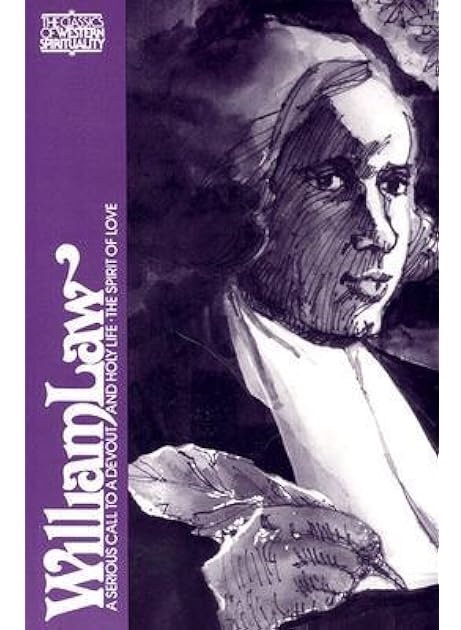





 First Blessings