Today is the one hundredth birthday of St. Paisios the Athonite (d. 1994). I first encountered stories and teachings of this elder of Mount Athos in the book The Mountain of Silence by Kyriacos Markides, which remains, for me, one of the most engaging and accessible introductions to Orthodox spirituality and monastic wisdom available.
Following is the prayer of St. Paisios for the whole world. For Anglicans, it is a wonderful complement to The Great Litany:
Our Lord Jesus Christ, do not desert your servants who at present are away from the Church, but through your love and grace bring everybody close you.
Remember Lord all your servants who are in pain, who are in despair, who are sick, who are poor, who have lost a loved one, who have been wronged, who are by themselves, who have been slandered, who are captives, who are hungry, who are refugees, who have lost their ways, who have been deceived, who are unprotected, who are in prison.
Remember Lord your servants who are suffering from cancer.
Remember Lord your servants who suffer from small but also from serious illnesses and diseases.
Remember Lord your servants who are disabled.
Remember Lord your servants who have psychological problems and diseases.
Remember Lord all of our public servants and help them to govern as Christians.
Remember Lord all the children who come from broken families.
Remember Lord all the broken families and those who have been divorced.
Remember Lord all the orphans of this world and all of those who have lost their significant other.
Remember Lord your servants who are in prison, who declare them as anarchists, who are drug addicts, who have killed, who have stolen, who have committed a crime. Enlighten them and help them to change their ways and come to You.
Remember Lord your servants who are away from their homes and live in a foreign land.
Remember Lord your servants who are travelling today by sea, by air, or by land and protect them.
Remember Lord our Church, our priests, and all the faithful.
Remember Lord our monks and nuns, our abbots and abbesses, our spiritual guides, our brotherhoods and all the monastics from the Holy Mountain and the Holy Land.
Remember Lord your servants who are in the midst of war.
Remember Lord your servants who are being hunted.
Remember Lord your servants who have lost their homes and their jobs.
Remember Lord your servants who are homeless.
Remember Lord all the nations of the world. Keep them in your embrace and cover and protect them from war and evil. Keep our beloved country day and night protected from war and evil.
Remember Lord your servants who have been abandoned and have suffered injustice. Have mercy on families that are going through trying times. Pour your abundant love and mercy upon them.
Remember Lord your servants who suffer from any kind of problems of the body, soul, and mind.
Remember Lord your servants who are in despair, help them and give them peace.
Remember Lord your servants who asked for our prayers.
Remember Lord and all of those who have left this life and grant their souls rest and peace.
Jesus’s teaching consistently attracted the irreligious while offending the Bible-believing, religious people of his day. However, in the main, our churches today do not have this effect. The kind of outsiders Jesus attracted are not attracted to contemporary churches, even our most avant-garde ones. We tend to draw conservative, buttoned-down, moralistic people. The licentious and liberated or the broken and marginalized avoid church. That can only mean one thing. If the preaching of our ministers and the practice of our parishioners do not have the same effect on people that Jesus had, then we must not be declaring the same message that Jesus did. If our churches aren’t appealing to younger brothers, they must be more full of elder brothers than we’d like to think (Timothy Keller, The Prodigal God, Dutton (2008), pp. 15-16).
I have no desire to speak ill of the dead, and particularly not of a much-loved brother in Christ like Timothy Keller. And yet when I read this passage today it seemed — and seems — like a tendentious missing of the point, a false representation by someone who should have, and did, know better. Perhaps I am the one missing the point and not Keller; perhaps I am the elder brother in the parable of the Prodigal Son. I would not comment on this passage at all but for the fact that it contains some false and, I think, damaging representations of the church.
Keller’s indictments of the church are (1) that churches do not attract outsiders — the licentious and liberated or the broken and marginalized, (2) that this can only mean that we must not be declaring the message that Jesus did, and (3) that we must be full of elder brothers — conservative, buttoned-down, moralistic people. I think (1) is mostly true and wholly irrelevant, (2) is mostly false, and (3) understates the truth. I will look at each of these in turn.
If churches do not attract outsiders, might it be because church isn’t designed for outsiders, and that intentionally so? Might it be that a church service is more akin to a family dinner than to a fast food restaurant? Any member of the family is welcomed to invite a guest to the family table and the guest will be truly welcomed; the more the merrier. But, the family does not “cater” to guests, nor is the meal designed for guests. The menu is not planned around guests and the family likely would not be equipped to handle the guest’s food or pet allergies. Much of the conversation would be meaningless to a guest: stories about crazy uncle Bob or the disaster of the family vacation three years ago or Janice’s miraculous recovery. The guest wouldn’t understand the significance of the Fiesta dinnerware. He might think some of the foods strange, and so on. Is any of this cause to critique the institution of the family dinner? Hardly.
How does this apply to church? Church is built around the family’s worship. It is not primarily intended or designed to be an evangelistic event meant to entice and make the licentious and liberated comfortable. Church is designed for the worship of God; for the formation of Christians, which sometimes involves the uncomfortable movement of conviction, repentance, and confession; for the blessing and sending out of God’s people on mission in the world. A licentious and liberated younger brother will feel out of place precisely because he is out of place; he is no longer in the world he knows, but he is on the threshold of the world to come. And that is a good thing. If he doesn’t leave feeling, “That was strange!” then I question whether he has been to an assembly of the saints at all. Now, let’s get this straight. The licentious and liberated guest will be welcomed and loved, but his licentiousness and liberation will not be catered to nor will he be made to feel at home. He is not at home: not yet. But, he has put himself in the crosshairs of the grace of God, and those “elder brothers” might just pursue him like the hounds of heaven down the byways to coffee shops, or restaurants, or family dinners, or Bible studies — to all those places where evangelism should and does take place. He may one day become part of the family. I live in Knoxville, Tennessee, a city whose motto is “Keep Knoxville Scruffy.” I want to live in a church whose motto is “Keep Church Weird.”
Do we declare the message that Jesus did? Well, yes and no. Jesus’ message was directed almost exclusively to Second Temple Jews, a declaration that in and through his life, death, and resurrection God was at last fulfilling the covenants with Israel; at last defeating the unholy trinity of death, sin, and the dominion of the powers; at last becoming King and inaugurating his Kingdom. Jesus spoke this message, e.g., in the Sermon on the Mount, in a host of parables, and in the strange discourses in St. John’s Gospel. He also enacted the message in healings and exorcisms and resurrections and nature miracles. He also claimed, in no uncertain terms, to be God; to have seen him was to have seen the Father with whom he was/is one. Jesus’ message was that he was doing all these things. Our message is that he has done all these things and that the great renewal of all things is yet to happen when he comes again. The “tenses” of his message and our message differ: present (for Jesus) versus past, present, and future for the Church. But, the essence is the same. There is another real difference though. Just as Jesus promised that his disciples would do greater things than he had done, our messages is more expansive than his. He preached to Jews; we preach to the world. He taught a small group of followers; we teach a universal body of the faithful. Jesus rarely addressed a “church” at all, but our teaching and preaching takes place in the context of the Church that his disciples shepherded and served. So, we preach Jesus to the world even as we deal with the messiness of the Church. Jesus tended the root; we manage the vines. But, it is one and the same good news.
I will deal with the charge that the church is full of conservative, buttoned-down, moralistic people in short order. The church is much worse than that. The church is a spiritual hospital full of sin-sick patients all of whom are terminally ill but for the miraculous intervention of the Great Physician. The church is a whitewashed sepulcher full of dead men’s bones. The church is the refuge of sinners and hypocrites, all of whom are the beloved of Christ and my dear brothers and sisters. And that is why I am there as the chief of sinners. If you come, I do not think you will change the demographics.
The quote from Keller’s book is just a snippet; reading the whole might change my impression of his impression of the Church. He certainly served the Lord and the Church faithfully, certainly more so than I have done and likely will do, and I have no doubt that he has already heard the words I long one day to hear: “Well done, good and faithful servant.” But such indictments of the Church, even in snippet form, make me uncomfortable. After all, the Church is the bride of Christ. No one likes to be told that his bride is ugly.
A friend posted this meme, a friend who has moved away from Christianity and religion to what I might describe as a “Spiritual Scientism” — my description, not my friend’s. I thought to respond to my friend, but I decided against it; people have a “right” to express themselves without having “interlopers” challenge them. But the notion is so common now, and it sounds so plausible on its face, that some comment does seem merited.
As with most memes, this one is a bit too simplistic. Yes, there is a natural moral law tradition that perhaps transcends religions. And much of it is common to all religions. So, in general, we do not need religion to inculcate the most basic, most general common ethic. It is really this that C. S. Lewis argues in the opening of Mere Christianity, the existence of a universal, internal moral law that we all know and that we all violate. But, things get complicated beyond that. Love your neighbor as yourself, all men are created equal, forgive your enemies and pray for them, are not tenets that emerge from natural law, nor are they common to all religions. The “empathy” to which the meme appeals is neither truly empathy nor even natural moral law. It is the remnant of Christianity; it is that part of the faith that formed the Western culture, including its ethical understanding, and which the secular West has not yet managed to exorcise. Even some virulent atheists as Richard Dawkins are coming to recognize the moral and cultural heritage and value not of religion in general but of Christianity. He now describes himself as a “cultural Christian,” as one who loves hymns and Christmas carols and “sort of feel(s) at home in the Christian ethos” (National Catholic Register). Not that the faith needs to appeal to Dawkins for its defense, but, after the virulence with which he denounced Christianity, it is interesting to hear him say, “So I call myself a cultural Christian, and I think it would be truly dreadful if we substituted any alternative religion.” He is not alone among former and current atheists, some of whom seem to be awakening to the irreducibly and irreplaceable moral and cultural basis of the Western world. None of this stems from some general feeling of empathy. That reverses the proper directionality.
As for what emerges from lack of religion, I would reference the entirety of the 20th century: Hitler, Stalin, Pol Pot, Mao, Rwanda, and a host of other secular genocides. Reject religion and empathy is soon lost, too.
Being new to something, even to something you want or need to do, can be disconcerting, particularly if the “something” is personal. That is certainly true in the case of the Reconciliation of Penitents (Confession). From time to time I will have someone contact me to schedule sacramental confession only to have him/her express a certain anxiety about it: “This is my first time at confession, and I don’t really know what to do or what to expect. Can you help me?”
The last time that happened, I wrote a response that I realize might be generally helpful. A part of my response follows:
Your second question is a bit more complex due in part to the Anglican attitude toward confession: All may; some should; none must. In short, we are not Roman Catholics who think some sins — mortal sins — can generally be forgiven only through confession to a priest and the accompanying absolution offered. The Anglican assumption is that Anglicans are confessing their sins daily in the Daily Office, directly to God if the office is done privately, or to God in the presence of a priest who will offer absolution if it is done publicly. For some people — many people, actually — this seems to be enough; they have no further scruples and their consciences are satisfied. But, there are others whose consciences will not be quieted by such a general confession. To these people, the Exhortation makes particular appeal:
If you have come here today [to Holy Communion] with a troubled conscience, and you need help and counsel, come to me, or to some other Priest, and confess your sins, that you may receive godly counsel, direction, and absolution. To do so will both satisfy your conscience and remove any scruples or doubt (BCP 2019, p. 148).
This gives the Anglican rationale for Confession quite well: to satisfy a troubled conscience; to receive spiritual help, counsel, and direction; and to receive sacramental absolution (forgiveness from God administered through the priest). So, if you have offered the general confession in worship but still have a troubled conscience or doubts about whether you have been forgiven, then Confession is for you. If you are struggling with a persistent sin or with temptation before the act and need spiritual counsel about how best to resist the temptation or sin, then Confession is for you. If you are at enmity with another parishioner and need the priest’s help in moving toward reconciliation, then Confession is for you. If you simply need the assurance of forgiveness (absolution) spoken by a person ordained to speak for God in such a matter; then Confession is for you. If you need to unburden yourself of spiritual baggage or a sense of guilt or shame, or if you wish to cleanse yourself prior to a time of special devotion, then…. I think you get the picture.
How you prepare for Confession depends on why you desire it. If there is particular sin or temptation you are dealing with, you simply come prepared to open that up to the confessor. If there is a more generalized sense that perhaps not all is well with your soul, then I would suggest conducting a sort of spiritual inventory before coming to confession:
Pray Psalm 139 and ask the Lord to reveal any hidden matters that need to be disclosed. We think we know ourselves a lot better than we actually do, and we need God’s revelation and perspective.
Take a moral inventory based upon the Ten Commandments, The Sermon on the Mount, and the Summary of the Law. Sit with each of these in prayer for quite awhile and again ask for God to reveal what needs to be brought into the open.
Consider your fidelity to the spiritual disciplines that you know are necessary for growth: regular participation in sacramental worship, prayer, Scripture, almsgiving, service, fasting (if that is part of your discipline), etc. Have you “let any of these slide?”
Assess your fidelity to any vows you have made: baptismal vows, marriage vows, ordination vows — I am writing very generally now, professional commitments, etc.
Take an “anxiety inventory.” What are you anxious about or afraid of? What is holding you back?
Assess your cultivation of the virtues: are you growing in faith, hope, and love?
Check your “attention to God.” Are you living in distraction, or are you spending quantity and quality time with God?
Well, I could go on, but this gives you more than enough to start with, I think — rather like drinking from a firehose. Lastly, I think it would be very helpful to read the introduction to the rite and the rite itself on pages 222-224 of the Book of Common Prayer 2019. If you do not have a hardcopy, you can access it online at http://www.anglicanchurch.net. Under the menu, select MORE, then RESOURCES, then BOOK OF COMMON PRAYER.
I hope you find this helpful. I am a Christian and a priest who thinks Confession is central to spiritual formation and growth into Christ-likeness. I will be happy to assist you in any way. Just let me know how you’d like to proceed.
For the sake of full disclosure, having written this out, I think there may be others who could benefit from it. I will likely post the pertinent parts of it, with all identifying material stripped out, of course.
Let me say, in closing, that you will never regret having gone to Confession, but you might well regret not having gone.
The Lord be with you. And with your spirit. Let us pray.
Blessed Lord, who caused all Holy Scriptures to be written for our learning: Grant us so to hear them, read, mark, learn, and inwardly digest them, that by patience and the comfort of your Holy Word we may embrace and ever hold fast the blessed hope of everlasting life, which you have given us in our Savior Jesus Christ; who lives and reigns with you and the Holy Spirit, one God, for ever and ever. Amen.
Introduction There are these fair sized lizards where we vacation in Florida — probably North American Green Anoles — that I’ve been trying to catch for decades. I can get close, but they always elude me. And then it dawned on me not long ago just why I can’t catch one; I don’t really want to. I can’t imagine that it would be good for either of us for me to wrap my hand around a lizard — one with teeth — who doesn’t really want to be caught. The first requirement for successfully catching a lizard seems to be a desire, an intent, to really do it.
Like catching lizards, the first step in developing and living a Christian ethic is actually wanting to do so. Many of us, myself included, like the idea of it, but we are a bit afraid of the reality of it, and a bit hesitant to engage the hard work necessary for it. Old habits engendered by the Fall and the false, rival stories that have formed us, die hard. But, we are called to it, and Christian faithfulness and obedience require it. And, we pray for it: Thy kingdom come, thy will be done on earth as it is in heaven.
Today, we will take another step toward developing a Christian ethic by examining the sources of authority for that ethical standard. How do we find right and wrong in a fallen world, which, of course, includes the fallen political system that governs us? What are the standards of authority?
The Standards of Ethical Authority Let’s start with two basic questions.
How does a Christian determine right and wrong?
What are the authoritative sources of Christian ethics?
Let’s begin with the second question: What are the authoritative sources of Christian ethics? Where do we look for Christian standards of right and wrong?
Scripture The Church, until relatively recently, has considered Scripture to be the ultimate authority for faith and practice, for what to believe and for how to live out that belief in the world. Scripture is the governing ethical authority for the Christian; that is the historical and ecumenical conviction of the Church, and it is the conviction that Anglicans hold, or should hold. Our first and last appeals are always to Scripture. But, Scripture does not always speak directly or unambiguously to each moral issue we encounter. Are there other sources of ethical authority to which we might look in such cases?
Tradition We do not have to draw solely upon our own limited resources, or even our own reading of Scripture. The Church embodies an unbroken tradition from the calling of Abram until today. This tradition expresses the mind of the Church – formed by the Holy Spirit – on many moral issues. When Scripture seems silent or perhaps unclear, we may ask if the Church has spoken on the issue. Of course, the Church itself is not always of one mind and voice. What if the Church is divided? Then, we might consider the Vincentian Canon, a method proposed by St. Vincent of Lerins (d. 455) for discerning Christian truth. He proposed that we accept as true “that which has been believed everywhere, always, and by all.” Essentially, the hallmarks of truth are ubiquity, antiquity, and unanimity. How does this work? If an ethical standard is isolated to a small region and is not widespread throughout the church, it is suspect. If it is novel, appearing only recently in time, and not found throughout Church history, it is suspect. If it is embraced only by the few and not by the many, it is suspect. We look for tenets that have been believed throughout the Christian world, throughout the Christian age, and throughout the Christian body. This isn’t a perfect test, but it is helpful.
Let’s take the issue of the blessing of same-sex marriages, for example. How does the practice fare under the Vincentian Canon? It fails every test that St. Vincent proposes. The practice is isolated to small parts of the Western Church; it fails the test of ubiquity. The practice is novel; nowhere do we find it in the history of the Church. It fails the test of antiquity. The Church is divided over the practice. It is more nearly correct to say that one small group in the Church has divided itself from the universal Church over this practice. It fails the test of unanimity. So, even if Scripture were not clear on the issue of same-sex marriage (and it is), the Tradition of the church is quite explicitly opposed to the practice.
Christian Community Because a moral worldview is best discerned and lived out in community, the Christian community itself – the parish, the diocese, the province – serves as an important source of ethical insight, formation, and embodiment. The Holy Spirit works collectively as well as individually. We can take this a step further. In our particular tradition, the parish is governed by a rector, the diocese by a bishop, and the province by the college of bishops. We have a hierarchy of authority within our community that speaks – as necessary – to moral issues. Though we must always act in accordance with our own understanding and conscience, we also submit ourselves to the formative power of the community and its leaders to inform our understanding and to shape our conscience.
We might add other sources of ethical standards to our list, but these three are of first importance: Scripture, Tradition, and Community. In primary position among the three is Scripture.
If Scripture speaks directly and unambiguously to a moral issue, it also speaks authoritatively.
As an aside, in Anglicanism we sometimes hear “the three-legged stool” proposed as an authoritative ethical standard: Scripture, Reason, and Tradition. Some even go further and offer the Wesleyan Quadrilateral: Scripture, Reason, Tradition, and Experience. While there is some validity to both of these suggestions, in modern practice they have typically been misapplied to pit Reason, Tradition, and Experience against the clear teaching of Scripture. “Yes, I know what Scripture says…but my reason (or my experience) leads me to a different conclusion.” While we do acknowledge the need for other authorities to inform our ethical discernment, Scripture, if it speaks to the issue, is always the prime authority. We may never negate the teaching of Scripture based upon these other sources of authority.
This conviction leads us to consider two essential questions:
How does Scripture speak ethically? What modes of instruction does it employ?
How do we read, interpret, and apply the ethical content of Scripture faithfully and effectively?
We begin with the various ways Scripture provides moral instruction.
Modes of Appeal to Scripture (adapted from The Moral Vision of the New Testament)
Richard Hays, in his book The Moral Vision of the New TestamentI, identifies four modes in which Scripture speaks to us (instructs us) ethically:
• Rules: direct commandments or prohibitions of specific behaviors
• Principles: general frameworks of moral consideration by which particular decisions about action are to be governed
• Paradigms (examples): stories or summary accounts of characters who model exemplary conduct (or negative paradigms: characters who model reprehensible conduct)
• A Symbolic World (ethos/worldview): an overarching framework of thought and practice that represents the character of God, the human condition, and the narrative or worldview in which God’s people live and move and have their being; the general understanding and “spirit” of the community
Let’s very briefly consider examples of each of these modes.
Rules “You shall not commit adultery” is a rule; it is a clear prohibition of a specific behavior. We might extend the concept of adultery to include many forms of marital unfaithfulness, but it must include the basic notion of illicit sexual relations. If a married man comes to me for pastoral counseling and tells me God has spoken to him and endorsed his extramarital affair, I am certain – beyond any doubt – that he is wrong and is either deluded or self-serving. I can point him to this rule.
Principles “Love your neighbor as you love yourself,” is a principle; it does not command or prohibit a specific behavior, but rather gives a general responsibility that has to be fleshed out in detail. When I examine or consider a particular behavior I must ask myself: Is this allowed or compelled under the principle of loving my neighbor? My neighbor’s dog has been using my lawn as his toilet and I have complained several times to no avail. So one day I decide that the next time this happens I will simply take the neighbor’s dog to the pound. After all, the Bible gives no rule against taking a dog to the pound. But, this would certainly violate the principle of love for neighbor. The principle covers many specific behaviors without specifying each one as a rule does.
Paradigms/Examples There is another question we could have asked about loving one’s neighbor: Who is my neighbor? You know that Jesus was asked that question. To answer it he didn’t give a specific commandment about everyone who falls into the category of neighbor, nor did he state a principle of neighborly identity. Instead, he gave a paradigm, an example of someone who acted as a neighbor: the Good Samaritan. Rather than restrict the category of neighbor by commandment, he broadened it by example. This is often the case with paradigms; they open outward instead of collapsing inward.
Ethos Ethos is just the way of being of a people, the cultural standards that govern their life together. Christian theologian Stanley Hauerwas was asked to testify before congress about Christian ethics and abortion. He said this — not an exact quote: We Christians do not murder our children. Here he was speaking not from rules or principles or paradigms, though he probably could have. He was speaking about the Christian ethos in which children are a gift from the Lord, image bearers of God. He was speaking about a way of being and culture in which the murder of babies is simply unthinkable.
Summary So, Scripture speaks to us, provides ethical instruction, in several modes/ways: rules, principles, paradigms, and ethos. To say that Scripture is silent on a moral issue simply because it does not contain an explicit positive commandment or a negative prohibition regarding the issue is to ignore the many ways that Scripture can and does address moral issues. We, perhaps, tend to put the greatest weight on rules because they are explicit and clear. But, Richard Hays actually argues that, of the four modes of Scriptural authority we have mentioned, rules constitute the weakest type because they are typically so precise and limited in scope. Principles, paradigms, and ethos broaden outward to encompass many more behaviors and are therefore more broadly applicable.
Let’s summarize what we have discussed this far.
Scripture is the primary (ultimate) ethical authority for Christians. If Scripture speaks directly and unambiguously to a moral issue, it also speaks authoritatively.
Scripture speaks in several modes: rules, principles, paradigms (examples), and ethos/worldview. In moral discernment we must consider all the modes in which Scripture speaks, not just rules.
When Scripture does not speak to an issue or doesn’t speak unambiguously, we may look to secondary authorities: Tradition and Community. But, these may never be used in such a manner as to conflict with or negate Scripture.
Focal Images My eyes are not so very good. When I want to read Scripture — or anything for that matter — I need my glasses, these lenses that provide focus and clarity. Even with my glasses, some things in Scripture are still not clear, still not in focus. St. Peter felt the same way as his comment on St. Paul’s writings shows:
There are some things in them that are hard to understand, which the ignorant and unstable twist to their own destruction, as they do the other Scriptures. You therefore, beloved, knowing this beforehand, take care that you are not carried away with the error of lawless people and lose your own stability (2 Pe 3:16b-17).
This brief verse and a half is remarkable in what it says.
• Peter finds Paul difficult to understand, or at least Peter knows that others find Paul difficult to understand.
• Peter includes the writings of Paul as Scripture. Even at this very early stage, the Apostles and other contributors to the New Testament were conscious of the weight of their words.
• We must take care not to be led astray in our reading of Scripture, which implies that there are ways to read Scripture well and truly: “to hear them, read, mark, learn, and inwardly digest them, that we may embrace and ever hold fast the blessed hope of everlasting life,” as Cranmer has us pray.
What we need are some lenses that better focus our reading of Scripture, particularly when we are reading Scripture for ethical formation. Richard Hays has identified three set of such lenses that the New Testament authors offer us; he calls them focal images because they bring the New Testament images into better focus: Community, Cross, and New Creation. Because I also want to include the Old Testament as a source of ethical authority, I have expanded his list to include three Old Testament images as well: Creation, Covenant, and Exodus.
Old Testament Focal Images
Creation
Covenant
Exodus
New Testament Focal Images
Cross
Community/Family/Koinonia
Coming Kingdom
Any ethical reading of Scripture is enhanced and clarified by engaging with and honoring these focal images.
Creation “We believe in one God, the Father Almighty, maker of heaven and earth, and of all things visible and invisible,” we say in Nicene Creed. All things come from God and are subject to him. Creation prior to the fall expressed his will perfectly. Creation after the fall is subject to futility and longs for its freedom from corruption (cf Rom 8). Creation will be restored in the new heavens and the new earth. Recall how Jesus appealed to the focal image of creation in his discussion of divorce: Moses permitted divorce – because of the hardness of your hearts (fall) – but from the beginning (creation) it was not so. When considering the issue of same-sex marriage, we might use this focal image of creation. What does God’s original creation tell us about human relationships, complementarity of the sexes, and the purpose of marriage?
One other important note about the focal image of creation: it implies that all the world – with its cultures and governments – belong to God. The question is sometimes posed to Christians, “What right do you have to insist that your morals be reflected in the laws that govern those who don’t believe as you believe?” Our answer is simply that God is the Creator of the universe and that all authority – certainly in moral matters – belongs to him. Our appeal is to creation and to the Creator.
Covenant God called Abram and made a covenant with him, that through Abram and his offspring God might redeem and renew the world and bless all peoples. God chose to work through a people made holy by his presence among them. The chief human responsibilities in the covenant were faithfulness to God and obedience, which implies holiness. So, as we look at any moral issue there are covenant questions to ask: Along which path lies the greatest faithfulness to God? Along which path lies obedience? Along which path lies holiness?
Exodus More than by anything else, Israel was shaped by the experience of slavery and Exodus. The Exodus event formed Israel’s ethos and Law. One example is particularly significant, that of Sabbath observance. God gives Israel two reasons for Sabbath-keeping; one reason draws upon the focal image of Creation, and the other upon the focal image of Exodus. Let’s look at each.
Remember the Sabbath day, to keep it holy. Six days you shall labor, and do all your work, but the seventh day is a Sabbath to the LORD your God. On it you shall not do any work, you, or your son, or your daughter, your male servant, or your female servant, or your livestock, or the sojourner who is within your gates. For in six days the LORD made heaven and earth, the sea, and all that is in them, and rested on the seventh day. Therefore the LORD blessed the Sabbath day and made it holy (Ex 20:8-11).
Notice here the appeal to creation. God, by his own actions and by his blessing, built the Sabbath day observance into the fabric of creation. The Sabbath reminds man that he is the image bearer of God: not a human doing but a human being. And, because that is true for all creation, no one among God’s people works on the Sabbath: male, female, servants, sojourners, livestock. Servants are given the Sabbath because they too are part of creation. This is the appeal to the focal image of creation. Now, let’s consider the second account of the Ten Commandments is Deuteronomy.
Observe the Sabbath day, to keep it holy, as the LORD your God commanded you. Six days you shall labor and do all your work, but the seventh day is a Sabbath to the LORD your God. On it you shall not do any work, you or your son or your daughter or your male servant or your female servant, or your ox or your donkey or any of your livestock, or the sojourner who is within your gates, that you male servant and your female servant may rest as well as you. You shall remember that you were a slave in the land of Egypt, and the LORD your God brought you out from there with a mighty hand and an outstretched arm. Therefore the LORD you God commanded you to keep the Sabbath day (Dt 5:12-15).
This reasoning for Sabbath observance appeals to the focal image of the Exodus. Why do you keep the Sabbath? Because, as free people, as people God delivered from slavery, you can and you must keep the Sabbath, in honor and memory of God’s saving action on your behalf. In Egypt you couldn’t keep the Sabbath; in freedom you must. But there is more here. You must give your children, your slaves, the sojourner, and even the animals the Sabbath, because you know what it was like to be a slave, to be treated like an animal (or worse), and to have no time to rest and worship. Sabbath-keeping is an issue of justice, compassion, and worship. So, an appeal to the focal image of the Exodus must include matters of freedom, justice, compassion, and worship.
In summary, the three Old Testament focal images I propose are Creation, Covenant, and Exodus. The New Testament focal images proposed by Richard Hays are Cross, Community, and Coming kingdom.
Cross Here I will let Richard Hays speak:
Jesus’ death on a cross is the paradigm for faithfulness to God in this world. The community expresses and experiences the presence of the kingdom of God by participating in “the koinonia of his sufferings” (Phil. 3:10). Jesus’ death is consistently interpreted in the New Testament as an act of self-giving love, and the community is consistently called to take up the cross and follow in the way that his death defines… . The death of Jesus carries with it the promise of the resurrection, but the power of the resurrection is in God’s hands, not ours. Our actions are therefore to be judged not by their calculable efficacy in producing desirable results but by their correspondence to Jesus’ example (MVNT, p. 197).
That last sentence is particularly important: we do not base our moral decisions upon practicality (what is most likely to work), but upon how nearly they image the cross of Christ.
Hays continues:
The New Testament writers consistently employ the pattern of the cross precisely to call those who possess power and privilege to surrender it for the sake of the weak (see, e.g., Mark 10:42-45, Rom. 15:1-3, 1 Cor. 8:1-11:1).
He concludes by saying:
It is precisely the focal image of the cross that ensures that the followers of Jesus – men and women alike – must read the New Testament as a call to renounce violence and coercion (MVNT, p. 197).
So, the focal image of the cross leads to these type of questions:
Is this the way of self-giving and self-sacrifice?
Is there any element or threat of violence or coercion in this moral action?
Community/Family/Koinonia In this focal image, Hays shifts the focus from the individual to the community (the church, not as a hierarchical organization, but as the visible, incarnational body of Christ):
The church is a countercultural community of discipleship, and this community is the primary addressee of God’s imperatives. The biblical story focuses on God’s design for forming a covenant people [a clear reference to the OT focal image of covenant]. Thus, the primary sphere of moral concern is not the character of the individual but the corporate obedience of the church… . The community, in its corporate life, is called to embody an alternative order that stands as a sign of God’s redemptive purposes in the world… . The coherence of the New Testament’s ethical mandate will come into focus only when we understand that mandate in ecclesial terms, when we seek God’s will not by asking first, “What should I do,” but “What should we do?” (MVNT, pp. 196-197)
The church may sometimes do together what the individual cannot do alone. And, when I ask what the church’s response to a moral issue should be, that initially removes the pressure from me and allows me to see the issue more clearly. Then, I can consider what my role is in corporate obedience. Importantly, the church provides the necessary spiritual, emotional, and physical support necessary for individual obedience.
We also have to add this note, which was vitally important in the first century and is perhaps even more so now. The Christian Community — the Church, the Koinonia — is a multi-racial, multi-ethnic global body defined solely by our unity in Christ.
Matthew 12:46–50 (ESV): 46 While he was still speaking to the people, behold, his mother and his brothers stood outside, asking to speak to him. 48 But he replied to the man who told him, “Who is my mother, and who are my brothers?” 49 And stretching out his hand toward his disciples, he said, “Here are my mother and my brothers! 50 For whoever does the will of my Father in heaven is my brother and sister and mother.”
For St. Paul this notion of unity — for him it was unity of Jews and Gentiles — was the litmus test of the Gospel. If Jews and Gentiles could not accept one another in Christ, could not sit at the Lord’s Table together, then they put lie to the Gospel; they stripped it of its power. As long as we think of the Church only in local terms — only in terms of people like us — we have failed to view life through this focal lens. That means that we must consider seriously what our responsibilities are to the global church, to all our brothers and sisters in Christ. The Christian migrants massed at our Southern border are my brothers and sisters. The Christians being bombed in Gaza are my brothers and sisters. The Christian children in sweat shops around the world working in inhumane and dangerous conditions so that I can have cheap products are my brothers and sisters. And so on. This focal lens broadens our views; it keeps us from becoming myopic.
Coming Kingdom / New Creation In the Lord’s prayer we say, “Thy kingdom come, thy will be done on earth as it is in heaven.” The people of God are to live in the Kingdom of God proleptically – bringing the fullness of the Kingdom of God backwards from the future into our present. N. T. Wright summarizes this approach with a question and a challenge.
Question: What would it look like if God were in charge of this situation/decision/activity, etc.?
Challenge: Now, live that way, because, in the ascension, Jesus has been enthroned and is now LORD over all creation.
In and through Jesus, God became King. The Kingdom has come, though not yet fully. This puts us in conflict with the kingdoms of this world which are still in rebellion against the rule of God. Many of our moral dilemmas can be clarified by this focal image by considering how this dilemma would be addressed in God’s coming kingdom, i.e., in God’s righteous rule. How would immigration be handled in God’s kingdom? Would there even be borders or immigrants at all, and, if not, what does that say about Christian response to governmental policies? What about living wage in the Kingdom? What about redemptive violence in the Kingdom? And so forth. This is a particularly powerful focal images because it moves us from how things are, to how things will be, and how we should strive for them and exemplify them even now.
Summary So here we have six focal images which help us focus our reading and understanding of Scripture: Creation, Covenant, Exodus, Cross, Community, and Coming Kingdom. Taken together with the fullness of Scripture (in all the modes it speaks), tradition and the Vincentian Canon, and the Church as the Spirit-filled community, these focal images move the discussion beyond our own cultural stories, beyond our nationalism, beyond our narrow self-interest, toward faithfulness and obedience to God in moral matters. These are the things that will renew our minds so that we are not conformed to this world but transformed into the likeness of Christ.
The Lord be with you. And with your spirit. Let us pray.
O God the Father of our Lord Jesus Christ, our only Savior, the Prince of Peace: Give us grace to take to heart the grave dangers we are in through our many divisions. Deliver your Church from all enmity and prejudice, and everything that hinders us from godly union. As there is one Body and one Spirit, one hope of our calling, one Lord, one Faith, one Baptism, one God and Father of us all, so make us all to be of one heart and of one mind, united in one holy bond of truth and peace, of faith and love, that with one voice we may give you praise; through Jesus Christ our Lord, who lives and reigns with you and the Holy Spirit, one God in everlasting glory. Amen (BCP 2019, pp. 646-647).
Introduction
Over the next seven weeks we are going to explore Politics in the Kingdom of God, which is a clear violation of the old adage about the two things you must never discuss in polite company — religion and politics. And some might consider it an intersection, or collision, of two sphere that should remain separate: church and state, faith and politics. But, that won’t do. Christianity is by nature political because it is about the creation of a polis — a place, a city, a kingdom and the people who dwell in it — both of whom, place and people, embody the just and righteous rule of God. That’s not really controversial among Christians, is it? We pray for it each day in the Lord’s Prayer. And yet, discussions about politics and the Kingdom of God are fraught with tension, and often produce more heat than light. Why is that?
• Why is it so difficult to talk with one another – peaceably – about political issues, which are often really moral/ethical issues lived out in the public sphere? Why is it so difficult to bring together the Kingdom of God and the politics of man, not least to do so in the church?
• Why is it so difficult to find and agree on what the Kingdom of God looks like in the very practical matters of the political and social landscape?
Political issues are at their heart moral and ethical issues. For example, a Christian cannot deal with immigration — a hot topic political issue — without facing Jesus’ summary of the Law, the command to love our neighbors as ourselves, and the Parable of the Good Samaritan which tells us who our neighbor is. We cannot address war in Ukraine and Gaza — or anywhere — without first bending the knee to Jesus the Prince of Peace. We cannot address the politics of climate change without engaging creational theology. We cannot rightly vote so long as the blood of partisanship is thicker than the water of baptism. So, we have to deal with moral/ethical issues — faith issues — as we approach politics. That means we must and will consider:
• the sources of Christian moral/ethical authority (where we look for answers)
• the methods of appealing to those authorities (how we rightly understand them)
• the application of the Church’s understanding of the sources of authority to the pressing, practical affairs of life in the public sector
You may hear things that challenge you, that make you uncomfortable – things you may initially (and even finally) disagree with. We will not always agree on these complex issues. That is not what we should expect or hope for from this class. Here are the real goals:
• to promote the ability to discuss complex moral and political issues in the Christian community — in this parish — without rancor or division
• to encourage commitment to the Christian moral worldview
• to provide tools and resources for thinking through these moral and political issues Christianly
If we can do this, that is a significant accomplishment.
Just a note about format. I have quite a bit of information to present, but I also want to foster focused discussion. But, frankly, in this arena, it is very easy for discussion to veer off on all sorts of interesting but unfocused tangents. So, please don’t be offended if, in our discussions, I pull us back to the main topic. Please join in; part of our purpose is to learn to talk with one another as brothers and sisters in Christ when we disagree. But, respecting the limits of time, we will need to remain focused on the matter at hand.
The Nature of the Problem If you live in Maryville, the chances are good that you are white, Republican, Protestant, educated, employed, and active in (addicted to) sports – particularly to Maryville High School football. Each Friday night home game, the football stadium – complete with blinding lights, artificial turf, and a jumbotron – is packed to overflowing and the surrounding streets are clogged with parked cars. It’s a fun place to be, but an intense place; people take their football very seriously – particularly the rivalry between Maryville and Alcoa. Both schools have outstanding programs, players, coaches, and records. Both communities come out in force for this rivalry game.
A few years ago, while I was still teaching at Maryville High School, ESPN offered to highlight this rivalry by broadcasting the game between Maryville and Alcoa: a big deal for both cities and schools. There was only one catch; ESPN wanted the game played and broadcast live on Sunday morning during prime time church hours. Now, the community found two of its deeply held values – faith and football – in tension, in conflict with one another. There was much public deliberation and hand-wringing as the administrators, coaches, pastors, and parents appeared to wrestle with this dilemma. For those of us who had been at Maryville for any length of time at all, this was good theater but nothing more; the outcome was a foregone conclusion: nothing trumps Maryville High School football. And, indeed, the decision was finally made to play and broadcast the game on Sunday. But what to do about the conflict with church attendance, with the exercise of faith? Many of the area churches held one-off Saturday evening services by way of compromise. Or was it by way of capitulation and accommodation to the sports culture? It depends on your viewpoint.
Suppose you had been the parent of a player or the pastor of a church or the administrator of a school? What would you have decided? As a parent, would you have let your child play? As a pastor, would you have accommodated the decision by holding a special, one-off Saturday evening service? As a member of the community, would you have attended the game and supported the schools’ decision or would you gone to church as usual? Upon what would you have based your decisions? There was a clash of values happening there on many levels, and playing out on a very public stage. It is not a stretch to see that as a moral/ethical issue because it deals with deeply held values. To the school board members it was also certainly a political matter. It may seem like a minor issue, but I still wonder if it really was minor.
The determination of whether this actually is a moral issue and, if so, whether it is trivial and easily decided or more complex and fraught, is itself part of the moral discussion and context. Determining whether an issue contains a moral element itself depends upon a certain understanding of morals and a framework for making moral decisions. How do we know? How do we decide? What informs us?
In the run-up to the 2016 presidential election — the contest between Hillary Clinton and Donald Trump — I was – here I struggle for the right word: Concerned? Worried? Terrified? – that some of you might come to me as a new priest to ask for pastoral guidance in making the complex political and moral decision of which candidate to support. Both candidates had some good ideas and both had some very bad ones. Both candidates were deeply flawed and morally compromised. Neither candidate was running on the Kingdom of God platform. So I prayed and I thought and I read and I worried.
You can imagine my relief in the aftermath of the election; no one – not one single person – asked for my pastoral guidance in my vocation as priest. The same held true for the 2020 election. Some of my friends and family wanted to know what I thought, but only as a citizen. No one seemed to care what I thought as a priest and as a student of Scripture. Yes, I was greatly relieved by that…but only for a brief time. Then the questions started:
Why did no one seek pastoral counsel from me on this issue?
Was it just me (my personal insecurity showing) or were all priests deemed irrelevant in this matter (my vocational insecurity showing)?
Had the Church really nothing of value to say on that matter, or was it simply that we have actually accepted as appropriate the strange notion of the separation of church and state?
Has the Church given the impression – unintentionally or otherwise – that some issues are simply off the table for discussion, somehow inappropriate, perhaps too divisive?
If people are not making moral — and, yes, political — decisions in the context of the church and the people of God, with the pastoral guidance of the church, how are people making such decisions? Around that time, a dear friend sent me a G. K. Chesterton quote:
I do not need the church to tell me I am wrong when I know I am wrong. I need a church to tell me I am wrong when I think I am right.
If not the church, then who? If not in the community of God’s people, then where?
If the Church is relevant and has truth to speak to moral issues, then how do we bring moral decision-making back into the context of the Christian community – where it belongs – and equip people to think Christianly and ethically?
The Maryville-Alcoa game was (perhaps) a trivial example of moral questions; the presidential election was more substantive. There are many other issues that are generally – though not universally – recognized as moral/ethical matters, and political issues, as well – weighty matters: abortion; homosexuality, transsexuality and gender identity, wokeness in all its manifestations; same-sex marriage; racism and sexism; capital punishment; euthanasia and end of life issues; redemptive violence (just war, self-defense, armed protection of others); immigration; social welfare, and now artificial intelligence. The list goes on. My conviction is that God cares deeply about these matters, that they are Kingdom of God matters, and that he has equipped his Church to deal with them effectively. And, it is not my conviction only; it is the conviction of Scripture and the Tradition of the Church. My further conviction is that we have an enemy who is the father of lies and deception and discord, and that he will use these same issues to confuse and neutralize the witness of the church and to divide and conquer the church, if possible.
To avoid such confusion and devision, it is good to focus first not on what divides us, but on what unites us, with a re-commitment to those unitive essentials. The collect that I began with reminds us that we share in common one Body, one Spirit, one hope of our calling, one Lord, one Faith, one Baptism, one God and Father of us all. Just a walk through the bulletin highlights these essentials for us each week.
• The Acclamation
• The Prayer of Preparation: The heart is but a small vessel, yet there are lions; there are poisonous beasts and all the treasures of evil. And there are rough uneven roads; there are precipices. But there also is God, also the angels, the life and the kingdom, the light and the Apostles, the treasures of grace — there all all things (St. Macarius the Great, Fifty Spiritual Homilies).
• The Summary of the Law: The Great Commandment
• Scripture
• The Creed
• The Confession
• The Eucharist
• Post Communion Prayer: Mission
Paul writes this to the Church at Ephesus:
I therefore a prisoner for the Lord, urge you to walk in a manner worthy of the calling to which you have been called, with all humility and gentleness, with patience, bearing with one another in love, eager to maintain the unity of the Spirit in the bond of peace. There is one body and one Spirit – just as you were called to the one hope that belongs to your call – one Lord, one faith, one baptism, one God and Father of all, who is over all and through all and in all (Eph 4:1-6, ESV throughout).
This is what unites us. With all of this to unite us, why are we still so often divided by moral/ethical issues, by political/social issues?
Perhaps more than any other New Testament writer, Paul was concerned with unity in the Church. He writes this in Romans:
I appeal to you therefore, brothers, by the mercies of God, to present your bodies as a living sacrifice, holy and acceptable to God which is your spiritual worship. Do not be conformed to this world, but be transformed by the renewal of your mind, that by testing you may discern what is the will of God, what is good and acceptable and perfect (Rom 12:1-2).
The essence of error, the essence of discord is this: we have been conformed to this world and we need to be transformed by the renewing of our minds.
Let’s begin with this: we are – all of us – children of the Fall. With a gracious nod toward our very Reformed brothers and sisters, that means that we are all subject to total depravity: not that we are as bad as we can possibly be – completely evil – but rather that we have been adversely affected by the fall in every part of our being – body, soul, and spirit. Our bodies are clearly subject to aging, sickness, and death. But, perhaps even more relevant, our bodily needs have become disordered bodily demands/passions. We need to eat, but we don’t need a continual feast while much of the rest of the world goes hungry. We need clothing, but, really, $1000 jeans? Our species needs sex to procreate, but not lust and perversity. Our souls – our will, our conscience, our emotions, our thinking – have become disordered. We listen to our “gut” – we act without thought – when we should listen to our renewed mind. Even if we engaged our minds our thinking has been so conditioned by the fallen world and its cultures that it no longer reasons as God reasons. The Second Song of Isaiah (Is 55:6-11) expresses this dark truth poetically. [Read Quaerite Dominum, BCP 2019 , p. 82.]
Our consciences have been de-calibrated, misdirected so that they no longer point toward true moral north. Our wills are weak. Our spirits, that part of man that can know God directly and can be in-dwelt by the Holy Spirit are dead, unless they have been born again in baptism. Man – apart from God – is totally depraved. And the corporate and individual effects of the Fall linger after baptism. The process of renewal into the true image-bearers of God is long and difficult. This class is one more step in that direction.
Not only are we children of the Fall, we are also the products of cultural and personal stories that stand as rivals to the Gospel. We are all formed by the stories we hear, by the stories we inhabit; they shape us in thought, word, and deed in ways large and small, in ways we don’t even notice, just as we never notice the air we walk through and breathe. Sometimes air becomes polluted and even toxic; sometimes our stories do too. This class will invite (challenge) you to examine your stories, to see how they have formed you, and in many cases deformed you. And it will challenge you to listen closely – with a view toward ethics and politics – to the Christian story, which is, in very many cases, quite different from our personal stories and from the prevailing cultural stories. Start with the most salient points of your identity, because each of those carries with it a story that has formed you. I’ll use myself as an example; you may well identify with several of my stories; some of yours may well be different. Consider how these might shape my moral understanding/leanings.
• White (I experienced the great civil rights movements of the 1960s and the transition from segregated to integrated schools.)
• Affluent by global standards and middle-class by American standards
• Educated
• American
• Southern Appalachian
• Knoxvillian
• Product of a two-parent, working class family (nominally Democratic, definitely union)
• Husband and father
• Retired engineer and teacher
• Anglican Priest
We could go on, but perhaps the point is clear. I have been shaped by all these factors/stories in ways that are not always obvious to me, and certainly not obvious without reflection. And they have shaped my moral and political worldviews in ways that do not always align with the Christian moral and political worldview. The trouble is, I make moral/ethical judgments reflexively/automatically, based, without much thought, upon the stories that have formed me. My judgments feel right, because they accord with the stories that have formed me. Challenge my stories and you challenge me, my identity, and I get defensive. This is why we have conflicts and divisions over moral/ethical/political matters. But this is just what the Gospel does; it challenges me and my stories, you and your stories. It demands and creates a new identity by incorporating us into a different, larger, true story. That is key: we must not let any of these other stories take priority over the Gospel story. We cannot let the blood of ethnicity or party or family or cause or anything else run deeper than the water of baptism. And that transition between stories, that absolute commitment to the Gospel and our baptismal identity isn’t easy. It will be accomplished bit-by-bit through the transformative power of the Holy Spirit. Remember what St. Paul wrote:
I appeal to you therefore, brothers, by the mercies of God, to present your bodies as a living sacrifice, holy and acceptable to God which is your spiritual worship. Do not be conformed to this world, but be transformed by the renewal of your mind, that by testing you may discern what is the will of God, what is good and acceptable and perfect (Rom 12:1-2).
Our minds must be renewed, and we must learn to test and to discern what is the true will of God, what is good and acceptable and perfect. That is the challenge ahead of us. And, it is not an easy challenge; it is a battle. In 2 Corinthians Paul writes:
For though we walk in the flesh, we are not waging war according to the flesh. For the weapons of our warfare are not of the flesh but have divine power to destroy strongholds. We destroy arguments and every lofty opinion raised against the knowledge of God and take every thought captive to obey Christ (2 Cor 10:3-5).
Did you get that last part? “We destroy arguments and every lofty opinion raised against the knowledge of God and take every thought captive to obey Christ.” Usually the arguments that must be destroyed and the lofty opinions raised against the knowledge of God are our own – the results of our fallen nature and our rival stories. The thoughts that must be taken captive to obey Christ are our own. Next week we will begin to look at how to do just that, how we take these thoughts captive.
Crypt of St. Vincent’s Basilica where the College of Bishops Meet in Conclave
Judges 5:1–2 (ESV): 5 Then sang Deborah and Barak the son of Abinoam on that day:
2 “That the leaders took the lead in Israel,
that the people offered themselves willingly, bless the Lord!
Verses mean what they mean in their literary, historical, and spiritual contexts, in this case the rout of Jabin the king of Canaan and Sisera, the commander of his army, under the onslaught of the people of Zebulun and Naphtali led by Deborah and Barak. The leaders — these two Judges and Jael, the tent-dwelling wife of Heber the Kenite — took the lead, the people offered themselves willingly, and God blessed this rightly ordered schema for the deliverance of his people. That it was so, bless the Lord!
But such verses also mean what they mean in social and current contexts, as well. Even as I read this verse in Morning Prayer (22 June 2024) the College of Bishops of the Anglican Church in North America (ACNA) was meeting in conclave to elect the next Archbishop for the Province. By the time this is posted, the decision may have been made. No matter: the principle holds beyond the conclave. The leaders — the bishops — are leading in the Province. Now it falls to the people — clergy and lay — to offer themselves willingly first to the Lord, but also to their ecclesiastical leadership, to accept the decision made or to be made as from God, and to acknowledge that God can work through the decision even if it was made wrongly.
Hebrews 13:17 (ESV): 17 Obey your leaders and submit to them, for they are keeping watch over your souls, as those who will have to give an account. Let them do this with joy and not with groaning, for that would be of no advantage to you.
I suspect there will be much parsing of the College of Bishops’ vote, a reading of the tea leaves to see what it portends for the future and direction of the ACNA. This is all beyond me, at a rarefied stratum of knowledge. I trust — What faithful option do I have? — that the bishops are keeping watch over our souls, as those who will have to give account, and that that responsibility weighs so heavily upon them that they are diligent in discerning the will of the Lord. They should and must lead. Then, as a priest and as part of the people of God, I should offer myself willingly to serve where and as God has called me.
Judges 5:1–2 (ESV): 5 Then sang Deborah and Barak the son of Abinoam on that day:
2 “That the leaders took the lead in Israel,
that the people offered themselves willingly, bless the Lord!
A Few Thoughts on Psalm 119 (Judges 2, Psalm 119:49-72, Galatians 4)
Collect O Lord, from whom all good proceeds: Grant us the inspiration of your Holy Spirit, that we may always think those things that are good, and by your merciful guidance may accomplish the same; through Jesus Christ our Lord, who lives and reigns with you and the Holy Spirit, one God, for ever and ever. Amen.
105 Your word is a lantern to my feet * and a light upon my path.
106 I have sworn and am steadfastly purposed * to keep your righteous judgments.
In the Name of the Father, and of the Son, and of the Holy Spirit. Amen.
Are you aware that the state of Tennessee has a Poet Laureate — 85 year old Margaret Britton Vaughn of Bell Buckle, Tennessee? Poet Laureate is an honorary position, a political appointment to acknowledge one’s literary skill and achievements and to put them to use for the common good. According to wikipedia:
In 1995, the Tennessee state legislature selected Vaughn to be Tennessee’s poet laureate citing many of the plays, collections, and books Vaughn wrote throughout her career and her performances and outreach throughout the state of Tennessee. As poet laureate, Vaughn wrote Tennessee’s bicentennial poem, inaugural poems for many Tennessee governors including current governor, Bill Lee, and a poem to commemorate the 50th anniversary of the US Air Force (https://en.wikipedia.org/wiki/Margaret_Britton_Vaughn, accessed 06/11/2024).
Now, imagine Vaughn receiving a call from our Governor to commission a poem with these requirements:
The poem must consist of exactly twenty-six verses.
Each verse must consist of exactly eight lines.
Each line of the first verse must begin with the letter A, each line of the second verse with B, and so on throughout the alphabet, with each line of the final verse beginning with the letter Z. (For those interested in such things, a poem having that structure is called an acrostic.)
The theme of the entire poem must be the goodness, truth, and beauty of our state laws as compiled in the Tennessee Code Annotated, and the wisdom, mercy, and justice of the legislators who authored those laws.
Could such a thing be done? Probably. Should such a thing be done? Probably not. Would anyone want to read it if it were done? Almost certainly not, except possibly to see how a poet “pulled off” such a remarkable and bizarre assignment.
And yet, that is almost exactly what we have in Psalm 119. It is an acrostic poem of twenty-two verses, each verse having eight lines. Each verse corresponds to one of the letters in the Hebrew alphabet, and each line in that verse begins with the appropriate letter: verse one with aleph, verse two with bet, and so on through verse twenty-two with taw. Its theme is the goodness, truth, and beauty of God’s law, and the wisdom, mercy, and justice of God who gave it. It can be done; it has been done under the inspiration of the Holy Spirit: so we believe, though that doesn’t necessarily mean we want to read it.
I must confess to experiencing a sense of…dread isn’t quite the right word — perhaps weariness is better — as I’ve seen Psalm 119 looming on the near horizon in the Daily Office Lectionary as it does at least six times each year. I know the journey through it will be long and the “scenery” won’t change much on that journey. It has seemed to me to be the Psalter’s equivalent of a road trip across Kansas: long and “Hey, look, another corn field!” I’m sorry if that scandalizes you; I’m just being honest.
But, my attitude is evolving, and I’m gaining more appreciation for the Psalm. The holy repetition in it — caused both by form and content — seems less monotonous to me now, and just more comfortably familiar, like ordinary time spent with a good friend: not always exciting, but deeply fulfilling. Even the acrostic form of the Psalm seems less artificial than before and more theologically significant. God spoke the world into being. God revealed his commandments for Israel as the Ten Words. The second Person of the Trinity who took on flesh to dwell among us is described/identified as the λογος, the Word. There is something profoundly significant about language, its letters and its words. So it makes a certain sense that God’s Law is extolled in Psalm 119 using all the letters of the Hebrew alphabet in order. It honors language as a central means by which God has made himself known. As for content, the Psalm’s praise of the Law is not so much about individual rules and regulations as it is about God’s self-revelation to us of his character: the God who wants humans to flourish, who wants justice to prevail, who wants to guide the world into the way of truth, who, in his mercy, loves us. Who wouldn’t want to know that God? And who wouldn’t want to meditate on his character by reading and praying and chanting Psalm 119?
Earlier, I jokingly compared the Psalm to a road trip across Kansas. Truth be told, even though Dorothy herself was bored with Kansas early in the film, when thrust out of it into the Land of Oz, she realized that there’s no place like home, and she wanted nothing more than to return there. To mix metaphors a bit, Psalm 119 is something like the Yellow Brick Road, a path that guides us on our journey, or maybe better still, in a biblical metaphor from the Psalm itself, a lantern to our feet and a light upon the path.
Our Daily Office lectionary appoints three stanzas — three letters — of Psalm 119 for Morning Prayer today. I would like to draw just a thought or two from each of those stanzas for our reflection.
Zayin: Psalm 119:49-56 — Memory In June of 1969, memory expert Harry Lorayne appeared on the Mike Douglas Show, an afternoon variety and talk show popular at the time. Before the show, Lorayne was introduced to each member of the studio audience by name, and he attempted to memorize all their faces and names. Then later in the show, the host, Mike Douglas, selected five members of the audience at random, had them stand, and asked Lorayne their names. He correctly named all five: Murdoch, Folderhour, Yesletski, Ouston, and Tomszack.
That has been fifty-five years ago next week, and I still recall all those names. So does my brother who was watching the show with me. For over five decades we have made a game of it. At random times, one of us will ask the other, “Do you remember the names?” as a challenge, and so they have stuck with us. This is a very low level sort of memory: memory as recall of meaningless, disconnected bits of information.
In this stanza of Psalm 119, the psalmist is interested in memory, but memory of a far more significant kind: divine memory and sacramental human memory. And there is a challenge here, too, not unlike that between my brother and me. The psalmist says, “I remember, Lord. Do you?”
49 O remember your word to your servant, * in which you have caused me to put my trust.
50 This is my comfort in my trouble, * for your word has given me life.
51 The proud have held me exceedingly in derision, * yet I have not turned aside from your law.
52 For I have remembered, O Lᴏʀᴅ, your judgments from of old, * and by them I have received comfort.
The psalmist is in trouble; he is being oppressed by the proud. And yet he is not overcome, not in despair. What is his source of comfort in his troubles? He remembers. He remembers the word of God in which he has placed his trust, and he remembers the judgment of the Lord — the vindication of the psalmist as being in the right — from times past. This is not memory as mere recall; it is not five random names. It is a sacramental type of memory, a memory that leads to re-presentation and participation. More about this in bit.
In and through his memory the psalmist “challenges” God to remember: O remember your word to your servant. Again, the psalmist is not interested in mere recall. For God to remember, is for God to act: to judge in the psalmist’s favor, to act to deliver him. That notion of divine memory as God’s redemptive action underlies the Exodus account:
23 During those many days the king of Egypt died, and the people of Israel groaned because of their slavery and cried out for help. Their cry for rescue from slavery came up to God. 24 And God heard their groaning, and God remembered his covenant with Abraham, with Isaac, and with Jacob. 25 God saw the people of Israel—and God knew (Ex 2:23-25, ESV).
God’s memory is God’s covenant faithfulness in action to deliver his people. That’s what the psalmist is calling out for: O remember your word to your servant. God’s memory is divine, redemptive action; our sacramental memory is participation in God’s action.
That notion of divine and human memory lies at the heart of the Eucharist. Part of the Eucharist prayer is called the anamnesis, the remembering, because it is precisely that, a recounting of God’s redemptive action in Jesus Christ.
Therefore, O Lord and heavenly Father, according to the institution of your dearly beloved Son our Savior Jesus Christ, we your humble servants celebrate and make here before your divine Majesty, with these holy gifts, the memorial your Son commanded us to make; remembering his blessed passion and precious death, his mighty resurrection and glorious ascension, and his promise to come again (BCP 2019, p. 117).
And in our anamnesis, in our remembering, we are calling upon God to remember, to act once again in this moment so we might not just recall the redemptive work of Jesus Christ in the past, but participate in the redemptive work of Jesus Christ in the present:
And we earnestly desire your fatherly goodness mercifully to accept this, our sacrifice of praise and thanksgiving; asking you to grant that, by the merits and death of your Son Jesus Christ, and through faith in his Blood, we and your whole Church may obtain forgiveness of our sins, and all other benefits of his passion (BCP 2019, p. 117).
This is not mere recall; this is sacramental remembering in which we participate in that redemptive act once again, in which it becomes present for us once again so that we may receive all the benefits of Christ’s passion.
All of that is present as a seed in Psalm 119 — as a seed that will be planted in the earth and rise again to new life in the Gospel.
Heth: Psalm 119:57-64 — Portion The notion of memory continues in this stanza of the Psalm also, but there is another matter that asks for our attention. Let me start with a passage from Deuteronomy to put things in context.
Deuteronomy 10:6–9 (ESV): 6 (The people of Israel journeyed from Beeroth Bene-jaakan to Moserah. There Aaron died, and there he was buried. And his son Eleazar ministered as priest in his place. 7 From there they journeyed to Gudgodah, and from Gudgodah to Jotbathah, a land with brooks of water. 8 At that time the Lord set apart the tribe of Levi to carry the ark of the covenant of the Lord to stand before the Lord to minister to him and to bless in his name, to this day. 9 Therefore Levi has no portion or inheritance with his brothers. The Lord is his inheritance, as the Lord your God said to him.)
The Levitical priests were not given a hereditary allotment of land in Israel; rather the Lord, and the service of the Lord, was their inheritance, their portion. The other tribes got fields and valleys and rivers. The Levites got to carry the ark of the covenant, got to stand before the Lord to minister to him and to bless in his name. That notion persists even now. The word “clergy” is from the Greek κληρικός which means inheritance or portion; the priests’ portion was then and is now God.
Now, hear the psalmist:
57 You are my portion, O Lᴏʀᴅ; * I have promised to keep your law.
58 I made my humble petition in your presence with my whole heart; * O be merciful to me, according to your word.
You are my portion, O LORD. Was the psalmist a Levite? It is possible. Some of the Psalms are attributed to Asaph, one of the leaders of the Levitical singers, though Psalm 119 is not. I suspect the psalmist — likely not a Levite — is simply saying that his highest good, his supreme value is in the Lord. St. Benedict instructed his followers to “prefer nothing to Christ.” That gets at the same idea. St. Paul said it this way:
Philippians 3:4–11 (ESV): If anyone else thinks he has reason for confidence in the flesh, I have more: 5 circumcised on the eighth day, of the people of Israel, of the tribe of Benjamin, a Hebrew of Hebrews; as to the law, a Pharisee; 6 as to zeal, a persecutor of the church; as to righteousness under the law, blameless. 7 But whatever gain I had, I counted as loss for the sake of Christ. 8 Indeed, I count everything as loss because of the surpassing worth of knowing Christ Jesus my Lord. For his sake I have suffered the loss of all things and count them as rubbish, in order that I may gain Christ 9 and be found in him, not having a righteousness of my own that comes from the law, but that which comes through faith in Christ, the righteousness from God that depends on faith— 10 that I may know him and the power of his resurrection, and may share his sufferings, becoming like him in his death, 11 that by any means possible I may attain the resurrection from the dead.
That is a man whose only portion in life was the Lord. That is what the psalmist holds out before us — not just for Levites or priests, but for all of us.
Teth: Psalm 119:65-72 — Affliction Now the Psalm brings us to a question which bedevils many: If God is good and loves us, if God is all-powerful, then why does God allow suffering, particularly the suffering of the innocent and the good? I don’t want to answer that simplistically or callously. But I do want to suggest that the psalmist knew something about suffering and even found value in it. Hear what he says:
67 Before I was afflicted I went astray, * but now I keep your word.
71 It is good for me that I have been afflicted, * that I may learn your statutes.
The best, short answer to the “problem of theodicy” — Why does a loving, all-powerful God permit suffering? — is simply this: for our salvation. Suffering points to the ubiquity and gravitas of sin; sin affects us all and it is deadly serious. Suffering breaks the hardened heart. Suffering crushes pride. Suffering falsifies our claims of autonomy and self-sufficiency and drives us to our knees in repentance, into the arms of a loving God. The only meaningless suffering is that suffering which is not accepted as from the hand of God, that suffering which is not allowed to do its good though painful work in us.
This doesn’t imply that we understand the exact purpose and spiritual dynamics of each particular instance of suffering, but simply that even in the midst of it we believe that God is good and that he intends only our good. Listen to the psalmist again:
66 O teach me true understanding and knowledge, * for I have believed your commandments.
These are not the words of someone who yet understands his suffering, but of someone who believes in the graciousness of God in the midst of suffering and who seeks understanding of it: “faith seeking understanding,” as St. Anselm said. According to the psalmist, there is a level of understanding that only comes in the midst of suffering:
71 It is good for me that I have been afflicted, * that I may learn your statutes.
So, in this brief portion of Psalm 119, we have seen the importance of sacramental memory, of holy portion, and of saving affliction. It is — if the sheer length of it doesn’t put us off — a powerful Psalm, truly a lantern to our feet and a light upon our path.
The Daily Office Lectionary appointed Psalm 109 for Evening Prayer recently, but I found that I could not, in good faith, pray it. It is a classic example of the imprecatory Psalms, those that curse one’s enemies, that invoke God to bring evil on another. Though there is much more, these verses give a good sense of the whole:
Psalm 109:6–15 (ESV): 6 Appoint a wicked man against him; let an accuser stand at his right hand.
7 When he is tried, let him come forth guilty; let his prayer be counted as sin!
8 May his days be few; may another take his office!
9 May his children be fatherless and his wife a widow!
10 May his children wander about and beg, seeking food far from the ruins they inhabit!
11 May the creditor seize all that he has; may strangers plunder the fruits of his toil!
12 Let there be none to extend kindness to him, nor any to pity his fatherless children!
13 May his posterity be cut off; may his name be blotted out in the second generation!
14 May the iniquity of his fathers be remembered before the Lord, and let not the sin of his mother be blotted out!
15 Let them be before the Lord continually, that he may cut off the memory of them from the earth!
How is it possible for one to pray this Psalm and the Lord’s Prayer — “…as we forgive those who trespass against us” — in very nearly the same breath? How can a follower of Jesus — who died to forgive his enemies — beseech the Lord to curse one’s own enemies?
Yes, there are metaphorical readings of such Psalms that make them more palatable, e.g., one’s enemies as one’s besetting temptations and sins. This is fine as far as it goes, and it has the weight of the Tradition behind it. But, this doesn’t seem to be the clear, grammatical meaning of the text, if that matters. No, this is a vindictive cry for punishment of very real, very human enemies. And, I simply cannot pray that against those who are possessed of a spirit of enmity against me.
But, perhaps they can pray it against me. Perhaps, either by what I have done or by what I have left undone, I have so embittered someone that he/she can pray and is praying this Psalm against me. Perhaps through my own sin I have driven someone to these depths of hatred toward me. If so, I have placed the soul of another in grave danger. Then, by placing these words in my mouth — by forcing me to speak them — the Lord is calling me to repentance and to prayer for the ones against whom I have offended. The evil invoked in the Psalm is the evil due not to the other, but to me. The vindication promised in the Psalm is promised not to me, but to the other.
This perspective made it possible — even necessary — for me to pray this Psalm.
Collect O God, the protector of all those who trust in you, without whom nothing is strong, nothing is holy: Increase and multiply upon us your mercy, that, with you as our ruler and guide, we may so pass through things temporal that we lose not the things eternal; grant this, heavenly Father, for the sake of your Son Jesus Christ, who lives and reigns with you and the Holy Spirit, one God, for ever and ever. Amen.
Teach me your way, O LORD, and I will walk in your truth;* O knit my heart to you, that I may fear your Name.
In the Name of the Father, and of the Son, and of the Holy Spirit. Amen.
Anne Lamott is a New York Times bestselling author of novels, nonfiction works, and reflections on faith. She is off-beat, sometimes off-putting, at least to me, and sometimes insightful. Here’s how she describes her faith:
That last part about fundamentalism is probably an understatement. On the long pew of Christianity, Lamott sits far to my left, past the point where orthodoxy is assumed. I am certain I would find much of her theology suspect, but not her genuine faith; I have no reason to doubt that she is, indeed, a passionate, devout Christian.
In 2015 her book on prayer was released. I’m certain I’ve spoken of it before, but it bears repeating. In this book she proposes three essential prayers; in fact, they form the title of the book: Help, Thanks, Wow. This is from the introduction:
My three prayers are variations on Help, Thanks, Wow. That’s all I ever need, beside the silence, the pain, and the pause sufficient for me to stop, close my eyes, and turn inward (Anne Lamott, Help, Thanks, Wow, Gardners VI Books (2015), Kindle location 125).
Three prayers seems pretty minimal to me. There are others I might want to add to her list like Sorry, Hallelujah, Woe or even just an inarticulate Groan. That’s just quibbling. It’s hard to argue with the power of the three she lists, a power emphasized by their heartfelt brevity. I suspect we’ve all found ourselves using them or some version of them when other words wouldn’t come.
The test results come back and they were not as hoped. The unpaid bills are piling up and we have no money. Family relations are strained to the point of breaking. The flood waters are rising toward our home as the wind howls around us. Help may be all we can manage, and it will do.
At the end of the season, the farmer brings in a bumper crop after a couple of lean years. You arrive safely home at the end of a white-knuckled drive through pounding rain and dense fog. Extended family and friends who have not seen each other for years are finally able to get together for a feast. Someone you love comes home from the hospital. Thanks is what rises up in your heart.
You witness an example of beauty — a sunset or a baby’s first smile — see an act of generosity and self-sacrifice or become momentarily aware of the nearness and goodness and glory of God. Wow: you have no other words, just Wow.
Thomas Cranmer was a literary genius, and his prayers are eloquent, rich, and memorable — and, yes, sometimes wordy. Yet, at the heart of many of his liturgies lies the simplicity of Help, Thanks, Wow. Take Morning and Evening Prayer as an example. The Invitatory at the beginning of each service contains these words:
O God, make speed to save us; O Lord, make haste to help us (BCP 2019, p. 43).
Help.
Both services end with The General Thanksgiving:
Almighty God, Father of all mercies, we your unworthy servants give you humble thanks for all your goodness and loving-kindness to us and to all whom you have made (BCP 2019, p. 51).
Thanks.
And between Help and Thanks there is plenty of occasion for Wow:
For the LORD is a great God and a great King above all gods. In his hand are all the depths of the earth and the heights of the hills are his also. The sea is his, for he made it, and his hands prepared the dry land. O come, let us worship and fall down, and kneel before the LORD our Maker (BCP 2019, p. 14).
This is our God, the creator, the great king, the mighty God: Wow.
If we wanted to be fancier and sound holier, we might translate Help, Thanks, Wow as Supplication, Thanksgiving, Praise.
I mention all this because during the summer our preaching, at least at the Sunday Eucharist, will be centered on the Psalms. And, it seems to me that we could subtitle the Psalms with the title of Lamott’s book: Help, Thanks, Wow.
Listen to the opening verses of Psalm 69:
1 Save me, O God* for the waters have come up even to my neck. 2 I sink down in the deep mire, where there is no ground;* I have come into deep waters, so that the floods run over me (BCP 2019, p. 354).
Help.
Or this great antiphonal hymn of Israel in Psalm 136:
1 O give thanks unto the LORD, for he is gracious,* for his mercy endures for ever. 2 O give thanks unto the God of all gods,* for his mercy endures for ever. 3 O give thanks unto the Lord of all lords,* for his mercy endures for ever (BCP 2019, p. 451).
Thanks.
And then Psalm 100:
1 O be joyful in the LORD, all you lands;* serve the LORD with gladness, and come before his presence with a song. 2 Be assured that the LORD, he is God;* it is he that has made us, and not we ourselves; we are his people, and the sheep of his pasture. 3 O go your way into his gates with thanksgiving, and into his courts with praise;* be thankful unto him, and speak good of his Name. 4 For the LORD is gracious, his mercy is everlasting,* and his truth endures from generation to generation (BCP 2019, pp. 398-399).
Wow.
Sometimes — not infrequently — there is a progression within a given psalm from Help to Thanksgiving to Wow. It goes something like this, in a pseudo-psalm I have cobbled together from various bits and pieces:
O Lord, how many are my foes; how they are arrayed against me. O God, come to my defense and fight against those who fight against me.
Help.
And then a bit later on:
The Lord has heard my prayer; his ears have been open to my supplication. Thanks be to God who has not let the wicked prevail against me, but has deliver me from all my foes.
Thanks.
And finally:
Great is our God and greatly to be praised; praise him and highly exalt him for ever. What god is like our God? praise him and highly exalt him for ever.
This brings us to the Psalm appointed for this morning, Psalm 86, which you have on the handout. It is attributed to David, and I will treat David as the author. Can we read this psalm as a prayer, read it in terms Lamott’s holy trinity of prayers: Help, Thanks, Wow?
What is David’s condition as expressed in verses 1-2, 14?
1 Bow down your ear, O Lᴏʀᴅ, and hear me, * for I am poor and in misery. 2 Preserve my life, for I am faithful; * my God, save your servant who puts his trust in you. 14 O God, the proud have risen up against me, * and the company of violent men have sought after my life, and have not set you before their eyes.
This is a plea for Help. I am poor, and I am miserable. Just a note on the words misery and miserable: they are not primarily related to how you feel, but rather to the reality of your situation. To be miserable is to be worthy of pity whether you feel badly or not. A person in a train enjoying a pleasant lunch or just gazing at the beautiful scenery through the window is nevertheless miserable if there is another train speeding toward him in the opposite direction on the same track. He is to be pitied. Why? Because his life is in danger even though he knows nothing about it. This understanding of miserable is there in Cranmer’s prayer of confession in the service of Morning Prayer:
We have offended against thy holy laws. We have left undone those things which we ought to have done; And we have done those things which we ought not to have done; And there is no health in us. But thou, O Lord, have mercy upon us, miserable offenders (BCP 1662 International Version, p. 3).
We may not feel miserable when we offer this prayer; but the truth is that our sin places us in a miserable state, a state to be pitied.
In the psalm, David’s life is in jeopardy from a company of violent, godless men, and he knows it. He is miserable. Save me. Help.
Notice also how David describes himself in verse 2: he is faithful and he trusts in God. Hold those two states together: a faithful, trusting servant of God who also finds himself poor and miserable and near death. This is a common theme throughout the Psalms: the unjustly persecuted righteous man, the faithful one suffering calamity. Reading these psalms is an important corrective to the prevailing Christian notion in the affluent West that our faith should somehow shield us against suffering. That notion reaches its unholy pinnacle in the health, wealth, and prosperity Gospel peddled by preachers like Joel Osteen and generations before him; I remember Reverend Ike as the Joel Osteen of my youth. But, the same kind of notion slips in unawares on those who really know that such a perversion is a false Gospel. You hear it when people — good Christians — say things like, “He is such a good person; he deserves better than this,” or “Why did God allow this tragedy?” The implication is that some — those sinners — deserve and should expect bad things to happen to them, while the righteous should expect better from God. There is not much of that in the Psalms and even less in the Gospels and Epistles. Just the opposite: it is assumed that the righteous will suffer, often precisely because they are righteous. David’s assumption in this psalm is not that he will not suffer, but rather that God will deliver him from that suffering. That’s what we see throughout the Psalms. And that is what gives David the confidence to pray, Help. It’s what still gives us the confidence to pray, Help.
So, what would Help look like for David? The answer is scattered throughout the psalm, and it is far more than just a rescue from the violent men who seek his life. Let’s continue with verses 3 and following.
3 Be merciful unto me, O Lord, * for I will call daily upon you. MERCY (hesed in Hebrew — steadfast love)
4 Comfort the soul of your servant, * for to you, O Lord, do I lift up my soul. COMFORT
5 For you, Lord, are good and gracious, * and of great mercy to all those who call upon you. 6 Give ear, Lᴏʀᴅ, unto my prayer, * and attend to the voice of my humble supplications. ATTENTION
7 In the time of my trouble I will call upon you, * for you answer me when I call. ANSWER
11 Teach me your way, O Lᴏʀᴅ, and I will walk in your truth; * O knit my heart to you, that I may fear your Name. KNOWLEDGE AND RELATIONSHIP
16 O turn then unto me, and have mercy upon me; * give your strength unto your servant, and help the son of your handmaid. STRENGTH
17 Show me some token of your favor, that those who hate me may see it and be ashamed, * because you, Lᴏʀᴅ, have been my helper and comforter. VINDICATION
We may find our own lives in jeopardy so that the help we need is rescue. But, on a more routine basis, the help that we really need is the help David cries out for: mercy, comfort, attention, answers, knowledge, a deepening relationship with God, strength, and vindication.
Help.
What of Thanks?
12 I will thank you, O Lord my God, with all my heart, * and will praise your Name for evermore. 13 For great is your mercy toward me; * you have delivered my life from the nethermost Pit.
Here, David thanks the Lord with his whole heart for mercy and for deliverance. It is not clear in the psalm whether David is celebrating present-moment deliverance or whether he is remembering God’s past acts of deliverance, of which there were many. If it is an act of remembrance — which seems likely, to me — then that, too, is part of the Help that God provides. Memories of God’s past faithfulness provide strength in current troubles. St. Ignatius of Loyola counsels us when in times of spiritual desolation to remember when we were in a similar state before and to recall how God was merciful to us and delivered us then. Remembrance and thanksgiving are not really distinct from Help in this Help, Thanks, Wow process, but are part of the Help God gives us.
And we come now to Wow, to praise.
8 Among the gods there is none like you, O Lord, * nor are there any deeds like yours. 9 All nations that you have made shall come and worship you, O Lord, * and shall glorify your Name. 10 For you are great and do wondrous things; * indeed, you are God alone.
In thinking through this psalm, I have presented the prayers — Help, Thanks, Wow — in a particular sequence. But life is more varied and more complex than that. Sometimes the situation is so dire that Help is all I can muster; Thanks and Wow have to wait. On a brighter note, sometimes, I am not praying from the belly of the great fish; I am not in trouble and I don’t need specific help. But there is always occasion for Thanks and Wow; thanksgiving and praise are always in order.
I don’t think these three prayers are the only ones we need, but I do think they are essential components of a rich life of prayer. And they are certainly the basis for many of the psalms and good lenses through which to read the psalms. They teach us the way of the Lord.
Teach me your way, O LORD, and I will walk in your truth;*O knit my heart to you, that I may fear your Name.
In the name of the Father, and of the Son, and of the Holy Spirit. Amen.


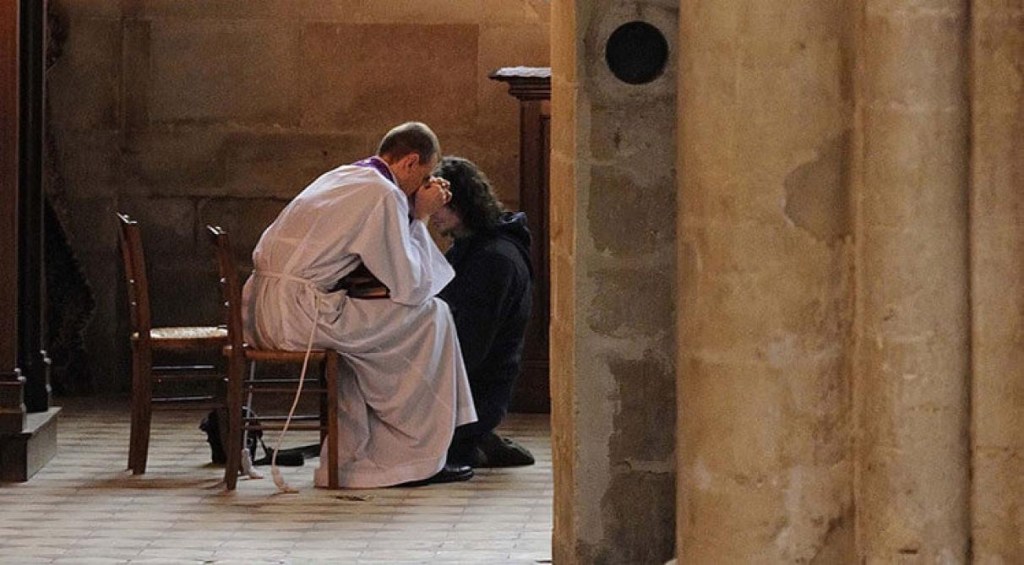




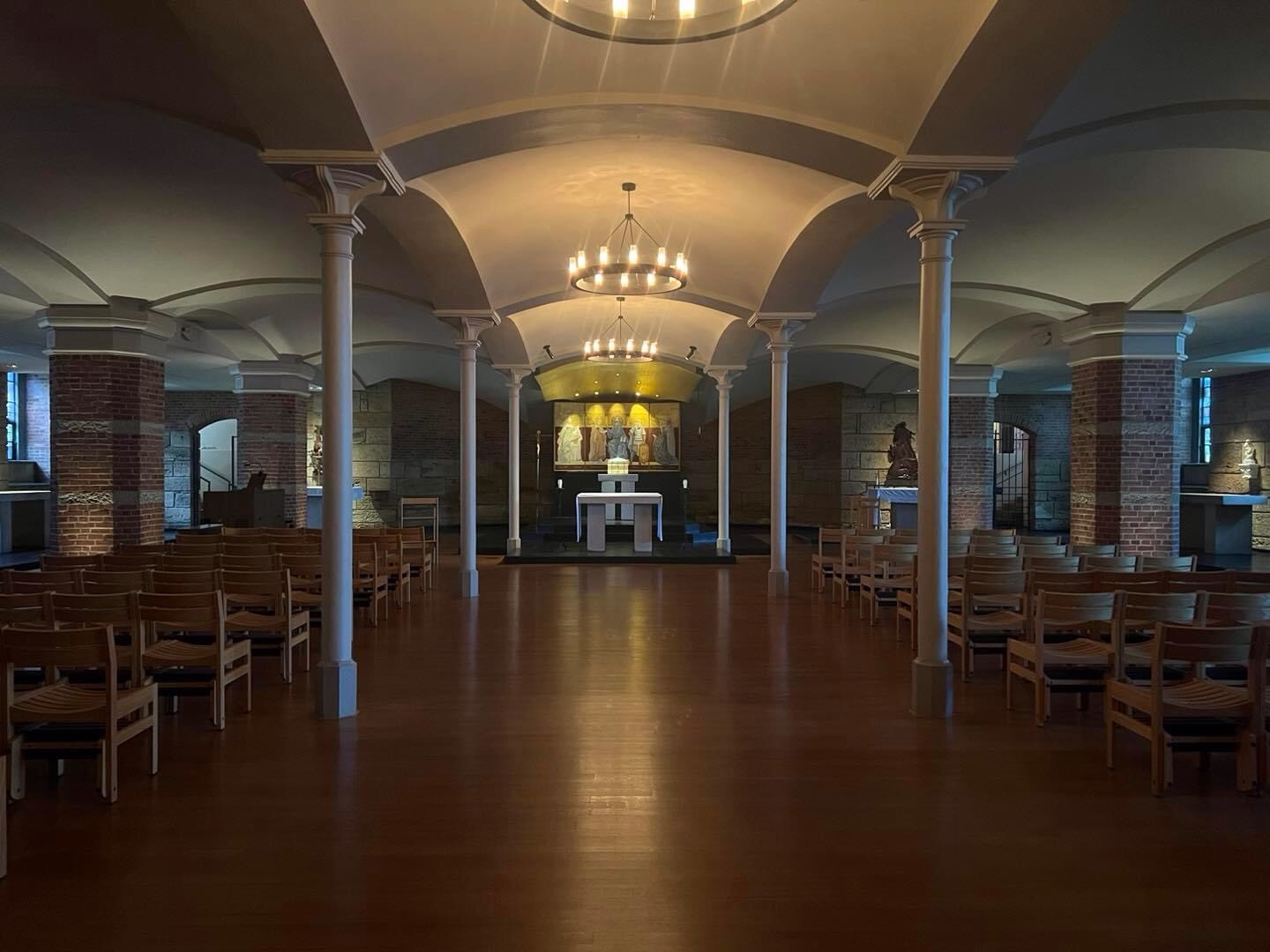



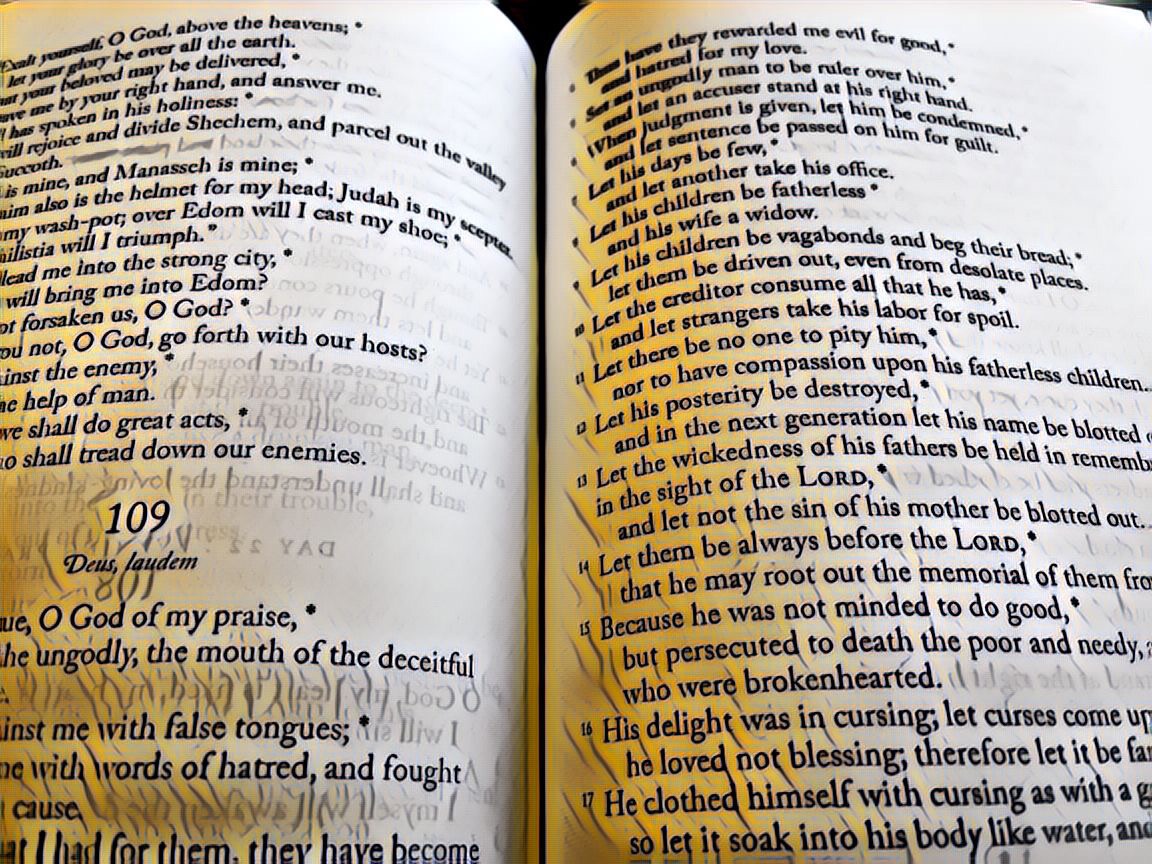


 First Blessings