Apostles Anglican Church
Fr. John A. Roop
Introduction to St. Paul’s First Letter To Timothy
The Lord be with you.
And with your spirit.
Let us pray.
Almighty God, you called Timothy to be an evangelist and teacher, and made him strong to endure hardship: Strengthen us to stand fast in adversity, and to live godly and righteous lives in this present time, that with sure confidence we may look for our blessed hope, the glorious appearing of our great God and Savior Jesus Christ; who lives and reigns with you and the Holy Spirit, one God, now and for ever. Amen.
INTRODUCTION
A faithful older priest in our diocese once asked me to co-author a book with him, a compilation of fictional letters from two “senior” priests to a junior priest new to parish ministry. He envisioned it along the lines of C. S. Lewis’s Screwtape Letters —humorous in tone, serious in content — in which a senior demon guides his young protégé in the art and skill of temptation.

The two older priests would bring their experience to bear to help the younger one navigate the daily nuts-and-bolts of life and ministry in the parish — everything from tricky theological topics to proper liturgics to maintaining one’s own spiritual health to dealing with troublesome parishioners. I politely declined, in part to avoid the presumption of thinking I had sufficient experience and wisdom to be up to the task and in part because I simply had not the time. And, of course, I have no experience with troublesome parishioners! But, I thought then and I think now that such a book would be useful.
Absent our book, young priests needing and wanting such instruction will have to content themselves with St. Paul’s pastoral epistles — 1, 2 Timothy and Titus — because that is exactly what those epistles are: St. Paul’s mature pastoral guidance to his two young protégés on how to do church, on how to manage the various problems that arise in the Christian community from heresies, power struggles, self-doubt, temptations, and the complexities of human relationships with old and young. He also addresses the importance of spiritual self-care, the selection of ministers, and more. There are other great spiritual texts like these epistles found outside Scripture — The Book of Pastoral Rule by St. Gregory the Great and The Rule of St. Benedict come to mind — but they are, in some sense, extended meditations and commentaries on St. Paul’s pastoral epistles. So, we will go to the source. Of these three letters, we will consider the first in canonical order, 1 Timothy.
BACKGROUND
Our story with Timothy starts with St. Paul’s first missionary journey, c. 46-47. You can read the pertinent details in Acts 14:1-23. Having experienced opposition and threat in Iconium, Paul and Barnabas fled to the nearby twin cities of Lystra and Derbe where they continued to preach the gospel. In Lystra, Paul caused a major, city-wide disturbance by healing a man crippled from birth. Into that chaotic situation, men from Antioch and Iconium came fomenting discontent against Paul and Barnabas resulting in Paul being stoned and left for dead in Lystra. Here is how Luke concludes that part of the story:
19 But Jews came from Antioch and Iconium, and having persuaded the crowds, they stoned Paul and dragged him out of the city, supposing that he was dead. 20 But when the disciples gathered about him, he rose up and entered the city, and on the next day he went on with Barnabas to Derbe. 21 When they had preached the gospel to that city and had made many disciples, they returned to Lystra and to Iconium and to Antioch, 22 strengthening the souls of the disciples, encouraging them to continue in the faith, and saying that through many tribulations we must enter the kingdom of God. 23 And when they had appointed elders for them in every church, with prayer and fasting they committed them to the Lord in whom they had believed (Act 14:19-23).
Even with all that had happened, Paul left behind him believers and a church or churches in Lystra with appointed elders to provide oversight.
Now, we fast forward a few years to A.D. 48-51 — probably early in that period — to St. Paul’s secondary missionary journey. We find him again in Lystra:
1 Paul came also to Derbe and to Lystra. A disciple was there, named Timothy, the son of a Jewish woman who was a believer, but his father was a Greek. 2 He was well spoken of by the brothers at Lystra and Iconium. 3 Paul wanted Timothy to accompany him, and he took him and circumcised him because of the Jews who were in those places, for they all knew that his father was a Greek. 4 As they went on their way through the cities, they delivered to them for observance the decisions that had been reached by the apostles and elders who were in Jerusalem. 5 So the churches were strengthened in the faith, and they increased in numbers daily (Acts 16:1-5).
We find out in 2 Tim 1:3-7 that Timothy was a third generation believer: his grandmother Lois, his mother Eunice, and Timothy himself. I am now going to use some anachronistic language to say that Paul had confirmed or ordained Timothy; that is, he had imparted to Timothy some gift of God through the laying on of hands, a gift that he encouraged Timothy to fan into flame.
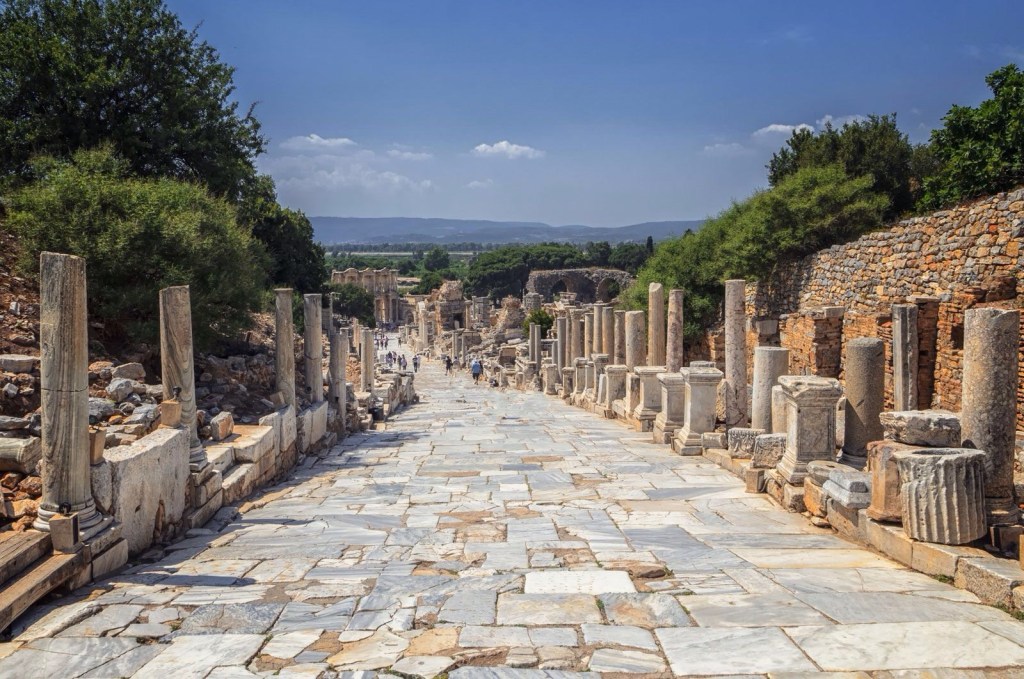
Timothy became Paul’s companion and fellow worker, and Paul became a mentor to him. In time, Paul appointed Timothy to church oversight in Ephesus. Today the Church recognizes Timothy as the first Bishop of Ephesus.
This is enough background to bring us now to the text itself. As we make our way through this overview, keep in mind that this letter is a pastoral manual: instructions, advice, best practices on how a young bishop is to shepherd a church, or churches, to deal with problems, to conduct himself properly among the flock, and to select pastoral leaders.
We will not be able to do a detailed study of the whole of the letter. So, instead, I will take one or two topics from each chapter to serve as an overview.
TEXT
Chapter One: Right Doctrine, with Love and Purity of Heart
The Church has always had to contend for the true gospel, for right doctrine. The specific heresies vary from place to place and from time to time, but that there will always be heresies — along with simple misunderstandings — is a given. And one of the chief functions of a bishop — and a priest acting as the bishop’s representative in a given local church — is to correct those errors. In my own ordination vows, the bishop asked me:
Will you be ready, with all faithful diligence, to banish and drive away from the Body of Christ all erroneous and strange doctrines contrary to God’s Word; and to use both public and private admonitions and exhortations, to the weak as well as the strong within your charge, as need shall require and occasion shall be given (BCP 2019, p. 491)?
I take that question and its answer — I will, the Lord being my helper — quite seriously. And, St. Paul wanted Timothy to take that responsibility seriously, too. That’s why he leads with it.
3 As I urged you when I was going to Macedonia, remain at Ephesus so that you may charge certain persons not to teach any different doctrine, 4 nor to devote themselves to myths and endless genealogies, which promote speculations rather than the stewardship from God that is by faith. 5 The aim of our charge is love that issues from a pure heart and a good conscience and a sincere faith. 6 Certain persons, by swerving from these, have wandered away into vain discussion, 7 desiring to be teachers of the law, without understanding either what they are saying or the things about which they make confident assertions (1 Tim 1:3-7).
I make three observations about this brief text.
First, placing it so early in the letter seems to imply that heresy was a particular problem in Ephesus and that dealing with it — establishing right faith and banishing doctrinal error — was of prime importance. But, this statement, true as it is, comes with a warning, which leads me to the second observation.
The goal and outcome of right doctrine is not being right for the sake of being right, but rather growth in love, purity of heart, a good conscience, and sincere faith. I have noticed an interesting and disturbing phenomenon in the church: a hyper-focus on the minutia of right doctrine can often make people uncharitable and just plain mean-spirited. There is something terribly wrong with that. Right faith should — must — make one more loving, more merciful. If it doesn’t I suspect the problem lies not with the brain, but with the heart; the head is pure, but the heart is not. So Paul emphasizes that the goal of doctrinal purity is love that issues from a pure heart, a good conscience, and a sincere faith. A good and faithful theologian is known not only by his knowledge, but also by his love.
For my third observation: some aspire to leadership in the church — and here Paul is speaking particularly of an aspiration to teach — long before they are ready, long before they have either the knowledge or the gifts. Such people have the potential to do great damage, not only to others but also to themselves. I have seen such people wander off into heresy and make shipwreck of their faith.

Paul warns Timothy about such people. St. James has similar concerns in his epistle:
1 Not many of you should become teachers, my brothers, for you know that we who teach will be judged with greater strictness (James 3:1).
Chapter 2: Prayer, Male Restraint, Female Modesty, and Leadership
There is a scene in Fiddler On the Roof that I have mentioned before; it’s one of my favorites. The townsfolk of Anatevka come to see their rabbi and to ask a question. One of them, Leibesh, speaks:
Leibesh: Is there a proper blessing for the czar?
Rabbi: A blessing for the czar? Of course. May God bless and keep the czar…far away from us.
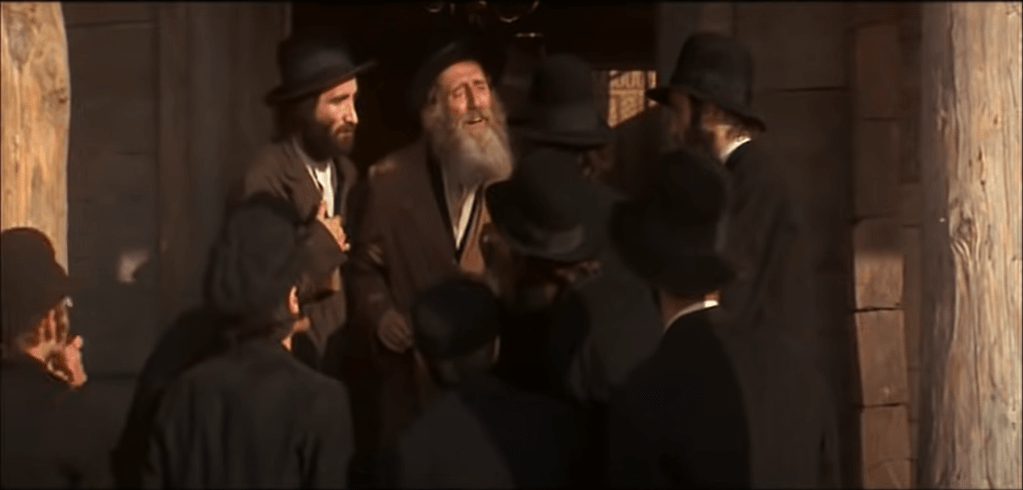
https://youtu.be/8jZFnKZcids?si=HNxbJu_BkoAgqwmEhttps://youtu.be/8jZFnKZcids?si=HNxbJu_BkoAgqwmE
I think of this whenever I read St. Paul’s instruction about prayer for the authorities.
1 First of all, then, I urge that supplications, prayers, intercessions, and thanksgivings be made for all people, 2 for kings and all who are in high positions, that we may lead a peaceful and quiet life, godly and dignified in every way. 3 This is good, and it is pleasing in the sight of God our Savior, 4 who desires all people to be saved and to come to the knowledge of the truth (1 Tim 2:1-4).
Essentially, St. Paul tells us to pray for kings and those in high positions that they may leave the church alone to lead quiet and godly lives, that they might not make trouble for the faithful or hinder the free exercise of the faith. This is the essence of what we mean — or should mean — by separation of church and state: the state does not interfere with or hinder the practice of faith. But, St. Paul also mentions another reason we pray for the authorities: God wants all men to be saved and to come to the knowledge of the truth. We intercede on behalf of those authorities who do not know or accept the truth or who know it and practice it only very imperfectly. And we pray that under their authority we may be free to proclaim the Gospel.
How we are to pray — the spirit with which we are to pray — matters, and St. Paul has instructions both for men and women. For men, Paul says, “Don’t let your prayer meeting break out into a brawl.”
8 I desire then that in every place the men should pray, lifting holy hands without anger or quarreling (1 Tim 1:8).

Wouldn’t you like to know the story behind this instruction — what was going on in Ephesus?
For women, Paul says, “Don’t let your prayer meeting become a fashion show.”
9 likewise also that women should adorn themselves in respectable apparel, with modesty and self-control, not with braided hair and gold or pearls or costly attire, 10 but with what is proper for women who profess godliness — with good works (1 Tim 2:9-10).

For Paul, modesty didn’t have to do with showing too much skin or with wearing form-fitting Spandex body suits out in public; that’s our problem, not his. He was concerned with an ostentatious display of wealth that shamed the poor women in the church and that spoke against humility and generosity. He wanted the women to dress respectably — in terms of outward ornamentation — and to be clothed in good works.
Now, if I don’t at least mention the latter part of this chapter some here will accuse me of clerical cowardice. Here is the verse in question.
11 Let a woman learn quietly with all submissiveness (1 Tim 2:11).
Where you place the emphasis on this verse serves as a good Christian Rorschach Test. Did you emphasize “let a woman learn quietly” or the instruction that she do so “with all submissiveness”? The first, that a woman should be allowed to learn and to do so in peace, undisturbed, would have been scandalous in St. Paul’s time. That she is to do so with submissiveness is scandalous in our time. We have to get beyond our cultural biases to appreciate what St. Paul is actually saying.
Yes, women were to be allowed to learn undisturbed (quietly), which is still unheard of in some Middle Eastern cultures and was radical in the Christian community. But the purpose of their learning was not the disruption of families or churches. The women were to submit to established authorities: the husband in the home and the elders in the church. Their right to learn was not an invitation to attempt to wrest authority from male leadership. Freedom to learn was not freedom to foment discord.
The modern church has no problem with women learning; that’s a given largely because it is the prevailing cultural norm in the West. But, the church struggles with this matter of submission largely because that violates the cultural norm. My point being that we may have been more influenced by the culture than by Scripture, so it is important the we keep coming back to what St. Paul says, and that we do business with that word rather than with the word our culture speaks to us.
Chapter 3: Qualifications for Church Leaders
St. Paul had apparently given both Timothy and Titus the task of appointing elders/overseers over the various churches and deacons to serve in the churches. These correspond to our bishops, priests, and deacons — not necessarily a one-to-one correspondence, but they are the spiritual ancestors of our current clergy. So, what did St. Paul instruct Timothy to look for? What attributes must a bishop/priest have? A deacon?
Bishop/Priest
1 The saying is trustworthy: If anyone aspires to the office of overseer, he desires a noble task. 2 Therefore an overseer must be above reproach, the husband of one wife, sober-minded, self-controlled, respectable, hospitable, able to teach, 3 not a drunkard, not violent but gentle, not quarrelsome, not a lover of money. 4 He must manage his own household well, with all dignity keeping his children submissive, 5 for if someone does not know how to manage his own household, how will he care for God’s church? 6 He must not be a recent convert, or he may become puffed up with conceit and fall into the condemnation of the devil. 7 Moreover, he must be well thought of by outsiders, so that he may not fall into disgrace, into a snare of the devil (1 Tim 3:1-7).
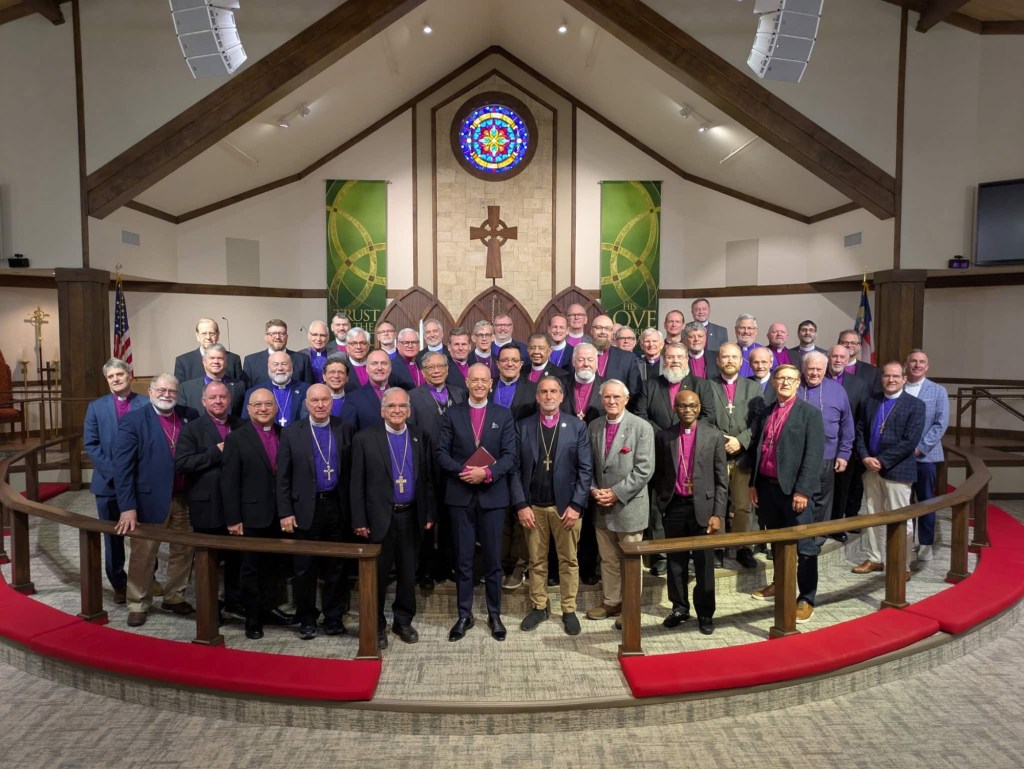
This emerges clearly from the text: the bishop, the priest is not the CEO or CFO of an organization, not an administrator in the modern sense, not a promoter or an advertising executive, so character and not skill is of primary importance. Ministries, churches, lives are destroyed if this passage is ignored. What scorn is brought upon the church when a bishop or priest proves not to be above reproach — especially in this day of social media? How much damage can be done by a bishop or priest who is not a “one woman man,” the literal translation rendered here as “husband of one wife”? How destructive is a bishop or priest who demonstrates little self-control, whose first reaction is caustic instead of gentle, who is arrogant and conceited instead of humble? What harm may be done by a bishop or priest who plays fast and loose with the church’s money to enrich himself? And you can go on through the list asking such questions. The church should ask such questions about its clergy, should demand much of us who are called to serve. Now, I will speak personally: hold me accountable to these things. If I fail, confront me with my failure, in love. If I do not repent and amend my life, talk to my rector, Fr. Jack. If that does not suffice to resolve the issue, speak directly with my bishop, Foley Beach. Lives are at stake.
The characteristics of a deacon are similar, and I will leave those for you to read.
The end of this chapter may contain a bit of liturgy or part (or perhaps all) of an early creed. In our Eucharistic prayer, following the words of institution, the priest says, “Therefore we proclaim the mystery of faith,” and the people respond:
Christ has died.
Christ is risen.
Christ will come again (BCP 2019, p. 133).
Now, look at the parallels between that bit of liturgy and 1 Tim 3:16. I can imagine St. Paul’s standing in a small house church, perhaps at the Eucharist, saying, “Great indeed, we confess, is the mystery of godliness,” and the people responding as one:
He was manifested in the flesh,
vindicated by the Spirit,
seen by angels,
proclaimed among the nations,
believed on in the world,
taken up in glory.
These few lines are rich; they address the incarnation, the witness of the Holy Spirit and the entire heavenly realm, the ascension, and the proclamation of the Gospel throughout the world. St. Paul calls this the mystery of godliness, that is, the proclamation of the faithfulness of God in Jesus, good news once hidden but now revealed to all creatures in heaven and on earth.
Chapter 4: Warning and Encouragement
One of the great myths of the Enlightenment was the hope of unlimited progress. If the world could only cast off the shackles of kings and popes and embrace the glorious freedom of democracy and science, it would move steadily toward Utopia, from good to better throughout its days. This myth dies hard. We still believe that if only we can elect the right president and the right representatives, if only we can get Christians in positions of power, if only…then we can bring about the kingdom of God on earth.
St. Paul saw things differently. He didn’t envision the world marching toward the promised land. He saw dark days ahead, in his time, in Timothy’s time, I think in every time.
1 Now the Spirit expressly says that in later times some will depart from the faith by devoting themselves to deceitful spirits and teachings of demons, 2 through the insincerity of liars whose consciences are seared, 3 who forbid marriage and require abstinence from foods that God created to be received with thanksgiving by those who believe and know the truth. 4 For everything created by God is good, and nothing is to be rejected if it is received with thanksgiving, 5 for it is made holy by the word of God and prayer (1 Tim 4:1-5).
Timothy’s task is to hold fast to the truth in such time, to teach the truth, to model the truth. So, St. Paul exhorts his young protégé.
6 If you put these things before the brothers, you will be a good servant of Christ Jesus, being trained in the words of the faith and of the good doctrine that you have followed. 7 Have nothing to do with irreverent, silly myths. Rather train yourself for godliness; 8 for while bodily training is of some value, godliness is of value in every way, as it holds promise for the present life and also for the life to come. 9 The saying is trustworthy and deserving of full acceptance. 10 For to this end we toil and strive, because we have our hope set on the living God, who is the Savior of all people, especially of those who believe.
11 Command and teach these things. 12 Let no one despise you for your youth, but set the believers an example in speech, in conduct, in love, in faith, in purity. 13 Until I come, devote yourself to the public reading of Scripture, to exhortation, to teaching. 14 Do not neglect the gift you have, which was given you by prophecy when the council of elders laid their hands on you. 15 Practice these things, immerse yourself in them, so that all may see your progress. 16 Keep a close watch on yourself and on the teaching. Persist in this, for by so doing you will save both yourself and your hearers (1 Tim 4:6-16).
Notice the forceful verbs Paul uses in this passage: train, toil, strive, command, teach, devote, practice, immerse, keep watch, persist, save. Paul seems to see Timothy’s ministry as a life or death struggle played out in dark days. I think we, too are in such dark days. The question is whether we — the church — has the intensity to withstand and prevail the dark days. Perhaps as a means of self-examination, we might ask ourselves whether St. Paul’s forceful verbs are descriptive of our own lives and ministries. Do I train, toil, strive, practice, persist in the faith in a way fitting for the times?
Chapter 5: Instructions for the Church
Church life is complicated and messy; it is made so by all the sinful people in the congregation and by all the sinful people who lead and serve them, in other words by all of us. This chapter reads something like an HR Manual, spiritual human resource guidelines for handling some messy inter-personal relations in the church.
The first, most basic principle is that people are different and must be treated differently.
1 Do not rebuke an older man but encourage him as you would a father, younger men as brothers, 2 older women as mothers, younger women as sisters, in all purity (1 Tim 5:1-2).
What seems most significant to me in this instruction is that Paul considers — and wants Timothy to consider — the church as an extended family made up of one’s fathers and mothers and brothers and sisters. If you remember that general principle, it will help with many different specific issues. You honor fathers and mothers. You exhort, you encourage brothers. You protect sisters. Treat the church as your family and you won’t go far wrong.
Then there follows an extensive instruction on dealing with — caring for — widows. This follows from this principle of the church as family. These widows are the church’s mothers; honor them as you would honor your own mother. But, there is another important principle here, too. The church takes care of its own, particularly those who are are most vulnerable; in Paul’s society that would have included widows without biological family.
When Paul instructs the church to honor widows, he means to provide material assistance to them, not just to think highly of them and to treat them with respect. Feed them, clothe them, house them, meet their needs. You can read all the details about which widows qualify for church assistance in 1 Tim 5:3-16. Underlying all these requirements is a simple ideal: to promote the godliness of all parties involved in the situation. Church assistance wasn’t automatic; it was contingent upon several factors: the presence and ability of the widow’s family to care for her, the age of the widow, her reputation of holiness and her history of good works.
It wasn’t just widows who were placed on the roll for honor, that is, for financial assistance; the elders of the church — what we would call the clergy — were supported, as well. This instruction, 1 Tim 5:17-25, is so needed in our current climate of blame and suspicion fueled by the dumpster fire that is social media. Let me summarize this passage in bullet point form:
Support the bishops and priests financially, especially those who preach and teach. They are worthy of a double stipend.
Don’t listen to gossip about the clergy. If there are credible charges based upon evidence of two or three witnesses, then take that seriously. Otherwise, don’t allow slander.
If the clergy are engaged in sinful behavior, deal with it without partiality. If they refuse to repent, rebuke them publicly. To fail to deal with sin is to be complicity in it, to take part in the sins of others.
So, in ever briefer form: Honor the clergy; do not entertain gossip; do not ignore their sin. And Paul says, you can avoid many clergy problems if you are slow to ordain — if you ordain only those who have been thoroughly tested.
EXCURSUS
Time will not permit a discussion of 1 Tim 5:24-25 though the passage is central to the cultivation of humility in judging others. As a brief commentary on it, I offer a story from the Desert Fathers concerning Abba Moses the Black, a man with a history himself (see https://en.wikipedia.org/wiki/Moses_the_Black).
A brother at Scetis committed a fault. A council was called to judge him, to which Abba Moses was invited, but he refused to go to it. So the priest sent another messenger to Moses, urging him to come, since all the brothers were waiting for him. So Moses took his oldest, worn-out, leaky basket. filled it with sand. placed it on his back, and went to join the council of judgment. When the brothers saw him arriving, they went out to great him, asking him why he had arrived so burdened. Abba Moses said, “My many sins run out behind me, and I do not even see them, and yet today I have come to judge the sins of someone else.” The brothers relented, called off the council, and forgave their erring brother.
Chapter 6: Watch Out and Fight the Good Fight
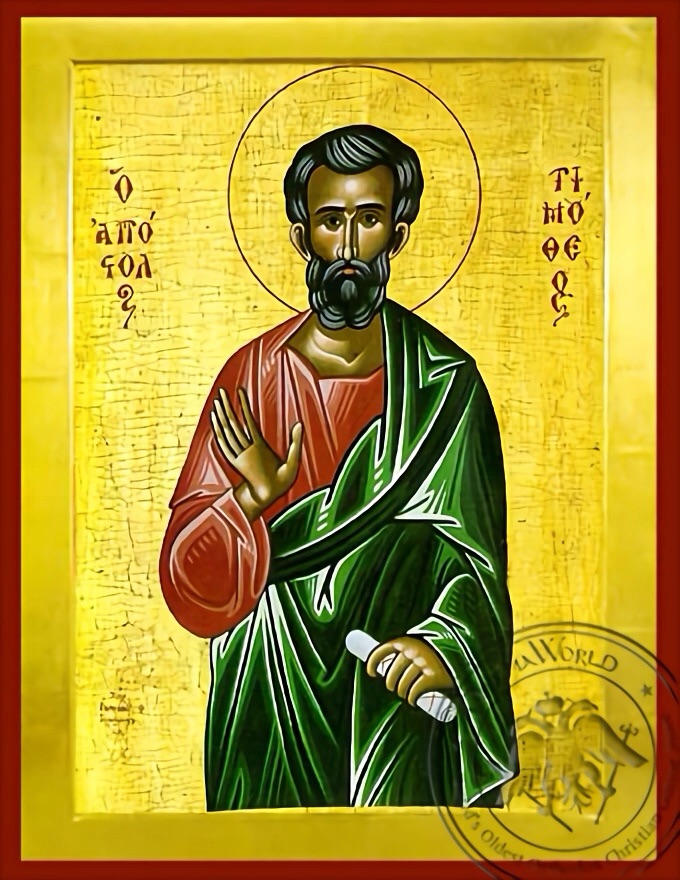
In this last chapter, St. Paul again warns Timothy against false teachers. How do you identify them? Look at their character and at the results of their teaching.
4 he is puffed up with conceit and understands nothing. He has an unhealthy craving for controversy and for quarrels about words, which produce envy, dissension, slander, evil suspicions, 5 and constant friction among people who are depraved in mind and deprived of the truth, imagining that godliness is a means of gain. 6 But godliness with contentment is great gain, 7 for we brought nothing into the world, and we cannot take anything out of the world (1 Tim 6:4-7).
There are people who delight in sowing discord or in profiting unduly from their ministry. No matter the quality of their doctrine or their teaching, these are false teachers and must be opposed. Watch out for them.
And then, St. Paul encourages Timothy about his own behavior. We will close with this charge.
11 But as for you, O man of God, flee these things. Pursue righteousness, godliness, faith, love, steadfastness, gentleness. 12 Fight the good fight of the faith. Take hold of the eternal life to which you were called and about which you made the good confession in the presence of many witnesses. 13 I charge you in the presence of God, who gives life to all things, and of Christ Jesus, who in his testimony before Pontius Pilate made the good confession, 14 to keep the commandment unstained and free from reproach until the appearing of our Lord Jesus Christ, 15 which he will display at the proper time—he who is the blessed and only Sovereign, the King of kings and Lord of lords, 16 who alone has immortality, who dwells in unapproachable light, whom no one has ever seen or can see. To him be honor and eternal dominion. Amen (1 Tim 6:11-16).


 First Blessings