Apostles Anglican Church
Fr. John A. Roop
Romans, Part 1: Fundraising and Cosmic Redemption
The Lord be with you.
And with your spirit.
Let us pray.
O God, you desire that all people be saved and come to knowledge of the truth: Prosper all those who live, preach, and teach the Gospel at home and in distant lands; protect them in all perils, support them in their loneliness, sustain them in the hour of trial; give them your abundant grace to bear faithful witness; and endue them with burning zeal and love, that they may turn many to righteousness; through Jesus Christ our Lord. Amen (BCP 2019, p. 652).
Introduction: Fund Raising Letters
There are great blessings of being an assisting priest: no administrative tasks and no handling of money. Due to the generosity of this parish, I never have to think about fundraising.
But, I have ministry friends — some of them missionaries — for whom fundraising is an ongoing matter of concern. In the churches of my youth, it worked this way. A missionary would have a “home church” from which he/she would be sent out and which would provide a base of financial and logistical support. Beyond that, the missionary would visit like minded churches to secure additional funding and prayer support. Once on the mission field, the missionary would provide this church network frequent updates with details of the work, photos, special needs, prayer requests, that sort of thing. When home for furlough, the missionary often stayed with members of the home church and used that church as a “base of operations” from which he/she would visit other supporting churches and perhaps seek out new ones. A home church was crucial both for logistics and for finances.
Since he began his missionary work sometime around 46/47 A.D., St. Paul had considered the church in Syrian Antioch as his home church. It was there that he and Barnabas were first commissioned and sent out with fasting, prayer, and the laying on of hands (Acts 12:1-3), and it is there that Paul returned after each journey. And that worked well for Paul for a decade, until he wanted to travel farther afield, farther to the West, as far even as Spain. A “home church” as far away as Antioch simply wouldn’t be feasible for that plan; he needed a sponsor closer to the action. And, for Paul, that meant Rome, the center of the world. But, that was problematic for some obvious reasons: Paul had not founded the church at Rome — we don’t know who did — and he was known there, if at all, only by reputation. What to do?
Do you get solicitations in the mail, fund raising letters? If you have ever donated to a charity, you almost certainly do. These letters follow a similar script. They tell you about the good work that the group is doing — perhaps with some photos or data included — and they assure you that their continuing ministry is totally dependent on donors like you. Won’t you consider becoming a regular supporter or, if you already are, consider increasing your support in the coming year?

How much time do you spend with one of those letters if it is from a group with which you are unfamiliar? Would you read the letter if it were, say, 7111 words long? For comparison, my sermons average 3000 and these lesson around 4000.
7111 words: that’s an oddly specific number, isn’t it? It happens to be — according to Google — the number of words in the Greek text of St. Paul’s epistle to the Romans. That letter may be one of the longest — and certainly the most influential and consequential — fund raising letter ever written. And that is what it is: a letter of introduction and a solicitation of support — financial and logistical — for Paul’s long delayed and much desired mission to Spain. Near the end of the letter, Paul finally gets around to making that point, to making his plea:
23 But now, since I no longer have any room for work in these regions, and since I have longed for many years to come to you, 24 I hope to see you in passing as I go to Spain, and to be helped on my journey there by you, once I have enjoyed your company for a while (Rom 15:23-24).
The following verses are just itinerary items for Paul, but for us they are much more poignant:
25 At present, however, I am going to Jerusalem bringing aid to the saints.
28 When therefore I have completed this and have delivered to them what has been collected, I will leave for Spain by way of you. 29 I know that when I come to you I will come in the fullness of the blessing of Christ (Rom 15:25, 28-29).
You know the rest of the story: Paul was arrested in Jerusalem, detained in prison for some two years in Caesarea, and then finally transported to Rome courtesy of Caesar’s soldiers. Did he ever make it to Spain? We simply don’t know. What we do have is his fund raising letter to the churches in Rome, one of the most significant pieces of religious writing ever penned.
Why such a long and complex letter? I can think of two equal and opposite likely answers. The first is that the Roman Christians did not know Paul, in which case he would need to introduce both himself and the Gospel he preached. If you are being asked to support someone, you have the right to know what they believe and what will be the nature of the work they hope to accomplish under your auspices. Or, the second possibility is that they had heard about Paul, about the trouble he caused everywhere he went and the divisive nature of his Gospel. In that case, Paul would need to set the record straight, and it would take at least 7111 words to do that! Either way, we are the beneficiaries, because Romans gives us the most comprehensive view of Paul’s understanding of the Gospel that we have in any single letter.
Now, two final words about the epistle before we consider the text itself. The “first” comes with a caution: some of what I will say may seem a bit different from what you’ve heard before, from the Reformers’ thought and from Protestant thought since then.
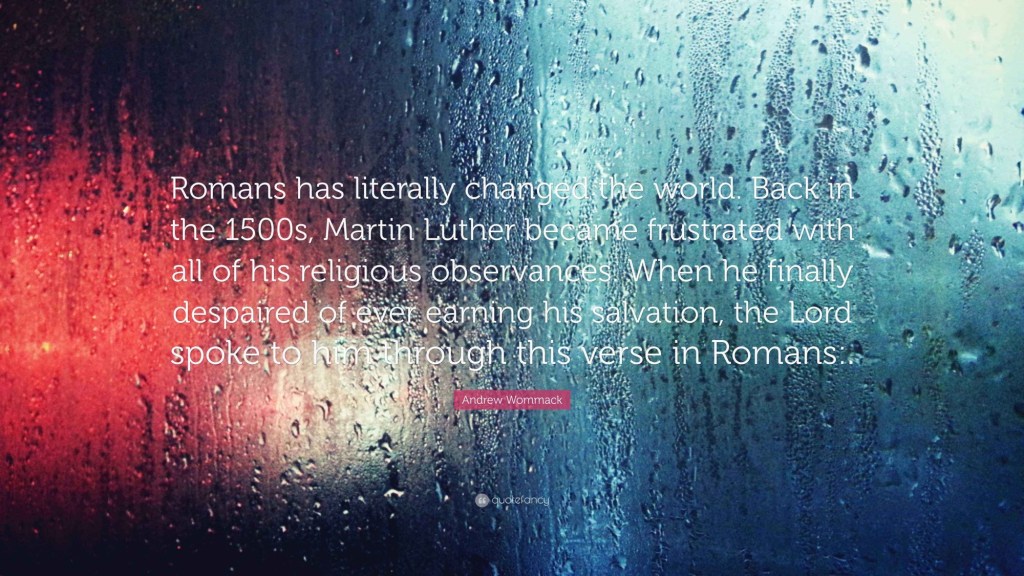
It’s not that the Reformers were wrong but rather that they were giving good answers to the wrong questions: to their questions, but not to Paul’s questions. They overlaid their agenda onto Romans instead of accepting Paul’s agenda. And what resulted was not a wrong view but a view that is too small, too individualized. The Reformers reduced Paul’s concerns to an “I problem.” I have sinned. I stand condemned before God and when I die I will go to hell. But, God sent Jesus to die on the cross for me. If I believe in him — by grace I am saved, through faith — if I believe in him, God will forgive me and I will go to heaven when I die. That is the Romans’ “I problem” focus.
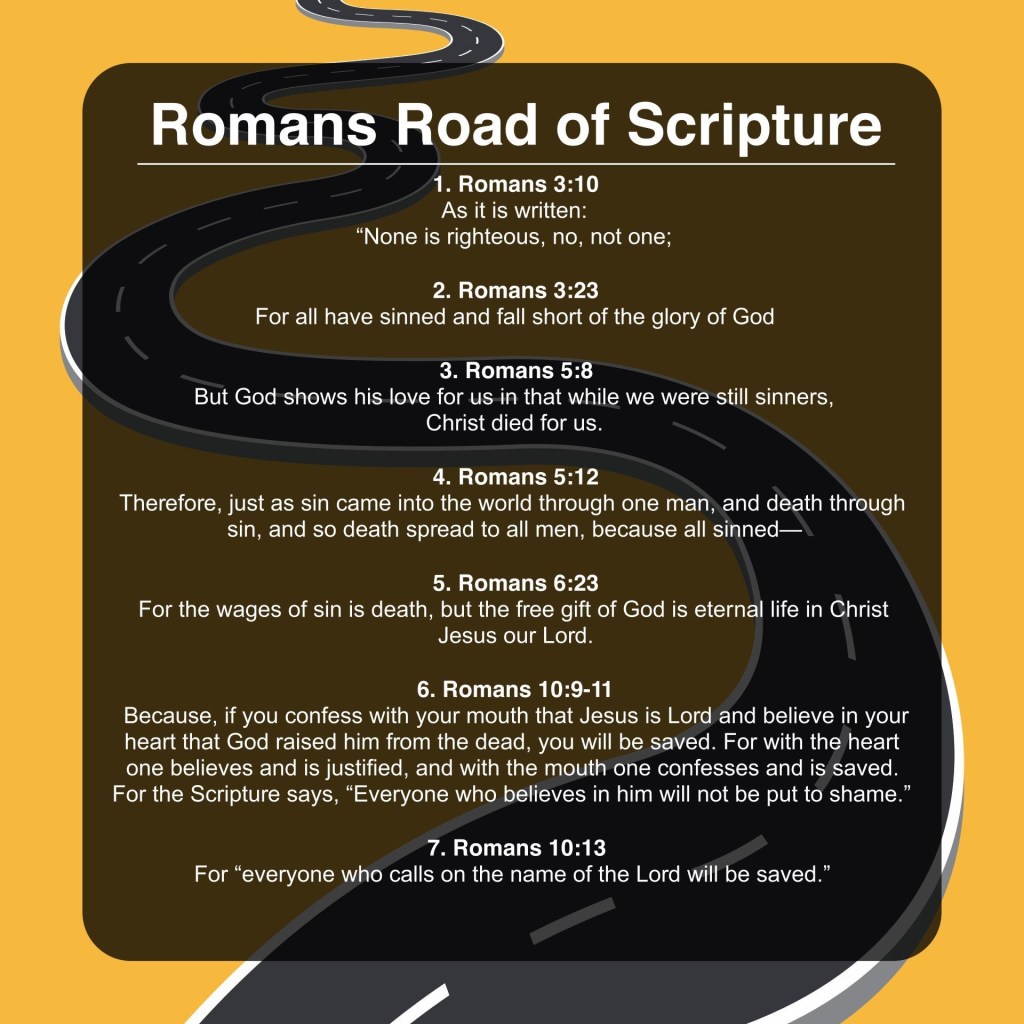
But, Paul has something much larger in mind, something larger that also contains and answers the “I problem.” The something larger looks like this. God created a world in which to dwell with humans. These people were to be his prophets, priests, and kings and to implement his righteous rule over creation, to sum up the praises of all creation and to lead creation in worship. But, our first parents rejected this vocation and turned from the Creator to created things, a sort of primal idolatry. And that had devastating consequences not just for humans, but for all of creation. Everyone and everything — every aspect of creation — is caught up in futility and death and decay. Romans — the Gospel — is about God’s initiative to solve that cosmic problem. Since the problem started with man’s disobedience and led to his death, the way out of it is to bring man back into righteous relationship with God and to deliver him from sin and death. And that brings us to Israel and through Israel to Jesus, who in his perfect life, his sacrificial death, his victory over death through his resurrection, and his ascension to glory has begun the renewal of all things. A subset of that story — an essential subset, but not the whole story — is what the Reformers focused on: how the individual becomes part of that great story of the redemption of all things. If we don’t keep this larger story in mind, we will miss the real import of the climactic chapter of the epistle, chapter 8, and we will be totally confused by chapters 9-11 that grapple with the puzzling, ongoing role and status of Israel. In the typical Protestant reading of Romans — the “Romans Road” as it is called — which deals almost solely with the “I problem,” Israel has no essential place and Romans 9-11 is most often passed over in some confused and embarrassed silence. To be clear, nothing of what the Reformers held dear is lost in this broader interpretation. But by taking a wider view, by taking Paul’s view, very much is gained.
The second “final word” is a bit of historical context. Claudius reigned as Roman Emperor from A.D. 41 to 53. Sometime during that period he issued an edict expelling the Jews from Rome. The Roman historian Seutonius wrote this about Claudius and the edict:
Since the Jews constantly made disturbances at the instigation of Chrestus, he expelled them from Rome (Claudius 25, Catharine Edwards, trans.).
It seems likely that Chrestus is a reference to Χριστος, to Christ. We don’t know the exact nature of the disturbances, but we have seen the chaos Paul’s work among the Jews caused, so it is not difficult to imagine something similar in Rome leading to the expulsion of the Jews. Aquila and Priscilla, formerly of Rome, were caught up in that expulsion; that is why they were in Corinth. This expulsion had implications for the Church in Rome. Prior to the edict, the churches were likely multi-ethnic, Jews and Gentiles together. After the expulsion, they would have been Gentile-only churches which likely took on a decidedly different character than before.
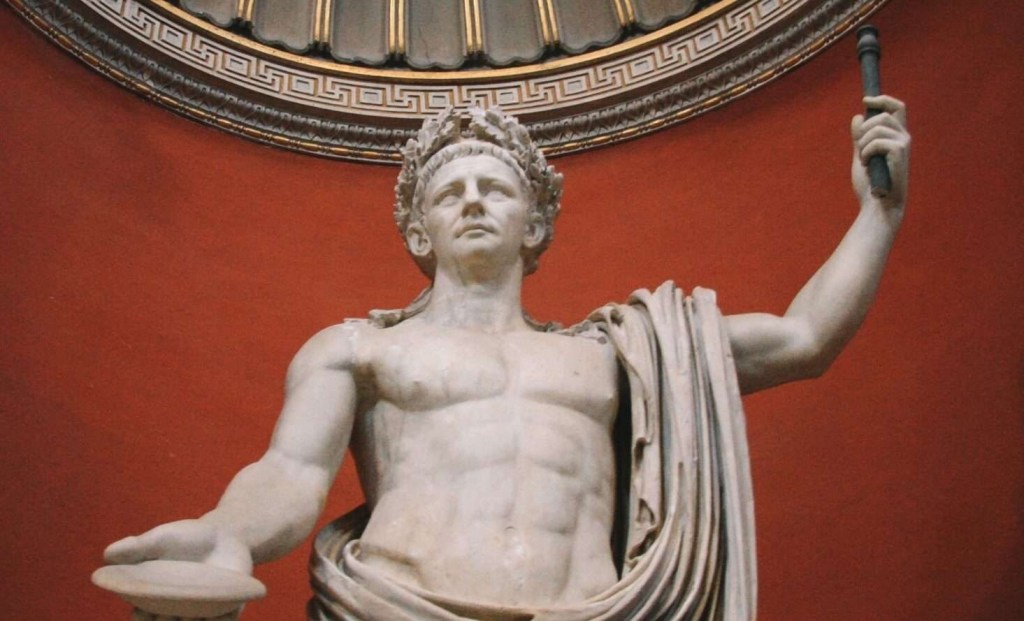
But, with Claudius’s death and Nero’s ascension to the throne in A.D. 54, all of Claudius’s edicts were annulled and the Jews were free to return to Rome; the Jewish Christians could return to the churches. Whether the Gentiles welcomed them or not is an open question. They had done quite well without the Jews, thank you very much, and the Jews shouldn’t expect to come back to the churches in some dominant role now. In their absence, Jesus had become very much more than just the Jewish Messiah. So, all that had to be worked out. Did the Jews still have an significant role in redemption history or was all that old news now? Paul has to, and does, address all that, so Israel figures prominently in Romans.
Here, we are just beginning to see how complex all this is — how complex the epistle must be — and why 7111 words were necessary to even make a start of it all. And, with that, we turn to the text.
Paul and the Gospel
As did typical letters of the day, Paul begins with an introduction of himself, and he includes a brief, but significant, introduction of the Gospel.
1 Paul, a servant of Christ Jesus, called to be an apostle, set apart for the gospel of God, 2 which he promised beforehand through his prophets in the holy Scriptures, 3 concerning his Son, who was descended from David according to the flesh 4 and was declared to be the Son of God in power according to the Spirit of holiness by his resurrection from the dead, Jesus Christ our Lord, 5 through whom we have received grace and apostleship to bring about the obedience of faith for the sake of his name among all the nations, 6 including you who are called to belong to Jesus Christ,
7 To all those in Rome who are loved by God and called to be saints:
Grace to you and peace from God our Father and the Lord Jesus Christ (Rom 1:1-7).
Notice how Paul establishes his credentials: servant of Christ, apostle, set apart to bring the Gospel to all the nations including to Rome. And then notice how he talks about the Gospel: (1) promised by the prophets in the holy Scriptures (Israel’s prophets and Israel’s Scriptures), (2) descended from David (Israel’s greatest king), (3) concerning God’s son who was raised from the dead, Jesus Christ (Jesus, the Messiah of Israel). From the beginning Paul roots the Gospel clearly in the story of Israel, as the climax of Israel’s story: no Israel, no Gospel. And then, to emphasize that connection, he gives this great summary statement in the middle of the first chapter:
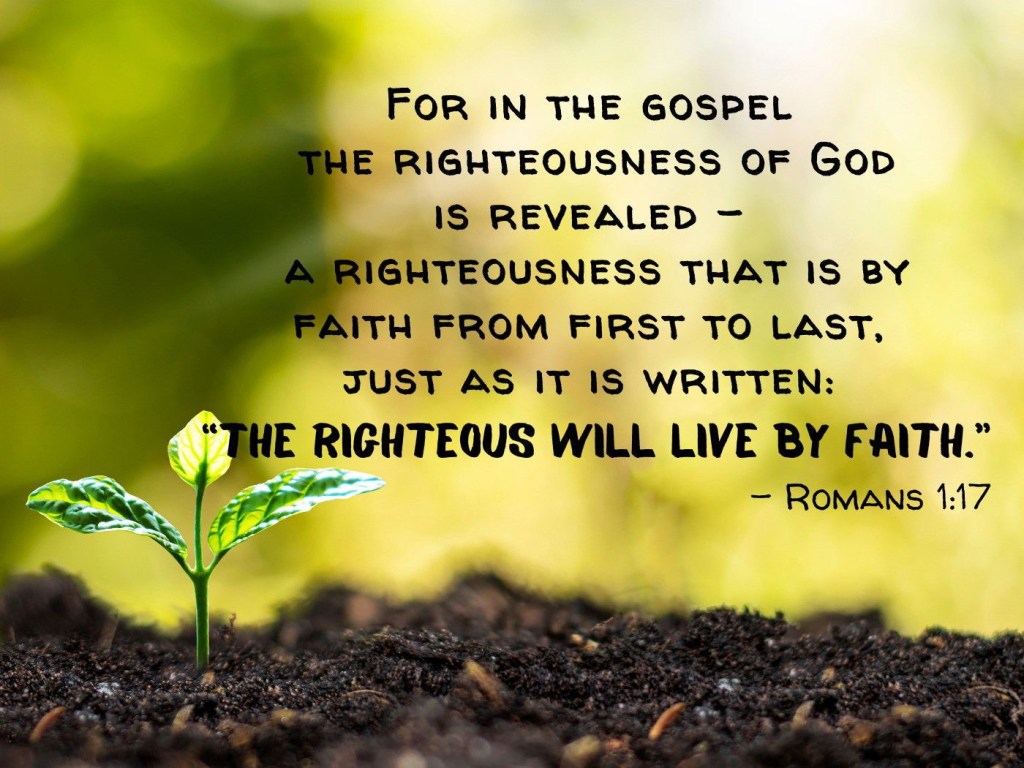
16 For I am not ashamed of the gospel, for it is the power of God for salvation to everyone who believes, to the Jew first and also to the Greek. 17 For in it the righteousness of God is revealed from faith for faith, as it is written, “The righteous shall live by faith” (Rom 1:16-17)
The Gospel is about salvation — which is much more than the individual going to heaven when he dies, as we will see — and it is for those who believe. But get this: salvation is to the Jew first and also to the Greek. In terms of the Gospel, the Jews are prior to the Gentiles because the Gospel came through the Jews — as part of God’s covenant with Abraham — and only then to the Gentiles: to the Jew first and also to the Greek.
The Unrighteousness of Man
Why do we need the Gospel at all? Because Jews and Gentiles alike have gotten themselves in a mess; they all stand unrighteously before a righteous God. Paul paints a very dismal picture of the state of all human kind in Romans 1-3. In outline, the argument runs like this.
God has made himself known universally, not least through creation.
Though all men did indeed know him, they refused to honor him or give thanks to him. Instead of worshipping the true God, they chose idolatry instead. Idolatry is the most fundamental sin throughout Jewish history, and it plagues the Gentiles, as well.
The worship of that which is not God — idolatry — has consequences, and God gave man up to those consequences. A downward spiral ensued: sexual immorality and perversion (which always seems to go hand-in-glove with idolatry) and all manner of unrighteousness: evil, covetousness, malice, envy, strife, murder, deceit, maliciousness, gossip, slander, hatred toward God, insolence, arrogance, ruthlessness, and so on. And then Paul issues the judgment on all who do these things: they deserve to die (Rom 1:32).
“Oh, but certainly not us!” some — the Jews especially — might dare to say. To which Paul responds, “Oh, then, you presume to judge others? In doing so, you indict yourself, not least for your hard and impenitent hearts that fail to acknowledge your own sin and for your rejection of repentance. All stand guilty before God — Jews, with the Law, and Gentiles without the Law — because neither group has kept the law it has: for Jews the Mosaic Law, and for Gentiles the natural Law written in all men’s hearts.”
So, Paul concludes his indictment:
9 What then? Are we Jews any better off? No, not at all. For we have already charged that all, both Jews and Greeks, are under sin, 10 as it is written:
“None is righteous, no, not one;
11 no one understands;
no one seeks for God.
12 All have turned aside; together they have become worthless;
no one does good,
not even one” (Rom 3:9-12).

The Righteousness of God
Now, back to the story again. God created humans with the intent to dwell with them; that’s what we see initially in the Garden. But, the sin of our first parents made that impossible. So, God re-starts the story on a small scale with the calling of Abram and the creation of a people, Israel, with whom he would dwell in the Tabernacle and later in the Temple. Israel was the microcosm of creation through whom God would renew the world and fulfill his purpose to dwell with all humans. But now, Paul has charged that the Jews have failed to keep the Law; they have broken the covenant; they are no better in that sense than the Gentiles.
And that raises questions. Is God’s whole purpose of having a holy people among whom to dwell thwarted then? Is man a lost cause? What, if anything, can be done? And right here, at this moment of near despair, comes another of Paul’s great summaries of the Gospel:
21 But now the righteousness of God has been manifested apart from the law, although the Law and the Prophets bear witness to it— 22 the righteousness of God through faith in Jesus Christ for all who believe. For there is no distinction: 23 for all have sinned and fall short of the glory of God, 24 and are justified by his grace as a gift, through the redemption that is in Christ Jesus, 25 whom God put forward as a propitiation by his blood, to be received by faith. This was to show God’s righteousness, because in his divine forbearance he had passed over former sins. 26 It was to show his righteousness at the present time, so that he might be just and the justifier of the one who has faith in Jesus (Rom 3:21-26).
Yes, we are unrighteous, but God is righteous. God’s righteousness means, not least, that God is faithful to his covenant even when Israel has not been. What he has promised to Abraham and through Abraham for all men, he will accomplish, and, in fact, he has accomplished through Christ Jesus: redemption through faith in Christ, grace as a gift. And, this is not for the Jews only; the Jews cannot boast in their covenantal relationship with God nor in their possession of his Law:
27 Then what becomes of our boasting? It is excluded. By what kind of law? By a law of works? No, but by the law of faith. 28 For we hold that one is justified by faith apart from works of the law. 29 Or is God the God of Jews only? Is he not the God of Gentiles also? Yes, of Gentiles also, 30 since God is one—who will justify the circumcised by faith and the uncircumcised through faith (Rom 3:27-30).
The Primacy of Faith
But, of course, all this raises even more questions, not least about Abraham. Wasn’t Abraham justified by his works — specifically by the work of circumcision? Now, as an important aside: you see through this line of questioning that when Paul talks about works, he is not, like the Reformers, talking about general good deeds or those works like pilgrimages, masses, or purchases of indulgences demanded by the medieval Roman Catholic Church. Paul is talking about the works of the Jewish Law, those things that uniquely marked out the Jews as the covenant people of the God, works like circumcision, Sabbath-keeping, dietary restrictions. So, back to Abraham: Paul insists that Abraham was justified by faith before any works of the Law, i.e., before, and therefore without, circumcision. These few verses summarize Paul’s argument from Romans 4.
9 Is this blessing then only for the circumcised, or also for the uncircumcised? For we say that faith was counted to Abraham as righteousness. 10 How then was it counted to him? Was it before or after he had been circumcised? It was not after, but before he was circumcised. 11 He received the sign of circumcision as a seal of the righteousness that he had by faith while he was still uncircumcised. The purpose was to make him the father of all who believe without being circumcised, so that righteousness would be counted to them as well, 12 and to make him the father of the circumcised who are not merely circumcised but who also walk in the footsteps of the faith that our father Abraham had before he was circumcised.
22 That is why his faith was “counted to him as righteousness.” 23 But the words “it was counted to him” were not written for his sake alone, 24 but for ours also. It will be counted to us who believe in him who raised from the dead Jesus our Lord, 25 who was delivered up for our trespasses and raised for our justification (Rom 4:9-12, 22-25).
The Beginning of the End
Remember where this story has been heading. Here’s an analogy. Imagine a large ship, perhaps a cruise ship, sinking far from shore. Some passengers have made their way to the decks, though not all can do so. Coast Guard and Navy helicopters are on the scene, but the best they can do is to lift a few of the passengers to safety. But, what if one of the helicopters can lower an engineer to the deck who can rescue the entire ship instead? That’s what is needed: not to pluck a few souls out of the deep, but to put the whole ship back to rights. And though this analogy fails in a thousand ways as all analogies do, that is what God has done for us in Christ. That is what Paul says:
6 For while we were still weak, at the right time Christ died for the ungodly. 7 For one will scarcely die for a righteous person—though perhaps for a good person one would dare even to die— 8 but God shows his love for us in that while we were still sinners, Christ died for us. 9 Since, therefore, we have now been justified by his blood, much more shall we be saved by him from the wrath of God. 10 For if while we were enemies we were reconciled to God by the death of his Son, much more, now that we are reconciled, shall we be saved by his life. 11 More than that, we also rejoice in God through our Lord Jesus Christ, through whom we have now received reconciliation (Rom 5:6-11).
So, the end has begun. The first step to putting the world/cosmos to rights is putting humankind to rights. And that is what Jesus has done; that is what is on offer through his faithfulness to God’s plan and through our faith in him: “from faith to faith” is the Pauline phrase.
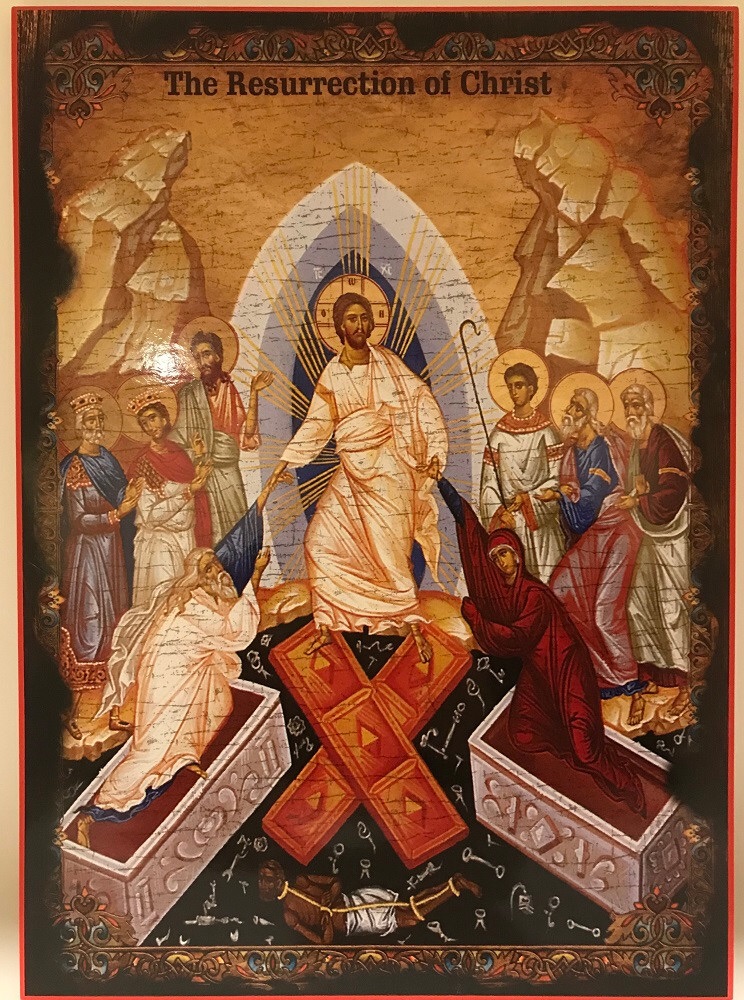
To emphasize the true scope of what this means, St. Paul hearkens back to the beginning of the story, to creation. He notes the disastrous effects of Adam’s choice for all mankind: “…sin came into the world through one man, and death through sin, and so death spread to all men because all sinned” (Rom 5:12). But, Paul say, Jesus is the new Adam who restores mankind:
15 But the free gift is not like the trespass. For if many died through one man’s trespass, much more have the grace of God and the free gift by the grace of that one man Jesus Christ abounded for many (Rom 5:15).
18 Therefore, as one trespass led to condemnation for all men, so one act of righteousness leads to justification and life for all men. 19 For as by the one man’s disobedience the many were made sinners, so by the one man’s obedience the many will be made righteous (Rom 5:18-19).
Dead to Sin, Alive to God
But what does all this mean on a practical level? If we are made righteous — brought into right relationship with God solely by grace through faith in Christ and all this apart from the works of the Jewish Law — does that now mean anything goes? Apart from the Law, can we live anyway we please? Some accused Paul of saying that. God forbid, was his typical response. He answers more eloquently here:
15 What then? Are we to sin because we are not under law but under grace? By no means! 16 Do you not know that if you present yourselves to anyone as obedient slaves, you are slaves of the one whom you obey, either of sin, which leads to death, or of obedience, which leads to righteousness? 17 But thanks be to God, that you who were once slaves of sin have become obedient from the heart to the standard of teaching to which you were committed, 18 and, having been set free from sin, have become slaves of righteousness. 19 I am speaking in human terms, because of your natural limitations. For just as you once presented your members as slaves to impurity and to lawlessness leading to more lawlessness, so now present your members as slaves to righteousness leading to sanctification (Rom 6:15-19).
Having been freed from the power of sin — a power exercised through the Law and leading to death — we are now free to choose what we will serve: impurity and lawlessness or righteousness leading to sanctification. Note: Christ’s work of faithfulness and our responding faith have brought us into right relationship with God (righteousness) and now we are to press on toward sanctification, to holiness of life. Martin Luther once used the image of the Christian made righteous by grace through faith as a snow covered dung heap: the righteousness of Christ hiding/masking our unrighteousness.

But that is not the end. We are not intended to live a masked life, to remain a dung heap. We are to become holy in reality, to live a life of sanctification. The good news is that we have now been set free by Christ to do just that.
But that is a story for another time, for next week.


 First Blessings