During a lengthy break on our recent diocesan clergy retreat, a fellow priest led me and one of our parish deacons on a pilgrimage to Cullman, Alabama. As a Tennessee native and lifelong resident, I had no idea that anything in Alabama could be described as good, true, and beautiful — much less holy — but I now find myself forced to repent.
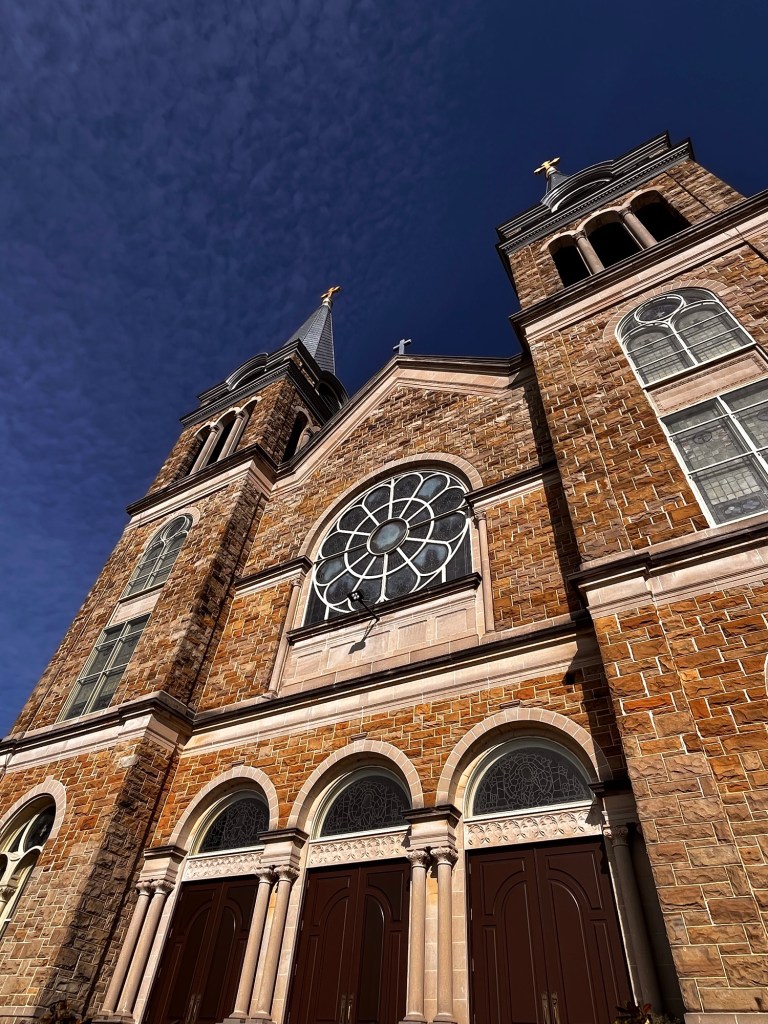
Our pilgrimage began at the Sacred Heart of Jesus Roman Catholic Cathedral in downtown Cullman, a church that began as a windowless log cabin structure in the last quarter of the 19th century and has since grown into a beautiful and imposing structure with twin steeples marking the town skyline.
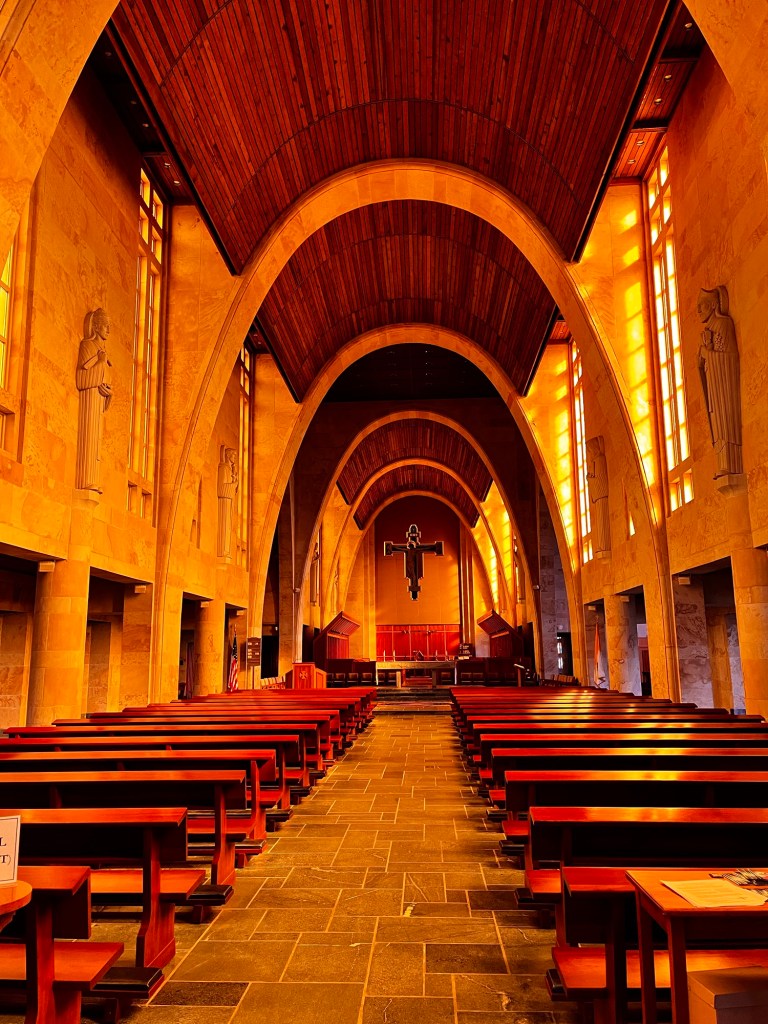
From there we drove a matter of minutes to the St. Bernard Abbey, a community of Benedictine monks originating from Metten Abbey in Germany. It took awhile for the monks to make their way to Cullman; Metten Abbey was established circa 700 A.D. and St. Bernard Abbey in 1891. The monks operate the St. Bernard Preparatory School whose campus surrounds the abbey. The abbey church is, from the outside, an example of the 1960s brutalist school of architecture — only slightly sanctified — functional and ugly. But inside? It is a breathtakingly beautiful and holy space. Even empty, holy silence and prayer are palpably present. For me, its power and beauty rivals that of the Monastery of Our Lady of the Holy Spirit in Conyers, Georgia — and that is saying something.
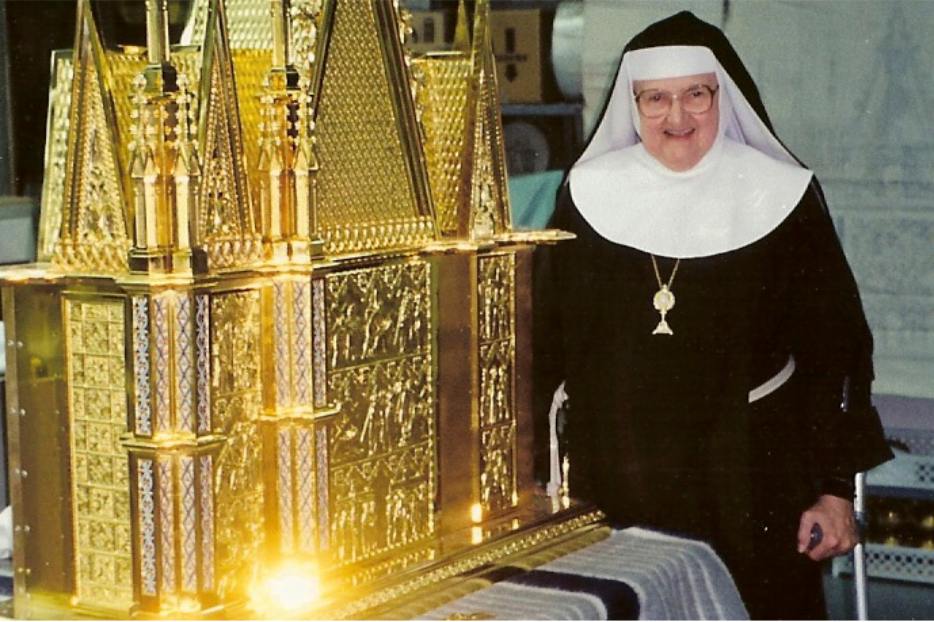
But, it was the last site of the day that affected me most profoundly: Our Lady of the Angels Monastery in nearby Hanceville, AL. Established by Mother Angelica — of blessed memory — the founder of the Roman Catholic media empire EWTN, the monastery is home to the Poor Clares of Perpetual Adoration, a cloistered Franciscan sisterhood.
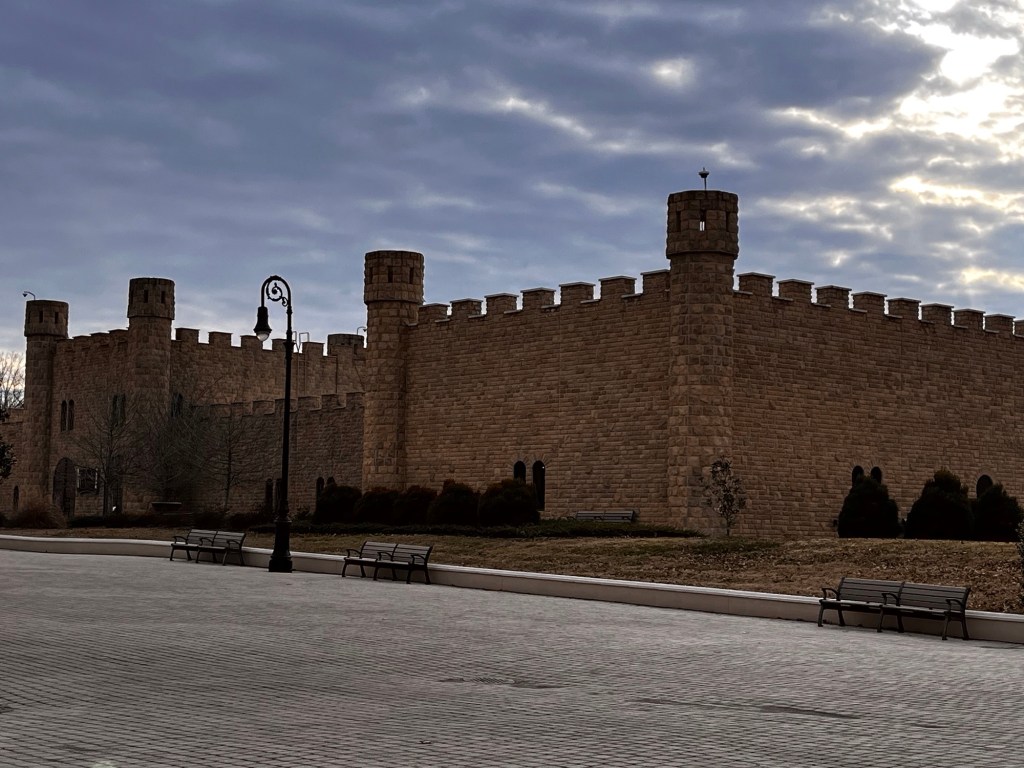
A stone quad is anchored on one side by the church, the Shrine of the Most Blessed Sacrament, and on the other by the 13th century style Castle of San Miguel — yes, a castle — housing the obligatory, but excellent, gift shop.
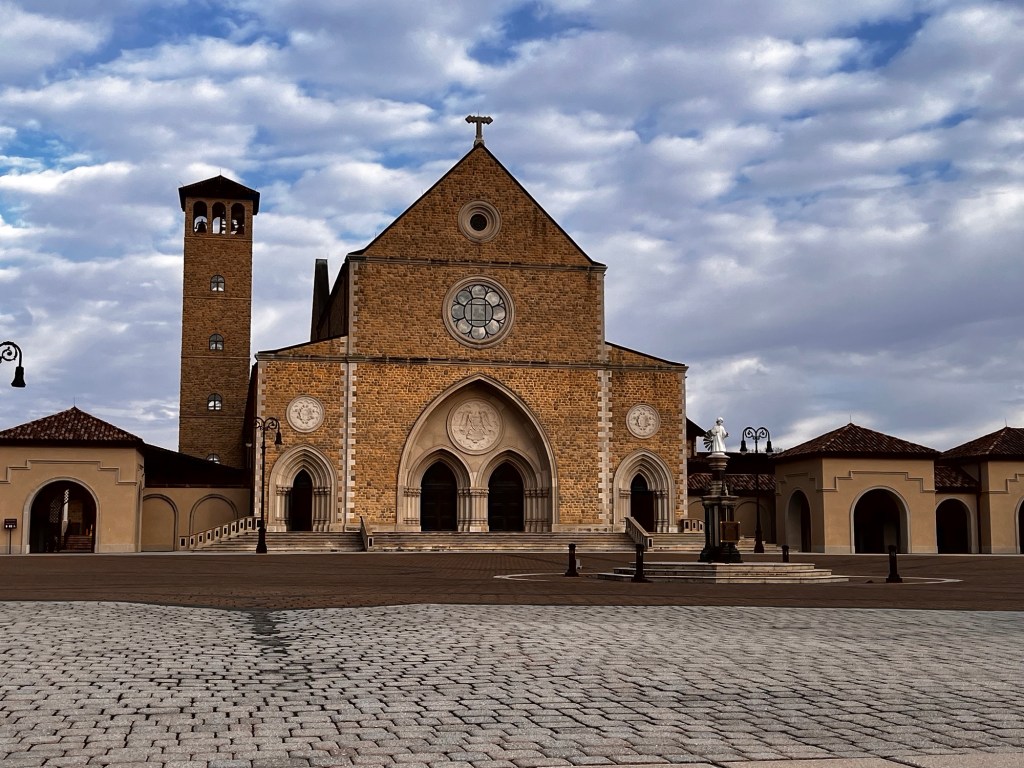
The church itself is traditional and “ancient” though it is only a few decades old. I lament that I have no pictures of the interior; those photos are not allowed. But to enter the door is to leave one world and to journey into another. I was reminded of the tale of the conversion of Kyiv Rus to Orthodoxy. Grand Prince Volodymyr sent ambassadors around the world to “find” a faith that would bind his people together. When a group returned from Constantinople, they reported:
Then we went to Greece [Constantinople], and the Greeks (including the Emperor himself) led us to the edifices where they worship their God, and we knew not whether we were in heaven or on earth. For on earth there is not such splendour or such beauty, and we are at a loss how to describe it. We only know that God dwells there among men, and their service is fairer than the ceremonies of other nations. For we cannot forget that beauty (Russian Primary Chronicle).
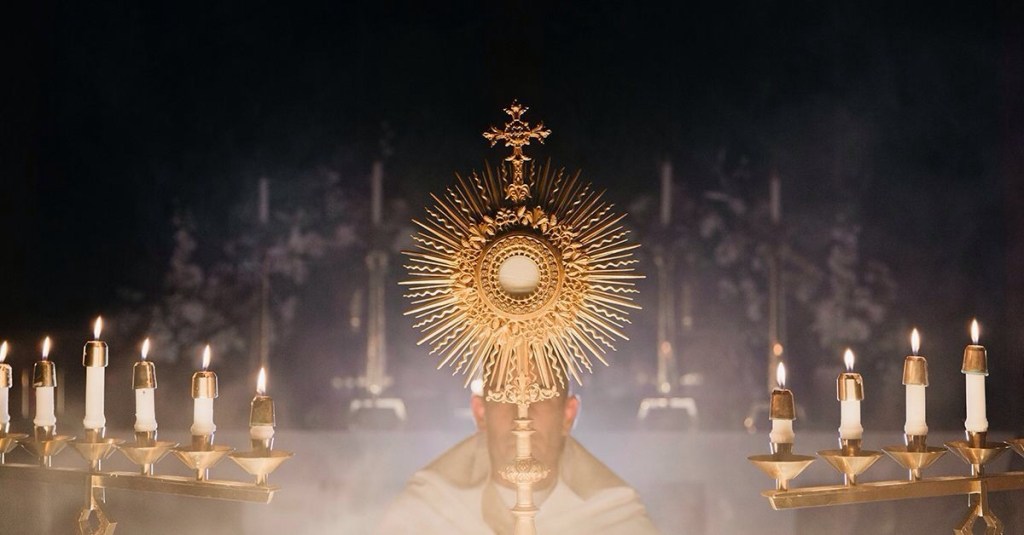
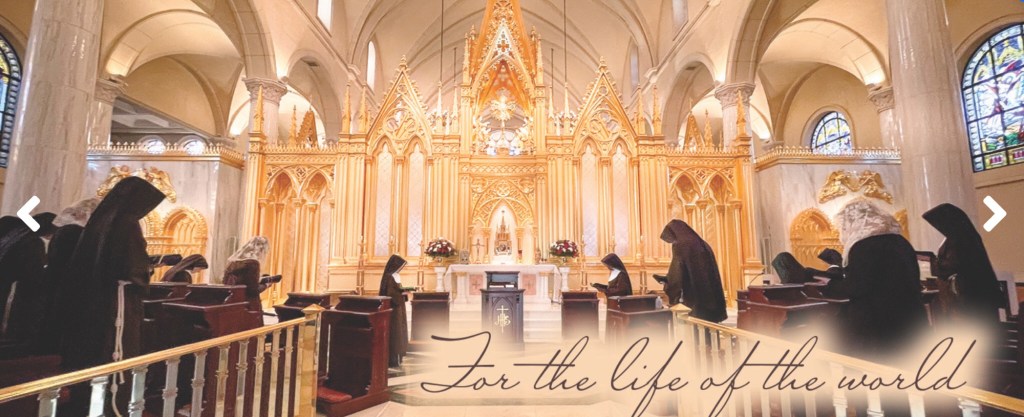
Nor will I forget the beauty of the Shrine of the Most Blessed Sacrament. It was a classic example of Roman Catholic aesthetic: overdone holy exuberance with gold in abundance — everywhere there was gold — candles and statues of saints and angels, ornate decoration on every surface, marble and inlay, the singing of the cloistered sisters. I wondered at the cost of such a structure; I cannot begin to imagine the multi-million dollar price tag. And yet, all the stone, all the gold, all the ornamentation, all that costly beauty, was there in service of the only truly precious thing in the church: a small circle of bread, a consecrated Eucharistic host elevated several feet above the altar in a gold monstrance ensconced in an ornate golden tabernacle. Everything there, including the sisters themselves, is present for one reason only: to facilitate the adoration of the Real Presence of Jesus in the Sacrament. Everything there matters only insofar as it leads people to bow the knee in worship of Jesus as he is present in the bread.
Now I know this presents a challenge to classical Anglican theology which rejects transubstantiation and the Eucharist Adoration that flows from it. It is all there in the Thirty-Nine Articles of Religion:
XXVIII. OF THE LORD’S SUPPER
Transubstantiation (or the change of the substance of Bread and Wine) in the Supper of the Lord, cannot be proved by Holy Writ; but is repugnant to the plain words of Scripture, overthroweth the nature of a Sacrament, and hath given occasion to many superstitions.
The Sacrament of the Lord’s Supper was not by Christ’s ordinance reserved, carried about, lifted up, or worshipped (BCP 2019, p. 783, excerpts).
It is not my purpose to debate Eucharistic theology here nor to re-litigate 16th and 17th century disputations. Some Anglicans of my acquaintance would have felt uncomfortable and possibly offended in the Shrine; I did not. My heart was strangely warmed and my spirit was lifted up to the Lord, not by the Eucharist theology on display but by the Eucharist piety on display. Would that all Christians, would that all Anglicans, would so love and hunger for the real presence of Christ in the Eucharist that they would queue up at the church doors every time the Eucharist was offered, longing to enter and kneel at the altar to hear the priest say, “The Body of our Lord Jesus Christ keep you in everlasting life,” knowing that the consecrated host given them is the most precious of gifts upon earth, the bread of heaven in their hands. Would that my heart was so filled at every Eucharist. Piety and not theology is the issue here, devotion and not disputation.
I do not remember how the conversation in my calculus class decades ago turned to “last meals.” The topic does not really follow from the first fundamental theorem of calculus, but, well life happens in the classroom and students ask intriguing questions. Several students expressed their preferences and then the question came to me. What would I choose for my last meal? I said, “a small piece of bread and a sip of wine.” Some of them understood and smiled. It is still my answer.


 First Blessings