
Apostles Anglican Church
Fr. John A. Roop
Feast of St. Agnes, Virgin Martyr
(Song of Songs 2:10-13, Psalm 45, 2 Cor 6:16-18, Matt 18:1-6)
Collect
Almighty and everliving God, who chose what is weak in the world to confound the strong: mercifully grant that we, who celebrate the heavenly birthday of your Martyr Saint Agnes, may follow her constancy in the faith; through Jesus Christ, your Son, who lives and reigns with you in the unity of the Holy Spirit, one God, now and for ever. Amen.
In the Name of the Father, and of the Son, and of the Holy Spirit. Amen.
This is the feast day of the Virgin Martyr St. Agnes of Rome, the anniversary of the day on which she was martyred. That statement alone shows how counterintuitive our faith is, if we just recognize that and practice it. A feast on the anniversary of someone’s execution seems a bit odd, doesn’t it? I don’t throw a party each year on the date of my mother’s or father’s death, and people might think it, and me, strange if I did. But each year when 21 January rolls around, the Church has a feast in remembrance of St. Agnes. Of course, the feast is not a party, but the feast of the Eucharist; we feast on the Body and Blood of Jesus Christ for whom Agnes — or any of the other martyrs — was willing to die. That is why feasts and martyrs belong together, even though the pairing initially sounds strange.
Today I will tell you the story of St. Agnes in part because it has become like a pebble in my shoe: not something that will cripple me, but an irritant, something uncomfortable. If I can’t get it out, at least I can put that same pebble in your shoes so that we can all limp along together.
Agnes was born in 291, give or take a year, into a wealthy and prominent Roman family. They were Christians and they raised Agnes in the faith, even though it was a difficult and dangerous time to be Christian. Diocletian was the Roman emperor, and his persecution of Christians was the last official one in the empire and the bloodiest of them all. It seemed to escalate around 303 and lasted through 312. Agnes was martyred near the beginning of this purge of Christians, 21 January 304. If you do the math, you will see that Agnes was twelve or thirteen years old when she was executed under the edict of Diocletian. What led to that?
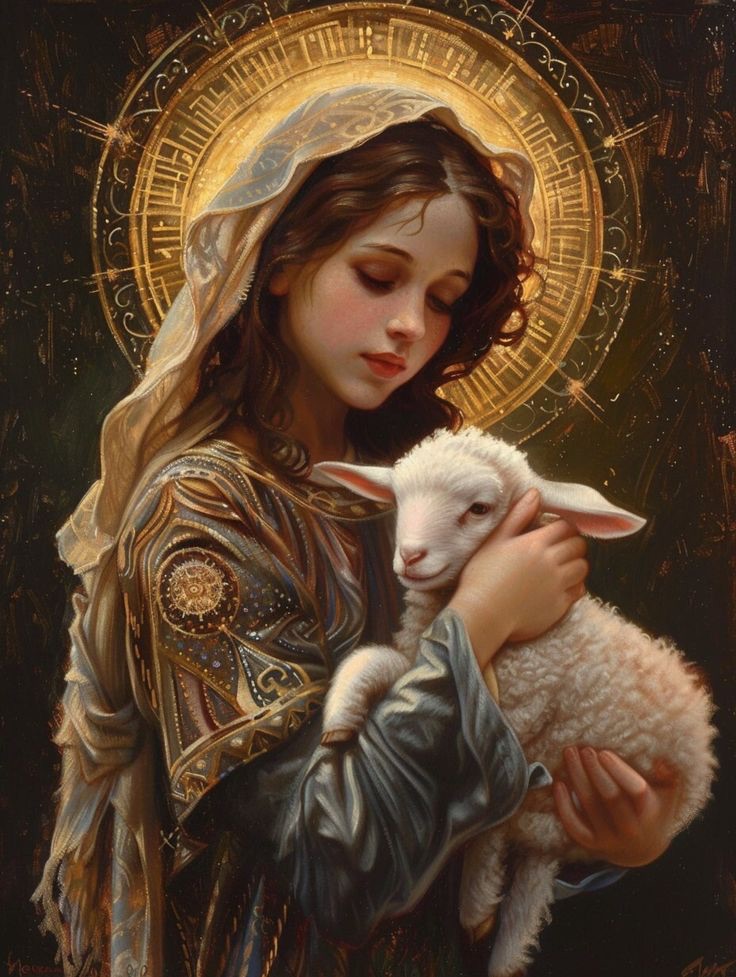
From a young age — remember Agnes died when she was but 12 or 13 — she had determined to devote herself entirely to Jesus, body and soul. She had begun to think of and speak of Jesus as her spouse and was determined to have none other — determined to refuse marriage and to remain a consecrated virgin. That was hardly a viable option for a young girl in her situation; I can’t think of her as a young woman even though the legal minimum age for a Roman female to marry was twelve — fourteen for boys. Marriage had little to do with love or romance and everything to do with social structure: with family and political alliances, with the consolidation of wealth, with producing legitimate heirs. For Agnes, there were many would-be suitors of rank, but she declined them all citing her devotion to Christ. Likely with the attitude of “if I can’t have her nobody will” some of the spurned young men reported Agnes to the authorities as a Christian. One in particular — Procop — brought Agnes before his father, the local governor. The governor gave Agnes the opportunity to deny Christ and encouraged her to do so, but she remained steadfast. She was then taken before the prefect Simpronius who sentenced her to a punishment particularly designed to make her recant; I’ll spare you the details. This is the part of the account where the miracle stories of God’s protection for her begin: glowing radiance, the blinding of enemies, the death of Simpronius’s son and his resurrection following Agnes’s prayer for him. Make of all that what you will. Her story stands with our without the miracles.
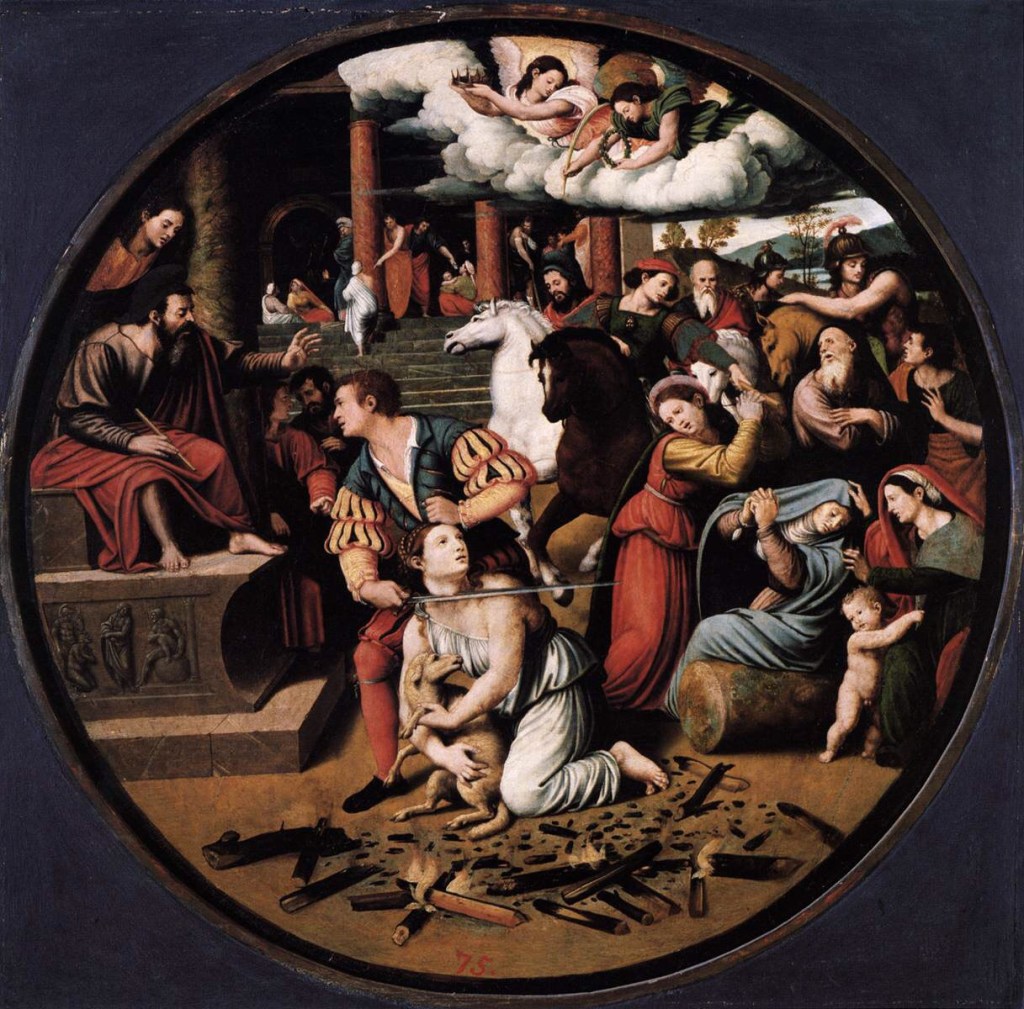
Eventually, when these attempted tortures proved ineffective, Agnes was condemned to death. She was to be burned at the stake but, as the story goes in different versions, either the fire would not kindle or else the flames parted around her. Finally, a soldier pierced her throat with a sword and she died: 21 January 304. A few days later, Agnes’s foster sister Emerentiana was found praying at her tomb. After refusing to leave and after reprimanding the officials for executing Agnes, Emerentiana was stoned to death, another martyr in the family story.
I find this tale troublesome on many levels. It stirs uncomfortable questions, not least this one: What could a twelve or thirteen year old girl possibly do that could be seen as so threatening and disruptive to society that the only proper course of action was to coerce her by torture to relent and when that didn’t work, to publicly and brutally execute her? Now, I know that this still goes on; Malala Yousafzai is a modern day example, as are girls around the world who refuse to wear a hijab or who pursue education or who flaunt some other religio-social convention and who pay a high price for doing so. But the question remains. Why is the behavior of a child so threatening?

When I first started teaching over three decades ago, an administrator told me to “catch” a student misbehaving near the beginning of the school year and to really come down hard on that student, to make a harsh example of him/her as a deterrent to other student misbehavior. I never did that and I doubt it would be advised today. But the notion of deterrence is a possible reason for the brutal response to Agnes. One “defiant” young girl is no problem. But what if she serves as an example for others? Soon there are two of them, then four, eight, sixteen; it could get out of hand quickly and marriage and gender roles — pillars of the society — could come toppling down. You dare not let questioning of and opposition to the social norms go unchecked. As Deputy Barney Fife used to say to Sheriff Andy Taylor, “Nip it, Anj. Nip it in the bud.”
I can think of another reason for the city’s response to Agnes, and this one is both religious and political. We in the United States are unusual in our conviction that church and state must be — can be — kept separate. That notion would have been nonsensical in fourth century Rome or in most any other time in any other place. Religion permeated every aspect of life and social order. The gods were everywhere and involved in everything and always ready to take offense. To flaunt the social order then was to disrespect and disregard the gods. And with gods such as Rome had, that was not a good idea: plague, pestilence, famine, natural disasters, war — all these might result when the social mores are challenged, when the gods are ignored. Not only was Agnes a Christian — which meant she refused to worship the traditional gods — now she was refusing the social order that they had ordained. For the safety of the city, for the welfare of the entire populace, she must be brought into line or else eliminated.
I’m sure there are other sociological and psychological reasons for Agnes’s martyrdom, but these two are troublesome enough. They are troublesome not least because they challenge the Church in our culture, in our time.
What cultural norms are we challenging today that make us a perceived threat to the culture, so much a threat that the culture takes action against us? Surely, there are some norms that we Christians must challenge? Our culture isn’t so thoroughly Christian that we can say Amen! to everything it does or stands for? Unbridled capitalism makes the concentration of obscene wealth in the hands of the few not only possible but nearly inevitable. Elon Musk, Jeff Bezos, Mark Zuckerberg and a few others have wealth exceeding the GDP of many nations in the world. Surely, the Church can’t give its blessing to an economy that concentrates wealth like that when many in our country struggle to afford basic necessities?

Unrestrained socialism — and its cousin communism — on the other hand makes the concentration of power and control in the hands of the few not only possible but necessary. This resulted in more mass deaths in the twentieth century than in all previous centuries combined. Amen to that? Hardly. One of our political parties wants to give women the choice to kill their babies. The other party wants to treat immigrants as sub-human and are willing to tear families apart to rid the country of the “wrong sort of people.” Are either of those acceptable to Christians?

Social media addicts and poisons our children. Are we going to hand them the newest iPhone? When, where, how, and about what do we, like Agnes, say no to the culture for the sake of our devotion to Christ and to the way of the Kingdom of God? That’s a pebble in my shoe.
And, as for the Roman gods, is our culture really thoroughly Christian or do we perhaps have pagan gods of our own — ancient ones repackaged for modern worship? Is our culture more ordered around Mars, the god of war and violence, than we like to admit? Listen to a recent comment by an influential Washington political insider:
“We live in a world in which, you can talk about international niceties and everything else, but we live in a world, in the real world…that is governed by strength, that is governed by force, that is governed by power. These are the iron laws of the world since the beginning of time” (Stephen Miller, interviewed on CNN by Jake Tapper).
That’s Mars’ talk; we are being called to bow at the altar of Mars. That ancient god is alive and well and thriving in America.
Aphrodite, the goddess of lust and sex? According to the Journal of Sex Research around 7% of U.S. adult internet users report addiction to pornography. Anecdotal evidence and the pervasiveness of pornography suggest to me a higher percentage. The United States is the top country for the viewing of pornography. The average age of first online exposure to pornography is eleven. Agnes was twelve when she gave her life for the sake of her purity. Our children begin viewing pornography one year younger. Aphrodite is alive and well and receiving our worship. When, where, how, and about what do we, like Agnes, say no to the culture for the sake of our devotion to Christ and to the way of the Kingdom of God? That’s a pebble in my shoe.

Do I need to say anything more about Mammon, the God of rapacious greed and obscene wealth? When, where, how, and about what do we, like Agnes, say no to the culture for the sake of our devotion to Christ and to the way of the Kingdom of God? That’s a pebble in my shoe.

One more question, this one perhaps the most troublesome of all.
Are we — is the Church — raising children who, at the tender age of twelve, are so devoted to the Lord Jesus that they would rather die than waver in their devotion to him? Are we — is the Church — raising a generation of potential martyrs? If not, why not? And maybe even more pointed, are we — their parents and grandparents — generations who would rather die than waver in our devotion? There’s the pebble again.
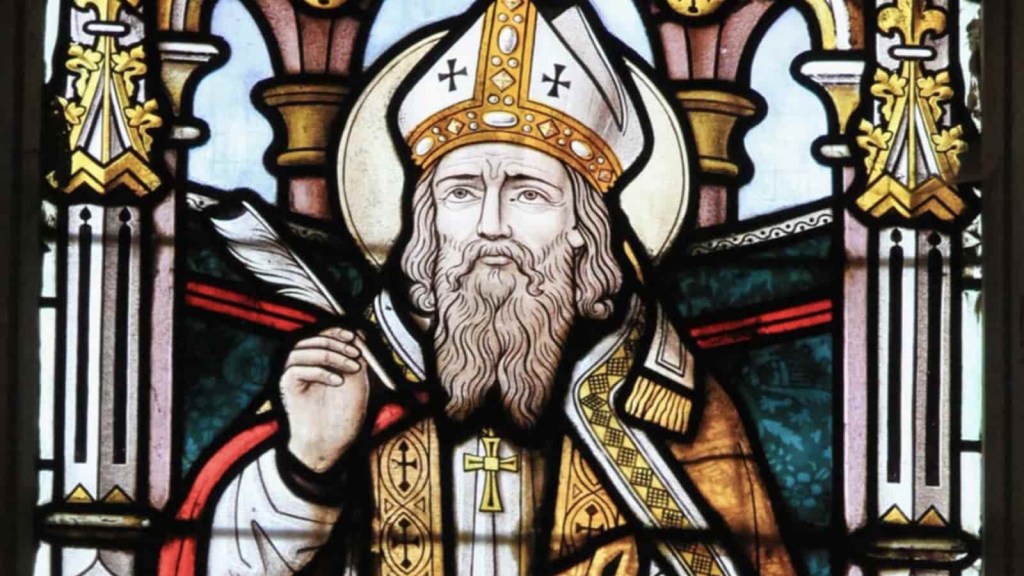
Well, those are my questions — some of them anyway — that are stirred up on this feast day. I would like to close with words by the Doctor of the Church Saint Ambrose (c. 339-4 April 397). This great theologian, Bishop of Milan, and mentor of St. Augustine, wrote this reflection on the martyrdom of Agnes. Note that he speaks of this day as Agnes’s birthday, as did our collect, meaning, of course, the day of her heavenly birth.
Today is the birthday of a virgin; let us imitate her purity. It is the birthday of a martyr; let us offer ourselves in sacrifice. It is the birthday of Saint Agnes, who is said to have suffered martyrdom at the age of twelve. The cruelty that did not spare her youth shows all the more clearly the power of faith in finding one so young to bear it witness.
There was little or no room in that small body for a wound. Though she could scarcely receive the blow, she could rise superior to it. Girls of her age cannot bear even their parents’ frowns and, pricked by a needle, weep as for a serious wound. Yet she shows no fear of the blood-stained hands of her executioners. She stands undaunted by heavy, clanking chains. She offers her whole body to be put to the sword by fierce soldiers. She is too young to know of death, yet is ready to face it. Dragged against her will to the altars, she stretches out her hands to the Lord in the midst of the flames, making the triumphant sign of Christ the victor on the altars of sacrilege. She puts her neck and hands in iron chains, but no chain can hold fast her tiny limbs.
A new kind of martyrdom! Too young to be punished, yet old enough for a martyr’s crown; unfitted for the contest, yet effortless in victory, she shows herself a master in valour despite the handicap of youth. As a bride she would not be hastening to join her husband with the same joy she shows as a virgin on her way to punishment, crowned not with flowers but with holiness of life, adorned not with braided hair but with Christ himself.
In the midst of tears, she sheds no tears herself. The crowds marvel at her recklessness in throwing away her life untasted, as if she had already lived life to the full. All are amazed that one not yet of legal age can give her testimony to God. So she succeeds in convincing others of her testimony about God, though her testimony in human affairs could not yet be accepted. What is beyond the power of nature, they argue, must come from its creator.
What menaces there were from the executioner, to frighten her; what promises made, to win her over; what influential people desired her in marriage! She answered: “To hope that any other will please me does wrong to my Spouse. I will be his who first chose me for himself. Executioner, why do you delay? If eyes that I do not want can desire this body, then let it perish.” She stood still, she prayed, she offered her neck.
You could see fear in the eyes of the executioner, as if he were the one condemned; his right hand trembled, his face grew pale as he saw the girl’s peril, while she had no fear for herself. One victim, but a twin martyrdom, to modesty and to religion; Agnes preserved her virginity, and gained a martyr’s crown (St. Ambrose, On Virgins).
Amen.


 First Blessings