1 Corinthians, Part 1: Challenges to Unity

Apostles Anglican Church
Fr. John A. Roop
1 Corinthians, Part 1 (Chapters 1 thorough 6): Challenges to Unity
The Lord be with you.
And with your spirit.
Let us pray.
O God the Father of our Lord Jesus Christ, our only Savior, the Prince of Peace: Give us grace to take to heart the grave dangers we are in through our many divisions. Deliver your Church from all enmity and prejudice, and everything that hinders us from godly union. As there is one Body and one Spirit, one hope of our calling, one Lord, one Faith, one Baptism, one God and Father of us all, so make us all to be of one heart and of one mind, united in one holy bond of truth and peace, of faith and love, that with one voice we may give you praise; through Jesus Christ our Lord, who lives and reigns with you and the Holy Spirit, one God in everlasting glory (BCP 2019, pp. 646-647).
Introduction and Background
When you think of first century Corinth, think of Los Angeles, Chicago or New York with a healthy — or unhealthy — dose of San Francisco, Las Vegas, or New Orleans thrown in the mix: prominent, prosperous, diverse, and morally decadent. But those very traits made it attractive to St. Paul as a field white for Gospel harvest and as a staging ground for forays into the surrounding region.

St. Paul arrived in Corinth as the last major stop on his second missionary journey. Things had not been going particularly well for him. Earlier he had been arrested, beaten and run out of town in Philippi. Just down the road in Thessalonica, a mob drove him from the city. When he went for safety to Berea, the Jews from Thessalonica followed him, agitating the crowds there until the brothers insisted that Paul leave there, too. So, leaving behind his traveling companions Silas and Timothy — they would catch up with him later — Paul boarded ship heading for Athens, the heart of Greece.
Paul fell to form in Athens, preaching first in the synagogue, to the Jews and God-fearers. He also frequented the market place, preaching to anyone who would listen. There he engaged the Epicurean and Stoic philosophers — lovers of wisdom — with the Gospel word of Jesus and resurrection. The philosophers seemed not to understand the message beyond this: Paul was preaching strange things about foreign divinities. And so a report about him came to the attention of the Areopagus, the main council — judicial body — authorized to reach judgments about homicide, injury, and religious offenses. The Areopagus was not a polite philosophical debating society; it was a court, and Paul was on trial; once again, his life was in jeopardy.
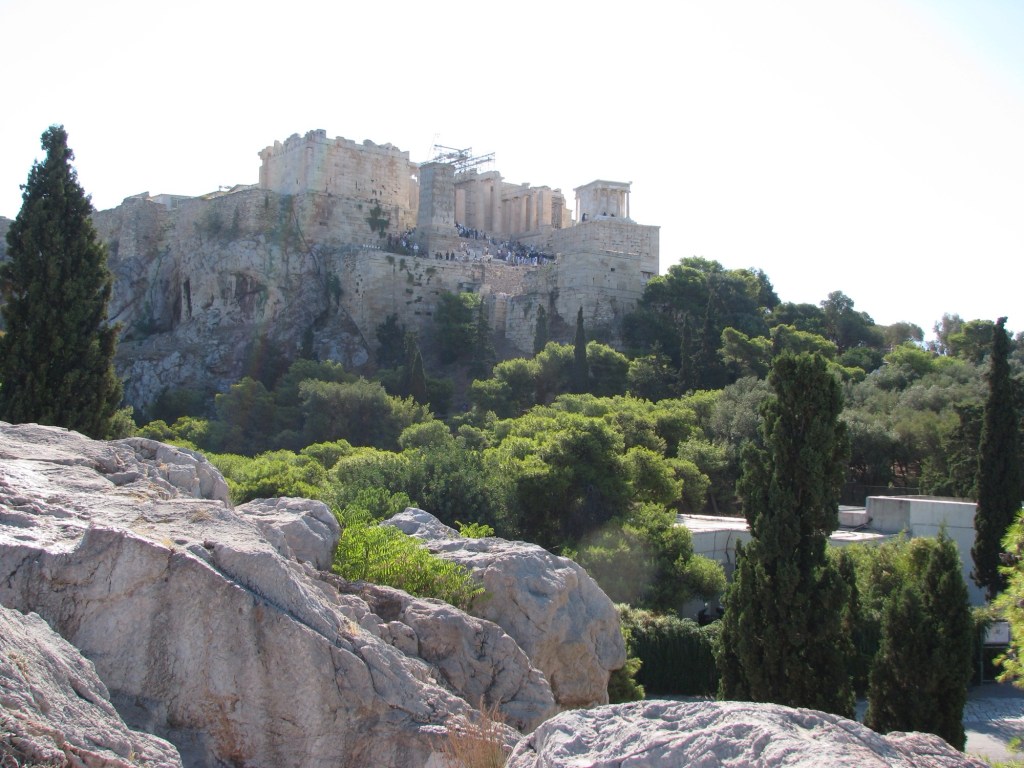
He made his defense before the council and even couched some of his apology in terms of their own poetry and philosophy with which he was apparently well versed. But, when he got to the crux of the Gospel — the resurrection — the council mocked and dismissed him. It was hard for the wise, the philosophers, to take such babbling seriously; only a few responded in faith. It is not difficult to imagine the cumulative effect of persecution and ridicule and threat and worry in town after town. Paul was anxious especially about the church in Thessalonica and was awaiting news from Silas and Timothy about that church. So, in what I imagine St. Ignatius of Loyola might describe as desolation, Paul left Athens for Corinth.
For awhile, things look up. Paul finds two kindred spirits in the city, Aquila and his wife Priscilla. They share the tent making trade with Paul; more importantly they are followers of Jesus. So, Paul stays with them and works with them, both in trade and in ministry. And, perhaps best of all, Silas and Timothy return from Macedonia with good news about the Thessalonians: they are remaining faithful even in the midst of persecution. They are confused about a few points of doctrine, but a letter — well, two letters — can straighten that out, as we saw in our previous class.
So, buoyed up by all this, Paul starts teaching in the synagogue, as usual. Paul going to the synagogues in city after city is much like Tonto going into town Saturday after Saturday on The Lone Ranger television show of my youth; you knew it wasn’t going to end well. In fact, it ended with open opposition by the Jews and with Paul denouncing them: “Your blood be on your own heads!” Once again he turned to the Gentiles, and worked among them for about eighteen months, encouraged by a night vision from the Lord: “Do not be afraid, but go on speaking and do not be silent, for I am with you, and no one will attack you to harm you, for I have many in this city who are my people” (Acts 18:9-10).
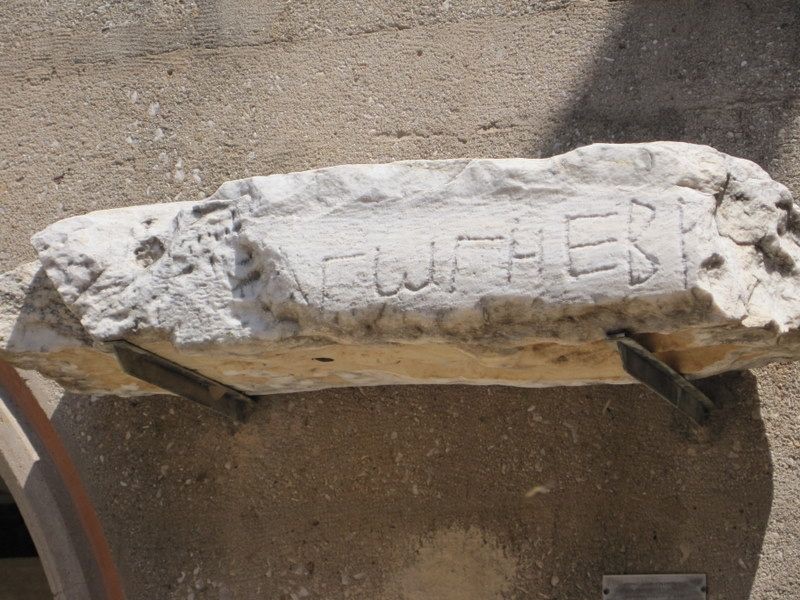
That doesn’t mean that the opposition immediately ceased. Instead, the Jews launched a coordinated attack on Paul and brought him before Gallio, the proconsul of Achaia. Gallio listened long enough to see that this was a religious matter and not a civil one, and he dismissed all charges against Paul. The vision was right.
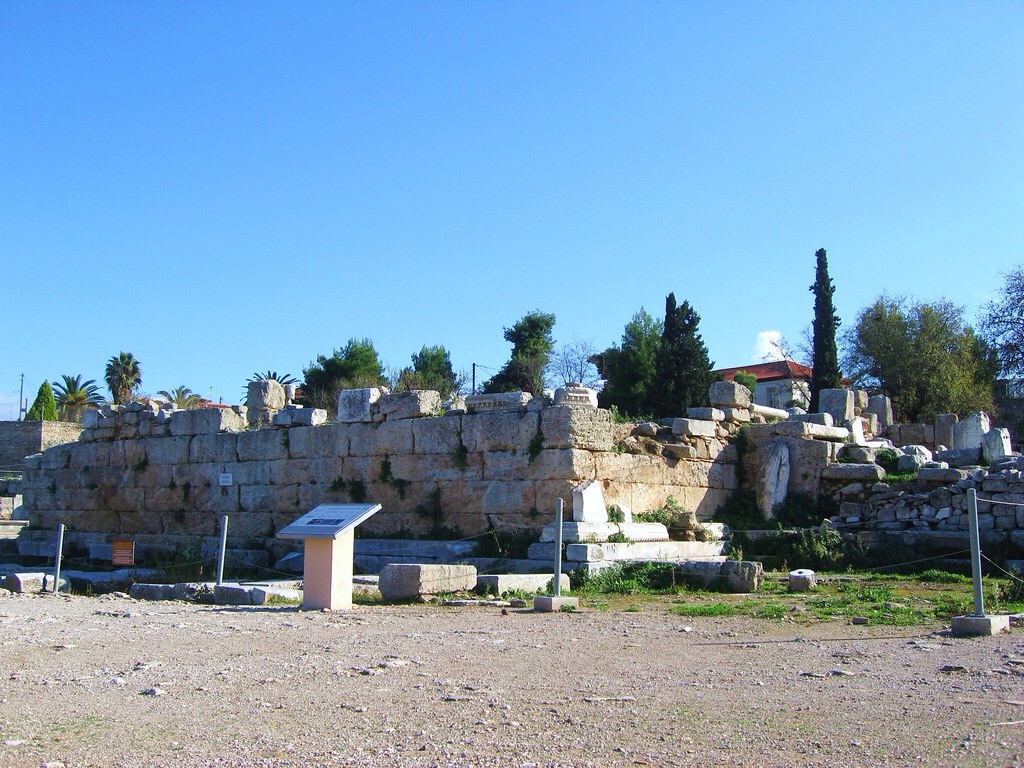
Paul stayed many days after this vindication and then, taking Aquila and Priscilla with him, he traveled through Ephesus on his way home to Antioch in Syria. He dropped Aquila and Priscilla in Ephesus and they began a ministry there in Paul’s absence. While Aquila and Priscilla were in Ephesus,
24 [Now] a Jew named Apollos, a native of Alexandria, came to Ephesus. He was an eloquent man, competent in the Scriptures. 25 He had been instructed in the way of the Lord. And being fervent in spirit, he spoke and taught accurately the things concerning Jesus, though he knew only the baptism of John. 26 He began to speak boldly in the synagogue, but when Priscilla and Aquila heard him, they took him aside and explained to him the way of God more accurately. 27 And when he wished to cross to Achaia, the brothers encouraged him and wrote to the disciples to welcome him. When he arrived, he greatly helped those who through grace had believed, 28 for he powerfully refuted the Jews in public, showing by the Scriptures that the Christ was Jesus (Acts 18:24-28).
Apollos wanted to cross to Achaia; that is, he went to Corinth, to the church that Paul — along with Aquila and Priscilla — had founded. He was brilliant, charismatic, and skilled in reasoning and speaking. He was, in short, everything that Paul was not. Trouble is brewing.
Shortly after that, Paul began his third journey journey and made his way to Ephesus. He stayed there for some three years, his longest tenure in a single place, interrupted by some short-term mission trips. It was while in Ephesus that he received troubling news from Corinth. It occasioned at least one brief visit, which apparently ended in disaster, and a series of letters back and forth between the Apostle and the church, only two of which we have. What were the problems? Here, we enter the text.
1 Corinthians
Paul is not a linear thinker or writer, at least not here in 1 Corinthians. He spirals around topics, coming back to them again at greater depth, until he finally arrives at the center of his concern. So, while in our thinking we typically might start with the most important thing and then work outward exploring its implications, Paul starts on the periphery and works inward to the heart of things. You will see that as we go.
1 Corinthians 1:1-9
You may well know that the Church in Corinth is a mess, and Paul will get to that soon enough. But he starts by greeting the people individually and corporately as saints — holy ones — and he expresses thanksgiving for them. Better messy saints in the hands of a faithful God than non-believers in the midst of a pagan world!
1 Paul, called by the will of God to be an apostle of Christ Jesus, and our brother Sosthenes,
2 To the church of God that is in Corinth, to those sanctified in Christ Jesus, called to be saints together with all those who in every place call upon the name of our Lord Jesus Christ, both their Lord and ours:
3 Grace to you and peace from God our Father and the Lord Jesus Christ.
4 I give thanks to my God always for you because of the grace of God that was given you in Christ Jesus, 5 that in every way you were enriched in him in all speech and all knowledge— 6 even as the testimony about Christ was confirmed among you— 7 so that you are not lacking in any gift, as you wait for the revealing of our Lord Jesus Christ, 8 who will sustain you to the end, guiltless in the day of our Lord Jesus Christ. 9 God is faithful, by whom you were called into the fellowship of his Son, Jesus Christ our Lord (1 Cor 1:1-9).
Now, having assured them of their true identity — saints — and having expressed his thankfulness for them and his confidence in God’s work in them, Paul moves to one of his concerns about them. This is a symptom of a more fundamental, deeper illness, but it is a symptom that must be addressed: divisions in the church.
1 Corinthians 1:10-17; 3:1-23
10 I appeal to you, brothers, by the name of our Lord Jesus Christ, that all of you agree, and that there be no divisions among you, but that you be united in the same mind and the same judgment. 11 For it has been reported to me by Chloe’s people that there is quarreling among you, my brothers. 12 What I mean is that each one of you says, “I follow Paul,” or “I follow Apollos,” or “I follow Cephas,” or “I follow Christ.” 13 Is Christ divided? Was Paul crucified for you? Or were you baptized in the name of Paul (1 Cor 1:10-13)?
“I hear Fr. Sam is preaching this Sunday. I don’t think I’ll go; he’s not very good in the pulpit.”
“I never go to confession with Fr. Frank. I wait for Fr. Gary; he’s much easier to talk to.”
“I always sign up for Dcn. Richard’s classes; he’s brilliant. Our other teachers, not so much.”
Can you imagine attitudes like that in a local congregation? If so, you can imagine the situation in Corinth.
“I follow Paul; after all, he founded the church here. It’s a matter of loyalty.”
“Not, me; I follow Peter. He was one of the Twelve, the leader of the Twelve. He’s the real deal.”
“Yeah, but have you listened to Apollos? That man is brilliant and eloquent; he’s everything a preacher and leader should be.”
“Me? I don’t listen to any of them. I just follow Jesus.”
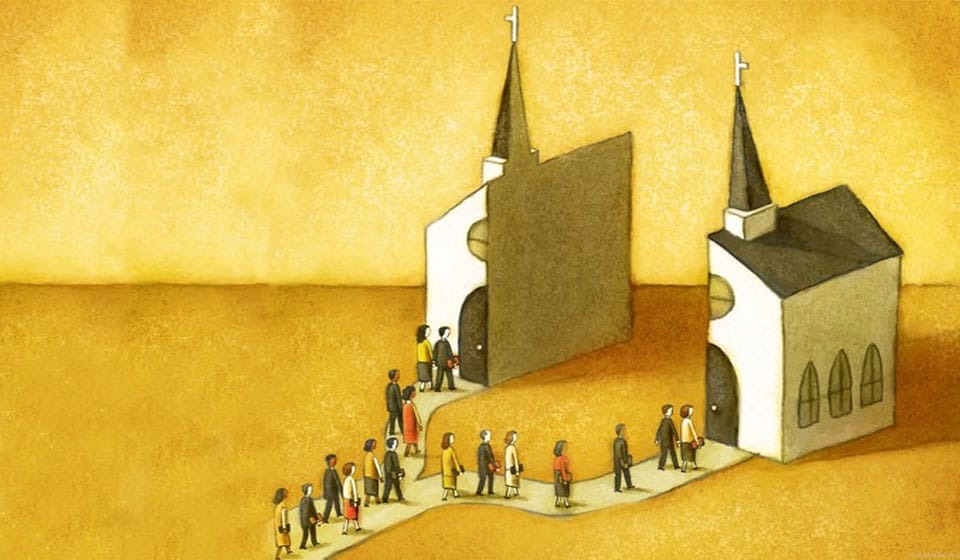
The church is divided into personality cults; that is one of the symptoms of a deeper problem at Corinth, and one that Paul is going to tackle head on. But first, he takes a brief but very important detour — an excursus on wisdom — on why when he first preached the Gospel to them it was not with eloquent and wise-sounding words like Apollos might use, for example.
1 Corinthians 1:18-2:16
Remember Paul’s arrival in Corinth. He had come there because he had been hounded and run out of most every town on his itinerary. He came there after being deemed too foolish for the Athenian philosophers to even bother with further. And so Paul describes his arrival in Corinth:
1 And I, when I came to you, brothers, did not come proclaiming to you the testimony of God with lofty speech or wisdom. 2 For I decided to know nothing among you except Jesus Christ and him crucified. 3 And I was with you in weakness and in fear and much trembling, 4 and my speech and my message were not in plausible words of wisdom, but in demonstration of the Spirit and of power, 5 so that your faith might not rest in the wisdom of men but in the power of God (1 Cor 2:1-5).
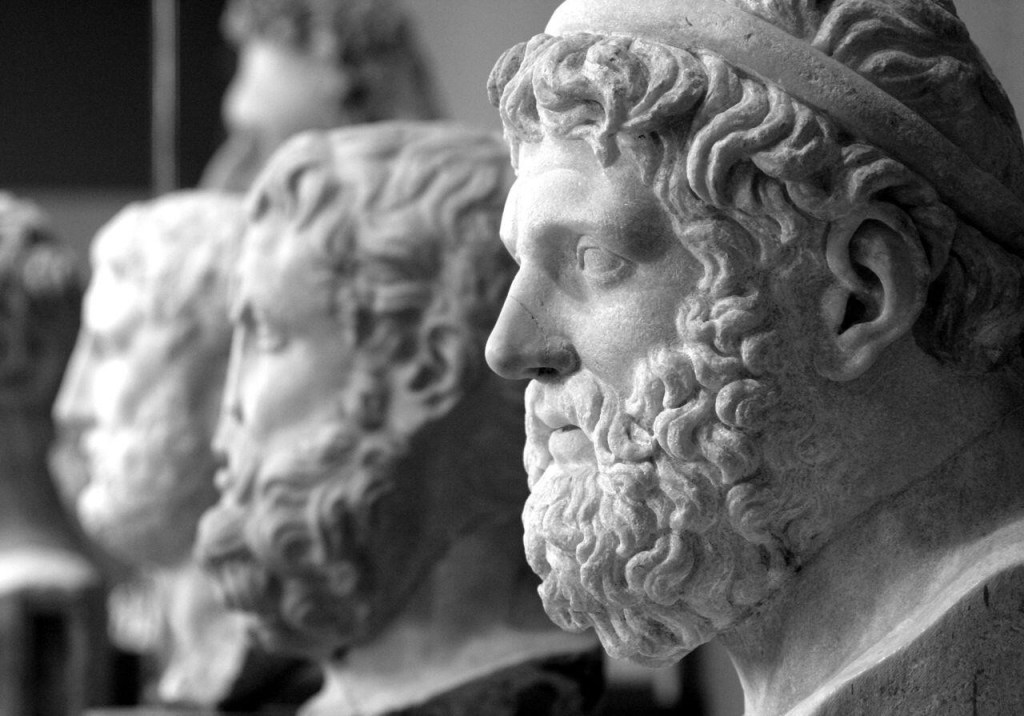
No lofty rhetoric for Paul, no philosophical reasoning: just Jesus Christ and him crucified. Even if Paul might convince them by such means, then their faith would lie in his cleverness and not in the power of God. And it is power that Paul is interested in, not his own, but God’s:
18 For the word of the cross is folly to those who are perishing, but to us who are being saved it is the power of God (1 Cor 1:18).
As for those who demand something other than the crucified Christ, Paul says:
22 For Jews demand signs and Greeks seek wisdom, 23 but we preach Christ crucified, a stumbling block to Jews and folly to Gentiles, 24 but to those who are called, both Jews and Greeks, Christ the power of God and the wisdom of God. 25 For the foolishness of God is wiser than men, and the weakness of God is stronger than men (1 Cor 1:22-25).
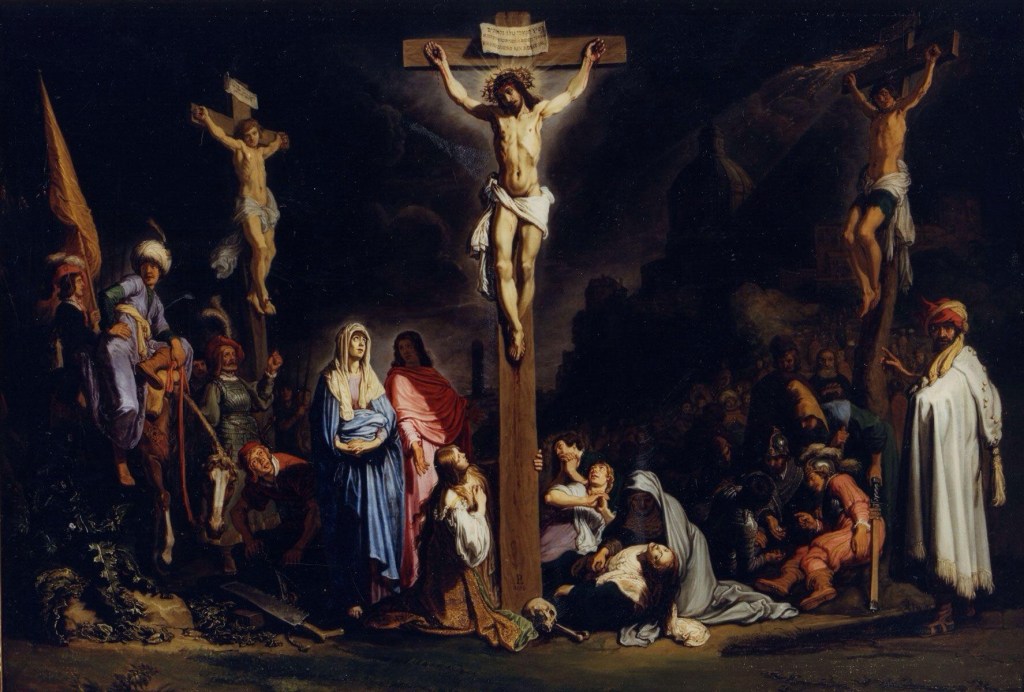
Here, and throughout chapter 2, Paul makes clear that he actually does preach wisdom. It is, however, a spiritual wisdom that looks like foolishness to those devoid of the Spirit of God. It must be discerned spiritually, so the philosophers, the “wise” of this world will never understand it. That is why the low, the despised, the foolish in the world’s wisdom are the ones to embrace the crucified Christ, while the high, the esteemed, the philosophers of the world mock him and boast in their own wisdom.
Now, why all this talk about wisdom? Remember that Paul began to talk about divisions in the church before taking this detour. I think it is purposeful. In Paul’s absence from Corinth, Apollos had arrived and apparently made quite an impact in the church with his knowledge and his eloquence. This seems to have become a fault line for division: the contrast of Paul’s weakness, fear, trembling — his avoidance of lofty speech and worldly wisdom — with Apollos’s charismatic eloquence and brilliance. So, this excursus on wisdom is part of Paul’s defense of his own ministry among them, a way of saying that he is not less than Apollos, outward appearances notwithstanding. He really begins to develop this more in chapter 3 when he returns to the problems of divisions.
1 Corinthians 3-4
Here, Paul gets to the point, and it seems pointedly about himself and Apollos, and about the Corinthians dividing over fellow servants of Christ.
3b For while there is jealousy and strife among you, are you not of the flesh and behaving only in a human way? 4 For when one says, “I follow Paul,” and another, “I follow Apollos,” are you not being merely human?
5 What then is Apollos? What is Paul? Servants through whom you believed, as the Lord assigned to each. 6 I planted, Apollos watered, but God gave the growth. 7 So neither he who plants nor he who waters is anything, but only God who gives the growth. 8 He who plants and he who waters are one, and each will receive his wages according to his labor. 9 For we are God’s fellow workers. You are God’s field, God’s building.
10 According to the grace of God given to me, like a skilled master builder I laid a foundation, and someone else is building upon it. Let each one take care how he builds upon it. 11 For no one can lay a foundation other than that which is laid, which is Jesus Christ. 12 Now if anyone builds on the foundation with gold, silver, precious stones, wood, hay, straw— 13 each one’s work will become manifest, for the Day will disclose it, because it will be revealed by fire, and the fire will test what sort of work each one has done. 14 If the work that anyone has built on the foundation survives, he will receive a reward. 15 If anyone’s work is burned up, he will suffer loss, though he himself will be saved, but only as through fire (1 Cor 3:b-15).

This is really pretty direct writing that points out the primacy of Paul’s work among them: he planted and Apollos watered, he laid the foundation and Apollos built on his work. And then he notes that the foundation he laid was not changed, could not be changed and that whatever building was done on it would be tested with fire. It might stand and it might well not. Both he and Apollos are merely servants; what is required of each is that he be faithful (1 Cor 4:1-2). Again, to emphasize the primacy of his work among them Paul closes out this section by writing:
14 I do not write these things to make you ashamed, but to admonish you as my beloved children. 15 For though you have countless guides in Christ, you do not have many fathers. For I became your father in Christ Jesus through the gospel. 16 I urge you, then, be imitators of me. 17 That is why I sent you Timothy, my beloved and faithful child in the Lord, to remind you of my ways in Christ, as I teach them everywhere in every church. 18 Some are arrogant, as though I were not coming to you. 19 But I will come to you soon, if the Lord wills, and I will find out not the talk of these arrogant people but their power. 20 For the kingdom of God does not consist in talk but in power. 21 What do you wish? Shall I come to you with a rod, or with love in a spirit of gentleness (1 Cor 4:14-21)?
Notice the relationship that Paul highlights: you may have many guides, but I am your father in Christ. Imitate me. Now, one other important clarification before we move on: Paul had no problem with Apollos, and Paul’s writing was not directed against him. At the end of the letter, Paul tells the Corinthians:
12 Now concerning our brother Apollos, I strongly urged him to visit you with the other brothers, but it was not at all his will to come now. He will come when he has opportunity (1 Cor 16:12).
Paul’s concern is not with Apollos but rather with the Corinthians who are pitting he and Apollos against one another in terms of apostolic ministry and authority. There are some people who have infiltrated the church and with whom Paul does have some serious grievances — he ironically calls them “super apostles” as he takes them to task — but that doesn’t seem to be the case with Apollos. We’ll talk about them later. Before we move on to some of the other problems plaguing the church, I want to mention a matter of little or no real importance, but one which comes up from time to time.
There are those Christians, most often evangelical Protestants or free-church folk, who object to calling a priest “father.” The typically quote Jesus:
1 Then Jesus said to the crowds and to his disciples, 2 “The scribes and the Pharisees sit on Moses’ seat, 3 so do and observe whatever they tell you, but not the works they do. For they preach, but do not practice. 4 They tie up heavy burdens, hard to bear, and lay them on people’s shoulders, but they themselves are not willing to move them with their finger. 5 They do all their deeds to be seen by others. For they make their phylacteries broad and their fringes long, 6 and they love the place of honor at feasts and the best seats in the synagogues 7 and greetings in the marketplaces and being called rabbi by others. 8 But you are not to be called rabbi, for you have one teacher, and you are all brothers. 9 And call no man your father on earth, for you have one Father, who is in heaven. 10 Neither be called instructors, for you have one instructor, the Christ. 11 The greatest among you shall be your servant. 12 Whoever exalts himself will be humbled, and whoever humbles himself will be exalted (Matt 23:1-12).
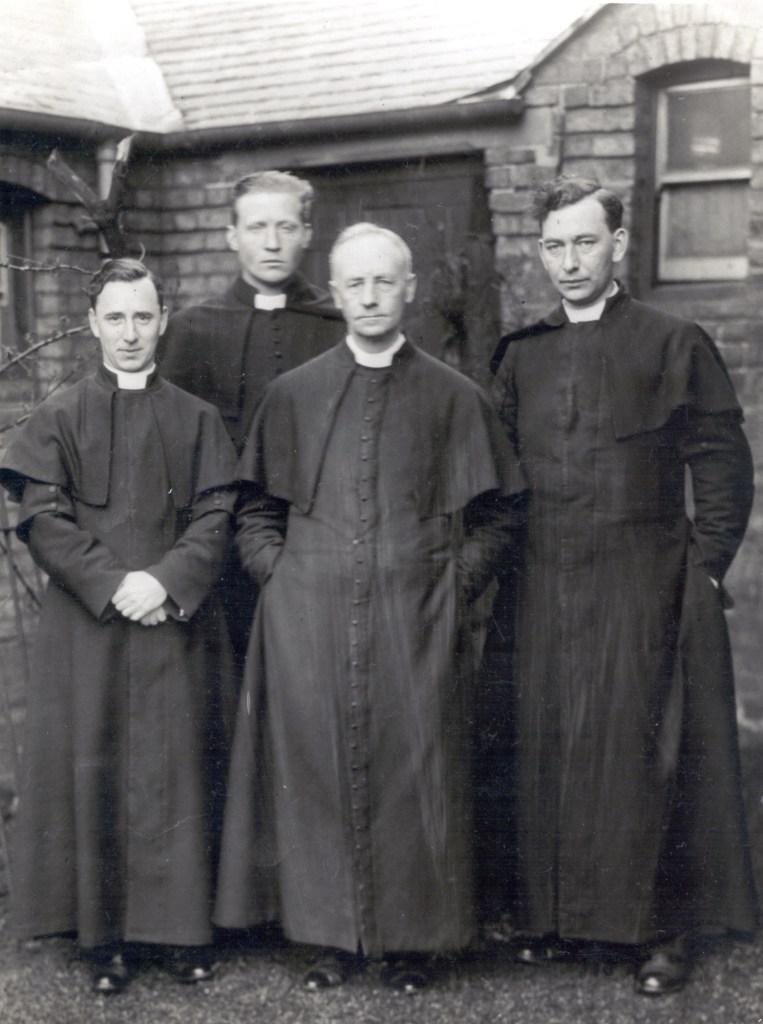
And yet, in this text in 1 Corinthians, Paul claims that he is uniquely their “father in Christ through the gospel” (1 Cor 4:15). That is simply because he first preached the Gospel to them and through his message they were born again. It is also because he cared for them like a father cares for his children. That is ideally what a priest does: births some in the Gospel, cares for all in the Gospel. Whatever Jesus was talking about, it wasn’t this bond of affection and the language of fatherhood that goes with it. So, we need have no qualms about that.
Sexual Immorality
Corinth was known as a center of sexual immorality. The city was on a trade route and money flowed freely. There was portage of ships across the isthmus at Corinth, so there were many sailors passing through the region and the city. And there was the temple of Aphrodite which is said to have employed around a thousand priestesses who were essentially cult prostitutes who plied their “ministry/trade” in the temple and in the city. Prostitution was big business; it was the hospitality industry of Corinth. So, Corinthian sexual morals, such as they were at all, were quite lax and tolerant. The Gentiles coming into the church brought this baggage with them, so it is no wonder Paul would have to deal with sexual matters.
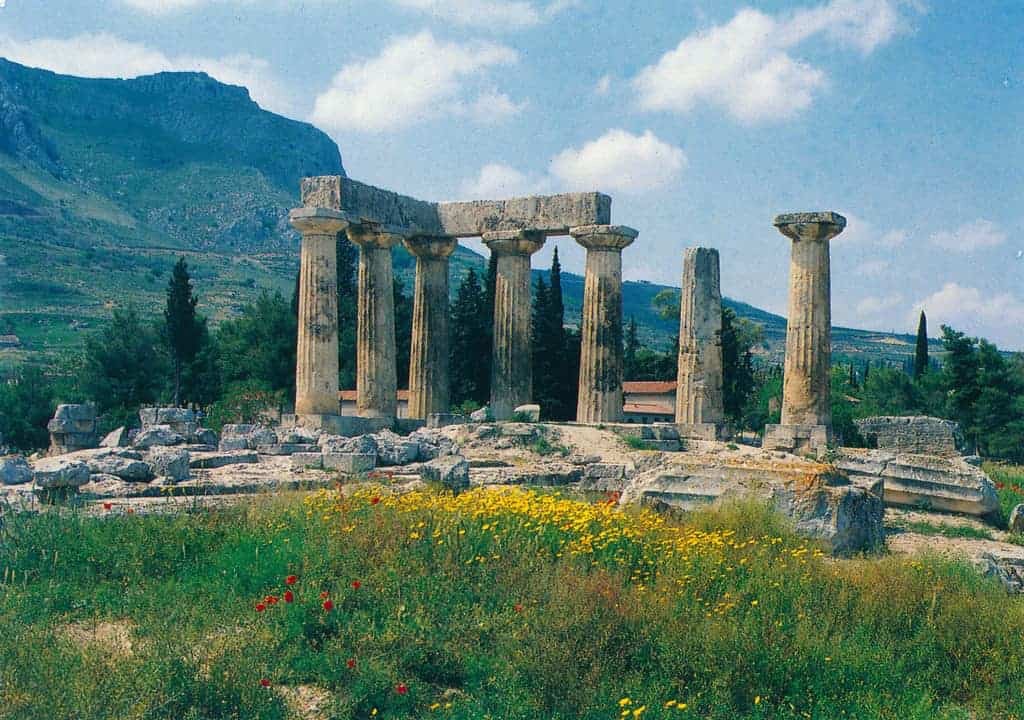
He begins with a particularly egregious transgression: a man living in incest with this stepmother (1 Cor 5:1-8). Paul pronounces judgment and passes sentence: excommunication — not for the purpose of condemnation, but as impetus to repentance. And the excommunication was to be complete and enforced by the entire community as Paul had written them in a previous letter:
9 I wrote to you in my letter not to associate with sexually immoral people— 10 not at all meaning the sexually immoral of this world, or the greedy and swindlers, or idolaters, since then you would need to go out of the world. 11 But now I am writing to you not to associate with anyone who bears the name of brother if he is guilty of sexual immorality or greed, or is an idolater, reviler, drunkard, or swindler—not even to eat with such a one. 12 For what have I to do with judging outsiders? Is it not those inside the church whom you are to judge? 13 God judges those outside. “Purge the evil person from among you” (1 Cor 5:9-13).
With this, Paul introduces another important matter: judgment and discipline within the church. While the church has no authority to judge and discipline those outside its community, it absolutely can and must judge those inside: to provide a proper witness of holiness to the surrounding culture, to protect the community from the spread of immorality, and to bring sinners to repentance. And the function of judgment in the church extends to what we might consider civil matters, as well: lawsuits between believers — which should never occur in the first place — must be resolved in the church and not in secular law courts. The church is an outpost of the kingdom of God, and that Kingdom has its own law and its own wise judges; that is the way it is supposed to work.
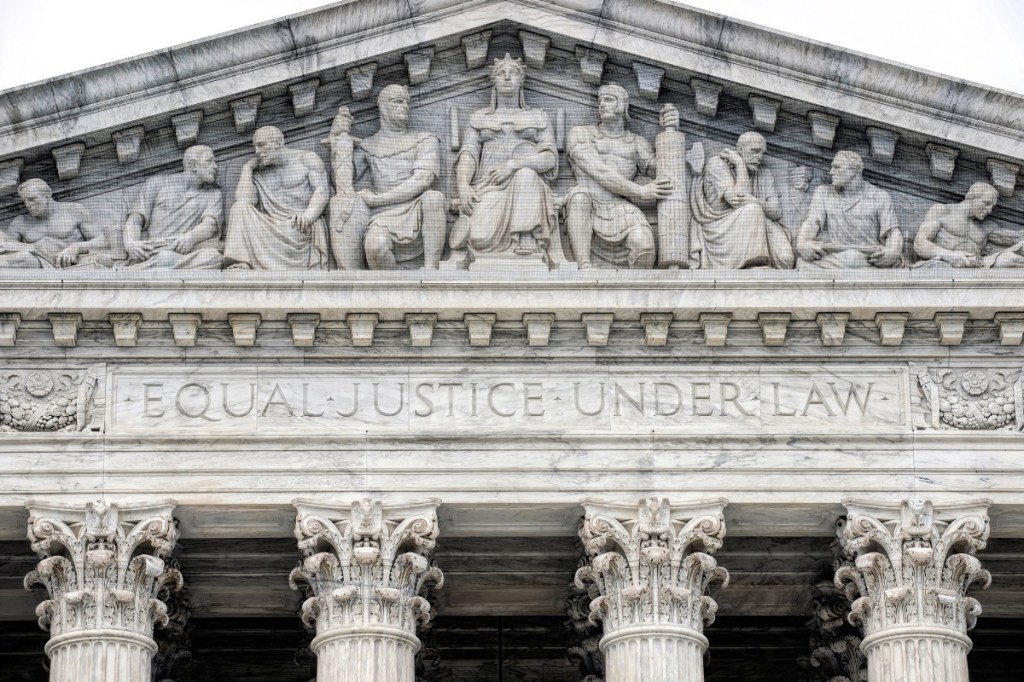
One last note about judgment and the world: the church does not exercise discipline over the world, but that does not mean we approve the ways of the world uncritically. We must judge in the sense of calling the world to repentance, of holding its leaders accountable to righteousness, and of refusing to participate in its evil. Our very lives are, in some sense, acts of judgment. But, again, as with excommunication, it is not judgment for condemnation, but for repentance. And that call for repentance can work as Paul notes; it had worked for many of them:
9 Or do you not know that the unrighteous will not inherit the kingdom of God? Do not be deceived: neither the sexually immoral, nor idolaters, nor adulterers, nor men who practice homosexuality, 10 nor thieves, nor the greedy, nor drunkards, nor revilers, nor swindlers will inherit the kingdom of God. 11 And such were some of you. But you were washed, you were sanctified, you were justified in the name of the Lord Jesus Christ and by the Spirit of our God (1 Cor 6:9-11).
The Temple of the Body
In the midst of some detailed instructions, Paul expresses a general principle that will cover all these issues and many more that might emerge. The Corinthians, either in the earlier visit or earlier letter, have expressed some notions that Paul has to refute. Essentially they have said: (1) since we are free in Christ, all things are permitted for us (1 Cor 6:12) and (2) whatever is “natural” for the body (food, drink, sex) is permissible for us (1 Cor 6:13). You see the import of this. If all these things are permissible, then so is gluttony, drunkenness, prostitution and sexual immorality of all kinds. This is a proto-gnostic idea that the body doesn’t matter; it is the immortal soul trapped within it that is essential. We don’t have time to discuss this in detail, but you see that notion permeating our society today in everything from abortion to transgenderism and even the movement toward transhumanism. Contrary to this, Paul insists that the body matters, and that it is not a playground but a temple, that it is not yours, but God’s.
19 Or do you not know that your body is a temple of the Holy Spirit within you, whom you have from God? You are not your own, 20 for you were bought with a price. So glorify God in your body (1 Cor 6:19-20).
If the body is a temple, then what we do with it is either an act of worship or an act of blasphemy. If we keep that in mind, it is relatively straightforward to navigate many of our own culture’s moral issues. Ours is an incarnational faith. That Jesus came in the flesh, that he lived and died in a body, that he now has a resurrection body — all this embodiment matters now and in the age to come. How we honor or dishonor our own bodies and the bodies of others matters now and in the age to come.
Next week we will follow Paul around the spiral of some more specific problems as he approaches the real heart of the matter.


 First Blessings