1, 2 Thessalonians: The Day of the Lord

Apostles Anglican Church
Fr. John A. Roop
How To Read the Pauline Epistles
1, 2 Thessalonians: The Day of the Lord and Life in the Meantime
The Lord be with you.
And with your spirit.
Let us pray.
Almighty God, give us grace to cast away the works of darkness, and put on the armor of light, now in the time of this mortal life in which your Son Jesus Christ came to visit us in great humility; that in the last day, when he shall come again in his glorious majesty to judge both the living and the dead, we may rise to life immortal; through him who lives and reigns with you and the Holy Spirit, one God, now and for ever. Amen (BCP 2019, p. 598).
Introduction: A Bishop’s Dilemma
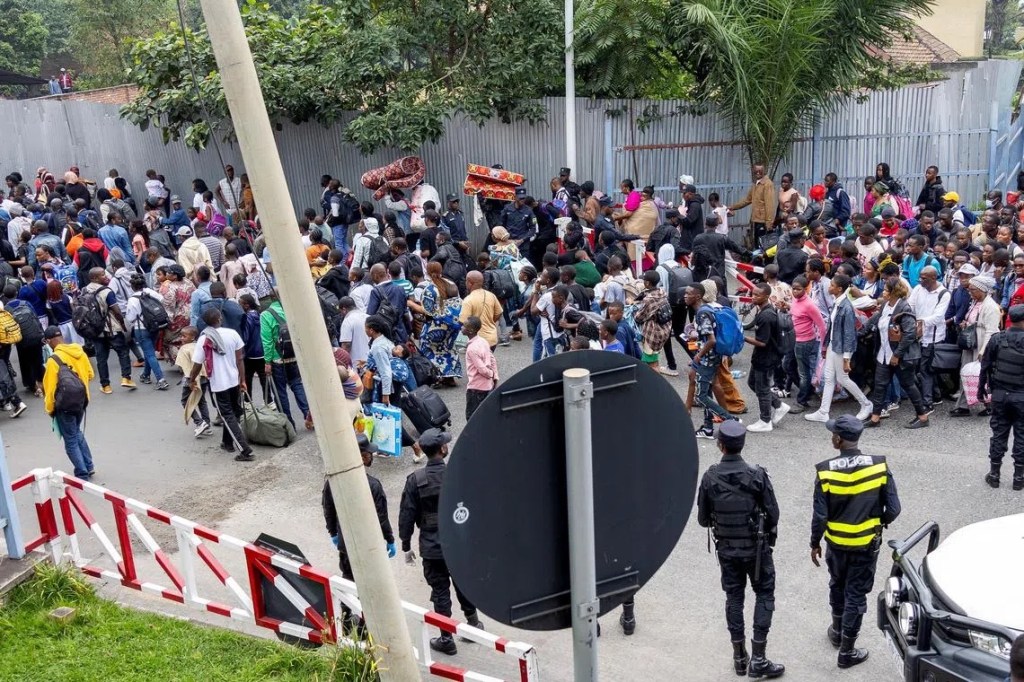
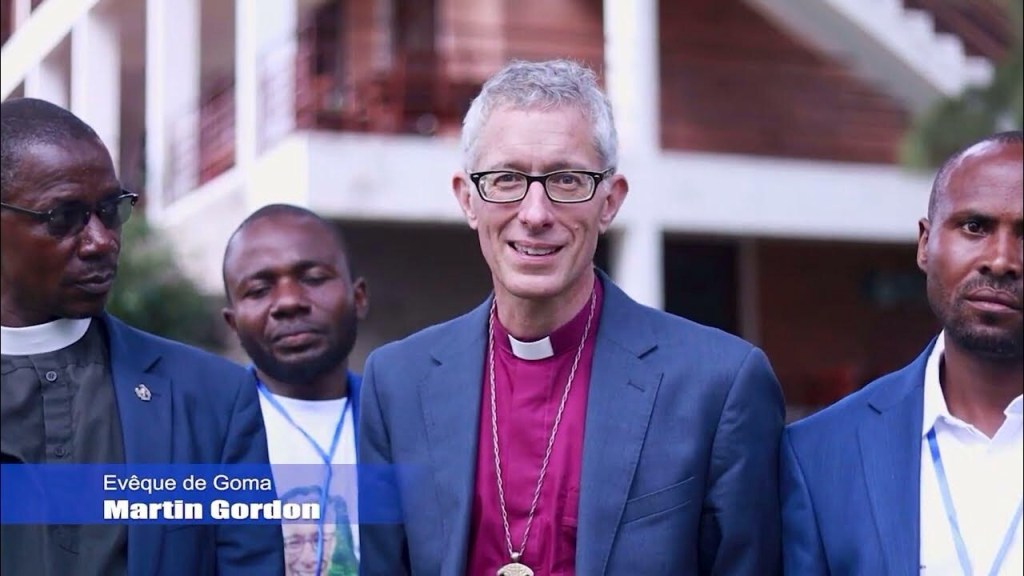
I remember where I was in the early evening of 29 January 2025, sometime between 6:00 and 6:30. I was pulling out of the KFC parking lot onto Kingston Pike; I was heading home. I remember this because of what I heard on the radio: a brief interview with Anglican Bishop Martin Gordon on All Things Considered, a program on National Public Radio. Bishop Gordon was and is the Bishop of Goma, a city in the Democratic Republic of Congo (DRC). For years, there has been armed conflict between Rwanda and the DRC. In days just prior to the NPR interview, Rwandan soldiers had taken much of Goma and a nearby city, and the situation was dire. Bishop Gordon and his family fled the city to safety across the border. Here is the part of the interview that gripped me. I’m reading Bishop Gordon’s words from a transcript of the interview. The whole transcript and the audio recording is linked following.
GORDON: We left on Saturday lunchtime. It was eerily quiet. Some of our friends and others had been leaving from Thursday. But the city of Sake to the west of Goma, which was a red line for many NGOs that had fallen, and our government had already suggested that all its citizens left. So we had some time. We had some time to pack. We drove over the border in relative calm. And as we crossed the border, we saw many of our friends and colleagues, particularly those with children, also seeking to leave.
I mean, ironically, one of the challenge – the main challenge we had leaving that day was to get our car papers in order. But we know that we’re some of the few with the possibility and the means to escape. Most of the clergy and all of the believers, the Anglican believers, and all of our other colleagues are still in Goma. And they’re the ones who have been suffering. Goma has had no power since Friday. Internet’s been patchy. There’s little water in some of the city. Hospitals are overflowing.
And with the battle that then took to the streets of Goma, many civilians were caught in the crossfire. There’s eyewitness accounts of bodies in the streets, and food prices have doubled. So there seems to be chaos on the ground, and fighting is still in pockets of the town (https://www.npr.org/2025/01/29/nx-s1-5277018/martin-gordon-anglican-bishop-of-goma-calls-for-peace-in-the-drc).
What so vexed me about that statement is the vision of a bishop fleeing his diocese and leaving his clergy and his people trapped there. It is not my place to judge the bishop, and I dare not. Lord, have mercy upon him. The situation was much more complex than I could imagine from the safety of a car filled with the smell of the Colonel’s Original Recipe chicken. I suspect that the clergy and people left behind, those who simply could not get out, encouraged their bishop to escape to safety. I think I would do so for my bishop in a similar circumstance. And, I suspect the bishop left with a conflicted heart: to stay or to leave must have been a gut-wrenching decision. And, while separated from his people, I am certain that he prayed diligently for them, longed for news from them, longed to return to them. Keep the bishop’s story in mind as we consider the background of the Thessalonian correspondence.
Historical Background: Acts

The historical reconstruction of Paul’s engagement with the Thessalonians is based on the texts in Acts 16-18 and 1 Thessalonians 1-3. As with all reconstructions, some of the details are uncertain, but, in this case, the general overview is pretty clear.
Paul set out on his second missionary journey late in AD 49. It would last for three years and take Paul and the Gospel to a new continent and to some of the most prominent cities in the Roman Empire.
After visiting the churches he and Barnabas had founded just a few years earlier (AD 44-46) Paul seemed lost for a bit, trying to go first to this region and then to that one, but being forbidden by the Holy Spirit to do so. He eventually arrived at Troas where God finally gave him his itinerary in a vision: cross over to Europe, go to Macedonia, and preach the Gospel there. And so, Paul and Silas, with their companion Timothy — and perhaps Luke, as well — did just that, sailing a short distance across the Aegean to Samothrace and the next day to Neapolis. From there the company went overland to Philippi, a leading city of Macedonia.
You likely remember the events in Philippi: the conversion of Lydia, the first Christian convert in Europe; the exorcism of the slave girl with the subsequent arrest and beating of Paul and Silas; the conversion of the Philippian jailer and his family and Paul’s hasty exit from the city the next morning at the request — and urging — of the authorities. And then, passing through Amphipolis and Apollonia, it was on to Thessalonica.

Thessalonica was, in many ways, the principal city of Macedonia, the capital of the region. It was a “free city,” which meant is was governed by its own elected officials and not by Roman governors and was also free from having Roman soldiers garrisoned there. It was financially prosperous. While it was a Gentile city, it also had a sizeable Jewish population, so, on arriving, Paul reasoned in the synagogue for three weeks and, when not preaching, worked his tent making trade to support the ministry. He had some success: a few Jews accepted Jesus as the Messiah as did apparently many more of the Gentile God-fearers and the prominent women of the city. As usual, though, he met with some opposition in the synagogue, and though the text in Acts 17 doesn’t mention it explicitly, it seems likely, based on 1 Thessalonians, that Paul turned to the Gentiles for some brief time. Perhaps it was that move that caused even greater opposition by the Jewish leaders, ending with a mob; with Paul’s host, Jason, being dragged before the city authorities; with the payment of security money — apparently some kind of financial guarantee that Paul would leave the city — and with Paul and company’s exit from Thessalonica. Here is the resonance with Bishop Gordon’s story. In the city, in Thessalonica, there is violent opposition to this nascent Christian movement, and in the midst of that, the Apostle flees the city, leaving the church and its local leaders to face the persecution alone. There may be good, practical reasons for this: with Paul out of sight and mind the trouble might fizzle out. But, from our vantage point of safety nearly two millennia later, the optics are bad, like a captain abandoning a sinking ship, leaving the crew behind to try to keep it afloat.
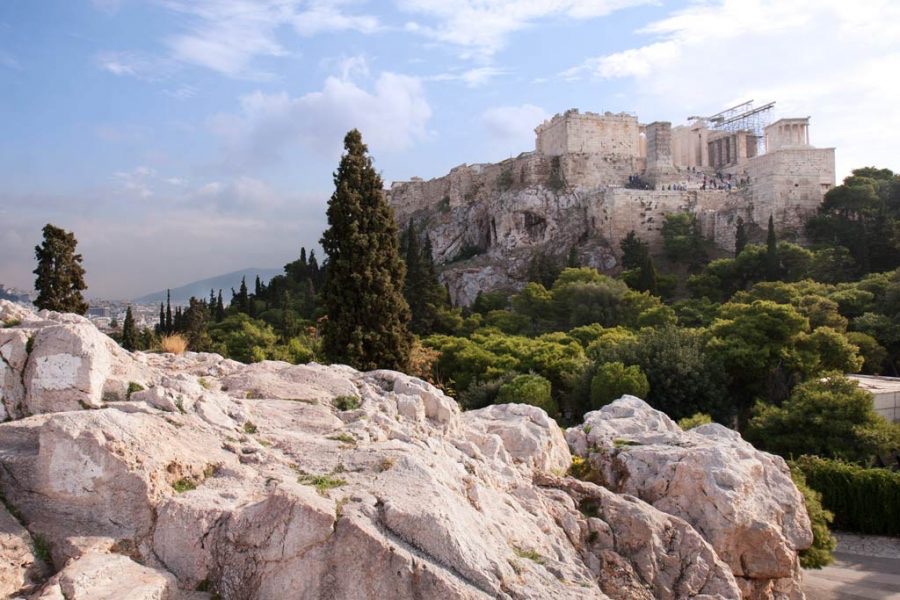
Paul and his companions traveled a few miles to Berea and once again had some success at the synagogue there: so much success, in fact, that the Jews back in Thessalonica heard of it and sent agitators to Berea, forcing Paul out once again. Though “on the run” again, Paul’s heart was still in Thessalonica, and he desperately wanted to know how the church there was faring in the face of the opposition that had driven him out of two cities now. It seems that Silas remained at Berea to “finish up” the work as best he could. Timothy was dispatched back to Thessalonica to get the report on their condition that Paul wanted, while other brothers accompanied Paul to Athens. It was in Athens that Paul — alone now — offered his apology for the faith before the Areopagus— really, defended himself before this council against serious charges that might have resulted in his death. After that trial, Paul left Athens for Corinth.
It was in Corinth that Timothy and Silas reconnected with Paul and gave the report from Macedonia generally, and from Thessalonica specifically. The news was good; the church, even in the midst of trouble, was sound. That good report and Timothy’s report of some doctrinal confusion and questions in the church was the occasion for Paul’s letters back to the Thessalonians, written likely in AD 51 with the first and second letters probably separated only by a matter of several weeks or perhaps a few months.
1 Thessalonians
The first three chapters of 1 Thessalonians rehearse the history of St. Paul’s relationship with the church — the background that we have discussed — from Paul’s perspective. They are filled with encouragement — particularly important for a church facing persecution — and with praise, thanksgiving, and love. This passage is typical:
2 We give thanks to God always for all of you, constantly mentioning you in our prayers, 3 remembering before our God and Father your work of faith and labor of love and steadfastness of hope in our Lord Jesus Christ. 4 For we know, brothers loved by God, that he has chosen you, 5 because our gospel came to you not only in word, but also in power and in the Holy Spirit and with full conviction. You know what kind of men we proved to be among you for your sake. 6 And you became imitators of us and of the Lord, for you received the word in much affliction, with the joy of the Holy Spirit, 7 so that you became an example to all the believers in Macedonia and in Achaia. 8 For not only has the word of the Lord sounded forth from you in Macedonia and Achaia, but your faith in God has gone forth everywhere, so that we need not say anything. 9 For they themselves report concerning us the kind of reception we had among you, and how you turned to God from idols to serve the living and true God, 10 and to wait for his Son from heaven, whom he raised from the dead, Jesus who delivers us from the wrath to come (1 Thess 1:2-10).

Notice what Paul thanks God for: their work of faith (an interesting pairing of words!), labor of love (this is all seeming very active), and steadfastness of hope. Paul is convinced about the authenticity of their faith and calling because the Gospel worked in them powerfully as evidenced by the Holy Spirit, not least by turning them from idols to the true God. Verse 10 is nod toward one of the doctrinal issues bothering the church, and one that Paul addresses in both letters: to wait for his Son from heaven. The second coming of Jesus is at issue for them, apparently in the forefront of their thought. More about this later.
It is in chapters 4 and 5 that St. Paul turns to orthopraxis, to the right living that comes from their faith, and to clearing up a matter of confusion that is troubling the church.
Sexual Morality and Brotherly Love
First, Paul speaks to sexual immorality. Given the depths of sexual license and perversity plaguing our culture, we may be forgiven, perhaps, for thinking that this is a modern problem. But any reading of Scripture and history will disabuse us of that false notion. Sex is one of the strongest drives of our fallen human nature, and, because of that, it is a passion that must be carefully and closely circumscribed. Paul writes:
4 Finally, then, brothers, we ask and urge you in the Lord Jesus, that as you received from us how you ought to walk and to please God, just as you are doing, that you do so more and more. 2 For you know what instructions we gave you through the Lord Jesus. 3 For this is the will of God, your sanctification: that you abstain from sexual immorality; 4 that each one of you know how to control his own body in holiness and honor, 5 not in the passion of lust like the Gentiles who do not know God; 6 that no one transgress and wrong his brother in this matter, because the Lord is an avenger in all these things, as we told you beforehand and solemnly warned you. 7 For God has not called us for impurity, but in holiness. 8 Therefore whoever disregards this, disregards not man but God, who gives his Holy Spirit to you (1 Thess 4:1-8).
First, note God’s will for each of us: sanctification — not just being declared holy (set apart) in our adoption as children of God, but actually becoming holy in our manner of life, by what we do and by what we refrain from doing. You’ll note this same dual emphasis in our prayer of confession from the Daily Office: we have left undone those things which we ought to have done, and we have done those things which we ought not to have done (BCP 2019, p. 12).

In this instance, the Thessalonians — and we — are to refrain/abstain from sexual immorality. Sexual sin is a violation of brotherly love — a transgression of and a wrong done to a Christian brother/sister. It is important that St. Paul couches this in terms of a violation of brotherly love, because sexual immorality seems to be a blind spot in lives otherwise characterized by brotherly love:
9 Now concerning brotherly love you have no need for anyone to write to you, for you yourselves have been taught by God to love one another, 10 for that indeed is what you are doing to all the brothers throughout Macedonia. But we urge you, brothers, to do this more and more, 11 and to aspire to live quietly, and to mind your own affairs, and to work with your hands, as we instructed you, 12 so that you may walk properly before outsiders and be dependent on no one (1 Thess 4:9-12).
It is ironic that a church known throughout the whole region of Macedonia for its brotherly love cannot see that sexual immorality is itself a gross violation of brotherly love. This is a blind spot that Paul has to correct.
Also, here Paul introduces another matter of right living that he will explore more in his second letter. It stems from confusion about last things. Paul tells the Thessalonians to work with their hands, to provide for their own needs, and not to be dependent on — not to “mooch off” of — anyone else. That, too, is a matter of brotherly love.
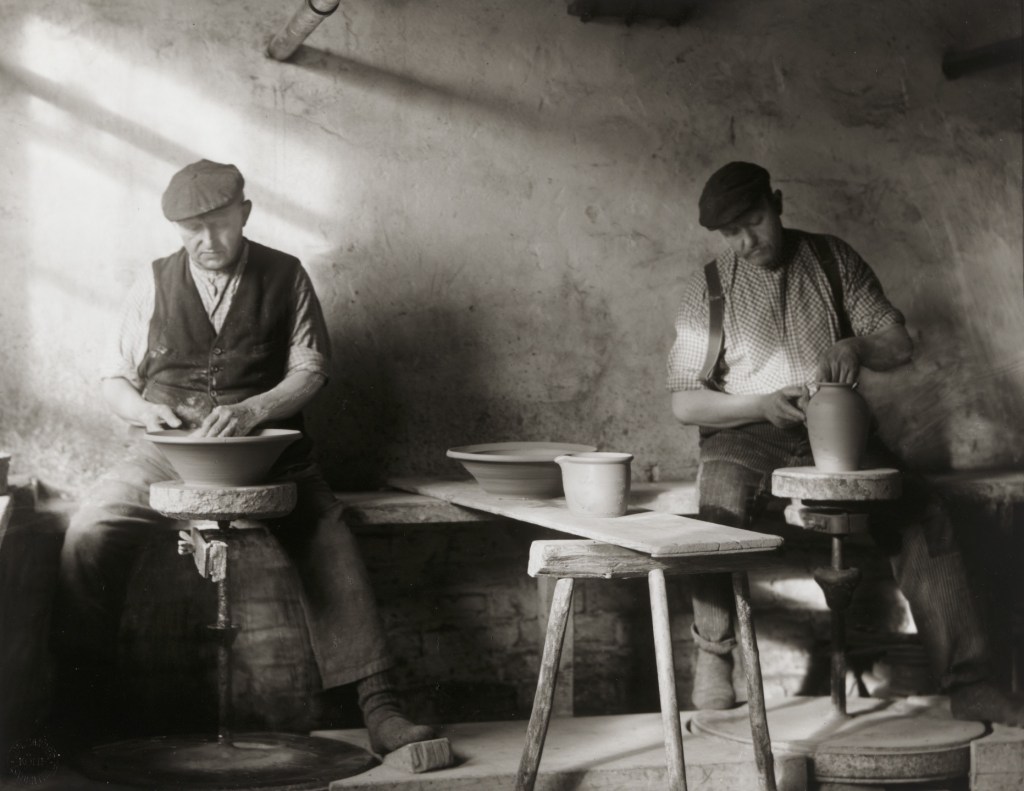
I’m impressed with the very practical, commonsense nature of Paul’s instruction: keep your heads down, mind your own business, work and mange you affairs well. Remember that the Christians in Thessalonica are under suspicion. This behavior would show the surrounding pagan community that Christians are good citizens and good neighbors. With this, Paul turns to the point of confusion: the last things.
The Coming of the Lord
This brief teaching from Paul on the coming of the Lord is important not just for the Thessalonians, but for all of us. And it is a point of confusion, still, and a matter of some contention. Let’s consider it in it’s original context. Apparently, in Paul’s absence, some members of the church have died or perhaps some are afraid of dying in the persecution. So questions have risen: We thought Christ would have come by now. Have we missed it? What should we be looking for? What about those who die before Christ returns? Do they simply lose out on the kingdom? In partial answer — there is more in 2 Thessalonians — Paul writes this:
13 But we do not want you to be uninformed, brothers, about those who are asleep, that you may not grieve as others do who have no hope. 14 For since we believe that Jesus died and rose again, even so, through Jesus, God will bring with him those who have fallen asleep. 15 For this we declare to you by a word from the Lord, that we who are alive, who are left until the coming of the Lord, will not precede those who have fallen asleep. 16 For the Lord himself will descend from heaven with a cry of command, with the voice of an archangel, and with the sound of the trumpet of God. And the dead in Christ will rise first. 17 Then we who are alive, who are left, will be caught up together with them in the clouds to meet the Lord in the air, and so we will always be with the Lord. 18 Therefore encourage one another with these words (1 Thess 4:13-18).
There are several important points to mention, though we can only do so briefly.
First, the model in all this is Jesus and his resurrection. As Jesus rose bodily, our dead — and we, if the Lord tarries — will rise bodily; the notion of disembodied souls dwelling somewhere beyond this world is Platonic, not Christian. As for the dead, specifically, they are not disadvantaged or disenfranchised by having died, but rather prioritized. They will rise first, then the living will follow. Then all of us will be caught up in the cloud to meet the Lord and finally to live with him for ever. So, they could be at peace about their beloved dead. This matter of being caught up in the air is a point of confusion not least because we miss the first century cultural references. Suppose an important Roman official were to visit a city like Thessalonica. It is a significant event in the life of the city, one requiring the bestowing of proper honor upon the visitor. And that required a proper escort. The high ranking citizens of the city, and perhaps a significant portion of the populace, would meet the official visitor outside the city to escort him into the city with proper honor. At that point, he might take up his residence with them.
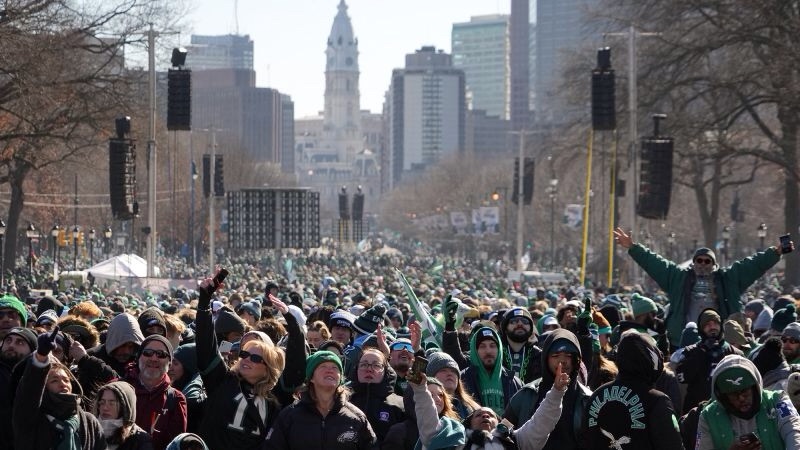
You see this same scenario in the Triumphal Entry, when people went outside the city of Jerusalem to meet Jesus and to escort him into the city. You see the same at the end of Acts when St. Paul finally arrives at Rome:
14b And so we came to Rome. 15 And the brothers there, when they heard about us, came as far as the Forum of Appius and Three Taverns to meet us. On seeing them, Paul thanked God and took courage. 16 And when we came into Rome, Paul was allowed to stay by himself, with the soldier who guarded him (Acts 28:14b-16).
So, to put the picture together: upon the Lord’s return, the dead in Christ will rise first and then together with those who are alive — all of them in their resurrection bodies — they will go out (up?) to meet Christ and to escort him to earth where his kingdom will be finally established. The image isn’t of souls going to heaven but of resurrected bodies welcoming Jesus to earth.
What do the Thessalonians do — what do we do — in the meantime as we await the coming of the Lord.? That is the subject of the fifth and final chapter.
The Day of the Lord
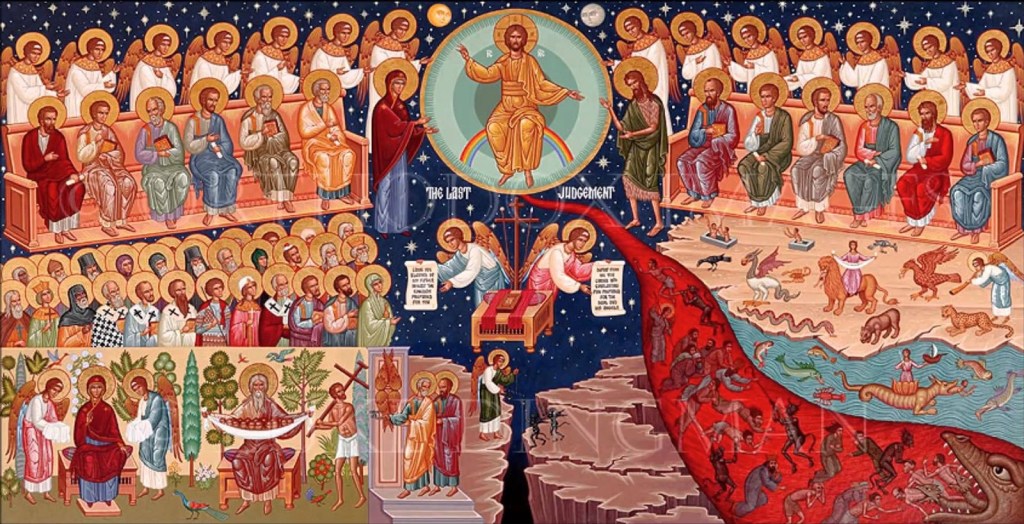
First, the world is going to continue just as it always has until the continuity of history is interrupted suddenly by the arrival of Christ — like a thief coming at night — and the wicked, those living in darkness, will not escape the coming destruction. But, we are to be awake and sober. God has not prepared us for destruction, but for salvation. And the key for us in the meantime is to cultivate the virtues of faith, hope, and love. That is how we will be ready. How we live in the meantime matters, not least how we live together in the Christian community, in the fellowship of the church.
Final Instructions
Here is what Paul says about the fellowship.
12 We ask you, brothers, to respect those who labor among you and are over you in the Lord and admonish you, 13 and to esteem them very highly in love because of their work. Be at peace among yourselves. 14 And we urge you, brothers, admonish the idle, encourage the fainthearted, help the weak, be patient with them all. 15 See that no one repays anyone evil for evil, but always seek to do good to one another and to everyone. 16 Rejoice always, 17 pray without ceasing, 18 give thanks in all circumstances; for this is the will of God in Christ Jesus for you. 19 Do not quench the Spirit. 20 Do not despise prophecies, 21 but test everything; hold fast what is good. 22 Abstain from every form of evil (1 Thess 5:12-22).
This is the nature of life in the Christian community. It is a community ordered by faithful servant leaders who admonish, encourage, and help the people with patience, and who, in return are respected, esteemed, and loved. It is a life characterized by love — by willing and acting for the good of the other — and by joy, prayer, thanksgiving, the charisms of the Spirit, by discernment, perseverance, and purity.
And with this we will leave 1 Thessalonians and look very briefly at St. Paul’s second letter.
2 Thessalonians
We will focus on a single issue in Paul’s second letter because it seems to be the issue that occasioned the letter: the timing and signs of Christ’s return. Paul knew and taught that the return of Christ was/is imminent; there is nothing standing in its way, nothing that must happen first. In previous classes, we have presented the drama of redemption as a play in several acts, and that analogy is helpful here. The play looks like this:
ACT I: Creation
ACT II: Fall
ACT III: Israel
ACT IV: Jesus
ACT V: Church
We are currently in Act V. There is no Act VI before the return of Jesus. His return ends Act V and ends this particular play. In that sense, his return is imminent, the next thing in the play. But, there are some signs during Act V that point toward the end of the play approaching soon. That is the issue that Paul addresses in 2 Thessalonians 2. What he writes to the Thessalonians is a clarification for them of things he had told them earlier, in person. For us, it is a point of confusion, because we lack that background. We don’t know what they knew, what Paul had told them in person. Frankly, the Church for nearly two millennia has not known what to make of this except very generally. Certainly, I can do no better. But, we can sketch out the general outlines of the signs pointing toward Christ’s return.
3 Let no one deceive you in any way. For that day will not come, unless the rebellion comes first, and the man of lawlessness is revealed, the son of destruction, 4 who opposes and exalts himself against every so-called god or object of worship, so that he takes his seat in the temple of God, proclaiming himself to be God. 5 Do you not remember that when I was still with you I told you these things? 6 And you know what is restraining him now so that he may be revealed in his time. 7 For the mystery of lawlessness is already at work. Only he who now restrains it will do so until he is out of the way. 8 And then the lawless one will be revealed, whom the Lord Jesus will kill with the breath of his mouth and bring to nothing by the appearance of his coming. 9 The coming of the lawless one is by the activity of Satan with all power and false signs and wonders, 10 and with all wicked deception for those who are perishing, because they refused to love the truth and so be saved. 11 Therefore God sends them a strong delusion, so that they may believe what is false, 12 in order that all may be condemned who did not believe the truth but had pleasure in unrighteousness (2 Thess 2:3-12).
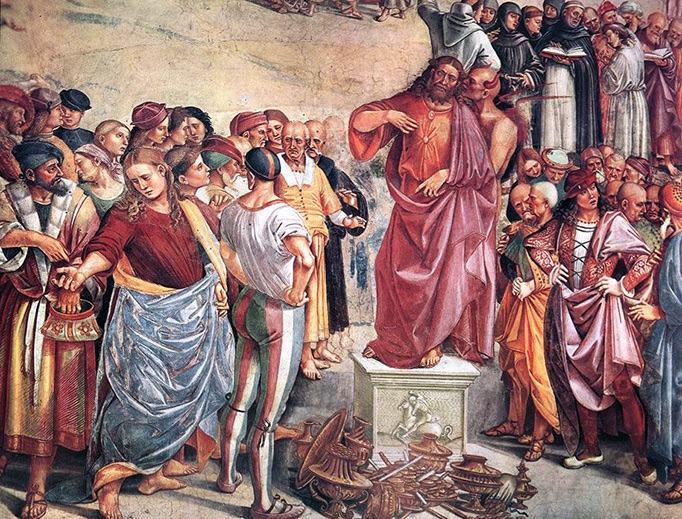
Near the end of Act V — The Church, just prior to the coming of the Lord, there will be a rebellion of sorts, perhaps a total disruption of the social order, and out of that there will arise a “pseudo-savior,” one with such power that he appears god-like; the power that he has is satanic. And, he — the lawless one — will deceive many; he will demand and receive worship and will exalt himself as God. Apparently, many will be happy to worship him because of his power and the signs he works. About further details, we have no information; Paul had told the Thessalonians more about this in person, but he seems reticent to write more here; so, we have only this — bare bones. But, at some point, the true nature of the lawless one will be revealed, Christ will return and destroy him, blowing him away with his breath like so much chaff.
Of course, we want to know more, and some build enormous castles based on this “grain” of a foundation. This is my conviction: while the Church does not understand this fully now, we will know what we need to know when we need to know it. In the meantime, we hold fast to what we have received, we press on toward the high calling that is ours in Christ Jesus, and we accept as our own this blessing, which Paul offered to the Thessalonians:
16 Now may our Lord Jesus Christ himself, and God our Father, who loved us and gave us eternal comfort and good hope through grace, 17 comfort your hearts and establish them in every good work and word (2 Thess 2:16-17).
Amen.


 First Blessings