An Advent Homily on Isaiah 60

Apostles Anglican Church
Fr. John A. Roop
Waiting Well and Faithfully: A Homily on Isaiah 60
(Isaiah 60, Psalm 119:25-48, Luke 18:1-30)
Collect of the Third Sunday in Advent
O Lord Jesus Christ, you sent your messengers the prophets to preach repentance and prepare the way for our salvation: Grant that the ministers and stewards of your mysteries may likewise make ready your way, by turning the hearts of the disobedient toward the wisdom of the just, that at your second coming to judge the world, we may be found a people acceptable in your sight; for with the Father and the Holy Spirit you live and reign, one God, now and for ever. Amen.
Our King and Savior now draws near:
O come, let us adore him.
We are now past the midpoint of Advent; we can almost see the bright radiance of the angels over a pasture outside Bethlehem and almost hear them tuning up their Glorias — the light at the end of the tunnel of Advent, so to speak. Our waiting for the celebration of Jesus’ first Advent is nearly over, and we know it from the calendar. But, we are still waiting for his second Advent, and we have no idea where we are in that timeline; there is no human calendar for that. So far, it has been two thousand years and counting. It may be two thousand years more. It may be before our next breath. I may live to see it, I may not. Robert Benson, one of my favorite authors and a man I only half-jokingly say ruined my life, wrote an Honest-to-God memoir titled “Between the Dreaming and the Coming True.” And that is precisely where we are as we await the second Advent: somewhere — and God only knows where — between the dreaming and the coming true.

We might as well be honest. Some have given up waiting and just put that second Advent out of mind. These assume they will live and die and the world will go right along until it doesn’t. Maybe Jesus will return, maybe humans will destroy themselves before that, or maybe the whole thing will just drag on interminably. Or, as Christians, they believe — with conviction — that Jesus will return. But they are Christians formed unwittingly and unknowingly by Bayesian statistics: the probability of something happening today or tomorrow that hasn’t happened in the prior two thousand years is vanishingly near zero. So, those folk do not wake up every morning thinking, “Today could be the day!”
Then there are others who do wake up each morning thinking of and even longing for Jesus’ immediate return: that this day might be the day is their greatest hope. I find this to be true especially for those who are advanced in years and perhaps a bit life-weary and also for those who are suffering or grieving various losses. Come, Lord Jesus is a real and heart-felt prayer for these dear souls.
Many of us — honestly, I suspect most Christians — fall somewhere in-between. We think about Jesus’ second Advent not daily but from time to time: maybe during Advent as we are doing now, maybe when the lectionary guides us into 1 Corinthians or 1 Thessalonians or Revelation, maybe when we attend a funeral. But all of us, whether consciously and expectantly or unconsciously and dimly are waiting; we are in the “not yet” of the Christian story. The issue for us is how to wait well. What do we need in order to wait well?
To begin answering this question — and there is much more to it than I’ll be able to say — I want to draw a few lessons from Isaiah 60, one of our readings for Evening Prayer today. To see the text as a passage on waiting, we must understanding that the people who heard it were likely in exile in Babylon. Jerusalem had been destroyed, the temple had been razed, and the Judeans had been carried away to a foreign land. Surely, in that dire situation, at least from time to time, someone told the story of Egypt and the Exodus, keeping some hope alive that what God had done before he might just do again. And, just as surely, someone rehearsed the covenants that God had made with Abraham and David — covenants that don’t end with the people in exile. So, at least some of the people are waiting, waiting for God to do something, anything. We have to hear Isaiah in that context. What is needed for the people to wait well, to wait faithfully?
First, the people need a prophet and a vision. It is easy in the midst of waiting, especially when the waiting is prolonged, to get so accustomed to the ordinary, to the mundane state of affairs, that we lose the vision of what is possible; for us as Christians, we might even lose the vision of what is promised. That is where the prophets come in, the Biblical prophets and those with prophetic gifts among us, gifts of speaking the word of God in powerful new ways, gifts of painting a vision, in word and image, of what God has promised. When our African-American brothers and sisters were waiting in the exile of justice denied, of a Constitutional covenant unfulfilled, a prophet arose to speak a vision, a dream:
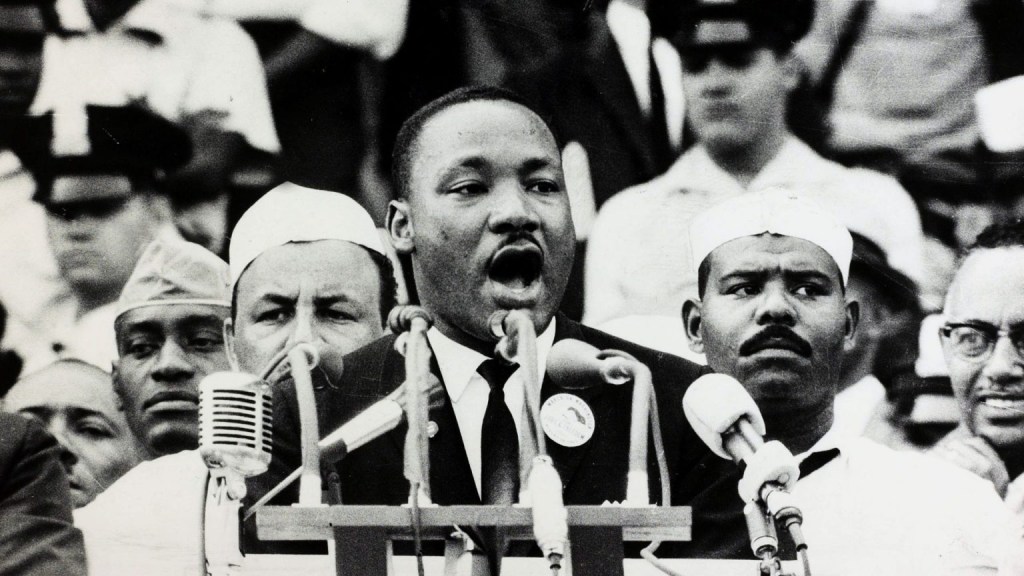
I say to you today, my friends, so even though we face the difficulties of today and tomorrow, I still have a dream. It is a dream deeply rooted in the American dream.
I have a dream that one day this nation will rise up and live out the true meaning of its creed: “We hold these truths to be self-evident, that all men are created equal.”
I have a dream that one day on the red hills of Georgia, the sons of former slaves and the sons of former slave owners will be able to sit down together at the table of brotherhood.
I have a dream that one day even the state of Mississippi, a state sweltering with the heat of injustice, sweltering with the heat of oppression, will be transformed into an oasis of freedom and justice.
I have a dream that my four little children will one day live in a nation where they will not be judged by the color of their skin but by the content of their character.
I have a dream today.
A prophet and a vision. And though it did not come true in Martin Luther King’s lifetime, and though it still has not come true in its fulness, it is this vision that proclaims what is possible, what is promised. It is this vision that keeps people waiting and working faithfully. If we are going to wait well, we need prophets with a vision. Listen to this vision from Isaiah given to a people in exile:
Arise, shine, for your light has ‘come,*
and the glory of the LORD has dawned up’on you.
For behold, darkness covers the ‘land;*
deep gloom enshrouds the ‘peoples.
But over you the LORD will ‘rise,*
and his glory will appear up’on you.
Nations will stream to your ‘light,*
and kings to the brightness of your ‘dawning.
Your gates will always be ‘open;*
by day or night they will never be ‘shut
They will call you, The City of the ‘Lord,*
the Zion of the Holy One of ‘Israel.
Violence will no more be heard in your ‘land,*
ruin or destruction within your ‘borders.
You will call your walls, Sal’vation,*
and all your portals, ‘Praise.
The sun will no more by your light by ‘day;*
by night you will not need the brightness of the ‘moon.
The LORD will be your everlasting ‘light,*
and your God will be your ‘glory (Surge, Illuminare. BCP 2019, p. 80).
This is the prophetic vision the people need in order to wait faithfully and well: the sunrise of the glory of God upon his people, a new Jerusalem with walls of Salvation and portals or Praise, the nations streaming to the light streaming from Zion, the LORD in their midst as their everlasting light and glory. Yes, this is what the people long for. But, when, Lord? And the answer comes from another prophet, from Habakkuk:
“Write the vision;
make it plain on tablets,
so he may run who reads it.
3 For still the vision awaits its appointed time;
it hastens to the end—it will not lie.
If it seems slow, wait for it;
it will surely come; it will not delay” (Hab 2:2-3).
Wait for it; it will come. In its appointed time, it will surely come. To wait faithfully and well, we must have a prophetic vision.
To wait well we also need songs. Earlier I quoted a bit of Martin Luther King, Jr.’s “I Have a Dream Speech.” But the Civil Rights Movement of which he was the prophetic heart also had songs, anthems like “We Shall Overcome,” by Pete Seeger:
We shall overcome
We shall overcome
We shall overcome someday
Oh, deep in my heart
I do believe
We’ll overcome someday
We shall live in peace
We shall live in peace
We shall live in peace someday
Oh, deep in my heart
I do believe
We’ll live in peace someday
There are other verses, but these will do for now. This is the prophetic vision turned to prayer, for, as the saints know, he who sings prays twice. We saw this during the 1960s anti-war movement with Peter, Paul, and Mary’s singing of Bob Dylan’s “Blowin’ In the Wind.”

We saw this during the aftermath of 9/11 and the pursuit of the Global War on Terror; you couldn’t turn on the radio without hearing Lee Greenwood singing “God Bless the U.S.A.” Songs turn vision to prayer. Songs rouse us from our stupor. Songs help us wait, watch, and work. The Psalmists knew this. Paul and Silas knew this as they waited in prison at midnight for the dawn to come singing hymns and spiritual songs. St. John knew this as he wrote the visions he saw on Patmos, visions filled with songs and hymns so that his seven churches — some of them under persecution — could turn the visions into prayer as they waited well and faithfully for the visions to come true.
Make of this what you will. Many Muslims believe that the Qur’an prohibits prohibits music, both instrumental and vocal. In some hadith, the oral tradition of Islam, singing is prohibited by teaching such as this (see “Islam and music” in Wikipedia):
“Singing sprouts hypocrisy in the heart as rain sprouts plants”
And,
“There will be among my Ummah [Islamic community] people who will regard as permissible adultery, silk, alcohol and musical instruments.”
I don’t intend to make a straw man of Islam, here, but I would like to contrast this near prohibition of song with the opening verses of Psalms 95 and 96:
O come, let us sing unto the LORD;
let us heartily rejoice in the strength of our salvation.
Let us come before his presence with thanksgiving
and show ourselves glad in him with psalm (Ps 95:1-2, BCP 2019, p. 394).
And,
O sing unto the LORD a new song;
sing unto the LORD, all the whole earth.
Sing unto the LORD and praise his Name;
tell of his salvation from day to day (Ps 96:1-2, BCP 2019, p. 395).
We Christians are a singing people, not least because singing turns vision into prayer and enables us to wait faithfully and well.

Before we draw a line under this and move on, I want to note that the Church has felt so strongly about turning prophetic vision into song and song into prayer that selections from this passage in Isaiah have been sung for generations in the canticle we know as the Third Song of Isaiah. It is included in the Book of Common Prayer for singing/praying in Morning and Evening Prayer. It is one of many prophetic visions turned into song and prayer: the Song of Zechariah (Benedictus), the Song of Mary (Magnificat), the Song of Simeon (Nunc Dimittis). If we are to wait well and faithfully, we need songs.
Prophetic vision becomes song, song becomes prayer, and prayer become hope. If we are to wait well and faithfully we must have hope. Biblical hope is not mere wishful thinking — what we’d like to have happen but are pretty sure won’t. No. Biblical hope is rock solid certainty based on God’s word and character. St. Paul is an Apostle of hope and Romans is an epistle of hope. Listen to him:
5 Therefore, since we have been justified by faith, we have peace with God through our Lord Jesus Christ. 2 Through him we have also obtained access by faith into this grace in which we stand, and we rejoice in hope of the glory of God. 3 Not only that, but we rejoice in our sufferings, knowing that suffering produces endurance, 4 and endurance produces character, and character produces hope, 5 and hope does not put us to shame, because God’s love has been poured into our hearts through the Holy Spirit who has been given to us (Rom 5:1-5).
We can be at peace in our suffering — we can even rejoice — because we have hope that does not put us to shame. And that hope is a gift of God’s love made real to us by the Holy Spirit. Because of hope we can endure; read that “hope makes it possible to wait well and faithfully.”

Now, let’s tie this up and put a bow on it by considering a portion of the glorious eighth chapter of Romans. How do we wait, even in the midst of suffering?
18 For I consider that the sufferings of this present time are not worth comparing with the glory that is to be revealed to us. 19 For the creation waits with eager longing for the revealing of the sons of God. 20 For the creation was subjected to futility, not willingly, but because of him who subjected it, in hope 21 that the creation itself will be set free from its bondage to corruption and obtain the freedom of the glory of the children of God. 22 For we know that the whole creation has been groaning together in the pains of childbirth until now. 23 And not only the creation, but we ourselves, who have the firstfruits of the Spirit, groan inwardly as we wait eagerly for adoption as sons, the redemption of our bodies. 24 For in this hope we were saved. Now hope that is seen is not hope. For who hopes for what he sees? 25 But if we hope for what we do not see, we wait for it with patience (Rom 8:18-25).
This text, you see, is speaking of waiting for the second Advent of Christ; it speaks to us, because that is where we live between the dreaming and the coming true. And in the between time, we suffer; all of creation groans because it is out of join and winding down. What make our waiting possible? We are waiting for the grand consummation of all things, the renewal of creation and our full inheritance as sons and daughters of God, our full bodily redemption. This is our hope. Because this hope is a gift of the Spirit, even though we don’t see it yet, we can wait for the fullness of our salvation in the certainty of hope. If we are to wait well and faithfully, we need hope.
So, there you have some thoughts from Isaiah — and others — about how to wait well and faithfully for the second Advent of our Lord. To wait we need a prophetic vision. We need that vision turned into song and prayed as we sing. And we need those songs and prayers to stoke our hope for the good things to come.
Our King and Savior now draws near.
O come, let us adore him.
Amen.


 First Blessings