Session 2: Stumps and Shoots
Apostles Anglican Church
Fr. John A. Roop
Advent with Isaiah: Session 2 — Stumps and Shoots
The Lord be with you.
And with your spirit.
Let us pray.
Blessed Lord, who caused all Holy Scriptures to be written for our learning: Grant us so to hear them, read, mark, learn, and inwardly digest them, that by patience and the comfort of you holy Word we may embrace and ever hold fast the blessed hope of everlasting life, which you have given us in our Savior Jesus Christ; who lives and reigns with you and the Holy Spirit, one God, for ever and ever. Amen.
Moonshiners and Banjo Players
I can trace both my paternal and maternal family lines back two generations only; I know my grandparents’ names on both sides. Beyond that, my heritage is a blank to me. From a photograph I know there are moonshiners and banjo players in the Roop mix — poor Appalachian farmers eking out a living from creek bottom soil. My brother has done some work on the Roop family tree and can go back several generations earlier — I’m not certain how many — but I have never been sufficiently interested to pursue it. In non-tribal cultures and in self-made man societies, genealogies don’t really count for much.

But, in the Ancient Near East, family, clan, tribe — these were everything. The idea of an impoverished, two generational memory like mine would have been laughably pathetic, an amnesia of monumental proportions. The opening of St. Matthew’s Gospel — the book of the genealogy of Jesus Christ, son of David, son of Abraham — which is boring to us, might well have riveted the attention of its early Jewish readers. And, it is actually important to all of us, whether we can link names with stories or not. The overall form and structure of the genealogy is significant. Let’s take a look at it in Matthew 1.
The first verse tells the whole story in outline by linking three names: Jesus Christ, though Christ is not a name but a title; David; and Abraham: The book of the genealogy of Jesus Christ, the son of David, the son of Abraham (Matt 1:1). What can we say in summary about each?
Abraham: the founding Patriarch, the initial recipient of the covenant. God promised Abraham a people/nation and a land and also promised that through Abraham and his seed — and note that seed is singular (Gal 3:16) as St. Paul insists — all the nations of the earth would be blessed.
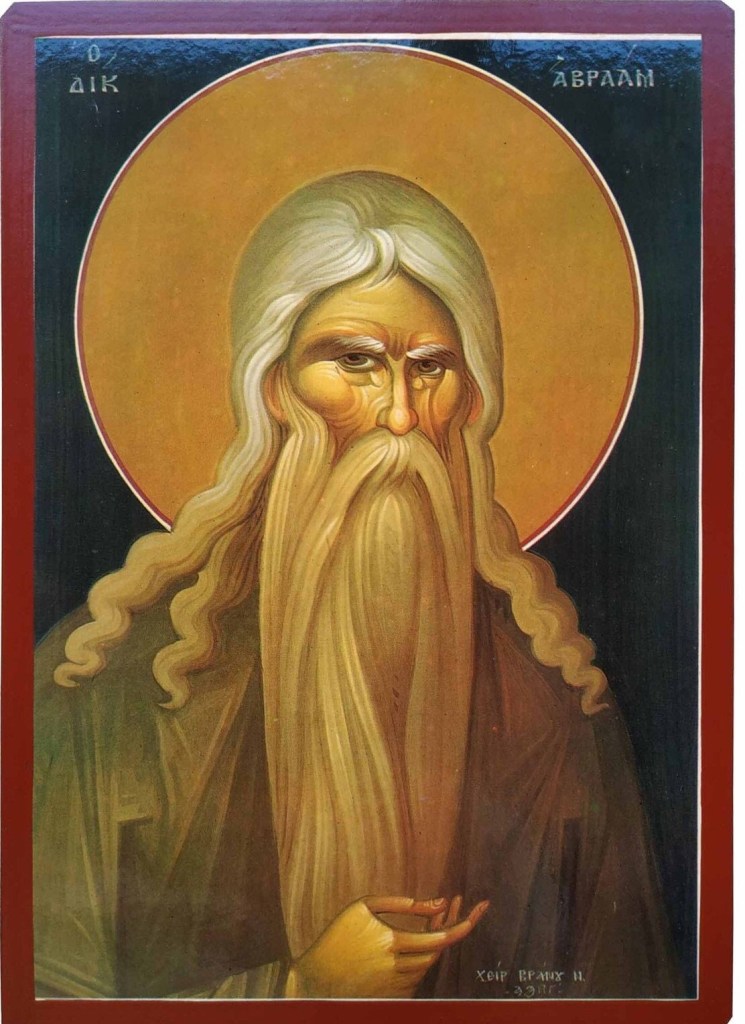
David: the great King of Israel. God promised David a house, an everlasting dynasty that would rule over the people of Abraham forever and to which the nations of the earth would join themselves.

Jesus (Christ): the one in whom and through whom both the Abrahamic and Davidic covenants would be fulfilled.
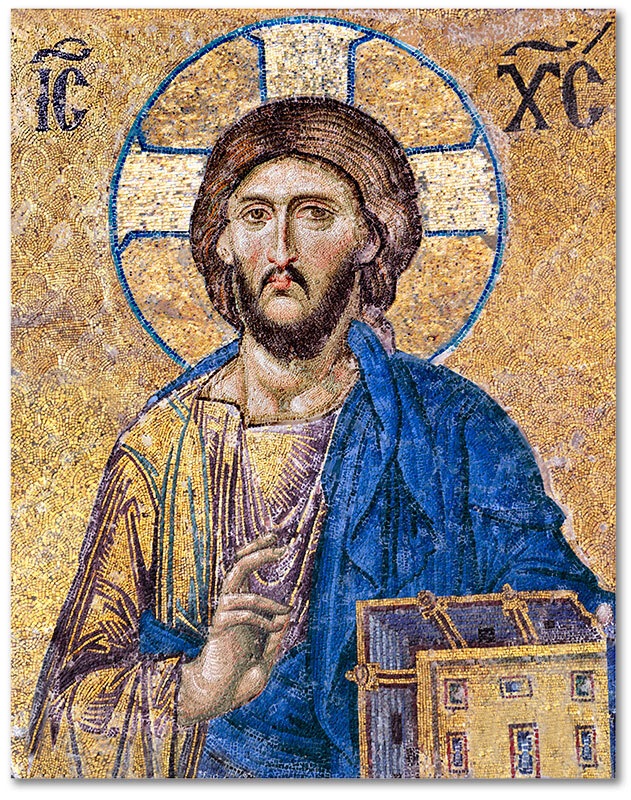
These three — Abraham, David, and Jesus Christ — along with one historical event — the deportation of Judah to Babylon — give a threefold structural backbone to the genealogy: from Abraham to David, from David to the deportation, from the deportation to Jesus Christ. Matthew closes the genealogy with an important and explicit summary of this structure:
17 So all the generations from Abraham to David were fourteen generations, and from David to the deportation to Babylon fourteen generations, and from the deportation to Babylon to the Christ fourteen generations (Matt 1:17).
If it seems like this division of the genealogy into three, fourteen generation sections is miraculous, well, I’m sorry; it’s not. It is artificial; it is intentional, carefully crafted and symbolic. There are many generations that St. Matthew simply leaves out to create the three times fourteen scheme because he is far less interested in a full accounting of people than in a full accounting of the story. We have to do a little arithmetic and numerology to see what’s going on. The structure is significant in at least two ways.
First, we need to know that many languages — Old Testament Hebrew among them — used letters for numbers: aleph for one, bet for two, gimel for three and so on. But, it can work in the other direction too: numbers can be substituted for the letters in words so that words can then have their own numerical values. That is true in Greek, also, and it seems to be what lies behind the number 666 in Revelation. The numerical value of the name Nero is 666. I mention this bit of numerology (gematria) because it has significance for our understanding of St. Matthew’s genealogy of Jesus. Remember it is divided into three sets of fourteen generations. Fourteen in the numerical value of the name David. So, the genealogy provides a drumbeat through its threefold division: David, David, David. And what’s the point of this? Jesus is a king like David; he is David’s son and heir. The Gospel according to St. Matthew insists on the kingship of Jesus from the very opening page. But, there is more.
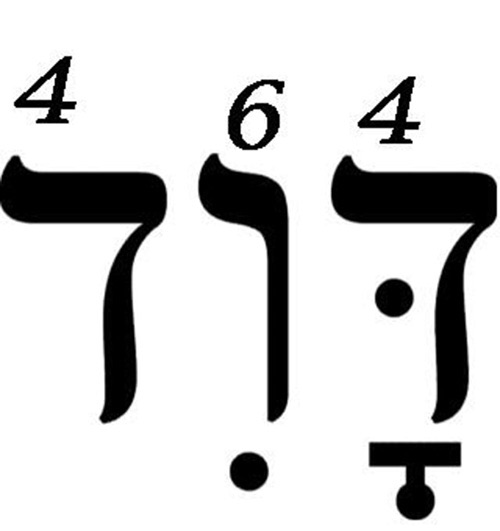
Here’s a little arithmetic; three fourteens is the same as six sevens. What do we know about the number seven as it is used in Scripture? Seven is, in some sense, God’s number, a number signifying perfection, at least in the sense of completion. Do you recall some occurrences of seven in Scripture and in church tradition?

Seven days of creation
Sabbath Day
Sabbath Year
Jubilee (50th year following the seventh sabbath year)
Seven signs in St. John’s Gospel
Sevens in Revelation: Churches, Seals, Trumpets, Angels, Plagues, Bowls
Seven deadly sins and the seven virtues (four cardinal — prudence, justice, fortitude, temperance — and three theological — faith, hope, love.)
So, if seven symbolizes perfection and completion, what would six mean? It is the number of man, because man was created on the sixth day. It is a symbol of the reach or limit of human effort; man works for six days and then rests. No human effort is needed on the seventh day; all things are in God’s hands. Six is, ironically, both a symbol of incompleteness (human effort is always incomplete) and a signpost pointing toward completeness in God, that is, a completion that depends not on man’s effort alone, but upon the work of God.
Now, back to Matthew’s genealogy: does the scheme of six sevens make better sense? All of man’s effort from Abraham until Jesus has left the great story of redemption incomplete, unfinished. It is the best man has been able to do, but it is not enough. Then Jesus inaugurates the seventh seven, a Jubilee of sorts, God taking over to complete what man alone could not do: bring the story of redemption, to its fulfillment. So, Matthew is stating through the structure of his genealogy that Jesus is the culmination of history, that God’s work finds it completion, its perfection, in and through him: not Abraham, not David, but the new King, the complete King, Jesus.
Now, one last observation on the genealogy. It starts at an impossibly low point, with an old man and his barren wife who are promised a land and offspring as numberless as the stars. And, contrary to the “laws of nature” it happens. The trajectory of the story is upward, and it reaches its zenith with David: a land, a people, and a great king. But, in the very next generation, the story starts its downward trend. Solomon is not as faithful as David and the united kingdom is near civil war at his death. That dissolution is realized in his son’s reign and the kingdom is divided, never to reunite again historically and politically. The next milestone in the genealogy is the deportation to Babylon; the kingdom is lost and the dynasty of David apparently ends. And, even though a remnant of Judah returns fifty years or so later, the kingdom is not truly reestablished, in part because the rebuilt temple is devoid of the presence of God. If we imagine this whole story as a tree, Abraham is the sapling, David the mature tree, and the deportation and following is the stump of the felled tree. And that leads us to the next seven in the genealogy, Jesus the Christ, and also to our text from Isaiah 11.
The Seventh Seven
I’d like you to take a few minutes at your tables to read through the text; perhaps one person could read it aloud to the group. Then discuss what stands out to you given the background that we examined from St. Matthew’s genealogy.
1 There shall come forth a shoot from the stump of Jesse,
and a branch from his roots shall bear fruit.
2 And the Spirit of the Lord shall rest upon him,
the Spirit of wisdom and understanding,
the Spirit of counsel and might,
the Spirit of knowledge and the fear of the Lord.
3 And his delight shall be in the fear of the Lord.
He shall not judge by what his eyes see,
or decide disputes by what his ears hear,
4 but with righteousness he shall judge the poor,
and decide with equity for the meek of the earth;
and he shall strike the earth with the rod of his mouth,
and with the breath of his lips he shall kill the wicked.
5 Righteousness shall be the belt of his waist,
and faithfulness the belt of his loins.
6 The wolf shall dwell with the lamb,
and the leopard shall lie down with the young goat,
and the calf and the lion and the fattened calf together;
and a little child shall lead them.
7 The cow and the bear shall graze;
their young shall lie down together;
and the lion shall eat straw like the ox.
8 The nursing child shall play over the hole of the cobra,
and the weaned child shall put his hand on the adder’s den.
9 They shall not hurt or destroy
in all my holy mountain;
for the earth shall be full of the knowledge of the Lord
as the waters cover the sea.
10 In that day the root of Jesse, who shall stand as a signal for the peoples—of him shall the nations inquire, and his resting place shall be glorious (Isa 11:1-10).
[Discuss what the groups noticed.]
So, Isaiah begins with the recognition that the tree of Judah has been felled and that only a stump remains, the stump of Jesse, David’s father. But Isaiah sees a new shoot — which will become a fruit bearing branch — coming from the stump. It is through this shoot that the story will begin again and reach its perfection/completion.

And why/how will this shoot succeed where David’s story had failed? Because it will not be merely a human effort, but the work of the Lord as evidenced by the Spirit of the Lord resting upon the branch. Remember, in St. Matthew’s genealogy this is the seventh seven, the fullness of the Lord’s work. Isaiah makes clear that the shoot/branch is a Spiritually filled person — a “him,” so our language going forward will reflect that.
It is worth some time to discuss the Spirit of the Lord in verses 2 and 3a. There is something a bit hidden in our English translations of these verses that is a bit clearer in the Greek version of the Old Testament. Notice how the Spirit of the Lord is described:
Spirit of wisdom and understanding
Spirit of counsel and might
Spirit of knowledge and the fear of the Lord.
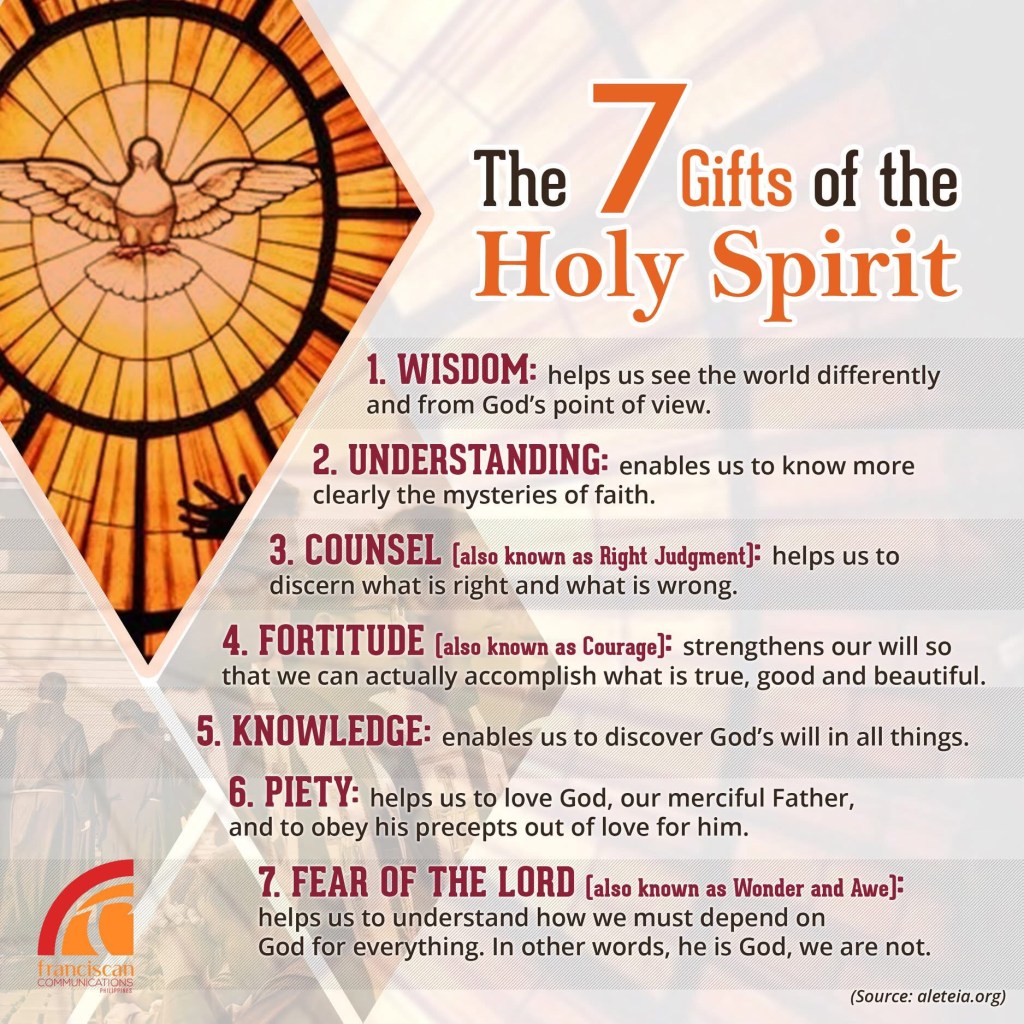
But, in the next verse, the phrase “the fear of the Lord is repeated.” In Greek, that is distinguished from the previous “fear of the Lord;” it would best be translated as the spirit of piety or godliness. Now, let’s count these spirits, or virtues of grace as they are sometimes called: wisdom, understanding, counsel, might, knowledge, fear of the Lord, piety/godliness — seven spiritual virtues. Once again we see the number seven. And what would it mean here? That the shoot from the stump of Jesse will have the fullness, the perfection, of the Spirit and the full complement of the virtues of grace. Everyone before was spiritually incomplete; this one will be spiritually perfect, fully equipped for the work he is to accomplish.
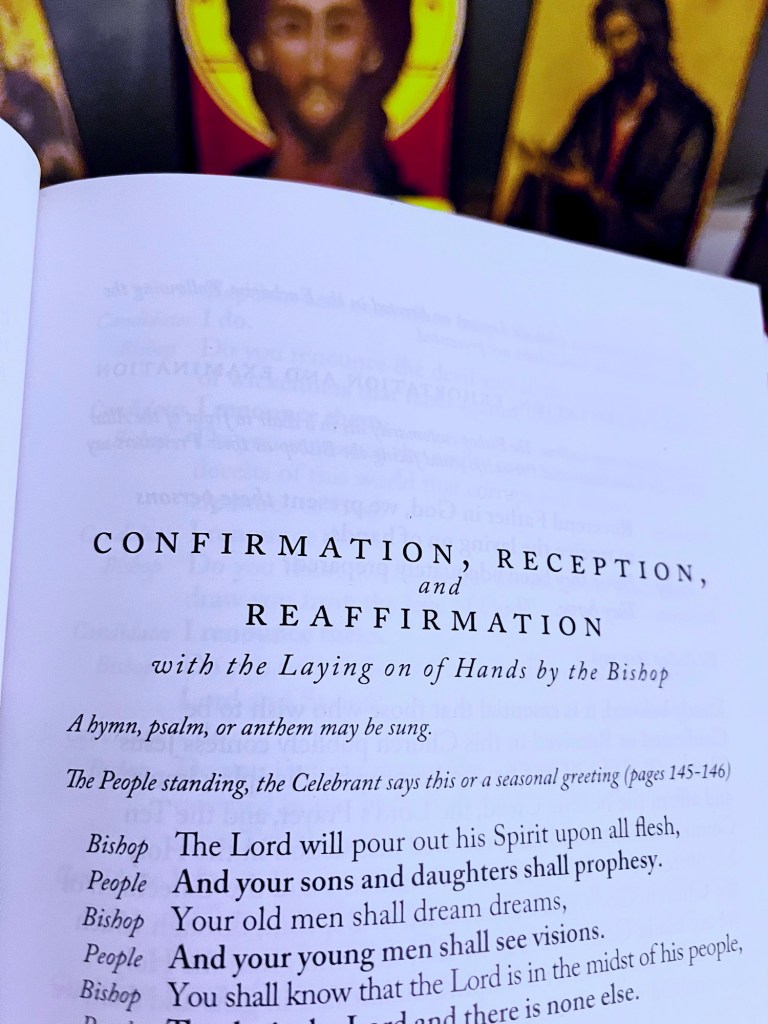
Before going on in the text, I want to consider how this plays out sacramentally in the Church, specifically in the sacrament of Confirmation. Listen to this description ofConfirmation from the BCP 2019:
In Confirmation, through the Bishop’s laying on of hands and prayer for daily increase in the Holy Spirit, God strengthens the believer for Christian life in the service of Christ and his kingdom. Grace is God’s gift, and we pray that he will pour out his Holy Spirit on those who have already been made his children by adoption and grace in Baptism (BCP 2019, p. 174).
The Christian cannot rightly engage in the service of Christ and his kingdom without the grace of the Holy Spirit. Now, listen to the prayer that the bishop offers:
Almighty and everlasting God we beseech you to strengthen these your servants for witness and ministry through the power of your Holy Spirit. Daily increase in them your manifold virtues of grace: the spirit of wisdom and understanding, the spirit of counsel and might, the spirit of knowledge and true godliness, and the spirit of holy fear, now and for ever. Amen (BCP 2019, p. 178).
Did you catch it? The bishop prays for each confirmand to receive the same fullness of the Holy Spirit — the same sevenfold virtues of grace — that Isaiah attributes to the shoot from the stump of Jesse. And that is because our work, too, must be the work of the Lord if it is to carry the story forward. We are still living in the seventh seven generation of Jesus, and we are carrying on his work in the same power of the Spirit that filled him. This is the theology of the sacrament of Confirmation and shows how it fits into the story of redemption.
Now, what is the work for which the shoot of Jesse is filled with the Spirit? Look at verses 3 – 5. This is the work of a king. This is how a righteous king governs the people of God and ultimately governs the world. Not to get too political, and not at all partisan: this is the high standard to which we must hold our elected officials accountable. They will fail, yes, because they are not the shoot from the stump of Jesse; we must remind them of that, too, because they all too often have grandiose visions of their own importance and power. But, this is the standard we must continually point them toward.
What are the characteristics of such governance? What would characterize our political/social life under such a ruler? What does the text say?
He will not judge or act based upon polls or pundits (what his eyes see or his ears hear) but rather by righteousness — not by what is expedient or advantageous, but rather by what is right. For that he will need the Spirit of wisdom and understanding. And notice in verse 4 the particular judgment given on behalf of the poor and the meek, the ones who have long been denied righteous judgment. The criteria for “success” of a ruler is not whether the rich are getting richer and the powerful are gaining more influence and reduced restrictions on the exercise of their power, but rather on whether the poor are being lifted up and cared for and whether the meek are able to come out of the shadows and live.
This kind of care, this kind of social justice, requires strength from the king/governor, because there will be pushback from the rich and the powerful, from those who have great vested interest in maintaining the status quo. Notice the end of verse 4: “he will strike the earth with the rod of his mouth, and with the breath of his lips he shall kill the wicked.” There is nothing soft here. Those who resolutely oppose true justice will be destroyed; they will not be allowed to subvert righteousness. For this kind of strength, the ruler will need the Spirit of counsel and might. Might without counsel is subject to abuse. Counsel without might is prey to futility.
To summarize all this, Isaiah uses two words in verse 5 to describe the characteristics of this ruler and his kingdom: righteousness (justice) and faithfulness. Faithfulness to what? To God, to the covenant, to his vocation, to the people. This is what we look for in part from our leaders, and what we are promised in full from the shoot from the stump of Jesse. This was the longing of Israel, and it is reflected in many of the Psalms, Psalm 72 being a prime example. Listen to the words and see if you notice familiar themes.
[Read Psalm 72]
It’s all there, isn’t it? Righteous judgment, defense and vindication of the poor and justice for them, punishment for wrongdoers, flourishing for the righteous. This is the King Israel longed for, the one Isaiah says is coming. This is the King we say has already come in Jesus.
But it won’t be just the social order that is transformed by the king; the created order will be renewed, as well. Look at verses 6-9. Nature, which is often now “red of tooth and claw” will be healed of the ancient enmities, the need to prey on others for one’s own survival. This is more than mere peace; it is shalom, a putting to rights of all that has been corrupted so that all things are in harmony and all things can flourish.
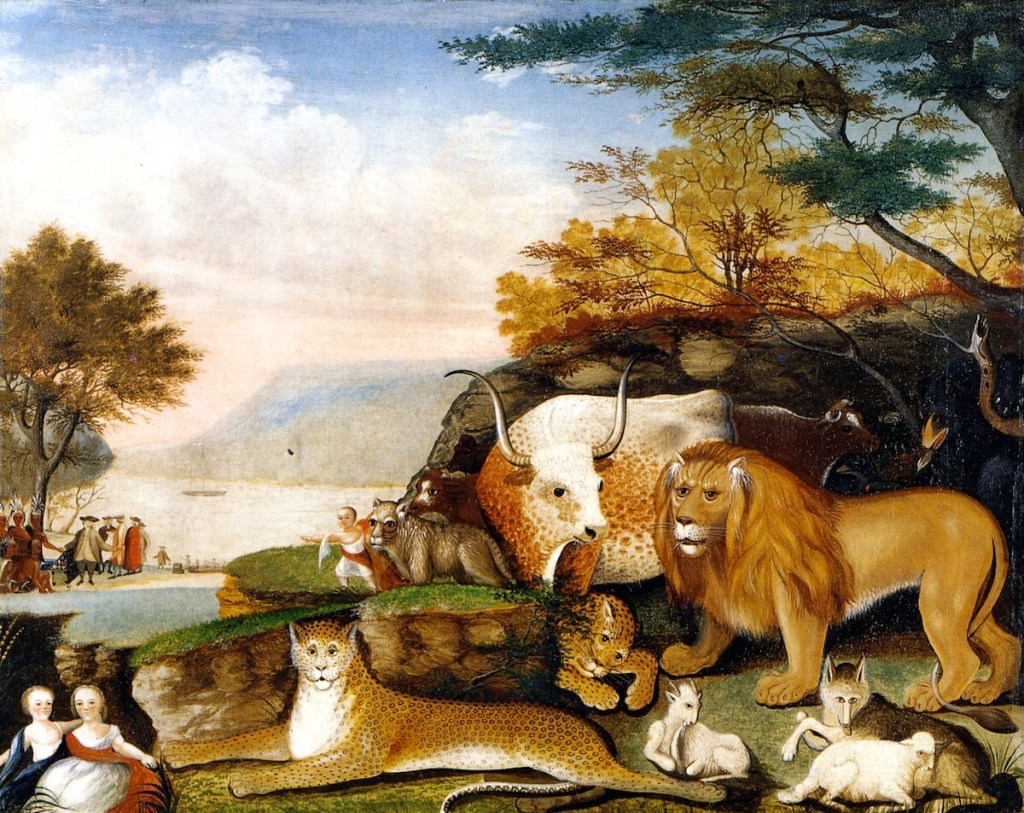
This is exactly what St. Paul points toward in Romans 8:
18 For I consider that the sufferings of this present time are not worth comparing with the glory that is to be revealed to us. 19 For the creation waits with eager longing for the revealing of the sons of God. 20 For the creation was subjected to futility, not willingly, but because of him who subjected it, in hope 21 that the creation itself will be set free from its bondage to corruption and obtain the freedom of the glory of the children of God. 22 For we know that the whole creation has been groaning together in the pains of childbirth until now. 23 And not only the creation, but we ourselves, who have the firstfruits of the Spirit, groan inwardly as we wait eagerly for adoption as sons, the redemption of our bodies. 24 For in this hope we were saved. Now hope that is seen is not hope. For who hopes for what he sees? 25 But if we hope for what we do not see, we wait for it with patience (Rom 8:18-25).
This is still in the future; it is still our hope. And that raises a question. If Jesus is the shoot from the stump of Jesse who will bring about social justice, peace, and renewal of creation, do we see any evidence of that already among his people — not complete, of course, but some signposts pointing in the right direction? Has Jesus made any difference?
[Discuss]
Historian Tom Holland — himself a non-believer — attributes all that is best in Western culture to the influence of Jesus Christ. So many of the things we take for granted were unheard of even in the highest of the ancient cultures, Greek and Roman: the equality and dignity of all men; the God-given and therefore unalienable rights of life, liberty, and the pursuit of happiness; the responsibility of a society to care for the weakest among them; freedom governed by responsibility; the rule of law and not of sheer power; and so on. There is a direct line from Isaiah through Jesus Christ to these fundamental principles which are outworkings of the Gospel. So, as we perhaps too often say, there is an already-not yet character to the prophet’s words, to the Gospel, to the Church, and to the world. The great renewal has begun, but it is not yet complete. We, please God, model it in the Church to show what is possible and what is intended. We work it out in the world in our own vocations. We pray for it with groaning too deep for words, and we hope for it with faith. That is the nature of Advent, this period of waiting and watching and working between the first advent of the shoot from the stump of Jesse and the second advent of the King of Glory.


 First Blessings