

Apostles Anglican Church
Fr. John A. Roop
Sixteenth Sunday After Pentecost, 28 September 2025
(Amos 6:1-7, Ps 146, 1 Tim 6:11-19, Luke 16:19-31)
Politics, Religion, and Money: Dives and Lazarus
Let not the needy, O Lord, be forgotten;
Nor the hope of the poor be taken away (BCP 2019, p. 22).
In the Name of the Father, and of the Son, and of the Holy Spirit. Amen.
There are, it is commonly said, three things that one simply does not discuss in polite, social gatherings: politics, religion, and money. But, you know, dear ones, that the church is not a polite, social gathering, but rather a convocation of insurrectionists bent on overthrowing the world and introducing a new world order under the rightful king. For Thine is the kingdom, and the power, and the glory for ever and ever, we say not to any elected official, appointed governor, or hereditary potentate of this world, but to the one who invaded this world, defeated its ruler, and claimed it as his own, even Jesus Christ our Lord and the Lord of all creation. So, yes, let us talk politics, religion, and money, polite societal norms notwithstanding.

We hold these truths to be self-evident, that all men are created equal, that they are endowed by their Creator with certain unalienable Rights, that among these are Life, Liberty and the pursuit of Happiness. — That to secure these rights, Governments are instituted among Men….
These words from the Declaration of Independence, written almost certainly by Thomas Jefferson, are among the most profound, the most significant political convictions ever penned by men. If the United States has any claim to being or having once been a Christian nation, the evidence lies in these words. Though throughout our history they have often been more honored in the breach than in the observance, they are nonetheless the ideal to which, in our best moments, we aspire.
And, they are wrong; Jefferson was wrong in this regard: That all men are created equal is not self-evident and never has been. Even the greatest of the classical cultures — the Greeks and Romans — did not consider all men equal; they would have considered that notion absurd. The equality of all men is not a self-evident truth; it is a Christian revelation, a spiritual truth proclaimed by Jesus in his summary of the Law, penned by St. Paul in his letter to the Galatians, and only lately incorporated into the political realm by our Founding Fathers as self-evident truth.
But, once accepted, Jefferson was right in the implications of the principle. If all men are created equal, then their rights are endowed by their creator, not granted by fiat or boon by other men, societies, or governments, but God-given. It is the responsibility of government and law, not to bestow these rights, but to secure them: to act in obedience to God and under God’s authority — and under God’s judgment — to ensure that no person is alienated from, deprived of, these rights, the most basic of which is the right to life. And, by life, we do not mean merely birth or basic biological existence, but a certain quality of life that promotes human growth in wisdom and stature, in favor with God and man.
And that quality of life brings us to money. Back-breaking, spirit-crushing poverty is not life, not life as God intended it. Poverty that keeps some people famished while others dine in Michelin Star restaurants is not life, not life as God intended it. And so God gave his people laws, a government to secure the unalienable right to life endowed by the Creator.
1 And the Lord spoke to Moses, saying, 2 “Speak to all the congregation of the people of Israel and say to them, You shall be holy, for I the Lord your God am holy.”
9 “When you reap the harvest of your land, you shall not reap your field right up to its edge, neither shall you gather the gleanings after your harvest. 10 And you shall not strip your vineyard bare, neither shall you gather the fallen grapes of your vineyard. You shall leave them for the poor and for the sojourner: I am the Lord your God” (Lev 19:1-2, 9-10).
19 “When you reap your harvest in your field and forget a sheaf in the field, you shall not go back to get it. It shall be for the sojourner, the fatherless, and the widow, that the Lord your God may bless you in all the work of your hands. 20 When you beat your olive trees, you shall not go over them again. It shall be for the sojourner, the fatherless, and the widow. 21 When you gather the grapes of your vineyard, you shall not strip it afterward. It shall be for the sojourner, the fatherless, and the widow. 22 You shall remember that you were a slave in the land of Egypt; therefore I command you to do this” (Deut 24:19-21).
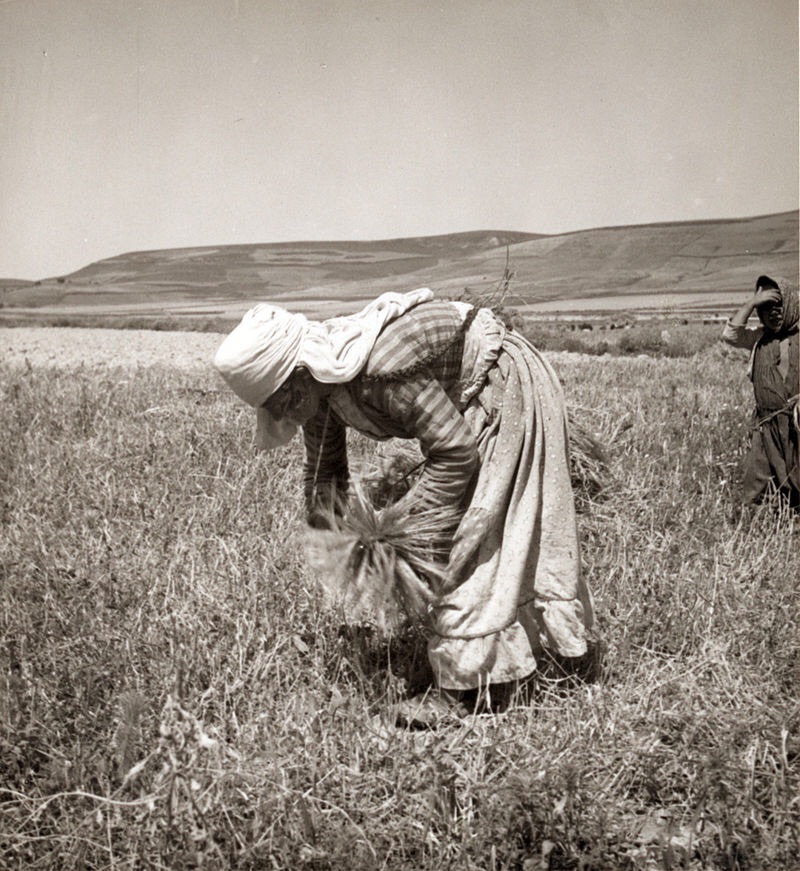
The gleanings of the fields and the vines and the trees belong not to their owners, but to the poor, the sojourner, the widow, and the orphan — not as a remedy to their poverty, but at least as a relief from it. That is a God-given unalienable right to life for the poor and a God-mandated responsibility for any government or people that calls on the God of Abraham, Isaac, and Jacob.
It is not just in the Law proper that God demands those with goods to honor the rights of the poor; it is a theme running throughout the prophets.
Isaiah writes:
6 “Is not this the fast that I choose:
to loose the bonds of wickedness,
to undo the straps of the yoke,
to let the oppressed go free,
and to break every yoke?
7 Is it not to share your bread with the hungry
and bring the homeless poor into your house;
when you see the naked, to cover him,
and not to hide yourself from your own flesh” (Is 58:6-7)?
And, in today’s reading from Amos:
4 “Woe to those who lie on beds of ivory
and stretch themselves out on their couches,
and eat lambs from the flock
and calves from the midst of the stall,
5 who sing idle songs to the sound of the harp
and like David invent for themselves instruments of music,
6 who drink wine in bowls
and anoint themselves with the finest oils,
but are not grieved over the ruin of Joseph” (Amos 6:4-6)!

Joseph — Israel — is blissfully ignorant of its true state as Amos speaks his words of woe. Assyria — that dreaded threat to the north and east — seems exhausted, but is in reality only catching its breath for a final assault that will sweep Israel away forever. The rich are living in pampered luxury garnered at the expense of the poor. This is a people, a society of golden idols and golden toilets, of the one-percenters who strip their fields bare and who leave the poor, the sojourners, the widows and the orphans with nothing to glean. This is a people, a society which no longer acknowledges — if it ever did — the unalienable right to life of the poor, the sojourner, the widow, the orphan.
Some eight centuries later, another prophet, Jesus of Nazareth, is on his way to Jerusalem for the final time, meeting both acclaim and opposition as he goes. As is his wont, he is still speaking in parables, but they are sharp-edged now and pointed. The Sadducees, scribes, and Pharisees feel their sting. Jesus even dares to speak of politics, religion, and money. The Pharisees are especially vexed when he speaks of money.
14 The Pharisees, who were lovers of money, heard all these things, and they ridiculed him. 15 And he said to them…
19 “There was a rich man who was clothed in purple and fine linen and who feasted sumptuously every day. 20 And at his gate was laid a poor man named Lazarus, covered with sores, 21 who desired to be fed with what fell from the rich man’s table. Moreover, even the dogs came and licked his sores. 22 The poor man died and was carried by the angels to Abraham’s side. The rich man also died and was buried, 23 and in Hades, being in torment, he lifted up his eyes and saw Abraham far off and Lazarus at his side. 24 And he called out, ‘Father Abraham, have mercy on me, and send Lazarus to dip the end of his finger in water and cool my tongue, for I am in anguish in this flame.’ 25 But Abraham said, ‘Child, remember that you in your lifetime received your good things, and Lazarus in like manner bad things; but now he is comforted here, and you are in anguish” (Luke 16:14-15a, 19-25).

This single parable ties together politics, religion, and money; it links the law, the prophets, and the Gospel. Jesus is speaking woe to the Pharisees just as Amos had prophesied destruction to Israel, present Messiah and past prophet both condemning the sin of luxury at the expense of the poor: the Pharisees, the Rich Man, and Israel are one and the same, under one and the same judgment.
And what of Lazarus? His one desire is to be fed with what fell from the rich man’s table — to glean under the table of the rich man. Lazarus is the incarnation of the poor, the sojourner, the widow, the orphan to whom the Creator — the God of Abraham, Isaac, and Jacob — had given the unalienable right to life, for whom the Creator had established the law of gleaning, ensuring the poor their rights to the excess of the rich. The rich man was breaking the law of God — the spirit of it if not the precise letter — by denying Lazarus even the scraps from his table. This is not the rich man’s denial of optional charity; this is the rich man’s refusal to obey God, to fulfill his God-mandated responsibility. In Jesus’ parable, the rich man’s willful disobedience to the law of charity is the only charge leveled against him, the sole criterion used in judgment, the single factor that determined his eternal destiny. This is only one parable, used to make one particular point, directed toward one specific sin of the Pharisees, so we dare not mistake it for the whole of the Gospel. But, we dare not minimize it either; these are the words and the judgment of Jesus himself. And he is consistent in this indictment:
41 “Then he will say to those on his left, ‘Depart from me, you cursed, into the eternal fire prepared for the devil and his angels. 42 For I was hungry and you gave me no food, I was thirsty and you gave me no drink, 43 I was a stranger and you did not welcome me, naked and you did not clothe me, sick and in prison and you did not visit me.’ 44 Then they also will answer, saying, ‘Lord, when did we see you hungry or thirsty or a stranger or naked or sick or in prison, and did not minister to you?’ 45 Then he will answer them, saying, ‘Truly, I say to you, as you did not do it to one of the least of these, you did not do it to me.’ 46 And these will go away into eternal punishment, but the righteous into eternal life” (Mt 25:41-46).
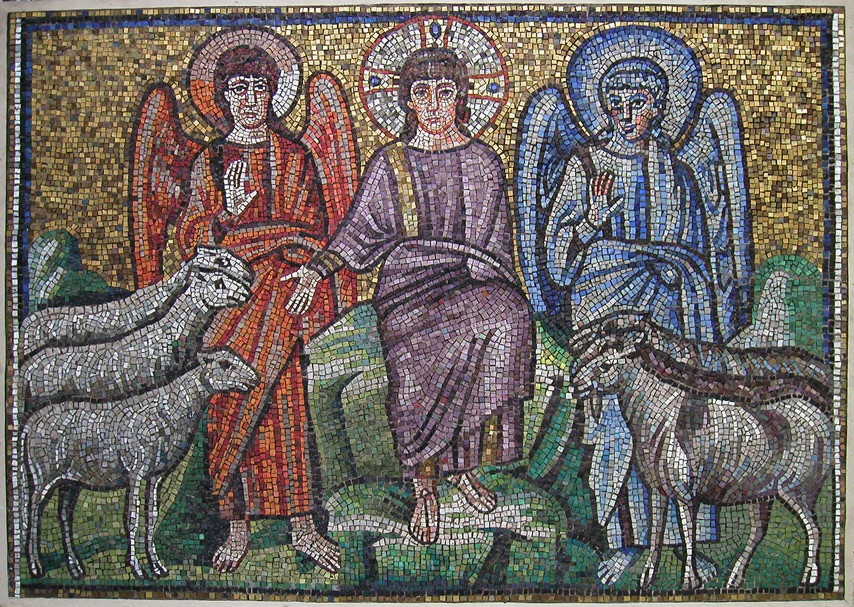
Was this just hyperbole, or did Jesus perhaps mean what he said?
This parable of the rich man and Lazarus is unique in one respect; it is the only parable in which Jesus names a character — Lazarus, Eleazar in Hebrew. I don’t know with confidence why Jesus chose that particular name — it may simply have been a common name — or even why he chose to name this poor man at all. Of course, he may have chosen the name symbolically and pointedly; it means “God helps,” and God was Lazarus’s only help. Regardless, I know what the name does; I know how it functions in the parable. The name humanizes the poor. It reminds us that the poor, the sojourner, the widow, the orphan are not mere types, not abstractions, but are people with names, people with names known to God. And a name does something else in the parable; it moves Lazarus from the category of stranger into the category of neighbor. Did this rich man know Lazarus’s name? Yes, he calls it out in his own plea for mercy. Lazarus lies daily at the rich man’s gate; his proximity makes him a neighbor. Lazarus has a name; his identity makes him a neighbor. Lazarus has an obvious need; his hunger makes him a neighbor. And Jesus had something to say about neighbors, not just in parables like The Good Samaritan, but in direct commandment: You shall love your neighbor as yourself. When we hear those words each week, we rightly say: Lord, have mercy. Christ, have mercy. Lord, have mercy.
The rich man has no name, though the story is sometimes called the parable of Dives and Lazarus. Dives is not a name; it is simply derived from the Latin for “rich man.” In his neglect of Lazarus, Dives has lost his identity, his humanity. He has become an abstraction, a type, a caricature — just another of the self-indulgent, self-absorbed rich. Dives typifies the nature of sin described by Martin Luther as man incurvatus in se, man turned inward upon himself. The parable portrays the end of such a centripetal existence as isolation from others and separation from God, a painful and hopeless semblance of existence.
Friends, both this parable and this sermon are sobering, and I am not at all having a good time. The parable ends with a sense of utter hopelessness for the rich man and even for his five living brothers who he says will not listen to Moses and the Prophets and who Abraham says would not listen to a man risen from the dead. They, too, are already incurvatus in se, curved inward on themselves, black holes of self-absorption.

But, please God, we are not. God has graciously given us this day, this moment to repent if repentance is called for. God has graciously given us this day, this moment to receive this parable if it is spoken to us. God has graciously given us this day, this moment to take to heart the words of St. Paul to his protégé Timothy:
17 As for the rich in this present age, charge them not to be haughty, nor to set their hopes on the uncertainty of riches, but on God, who richly provides us with everything to enjoy. 18 They are to do good, to be rich in good works, to be generous and ready to share, 19 thus storing up treasure for themselves as a good foundation for the future, so that they may take hold of that which is truly life (1 Tim 6:17-19).
The poor are God’s gift to the rich, and the rich are God’s gift to the poor. As the parable of Dives and Lazarus preaches, the poor need the rich for their relief; the rich need the poor for their salvation.
Where do we start? Perhaps with the heart. Is there in my heart a haughty spirit based on my prosperity? When I see the sojourner or the poor do I feel superior, do I feel entitled, do I feel that I have earned — by my own ability and effort — my prosperity while they certainly have squandered their opportunities? Do I think “there but for the grace of God go I” never realizing that my relative wealth may be more God’s testing of me than God’s grace to me? Do I feel secure in my prosperity — in the food in the cupboard and refrigerator, in the unworn clothes in the closet, in the steady job or retirement income, in the IRA and stock portfolio — or do I recognize these as gifts from God in whom alone is my security? Perhaps we start there, with an honest look into our hearts.
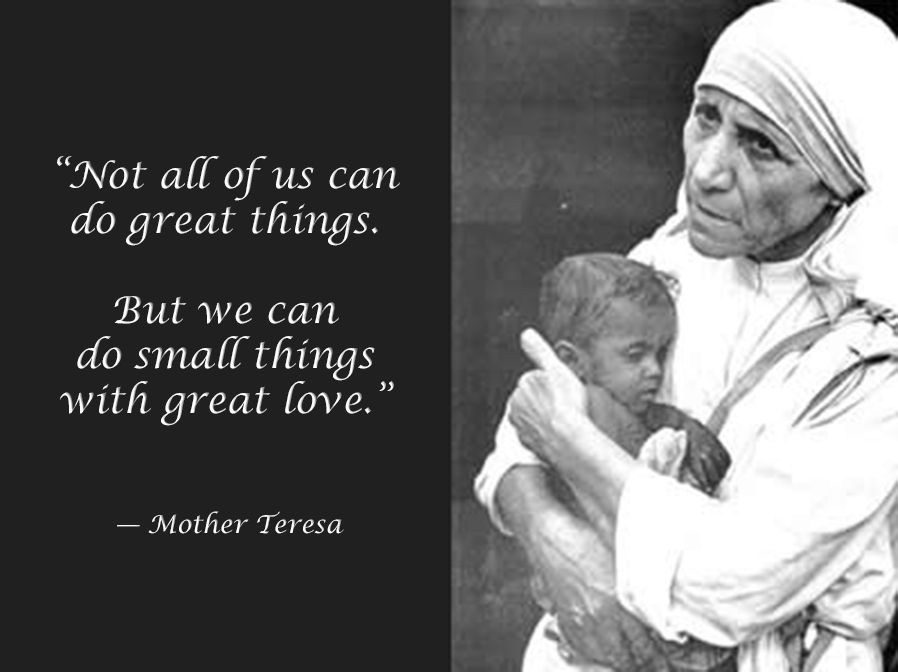
And, as we open our hearts, we must also open our hands to do good as opportunities present themselves — and they always present themselves. I cannot remedy homelessness or hunger, nor can the church, nor can the government. But I can, from time to time, relieve, at least for a moment, the hunger of this one person in front of me, the want of that person who asks me for mercy, the plight of this suffering group who appeals to me for aid. That was the example of Mother Teresa who said that not all of us can do great things, but we can all do small things with great love. I can do the small thing. You can do the small thing.
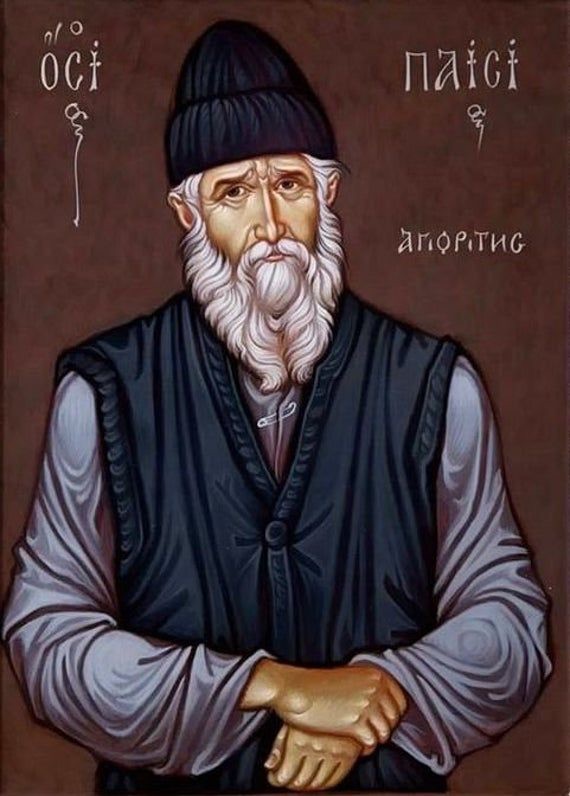
A young man struggling in vain with sin came to Elder Paisios in total despair. After listening to the young man, after feeling his pain, Paisios said, “Look, my good fellow, never start your struggle with the things you cannot do, but with the things you can do. Let’s see what you can do, and let’s start from there.”
Small steps, small things done with great love: what can we do to be generous and to share what we have? What can we do to give even a cup of cold water to the thirsty? It is easy to become overwhelmed with the magnitude of poverty and need around us and to turn inward not so much out of selfishness or greed, but out of hopeless and despair. But, Christ planted the cross in the midst of hopelessness and despair. Christ, in his resurrection, gave us a new song to ward off hopelessness and despair: Alleluia! Alleluia! Alleluia! And, Christ sends us out into the world to do the work he has given us to do, to love and serve as faithful witnesses: to do the small things with great love, to do the things we can do empowered by his Spirit, to notice and to feed Lazarus.
Let not the needy, O Lord, be forgotten;
Nor the hope of the poor be taken away (BCP 2019, p. 22).
Amen.


 First Blessings
I was blessed to hear this preached at Apostles yesterday morning. Well done, Canon John, well done.