Session 4: Growth In The Spirit

Apostles Anglican Church
Fr. John A. Roop
The Theology of the Holy Spirit
Session 4: Growth In the Spirit
The Lord be with you.
And with your spirit.
Let us pray.
O God the Father, Creator of heaven and earth,
Have mercy upon us.
O God the Son, Redeemer of the world,
Have mercy upon us.
O God the Holy Spirit, Sanctifier of the faithful,
Have mercy upon us.
O holy, blessed, and glorious Trinity, one God,
Have mercy upon us (The Great Litany, BCP 2019, p. 91).
Introduction: Binary or Spectrum

In my office I have a small icon of the Transfiguration of our Lord Jesus Christ. It is there, in part, to remind me of the truth proclaimed in the Troparion of the Transfiguration, a short hymn used in the Orthodox liturgy to celebrate the feast:
When Thou wast transfigured on the mountain, O Christ our God, Thou didst show Thy glory to Thy disciples as far as they could bear it. Let Thy everlasting light illuminate also us sinners through the intercessions of the Mother of God. Giver of Light, glory to Thee.
Let’s not concern ourselves with “the intercessions of the Mother of God” for the moment, nor let that distract us from the main point of the hymn: Christ revealed his glory to his disciples “as far as they could bear it.” And, we ask, in that hymn, to be illuminated in like manner, insofar as we can bear it. God condescends to our weakness and accommodates himself to our limitations. That, in itself, is good news, but it implies even better news. As our ability to perceive God grows, as we can bear more of his glory, he will reveal himself to us in greater degree.
This is a spiritual example of a common facet of human life: some things are binary — on/off, either/or, yes/no — while other things lie along a spectrum — more or less, better or worse, stronger or weaker. If you have ever taken a restaurant survey to get five dollars off on your next visit, you have encountered both of these options. For example, “Were you greeted upon your arrival?” is a binary question and your answer choices will be yes or no. “On a scale from 1 to 5 with 1 being poor and 5 being excellent, rate your overall experience on this visit,” presents you with a spectrum of choices.
Another common example is a single pole light switch versus a rheostat, a dimmer switch. A single pole switch is binary; it has two positions — on and off. But, a dimmer allows you to choose the level of brightness of the lights along a spectrum from off to full brightness. You probably have both kinds of lights in your home, just as we do in the nave.

We get ourselves into a muddle — and sometimes into deep trouble — when we confuse these two, as our culture tends to do. Until the last generation or two for example, we were certain that gender is binary, male or female. Now, we are told that gender lies along a spectrum, that it is highly non-binary. We see the confusion and human damage that has caused. One theory of morality acknowledges intrinsically good and intrinsically evil acts, a binary relationship. Another moral perspective says that no act is in and of itself good or evil but is simply more or less justified by its consequences or the intent of the active agent or something else — a moral spectrum.
So, why all this talk about binary and spectrum? Because, I want to talk about the Holy Spirit and to ask this question: Is the Holy Spirit in the life of a person binary or does the Holy Spirit lie along a spectrum? Is the Holy Spirit yes/no or more/less? What do you think?
Consider this passage from Romans.
5 For those who live according to the flesh set their minds on the things of the flesh, but those who live according to the Spirit set their minds on the things of the Spirit. 6 For to set the mind on the flesh is death, but to set the mind on the Spirit is life and peace. 7 For the mind that is set on the flesh is hostile to God, for it does not submit to God’s law; indeed, it cannot. 8 Those who are in the flesh cannot please God.
9 You, however, are not in the flesh but in the Spirit, if in fact the Spirit of God dwells in you. Anyone who does not have the Spirit of Christ does not belong to him. 10 But if Christ is in you, although the body is dead because of sin, the Spirit is life because of righteousness. 11 If the Spirit of him who raised Jesus from the dead dwells in you, he who raised Christ Jesus from the dead will also give life to your mortal bodies through his Spirit who dwells in you (Rom 8:5-11).
What does this sound like to you: binary or spectrum? It sounds quite binary to me: flesh or Spirit, death or life, in Christ or not in Christ. It seems we either have the Spirit or we don’t.
But, there are other passages that seem to place the Holy Spirit on a spectrum, passages that emphasize someone being “filled with the Holy Spirit” particularly in moments of challenge or when decisive speech or action is required. When Peter and John are called before the Jewish Council to offer a defense for healing a lame beggar and for preaching in the name of Jesus, we read, “Then Peter, filled with the Holy Spirit, said to them…”. And later, in this same story, the church in Jerusalem gathers to pray and we read:
31 And when they had prayed, the place in which they were gathered together was shaken, and they were all filled with the Holy Spirit and continued to speak the word of God with boldness (Acts 4:31).
Again, with St. Stephen as he made his defense:
55 But he, full of the Holy Spirit, gazed into heaven and saw the glory of God, and Jesus standing at the right hand of God. 56 And he said, “Behold, I see the heavens opened, and the Son of Man standing at the right hand of God” (Acts 7:55-56).
We could multiply examples, but I think these are sufficient to answer the question: Is the Holy Spirit yes/no or more/less, binary or along a spectrum? The answer is yes, both/and. It is binary in this way: we receive the indwelling presence of the Holy Spirit at baptism; it is the Holy Spirit who unites us to Christ. Those who have the Holy Spirit are Christ’s; those who do not are not. But, the extent to which the Holy Spirit empowers us, gifts us, uses us seems to lie along a spectrum so that it is possible to experience and speak of being filled with the Holy Spirit in a deeper and fuller way.
This kind of language runs throughout the Rite of Confirmation:
Almighty and everliving God, we beseech you to strengthen these your servants for witness and ministry through the power of your Holy Spirit. Daily increase in them your manifold virtues of grace: the spirit of wisdom and understanding, the spirit of counsel and might, the spirit of knowledge and true godliness, and the spirit of holy fear, now and for ever. Amen (BCP 2019, p. 178).
Or this, for Reaffirmation of baptismal vows:
N., the Holy Spirit, who has begun a good work in you, direct and empower you by his grace, that you may continue in the service of our Lord Jesus Christ all the days of your life (ibid, p. 179).
So, for the remainder of our time together in this lesson, I would like to explore this notion of greater awareness of, greater empowerment by, greater cooperation with the Holy Spirit. The goal is that it may be truly said of each of us, “And full of the Holy Spirit…”.
More Holy Spirit
I’ve heard Bishop Frank Lyons on several occasions use the phrase “More Holy Spirit.” I’ve never asked him his theology on this, whether he thinks we can actually have more of the Person of the Holy Spirit or whether he means we can, by our cooperation, be more attentive to and empowered by the Holy Spirit. It doesn’t really matter so much for our discussion. Either way, we are seeking to live so that the Holy Spirit is more manifestly present in and through us. As always, in matters of the Holy Spirit, we turn to Scripture.
Keep the Commandments
Earlier in the course I assigned some “homework”: prayerfully reading John 14-16, Jesus’ final discourse to his disciples on the night he was betrayed, a text suffused with the Holy Spirit. Let’s start there, particularly with John 14. Remember that our goal is to cultivate greater awareness of, greater empowerment by, and greater cooperation with the Holy Spirit. Hear Jesus:
21 Whoever has my commandments and keeps them, he it is who loves me. And he who loves me will be loved by my Father, and I will love him and manifest myself to him” (John 14:21).
23 Jesus answered him, “If anyone loves me, he will keep my word, and my Father will love him, and we will come to him and make our home with him” (John 14:23).
This seems to be a foundational text, a starting point for being filled with the Holy Spirit. And what is required? Obedience and love. There is a strange, bi-conditional symmetry in what Jesus says here: If you keep my commandment, then you will love me, and if you love me, then you will keep my word. The arrow goes both direction: obedience implies love which, in turn, implies obedience.

To see why, perhaps we need only remember Jesus’ expression of the great commandment:
You shall love the Lord your God with all your heart and with all your soul and with all your mind. This is the first and great commandment. And the second is like it: You shall love your neighbor as yourself.
This is love and commandment united. Love and obedience are “circular” and build upon, feed upon one another. Henri Nouwen once sought out spiritual direction from Mother Teresa. She told him:
Spend one hour each day in adoration of your Lord [love], and never do anything you know is wrong [obedience]. Follow this and you’ll be fine.
Love and obedience, obedience and love.
Of course, the great and second commandments are summaries which have to be fleshed out. Jesus said, “If anyone loves me, he will keep my word.” Jesus’ word consists of all that he said and did: in his own person and ministry; in the lives and witness of the Apostles; in the canon of Scripture; in the Creeds and in the ongoing life of the one, holy, catholic and Apostolic Church. But, if we need a place to start with this love-obedience cycle, I might suggest the Sermon on the Mount. The Sermon both reflects and cultivates/nourishes a Spirit empowered life. Keep this word of Jesus and you will be empowered by the Spirit who will then enable you to keep this word more fully, and around the circle we go. And, in this way, love for God and love for neighbor will grow. A life of loving obedience is crucial for a Spirit-filled life.
Soak In the Scriptur
23 When they were released, they went to their friends and reported what the chief priests and the elders had said to them. 24 And when they heard it, they lifted their voices together to God and said, “Sovereign Lord, who made the heaven and the earth and the sea and everything in them, 25 who through the mouth of our father David, your servant, said by the Holy Spirit,
“ ‘Why did the Gentiles rage,
and the peoples plot in vain?
26 The kings of the earth set themselves,
and the rulers were gathered together,
against the Lord and against his Anointed’—
27 for truly in this city there were gathered together against your holy servant Jesus, whom you anointed, both Herod and Pontius Pilate, along with the Gentiles and the peoples of Israel, 28 to do whatever your hand and your plan had predestined to take place. 29 And now, Lord, look upon their threats and. grant to your servants to continue to speak your word with all boldness, 30 while you stretch out your hand to heal, and signs and wonders are performed through the name of your holy servant Jesus.” 31 And when they had prayed, the place in which they were gathered together was shaken, and they were all filled with the Holy Spirit and continued to speak the word of God with boldness.
There is much about life and growth in the Spirit in this account.
First, notice how the church went back to Scripture — to Psalm 2 — to make sense of the current events, even though the Psalm had been written a thousand years earlier. The church hearkened back to that Psalm with the conviction that the Holy Spirit had spoken through David in his day in a way that would guide the church in their day. That means that the story the church was living was not random or haphazard but rather was mapped out, was playing out under the auspices of the Holy Spirit who had already provided a guide for living through it well.
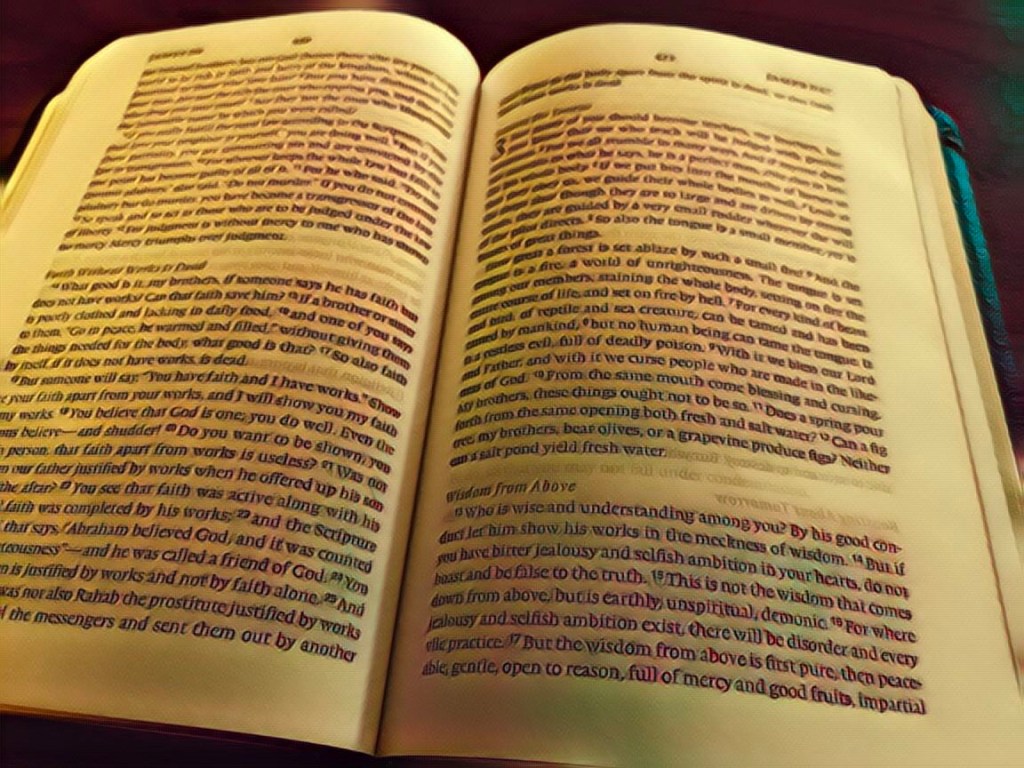
The church today, no less than the church in the first century, faces all kinds of challenges from within and without. These do not take the Holy Spirit by surprise. Holy Scripture provides a guide for us, as it did for them, in what it looks like to live in-step with the Spirit and empowered by the Spirit. It is critical then for us to know ourselves to be living in a Holy Spirit authored story and to immerse ourselves in that story as recorded in the Holy Scripture, which is itself inspired by the Holy Spirit so much so that the Word is called the sword of the Spirit (see Eph 6:17). All of that is a long way of saying that if we wish to be filled with and empowered by the Holy Spirit we must soak ourselves in the Scriptures.
Pray in the Spirit
Second, notice that the Scripture became their prayer: because the Holy Spirit said x through David, now the church prays y in accordance with that. St. Paul writes this instruction to the Ephesian church as if they will know exactly what he means, while I’m left scratching my head. We break in in the middle of one of Paul’s long sentences:
18 praying at all times in the Spirit, with all prayer and supplication. To that end, keep alert with all perseverance, making supplication for all the saints, 19 and also for me, that words may be given to me in opening my mouth boldly to proclaim the mystery of the gospel, 20 for which I am an ambassador in chains, that I may declare it boldly, as I ought to speak (Eph 6:18-20).

Praying at all times in the Spirit, Paul says. Some maintain that Paul is referring to exercising one of the charismatic gifts, praying in tongues. That might be, though I’m not convinced, in part because that gift is not universal; not everyone in the church has it. But, everyone in the church can pray in the Spirit as we see the church in Jerusalem doing in the Acts account. Search the Scripture. Discern together how the Spirit is moving in accordance with Scripture, and align your prayers with that movement of the Spirit. The interesting thing in both of these passages is that praying in and with the Spirit involved a prayer for boldness to proclaim the Gospel. That is a Spirit-filled prayer: a prayer in the Spirit, if you will. If we would be filled with the Holy Spirit, we must pray in the Spirit, in accordance with Scripture, as we understand it and as best we can.
Let’s take this notion about prayer a step further. There is something about prayer that unites us to the Spirit, that invokes the Spirit working in us, in a unique powerful way:
26 Likewise the Spirit helps us in our weakness. For we do not know what to pray for as we ought, but the Spirit himself intercedes for us with groanings too deep for words. 27 And he who searches hearts knows what is the mind of the Spirit, because the Spirit intercedes for the saints according to the will of God (Rom 8:26-27).
Many times I have prayed ignorant prayers. I don’t know which ones they were, and I thought at the time they were appropriate. And, I often find today that I do not know exactly how to pray in a given situation. I find myself simply praying, “Lord, have mercy,” more than ever before, because I think that prayer always fits. But St. Paul assures us that, even when we don’t know how to pray, the Holy Spirit prays for us. Here I am babbling some words because words are what I have, while the Holy Spirit is praying in and with and for me in a way that is beyond words. When I don’t always know what God’s will is in a given situation, the Holy Spirit does, and he is praying in me in accordance with God’s will. This is prayer in the Spirit and is available to all of us if we will but pray. All of this is a long of saying pray: pray the Scriptures, not least the Psalms, pray for boldness to proclaim the Gospel, pray knowing that the Holy Spirit is interceding for you.
Act “As-If”
Third, notice the result of the church’s prayer.
31 And when they had prayed, the place in which they were gathered together was shaken, and they were all filled with the Holy Spirit and continued to speak the word of God with boldness (Acts 4:31).

They church prayed for boldness to speak the word of God and the Holy Spirit filled them with power to do it. I sometimes wonder if living in the power of the Holy Spirit isn’t as simple as acting as if you are living in the power of the Holy Spirit — because you are. Could it be as simple as this? Ask yourself what a Spirit-filled person would do in this situation, and then do it, because you are a Spirit-filled person. We can pray all day long, “Lord, teach me to swim,” but if we never get in the water and start doing those things that swimmers do, we’ll never know if our prayers were answered. We will never be empowered to swim. One word of caution here: there is a vast difference between boldness and recklessness. This is where the church comes in. We do our discernment of how a Spirit-filled person would act, of how God is calling me to act, in the communion of the church. By ourselves, we can easily deceive ourselves. So, in Acts we see the church praying and discerning together, and then acting.
Let’s pause here for a recap. To be filled with and empowered by the Holy Spirit we have seen the importance of keeping Jesus’ commandments/word; of soaking oneself in the Scripture and of living according to Scriptural story; of praying in the Spirit — praying the Scripture — not least in praying for boldness to proclaim the Gospel; and of discerning a proper course of action with the Church, and then of acting “as if” you are empowered by the Spirit.
Do Not Quench the Spirit
Now we come to another of St. Paul’s terse instructions.
16 Rejoice always, 17 pray without ceasing, 18 give thanks in all circumstances; for this is the will of God in Christ Jesus for you. 19 Do not quench the Spirit. 20 Do not despise prophecies, 21 but test everything; hold fast what is good (1 Thess 5:16-21).
Kindle and quench are two very different actions. When I start the new fire at the Easter Vigil, I have everything carefully prepared before hand. All the kindling material is properly arranged in the brazier and I have the fire striker at hand. Imagine if when I were attempting to spark the flame that Fr. Rob began pouring water on the whole thing. I’m trying to kindle; he’s trying to quench. Who is more likely to be successful? Kindling a fire seems a lot harder than quenching it.
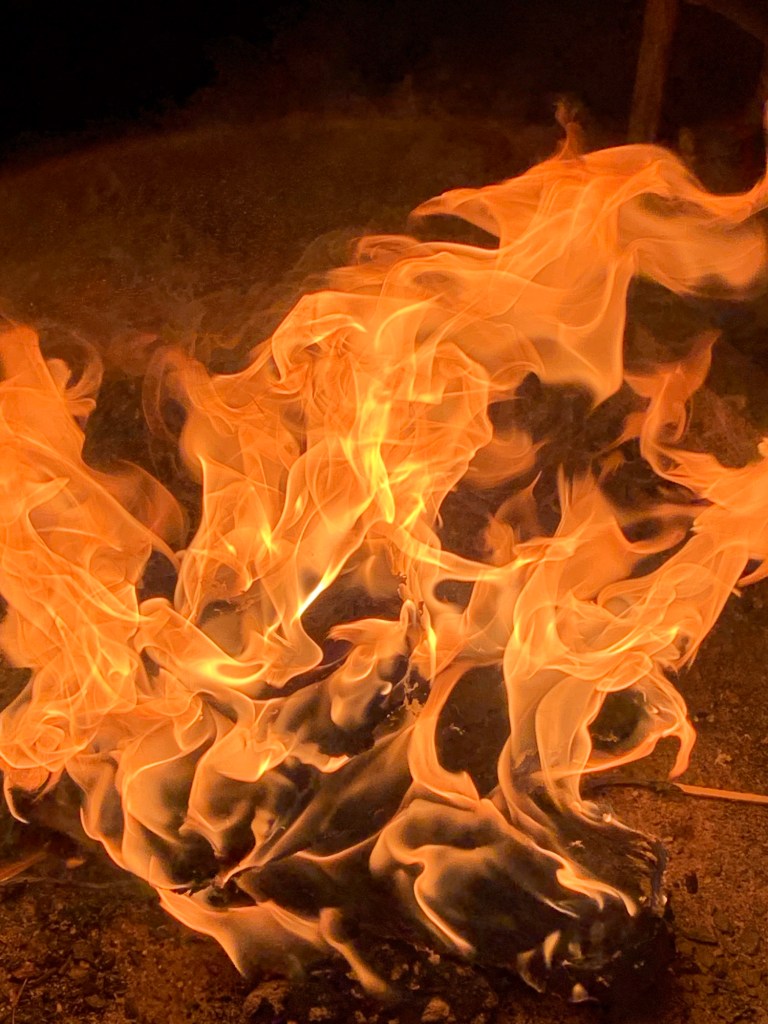
In this brief set of instructions from St. Paul, you see both actions at play: kindling the Holy Spirit and quenching the Holy Spirit. Amongst other practices that we’ve seen, we kindle the Holy Spirit by rejoicing, by praying without ceasing, by giving thanks in all circumstances. And then Paul pivots: Do not quench the Spirit, he writes. How do we do that; how do we keep from quenching the Spirit? St. Paul mentions one way, though I will suggest some others, as well. Do not despise prophecies.
There are important assumption buried in that statement: that the church is a prophetic body, that is, that the prophetic ministry is present and active in the church; that the Holy Spirit is — at times, though apparently not always — the divine Person who inspires the prophets and their prophecies; and that to despise or reject out of hand that ministry is potentially to quench the Spirit. Acts has several examples of prophets and at least one example of prophetesses. In 1 Corinthians 14, St. Paul gives guidance on the conduct of the prophets and their ministry within the worship of the church. Some churches today claim that the prophetic ministry ceased in the first century or with the completion of the canon of Scripture. Some say that it is still powerfully present and base much of their faith and practice around it. Still others accept its ongoing presence in the church but sit very uncomfortably with it.
Since I am leading this class, you have a right to know where I stand. I am not a cessationist. I believe that the Holy Spirit is still present in the Church manifesting himself through gifts given for the common good, gifts such as wisdom, knowledge, faith, healing, miracles, prophecy, spiritual discernment, tongues, and interpretation of tongues, among others (see 1 Cor 12:4 ff). I believe that despising any of these, to use St. Paul’s language, is to quench the Spirit. But, to give ourselves over to them in an uncritical, unreserved way — as was apparently happening in the church at Corinth — is also to quench the Spirit by failing to distinguish between what is genuinely from the Spirit and what is counterfeit. We must carefully thread the needle. Let me give two examples: one imaginary and one actual.
Imagine that Fr. Jack were to announce from the pulpit one Sunday morning that the Holy Spirit had revealed to him that Apostles Anglican Church should [fill in the blank with something pretty significant]. What would we do with that announcement? I hope we would, as St. Paul says, test everything. I would have lots of questions:
How did the Spirit reveal this to you?
To whom else, if anyone, has the Spirit revealed this?
Have you prayerfully discerned this with the clergy, with the vestry, with a discernment committee, with the bishop?
How is this supported by Scripture?
How does this align with the mission and values of Apostles and of ADOTS?
I’m just getting started with questions; others will arise through conversation. None of this is meant to deny the general possibility of a real prophetic word from the Spirit. It is meant to test, to verify that this particular word is from the Spirit. It is nepsis, watchfulness. We don’t bar the gates to the city, but we also don’t fling them open wide to all and sundry. Instead, we place a watchman, a guard, over them to determine precisely whom to admit.
Now, the actual case. Several years ago, I was invited to preach the ordination sermon for my friend Andy; he was being ordained to the priesthood in the ACNA, but in another diocese. During the service, the bishop gathered all the attending clergy around Andy for prayer and laying on of hands. One of the deacons present said something along these lines: “I have a prophetic word to speak over Andy in tongues. I have asked the bishop’s permission and he has granted it.” She then proceeded to pray in tongues after which she said, “Is there anyone here who has an interpretation of these words? If not, I do.” Since none other of the clergy had an interpretation, she gave it. This was the proper way to avoid quenching the Spirit and to properly order all things, just as St. Paul outlines in 1 Cor 14. As to whether the prophetic word was true, time would tell.
We are called to thread a spiritual needle here: not to quench the Spirit, but not to uncritically accept every claim of inspiration by the Holy Spirit. This is the issue of discernment which we will address more fully in a later class. Just as an aside, the Orthodox elders say that if there is any doubt about the authenticity of a word of vision purporting to be from the Lord, it should be rejected. If it is from the Holy Spirit, He will get your attention again in a more certain way.
Summary
We have only scratched the surface in this topic of growth in the Spirit, but what we have said is a good starting place. We have seen the importance of:
Obedience: Keep the commandments, and repent when you have failed to do so.
Scripture: Soak in the story until it becomes truly your story and governs how you think and live.
Prayer in the Spirit: Pray in accordance with Scripture and the Church, and with confidence in the Holy Spirit’s intercession.
Bold Action: After careful discernment in communion with the church, act “as if” you are in-dwelt and empowered by the Holy Spirit, because you are.
Kindle, not Quench: Do not discount the work of the Holy Spirit, but do not accept everything uncritically.
Let us pray.
Heavenly Father, fill us with your Holy Spirit. Amen.


 First Blessings