
Creation and Sabbath: A Rogation Day Reflection
(Ecclesiasticus 43, Psalm 107:1-9, 1 Cor 3:10-14, Matt 6:19-24)
Collect
Almighty God, Lord of heaven and earth: We humbly pray that your gracious providence may give and preserve to our use the harvests of the land and of the seas, and may prosper all who labor to gather them, that we, who are constantly receiving good things from your hand, may always give you thanks; through Jesus Christ our Lord, who lives and reigns with you and the Holy Spirit, one God, for ever and ever. Amen.
In the Name of the Father, and of the Son, and of the Holy Spirit.
On this last of the three Rogation Days, I’d like to think with you about the relationship between the Gospel and the natural order — the creation.
Earlier this month — on the first Sunday — I went for an afternoon walk at Lakeshore Park just a matter of minutes from my house. I used to walk there often, but somehow I’ve gotten out of the habit; it has been maybe two years since I was last there. You may know the property. From 1886 to 1976 it was the campus of the East Tennessee Hospital for the Insane, and it was, frankly, a dismal and disturbing place. In 1976 the name was changed to Lakeshore Mental Health Institute. Whether anything else about it was changed, I don’t know. The Institute is closed now — since 2013 — and all the land is owned by the City of Knoxville who, along with the non-profit Lakeshore Park Conservancy has worked to create a public park complex of walking trails, ball fields, playgrounds, and pavilions. It is a “beauty from ashes” story.
As I walked this recent Sunday, I was delighted to see that the Conservancy is returning a significant portion of the developed land to wild native meadowland: grasses, trees, and wildflowers. There are fields full of clover — both white and pink — and there are gold and purple flowers I can’t name. I spent an hour or so just leisurely walking and looking and enjoying.
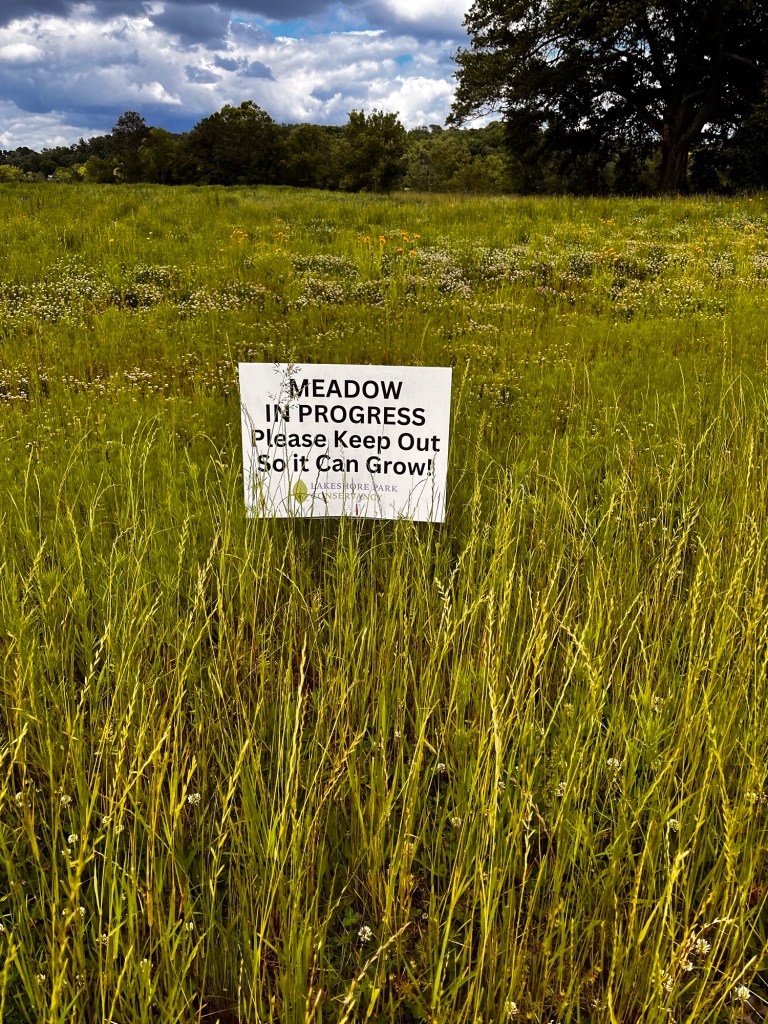
But that whole time I had the feeling that something was wrong, something was missing. And then it dawned on me. Not a single honeybee was to be seen, not a single butterfly. I saw one, and only one, bumblebee — other than that, no large pollinators. As a child, I could not have walked barefoot through a meadow like that, or even through my own small yard, for fear of stepping on and being stung by the bees that seemed to be on every clover. They were everywhere; now they are nowhere. Say what you will, but in the short geological span of sixty years, something has changed, and that something is not for the good.
Our weather is different now than when I was young. The TVA&I Fair has always started early in September, generally the first Friday. And we always had to wear sweaters when I was a teenager; it was cool to cold in the evenings. Now it’s t-shirts and shorts at the fair. Now I have to pay Glenn to mow my yard into November. Now we have more devastating floods and tornadoes than I ever remember. The heat is making some southwestern cities — think Phoenix — dangerous in the summer months, especially for those who are homeless or for the working poor who cannot afford the electric bill for air conditioning.
The landscape is different now than when I was young, too. There is far more development and far less farm land. Much more is paved over now, which increases runoff and localized flooding and elevates temperatures in the summer months. Forests are shrinking along with the glaciers and ice shelf. The ocean level is rising, and some inhabited islands will soon be under water.
Are we the cause of all this? Partly — particularly those of us in the developed and developing nations who monopolize resources and commodify nature. Some of the changes may be natural cycles of weather variation that human population and demands increase and that consumption has exacerbated. We may not be the whole problem, but we are part of it; I am part of it.
All of this was on my mind during and after my walk at Lakeshore Park. And I wondered: what is the appropriate Christian response to this? Pope Francis — of blessed memory — published an Encyclical Letter on Christian responsibility vis à vis the environment, on care for our common home. Laudato Si’ — Praise be to you — he titled it, quoting his namesake St. Francis of Assisi:
“Laudato Si’, mi’ Signore”… “Praise be to you, my Lord, through our Sister, Mother Earth, who sustains and governs us, and who produces various fruit with coloured flowers and herbs” (Encyclical Letter Laudato Si’ of the Holy Father Francis: On Care for our Common Home, 1).
Pope Francis continued:
This sister now cries out to us because of the harm we have inflicted on her by our irresponsible use and abuse of the goods with which God has endowed her. We have come to see ourselves as her lords and masters, entitled to plunder her at will. The violence present in our hearts, wounded by sin, is also reflected in the symptoms of sickness evident in the soil, in the water, in the air and in all forms of life. This is why the earth herself, burdened and laid waste, is among the most abandoned and maltreated of our poor; she “groans in travail” (Rom 8:22). We have forgotten that we ourselves are dust of the earth (cf Gen 2:7); our very bodies are made up of her elements, we breathe her air and we receive life and refreshment from her waters (ibid, 2).
This Encyclical was not received with universal acclaim. Some — not a few — voiced their opposition to it, encouraging Pope Francis to stick to Church business — to get his own house in order and to get about the work of saving souls — and to leave the environment to the scientists and politicians. But that won’t do. The Gospel is good news for all creation, or it’s not the Gospel at all. It is the proclamation that all things are being and will be healed and restored. As Isaiah sees it:
6 The wolf shall dwell with the lamb,
and the leopard shall lie down with the young goat,
and the calf and the lion and the fattened calf together;
and a little child shall lead them.
7 The cow and the bear shall graze;
their young shall lie down together;
and the lion shall eat straw like the ox.
8 The nursing child shall play over the hole of the cobra,
and the weaned child shall put his hand on the adder’s den.
9 They shall not hurt or destroy
in all my holy mountain;
for the earth shall be full of the knowledge of the Lord
as the waters cover the sea (Isa 11:6-9, ESV throughout unless otherwise noted).
And St. Paul links humanity, creation, and the Gospel in his Epistle to the Romans:
19 For the creation waits with eager longing for the revealing of the sons of God. 20 For the creation was subjected to futility, not willingly, but because of him who subjected it, in hope 21 that the creation itself will be set free from its bondage to corruption and obtain the freedom of the glory of the children of God. 22 For we know that the whole creation has been groaning together in the pains of childbirth until now. 23 And not only the creation, but we ourselves, who have the firstfruits of the Spirit, groan inwardly as we wait eagerly for adoption as sons, the redemption of our bodies. 24 For in this hope we were saved (Rom 8:19-24a).
This text points beyond what we will experience or realize in our lifetime, but what we do now — if we are to be faithful to the Gospel and to Christ’s command to proclaim it — has to point toward that ultimate release of creation from futility. We have to ease creation’s groaning and serve as midwife to its new birth. So, it just won’t do to say the Church needs to get about the business of saving souls and leave all the environmental “stuff” to the “experts” — the scientists and politicians. How we treat creation is a spiritual matter, a matter of creation and redemption.
This is true, in part, because creation — the natural order — is presented as an entity that worships God, not least through declaring God’s glory. We see that theme throughout the Psalms.
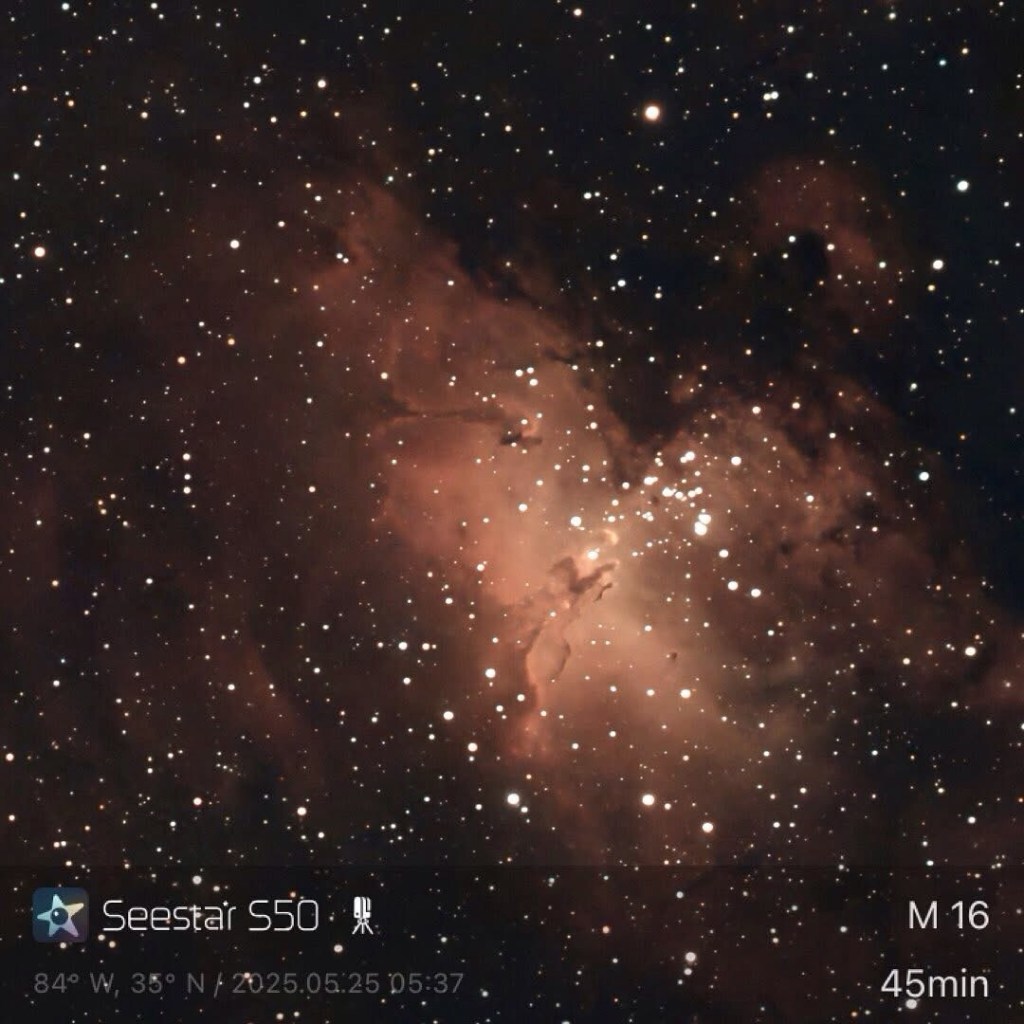
Psalm 19
1 The heavens declare the glory of ‘God,*
and the firmament shows his ‘handiwork.
2 One day speaks to an’other,*
and one night gives knowledge to an’other.
3 There is neither speech nor ‘language,*
and their voices are not ‘heard;
4 But their sound has gone out into all ‘lands*
and their words to the ends of the ‘world (Ps 19:1-4, BCP 2019, p. 289).
Psalm 98
5 Show yourselves joyful in the Lord, all you ‘lands;*
sing, rejoice, and give ‘thanks.
6 Praise the Lord with the ‘harp;*
sing with the harp a psalm of thanks’giving.
7 With trumpets also and ‘horns,*
O show yourselves joyful before the Lord, the ‘King.
8 Let the sea make a noise, and all that is ‘in it,*
the round world, and those who dwell there’in.
9 Let the rivers clap their hands, and let the hills be joyful together before the ‘Lord,*
for he has come to judge the ‘earth (Ps 98:5-9, BCP 2019, p. 397).
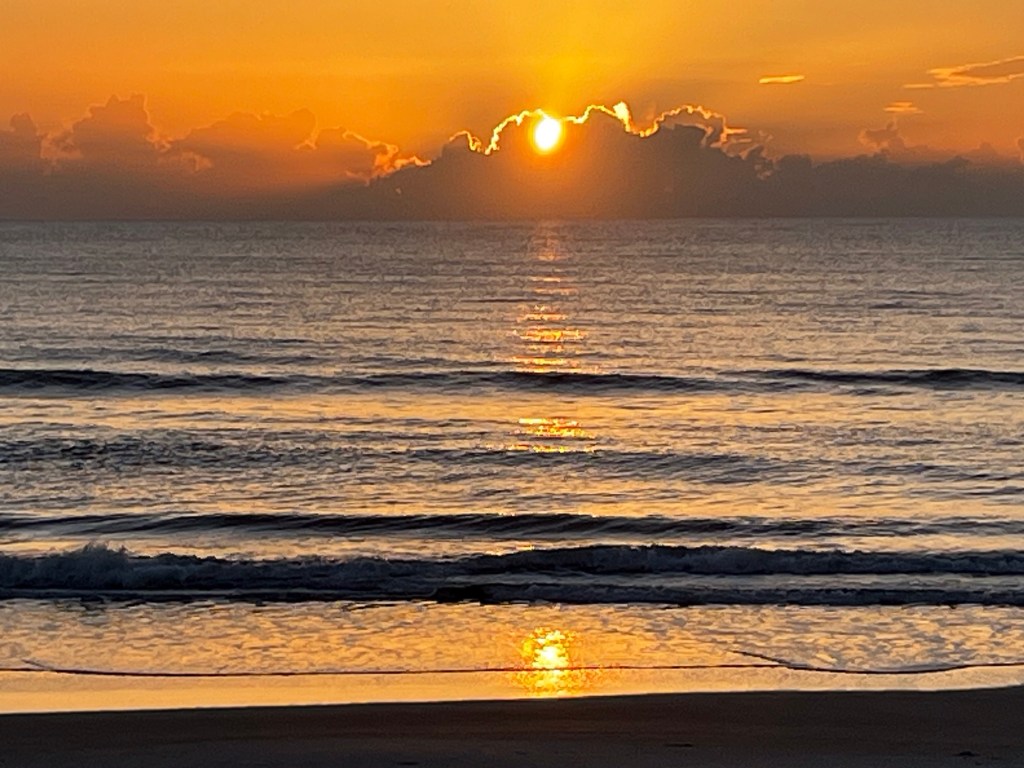
The heavens declaring the glory of God, the sea making a noise of praise, the rivers clapping their hands in worship, the hills joyful before the Lord: and why? Because the Lord has come to judge the earth, that is, to judge in favor of the earth by restoring all creation and by freeing it to worship fully once again.
This notion of the earth — of all the natural order — being a worshiping entity is at the heart of the Law, the Torah, as well. Do you remember the fourth commandment?
Remember the Sabbath Day and keep it holy.
To whom does that commandment apply?
It applies to all Israelites, to their slaves — foreign or domestic — and to their animals. Then, by implication, it must also apply to the land. No one may work the land on the Sabbath. No one may treat the land as a tool or commodity. On the Sabbath it is recognized as gift, as belonging to God, as an entity that too must be given a day of rest to worship God in its unique way. But it is not a day only. Every seventh year the land must be given a sabbath — a full year in which to rest, to lie fallow, to produce only what the agency of God calls forth.
25:1 The Lord spoke to Moses on Mount Sinai, saying, 2 “Speak to the people of Israel and say to them, When you come into the land that I give you, the land shall keep a Sabbath to the Lord. 3 For six years you shall sow your field, and for six years you shall prune your vineyard and gather in its fruits, 4 but in the seventh year there shall be a Sabbath of solemn rest for the land, a Sabbath to the Lord. You shall not sow your field or prune your vineyard. 5 You shall not reap what grows of itself in your harvest, or gather the grapes of your undressed vine. It shall be a year of solemn rest for the land. 6 The Sabbath of the land shall provide food for you, for yourself and for your male and female slaves and for your hired worker and the sojourner who lives with you, 7 and for your cattle and for the wild animals that are in your land: all its yield shall be for food (Lev 25:1-7).
This was the Lord’s command, but there is no indication that Israel ever took it seriously. In fact, there is evidence to the contrary. Listen to Jeremiah’s prophecy of the coming exile of Judah.
11 This whole land shall become a ruin and a waste, and these nations shall serve the king of Babylon seventy years. 12 Then after seventy years are completed, I will punish the king of Babylon and that nation, the land of the Chaldeans, for their iniquity, declares the Lord, making the land an everlasting waste (2 Chron 25:11-12).
Seventy years of exile. Why seventy years? Listen to the explanation from 2 Chronicles.
20 He took into exile in Babylon those who had escaped from the sword, and they became servants to him and to his sons until the establishment of the kingdom of Persia, 21 to fulfill the word of the Lord by the mouth of Jeremiah, until the land had enjoyed its Sabbaths. All the days that it lay desolate it kept Sabbath, to fulfill seventy years (2 Chron 36:20-21).
The length of exile was determined by the number of years Judah had failed to allow the land to keep the sabbath. They had failed to allow the land to rest and worship for seventy sabbath years. That means they had been disobedient — they had treated the land as their own, as a commodity to be exploited rather than as a gift from God — for four hundred ninety years — seventy sabbath year cycles.
Now, to wrap this up, we turn to Daniel in exile, nearing the end of the seventy years.
9:1 In the first year of Darius the son of Ahasuerus, by descent a Mede, who was made king over the realm of the Chaldeans— 2 in the first year of his reign, I, Daniel, perceived in the books the number of years that, according to the word of the Lord to Jeremiah the prophet, must pass before the end of the desolations of Jerusalem, namely, seventy years (Dan 9:1-2).
Daniel knew the prophecy of the seventy years. And he is reminding God, in the prayer that follows, that Judah’s sentence has been served, that the land has enjoyed its sabbaths these past seventy years, that it is time for God to act to bring his people home. The answer, delivered by the Archangel Gabriel is, in one way, not good news at all. In another sense, it is pure Gospel:
24 “Seventy weeks are decreed about your people and your holy city, to finish the transgression, to put an end to sin, and to atone for iniquity, to bring in everlasting righteousness, to seal both vision and prophet, and to anoint a most holy place (Dan 9:24).
Not seventy years, but seventy weeks of years — four hundred ninety years — will be required to atone and to bring in everlasting righteousness: one year of exile for every year in the seventy sabbath cycles of disobedience that precipitated the exile. Count forward four hundred ninety years from Daniel; the Archangel Gabriel is there again, bringing another message, this one to a young virgin in Nazareth — a message that she will be anointed by the overshadowing of the Holy Spirit, that her womb will become a most holy place, and that her son will be the Son of the Most High.
I’ve traced this story from Torah to Psalms, from prophesy to history simply to show that how we treat the land — how we treat the entire created order — matters greatly to God because God’s creation is not our commodity to be used and exploited as we please. To defile nature, to keep it from worshiping God in its own way, is to sin greatly before the Lord and to deny the Gospel message of the renewal of all things.
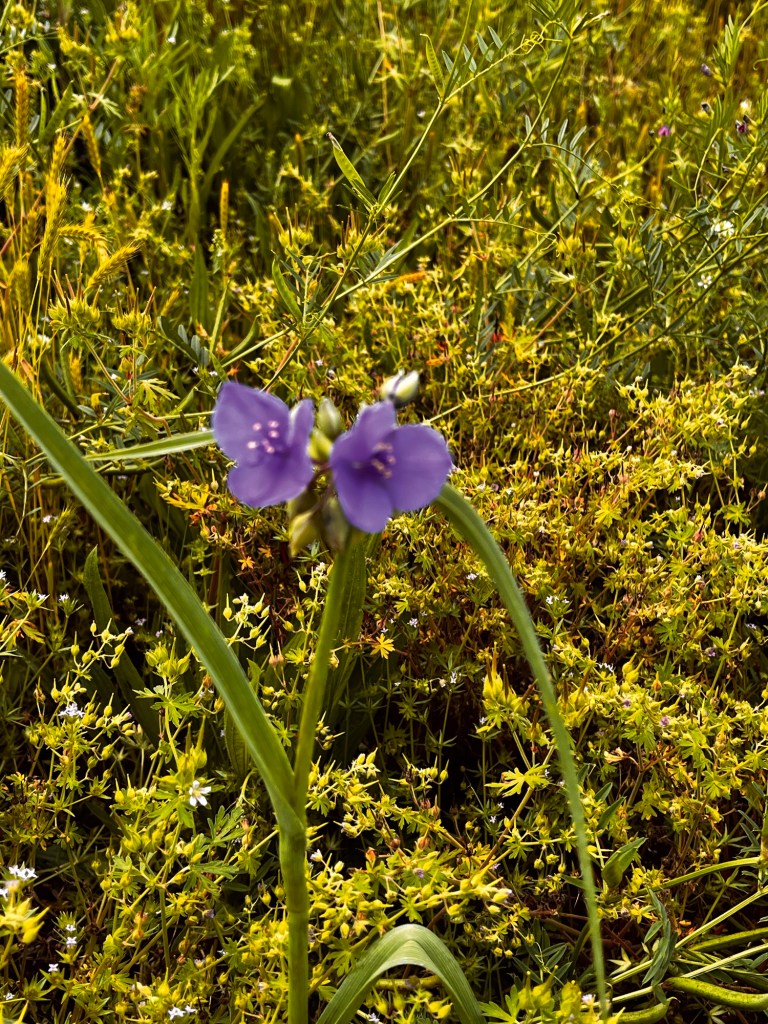
That is why it made my spirit sing to see the meadow restored to Lakeshore Park. That small act of conservation is, when seen through eyes of faith, an in-breaking of the Kingdom of God and a signpost pointing toward the new heavens and the new earth. It is, in its own way, a proclamation of the Gospel.
Let us pray:
O merciful Creator, your loving hand is open wide to satisfy the needs of every living creature: Make us always thankful for your loving providence, and give us grace to honor you with all that you have entrusted to us; that we, remembering the account we must one day give, may be faithful stewards of your good gifts; through Jesus Christ our Lord, who with you and the Holy Spirit lives and reigns, one God, for ever and ever. Amen.


 First Blessings