EDITORIAL: FOOLISH PERSONAL OPINION
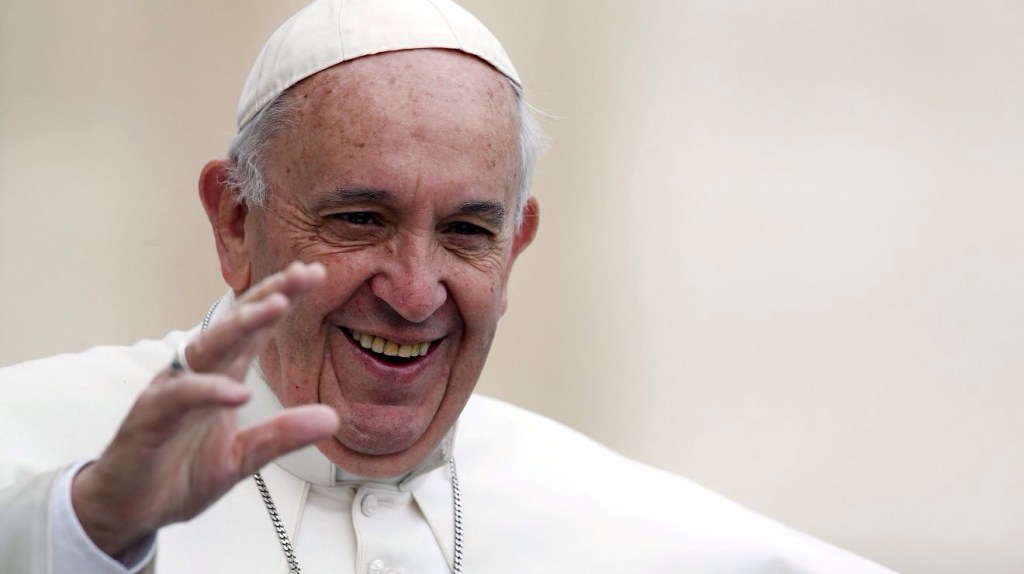
First this: I grieve the death of Pope Francis not because I am a Roman Catholic — I am Anglican — but because he was/is a brother and father in Christ; a bishop of the one, holy catholic and Apostolic Church; the shepherd of 1.4 billion Christians; and the most visible and recognized face of the Church in the Western world. The See of Canterbury in the Church of England lies vacant and has done since Epiphany. Neither the Church of England nor the Anglican Communion has in place a titular head and the world little knows nor cares. The See of Rome is vacant and all eyes turn there in mourning for the late Pope and in expectation for the conclave and the selection of his successor. The Pope matters on the world stage in a way that other religious leaders simply do not. So, I too, an Anglican, grieve the death of Pope Francis.
I have found the public reactions to and reflections on his papacy interesting. Apparently, Pope Francis was both the devil and God’s gift of mercy to a rigid Church, a breath of spring promising new life and an evil wind blowing the Barque of St. Peter toward the shoals of apostasy, a much needed correction to the conservative orthodoxy of his immediate predecessor or a liberal activist held in check only by the power and inertia that characterizes the Catholic magisterium. This may be the theological and ecclesial legacy of Pope Francis: deep ambiguity — the ability to keep both ends of the theological spectrum confused and off balance. Perhaps that is not surprising from a Jesuit, or so the caricature goes. It is a trait worthy of the great historical Anglican divines at any rate. It is a trait perhaps born from abounding love insufficiently disciplined by discernment.
History will judge Pope Francis’ legacy. God will judge his service. In Francis’ own words: Who am I to judge? May the Lord bless his servant Francis and have mercy on me, a sinner.
Many commentators — from the “talking heads” of the media to the “man on the street” captured in candid interviews — have noted, with great approval, the simplicity of Pope Francis, his rapport with the “common man,” his refusal of the grand trappings of the papacy. Francis did not dress as a pope dresses, live where a pope lives, eat what a pope eats. As Jimmy Carter was to the U.S. presidency, so Francis was to the papacy — just a simple man, just one of us. Perhaps that is the answer to the chorus from Joan Osborne’s song “One Of Us:”
What if God was one of us
Just a slob like one of us
Just a stranger on the bus
Tryin’ to make His way home?
I mean no disrespect and no irreverence by that. This insistence on identification with the common man can flow naturally from great humility, as I am confident it did with Pope Francis. It can also flow from a manipulative, performative, humbler-than-thou attitude: a mere affectation, a lack of discernment, or a failure to appreciate the tradition. Think here of a young, “hyper-relevant,” non-denominational, evangelical preacher in t-shirt and ripped jeans prowling the stage in the darkened auditorium filled with the mist of multiple smoke machines. Nor is Anglicanism immune from this drive toward commonality run amok. Lord, have mercy.
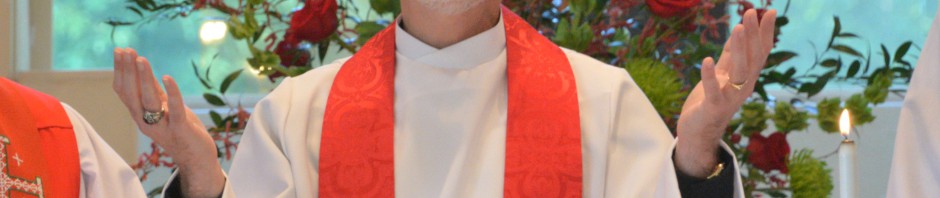
The dark side of simplicity is iconoclasm, or, in my own tradition’s history, a Puritanism that paints over images, shatters stained glass windows, removes the Cross from the chancel and candles from the altar, eschews stoles and chasubles, and prefers brutalist church architecture to the grandeur of the gothic cathedral. The dark side of simplicity is sterility, bare white walls and ceilings replacing the word manifest in shape and form and color. The dark side of simplicity is the common denominator, the desecration of the holy by making it too readily accessible, too ordinary: a sacrifice which costs nothing, a god before whose presence no one needs veil his face or put off his sandals — a burning bush used to roast hot dogs and make s’mores.
I don’t want my bishop to be ordinary, to be just one of the guys. By his office he is a successor of the Apostles. I want a bishop who inspires me, who, by his words and example, calls me to holiness, who causes me to lift my eyes and my heart to God. I want a church building that takes my breath away with beauty because overwhelming beauty is an attribute of God. I want my church to sound different — in its music and worship and teaching — than the shopping mall or workplace or radio; to smell different — yes, the subtle aroma of burning candles and the pungency of incense; to look different in its art and architecture than the functional, pagan world around me. I want to say as did the representatives of Kiev Rus when first witnessing Orthodox worship, “Truly we did not know if we were in heaven or on earth, for never have we seen such beauty!” Why else would the desperately poor contribute to and work on the construction of the great cathedrals generation after generation? In their poverty, the cathedrals gave them a signpost of beauty and grandeur pointing to God and to hope.
My father Merl and my mother Kathleen were close friends with their long-time preacher Bob Black and his wife Blanche. They ate together, fished together — they shared life and friendship together over many decades. And after years of that, it was always, Merl, Kathleen, Blanche, and Mr. (or Preacher) Black — never Bob to my mother and father. He was both common in his person and set apart in his vocation. That is the opposite of ambiguity. That is recognition that holiness matters, that holiness, in part, means “set apart.” It is recognizing, in the person of His servant, that God is both immanent and transcendent, or, as Mr. Beaver says of Aslan, not safe but good.
Our culture has forgotten holiness and has no appreciation for beauty, but it longs for both. It transgresses everything; it knows more of pornography than of covenantal marital intimacy. It chooses the common, the mediocre, so that it can feel better about its own deficiencies, its own baseness. In the midst of that, it needs a church that is resolutely dedicated to goodness, truth, and beauty; a church that seeks to lift heart and mind and eyes to heaven; a church that does not make the Lord God Almighty common and ordinary. This is not a commentary on or a judgment of Pope Francis and his commitment to simplicity: far from it. But his death and the outpouring of public admiration for his simplicity and commonality has stirred my thinking. What the people think they want is not always what they truly need.


 First Blessings