THE MIRACLE OF THE CROSS
I witnessed a miracle yesterday, a parting of the veil between heaven and earth on Good Friday. That day is always theologically challenging. How do you explain the cross? How do you make sense of the death of God? And even here, some will choke on that language — the death of God — and rightly so; it is an affront to our reason, though the Church’s belief declares it is so. Just as Mary was Theotokos — the God-bearer — so, too, the cross. The One it bore was God; the One who died on it was God. If God was born of the Virgin Mary in Bethlehem, then God also died on the cross outside Jerusalem. We can, and we must make fine theological distinctions about the two natures of Christ — divine and human — in one Person. We must be faithful to the Creeds, to Chalcedon. Still, Good Friday is always theologically challenging. How do you explain the cross? How do you make sense of the death of God?
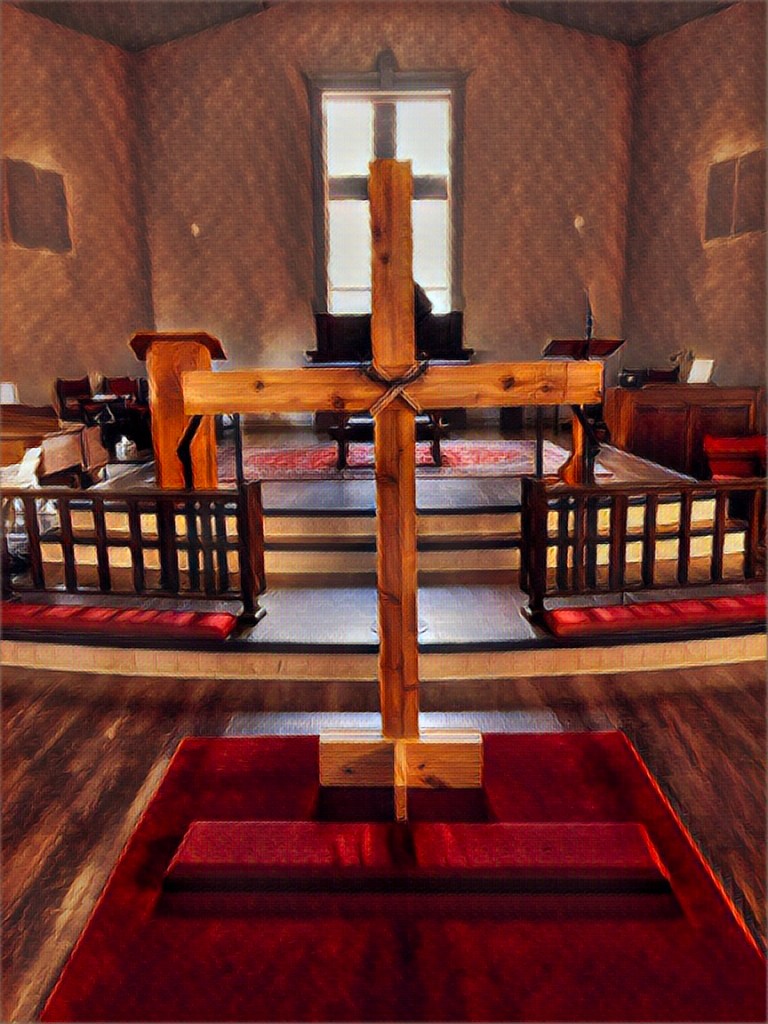
So, in our minds, in our churches, in our liturgies we often build walls around the cross — walls meant to honor the cross, of course, but also to protect the faithful from the theological dissonance of it or to explain that dissonance away, as if that were possible. Sermons, hymns, prayers — all these good and very good things — become stones in those walls. But yesterday, I witnessed a miracle. The walls came down. The bare cross, in all its stark reality, was planted near the altar rail and the faithful were invited to come to it — to be confronted by it — and to offer their acts of devotion to the Lord who had suffered there and died there. The nave of this church became Golgotha, and there was no hiding from the cross. Nor were there any more attempts to explain it: theology later, devotion now.
One by one they came. Some knelt — some with pain and difficulty due to age or injury. Some grasped the wood of the cross as a drowning man might grasp a rope thrown into the water. Some touched it gently as one might touch a coffin when saying goodbye one last time. Some made the sign of the cross and stood with bowed head. Some — not a few — cried. One by one they came: children who had little notion of what they were doing, but being formed by it nonetheless; the elderly — among whom I must now count myself — having, through the years, known their own suffering and loss and perhaps sensing their own bodily mortality more now than before; men and women, sinners all, drawn to the cross as to a beacon of hope in the midst of despair. I witnessed a miracle yesterday: the Communion of Saints in this little place, Saints being drawn inexorably to the cross, where no more words were necessary, where no explanation beyond love and mercy was possible, to the intersection of heaven and earth.


 First Blessings