I was recently asked to write an apology for baptism from an Anglican perspective. Those of you familiar with Anglicanism know how daunting a request that was, as if there is a single Anglican perspective on the Sacraments! The presenting issue was the necessity of baptism, and on that, we Anglicans do agree: baptism and the Lord’s Supper are generally necessary to salvation (BCP 1662, Catechism). So, I set out to write a brief apology for that understanding, not a detailed theology of baptism, but merely a biblical and ecclesial justification for it.
An Anglican Perspective on Baptism
Introduction: A Gift
Imagine being presented a beautiful and precious gift and responding to the giver, “Yeah, but do I have to take it?” This is the way those in sacramental churches — like the Anglican Church — think of baptism: as a profoundly wonderful gift offered to us by God himself. So, we don’t question him, his motives, the gift itself, or our need for it; we simply receive it with gratitude and joy. To do anything else or anything less would seem to us ungrateful and dismissive of God’s love. We dare not ask God, “Yeah, but do I have to take it?” Nor do we really want to argue about baptism with our brothers and sisters in other churches. The two sacraments — baptism and the Lord’s Supper — are meant to bring all God’s family together, not to drive us apart. That being said, I will be glad to explain the Anglican understanding of baptism. It is the same understanding that the whole Church held for the first fifteen hundred years of its existence, until novel ideas about the sacraments, and even rejection of them, were introduced during the Reformation.
Commitment to Scripture and How We Read It
Let’s start with this: the Anglican Church is committed to the authority of Scripture. The Anglican Church in North America (ACNA), the province of the Anglican Church to which I belong, makes this declaration:
We confess the canonical books of the Old and New Testaments to be the inspired Word of God, containing all things necessary for salvation, and to be the final authority and unchangeable standard for Christian faith and life.
So, we turn to Scripture for our understanding of baptism. How does Scripture speak to us about such matters? Many people simply look to the Bible as a rule book; that is, they look for a very simple and direct rule along the lines of “You shall do X,” or “You shall not do Y.” And such rules are certainly found in Scripture. But, that is not the only way — and perhaps not even the most important way — that Scripture directs us and orders our lives. When the prophet Nathan needed to convict King David of his sin against Uriah and Bathsheba, he told David a story. And, Jesus did the same in his extensive use of parables. So, Scripture also guides us through stories: real stories (history) and fictional stories (parables, proverbs, songs). The Bible also uses examples, foreshadowing, and figural patterns. For example, Melchizedek in the Old Testament is seen as a figure of Christ in the New Testament. Moses and Elijah are seen as symbols of the Law and Prophets in the New Testament account of the Transfiguration. In the Old Testament God appears on mountain tops (particularly Sinai) hidden by clouds and smoke. Think again of the New Testament account of the Transfiguration: Jesus on a mountain top hidden by a cloud. Is that a direct statement that Jesus is divine? No, but it is a figural statement that he is. I mention all this simply to say that we need to read Scripture broadly, as the ancient Church did, and not merely looking for rules. So, let’s give that a try with baptism.
Let’s start with Abram. When God chose to create a people for himself, Israel, he started with Abram and Sarai. He made a covenant with them: he would be their God and they would be his people. And he gave them a sign of the covenant; all males would be circumcised. If you wanted to belong to God’s people, this was the way; circumcision made you part of the family and marked you as part of the family. To reject circumcision was to reject God and to be excluded from his people. Believing in God wasn’t enough. God gave them something to do.
Now, notice how St. Paul sees circumcision in the Old Testament as a pre-figuring of baptism in the New Testament. It would be good to read Colossians 2:6-15 in full, but I’ll quote just a portion of that passage:
9 For in him [Jesus] the whole fullness of deity dwells bodily, 10 and you have been filled in him, who is the head of all rule and authority. 11 In him also you were circumcised with a circumcision made without hands, by putting off the body of the flesh, by the circumcision of Christ, 12 having been buried with him in baptism, in which you were also raised with him through faith in the powerful working of God, who raised him from the dead. 13 And you, who were dead in your trespasses and the uncircumcision of your flesh, God made alive together with him, having forgiven us all our trespasses, 14 by canceling the record of debt that stood against us with its legal demands. This he set aside, nailing it to the cross (Col 2:9-14).
What circumcision did for Israel in the Old Testament — making you part of the covenant and the people of God — baptism does in the New Testament. But baptism does even more: in baptism we die with Christ and are raised to new life with him, and we are forgiven all our trespasses. That’s the way St. Paul understood baptism — part of the way — and that’s how the Church understood it for fifteen hundred years. But, there is more.
Consider the Exodus. God used the plagues to deliver the Hebrews (Israel) from Egypt, but what did God use to save them? He used a symbol of baptism: the crossing of the Red Sea. God parted the waters, Israel went down into the Sea and across it, and when the Egyptian army tried to follow, they were destroyed by the water. Notice all the things at work in that image. Israel’s entering into the Sea was a final rejection of their old way of life in slavery to Egypt and entrance into a new life as God’s free people. The drowning of the Egyptian army was victory over the enemy of God’s people and the deliverance of God’s people from death. That is precisely what baptism offers: the rejection of the old life and the embrace of the new life in Christ, and the victory over sin and death. That is why an Anglican baptismal service begins with rejections of (1) the devil and all the spiritual forces of wickedness that rebel against God, (2) the empty promises and deadly deceits of this world that corrupt and destroy the creatures of God, and (3) the sinful desires of the flesh that draw you from the love of God. Then, comes the embrace of the new life in a series of questions: Do you (1) turn to Jesus Christ and confess him as your Lord and Savior? (2) joyfully receive the Christian Faith, as revealed in the Holy Scriptures of the Old and New Testaments? (3) [promise to] obediently keep God’s holy will and commandments, and walk in them all the days of your life? All this is a Red Sea moment.
After forty years of wandering in the wilderness, Israel is finally ready to enter the promised land, finally ready to receive the blessings of the covenant. And how do they do that? They cross the Jordan River when it was in flood stage. This is another symbol of baptism. They enter the water as exiles and wanderers and they come out on the other side to inherit all the promises of God. Again, that is what baptism does for us. It is the way in which we inherit/receive all the blessings of God’s new covenant with us in Christ.
This crossing of the Jordan was repeated generations later when Judah returned from exile in Babylon. Crossing the Jordan became a powerful symbol for the people — a symbol of coming home and of receiving God’s blessings. That is why John the Baptist doing his work at the Jordan was so significant and why Jesus being baptized there was so evocative: in Jesus, through baptism, we may all come home and receive God’s blessings. These stories all tie together to show the importance and the blessings of baptism.
There is more to be said about symbols of baptism in the Old Testament. Read 1 Peter 2:18-22 to see how St. Peter connects the flood and the ark with baptism. He concludes with this:
21 Baptism, which corresponds to this, now saves you, not as a removal of dirt from the body but as an appeal to God for a good conscience, through the resurrection of Jesus Christ, 22 who has gone into heaven and is at the right hand of God, with angels, authorities, and powers having been subjected to him.
Maybe you see now why I started out by comparing baptism to a great gift that God offers us. Who would ask, “Yeah, but do I have to take it?”
Another reason we Anglicans hold baptism to be so important is simply that Jesus commanded it. You can see that in Matthew 28:16-20:
16 Now the eleven disciples went to Galilee, to the mountain to which Jesus had directed them. 17 And when they saw him they worshiped him, but some doubted. 18 And Jesus came and said to them, “All authority in heaven and on earth has been given to me. 19 Go therefore and make disciples of all nations, baptizing them in the name of the Father and of the Son and of the Holy Spirit, 20 teaching them to observe all that I have commanded you. And behold, I am with you always, to the end of the age.”
If Jesus said to baptize — and certainly to be baptized — I am not inclined to question whether it is necessary or whether I have to do it or whether there is some other way to become part of Jesus’ family.
The “Puzzle” of Acts
It is also interesting to note how often baptism appears in Acts. When someone heard and believed the Gospel, they were baptized; that is clear throughout the book. That shows how the earliest Church understood the Old Testament and the teachings/commands of Jesus. There was no arguing over it; they just did it. Notice in Acts 2:38 how St. Peter connects repentance and baptism with the forgiveness of sins and the outpouring of the Holy Spirit. Is it possible to live the Christian life without forgiveness and the indwelling of the Holy Spirit? St. Peter doesn’t seem to think so.
Now, let me address an issue with Acts. We modern people like precise patterns and instructions. A comes first, followed by B, then C and all the way down the alphabet: always in this precise order. We apparently like that rigid organization more than God does. Sometimes in Acts the Holy Spirit comes first, followed by baptism (as with Cornelius and his household). Sometimes it’s the other way around. But, the two are linked together even though the order varies. It is not either-or but both-and.
Sacrament, Not Magic
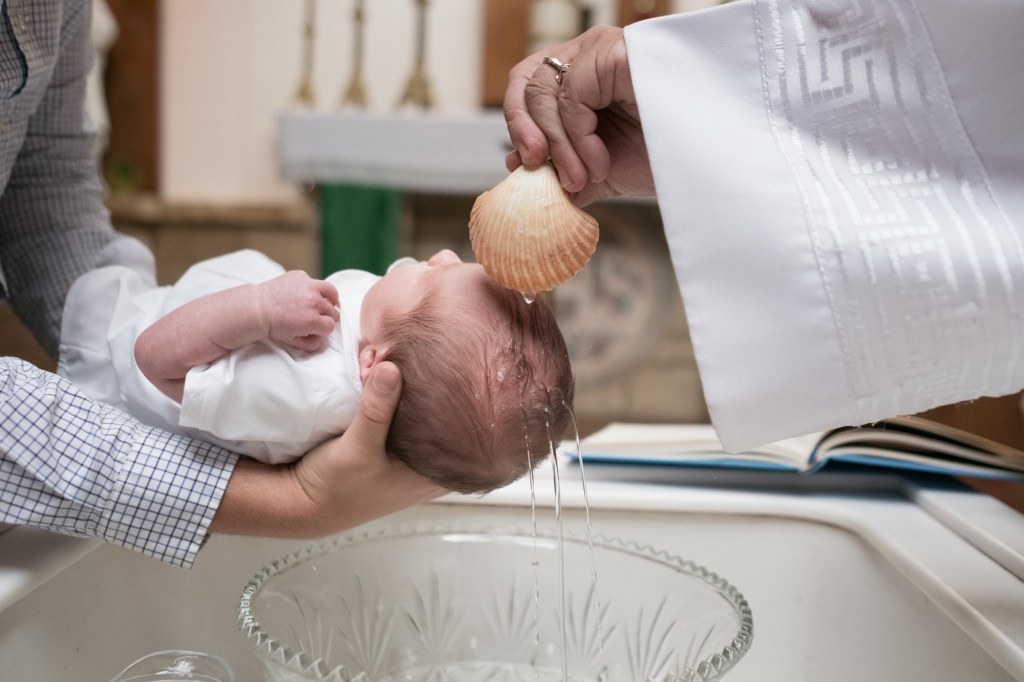
I also want to be clear about this: baptism is not magic. It is a means — a sacrament — through which God acts, but it is not automatic. We never force God to act by doing something. So, no one can state with confidence: I have been baptized, therefore I am saved. Baptism does not stand alone. Faith, repentance, baptism, the Lord’s Supper, obedience, life in the Church: all of these are necessary for living the Christ-life, for growing into the likeness of Christ, which is what salvation really is. Baptism in no more magic than saying, “I believe that Jesus is the Christ and I accept him as my Lord and Savior.” Neither one of those alone is sufficient. All these things belong together throughout the whole of one’s life. We are “saved” with our last breath.
Not for Me To Say
One other note specifically about baptism. We are bound to baptism in a way that God is not. Here is what I mean. God is free to save someone apart from baptism — God is free to do anything he wants to in keeping with his character — but the Church cannot assure someone of his salvation apart from baptism. Suppose someone were to challenge me by saying, “I have not been baptized. Are you saying I am not saved?” My answer would be, “No, I’m not saying that at all. It is not for me to say. God might choose to save you apart from baptism, but he has not promised in Scripture to do that. Instead, he has told us and shown us repeatedly that he works through baptism for salvation and he has commanded us to be baptized. So, why resist it? Why not just do as he has said?”
Be Baptized
To the extent that I am allowed to speak for all Anglicans everywhere, this is what we believe about baptism. It is what the vast majority of Christians have believed — and still do believe — from the very beginning of the Church (with the Apostles) until now. It is only in the last five hundred years that any significant portion of the Church has thought and taught otherwise. So, really the burden of proof is on those who want to change the Church’s ancient doctrine and say that baptism is not necessary. I really don’t understand the desire to do that, when it is easier simply to do what Christ and the Apostles said to do and did themselves: be baptized.


 First Blessings