Apostles Anglican Church
Fr. John A. Roop
Wednesday of Holy Week
(Isa 50:4-9; Ps 69:6-14, 21-22; Heb 9:11-28, Matt 26:1-25)
Two Ways and the Road Not Taken
Collect
Assist us mercifully with your grace, Lord God of our salvation, that we may enter with joy upon the meditation of those mighty acts by which you have promised us life and immortality; through Jesus Christ our Lord, who lives and reigns with you and the Holy Spirit, one God, for ever and ever. Amen.
Both here and in all your churches throughout the whole world,
we adore you, O Christ, and we bless you,
because by your Holy Cross
you have redeemed the world. Amen.
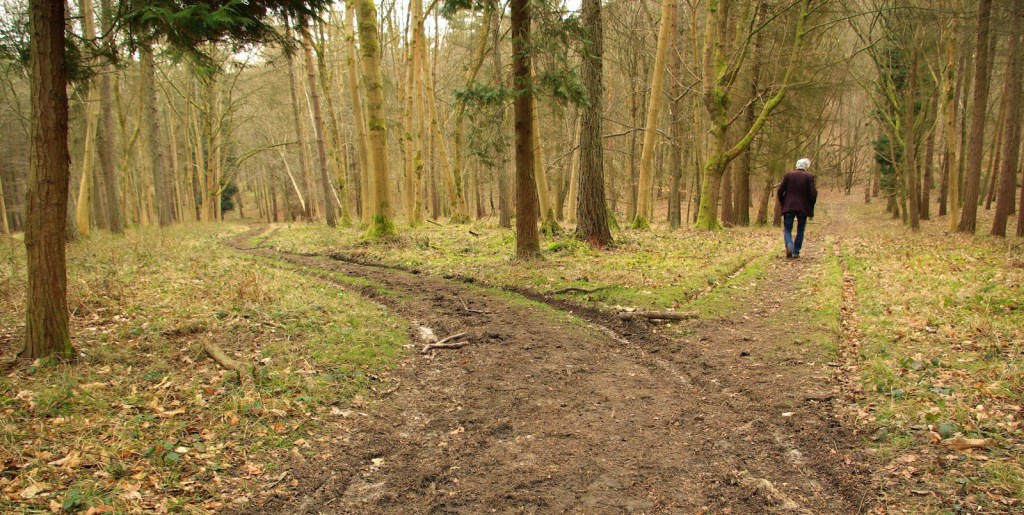
YOU may remember this poem from your high school English class: The Road Not Taken, by Robert Frost:
Two roads diverged in a yellow wood,
And sorry I could not travel both
And be one traveler, long I stood
And looked down one as far as I could
To where it bent in the undergrowth;
Then took the other, as just as fair,
And having perhaps the better claim,
Because it was grassy and wanted wear;
Though as for that the passing there
Had worn them really about the same,
And both that morning equally lay
In leaves no step had trodden black.
Oh, I kept the first for another day!
Yet knowing how way leads on to way,
I doubted if I should ever come back.
I shall be telling this with a sigh
Somewhere ages and ages hence:
Two roads diverged in a wood, and I—
I took the one less traveled by,
And that has made all the difference.
In this poem — which was really intended as a joke for a fellow poet and indecisive hiking companion — Frost enters the great Two Ways moral tradition of Scripture. It is there from the earliest accounts: choices — decisions, two ways — and their consequences. Adam and Eve must choose between obedience to God and autonomy, between trusting God to define what is good and bad and the desire to have the knowledge of good and evil themselves, between being content to be creatures and trying to become like God by following the serpent, between life and death: two ways in each case. Two roads diverged in the Garden, and the one they took made all the difference. Cain must choose between resisting the sin crouching at his door and giving in to his basest desires to strike down his brother. Two roads diverged, and the one Cain chose made all the difference. Abram must choose to stay in Ur of the Chaldees with his familiar gods or else to strike out to an unknown destination on the word of an unknown God: truly two roads diverging. And so it goes throughout Scripture.
The two ways appear again at the end of Joshua’s story, in his farewell charge and address to Israel:
14 “Now therefore fear the Lord and serve him in sincerity and in faithfulness. Put away the gods that your fathers served beyond the River and in Egypt, and serve the Lord. 15 And if it is evil in your eyes to serve the Lord, choose this day whom you will serve, whether the gods your fathers served in the region beyond the River, or the gods of the Amorites in whose land you dwell. But as for me and my house, we will serve the Lord” (Joshua 24:14-15, ESV throughout unless otherwise noted).
Two ways: serve the Lord or else serve the gods of the nations.
The Two Ways tradition flowers in the Old Testament wisdom literature. Psalm 1 introduces it by distinguishing between the way of the righteous and the way of the sinners, and many of the following psalms reinforce it.
1 Blessed is the man who has not walked in the counsel of the ungodly, nor stood in the way of sinners, and has not sat in the seat of the scornful;
2 But his delight is in the law of the Lᴏʀᴅ,
and on his law will he meditate day and night.
3 And he shall be like a tree planted by the waterside,
that will bring forth his fruit in due ‘season.
4 His leaf also shall not wither;
and look, whatever he does, it shall prosper.
5 As for the ungodly, it is not so with them; but they are like the chaff, which the wind scatters away from the face of the earth.
6 Therefore the ungodly shall not be able to stand in the judgment, neither the sinners in the congregation of the righteous.
7 For the Lᴏʀᴅ knows the way of the righteous,
but the way of the ungodly shall perish (BCP 2019, p. 270).
Two ways: the way of the righteous which leads to fruitfulness and the way of the sinners, the ungodly, which leads to destruction. And so it goes throughout the Psalms.
The Two Ways in Proverbs are wisdom or knowledge on the one path and foolishness on the other, as we see in Chapter 1:
7 The fear of the Lord is the beginning of knowledge;
fools despise wisdom and instruction (Prov 1:7).
Torah, Prophets, Writings: the Old Testament is filled with the Two Ways tradition. Roads diverge. Choices must be made. And those choices make all the difference.
It’s not just the Old Testament: the New Testament is filled with the Two Ways tradition also. At the end of the Sermon on the Mount, Jesus contrasts the wise man who built his house upon the rock, upon the foundation of Jesus’ words, to the foolish man who built his house on the sand of easy, conventional wisdom (cf Matt 7:24-27). Two ways, and which way you choose makes all the difference, especially when the rains come and the wind blows and the waters rise. St. Paul, writing to the Corinthian Church, marks the diverging roads clearly by planting the cross at the fork of the two ways:
18 For the word of the cross is folly to those who are perishing, but to us who are being saved it is the power of God (1 Cor 1:18).
Deadly folly or God’s saving power: these are the two ways delineated by the cross.
And again he writes:
25 For the foolishness of God is wiser than men, and the weakness of God is stronger than men (1 Cor 1:25).
Of course St. Paul writes ironically here, encouraging the Corinthians, and us, to choose the path of God’s foolishness and weakness, which is really the way of wisdom and strength.
We could continue to add examples but I think the point is clear: the Two Ways tradition is a major scriptural theme. We must make decisions — we must choose one path and not another — and which path we choose makes all the difference.
Enough abstraction: what does this look like with flesh on it? Well, that is precisely the question our Gospel reading answers: two ways, two people, two choices — choices which make all the difference.
It is Wednesday night in Holy Week. No one except Jesus knows what is to come, but there has been excitement and tension in the air since Sunday last with the raucous entrance into Jerusalem, an inaugural parade of sorts, a flaunting of Rome’s authority. The cleansing of the Temple escalated matters with its public chastisement of scribes and Sadducees and priests. The next couple of days were filled with parables, with harsh public debate, with woes pronounced upon Scribes and Pharisees, and with prophecies of the end of Jerusalem and the Temple — the final judgment. Nerves are strained and raw.
But now, it is midweek —Wednesday night — and Jesus has left Jerusalem for Bethany, left controversy behind — very briefly — for the company of friends, for a meal together.
6 Now when Jesus was at Bethany in the house of Simon the leper, 7 a woman came up to him with an alabaster flask of very expensive ointment, and she poured it on his head as he reclined at table. 8 And when the disciples saw it, they were indignant, saying, “Why this waste? 9 For this could have been sold for a large sum and given to the poor.” 10 But Jesus, aware of this, said to them, “Why do you trouble the woman? For she has done a beautiful thing to me. 11 For you always have the poor with you, but you will not always have me. 12 In pouring this ointment on my body, she has done it to prepare me for burial. 13 Truly, I say to you, wherever this gospel is proclaimed in the whole world, what she has done will also be told in memory of her” (Matt 26:6-13).
St. John has a parallel account in which he gives a few more details: (1) he identifies the woman with the ointment as Mary, the sister of Lazarus; (2) he names the disciple who raised the complaint about the monetary waste — 300 denarii — as Judas Iscariot; (3) and he provides a window into Judas’s true motivation — greed:
4 But Judas Iscariot, one of his disciples (he who was about to betray him), said, 5 “Why was this ointment not sold for three hundred denarii and given to the poor?” 6 He said this, not because he cared about the poor, but because he was a thief, and having charge of the moneybag he used to help himself to what was put into it John 12:4-6).
Now, back to the story as told by St. Matthew. Mary has “squandered” a year’s wages in an extravagant act of devotion. She has been castigated publicly by Judas, prominently, and apparently also by some others of the disciples. Jesus has praised her for the beautiful thing she has done even linking it, a bit cryptically, to his burial, and he has publicly rebuked Judas for his condemnation of the woman. And then there is this word:
14 Then one of the twelve, whose name was Judas Iscariot, went to the chief priests 15 and said, “What will you give me if I deliver him over to you?” And they paid him thirty pieces of silver. 16 And from that moment he sought an opportunity to betray him (Matt 26:14-16).
And here we see the Two Ways tradition fleshed out in the lives of two of Jesus’ disciples: Mary and Judas. Remember that St. Paul placed the cross at the diverging of paths. The Gospels — this story and others — place Jesus there. Every road ultimately leads to Jesus, to a decision about him; and there the road splits in two, the paths diverge, a choice must be made, and the choice — the road taken or not taken — makes all the difference.
All throughout the Gospels we find these moments when the road splits. “Come, follow me,” Jesus says, and a choice must be made. “Do you want to go away as well?” Jesus asks his disciples, and the road forks. “Who do you say that I am?” comes the question with only two answers: You are the Christ, the Son of God or else you are not. Which road will you take? Your choice, the road you decide to follow, makes all the difference.
Let’s continue with this story of Mary and Judas, just a little further, just a matter of a few days. Late on Thursday night Judas betrays Jesus, not for his stolen share of the 300 denarii, but for a paltry 30 pieces of silver, the price of a slave, the traitor’s wages. There is no psychologizing of Judas in the Gospels, no hand-wringing over why he did why he did. He was a thief and an opportunist who sold his soul to satan for pocket change. There is no weeping for him, only warning for us.
The next morning, Friday, Judas encounters Jesus one last time, and finds himself standing at a final fork in the road.
3 Then when Judas, his betrayer, saw that Jesus was condemned, he changed his mind and brought back the thirty pieces of silver to the chief priests and the elders, 4 saying, “I have sinned by betraying innocent blood.” They said, “What is that to us? See to it yourself.” 5 And throwing down the pieces of silver into the temple, he departed, and he went and hanged himself (Matt 27:3-5).
At that moment, at the moment Judas realized his great sin, the road at his feet forked into the same two paths that face each of us when we realize our own sin: one path leads to repentance and hope, the other to hardness of heart or despair. Once again, Judas chose badly.
And what of Mary when she learned that Jesus had been condemned? We have no Gospel word naming her, but we are certain that female followers of Jesus kept vigil at the cross; I have no reason to doubt that Mary was present.
Skip ahead to the morning of the first day of the week, Resurrection Morning. Where is Judas? Perhaps still hanging, perhaps fallen to the ground by now, perhaps awaiting his burial in the Potter’s Field that the wages of his treachery had purchased. Where was his soul? That is known only to God, and we dare not limit God’s mercy. But no reason is given us for optimism.
And Mary? Tradition tells us that she is among the Myrrh Bearing Women, making their way to the tomb to properly anoint Jesus’ body for burial. Though she doesn’t know it, and couldn’t imagine it, she is on the way to the “Great Reveal,” to the good news of the resurrection of the Lord and the defeat of death itself.
Two people, two ways, two very different ends. The road you choose makes all the difference.
I shall be telling this with a sigh
Somewhere ages and ages hence:
Two roads diverged in a wood, and I—
I took the one less traveled by,
And that has made all the difference.
Amen.


 First Blessings