
Apostles Anglican Church
Fr. John A. Roop
3 Lent 2025
Repent, for the Kingdom of Heaven Is at Hand: A Reflection on Luke 13:1-17
17 From that time Jesus began to preach, saying, “Repent, for the kingdom of heaven is at hand” (Matt 4:17, ESV throughout unless otherwise noted).
From the very beginning, this brief announcement, “Repent, for the kingdom of heaven is at hand,” was the beating heart of Jesus’ gospel proclamation; his every word and deed were commentary on it, examples of it, and signposts pointing toward it. Had Jesus’ ministry been a modern political campaign, that slogan — “Repent, for the kingdom of heaven is at hand.” — would have emblazoned billboards, decorated car bumpers, flooded the internet with memes, and been printed on countless baseball caps and t-shirts. I can imagine Jesus using it at every stump speech throughout Galilee, into Judea and even in Samaria. And yet, as central as it was to his ministry, it was little understood or embraced then as the Gospels show; I am not certain it is much better understood or embraced today as the state of the world, the state of the Church, and the state of my own heart show.
“Repent, for the kingdom of heaven is at hand.” It is a two part statement, indicative and imperative, a truth compelling a response. The kingdom of heaven is at hand; that is indicative. It points out, it brings to notice something not immediately visible to the casual observer, something not obvious on the face of it (The American Heritage Dictionary, 5th Edition, online). Volumes have been written on that simple statement, attempting to disclose its depth of meaning. For our purposes, this should suffice: “The kingdom of heaven is at hand” means that God is on the move to fulfill his covenants, to deliver his people, to return them from exile, to right all that is wrong, and finally to dwell among his people as their God. It was a message to Israel, first and foremost, and then, through Israel, to the world. This is what Israel — the Judeans — had been hoping for and praying for for five centuries. And now, this Jesus says it’s here; the kingdom of heaven is at hand.
Now, that bring us to the imperative, to the required action: Repent. If you want to enter into the kingdom of heaven, if you want to engage with, to participate in what God is doing in the world, there is only one way: repent. And here, if we are to have any chance of understanding what Jesus meant, we have to disabuse ourselves of bad translations, partial meanings, Medieval theology, and Reformation debates. Sometimes a story is the best way to disclose meaning.
16 And behold, a man came up to [Jesus], saying, “Teacher, what good deed must I do to have eternal life?” 17 And he said to him, “Why do you ask me about what is good? There is only one who is good. If you would enter life, keep the commandments.” 18 He said to him, “Which ones?” And Jesus said, “You shall not murder, You shall not commit adultery, You shall not steal, You shall not bear false witness, 19 Honor your father and mother, and, You shall love your neighbor as yourself.” 20 The young man said to him, “All these I have kept. What do I still lack?” 21 Jesus said to him, “If you would be perfect, go, sell what you possess and give to the poor, and you will have treasure in heaven; and come, follow me.” 22 When the young man heard this he went away sorrowful, for he had great possessions.
23 And Jesus said to his disciples, “Truly, I say to you, only with difficulty will a rich person enter the kingdom of heaven” (Matt 19:16-23).
Let’s be clear about this, because Jesus made it explicit. This whole encounter is a kingdom of heaven moment. The man doesn’t use those words — he asks about gaining eternal life — but Jesus reframes the man’s language when he comments, “Only with difficulty will a rich person enter the kingdom of heaven.” Regardless of what the man thought he was asking, he was really seeking the kingdom of heaven. And Jesus told him what the required repentance looked like for him: “If you would be perfect, go, sell what you possess and give to the poor, and you will have treasure in heaven; and come, follow me.” Repent, for the kingdom of heaven is at hand. Notice — this is important — there is no talk here about sin. The man says he has kept the commandments, and Jesus apparently accepts his claim as true. There is no talk about godly sorrow. The required repentance is something much deeper, something much more fundamental. To repent (μετανοέω) is to change one’s mind, to rethink one’s purposes. It is not sweeping the dirty floor of a home, but bulldozing the house and rebuilding from the foundation up, laying a different foundation entirely. The man’s foundation of wealth and privilege and security was far too weak, too fragile, to bear the weight of the kingdom of heaven. He had to tear it down and start over; he had to repent. And sadly, he could not bring himself to do that.
We see this call for repentance as radical reorientation, as re-thinking the very foundation of life, throughout Scripture. Jesus tells Nicodemus that he must be born again, as total a change as you can imagine. His old life is not consonant with the kingdom of heaven. St. Paul says repentance required him to relinquish every single thing that had been dear to him — every accolade, every achievement, every badge of honor and identity — in order to gain Christ, in order to enter the kingdom of heaven. Everyone that Jesus called, he called away from an old life, an old way of being, into a new life: repentance.
Now, this brings us to our Gospel text this morning. Jesus is on the move. Following the Transfiguration, he set his face steadfastly toward Jerusalem, even knowing what was to come there, precisely knowing what was to come there. He is surrounded by his core followers, a group of loyal Galilean disciples. As he goes through towns and villages, the crowd around him swells: some followers, some curiosity seekers, probably some largely disinterested fellow pilgrims just on the way to Jerusalem for the Passover.
1 There were some present at that very time who told him about the Galileans whose blood Pilate had mingled with their sacrifices (Luke 13:1).
We have no other details about this event, but it isn’t difficult to construct a plausible scenario. Galilee was a hot-bed of discontent and resistance against Roman rule; there was enough mutual hatred and suspicion to go around. Some Galileans had probably gone to Jerusalem recently to offer sacrifice. They had said the wrong thing to the wrong person or looked the wrong way at the wrong Roman soldier or maybe they had done nothing at all but talk too loudly in their distinctive hillbilly Galilean accent. They may just have caught Pilate on a bad day. But the order was given and the soldiers came, and they were struck down, their blood flowing like the blood of their sacrifices, metaphorically, if not actually, mingling with it.
Why tell Jesus this? Well, he is a Galilean, after all, leading a group of Galileans into the same temple precinct where the blood might still stain the pavement. Nerves are raw; tensions are high. This is a warning of what could happen, of the kind of situation he should expect. He might ought to know. But, as if often the case, Jesus’ response is not direct, but slant; it appears a non sequitur.
2 And he answered them, “Do you think that these Galileans were worse sinners than all the other Galileans, because they suffered in this way? 3 No, I tell you; but unless you repent, you will all likewise perish” (Luke 13:2-3).
And there it is again, in an unexpected place, this imperative to repent: unless you repent, you will all likewise perish. Once again, Jesus isn’t talking about being sorry for some minor infraction of the Law, about moral anguish over that one fleeting covetous thought you had about your neighbor’s donkey. It is deeper than that; it’s a rich, young man sell-all-that-you-have moment of decision. You have built your life upon the wrong foundation, in fact, upon no foundation at all. Like a foolish man you have built the house of your life on sand. And the rains will fall, and the floods will come, and the winds will blow — sooner than you think — and that house will fall. God has called you to be a holy people, a kingdom of priests, a light to the nations and you have squandered that on petty politics, bad religion, and minimal physical security. Repent or perish.

24 “Everyone then who hears these words of mine and does them will be like a wise man who built his house on the rock. 25 And the rain fell, and the floods came, and the winds blew and beat on that house, but it did not fall, because it had been founded on the rock” (Matt 7:24-25).
Repent, for the kingdom of heaven is at hand. Build a new house on a secure foundation.
And then Jesus doubles down; he tells them of disaster:
4 “Or those eighteen on whom the tower in Siloam fell and killed them: do you think that they were worse offenders than all the others who lived in Jerusalem? 5 No, I tell you; but unless you repent, you will all likewise perish” (Luke 13:4-5).
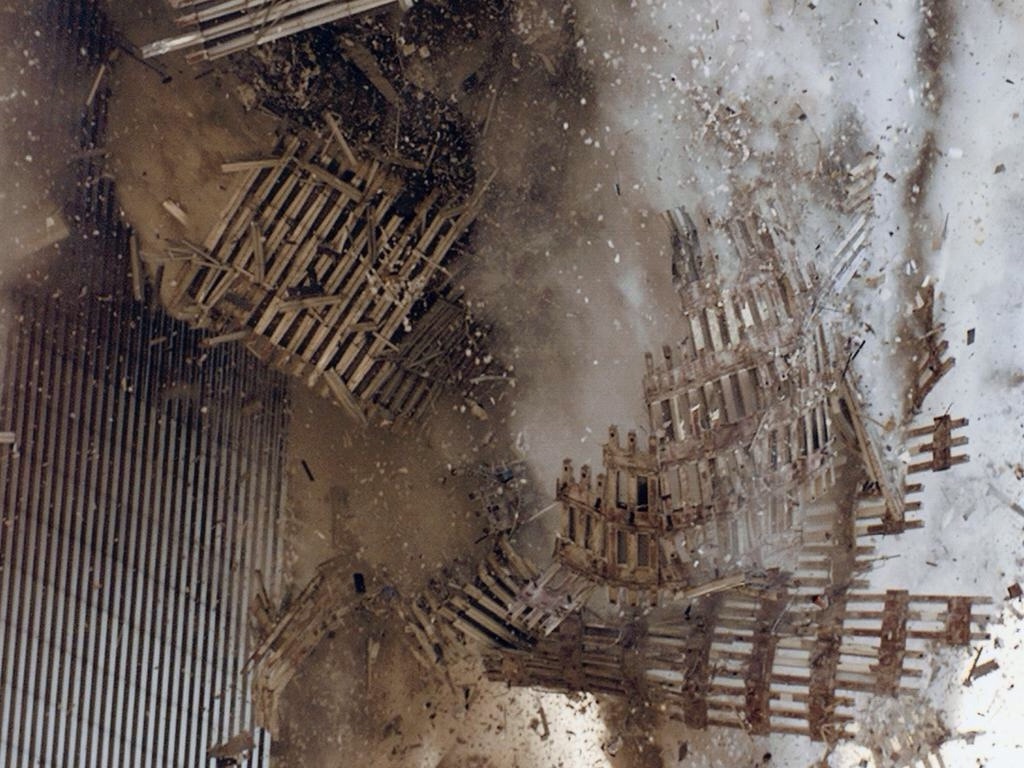
Again, no details about the event, but that doesn’t matter. Jesus’ point is clear. You are no different than the Galileans. You are no better than the eighteen in Siloam. You are not exempt from the coming judgment. Repent or perish.
And then, in a parable, Jesus tells them the tenuous, precarious nature of their situation:
“A man had a fig tree planted in his vineyard, and he came seeking fruit on it and found none. 7 And he said to the vinedresser, ‘Look, for three years now I have come seeking fruit on this fig tree, and I find none. Cut it down. Why should it use up the ground?’ 8 And he answered him, ‘Sir, let it alone this year also, until I dig around it and put on manure. 9 Then if it should bear fruit next year, well and good; but if not, you can cut it down’ ” (Luke 13:6b-9).

If this is allegory, no key is provided in the text. There are multiple possibilities, but resonances with the prophets and with others of Jesus’ own parables suggest this as a likelihood: God is the man who had the fig tree planted, Jesus is the vinedresser, and Israel is the fig tree.
Israel is God’s own fig tree, planted in a vineyard — in a land flowing with milk and honey — nurtured and tended. And yet, it has failed to bear fruit, year after year, generation after generation. And now God lays the axe to the root of Israel. But before the axe falls, Jesus the vinedresser, pleads for mercy, for one last chance to make Israel fruitful: just the rest of this year to dig and fertilize, just a few more days or weeks to proclaim, “Repent, for the kingdom of heaven is at hand.” The situation is dire; the time of destruction is imminent. Notice how the parable is left open ended; there is one brief moment of hope, one life-or-death question: Will Israel repent? We don’t have to wait long for the answer: just a few days, perhaps a few weeks, just until Jesus reaches Jerusalem:
18 In the morning, as he was returning to the city, he became hungry. 19 And seeing a fig tree by the wayside, he went to it and found nothing on it but only leaves. And he said to it, “May no fruit ever come from you again!” And the fig tree withered at once (Matt 21:18-19).

There is a time for repentance — a finite time — and after that, judgment. Repent, for the kingdom of heaven is at hand.
Well, here a compassionate preacher would tell a joke to lighten this dark mood a bit.
So, an art history major major, an MDiv seminarian, and an engineering major have each been sentenced to death by guillotine. Don’t ask why; it’s just a joke, a bit of gallows humor. The art major puts his head in the cradle. The executioner pulls the rope…and nothing. The blade doesn’t fall. “Well,” he says to his surprised intended victim, “we are only allowed to try this once. You are free to go.” The seminarian takes his place kneeling under the blade. The executioner pulls the rope…and again nothing. He, too, is released. The engineer kneels, places his head in the cradle, looks upward at the blade, and says, “Hey, wait a minute. I see the problem!”
Of course, this is no joke. There is a time for repentance, for respite from destruction. But it is a finite time. After that, the blade — be it axe or guillotine — will fall. Repent, for the kingdom of heaven is at hand, and that kingdom comes either as release or as judgment; you decide.
So, here we are in the midst of Lent, near the middle of the most penitential of the Church’s liturgical seasons. And the Church calls out to her children for acts of devotion and discipline: prayer, fasting, almsgiving, confession, study, contemplation, service. And that is meet and right, and we should — each of us — respond to the Church’s invitation as God wills. But these difficult texts remind us that there is an even more fundamental and radical call, this one from our Lord, himself: Repent, for the kingdom of heaven is at hand.
In the midst of our good — very good — Lenten disciplines, perhaps we also need to look deeper, to the very foundations of our lives, and ask the gut wrenching questions that might keep us up at night:
What is the very foundation of my life: really? Is it sand or rock?
Is my hope placed in political party, security, wealth, ideology, success or any of a host of other dead ends that culture and my own fallen nature offer up to me on a platter? Do I need — at least metaphorically and as God wills — to sell everything I have and give it to the poor so that I might better follow Jesus unencumbered?
Do I think there is plenty of time left to make a serious start of repentance, even though the vinedresser has been digging and fertilizing for years already?
Do I … well, you have your own questions as I have mine.
Brothers and sisters, I don’t say these things — I don’t ask these questions — to make you afraid or to shame you or to question your deep love for and devotion to our Lord. God forbid! This call to repentance is not a harsh judgment for those in Christ but an invitation to deeper, fuller life for all of us. Jesus did not call the young man to sell all his possessions to deprive him of them, but to free him from their slavery. Repentance is the way of freedom, the way of liberation, the way of joy. Jesus’ proclamation, “Repent, for the kingdom of heaven is at hand,” is good news, the very best of news. It is the announcement of the arrival of the long anticipated wedding feast and the reminder that it’s time to put on our party clothes. Repent, for the kingdom of heaven is at hand. Shed your dirty clothes and don your finery; the wedding feast here. That is why our text today ends with the great release and with great joy:
10 Now he was teaching in one of the synagogues on the Sabbath. 11 And behold, there was a woman who had had a disabling spirit for eighteen years. She was bent over and could not fully straighten herself. 12 When Jesus saw her, he called her over and said to her, “Woman, you are freed from your disability.” 13 And he laid his hands on her, and immediately she was made straight, and she glorified God (Luke 13:10-13).

This — this freedom — is what God our Father wants for us and offers us through our Lord Jesus Christ as we repent. And, yes, we have been freed already in the water of baptism: glory to God! But, by the abundant grace of God, there is even more. We — Dare I say all of us? — are still troubled by disabling spirits, still bent over and curved inward on ourselves, still not standing as straight or tall as we long to do, and as God beckons us to do. And so the call continues to go out from our Lord Jesus, not just to a fallen world, but to his very own brothers and sisters, to his beloved bride: Repent, for the kingdom of heaven is at hand.
In the Name of the Father, and of the Son, and of the Holy Spirit. Amen.


 First Blessings