Apostles Anglican Church
Fr. John A. Roop
The Epiphany of Our Lord Jesus Christ
(Isa 60:1-9, Ps 72:1-11, Eph 3:1-13, Matt 2:1-12)
The Lord has shown forth his glory:
O come, let us adore him.
After twelve days celebrating the Feast of the Incarnation, we draw the liturgical curtains closed on Christmastide this evening: Thanks be to God! I say “Thanks be to God!” not in a flippant or weary or cynical way — I take great delight in observing the Nativity of our Lord — but rather out of the conviction that we must not let the Story get stuck at Christmas like the Will Ferrell character Ricky Bobby does, praying still and always to “Dear Eight Pound, Six Ounce, Newborn Baby Jesus, in your golden fleece diapers, with your curled-up, fat, balled-up little fists pawin’ at the air.” It is not insignificant that our culture remembers Jesus — if at all — mainly at his birth and then, through cultural indifference and disbelief, freezes the story there until next year. A baby is cute and lovable and harmless; it makes no demands, issues no challenges except to its sleep-deprived parents. The rest of us can smile at its eight pound, six ounce cuteness and be on our way about our lives as we choose to live them. But, like it or not, ready or not, willing or not the baby does not stay in the manger; the Story moves on. Its next major chapter is the Epiphany of our Lord Jesus Christ, the shining forth of the glory of God, in Jesus, upon the Gentiles, upon the nations. That is what the Church observes this day.
The Epiphany raises many questions, not least this one: Who is the president of Andorra? Now, I am certain that you are generally familiar with the Principality of Andorra, the sixth smallest European state, located in the Pyrenees Mountains, sandwiched between France on the North and Spain on the South: everyone knows that. But who is the President of Andorra? Ah, trick question, you say, and right you are; Andorra has no president. It is ruled by Co-Princes, the Bishop of Urgell in Spain and the President of France. It is governed by a parliament, the General Council, headed by the Prime Minister who serves as chief executive. What is that Prime Minister’s name? I’ll bet you don’t know that. If anyone does, I offer my sincerest apologies. Honestly, I don’t know myself, and, frankly, I don’t care. Andorra, as a political entity, has no meaning for me whatsoever. When the Bishop of Urgell retires and the Catholic Church appoints a successor who will then be Co-Prince over Andorra, the world will little notice. When a new Prime Minister is elected, the event will not make the headlines in our newspapers. It is doubtful that any high ranking government officials from the United States will travel to Andorra for the installation of a Co-Prince or a Prime Minister there. The United States Ambassador to Spain, who secondarily represents our nation to Andorra, might do, but mainly as a formality. Andorra is a little, out of the way place, with no great political or economic power, and so the rest of the world pays it little attention.
Yes, the Epiphany raises many questions, and it always has done, like this one: Who is the King of the Jews — where may he be found? Had you asked this in the days of Caesar Augustus during the first registration when Quirinius was governor of Syria, the inhabitants of Judea — and of Galilee and Samaria — would have answered easily enough: Herod, whose palace is in Jerusalem. How far this knowledge rippled outward from the epicenter of Jerusalem, I have no idea. The political intelligentsia in Rome and in the Roman provinces around Judea knew, of course: but ordinary folk in the hinterlands, probably not. The goings-on in a small Levantine fiefdom mattered hardly at all in the broader world. Little Judea in the vast Roman Empire then was not unlike tiny Andorra in the world beyond the European Union now: a political entity of little meaning to hardly anyone whatsoever. Prime Ministers of Andorra now and Kings of the Jews then come and go, and the rest of the world remains largely unaffected and uninterested.
So, it is rather surprising that a foreign “delegation” of Magi arrived in Jerusalem in the days of Caesar Augustus shortly after the first registration when Quirinius was governor of Syria saying, “Where is he who has been born king of the Jews? For we saw his star when it rose and have come to worship him” (Matt 2:2, ESV throughout). These three sages — the Eastern Church says twelve, but we know better — these three “wise men” were astrologers, keen observers of the heavens who sought meaning in stars and planets, in comets and meteors, in their alignments and conjunctions, omens which the Jews themselves were not allowed to consult. And yet, for his purposes, God, in his mercy, chose to reveal this good news to pagans in a way that pagans would understand, a star to the astrologers. And that raises another interesting question worth pondering later: how might God reveal himself, through the Church, to the neo-pagan culture in which we live? But I digress: back to the story! What astronomical phenomenon the Magi witnessed to prompt their pilgrimage is still the subject of debate among our own scientific astrologers; we call them astronomers, but they are still observing, still seeking meaning in the skies not so unlike the Magi of old. And how they discerned that this particular heavenly manifestation had to do with the Jews and with the birth of a Jewish king — well, that, too, is a mystery. St. John Chrysostom suggests that these Magi were descendants of Balaam, the Old Testament Gentile prophet hired to curse the Hebrews, the one who blessed them instead, the one who said:
Numbers 24:15–17a (ESV):
“The oracle of Balaam the son of Beor,
the oracle of the man whose eye is opened,
16 the oracle of him who hears the words of God,
and knows the knowledge of the Most High,
who sees the vision of the Almighty,
falling down with his eyes uncovered:
17 I see him, but not now;
I behold him, but not near:
a star shall come out of Jacob,
and a scepter shall rise out of Israel.”
Perhaps St. Chrysostom was right and the cult of Magi had preserved the prophecy generationally (https://catholicism.org/chrysostom-epiphany.html). All we know for certain is this: in the providence of the God of the Jews, the God who made the heavens and all their vast array, God made this mystery known to the Magi.
They began their trek along the path the star led not as some official delegation, not as ambassadors of their people to greet the new king of some nearby people and perhaps to seek political, military, and economic alliances, but rather as seekers after the truth, compelled by the truth as revealed in the night sky. As so they followed the star to Jerusalem with the question: “Where is he who has been born king of the Jews? For we saw his star when it rose and have come to worship him.”
Their talk of a new king of the Jews took the old king of the Jews — King Herod — by surprise, and it troubled him. And, when this brutal, unpredictable King was troubled, everyone around him — the entire city of Jerusalem — was troubled, and rightly so, as we see later in the story. Herod asked his own wise men — the chief priest and scribes, those familiar with the Law and the Prophets — the same question the Magi had posed: Where is he who has been born king of the Jews?
Matthew 2:5–6 (ESV):
5 They told him, “In Bethlehem of Judea, for so it is written by the prophet:
6 “ ‘And you, O Bethlehem, in the land of Judah,
are by no means least among the rulers of Judah;
for from you shall come a ruler
who will shepherd my people Israel.’ ”
Bethlehem — a hamlet far less important than Jerusalem then, probably less important than Andorra, now? Yes, Bethlehem, the house of bread by translation, the ancestral village of King David. And so, instructed by Herod to go to Bethlehem, find the child, worship and bring word back to the palace of his exact location, the Magi resumed their pilgrimage. The star, which they had seemingly “lost” as they first arrived at Jerusalem, reappeared and led them unerringly not just to Bethlehem, but to the very house where the Holy Family had taken up residence. Jesus was no longer a baby in a manger, but a child in a house.
Matthew 2:11–12 (ESV):
11 And going into the house, they saw the child with Mary his mother, and they fell down and worshiped him. Then, opening their treasures, they offered him gifts, gold and frankincense and myrrh. 12 And being warned in a dream not to return to Herod, they departed to their own country by another way.
And, here, the Magi disappear from the record. What did they leave their homes to see? I wonder. The newborn King of the Jews is the answer given in the story, but why? Who cares about the Prime Minister of Andorra? What foreign dignitaries would come with such over-the-top gifts to mark his inauguration? Who cared about the King of the Jews, about a new King of the Jews? A new Caesar, yes; the birth a new son of Caesar would reverberate throughout the entire empire. But, a King of the Jews? Maybe a thirty-second segment on the 6 o’clock local news on a slow news day, but nothing more.
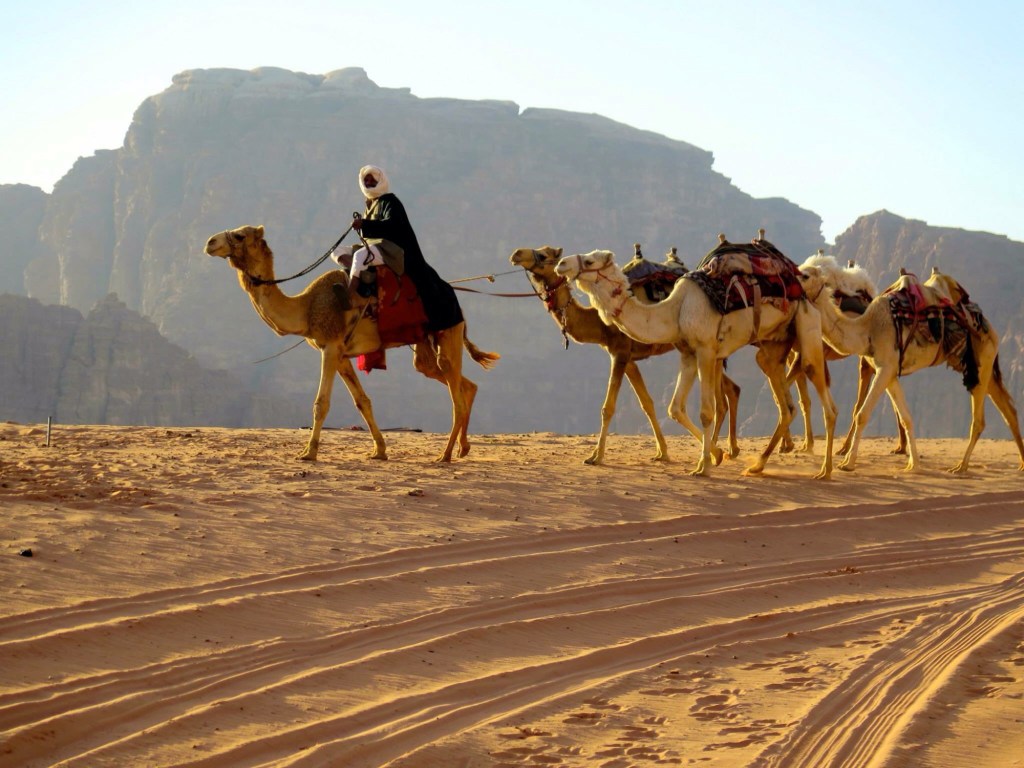
What did the Magi leave their homes to see? I wonder. And, did they know what they had seen when they had seen the child, when they had presented their gifts and had re-mounted their camels and slipped secretly and quietly out toward home? Were they satisfied or disappointed by what they found there? Apparently they did not know the Jewish scriptures in great detail, certainly neither the Psalms nor the Prophets. They came because of the star, but apparently not because of the Scriptures. But, it’s all there for those with eyes to see and ears to hear:
Psalm 72:9-11 (BCP 2019)
9 Those who dwell in the wilderness shall kneel before him; *
his enemies shall lick the dust.
10 The kings of Tarshish and of the isles shall give presents; *
the kings of Arabia and Seba shall bring gifts.
11 All kings shall fall down before him; *
all nations shall do him service.
Isaiah 60:1–3, 6 (ESV):
Arise, shine, for your light has come,
and the glory of the Lord has risen upon you.
2 For behold, darkness shall cover the earth,
and thick darkness the peoples;
but the Lord will arise upon you,
and his glory will be seen upon you.
3 And nations shall come to your light,
and kings to the brightness of your rising.
6 A multitude of camels shall cover you,
the young camels of Midian and Ephah;
all those from Sheba shall come.
They shall bring gold and frankincense,
and shall bring good news, the praises of the Lord.
Isaiah wrote his words of prophecy some seven centuries before the Magi set out to follow the star, wrote them about the return of Judah from Babylonian exile, wrote them about the future exaltation and glory of Judah in the sight of all the nations. And though neither Isaiah nor the Magi knew it, in the final sense the prophet wrote these words about Jesus and about the Magi themselves: about the star rising upon Jesus, about its glory seen over the place where he was, about the nations in the persons of these Magi coming to that light, about the three kings of the orient coming to the brightness of the rising of the Son of God. Here is the great mystery of God that neither Isaiah nor the Magi could have known: just as Jesus became Judah to fulfill God’s covenant purposes that all nations should be blessed through Abraham and his offspring— Jesus stood in Judah’s place to be faithful in their stead — so, too, the Magi became the nations, stood in their stead as the firstfruits of all faithful Gentiles who would one day bow before this King of the Jews, including you and me. Through the great mercy of God revealed to the prophet Isaiah, in the Magi we journey out of the deep darkness covering all the earth and come to the glory of the Lord in the face of Jesus, we bow before the new King of the Jews and present our offerings of gold, frankincense, and myrrh — of faith, hope, and love. If we do not let Jesus leave the manger — if the narrative gets stuck there — and if we do not let the Magi come to worship, then we exclude ourselves and all the nations from the story, then darkness still covers the earth, thick darkness over all peoples. Thanks be to God that Christmas is over and that Epiphany — the shining forth of the glory of God upon the nations — has come! The Magi came looking for the King of the Jews. They found their King, the King of the Nations, the King of all creation, the King of kings and Lord of lords.
Did the Magi understand all of that or any of that? T. S. Eliot imagined they did — at least a bit — in his poem Journey of the Magi (https://youtu.be/DagXUbTkuM4?si=tTVaHxlCUUJdWaml). Here is the last stanza, the recollection of one of the Magi, long since returned home:
All this was a long time ago, I
remember,
And I would do it again, but set down
This set down
This: were we led all that way for
Birth or Death? There was a Birth,
certainly
We had evidence and no doubt. I had
Seen birth and death,
But had thought they were different
this Birth was
Hard and bitter agony for us, like
Death, our death.
We returned to our places, these
Kingdoms,
But no longer at ease here, in the old
dispensation,
With an alien people clutching their
gods.
I should be glad of another death.
Pilgrimage leaves the pilgrims changed. It is another, a different one, who returns home. Something has died on the way — often a hard and bitter agony — and something has been born. So, yes, the Magi went to see and to honor a birth. But in Jesus, birth and death are so closely intertwined that it is impossible to tease them apart. The birth the Magi came to honor was in service of the death to come, the death which saves the world. And make no mistake. T. S. Eliot was right about this: if we come with the Magi to the place where Jesus is, thinking to honor his birth, we will find our own death waiting for us there: a death to the world, the flesh, and the devil, a death to ourselves that leaves us “no longer at ease here among an alien people clutching their gods.” If we return home unchanged, we went as tourists and not as pilgrims. We found the new Kings of the Jews, but not our King.
There is an epilogue to this tale of the Magi, a dark ending. I would like to pass over it, but conscience will not allow; that would be faithless to God’s word and to you. When Herod had told the Magi to return and report the child’s exact location in Bethlehem, his intent was not to worship but to destroy. And when the Magi did not return with news, Herod was not dissuaded. If a surgical strike was no longer possible, then a genocide of sorts would have to do: kill all the male children two years old and under in Bethlehem; the Death of the Innocents we call it. Bethlehem was a small village so it is doubtful that many children were slaughtered to the gods of power and pride, but even one mother’s son is one too many.
Epiphany is a season of light, the manifestation of the glory of God to all peoples and all nations. This light will either illuminate you and make you holy, or else blind you and drive you mad. This glory will either bring you to your knees in worship like the Magi or stand you on your feet in defiance like Herod. Epiphany beckons us, not with a star but with the Holy Spirit, to our own pilgrimage of repentance, to our own obeisance before the King of the Jews, the King of all the nations. To kneel or to stand is our choice: glory or madness.
Epiphany is a season of light, yes, but light casts shadows when sin interposes. Herod sought to destroy the light, but he could not. A dream, a hasty flight to Egypt — God’s providence — saved the child and his parents. And so it is to this very day. The light still shines and shadows are still cast, but in the mysterious providence of God the darkness will not, cannot prevail.
John 1:1–5 (ESV):
1 In the beginning was the Word, and the Word was with God, and the Word was God. 2 He was in the beginning with God. 3 All things were made through him, and without him was not any thing made that was made. 4 In him was life, and the life was the light of men. 5 The light shines in the darkness, and the darkness has not overcome it.
The Lord has shown forth his glory:
O come, let us adore him.


 First Blessings