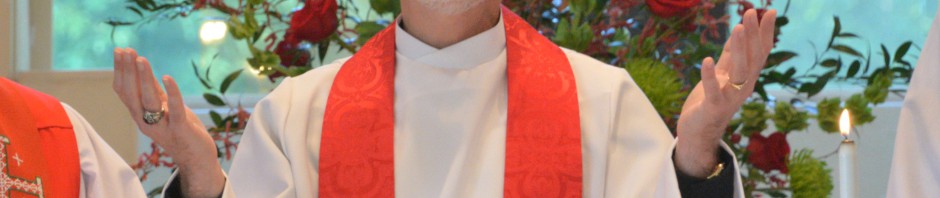

The conviction was expressed by an Orthodox priest — let’s call him Fr. Michael — whose insight and counsel I respect; the words were spoken as an excursus, as a tangential aside in an unrelated talk. He offered it not quite tongue-in-cheek but with the full knowledge that he was about to “step on some people’s toes.” Then he said with a note of wonder and incredulity in his voice that some people actually attend classes to become spiritual directors, That is not the way spiritual directors are made, he asserted.
Well, that caught my attention since I am an instructor in the St Benedict Center for Spiritual Formation (https://stbenedict-csf.org/) which offers a program in spiritual direction. I do not believe that Fr. Michael was wrong; nor do I believe that he was right. I believe instead that our cultures and languages — East and West — are talking past one another.
In the Orthodox tradition only a spiritual elder, a starets in Russian or a geronta in Greek, is gifted for spiritual direction. These holy men have received a charism, an anointing of the Holy Spirit, that allows them to see into the heart of things and people, to diagnose illnesses of the heart, and to apply the proper spiritual medicine for the cure of souls. These are men who have passed through purification and illumination and have known deification, the unmediated communion with God. And Fr. Michael is right that this gift does not come through classes or academic training. One may ready oneself for it by a life of holiness, a life of worship, a life of unceasing prayer. Even then, there are no guarantees. The Spirit gives gifts as and to whom he wills. Not so many parish priests are, in fact, spiritual elders; startsi and gerontas are generally found in monasteries or living as hermits nearby. And, if the monastic tradition needs justification, that alone is sufficient. Such elders may also be “found” in obscurity, going unnoticed about the normal routines of married or single life: working, raising children, going to church, sitting quietly in nursing homes, and all the while upholding the universe by their prayers. We may not notice them and they will never speak of it, and more’s the pity.
The faithful make pilgrimages to such sites as Mount Athos or Sergiyev Posad to receive just a word from a geronta or starets. And that is part of the difficulty with limiting the scope of spiritual direction to such men, as Fr. Michael insists; they are few, scattered, and largely inaccessible to most who need their spiritual guidance. The need for spiritual direction is great — I daresay most Christians are in need of it — and spiritual directors are so few, vanishingly few if we insist they be only Orthodox elders. And this is where I, with respect, must disagree with Fr. Michael. It is not so much a real disagreement as a clarification of terms. He is correct that no training course reliably produces spiritual elders: startsi and gerontas. He is incorrect to say that one cannot train to be a spiritual director. There is a difference between elder and director, between charism and vocation. While in the East the terms may be synonymous, in the West they are not.
So, how is a spiritual director “trained?” The foundation of classical training is repentance, a life of continual repentance which is a constant turning toward and returning to the Lord Jesus. The Great Tradition — both East and West — speaks of the threefold way: purification, illumination, and unification. Until the heart is purified, one’s vision of God and man is obscured and one cannot see clearly to remove the speck from another’s eye for the plank in one’s own. Such purification involves immersion in the life of the Church: Scripture, Sacraments, prayer, fasting, confession, obedience. Training is primarily formation, and formation is primarily purification. One must recognize, confront, and be substantially healed of one’s own passions before leading another into this battle. One must begin — repeatedly — to cultivate the virtues, the second nature of Christian maturity, through a life of prayer and asceticism by which to put off the deadly thoughts/sins. It is the primary purpose of the spiritual director to point his/her directees unerringly toward Jesus, to pray for and to work for the transformation of his/her directees into the likeness of Christ, the Holy Spirit being the helper and advocate. A director cannot point toward Jesus unless he/she is first oriented toward Jesus. Thus, the first work of a spiritual director is the inward work of the heart — his/her own heart. And that work is never ceasing.
This foundational work of the heart is also accompanied by the transformation of the mind (cf Rom 12:1-2). Right thinking — sound theology — is not sufficient for spiritual direction, but it is essential. Training must focus on the Great Tradition which, according to St. Vincent of Lérins (died c. 445) is “that faith which has been believed everywhere, always, by all” (Vincent of Lérins, Commonitory). This Tradition is found in the Scriptures, the Creeds (Nicene, Apostles, Athanasian), the Ecumenical Councils, the Church Fathers, the liturgies of the Church, and in the living witness of the Church’s faithful, godly bishops and the flocks they shepherd. A solid grounding in the Scriptures and the consensus fidelium of the Church protects directors and those they direct from unintentional error or prideful heresy and schism.
This training of the mind also includes aspects of “spiritual psychotherapy” — not therapy in the modern clinical sense, but in the ancient sense of applications of spiritual curatives to the disordered soul, the recognition and treatment of the illnesses of the heart: ignorance of God, forgetfulness of God, hardness of heart. The director learns to identify the symptoms of these illnesses, the deadly thoughts: pride, envy, anger, sloth, avarice, gluttony, and lust. It is not enough to diagnose spiritual illnesses; the directors learn to treat them with the “medicines” available to and through the Church.
The Rule of St. Benedict, which is foundational for the ethos of St Benedict’s Center, begins with an injunction to listen. That, too, is a skill that directors must develop continually: the ability to listen to oneself, to the directee, and, most importantly, to the Holy Spirit in all the ways the Spirit communicates. Listening leads to questions, and questioning is another art/skill that directors learn.
Finally, I will mention discernment of spirits as developed and communicated most clearly by Ignatius of Loyola (died 1556) in his Spiritual Exercises: becoming aware of the spiritual dimension of life and the spiritual powers that draw one toward one path or another. Directors help their directees listen to their lives to notice the influence of the good spirit or the evil spirit, to be attentive to the consolations and desolations that accompany states of life and courses of action, to battle the often subtle strategies of the evil spirit and to embrace the encouragement of the good spirit.
All this training — and more aspects of it than I have mentioned — comprises a vocation of spiritual direction for which one can be trained. It is not the same as the charism of eldership. In the West we distinguish between acquired virtues and infused virtues. One can acquire/learn, through practice, such virtues as prudence (wisdom), justice, fortitude, and temperance. But other virtues, the theological virtues of faith, hope, and love are gifts of God, infused. While we may pray for them and nurture them if given, we cannot acquire them by dint of our own effort. By analogy, the art of spiritual direction may be acquired; eldership is only infused.
It is proper to long for and to pray for the presence of a starets or geronta in one’s life. But, until such an elder appears, God might just provide a well-trained spiritual director. Thanks be to God.


 First Blessings