Session 7: Sacraments of the Church
APOSTLES ANGLICAN CHURCH
Fr. John A. Roop
Christian Essentials / Anglican Distinctives
Session 7: Church Sacraments (continued)
The Lord be with you.
And with your spirit.
Let us pray.
Guide and direct us, O Lord, always and everywhere with your holy light, that we may discern with clear vision your presence among us, and partake with worthy intention of your divine mysteries. We ask this for Jesus Christ’s sake. Amen (103. Preparation For Public Worship, BCP 2019, p. 676).
I selected this prayer for its emphasis on the “divine mysteries,” a term that denotes the Sacraments of the Church. The prayer reminds us that God is always and everywhere present among us, enlightening us, giving us clear vision to see him, so that we may worthily partake of the divine mysteries (Sacraments). I would also add that it is in and through the divine mysteries that we see God most clearly.
In our last session we focused first on the nature of Sacraments and the sacramental worldview that characterizes the Great Tradition and that distinguishes the churches in that Tradition from non-sacramental churches. Then, we focused specifically on the Gospel Sacraments of Baptism and Holy Communion. In this session we will first review just a bit about the nature of Sacraments, then look briefly at the five sacraments of the Church.
Review: Sacraments
In our last session I characterized Sacraments as speech-acts, human words and actions that, by the institution and grace of God, accomplish what they express.
God gives his church words to say, actions to perform, and physical matter to utilize so that in and through the words and actions and material he might act to minister grace to — to be present with and to bless — his people. These speech-acts of the church we call Sacraments.
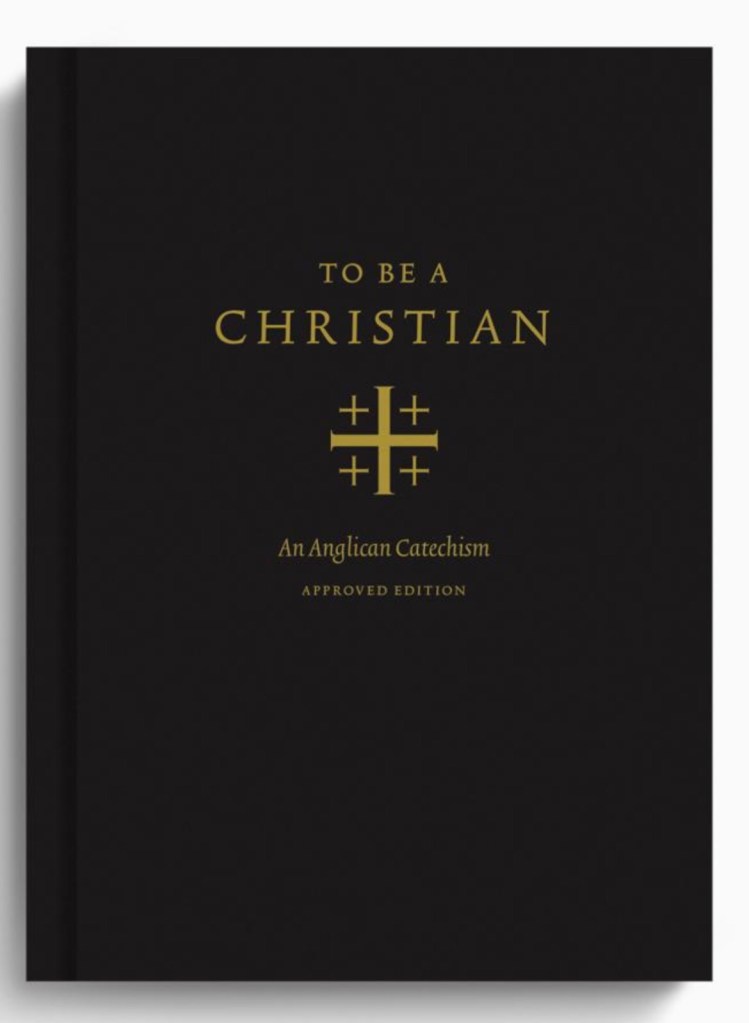
Our catechism, To Be A Christian (TBAC), offers a more formal and classical definition. According to Q 121 (pp. 55-56):
A sacrament is an outward and visible sign of an inward and spiritual grace. God gives the sign as a means whereby we receive that grace, and as a tangible assurance that we do in fact receive it (1662 Catechism).
The outward and visible sign is comprised of the words we say, the actions we perform, and the material we utilize in the sacrament. It is through these words, actions, and material that God acts to minister grace to us and to assure us tangibly that we have received that grace. We emphasized — because the Church understands it to be so — that the Sacraments are not mere symbols, but are affective channels of grace; to put it somewhat crudely, the Sacraments actually do something. For example, baptism is not merely a symbol of new life; it is the sacramental rite and agent of regeneration. It is in and through the water of baptism that one is born again. That is crucial to the Anglican understanding of Sacraments; Sacraments are effective.
According to the catechism, there are two Gospel or Dominical (of the Lord) Sacraments (Q 123) and five sacraments of the Church (Q 124). The distinction between the two categories of sacraments is a matter of definition based upon command, extent, and purpose.
(1) The Gospel Sacraments of Baptism and Holy Communion are (a) commanded/instituted by Christ, (b) for everyone, and (c) generally required for salvation.
(2) The sacraments of the Church — confirmation, confession (absolution), ordination, marriage, and anointing of the sick/dying — (a) were not specifically commanded/instituted by Christ in the Gospels but rather were Apostolic or early church practices, (b) are not required for everyone, and (c) are not required for salvation.
Sometimes we speak of these two categories as the greater and lesser sacraments.
With that bit of review, we may now turn our attention to the Sacraments of the Church.
Sacraments of the Church
As a Christian matures, there are many other points at which God touches him/her with grace, times marked with efficacious outward and visible symbols of God’s inner and hidden grace, the very definition of sacrament. These are the sacraments of the Church: confirmation, confession (absolution), marriage, ordination, and anointing for the sick/dying. As mentioned above, these are not considered as having the nature of Gospel Sacraments because they were neither commanded by Christ nor are they considered as necessary for salvation. Instead, they are sacraments of the Church: outward and visible signs appointed by and recognized by the church — through its Apostolic origin and long history — signs in and through which God has also promised to act.
Confirmation
The sacrament of the Church most clearly related to the Gospel Sacraments is Confirmation.
In Baptism, one is born again and made part of the Body of Christ.
In Holy Communion, one is nourished and grows and participates in the Body of Christ.
In Confirmation, one is commissioned and empowered for mature ministry in the Body of Christ.
It is not unreasonable to think of Confirmation as a rite of passage in the faith. Many — perhaps most — cultures have ceremonies to mark the transition from childhood to adulthood. In Judaism it is the bar or bat mitzvah. Among the Amish it is Rumspringa. In some Hispanic cultures fifteen year old girls have a Quinceañera. The transition from childhood to adulthood would happen without the ceremony — no Jewish boy has to have a bar mitzvah ceremony to become of age and assume the responsibilities of an adult under the Law — but the ceremony is an outward and visible sign of an inward and hidden change.
Confirmation is almost, but not totally, like these other rites of passage. It marks the time when one chooses to take upon himself or herself the adult responsibilities of the faith, and proclaims that publicly. If baptized as an infant, this is the moment when one makes a formal, personal acceptance of the baptismal vows and faith and steps into a mature living out of those vows. That much could happen with or without the Rite of Confirmation.
But, there is more to Confirmation than this, and the difference is what makes Confirmation sacramental. The difference lies in the laying on of hands with prayer by the bishop, the outward sign of the inward and hidden grace that God bestows in Confirmation. In the Anglican Church only the bishop may confirm and ordain. In each case, the one receiving the episcopal laying on of hands and prayer is being placed in and given grace for an order of ministry and a vocation — lay or clerical. That is what makes Confirmation sacramental. TBAC addresses Confirmation in Questions 137-139, BCP pp. 59-60. We will review these topics briefly since we will spend a full session later on the Rite of Confirmation.
In summary:
Taken together, the three Sacraments of Baptism, Confirmation, and Holy Eucharist, are the sacramental rites of full incorporation into the Body of Christ.
Baptism is our initiation into the Body of Christ.
Holy Communion is our ongoing participation in the Body of Christ.
Confirmation is our strengthening and commissioning for service in the Body of Christ.
Now let’s briefly consider the remaining four sacraments: confession (absolution), ordination, marriage, and unction — anointing the sick or dying (To Be A Christian, Q 140 – 153).
SUMMARY
These seven sacraments are those recognized by and found in the Church. But they are an expression of a deeper truth and a part of the Anglican ethos: God is present in — not absent from — his creation and he works in and through it to minister grace to his people. In that broader sense, sacraments are numberless and abound everywhere: a timely word spoken, the touch of a hand, a certain slant of light, the aroma of incense, the cry of a baby. The sacramental worldview invites us to broaden our experience of God and our relationship with Him, by looking for him everywhere.


 First Blessings