Session 6: Sacramental Theology and the Gospel Sacraments
APOSTLES ANGLICAN CHURCH
Fr. John A. Roop
Christian Essentials / Anglican Distinctives
Session 6: Sacramental Theology and the Gospel Sacraments
The Lord be with you.
And with your spirit.
Let us pray.
The General Thanksgiving
Almighty God, Father of all mercies, we your unworthy servants give you humble thanks for all your goodness and loving-kindness to us and to all whom you have made. We bless you for our creation, preservation, and all the blessings of this life; but above all for your immeasurable love in the redemption of the world by our Lord Jesus Christ; for the means of grace, and for the hope of glory. And, we pray, give us such an awareness of your mercies, that with truly thankful hearts we may show forth your praise, not only with our lips, but in our lives, by giving up our selves to your service, and by walking before you in holiness and righteousness all our days; Through Jesus Christ our Lord, to whom, with you and the Holy Spirit, be honor and glory throughout all ages. Amen (BCP 2019, p. 25).
I selected this prayer, The General Thanksgiving, not only because it is good and right always and everywhere to offer our thanks to God, but specifically for the phrase “for the means of grace, and for the hope of glory.” One of the primary means of grace that God has given to the church is the sacraments, and the sacraments, which also offer us the hope of glory, are the topic of this session.
The Sacramental Worldview and the Nature of Sacraments
Let’s begin our reflection on the sacraments in what may seem an unlikely place: in Genesis 27, with the account of Isaac’s blessing of his sons Jacob and Esau. I will not read the entire text or recount the whole story. I will simply remind you that Jacob deceived his blind father Isaac and stole the patriarchal blessing of the firstborn from his brother Esau. I’ll pick up the text with the blessing and the reaction of Isaac and Esau upon learning of the deception.
[Genesis 27:1–38 (ESV): 27 When Isaac was old and his eyes were dim so that he could not see, he called Esau his older son and said to him, “My son”; and he answered, “Here I am.” 2 He said, “Behold, I am old; I do not know the day of my death. 3 Now then, take your weapons, your quiver and your bow, and go out to the field and hunt game for me, 4 and prepare for me delicious food, such as I love, and bring it to me so that I may eat, that my soul may bless you before I die.”
5 Now Rebekah was listening when Isaac spoke to his son Esau. So when Esau went to the field to hunt for game and bring it, 6 Rebekah said to her son Jacob, “I heard your father speak to your brother Esau, 7 ‘Bring me game and prepare for me delicious food, that I may eat it and bless you before the Lord before I die.’ 8 Now therefore, my son, obey my voice as I command you. 9 Go to the flock and bring me two good young goats, so that I may prepare from them delicious food for your father, such as he loves. 10 And you shall bring it to your father to eat, so that he may bless you before he dies.” 11 But Jacob said to Rebekah his mother, “Behold, my brother Esau is a hairy man, and I am a smooth man. 12 Perhaps my father will feel me, and I shall seem to be mocking him and bring a curse upon myself and not a blessing.” 13 His mother said to him, “Let your curse be on me, my son; only obey my voice, and go, bring them to me.”
14 So he went and took them and brought them to his mother, and his mother prepared delicious food, such as his father loved. 15 Then Rebekah took the best garments of Esau her older son, which were with her in the house, and put them on Jacob her younger son. 16 And the skins of the young goats she put on his hands and on the smooth part of his neck. 17 And she put the delicious food and the bread, which she had prepared, into the hand of her son Jacob.
18 So he went in to his father and said, “My father.” And he said, “Here I am. Who are you, my son?” 19 Jacob said to his father, “I am Esau your firstborn. I have done as you told me; now sit up and eat of my game, that your soul may bless me.” 20 But Isaac said to his son, “How is it that you have found it so quickly, my son?” He answered, “Because the Lord your God granted me success.” 21 Then Isaac said to Jacob, “Please come near, that I may feel you, my son, to know whether you are really my son Esau or not.” 22 So Jacob went near to Isaac his father, who felt him and said, “The voice is Jacob’s voice, but the hands are the hands of Esau.” 23 And he did not recognize him, because his hands were hairy like his brother Esau’s hands. So he blessed him. 24 He said, “Are you really my son Esau?” He answered, “I am.” 25 Then he said, “Bring it near to me, that I may eat of my son’s game and bless you.” So he brought it near to him, and he ate; and he brought him wine, and he drank.]
26 Then his father Isaac said to him, “Come near and kiss me, my son.” 27 So he came near and kissed him. And Isaac smelled the smell of his garments and blessed him and said,
“See, the smell of my son
is as the smell of a field that the Lord has blessed!
28 May God give you of the dew of heaven
and of the fatness of the earth
and plenty of grain and wine.
29 Let peoples serve you,
and nations bow down to you.
Be lord over your brothers,
and may your mother’s sons bow down to you.
Cursed be everyone who curses you,
and blessed be everyone who blesses you!”
30 As soon as Isaac had finished blessing Jacob, when Jacob had scarcely gone out from the presence of Isaac his father, Esau his brother came in from his hunting. 31 He also prepared delicious food and brought it to his father. And he said to his father, “Let my father arise and eat of his son’s game, that you may bless me.” 32 His father Isaac said to him, “Who are you?” He answered, “I am your son, your firstborn, Esau.” 33 Then Isaac trembled very violently and said, “Who was it then that hunted game and brought it to me, and I ate it all before you came, and I have blessed him? Yes, and he shall be blessed.” 34 As soon as Esau heard the words of his father, he cried out with an exceedingly great and bitter cry and said to his father, “Bless me, even me also, O my father!” 35 But he said, “Your brother came deceitfully, and he has taken away your blessing.” 36 Esau said, “Is he not rightly named Jacob? For he has cheated me these two times. He took away my birthright, and behold, now he has taken away my blessing.” Then he said, “Have you not reserved a blessing for me?” 37 Isaac answered and said to Esau, “Behold, I have made him lord over you, and all his brothers I have given to him for servants, and with grain and wine I have sustained him. What then can I do for you, my son?” 38 Esau said to his father, “Have you but one blessing, my father? Bless me, even me also, O my father.” And Esau lifted up his voice and wept.
This account raises some interesting questions.
(1) Why is Esau so upset that Isaac has given his blessing to Jacob? The blessing is, after all, just words spoken by an old man, isn’t it?
(2) What is the real problem? Can’t Isaac simply rescind his blessing to Jacob — it was, after all gotten deceitfully — and pronounce it over Esau, if that will make Esau feel better?
This might seem to be a non-issue to us, but for those in covenant with YHWH, it was not that simple. The presumption in this and similar texts is that the patriarchal blessing is not mere words, but rather is a speech-act, words that have power to accomplish what they express. As a modern example, consider the declaration of marriage. At some point during the marriage ceremony, the preacher, priest, justice of the peace, whoever is presiding, says something like, “According to the power vested in by … I now pronounce you husband and wife.” And those words, combined with the acts that have gone before — the taking of vows, the exchange of rings — affect/accomplish what they express; the man and woman really become husband and wife. That gives some insight into the patriarchal blessing as speech-act. It presumes that either (a) God will honor the words of the patriarch due to the covenant relationship between them, or (b) God is working through the patriarch to speak that which should be spoken and then will act through the words, in accordance with the words, to accomplish the words and thus to accomplish God’s will. Further, the implication in the text is that, once given, the blessing is irrevocable; once spoken, it cannot be rescinded. The outcome — if not the method of achieving it — was according to God’s will. God chose to, and did indeed, bless Jacob and not Esau.
This notion of speech-act and of God working through the words and actions of his servants to accomplish his will lies at the heart of sacramental theology.
God gives his church words to say, actions to perform, and physical matter to utilize so that in and through the words and actions and material he might act to minister grace to — to be present with and to bless — his people. These speech-acts of the church we call Sacraments.
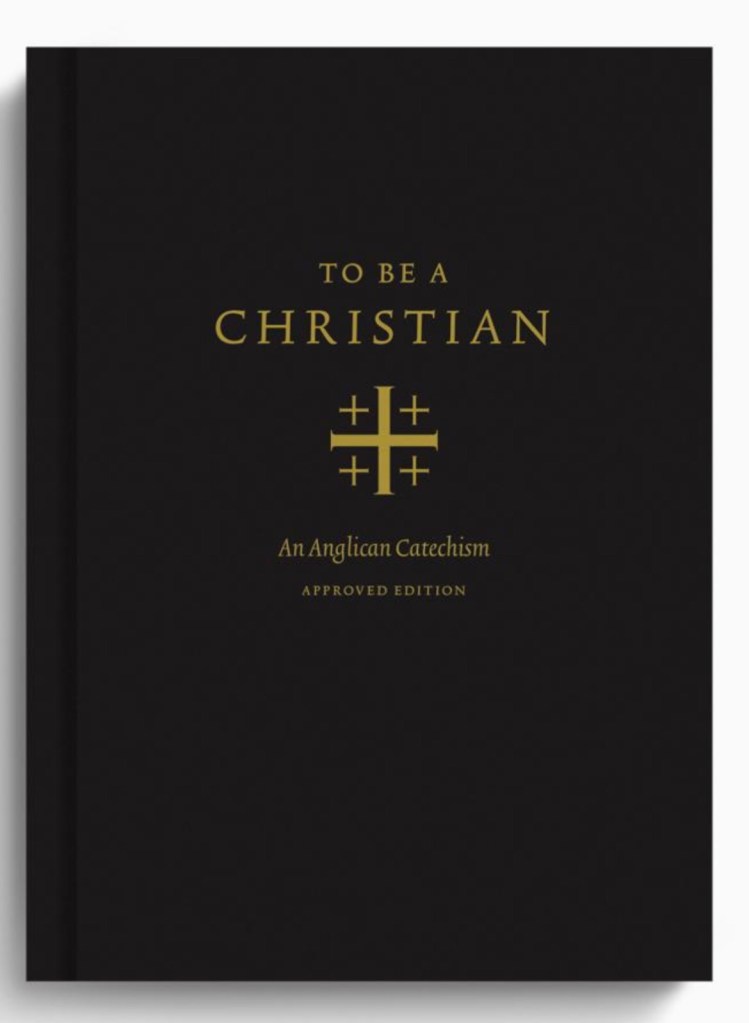
As we explore Anglican sacramental theology, we will use the ACNA Catechism, To Be A Christian. According to this catechism, there are two Gospel or Dominical (of the Lord) Sacraments (Q 123) and five sacraments of the Church (Q 124). The distinction between the two categories of sacraments is a matter of definition based upon command, extent, and purpose.
(1) The Gospel Sacraments of Baptism and Holy Communion are (a) commanded/instituted by Christ, (b) for everyone, and (c) generally required for salvation.
(2) The sacraments of the Church — confirmation, confession (absolution), ordination, marriage, and anointing of the sick/dying — (a) were not specifically commanded/instituted by Christ in the Gospels but rather were Apostolic or early church practices, (b) are not required for everyone, and (c) are not required for salvation.
Sometimes we speak of these two categories as the greater and lesser sacraments.
So, why are these seven identified as sacraments? What is a sacrament? According to Q 121:
A sacrament is an outward and visible sign of an inward and spiritual grace. God gives the sign as a means whereby we receive that grace, and as a tangible assurance that we do in fact receive it (1662 Catechism).
We begin with the notion of outward sign. The sign is comprised of the words we say, the actions we perform, and the material we utilize in the sacrament. Broadly speaking, it it the speech part of the speech-act. It is through these words, actions, and material that God acts — the act part of speech-act — to minister grace to us and to assure us tangibly that we have received that grace.
To understand Anglican sacramental theology — which we share, at least in broad strokes, with the other historic churches (Orthodox and Roman Catholic) — some clarifications are essential.
[EXCURSUS: I should note here that there exists a spectrum of sacramental understanding in the Anglican Church. I would not presume to speak for all Anglicans. As C. S. Lewis described himself, I, too, am a rather ordinary, middle-of-the-road Anglican, neither particularly high church or low church, though I do take a rather “high view” of the sacraments that is called by some “Anglo-Catholic.” I suppose that is right. I am an Anglican, and I am part of the one, holy, catholic and Apostolic Church. I am attempting a faithful representation of sacramental theology rooted first in Scripture, then in the Book of Common Prayer 2019, and lastly in the ACNA Catechism. I leave the historical ins-and-outs for another time.]
A sacrament is not a mere symbol that something has already happened. Nor is it a mere sign that points toward something happening. A sacrament is efficacious; it is the means by and through which God acts — not a symbol of something, but the thing itself. Let’s consider two examples of this distinction briefly, and then explore them in greater depth later.
Are you familiar with the Sinner’s Prayer? It is a prayer of repentance in which someone turns toward Christ, confesses sin and asks for forgiveness, and acclaims Jesus as Lord and Savior. A version of it is even found in the ACNA Catechism, pp. 21-22. It was the culmination of the invitation at every Billy Graham Crusade. For many churches, this is the moment of one’s salvation. After that, one might be encouraged to be baptized as either (a) an outward sign that one has been saved and has made a commitment to Christ, and/or (b) an outward sign that one is affiliating with a particular denomination or congregation. There is no particular grace ministered by God in and through baptism; it is simply symbolic. This is non-sacramental theology; baptism may be described as an ordinance — something Christ said to do — but not as a sacrament, a means through which God acts. This is not the way Anglicans — following the great Tradition that runs through the ancient Church — consider baptism.
The second example concerns Holy Communion. In the faith expression in which I was raised — the Christian Church — Communion each Sunday was non-negotiable. We considered Communion an essential part of our faith and practice. And yet, it was not for us sacramental. We ate bread and drank grape juice (not wine) because Jesus commanded us to do so in memory of him. Communion was a memorial ordinance only. It might stir our hearts and strengthen our faith, but it had nothing to do with our salvation or with receiving grace from God. Bread was bread and grape juice was a symbol of wine, but nothing more. There was no thought of participating in the sacrifice of Christ, no concept of his real presence with us at the table, no realization of spiritually feasting on his Body and Blood. Communion was sign and symbol of something that had happened long ago, but it was not a Sacrament, not a means through which God acts in the present to minister grace.
I don’t say any of this to be dismissive of other expressions of the faith, but simply to explain the distinction between non-sacramental and sacramental worship. Anglicans worship sacramentally.
Gospel Sacraments
Now, let’s examine the two Gospel Sacraments more closely by looking, very briefly, at the Prayer Book services for Baptism and Holy Communion. They express our sacramental understanding of these rites.
Baptism
The outward form of baptism — the outward and visible signs of the Sacrament — are Word and water and often oil. We immerse or pour using water in the name of the Father and the Son and the Holy Spirit. Later we sign the newly baptized with the sign of the cross using chrism, oil blessed by the bishop. When we do these outward actions, God has promised to work an inward act of grace for the salvation of the one receiving baptism. The Exhortation (BCP 2019, p. 162) offers a summary of the grace received in and through baptism:
Dearly beloved, Scripture teaches that we were all dead in our sins and trespasses, but by grace we may be saved through faith. Our Savior Jesus Christ said, “Unless one is born of water and the Spirit, he cannot enter the kingdom of God”; and he commissioned the Church to “make disciples of all nations, baptizing them in the Name of the Father, and of the Son, and of the Holy Spirit.” Here we ask our Heavenly Father that these Candidates, being baptized with water, may be filled with the Holy Sprit, born again, and received into the Church as living members of Christ’s body. Therefore, I urge you to call upon God the Father, through our Lord Jesus Christ, that of his abundant mercy he will grant to these Candidates that which by nature they cannot have.
Then, following the baptism, the Celebrant’s prayer thanks God for doing in the sacrament precisely what he promised to do in the sacrament:
Heavenly Father, we thank you that by water and the Holy Spirit you have bestowed upon these your servants the forgiveness of sin, received them as your own children by adoption, made them members of your holy Church, and raised them to the new life of grace. Sustain them, O Lord, in your Holy Spirit, that they may enjoy everlasting salvation through Jesus Christ our Lord. Amen (BCP 169).
These two texts taken together proclaim baptismal grace as forgiveness of sin, indwelling of the Holy Spirit, new birth, adoption as children of God, and incorporation into Christ’s body, the Church. Two notes are essential here. First, baptism is not a symbol that this grace had been given previously, during the Sinner’s Prayer, for example; rather, baptism is the sacramental means and instrument through which this grace is given. Second, there is no distinction made between infants and adults. Infant baptism is not some “junior baptism” awaiting later completion; it is full baptism and results in full baptismal grace. For those who are concerned that an infant cannot express faith, I would reassure them that the Anglican Church — the Anglican Church in North America — requires a personal, mature profession of faith and provides for that in the sacrament of Confirmation — and also at the reaffirmation of baptismal vows at every baptism and at the Easter Vigil.
An important note about baptism that can be confusing to those coming to Anglicanism from a non-sacramental tradition: baptism is performed once and once only. There is no concept in the Great Tradition of re-baptism. As St. Paul writes to the Ephesian church:
Ephesians 4:4–6 (ESV): 4 There is one body and one Spirit—just as you were called to the one hope that belongs to your call— 5 one Lord, one faith, one baptism, 6 one God and Father of all, who is over all and through all and in all.
If one was baptized in water in the name of the Father, and the Son, and the Holy Spirit, then one was/is baptized. If one subsequently left the faith and later wishes to return, that return is accomplished by confession and absolution, not by re-baptism. If someone comes to Anglicanism having been baptized in another Christian tradition, provided the baptism was triune in nature and water was used, that baptism is accepted. In cases where that is not certain, a conditional baptism is performed with the words:
If you are not already baptized, N., I baptize you in the Name of the Father, and of the Son, and of the Holy Spirit (BCP 2019, p. 173).
Holy Communion
The outward form for Holy Communion — the outward and visible signs — are Bread and Wine and the Words of Institution. We ask the Father to bless and sanctify, with his word and Holy Spirit, our gifts of bread and wine that we might partake of the most blessed body and blood of Jesus Christ our Lord, and God has promised to do just that.
Eucharistic theology is notoriously complex and vexed. My limited point here is simply that, whatever your understanding of real presence, Anglican Eucharistic theology is not memorialism; it is not that Holy Communion is a mere remembrance with symbols only. In Anglicanism, Holy Communion is sacramental. Hence the unfailing use of the Words of Institution in which Christ make clear that the bread — once taken and blessed — is his body and that the wine — once take and blessed — is his blood. We need postulate no “mechanism” of transformation. The Celebrant simply prays:
Sanctify them [the bread and wine] by your Word and Holy Spirit to be for your people the Body and Blood of your Son Jesus Christ (BCP 2019, p. 134).
Further, in the Prayer of Humble Access, all God’s people pray before receiving Holy Communion:
Grant us, therefore, gracious Lord,
so to eat the flesh of your dear Son Jesus Christ,
and so to drink his blood,
that our sinful bodies may be made clean by his body,
and our souls washed through his most precious blood (BCP 2019, p.135).
And then the elements are distributed with these, or similar, words:
The Body of our Lord Jesus Christ.
The Blood of our Lord Christ.
After the Words of Institution and the consecration of the bread and wine, the elements are no longer referred to as ordinary bread and wine, but rather as the Body and Blood of our Lord Jesus Christ. We do not need to speculate on how the Holy Spirit makes this real to us; we need simply to accept it and partake.
As for the specific grace received in Holy Communion, the ACNA Catechism (pp. 58-59) notes:
134. What benefits do you receive through partaking of this sacrament?
As my body is nourished by the bread and wine, my soul is strengthened by the Body and Blood of Christ. I receive God’s forgiveness, and I am renewed in the love and unity of the Body of Christ, the Church.
There is more, much much, to be said, but this should suffice to establish the sacramental nature of Holy Communion.
Summary of Gospel Sacraments
We might consider the Gospel Sacraments as the sacraments of incorporation into the Body of Christ. Baptism is our birth and initiation into Christ, and Holy Communion is our ongoing participation in Christ. A child is born or adopted into a family (baptism) and then is continually nourished by that family into maturity (Communion).
Conclusion
Anglicanism is inherently sacramental, which means simply that our lives are dependent upon God’s grace mediated to us in speech-acts involving words and physical matter such as water, oil, bread, and wine. Sacraments are not magic; they are not ritual incantations that “force” God to respond in certain ways. Rather, they are the means that God himself has given us, through which he has promised to act for us and for our salvation. This understanding of sacraments is fundamental to the importance/centrality of the Church:
XIX. OF THE CHURCH
The visible Church of Christ is a congregation of faithful men, in the which the pure Word of God is preached, and the Sacraments be duly administered according to Christ’s ordinance in all those things that of necessity are requisite to the same (BCP 2019, p. 779).
The visible Church is defined in terms of Word (Holy Scripture) and Sacrament, both of which are central to the life of faith.


 First Blessings