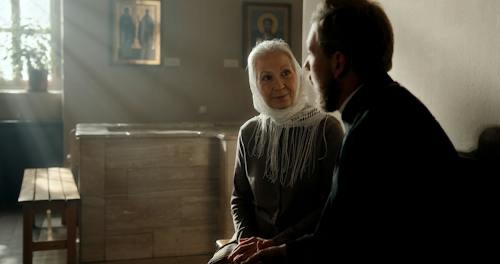
I wasn’t eavesdropping, not really. The two women at the next table in Barnes and Noble were talking loudly, so loudly, in fact, that I was distracted from my book, Epiphany, by Fleming Rutledge. They were probably in their early seventies, just two friends catching up. As I tried to focus on my book again, one began talking about church, and I caught such words as “parish” and “priest.” Did I mention that I wasn’t eavesdropping, not really? Then she said — and this isn’t an exact quote — “I have really long, good conversations with one priest in my parish. He and I have very different views of God. He’s really quite funny.” Shortly after that the two women left, I think to shop at Trader Joe’s.
I can’t get that brief exchange about the priest out of my mind because it so succinctly expresses much that is currently wrong with the Church. Now, before you read further — if you choose to read further — please note that I am going to say some things that might seem provocative or arrogant. They are intended to be the former. I pray they are not the latter.
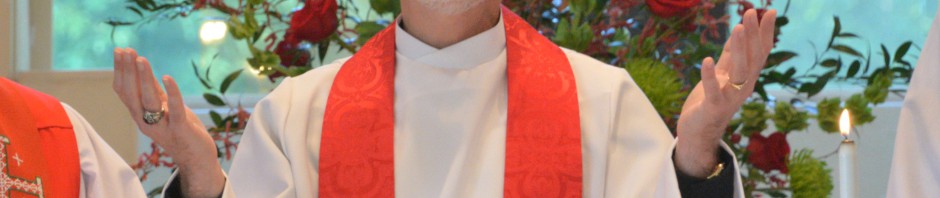
“He and I have very different views of God,” she said, and it was clear that she enjoyed debating her notions with the priest. The way she expressed it made clear that she considered the priest as enjoyably quaint, but as little more. And therein lies a significant problem. The church is not a debating society, nor is the priest a purveyor of his own quaint notions. The priest is not there to peddle his own ideas — God forbid! — but rather to inculcate the authoritative teaching of the Church, received from Christ, given to the Apostles and traditioned — passed down — by faithful bishops in Apostolic Succession in a process superintended by the Holy Spirit working in and through the Church. I am sorry, ma’am, but your notions of God do not really matter if they do not agree with the consensus fidelium, with that which has been believed always, everywhere, and by all. They are not to be debated but humbly corrected to accord with the faith and practice of the one holy catholic and Apostolic Church.
The other possibility is that the priest is, indeed, teaching his own quaint notions about God. Then he is not a faithful priest but a blind guide leading the blind. The woman has no need to debate him, but rather, to rebuke him with the truth as taught by the Church, not with her own private notions of God. If he fails to receive that correction, those superior to him must be notified.
I suspect that conversation bothered me so much because I am currently engaged in catechism in preparation for Confirmation. Tomorrow, God willing, I will teach a class on the sources of authority in Anglicanism: Scripture, Creeds, Councils, and Bishops. None of these express quaint, idiosyncratic notions about God, but rather the very truth revealed by God himself and preserved, protected, and passed on in and by the Church.
The Church is not a bastion of theological democracy in which all notions are equal — certainly not in fundamental areas such as the nature of God. There may be times when as a priest I can say, “The Church has not spoken authoritatively on this matter, so I can only give my best assessment of the various views and perhaps tell why I favor one over the other.” Fine. Fair. But, when the Church has spoken with one voice for two millennia, I must give my amen to that authoritative pronouncement. The Church is a pillar and foundation of the truth, not a debating society.


 First Blessings