Apostles Anglican Church
Fr. John A. Roop
Continuity with Development: A Reflection on Acts 4:5-31
Collect, Proper 24
Set us free, loving Father, from the bondage of our sins, and in your goodness and mercy give us the liberty of that abundant life which you have made know to us in our Savior Jesus Christ; who lives and reigns with you, in the unity of the Holy Spirit, one God, now and for ever. Amen.
“Whether it is right in the sight of God to listen to you rather than to God, you must judge, for we cannot but speak of what we have seen and heard” (Acts 4:19-20).
In the Name of the Father and of the Son and of the Holy Spirit. Amen.
There is a principle at work in the biological realm that is obvious even to people like me who know little about the science of biology. There is probably a scientific name for this principle, but I’ll just call it continuity with development. I think an example will make this principle clear.
A human child starts with the union of egg and sperm and under normal circumstances develops in the womb for nine months, is born, grows into a toddler, then a child, an adolescent, a young adult, a mature adult, and finally an elderly adult. I have been through all these stages. But it is the same “I” that has been through them. There is biological continuity from the womb to me, standing here, speaking to you, the same person throughout. I have a unique DNA signature that began at conception and continues throughout my life: continuity. And yet, I have developed; I have grown. I look and function differently than when I was in those other stages of adolescence or young adulthood: development. I am me — continuity — but I have grown and changed — development. That is the principle: continuity with development.
We see this same principle in various aspects of our culture. One type of musical composition, for example, is called theme with variations. In it, a musical phrase is given as a basis or theme for the composition. Then that same theme is played in many different, but recognizable variations: perhaps in both major and minor keys, perhaps inverted or backwards, perhaps with a different rhythm. It is the same, recognizable theme throughout — continuity — but with variation — development.
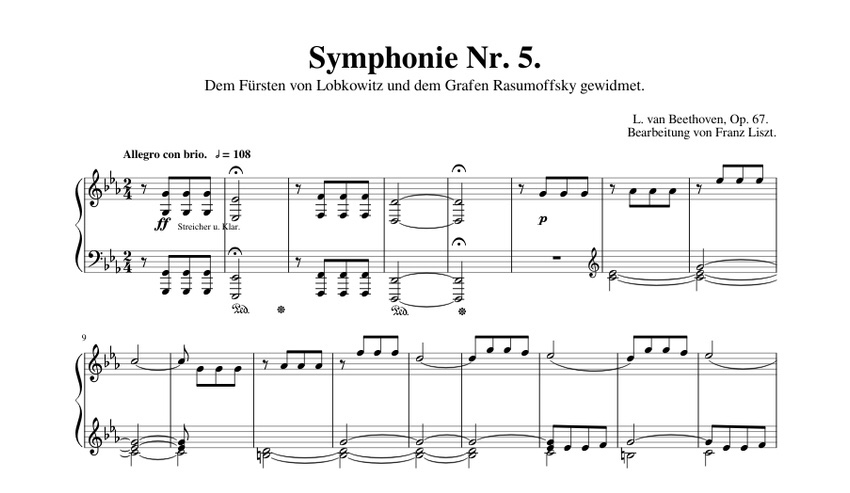
The opening of Beethoven’s Fifth Symphony is an example, with its classic four note theme repeated at different musical intervals and with slight variation. Or consider literature. Imagine one grand, sweeping story in two volumes. You finish the first volume and open the second with a set of expectations: (1) that volume two will be a continuation of volume one, that it will not be a totally different story and (2) that volume two will not be simply a repeat of volume one, but that it will take the original story farther along. Again, what you are looking for is continuity with development.
This last, literary example is pertinent to our text today in Acts. Acts is the second volume of a two volume history of the inauguration and growth of the Kingdom of God. The first volume, the Gospel according to St. Luke, recounts the in-breaking of the Kingdom of God in the incarnation, life, death, resurrection, and ascension of the Lord Jesus Christ. The second volume, Acts of the Apostles, records the working out and expansion of that Kingdom — the founding and growth of the Church — particularly in the missions of two Apostles, Peter and Paul. In these two volumes — in this single story — you would expect to see both continuity and development: the story begun by Jesus continued with growth and change through the Apostles — not a different story, but the same story realized in different ways and in different places: continuity with development. And that is precisely what we see.
Jesus’ ministry “technique”, if I can use that word, was simple. He performed signs and wonders: healings of all kinds, exorcisms, nature miracles, even resurrections. Then, when people asked, “What can this mean?” or “What kind of man is this?” or “By what power and authority can he do these things?” Jesus announced the in-breaking of the Kingdom of God: “Repent, for the Kingdom of God is at hand.” And that is the pattern that both Peter and Paul continue in Acts of the Apostles. Jesus healed; they heal. Jesus proclaimed the arrival of the Kingdom of God; they proclaim the presence of the Kingdom of God in and through Jesus.
The story of Peter and John before the Council that we have in our text from Acts 4 today, actually begins a chapter earlier in the Temple with the healing of a man lame from birth. Even there you see the continuity with Jesus; Jesus healed a lame man on the Sabbath, causing quite quite an uproar, and he healed a man blind from birth.
How did the people respond to the healing of this lame man?
Acts 3:8–10 (ESV): 9 And all the people saw him walking and praising God, 10 and recognized him as the one who sat at the Beautiful Gate of the temple, asking for alms. And they were filled with wonder and amazement at what had happened to him.
They begin asking the same questions that Jesus’ signs had evoked. What can this mean? What kind of men are these? By what power and authority can they do these things? And those questions give Peter the opportunity to proclaim the Gospel.
Acts 3:12–16 (ESV): “Men of Israel, why do you wonder at this, or why do you stare at us, as though by our own power or piety we have made him walk? 13 The God of Abraham, the God of Isaac, and the God of Jacob, the God of our fathers, glorified his servant Jesus, whom you delivered over and denied in the presence of Pilate, when he had decided to release him. 14 But you denied the Holy and Righteous One, and asked for a murderer to be granted to you, 15 and you killed the Author of life, whom God raised from the dead. To this we are witnesses. 16 And his name—by faith in his name—has made this man strong whom you see and know, and the faith that is through Jesus has given the man this perfect health in the presence of you all.
Of course, Peter goes on to proclaim the full Gospel and to call for repentance. And that upset the temple authorities, the priests and the Sadducees, particularly when Peter proclaimed in Jesus the resurrection of the dead. The two Apostles were taken into custody overnight and trotted out the next day before the rulers, elders, and scribes, before Annas the high priest and Caiaphas and John and Alexander, all members of the high priest’s family. And these powers-that-be ask precisely the question that Peter intended for them to ask: “By what power or by what name did you do this?” That, again, is in perfect continuity with Jesus: sign, question, proclamation. The development lies in the Apostles’ witness to the resurrection.
Acts 4:8–12 (ESV): 8 Then Peter, filled with the Holy Spirit, said to them, “Rulers of the people and elders, 9 if we are being examined today concerning a good deed done to a crippled man, by what means this man has been healed, 10 let it be known to all of you and to all the people of Israel that by the name of Jesus Christ of Nazareth, whom you crucified, whom God raised from the dead—by him this man is standing before you well. 11 This Jesus is the stone that was rejected by you, the builders, which has become the cornerstone. 12 And there is salvation in no one else, for there is no other name under heaven given among men by which we must be saved.”
By what power and by what name? By the same power of God that raised Jesus Christ from the dead and in the authority of his name, the name of Jesus Christ of Nazareth. And next comes one of my favorite commentaries in all Scripture:
Acts 4:13 (ESV): 13 Now when they saw the boldness of Peter and John, and perceived that they were uneducated, common men, they were astonished. And they recognized that they had been with Jesus.
How is it that uneducated, common people — nobodies like me — can be bold before the powers-that-be? Such boldness comes from being with Jesus. It also comes from being with the Church in prayer. Let me jump ahead in the story a bit. After being warned to speak no longer in the name of Jesus and then released, Peter and John sought out the church. And what did the Church do? It held a good, old-fashioned, Wednesday night prayer meeting! Listen to their request:
Acts 4:29–30 (ESV): 29 And now, Lord, look upon their threats and grant to your servants to continue to speak your word with all boldness, 30 while you stretch out your hand to heal, and signs and wonders are performed through the name of your holy servant Jesus.”
They didn’t pray for the Lord to smite the Jewish authorities. They didn’t pray for the Lord to protect the Apostles or the Church from persecution. No. They prayed for boldness to defy the authorities who were gathered together against the Lord and against his Anointed, boldness to speak God’s word. They prayed for God to stretch out his hand with signs and wonders that would spark more questions and more opportunities for proclamation. Is that a God-honoring prayer? Well, look at the results.
Acts 4:31 (ESV): 31 And when they had prayed, the place in which they were gathered together was shaken, and they were all filled with the Holy Spirit and continued to speak the word of God with boldness.
This seems like Pentecost: The Sequel, doesn’t it? And isn’t that what we want: a church that prays so fervently that it is shaken to the core and filled with the Holy Spirit and with holy boldness to speak the word of God to all who are ignorant of it or opposed to it?
That’s the story we are presented. I suggested earlier that one of the keys to appreciating the story is the principle of continuity with development. Peter acts in continuity with Jesus in his method of evangelism: sign, question, proclamation. Work a sign that provokes people to ask, “What can this mean?” or “What kind of person is this?” or “By what power and authority can he/she do this things?” Then proclaim the Gospel of Jesus Christ in word as well as in deed. What is the development? Jesus could only proclaim the coming of the Kingdom of God. We can proclaim its arrival and presence through the resurrection of Jesus Christ and the inauguration of the Church.
I also asked you to consider Luke’s recounting of the grand story as a two volume set: The Gospel according to St. Luke and Acts of the Apostles, a set that demonstrates continuity with development. Now, I’d like to expand that a bit by suggesting that there is a third volume, The Acts of the Church, and that we have the honor and responsibility of writing a paragraph or two or maybe even a page of it. The principle of continuity with development is still essential in this third volume. That means, not least, continuity with the method of evangelism that Jesus and the Apostles used: (1) Do some sign that is so out of the ordinary, so counter-cultural that it provokes people to ask “What does that mean?” or “What kind of a person does such a thing?” or “By what power or authority does this person act?” and then (2) proclaim the Gospel boldly, even though you might be shaking in your boots. That is the continuity.
What is the development? Well, the signs we work will likely be different than those of Jesus and the Apostles. I don’t have the gift of healing as they did. Some today do; I do not, though I do exercise a priestly, sacramental healing ministry of the church through the laying on of hands, anointing, and prayer. My signs will be different, and many of yours will be as well. What do those signs look like? I don’t know. That is for you to determine with prayer and a consideration of your gifts and opportunities. In considering such possible signs, theologian Stanley Hauerwas said, “If in a hundred years, Christians are identified as the people who don’t kill their children or kill their elders we will have done well.” That seems like such a low bar, such a feeble sign. But in a society where aborting babies seems reasonable and where euthanasia is just around the corner, standing for the sanctity of human life because all life belongs to God is really a pretty astounding sign and will call for explanation. And the explanation is the Gospel. Forgive someone who has hurt you; there’s a sign. Be generous instead of greedy; there’s a sign. Get up on Sunday morning and go to worship the Lord with a bunch of other redeemed sinners; there’s a sign. Then, on Monday morning, act like Sunday made a difference; there’s a real sign. I don’t know what signs and wonders you are called and empowered to do; that is between you and God. But, how exciting it is — what a great adventure it is — to confound the world, to make them scratch their cultural heads and wonder what in the world we’re up to. They might just ask. Just in case they do, we should be prepared to answer with a reasonable proclamation of the Gospel.
There is one other clear point of continuity — prayer: prayer for boldness for ourselves and for our brothers and sisters, prayer for the Church to go boldly into the world — boldly, not timidly — with the truth about Jesus, the truth that, in Peter’s words, “there is salvation in no one else, for there is no other name under heaven given among men by which we must be saved” (Act 4:12).
If we do this, get ready: the Church might just be shaken to the core and filled with the Holy Spirit. Then, who knows what will happen? Amen.


 First Blessings