
XXII. OF PURGATORY
The Romish Doctrine concerning Purgatory, Pardons, Worshipping, and Adoration, as well of Images as of Reliques, and also Invocation of Saints, is a fond thing vainly invented, and grounded upon no warranty of Scripture, but rather repugnant to the Word of God (Thirty-Nine Articles of Religion, BCP 2019, p. 780).
First, an apology of sorts: the Thirty-Nine Articles of Religion were written in a time of great theological conflict and are expressed in polemical language. While it was and is appropriate to critique certain accretions and abuses that characterized the medieval Roman Catholic Church, today a more irenic tone is generally in order. I quote the Articles not to give offense, but to reflect upon certain aspects of Anglican thought.
This particular article came to mind as I prayed the Daily Office this morning, particularly during the appointed Old Testament reading, 2 Kings 13, a portion of which follows:
20 So Elisha died, and they buried him. Now bands of Moabites used to invade the land in the spring of the year. 21 And as a man was being buried, behold, a marauding band was seen and the man was thrown into the grave of Elisha, and as soon as the man touched the bones of Elisha, he revived and stood on his feet (2 Kings 13:20-21, ESV).
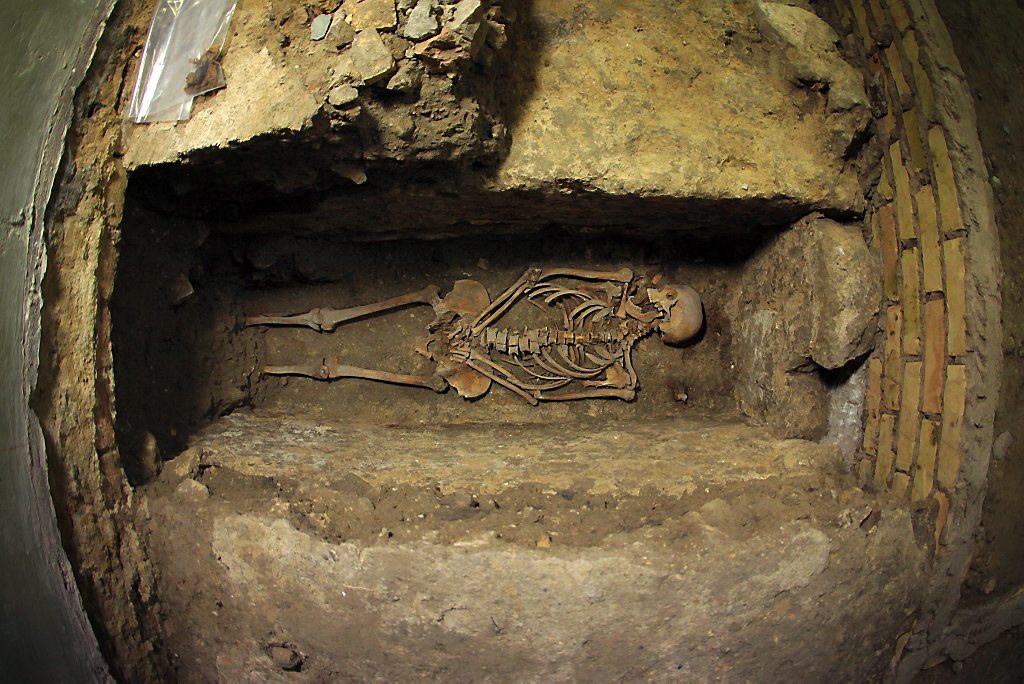
The bones of Elisha are reliques (relics) of the prophet. And while the Articles are right to condemn worship of relics, it would be a “fond thing vainly invented, and grounded upon no warranty of Scripture, but rather repugnant to the Word of God” to deny that God has worked — and may still work — through such relics to vindicate his servants, to bless his people, to bring honor to his name, and to draw men and women to himself.
11 And God was doing extraordinary miracles by the hands of Paul, 12 so that even handkerchiefs or aprons that had touched his skin were carried away to the sick, and their diseases left them and the evil spirits came out of them (Acts 19:11-12, ESV).
Handkerchiefs and aprons, too, are relics, and God used them not least to vindicate Paul and his ministry. Is it a step too far to think that God might still work in such a way, to believe that relics of a holy man or woman of God might be imbued with power and used by God for the healing of body, mind, or spirit? Were I healed through such a relic, would I not treasure it as a marker of God’s grace? Treasure it, yes. Honor it as a sacramental through which God had worked powerfully, yes. Worship it, no. Superstition and idolatry are twin poles around which we may not orbit. Cranmer was right on this.
As I have expressed before, the issues we face today are not co-terminal with those pressed upon the Reformers. Cranmer dealt with a culture that had moved beyond sacramentalism to superstition. Our culture has moved in the opposite direction: from sacramentalism to materialism. Our materialistic Western culture does not seem to believe that matter can be sacramental, can be imbued with power or can be a channel of grace. That is true, of course, because it no longer believes in the God of creation who called matter into being. One of the challenges of the Church today, then, is to “re-enchant,” to “re-consecrate” the world, to show it as sacramental. It is not unimportant then — in fact, I would say it is vital — that we embrace the material as revelatory of God, as instrumental in his working: bread, wine, oil, water, incense, candles and the like. This is not merely a matter of personal preference for “bells and smells,” but rather a conviction regarding the imminence of God and the revelatory and sanctifying nature of his material creation as sacramental.


 First Blessings