Matthew 6:14–15 (ESV): 14 For if you forgive others their trespasses, your heavenly Father will also forgive you, 15 but if you do not forgive others their trespasses, neither will your Father forgive your trespasses.
Matthew 18:21–22 (ESV): 21 Then Peter came up and said to him, “Lord, how often will my brother sin against me, and I forgive him? As many as seven times?” 22 Jesus said to him, “I do not say to you seven times, but seventy-seven times.
A routine by comedian Brian Regan about school spelling practice goes something like this, a teacher asking a question and Brian, a not so dedicated student, responding:
“Brian, what is the i before e rule?”
“I before e except after c or when sounded like a as in neighbor or weigh or on weekends and holidays and all throughout May when you’ll always be wrong no matter what you say!”
Brian’s final comment is, “That’s a hard rule. That’s a tough rule.” And it is, but it is nothing compared to Jesus’s “rules” of forgiveness: you must forgive to be forgiven, and there is no real limit to the number of times you must forgive. That’s a hard rule. That’s a tough rule.
So the question often comes to priests, “Must I forgive X for doing [Y — fill in the blank with a grievous offense] to me?” The short answer is yes, you must if you want to be forgiven and if you want to be faithful to Jesus.
“But Y was so horrible!” the person says. “Yes,” the priest agrees, “Y was indeed horrible; you were sinned against. But, what types of things do you think require real forgiveness if not for horrible things, if not for real and hurtful sins? Lesser things we can just brush aside as accidents or momentary lapses in judgment hardly requiring an apology and not rising to the level of costly forgiveness.”
“But how can I ever forgive that person?” And now we are beginning to get to the real issue. “I am hurt and angry and I cannot pretend that everything is okay when it’s not, so how can I forgive?”
Let’s begin with the obvious, though it is obviously often forgotten: forgiveness is not an emotion. The fact that one is hurting and angry does not preclude forgiveness and the fact that one is still hurt and angry after an act of forgiveness does not render that forgiveness a fiction. Forgiveness is not an emotional state or response.
What then is forgiveness? Let me suggest that forgiveness is laying aside one’s own definition of and demand for justice and instead leaving justice in the hands of God. It is not saying that justice does not matter; it is saying that justice is not mine. That is, perhaps, the first step of forgiveness. To be clear, forgiveness is not praying, “Lord, I leave justice in your hands; now smite, smite hard, and smite quick!” No: forgiveness is truly leaving justice in God’s hands, period, with no demands about a particular divine implementation of justice.
The second step of forgiveness mirrors Stephen’s final words: “Lord, do not hold this sin against them” (Acts 7:60). This is more difficult, it seems. Not only do we renounce our own justice in favor of God’s, we ask God to pardon the sin. Here we have moved beyond the notion of retributive justice — punishment — to restorative justice — putting things right. I am foolish enough to believe that Stephen’s prayer was answered in the conversion of Saul: not divine punishment for Saul’s complicity in Stephen’s death and the persecution of the church, but divine intervention in calling Saul to repentance and calling Saul to mission. There is a straight line from “do not hold this sin against them” to “Wretched man that I am! Who will deliver me from the body of death? Thanks be to God through Jesus Christ our Lord” (Rom 7:24-25a)!
There is one more step in forgiveness — at least one more — and that is the movement from accuser to advocate. In the Hebrew Scriptures, “ha satan” (Satan), is the accuser of God’s people, not unlike a prosecuting attorney. That is, indeed, what the name or title ha satan implies: the accuser. Now — not that the two are equal or equivalent! — contrast this title with “ho paraklētos” the name or title of the Holy Spirit in the New Testament. The Greek means something like “one called alongside” and is often translated “the advocate,” not unlike a defense attorney. Forgiveness is a choice: to be adversary — to align oneself with Satan — or advocate — to align oneself with the Holy Spirit. This step of forgiveness is to refuse to accuse another before God but instead to advocate for that person’s redemption. It is to move beyond, “Lord, do not hold this sin against them” to “Lord, lead this person to repentance, redemption, and reconciliation with you.” It is to refuse to curse and to bless, instead. It is to become a partaker of the divine nature by showing justice through mercy. The essence of such advocacy is simply the plea that God will show the same mercy to the other that God has shown to me.
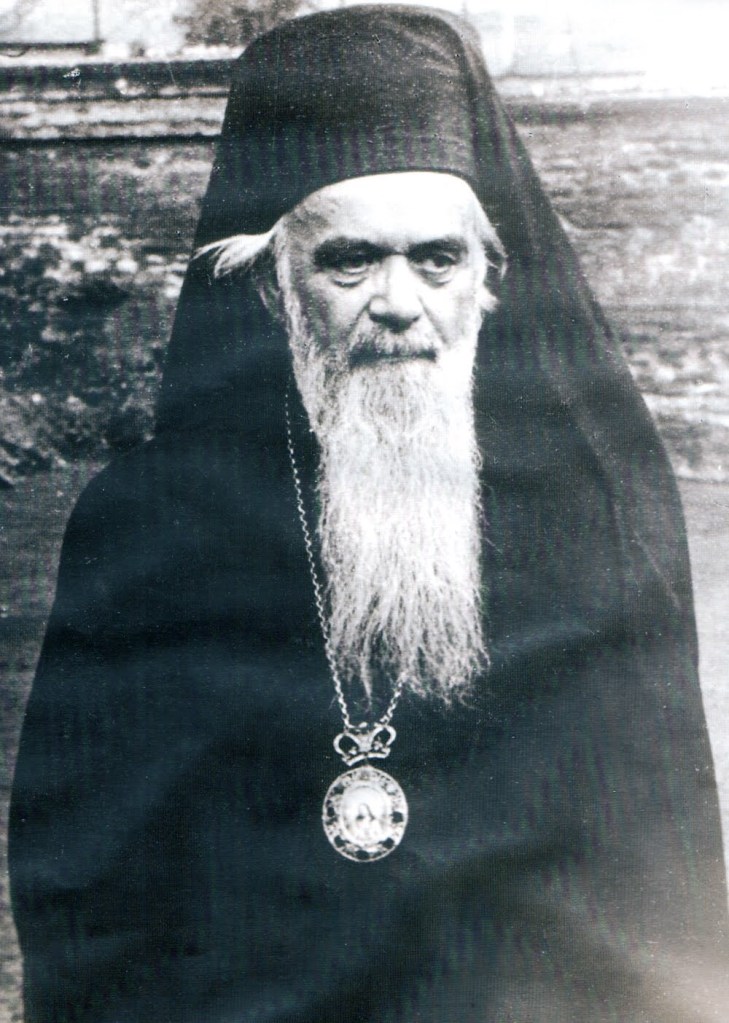
Though I have posted it before — not so very long ago — the prayer of Nikolai Velimirovich, Bless My Enemies, may be prayed as an act of forgiveness:
https://www.facebook.com/667255720/posts/10167848449420721/
One final comment: forgiveness does not imply or require reconciliation. I suggest, tentatively, that reconciliation requires repentance, restitution, and amendment of life, the same requirements as for priestly absolution. A notorious sinner is not reconciled to the fellowship of the Church solely as an act of forgiveness by the priest on behalf of the community. No. The sinner must repent by recognizing and owning the wrong done and the damage the wrong caused. He must express Godly sorrow for the sin (contrition) and not merely sorrow for being found out (attrition). He must put things right as far as that is possible and as far as he is able. And, he must make a firm commitment — and a plan — to live a changed life. None of this must occur before forgiveness, but for reconciliation? Yes, I think so, for true reconciliation to occur.
Fr. Thomas Ryden’s sermon (Apostles Anglican Church, 17 September 2013) addressed much of this and much better than I have done. I commend it to you:
https://apostlesonline.org/sermons/16th-sunday-after-pentecost/


 First Blessings